Help Desk Technician Resume Example
A help desk technician resume example with NHS IT support experience.

Laddro Team
Free to use. No account needed to start.
Free to use. No account needed to start.
Overview
Help desk and IT support resumes have a common problem: they all describe the same day. "Provided first and second line support. Troubleshot hardware and software issues. Responded to tickets in a timely manner." Every single IT support technician could write those bullets. And every recruiter has read them a hundred times.
The resumes that get callbacks are the ones that include numbers. How many tickets per day? What was your SLA compliance? How many users did you support? These are the details that separate a strong technician from someone who just picks up the phone.
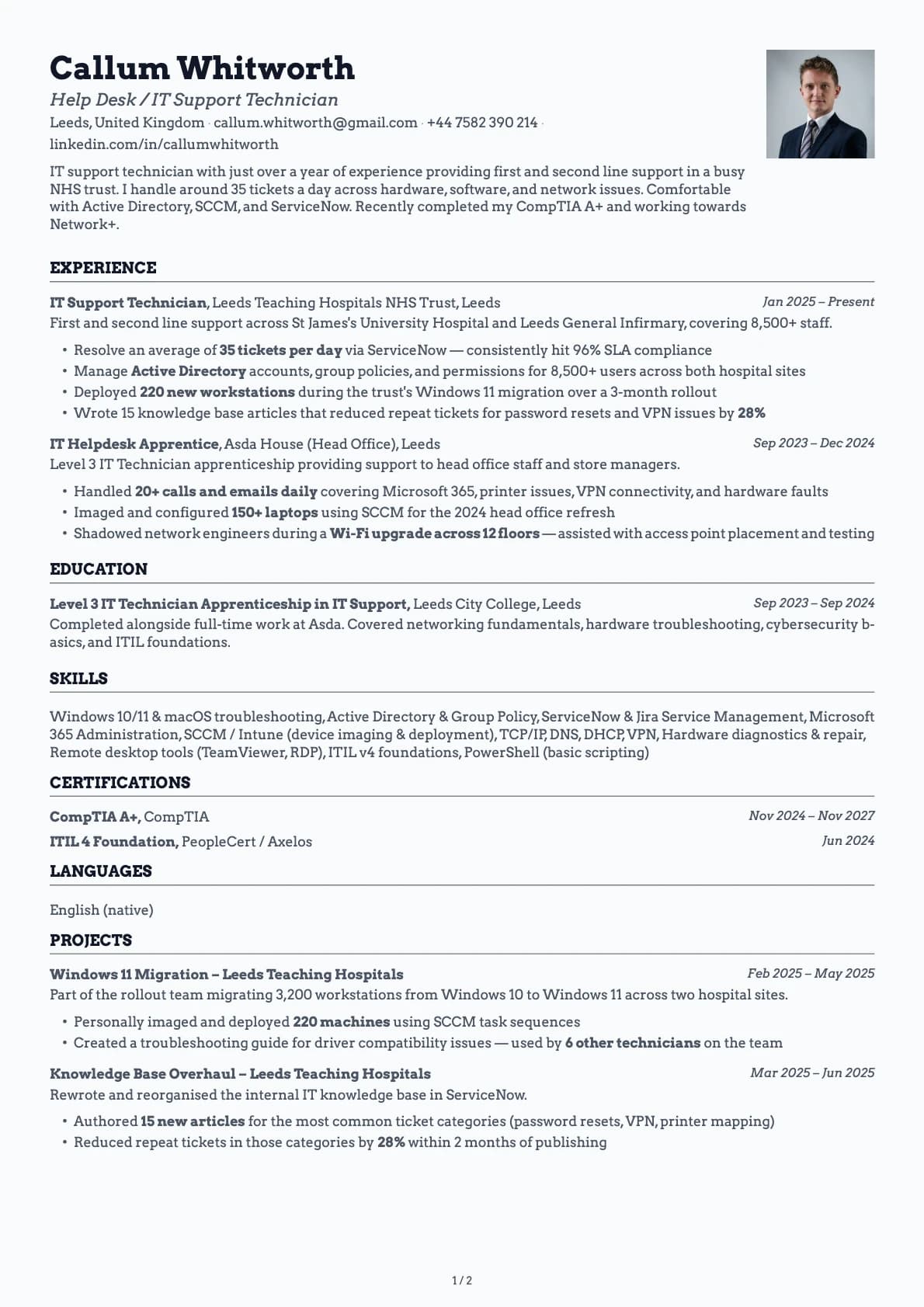
This resume belongs to Callum, a help desk technician with just over a year of experience. He currently works at Leeds Teaching Hospitals NHS Trust, providing first and second line support to 8,500+ staff across two hospital sites. Before that, he did an IT apprenticeship at Asda's head office. The resume works because even with limited experience, every bullet has a number in it.
Here is how to write an IT support resume that actually gets read.
Your summary: ticket volume, tools, and environment
IT support roles vary hugely. Supporting 50 users in a small office is a different job from supporting 8,500 users across two hospital sites. Your summary needs to make your environment clear.
From this resume:
IT support technician with just over a year of experience providing first and second line support in a busy NHS trust. I handle around 35 tickets a day across hardware, software, and network issues. Comfortable with Active Directory, SCCM, and ServiceNow.
Three key details: the environment (NHS trust), the ticket volume (35 per day), and the core tools (AD, SCCM, ServiceNow). A hiring manager now has enough context to decide if this person fits their team.
For your summary: State your support level (first line, second line, or both). Name the ticket volume. Name the ticketing system and 2-3 key tools you use daily. Mention the size of the user base if it is impressive.
Experience bullets: make every number count
When you are early in your career, you might think you do not have enough to fill a resume. You do. You just need to count things.
Resolve an average of 35 tickets per day via ServiceNow. Consistently hit 96% SLA compliance.
Two numbers. Ticket volume and SLA percentage. These are the metrics every IT service desk manager cares about. If you know your SLA compliance rate, include it. If you do not know it exactly, check your ticketing system. Most of them track it.
Another strong bullet:
Deployed 220 new workstations during the trust's Windows 11 migration over a 3-month rollout
That tells the recruiter this person can handle project work beyond daily tickets. It is a specific number (220 machines), a specific timeframe (3 months), and a specific platform (Windows 11). Compare that with "assisted with device deployment."
One more:
Wrote 15 knowledge base articles that reduced repeat tickets for password resets and VPN issues by 28%
This bullet shows initiative beyond just fixing problems. Writing documentation and measuring its impact (28% reduction in repeat tickets) is the kind of thing that gets you promoted from first line to second line.
The formula: What you did + How many + What improved because of it.
Technical skills: list the specific tools
IT support roles require a lot of tools. Your skills section should read like a toolbox, not a list of concepts.
This resume lists: Windows 10/11, macOS, Active Directory, Group Policy, ServiceNow, Jira Service Management, Microsoft 365 Administration, SCCM/Intune, TCP/IP, DNS, DHCP, VPN, hardware diagnostics, remote desktop tools, ITIL v4, and PowerShell.
Notice the specifics. Not just "networking" but "TCP/IP, DNS, DHCP, VPN." Not just "ticketing systems" but "ServiceNow & Jira Service Management." The more specific you are, the easier it is for a recruiter to match your skills against the job requirements.
If you use PowerShell or any scripting, include it even if you consider yourself a beginner. "PowerShell (basic scripting)" is honest and still shows you are developing beyond point-and-click troubleshooting.
Certifications: CompTIA and ITIL are your foundations
This resume lists CompTIA A+ and ITIL 4 Foundation. These two certifications are the most commonly requested for entry-level IT support roles.
CompTIA A+ proves you understand hardware and software fundamentals. ITIL 4 Foundation shows you understand service management processes. Together, they cover the technical and the procedural sides of help desk work.
If you are working towards Network+ or Security+ (this resume mentions Network+ in the summary), include it with "in progress." It signals career direction and ongoing development.
One important thing: include expiry dates for certifications that have them. CompTIA certs expire after three years. Showing a valid certification tells the recruiter you are current.
Projects: even small ones count
The projects section on this resume highlights two things: the Windows 11 migration and a knowledge base overhaul. Neither is a massive IT transformation project. But both show real, measurable contributions.
Personally imaged and deployed 220 machines using SCCM task sequences
Created a troubleshooting guide for driver compatibility issues. Used by 6 other technicians on the team.
The second bullet is smart. It shows the candidate did not just deploy machines. They documented problems and created guides that helped the wider team. If you have ever written a guide, created a template, or standardised a process, include it.
Apprenticeship roles: make them count
If you came through an apprenticeship route (like this resume shows with the Asda role), do not treat it as filler. Describe the actual work:
Handled 20+ calls and emails daily covering Microsoft 365, printer issues, VPN connectivity, and hardware faults
Imaged and configured 150+ laptops using SCCM for the 2024 head office refresh
Daily call volume and device numbers. These are real metrics that show what you were doing on the apprenticeship. The fact that it was an apprenticeship does not diminish the work.
Mistakes in IT support resumes
No ticket numbers. If you do not mention how many tickets you handle, the recruiter cannot gauge your workload. Even an approximate number ("around 30 per day") is better than nothing.
Listing operating systems without context. "Experienced with Windows 10 and 11" is on every IT resume. "Deployed 220 Windows 11 workstations via SCCM" is specific and verifiable.
Ignoring documentation. Knowledge base articles, SOPs, and troubleshooting guides are real deliverables. If you write them, include them and measure their impact (reduced tickets, used by X team members).
Vague descriptions of user bases. "Supported a large organisation" tells the recruiter nothing. "Supported 8,500+ staff across two hospital sites" paints a clear picture.
Skipping ITIL. Even if you think ITIL is dry, most employers want to see it. If you have ITIL 4 Foundation, list it. If you do not, it is worth getting. It is a short course and it checks a box that many job ads require.
One last thing
IT support is a stepping stone for many people. Whether you want to move into networking, cloud, cybersecurity, or systems administration, your help desk resume should show the direction you are heading. Mentioning that you are working towards CompTIA Network+ or that you are learning PowerShell signals to an employer that you will grow beyond the help desk. That makes you a more attractive hire, even for a first or second line role.
Build your own version
Open this layout in the builder and swap in your own details. It takes a few minutes.
Free to use. No account needed to start.
Was this resume example helpful?
Rate this example to help us create better content for you.
4.7 average from 221 ratingsRelated resume examples
Software Engineer
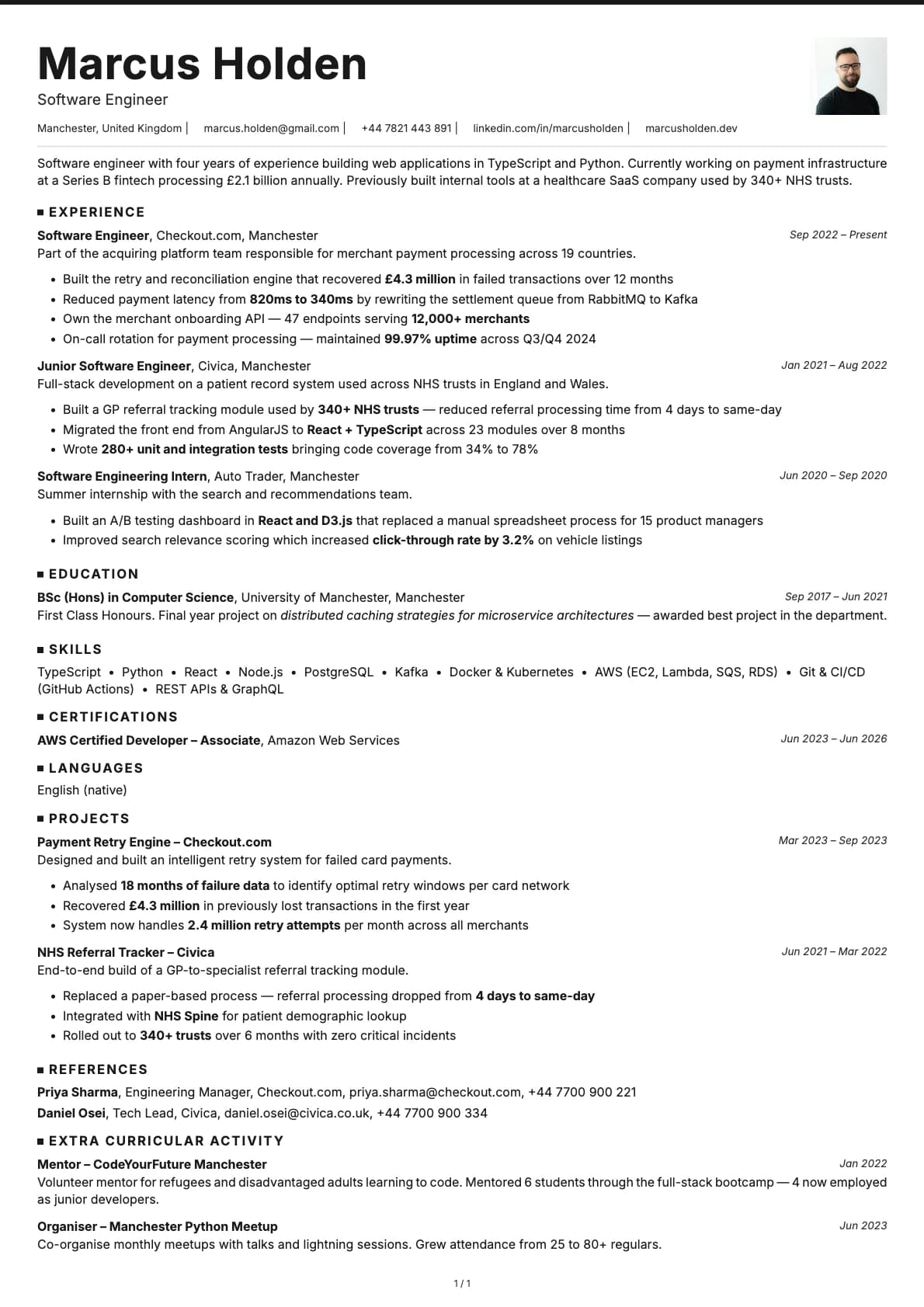
A software engineer resume example with practical tips on how to write your tech stack, quantify your impact, and get past ATS screening.
Frontend Developer
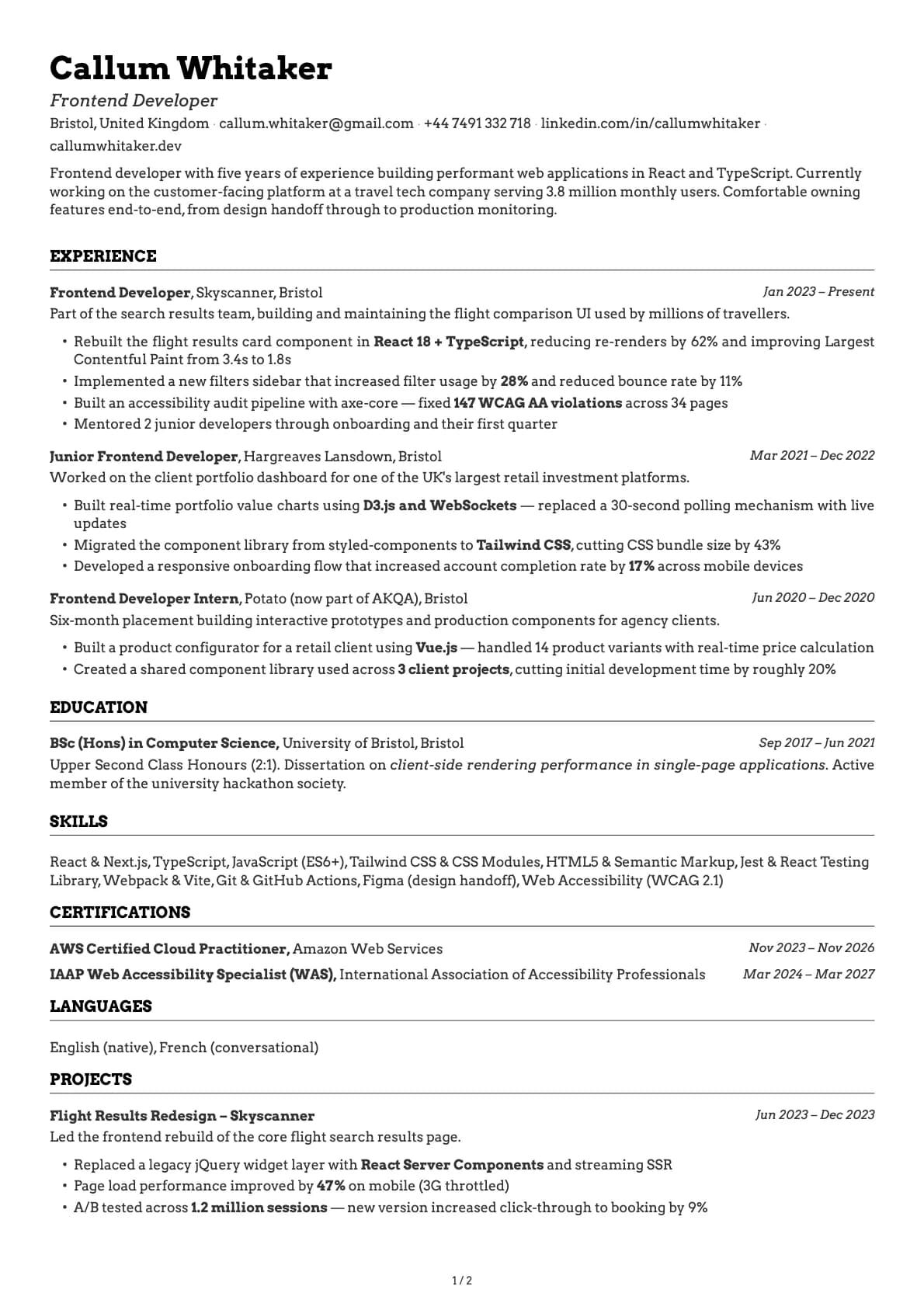
A frontend developer resume example with React and TypeScript experience at Skyscanner and Hargreaves Lansdown.
Backend Developer
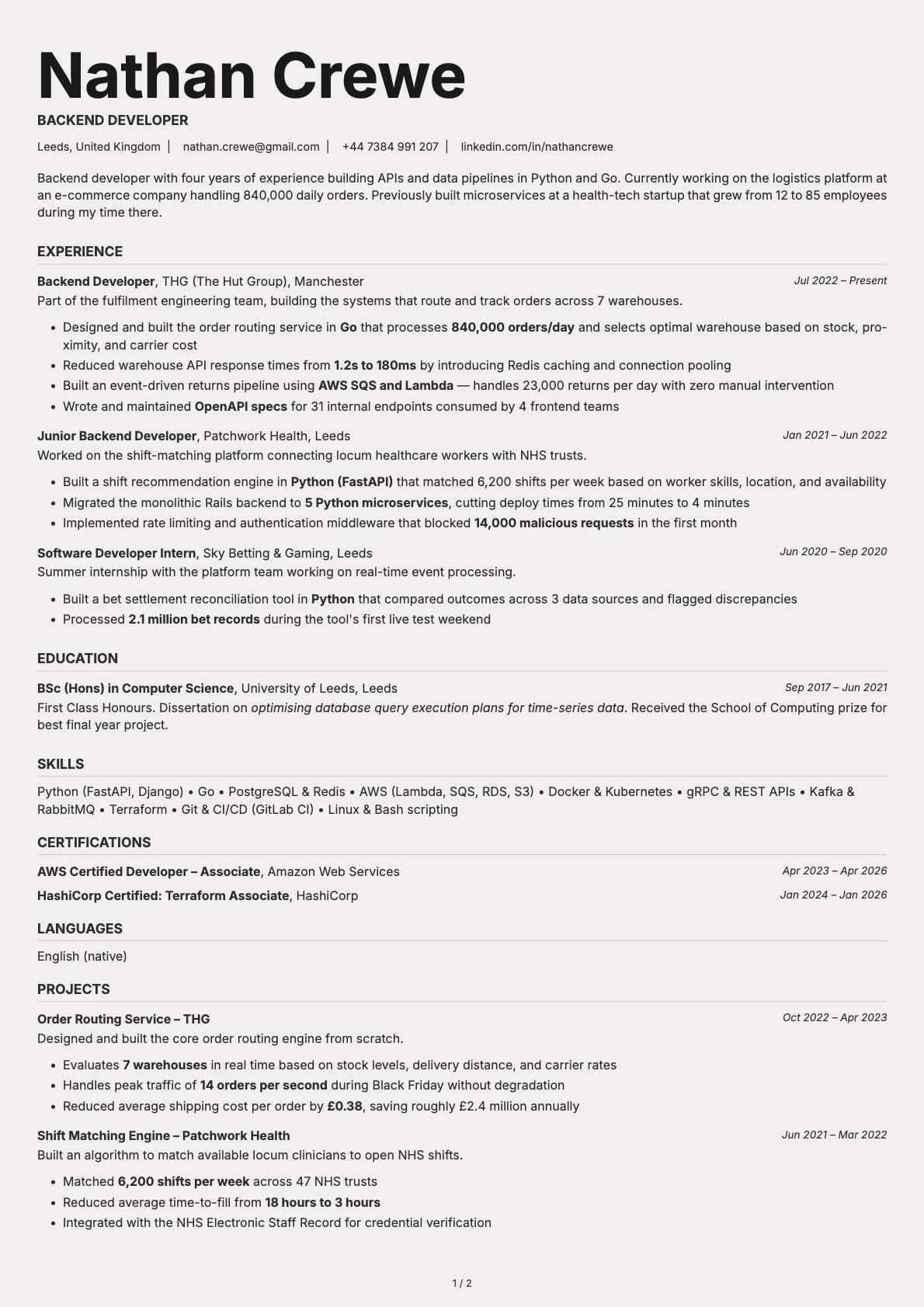
A backend developer resume example with Go and Python experience, system throughput numbers, and infrastructure projects across e-commerce and health-tech.
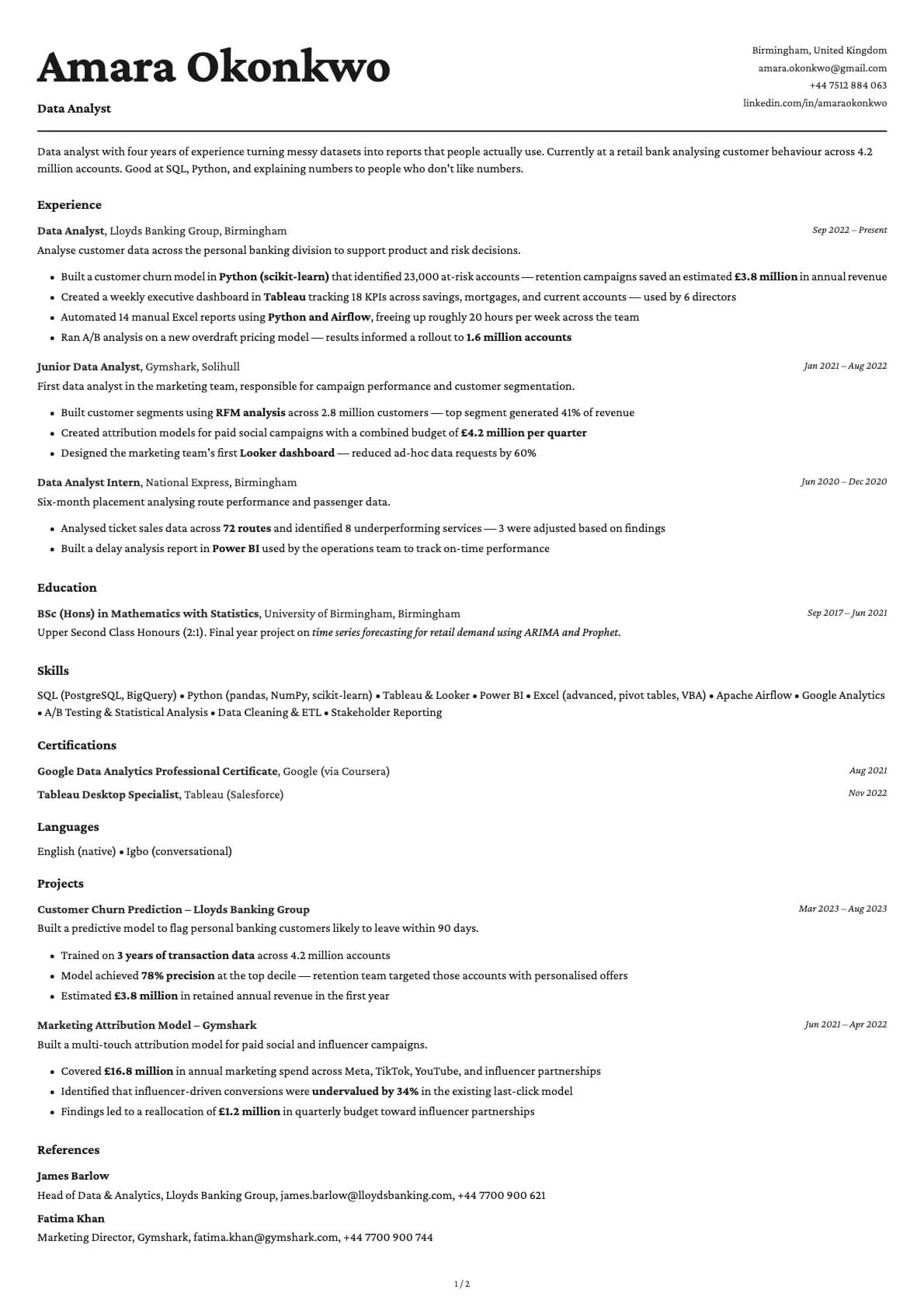
Data Analyst
A data analyst resume example with experience at Lloyds Banking Group and Gymshark.
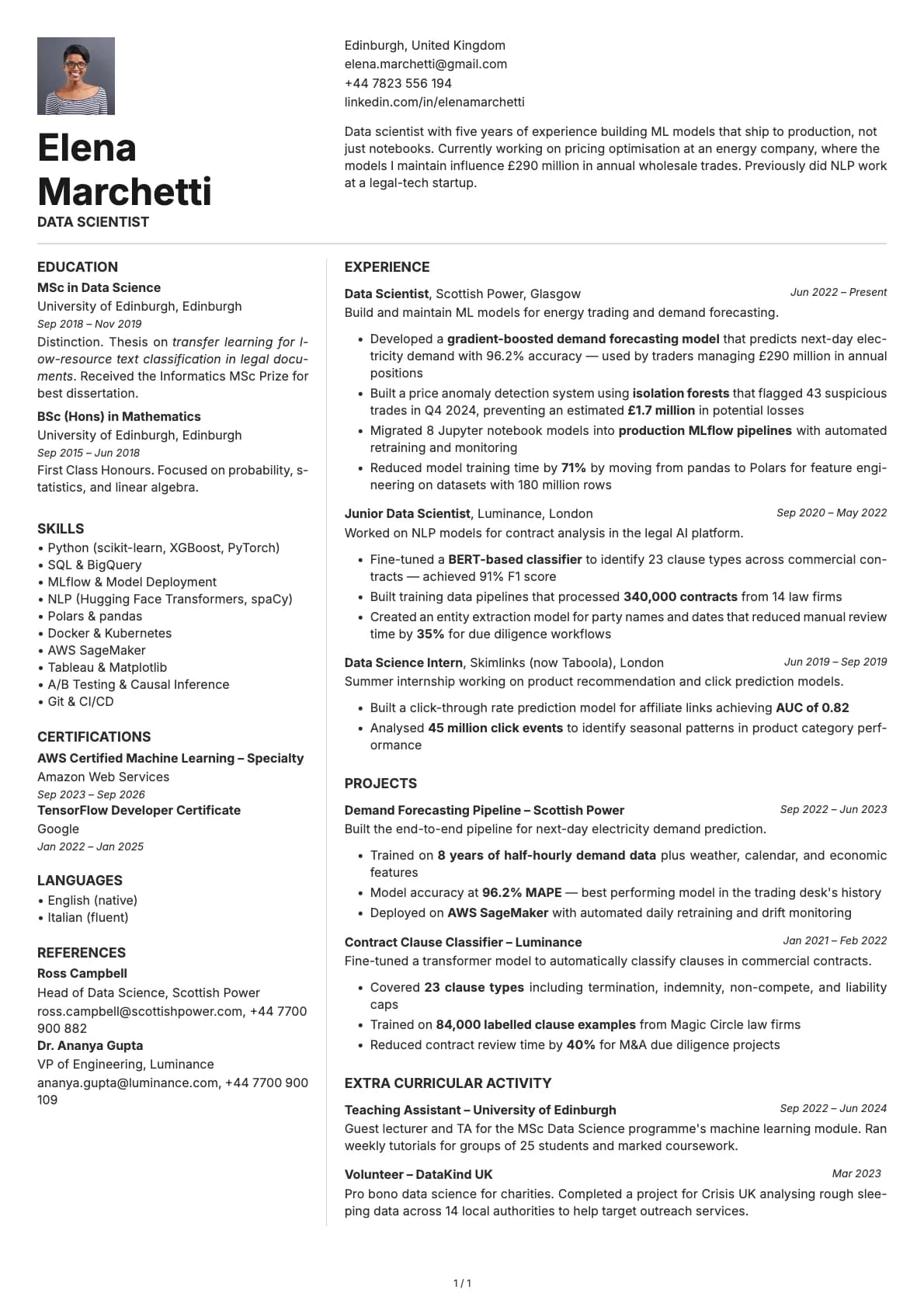
Data Scientist
A data scientist resume example with ML production experience at Scottish Power and NLP work at Luminance.
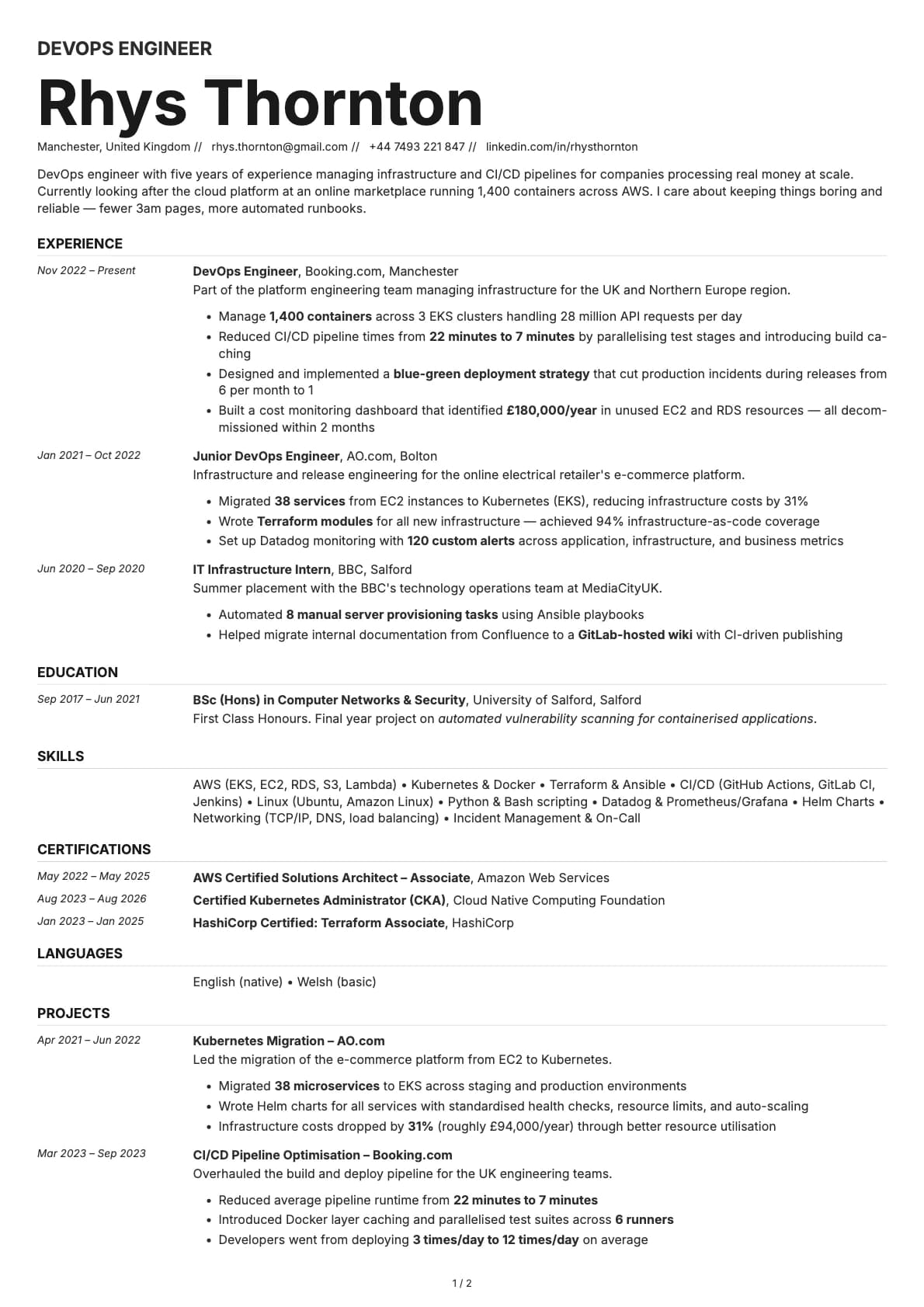
DevOps Engineer
A DevOps engineer resume example with infrastructure experience at Booking.com and AO.com.
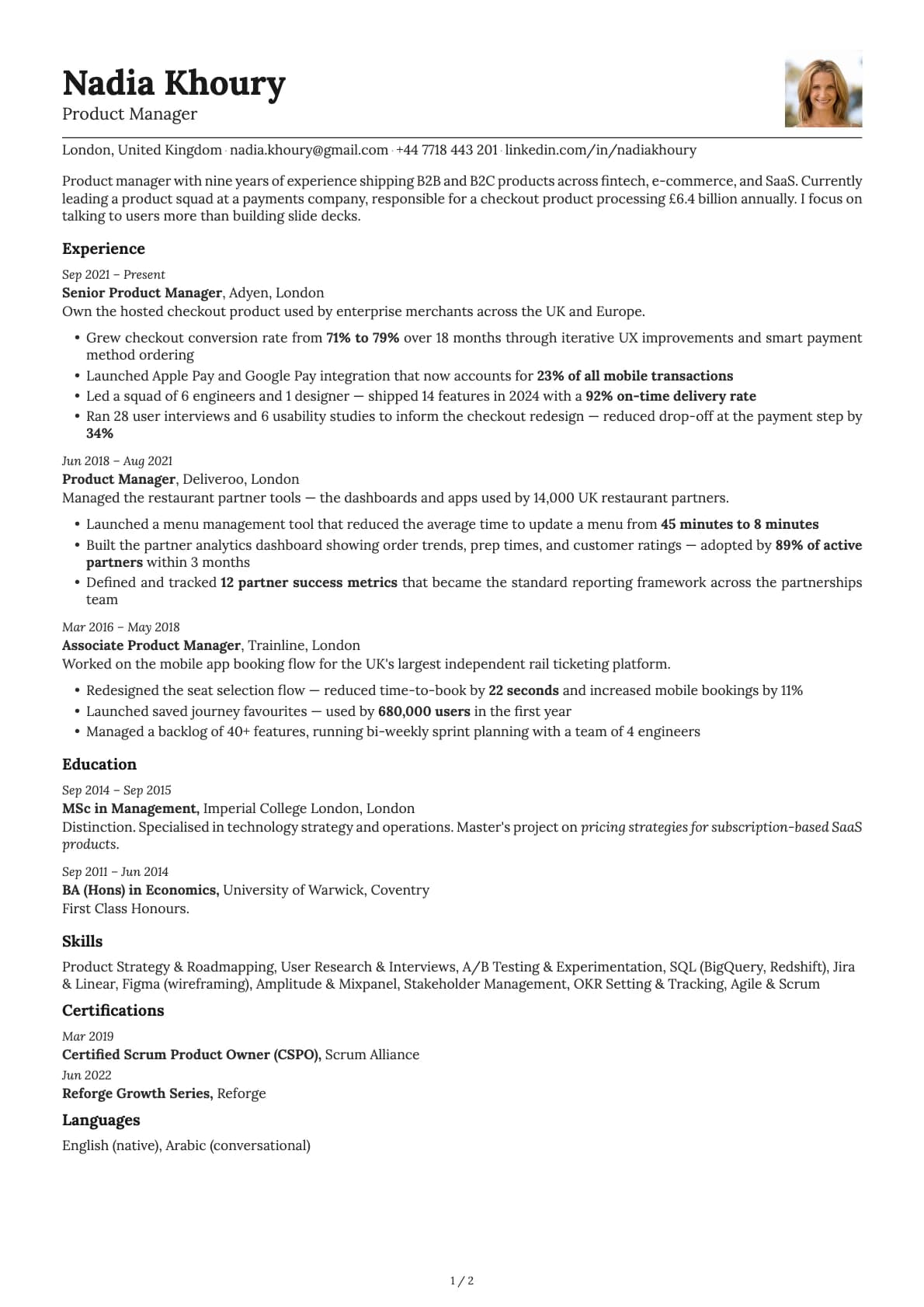
Product Manager
A product manager resume example showing how to present user research, conversion metrics, and feature launches with real business outcomes.
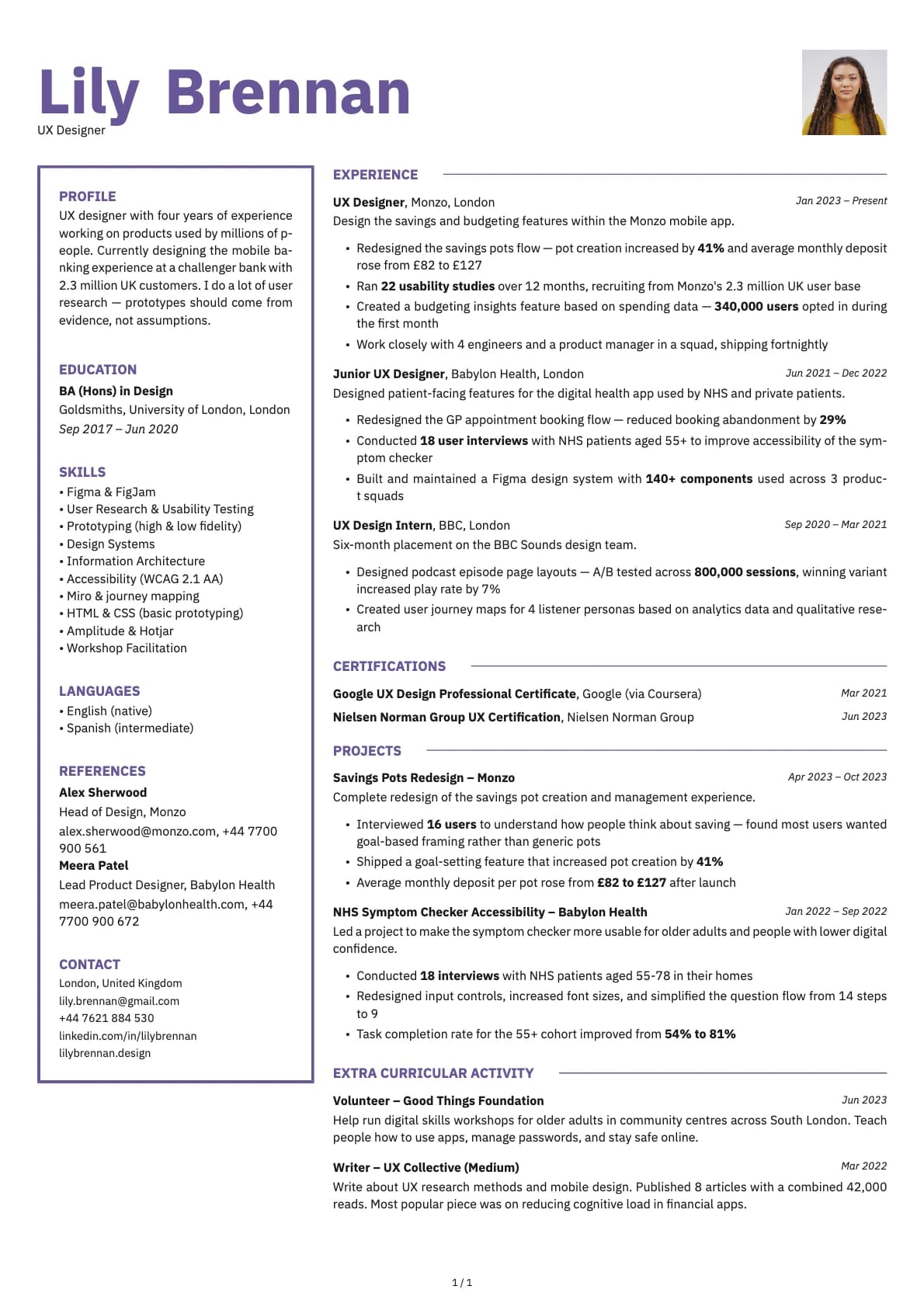
UX Designer
A UX designer resume example with 4 years of product design experience at Monzo and Babylon Health.
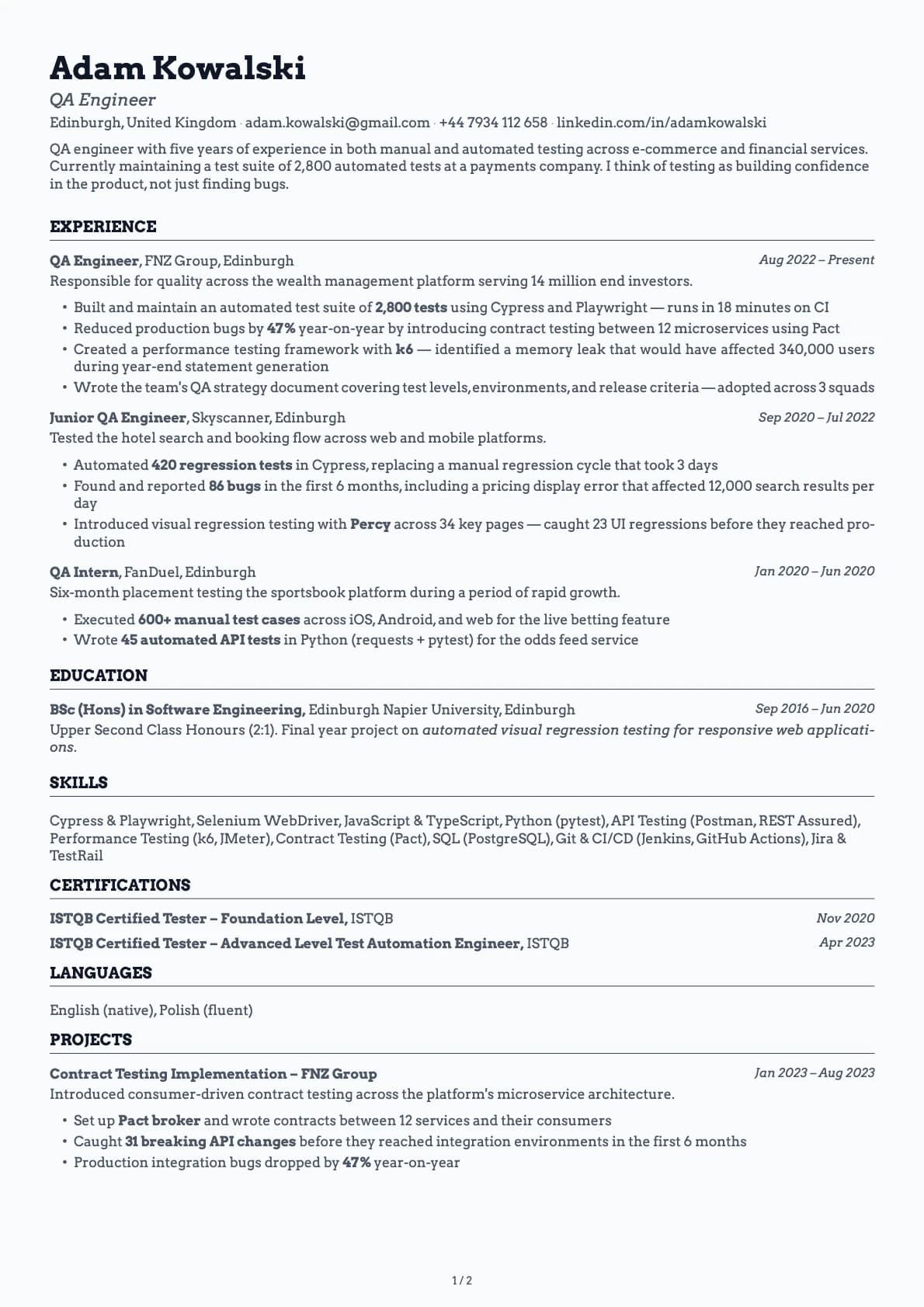
QA Engineer
A QA engineer resume example with automated test suite numbers, production bug reduction, and contract testing implementation details.
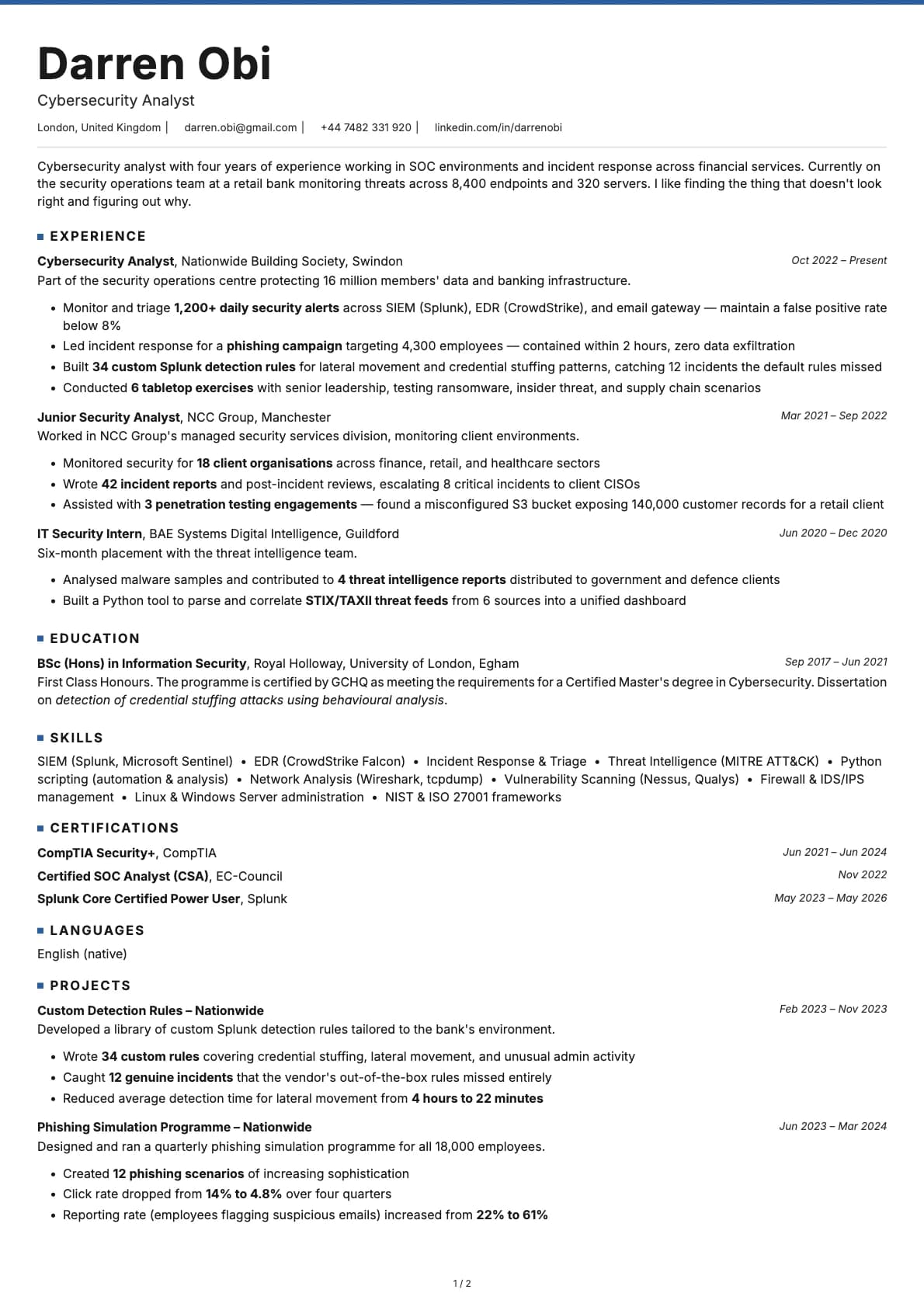
Cybersecurity Analyst
A cybersecurity analyst resume example with SOC experience at Nationwide and NCC Group.
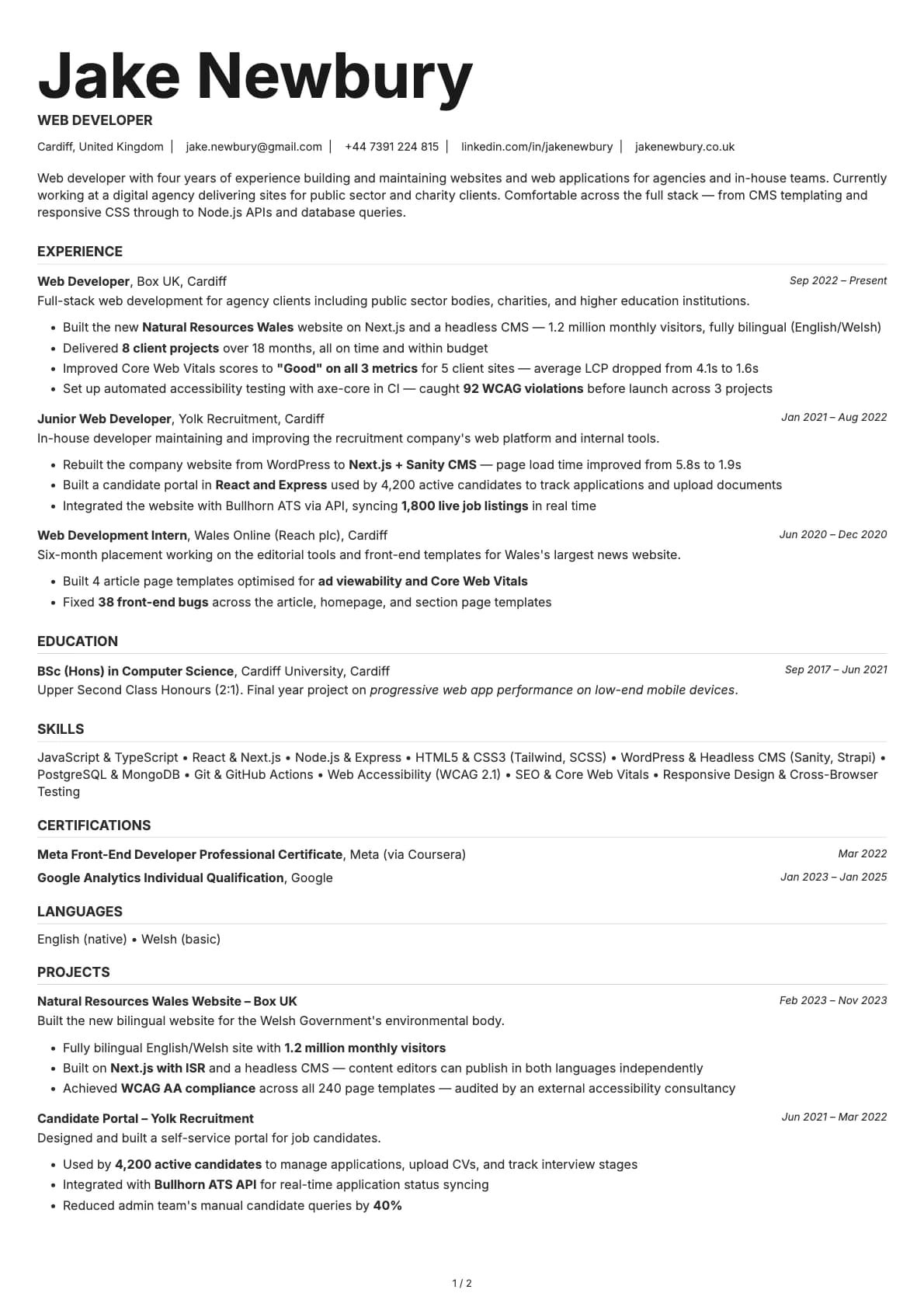
Web Developer
A web developer resume example with agency and in-house experience building Next.js sites, improving Core Web Vitals, and delivering accessible public.
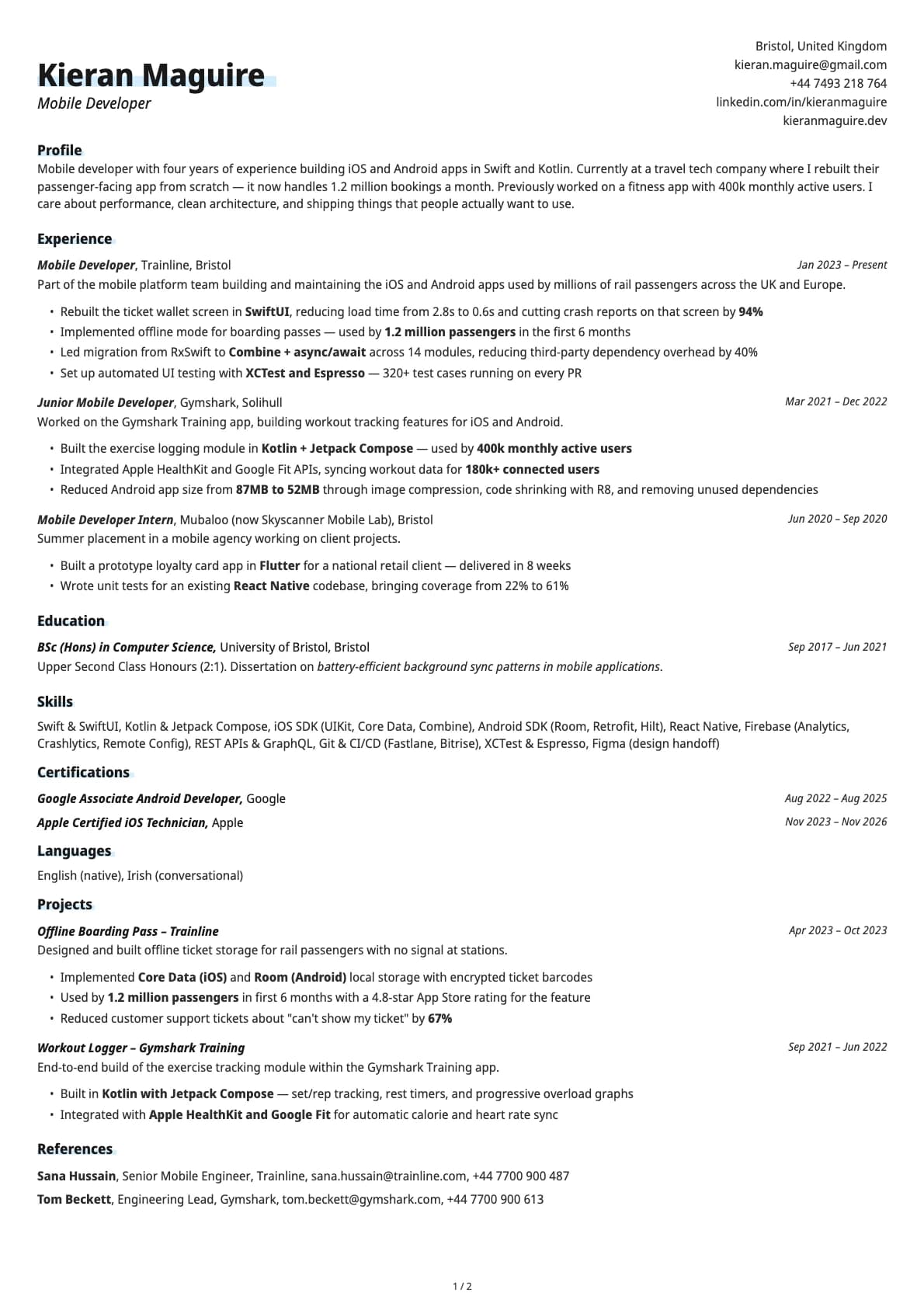
Mobile Developer
A mobile developer resume example with iOS and Android experience, performance metrics, and real app user numbers.
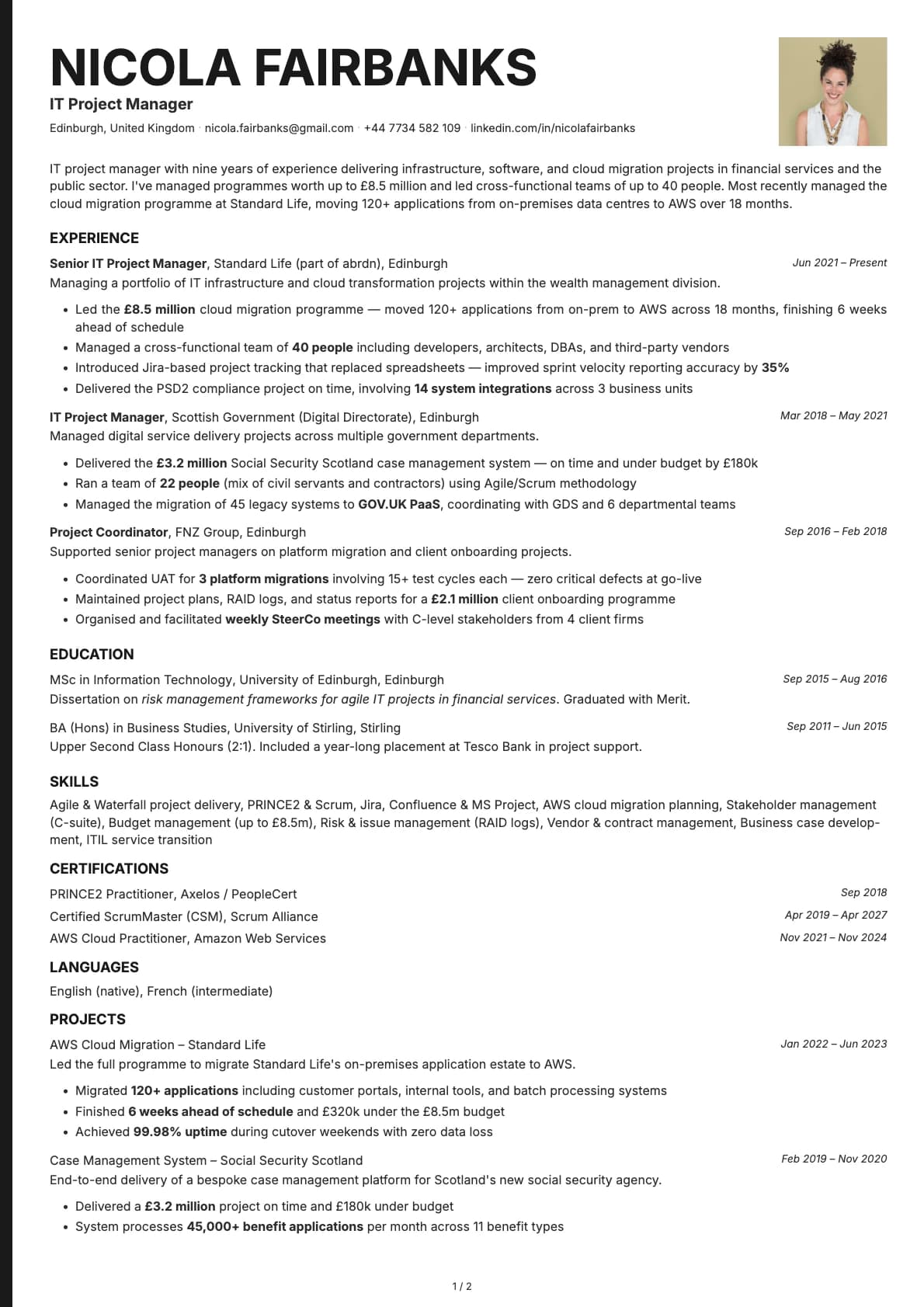
IT Project Manager
An IT project manager resume example with cloud migration, programme budgets up to £8.5 million, and PRINCE2/Scrum certifications.
Related articles

AI Is Screening Your Resume Before Any Human Sees It
AI screens most resumes before a human ever reads them. 97.4% of Fortune 500 companies run an ATS. This is what that means for you and what you can do about it.

ATS Resume Checker: How to Format a CV That Gets Past the Filters
Run the free copy and paste test to see what an ATS actually reads on your CV, then fix the tables, columns and headings that quietly get you filtered out.

The Best Resume Builders in 2026, Compared Honestly
Resume.io, Zety, Enhancv, Kickresume, Teal, and Laddro compared honestly: real pricing, free tiers, mobile apps, and where each tool wins. All prices checked in September 2026.