Cruise Ship Crew Resume Example
A cruise ship crew resume example for hospitality graduates entering the cruise industry. See how to present your STCW certification, onboard experience, and customer service skills.

Laddro Team
Free to use. No account needed to start.
Free to use. No account needed to start.
Overview
Working on a cruise ship is not just a hospitality job with a sea view. It is a role that requires maritime safety certification, the ability to live and work in a confined environment for months at a time, and the stamina to deliver consistently high service to hundreds of guests every day. Cruise lines like P&O, Cunard, Royal Caribbean, and MSC recruit thousands of crew members each year, but the barrier to entry is the STCW certificate (Standards of Training, Certification and Watchkeeping). Without it, you cannot work at sea.
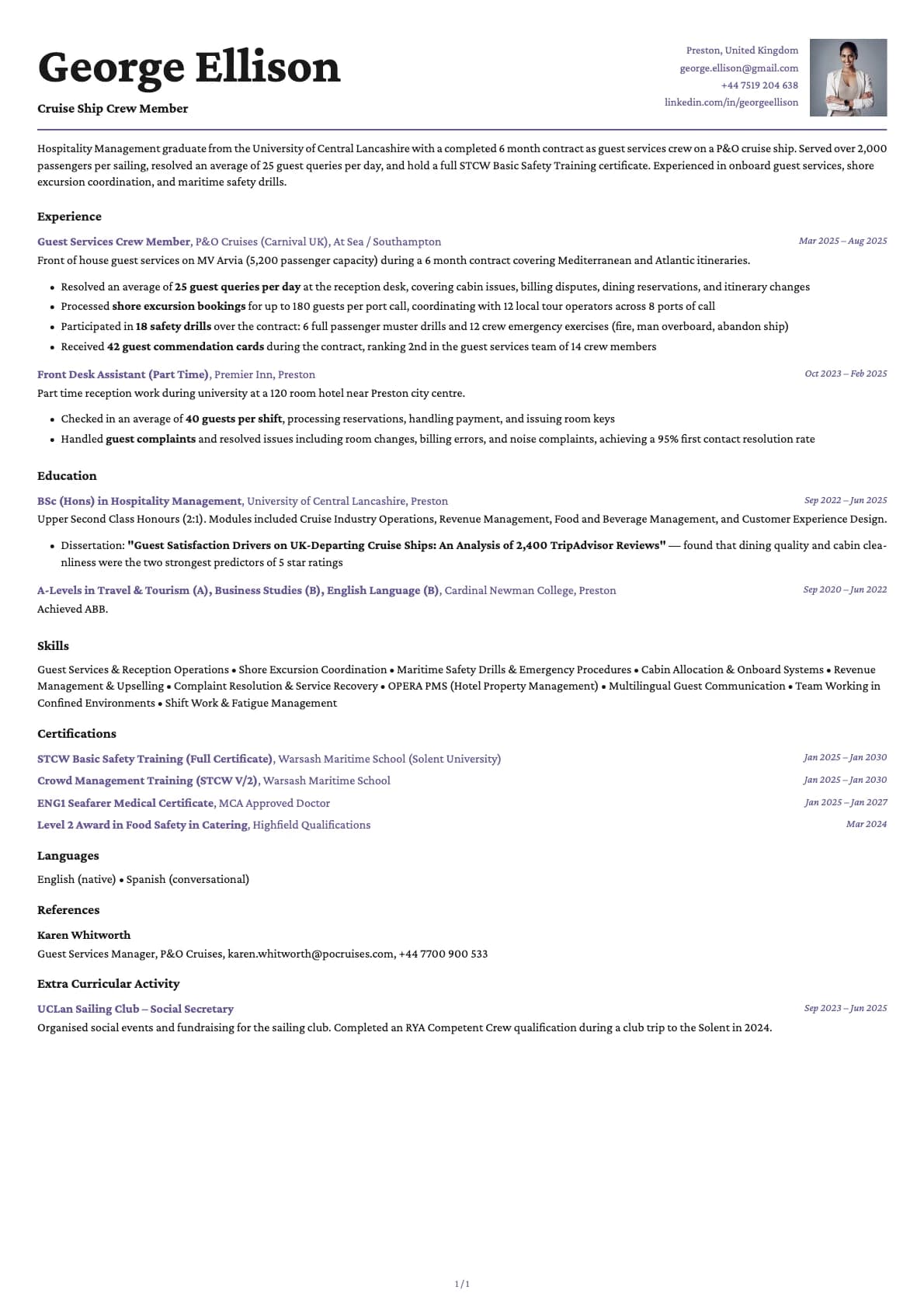
This resume belongs to George Ellison, a Hospitality Management graduate from the University of Central Lancashire (UCLan) who completed his STCW certification and has worked one 6 month contract as a guest services crew member on a P&O ship. He served over 2,000 passengers per sailing, resolved an average of 25 guest queries per day, and participated in 18 safety drills during his contract.
What Makes This Resume Work
The STCW certificate is listed prominently. George holds the full STCW Basic Safety Training certificate, which covers personal survival techniques, fire prevention, elementary first aid, and personal safety and social responsibilities. Without this, no cruise line will consider him. His resume lists it in both the summary and certifications section with the full module breakdown.
Onboard experience is described with scale. P&O ships carry between 1,800 and 5,200 passengers. George worked on a ship with 2,000 passenger capacity, and his duties covered guest services desk operations, cabin allocation, and shore excursion booking. The scale of the operation is important because cruise ship service is fundamentally different from hotel or restaurant work.
Safety drill participation demonstrates maritime awareness. George participated in 18 safety drills over his 6 month contract, including 6 full passenger muster drills and 12 crew only emergency exercises covering fire, man overboard, and abandon ship scenarios. Cruise lines take safety extremely seriously, and showing active participation in drills tells the recruiter he understands the maritime safety culture.
Multilingual guest interaction adds value. George speaks Spanish at conversational level and used it regularly when assisting Spanish speaking guests with shore excursion bookings and cabin queries. On international itineraries, language skills are a significant differentiator for front of house crew.
Key Takeaways
Get your STCW certificate before you apply. It is a legal requirement for working at sea and takes approximately 1 week of training. Without it, your application will not be processed regardless of your hospitality experience.
Describe the scale of the ship and the operation. Passenger capacity, guest queries per day, cabins managed, and shore excursions booked. Cruise recruiters think in volume, and your numbers need to match.
Include your safety drill participation and any maritime training beyond STCW. Crowd management, crisis management, and medical first aid are all additional certificates that cruise lines value.
Build your own version
Open this layout in the builder and swap in your own details. It takes a few minutes.
Free to use. No account needed to start.
Was this resume example helpful?
Rate this example to help us create better content for you.
4.6 average from 74 ratingsRelated resume examples
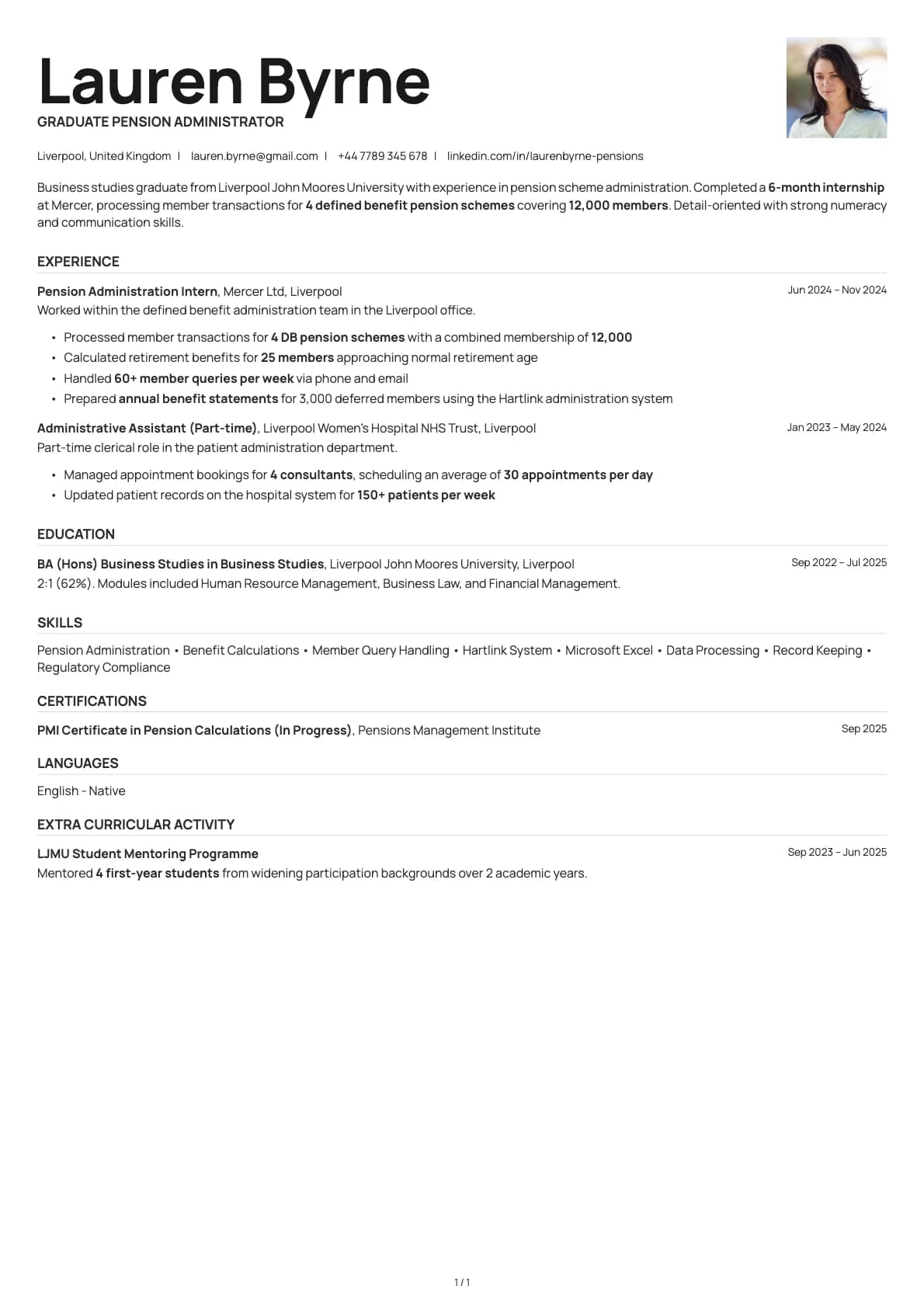
Graduate Pension Administrator
A graduate pension administrator resume example with Mercer internship and benefit calculation experience.
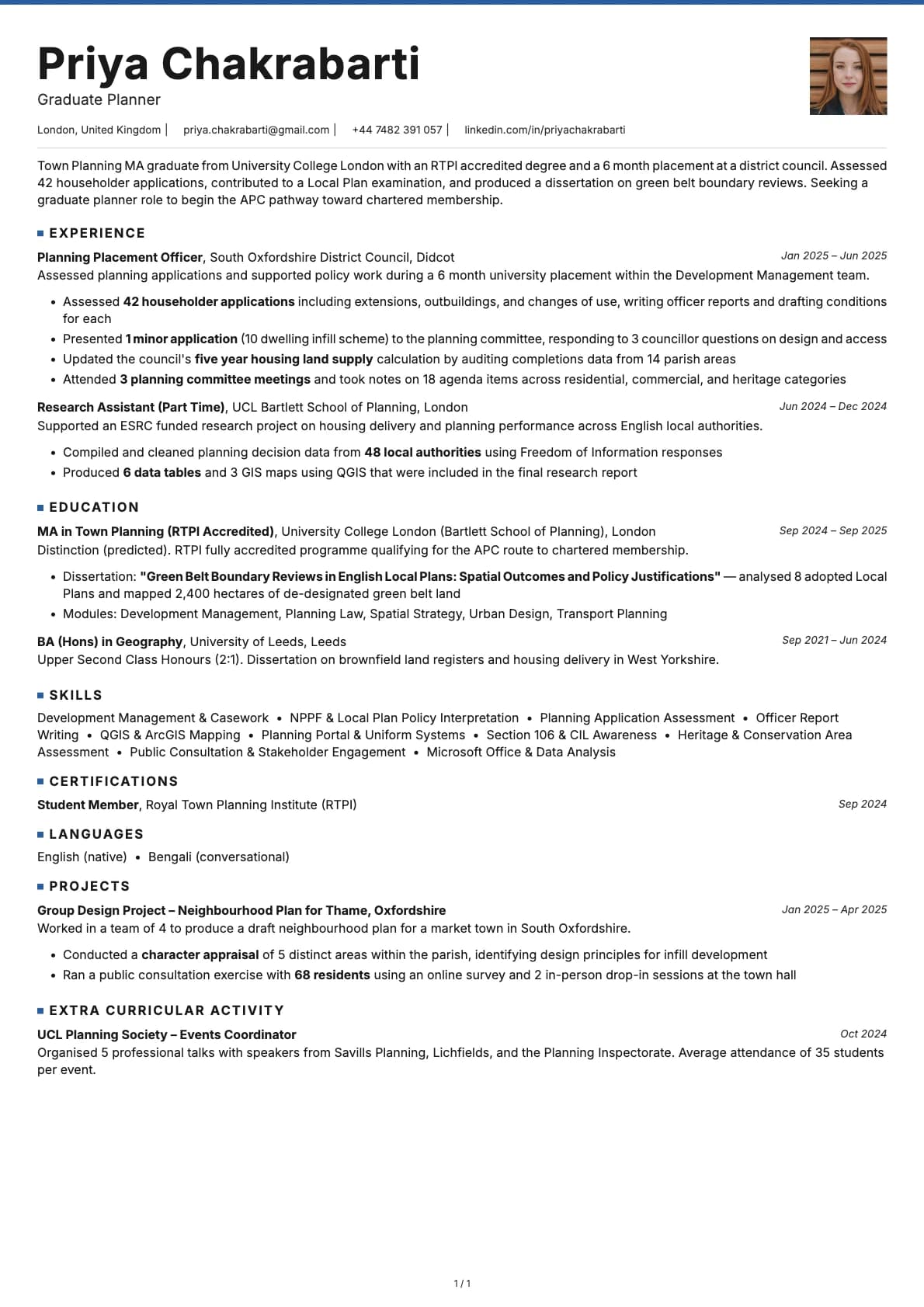
Graduate Planner
A graduate planner resume example for town planning MA graduates. See how to present your RTPI accredited degree, planning applications experience, and policy knowledge.
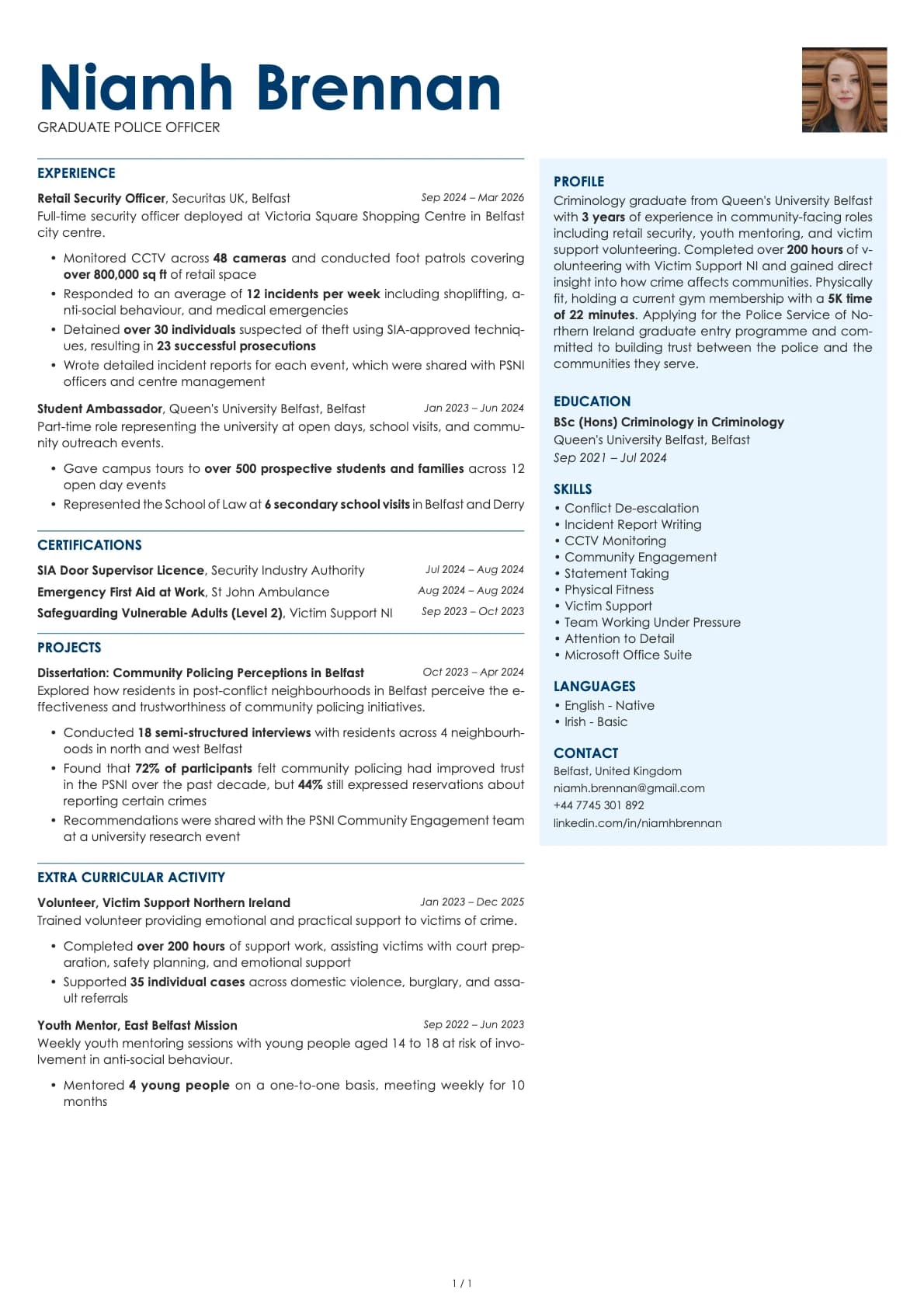
Graduate Police Officer
A graduate police officer resume example showing how to turn retail security, victim support volunteering, and a criminology degree into a strong PSNI application.
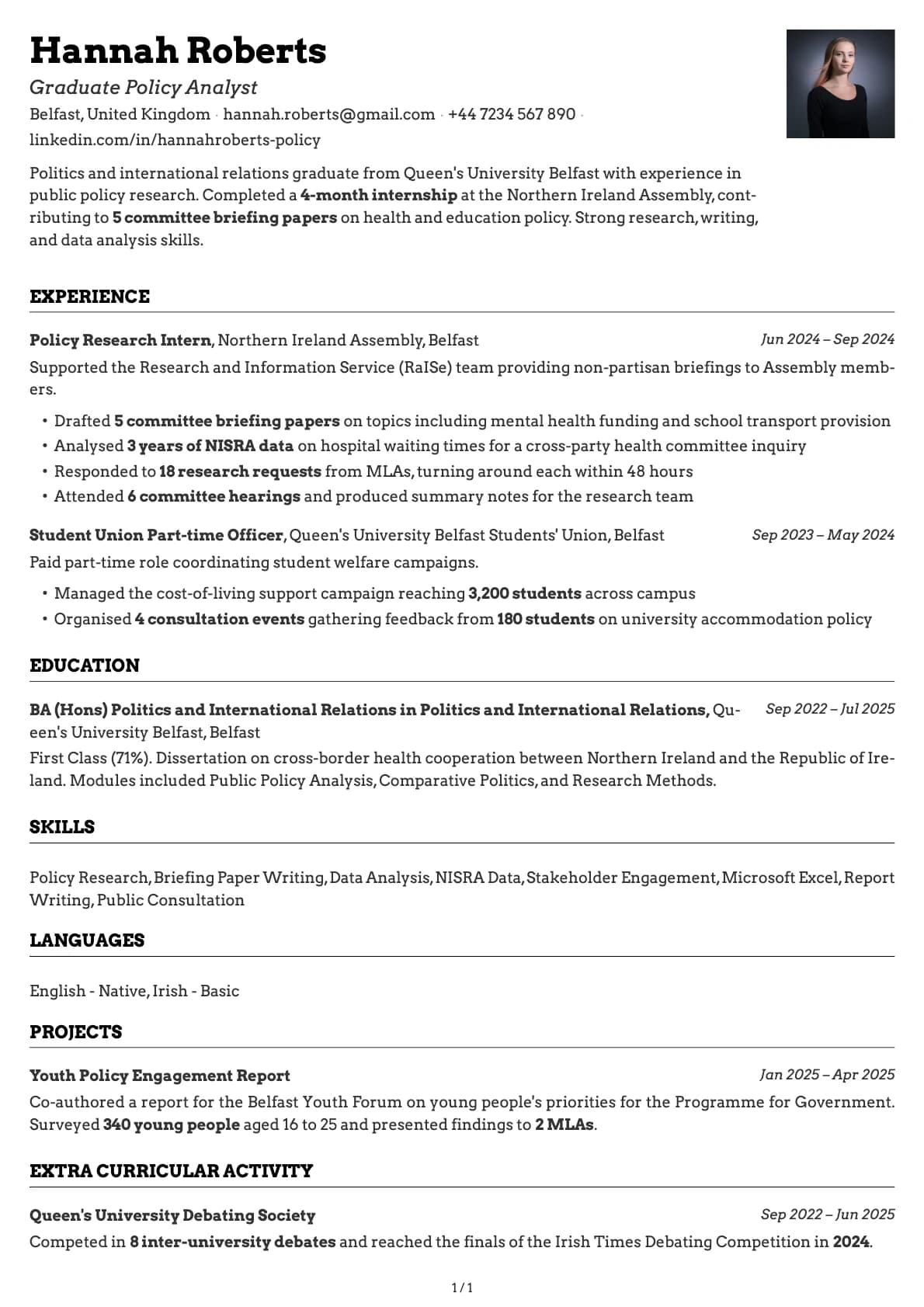
Graduate Policy Analyst
A graduate policy analyst resume example with Northern Ireland Assembly internship and public policy research experience.
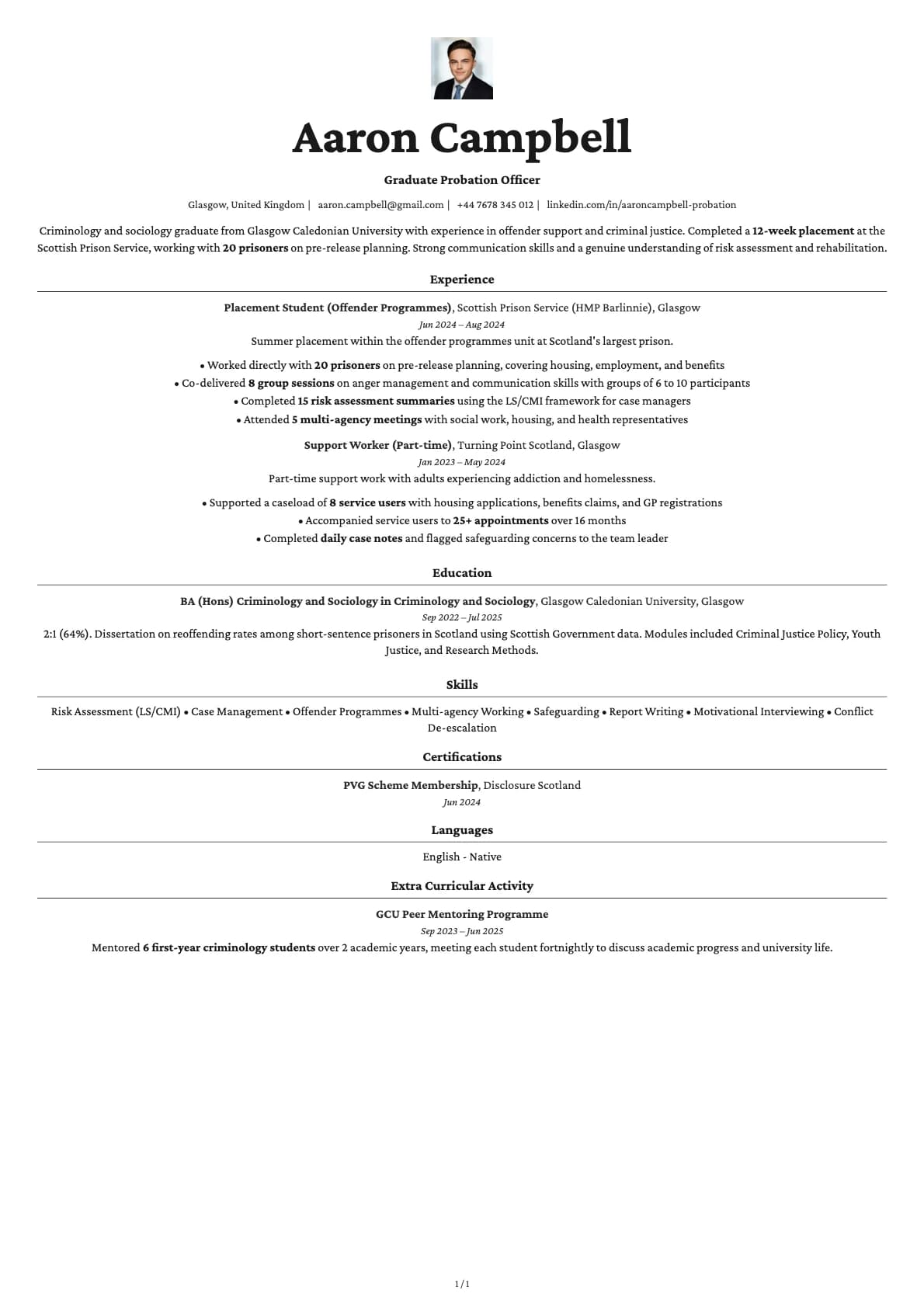
Graduate Probation Officer
A graduate probation officer resume example with prison placement experience and risk assessment skills.
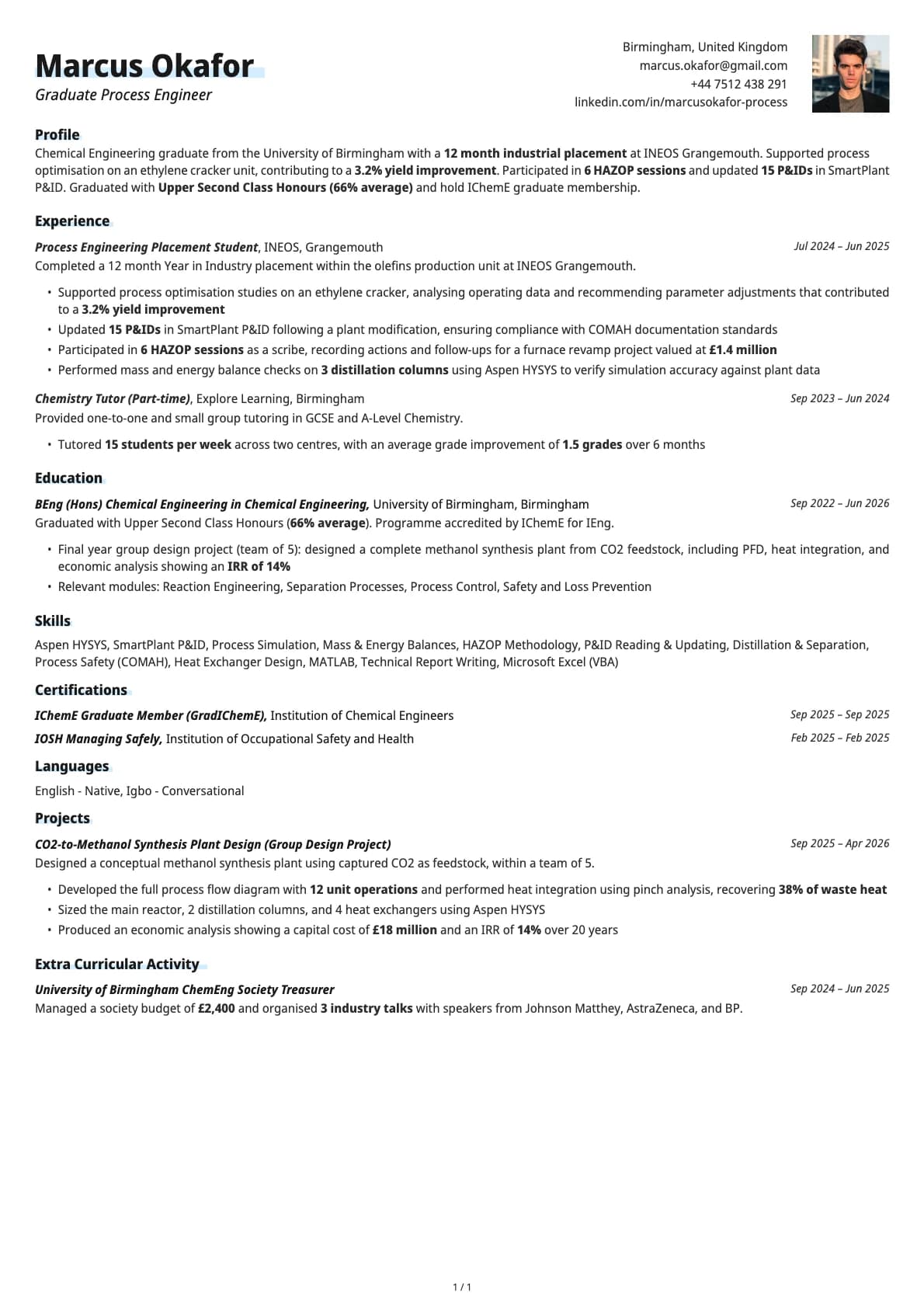
Graduate Process Engineer
A graduate process engineer resume example with chemical plant placement experience, HAZOP participation, and IChemE membership.
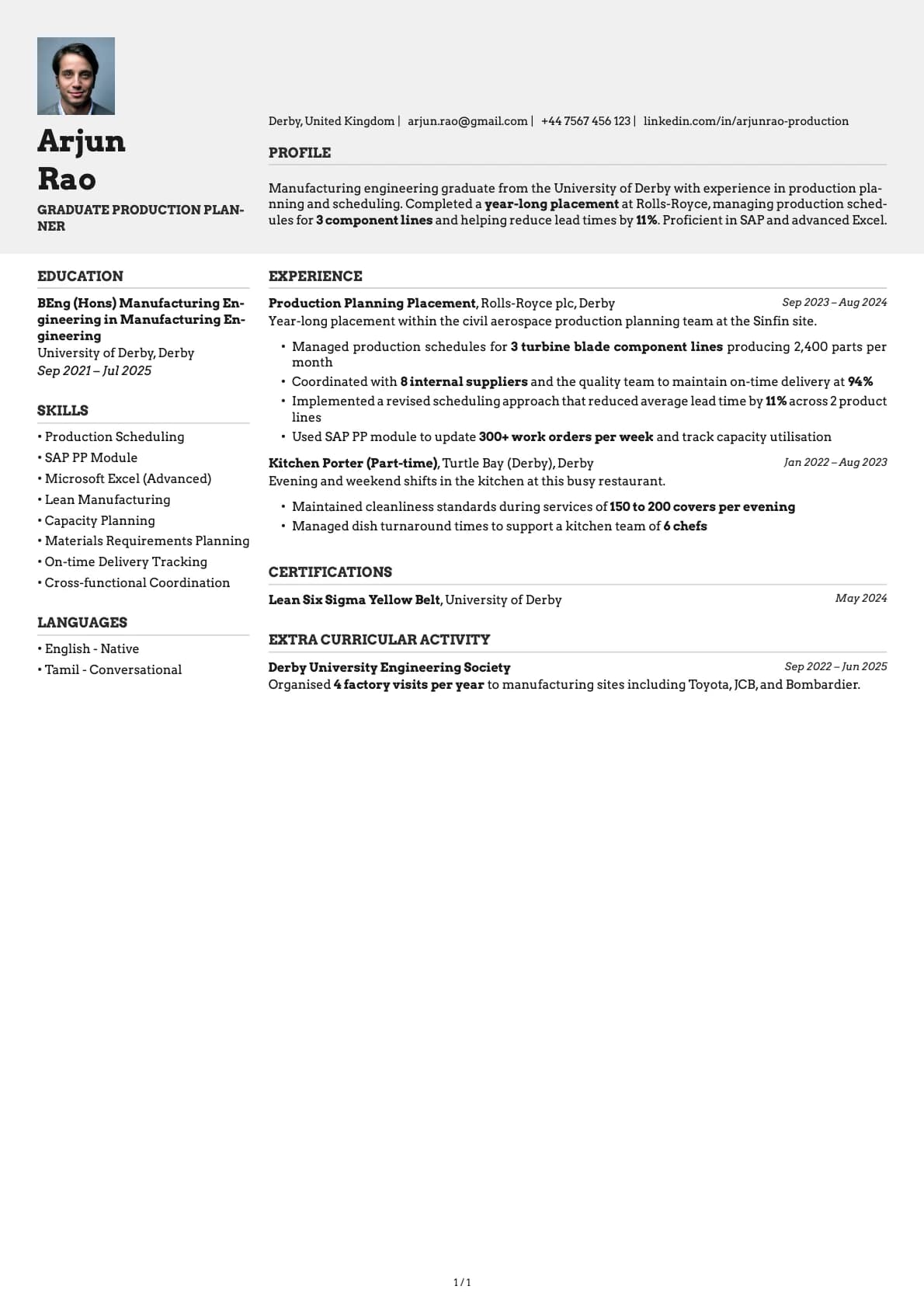
Graduate Production Planner
A graduate production planner resume example with Rolls-Royce placement and SAP scheduling experience.
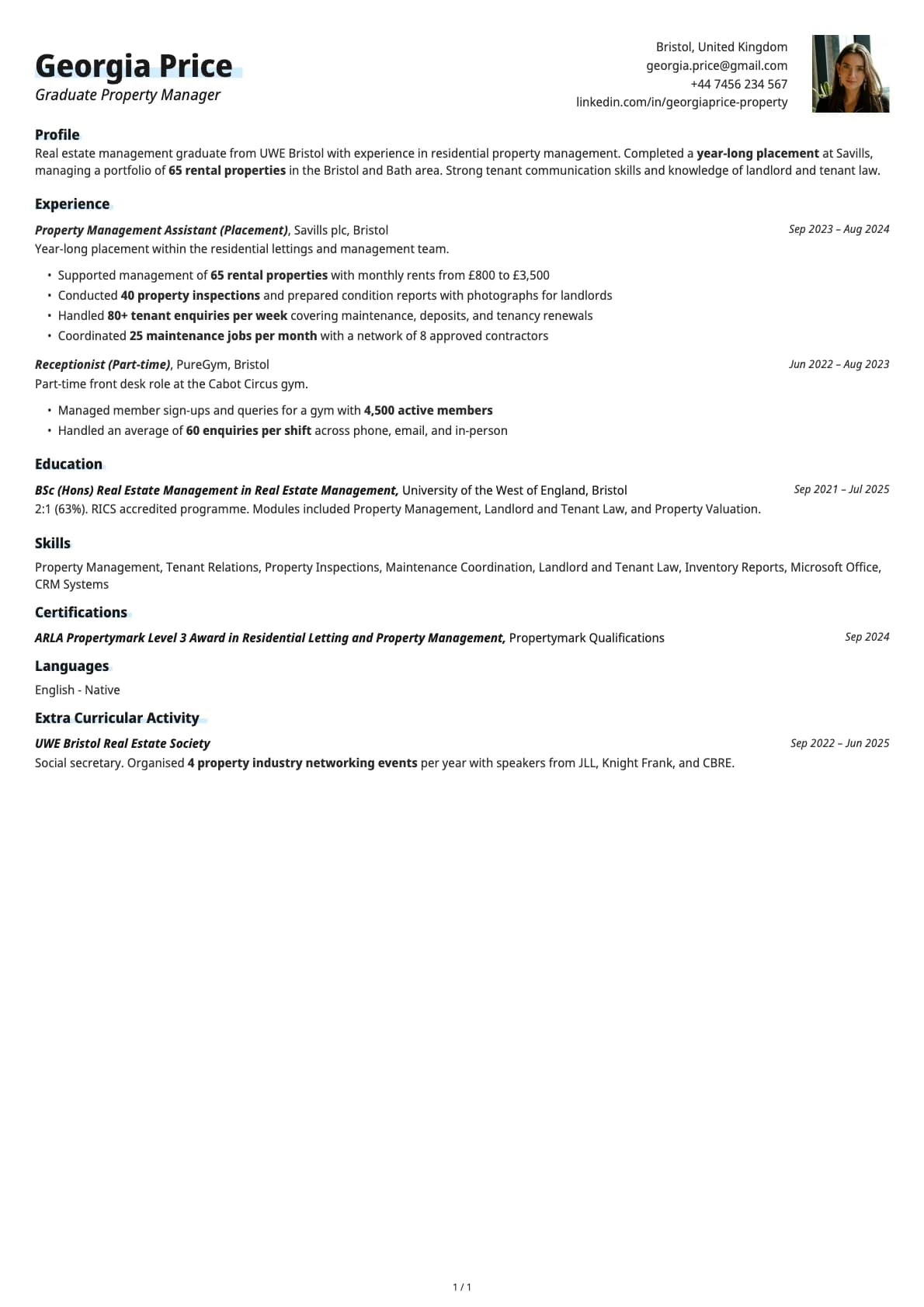
Graduate Property Manager
A graduate property manager resume example with Savills placement and residential lettings experience.

Graduate Quantity Surveyor
A graduate quantity surveyor resume example with a construction placement year. See how to present valuations, measurement skills, and NEC contract experience.
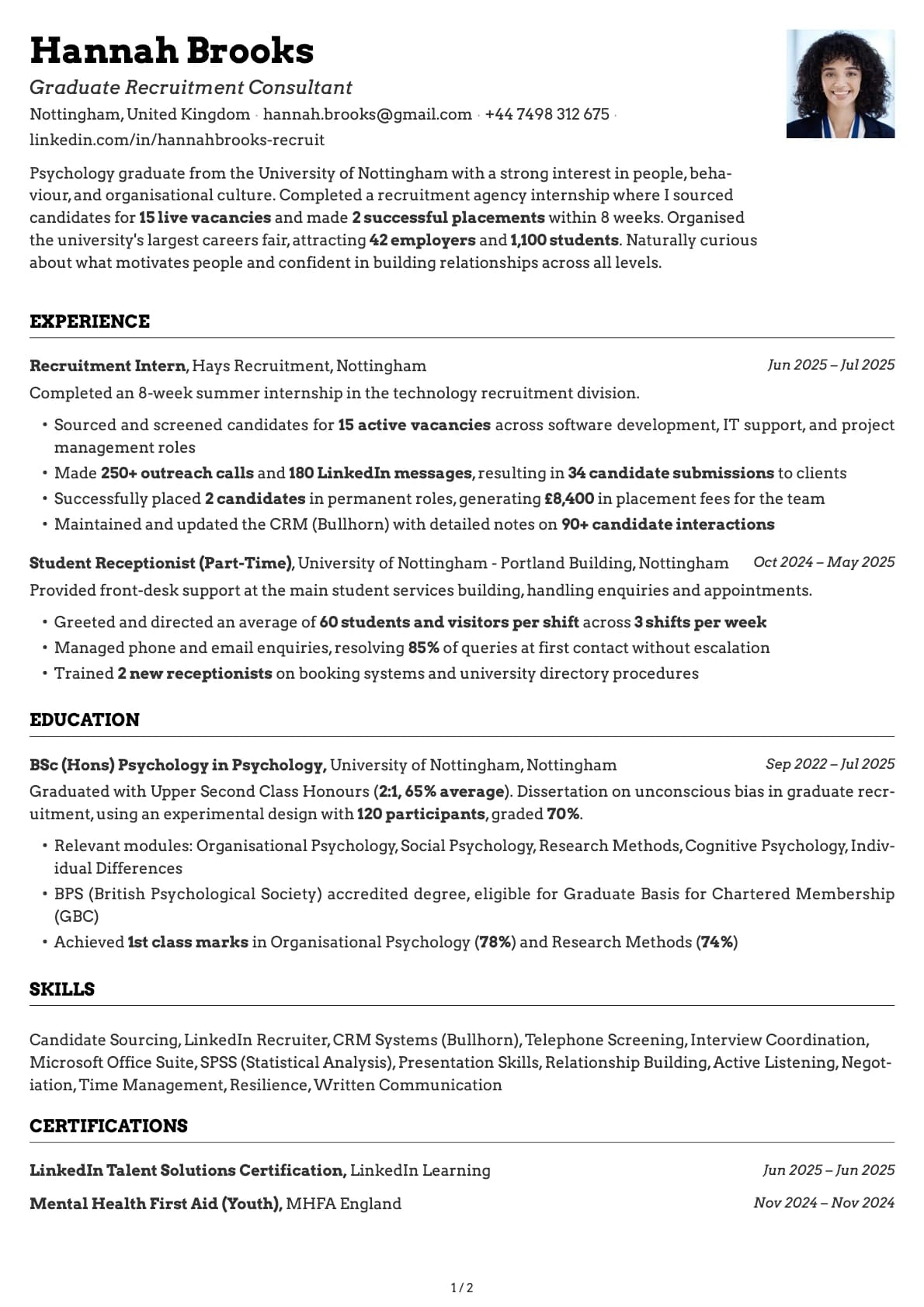
Graduate Recruitment Consultant
A graduate recruitment consultant resume example for recent graduates. Learn how to present your communication skills, sales experience, and people skills for recruitment roles.
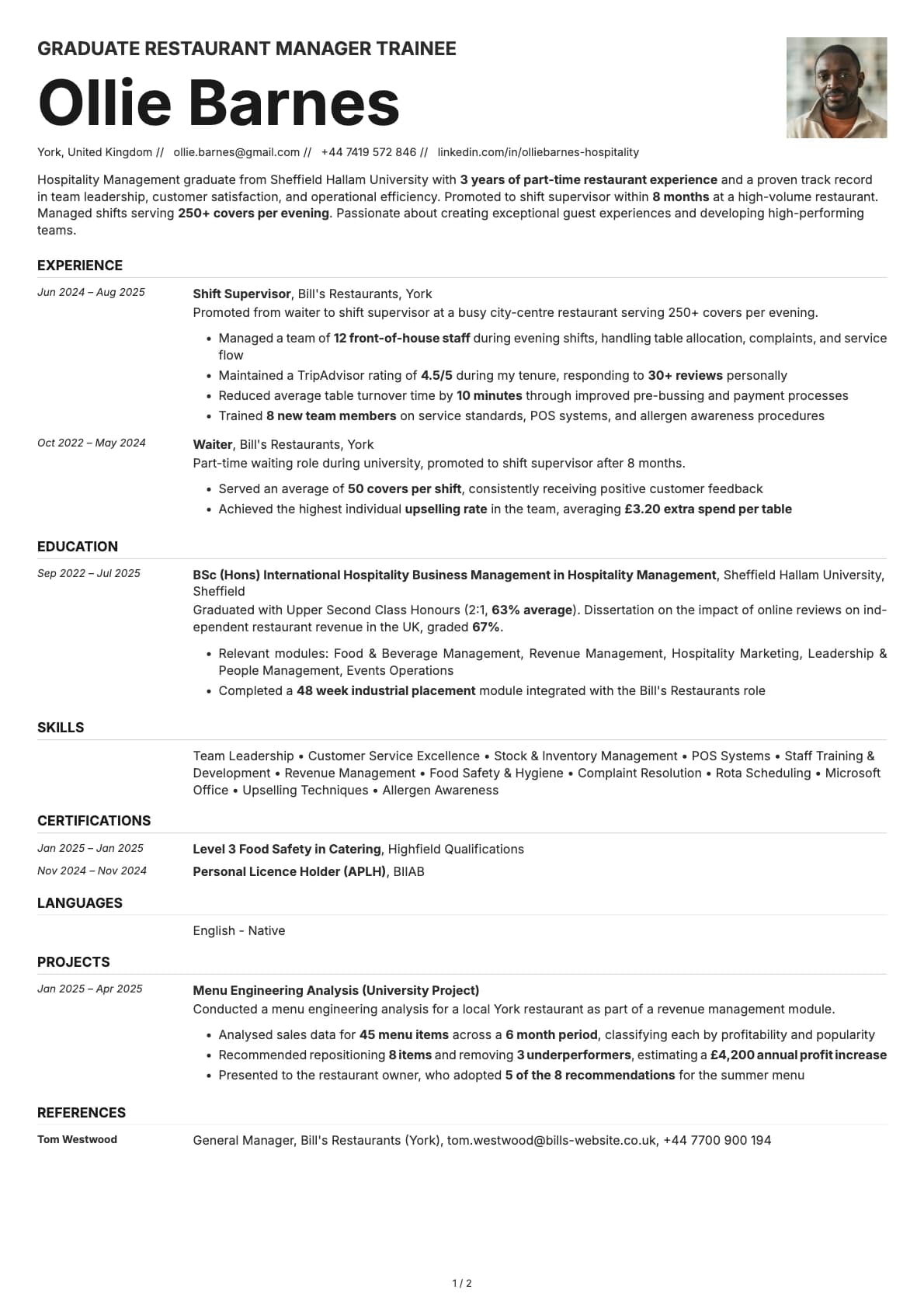
Graduate Restaurant Manager Trainee
A graduate restaurant manager trainee resume example. See how to present shift leadership, customer satisfaction, and hospitality qualifications to land your first management trainee role.
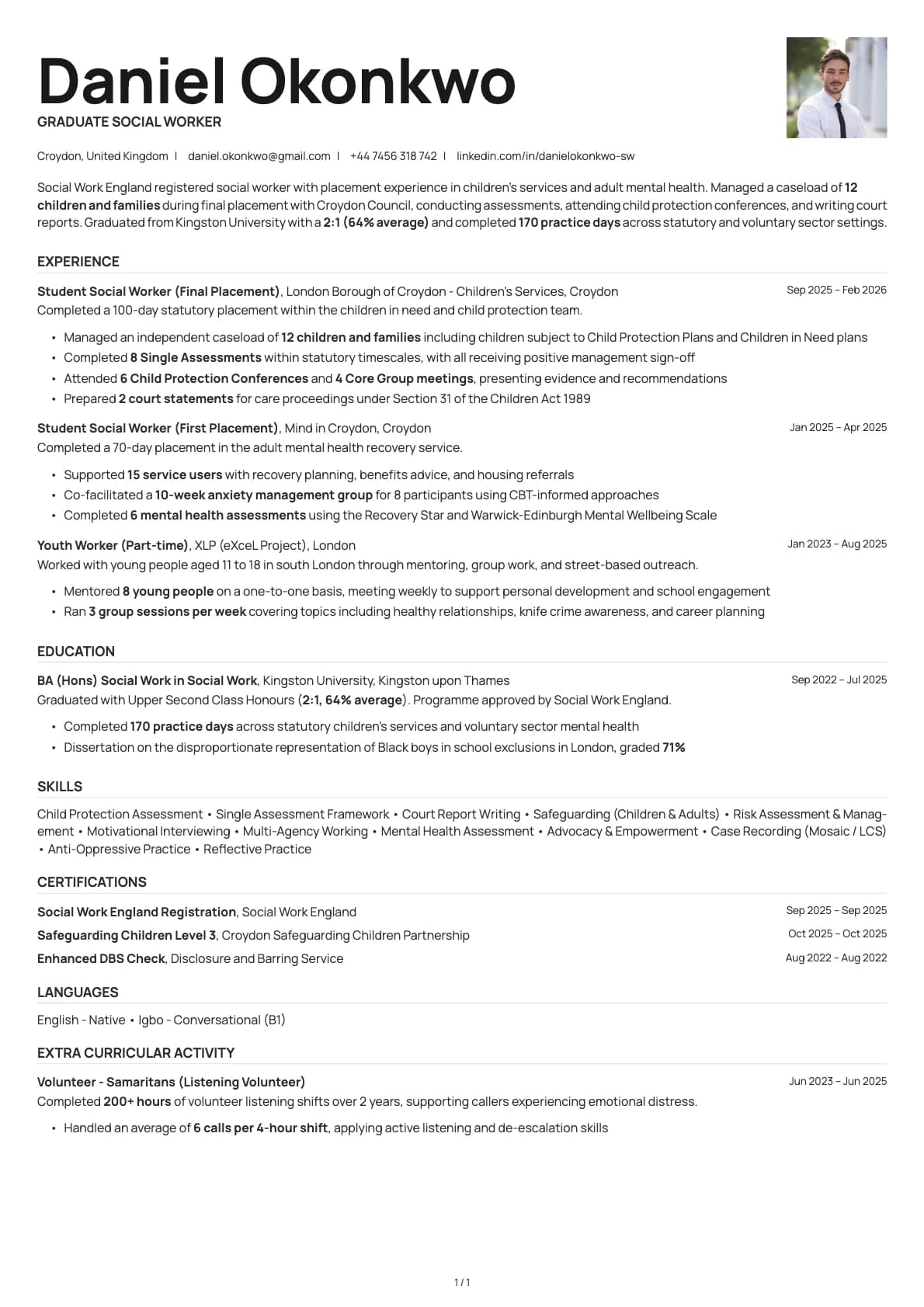
Graduate Social Worker
A graduate social worker resume example with statutory placement experience, caseload numbers, and Social Work England registration for NQSWs.