Junior Environmental Consultant Resume Example
A junior environmental consultant resume example with ecological survey experience, PEA report writing, and GIS mapping skills for graduates.

Laddro Team
Free to use. No account needed to start.
Free to use. No account needed to start.
Overview
Environmental consultancy is one of the fastest-growing sectors in the UK, driven by Biodiversity Net Gain requirements, planning reform, and increasing demand for ecological surveys. Consultancies need graduates who can conduct fieldwork independently, write technical reports, and produce GIS maps. A driving licence and willingness to work unsociable survey hours are also essential.
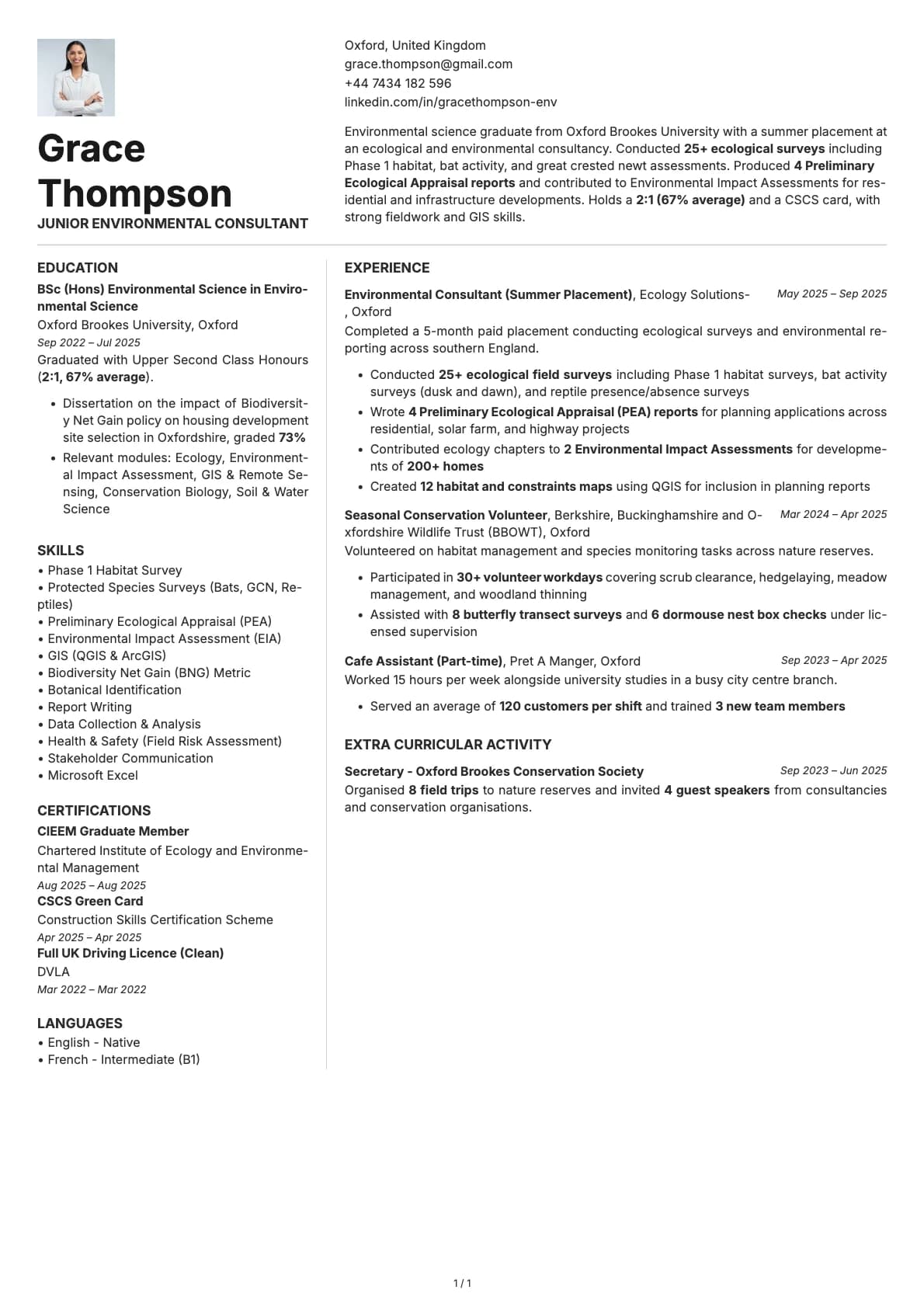
This resume belongs to Grace Thompson, an environmental science graduate from Oxford Brookes University who completed a five-month placement at Ecology Solutions. She conducted 25 ecological surveys, wrote 4 PEA reports, and contributed to 2 EIAs for major developments. Her wildlife trust volunteering and strong GIS skills complete a compelling profile for a junior consultant role.
What Makes This Resume Work
Fieldwork and report writing are both represented. Grace shows she can do the outdoor work (25 surveys across multiple species groups) and the desk-based work (4 PEA reports, 2 EIA contributions, 12 GIS maps). Consultancies need both, and many graduates are stronger in one area than the other.
Species survey experience covers key protected species. Bat activity surveys, great crested newt assessments, and reptile surveys are three of the most commonly commissioned survey types. Having experience with all three makes Grace immediately useful to any ecology consultancy.
Wildlife trust volunteering shows genuine commitment. Over 30 volunteer workdays on practical conservation and species monitoring demonstrate that Grace chose this career out of genuine interest, not just because it was available. This matters in a sector where early-career burnout from long fieldwork hours is common.
Key Takeaways
Junior environmental consultants should list the specific survey types they have conducted and the number of surveys completed. Include any reports written, GIS maps produced, and contributions to EIAs. CIEEM membership, a CSCS card, and a clean driving licence are all essential to list. Any experience with the BNG metric or specific protected species survey techniques should be highlighted, as demand for these skills is currently very high.
Build your own version
Open this layout in the builder and swap in your own details. It takes a few minutes.
Free to use. No account needed to start.
Was this resume example helpful?
Rate this example to help us create better content for you.
4.6 average from 94 ratingsRelated resume examples
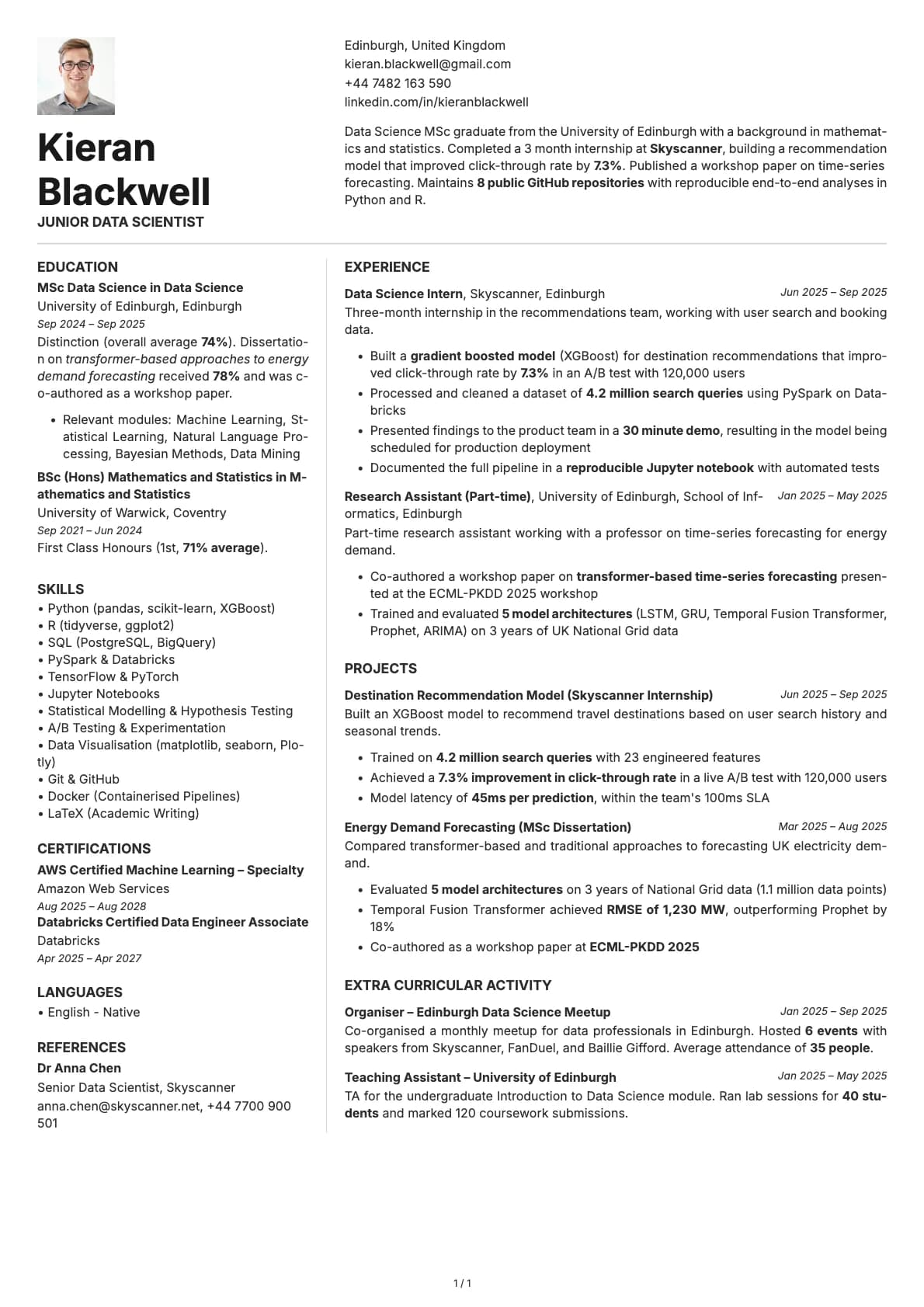
Junior Data Scientist
A junior data scientist resume example with Python projects, model accuracy metrics, and published research from a Data Science MSc graduate entering the field.
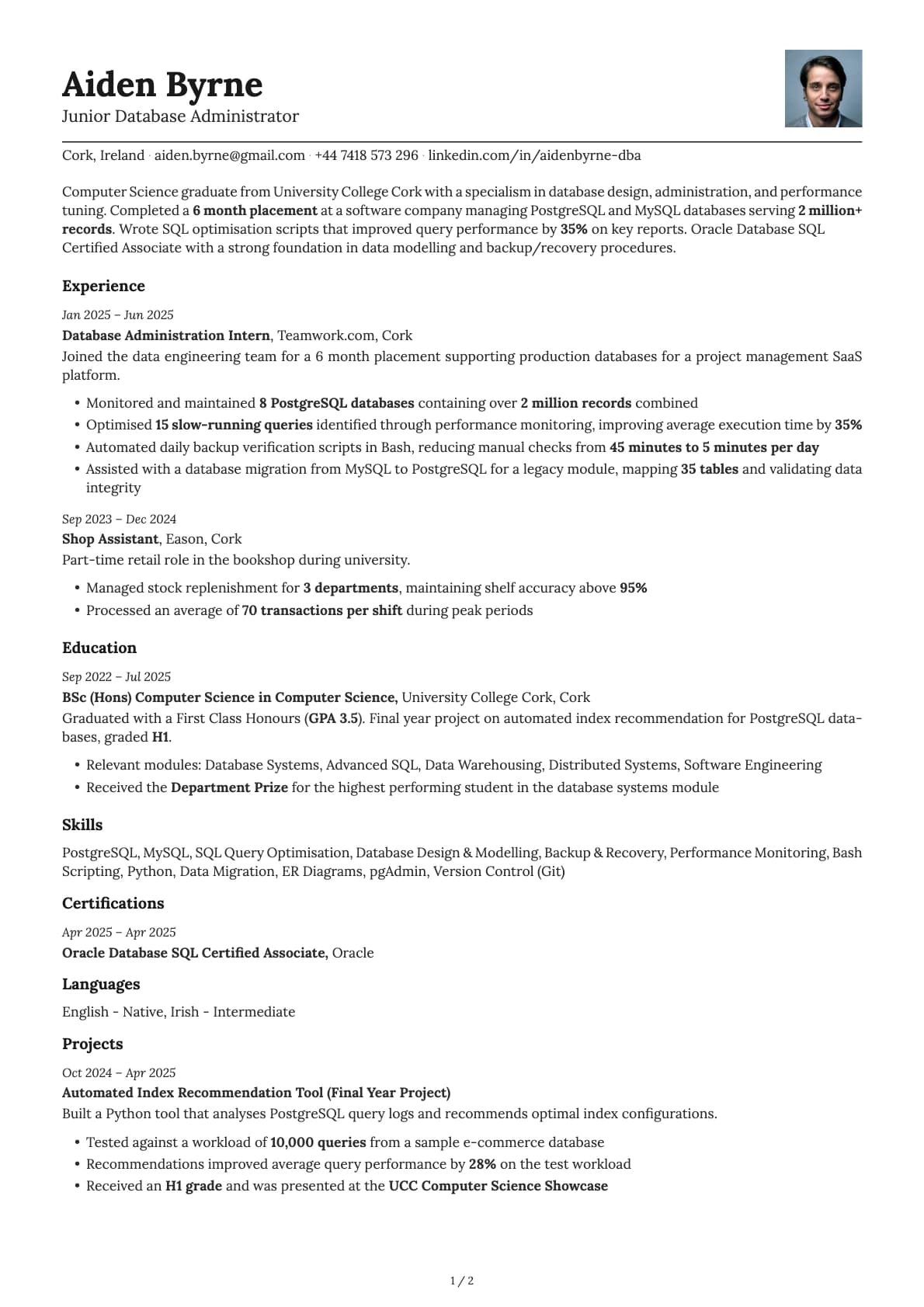
Junior Database Administrator
A junior database administrator resume example for graduates. See how to present SQL skills, performance tuning, and database management experience to land your first DBA role.
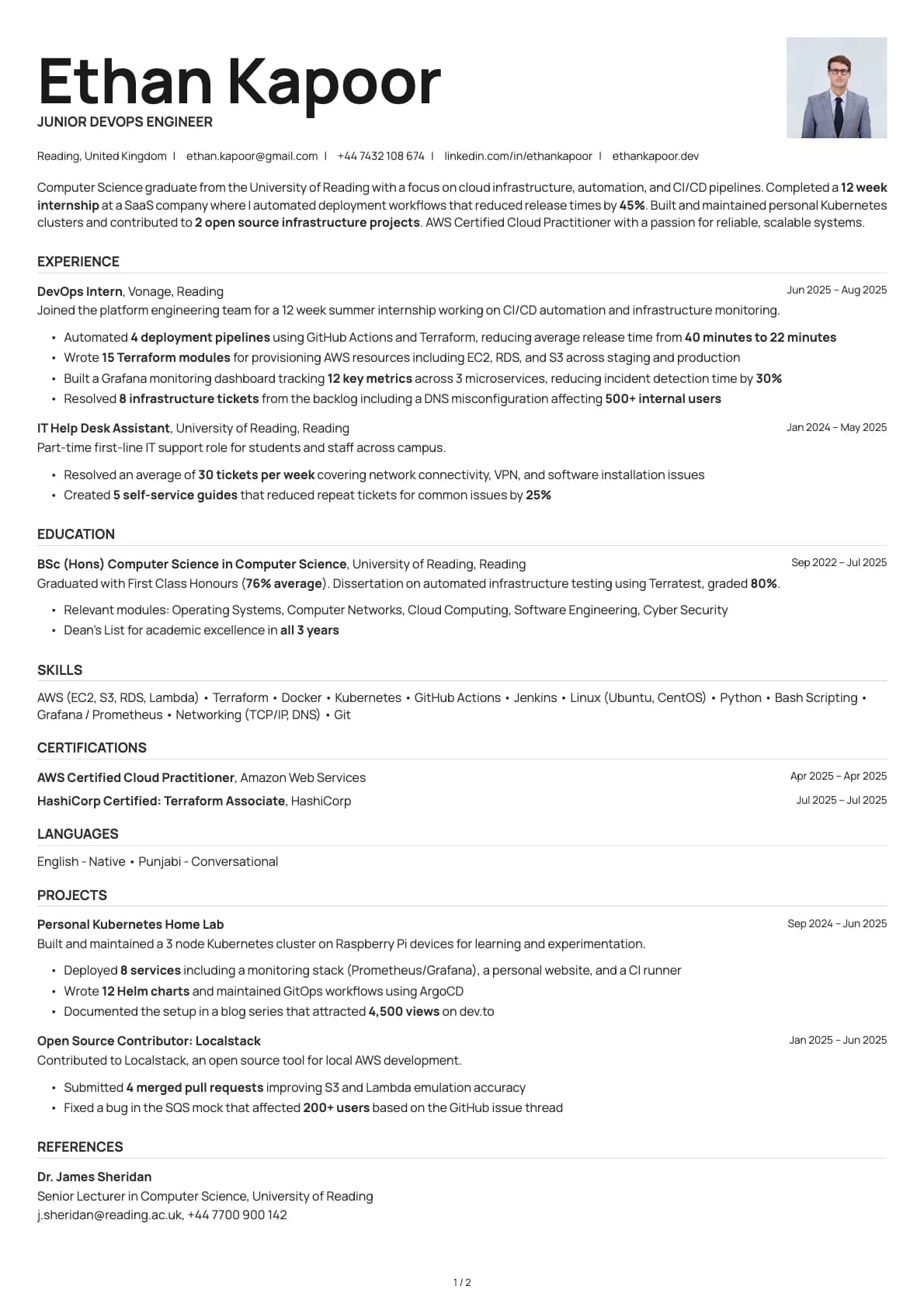
Junior DevOps Engineer
A junior DevOps engineer resume example for graduates. See how to present CI/CD experience, cloud certifications, and infrastructure projects to land your first DevOps role.
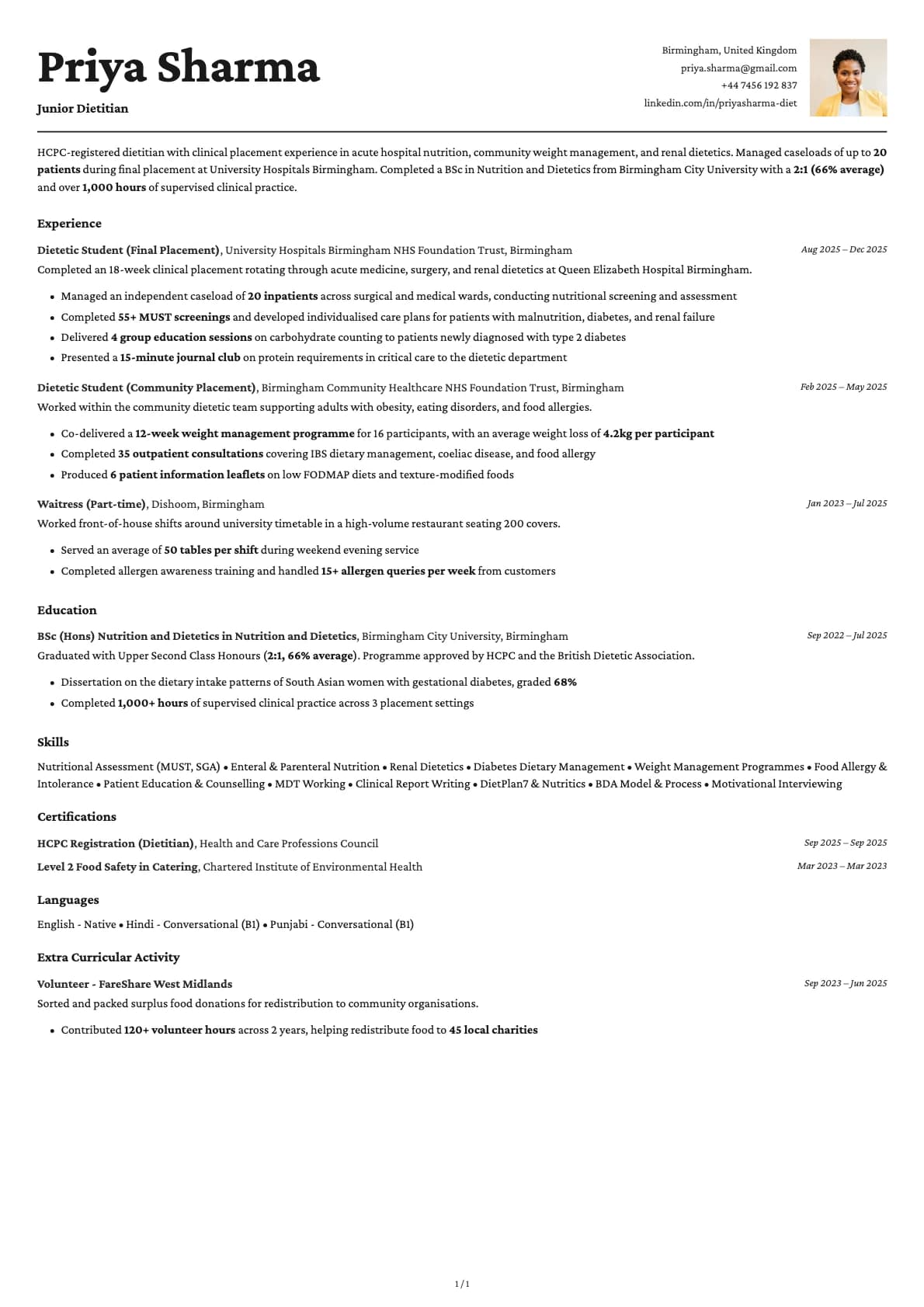
Junior Dietitian
A junior dietitian resume example with NHS clinical placement experience, HCPC registration, and patient caseload numbers for new graduates.
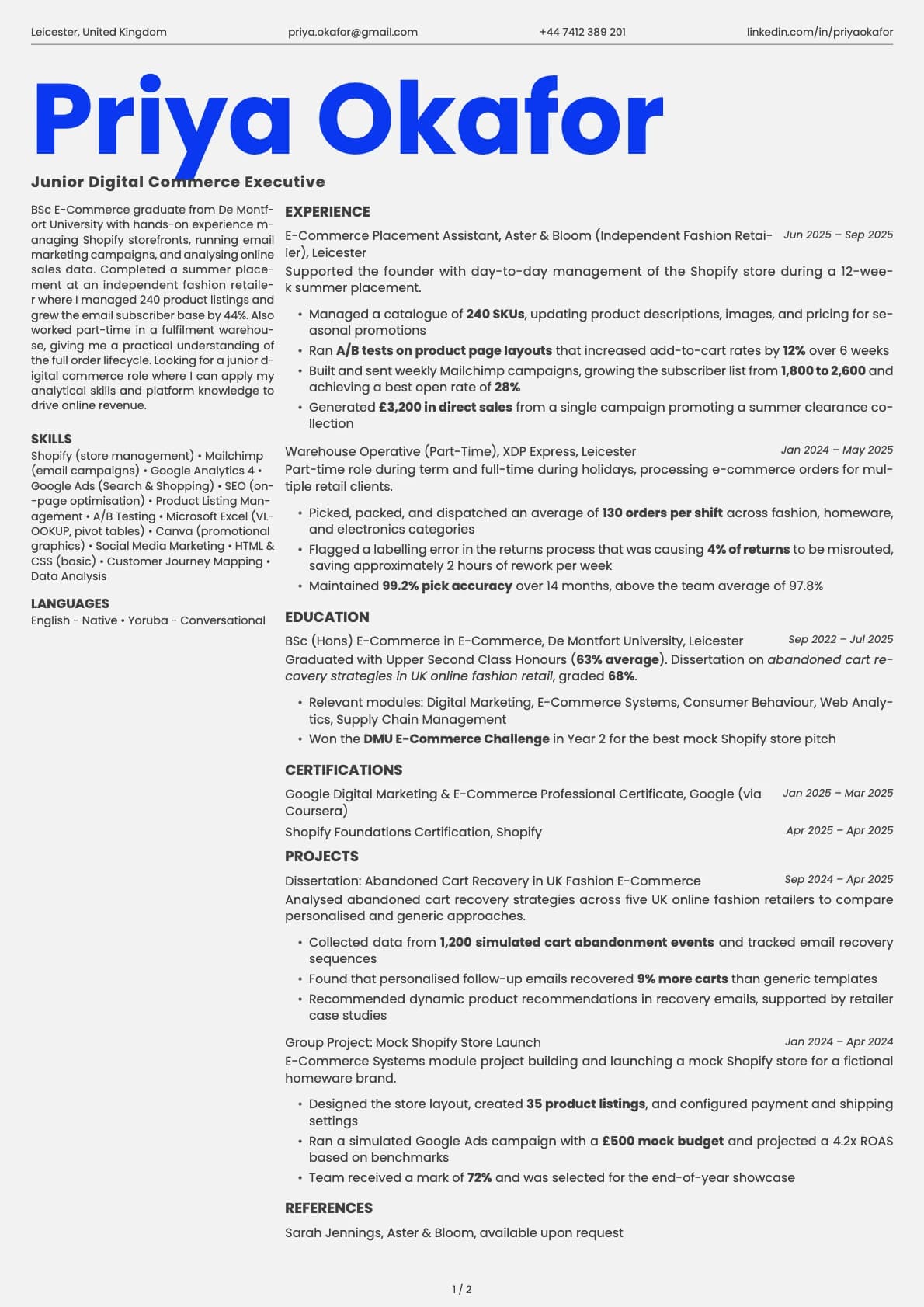
Junior Digital Commerce Executive
A junior digital commerce executive resume example showing how an e-commerce graduate used Shopify internships and campaign metrics to land a first role.
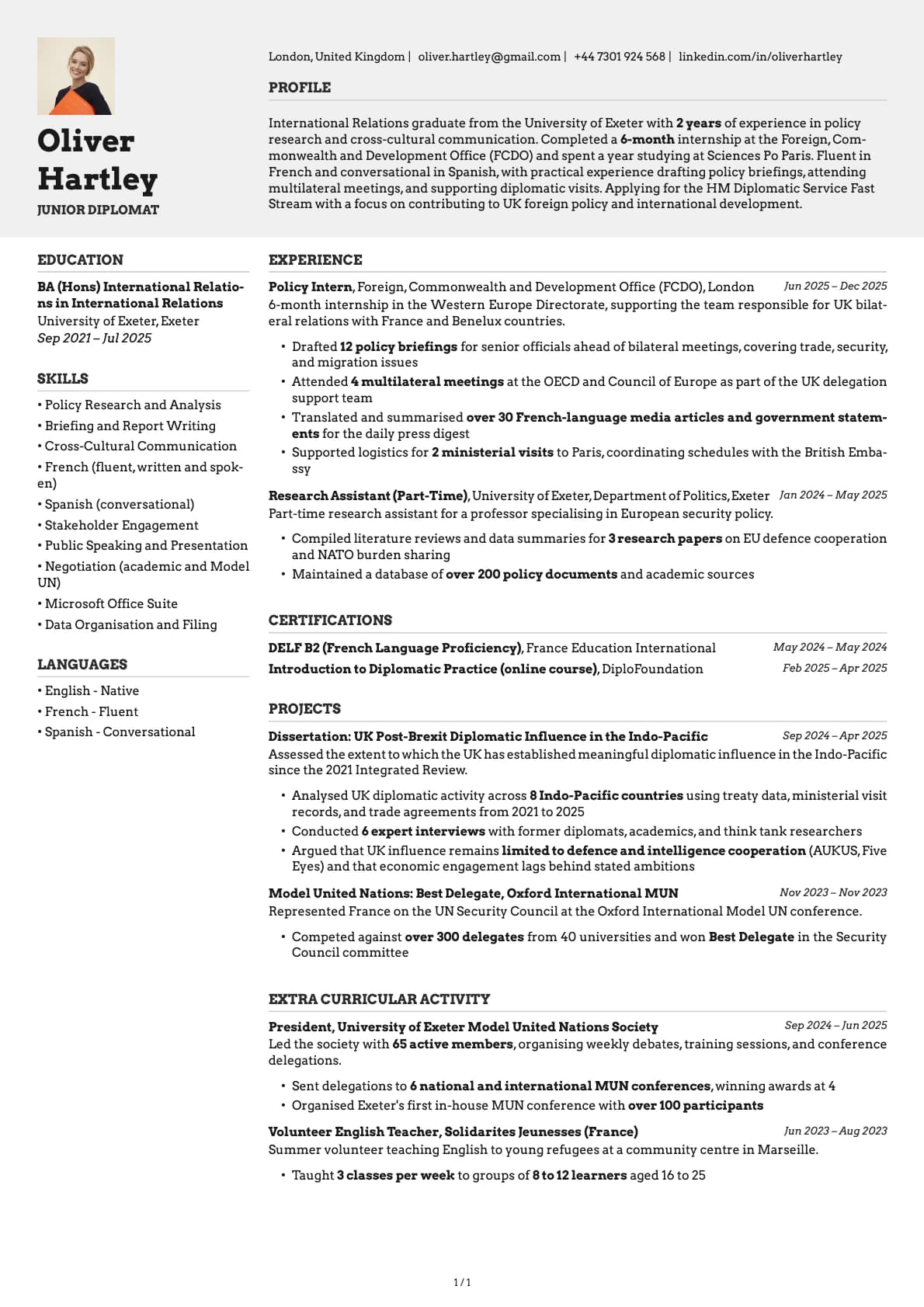
Junior Diplomat
A junior diplomat resume example showing how to combine an FCDO internship, a year at Sciences Po, and Model UN leadership into a Fast Stream application.
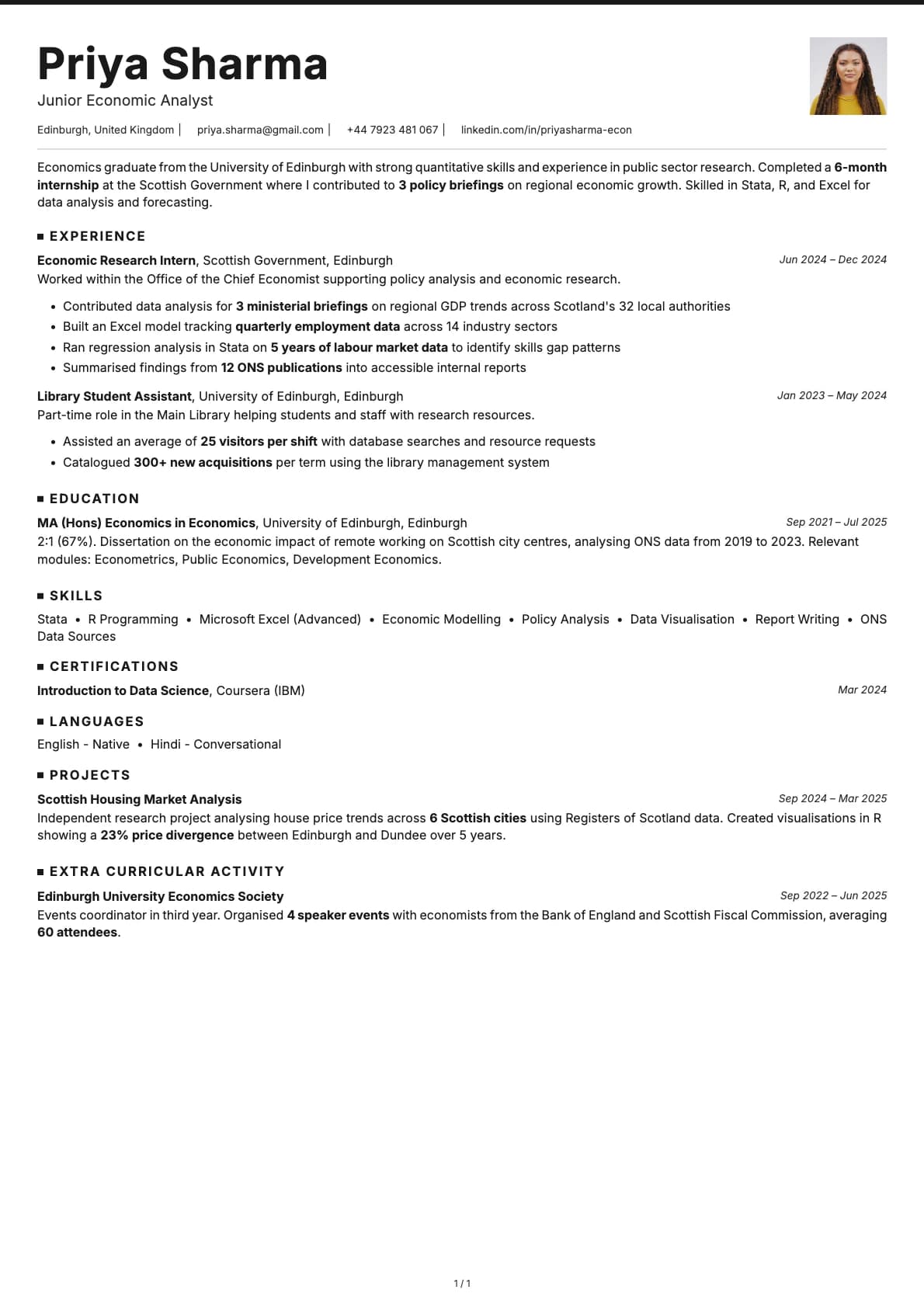
Junior Economic Analyst
A junior economic analyst resume example with government internship experience and strong quantitative skills.
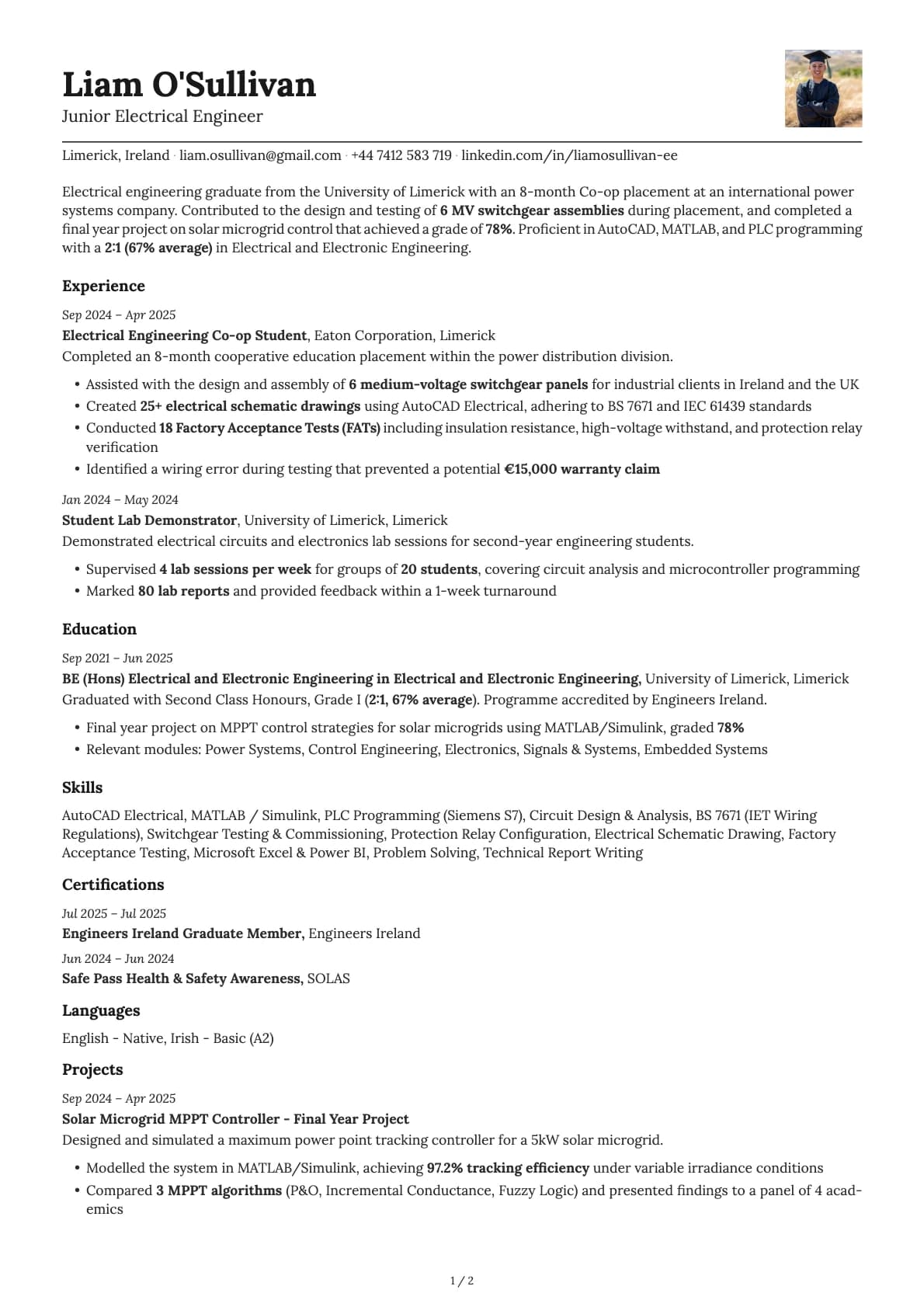
Junior Electrical Engineer
A junior electrical engineer resume example with power systems placement experience, AutoCAD skills, and Engineers Ireland membership.
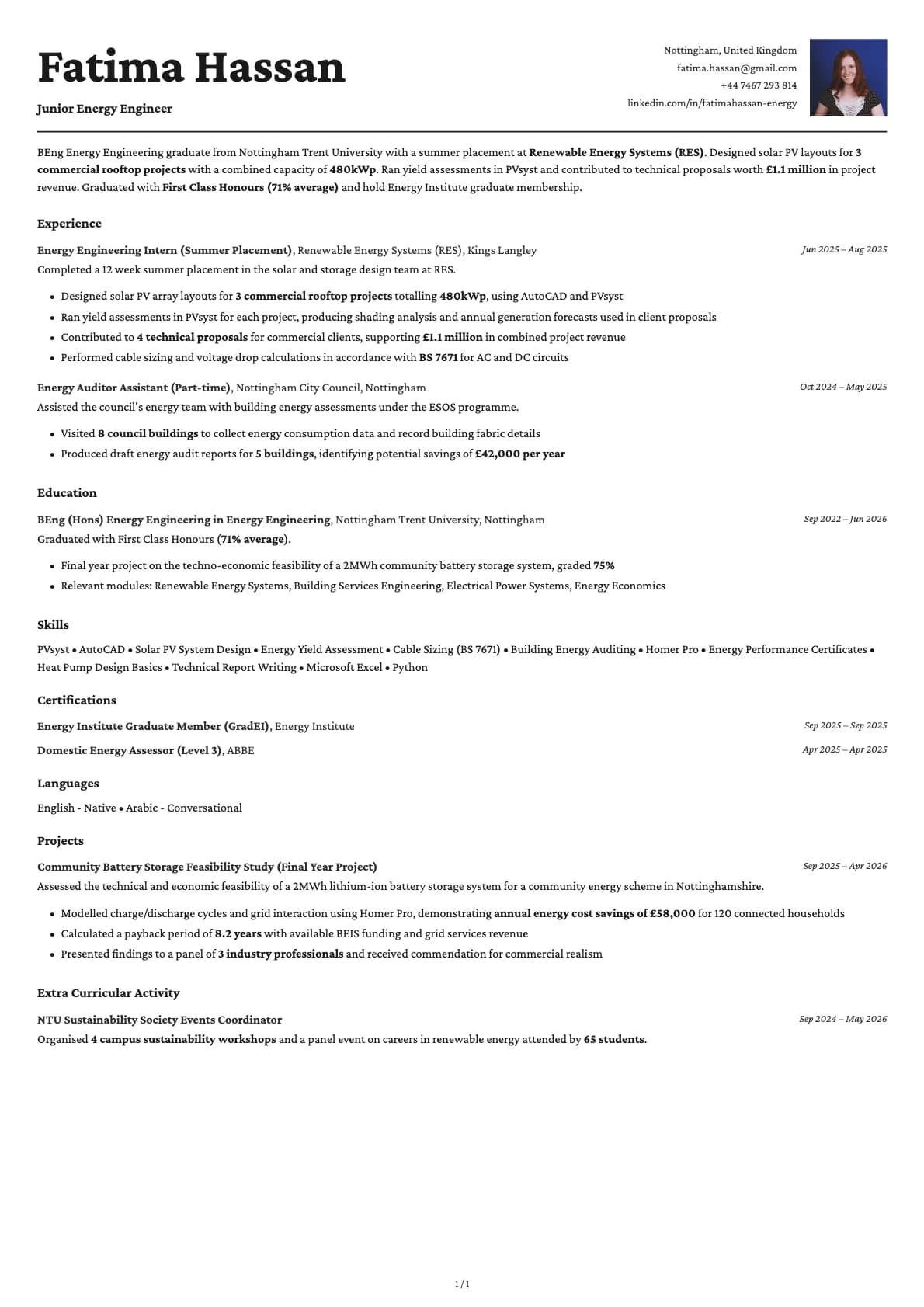
Junior Energy Engineer
A junior energy engineer resume example with renewable energy placement experience, solar PV design skills, and Energy Institute membership.
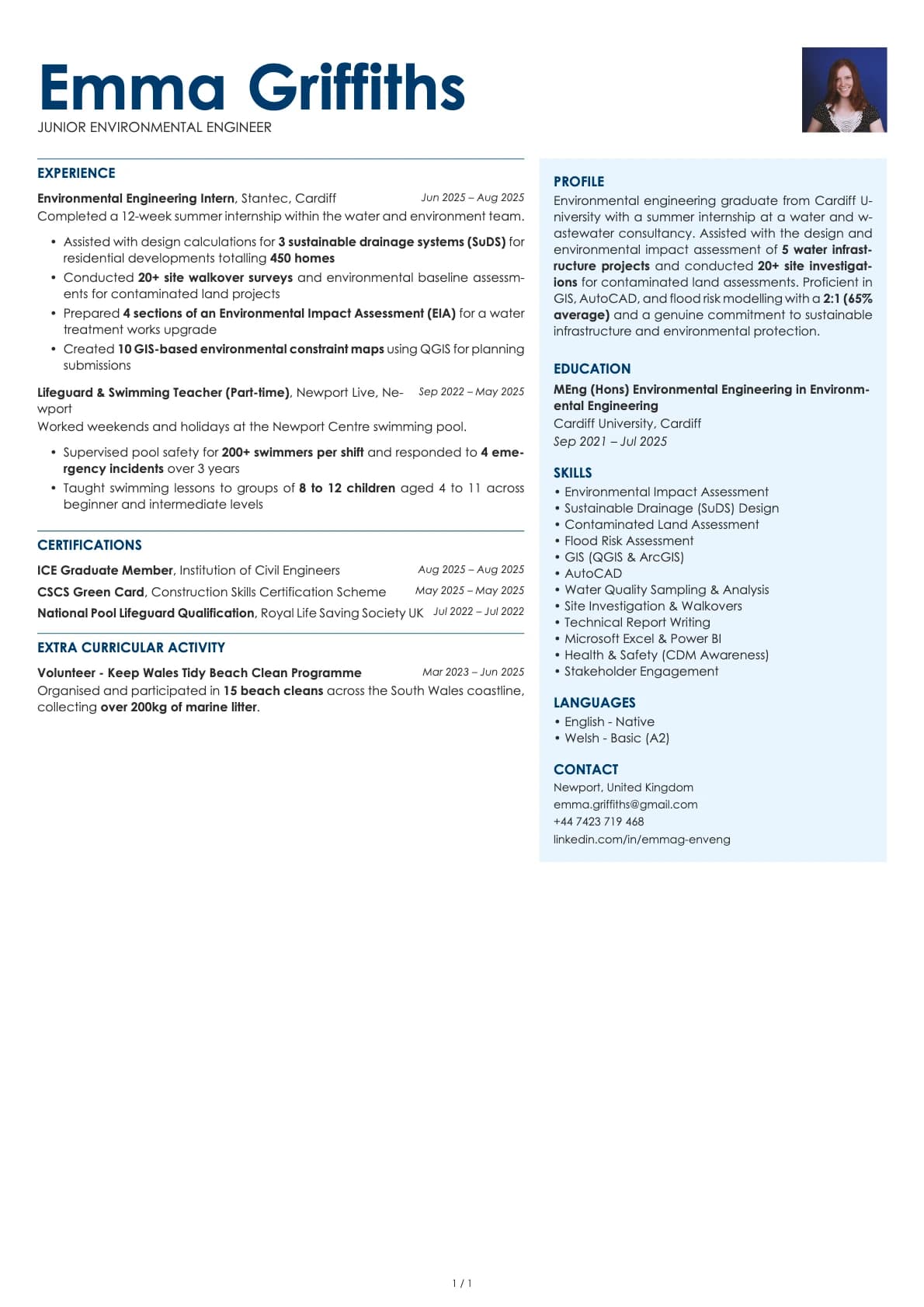
Junior Environmental Engineer
A junior environmental engineer resume example with EIA experience, SuDS design, and contaminated land site investigation numbers.
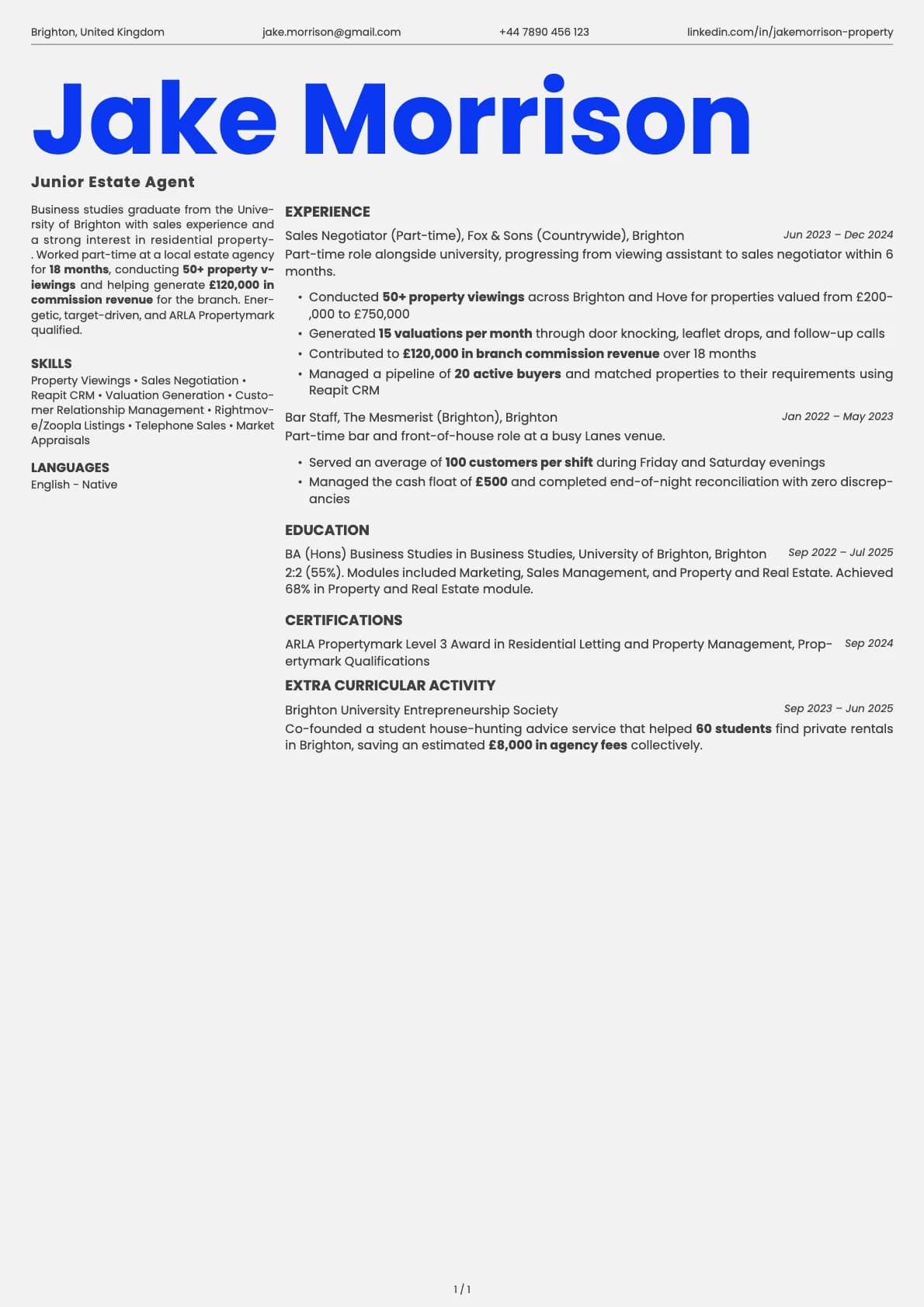
Junior Estate Agent
A junior estate agent resume example with sales negotiator experience and ARLA Propertymark qualification.
Junior Events Coordinator
A junior events coordinator resume example with hotel placement experience and corporate event management skills.