Junior Frontend Developer Resume Example
A junior frontend developer resume example for recent graduates. Learn how to present your React projects, responsive design skills, and coding experience to get your first dev job.

Laddro Team
Free to use. No account needed to start.
Free to use. No account needed to start.
Overview
Frontend development is one of the most accessible paths into tech, which also makes it one of the most competitive. Every junior frontend role gets applications from bootcamp graduates, self taught developers, and computer science students. The resumes that get interviews are the ones with live projects, clean code, and measurable results. Not the ones that just list "HTML, CSS, JavaScript" and hope for the best.
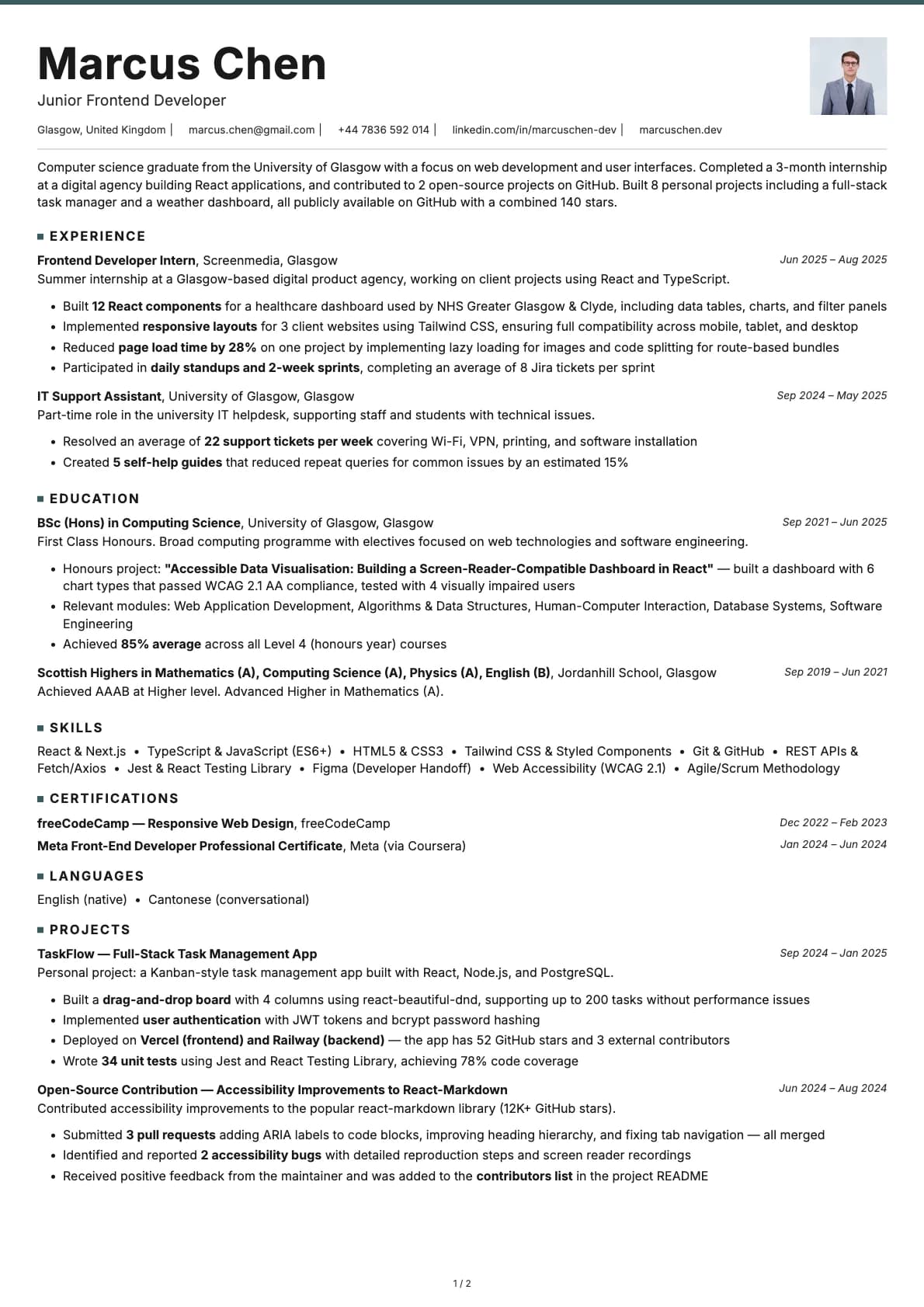
This resume belongs to Marcus Lee, a computer science graduate from the University of Kent. He built three portfolio projects, contributed to an open source library, and completed a four month internship at a digital agency. His resume works because every project is deployed, documented, and described with impact.
What Makes This Resume Work
Projects are live and measurable. Marcus built a weather dashboard using React and the OpenWeather API that receives 200+ monthly visitors. He created a personal portfolio site with a Lighthouse performance score of 98. He also built a task management app with drag and drop functionality using React and Firebase. Each project has a live URL and a GitHub repository link. Hiring managers can click through and see the actual work, which is far more convincing than a bullet point description.
The internship shows professional workflow. During his placement, he built responsive landing pages for three client websites, participated in daily standups with a team of five developers, and submitted code through pull requests that were reviewed before merging. He fixed 25 bugs over the four months and implemented a lazy loading feature that improved one client's page load time by 1.8 seconds. This tells an employer he can work within a team, follow a code review process, and ship real improvements.
Open source contribution stands out. He contributed a accessibility improvement to a popular React component library, fixing keyboard navigation on a dropdown menu. The pull request was merged and is now used by thousands of developers. Open source contributions at the junior level are rare, which makes this a strong differentiator.
Technical skills are well organised. Languages (JavaScript, TypeScript, HTML, CSS), frameworks (React, Next.js), styling (Tailwind CSS, Sass), tools (Git, VS Code, Figma), and testing (Jest, React Testing Library). Each category is clearly separated. A recruiter scanning for "React" or "TypeScript" can find them immediately.
Key Takeaways
Deploy your projects and link to them. A live URL proves your project works. A GitHub link proves you wrote the code. Together they are the most powerful evidence a junior frontend developer can present.
Describe your internship in terms of the development workflow: pull requests, code reviews, standups, bug counts, and performance improvements. Employers want to know you can work in a team environment, not just code alone in your room.
Consider contributing to open source. Even a small fix to an existing project shows that you can read other people's code, follow contribution guidelines, and collaborate with strangers. It is a signal that stands out at the junior level.
Build your own version
Open this layout in the builder and swap in your own details. It takes a few minutes.
Free to use. No account needed to start.
Was this resume example helpful?
Rate this example to help us create better content for you.
4.8 average from 183 ratingsRelated resume examples
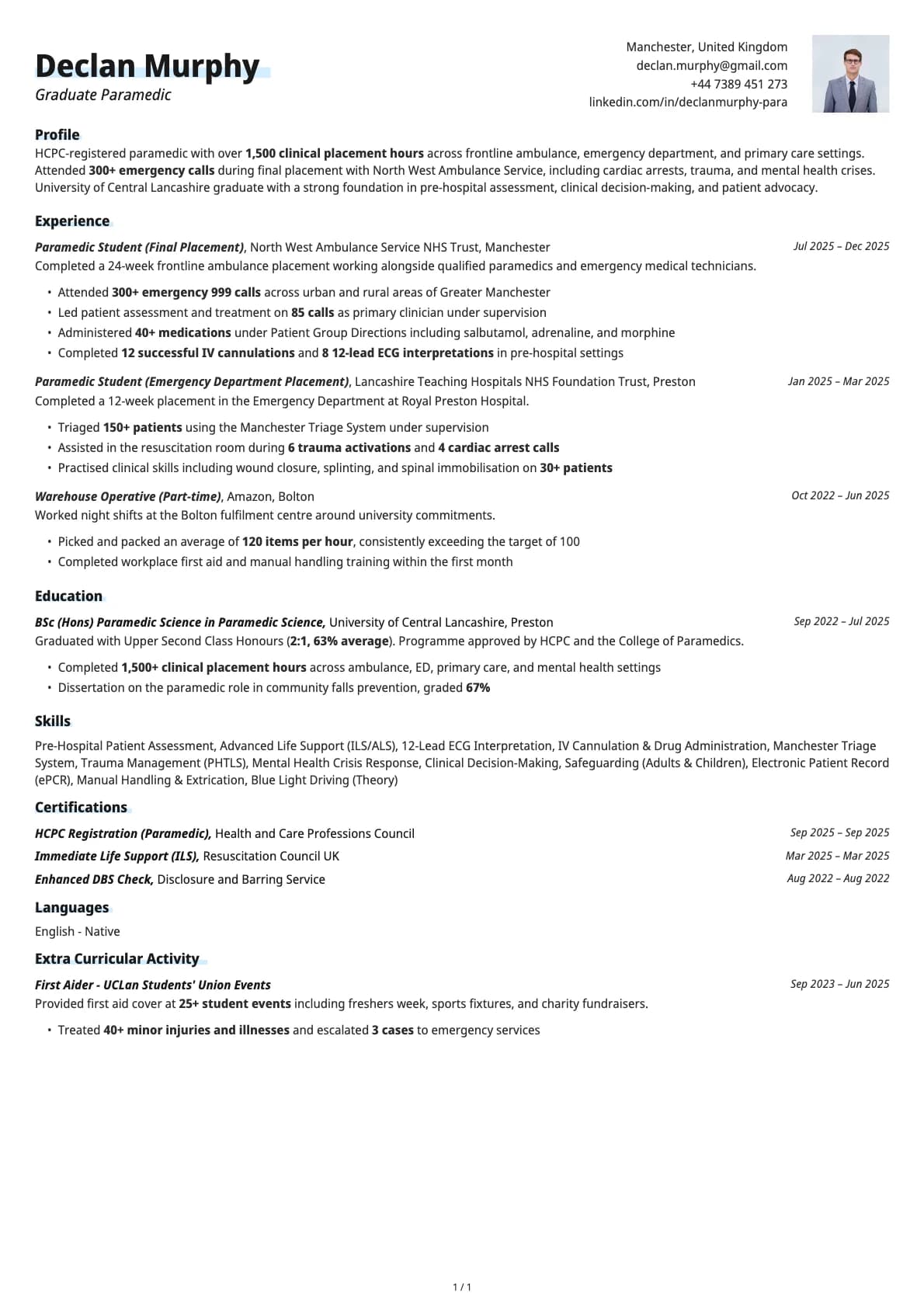
Graduate Paramedic
A graduate paramedic resume example with frontline placement hours, HCPC registration, and emergency call numbers for newly qualified paramedics.
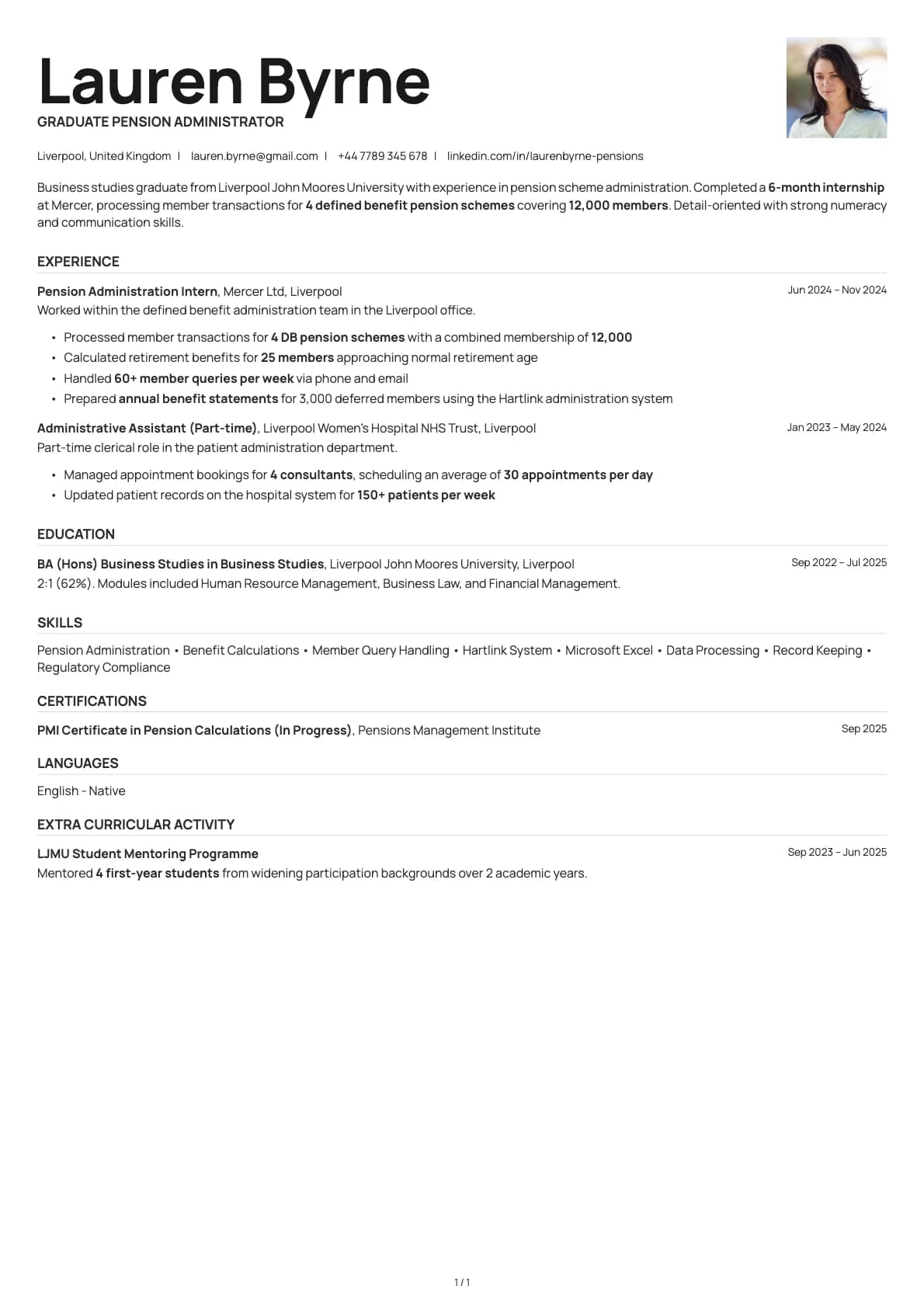
Graduate Pension Administrator
A graduate pension administrator resume example with Mercer internship and benefit calculation experience.
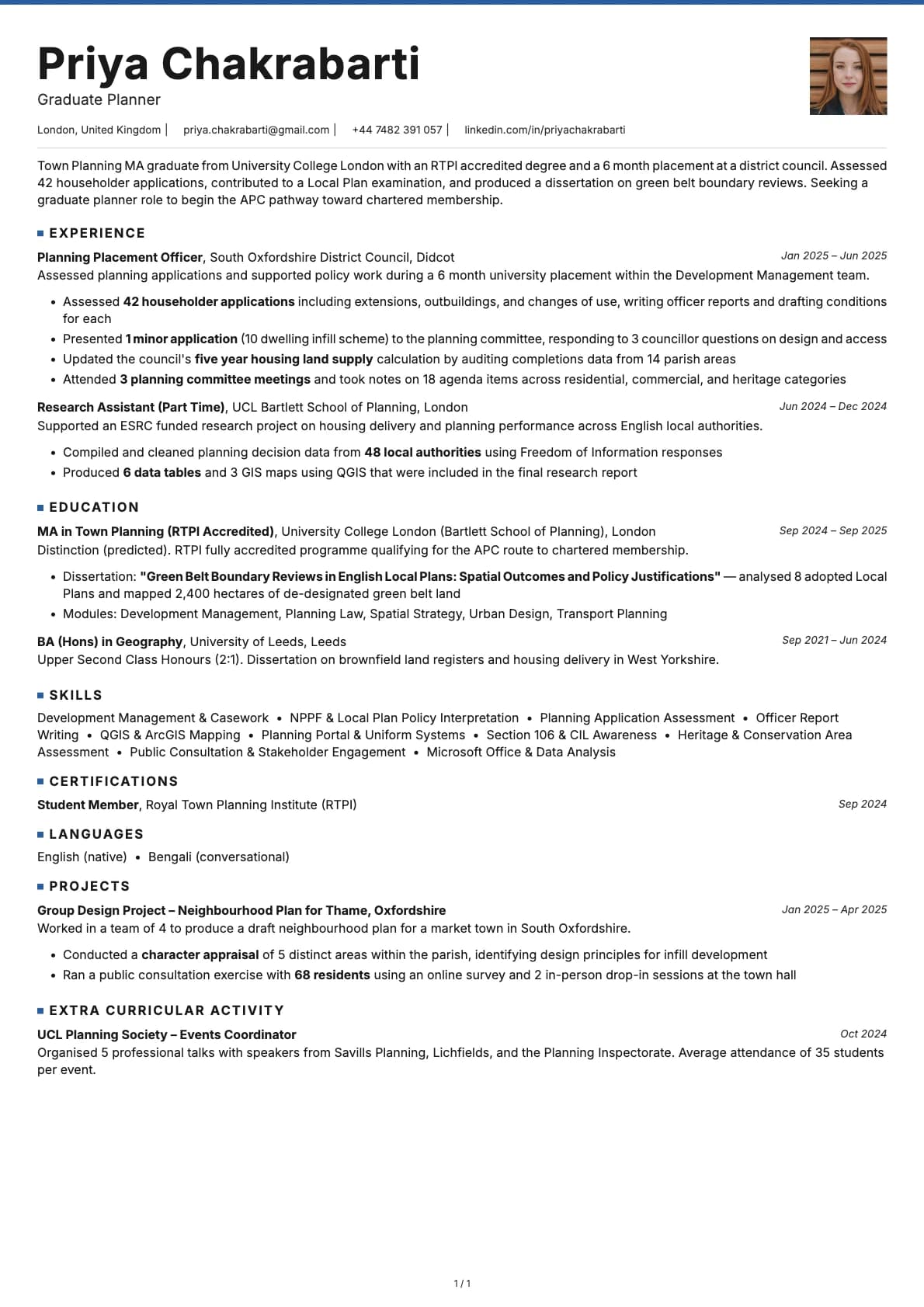
Graduate Planner
A graduate planner resume example for town planning MA graduates. See how to present your RTPI accredited degree, planning applications experience, and policy knowledge.
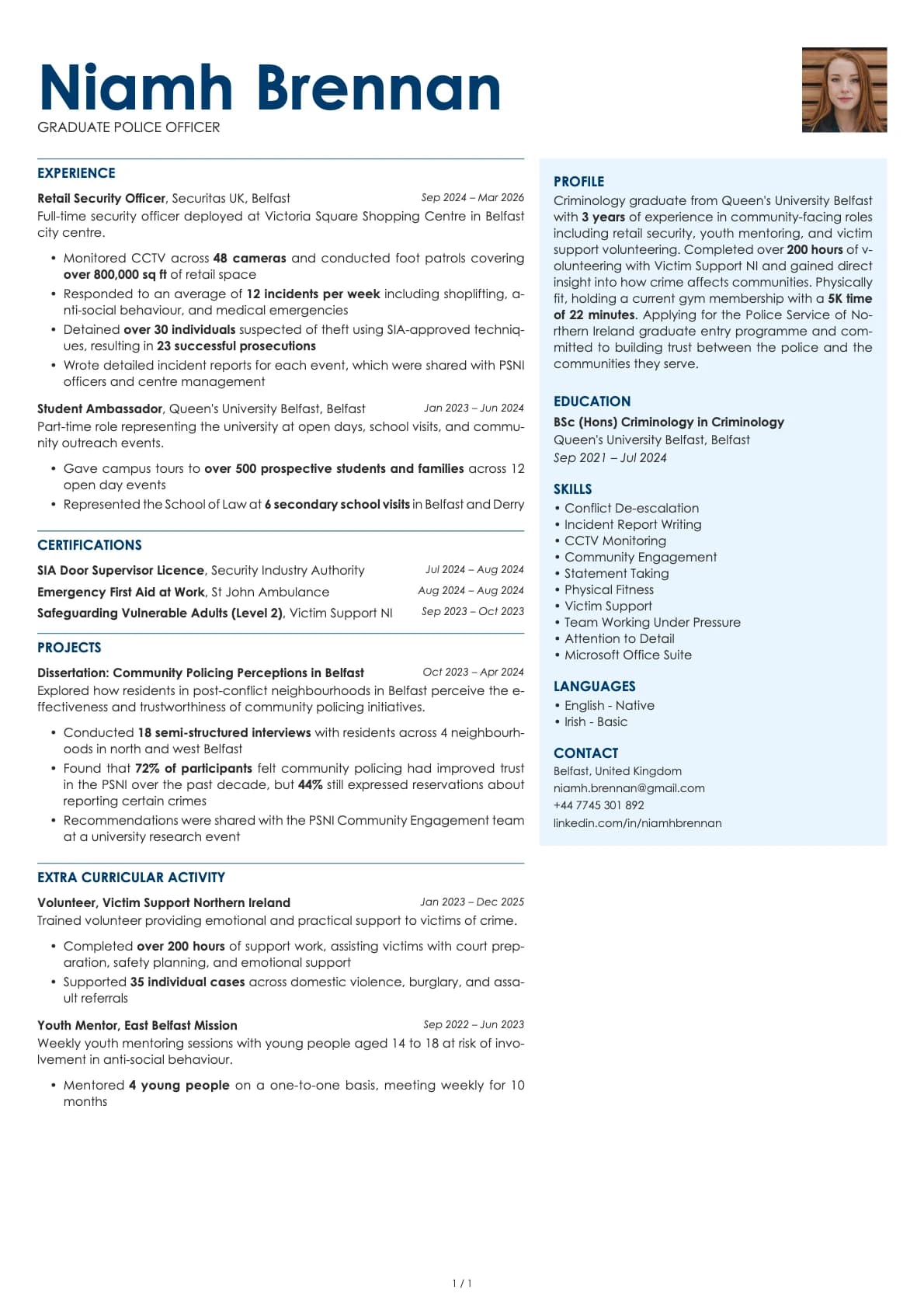
Graduate Police Officer
A graduate police officer resume example showing how to turn retail security, victim support volunteering, and a criminology degree into a strong PSNI application.
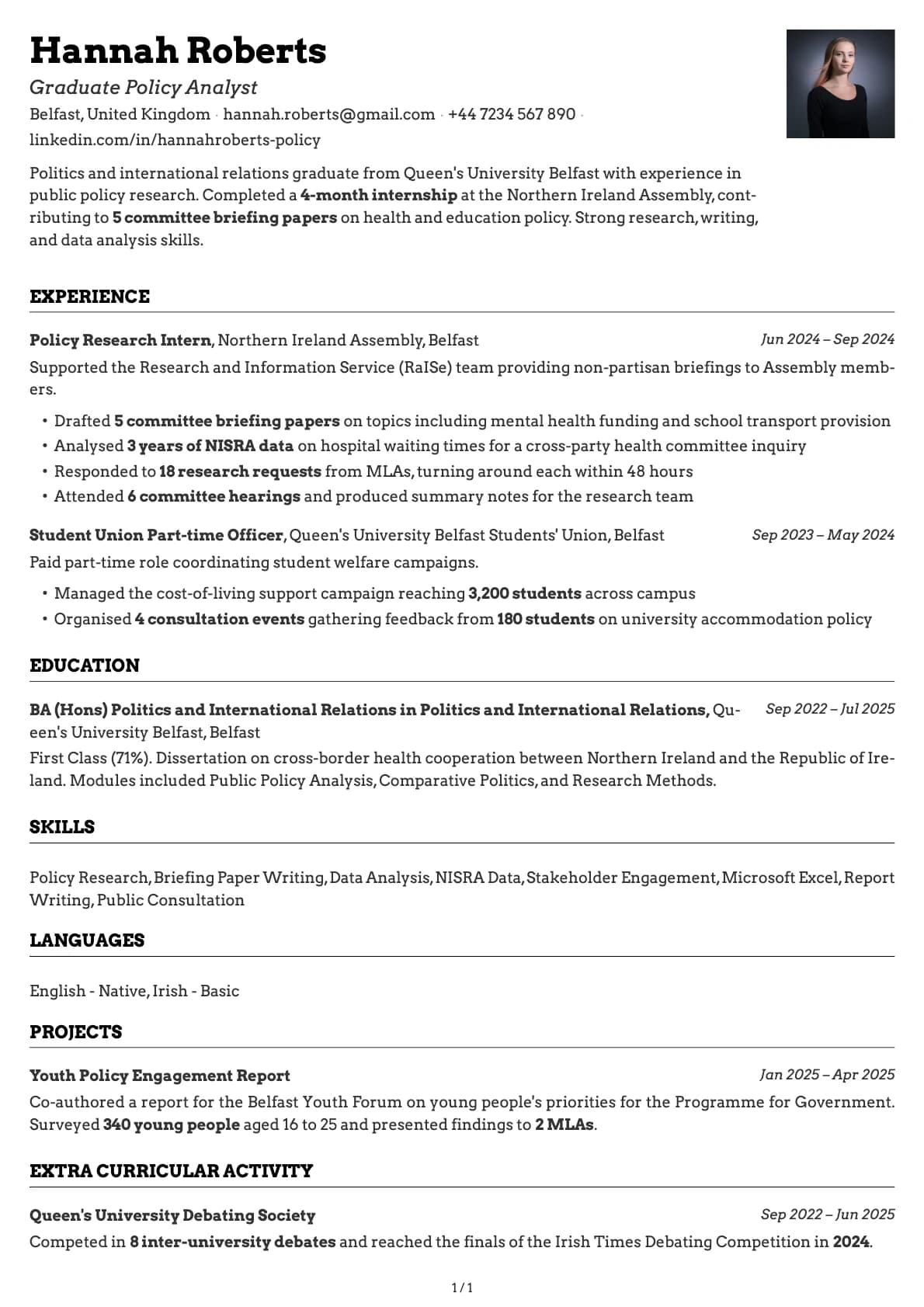
Graduate Policy Analyst
A graduate policy analyst resume example with Northern Ireland Assembly internship and public policy research experience.
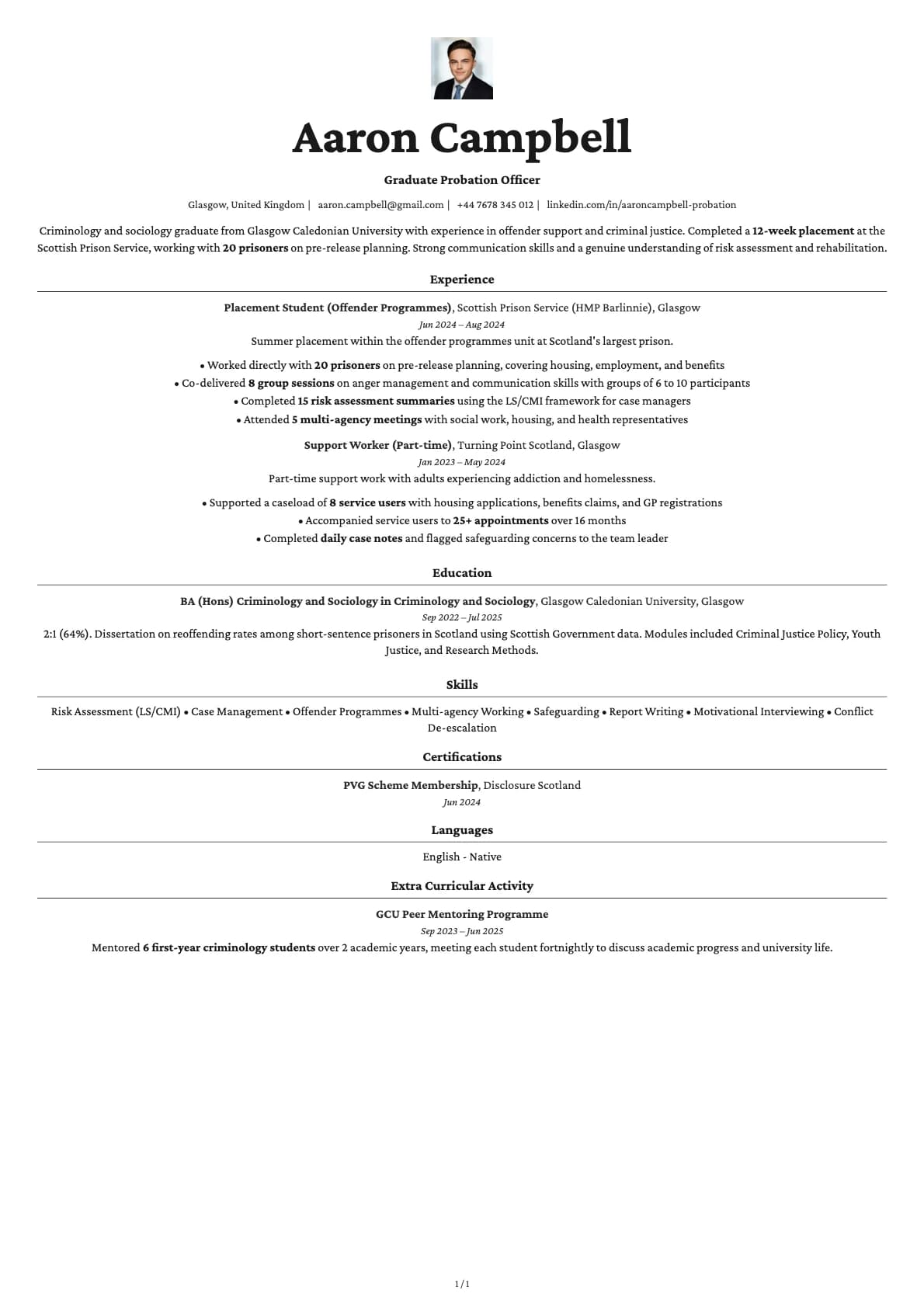
Graduate Probation Officer
A graduate probation officer resume example with prison placement experience and risk assessment skills.
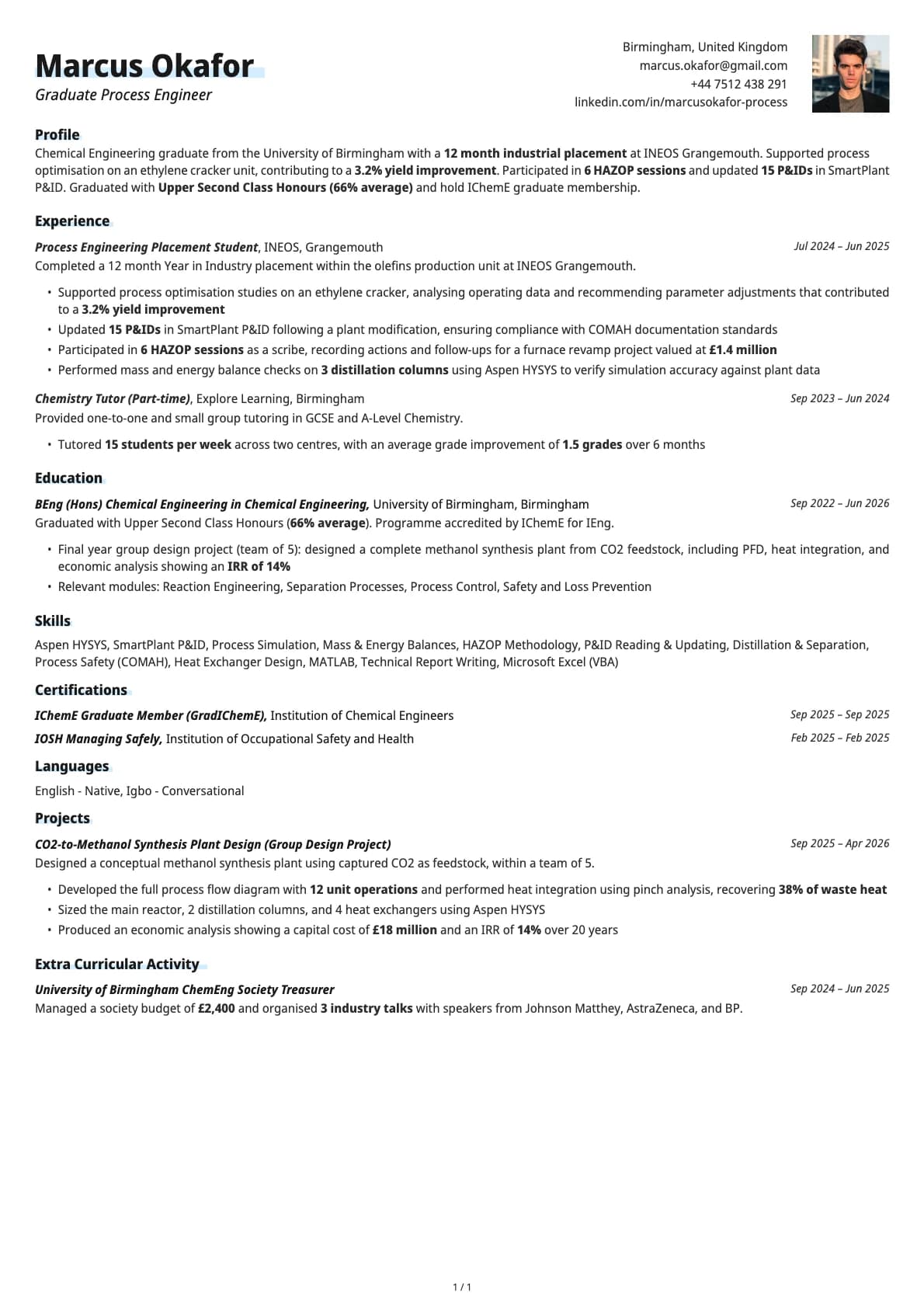
Graduate Process Engineer
A graduate process engineer resume example with chemical plant placement experience, HAZOP participation, and IChemE membership.
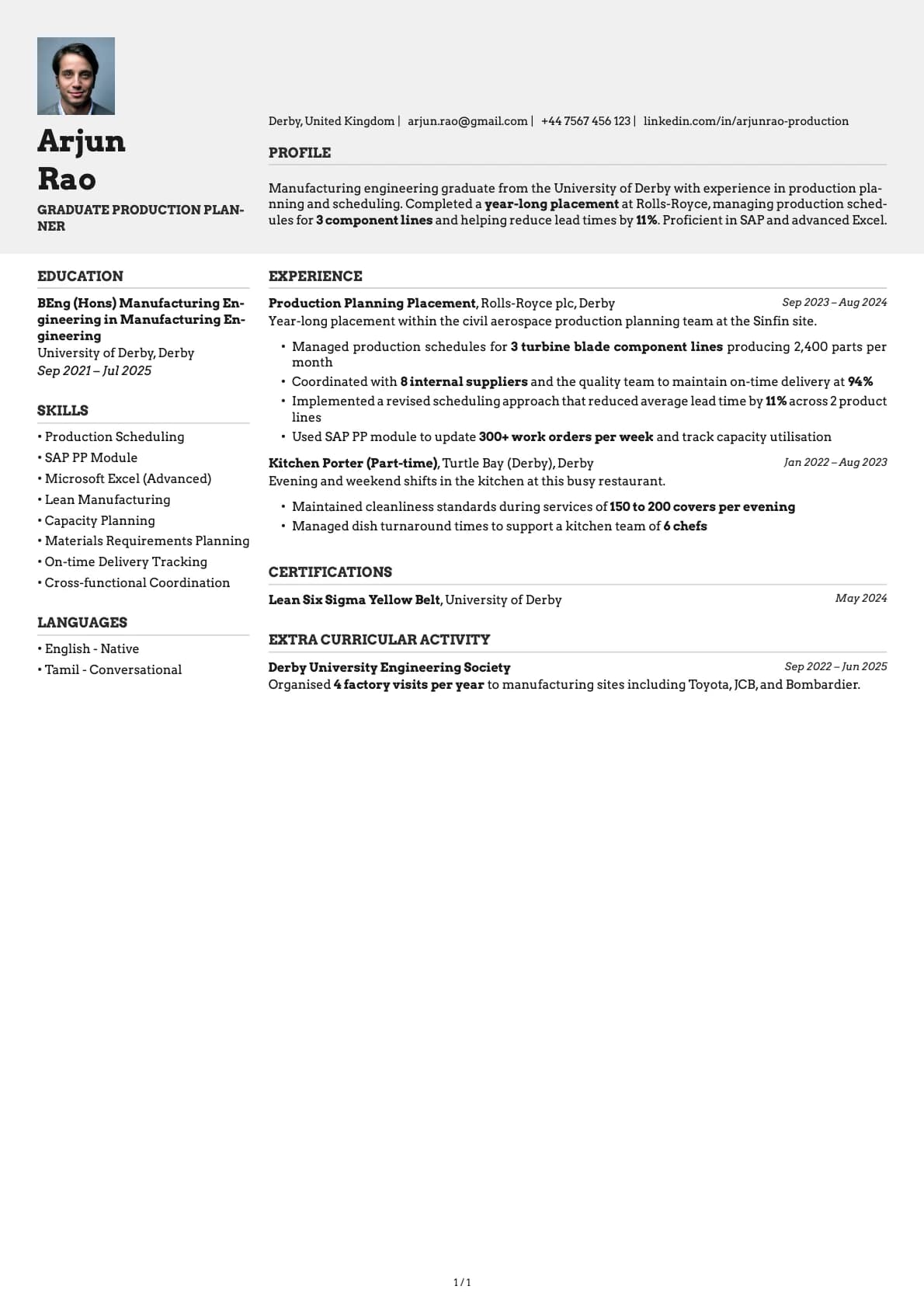
Graduate Production Planner
A graduate production planner resume example with Rolls-Royce placement and SAP scheduling experience.
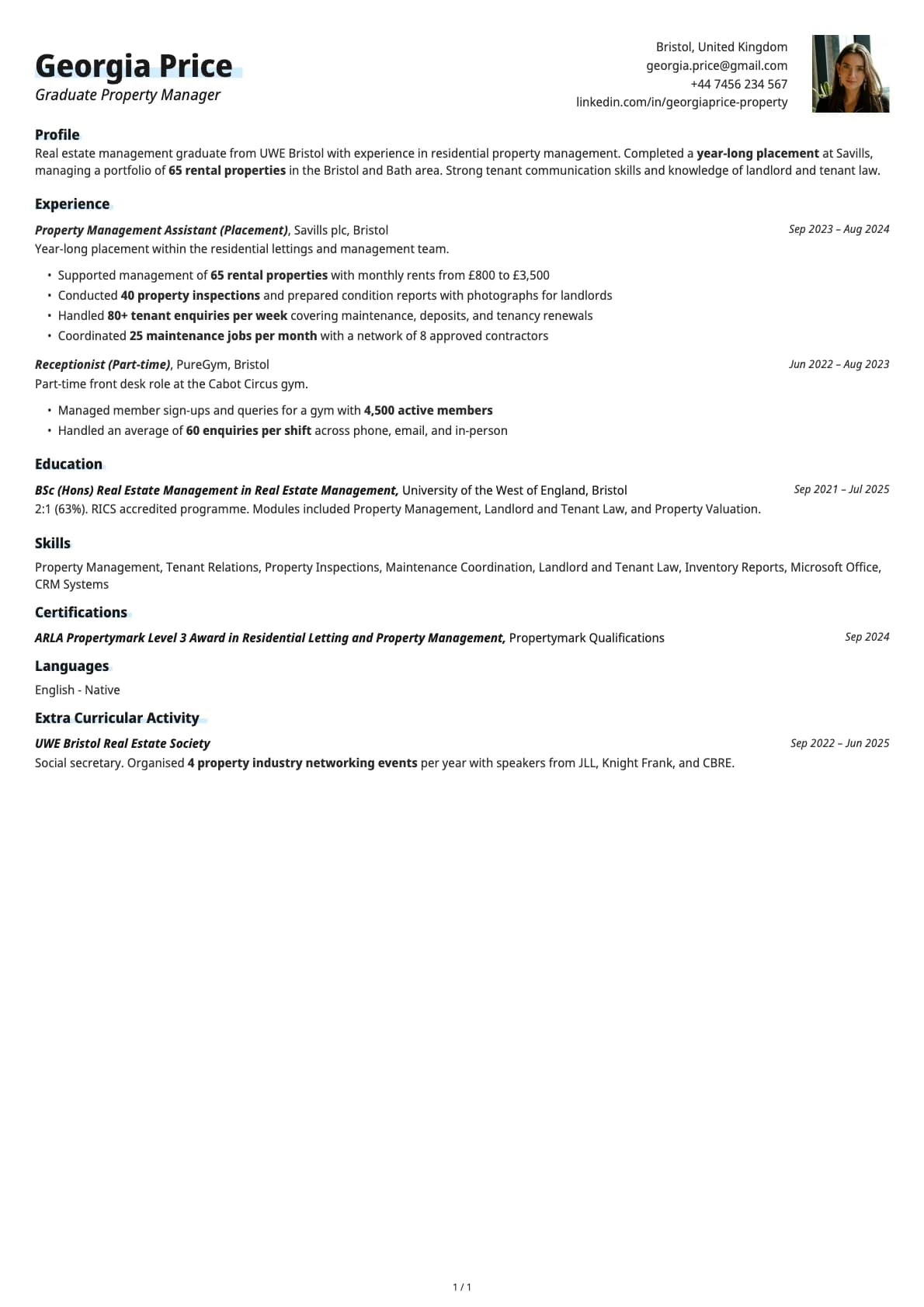
Graduate Property Manager
A graduate property manager resume example with Savills placement and residential lettings experience.

Graduate Quantity Surveyor
A graduate quantity surveyor resume example with a construction placement year. See how to present valuations, measurement skills, and NEC contract experience.
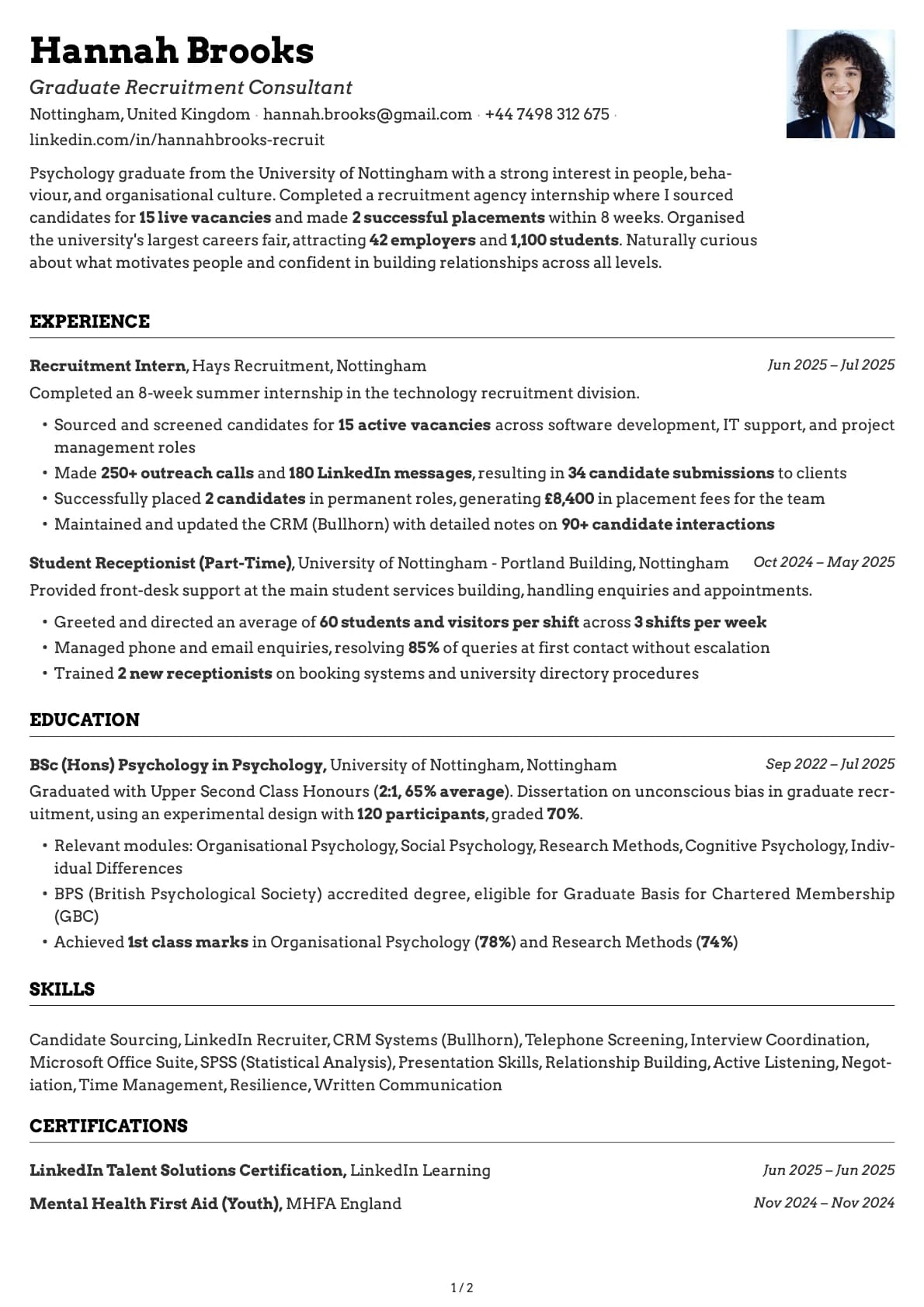
Graduate Recruitment Consultant
A graduate recruitment consultant resume example for recent graduates. Learn how to present your communication skills, sales experience, and people skills for recruitment roles.
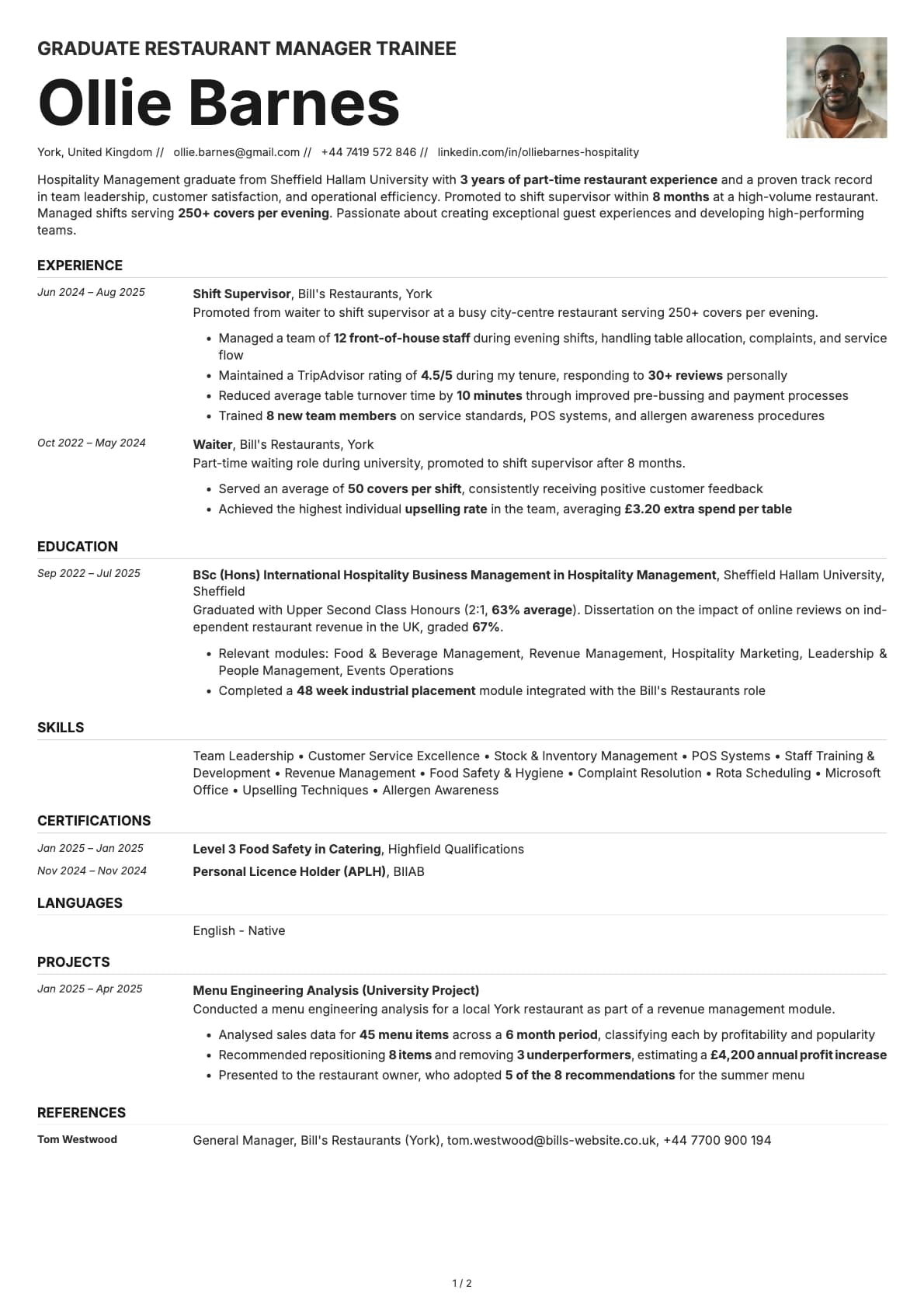
Graduate Restaurant Manager Trainee
A graduate restaurant manager trainee resume example. See how to present shift leadership, customer satisfaction, and hospitality qualifications to land your first management trainee role.