Pharmacy Intern Resume Example
A pharmacy intern resume example for recent graduates. See how to present your dispensing experience, clinical placements, and patient interaction skills to land your first pharmacy role.

Laddro Team
Free to use. No account needed to start.
Free to use. No account needed to start.
Overview
Pharmacy pre registration and intern roles require a specific combination of clinical knowledge, attention to detail, and patient communication skills. Your resume needs to show that you have worked in a real pharmacy environment, handled prescriptions accurately, and interacted with patients confidently. Generic claims about being "detail oriented" will not impress a superintendent pharmacist.
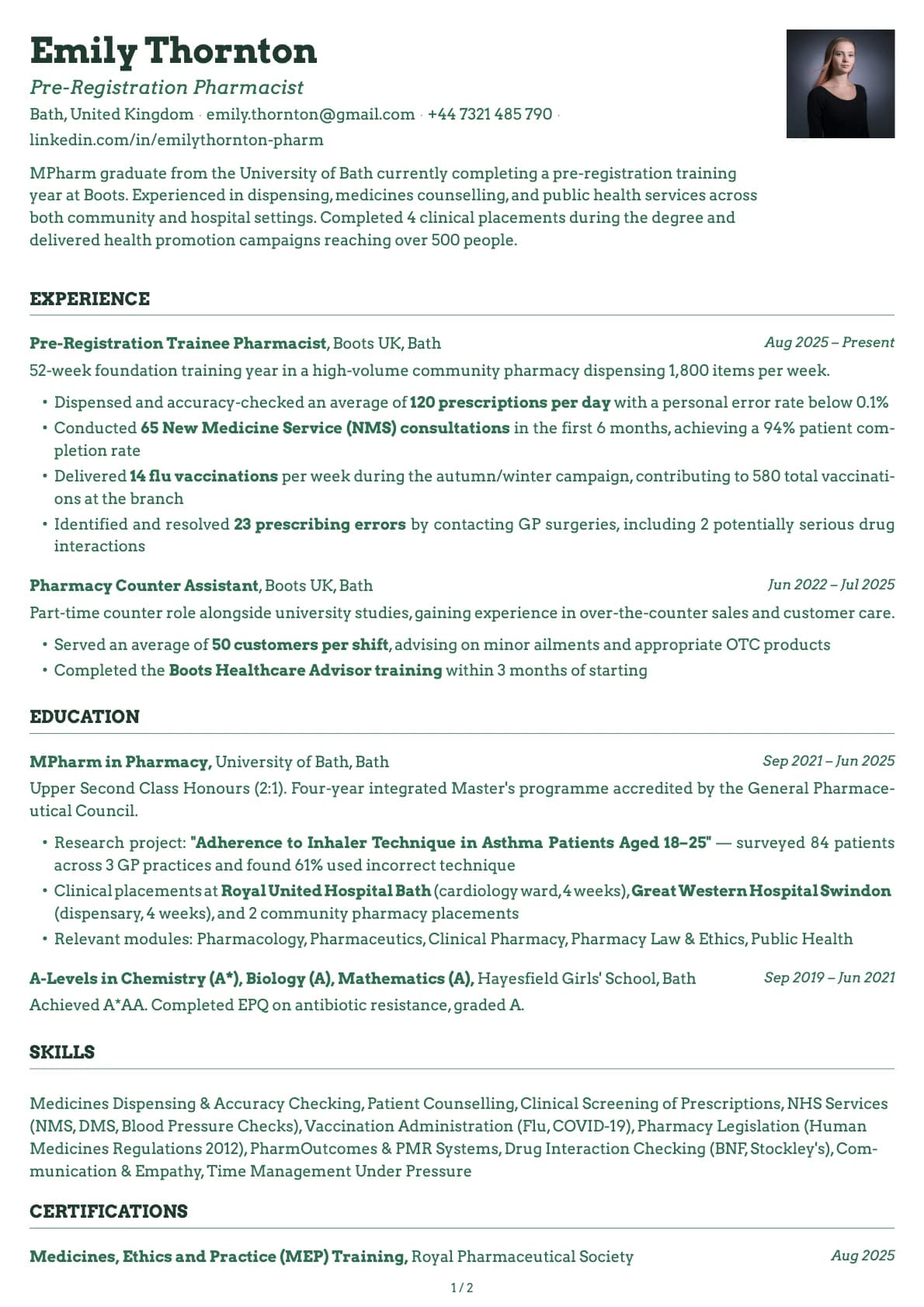
This resume belongs to Fatima Hassan, a pharmacy graduate from the University of Bath. She completed two clinical placements during her MPharm degree, one in a community pharmacy and one in a hospital setting. She also worked part time as a pharmacy counter assistant during her studies. Her resume works because it combines academic credentials with hands on dispensary experience.
What Makes This Resume Work
Dispensing experience is quantified. During her community pharmacy placement, Fatima assisted with dispensing an average of 150 prescriptions per day under pharmacist supervision. She checked labels, assembled medications, and flagged two potential drug interactions that were confirmed by the supervising pharmacist. Those interaction catches are exactly the kind of detail that demonstrates clinical awareness.
The hospital placement adds breadth. She spent four weeks on a hospital ward where she participated in medicines reconciliation for newly admitted patients. She reviewed medication histories for 40 patients and discussed findings with ward pharmacists during daily handovers. This shows she can operate in both community and clinical settings.
Patient communication is evidenced. As a counter assistant, she handled over the counter medication queries from customers, advised on minor ailments within her scope, and referred complex cases to the pharmacist. She estimates she served around 80 customers per day. That volume of patient interaction builds confidence and communication skills that employers value highly.
Relevant qualifications are highlighted. Her MPharm degree, GPhC provisional registration, and medicines counter assistant training are all listed. She also includes her completion of the Centre for Pharmacy Postgraduate Education (CPPE) declarations on consultation skills and clinical governance. These show proactive professional development beyond the minimum requirements.
Key Takeaways
Quantify your dispensing experience. Prescriptions per day, patient interactions, error catches, and medication reviews. Pharmacy is a precision profession and your resume should reflect that with precise numbers.
Include both community and hospital experience if you have it. Employers want to see range, and demonstrating competence in different settings makes you a more versatile candidate.
List your professional registrations and any CPPE or CPD activities you have completed. These are not optional extras in pharmacy. They are expected, and having them on your resume before you even start your foundation year shows initiative.
Build your own version
Open this layout in the builder and swap in your own details. It takes a few minutes.
Free to use. No account needed to start.
Was this resume example helpful?
Rate this example to help us create better content for you.
4.8 average from 95 ratingsRelated resume examples
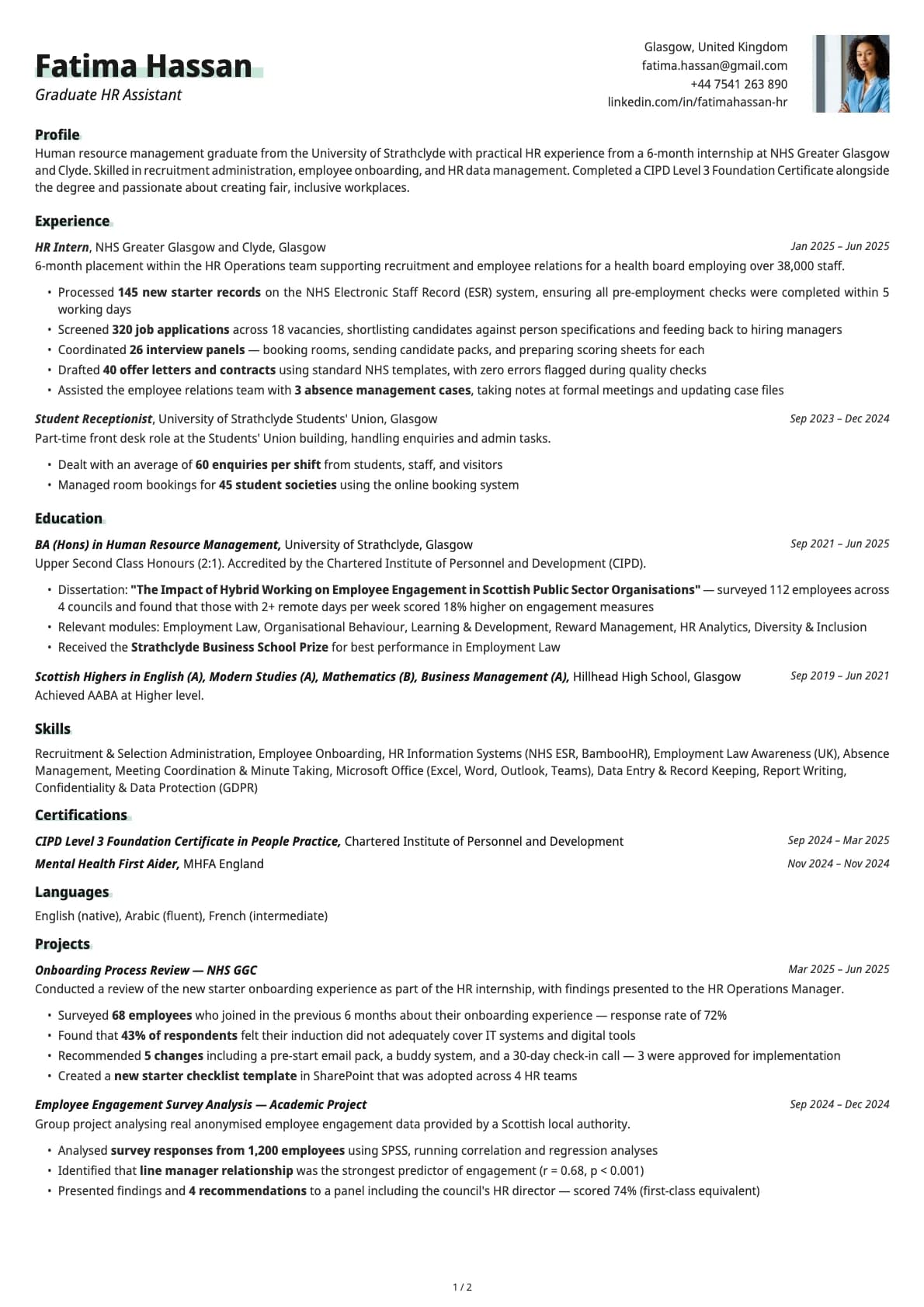
Graduate HR Assistant
A graduate HR assistant resume example for recent graduates. See how to present your people skills, admin experience, and HR knowledge to land your first human resources role.
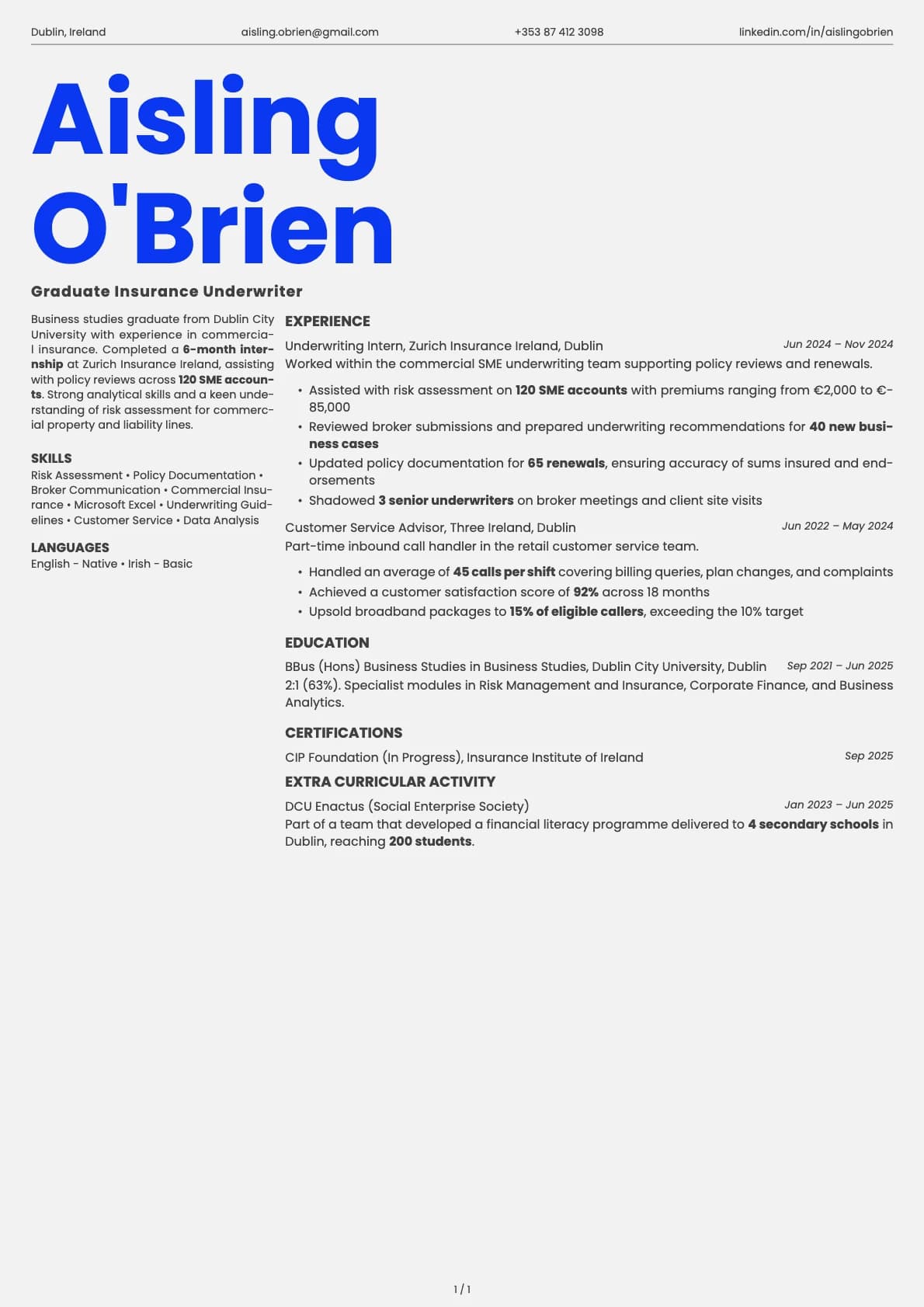
Graduate Insurance Underwriter
A graduate insurance underwriter resume example with Zurich internship experience and commercial insurance knowledge.
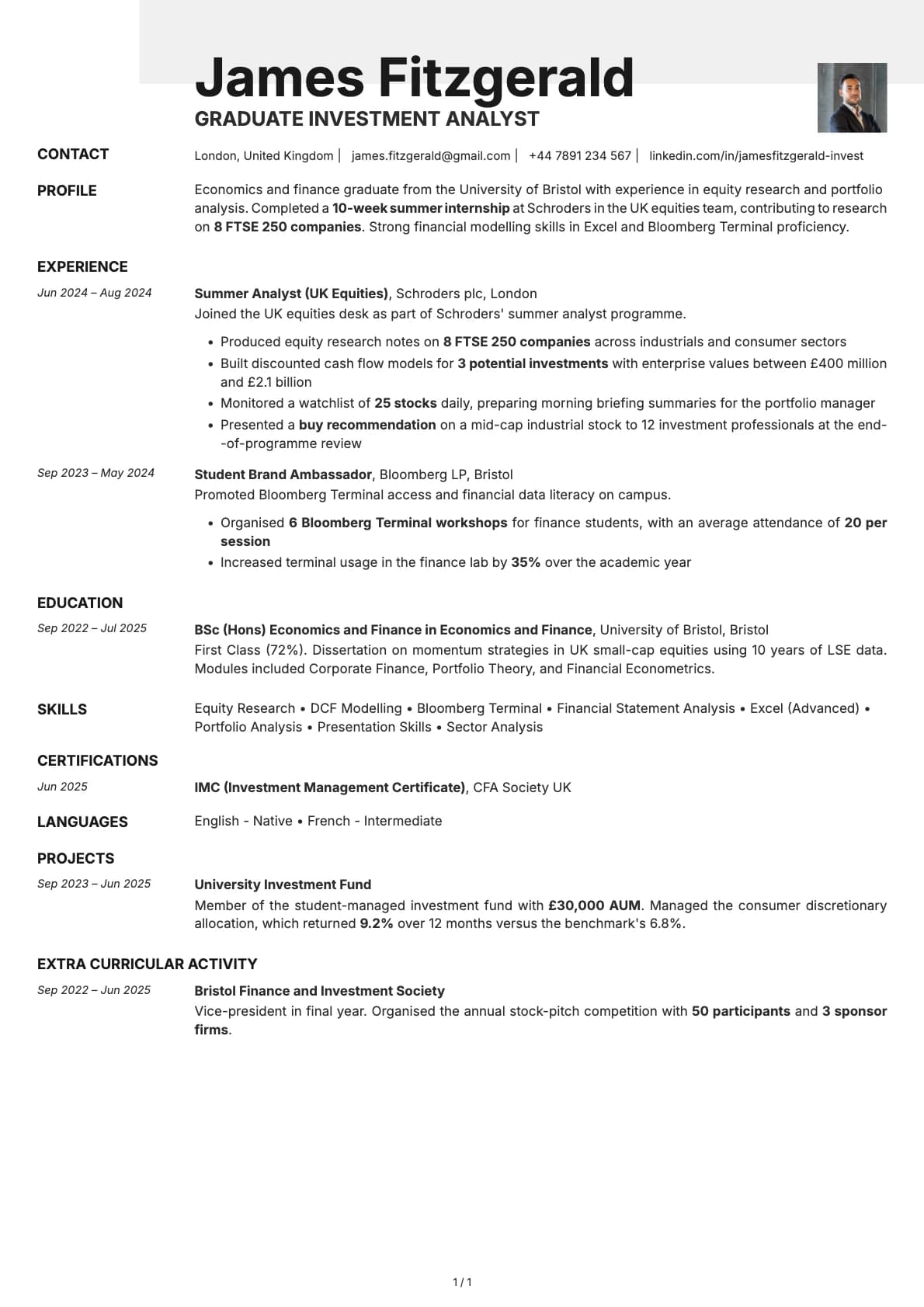
Graduate Investment Analyst
A graduate investment analyst resume example with Schroders internship experience and equity research skills.
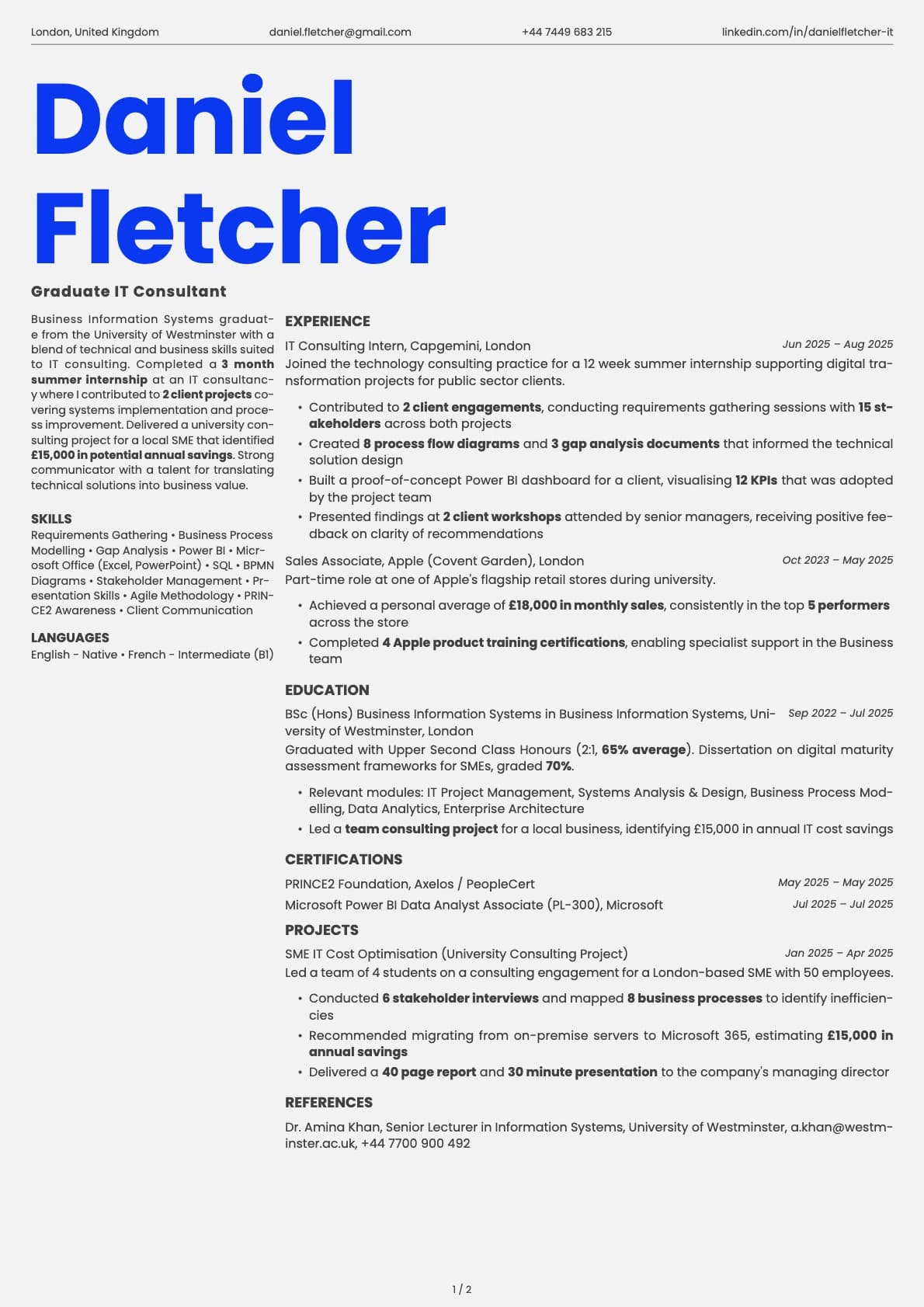
Graduate IT Consultant
A graduate IT consultant resume example. See how to present consulting experience, stakeholder management, and business analysis skills to land your first IT consulting role.
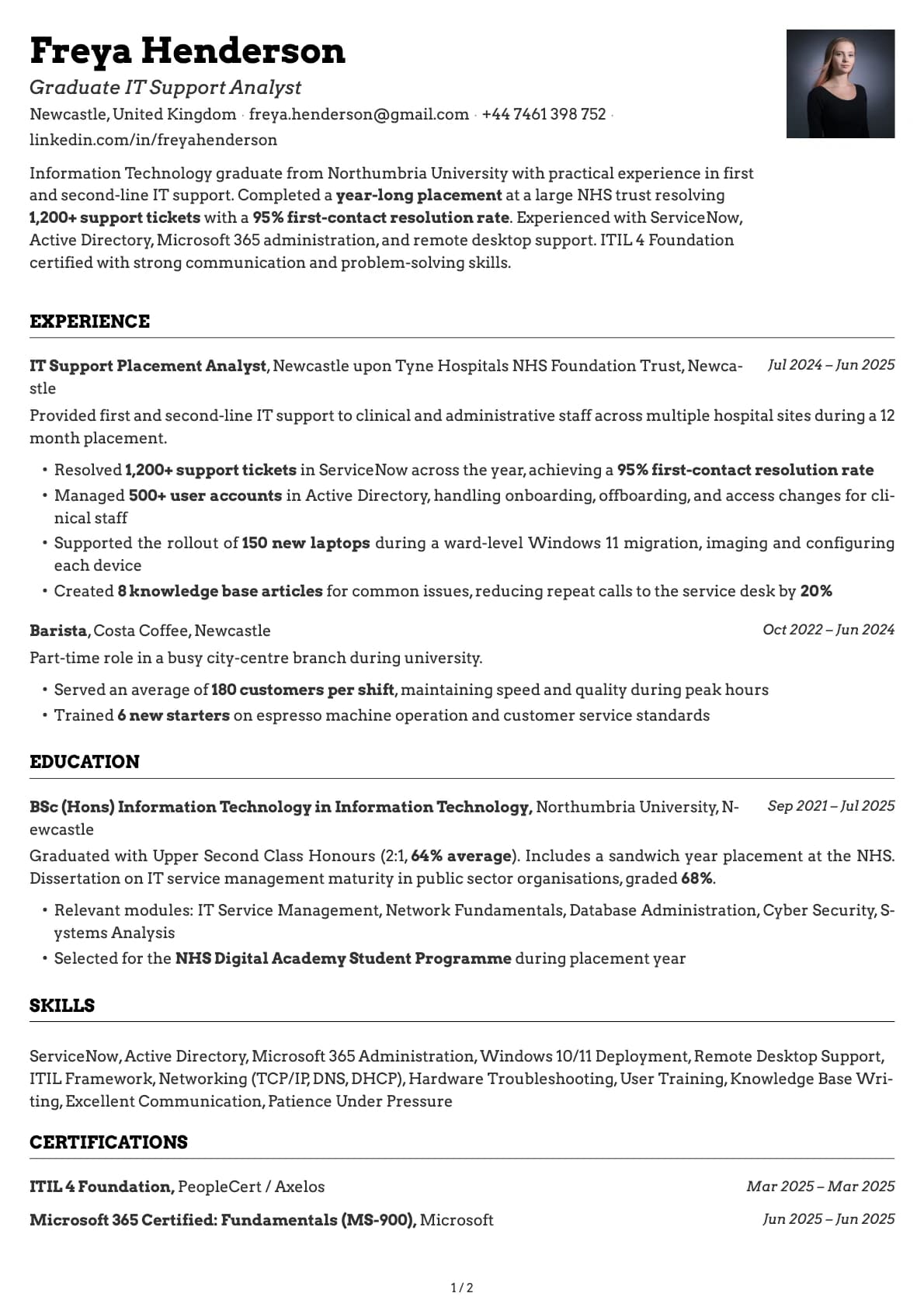
Graduate IT Support Analyst
A graduate IT support analyst resume example. See how to present helpdesk experience, ITIL certification, and service desk metrics to land your first IT support role.
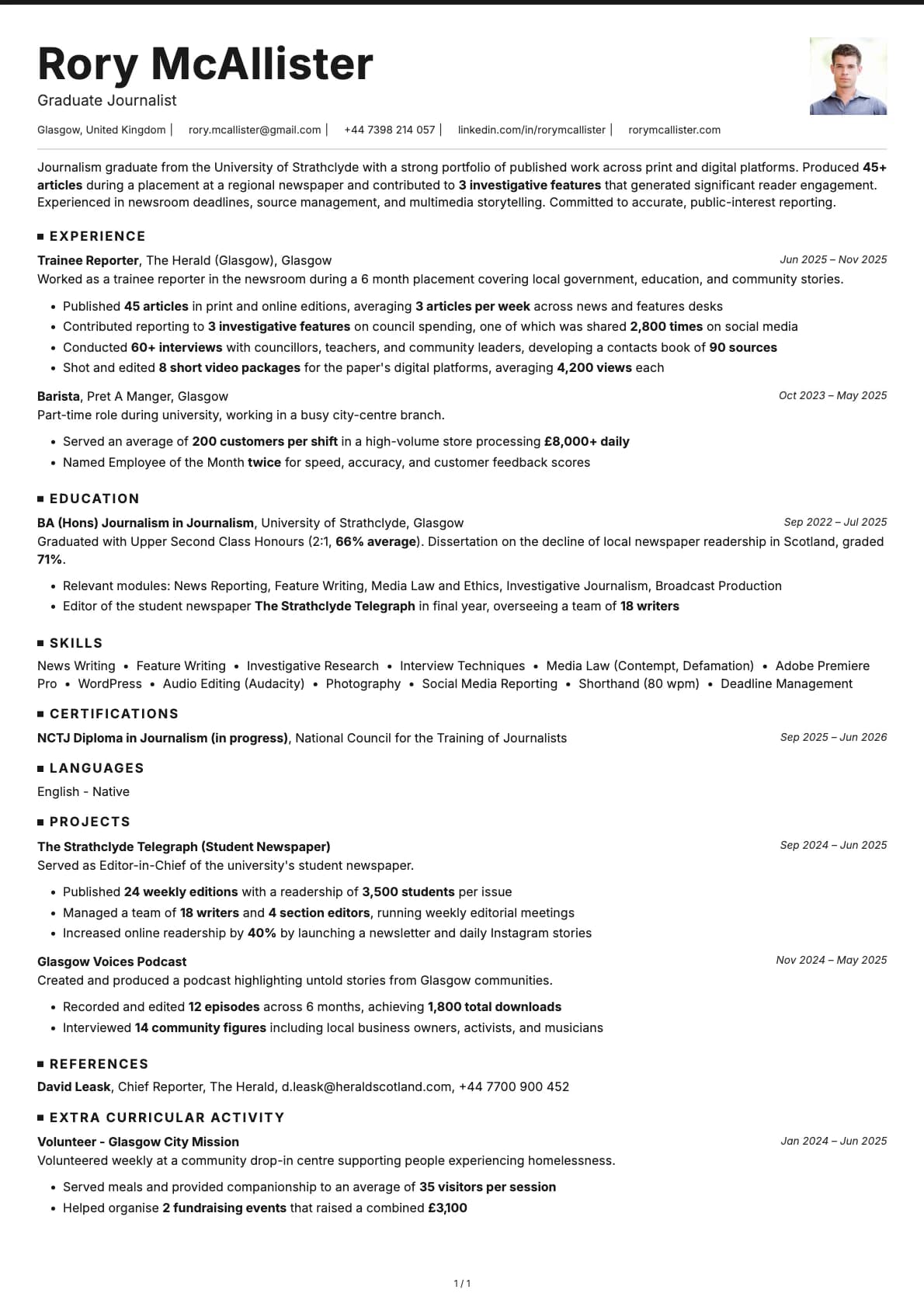
Graduate Journalist
A graduate journalist resume example showing how to present published work, newsroom experience, and multimedia skills to land your first reporting role.
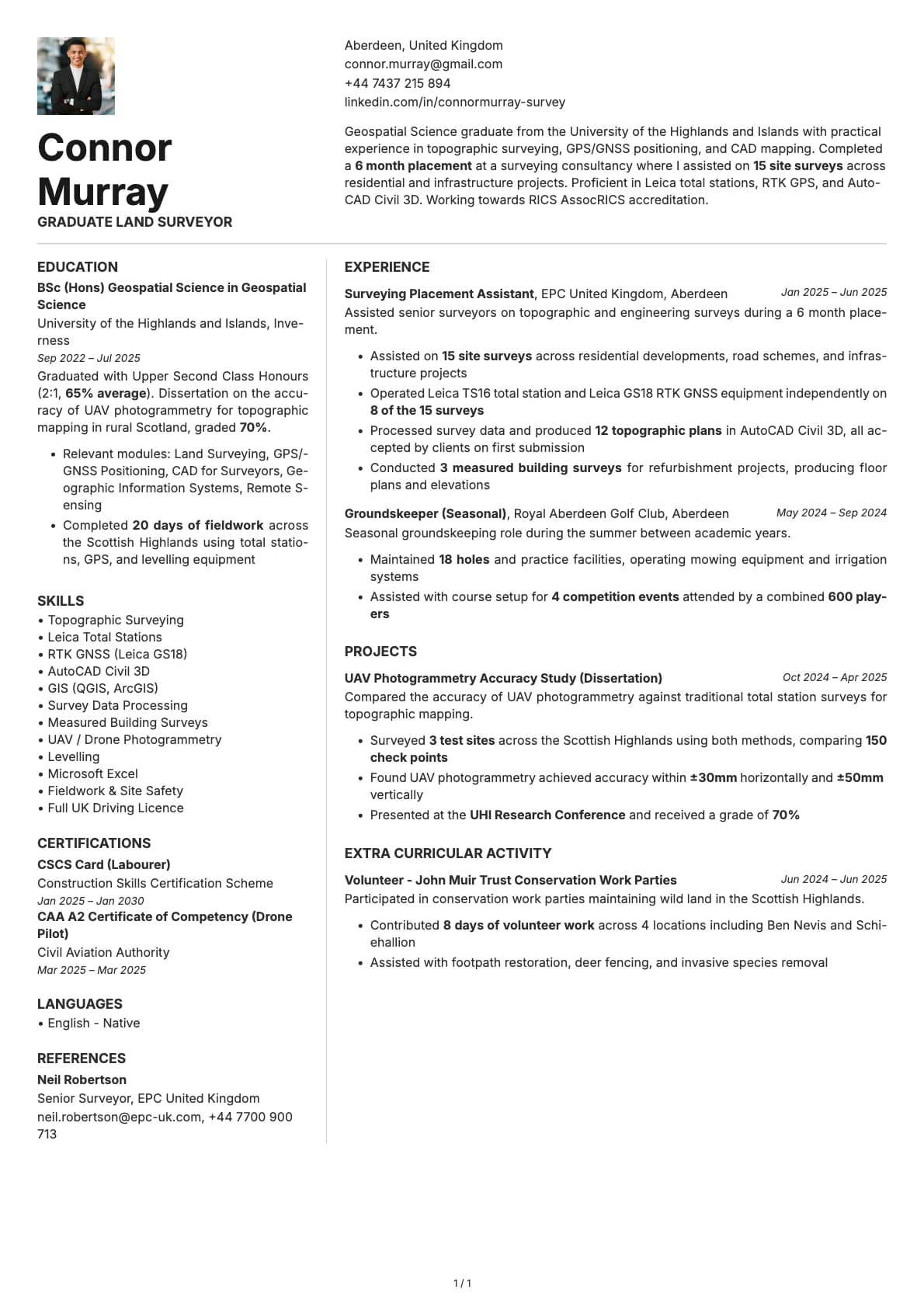
Graduate Land Surveyor
A graduate land surveyor resume example. See how to present site survey experience, GPS/GNSS skills, and CAD output to land your first surveying role.
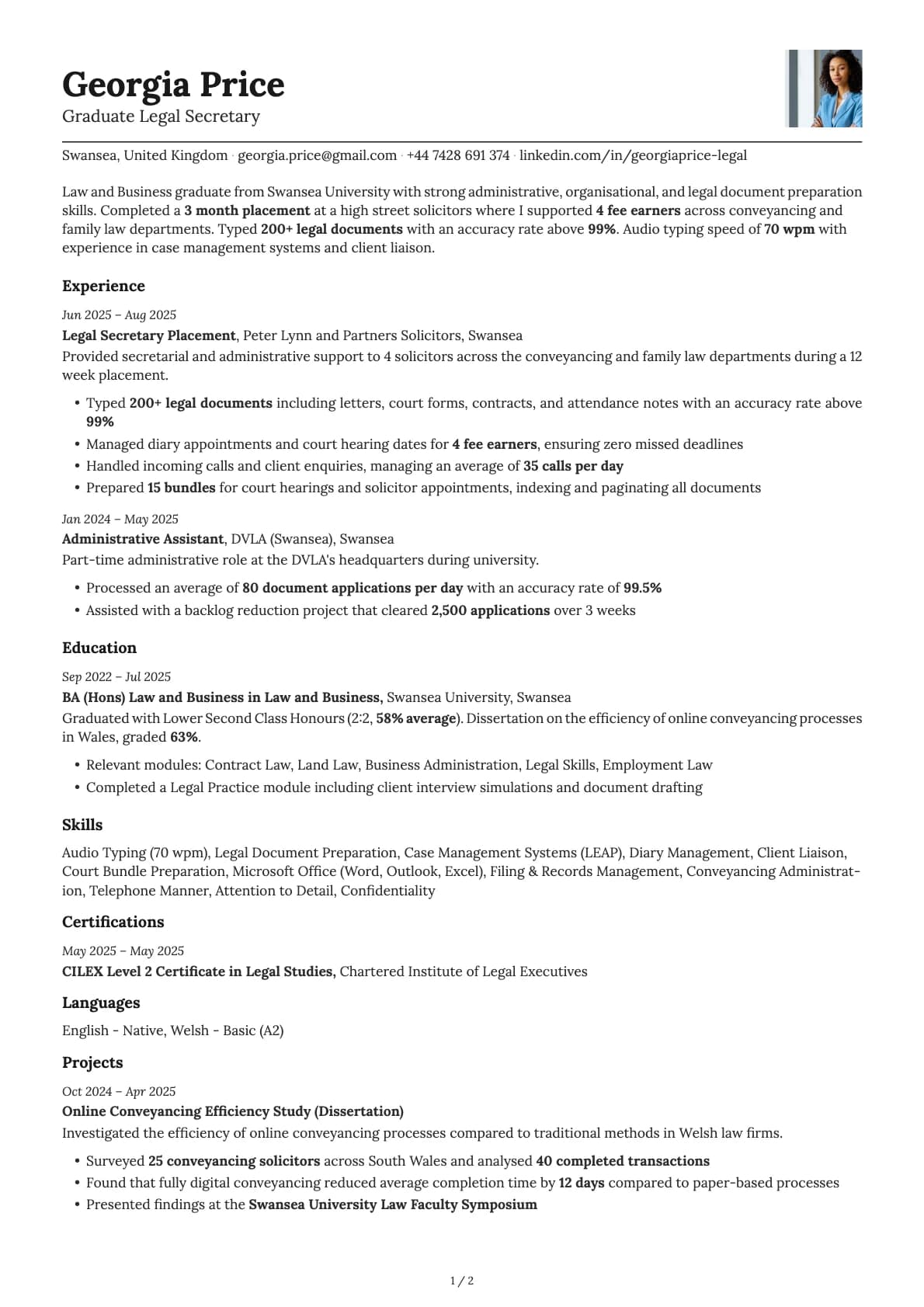
Graduate Legal Secretary
A graduate legal secretary resume example. See how to present typing speed, legal document preparation, and solicitor support experience to land your first legal secretary role.
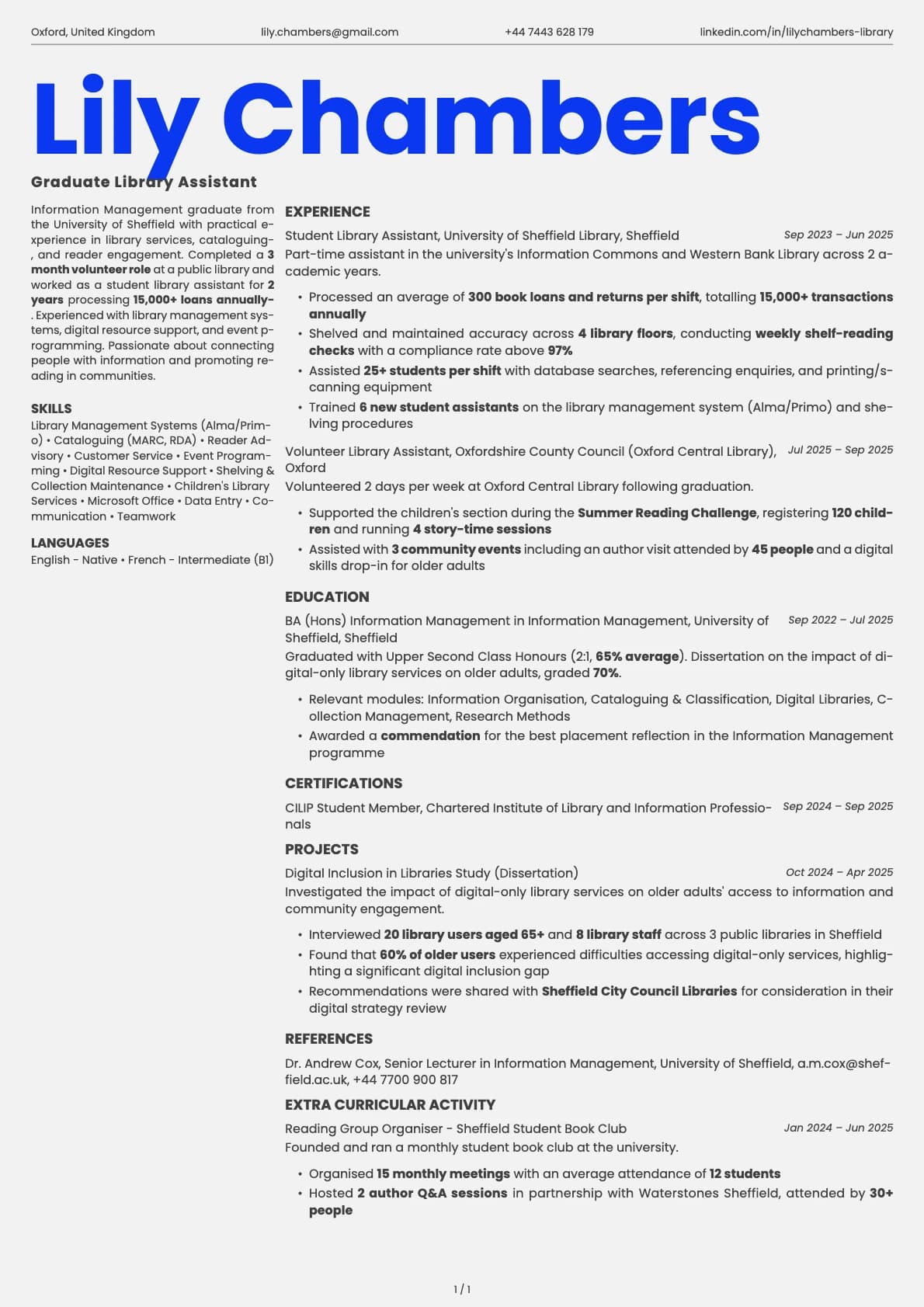
Graduate Library Assistant
A graduate library assistant resume example. See how to present library experience, cataloguing skills, and event programming to land your first library role.
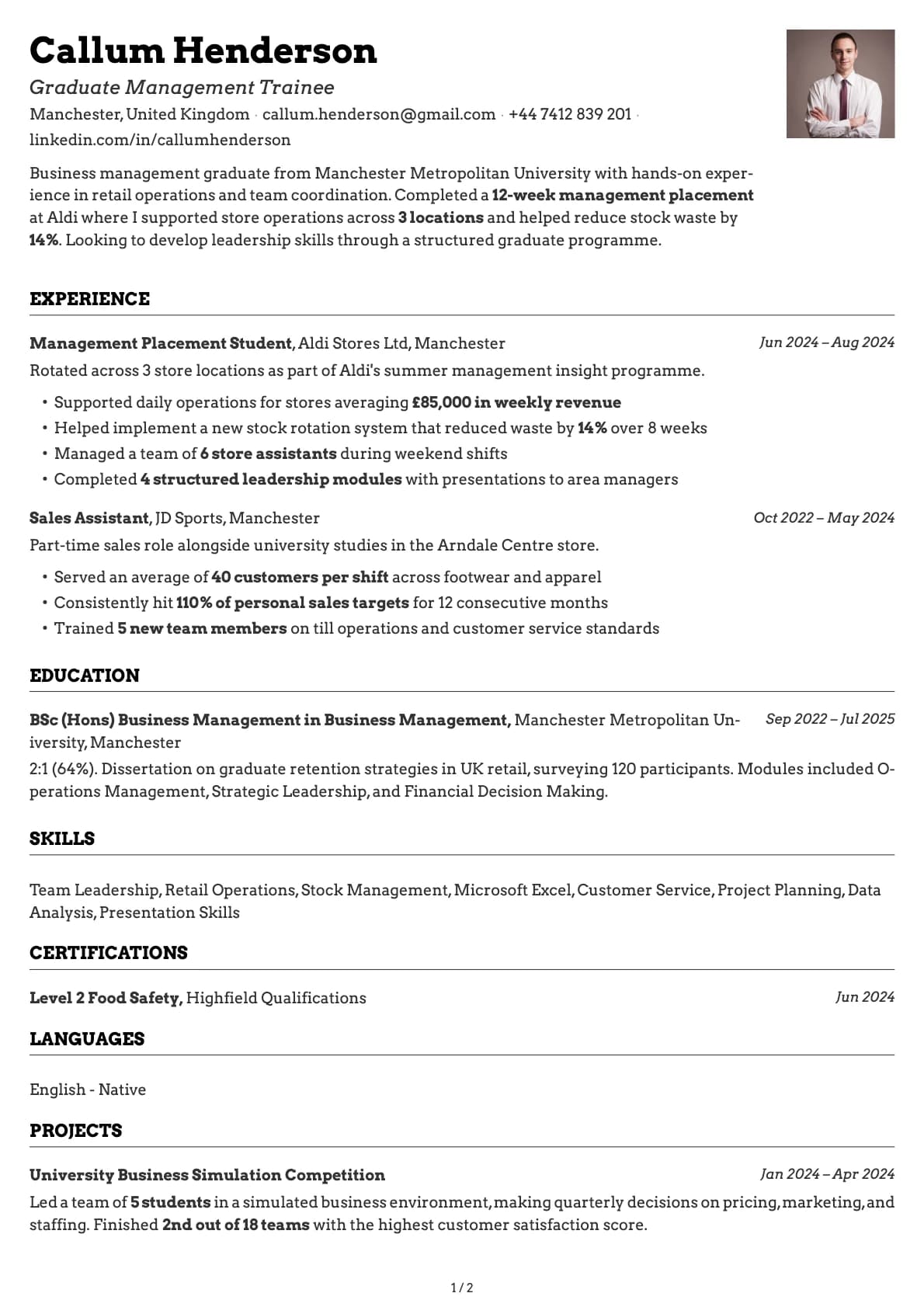
Graduate Management Trainee
A graduate management trainee resume example with retail placement experience and team leadership skills.
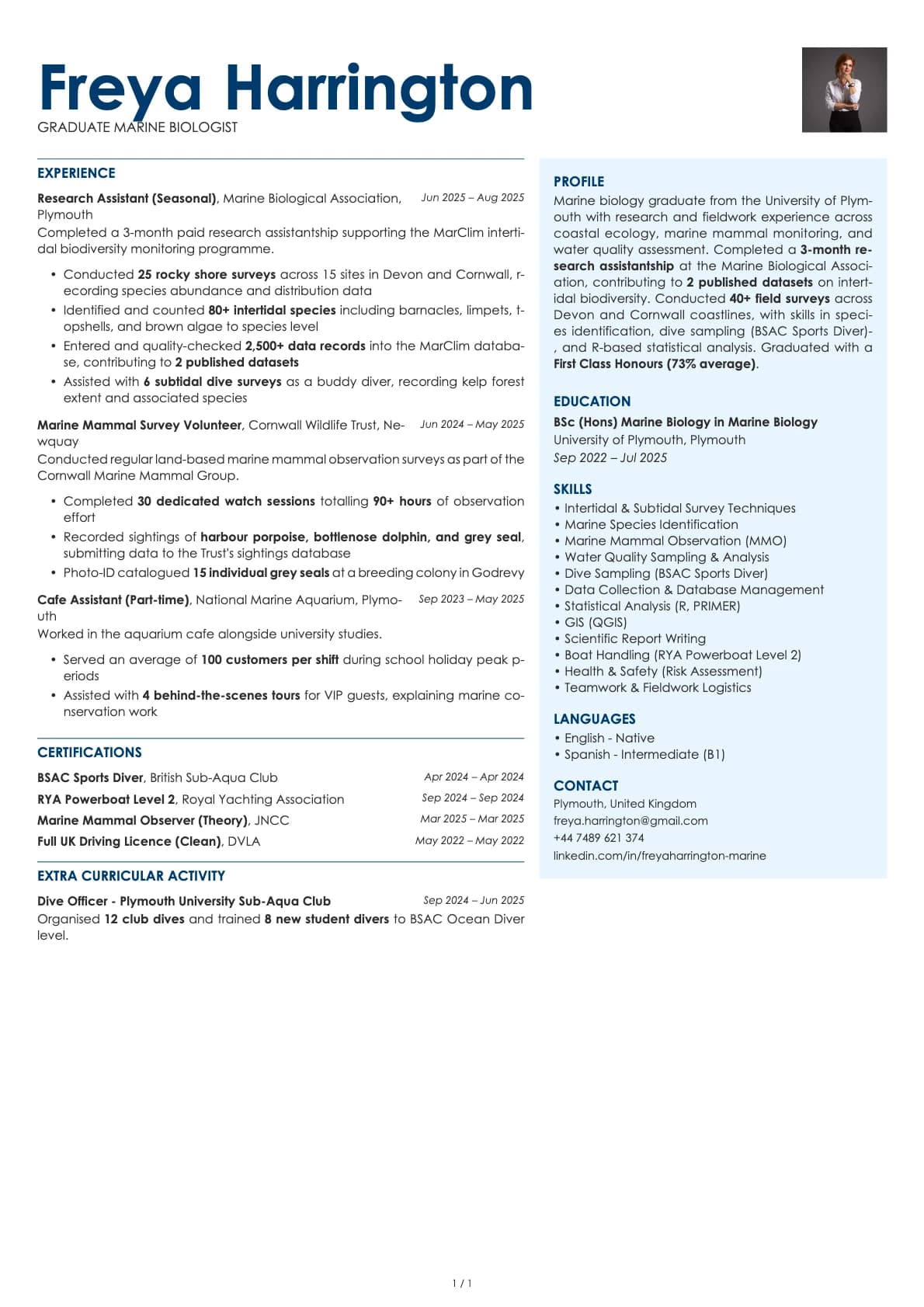
Graduate Marine Biologist
A graduate marine biologist resume example with research placement experience, dive survey qualifications, and intertidal survey numbers.
Graduate Mechanical Engineer
A graduate mechanical engineer resume example with Year in Industry placement, SolidWorks proficiency, and IMechE membership on the IEng pathway.