SEN Teaching Assistant Resume Example
A graduate SEN teaching assistant resume example with SEND placement experience, EHCPs, and autism support. See how to present your specialist skills for SEN TA roles.

Laddro Team
Free to use. No account needed to start.
Free to use. No account needed to start.
Overview
SEN teaching assistant roles attract hundreds of applicants, and most of them write the same thing: "passionate about supporting children with additional needs." That phrase tells a headteacher nothing. What separates a strong application is evidence. How many pupils did you work with? What were their needs? What strategies did you use, and what happened as a result?
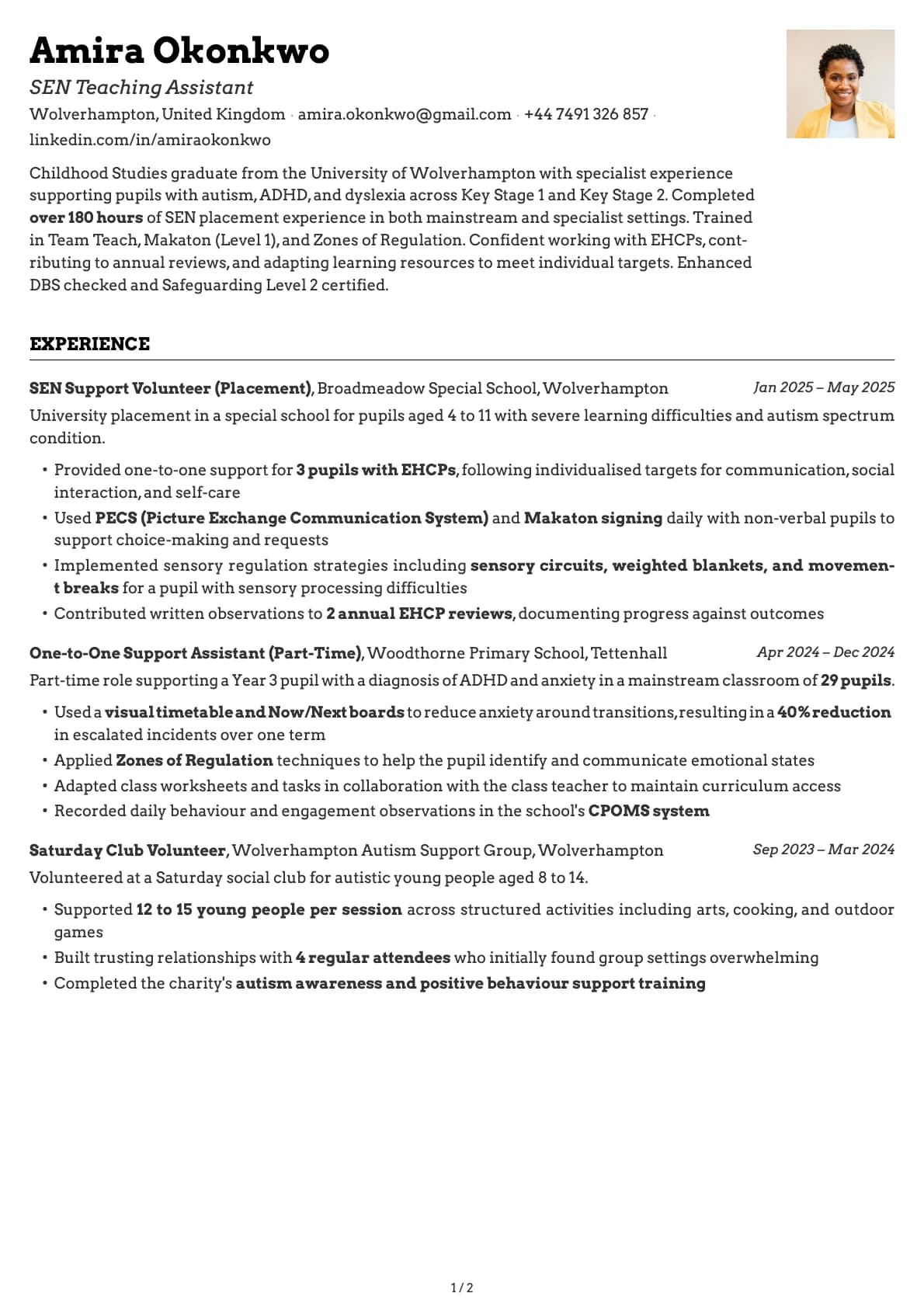
Amira Okonkwo is a graduate with a degree in Childhood Studies from the University of Wolverhampton. She completed two specialist placements in SEN settings, worked as a volunteer at a Saturday club for autistic children, and held a part-time role supporting a pupil with ADHD in a mainstream primary school. Her resume works because every line connects directly to the SEND Code of Practice and the realities of the job.
What Makes This Resume Work
SEN categories are named, not vague. Amira does not say she "supported children with additional needs." She specifies autism spectrum condition, ADHD, dyslexia, and speech and language difficulties. This tells a SENCo she understands the range of needs she will encounter and has already worked across them.
EHCP involvement is clear. She describes contributing to annual reviews, writing observation notes for EHCPs, and adapting targets from individual plans. These are core duties for an SEN TA, and showing familiarity with the process matters more than listing generic skills.
Sensory and regulation strategies are specific. Rather than saying she "managed behaviour," Amira explains she used visual timetables, sensory breaks, and Zones of Regulation to support emotional self-regulation. A SENCo reading this knows she can walk into a classroom and apply these approaches from day one.
Key Takeaways
If you are applying for SEN TA roles, name the conditions you have supported. Describe the strategies you used, the frameworks you followed, and the outcomes you observed. Mention EHCPs, the SEND Code of Practice, and any training you have completed in areas like Team Teach, Makaton, or PECS. Schools want to know that you understand what the role actually involves, not just that you care about children.
Build your own version
Open this layout in the builder and swap in your own details. It takes a few minutes.
Free to use. No account needed to start.
Was this resume example helpful?
Rate this example to help us create better content for you.
4.7 average from 112 ratingsRelated resume examples
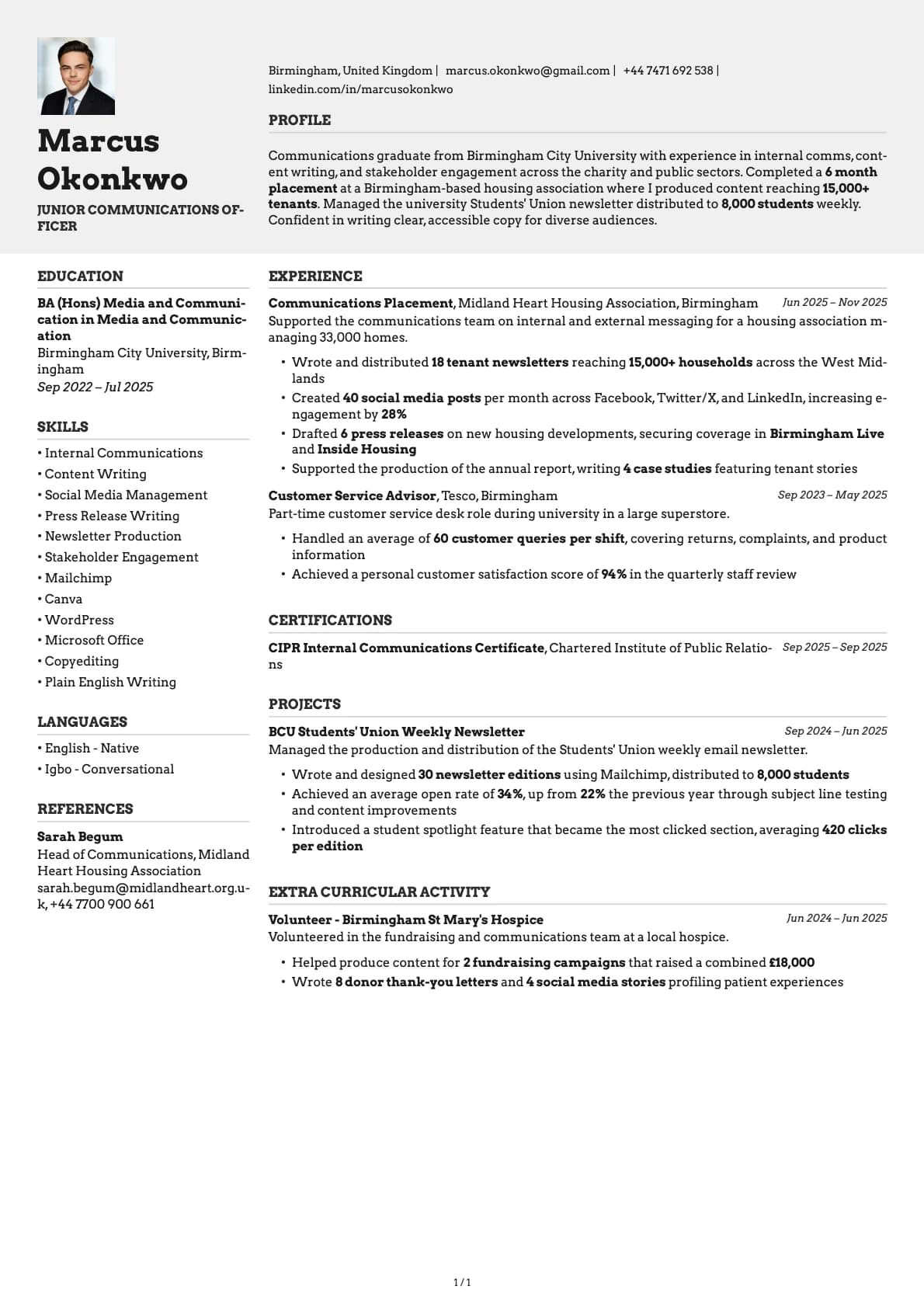
Junior Communications Officer
A junior communications officer resume example for graduates. See how to present internal comms, content writing, and stakeholder engagement experience to land your first comms role.
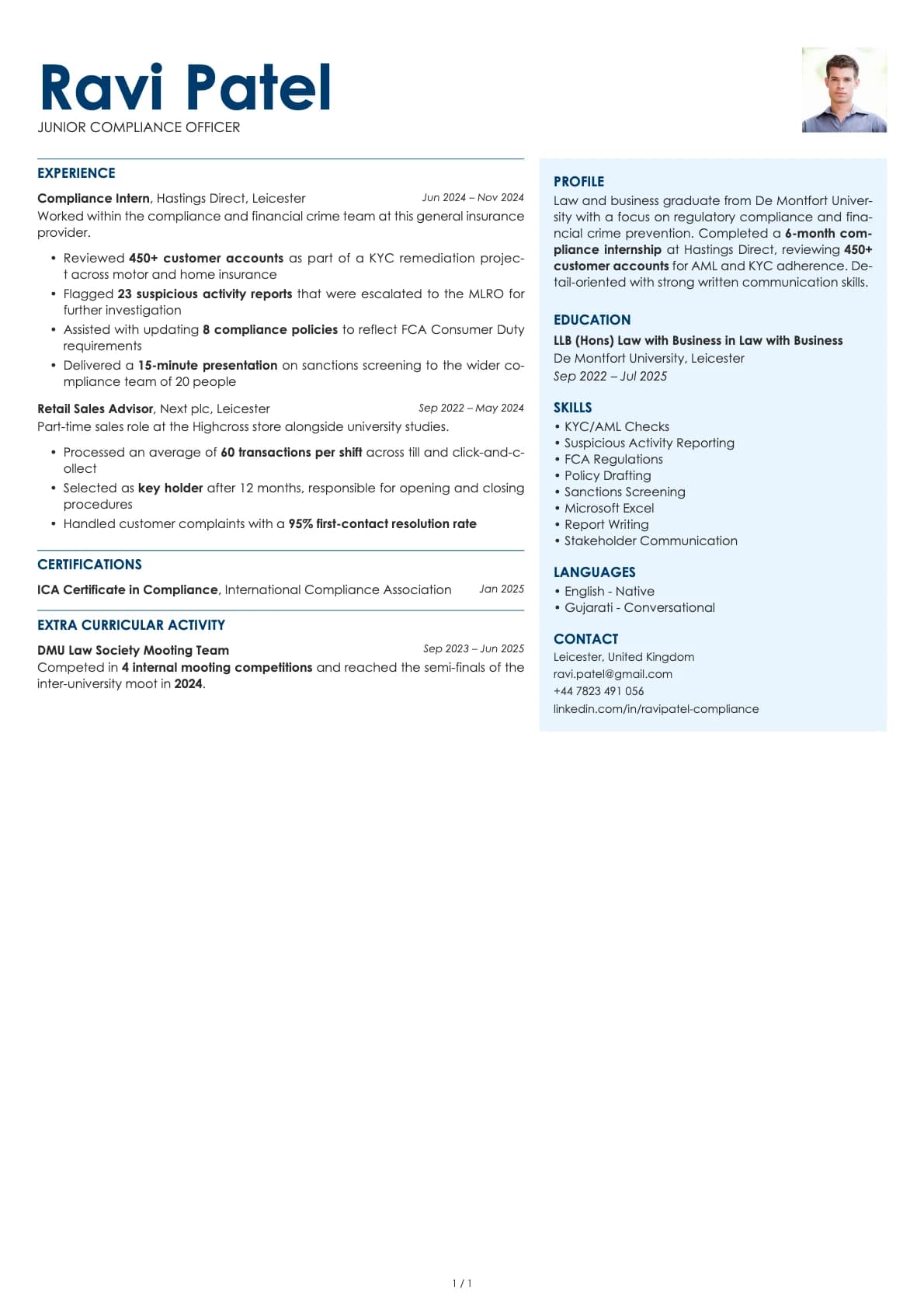
Junior Compliance Officer
A junior compliance officer resume example with insurance compliance internship experience and AML knowledge.
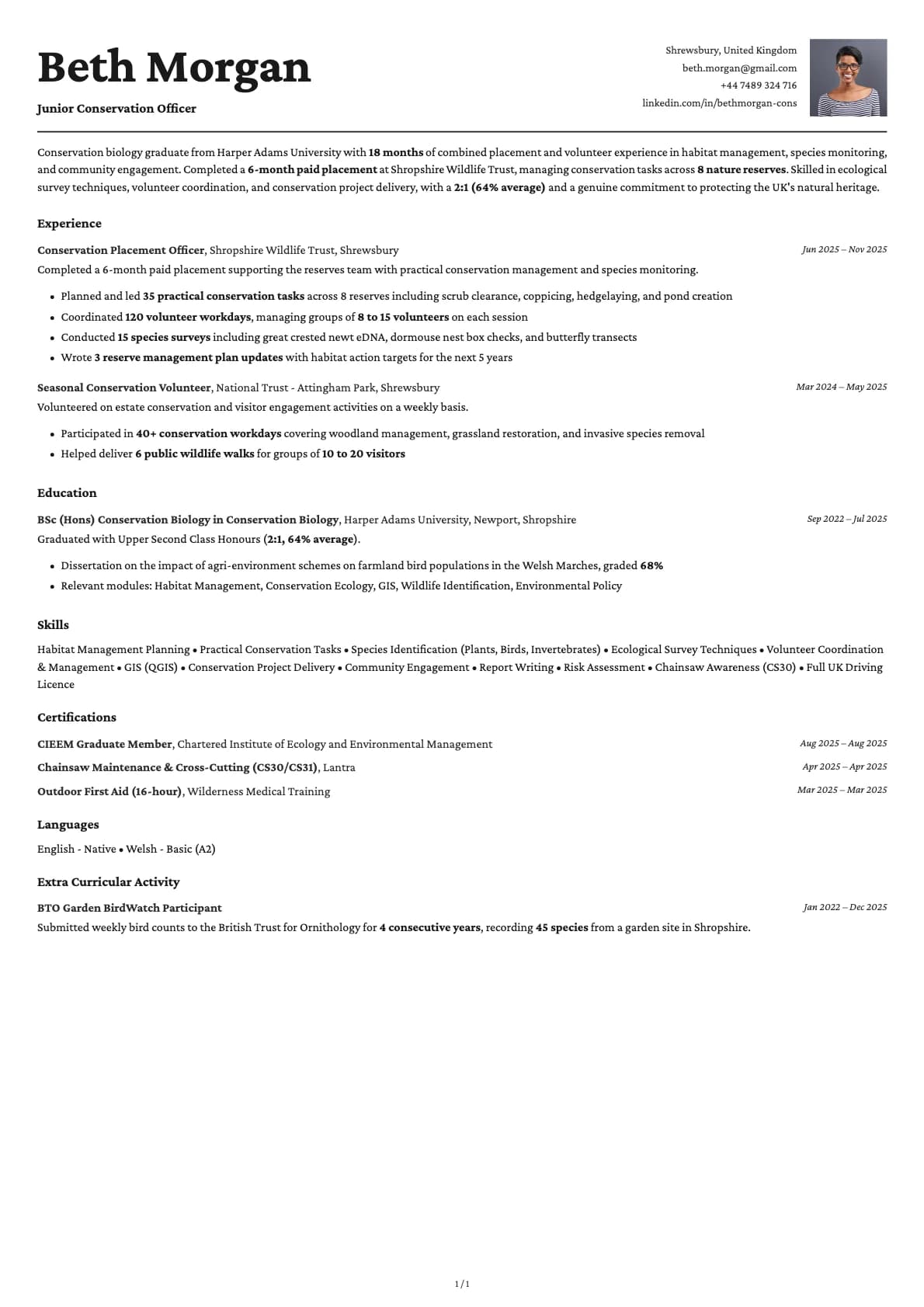
Junior Conservation Officer
A junior conservation officer resume example with wildlife trust placement experience, volunteer coordination, and habitat management skills.
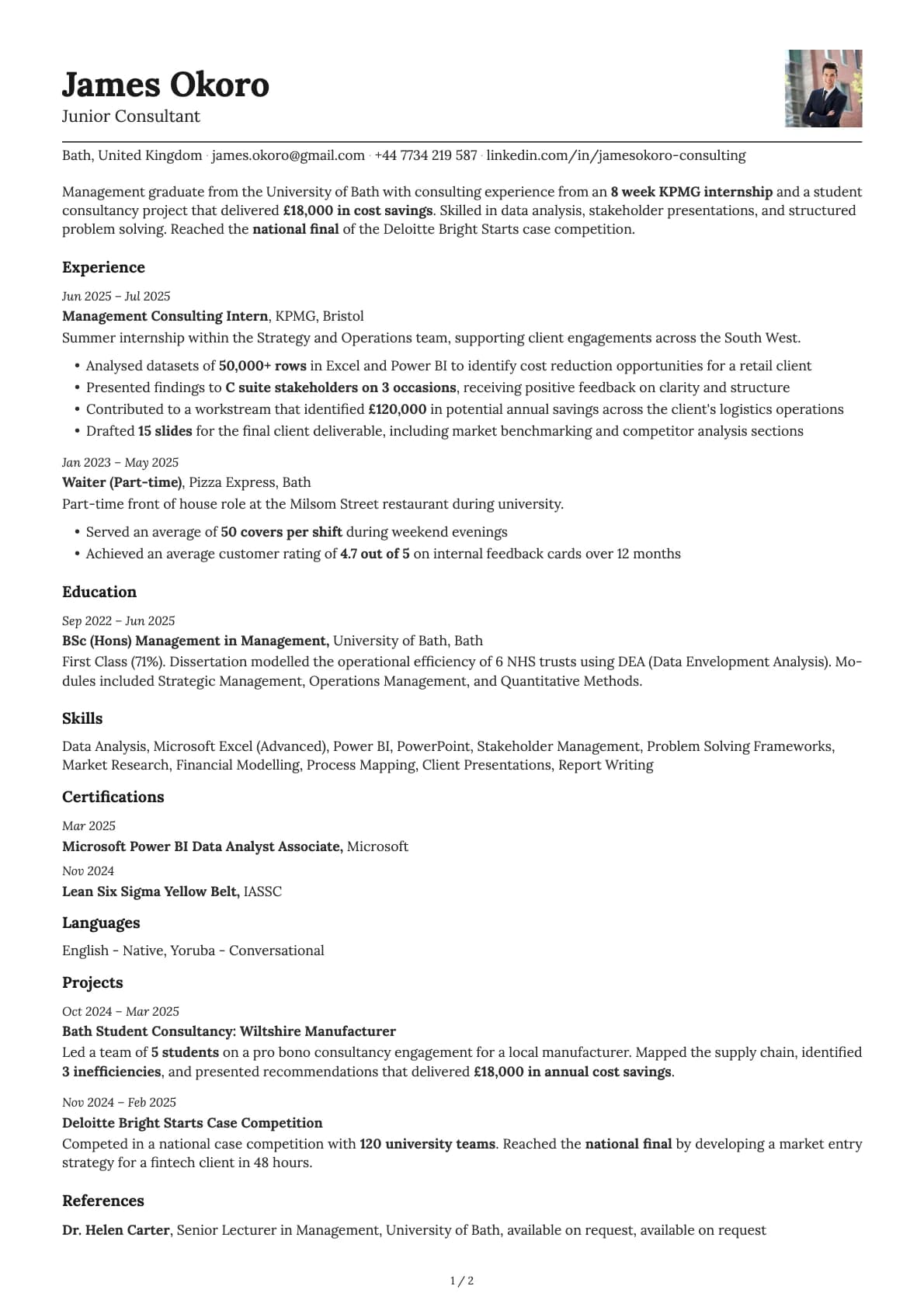
Junior Consultant
A junior consultant resume example with management degree, Big Four internship, and client facing project delivery experience.
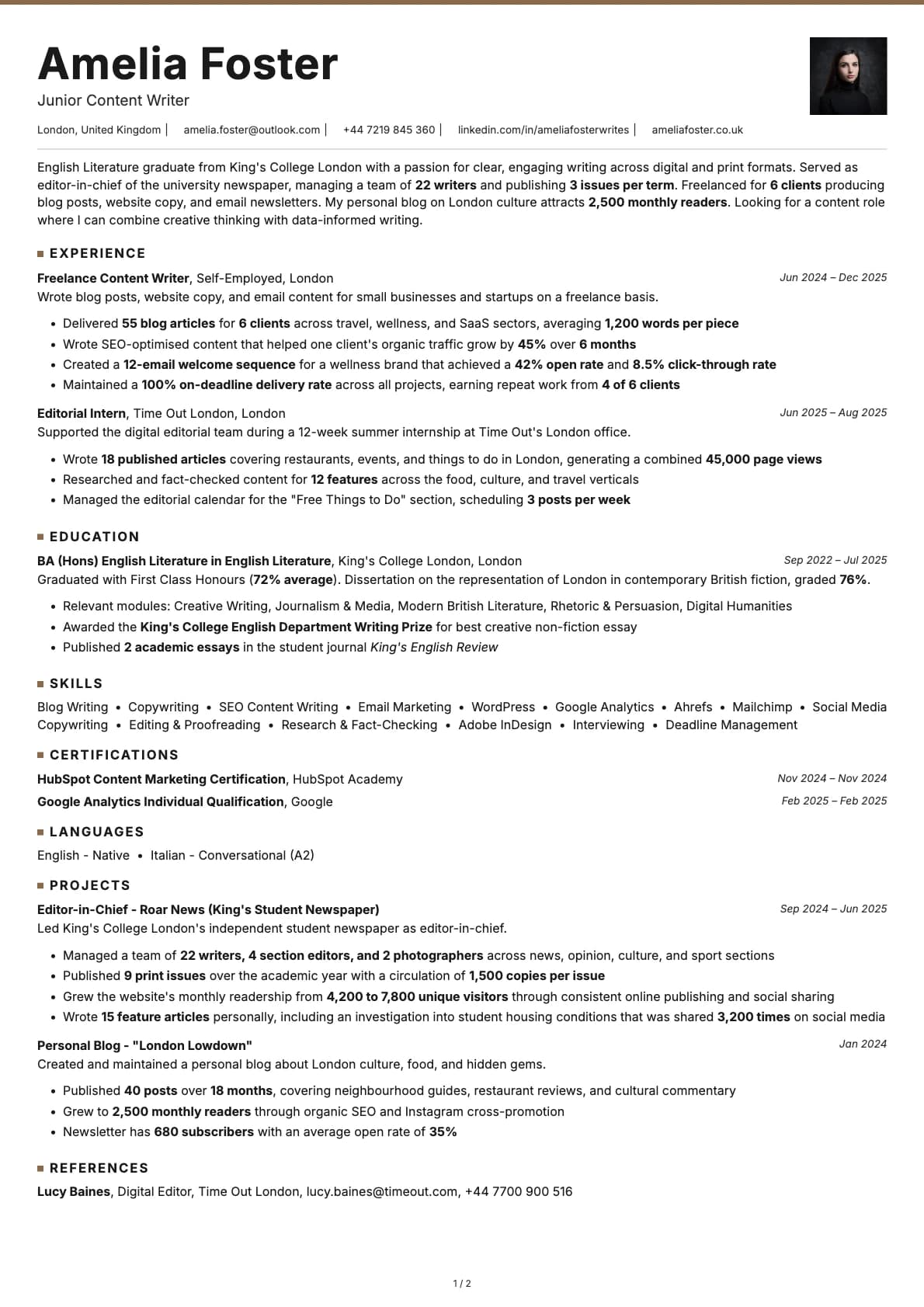
Junior Content Writer
A junior content writer resume example for recent graduates. See how to showcase your writing portfolio, SEO knowledge, and published work to land your first content role.

Junior Copywriter
A junior copywriter resume example for English graduates. See how to present freelance writing, student newspaper experience, and a portfolio to land your first agency or in-house role.
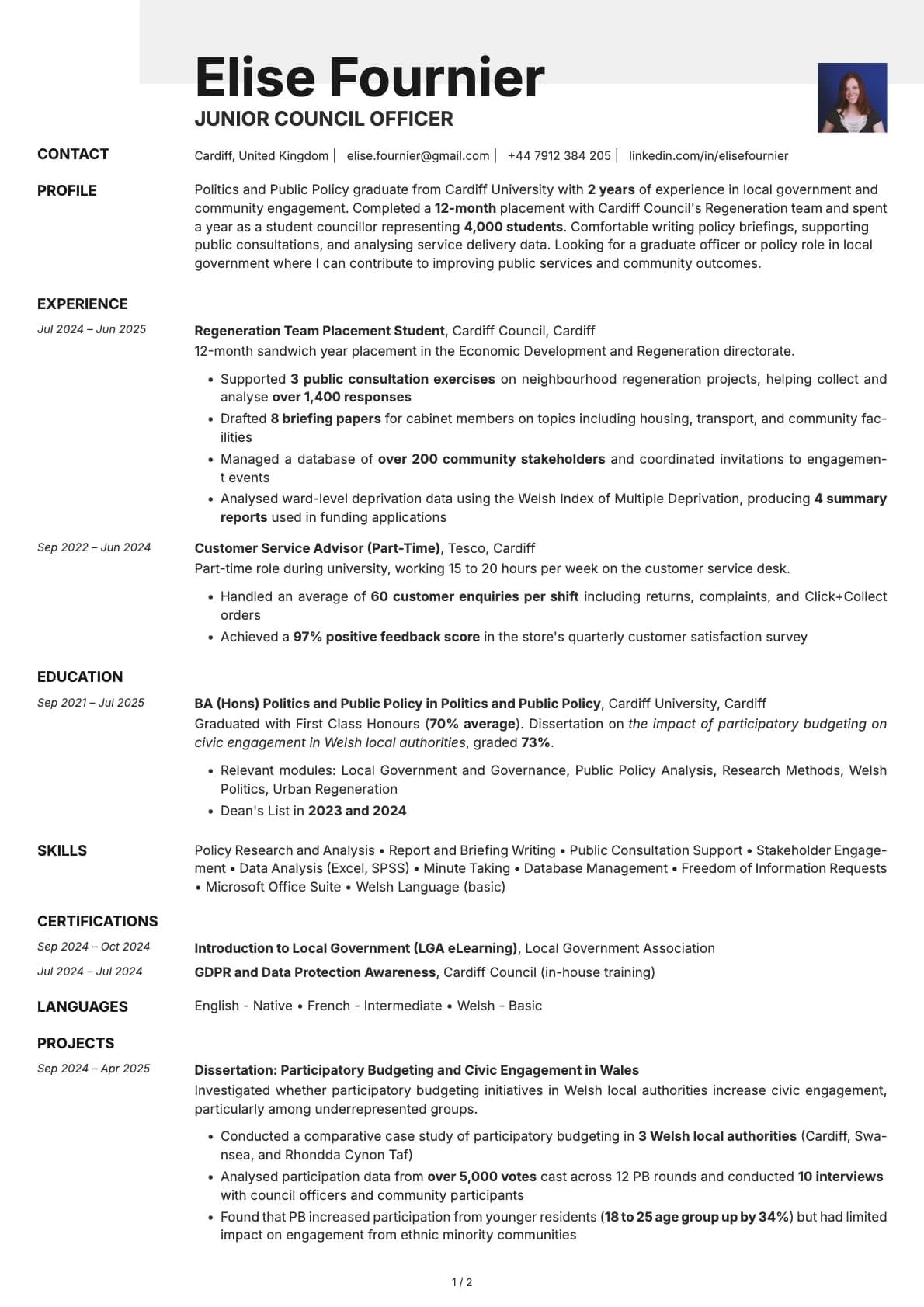
Junior Council Officer
A junior council officer resume example showing how to turn a council placement, student politics, and a public policy degree into a local government career.
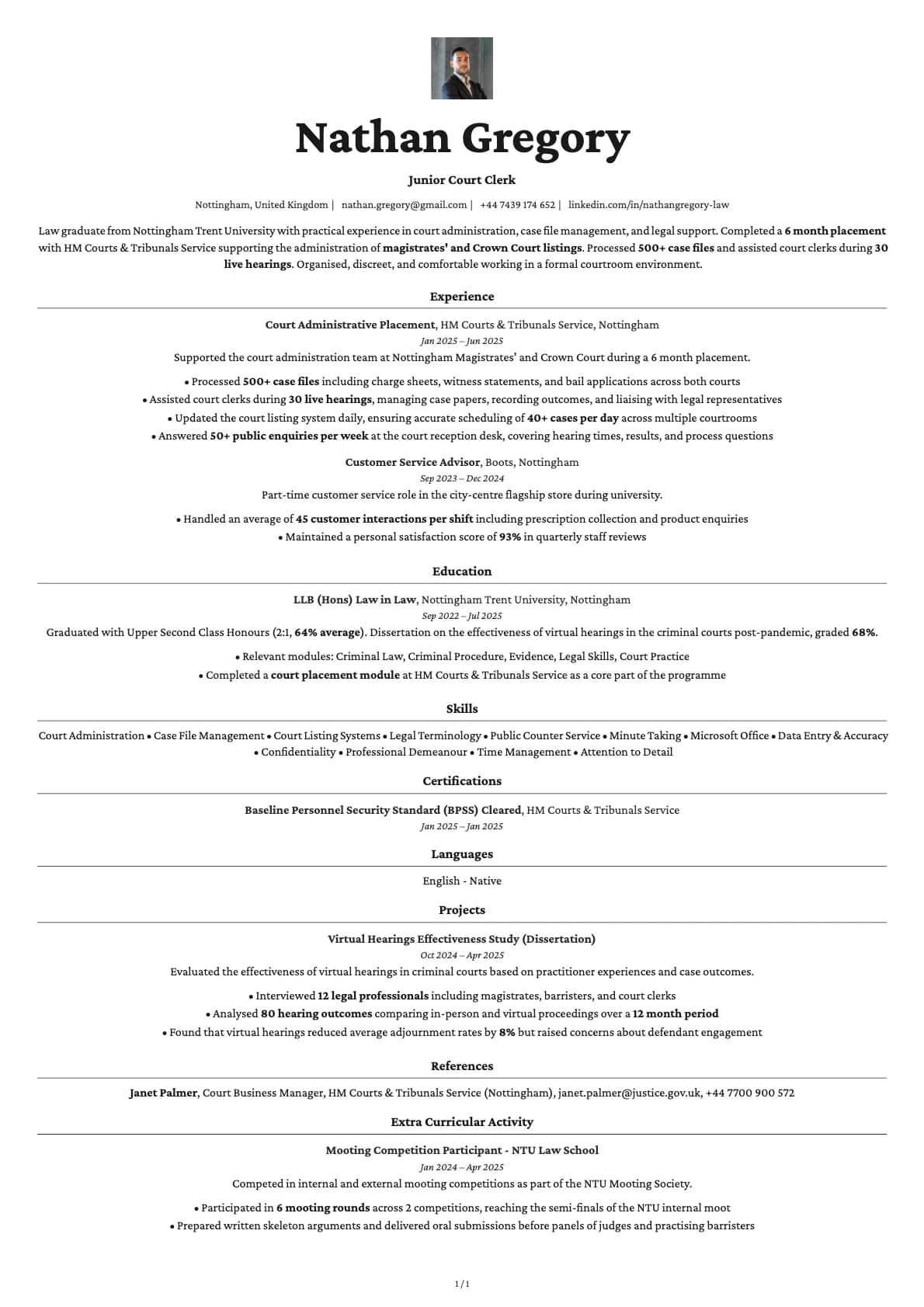
Junior Court Clerk
A junior court clerk resume example for law graduates. See how to present court administration experience, case file management, and HMCTS placement work to land your first court clerk role.
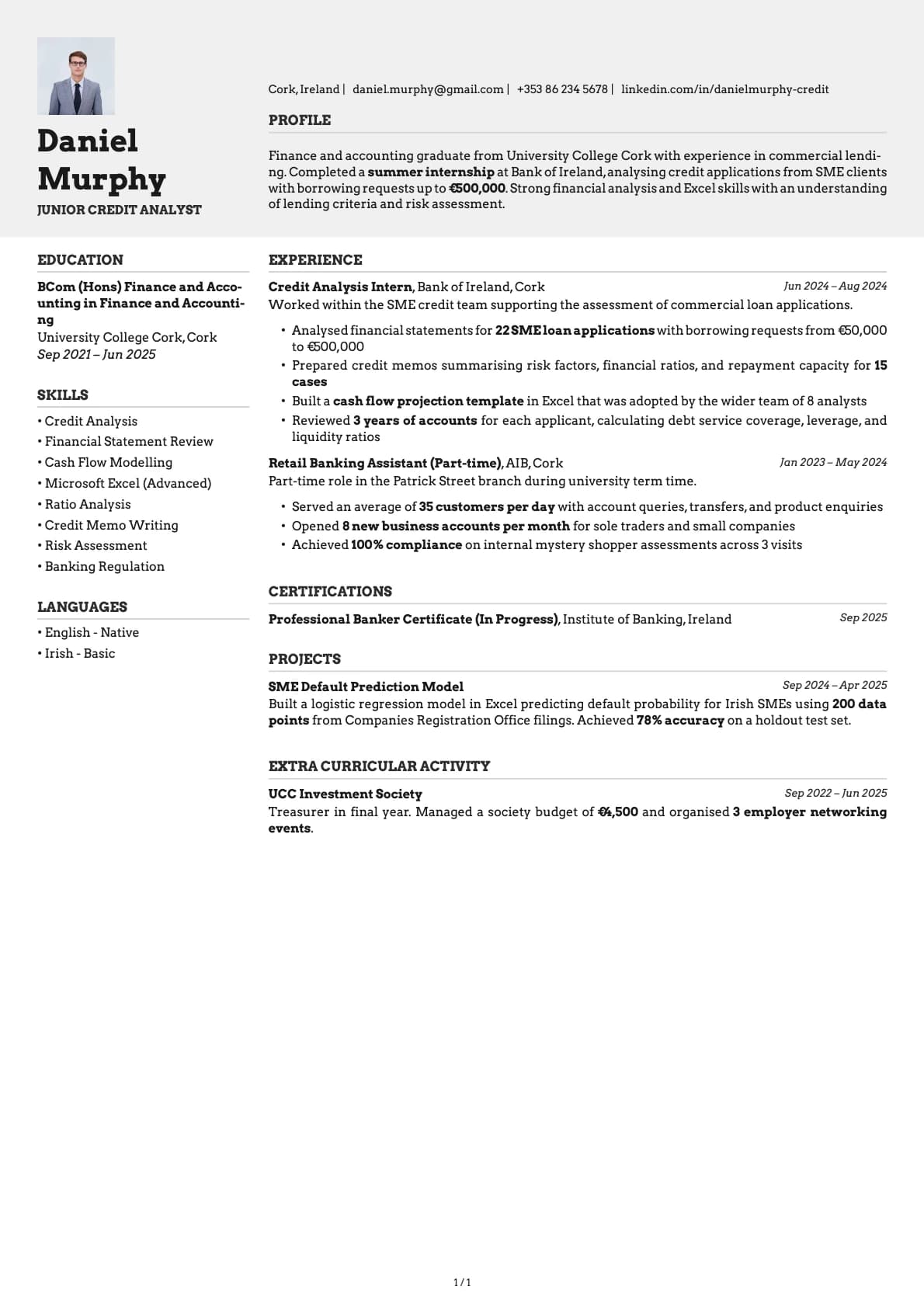
Junior Credit Analyst
A junior credit analyst resume example with Bank of Ireland internship experience and financial analysis skills.
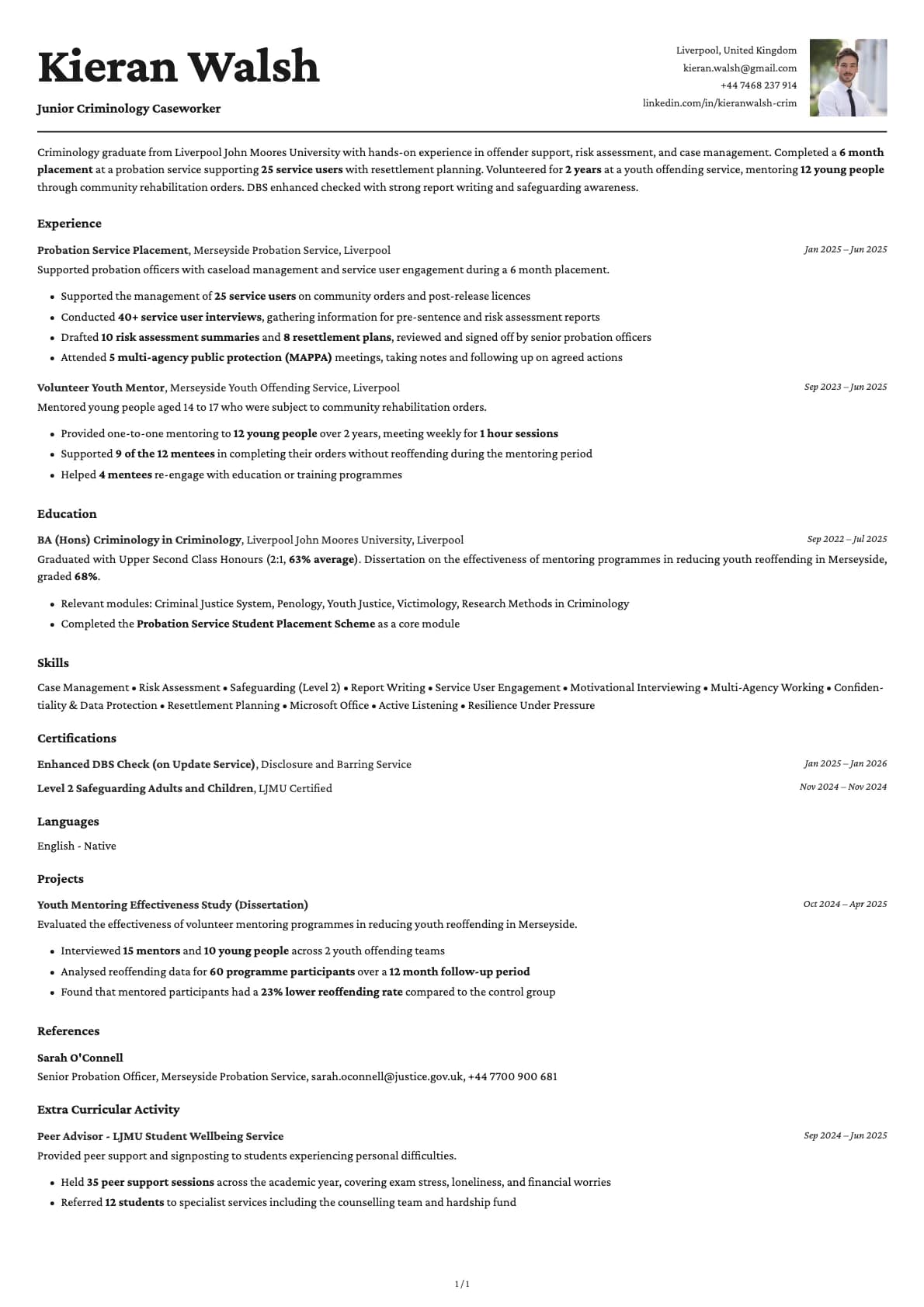
Junior Criminology Caseworker
A junior criminology caseworker resume example for graduates. See how to present probation experience, risk assessment skills, and mentoring work to land your first caseworker role.
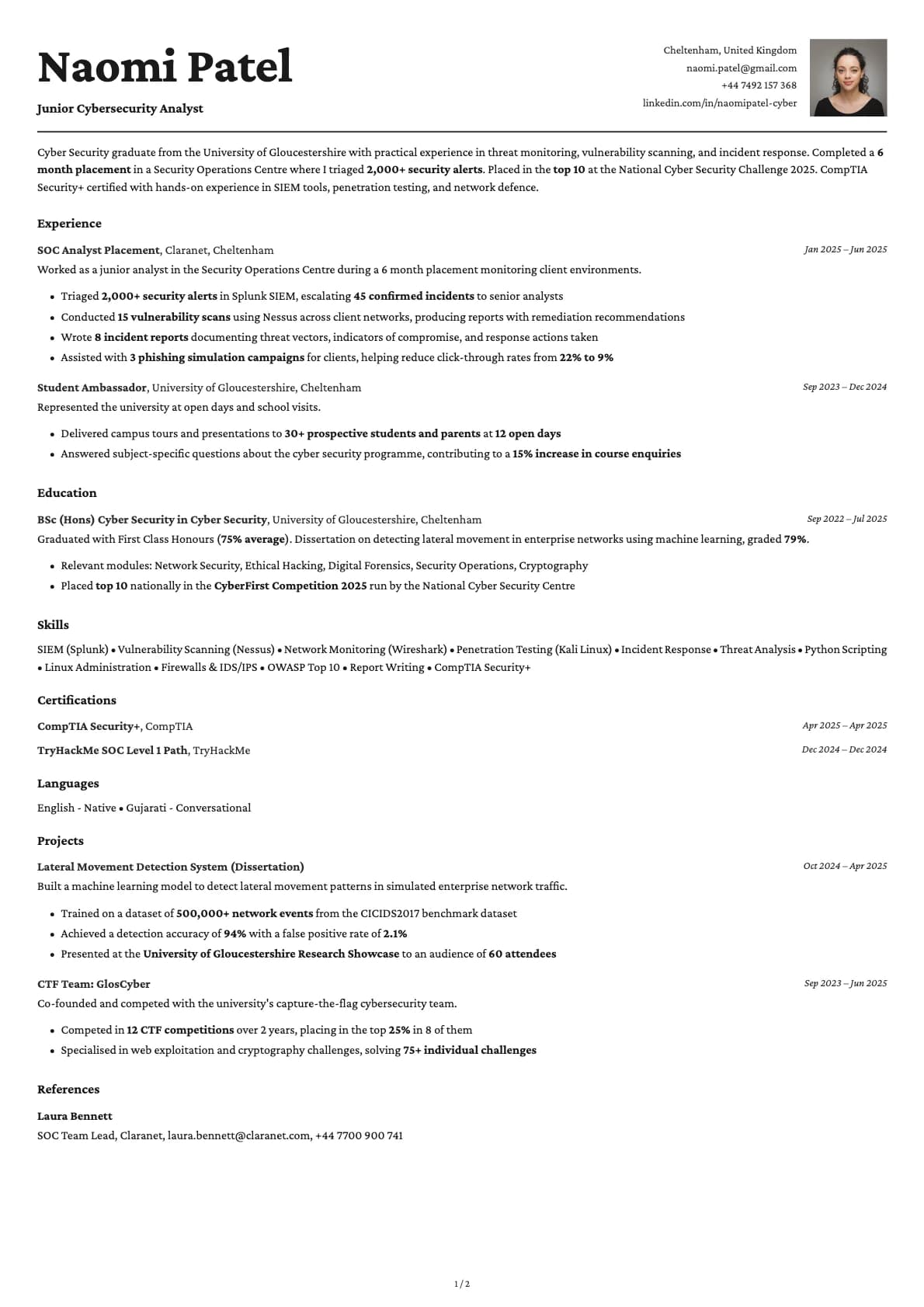
Junior Cybersecurity Analyst
A junior cybersecurity analyst resume example for graduates. See how to present SOC experience, CTF competitions, and Security+ certification to land your first cyber role.
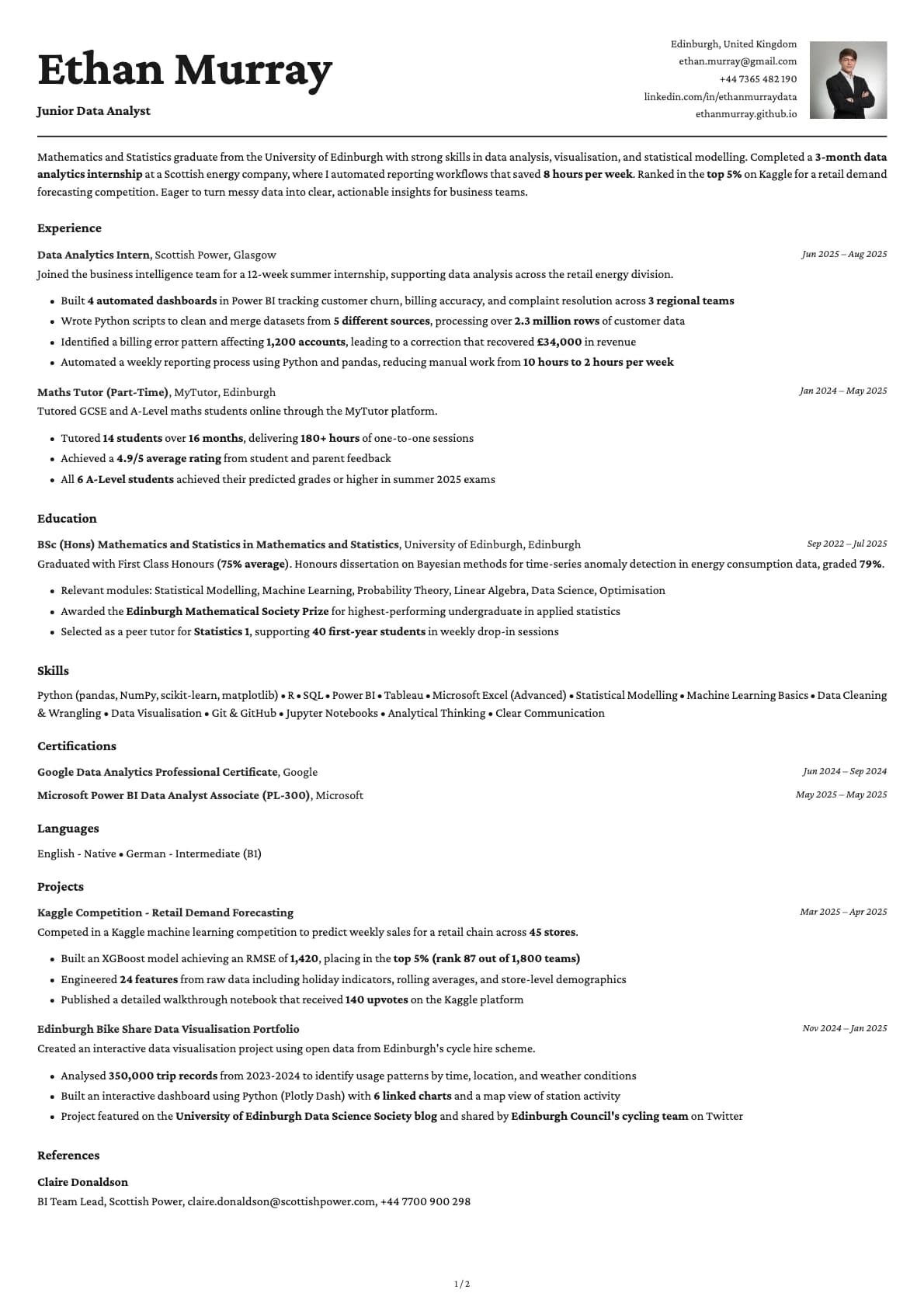
Junior Data Analyst
A junior data analyst resume example for recent graduates. See how to showcase your SQL skills, Python projects, and analytical experience to land your first analyst role.