Junior Web Designer Resume Example
A junior web designer resume example with responsive site builds, client projects, and Figma prototypes from a Web Design graduate starting their career.

Laddro Team
Free to use. No account needed to start.
Free to use. No account needed to start.
Overview
Web design sits between visual design and front end development. Agencies and in-house teams want designers who can create layouts in Figma, understand responsive behaviour, and hand off clean specifications to developers. Some roles expect you to write HTML and CSS too. The resume needs to show you can do both the design and the build, or at least one of them very well.
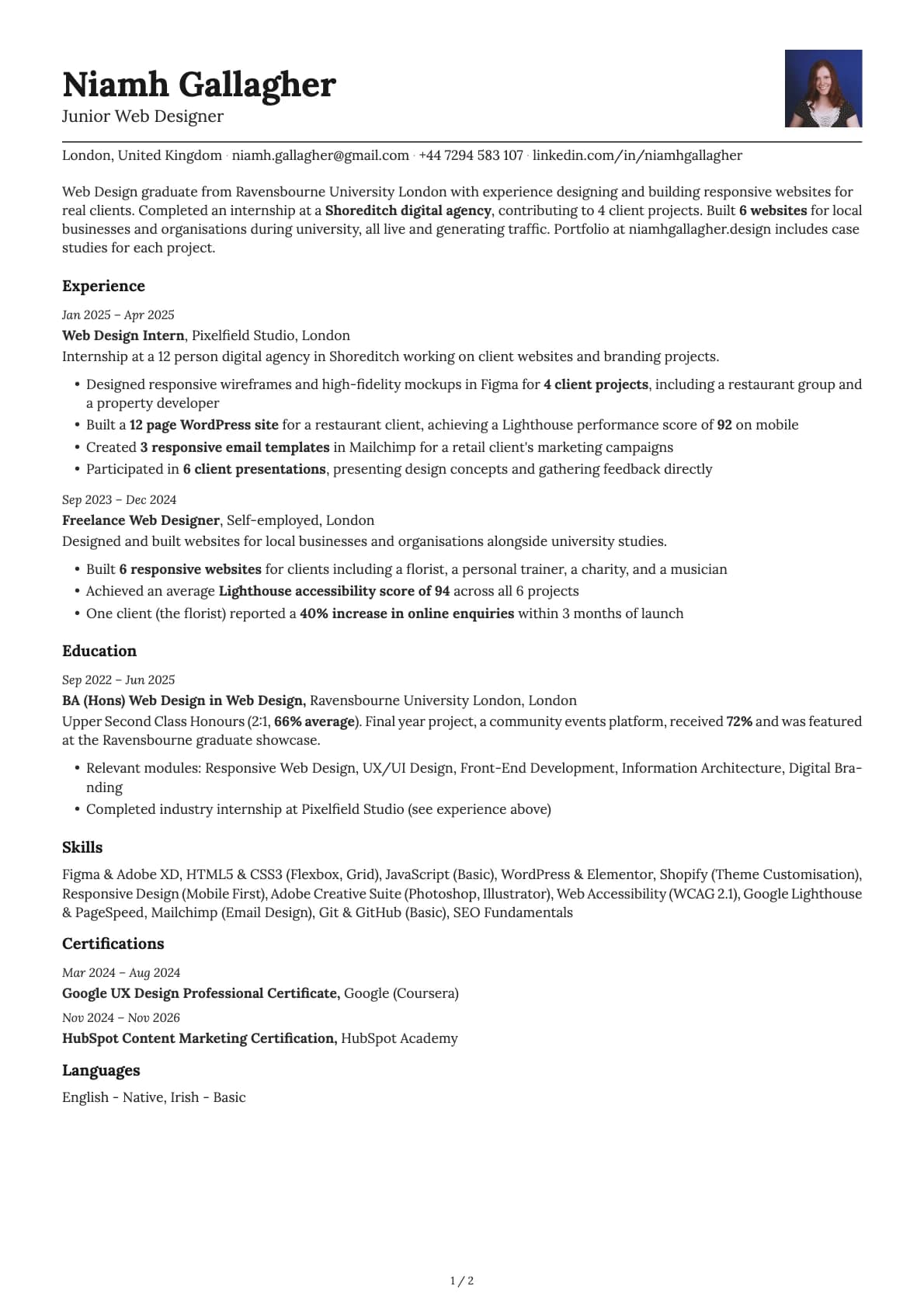
This resume belongs to Niamh Gallagher, a Web Design graduate from Ravensbourne University London. She completed an internship at a Shoreditch digital agency, built 6 client websites during her degree, and maintains a portfolio with live project links. Her resume works because every project is described with page counts, responsive breakpoints, and client outcomes.
What Makes This Resume Work
Live websites are referenced, not just mockups. Niamh names sites that are actually online, which means hiring managers can check her work immediately. This is more powerful than any number of Figma screenshots in a portfolio.
Client project experience bridges the gap between university and work. Building 6 websites for real clients (local businesses, a charity, a musician) during university shows Niamh can manage client relationships, gather requirements, and deliver working products.
Responsive design is treated as a core skill, not an afterthought. Mentioning specific breakpoints tested and mobile performance scores (92 on Lighthouse) proves Niamh understands that web design means designing for every screen size.
The agency internship demonstrates professional workflow. Working with developers, using version control, and participating in client presentations are all mentioned. These details tell hiring managers that Niamh can slot into an agency team on day one.
Key Takeaways
Junior web designer resumes should link to live projects wherever possible. Describe each site with specifics: page counts, CMS used, performance scores, and client outcomes. Show that you understand responsive design, accessibility basics, and the handoff process between design and development. Agency or freelance experience with real clients is more valuable than purely academic projects.
Build your own version
Open this layout in the builder and swap in your own details. It takes a few minutes.
Free to use. No account needed to start.
Was this resume example helpful?
Rate this example to help us create better content for you.
4.8 average from 134 ratingsRelated resume examples
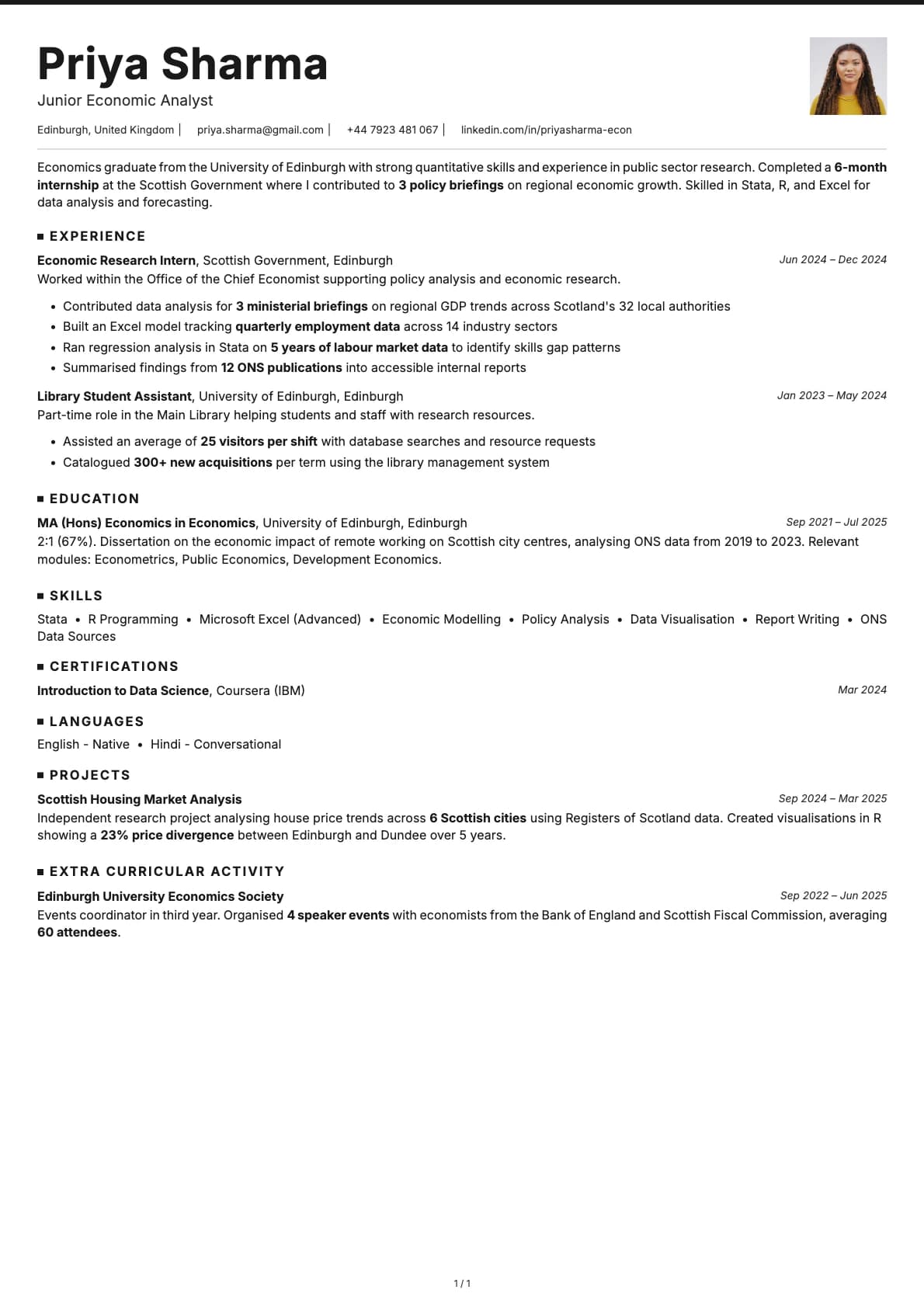
Junior Economic Analyst
A junior economic analyst resume example with government internship experience and strong quantitative skills.
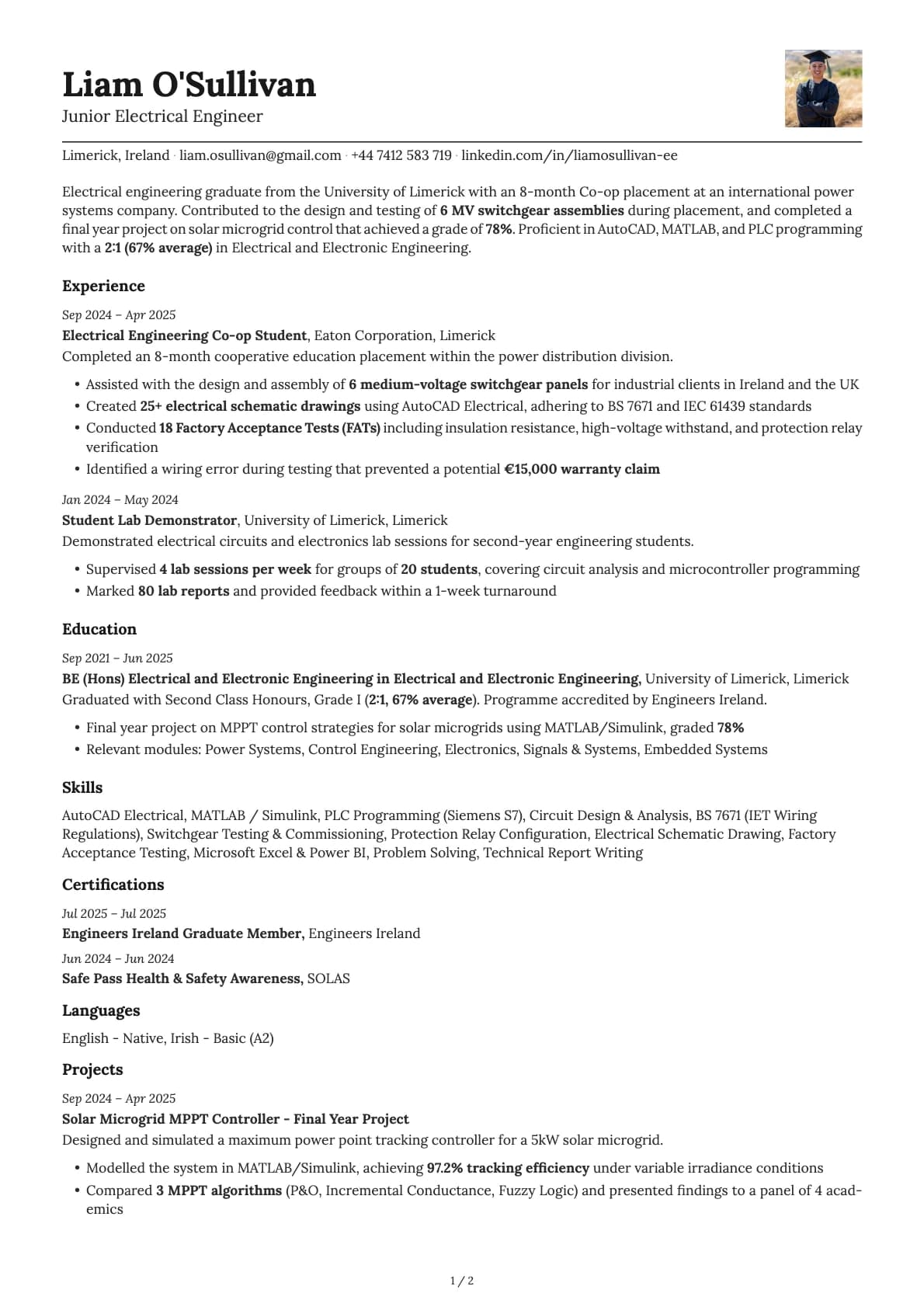
Junior Electrical Engineer
A junior electrical engineer resume example with power systems placement experience, AutoCAD skills, and Engineers Ireland membership.
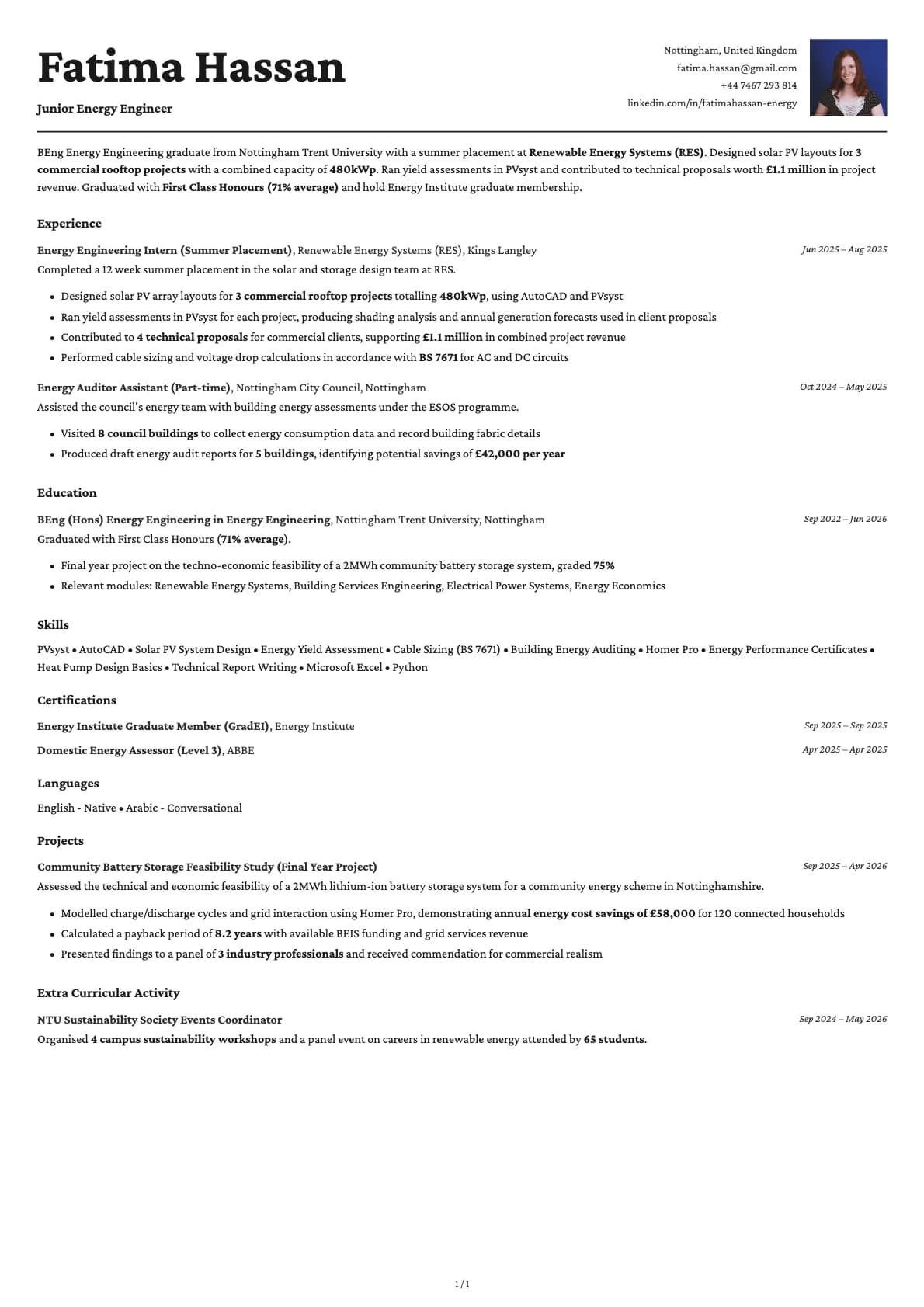
Junior Energy Engineer
A junior energy engineer resume example with renewable energy placement experience, solar PV design skills, and Energy Institute membership.
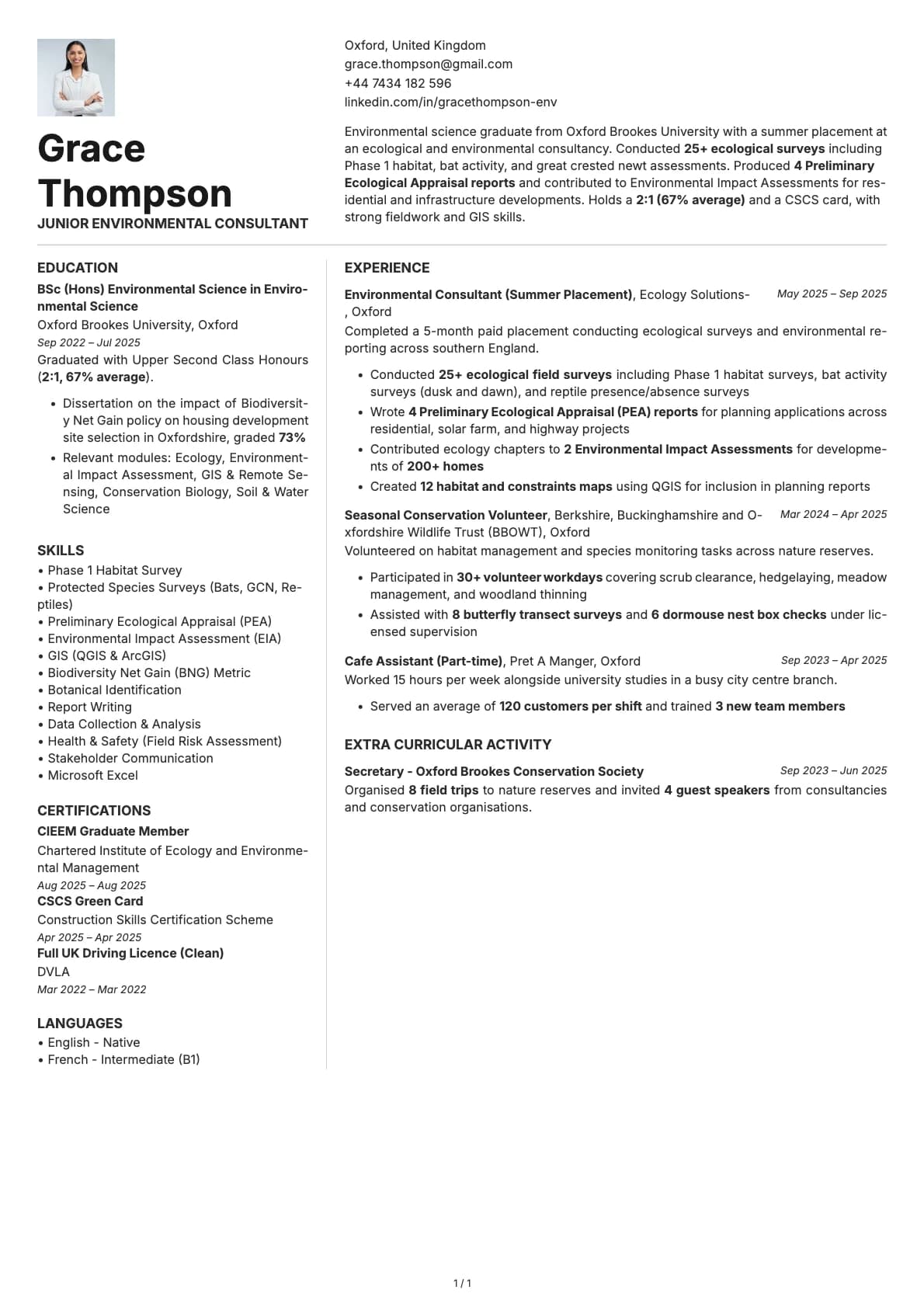
Junior Environmental Consultant
A junior environmental consultant resume example with ecological survey experience, PEA report writing, and GIS mapping skills for graduates.
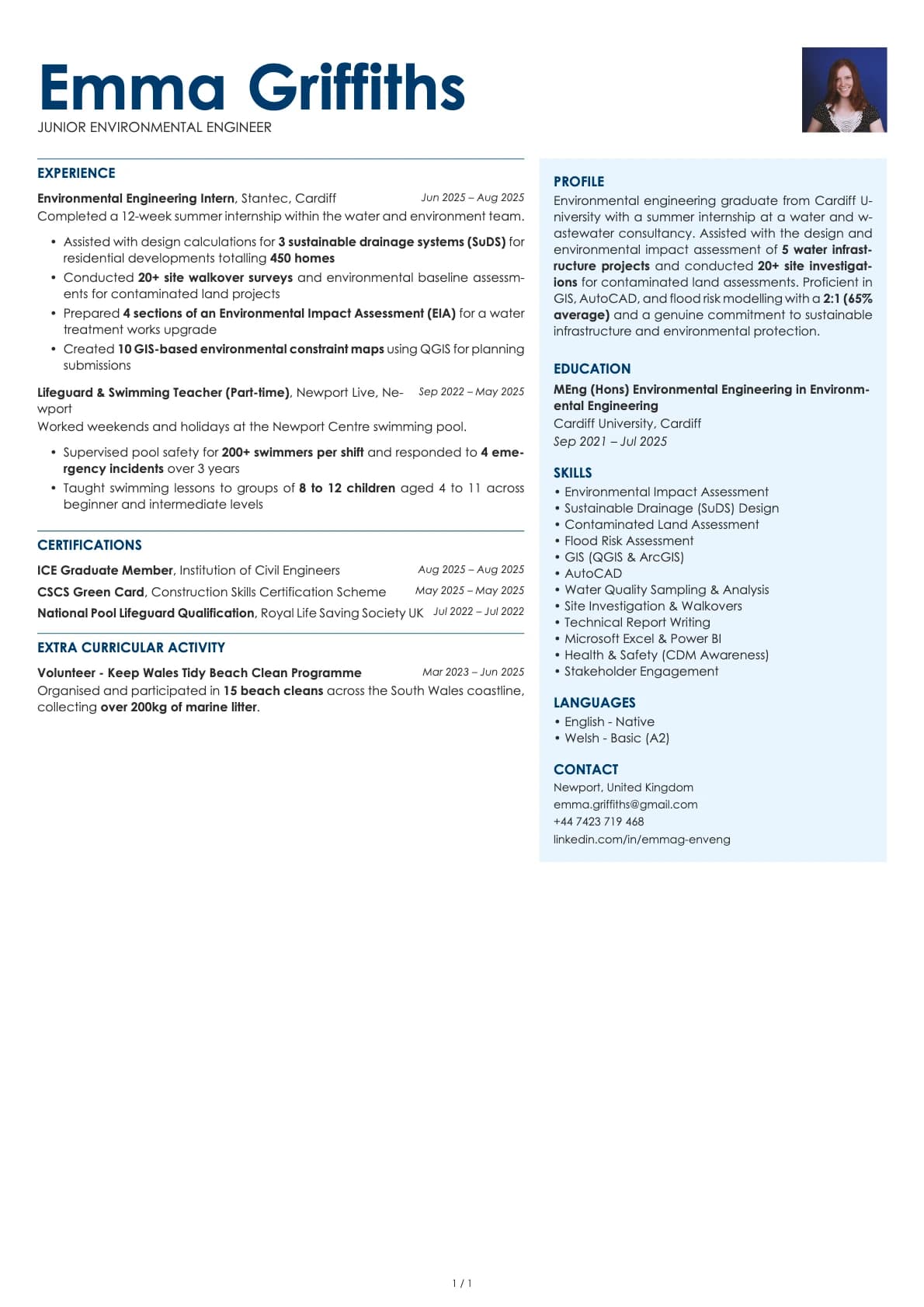
Junior Environmental Engineer
A junior environmental engineer resume example with EIA experience, SuDS design, and contaminated land site investigation numbers.
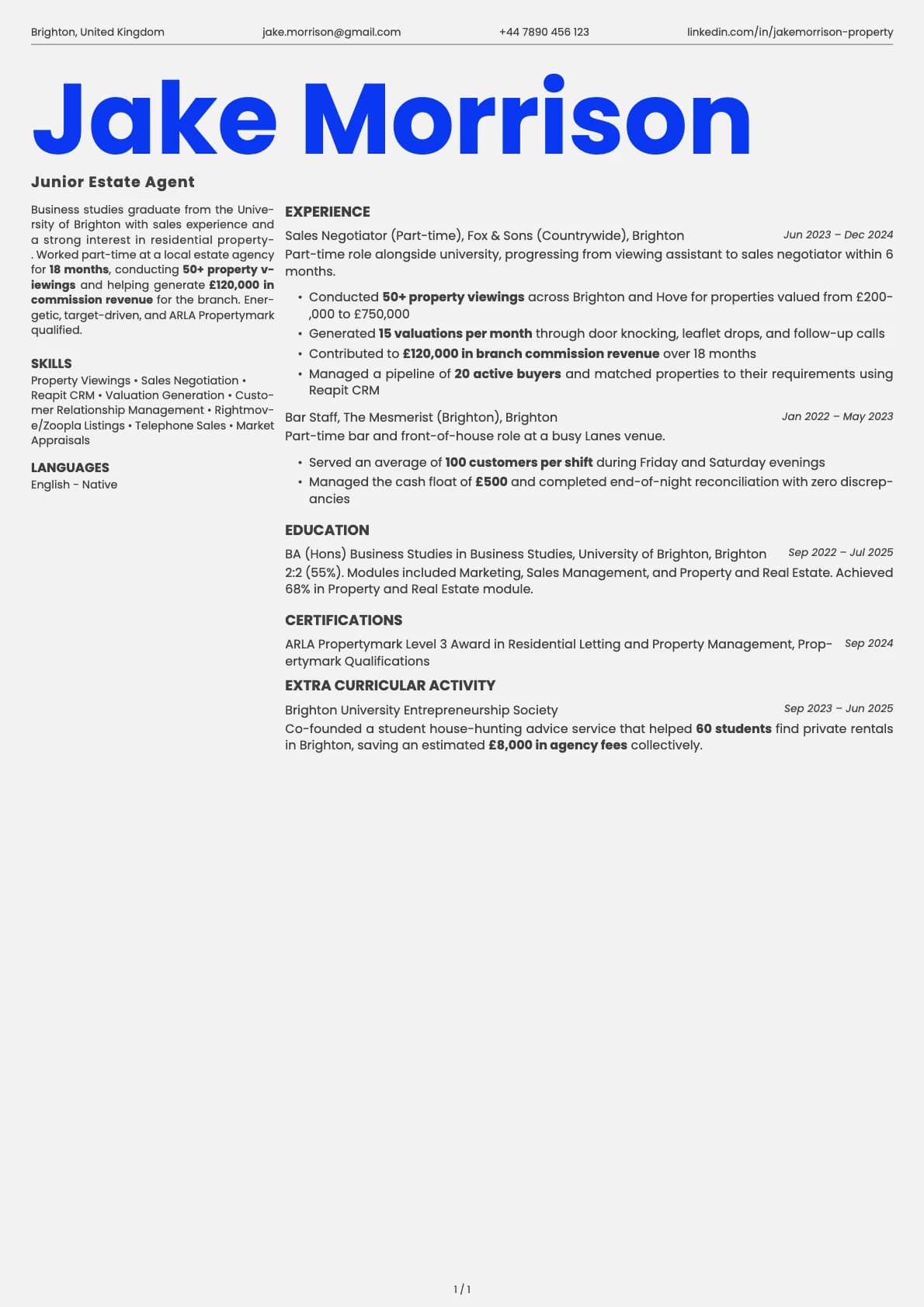
Junior Estate Agent
A junior estate agent resume example with sales negotiator experience and ARLA Propertymark qualification.
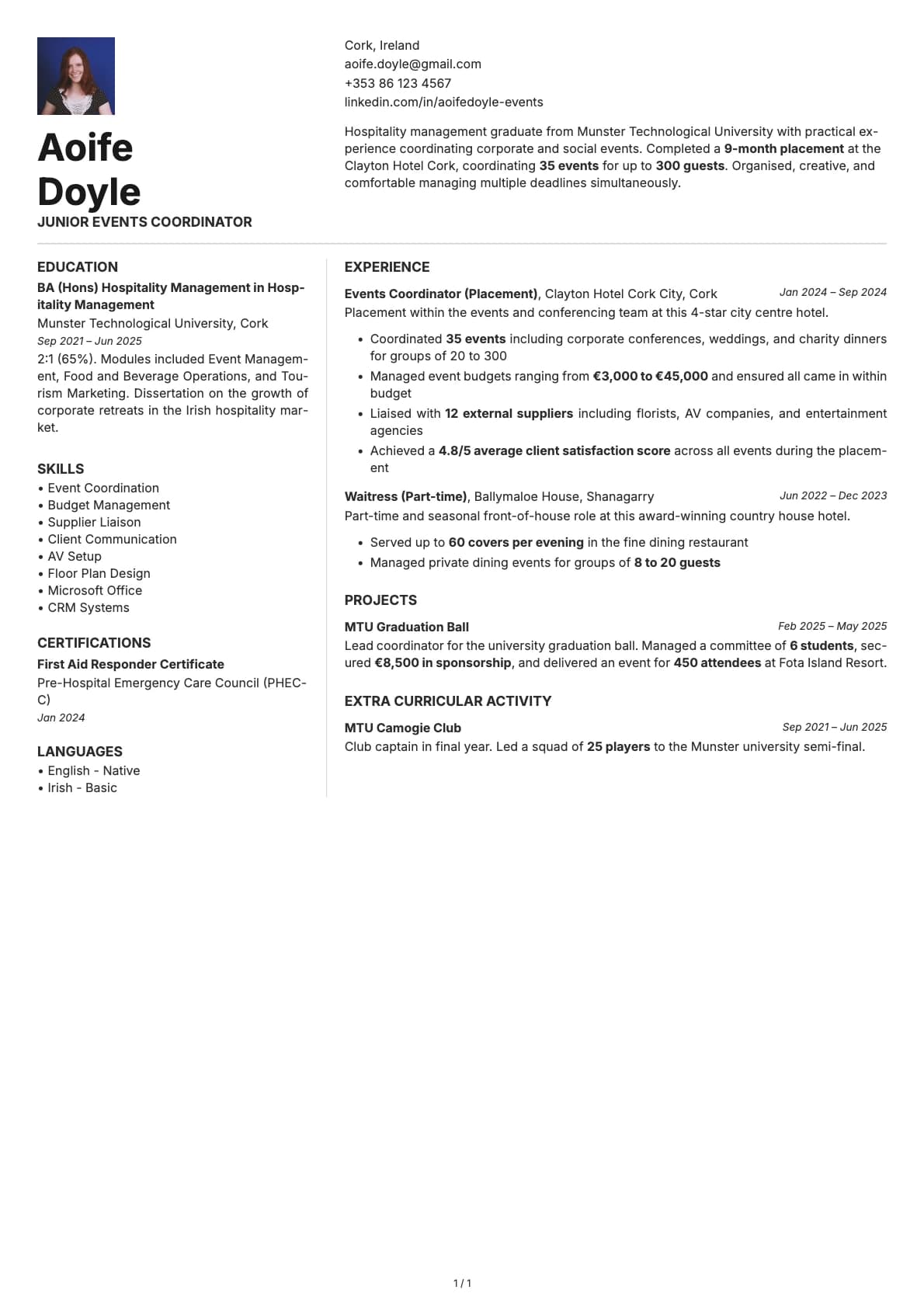
Junior Events Coordinator
A junior events coordinator resume example with hotel placement experience and corporate event management skills.
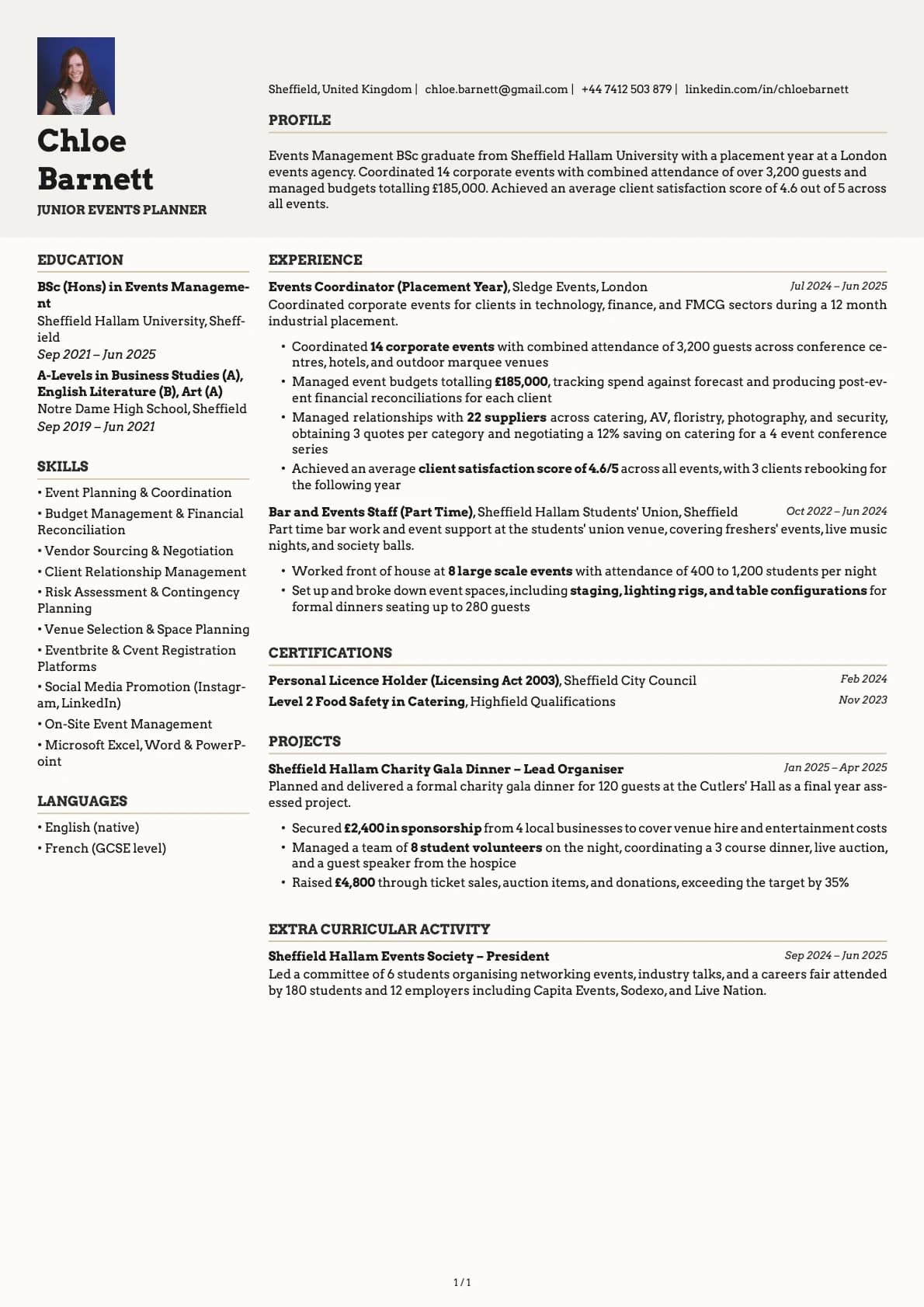
Junior Events Planner
A junior events planner resume example for events management graduates. See how to present your event coordination experience, guest counts, budgets, and vendor management skills.
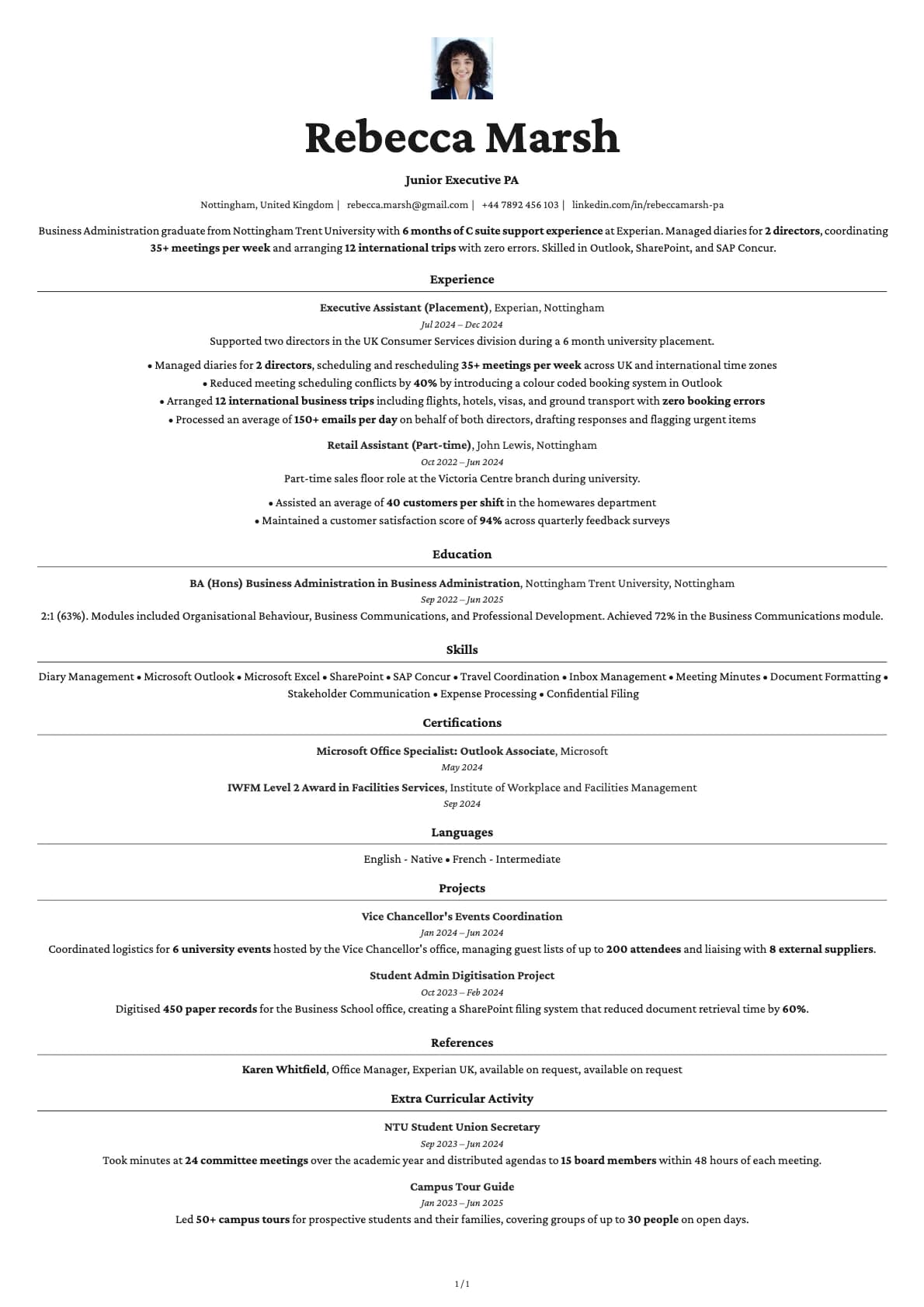
Junior Executive PA
A junior executive PA resume example with business administration degree, C-suite support experience, and diary management skills.
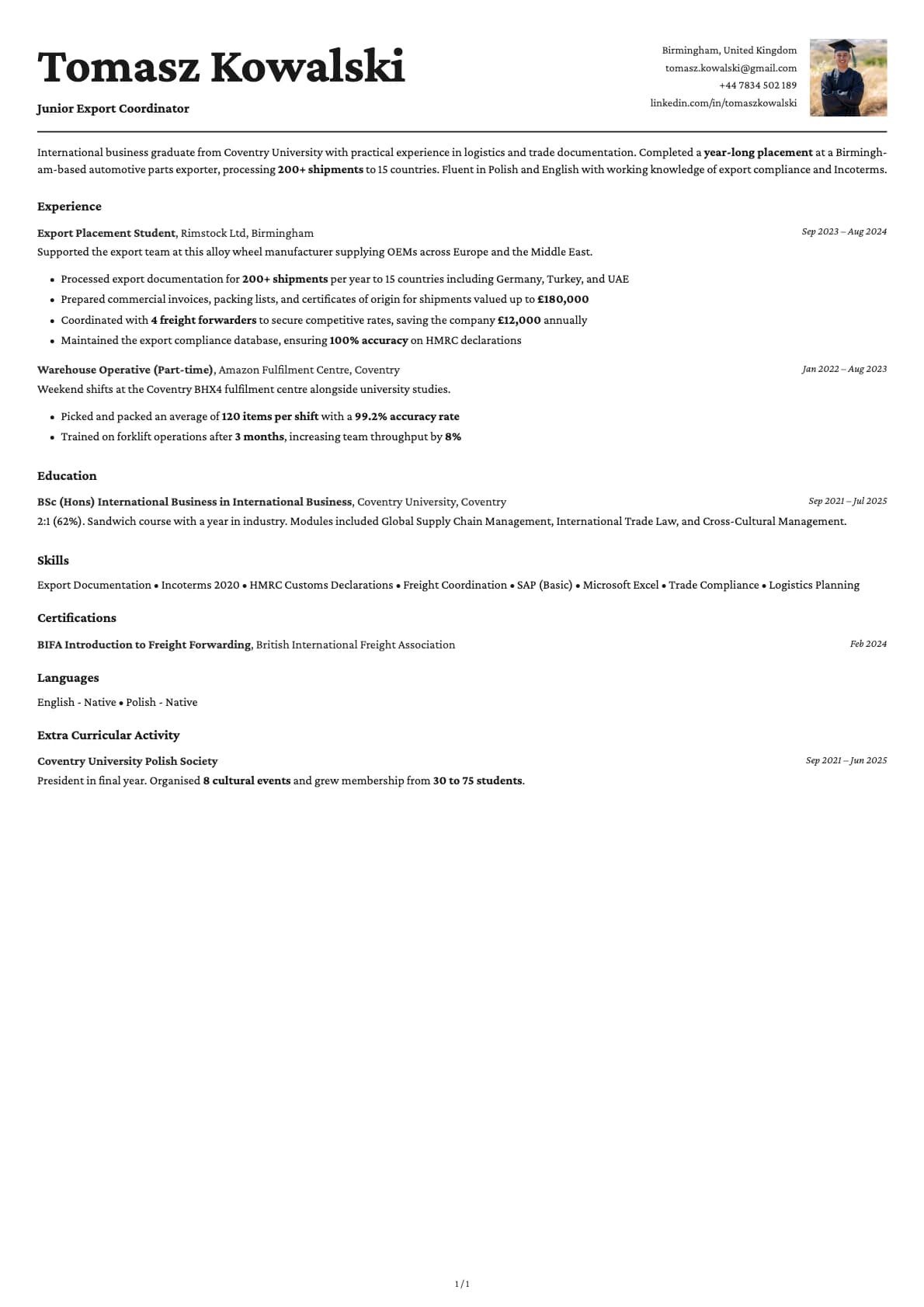
Junior Export Coordinator
A junior export coordinator resume example with placement experience in automotive exports and bilingual skills.
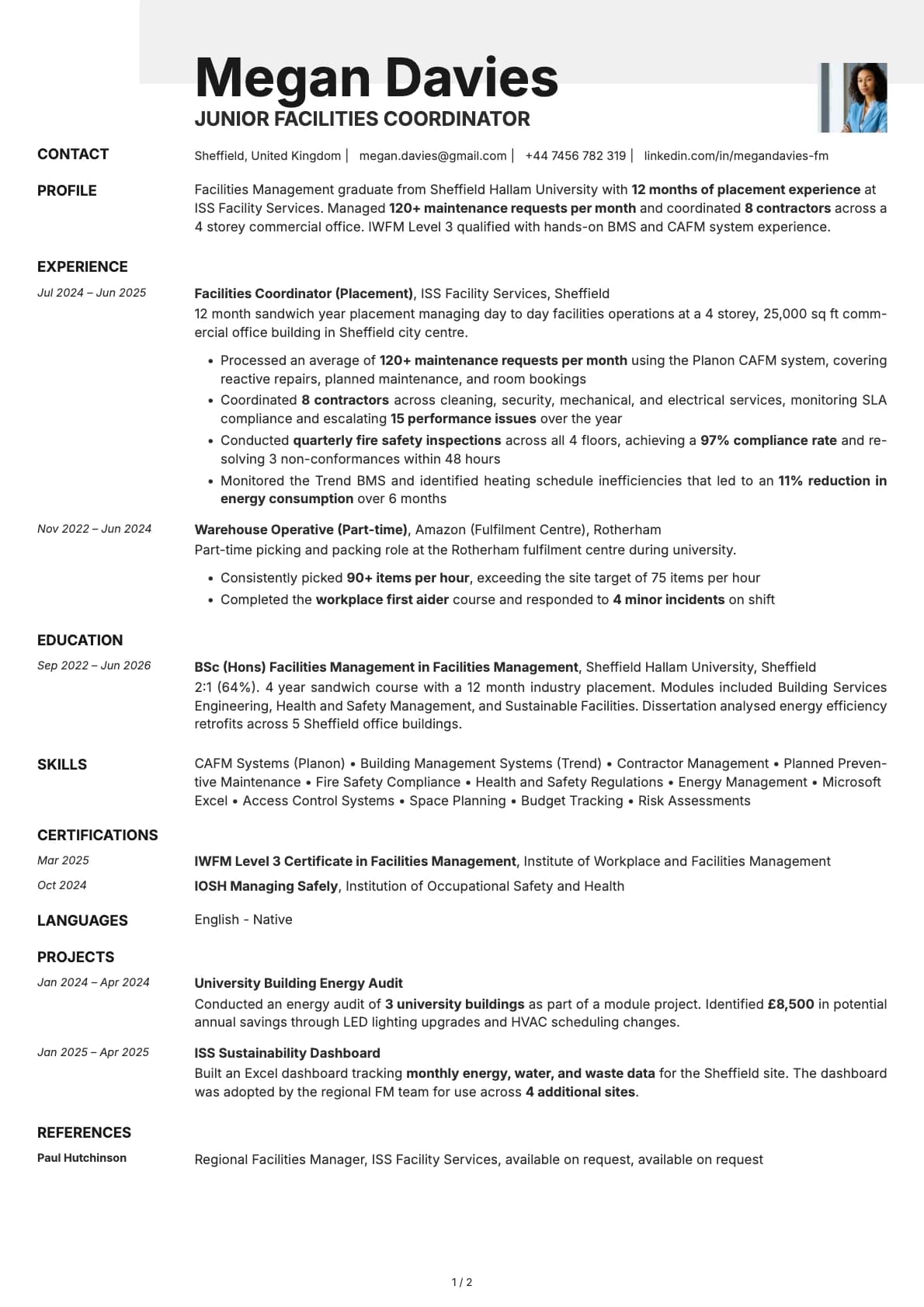
Junior Facilities Coordinator
A junior facilities coordinator resume example with facilities management degree, building services experience, and IWFM qualification.
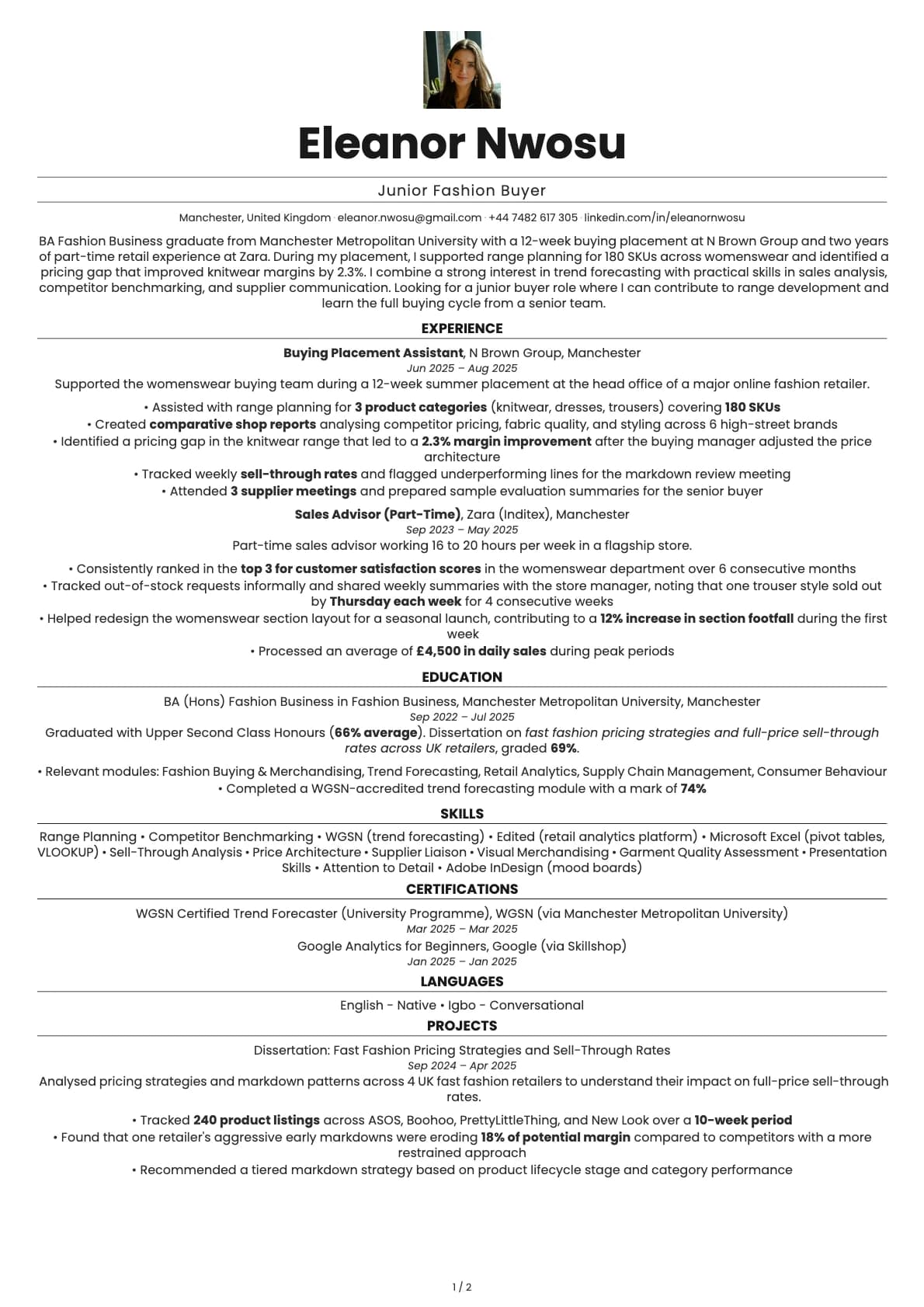
Junior Fashion Buyer
A junior fashion buyer resume example for fashion business graduates. See how retail experience and trend forecasting skills help you land a buying role.