Junior Electrical Engineer Resume Example
A junior electrical engineer resume example with power systems placement experience, AutoCAD skills, and Engineers Ireland membership.

Laddro Team
Free to use. No account needed to start.
Free to use. No account needed to start.
Overview
Electrical engineering graduates are in demand across power, renewables, building services, and manufacturing, but employers still expect you to demonstrate practical skills alongside your academic knowledge. Placement experience, design software proficiency, and any hands-on testing or commissioning work will set you apart from candidates who only have lecture-based learning.
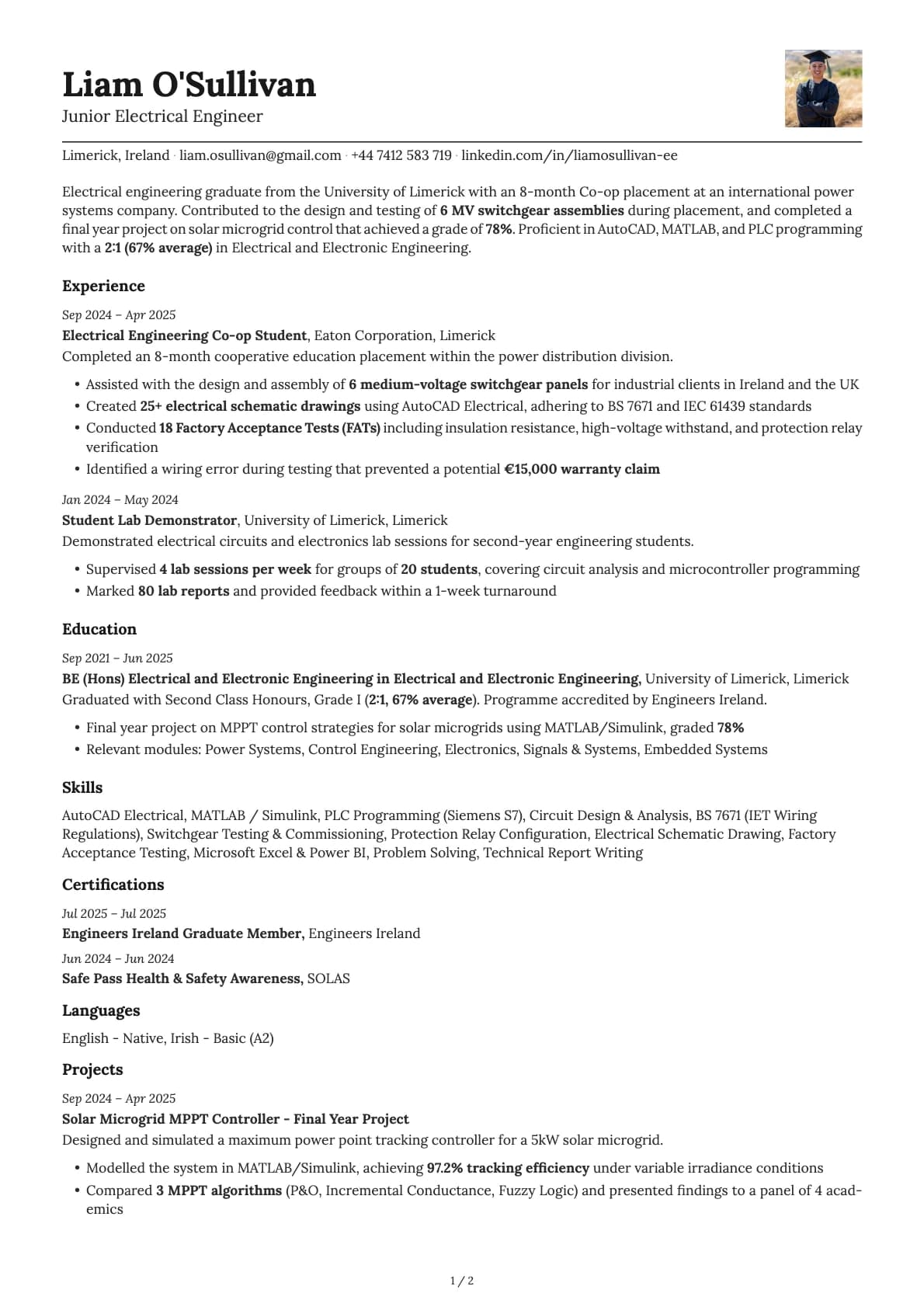
This resume belongs to Liam O'Sullivan, an electrical engineering graduate from the University of Limerick who completed an eight-month co-op placement at Eaton Corporation. He worked on medium-voltage switchgear design and testing, created 25 schematic drawings, and conducted 18 Factory Acceptance Tests. His final year project on solar microgrid control achieved 78% and demonstrates his interest in renewable energy systems.
What Makes This Resume Work
Industrial placement experience provides real credibility. Working on actual switchgear assemblies for real clients gives Liam evidence that he can operate in a professional engineering environment. The detail about identifying a wiring error that prevented a warranty claim shows commercial awareness alongside technical skill.
Standards compliance is explicitly mentioned. Referencing BS 7671 and IEC 61439 shows Liam understands the regulatory framework that governs electrical engineering. Employers know that a graduate who is already aware of relevant standards will require less supervision.
The final year project connects to industry trends. Solar energy and microgrid control are areas of active industry investment. A strong project grade in a relevant area signals that Liam has both the technical depth and the interest to contribute to forward-looking engineering teams.
Key Takeaways
Junior electrical engineers should highlight any placement or internship experience with specific project counts, testing activities, and design tools used. Include references to relevant standards and regulations, as this shows professional awareness. Professional body membership (Engineers Ireland, IET) and a strong final year project in a relevant area both add value. Quantify your contributions wherever possible, whether that means drawings produced, tests conducted, or errors caught.
Build your own version
Open this layout in the builder and swap in your own details. It takes a few minutes.
Free to use. No account needed to start.
Was this resume example helpful?
Rate this example to help us create better content for you.
4.6 average from 97 ratingsRelated resume examples
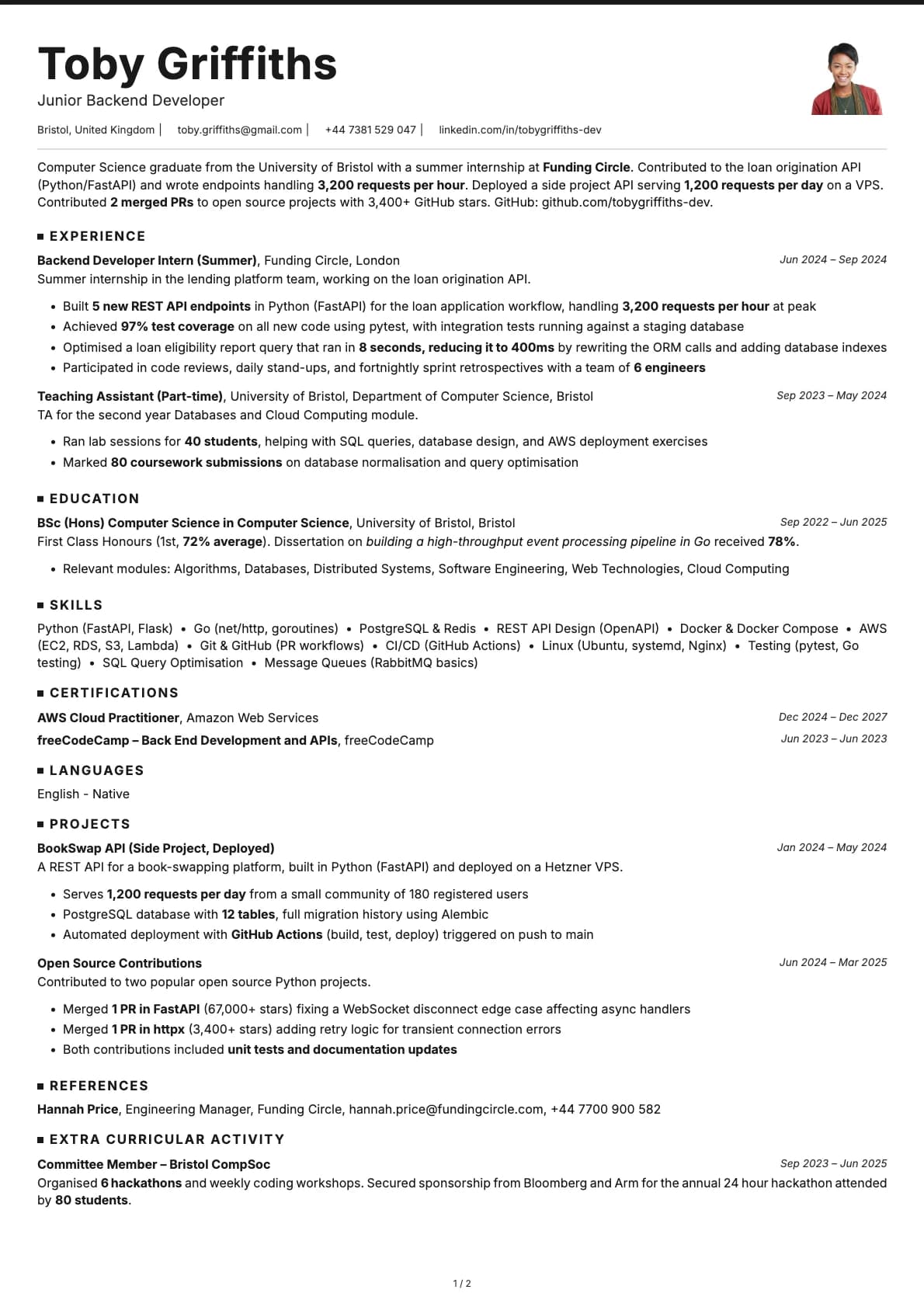
Junior Backend Developer
A junior backend developer resume example with REST API projects, PostgreSQL experience, and deployed services from a Computer Science BSc graduate entering development.
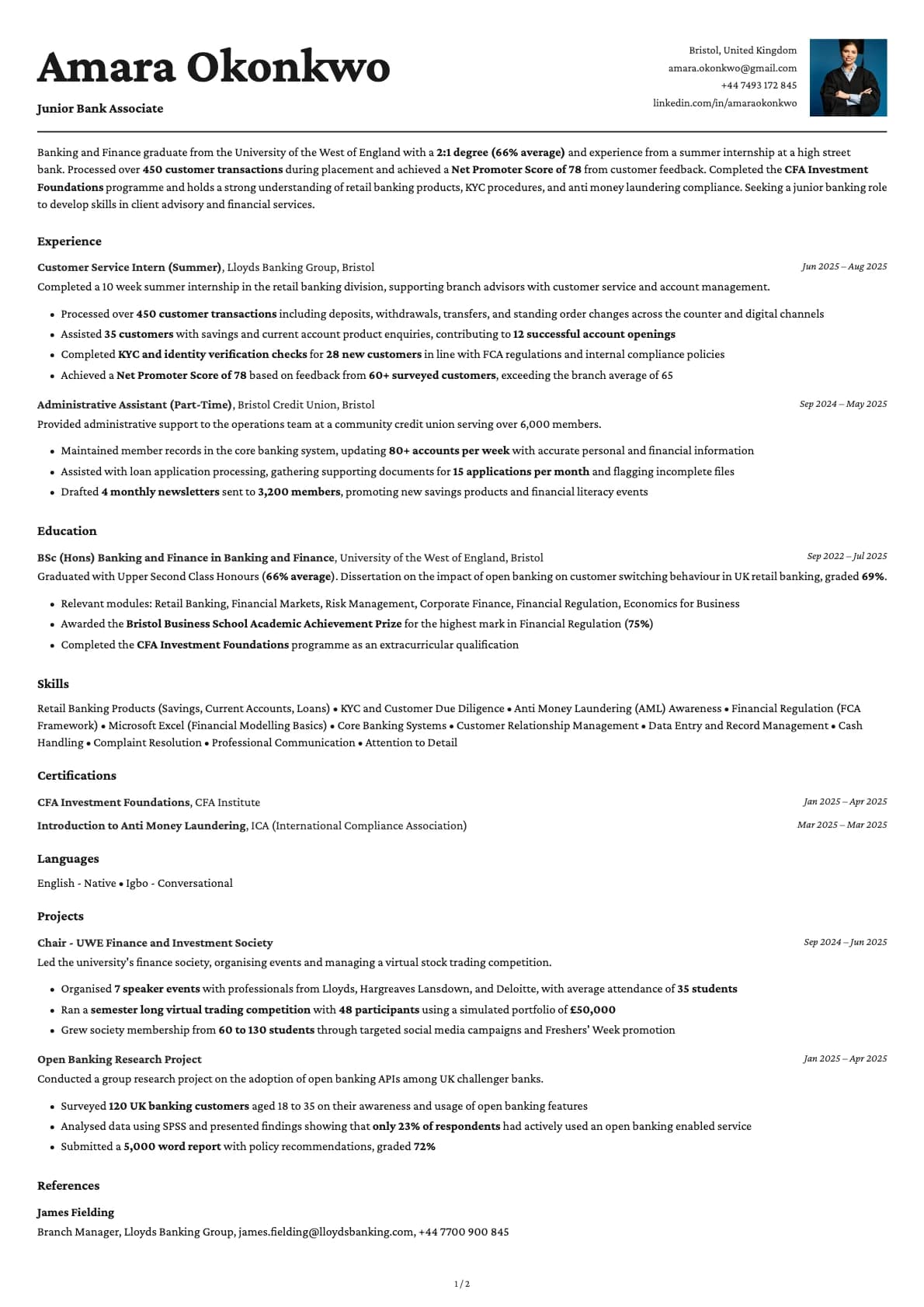
Junior Bank Associate
A junior bank associate resume example for banking graduates. See how to present your compliance knowledge, customer service skills, and internship experience.
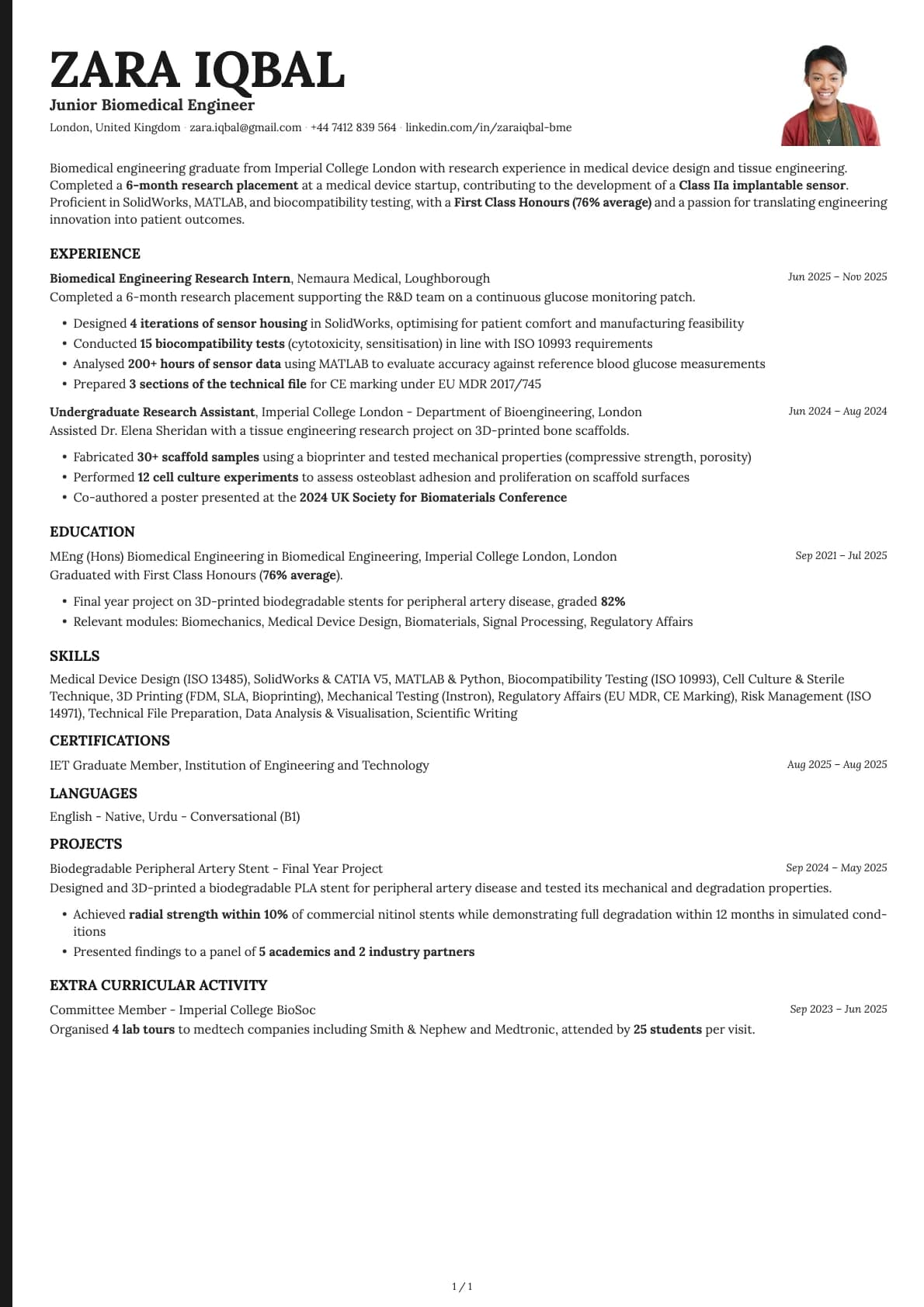
Junior Biomedical Engineer
A junior biomedical engineer resume example with medical device R&D experience, ISO standards knowledge, and research publications.
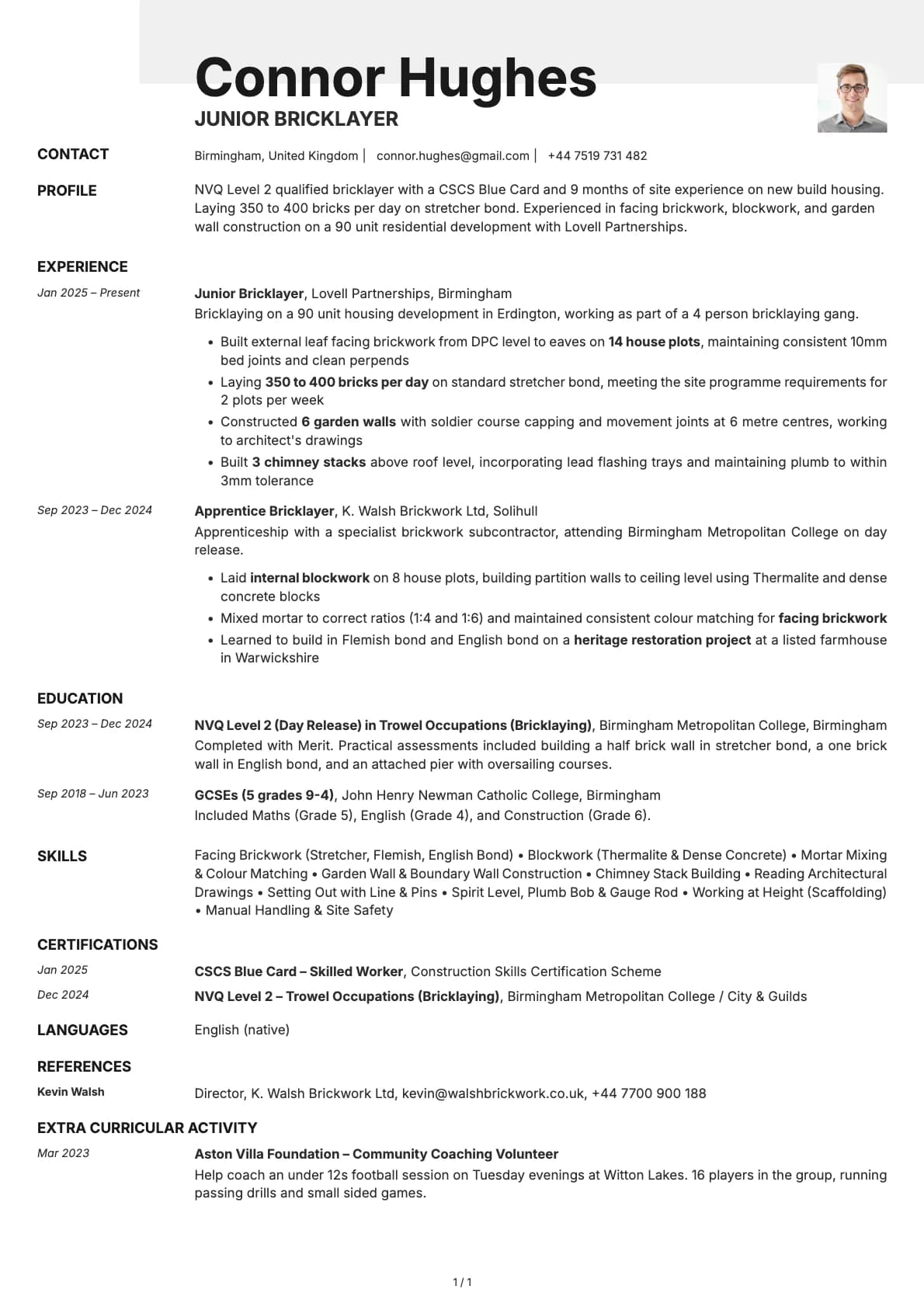
Junior Bricklayer
A junior bricklayer resume example for NVQ qualified bricklayers entering the trade. See how to present your bricklaying skills, CSCS card, and site experience.

Junior Business Analyst
A junior business analyst resume example for career changers. See how to use retail management and a business degree to break into business analysis.
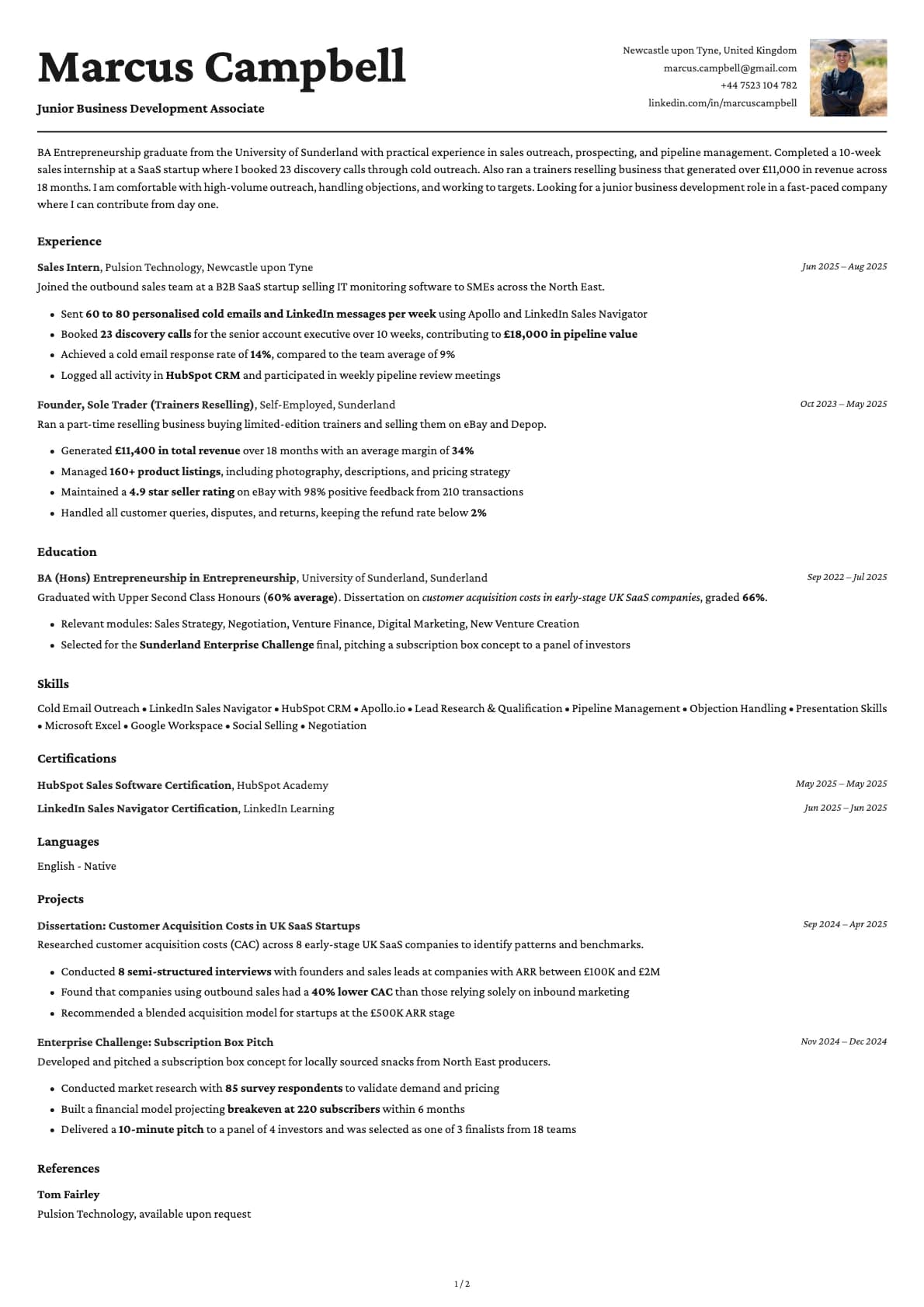
Junior Business Development Associate
A junior business development associate resume example for entrepreneurship graduates. See how cold outreach metrics and startup experience win interviews.
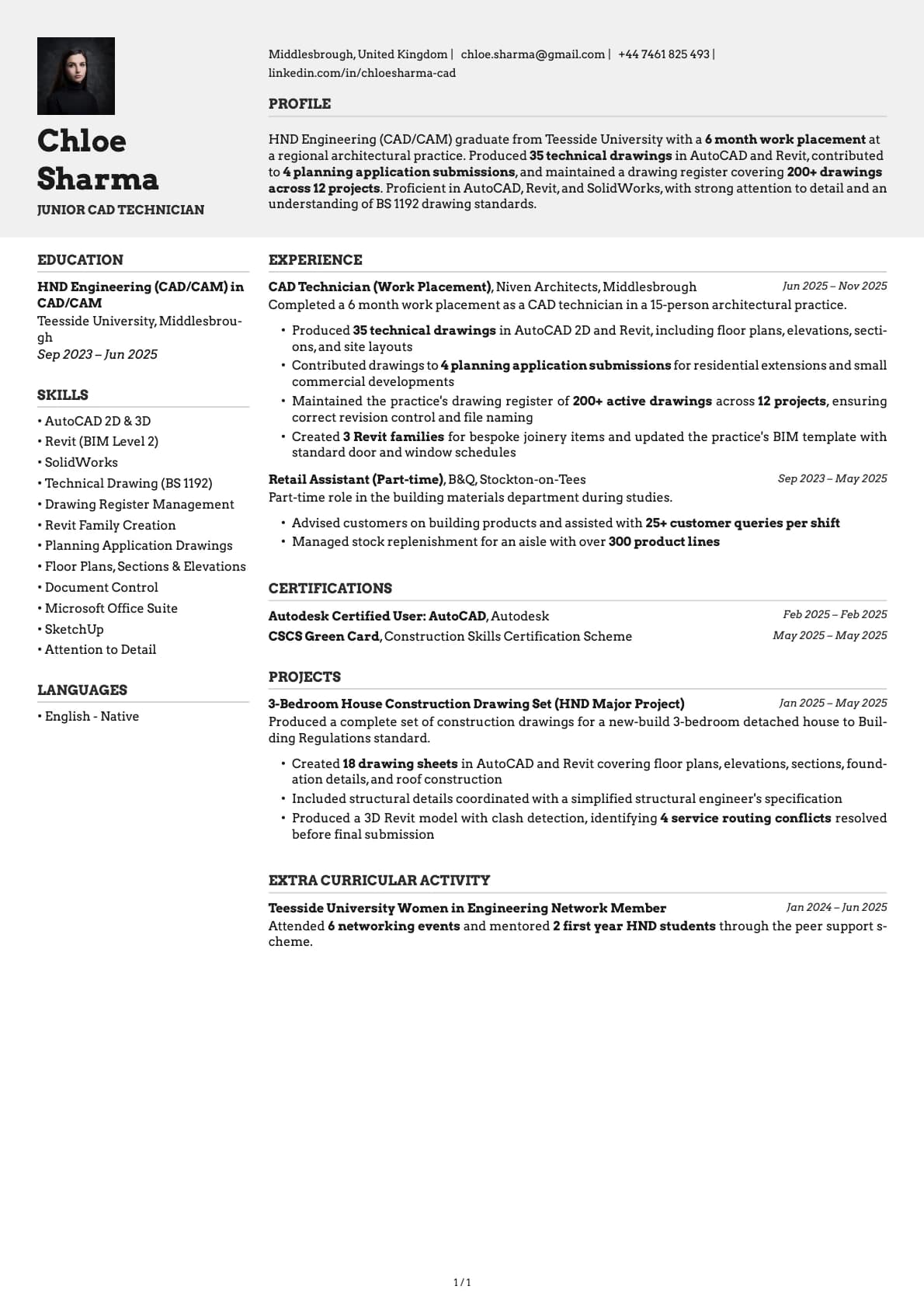
Junior CAD Technician
A junior CAD technician resume example with HND qualification, AutoCAD and Revit proficiency, and architectural practice experience.
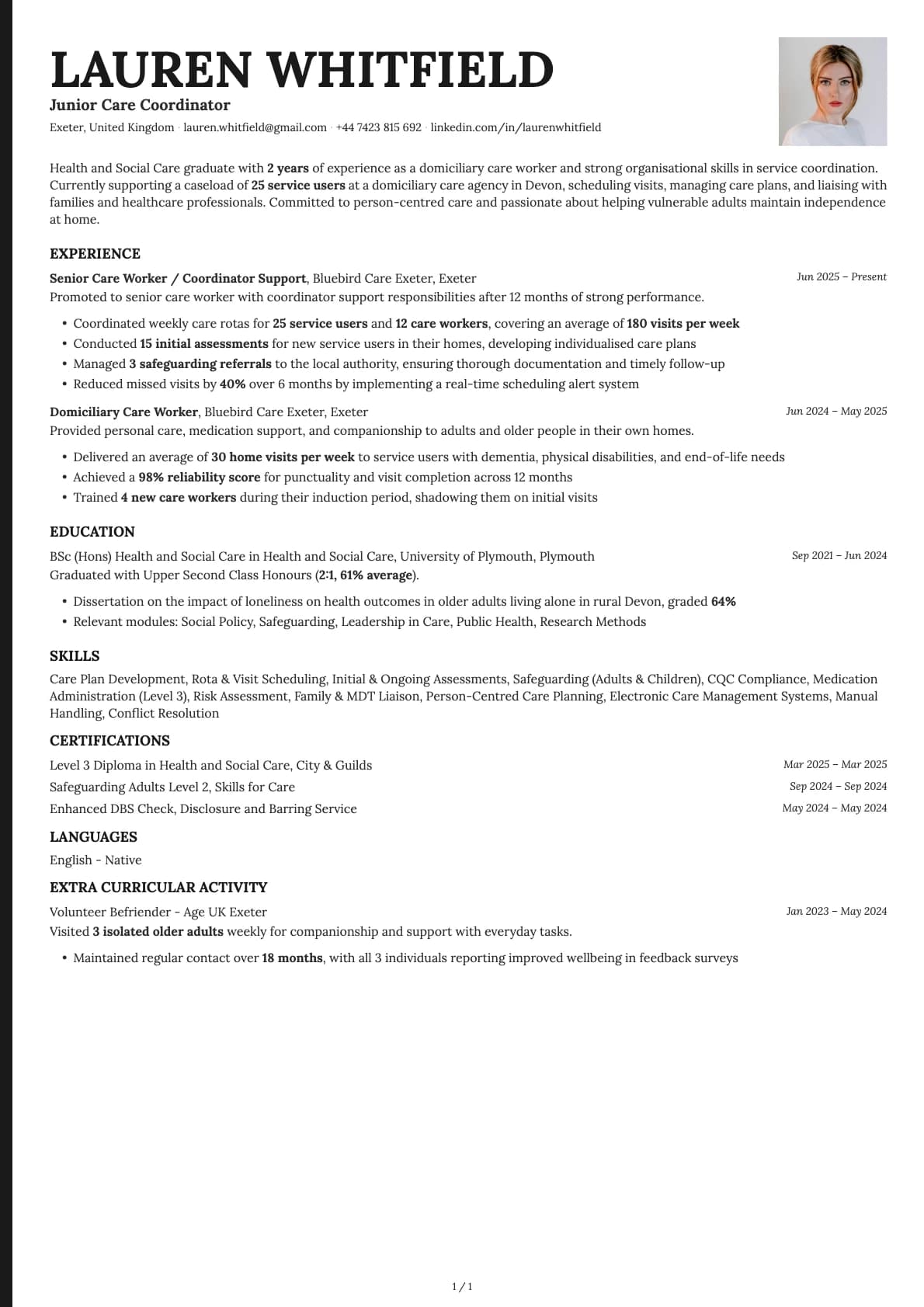
Junior Care Coordinator
A junior care coordinator resume example with domiciliary care experience, rota management numbers, and CQC compliance for new coordinators.
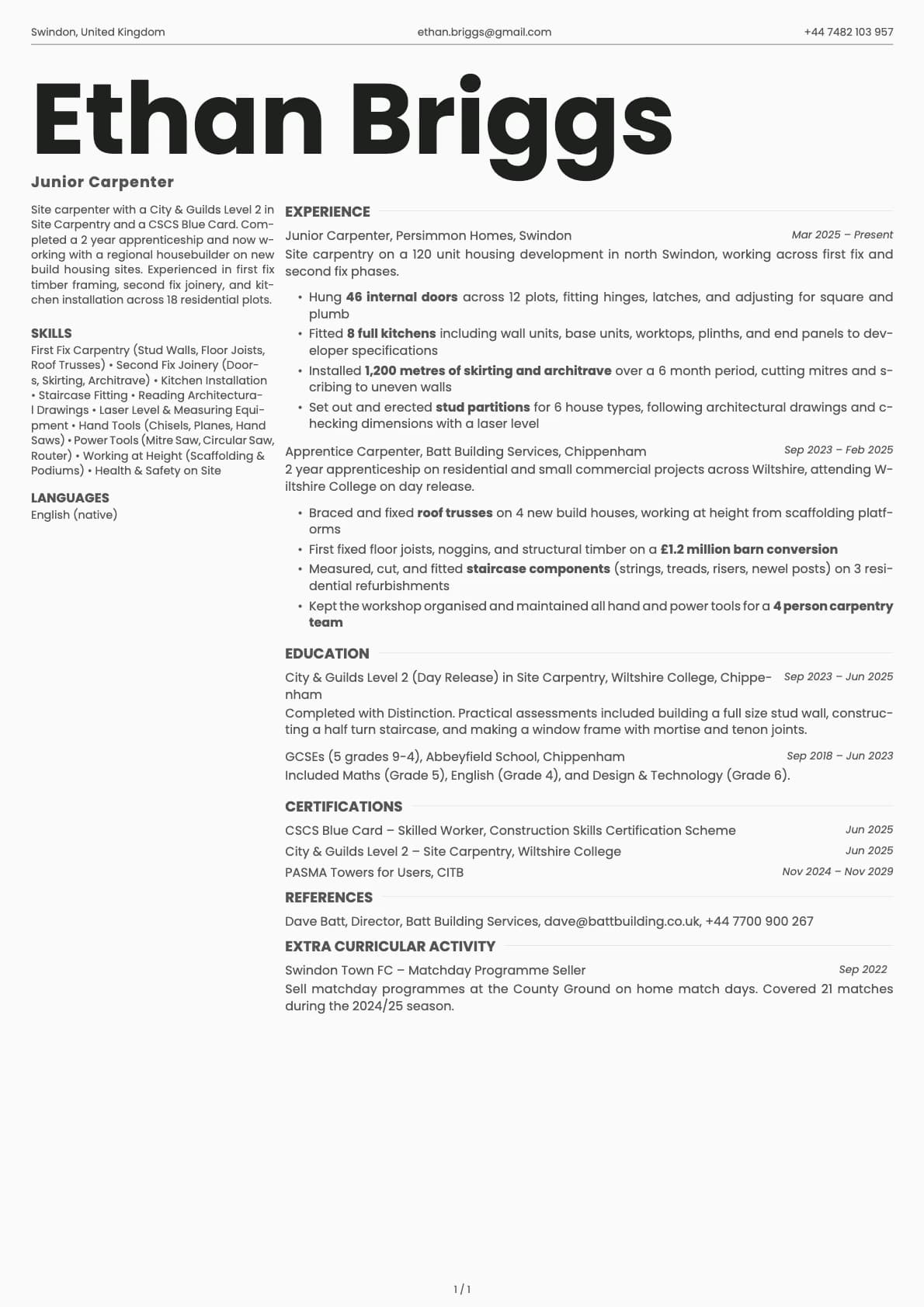
Junior Carpenter
A junior carpenter resume example for carpentry apprenticeship graduates. See how to present your City & Guilds, site joinery experience, and CSCS card details.
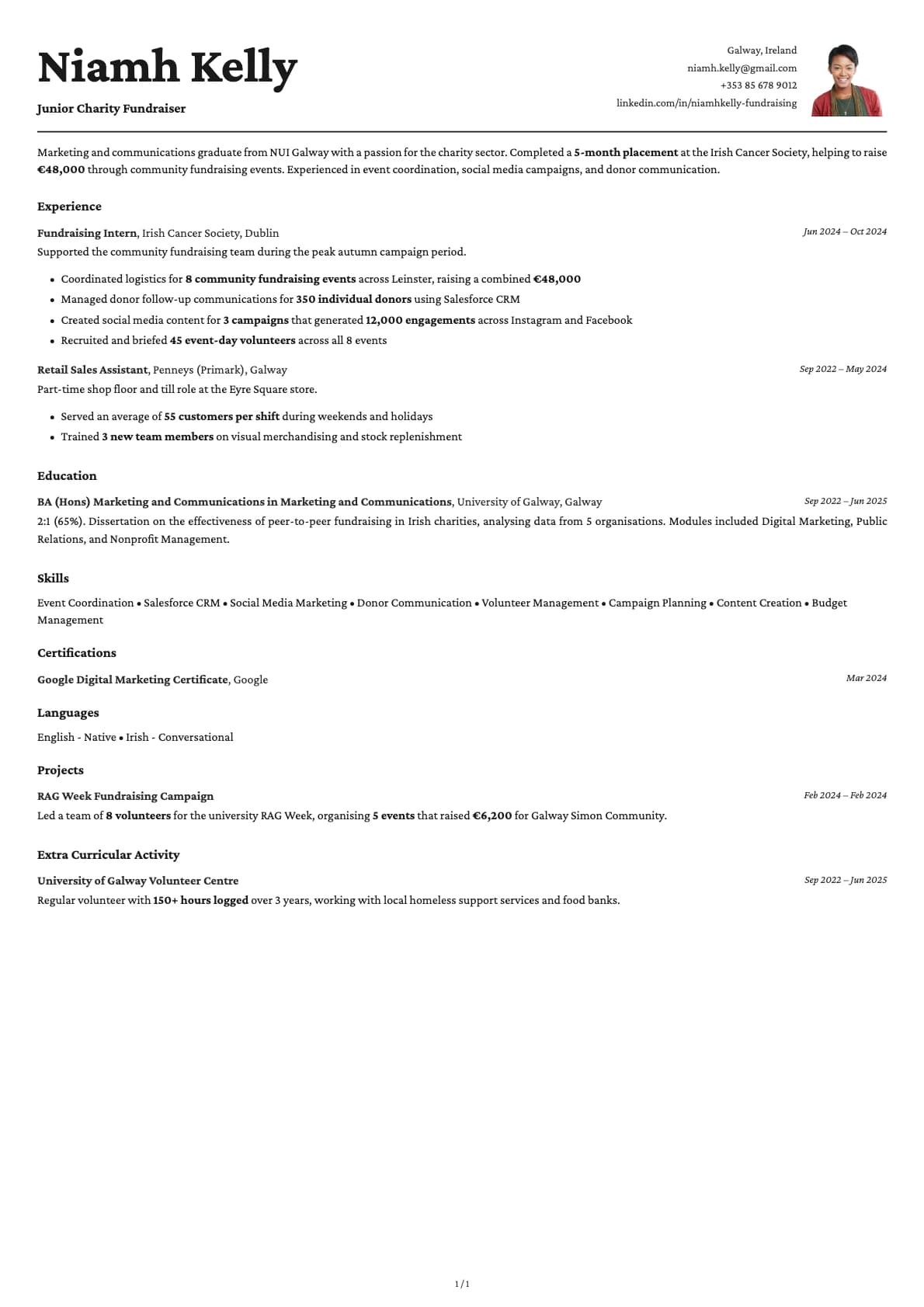
Junior Charity Fundraiser
A junior charity fundraiser resume example with Irish Cancer Society internship and event coordination experience.
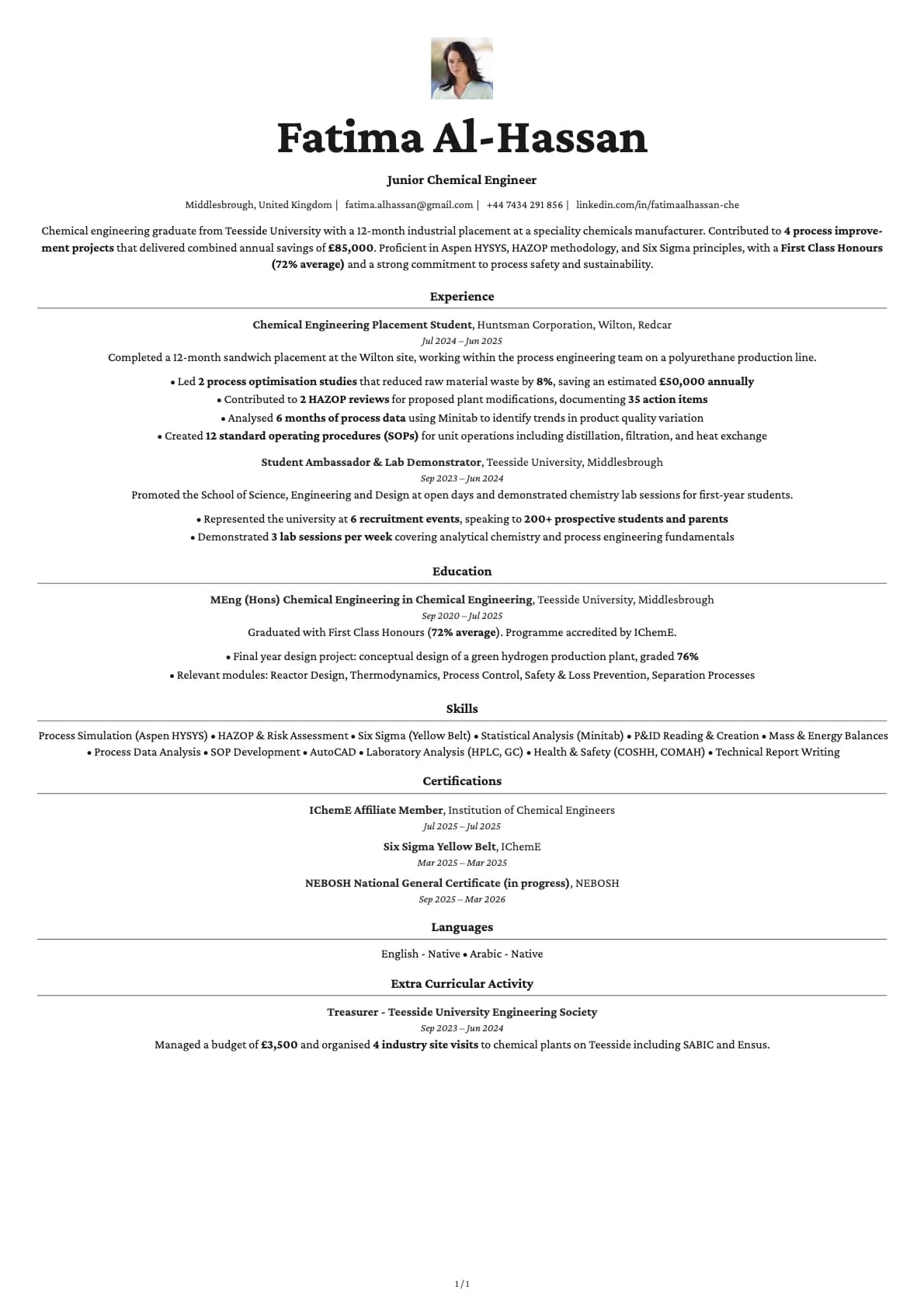
Junior Chemical Engineer
A junior chemical engineer resume example with industrial placement experience, process improvement savings, and IChemE membership for graduates.
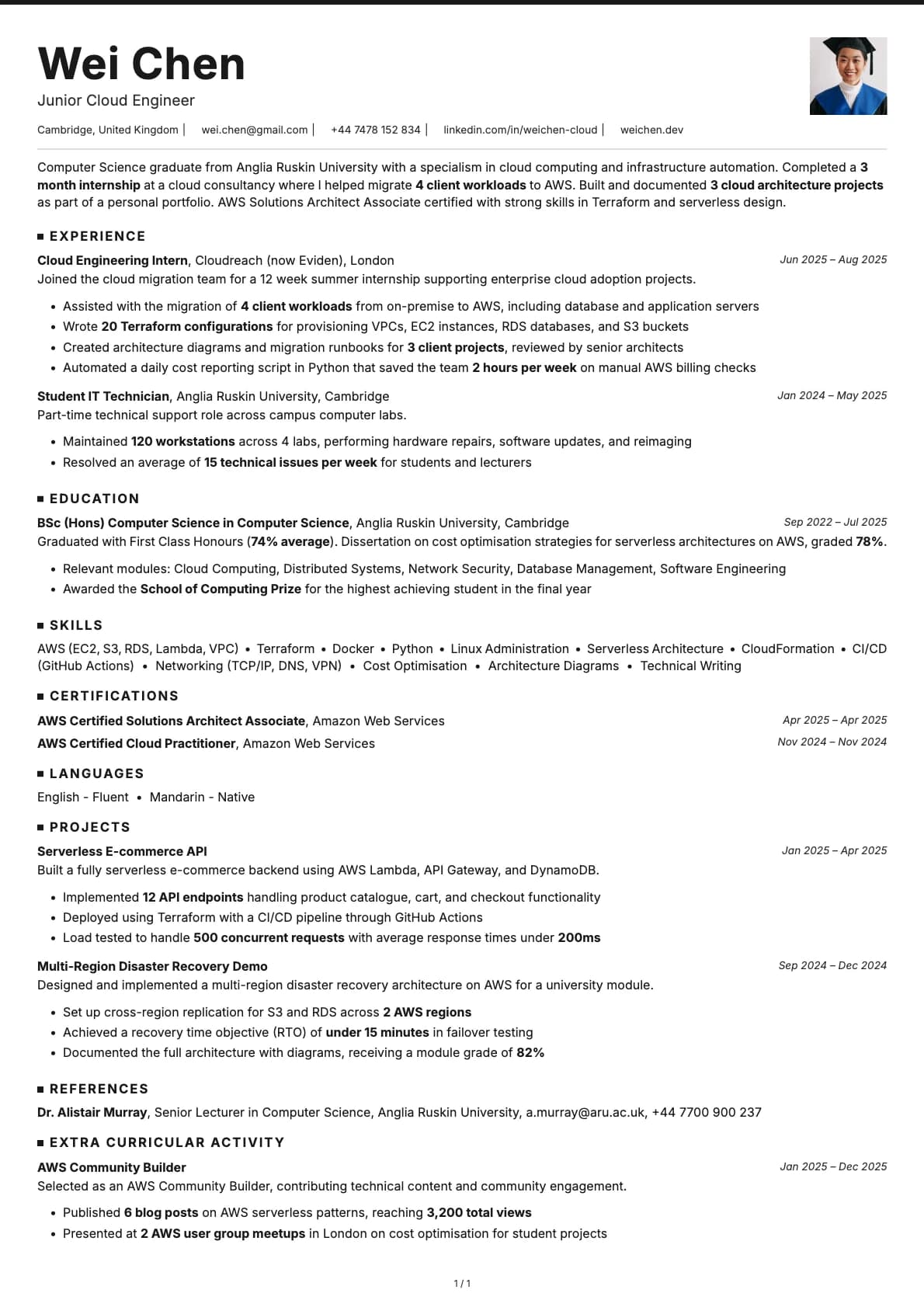
Junior Cloud Engineer
A junior cloud engineer resume example for graduates. Learn how to present AWS experience, Terraform skills, and cloud certifications to land your first cloud engineering role.