Junior Legal Researcher Resume Example
A junior legal researcher resume example for human rights law LLB graduates. See how to present your legal research skills, case analysis experience, and advocacy work.

Laddro Team
Free to use. No account needed to start.
Free to use. No account needed to start.
Overview
Legal research roles sit at the intersection of academic analysis and practical advocacy. Think tanks, NGOs, barristers' chambers, solicitors' firms, and parliamentary offices all employ junior researchers to analyse case law, draft briefings, and support litigation strategy. The resume challenge is showing that your research is not just academic; it has practical application. Employers want evidence that you can find relevant case law quickly, synthesise complex legal arguments, and produce clear written outputs under deadline.
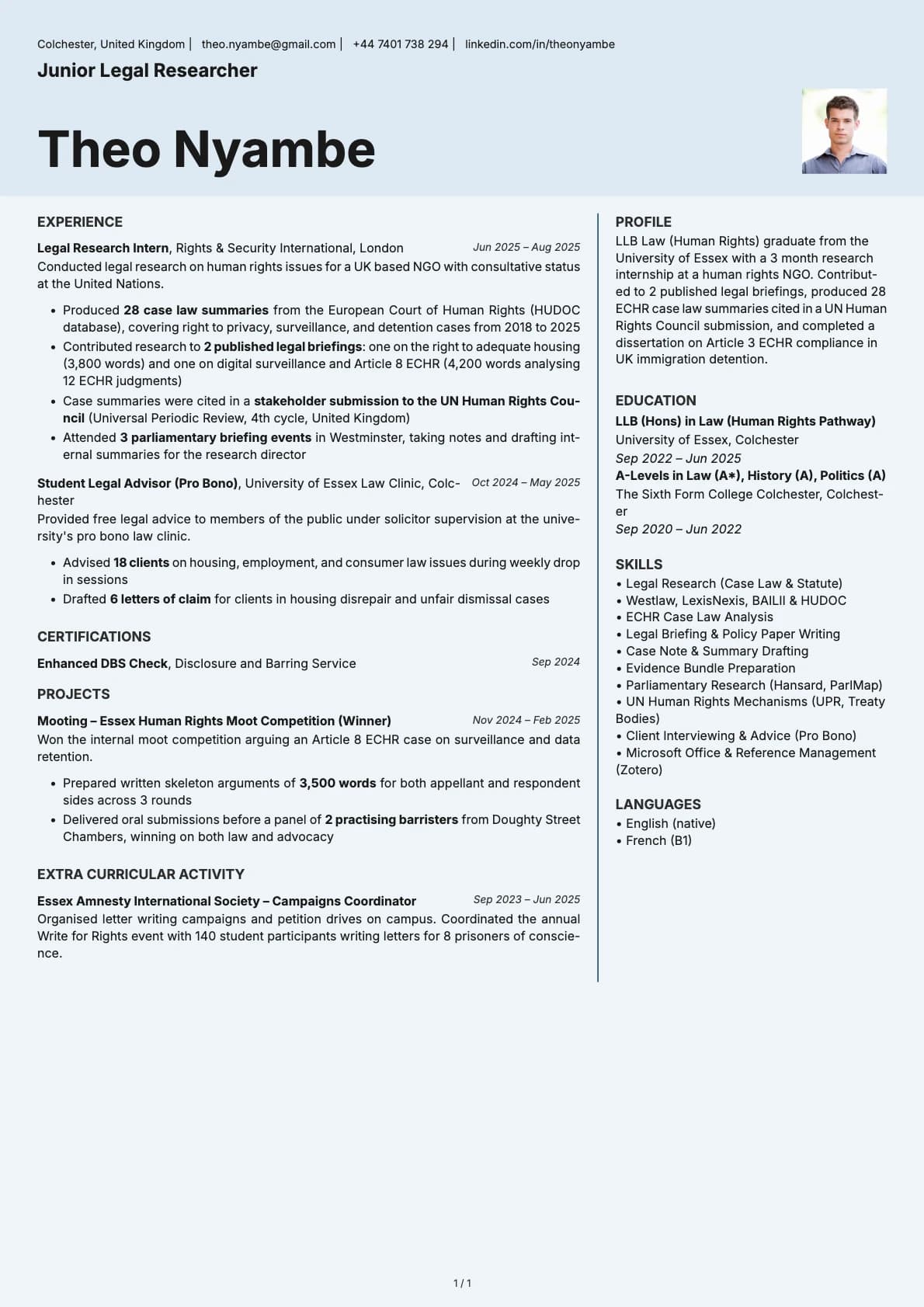
This resume belongs to Theo Nyambe, an LLB Law (Human Rights) graduate from the University of Essex. He completed a 3 month research internship at a human rights NGO, contributed to 2 published legal briefings, and produced case law summaries that were cited in a submission to the UN Human Rights Council. His resume demonstrates research that made a real impact beyond the classroom.
What Makes This Resume Work
The research internship produced tangible outputs. Theo contributed to 2 published legal briefings on the right to housing and digital surveillance. He also produced 28 case law summaries from the European Court of Human Rights that were used in a stakeholder submission to the UN Human Rights Council. These are not hypothetical exercises; they are published, cited, and externally validated pieces of work.
Legal databases and research methods are specifically named. Westlaw, LexisNexis, BAILII, and HUDOC (the ECHR case database) are all listed. These are the daily tools of legal research, and naming them tells an employer Theo can navigate the case law landscape without needing training on basic research infrastructure.
Writing samples are referenced. The 2 briefings and 28 case summaries serve as a de facto writing portfolio. Legal research employers almost always ask for a writing sample, and Theo's resume makes it clear that his published work is available. The briefing on digital surveillance was 4,200 words and included analysis of 12 ECHR judgments, showing his ability to handle a substantial research assignment.
The dissertation demonstrates sustained analytical work. Theo's dissertation analysed the UK's compliance with Article 3 ECHR (prohibition of torture) in immigration detention, reviewing 18 published inspection reports and 9 court judgments. The topic is directly relevant to human rights legal practice, and the methodology (combining legal analysis with empirical data from inspection reports) shows he can go beyond pure case law research.
Key Takeaways
Show research that produced a tangible output. Published briefings, cited case summaries, submitted consultation responses. If your research stayed in a filing cabinet, it is still valuable, but if it was published or cited, make that clear.
Name your legal databases. Westlaw, LexisNexis, BAILII, HUDOC, and ParlMap are tools, not skills. Listing them specifically tells an employer you are already operational.
Demonstrate writing at scale. Short case notes (500 words) and long briefings (4,000+ words) are different skills. Show you can do both, and reference word counts to give the employer a sense of the work involved.
Build your own version
Open this layout in the builder and swap in your own details. It takes a few minutes.
Free to use. No account needed to start.
Was this resume example helpful?
Rate this example to help us create better content for you.
4.8 average from 67 ratingsRelated resume examples
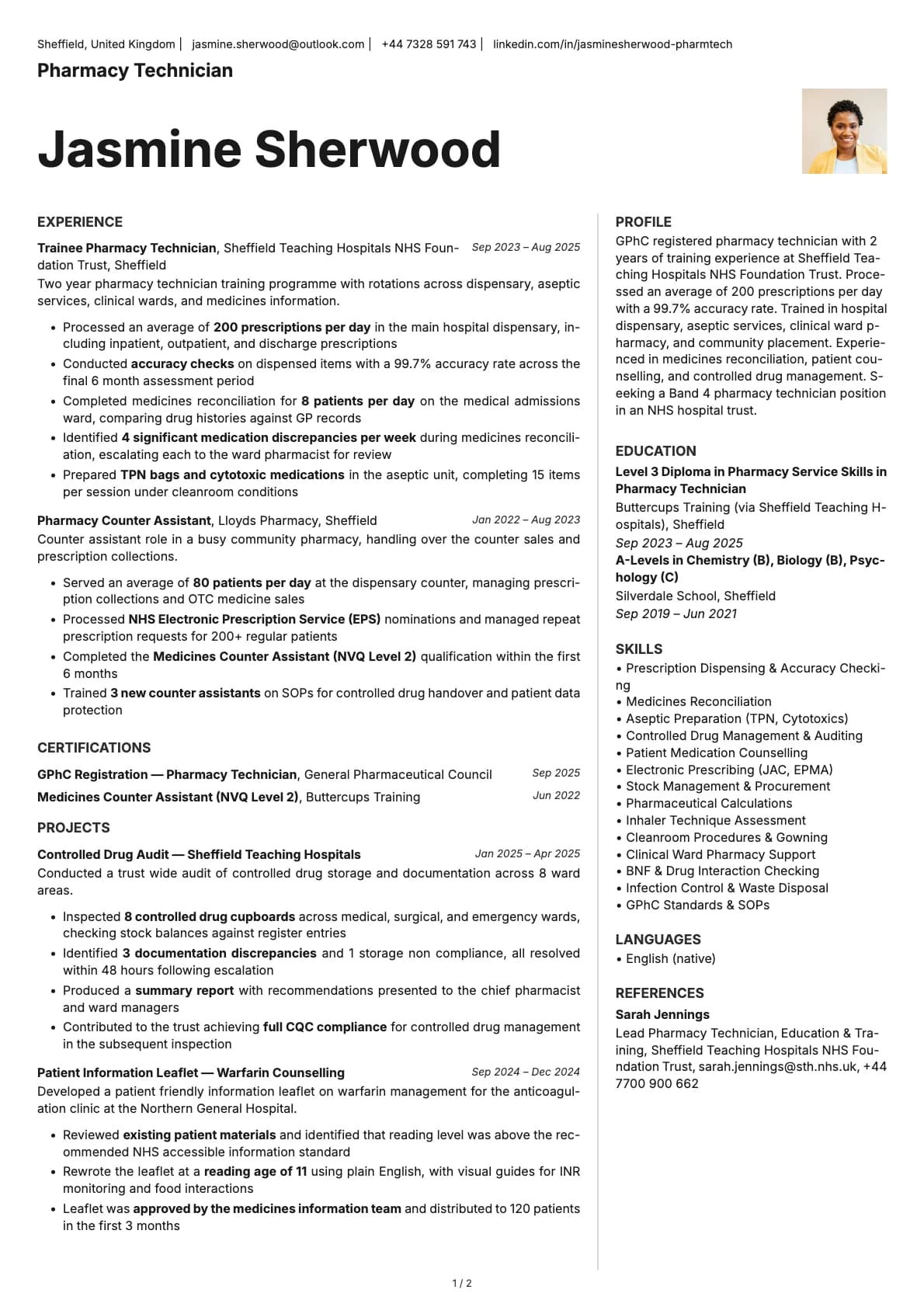
Pharmacy Technician
A pharmacy technician resume example for newly qualified candidates showing how to present GPhC registration, dispensing accuracy, and clinical skills for NHS and community pharmacy roles.
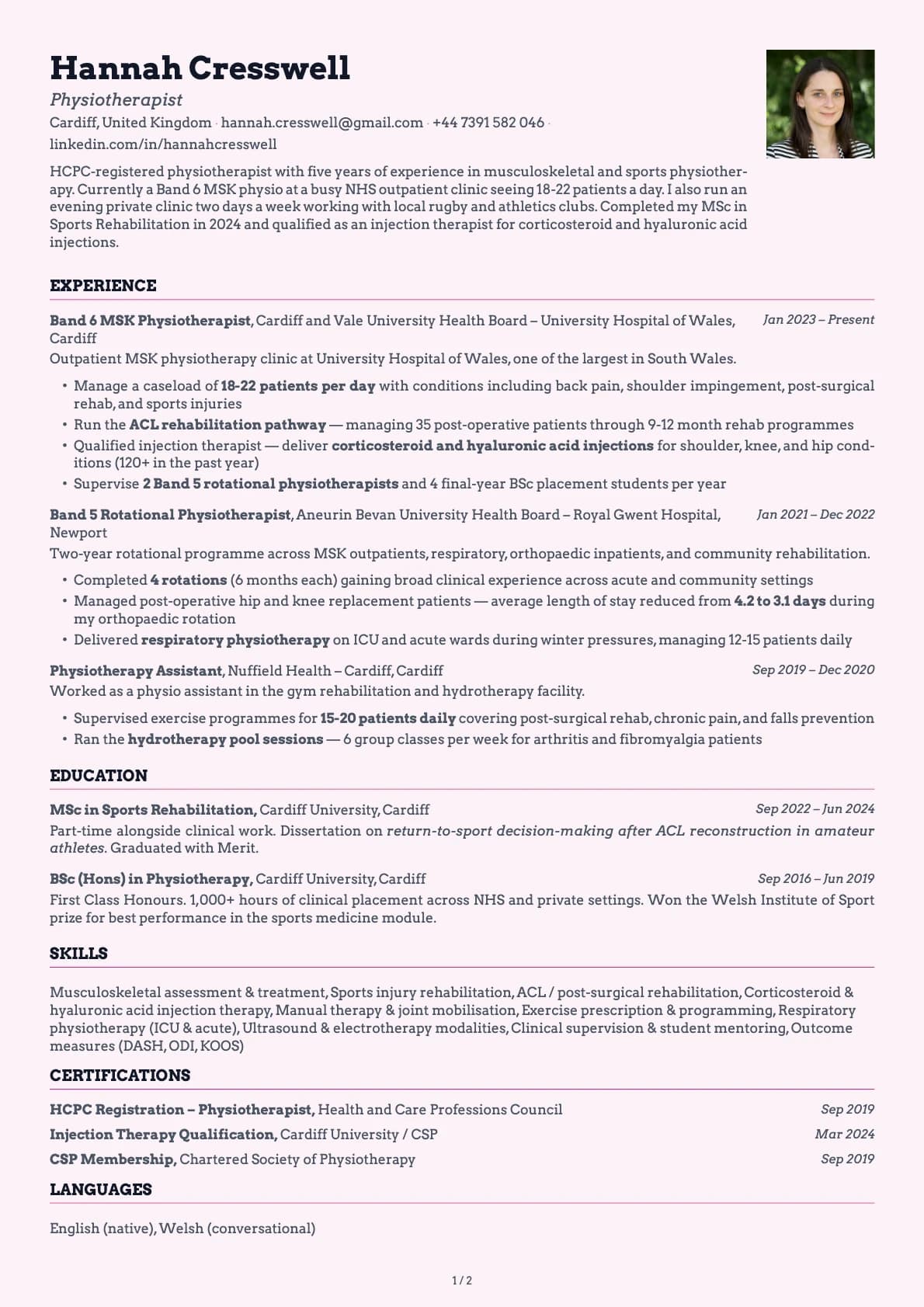
Physiotherapist
A physiotherapist resume example with NHS placement experience. See how to present clinical placements, patient outcomes, and HCPC registration on your first CV.
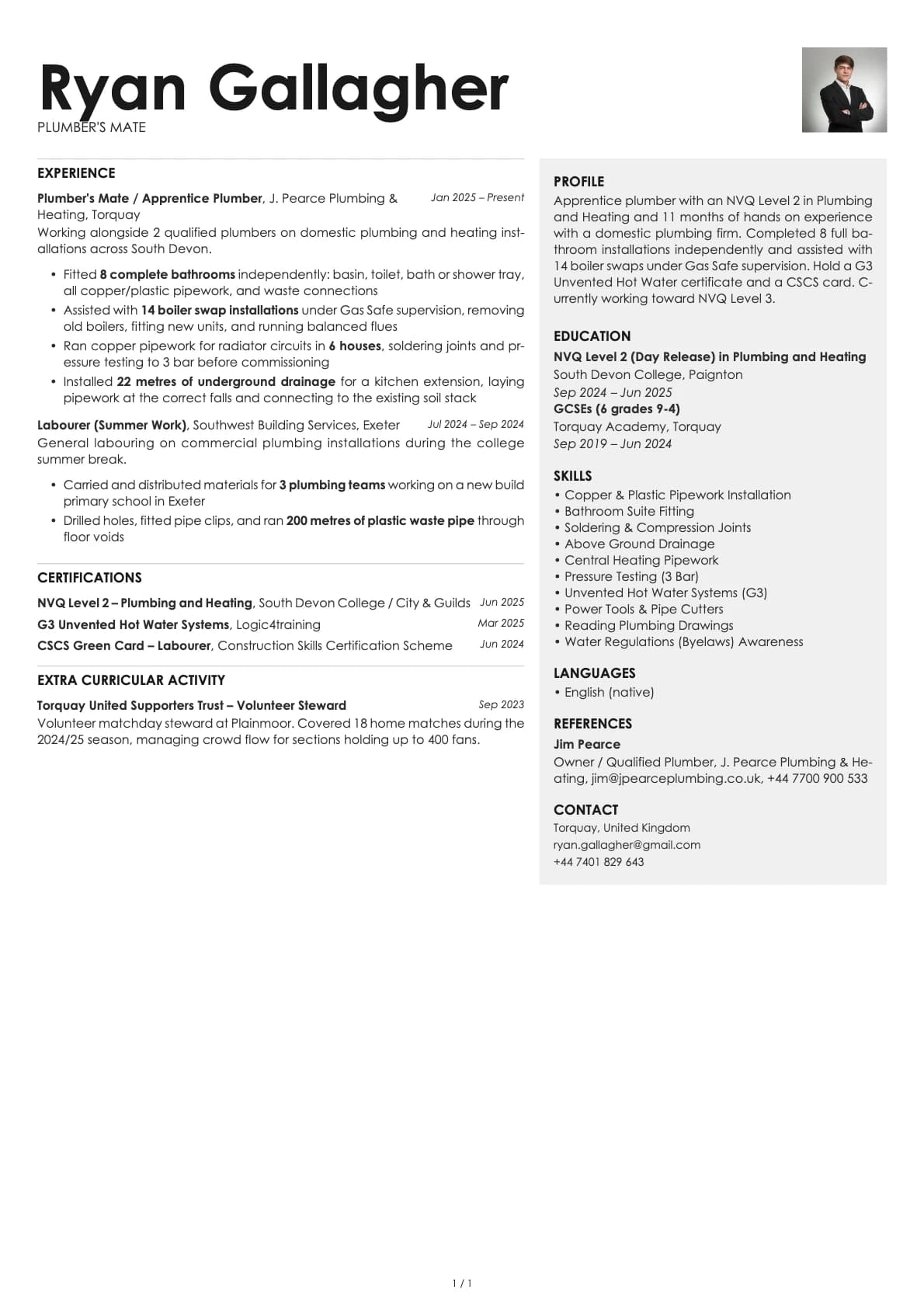
Plumber's Mate
A plumber's mate resume example for apprentice plumbers with NVQ Level 2 qualifications. See how to present your practical plumbing experience for your first employed role.
Pre-registration Pharmacist
A pre-registration pharmacist resume example showing how to present your MPharm degree, clinical placements, and GPhC registration progress for your foundation year role.
SEN Teaching Assistant
A graduate SEN teaching assistant resume example with SEND placement experience, EHCPs, and autism support. See how to present your specialist skills for SEN TA roles.
Teaching Assistant
A teaching assistant resume example for recent graduates. See how to present your classroom experience, volunteer work, and education degree to get hired as a TA.
Trainee Accountant
A trainee accountant resume example for recent graduates. See how to present your AAT progress, placement experience, and bookkeeping skills to land your first role.
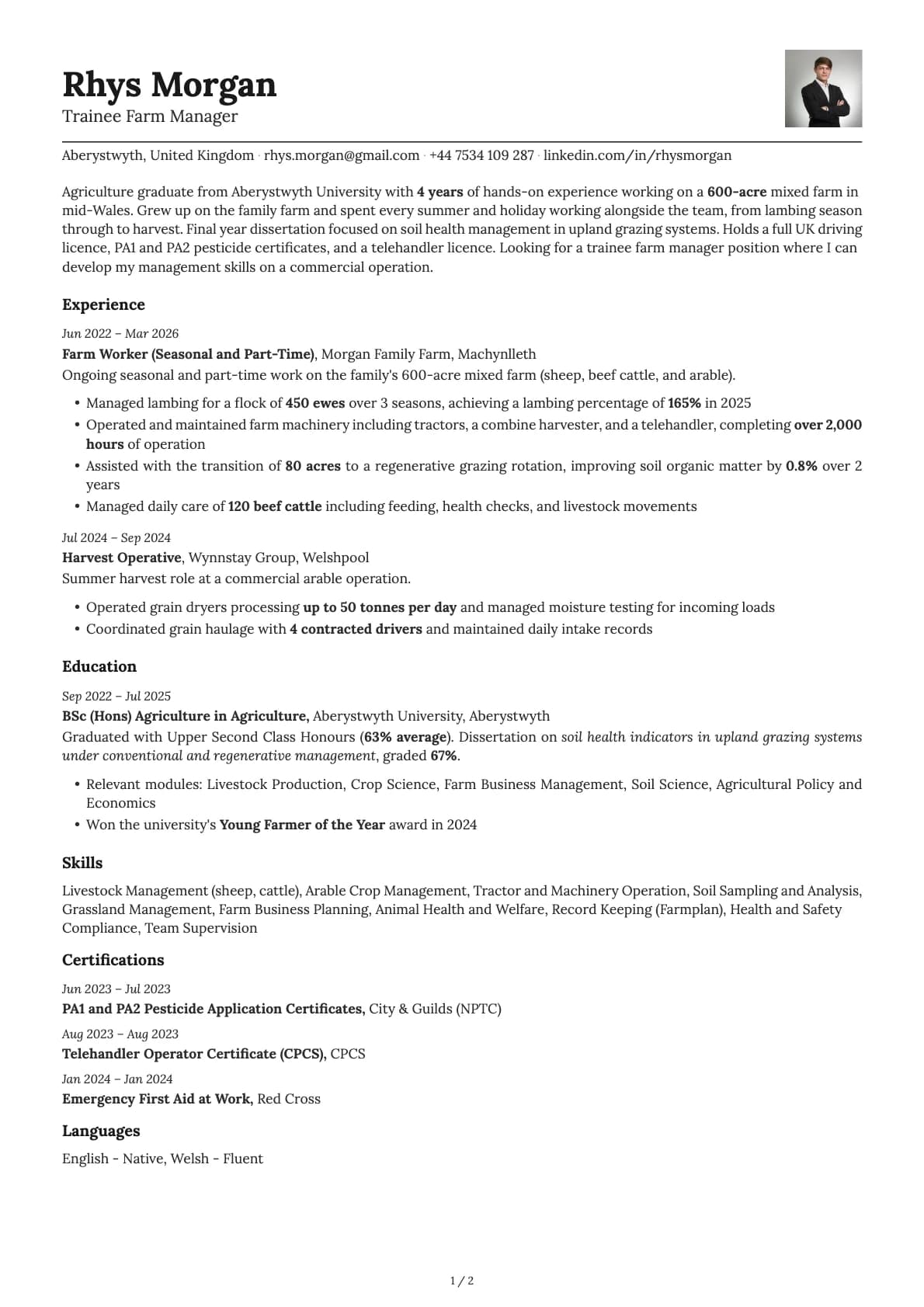
Trainee Farm Manager
A trainee farm manager resume example showing how to combine an agriculture degree with hands-on mixed farming experience on a 600-acre family operation.
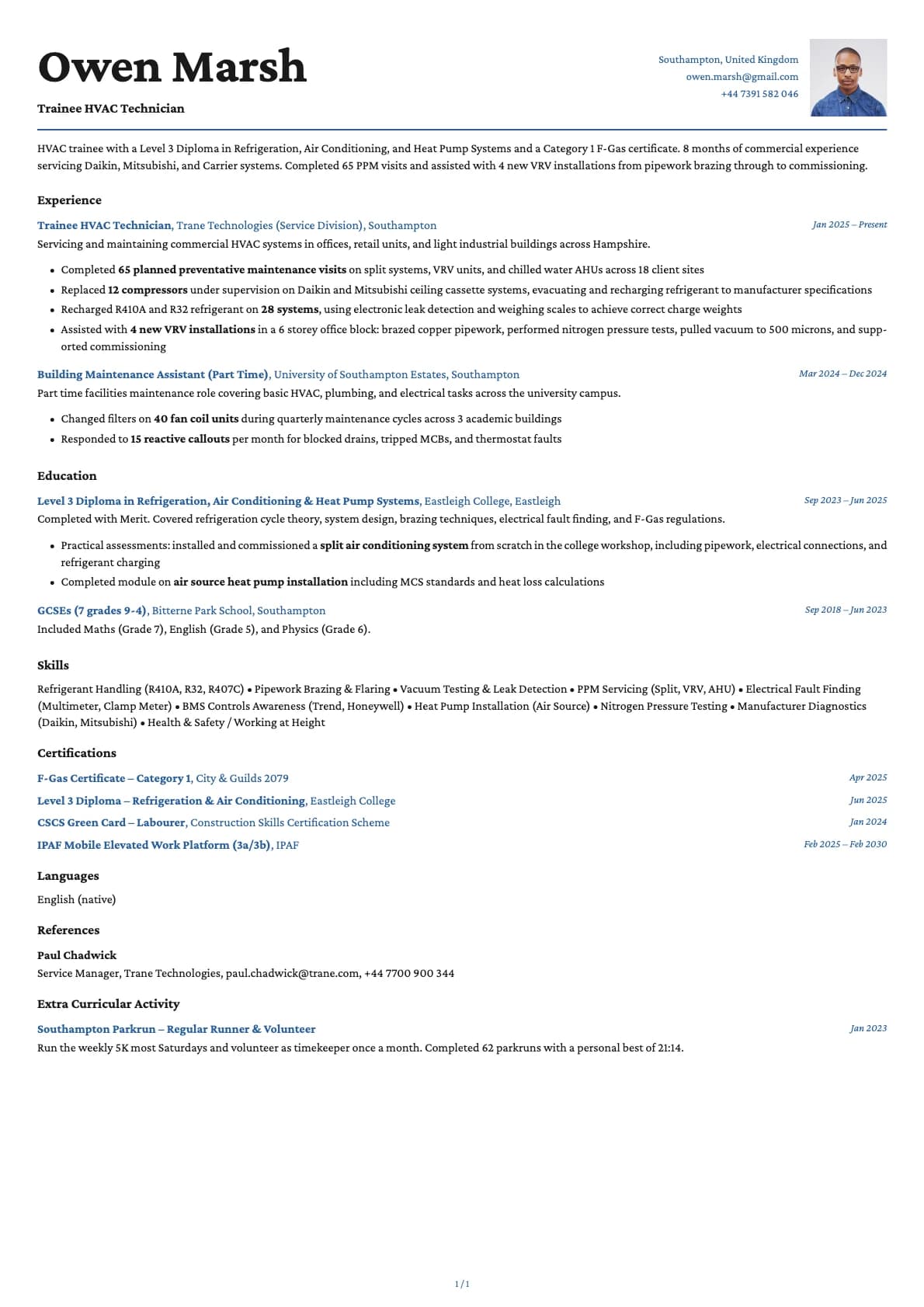
Trainee HVAC Technician
A trainee HVAC technician resume example for graduates entering the heating, ventilation, and air conditioning trade. See how to present your F-Gas certification and refrigeration skills.
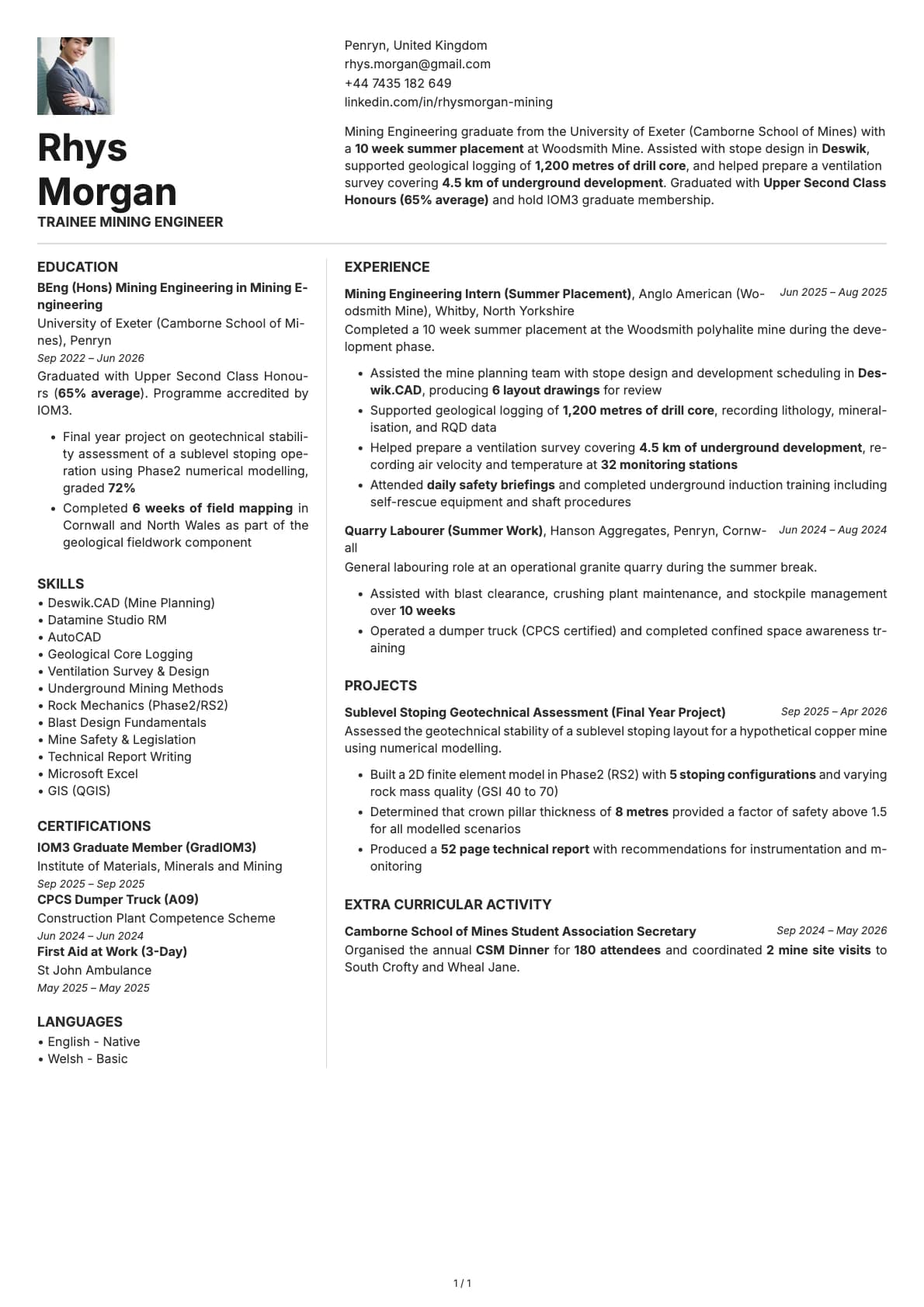
Trainee Mining Engineer
A trainee mining engineer resume example with underground mine placement experience, Deswik proficiency, and IOM3 membership.
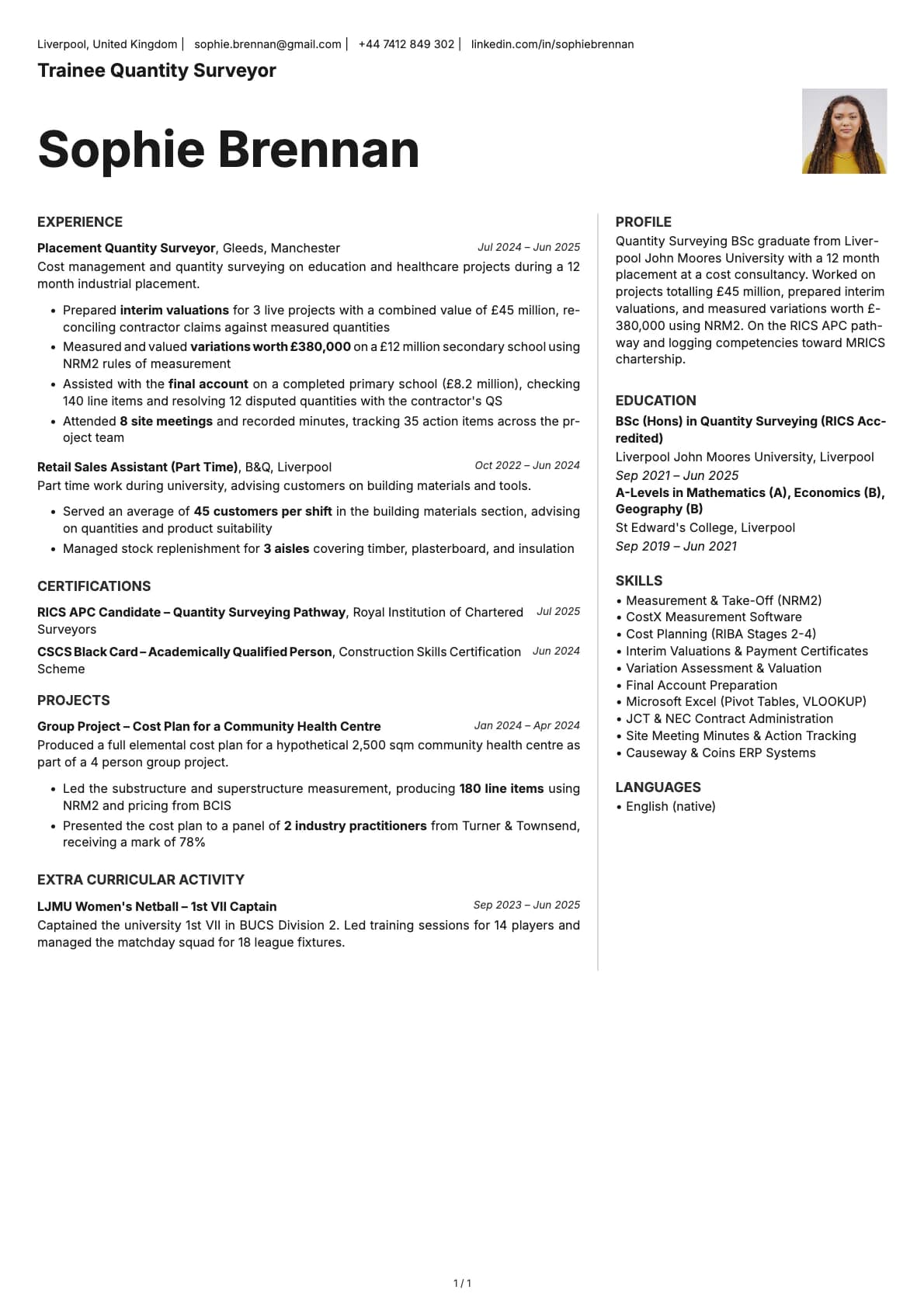
Trainee Quantity Surveyor
A trainee quantity surveyor resume example for QS graduates on the RICS APC pathway. See how to present your measurement skills, cost management experience, and professional development.
Trainee Site Manager
A trainee site manager resume example for construction management graduates. See how to present your BSc, CITB qualifications, and placement experience to land your first site role.