Graduate Aerospace Engineer Resume Example
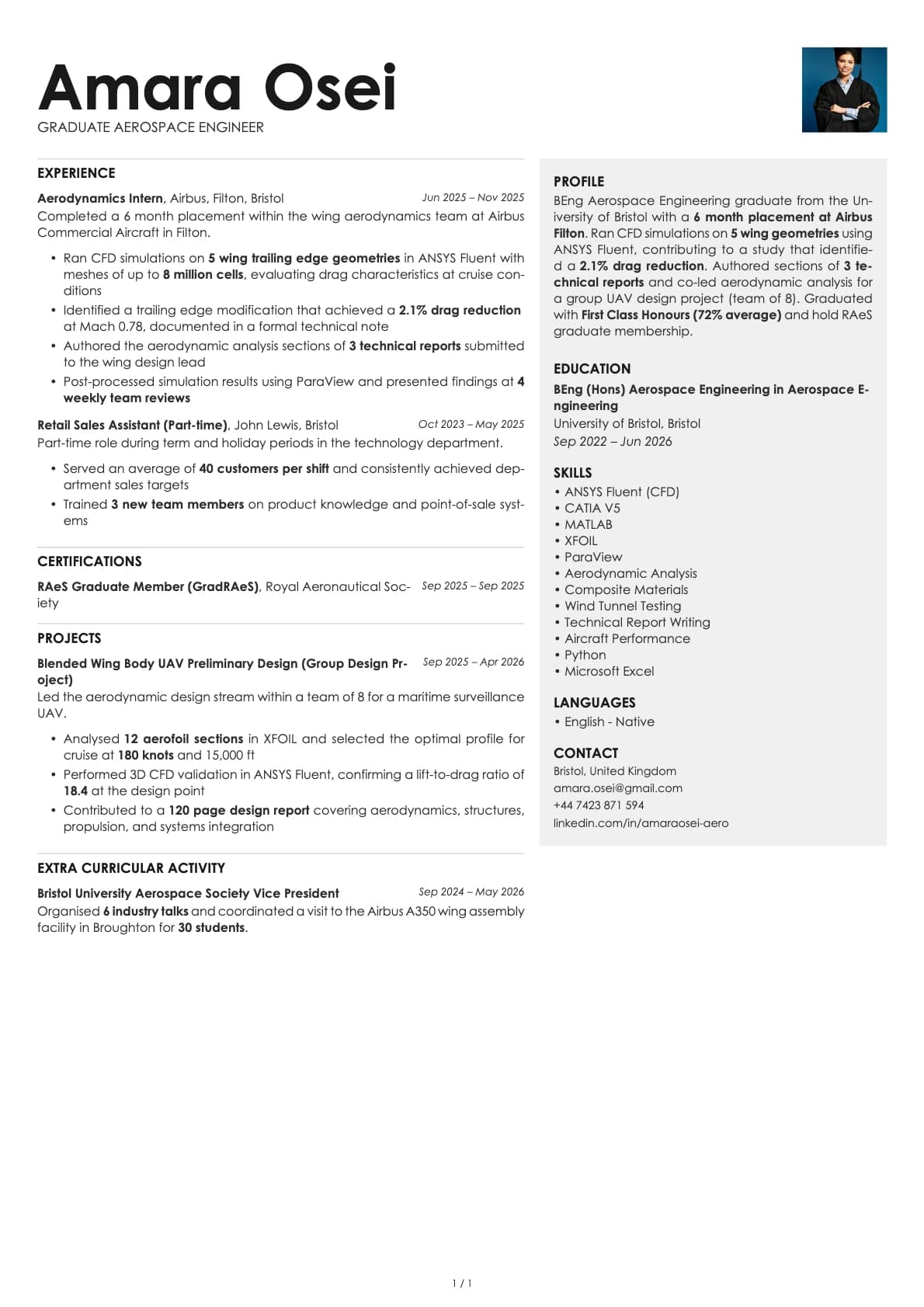
A graduate aerospace engineer resume example with CFD analysis skills, Airbus placement experience, and RAeS membership.

Laddro Team
Free to use. No account needed to start.
Free to use. No account needed to start.
Overview
Aerospace engineering is one of the most competitive graduate disciplines in the UK. Companies like Airbus, BAE Systems, and Rolls-Royce receive thousands of applications for their graduate schemes, and they look for candidates who can demonstrate hands-on experience with aerospace tools and processes. CFD analysis, composite materials knowledge, and wind tunnel testing are common differentiators. A strong group design project is often the closest experience a graduate has to real aircraft design work.
This resume belongs to Amara Osei, a BEng Aerospace Engineering graduate from the University of Bristol who completed a 6 month placement at Airbus in Filton. She ran CFD simulations on 5 wing geometries using ANSYS Fluent, contributed to a drag reduction study that identified a 2.1% improvement, and authored sections of 3 technical reports submitted to the customer. Her final year group project involved the preliminary design of a blended wing body UAV, completed with a team of 8.
What Makes This Resume Work
CFD work is described with specific geometry counts and results. Saying she ran simulations on 5 wing geometries gives the reader a sense of workload and exposure. The 2.1% drag reduction is a meaningful result in aerospace, where even small aerodynamic improvements translate into significant fuel savings over an aircraft's lifetime.
Placement at a major OEM carries weight. Airbus Filton is one of the UK's most important aerospace sites. Having worked there, even for 6 months, signals that Amara has been through a rigorous selection process and has experience within a large, regulated engineering organisation.
Group design project mirrors real aerospace preliminary design. Leading the aerodynamic analysis for a blended wing body UAV, within a team of 8, demonstrates the kind of multidisciplinary collaboration that mirrors how aerospace projects actually work. The fact that the team produced a full conceptual design report shows project delivery, not just individual analysis.
Key Takeaways
Graduate aerospace engineers should quantify their simulation work with geometry counts, mesh sizes, and results. Reference the specific CFD or FEA codes used, and mention any standards or certification frameworks you encountered. RAeS membership demonstrates professional engagement, and a group design project with clear role allocation and a delivered outcome is one of the strongest sections a graduate can include.
Build your own version
Open this layout in the builder and swap in your own details. It takes a few minutes.
Free to use. No account needed to start.
Was this resume example helpful?
Rate this example to help us create better content for you.
4.8 average from 104 ratingsRelated resume examples

Junior Marketing Coordinator
A junior marketing coordinator resume example for graduates entering the field. See how to turn retail work, volunteering, and a marketing degree into a strong application.
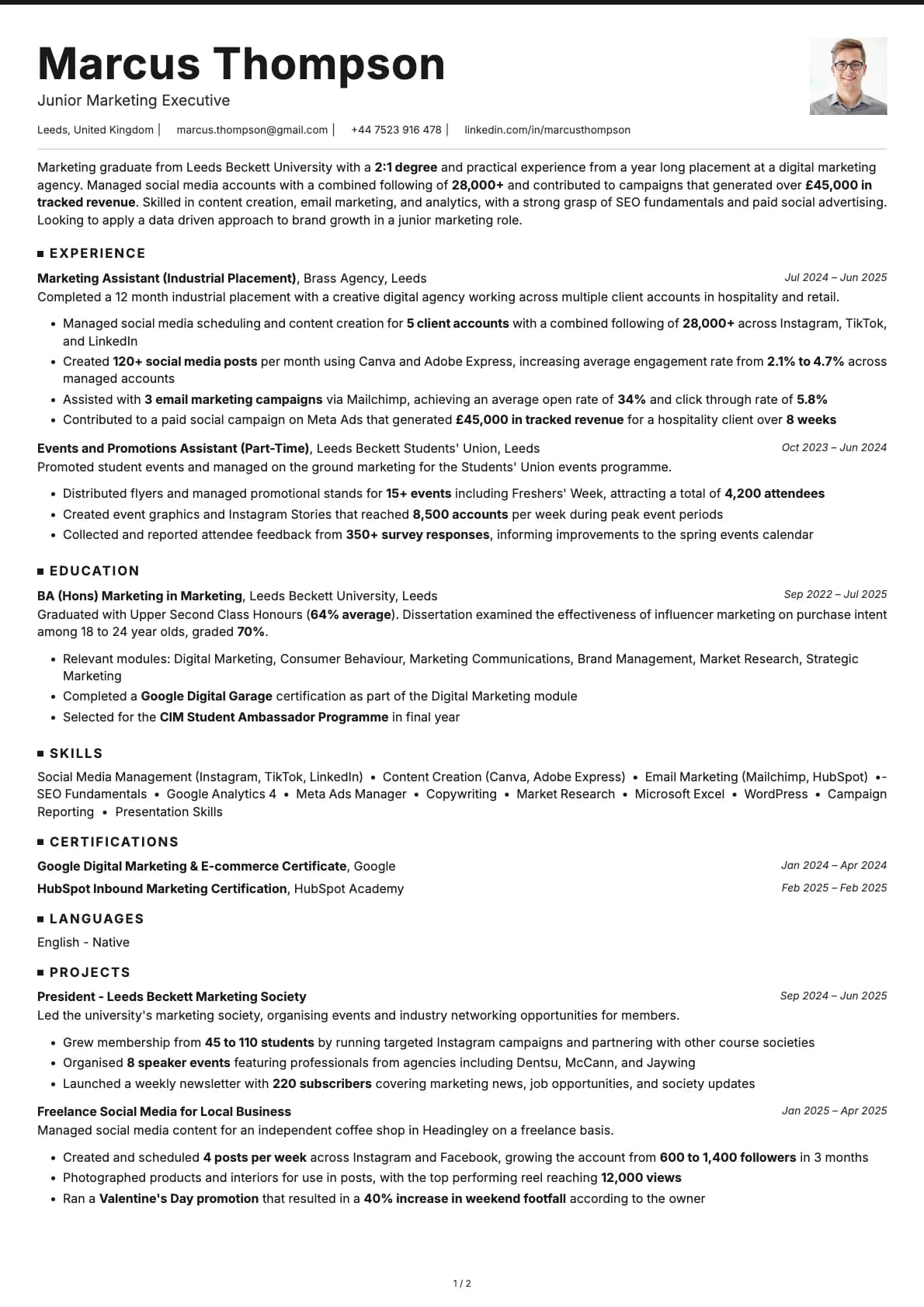
Junior Marketing Executive
A junior marketing executive resume example for recent graduates. See how to showcase social media skills, campaign results, and agency experience effectively.
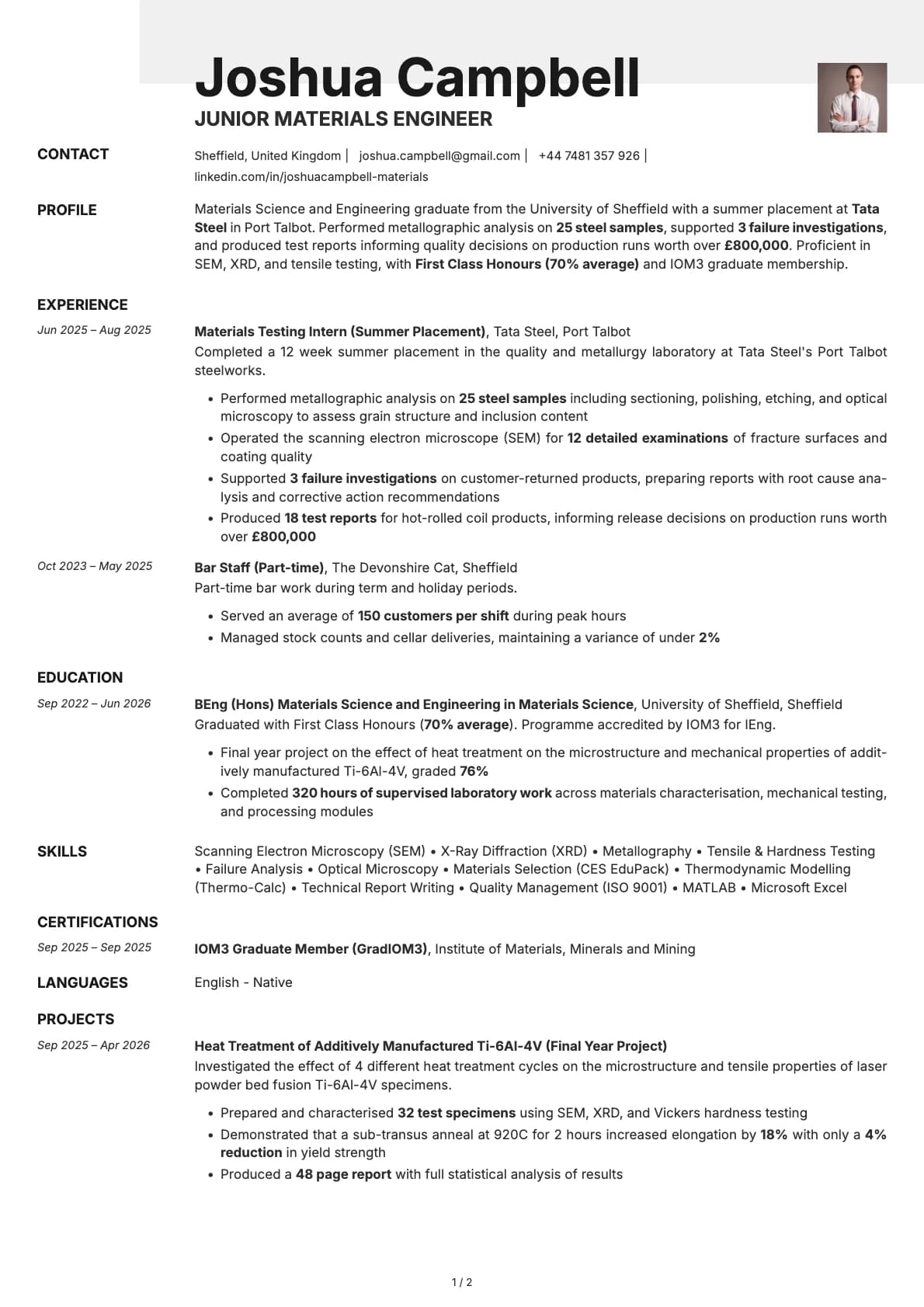
Junior Materials Engineer
A junior materials engineer resume example with metallurgical testing experience, SEM analysis skills, and IOM3 membership.

Junior Mechanical Engineer
A junior mechanical engineer resume example with a year in industry placement. See how to present CAD skills, FEA experience, and engineering projects on your graduate CV.
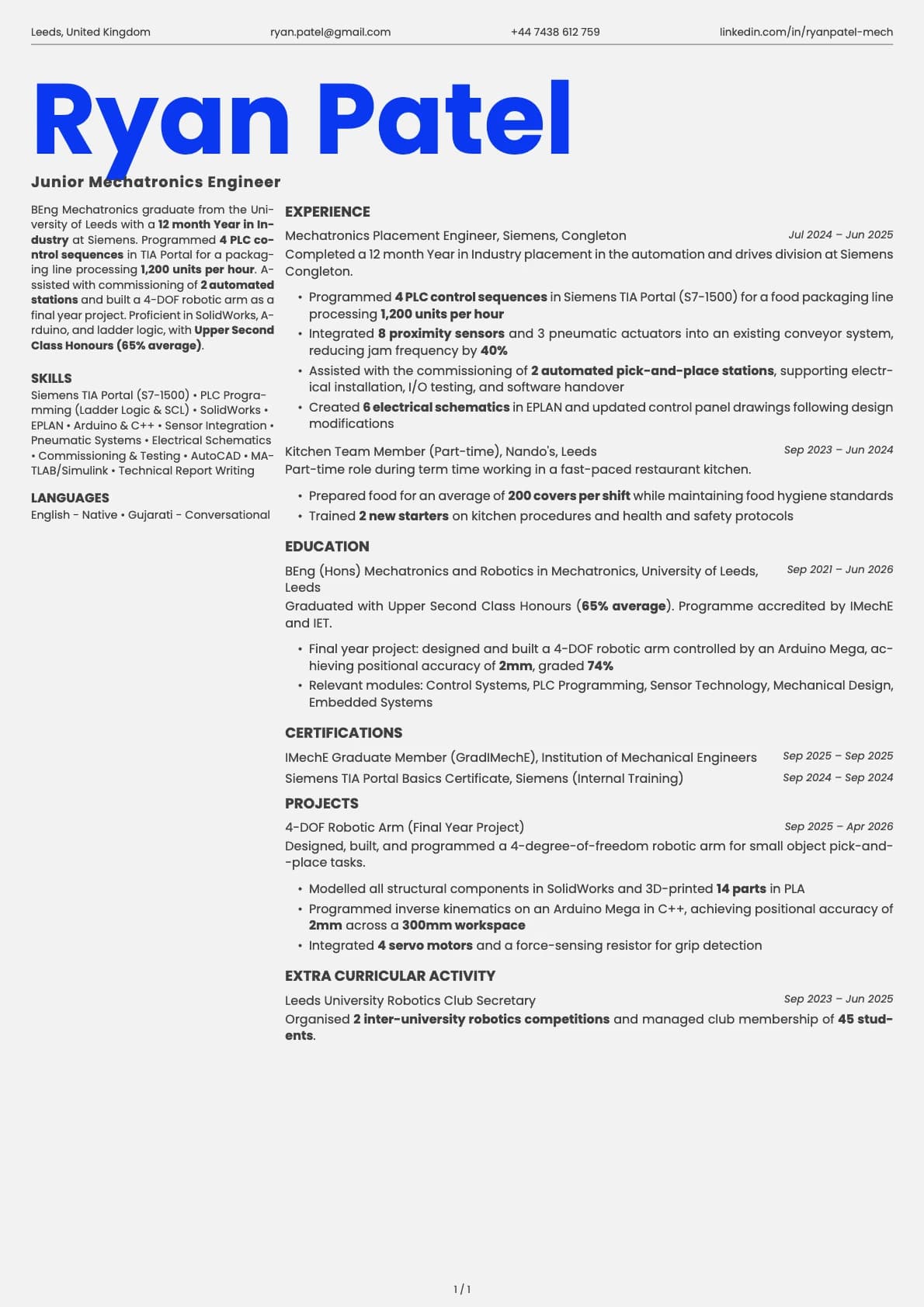
Junior Mechatronics Engineer
A junior mechatronics engineer resume example with PLC programming experience, SolidWorks proficiency, and an industrial automation placement.
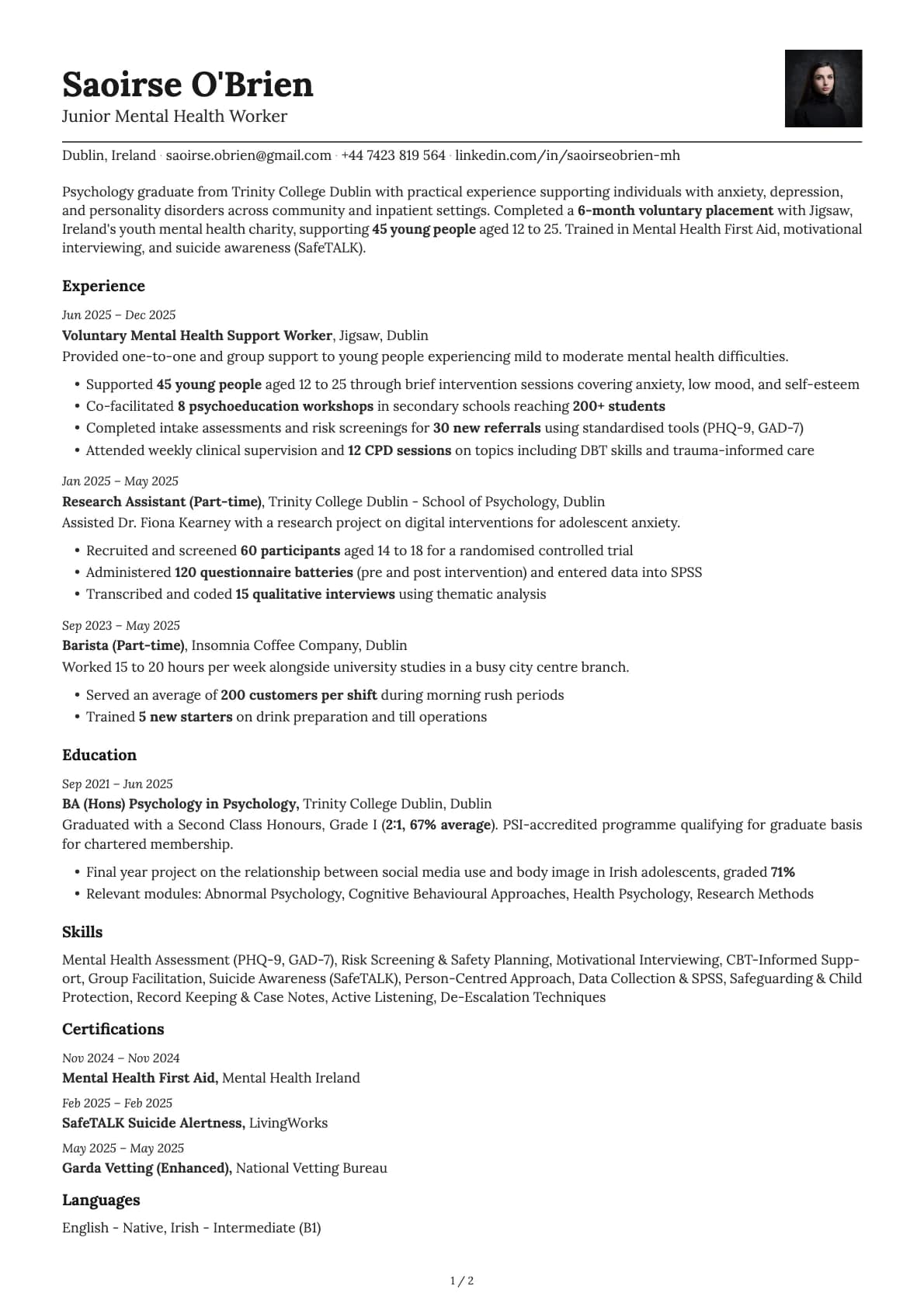
Junior Mental Health Worker
A junior mental health worker resume example with voluntary placement experience, assessment tools, and youth support numbers for psychology graduates.
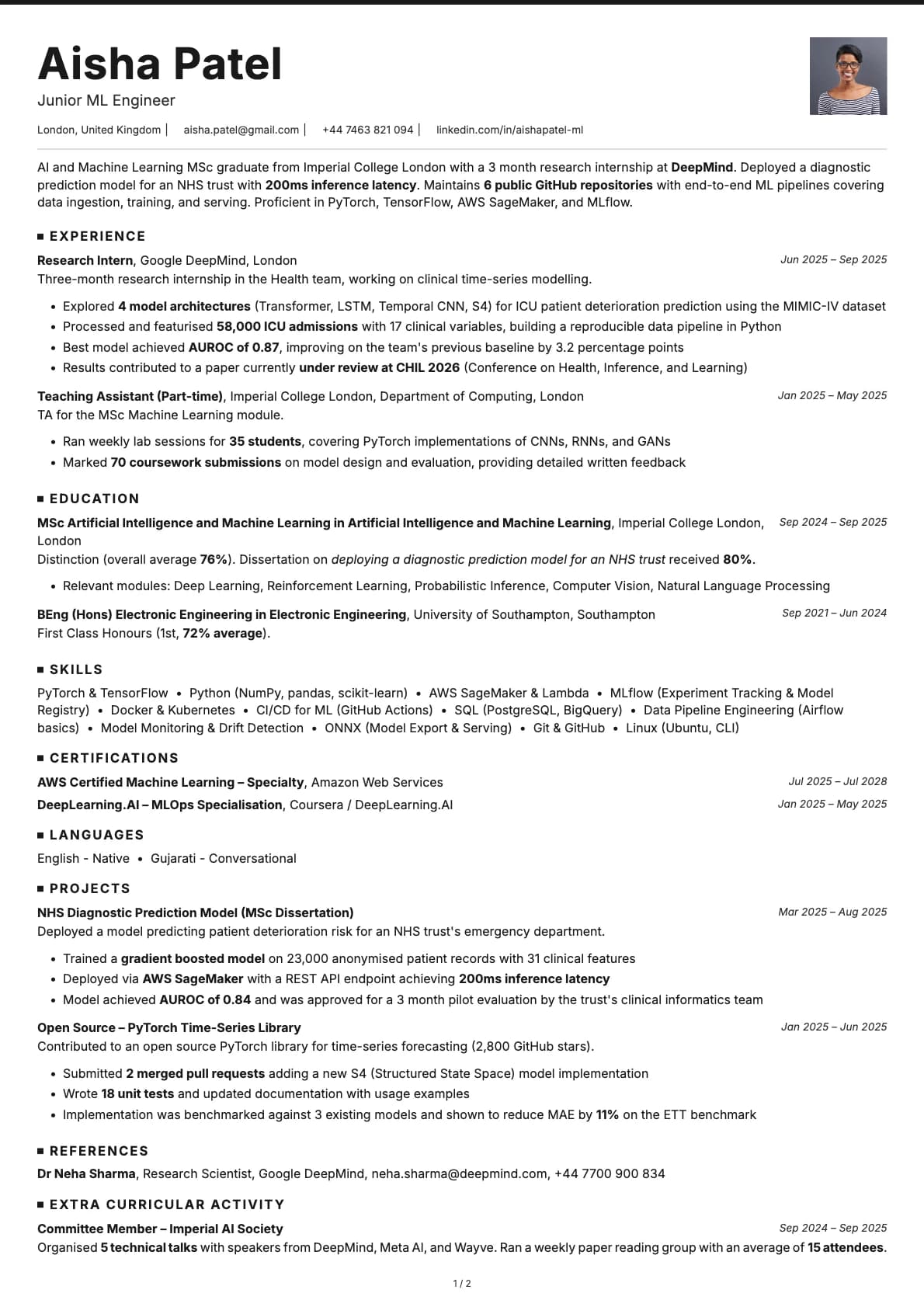
Junior ML Engineer
A junior ML engineer resume example with deployed models, TensorFlow projects, and AWS SageMaker experience from an AI and ML MSc graduate starting their career.
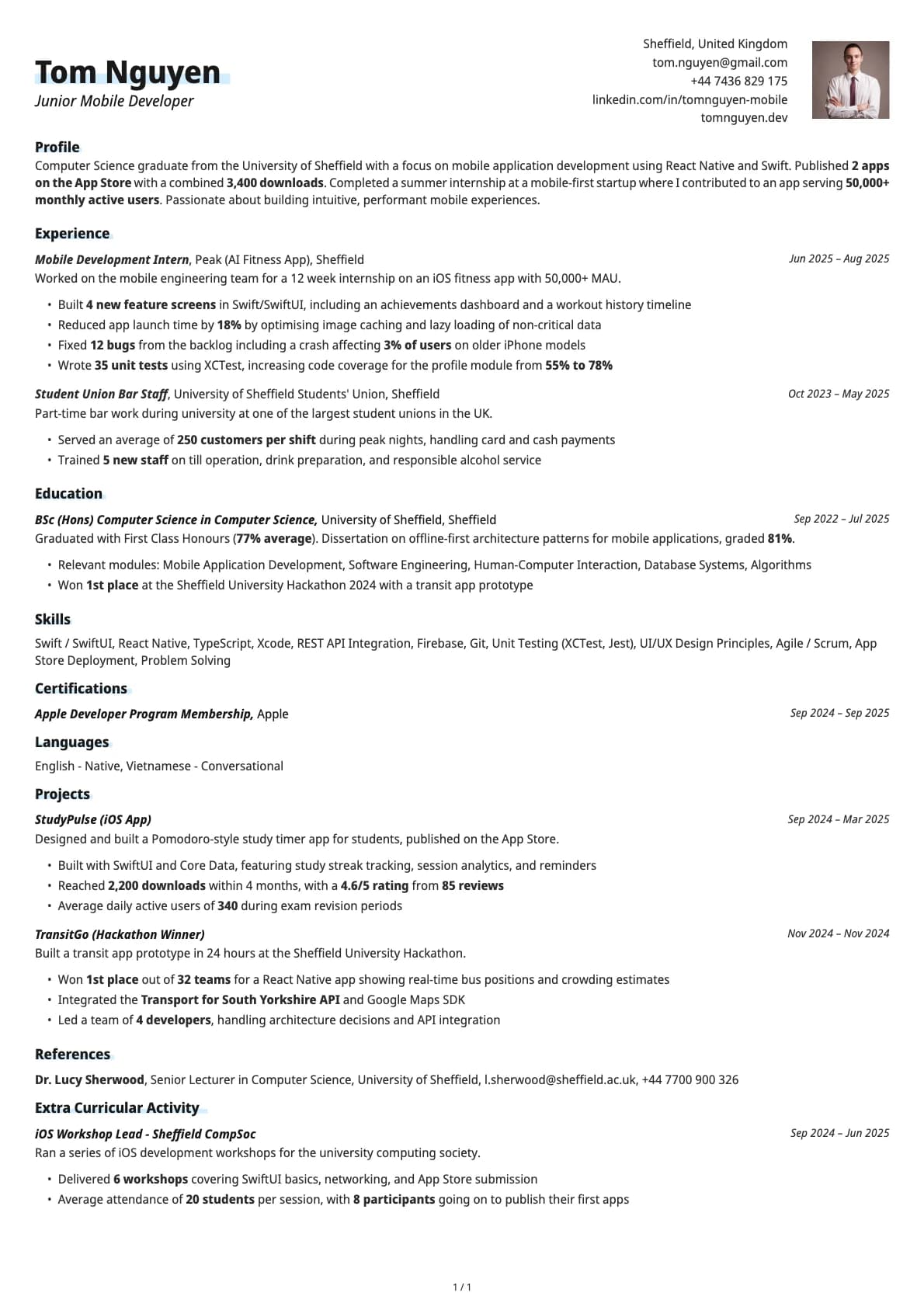
Junior Mobile Developer
A junior mobile developer resume example for graduates. See how to present published apps, App Store downloads, and mobile internship experience to land your first mobile dev role.
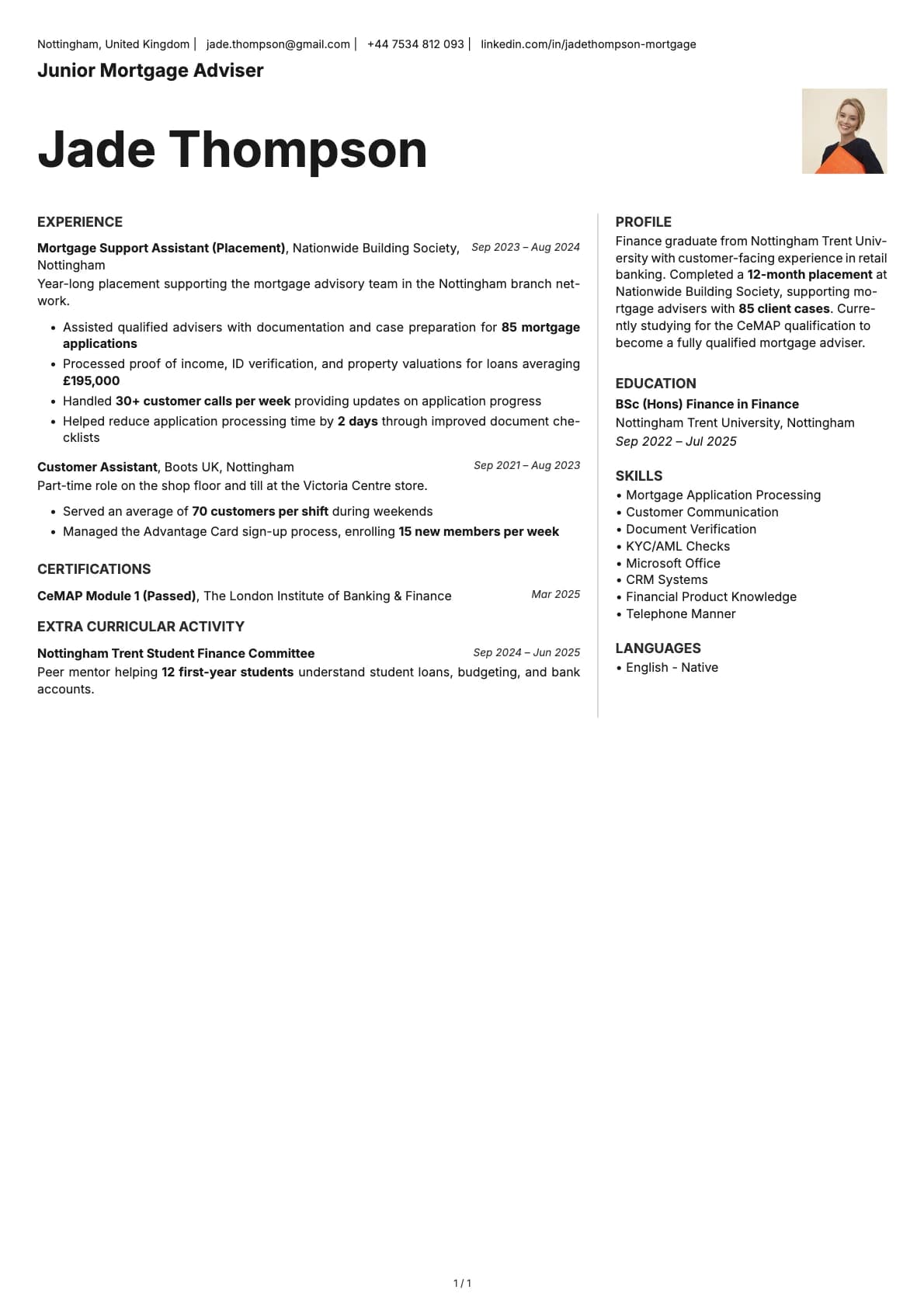
Junior Mortgage Adviser
A junior mortgage adviser resume example with Nationwide placement experience and CeMAP qualification in progress.
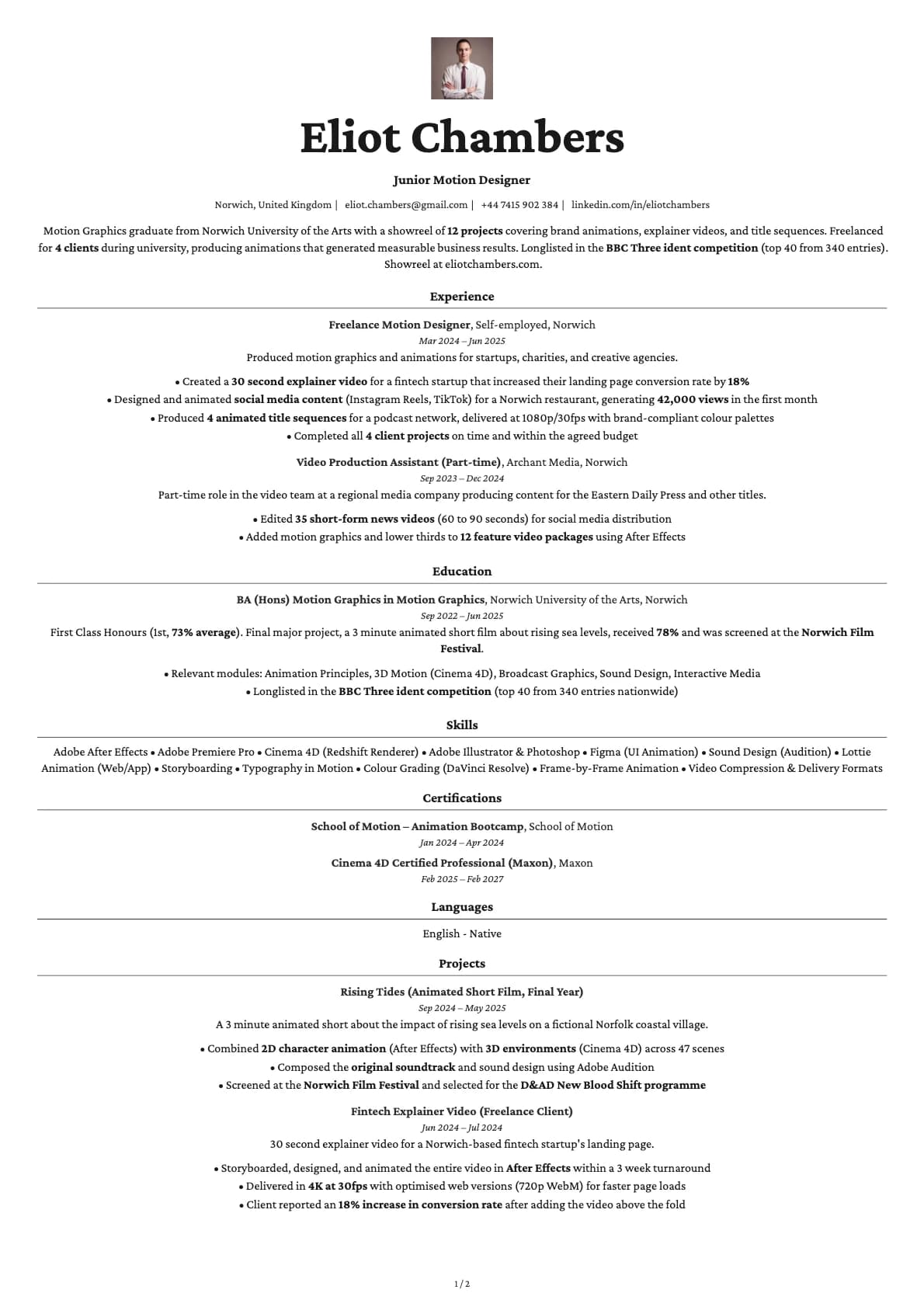
Junior Motion Designer
A junior motion designer resume example with After Effects projects, client animations, and showreel details from a Motion Graphics BA graduate entering the field.

Junior Network Engineer
A junior network engineer resume example with CCNA, an MSP apprenticeship, and a home lab. See how to present networking skills and certifications for your first engineering role.
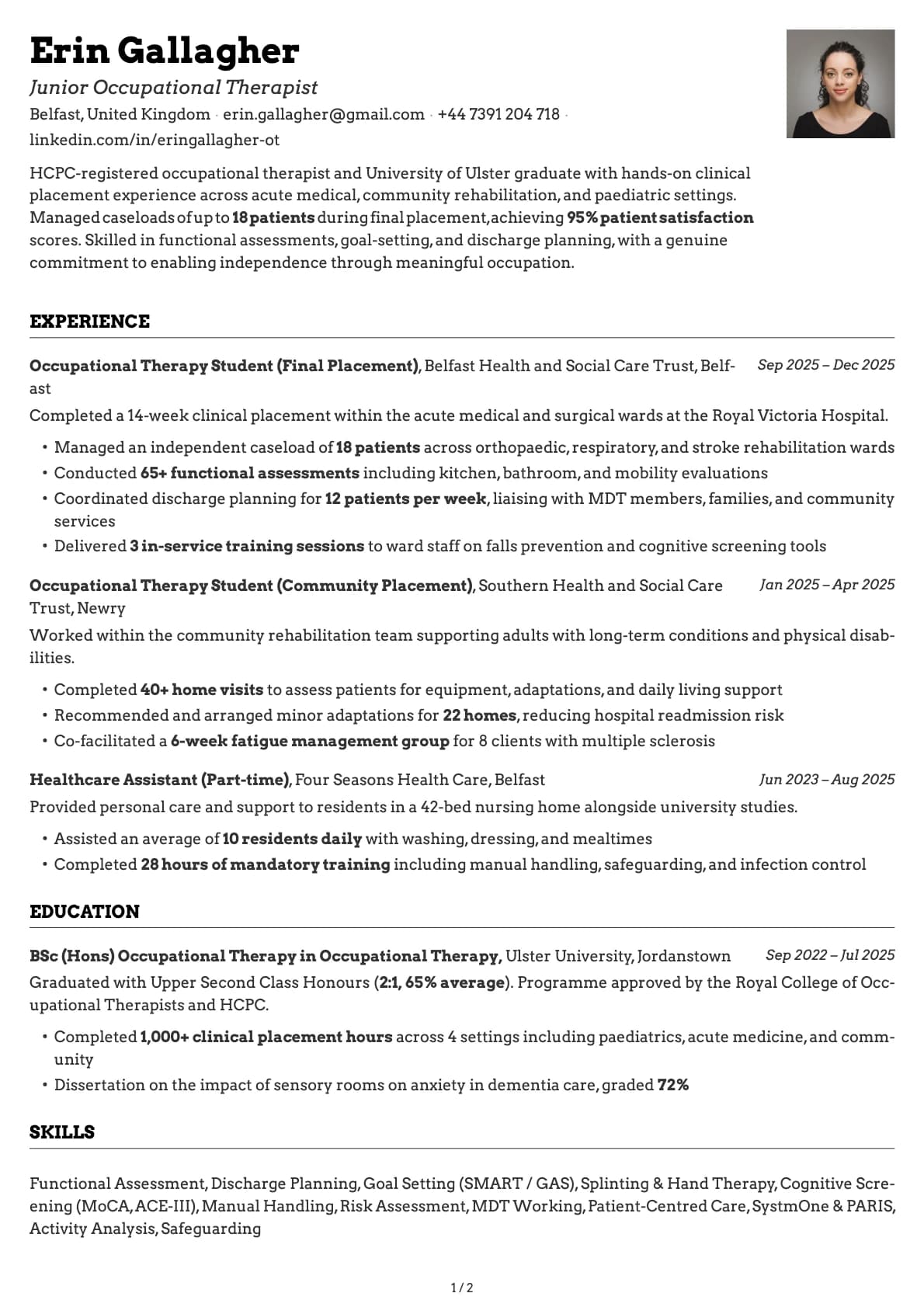
Junior Occupational Therapist
A junior occupational therapist resume example with clinical placement experience, HCPC registration, and real patient outcome numbers for new graduates.