Music Teacher Resume Example
A graduate music teacher resume example with PGCE, QTS, and classroom music teaching placements. See how to present your performance and teaching skills for music teacher roles.

Laddro Team
Free to use. No account needed to start.
Free to use. No account needed to start.
Overview
Music teaching is a peculiar field. You need to be a skilled musician, but that is not what gets you the job. Schools want someone who can teach a class of 30 Year 7 pupils to compose a piece using graphic notation, manage the noise and energy of a practical subject, and run the school choir, orchestra, and annual concert. Your musicianship matters, but your classroom craft matters more.
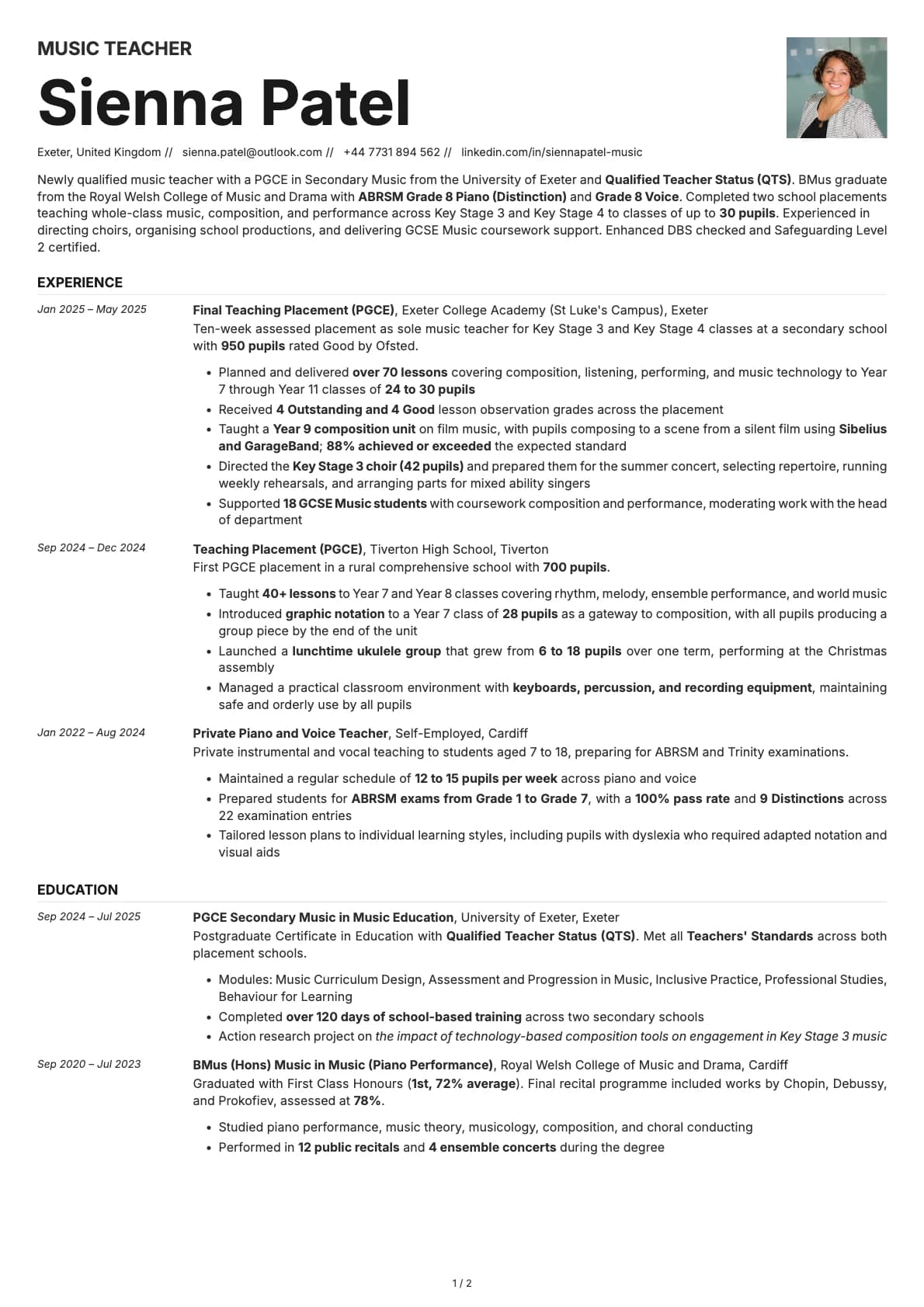
Sienna Patel completed a BMus in Music at the Royal Welsh College of Music and Drama, followed by a PGCE in Secondary Music at the University of Exeter. She held placements in two comprehensive schools, directed a youth choir, and taught private piano lessons for three years. Her resume balances her performing background with clear evidence that she can plan, teach, and assess music in a secondary school setting.
What Makes This Resume Work
Classroom teaching leads the way. Sienna's placements describe her teaching whole-class music lessons to Key Stage 3 and Key Stage 4 groups, not just running instrumental lessons. She taught composition, listening, and performing to mixed-ability classes, which is the core of what a secondary music teacher does.
Extra-curricular contributions are substantial. She directed a school production, ran the Key Stage 3 choir, and organised a lunchtime ukulele group. Schools expect music teachers to contribute heavily to extra-curricular life, and Sienna demonstrates she is ready and willing.
Assessment is specific to music. She describes using Charanga and Sibelius with pupils, assessing compositions against the national curriculum, and moderating GCSE coursework with the head of department. These are music-specific details that show she understands the subject in a school context, not just on a stage.
Key Takeaways
Music teacher applications should show that you can teach the full curriculum, not just your instrument. Describe the year groups you taught, the topics you covered (composition, listening, performing, music technology), and how you assessed pupil progress. Highlight extra-curricular contributions because schools rely heavily on the music teacher for concerts, productions, and ensembles. Include your QTS, DBS, safeguarding training, and any performance qualifications (ABRSM grades, diplomas) that demonstrate your subject expertise.
Build your own version
Open this layout in the builder and swap in your own details. It takes a few minutes.
Free to use. No account needed to start.
Was this resume example helpful?
Rate this example to help us create better content for you.
4.8 average from 91 ratingsRelated resume examples
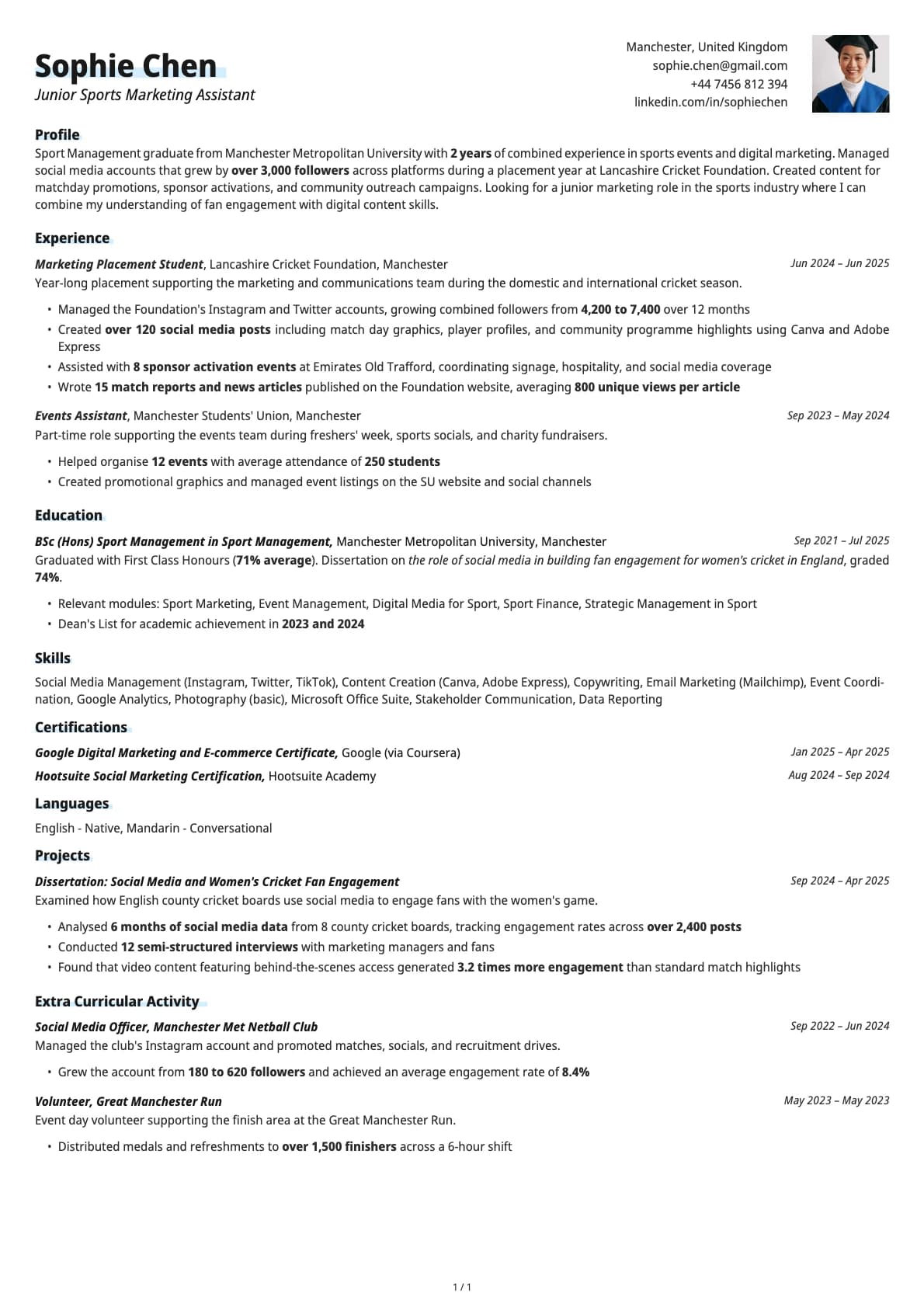
Junior Sports Marketing Assistant
A junior sports marketing assistant resume example showing how to combine a cricket foundation placement, social media growth, and a sport management degree.
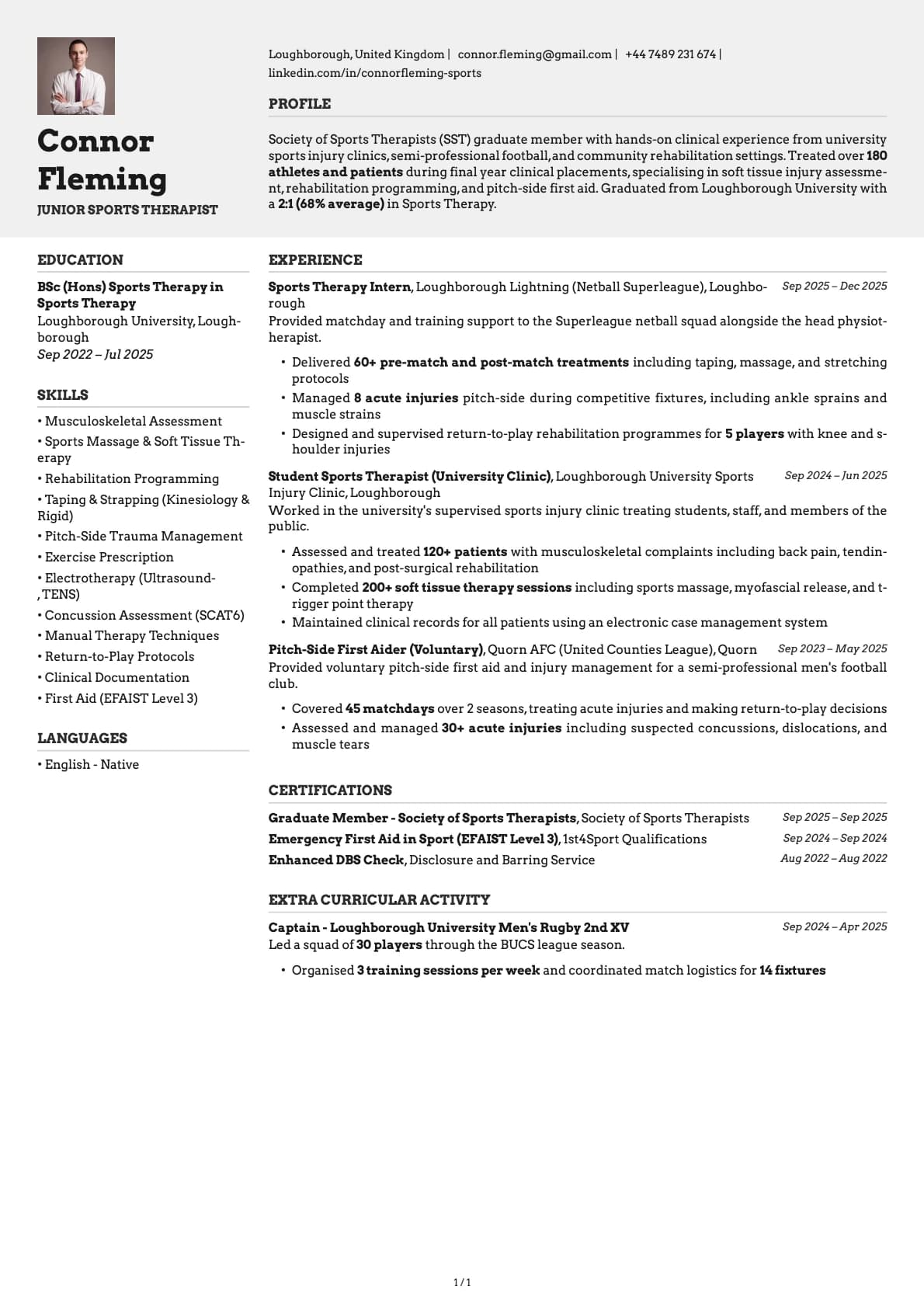
Junior Sports Therapist
A junior sports therapist resume example with clinical treatment numbers, pitch-side experience, and SST membership for new graduates.
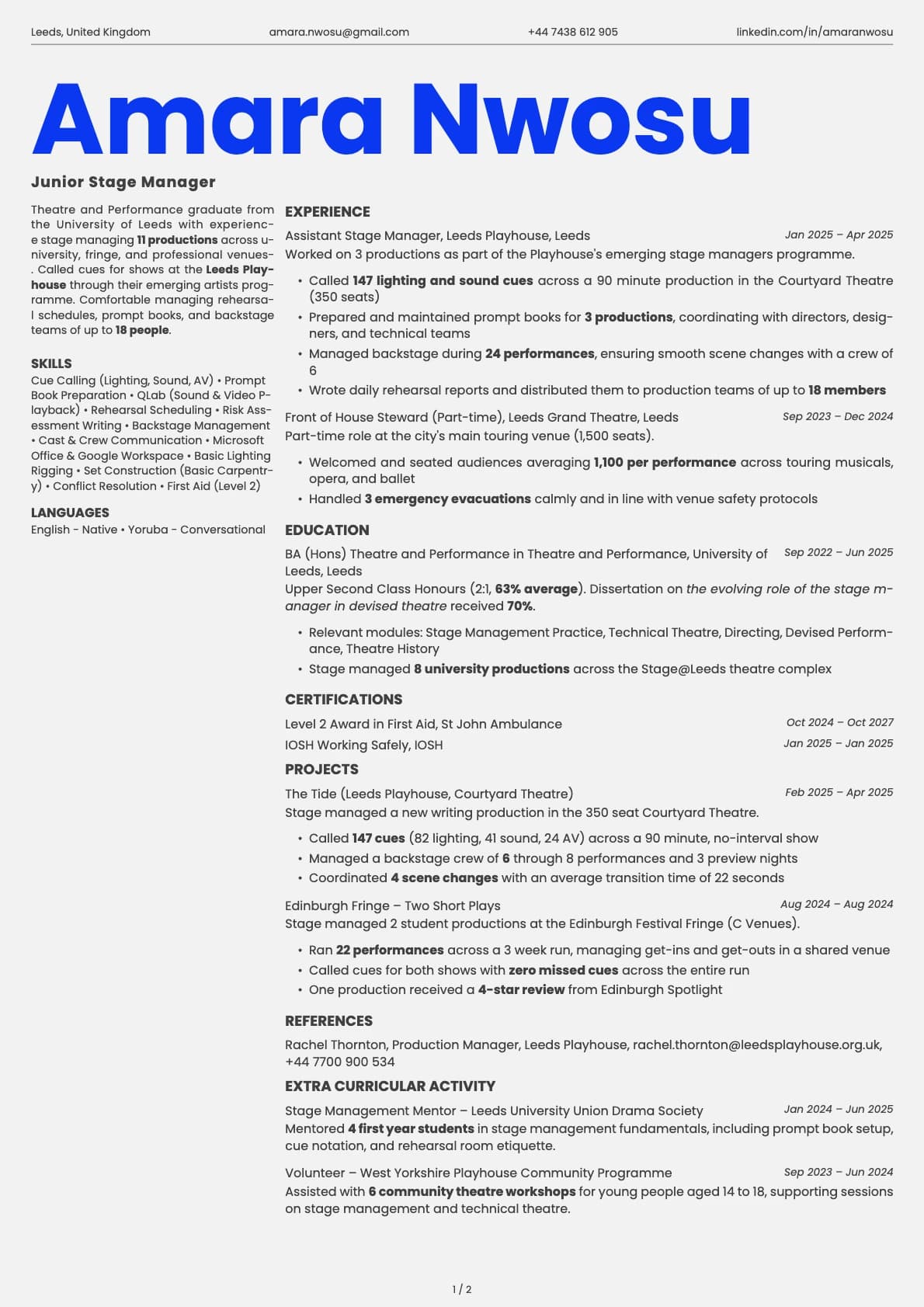
Junior Stage Manager
A junior stage manager resume example with prompt book experience, production counts, and cue calling from a Theatre Studies graduate entering professional stage management.
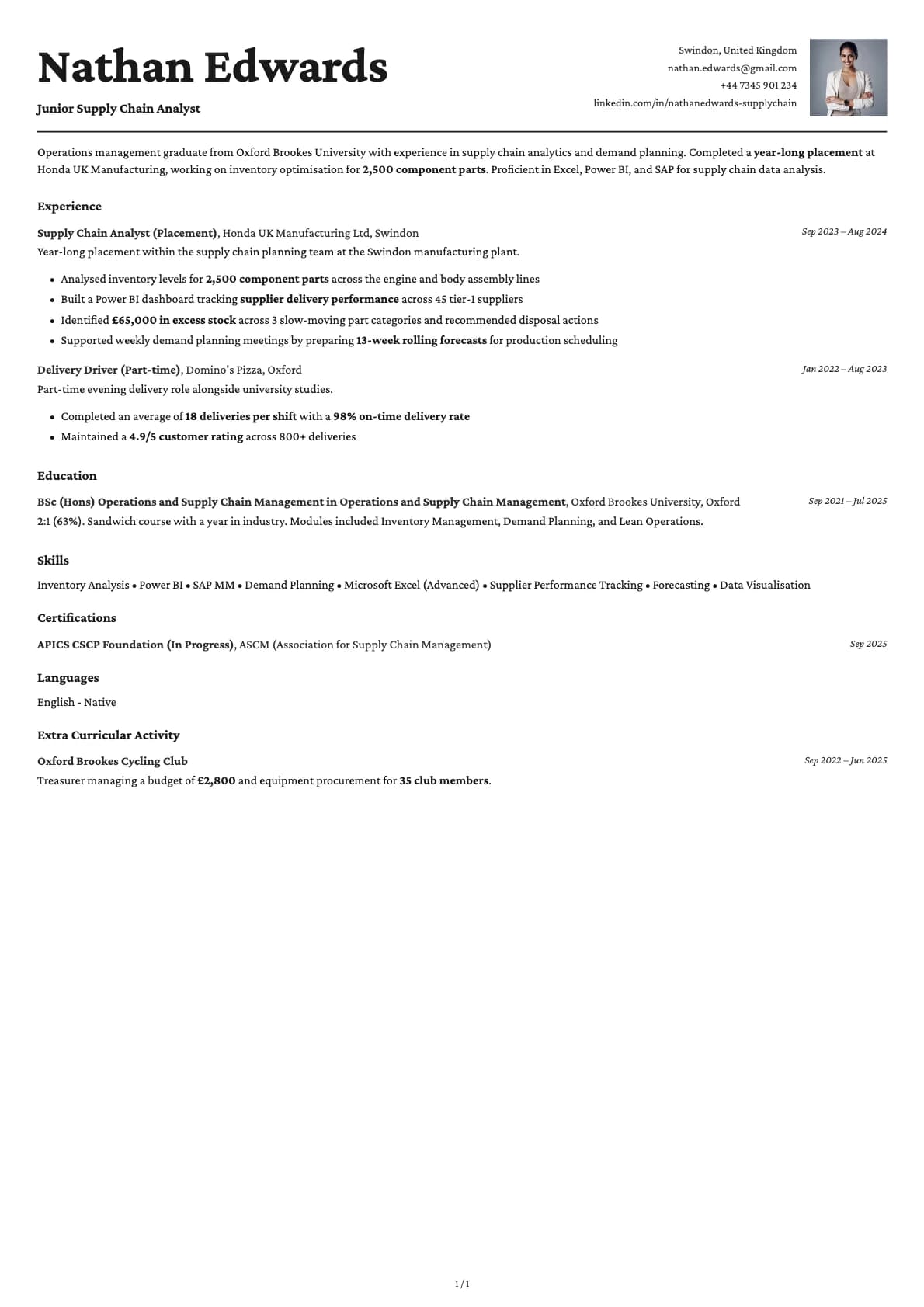
Junior Supply Chain Analyst
A junior supply chain analyst resume example with Honda UK placement and inventory optimisation experience.

Junior Sustainability Consultant
A junior sustainability consultant resume example for environmental science graduates. See how to present carbon auditing, consultancy internships, and environmental volunteering.
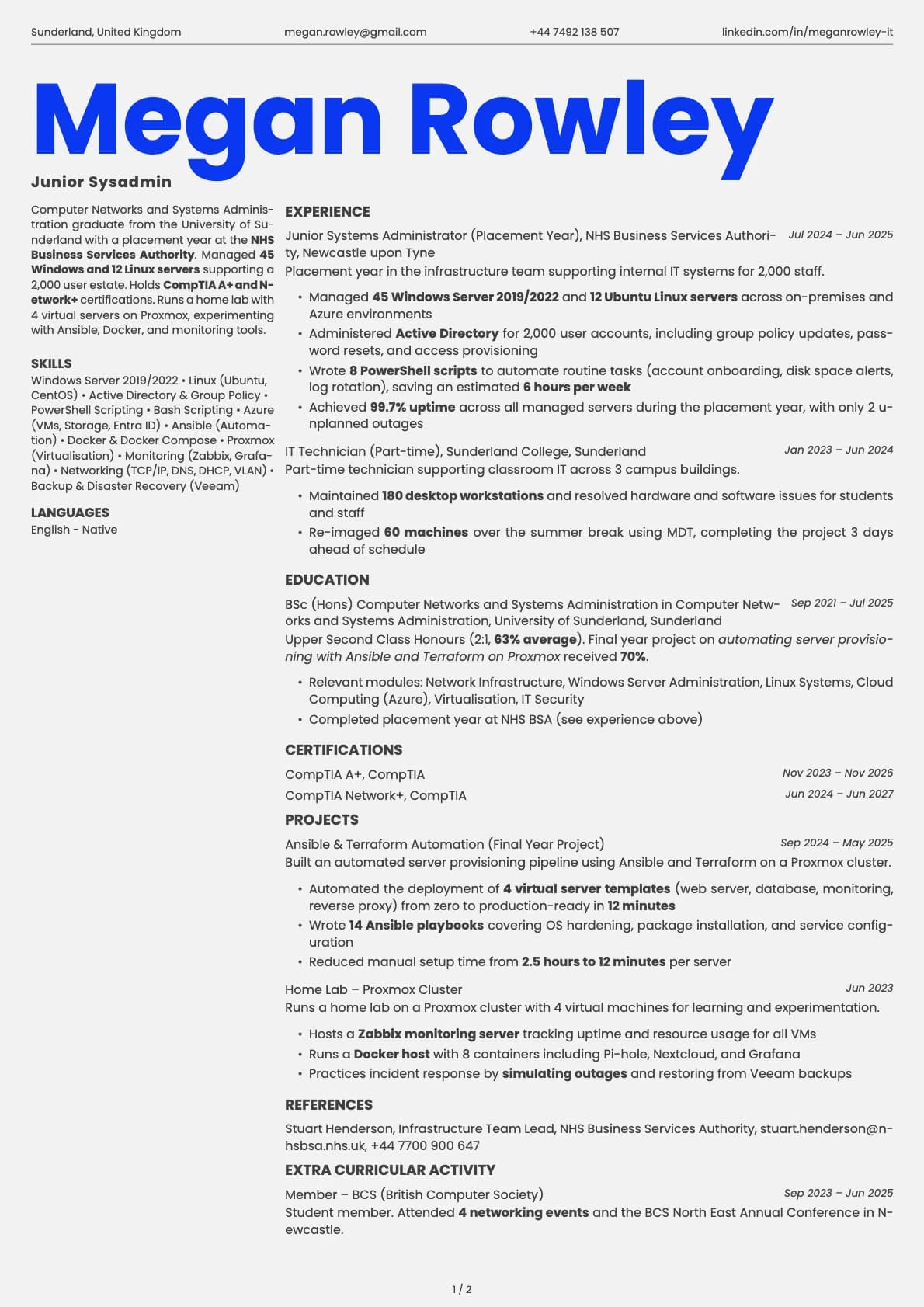
Junior Sysadmin
A junior sysadmin resume example with Linux server management, Active Directory experience, and CompTIA certifications from an IT graduate entering systems administration.
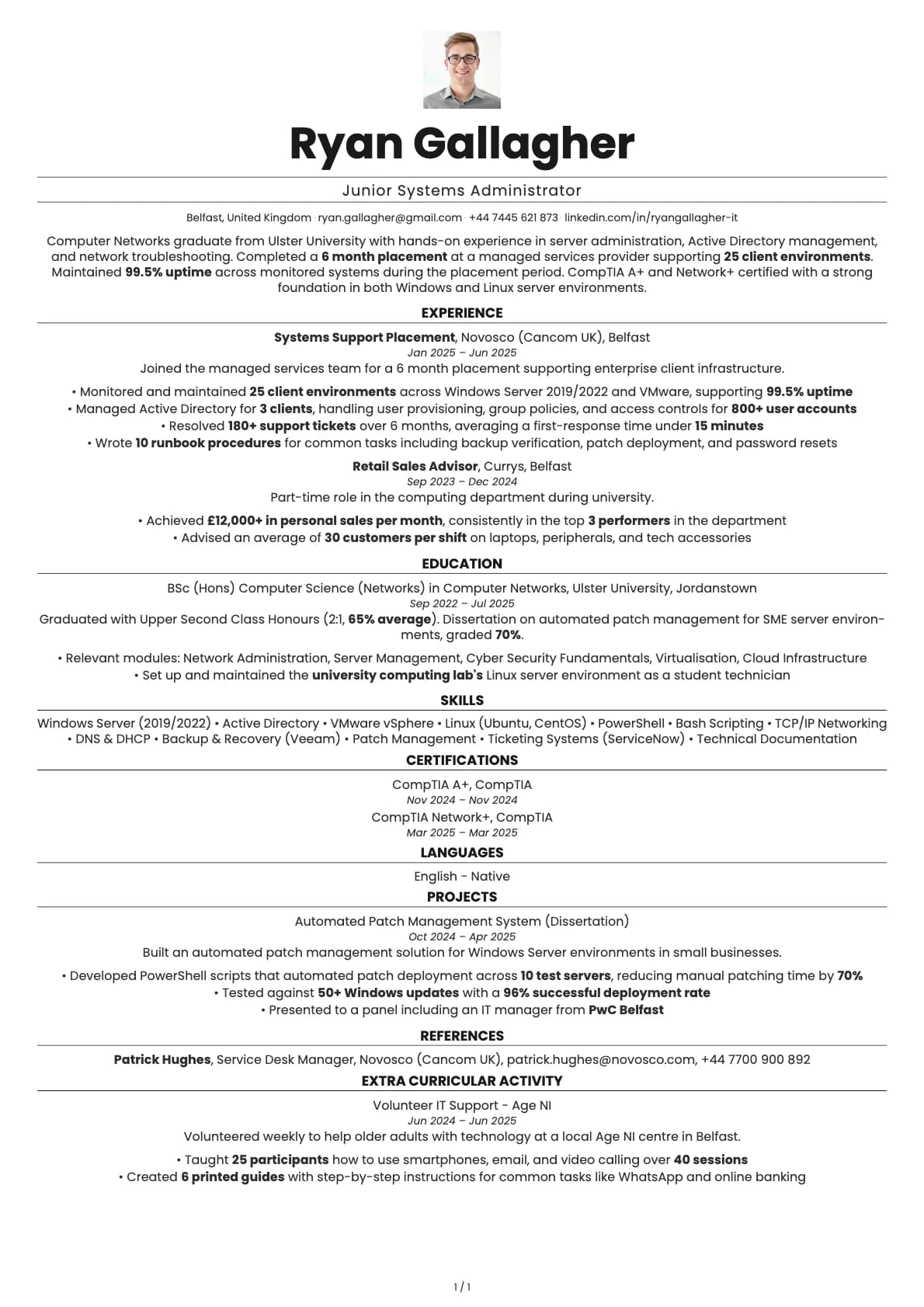
Junior Systems Administrator
A junior systems administrator resume example for graduates. See how to present server management, Active Directory, and CompTIA certifications to land your first sysadmin role.
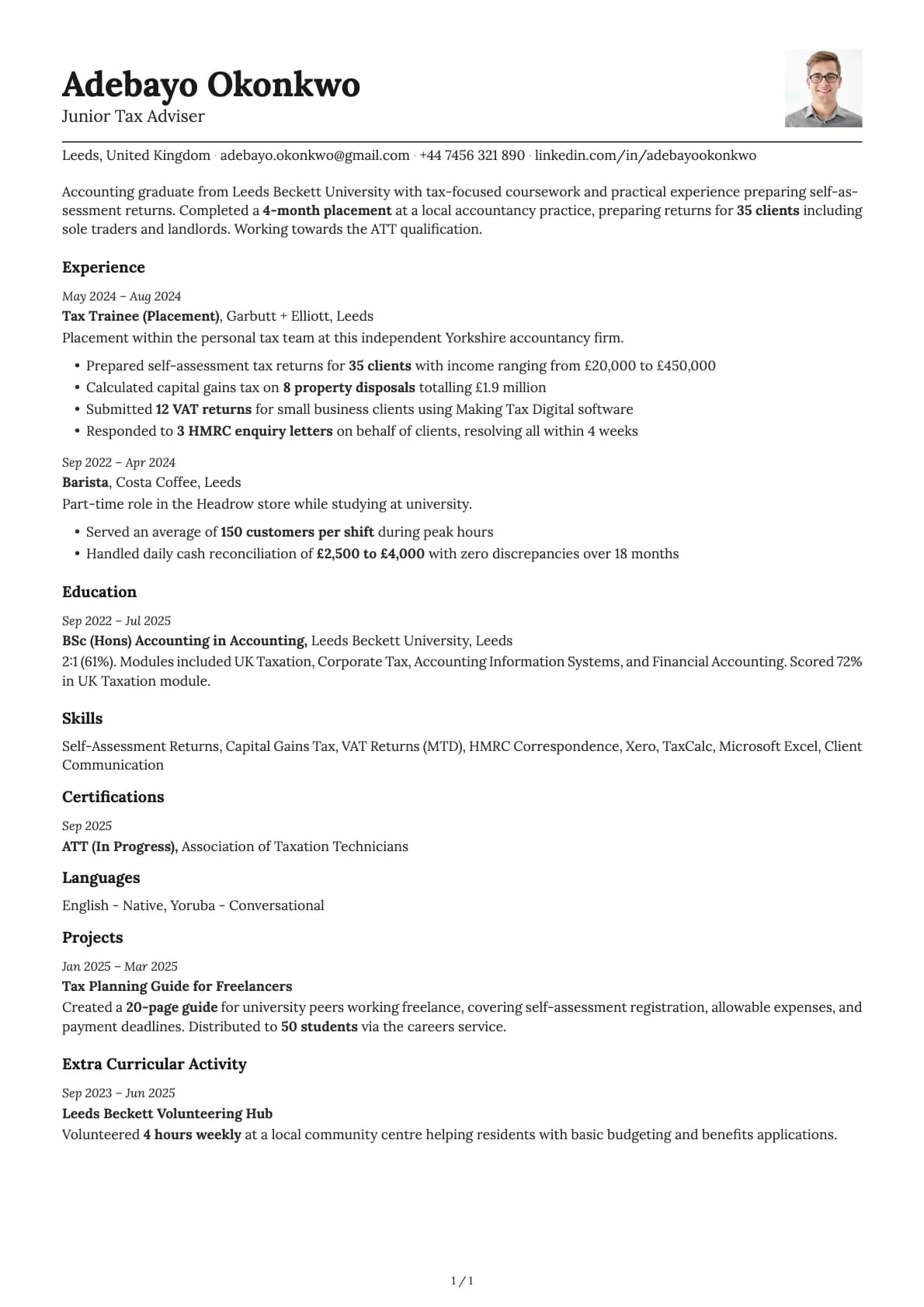
Junior Tax Adviser
A junior tax adviser resume example with placement experience at a regional accountancy firm and ATT study.
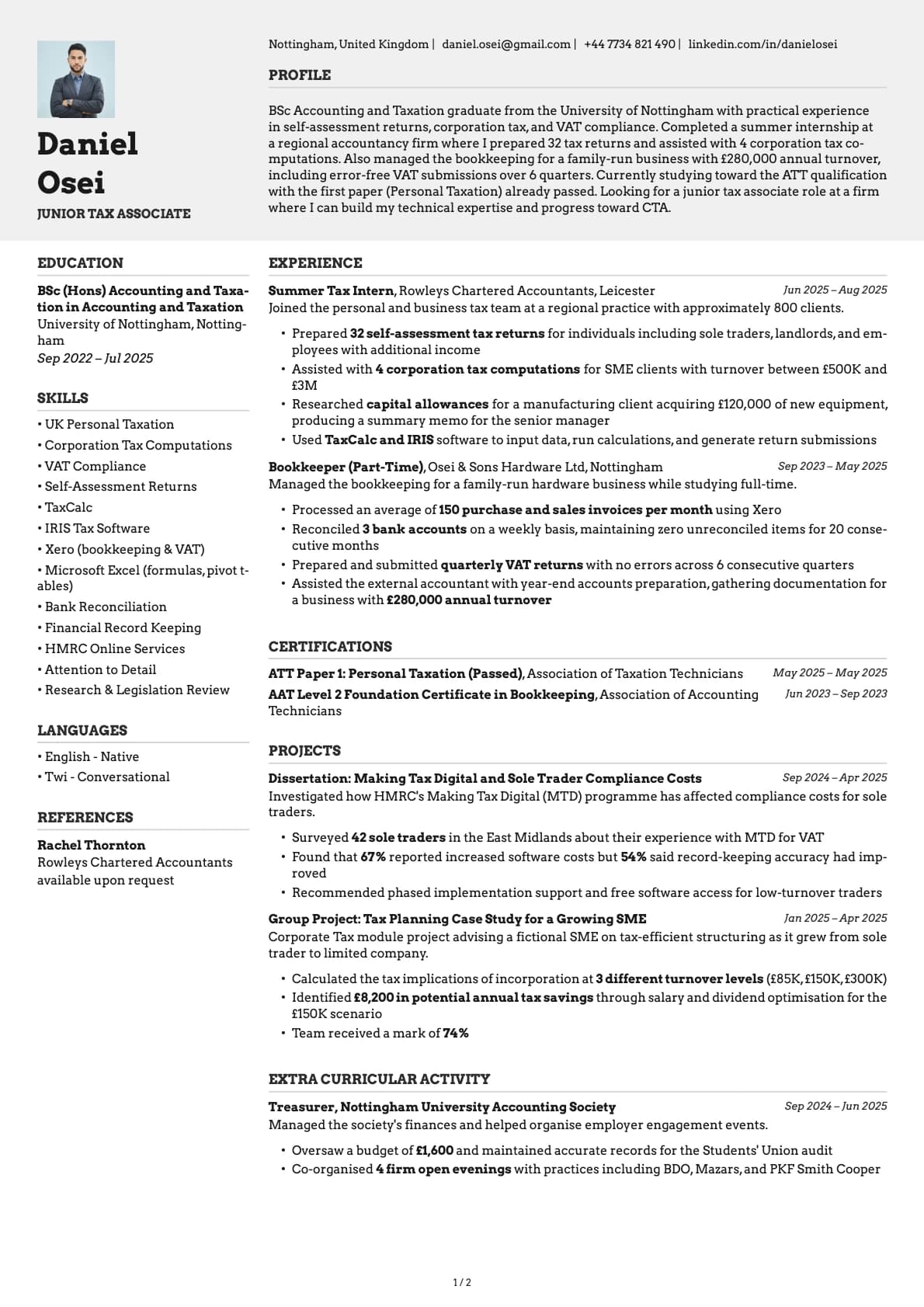
Junior Tax Associate
A junior tax associate resume example for tax and accounting graduates. See how HMRC work experience and ATT progress help you stand out to employers.
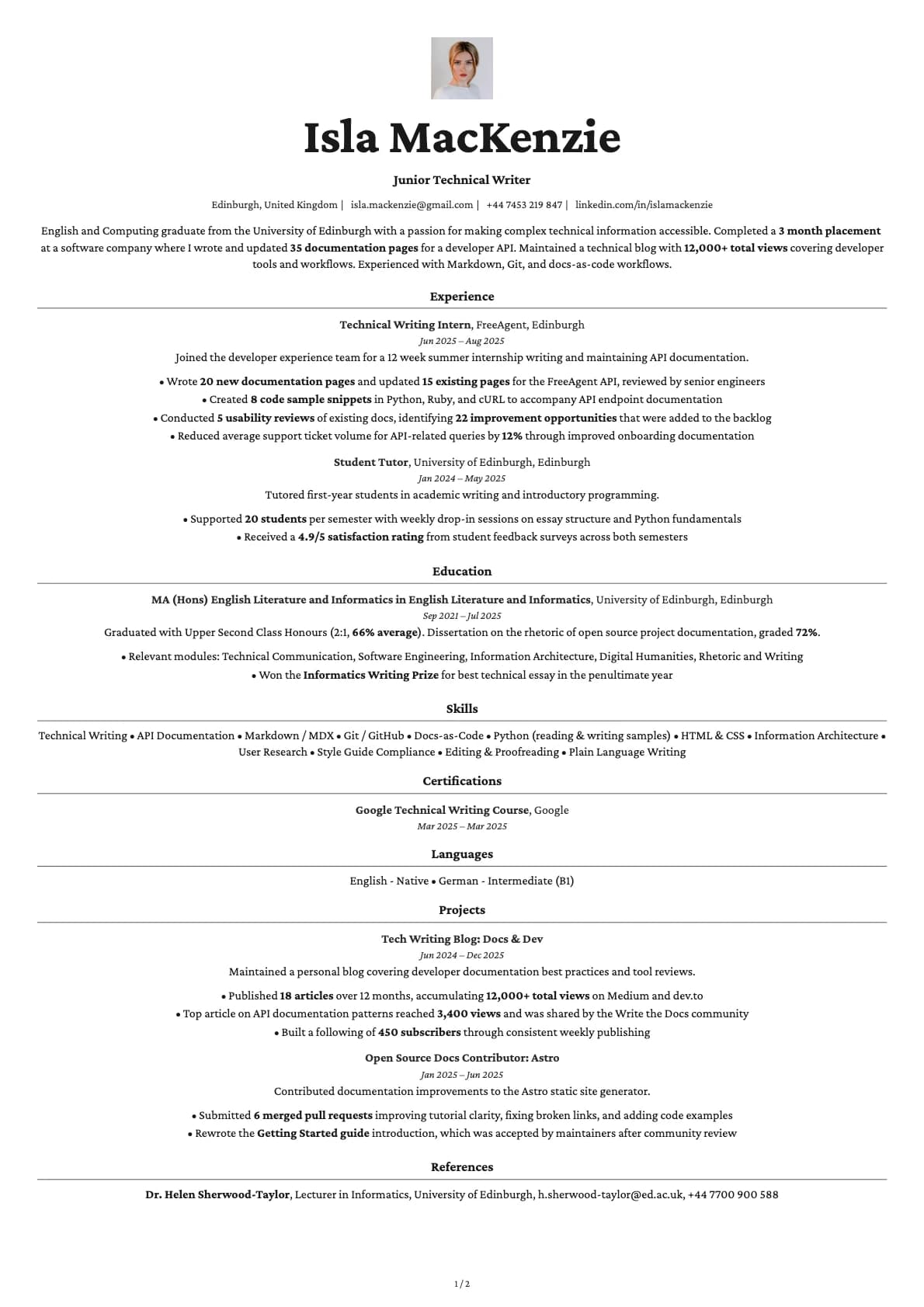
Junior Technical Writer
A junior technical writer resume example for graduates. See how to present documentation experience, API writing samples, and open source contributions to land your first tech writing role.
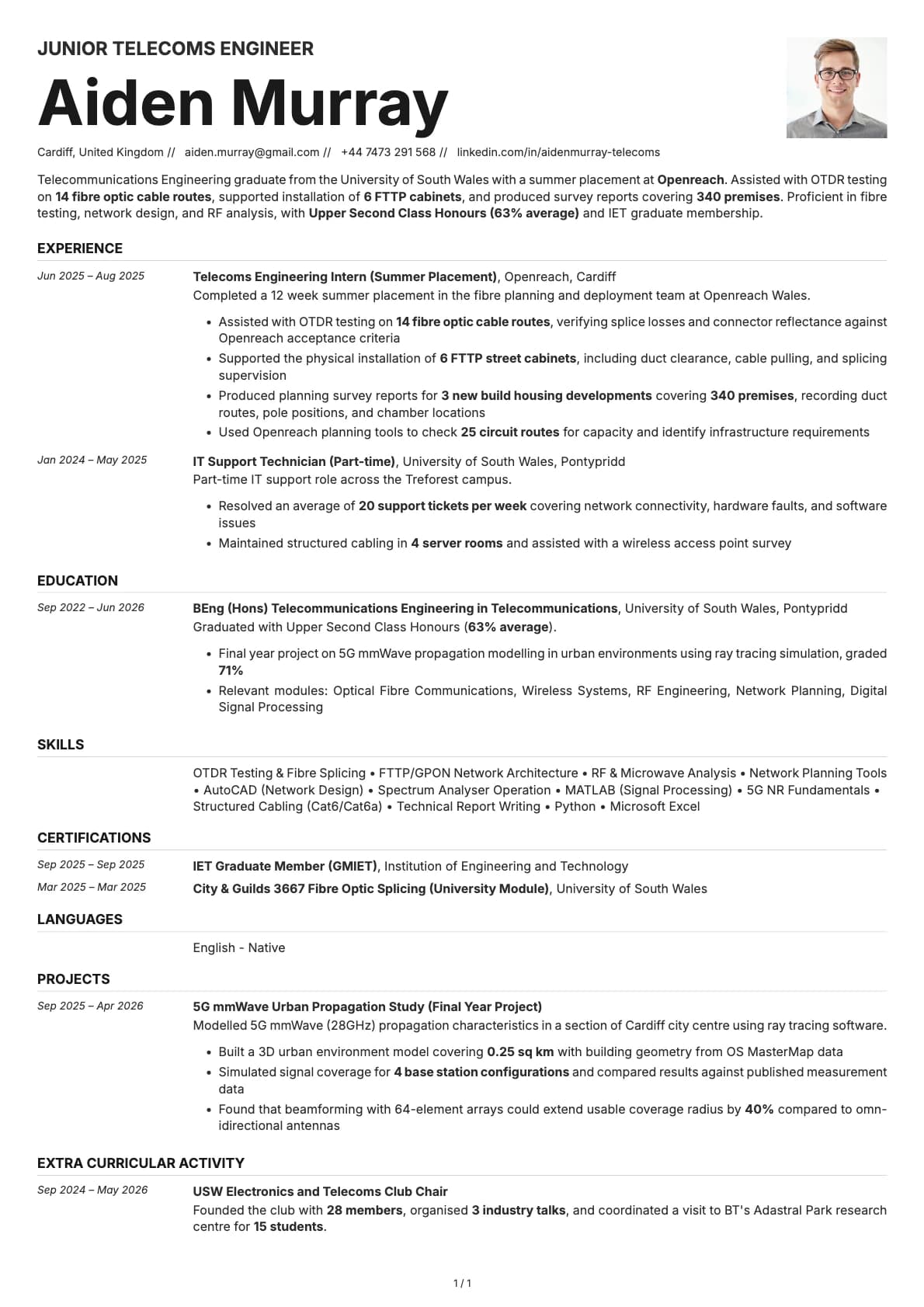
Junior Telecoms Engineer
A junior telecoms engineer resume example with fibre optic network experience, OTDR testing skills, and placement at Openreach.
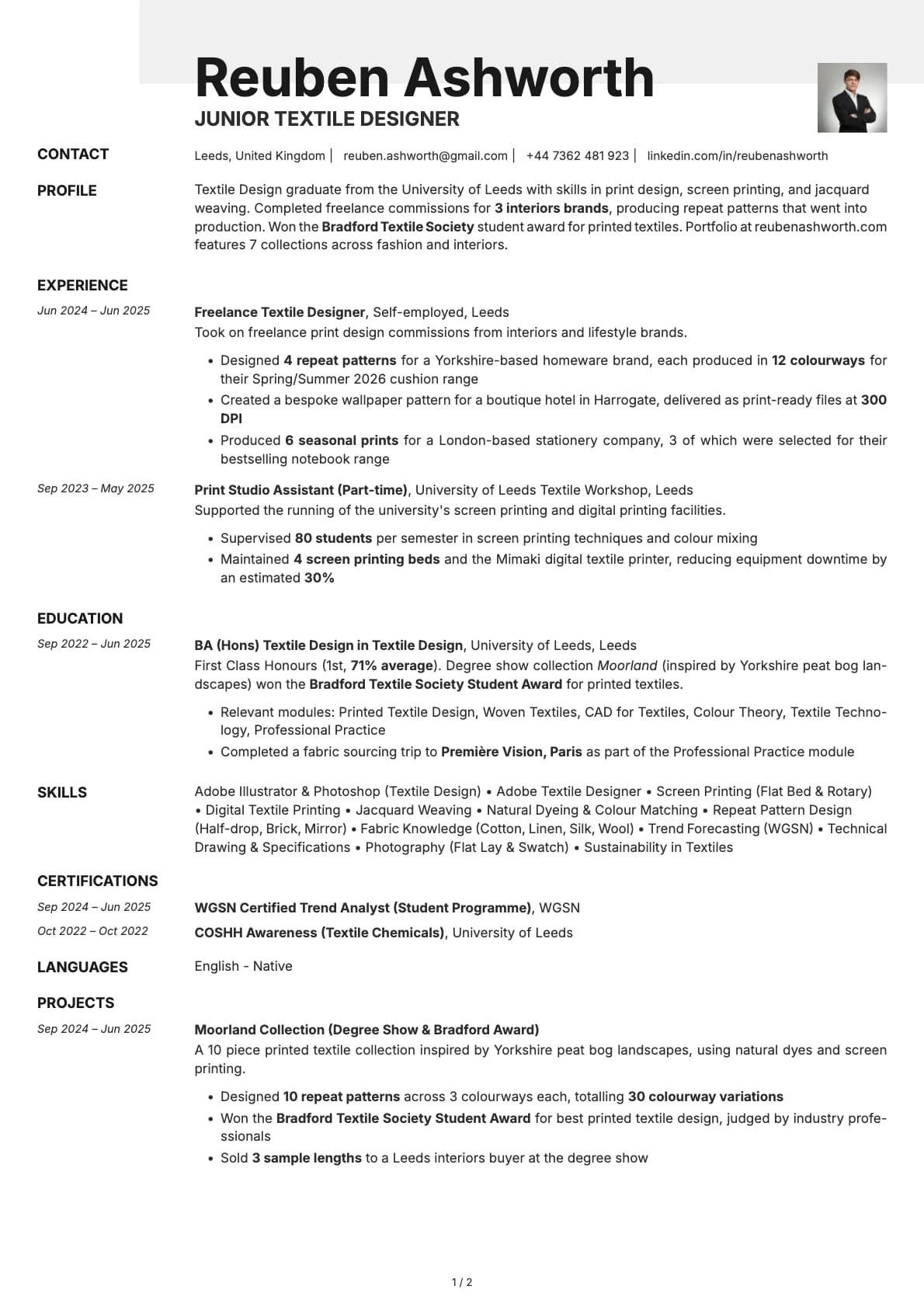
Junior Textile Designer
A junior textile designer resume example with print design projects, client commissions, and weaving skills from a Textile Design BA graduate entering the industry.