Youth Offending Officer Resume Example
A youth offending officer resume example for criminal justice graduates. See how to present your placement experience, case management skills, and youth justice knowledge.

Laddro Team
Free to use. No account needed to start.
Free to use. No account needed to start.
Overview
Youth offending teams (YOTs) are multi agency partnerships that work with young people aged 10 to 17 who have been convicted of a criminal offence or are at risk of offending. The work is challenging, rewarding, and deeply reliant on relationship building. Employers hiring into YOT roles want graduates who understand the youth justice system, have experience working with vulnerable young people, and can produce clear case records and assessment reports. A criminal justice degree gets you through the first filter. What gets you the job is evidence that you can work with young people in difficult circumstances.
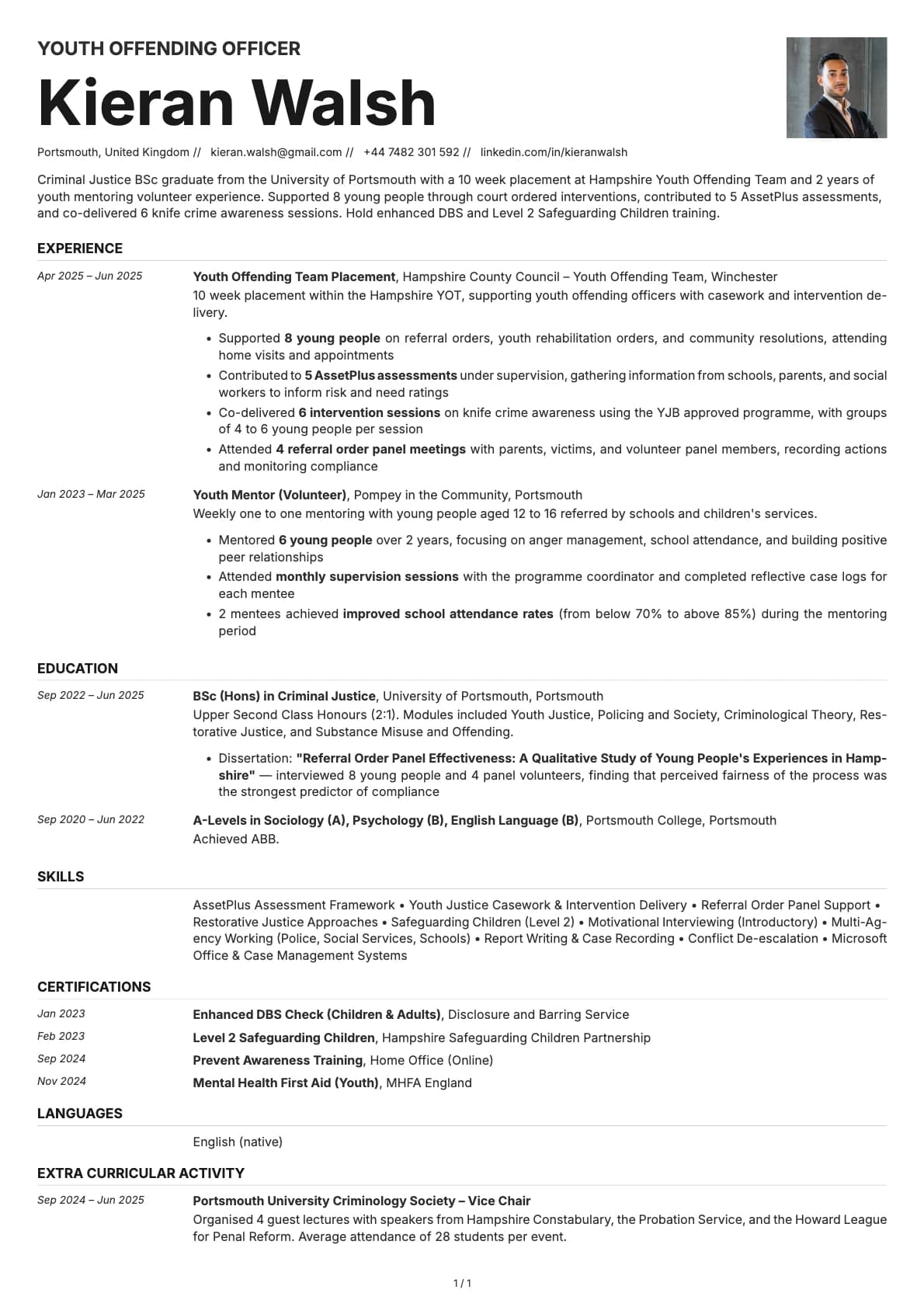
This resume belongs to Kieran Walsh, a Criminal Justice BSc graduate from the University of Portsmouth. He completed a 10 week placement with the Hampshire Youth Offending Team, supported 8 young people through court ordered interventions, and volunteered with a youth mentoring charity for 2 years during his degree. His resume balances academic credentials with hands on youth work experience.
What Makes This Resume Work
The placement describes real casework. Kieran supported 8 young people on referral orders, youth rehabilitation orders, and community resolutions. He attended 4 panel meetings with parents, victims, and panel members, and he co-delivered 6 intervention sessions on knife crime awareness using the YJB (Youth Justice Board) approved programme. These are the core activities of a YOT officer, described at the right level of specificity.
Assessment tool experience is mentioned. Kieran used AssetPlus, the national assessment framework for youth offending, to contribute to 5 assessments under supervision. AssetPlus is the primary case management tool in youth justice, and showing familiarity with it tells an employer he can contribute to assessments from day one rather than needing weeks of training.
Volunteer mentoring adds depth. Two years of weekly mentoring sessions with young people referred by schools and social services. Kieran worked one to one with 6 young people aged 12 to 16, focusing on anger management, school attendance, and peer relationship skills. This volunteer work shows sustained commitment to young people beyond the requirements of his degree.
Safeguarding training is documented. Enhanced DBS check, Level 2 Safeguarding Children training, and Prevent awareness training. These are requirements for any role involving vulnerable young people, and listing them removes a common hiring barrier for graduates.
Key Takeaways
Describe your placement or volunteer work with specific caseload numbers, intervention types, and assessment tools. Youth justice employers need to see that you understand the day to day work of a YOT, not just the theory of criminal justice.
Mention AssetPlus experience if you have it. It is the standard assessment tool across all YOTs in England and Wales, and employers will prioritise candidates who are familiar with it.
Document your safeguarding training. Enhanced DBS, safeguarding children, and Prevent are baseline requirements. Having them already completed speeds up the recruitment process significantly.
Build your own version
Open this layout in the builder and swap in your own details. It takes a few minutes.
Free to use. No account needed to start.
Was this resume example helpful?
Rate this example to help us create better content for you.
4.7 average from 63 ratingsRelated resume examples
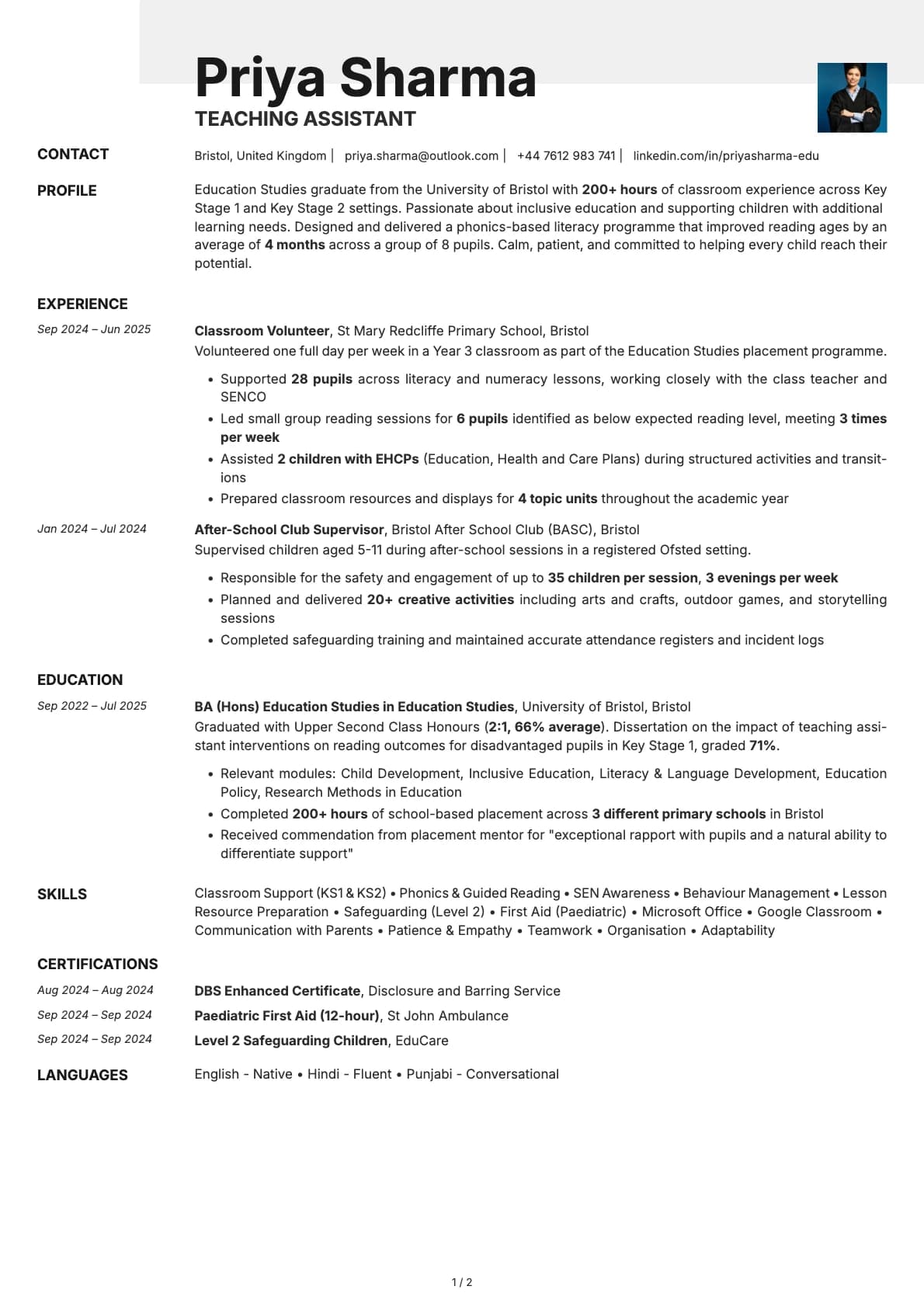
Teaching Assistant
A teaching assistant resume example for recent graduates. See how to present your classroom experience, volunteer work, and education degree to get hired as a TA.
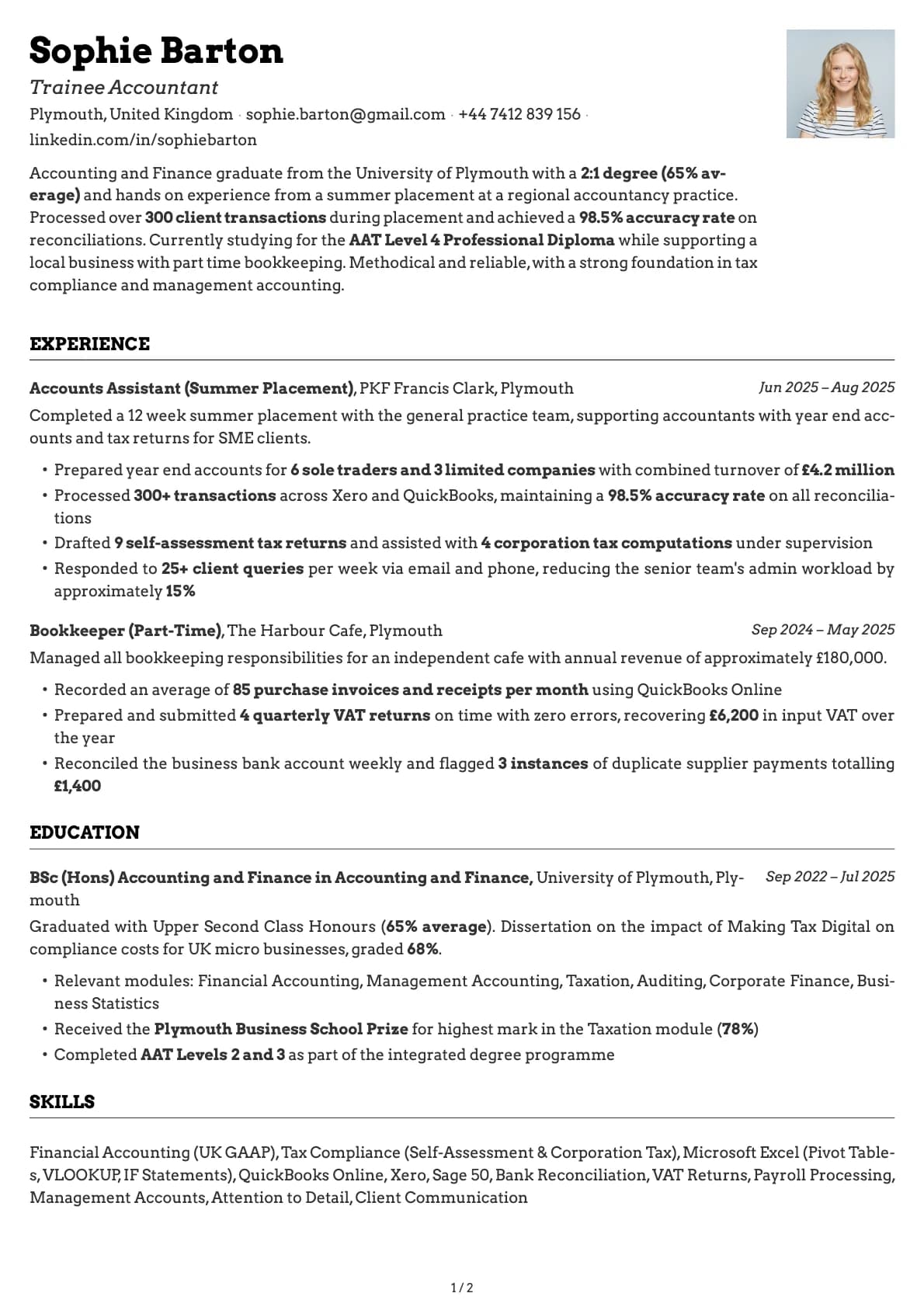
Trainee Accountant
A trainee accountant resume example for recent graduates. See how to present your AAT progress, placement experience, and bookkeeping skills to land your first role.
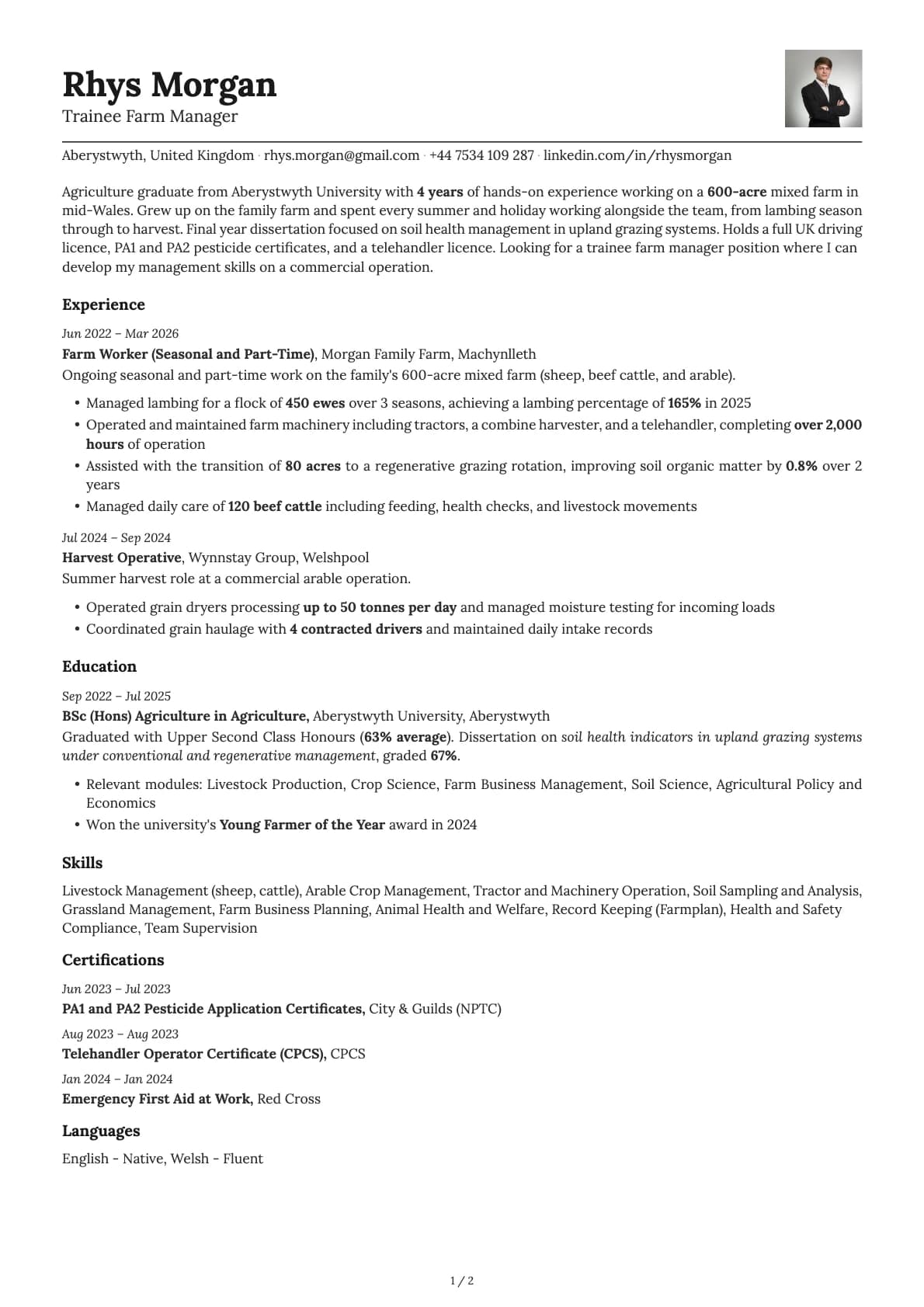
Trainee Farm Manager
A trainee farm manager resume example showing how to combine an agriculture degree with hands-on mixed farming experience on a 600-acre family operation.
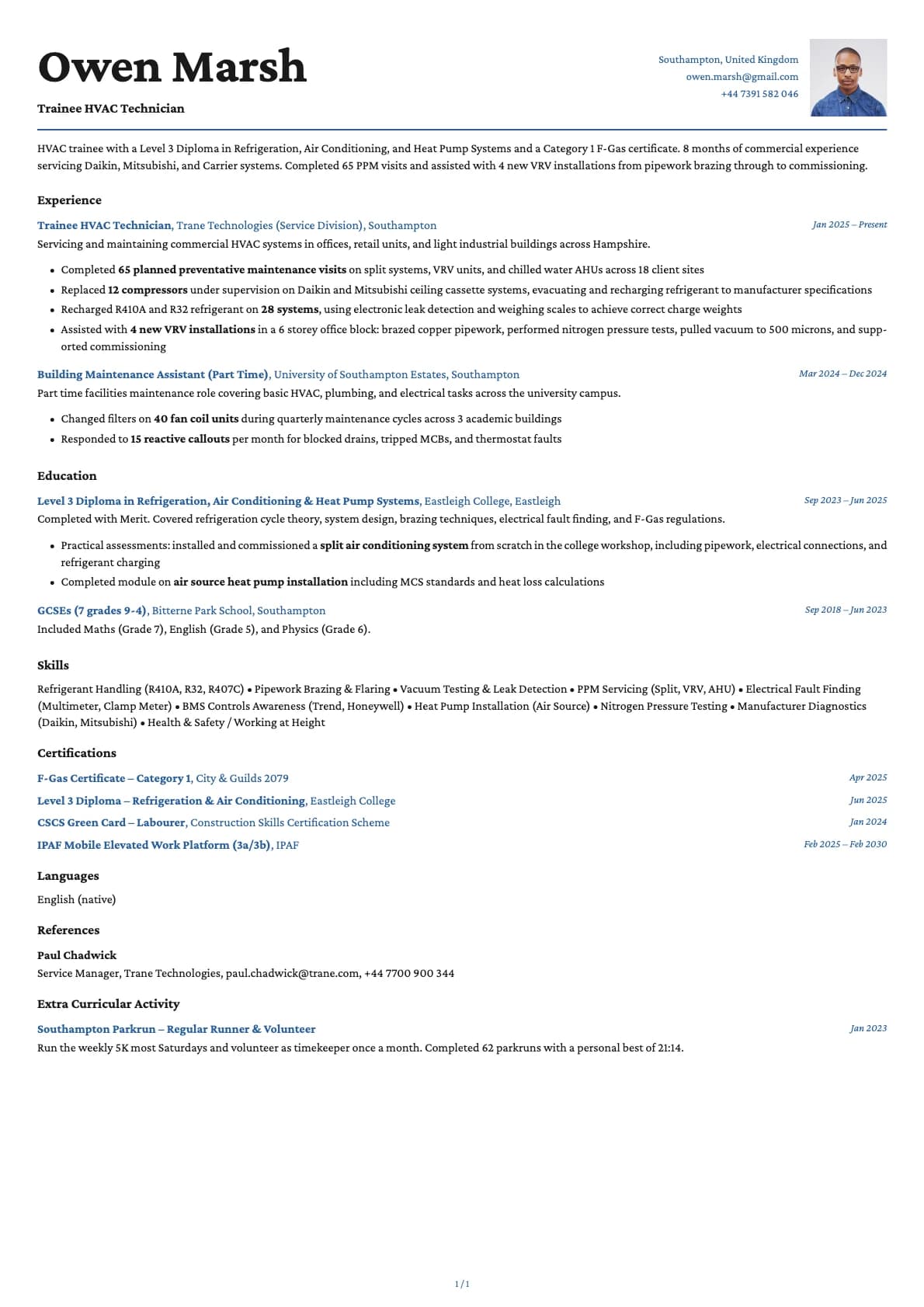
Trainee HVAC Technician
A trainee HVAC technician resume example for graduates entering the heating, ventilation, and air conditioning trade. See how to present your F-Gas certification and refrigeration skills.
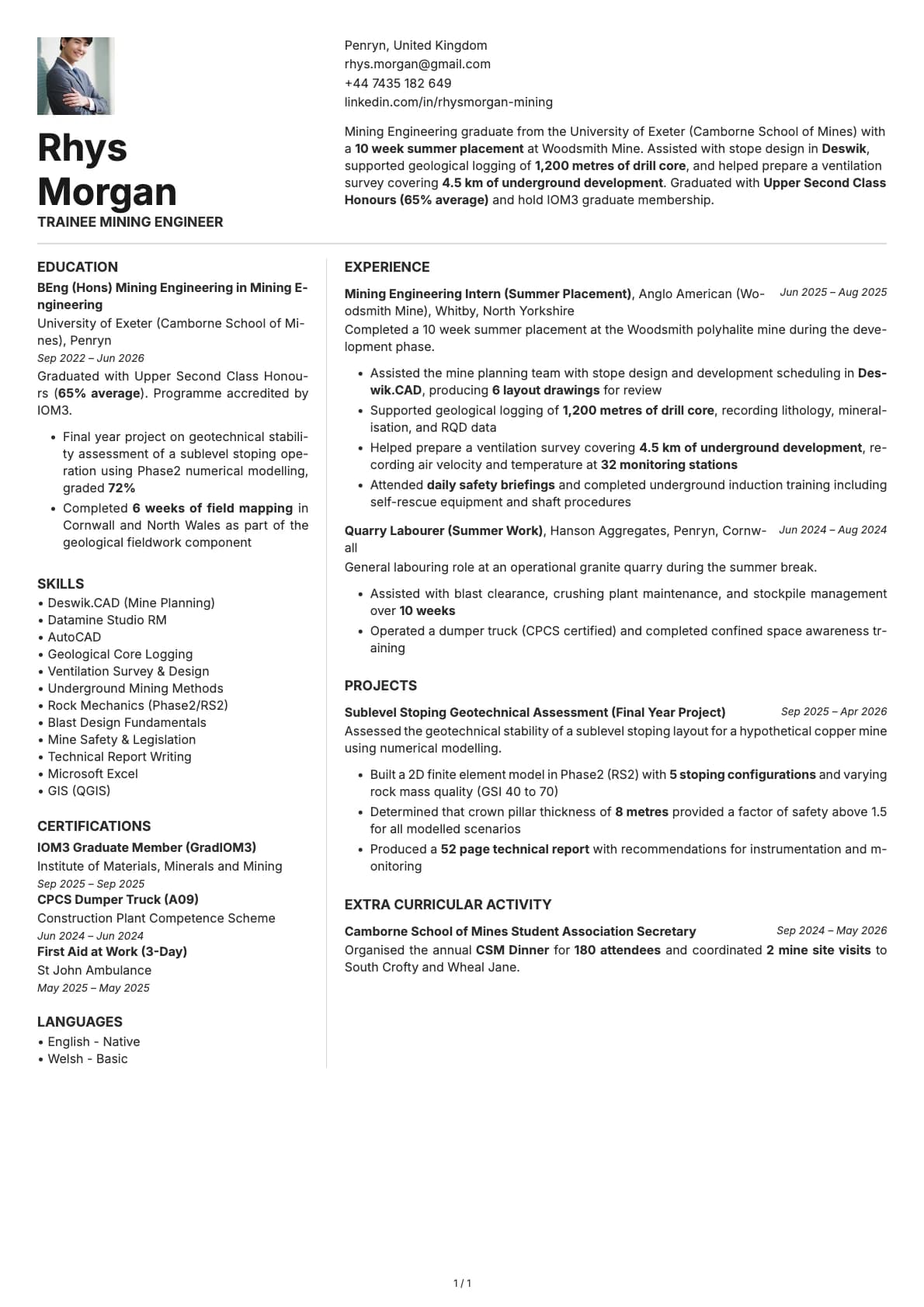
Trainee Mining Engineer
A trainee mining engineer resume example with underground mine placement experience, Deswik proficiency, and IOM3 membership.
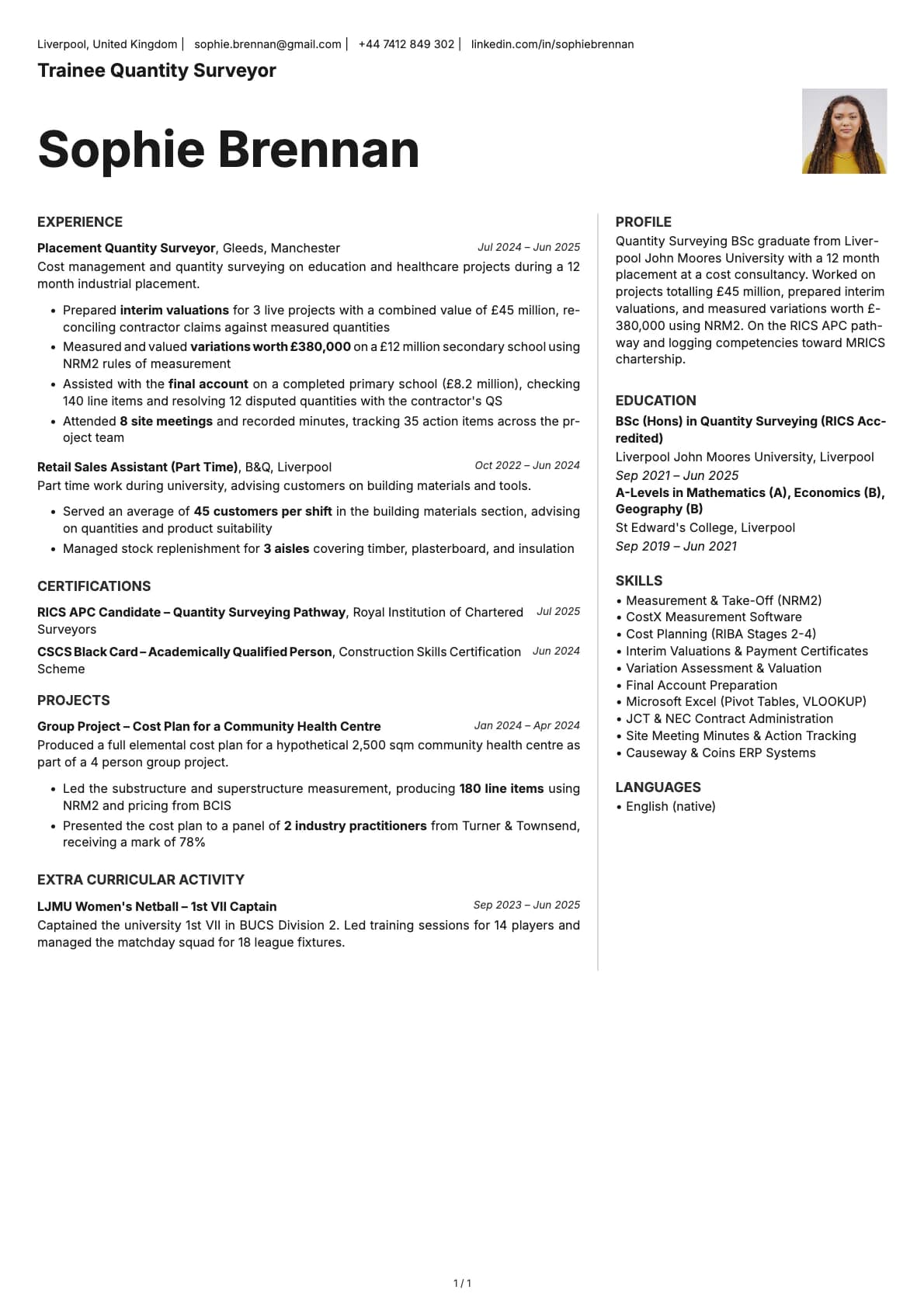
Trainee Quantity Surveyor
A trainee quantity surveyor resume example for QS graduates on the RICS APC pathway. See how to present your measurement skills, cost management experience, and professional development.
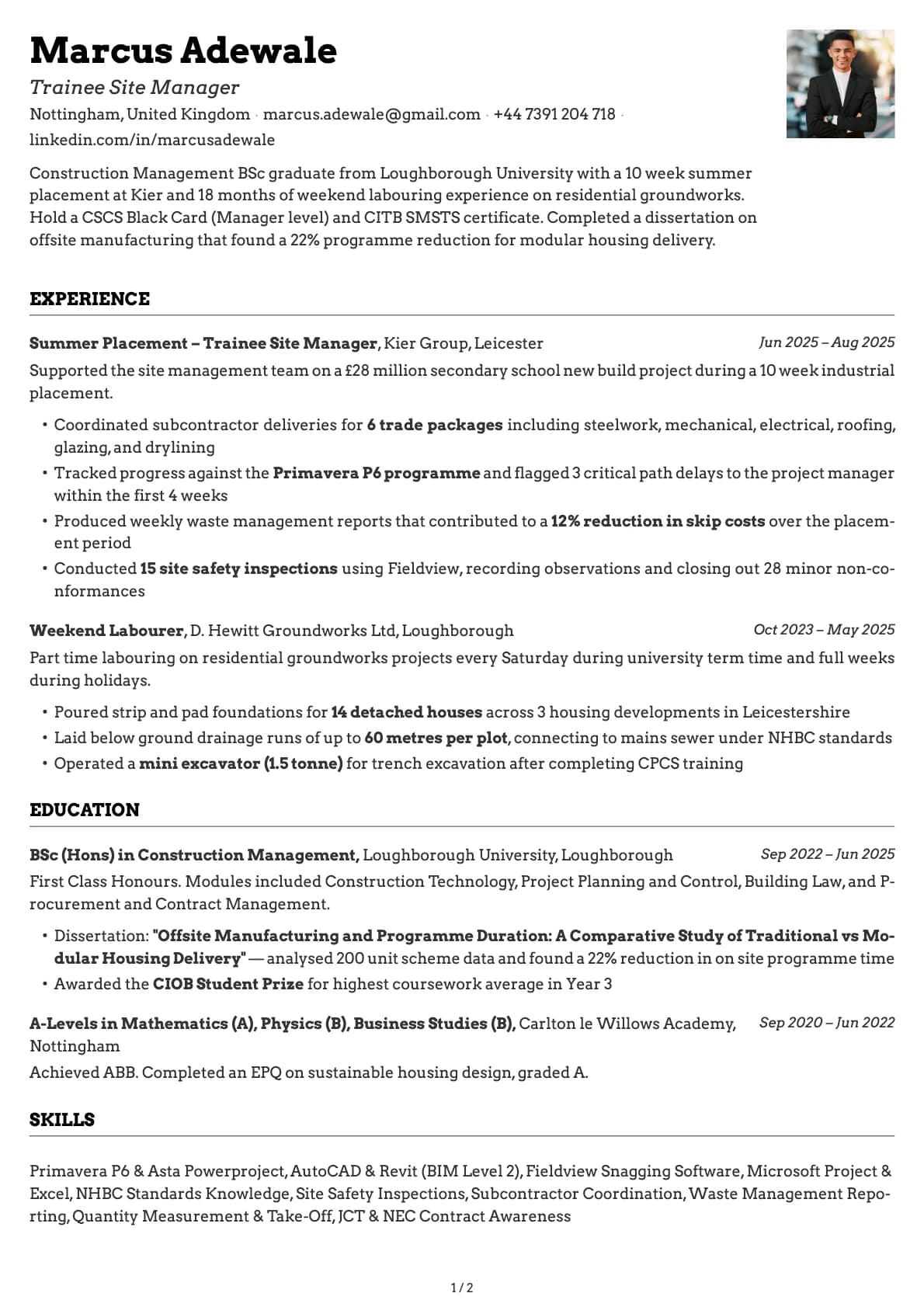
Trainee Site Manager
A trainee site manager resume example for construction management graduates. See how to present your BSc, CITB qualifications, and placement experience to land your first site role.
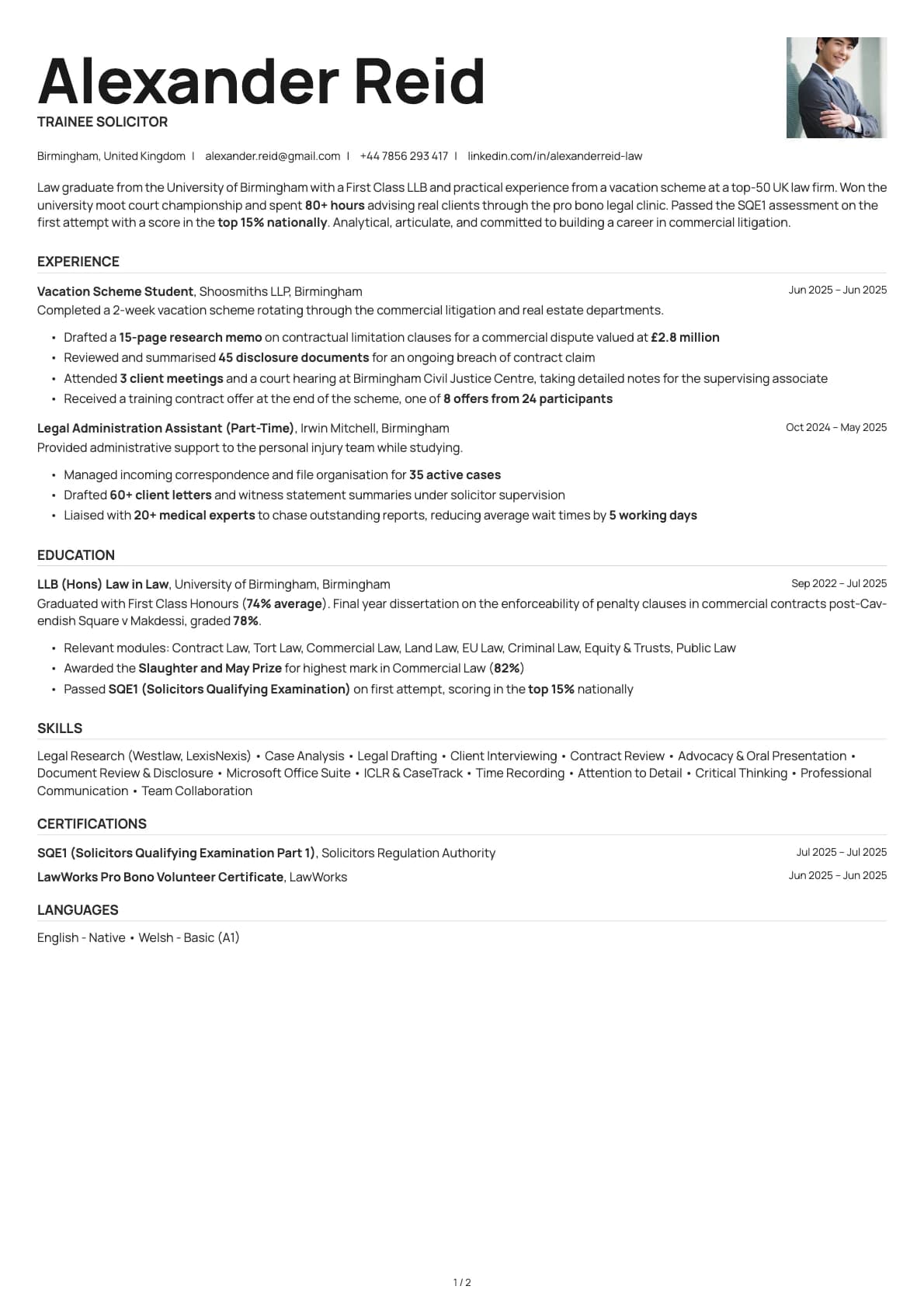
Trainee Solicitor
A trainee solicitor resume example for recent law graduates. Learn how to present your law degree, vacation schemes, and pro bono experience to secure a training contract.
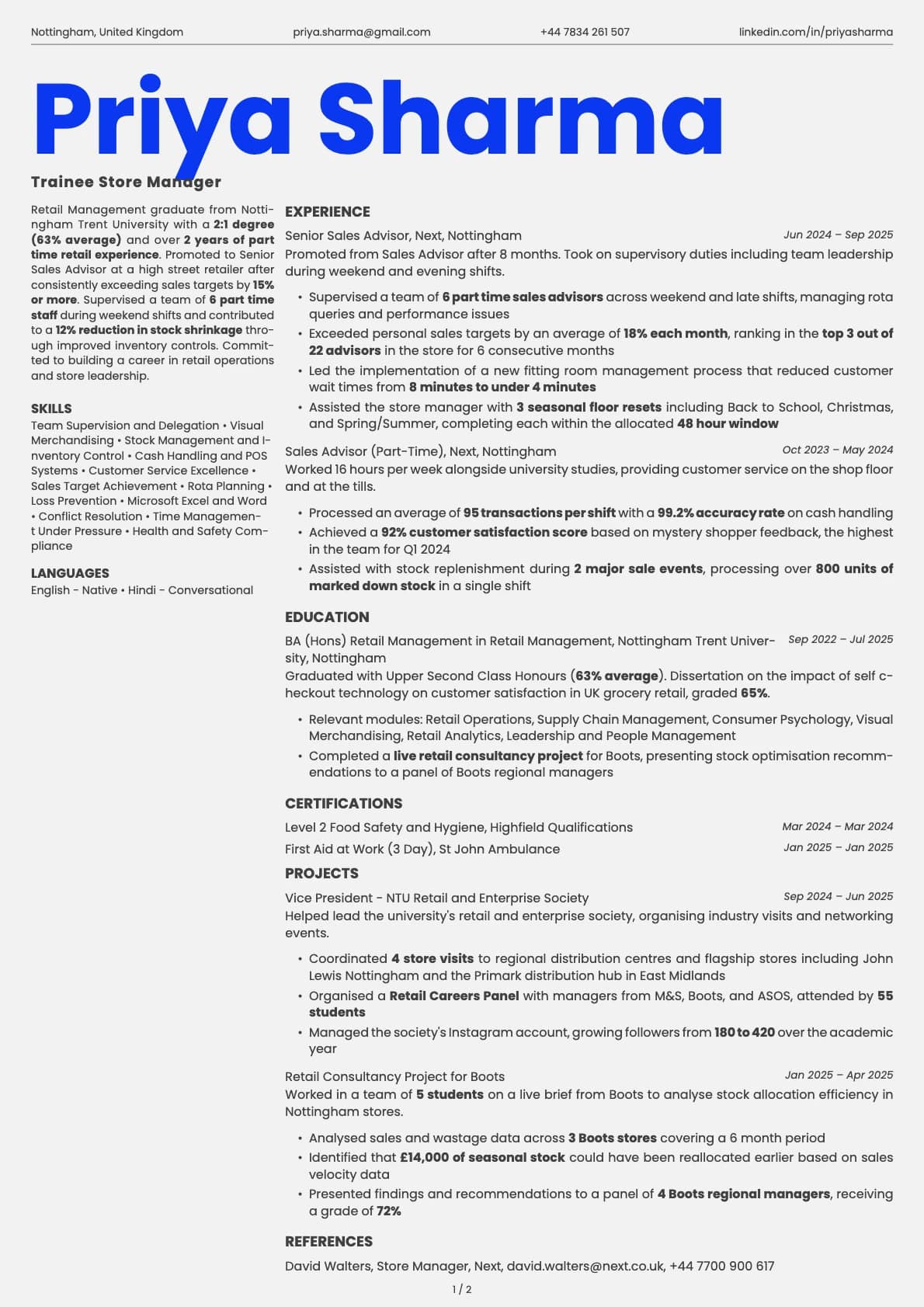
Trainee Store Manager
A trainee store manager resume example for retail graduates. See how to present team leadership, sales targets, and merchandising experience to land management schemes.
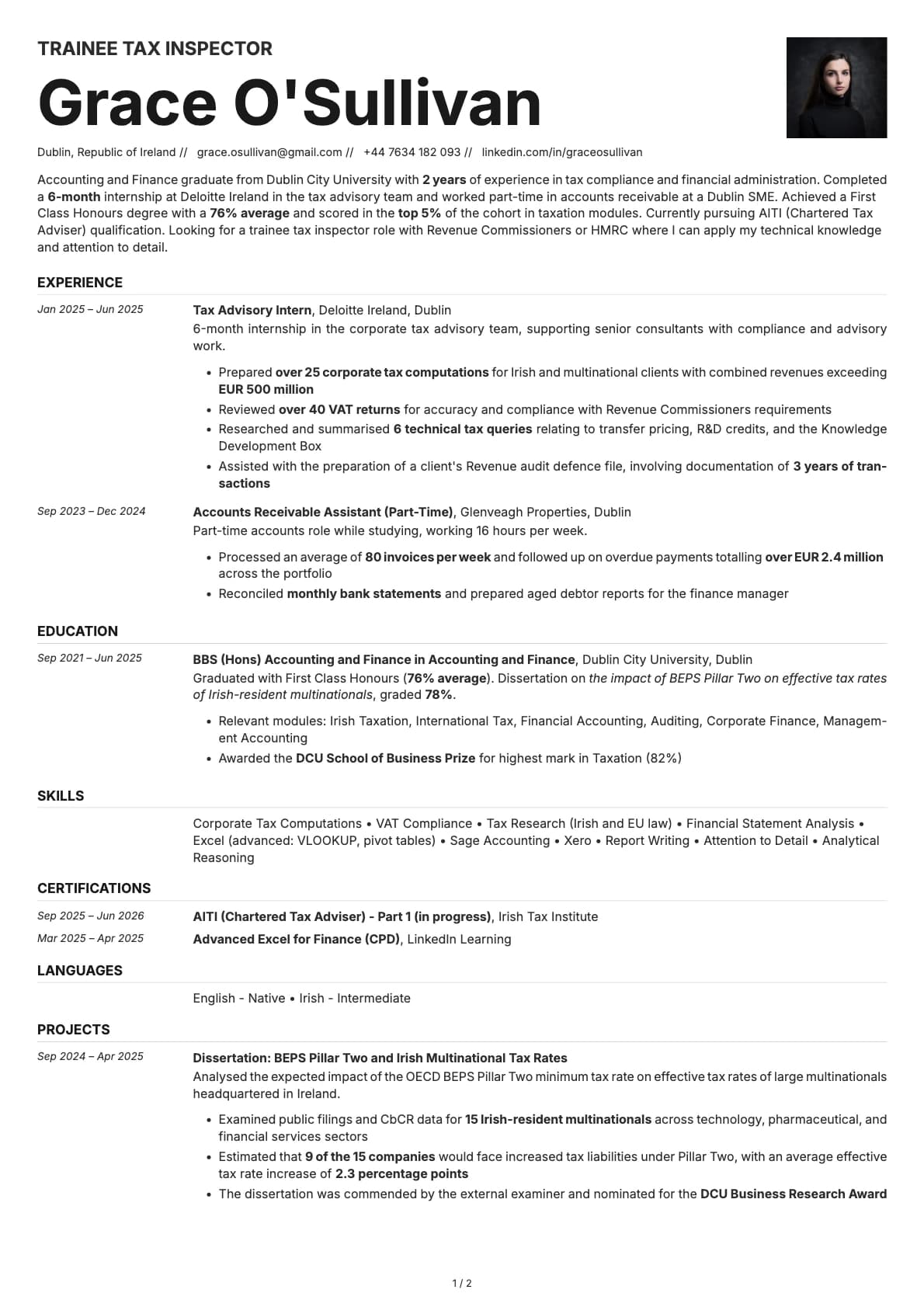
Trainee Tax Inspector
A trainee tax inspector resume example showing how to combine a Deloitte internship, top taxation grades, and an accounting degree into a Revenue Commissioners application.
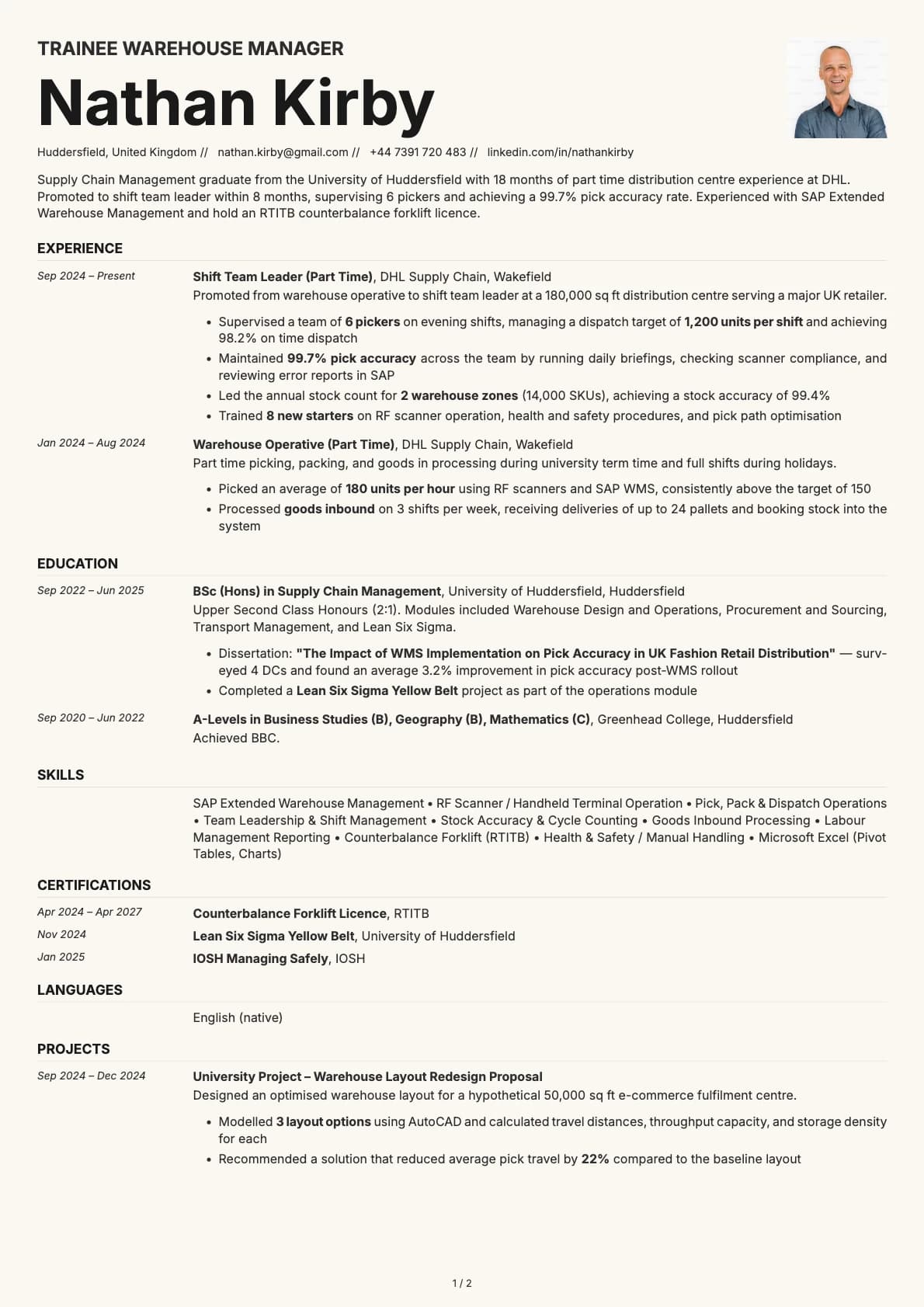
Trainee Warehouse Manager
A trainee warehouse manager resume example for logistics graduates. See how to present your warehouse management systems experience, forklift licences, and operational KPIs.
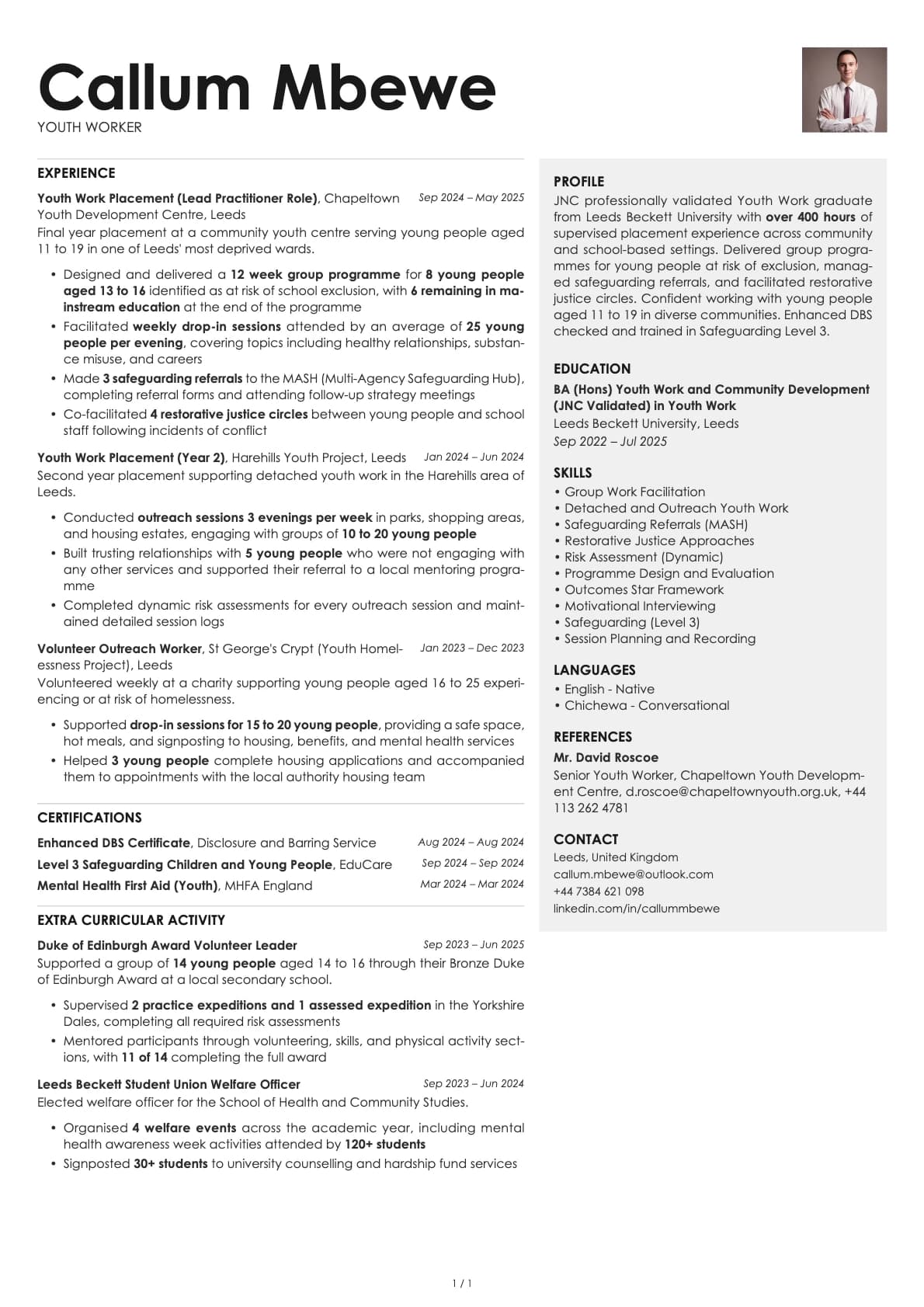
Youth Worker
A graduate youth worker resume example with community youth work placements, safeguarding, and programme delivery. See how to present your experience for youth work roles.