Mental Health Nurse Resume Example
A newly qualified mental health nurse resume example showing how to present psychiatric placements, therapeutic skills, and NMC registration for your first Band 5 role.

Laddro Team
Free to use. No account needed to start.
Free to use. No account needed to start.
Overview
Mental health nursing graduates often struggle to translate their placement experience into a compelling resume. The work is relational, not procedural. You cannot list wound dressings or cannulations. Instead, you need to describe therapeutic interventions, risk assessments, and recovery focused care in a way that is specific enough for a hiring manager to assess your readiness.
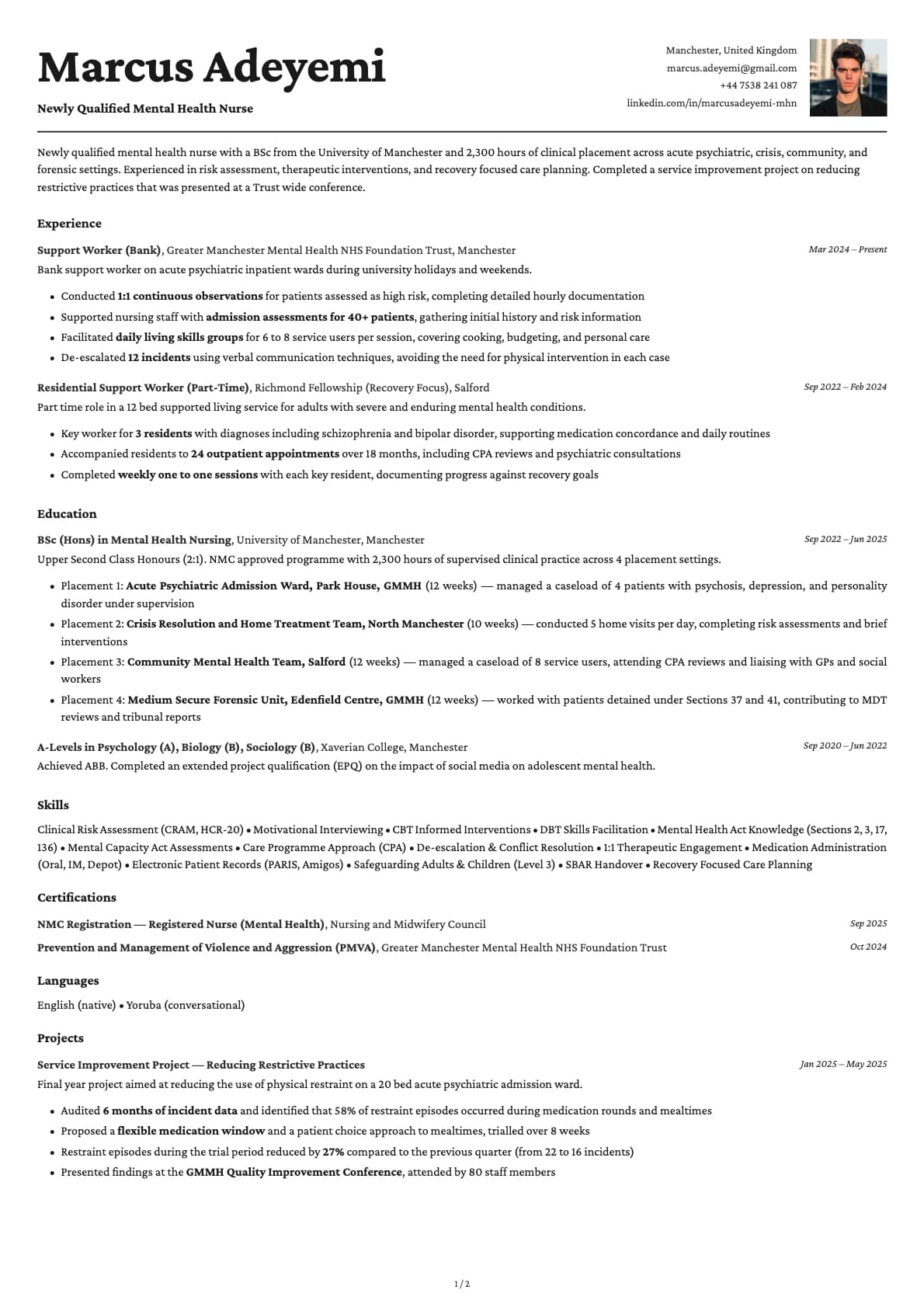
This resume belongs to Marcus Adeyemi, a newly qualified mental health nurse who completed his BSc at the University of Manchester. He undertook placements across acute psychiatric inpatient, crisis resolution, community mental health, and forensic settings. His resume works because he quantifies his work wherever possible and describes his therapeutic approach in concrete terms rather than vague statements about empathy.
What Makes This Resume Work
Placement settings are described with ward specifics. Marcus does not simply say "inpatient mental health." He states he worked on a 20 bed acute psychiatric admission ward at Greater Manchester Mental Health NHS Foundation Trust, managing a caseload of 4 patients under supervision. He describes the presentations he worked with, including psychosis, severe depression, personality disorder, and substance misuse. This gives a clinical lead a clear picture of his exposure.
Risk assessment is presented as a daily competence. He describes completing structured risk assessments using the Clinical Risk Assessment and Management (CRAM) framework, contributing to 15 care programme approach (CPA) reviews, and conducting 1:1 observations for patients on continuous watch. These are not special achievements for a mental health nurse. They are the bread and butter of the role, and listing them shows he has done the core work.
Therapeutic skills are named and described. Rather than saying he "provided therapeutic support," he specifies that he delivered motivational interviewing sessions, facilitated a weekly anxiety management group for 8 service users, and co facilitated DBT skills sessions under supervision. Naming the modalities tells a hiring manager what he can actually offer on a ward.
Legal and ethical awareness is built into the resume. He references the Mental Health Act, Section 17 leave assessments, capacity assessments under the Mental Capacity Act, and documentation for tribunal reports. Mental health nursing has a legal framework that other branches do not share. Demonstrating familiarity with it shows readiness for practice.
Key Takeaways
Name the therapeutic approaches you have used or observed. Motivational interviewing, CBT, DBT, solution focused therapy. Even if you were co facilitating or observing, state what modality it was and how many sessions or service users were involved.
Describe your risk assessment experience in specific terms. Which framework did you use? How many assessments did you contribute to? Did you ever escalate a risk concern that led to a change in a patient's care plan? These details demonstrate clinical judgement.
Include your understanding of the Mental Health Act. References to sectioning, CPA reviews, tribunal reports, and capacity assessments show that you understand the legal context of the role, which is essential for any Band 5 mental health nursing position.
Build your own version
Open this layout in the builder and swap in your own details. It takes a few minutes.
Free to use. No account needed to start.
Was this resume example helpful?
Rate this example to help us create better content for you.
4.8 average from 128 ratingsRelated resume examples
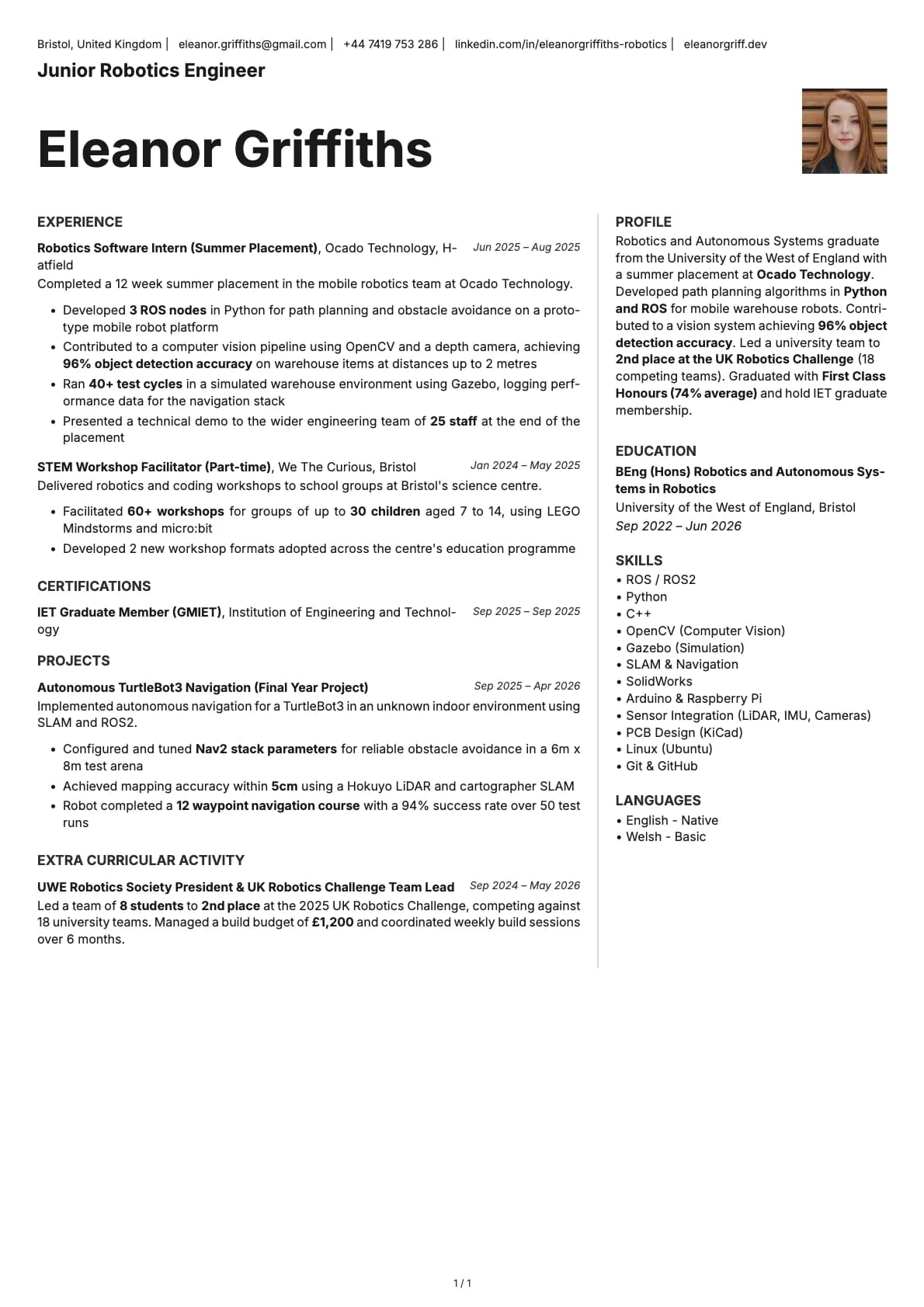
Junior Robotics Engineer
A junior robotics engineer resume example with ROS programming experience, computer vision skills, and a university robotics competition win.
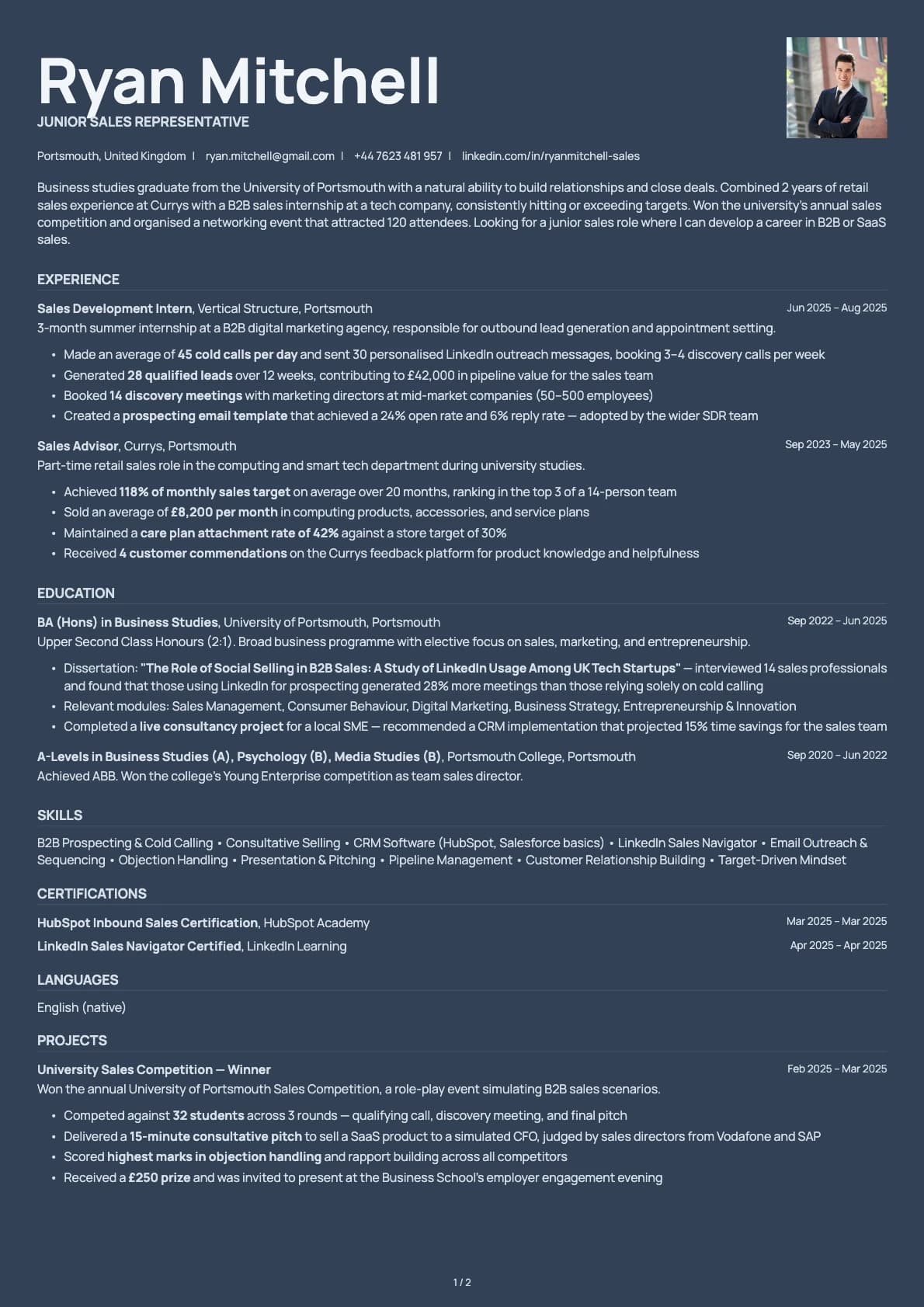
Junior Sales Representative
A junior sales representative resume example for recent graduates. Learn how to present your target achievements, customer experience, and persuasion skills to land your first sales role.
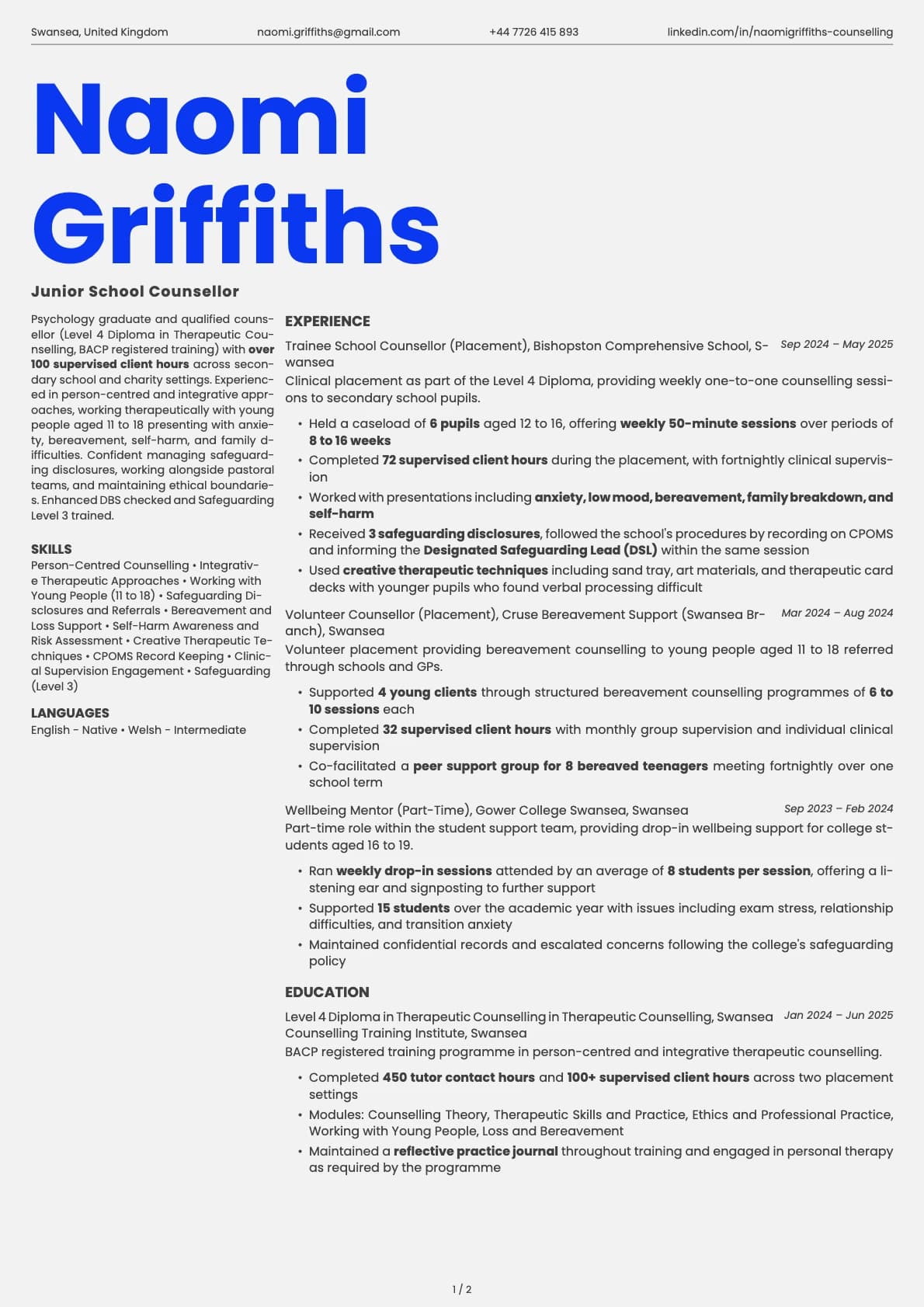
Junior School Counsellor
A graduate school counsellor resume example with therapeutic placement hours, safeguarding, and pupil wellbeing experience. See how to present your training for school counselling roles.
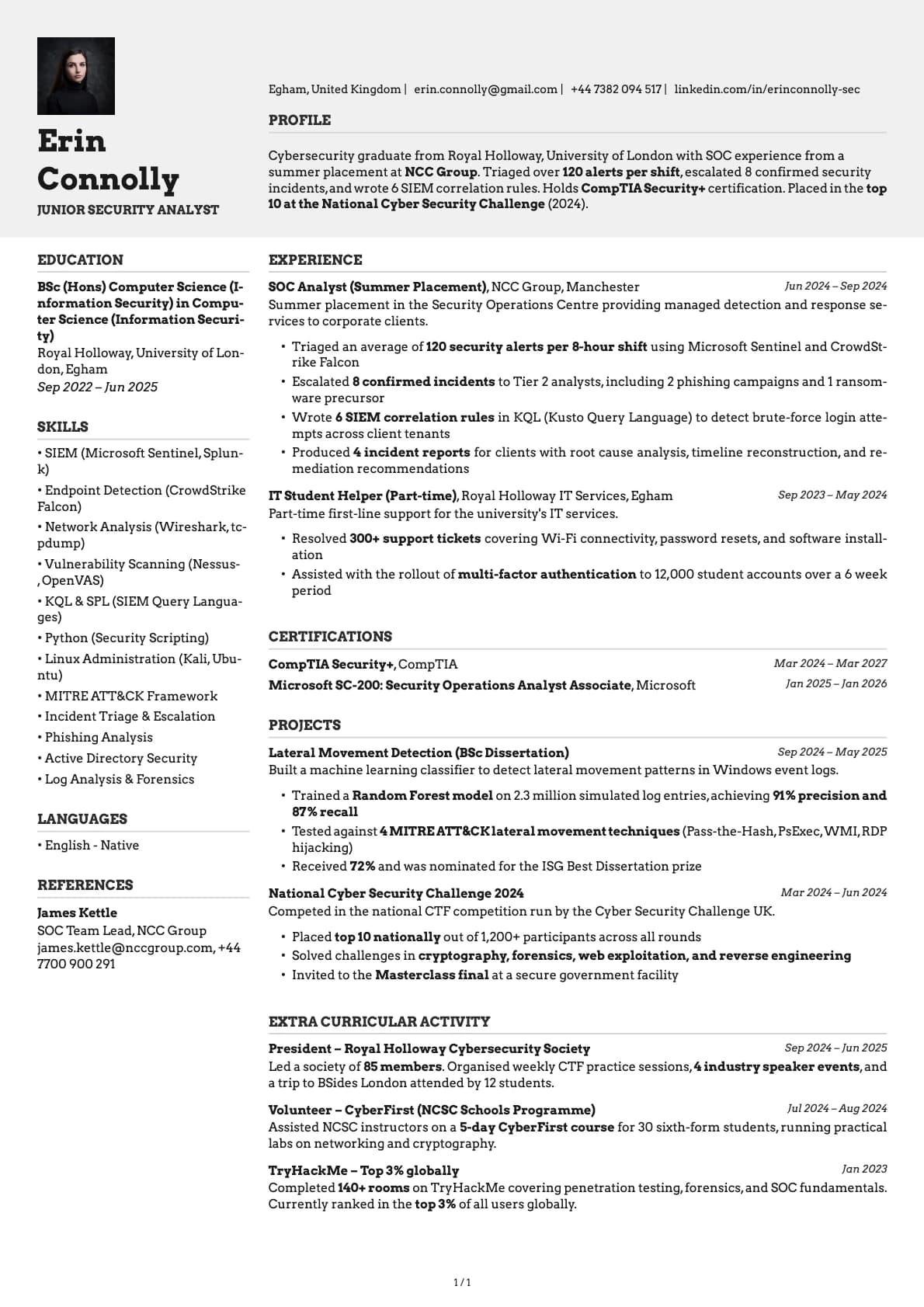
Junior Security Analyst
A junior security analyst resume example with SOC experience, CompTIA Security+ certification, and incident triage from a Cybersecurity BSc graduate.
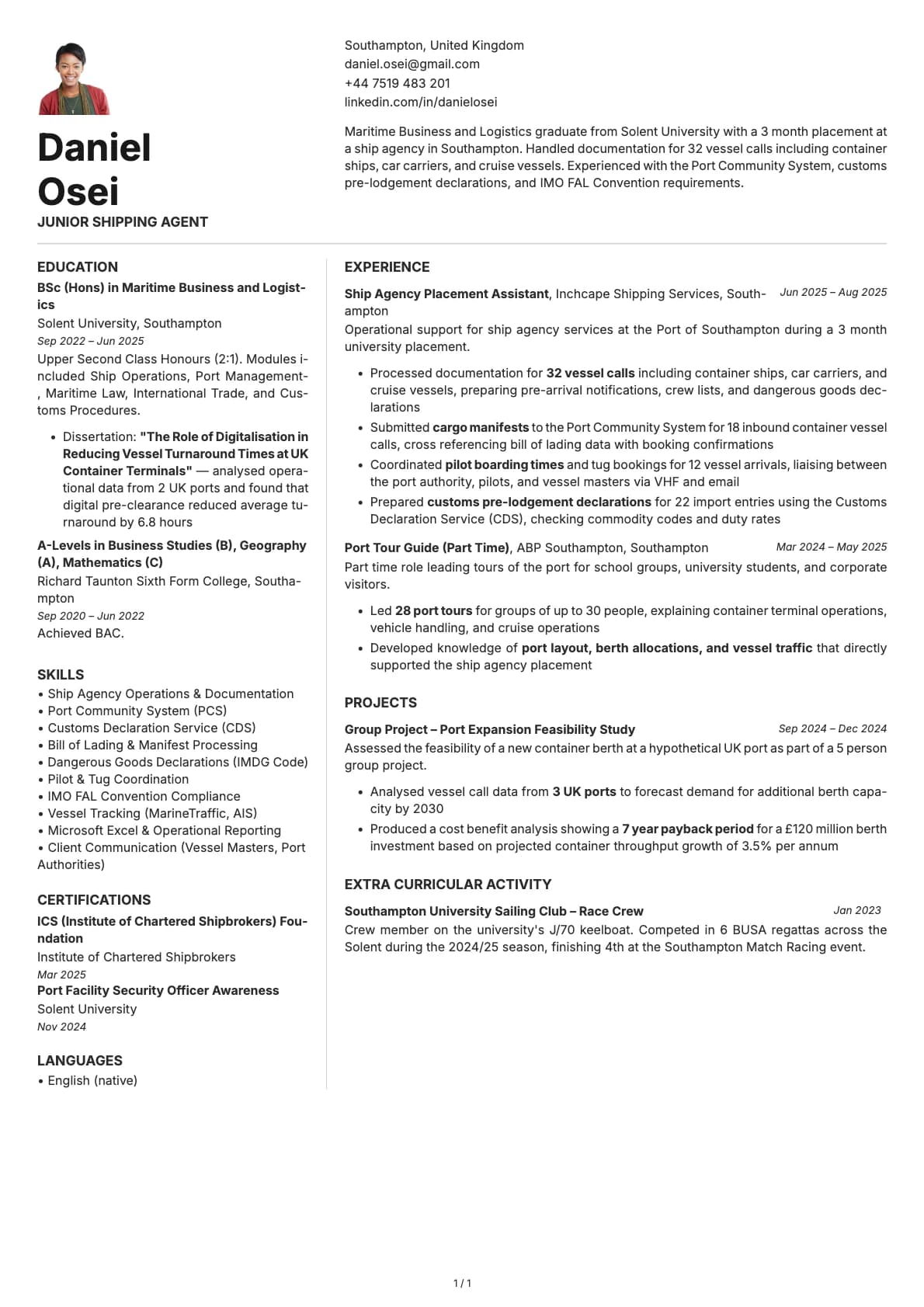
Junior Shipping Agent
A junior shipping agent resume example for maritime studies graduates. See how to present your port operations knowledge, vessel documentation, and shipping line experience.
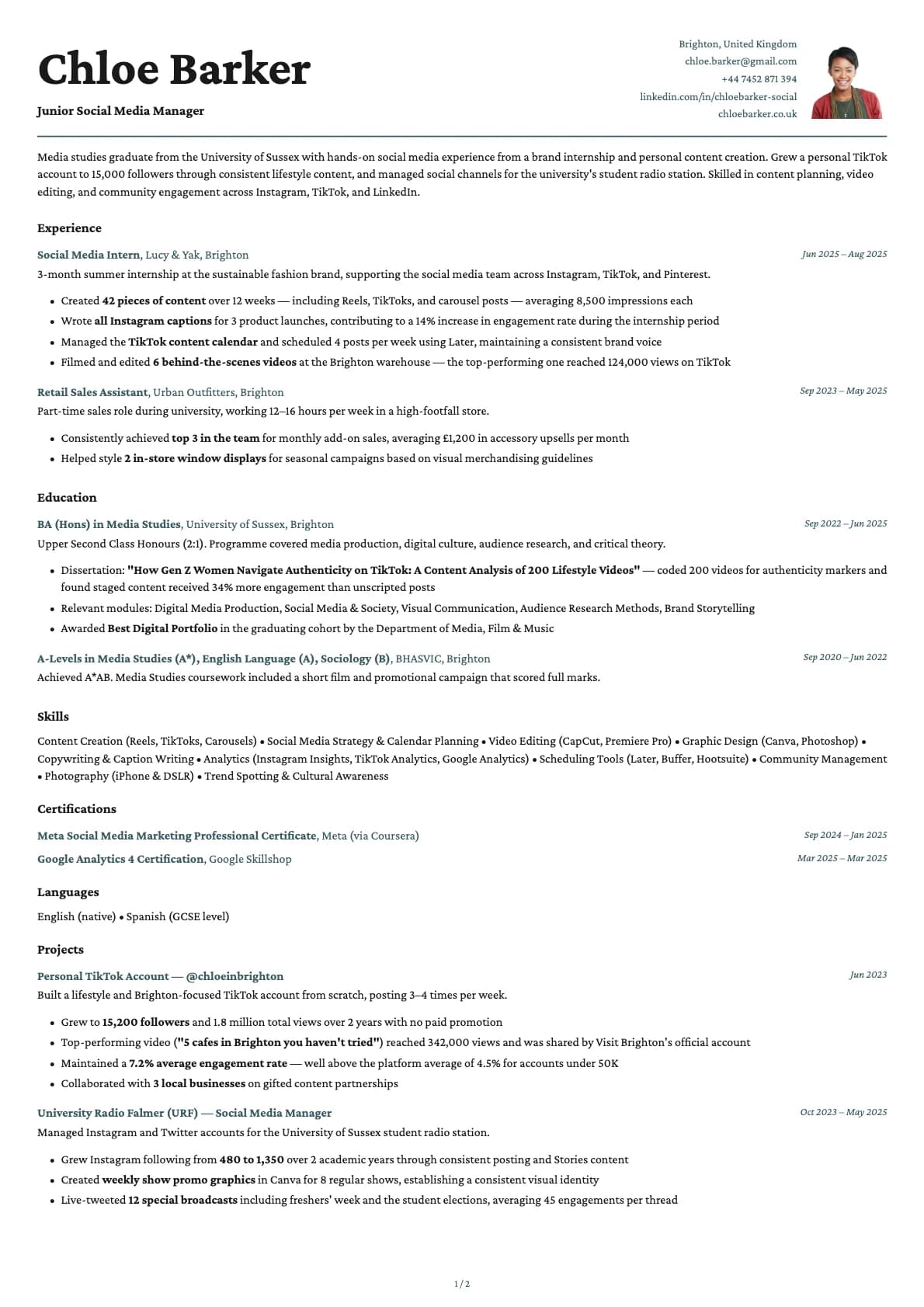
Junior Social Media Manager
A junior social media manager resume example for recent graduates. Learn how to present your content creation skills, analytics knowledge, and platform growth to get hired.
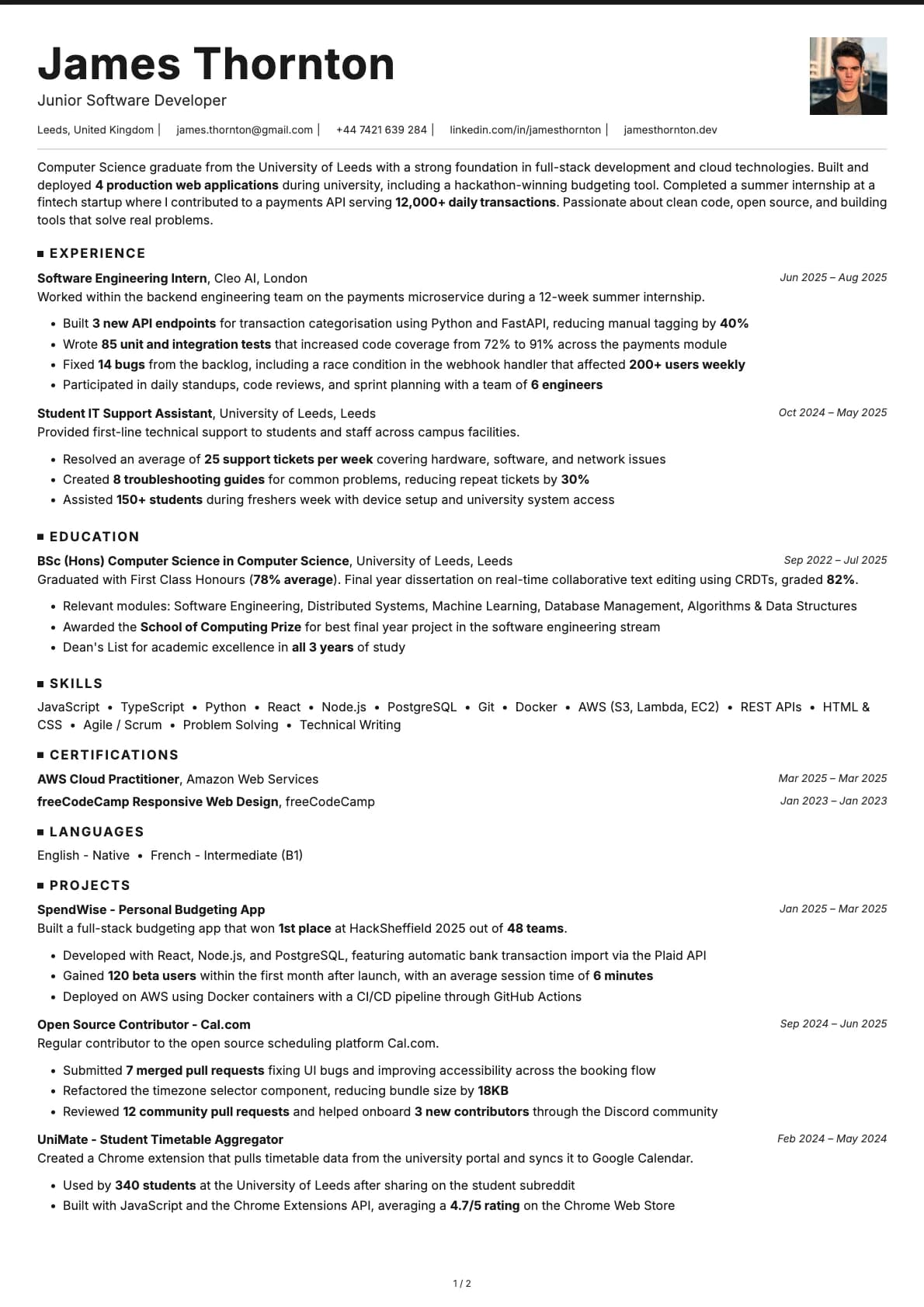
Junior Software Developer
A junior software developer resume example for recent graduates. See how to present personal projects, technical skills, and internship experience to land your first dev role.
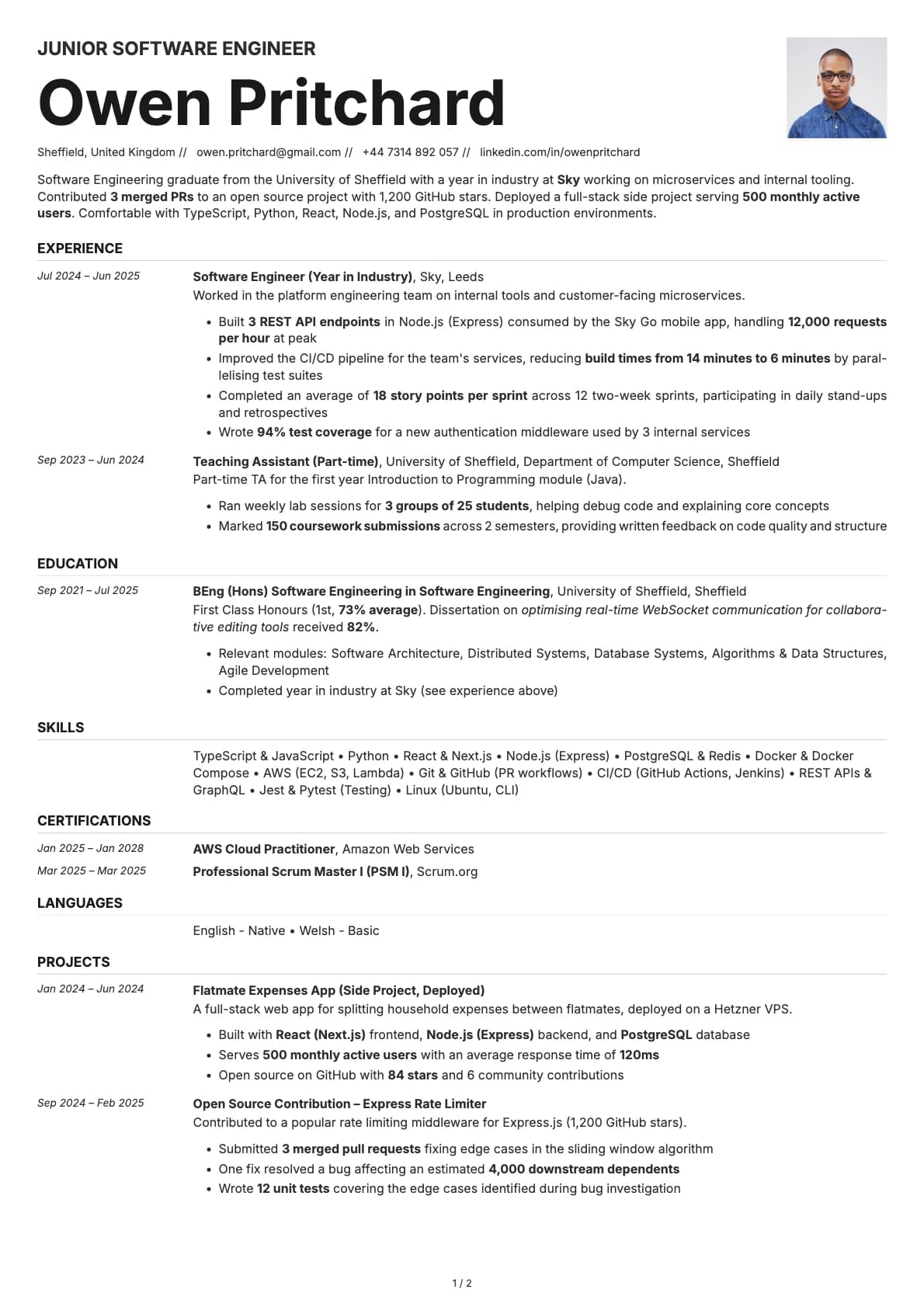
Junior Software Engineer
A junior software engineer resume example with deployed projects, GitHub contributions, and agile sprint experience from a Software Engineering BEng graduate.
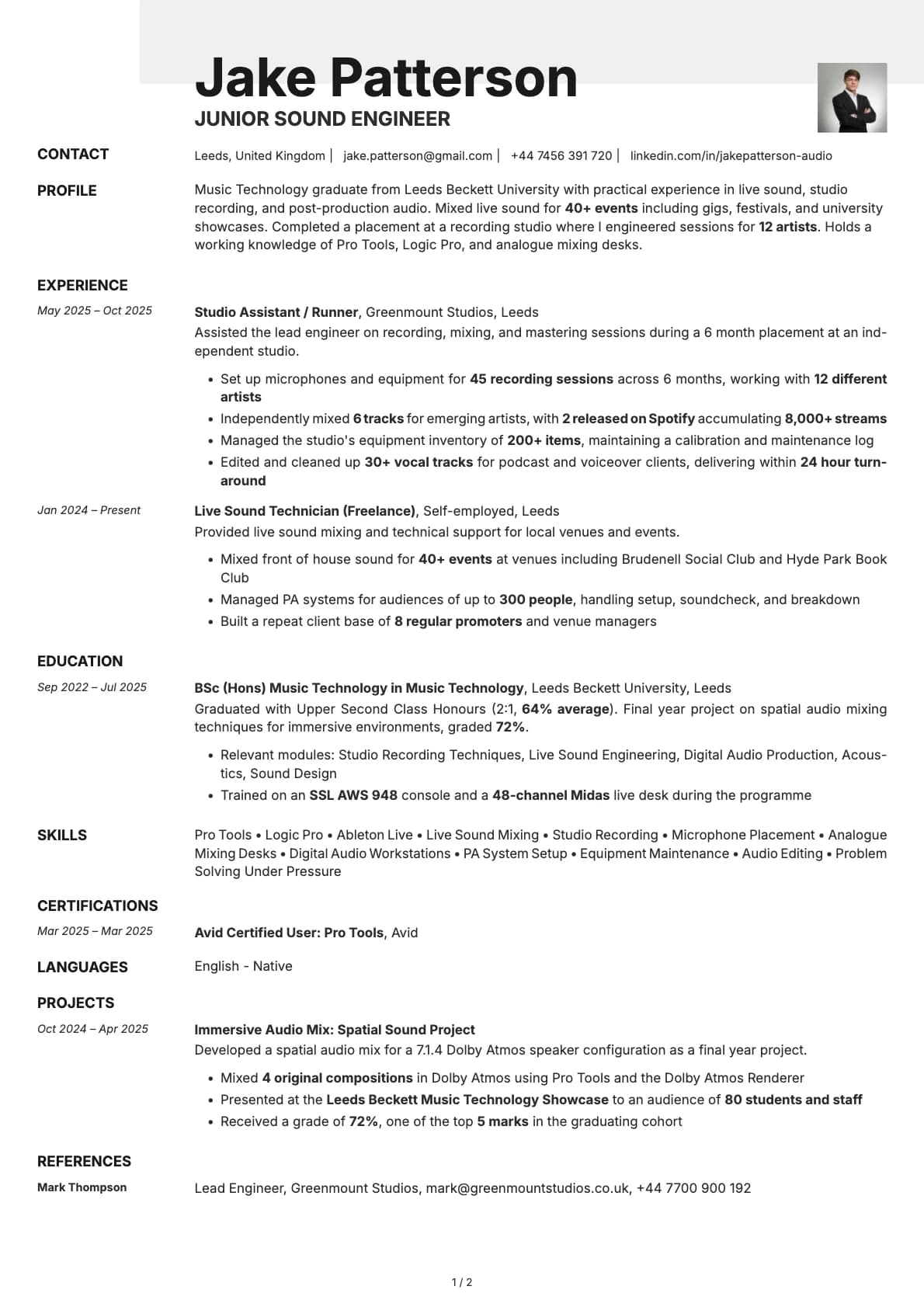
Junior Sound Engineer
A junior sound engineer resume example for graduates. Learn how to present live sound, studio recording, and audio production experience to land your first engineering role.
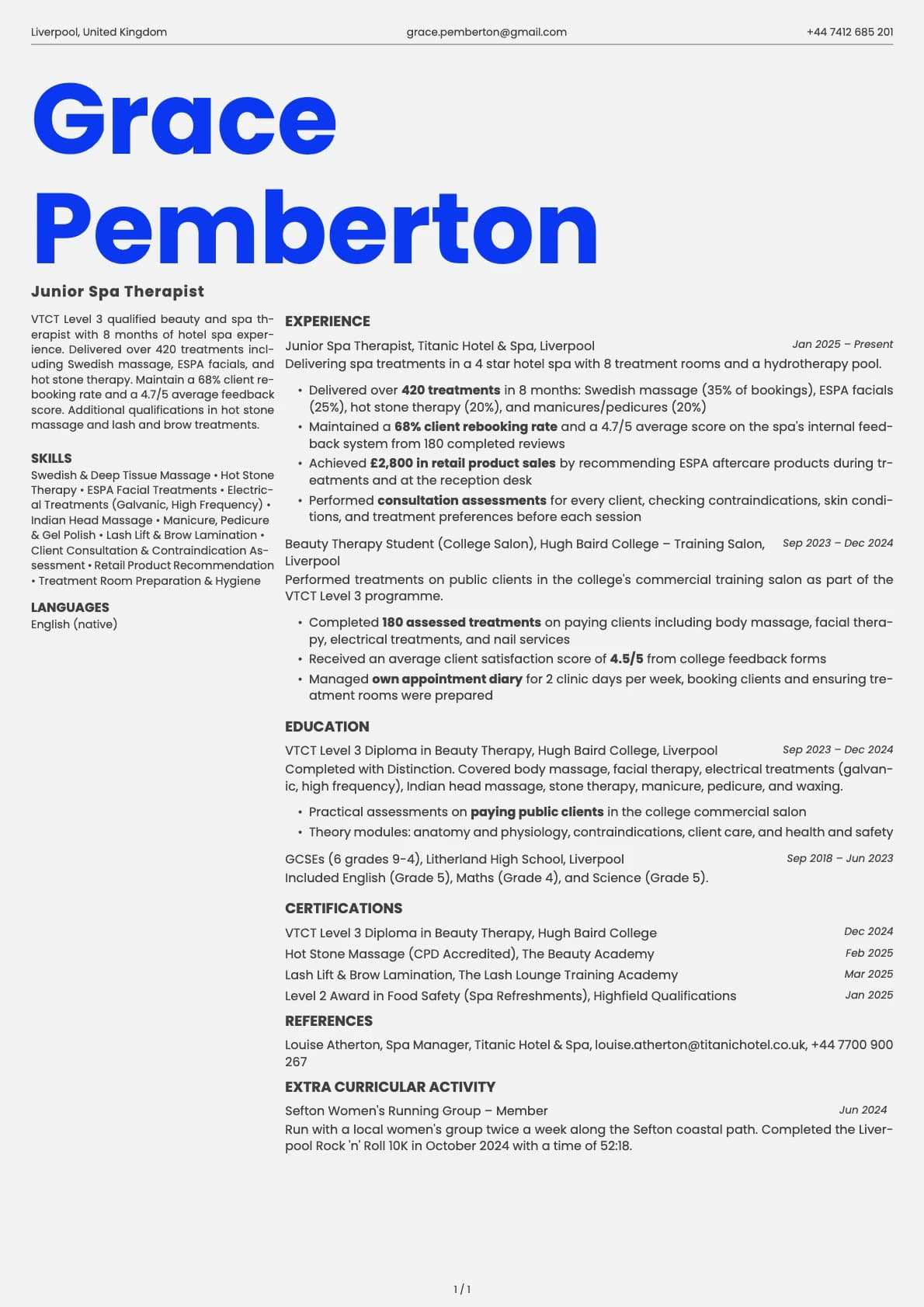
Junior Spa Therapist
A junior spa therapist resume example for VTCT Level 3 qualified therapists. See how to present your treatment skills, client feedback, and spa industry experience.
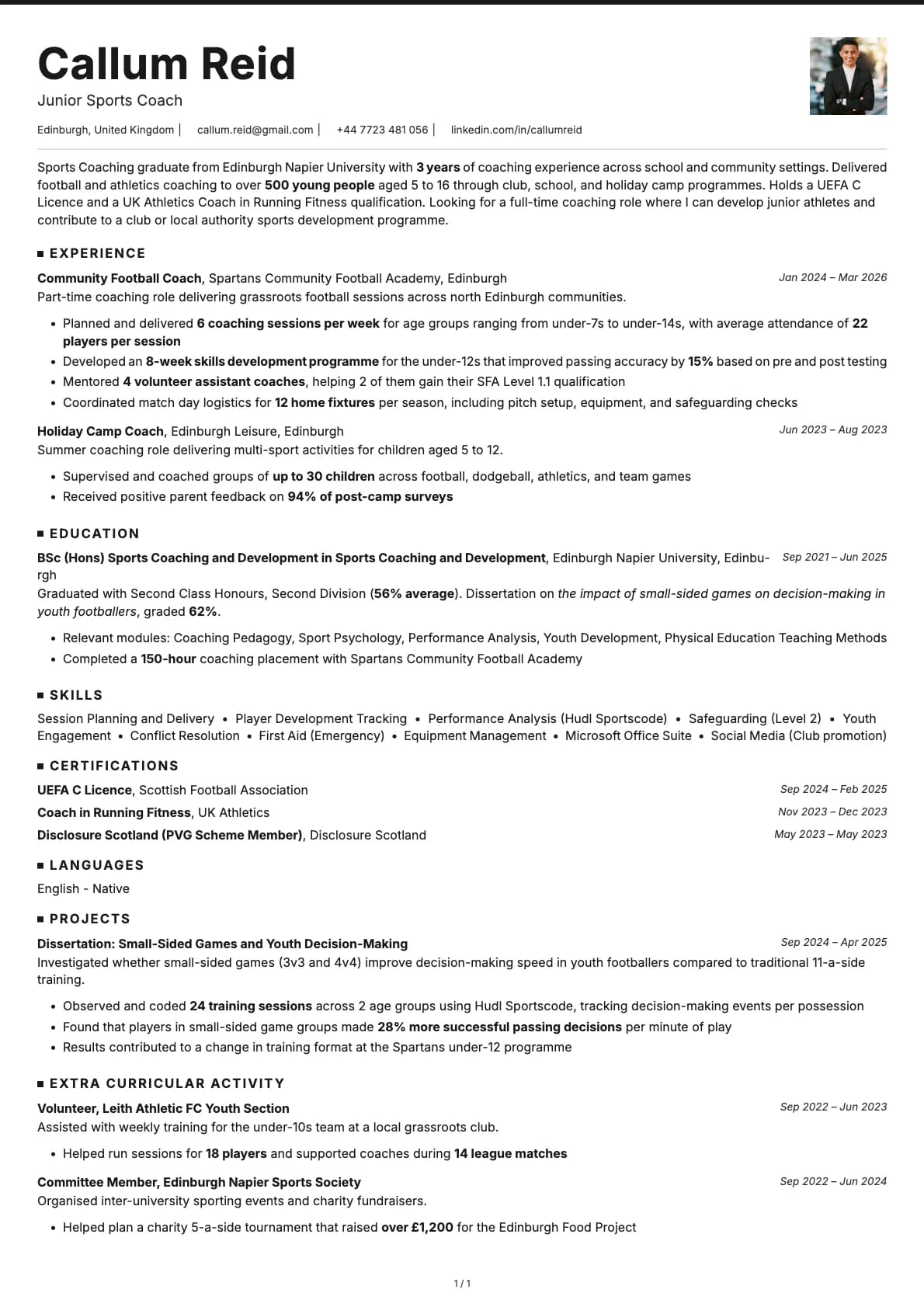
Junior Sports Coach
A junior sports coach resume example showing how to combine a coaching degree, UEFA C Licence, and grassroots football experience into a full-time coaching career.
Junior Sports Events Coordinator
A junior sports events coordinator resume example for sports management graduates. See how event logistics and participant numbers make your resume stand out.