Trainee Site Manager Resume Example
A trainee site manager resume example for construction management graduates. See how to present your BSc, CITB qualifications, and placement experience to land your first site role.

Laddro Team
Free to use. No account needed to start.
Free to use. No account needed to start.
Overview
Construction management graduates face a specific challenge: they have studied programme management, cost control, and building regulations, but most of their practical experience is limited to summer placements or part time site work. Employers running graduate site manager schemes at companies like Balfour Beatty, Morgan Sindall, and Kier want proof that you understand what happens on a real construction site, not just what you learned in a lecture theatre.
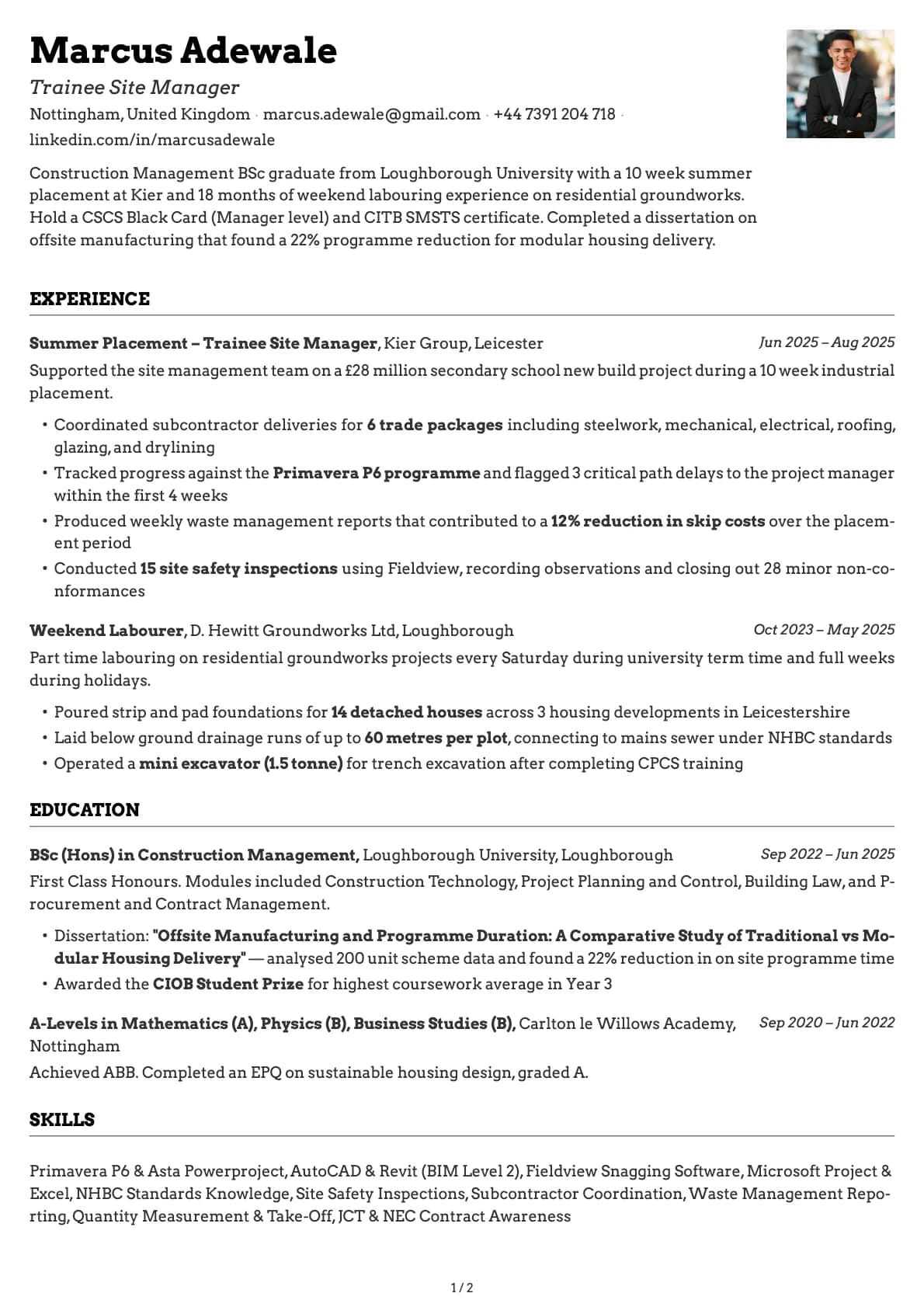
This resume belongs to Marcus Adewale, a Construction Management BSc graduate from Loughborough University. He completed a 10 week summer placement with Kier on a £28 million secondary school build, worked weekends as a labourer during term time, and holds both a CSCS Black Card and a CITB Site Safety Plus certificate. His resume works because it bridges the gap between academic study and site reality.
What Makes This Resume Work
The CSCS card and CITB qualifications appear immediately. Marcus lists his CSCS Black Card (Manager level) in his summary and again in certifications. For construction management graduates, the Black Card is a significant differentiator because it requires passing the Managers and Professionals HS&E test. He also holds the CITB Site Safety Plus (SMSTS) certificate, which most graduates do not have at this stage. These details tell an employer he can walk onto site on day one.
The placement is described in construction language. Instead of generic management terms, Marcus writes about coordinating subcontractor deliveries for 6 trades, tracking progress against a Primavera P6 programme, and producing weekly waste reports that contributed to a 12% reduction in skip costs. This is the language site managers use daily, and it shows he paid attention during his placement rather than just shadowing.
Weekend labouring adds credibility. Many construction management students have never lifted a block or mixed mortar. Marcus spent 18 months working Saturdays with a local groundworks firm, pouring foundations and laying drainage on housing plots. This hands on experience earns respect from trades and site teams who are sceptical of graduates who have only seen construction from an office window.
The dissertation connects to industry needs. His final year project analysed the impact of offsite manufacturing on programme duration for a 200 unit housing scheme. He compared traditional build with volumetric modular construction and found a 22% reduction in on site programme time. This is relevant to the industry's current push toward Modern Methods of Construction (MMC).
Key Takeaways
Put your CSCS card level and CITB certificates at the top. These are the first things a construction employer checks, and missing them will get your application filtered out before anyone reads your experience.
Describe your placement with site specific language. Name the project value, the number of subcontractor packages you interacted with, the software you used (Primavera, Asta Powerproject, Fieldview), and any measurable outcomes.
If you have done any physical site work, include it. Weekend labouring, summer work with a subcontractor, or helping on a family member's building project all count. Construction management is one of the few graduate careers where manual experience genuinely helps your application.
Build your own version
Open this layout in the builder and swap in your own details. It takes a few minutes.
Free to use. No account needed to start.
Was this resume example helpful?
Rate this example to help us create better content for you.
4.7 average from 97 ratingsRelated resume examples
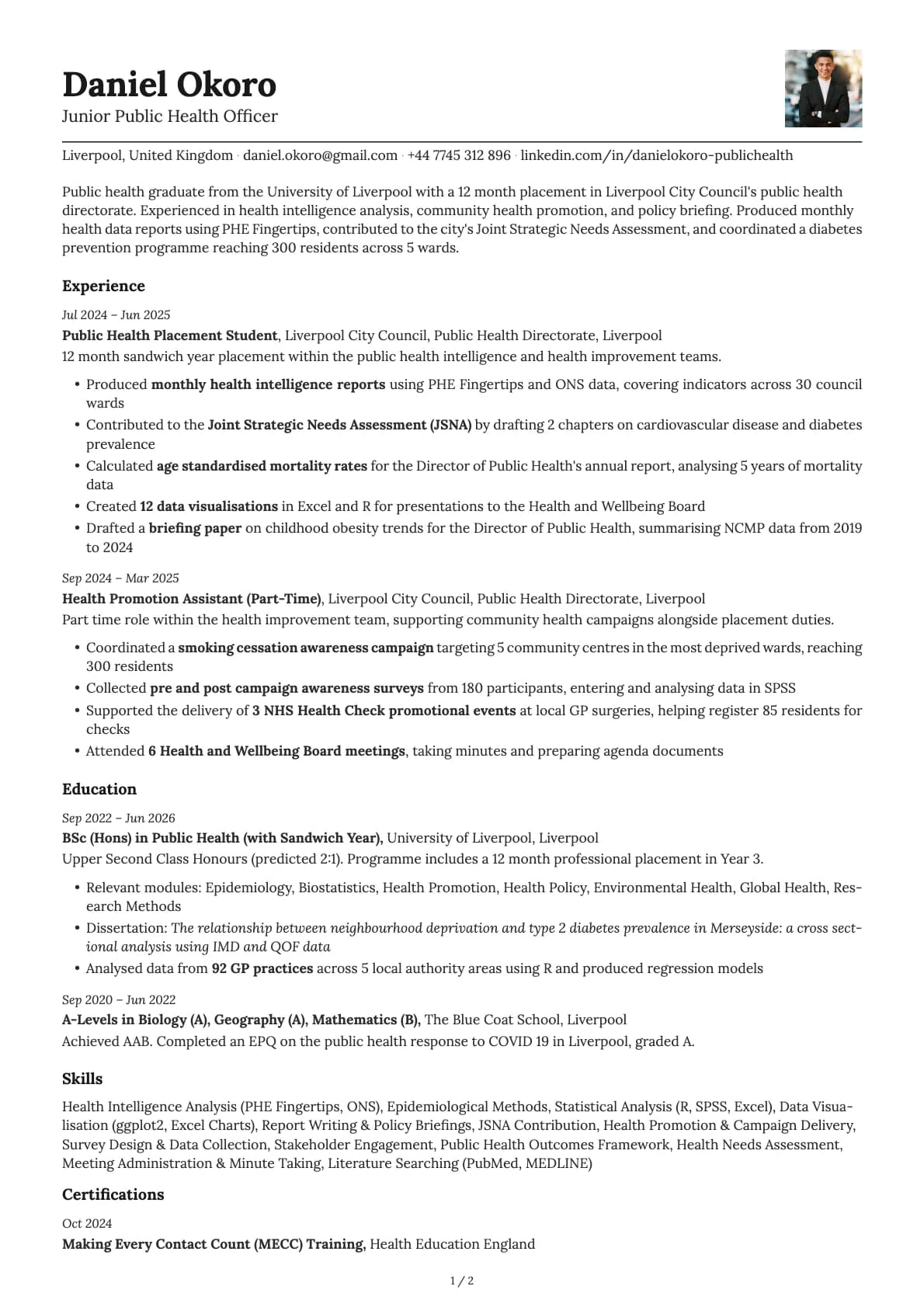
Junior Public Health Officer
A junior public health officer resume example for public health graduates showing how to present epidemiology skills, data analysis experience, and health promotion projects for local authority and NHS roles.
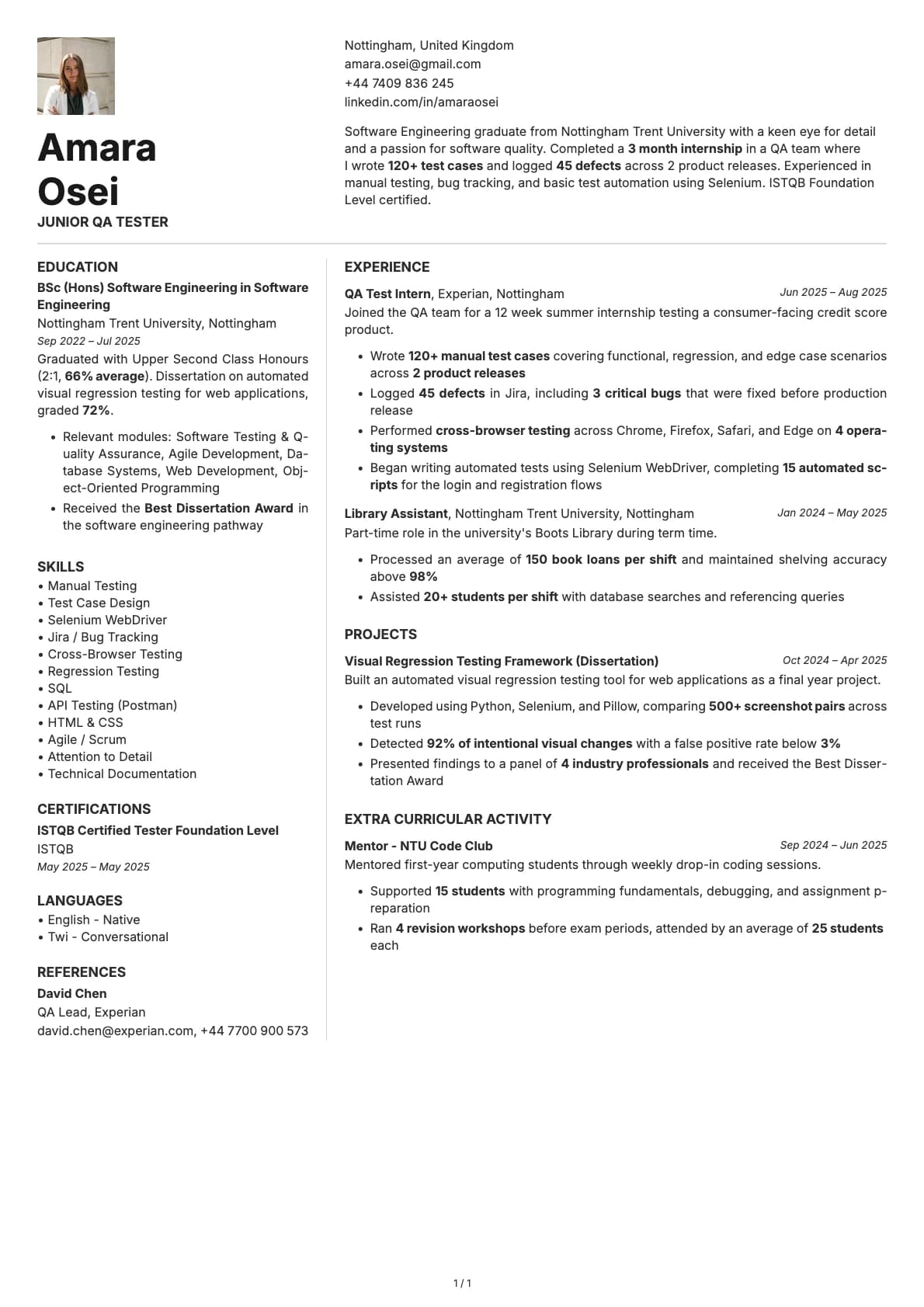
Junior QA Tester
A junior QA tester resume example for graduates. Learn how to present testing experience, bug tracking skills, and ISTQB certification to land your first QA role.
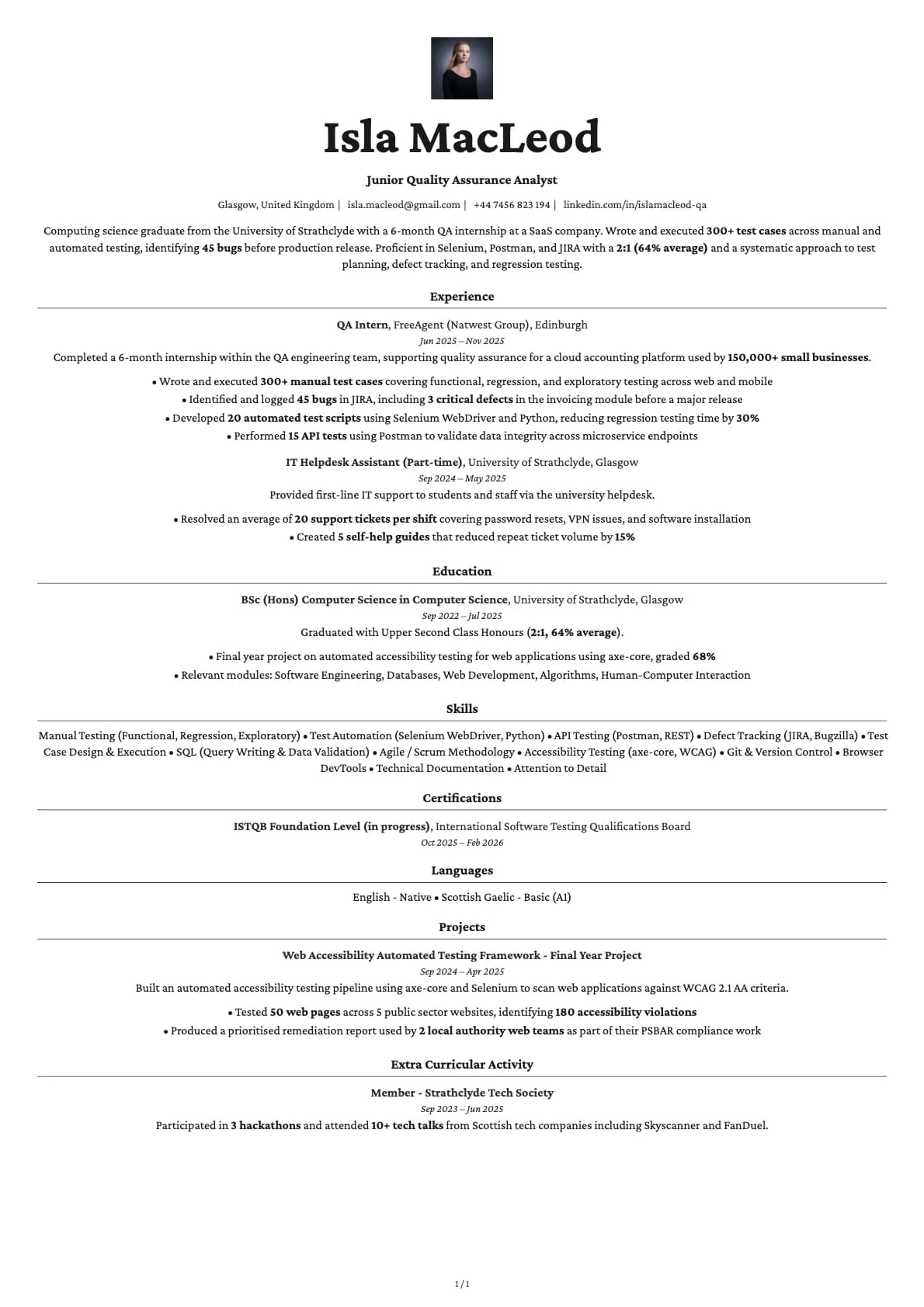
Junior Quality Assurance Analyst
A junior QA analyst resume example with test automation experience, bug counts, and Selenium skills for computing graduates.
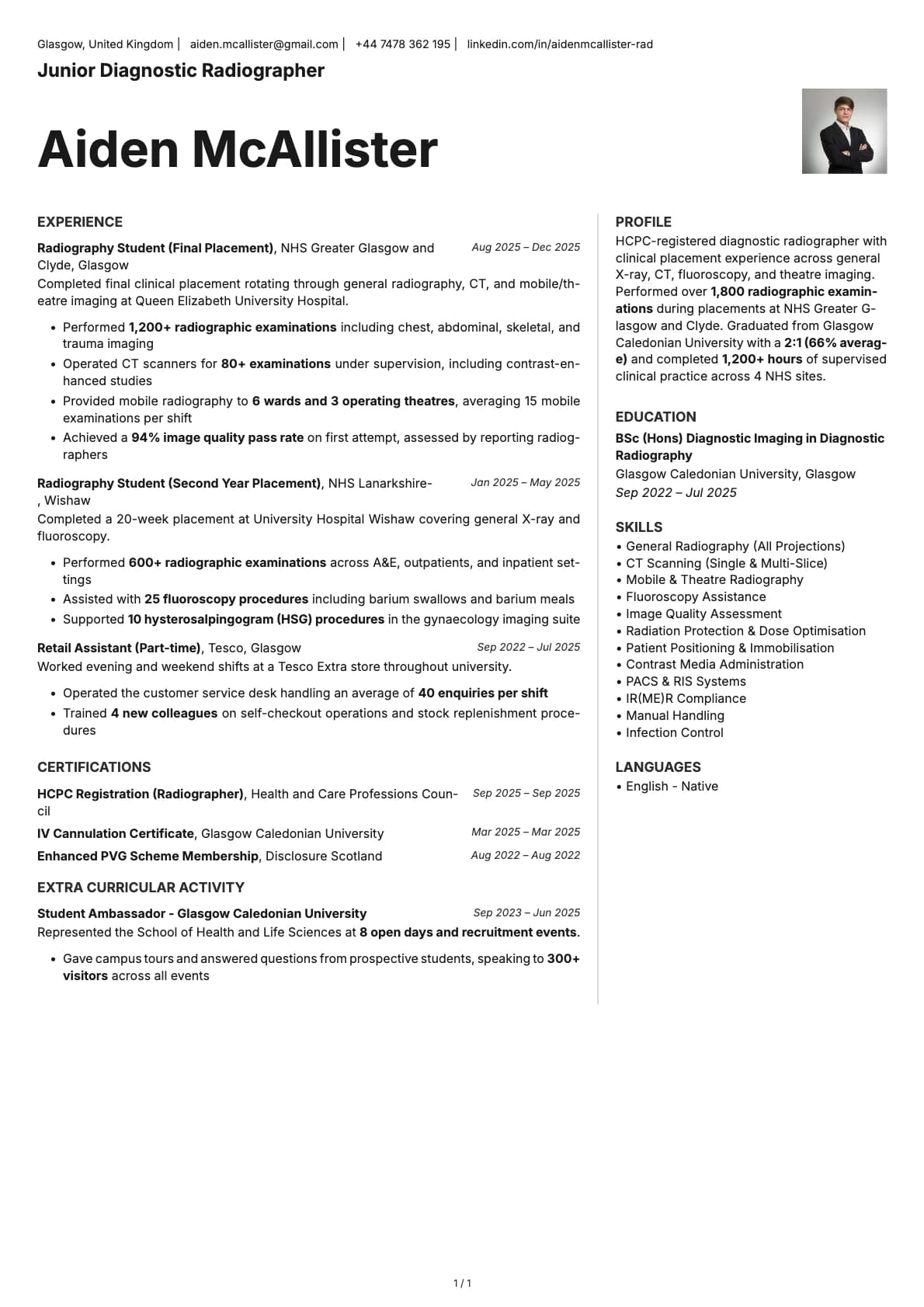
Junior Diagnostic Radiographer
A junior radiographer resume example with HCPC registration, examination numbers, and CT experience for newly qualified diagnostic radiographers.
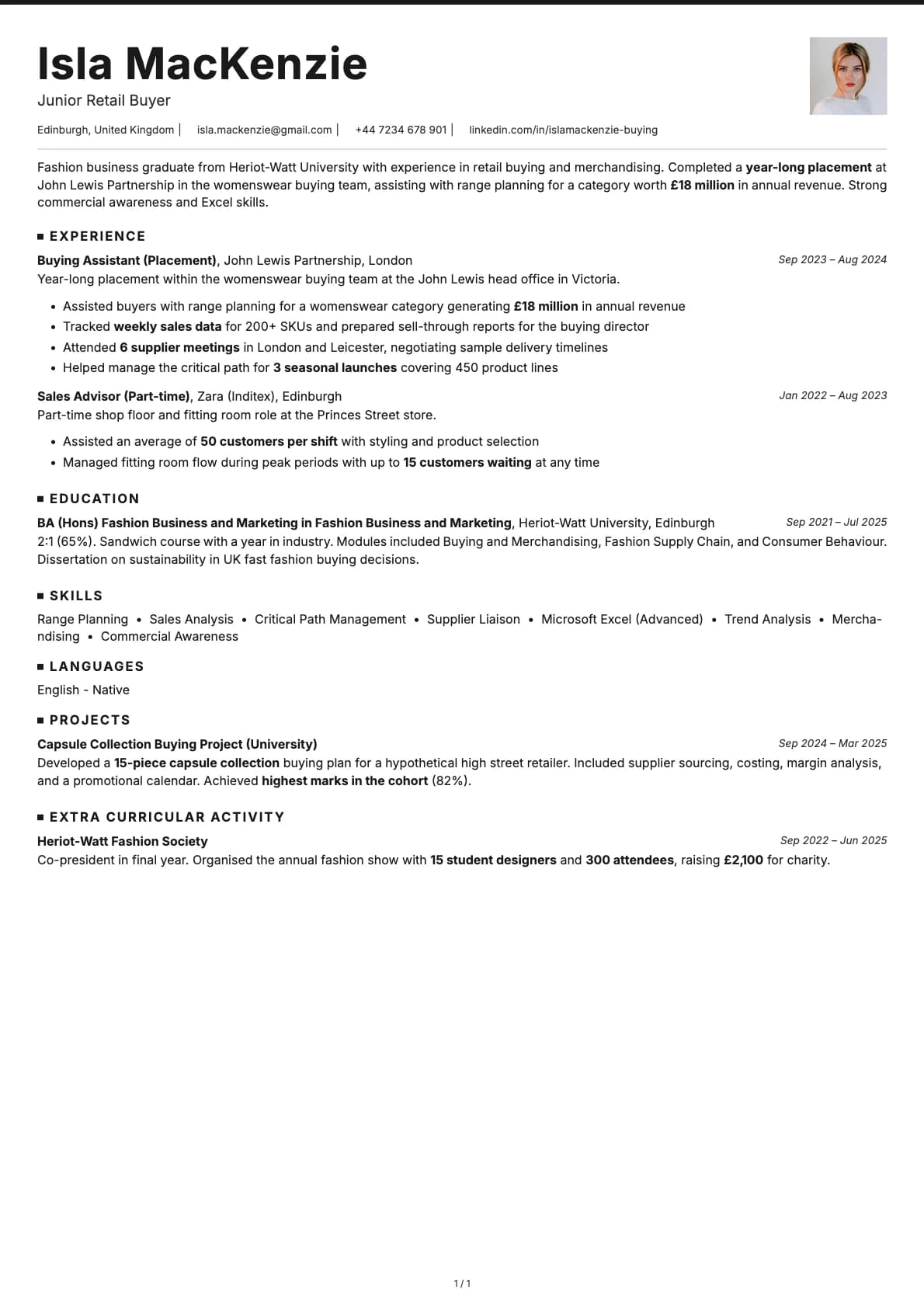
Junior Retail Buyer
A junior retail buyer resume example with John Lewis placement experience and womenswear buying skills.
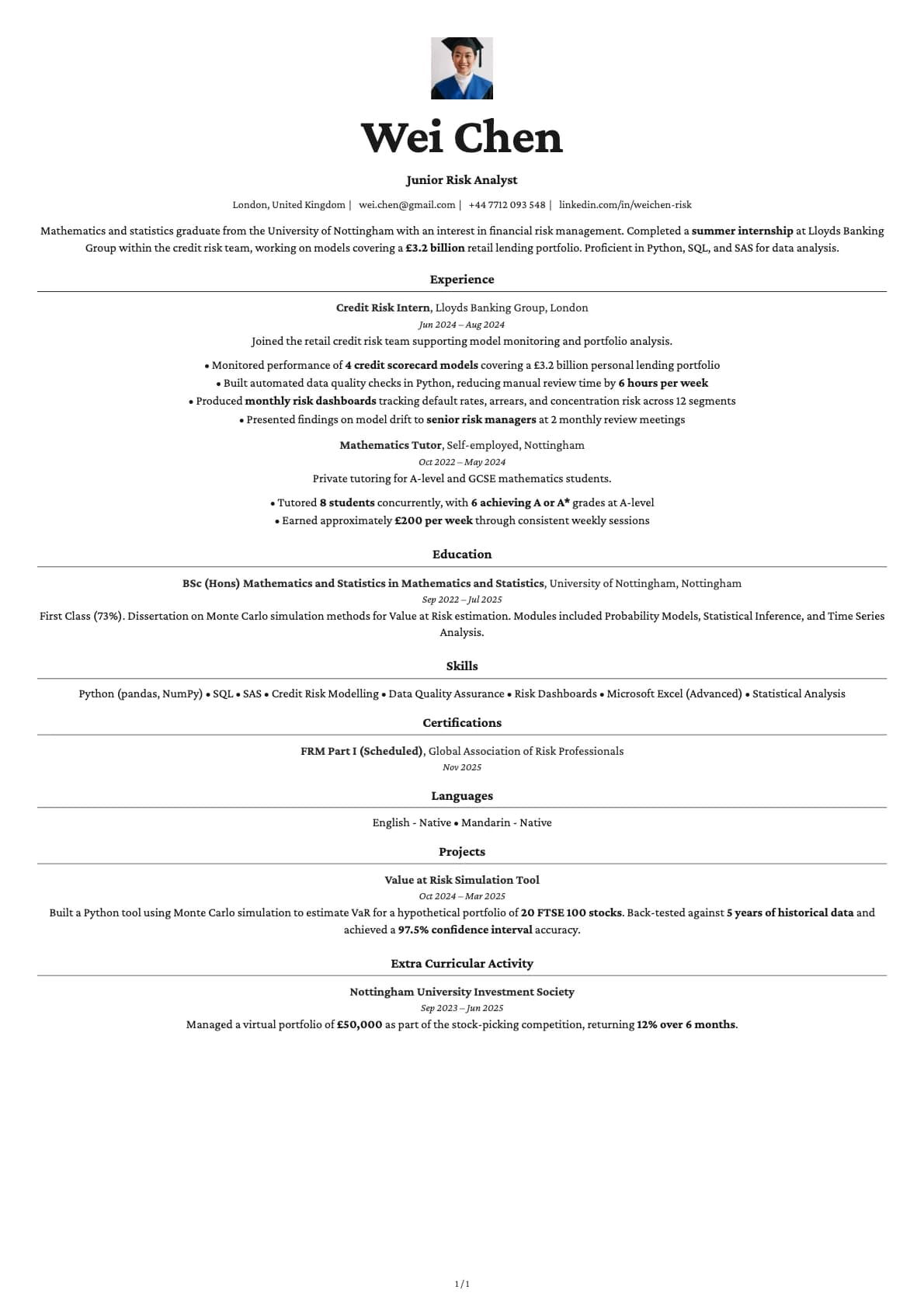
Junior Risk Analyst
A junior risk analyst resume example with banking internship experience and strong quantitative skills.
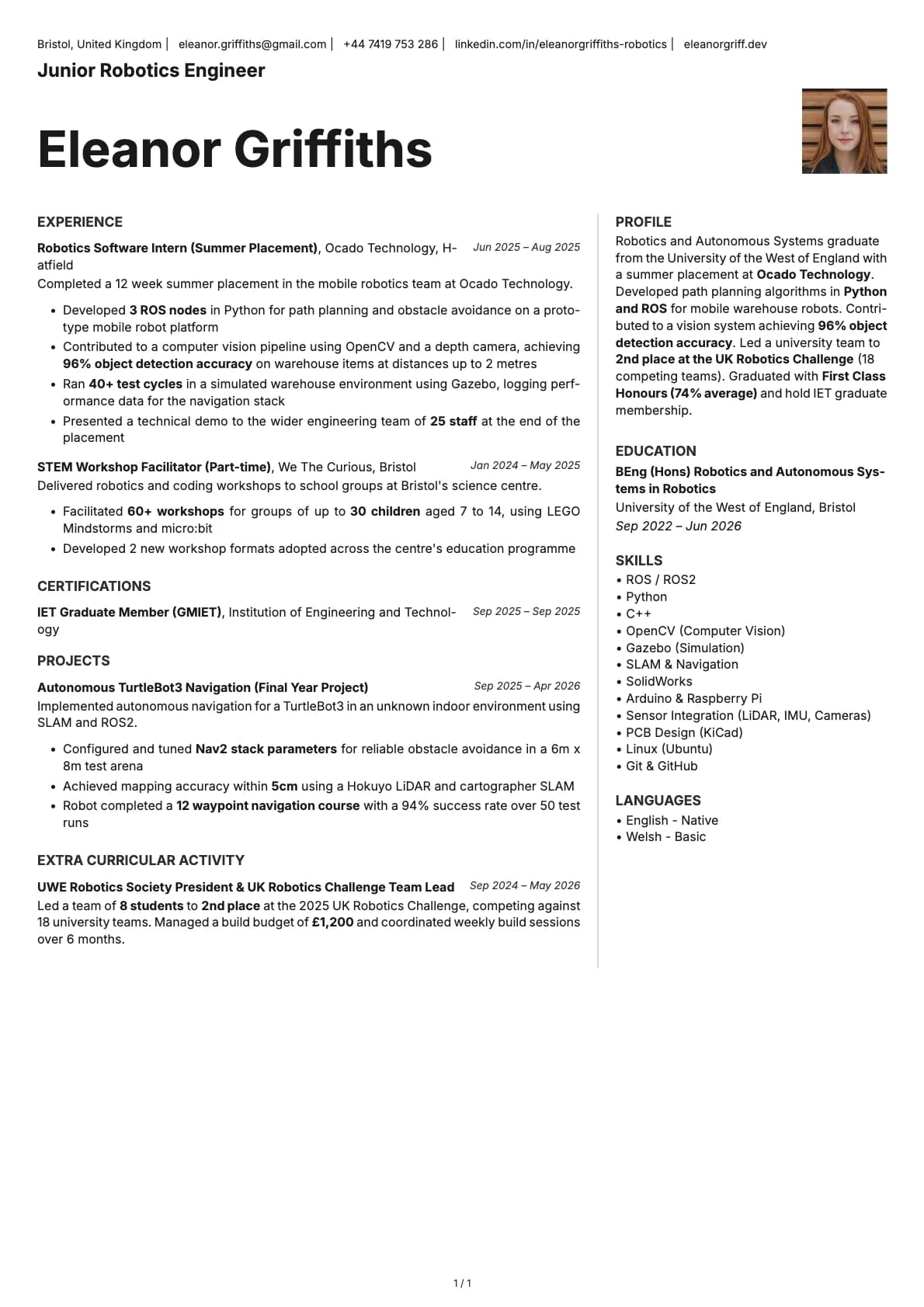
Junior Robotics Engineer
A junior robotics engineer resume example with ROS programming experience, computer vision skills, and a university robotics competition win.
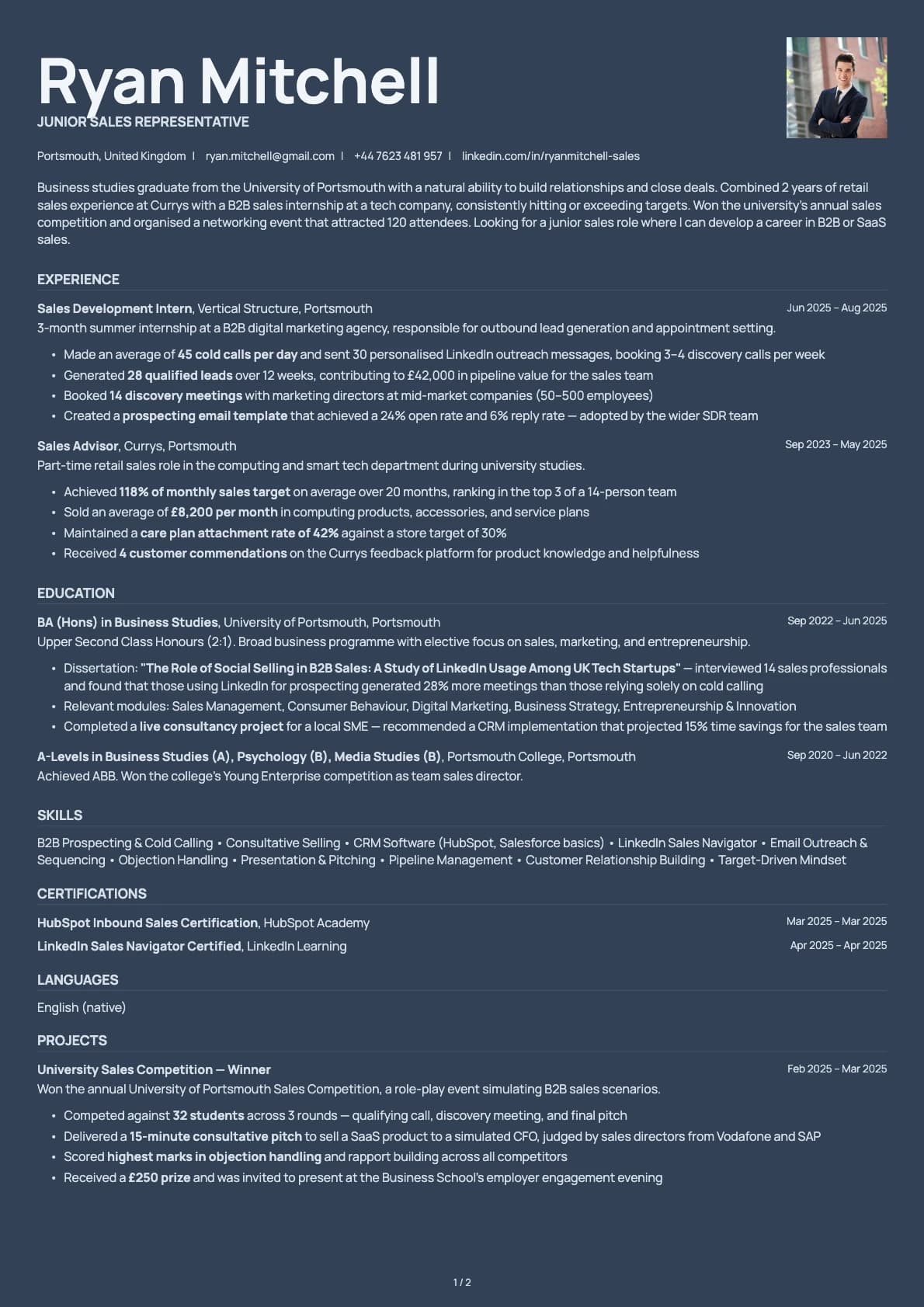
Junior Sales Representative
A junior sales representative resume example for recent graduates. Learn how to present your target achievements, customer experience, and persuasion skills to land your first sales role.
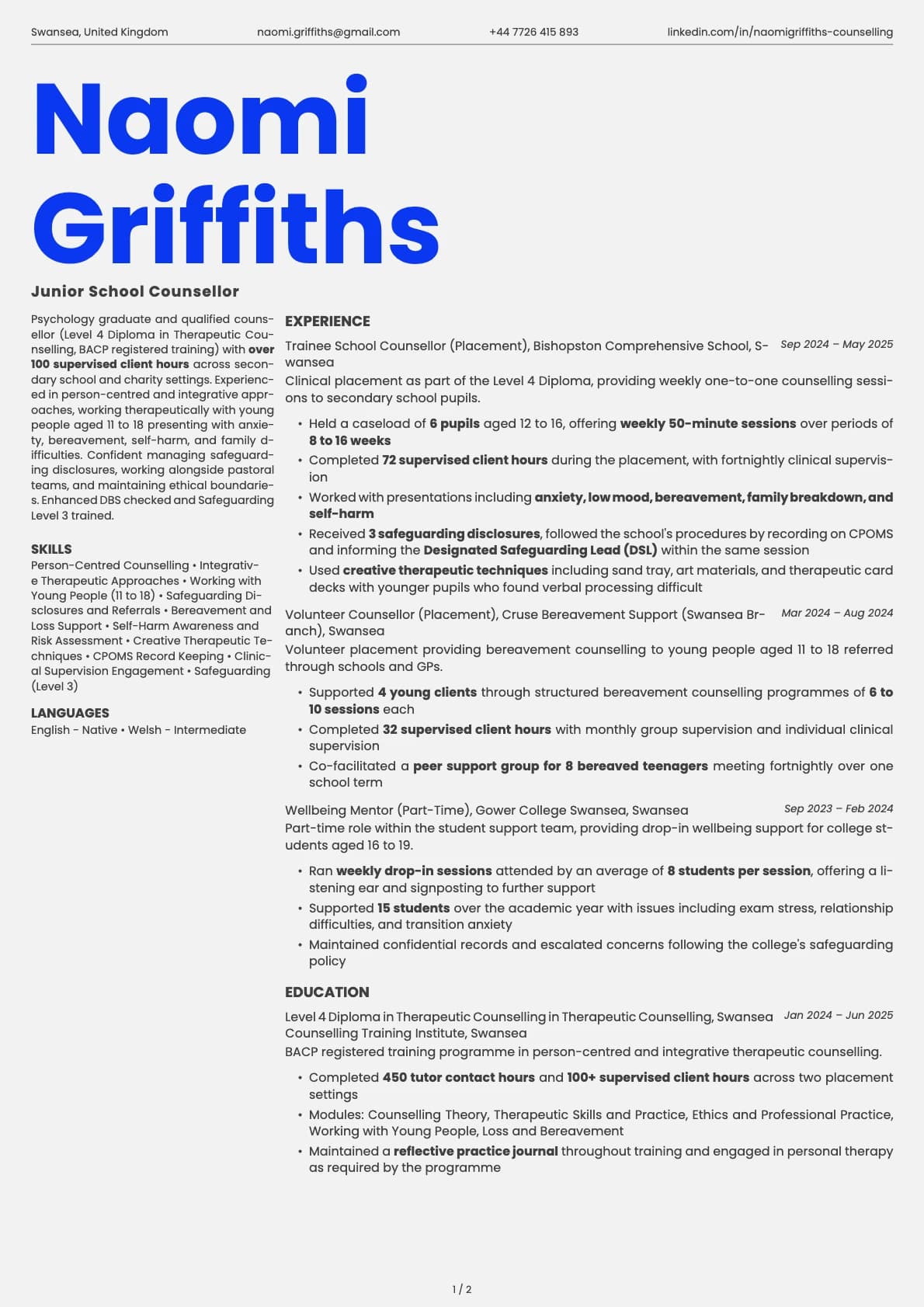
Junior School Counsellor
A graduate school counsellor resume example with therapeutic placement hours, safeguarding, and pupil wellbeing experience. See how to present your training for school counselling roles.
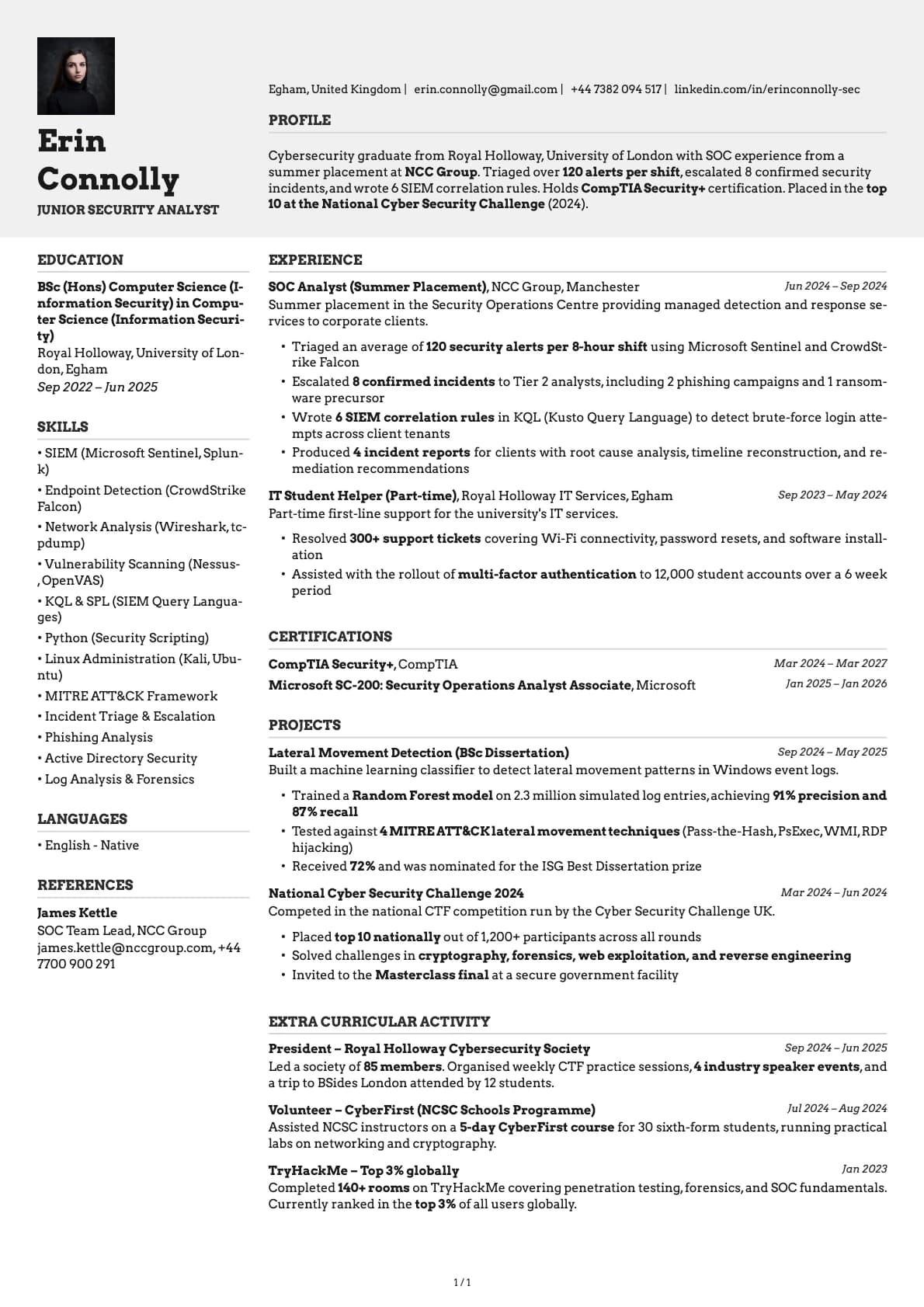
Junior Security Analyst
A junior security analyst resume example with SOC experience, CompTIA Security+ certification, and incident triage from a Cybersecurity BSc graduate.
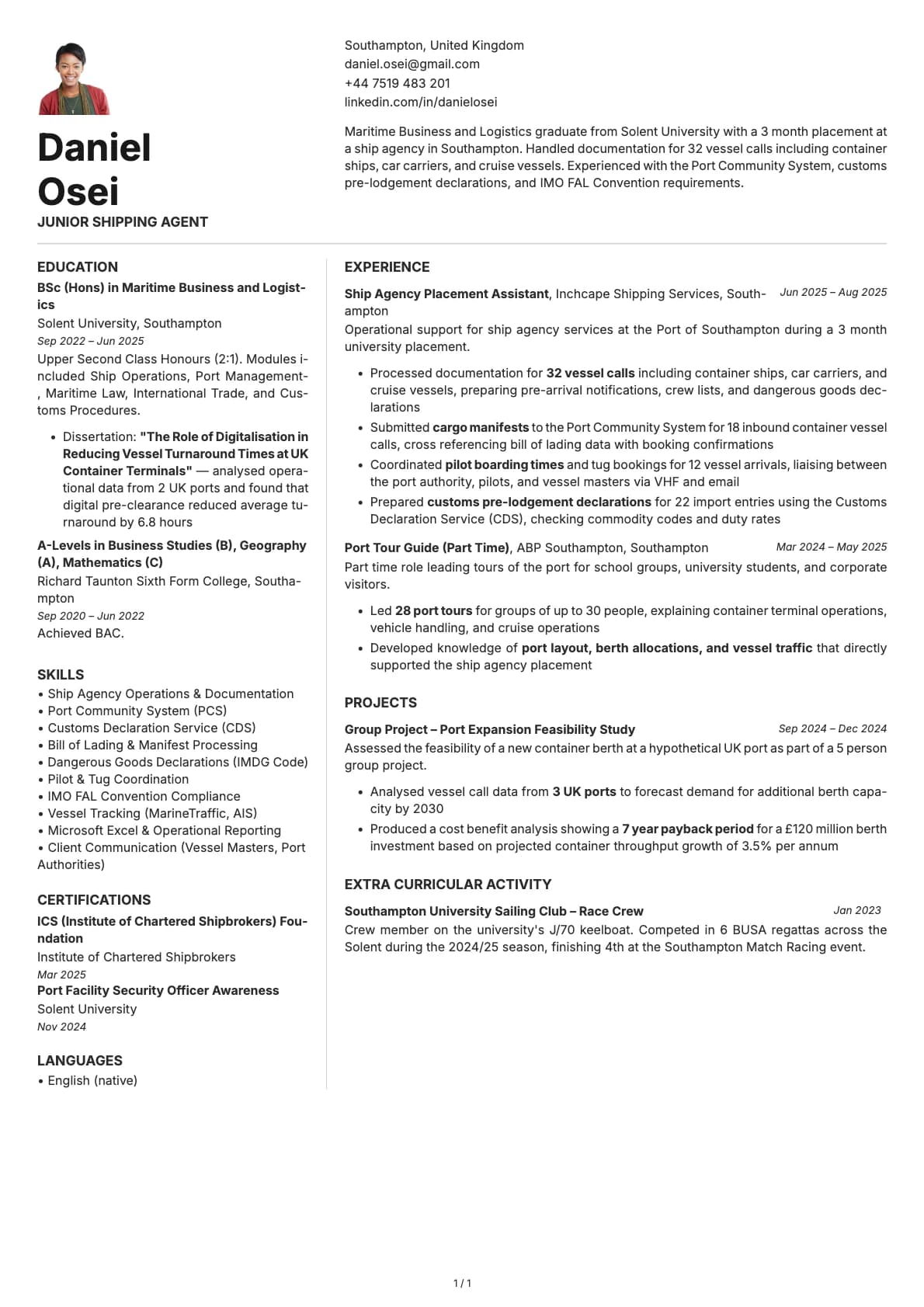
Junior Shipping Agent
A junior shipping agent resume example for maritime studies graduates. See how to present your port operations knowledge, vessel documentation, and shipping line experience.
Junior Social Media Manager
A junior social media manager resume example for recent graduates. Learn how to present your content creation skills, analytics knowledge, and platform growth to get hired.