Marketing Intern Resume Example
A marketing intern resume example for recent graduates. Learn how to showcase campaign results, social media metrics, and university marketing projects on your resume.

Laddro Team
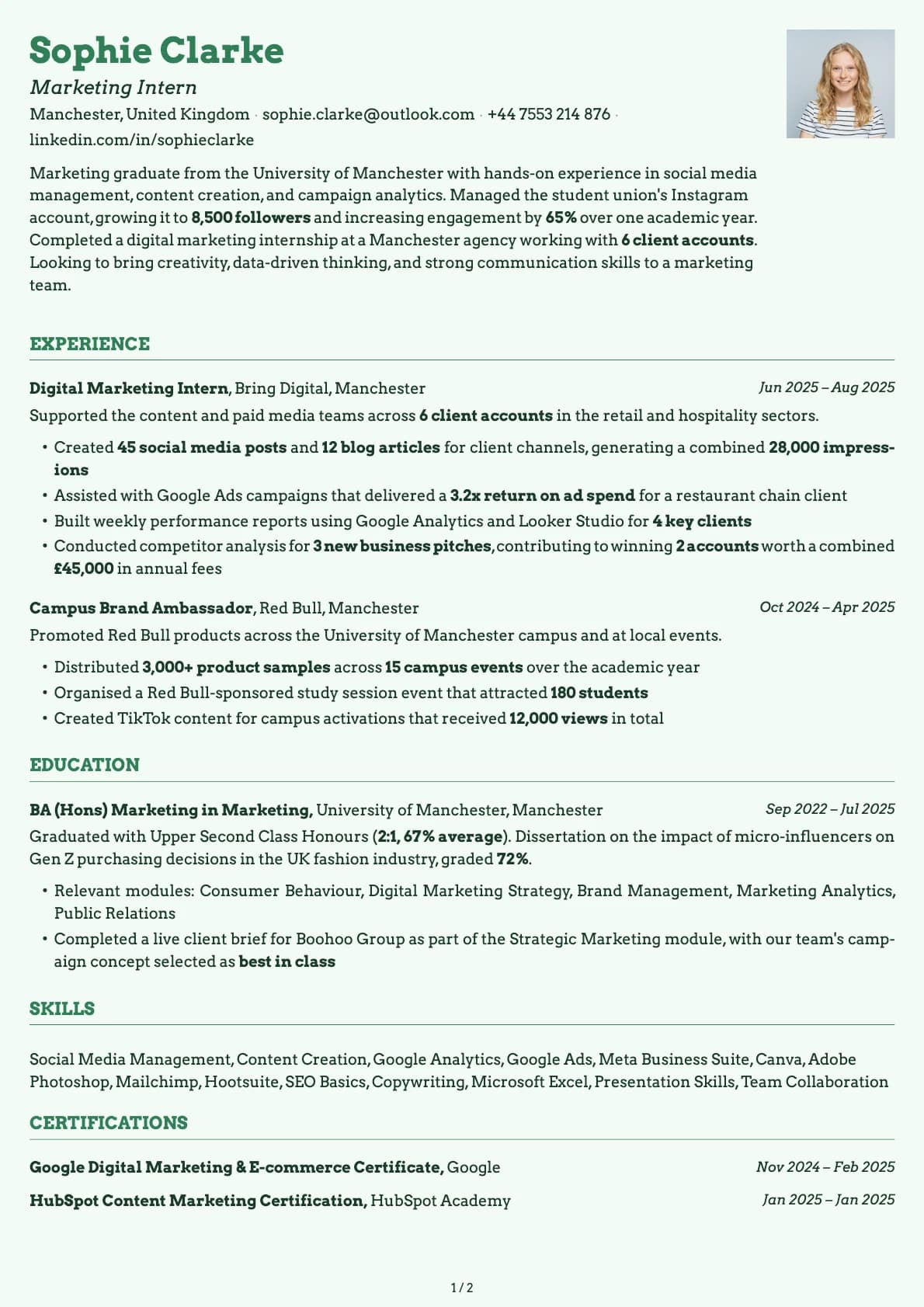
Free to use. No account needed to start.
Free to use. No account needed to start.
Overview
Marketing internship applications are competitive. Every applicant has a degree, a Canva account, and a claim about being "passionate about brands." The ones who get interviews are the ones who can show what they actually did, with numbers attached.
This resume belongs to Priya Sharma, a recent marketing graduate from Manchester Metropolitan University. She completed a three month internship at a digital agency and ran the social media accounts for her university's student union. Her resume stands out because every bullet point has a result you can measure.
What Makes This Resume Work
Social media work is quantified. Priya does not just say she managed Instagram and TikTok. She states that she grew the student union Instagram from 1,200 to 3,400 followers over one academic year and achieved an average engagement rate of 4.7%. Those numbers immediately tell an employer she understands what good performance looks like on social platforms.
The internship shows real contribution. During her placement at the agency, she wrote copy for three client email campaigns that averaged a 22% open rate. She also created 15 social media graphics per week using Canva and Adobe Express. These specifics show she can produce work at a professional pace, not just observe from the sidelines.
University projects fill the gap. Priya includes a group project where her team created a mock product launch campaign for a local coffee brand. They presented to the business owner and their plan was partially adopted. Including this shows initiative and the ability to work with real clients, even in an academic setting.
Tools and platforms are listed clearly. Google Analytics, Mailchimp, Hootsuite, Meta Business Suite, Canva, and Adobe Express. Recruiters searching for candidates with specific tool experience can spot these instantly. She only lists tools she has genuinely used, which means she can back up every claim in an interview.
Key Takeaways
Always attach numbers to your marketing experience. Follower growth, engagement rates, open rates, click through rates, content volume per week. If you ran a campaign, say what happened. If you grew an audience, say by how much.
University marketing projects count, especially if you worked with a real brand or presented to a real audience. Frame them the same way you would frame paid work.
List every marketing tool you have used with confidence. Hiring managers for intern roles want to know you will not need training on the basics.
Build your own version
Open this layout in the builder and swap in your own details. It takes a few minutes.
Free to use. No account needed to start.
Was this resume example helpful?
Rate this example to help us create better content for you.
4.8 average from 142 ratingsRelated resume examples
Junior PR Executive
A junior PR executive resume example for recent graduates. See how to showcase media placements, event coordination, and communication skills to land your first PR role.
Junior Process Engineer
A junior process engineer resume example with oil and gas internship experience, HYSYS modelling, and HAZOP participation for graduates.
Junior Procurement Officer
A junior procurement officer resume example with Tata Steel placement experience and CIPS qualification.
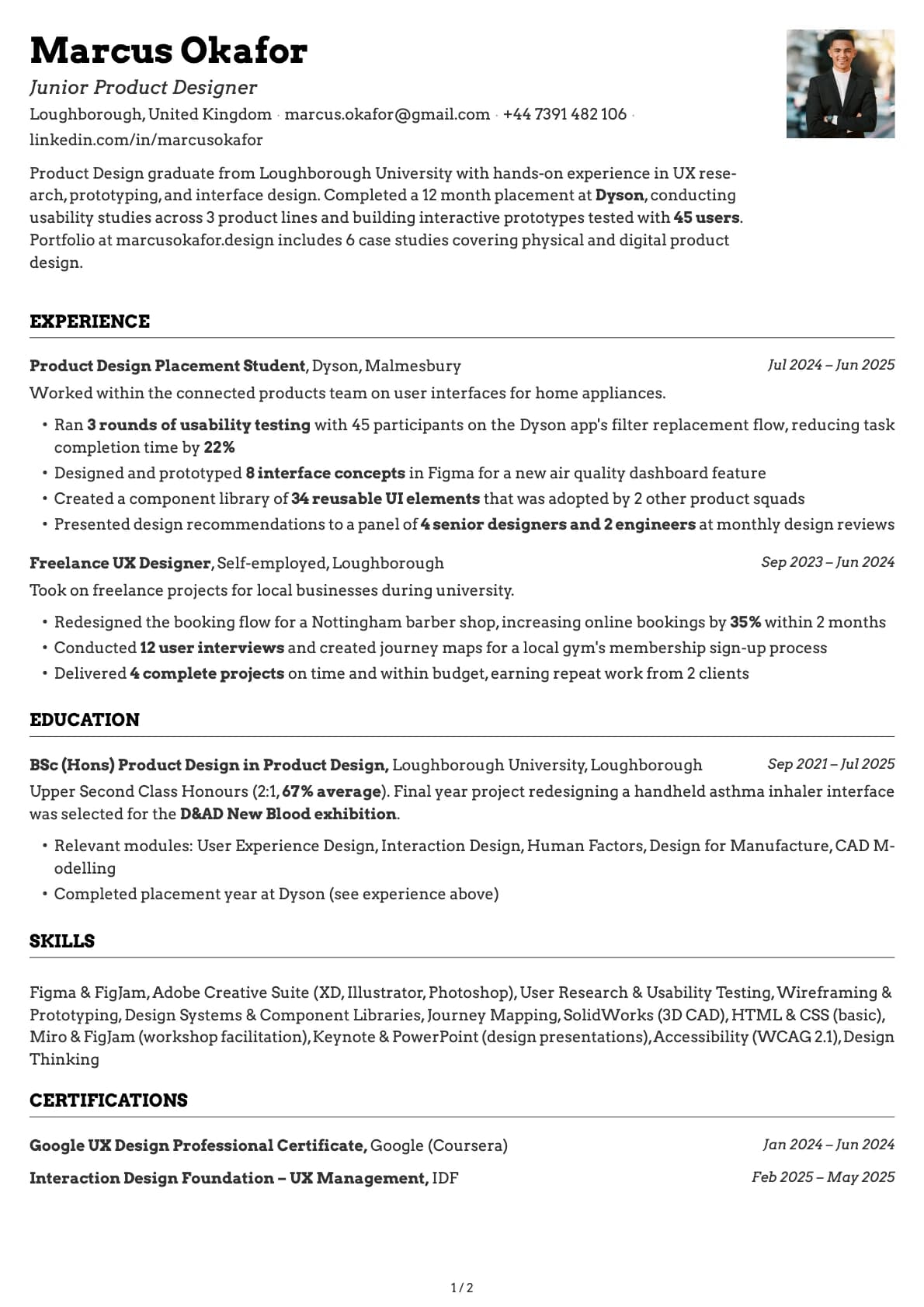
Junior Product Designer
A junior product designer resume example with UX research projects, Figma prototypes, and usability test results from a Product Design BSc at Loughborough.

Junior Product Support Engineer
A junior product support engineer resume example for graduates. See how to present ticket resolution metrics, knowledge base work, and technical troubleshooting to land your first support engineering role.
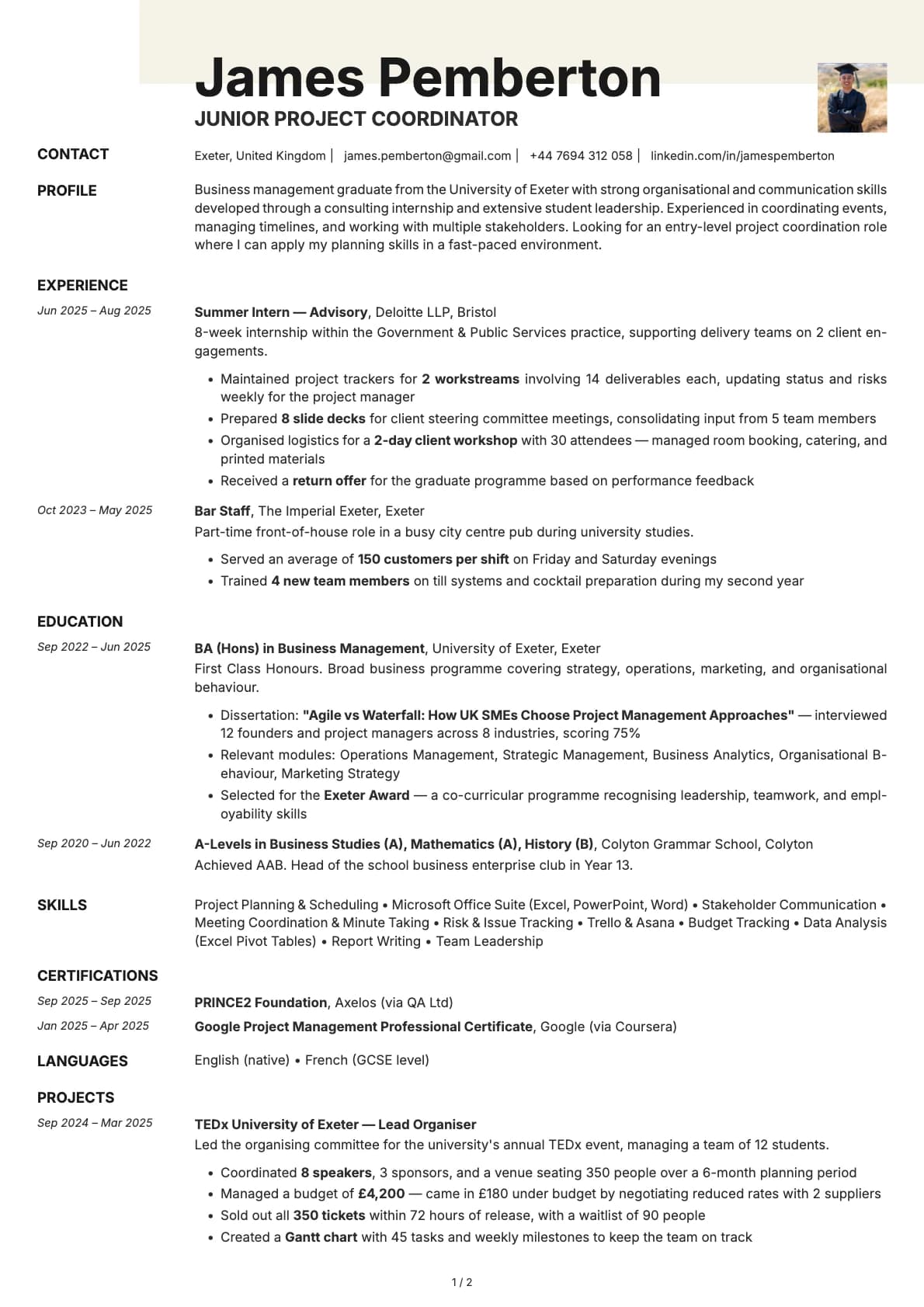
Junior Project Coordinator
A junior project coordinator resume example for recent graduates. Learn how to present your organisational skills, team projects, and coordination experience to get hired.
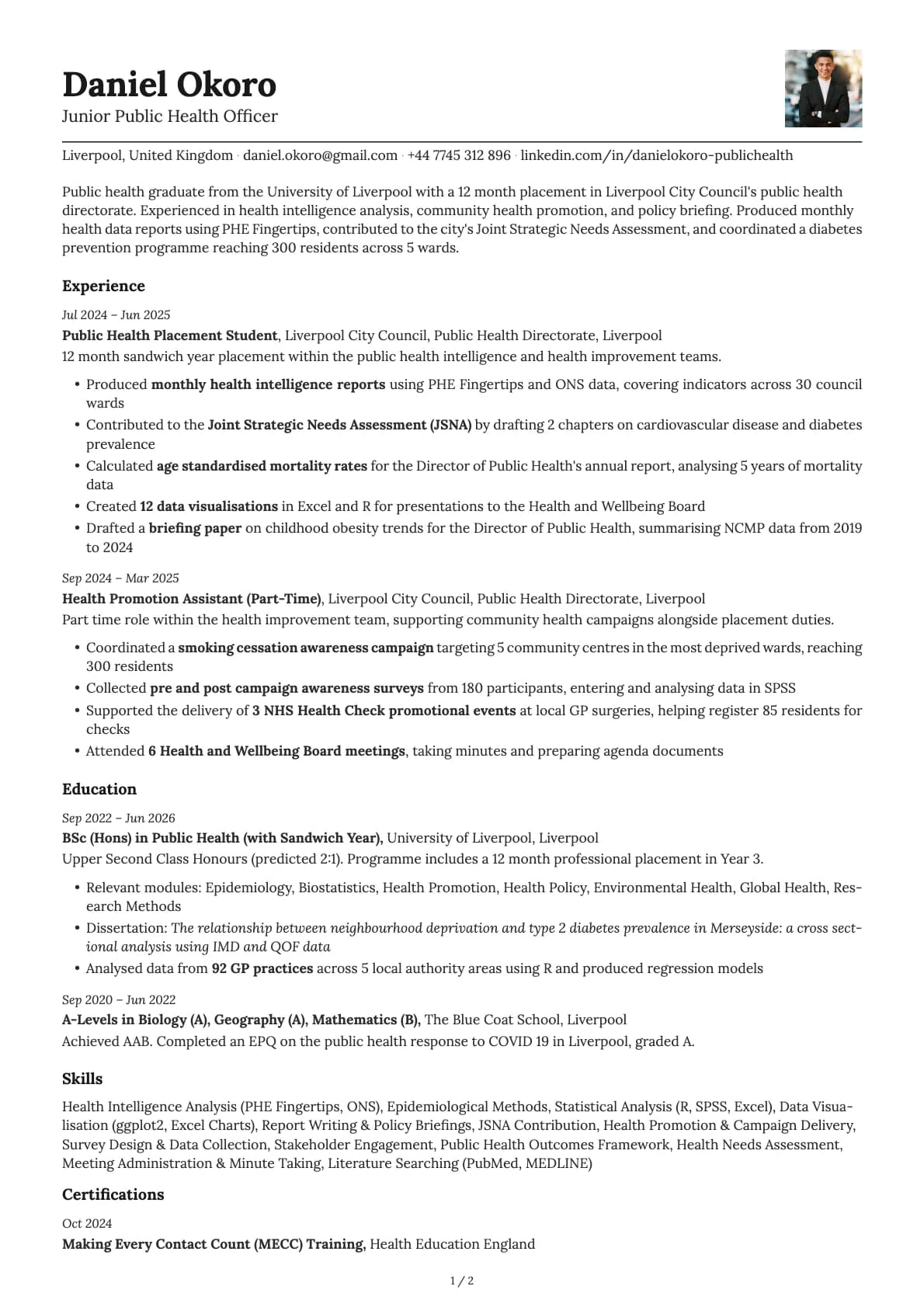
Junior Public Health Officer
A junior public health officer resume example for public health graduates showing how to present epidemiology skills, data analysis experience, and health promotion projects for local authority and NHS roles.
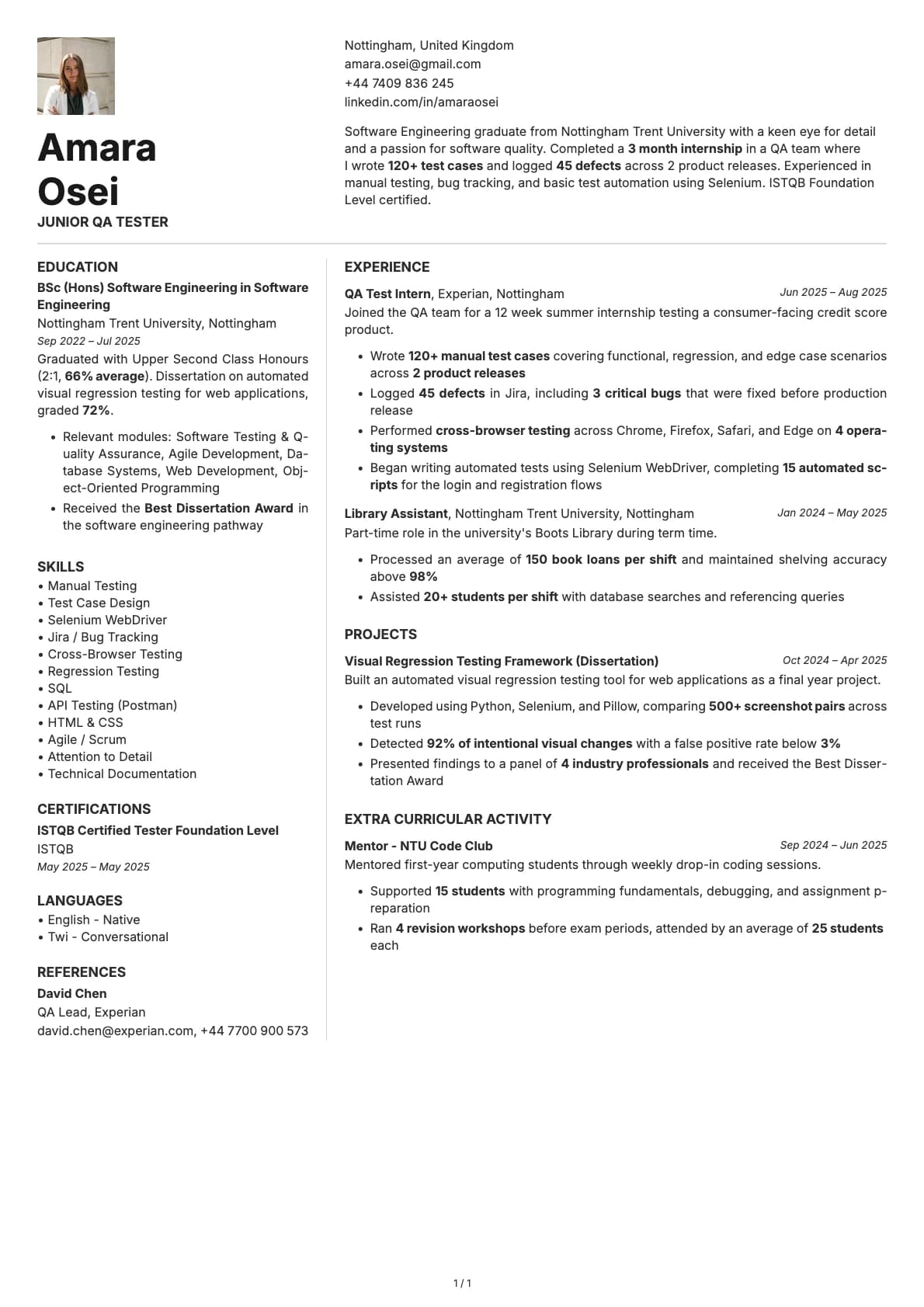
Junior QA Tester
A junior QA tester resume example for graduates. Learn how to present testing experience, bug tracking skills, and ISTQB certification to land your first QA role.
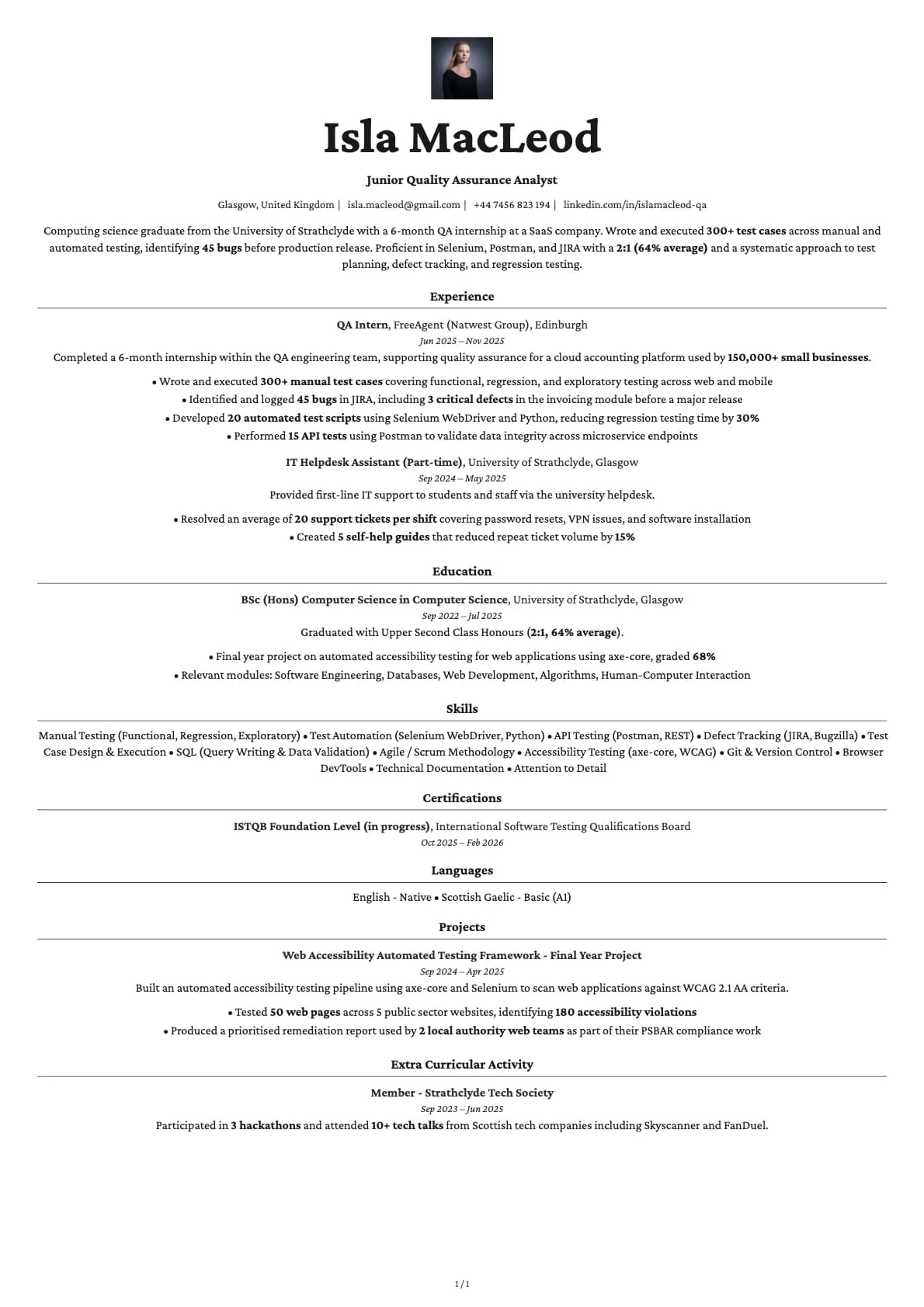
Junior Quality Assurance Analyst
A junior QA analyst resume example with test automation experience, bug counts, and Selenium skills for computing graduates.
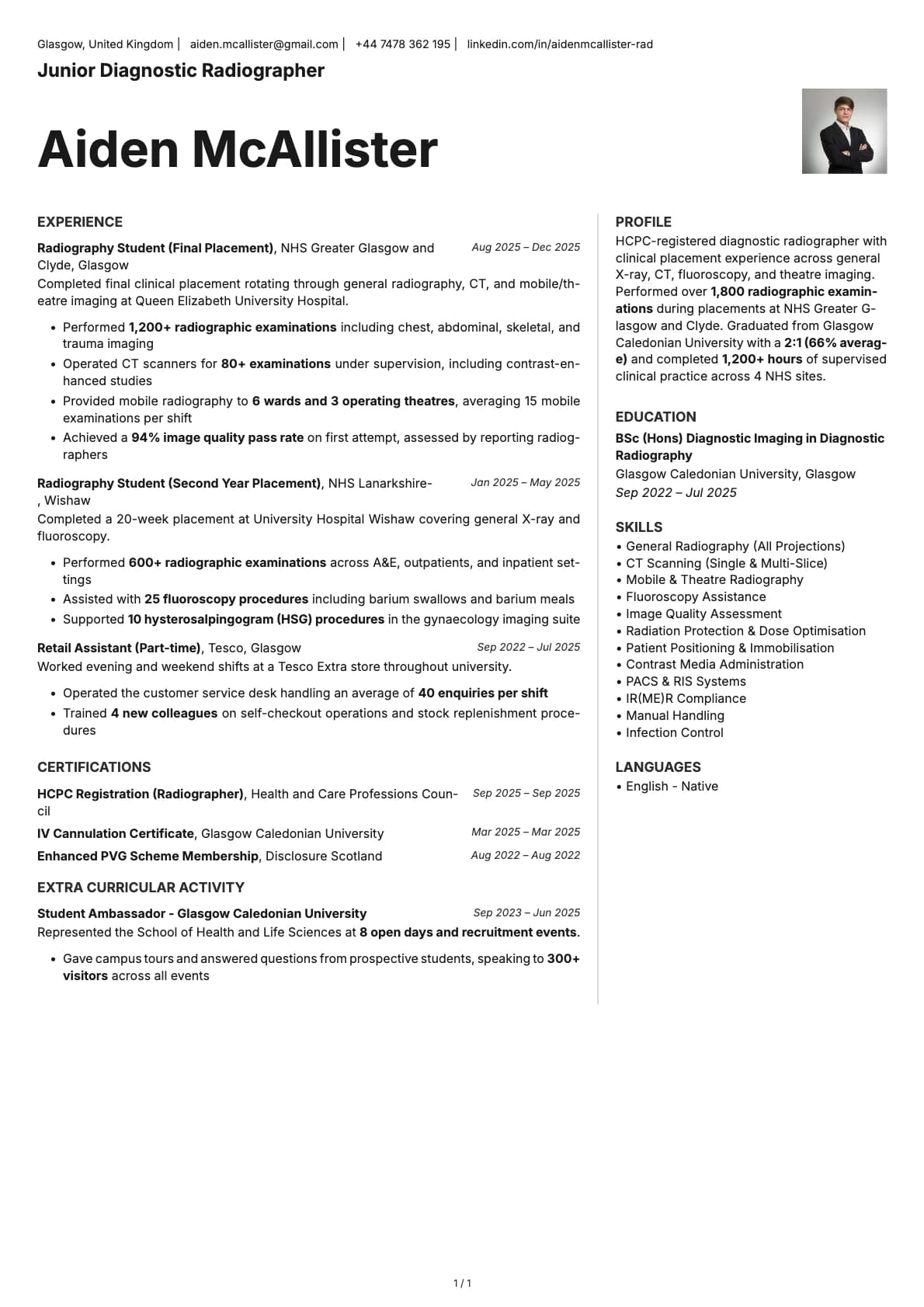
Junior Diagnostic Radiographer
A junior radiographer resume example with HCPC registration, examination numbers, and CT experience for newly qualified diagnostic radiographers.
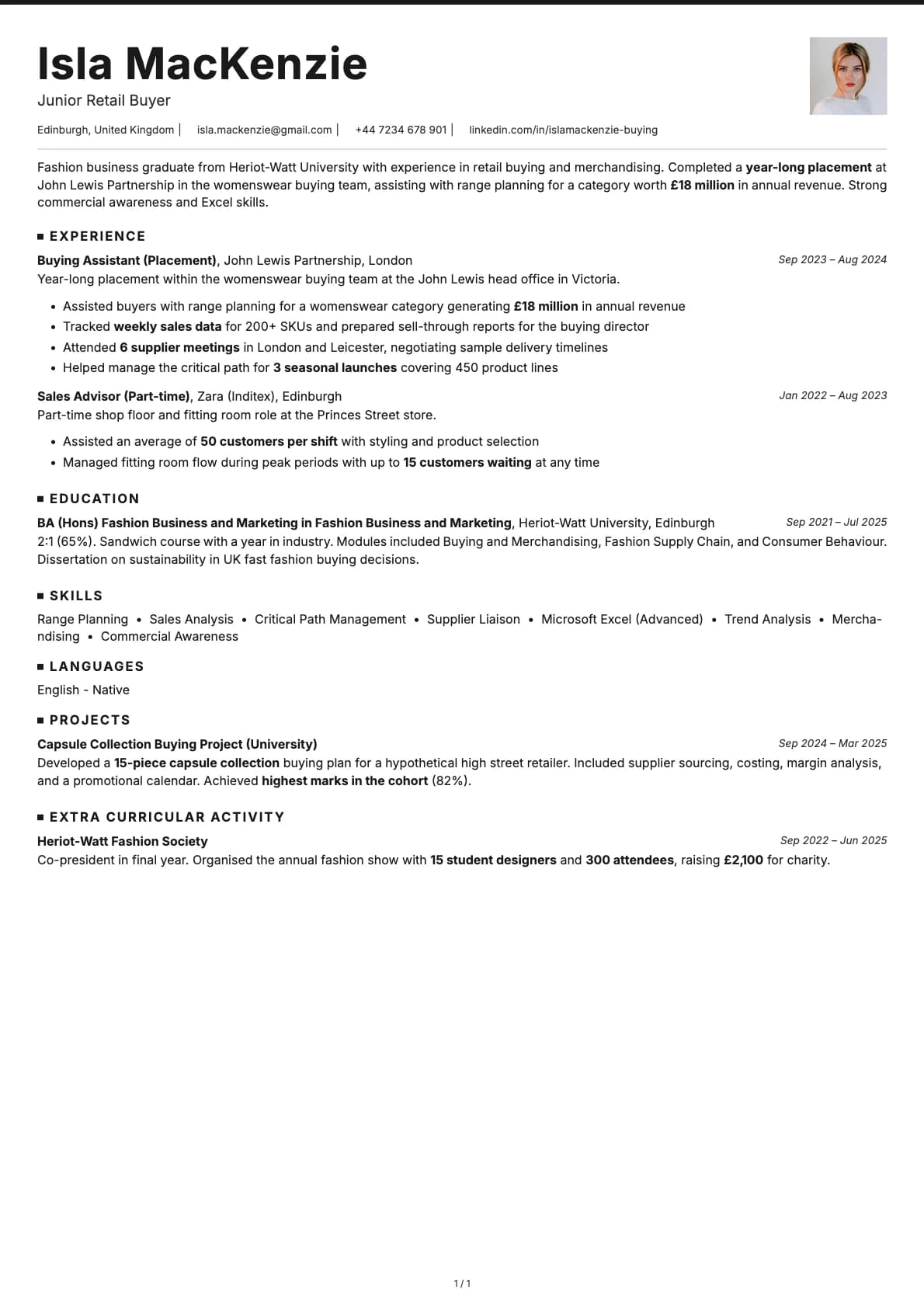
Junior Retail Buyer
A junior retail buyer resume example with John Lewis placement experience and womenswear buying skills.
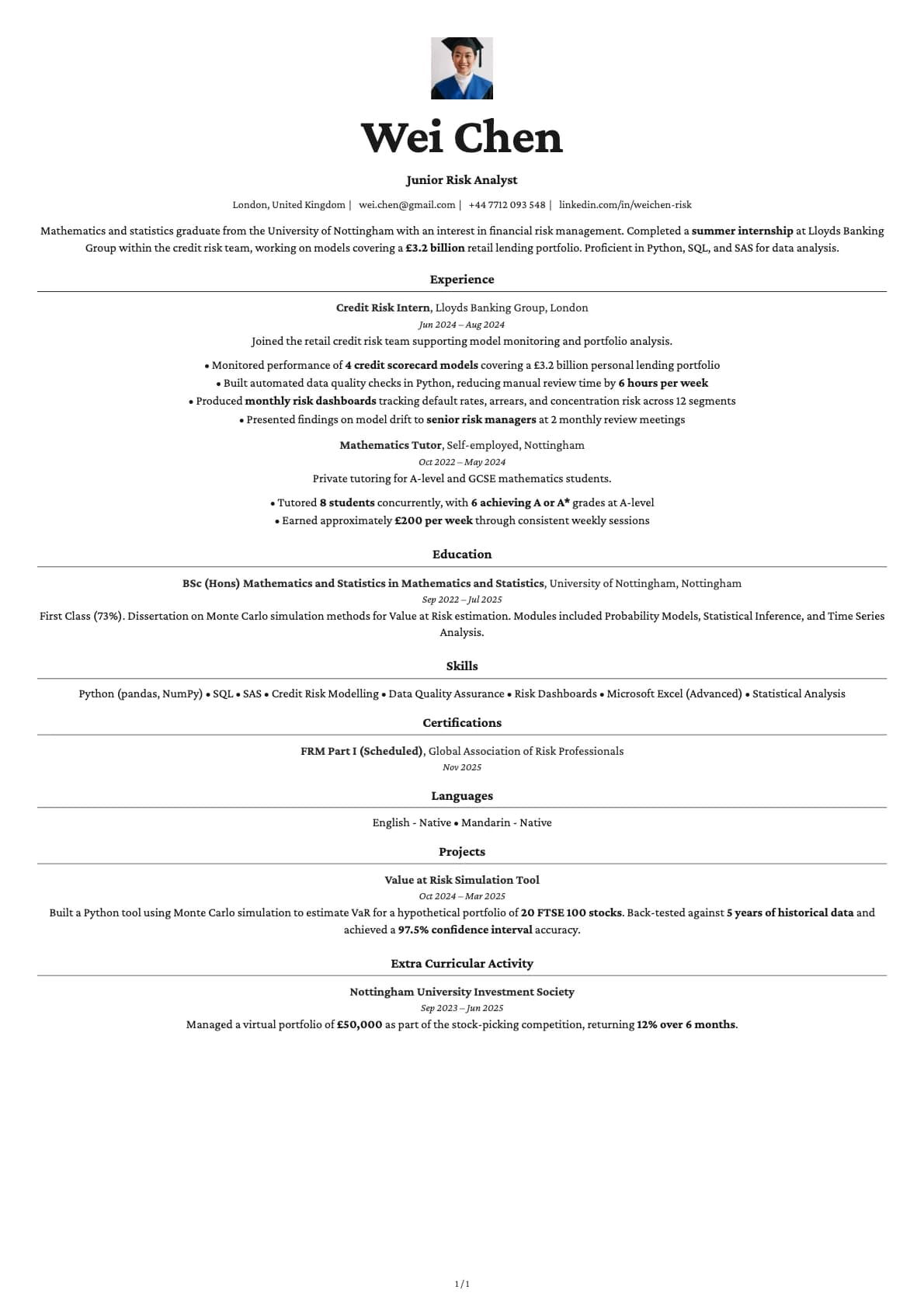
Junior Risk Analyst
A junior risk analyst resume example with banking internship experience and strong quantitative skills.