Junior Policy Officer Resume Example
A junior policy officer resume example for public administration graduates. See how to present research skills, briefing writing, and council placement experience.

Laddro Team
Free to use. No account needed to start.
Free to use. No account needed to start.
Overview
Junior policy officer roles in local government, the civil service, and third sector organisations require strong research and writing skills above all else. You will be expected to synthesise evidence, draft clear briefings, and support senior colleagues with analysis. Employers want to see that you can handle data, write concisely, and understand how policy decisions are made in practice. A resume that only talks about your degree modules will not get you through the door.
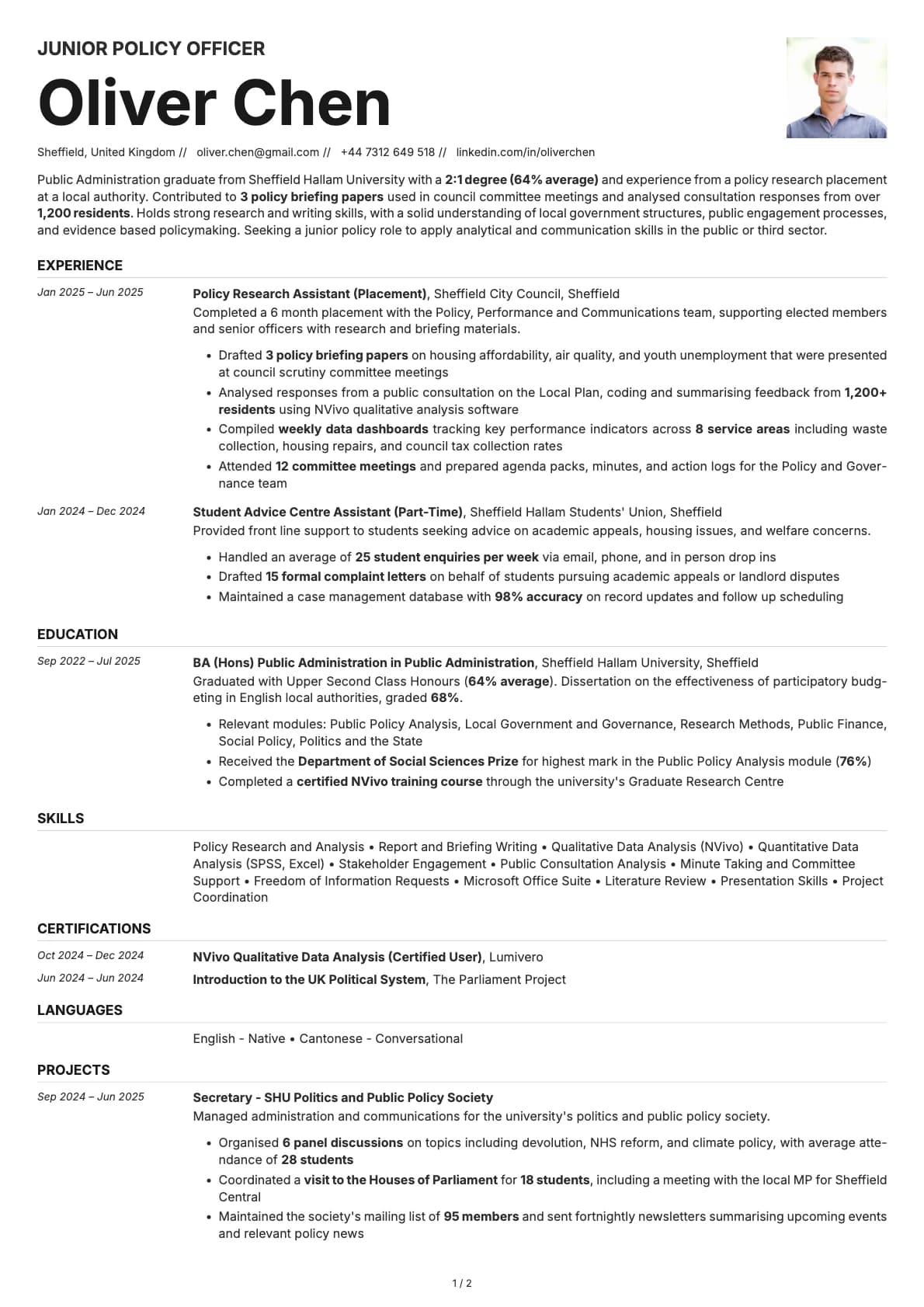
This resume belongs to Oliver Chen, a recent Public Administration graduate from Sheffield Hallam University. He completed a 6 month placement at Sheffield City Council and worked part time at the Students' Union advice centre. His resume works because it shows he has already done the core tasks of a junior policy role: researching, writing briefings, and analysing consultation data.
What Makes This Resume Work
The council placement is the centrepiece. Oliver drafted 3 policy briefing papers that were actually presented at council scrutiny committee meetings. He analysed consultation responses from over 1,200 residents using NVivo and compiled weekly performance dashboards covering 8 service areas. This is not generic work experience. It is the exact work that junior policy officers do, and having it on his resume tells employers he can contribute from day one.
Research skills are demonstrated with specific tools. He does not just claim to be "analytically minded." He names NVivo for qualitative analysis and SPSS for quantitative work, and he holds a certified NVivo user qualification. Policy teams often need someone who can code interview transcripts, analyse survey data, or run basic statistical tests. Oliver has already done all of this during his placement and dissertation work.
The advice centre role proves communication skills. Handling 25 student enquiries per week, drafting 15 formal complaint letters, and maintaining a case management database shows he can communicate clearly in both spoken and written formats. Policy roles require constant stakeholder interaction, from councillors to community groups, and this experience demonstrates that capability.
Community organising adds a practical policy dimension. Volunteering with Citizens UK, canvassing 150+ households, and helping organise a community assembly attended by 200 residents shows Oliver understands policy from the ground up. He has spoken directly to people affected by housing and wage issues, which gives his policy analysis real world grounding that classroom study alone cannot provide.
Key Takeaways
Policy officer resumes should lead with evidence of research and writing. If you have drafted briefings, analysed consultation data, or contributed to reports, make those the first things a recruiter sees. Name the research tools you can use, because NVivo, SPSS, and even advanced Excel are genuinely valued in policy teams that deal with large volumes of qualitative and quantitative data. Community engagement experience is also worth highlighting. Policy roles are about understanding the impact of decisions on real people, and any experience that shows you have engaged directly with communities will strengthen your application significantly.
Build your own version
Open this layout in the builder and swap in your own details. It takes a few minutes.
Free to use. No account needed to start.
Was this resume example helpful?
Rate this example to help us create better content for you.
4.8 average from 89 ratingsRelated resume examples
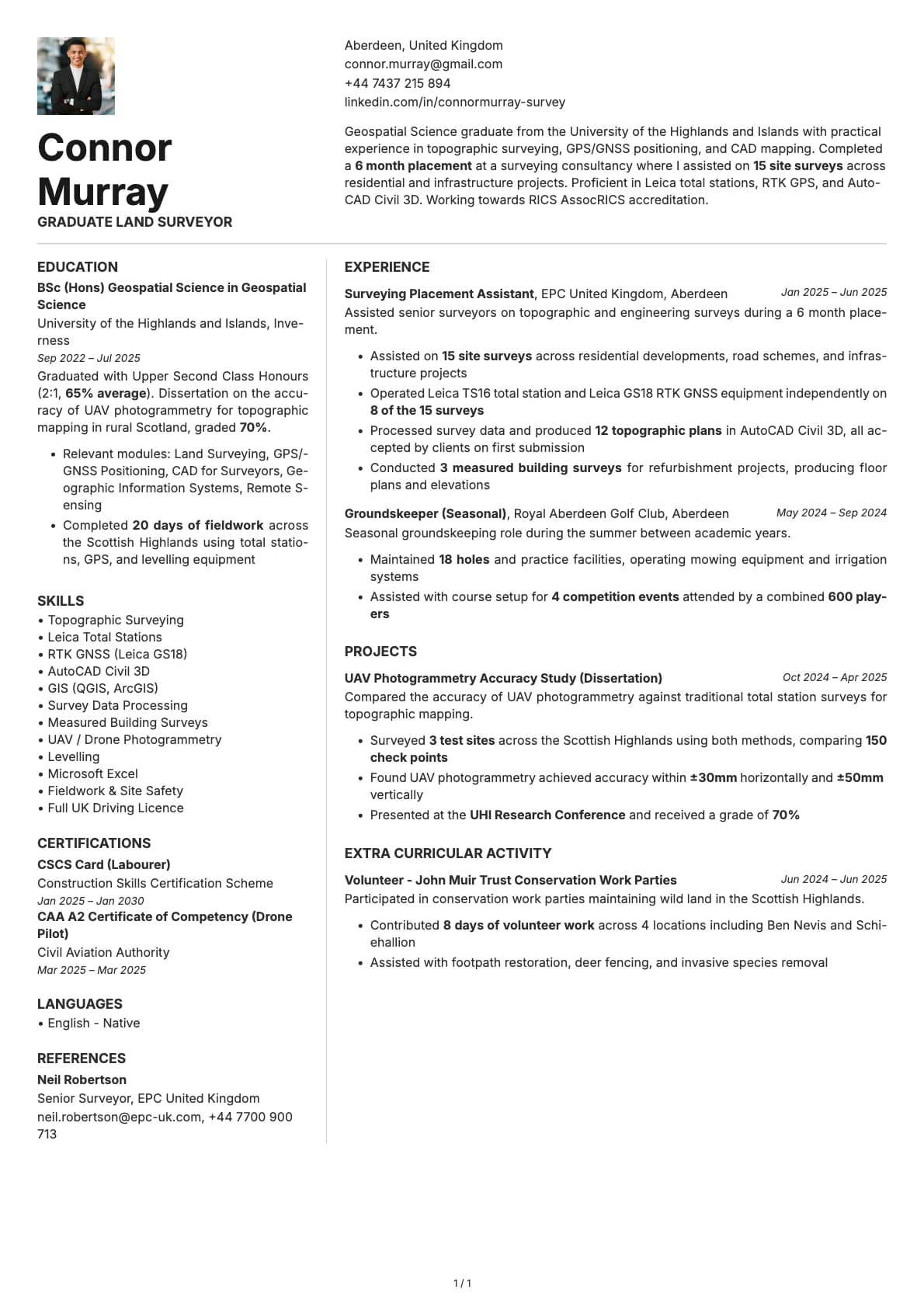
Graduate Land Surveyor
A graduate land surveyor resume example. See how to present site survey experience, GPS/GNSS skills, and CAD output to land your first surveying role.
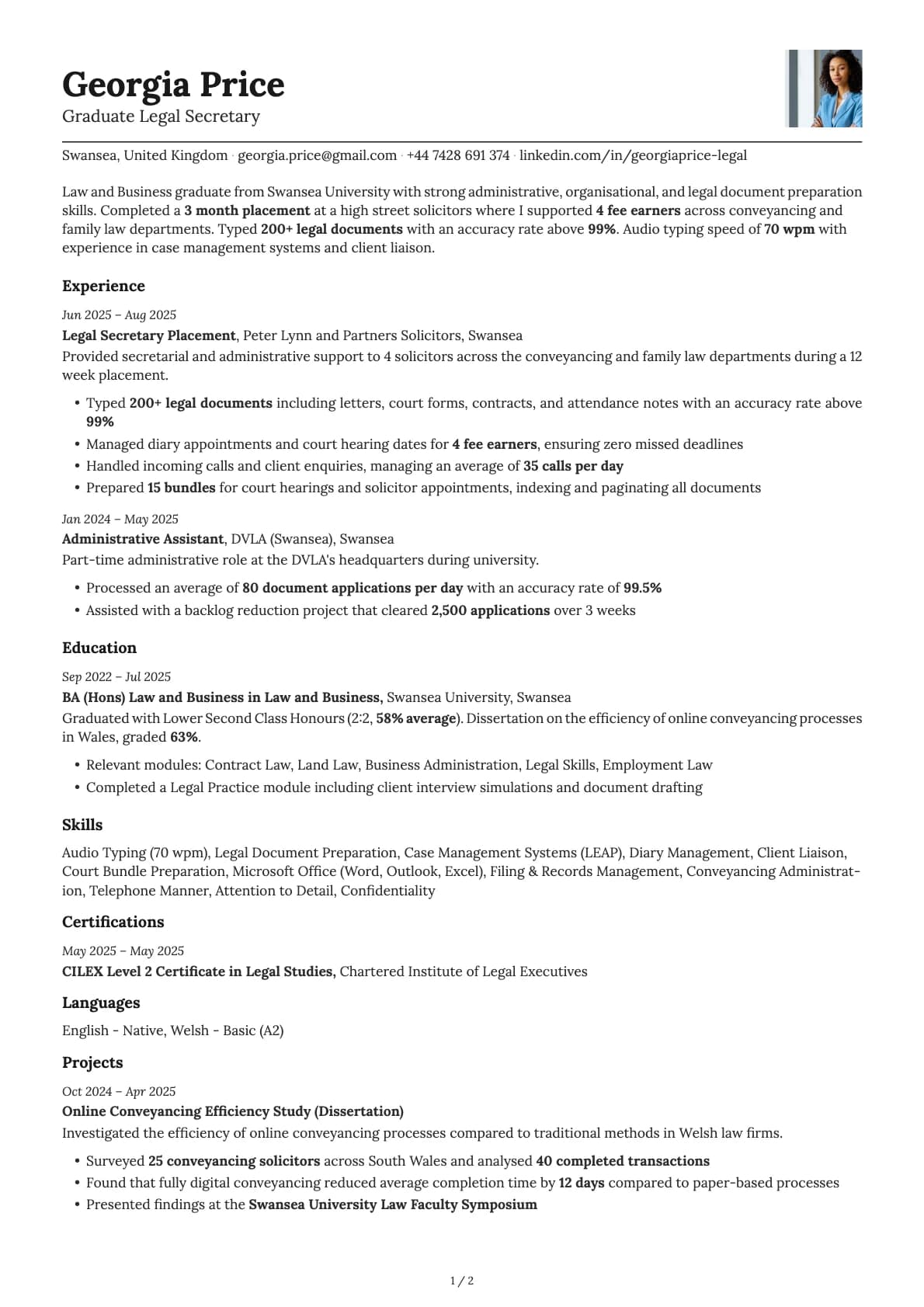
Graduate Legal Secretary
A graduate legal secretary resume example. See how to present typing speed, legal document preparation, and solicitor support experience to land your first legal secretary role.
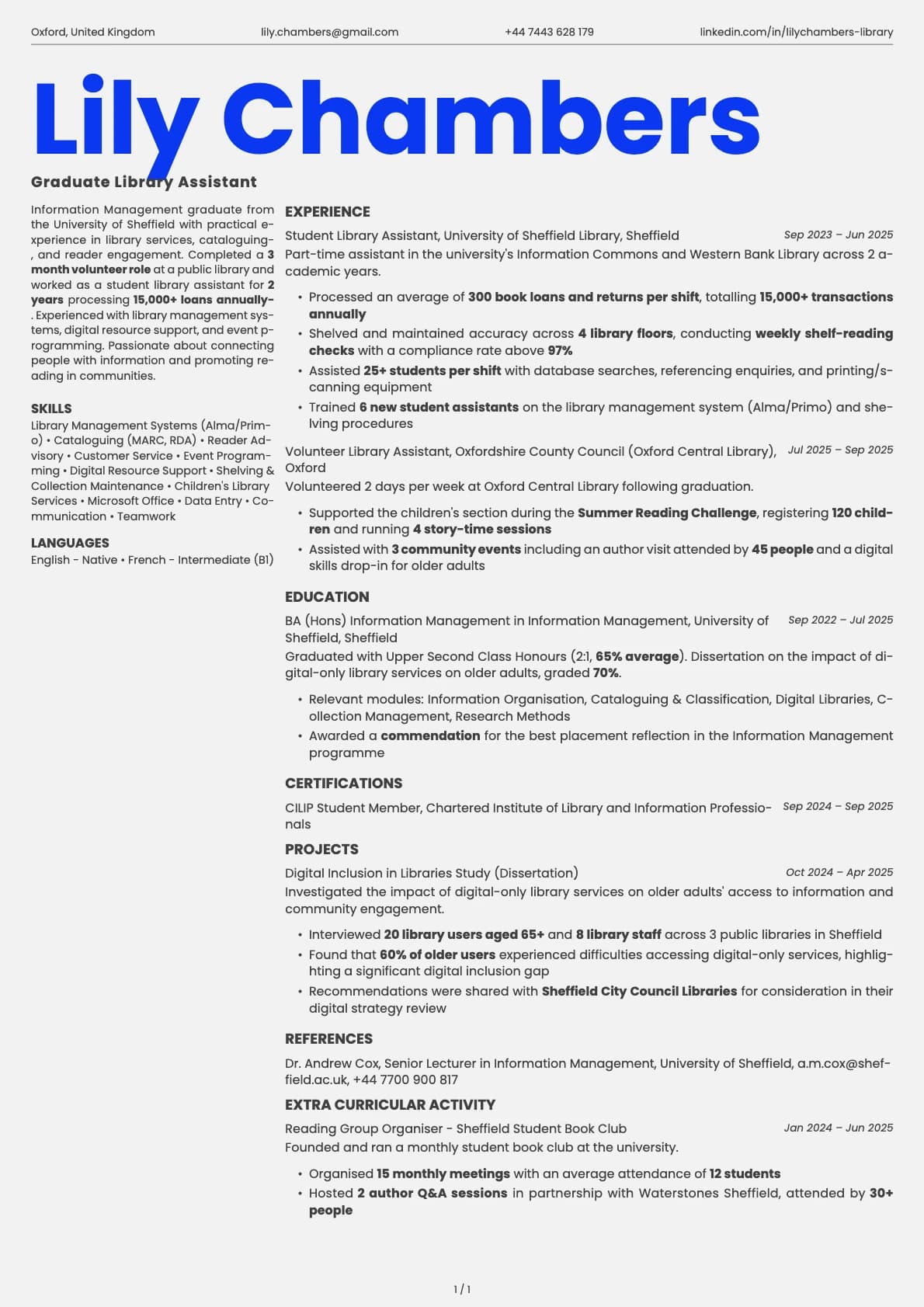
Graduate Library Assistant
A graduate library assistant resume example. See how to present library experience, cataloguing skills, and event programming to land your first library role.
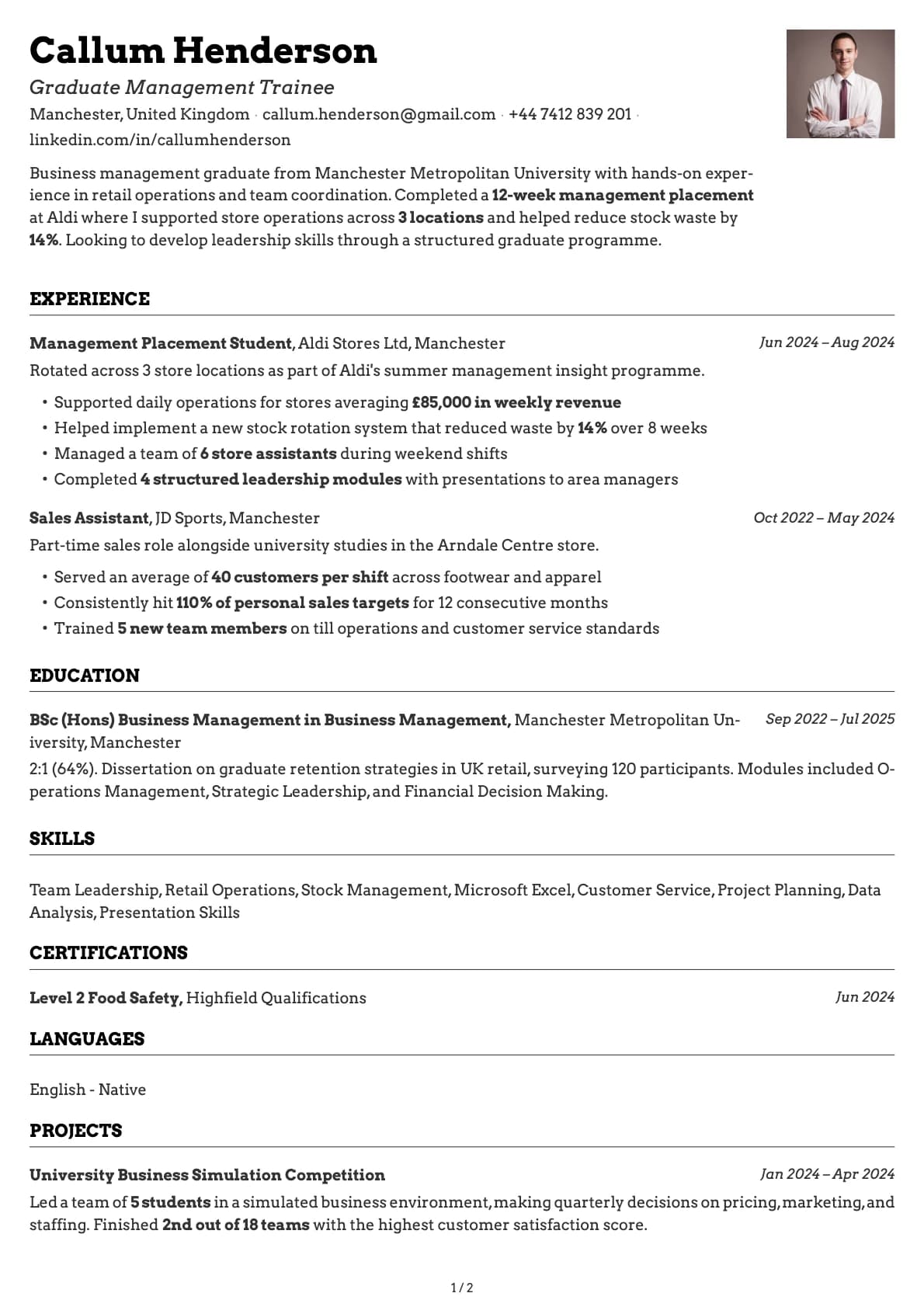
Graduate Management Trainee
A graduate management trainee resume example with retail placement experience and team leadership skills.
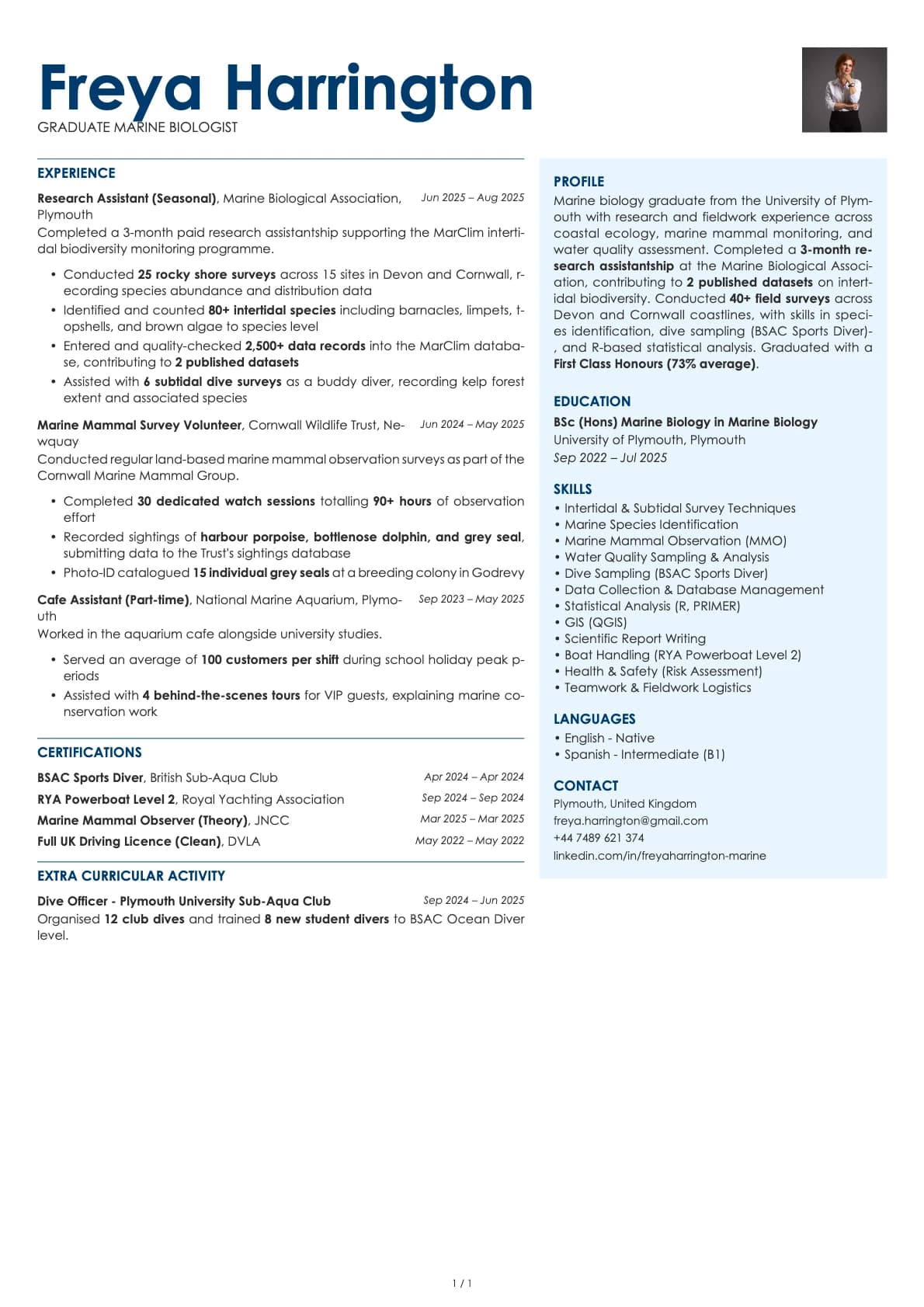
Graduate Marine Biologist
A graduate marine biologist resume example with research placement experience, dive survey qualifications, and intertidal survey numbers.
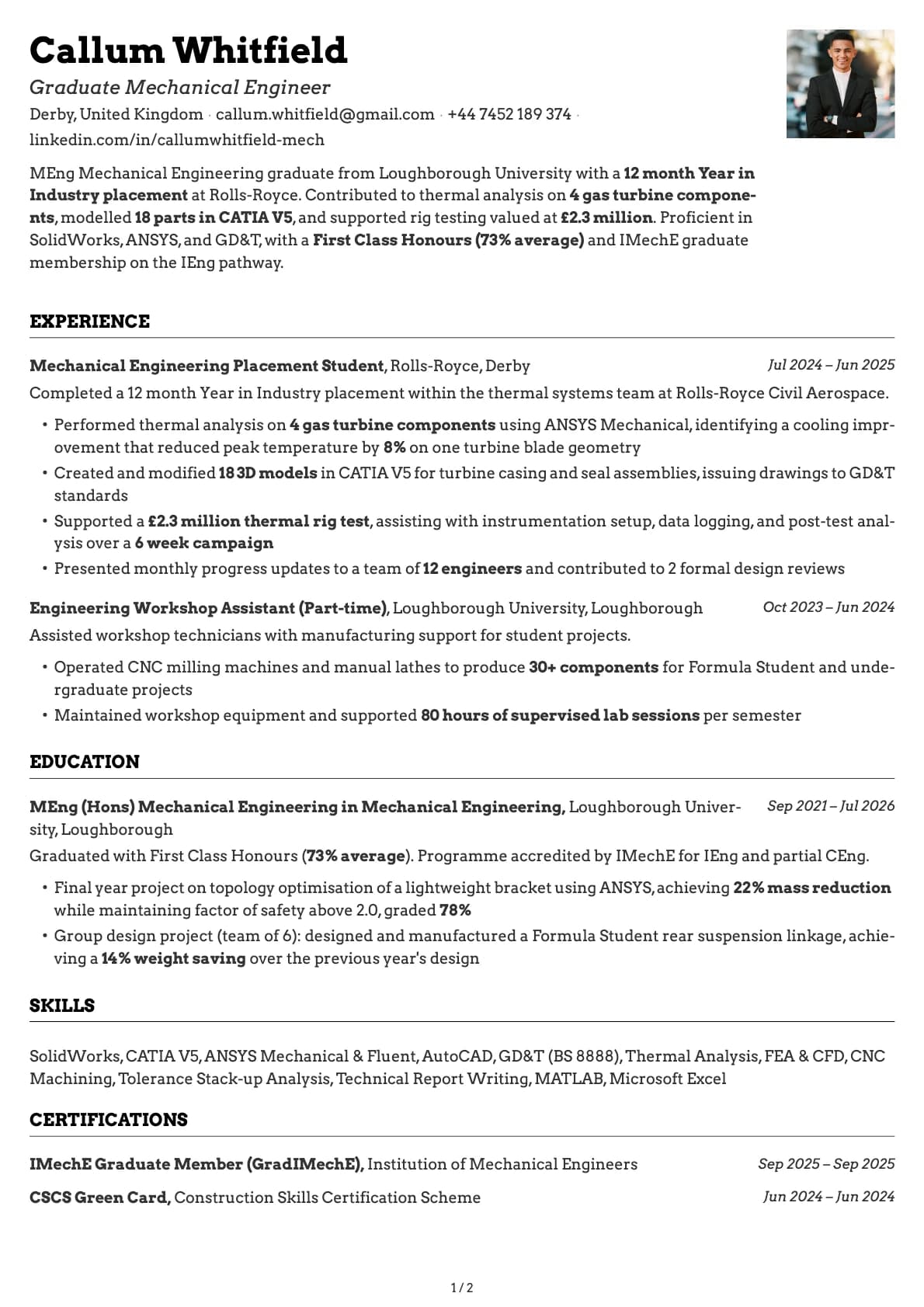
Graduate Mechanical Engineer
A graduate mechanical engineer resume example with Year in Industry placement, SolidWorks proficiency, and IMechE membership on the IEng pathway.
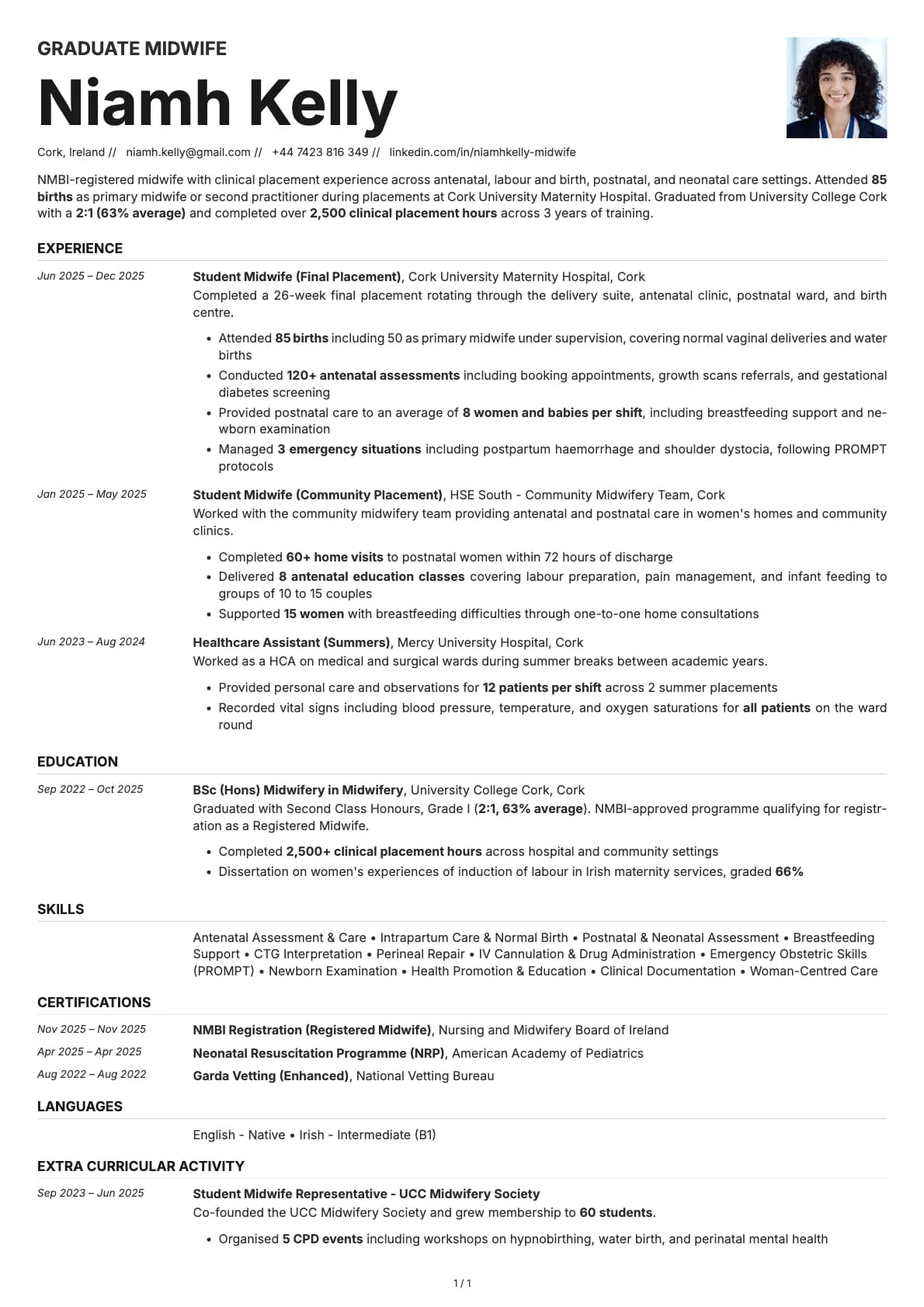
Graduate Midwife
A graduate midwife resume example with birth attendance numbers, NMBI registration, and clinical placement hours for newly qualified midwives.
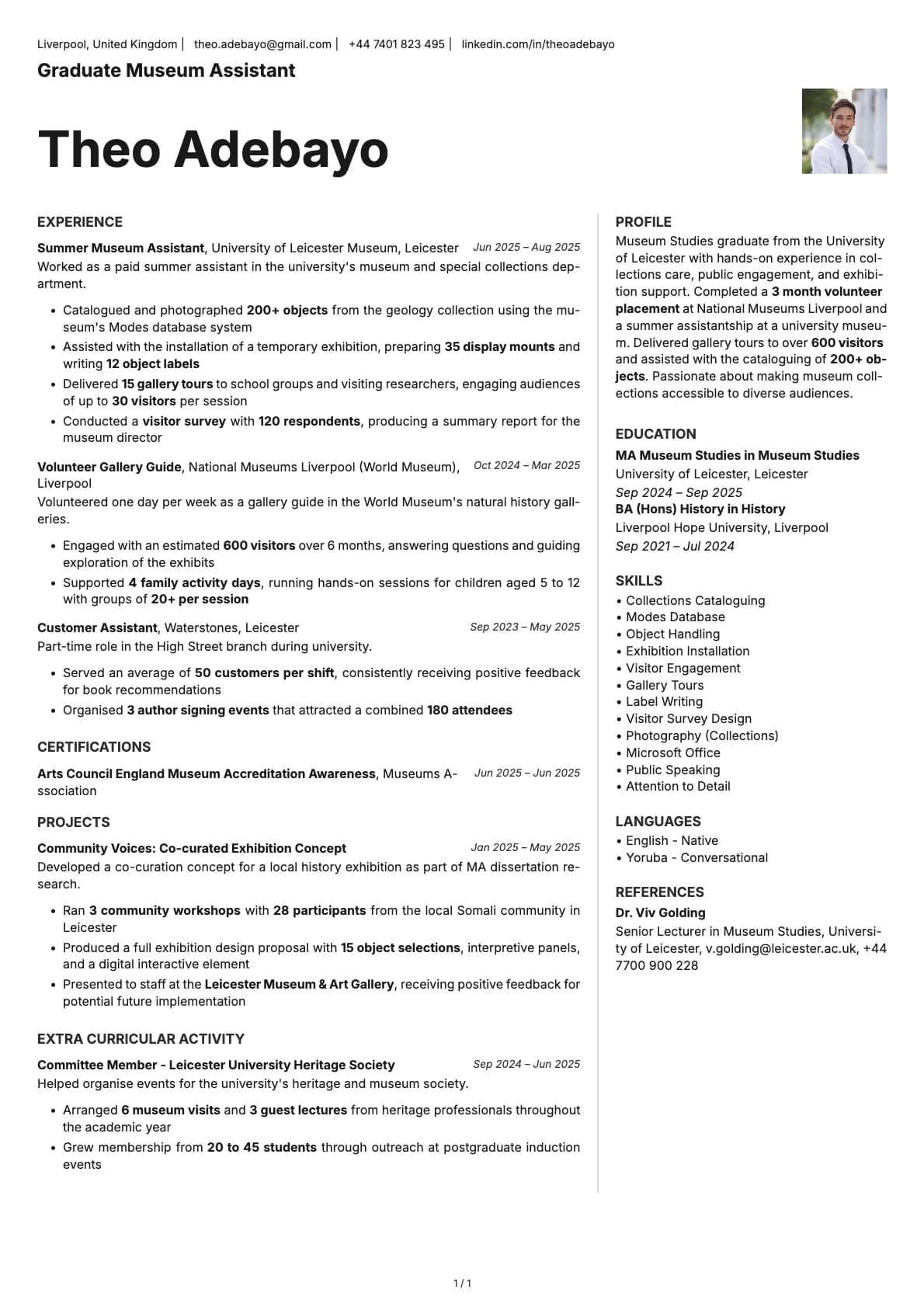
Graduate Museum Assistant
A graduate museum assistant resume example. See how to present collections experience, gallery tours, and museum studies qualifications to land your first museum role.
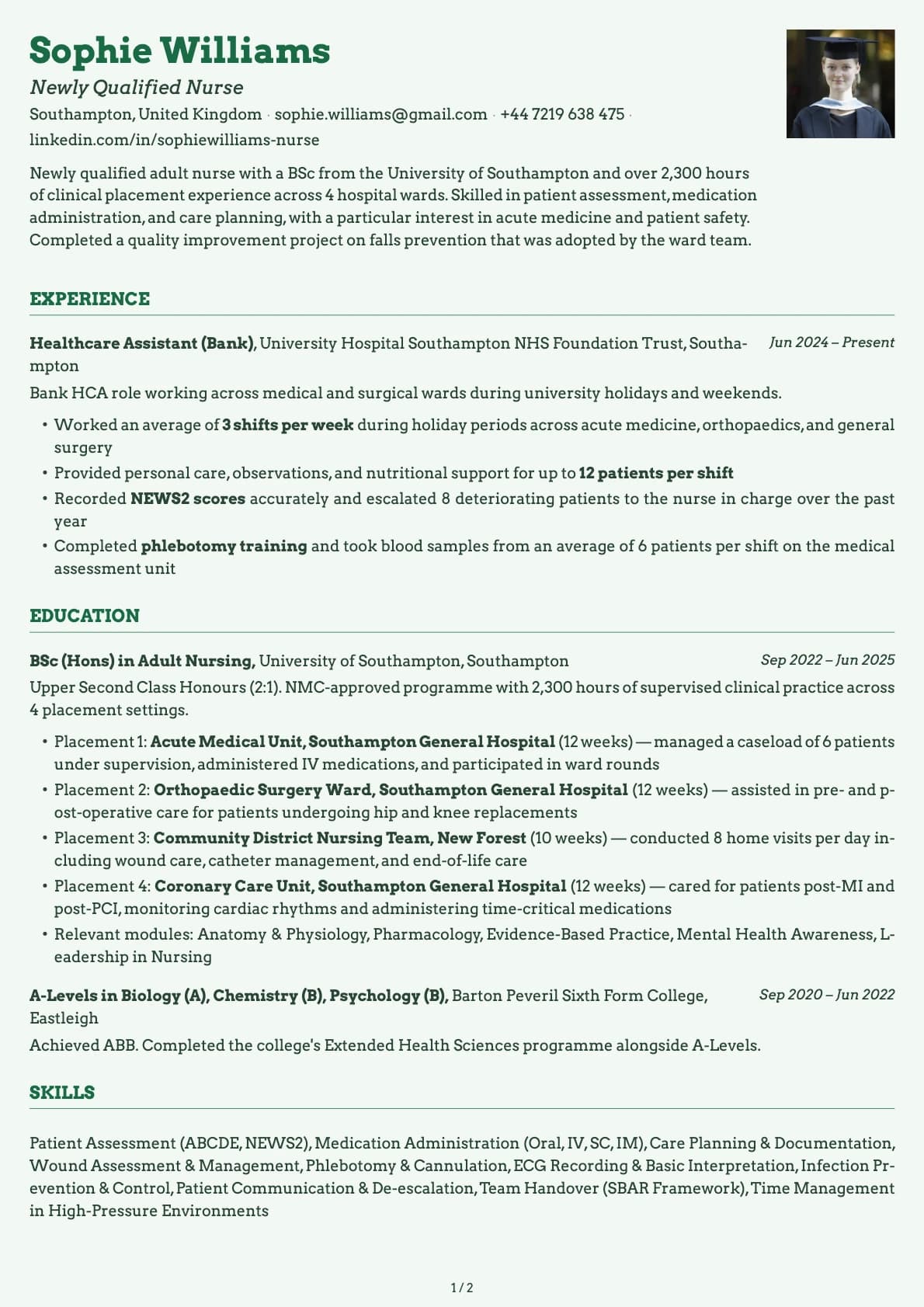
Graduate Nurse
A graduate nurse resume example for recently qualified nurses. See how to present your clinical placements, patient care experience, and NMC registration to land your first nursing role.
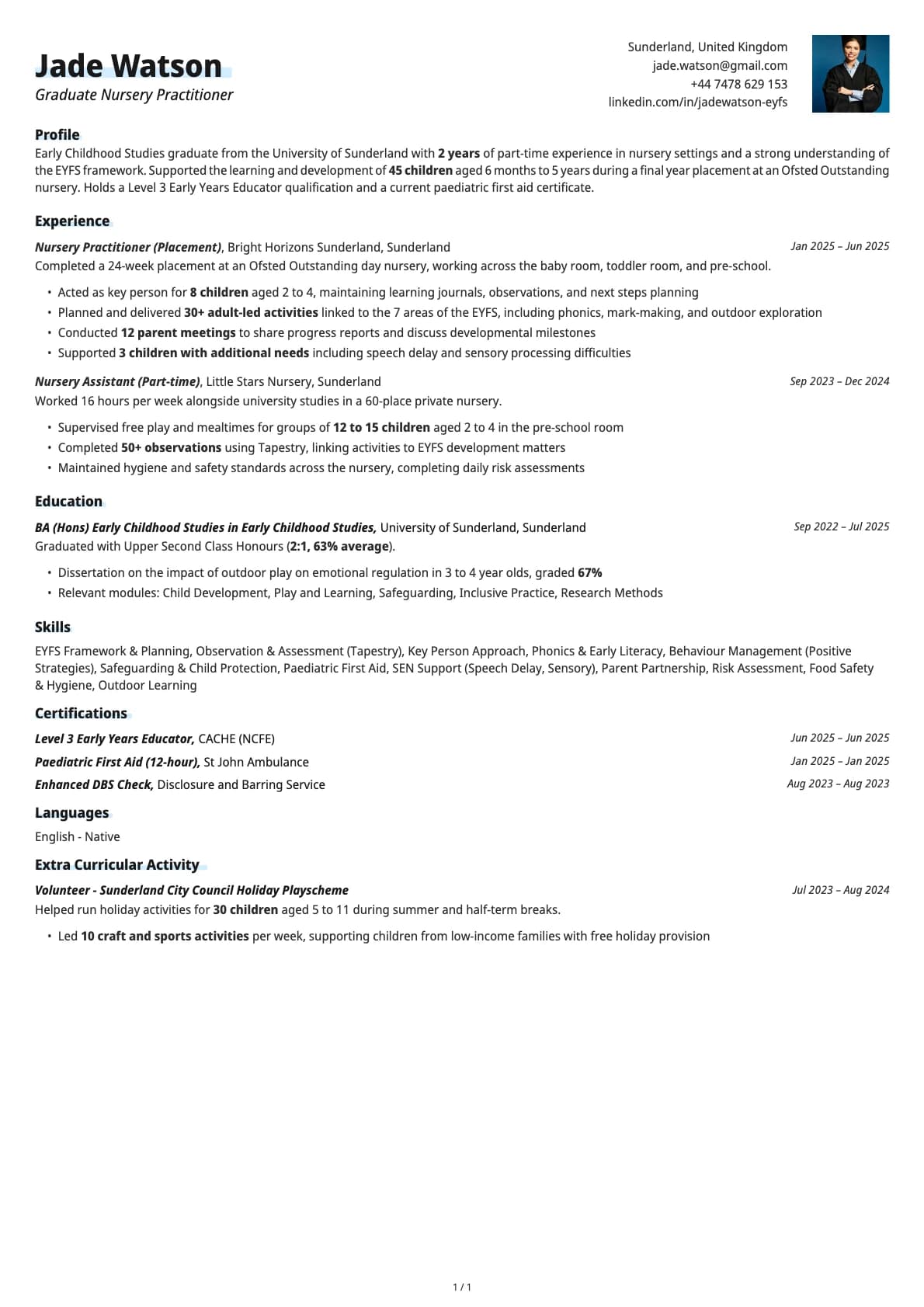
Graduate Nursery Practitioner
A graduate nursery practitioner resume example with EYFS experience, key person responsibilities, and Level 3 Early Years Educator qualification.
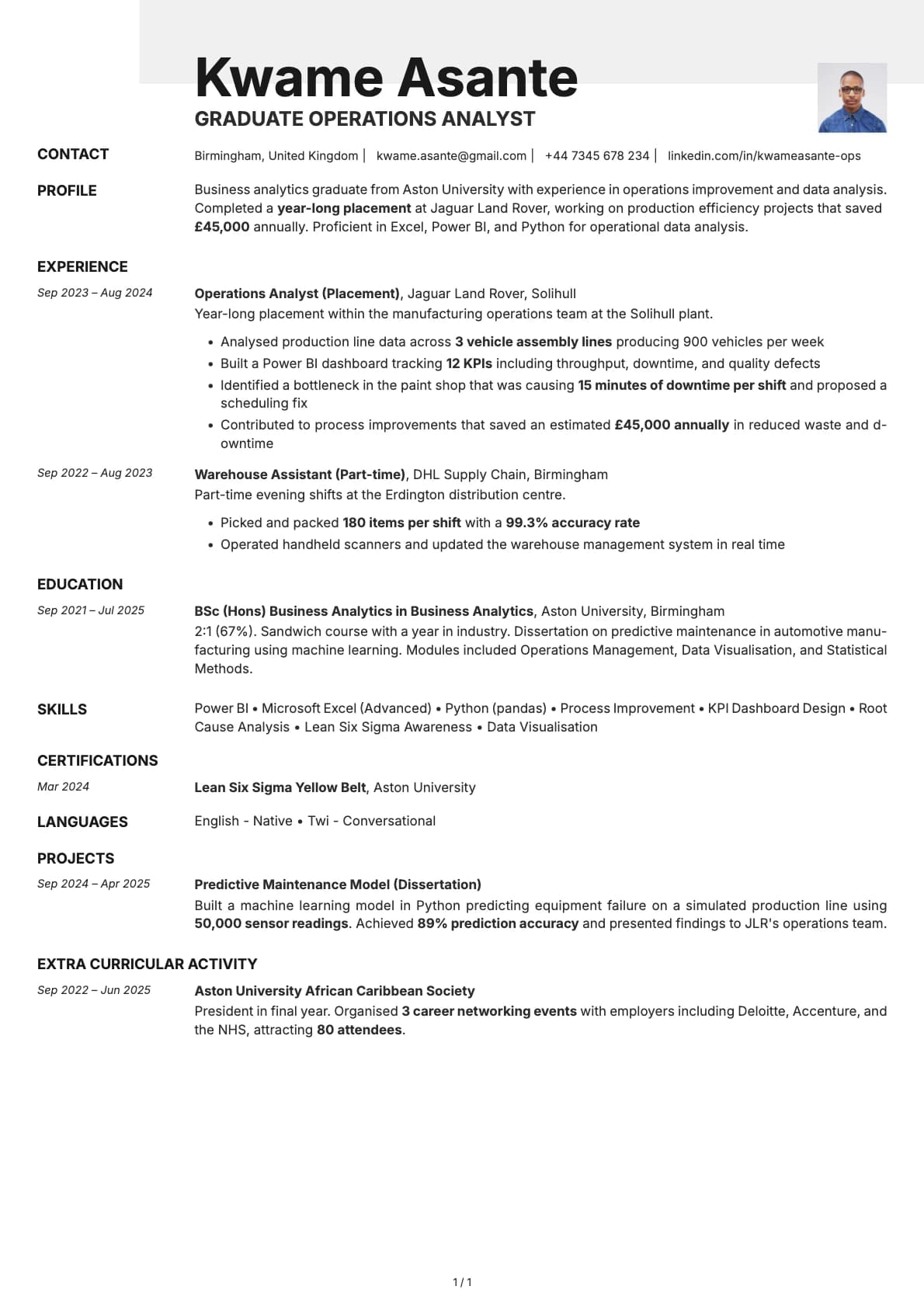
Graduate Operations Analyst
A graduate operations analyst resume example with Jaguar Land Rover placement and data analysis skills.
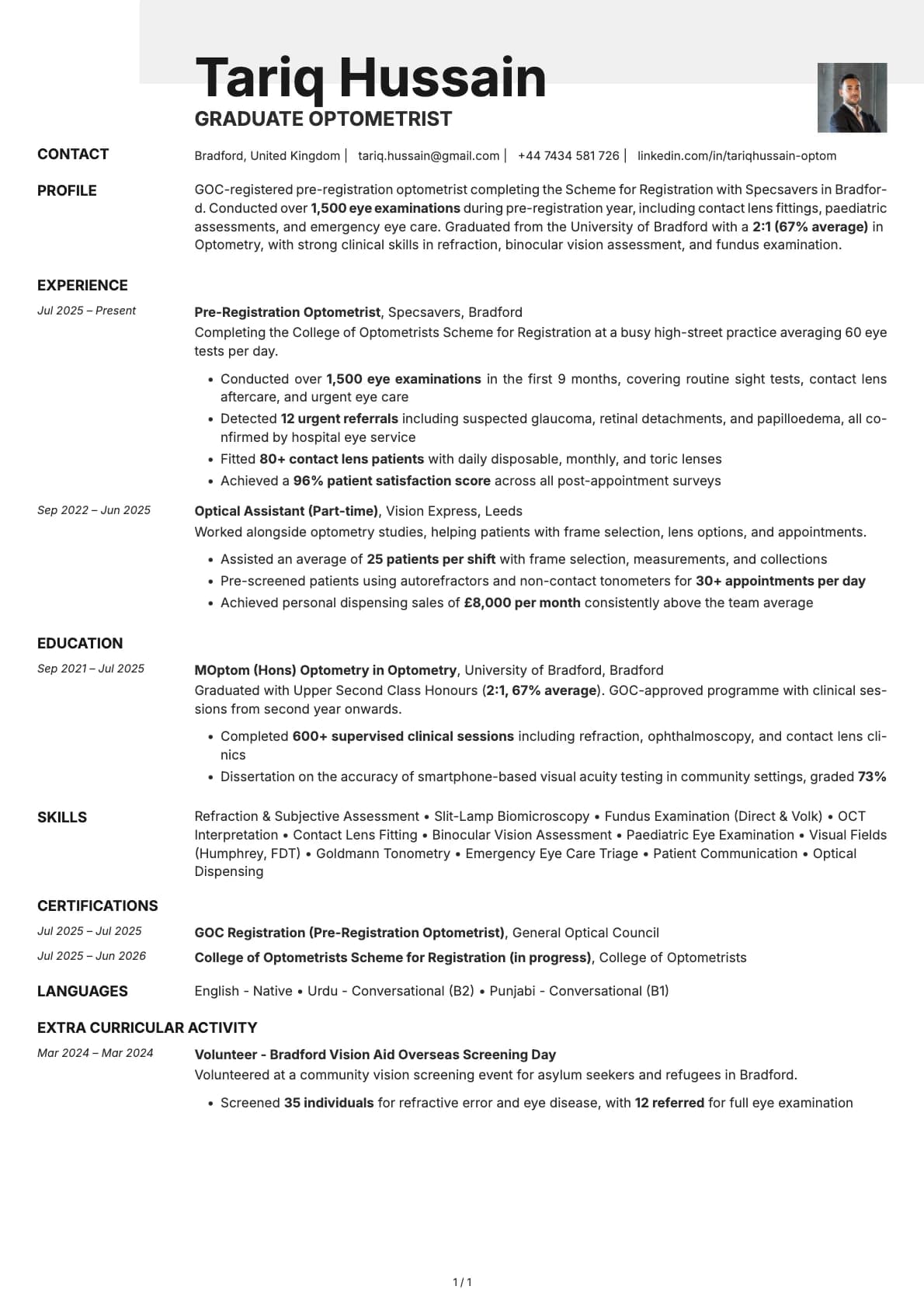
Graduate Optometrist
A graduate optometrist resume example with pre-registration experience, GOC registration, and eye examination numbers for newly qualifying optometrists.