Junior A&R Assistant Resume Example
A junior A&R assistant resume example with music business degree, label internship, and artist scouting experience for 2026.

Laddro Team
Free to use. No account needed to start.
Free to use. No account needed to start.
Overview
A&R assistants scout new talent, manage artist rosters, and coordinate between artists and the rest of the label. It is one of the most competitive entry points in the music industry, so candidates need to demonstrate genuine knowledge of emerging scenes and a track record of identifying talent before it breaks.
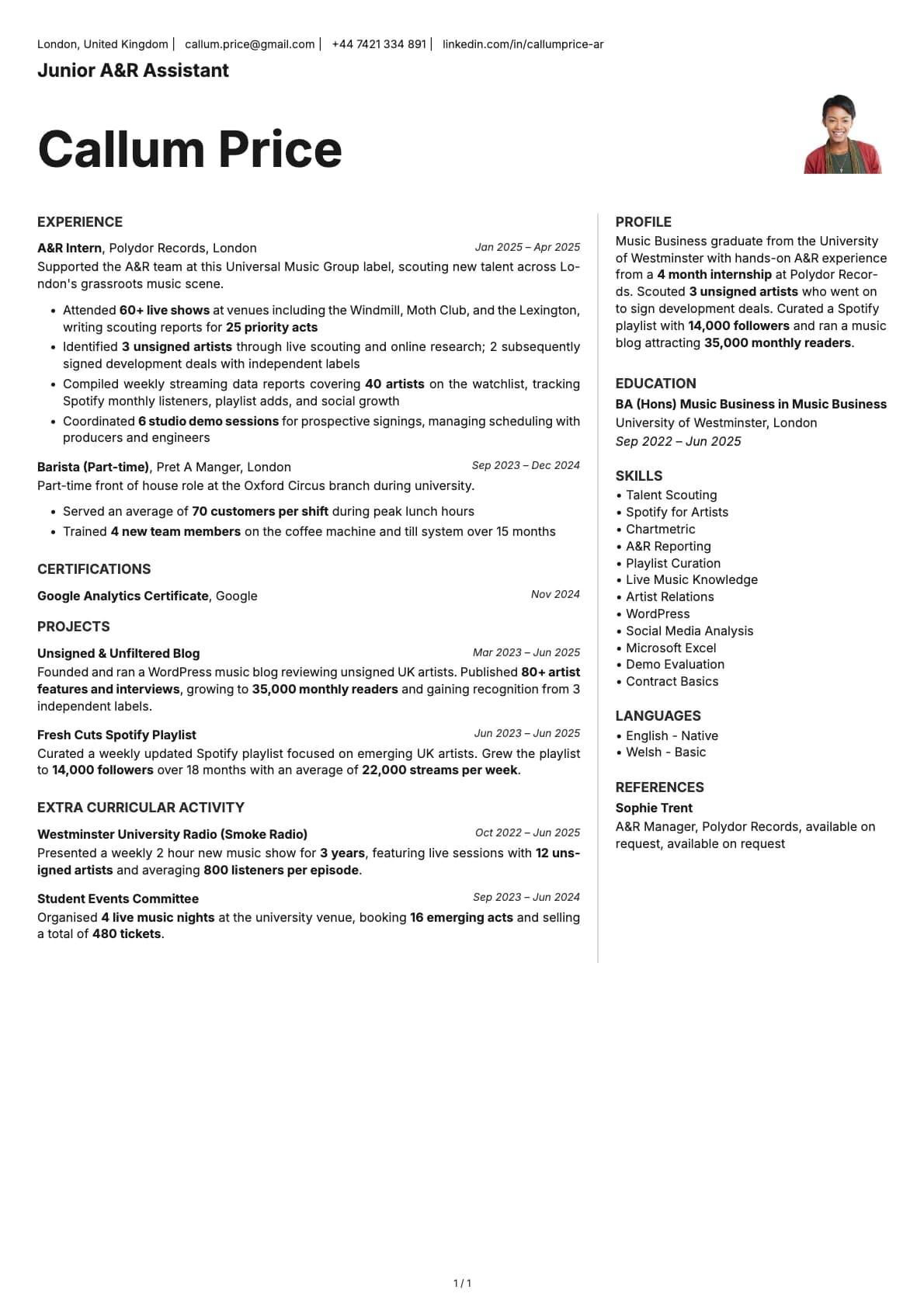
This resume belongs to Callum Price, a recent Music Business graduate from the University of Westminster. He completed a 4 month internship at Polydor Records and ran a student music blog that reviewed over 80 unsigned acts. His resume works because it pairs label experience with independent scouting that led to real outcomes.
What Makes This Resume Work
Scouted 3 unsigned artists who were subsequently signed. Callum identified 3 acts through grassroots gig attendance and online research, and 2 of those artists went on to sign development deals. This is the single most important thing an A&R resume can show: that you have ears and instincts that translate into commercial outcomes.
Managed a playlist with 14,000 followers. Curating a Spotify playlist that grew to 14,000 followers over 18 months proves Callum understands digital music consumption. Labels want A&R staff who can validate taste through data, and playlist growth is a measurable proxy for that ability.
Attended 60+ live shows during a 4 month internship. Going to gigs is the core of scouting work. Logging 60+ shows in 4 months across London venues like the Windmill, Moth Club, and the Lexington shows serious commitment and knowledge of the grassroots circuit that feeds major label signings.
Music blog with 35,000 monthly readers. Running a WordPress blog that featured interviews with 80+ unsigned artists and attracted consistent readership demonstrates writing ability, industry networking, and initiative. All three skills matter in A&R, where writing talent reports and building relationships with managers are daily tasks.
Key Takeaways
For junior A&R roles, your resume needs to prove you are already doing the job in some capacity. Name the venues you attend, the number of acts you have scouted, and any outcomes from your recommendations. If you run a playlist, blog, or radio show, include follower and listener numbers. Labels receive hundreds of applications for every A&R opening, so generic claims about being passionate about music will not stand out. Specific, quantified scouting activity will.
Build your own version
Open this layout in the builder and swap in your own details. It takes a few minutes.
Free to use. No account needed to start.
Was this resume example helpful?
Rate this example to help us create better content for you.
4.8 average from 112 ratingsRelated resume examples
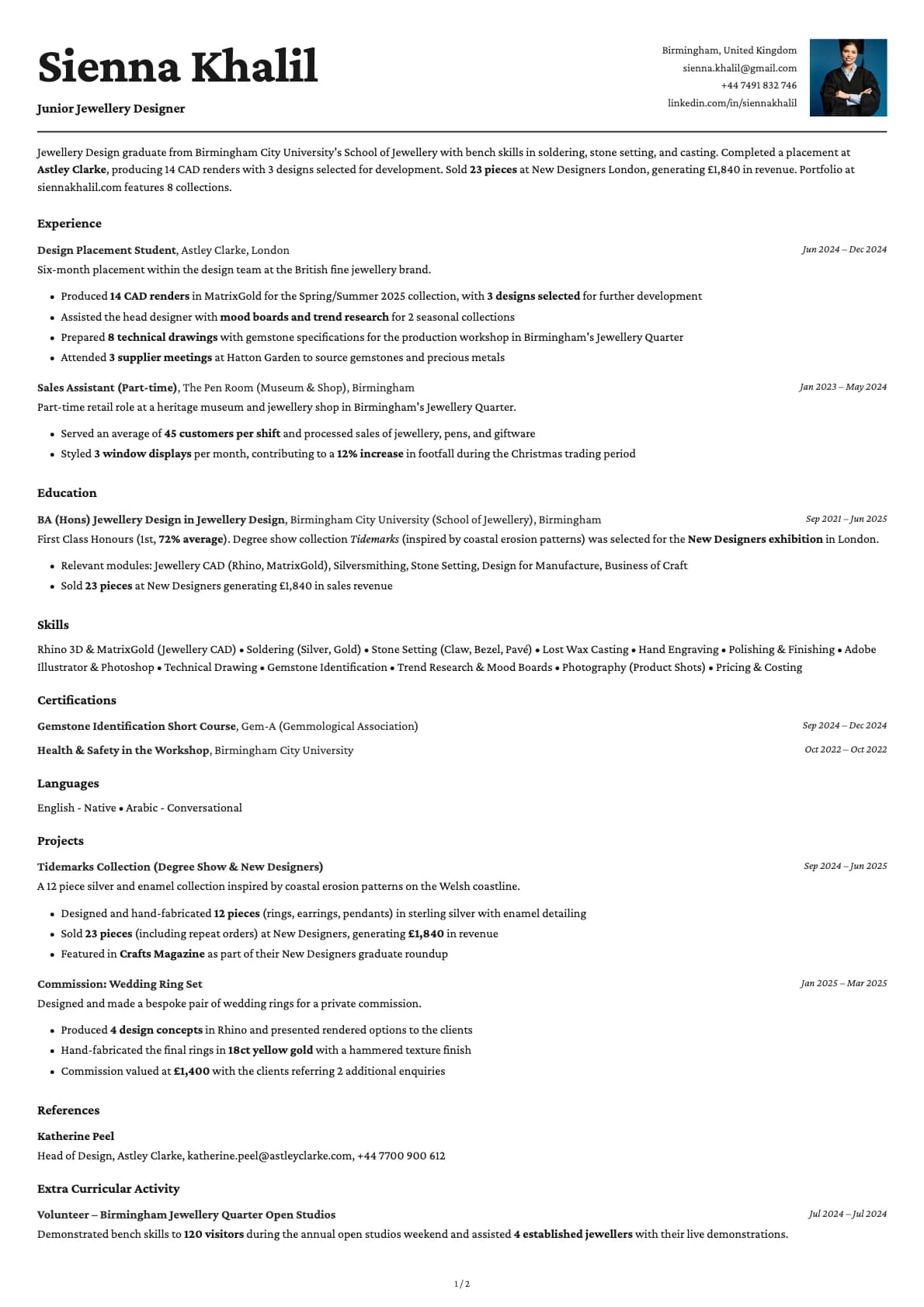
Junior Jewellery Designer
A junior jewellery designer resume example featuring CAD renders, bench skills, and collection launches from a Jewellery Design BA graduate entering the trade.
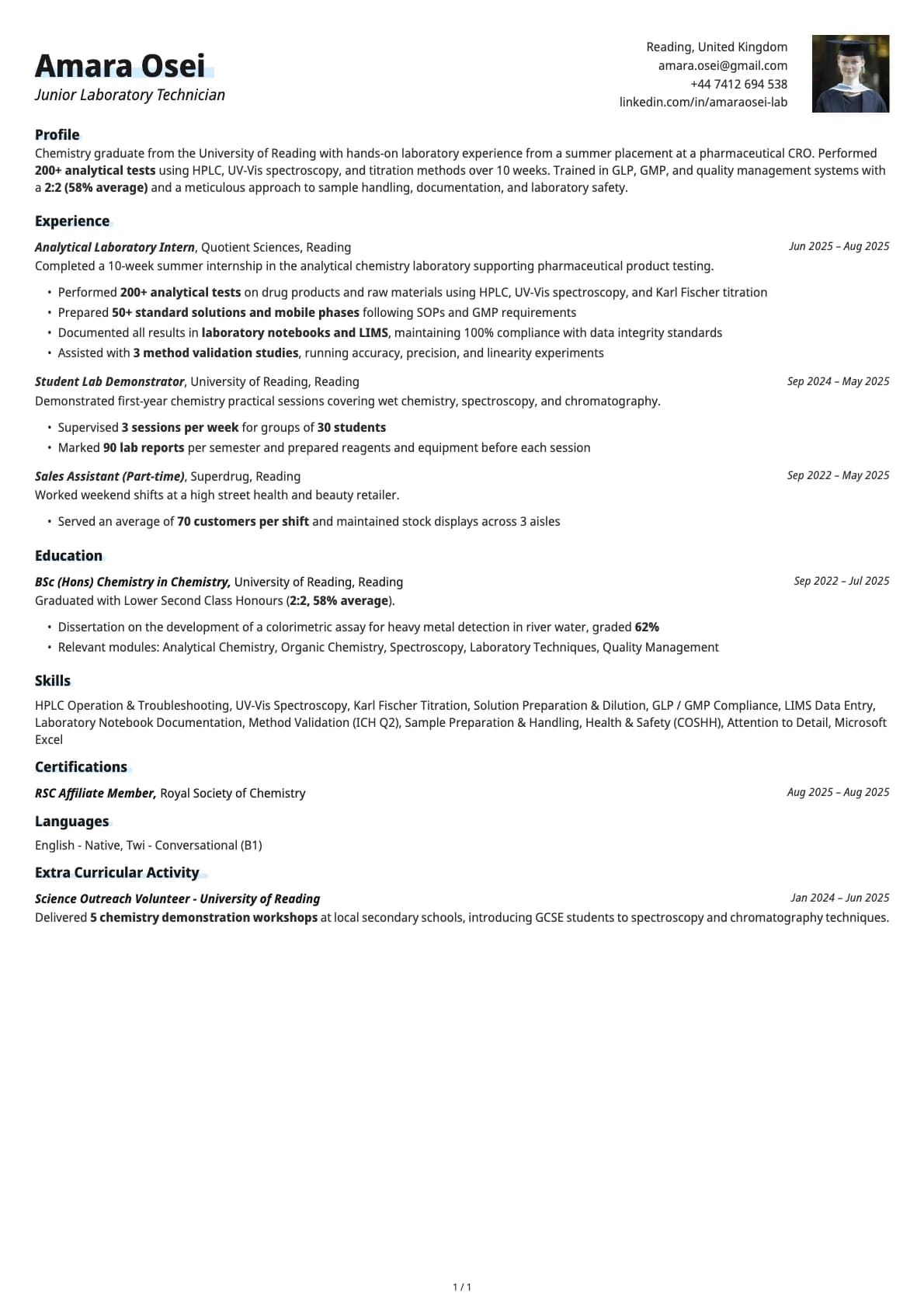
Junior Laboratory Technician
A junior lab technician resume example with pharmaceutical lab internship experience, HPLC skills, and GMP compliance for chemistry graduates.
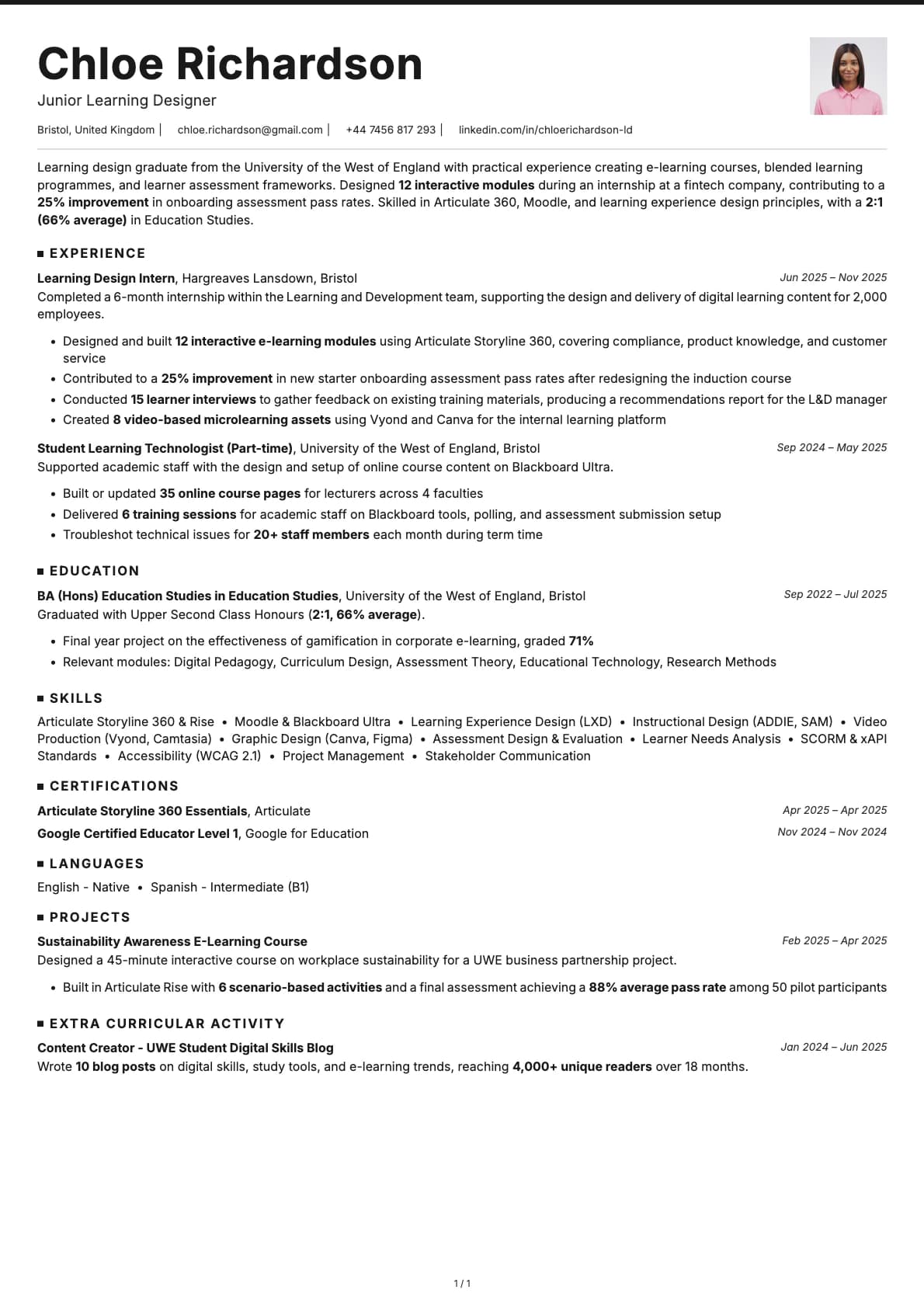
Junior Learning Designer
A junior learning designer resume example with e-learning module numbers, Articulate 360 skills, and corporate training experience for new graduates.
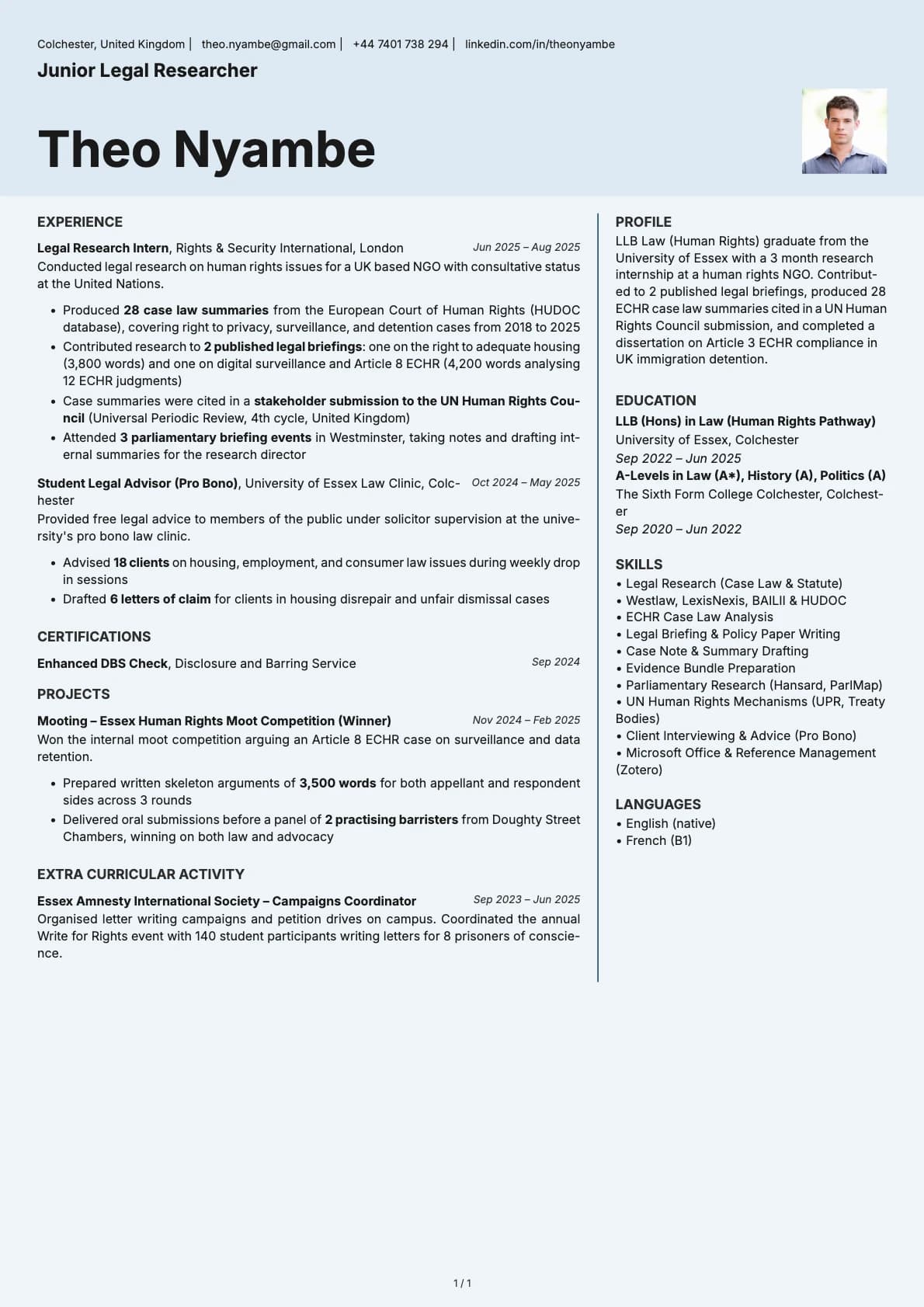
Junior Legal Researcher
A junior legal researcher resume example for human rights law LLB graduates. See how to present your legal research skills, case analysis experience, and advocacy work.
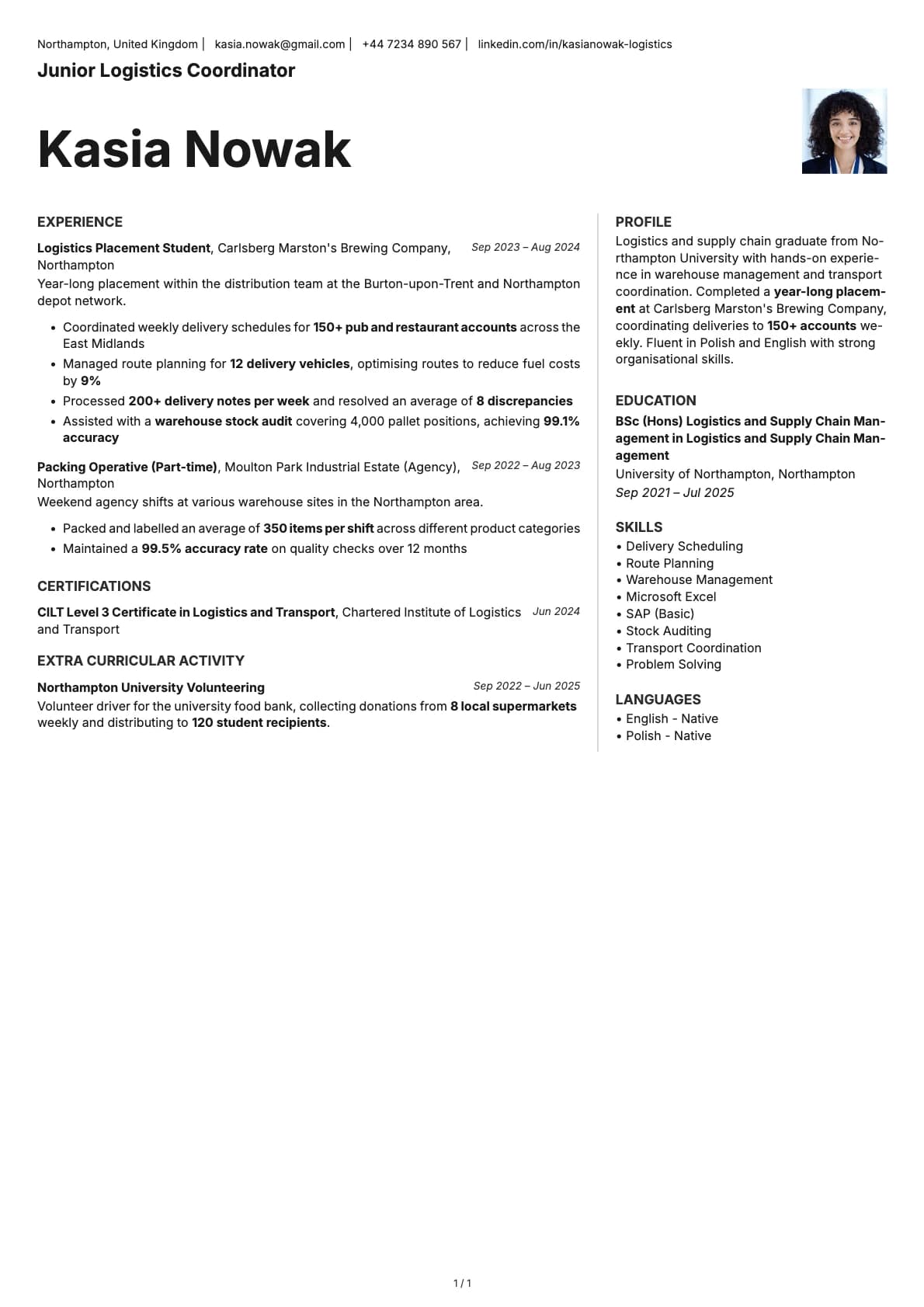
Junior Logistics Coordinator
A junior logistics coordinator resume example with brewery distribution placement and route planning experience.
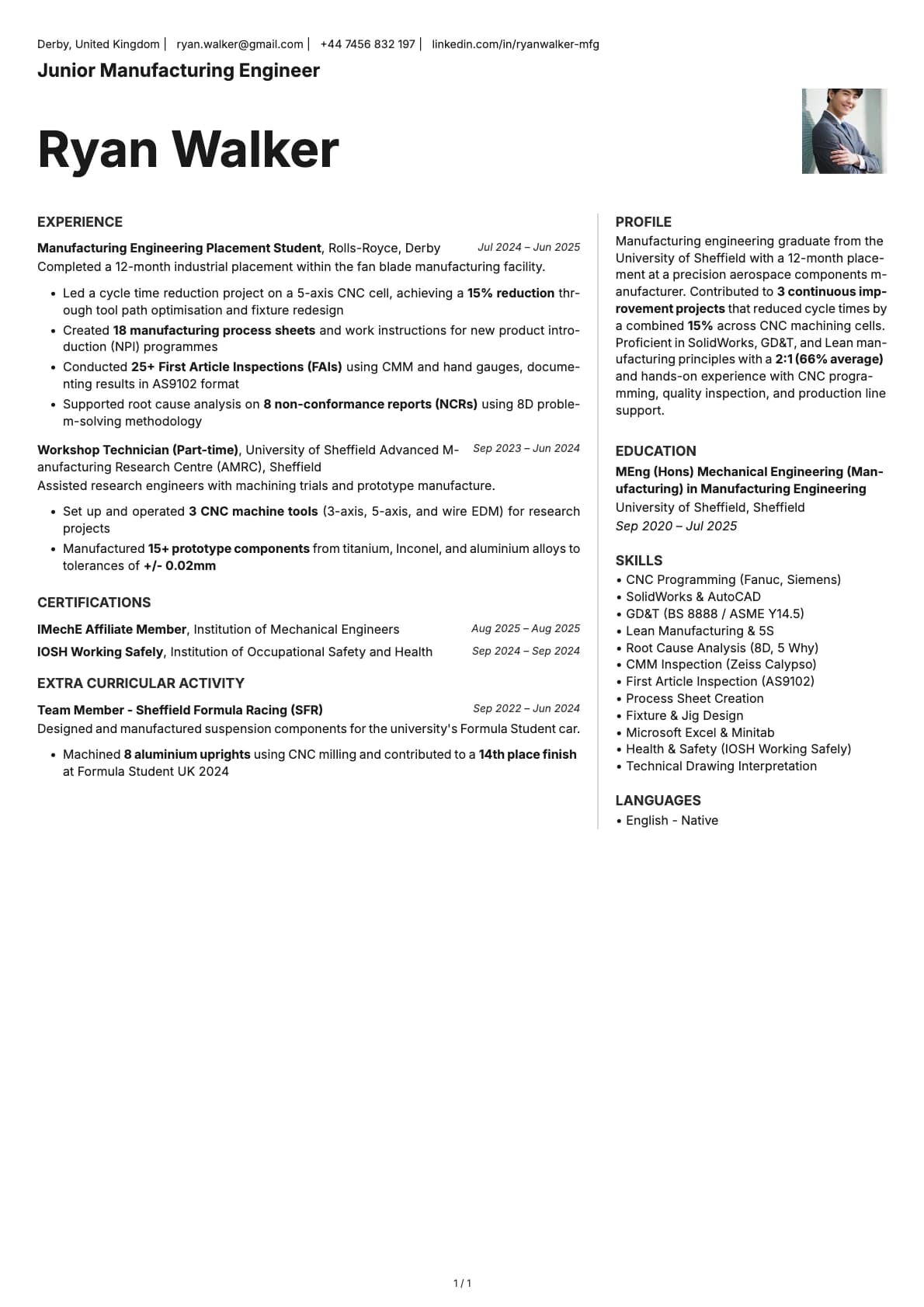
Junior Manufacturing Engineer
A junior manufacturing engineer resume example with aerospace placement experience, CNC skills, and cycle time reduction achievements.

Junior Marketing Coordinator
A junior marketing coordinator resume example for graduates entering the field. See how to turn retail work, volunteering, and a marketing degree into a strong application.
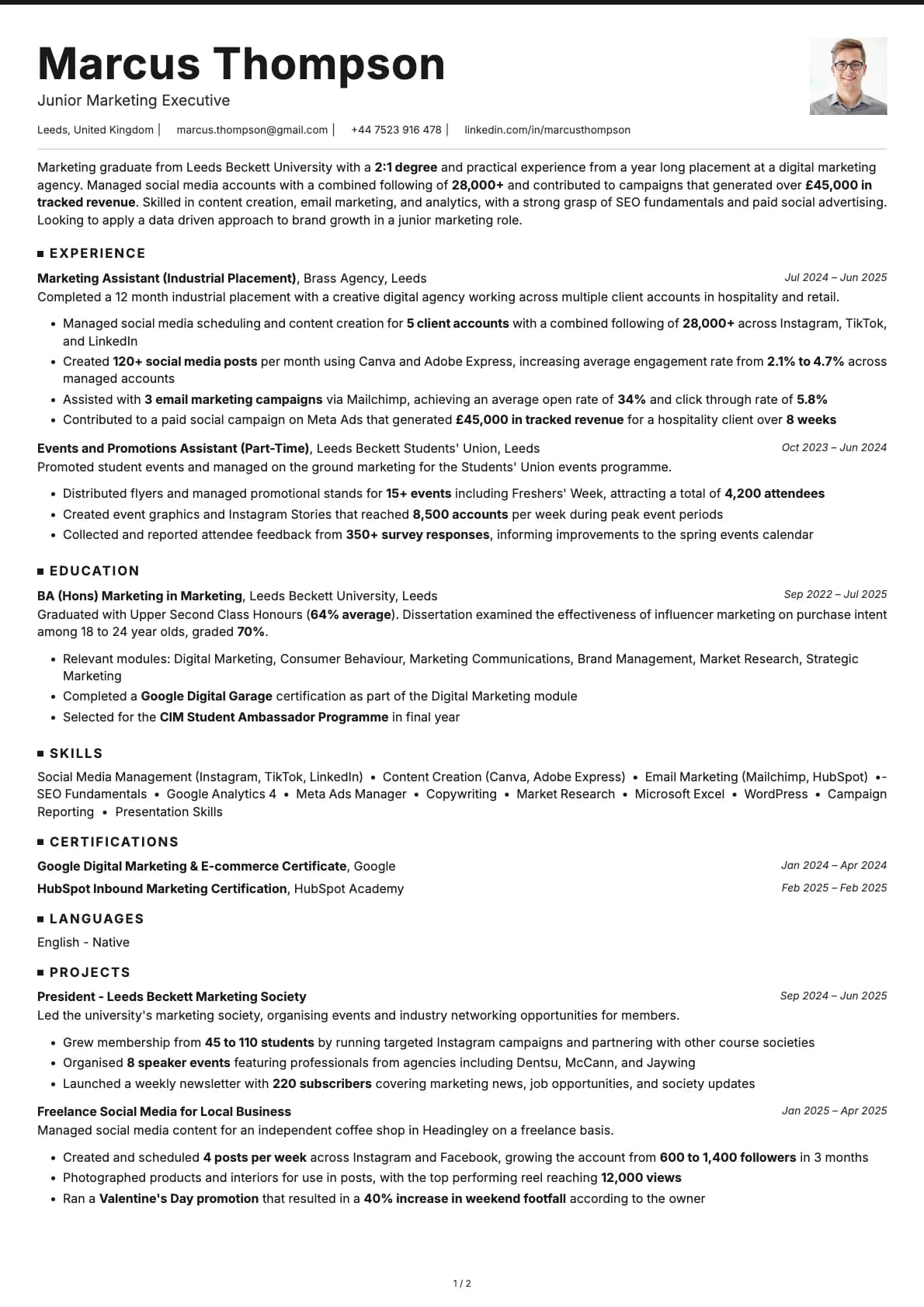
Junior Marketing Executive
A junior marketing executive resume example for recent graduates. See how to showcase social media skills, campaign results, and agency experience effectively.
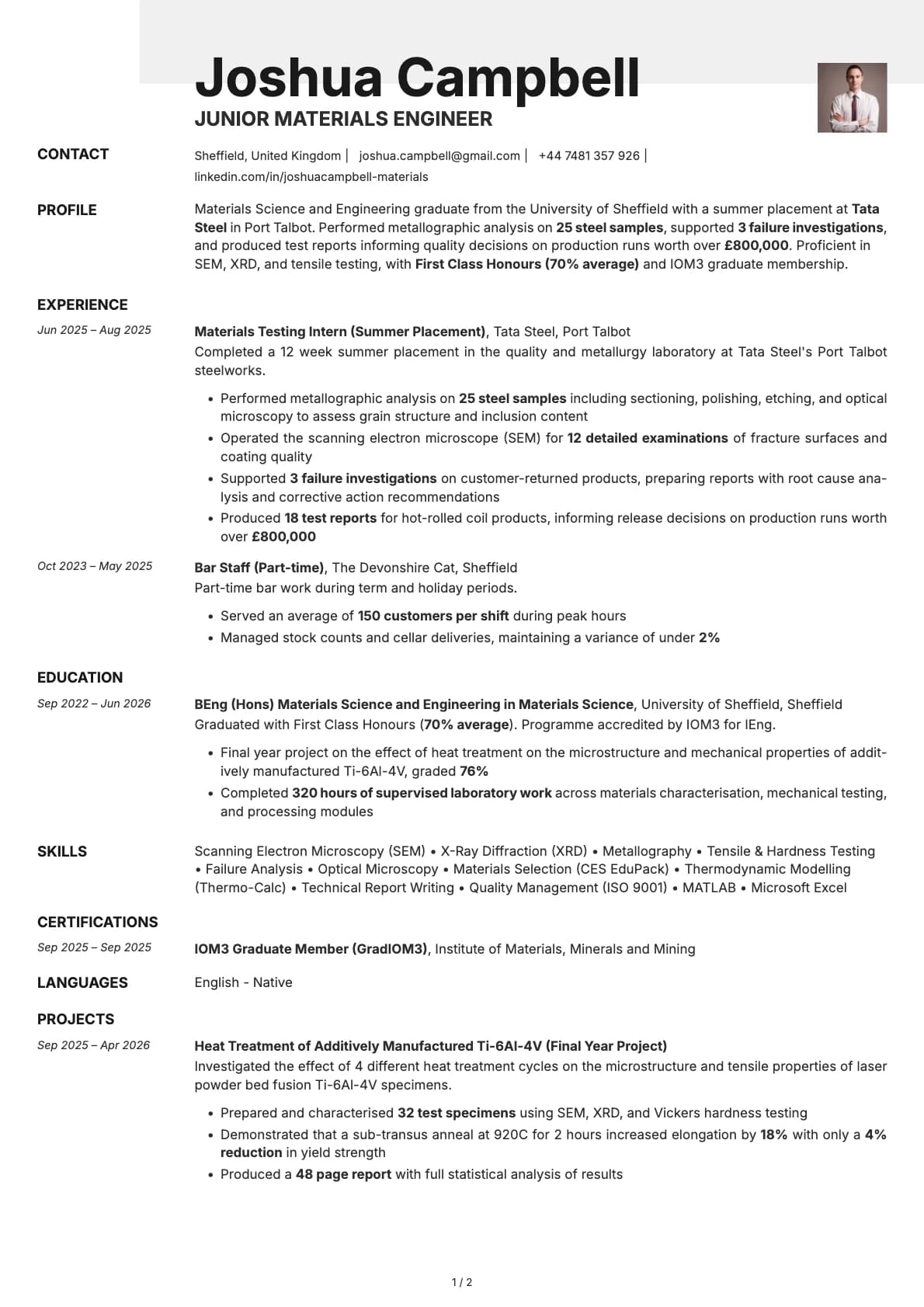
Junior Materials Engineer
A junior materials engineer resume example with metallurgical testing experience, SEM analysis skills, and IOM3 membership.

Junior Mechanical Engineer
A junior mechanical engineer resume example with a year in industry placement. See how to present CAD skills, FEA experience, and engineering projects on your graduate CV.
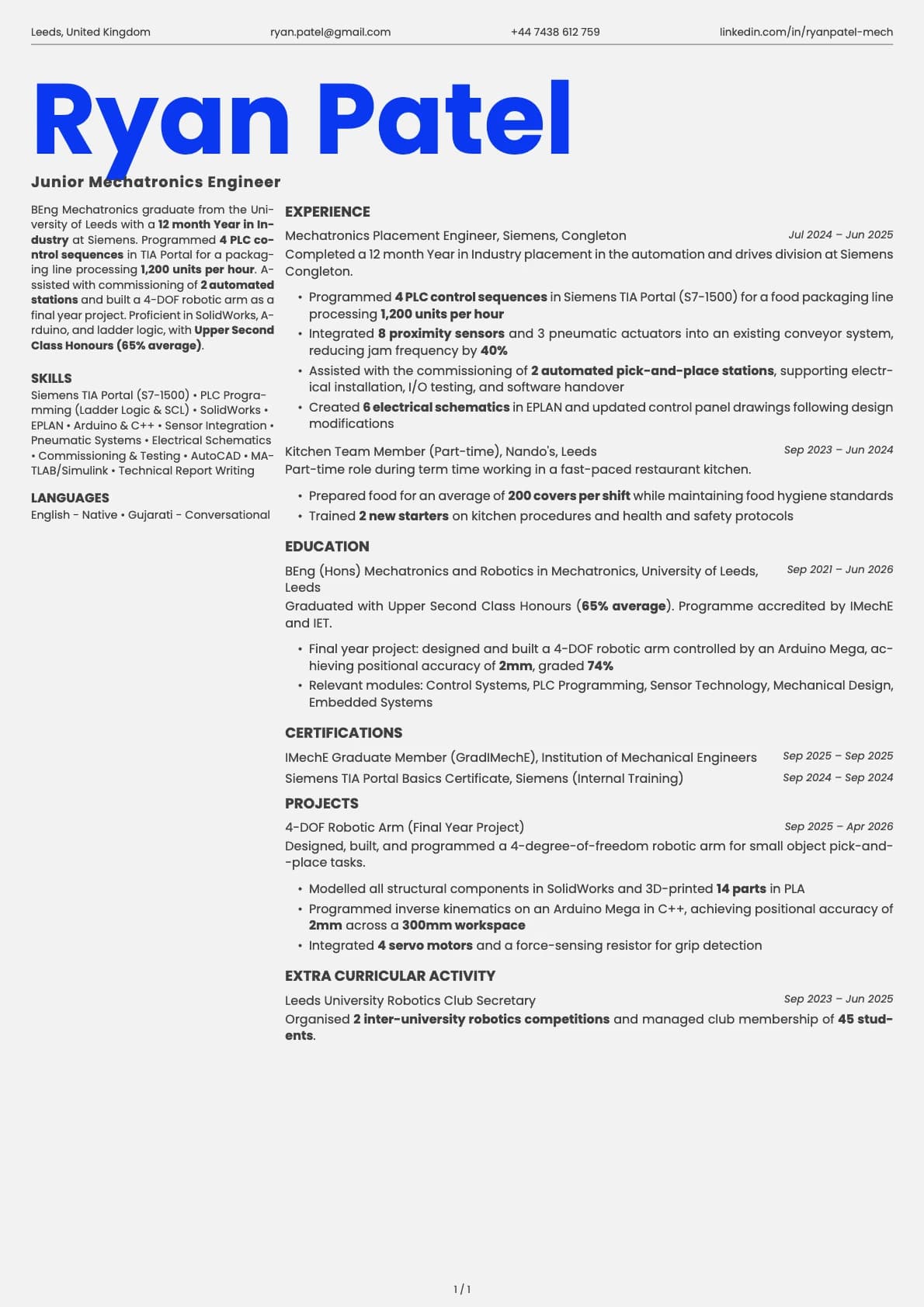
Junior Mechatronics Engineer
A junior mechatronics engineer resume example with PLC programming experience, SolidWorks proficiency, and an industrial automation placement.
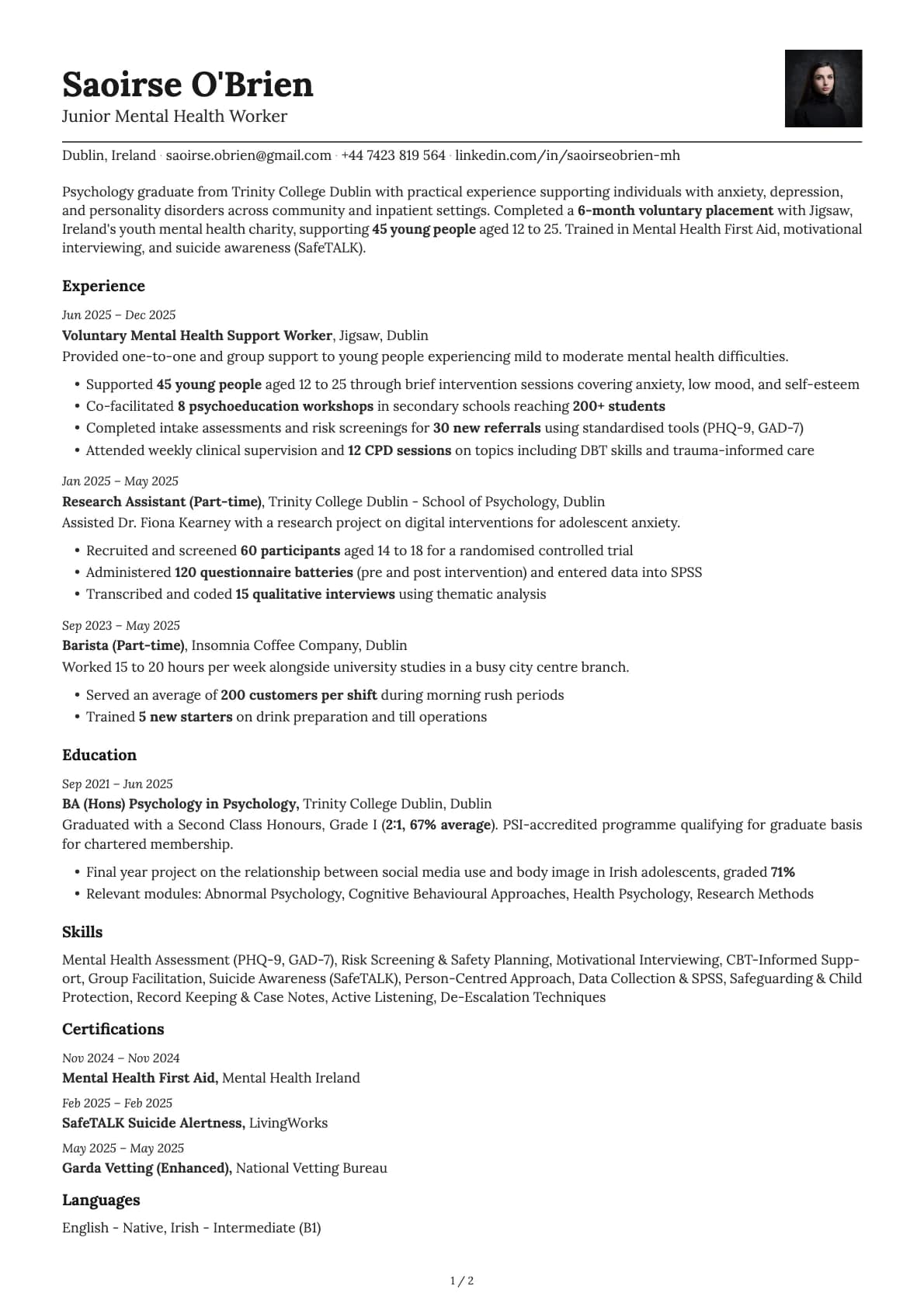
Junior Mental Health Worker
A junior mental health worker resume example with voluntary placement experience, assessment tools, and youth support numbers for psychology graduates.