Graduate Nurse Resume Example
A graduate nurse resume example for recently qualified nurses. See how to present your clinical placements, patient care experience, and NMC registration to land your first nursing role.

Laddro Team
Free to use. No account needed to start.
Free to use. No account needed to start.
Overview
Newly qualified nurses have more clinical experience than most graduates in any field. The challenge is not a lack of experience. It is presenting your placement hours, patient interactions, and clinical skills in a way that is specific and measurable rather than broad and generic. "Provided patient care" appears on every graduate nurse resume. It tells a ward manager nothing about what you can actually do.
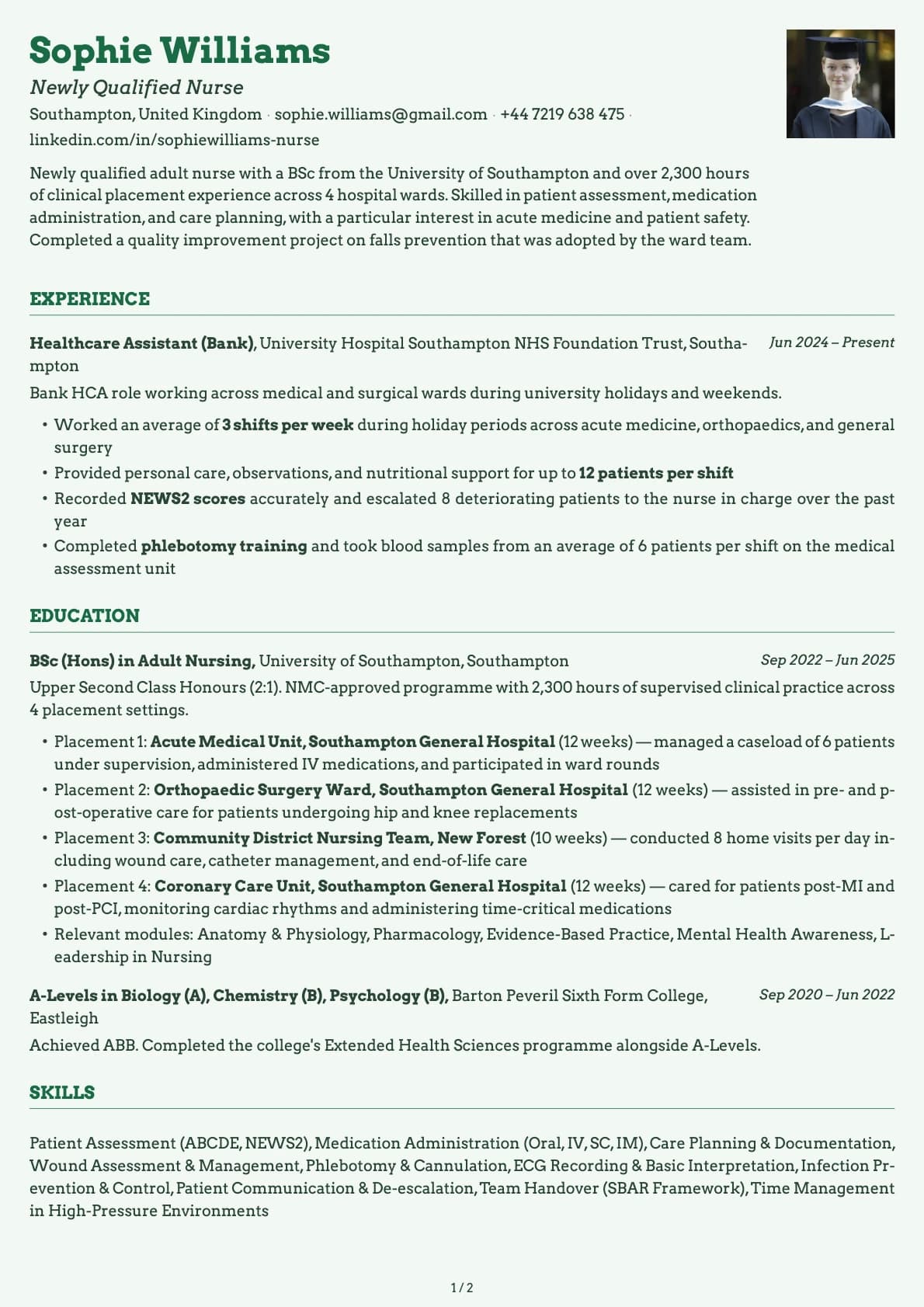
This resume belongs to Grace Thompson, a newly qualified adult nurse who completed her BSc in Nursing at the University of Southampton. She undertook placements across medical, surgical, community, and emergency settings over three years. Her resume works because it breaks down her clinical experience into specific skills, patient numbers, and measurable contributions.
What Makes This Resume Work
Placements are described with clinical specifics. Grace does not just list ward names. On her medical placement, she managed a caseload of six patients per shift, administered medications including IV antibiotics and subcutaneous injections, and completed daily observations using the NEWS2 scoring system. On her surgical placement, she assisted with pre operative assessments and post operative wound care for an average of four patients per day. This level of detail tells a recruiter exactly what she is competent to do.
Patient safety awareness is highlighted. She mentions completing two Datix incident reports during her placements and participating in a root cause analysis meeting. She also flags that she maintained a 100% medication administration accuracy record across her final placement. Patient safety is the top priority in nursing, and showing awareness of reporting and accuracy standards is essential.
Community experience adds range. Her community placement involved visiting housebound patients for wound dressings, catheter care, and health assessments. She made an average of eight home visits per day and documented each one in the patient's electronic record. Community experience is increasingly valued as more care shifts out of hospitals, and demonstrating competence in independent home visits shows adaptability.
Professional registration and training are clear. NMC registered, BLS certified, and trained in manual handling, infection prevention, and safeguarding for adults and children. She also completed an elective module in palliative care. These qualifications are expected, but listing them explicitly saves the recruiter from having to assume.
Key Takeaways
Break your placements down by clinical setting and describe the specific tasks you performed. Patient numbers per shift, medication types administered, assessment tools used, and documentation systems. Ward managers want to know your level of practical competence, not just where you were placed.
Mention patient safety examples. Datix reports, near miss identification, medication accuracy rates. These demonstrate that you understand clinical governance, which is critical for any newly qualified nurse.
Include all your training certifications and your NMC registration number. Also mention any additional modules or courses you chose voluntarily. Elective modules in specialist areas like palliative care, mental health, or critical care show genuine interest and initiative.
Build your own version
Open this layout in the builder and swap in your own details. It takes a few minutes.
Free to use. No account needed to start.
Was this resume example helpful?
Rate this example to help us create better content for you.
4.8 average from 176 ratingsRelated resume examples
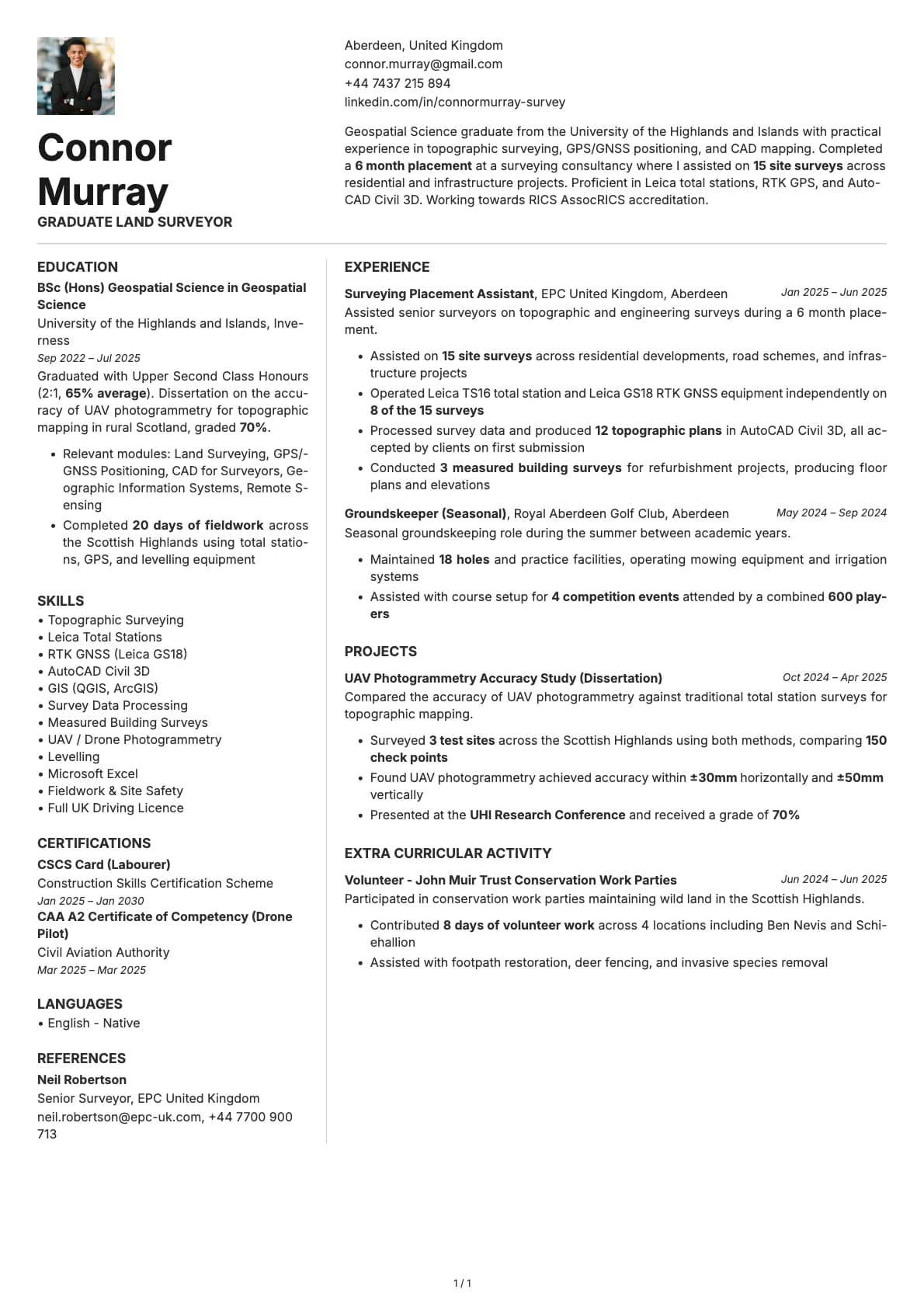
Graduate Land Surveyor
A graduate land surveyor resume example. See how to present site survey experience, GPS/GNSS skills, and CAD output to land your first surveying role.
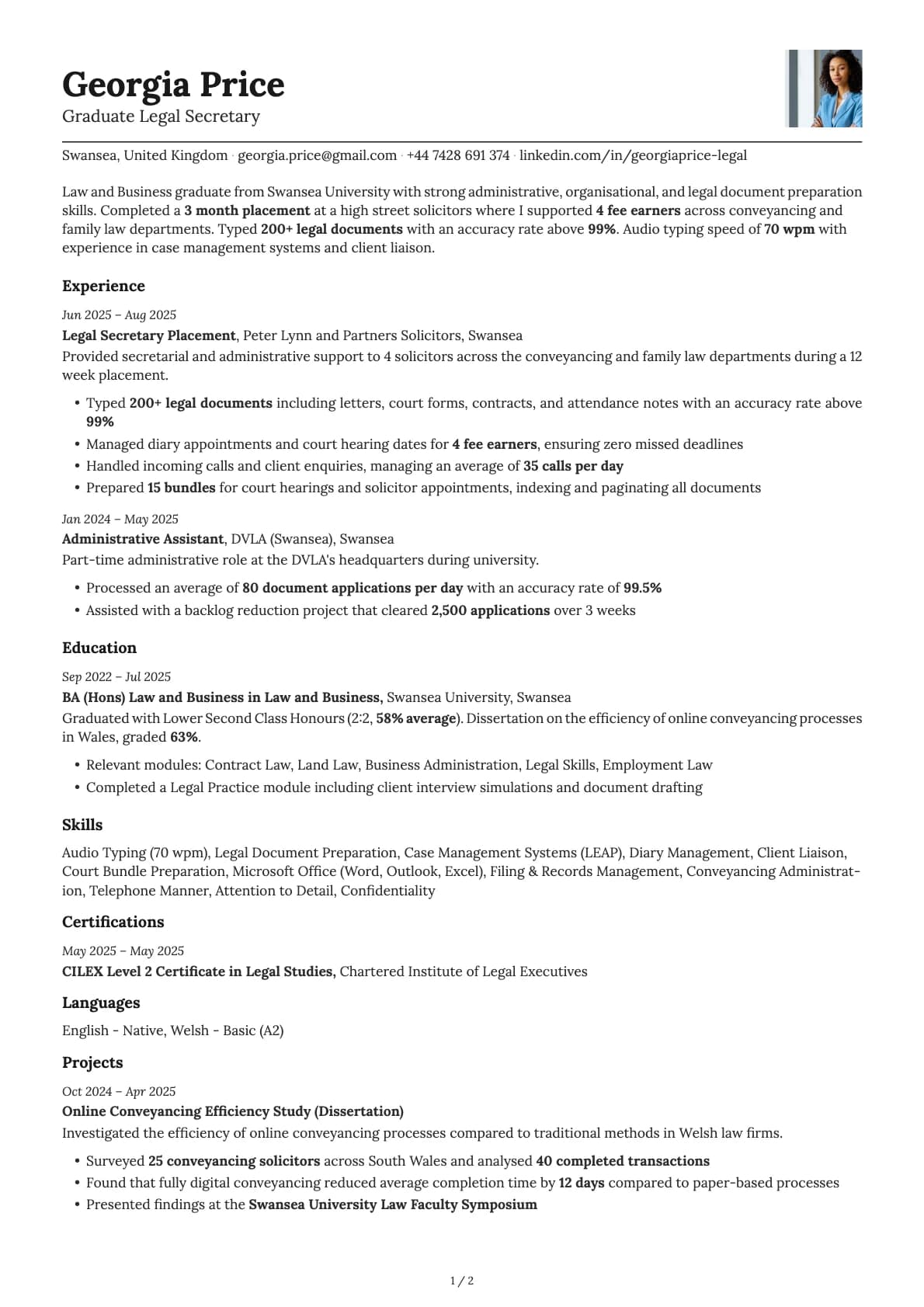
Graduate Legal Secretary
A graduate legal secretary resume example. See how to present typing speed, legal document preparation, and solicitor support experience to land your first legal secretary role.
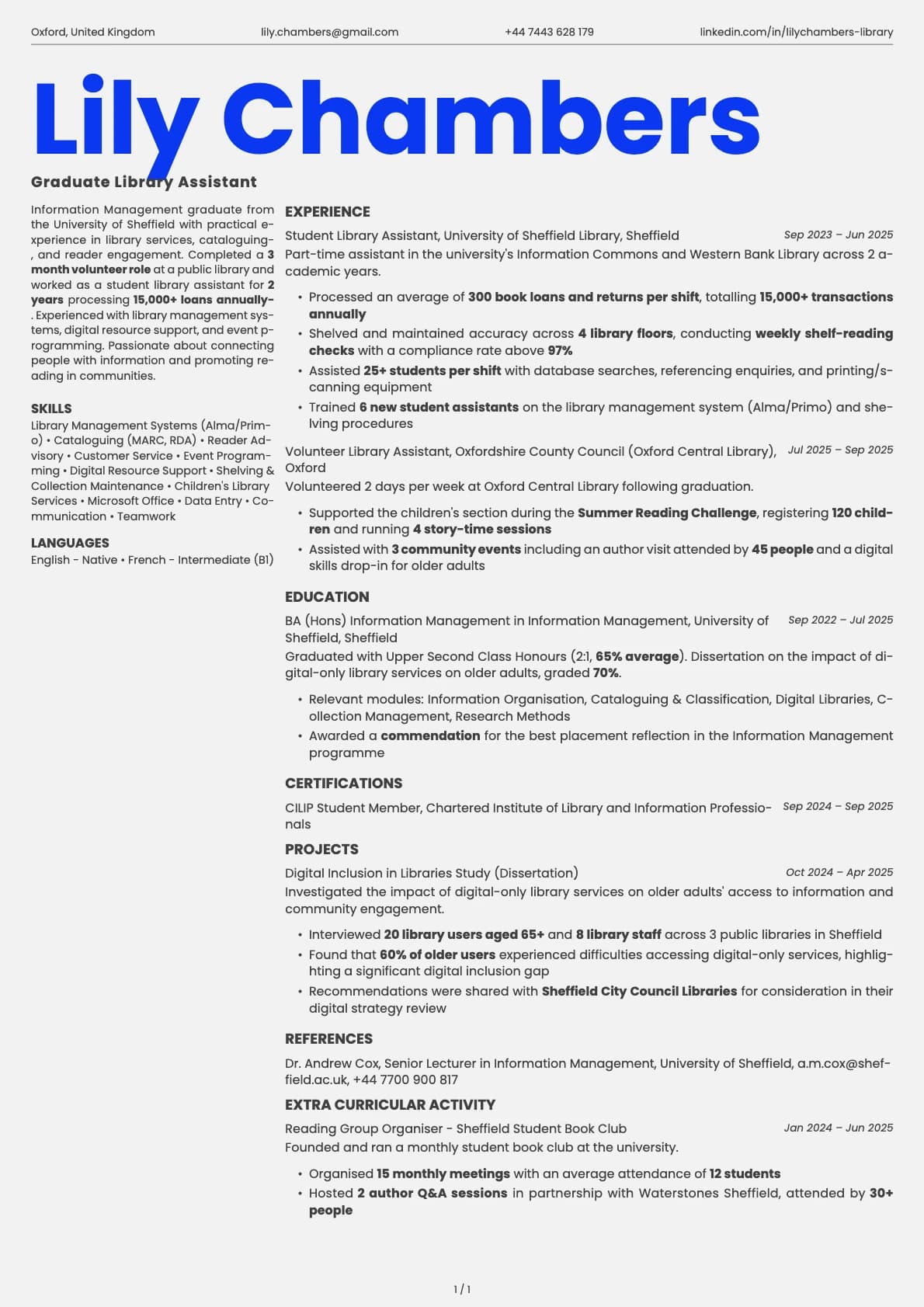
Graduate Library Assistant
A graduate library assistant resume example. See how to present library experience, cataloguing skills, and event programming to land your first library role.
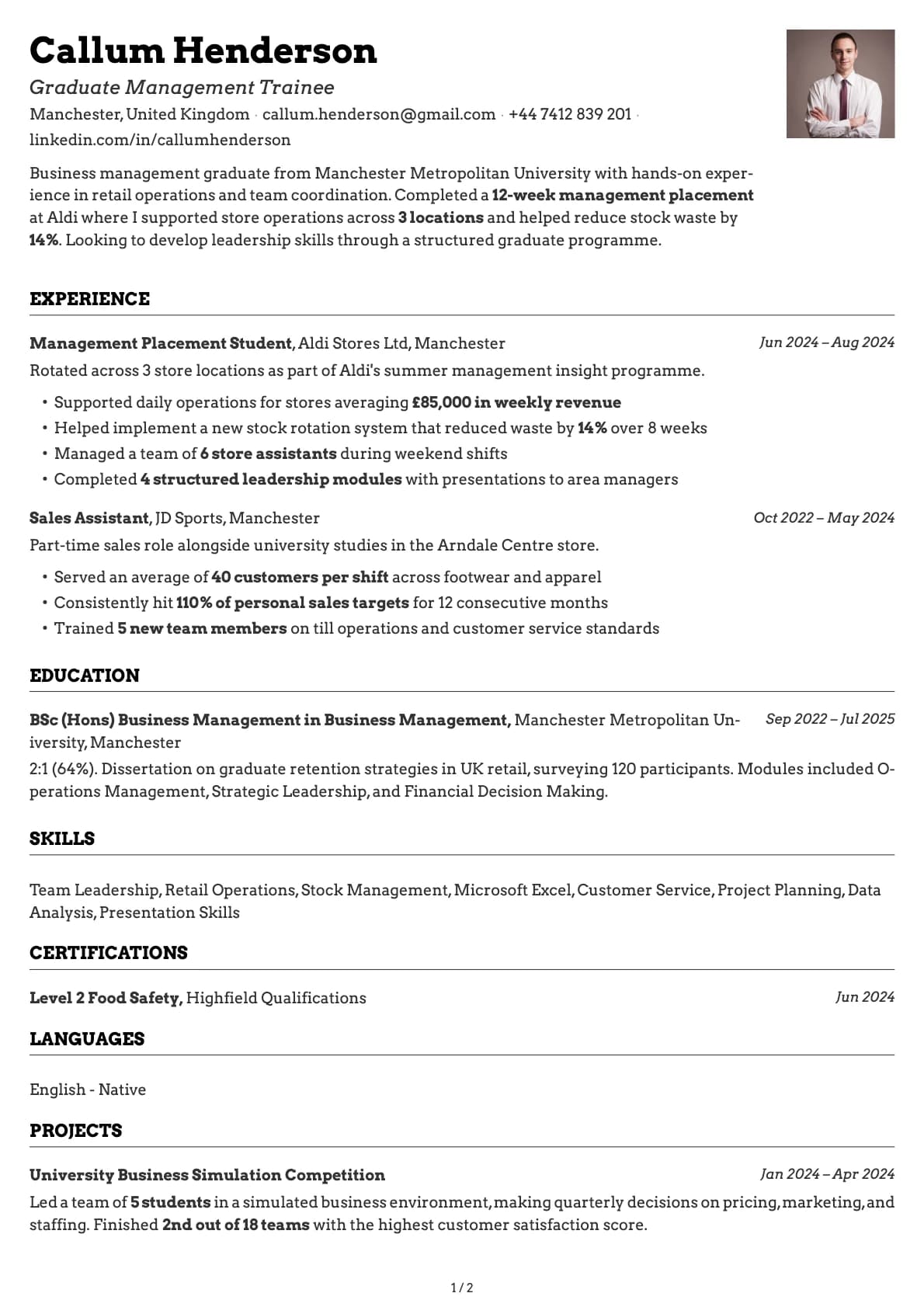
Graduate Management Trainee
A graduate management trainee resume example with retail placement experience and team leadership skills.
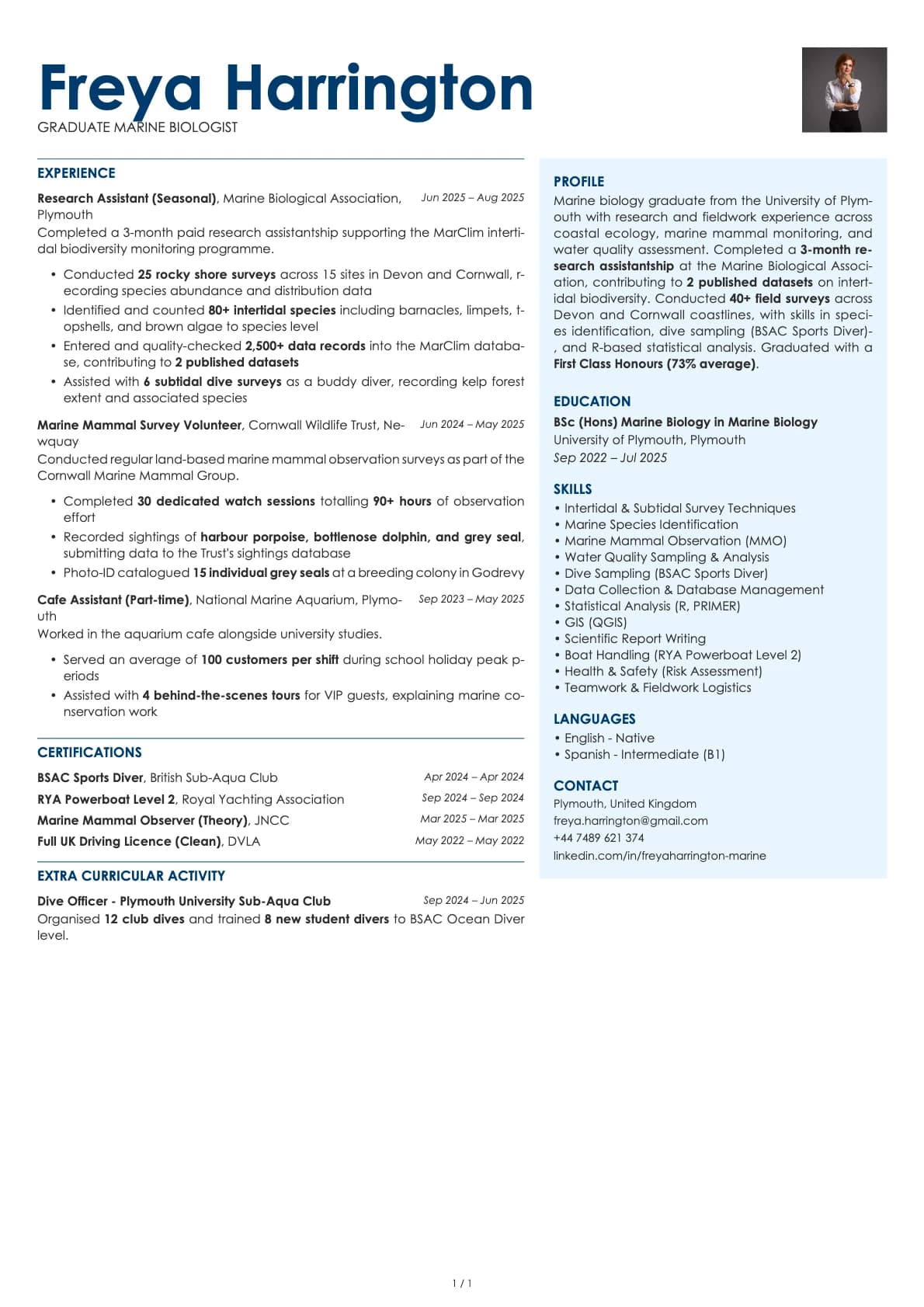
Graduate Marine Biologist
A graduate marine biologist resume example with research placement experience, dive survey qualifications, and intertidal survey numbers.
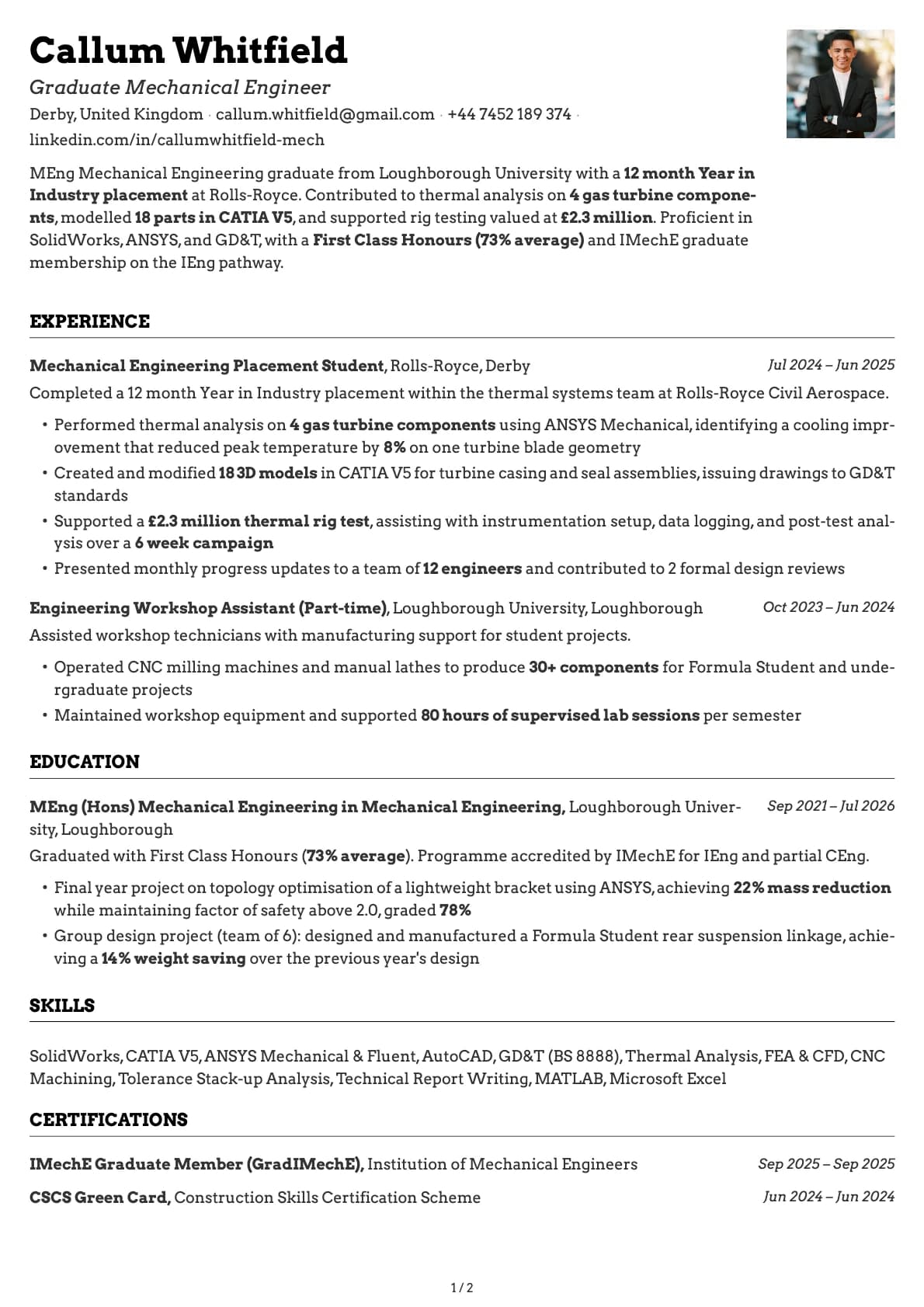
Graduate Mechanical Engineer
A graduate mechanical engineer resume example with Year in Industry placement, SolidWorks proficiency, and IMechE membership on the IEng pathway.
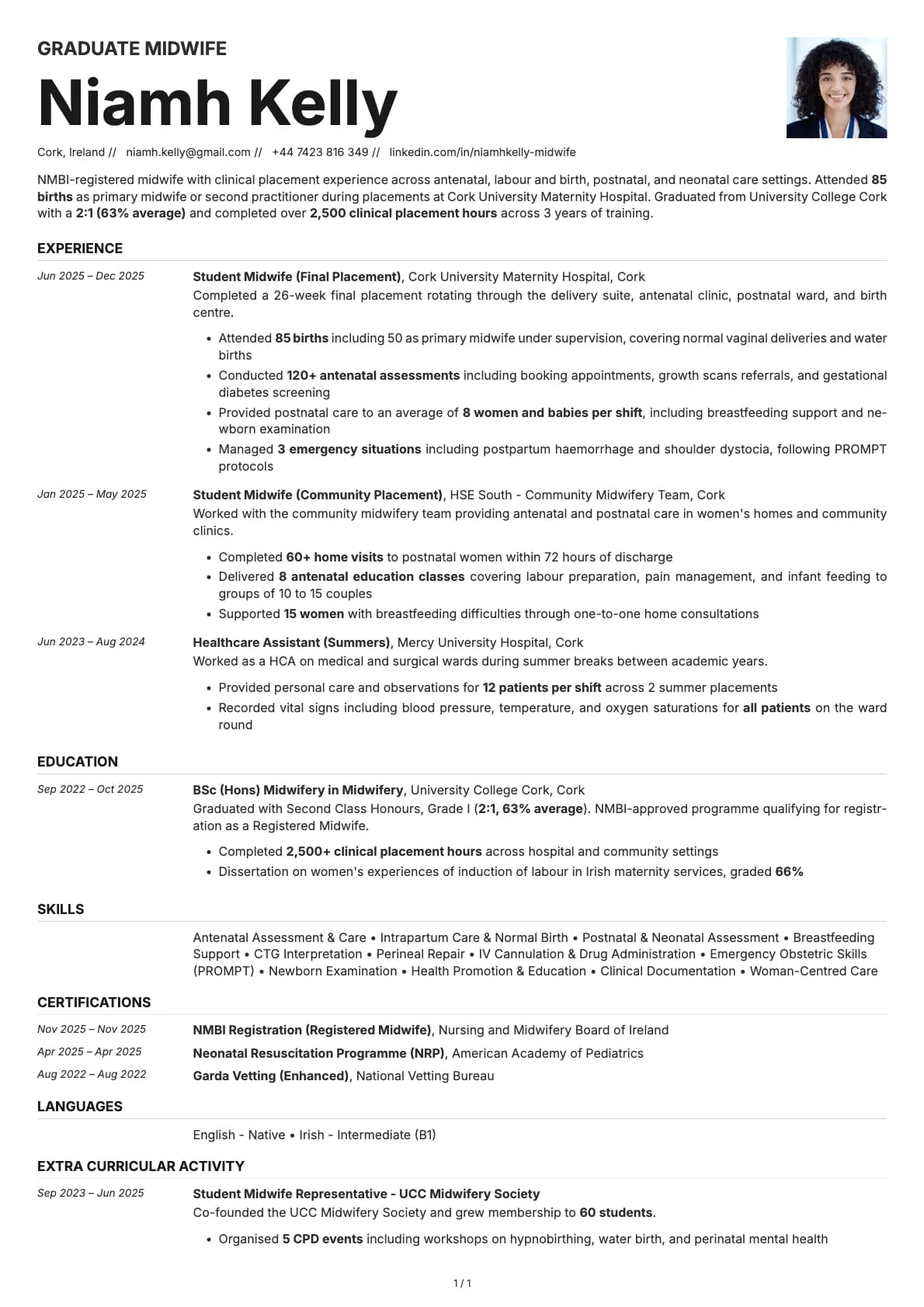
Graduate Midwife
A graduate midwife resume example with birth attendance numbers, NMBI registration, and clinical placement hours for newly qualified midwives.
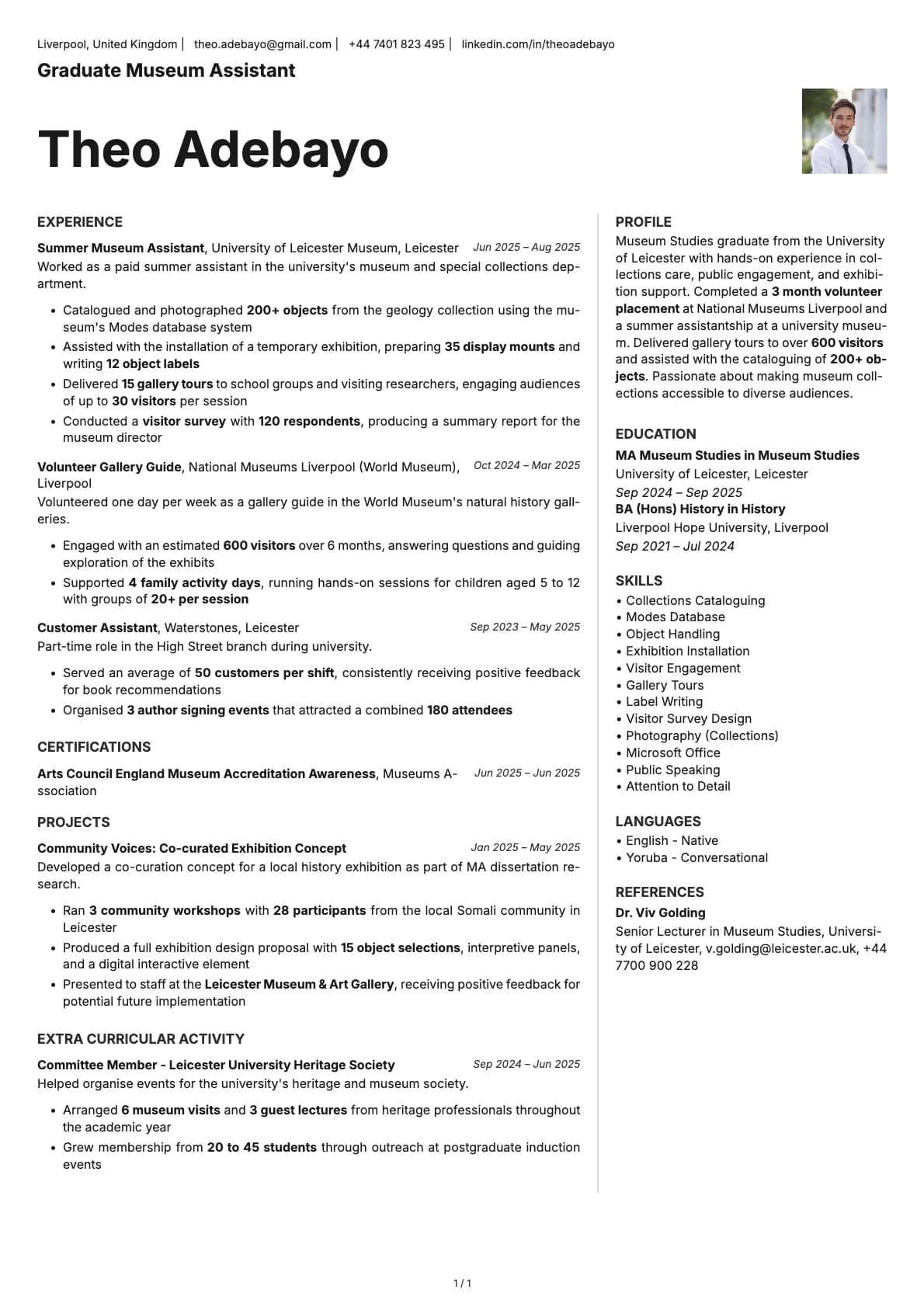
Graduate Museum Assistant
A graduate museum assistant resume example. See how to present collections experience, gallery tours, and museum studies qualifications to land your first museum role.
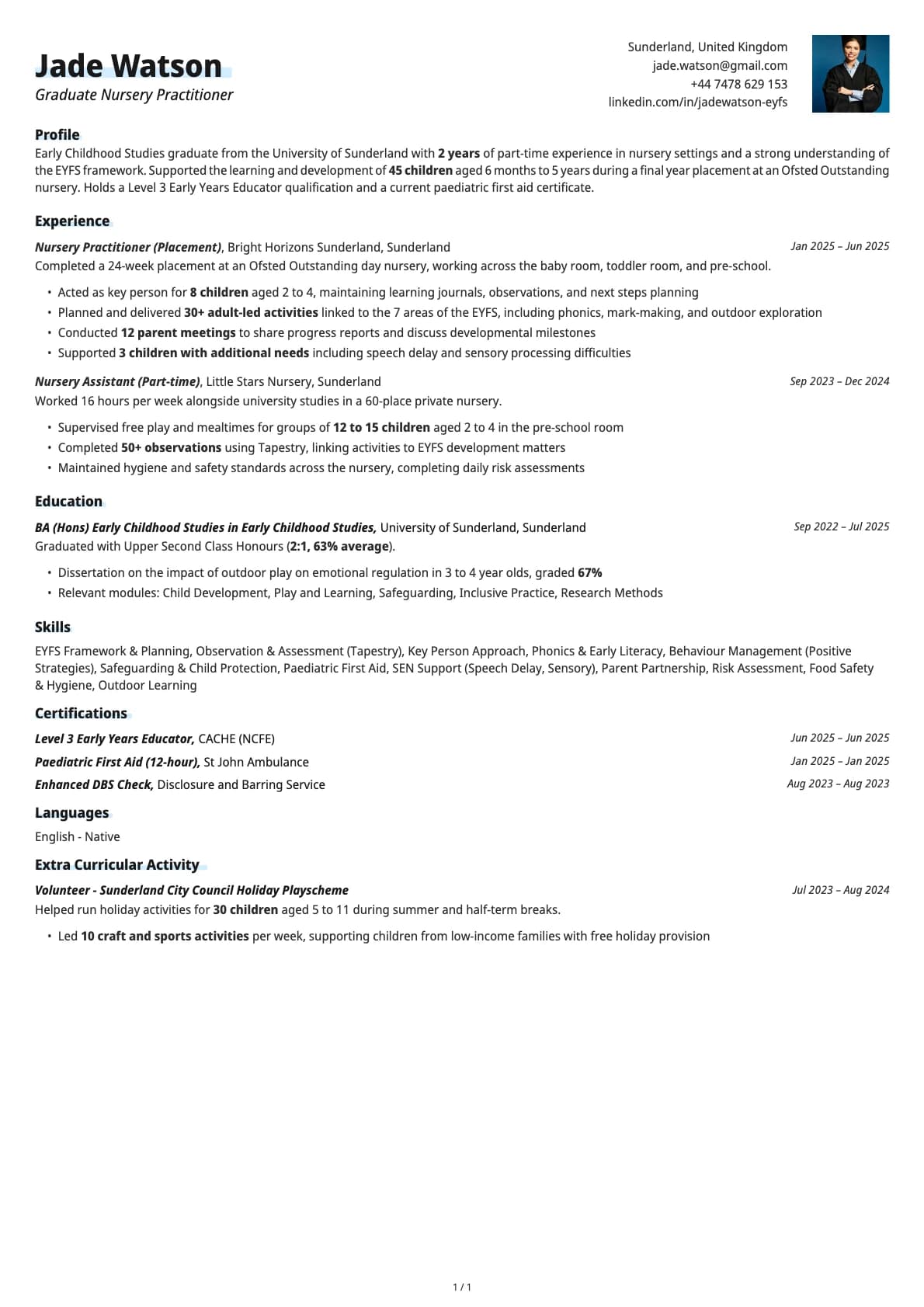
Graduate Nursery Practitioner
A graduate nursery practitioner resume example with EYFS experience, key person responsibilities, and Level 3 Early Years Educator qualification.
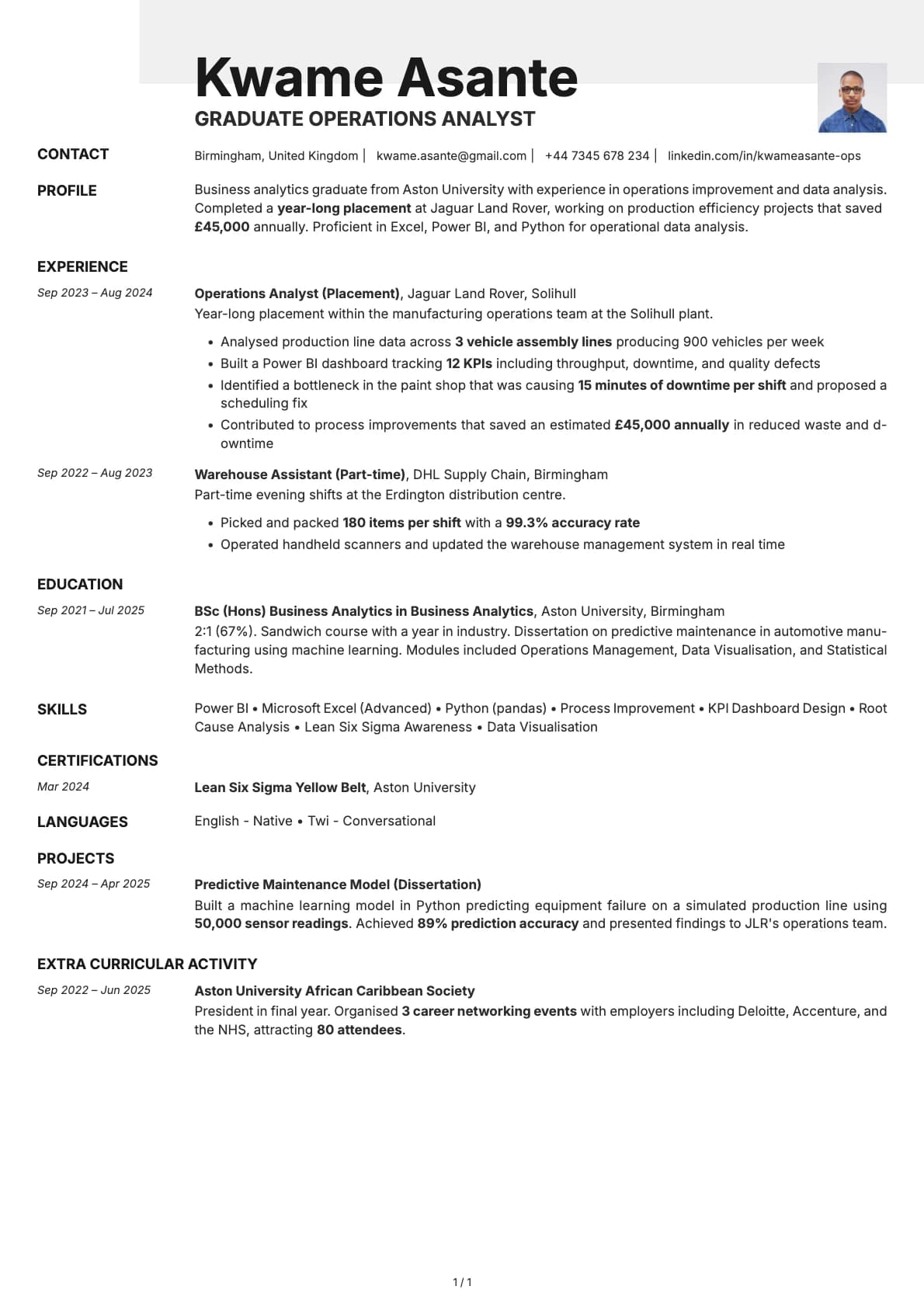
Graduate Operations Analyst
A graduate operations analyst resume example with Jaguar Land Rover placement and data analysis skills.
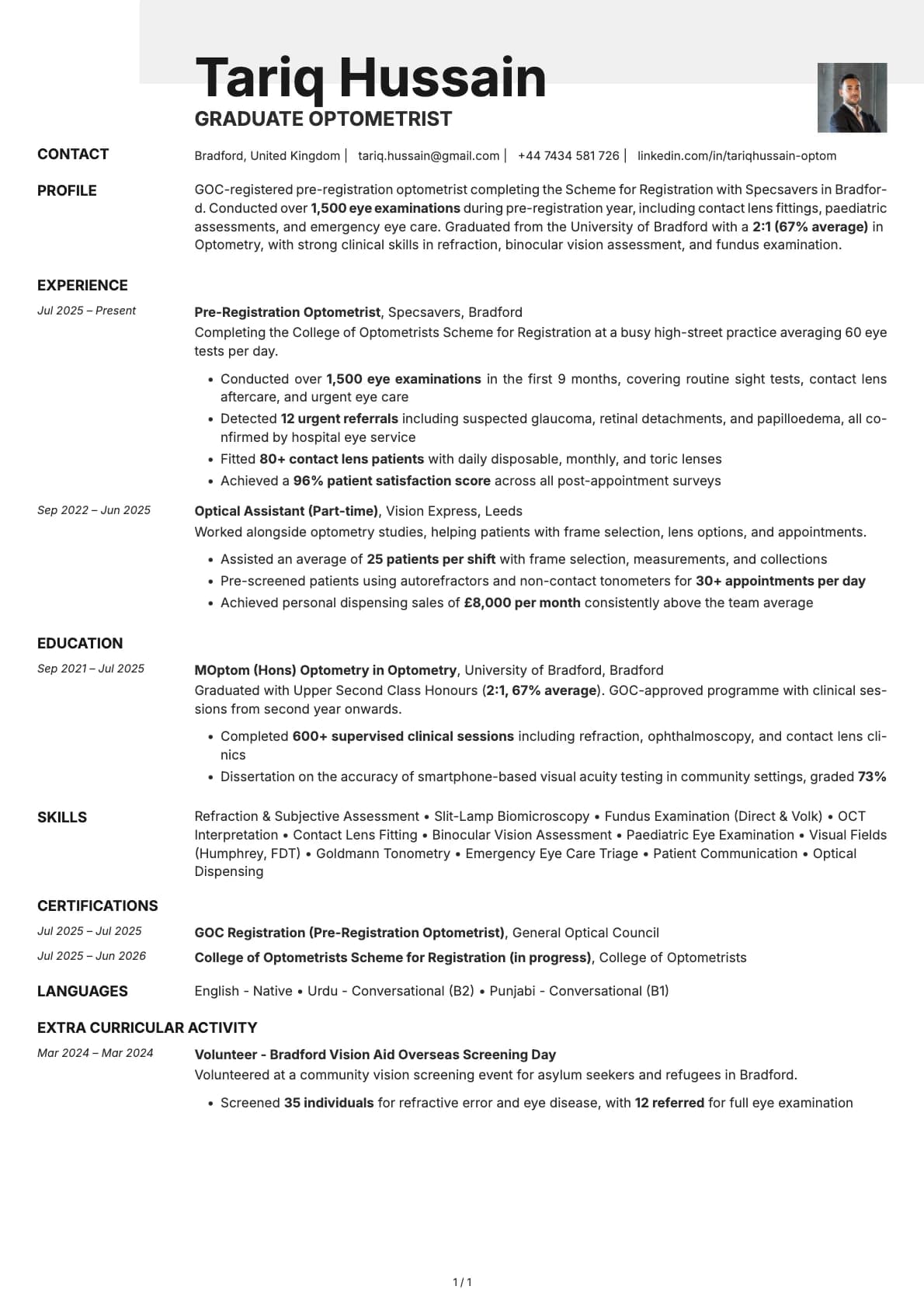
Graduate Optometrist
A graduate optometrist resume example with pre-registration experience, GOC registration, and eye examination numbers for newly qualifying optometrists.
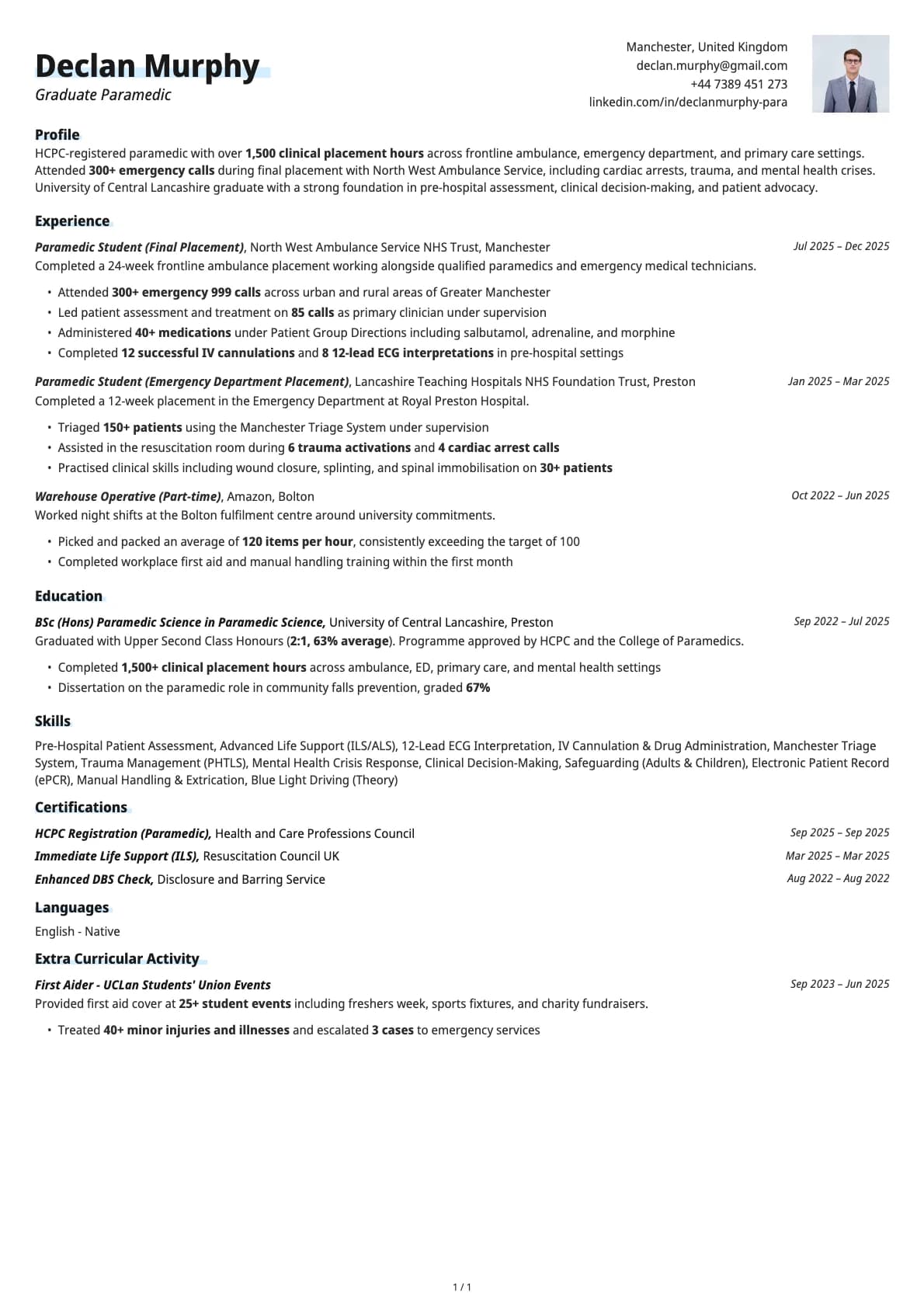
Graduate Paramedic
A graduate paramedic resume example with frontline placement hours, HCPC registration, and emergency call numbers for newly qualified paramedics.