Junior Conservation Officer Resume Example
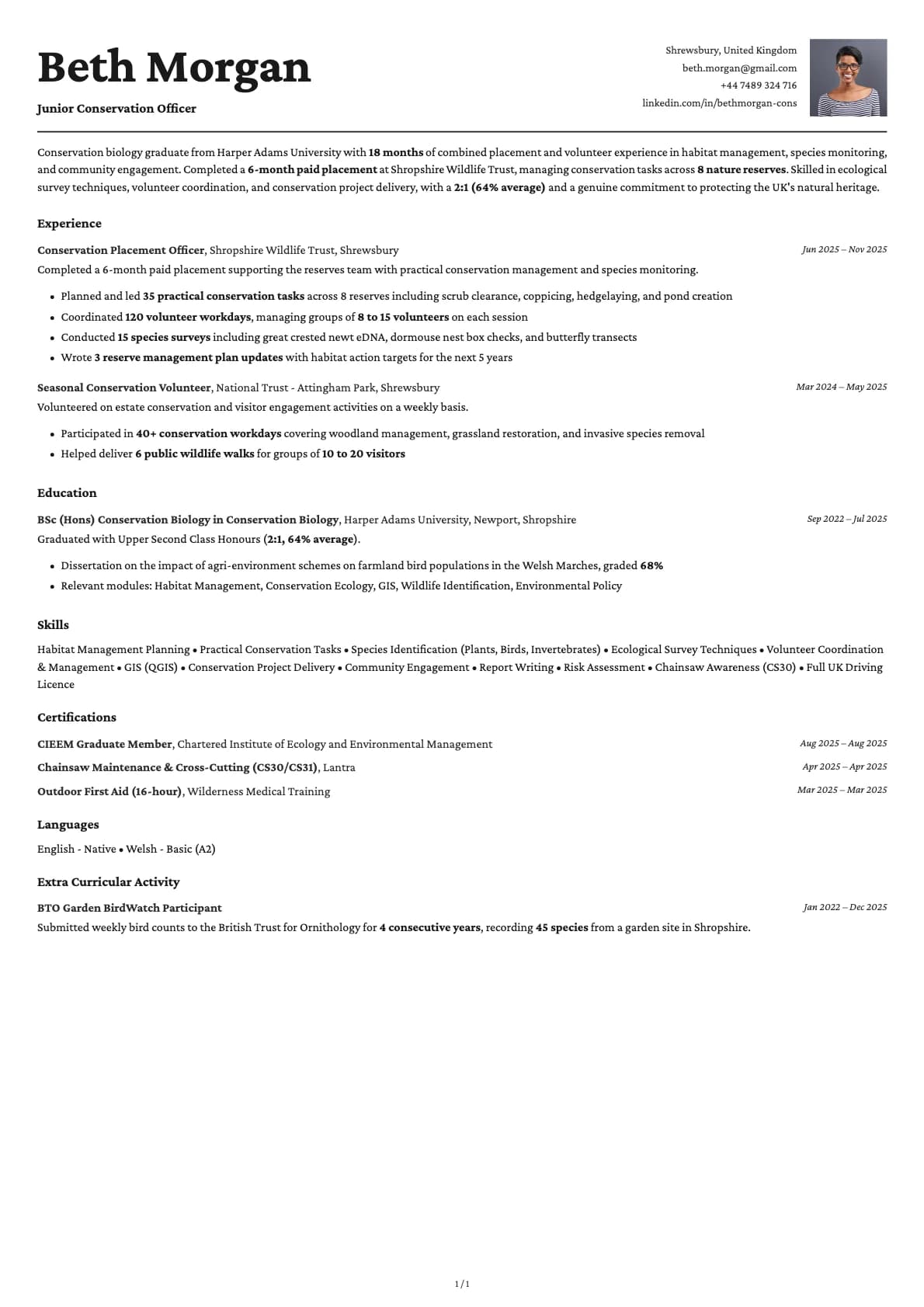
A junior conservation officer resume example with wildlife trust placement experience, volunteer coordination, and habitat management skills.

Laddro Team
Free to use. No account needed to start.
Free to use. No account needed to start.
Overview
Conservation officer roles combine practical habitat management with volunteer coordination, species monitoring, and community engagement. Competition for these positions is intense, and wildlife trusts and nature reserves typically look for candidates who have already invested significant time in practical conservation, not just those with a relevant degree.
This resume belongs to Beth Morgan, a conservation biology graduate from Harper Adams University who completed a six-month paid placement at Shropshire Wildlife Trust. She led 35 conservation tasks across 8 reserves, coordinated 120 volunteer workdays, and conducted 15 species surveys. Her additional National Trust volunteering takes her total practical conservation experience to well over 18 months.
What Makes This Resume Work
Volunteer coordination is a core skill for this role. Managing groups of 8 to 15 volunteers on 120 workdays shows Beth can organise people, communicate tasks clearly, and maintain safety standards. This is one of the most important and most underestimated aspects of a conservation officer's job.
Reserve management plan writing demonstrates strategic thinking. Producing 3 management plan updates with 5-year habitat targets shows Beth can think beyond individual tasks and contribute to long-term conservation planning. This elevates her from practical worker to junior professional.
Chainsaw and outdoor first aid certifications reduce employer costs. These qualifications are expensive and time-consuming to arrange. Having them already in place means Beth can start contributing to the most physically demanding tasks immediately.
Key Takeaways
Aspiring conservation officers should accumulate as much practical conservation experience as possible through placements, seasonal work, and volunteering. Quantify everything: conservation tasks led, volunteers managed, surveys conducted, and management plans contributed to. Chainsaw certification, outdoor first aid, and a driving licence are all highly valued practical qualifications. Long-term species recording (such as BTO surveys) shows genuine naturalist commitment that employers recognise and respect.
Build your own version
Open this layout in the builder and swap in your own details. It takes a few minutes.
Free to use. No account needed to start.
Was this resume example helpful?
Rate this example to help us create better content for you.
4.6 average from 90 ratingsRelated resume examples
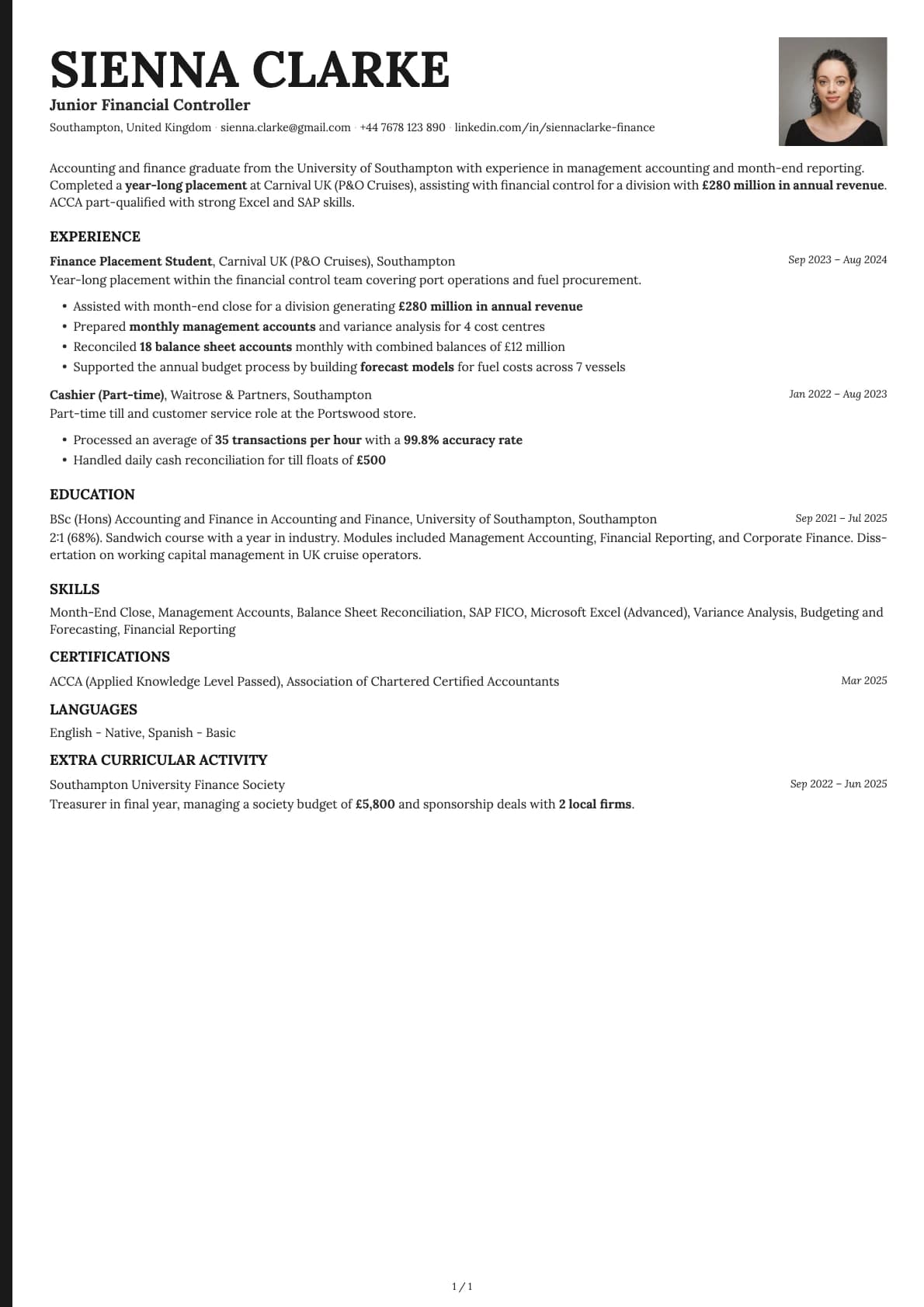
Junior Financial Controller
A junior financial controller resume example with Carnival UK placement and management accounting experience.
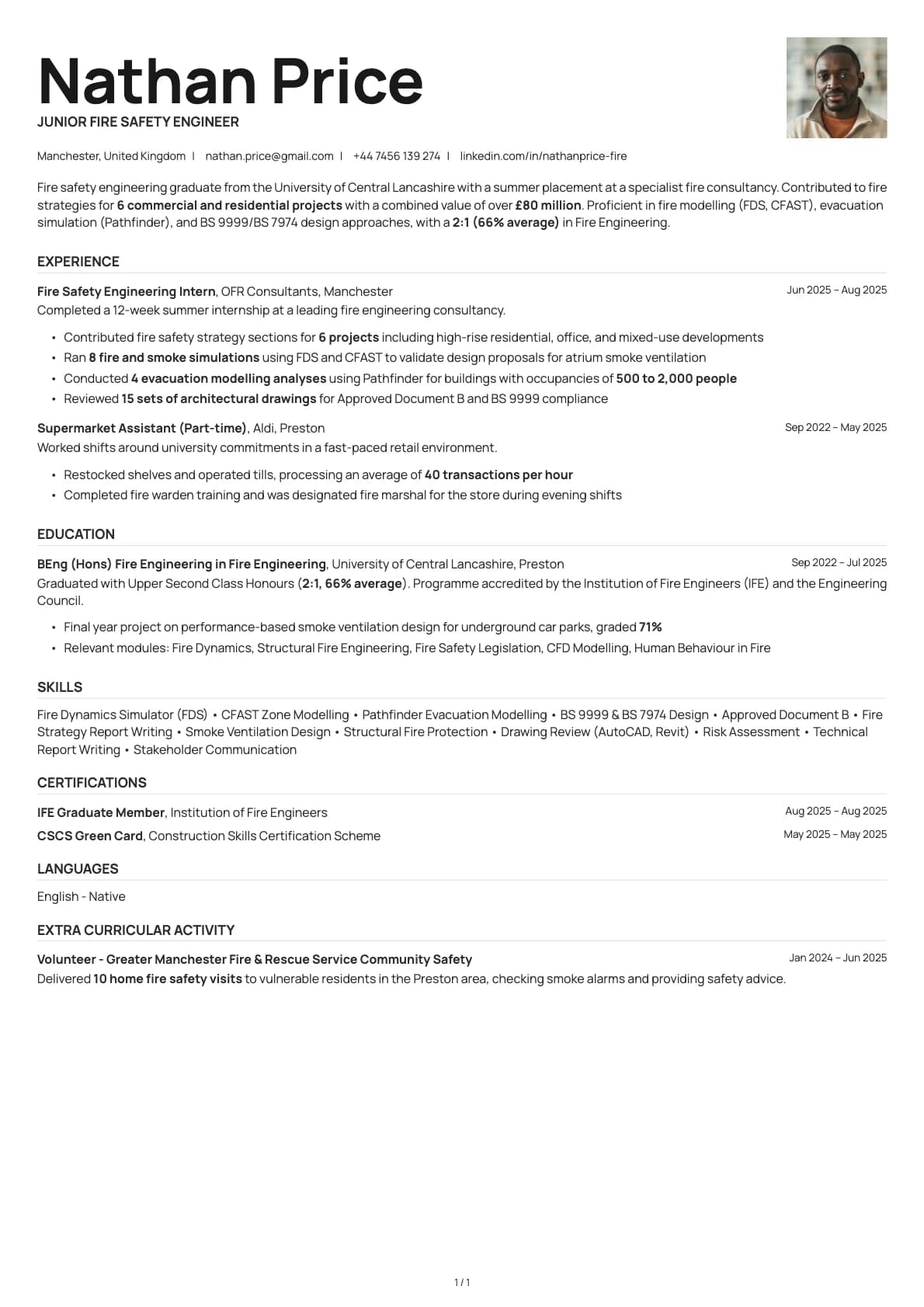
Junior Fire Safety Engineer
A junior fire safety engineer resume example with fire modelling experience, BS 9999 knowledge, and IFE membership for graduates.
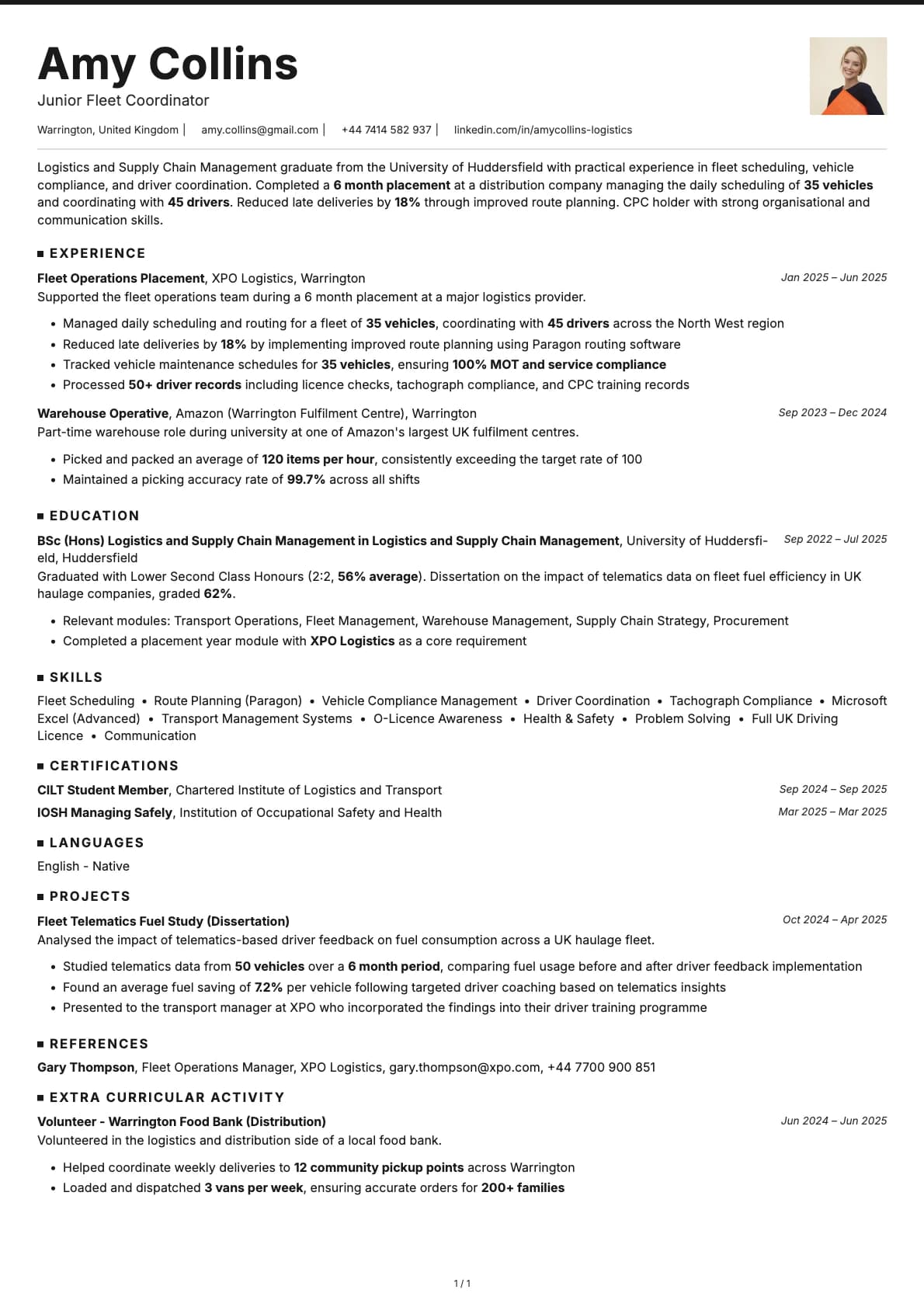
Junior Fleet Coordinator
A junior fleet coordinator resume example for graduates. See how to present fleet management, route planning, and vehicle compliance experience to land your first fleet coordination role.
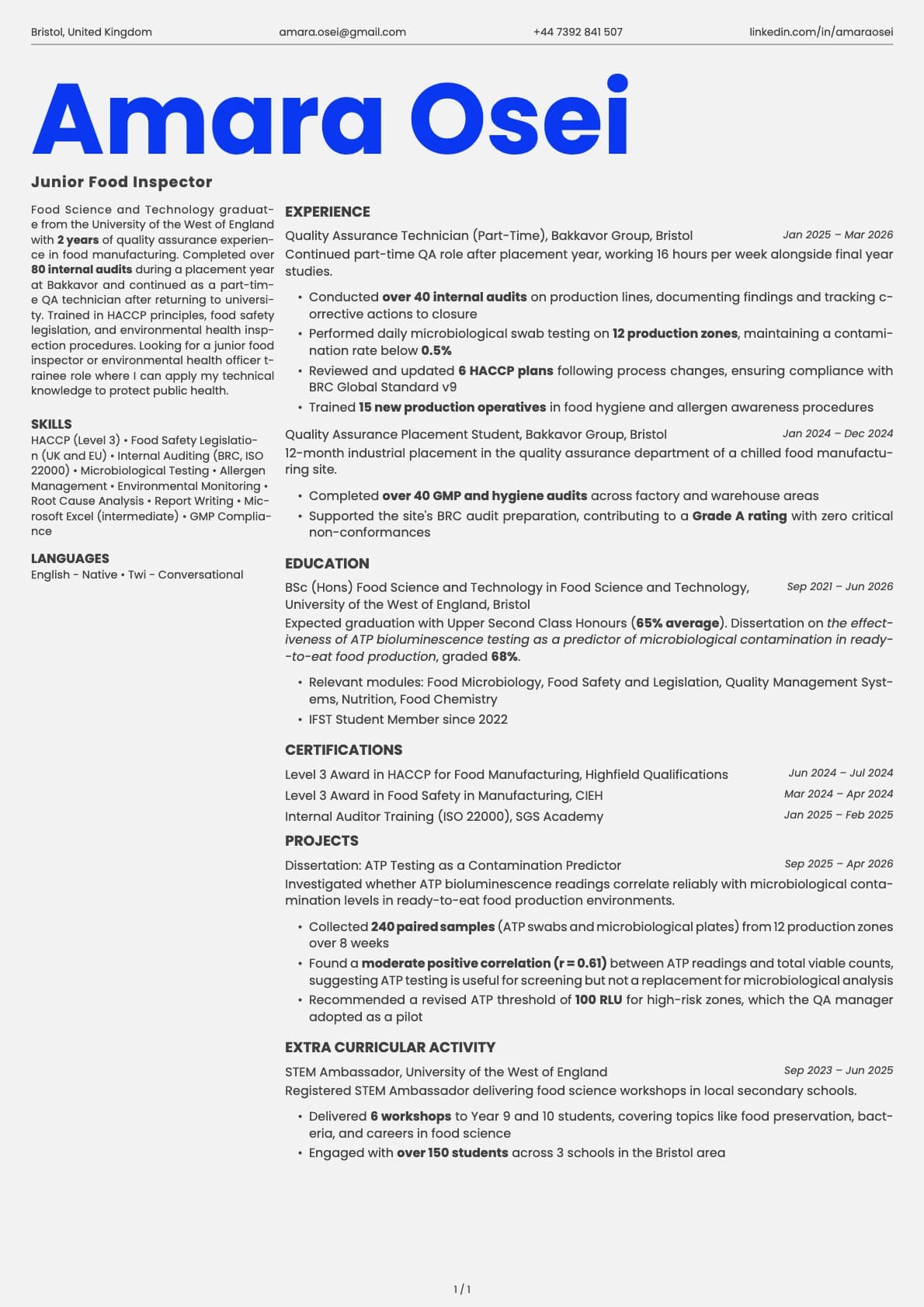
Junior Food Inspector
A junior food inspector resume example showing how to leverage QA experience in food manufacturing, HACCP training, and a food science degree.
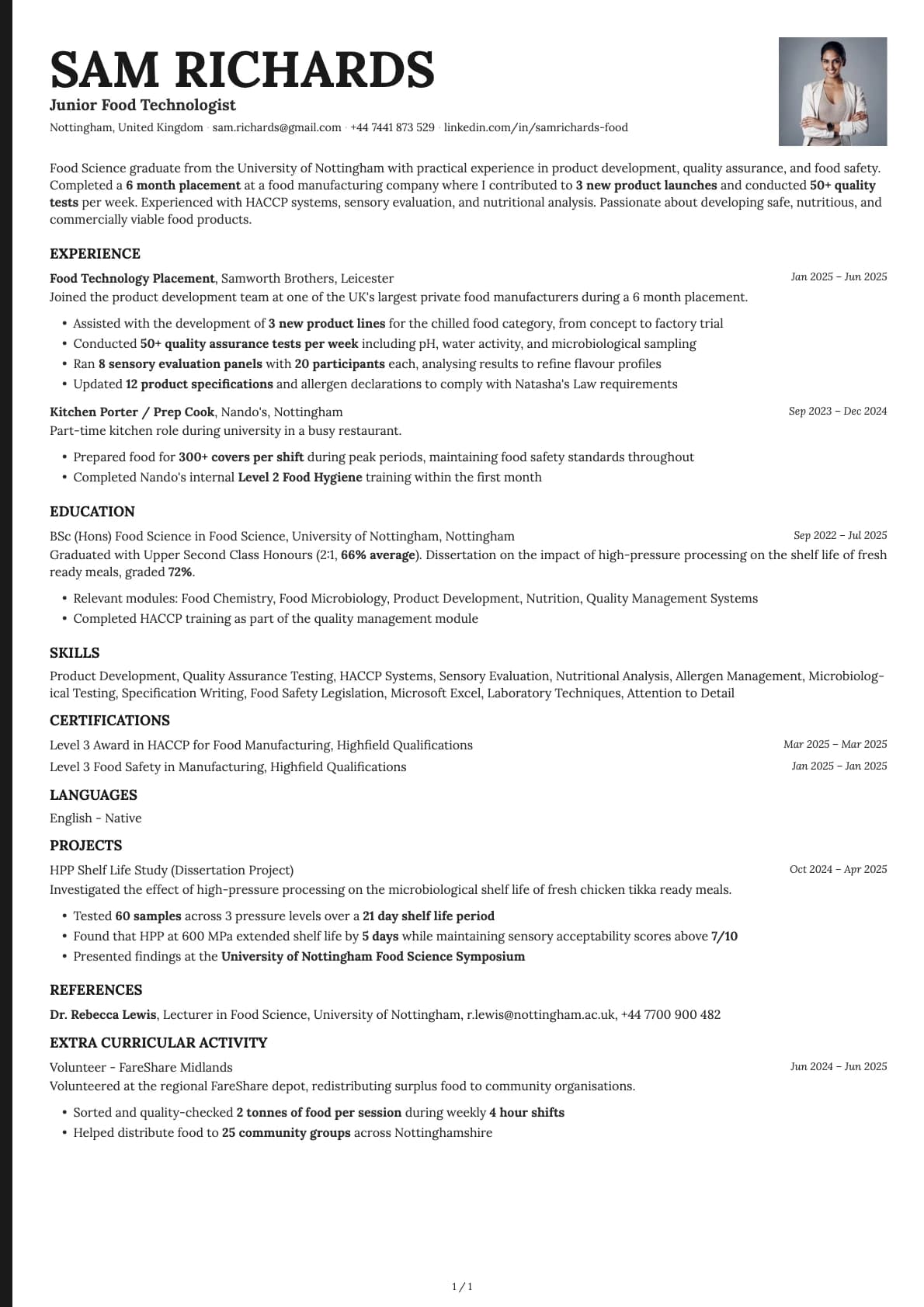
Junior Food Technologist
A junior food technologist resume example for graduates. See how to present product development, quality testing, and food safety experience to land your first food technology role.
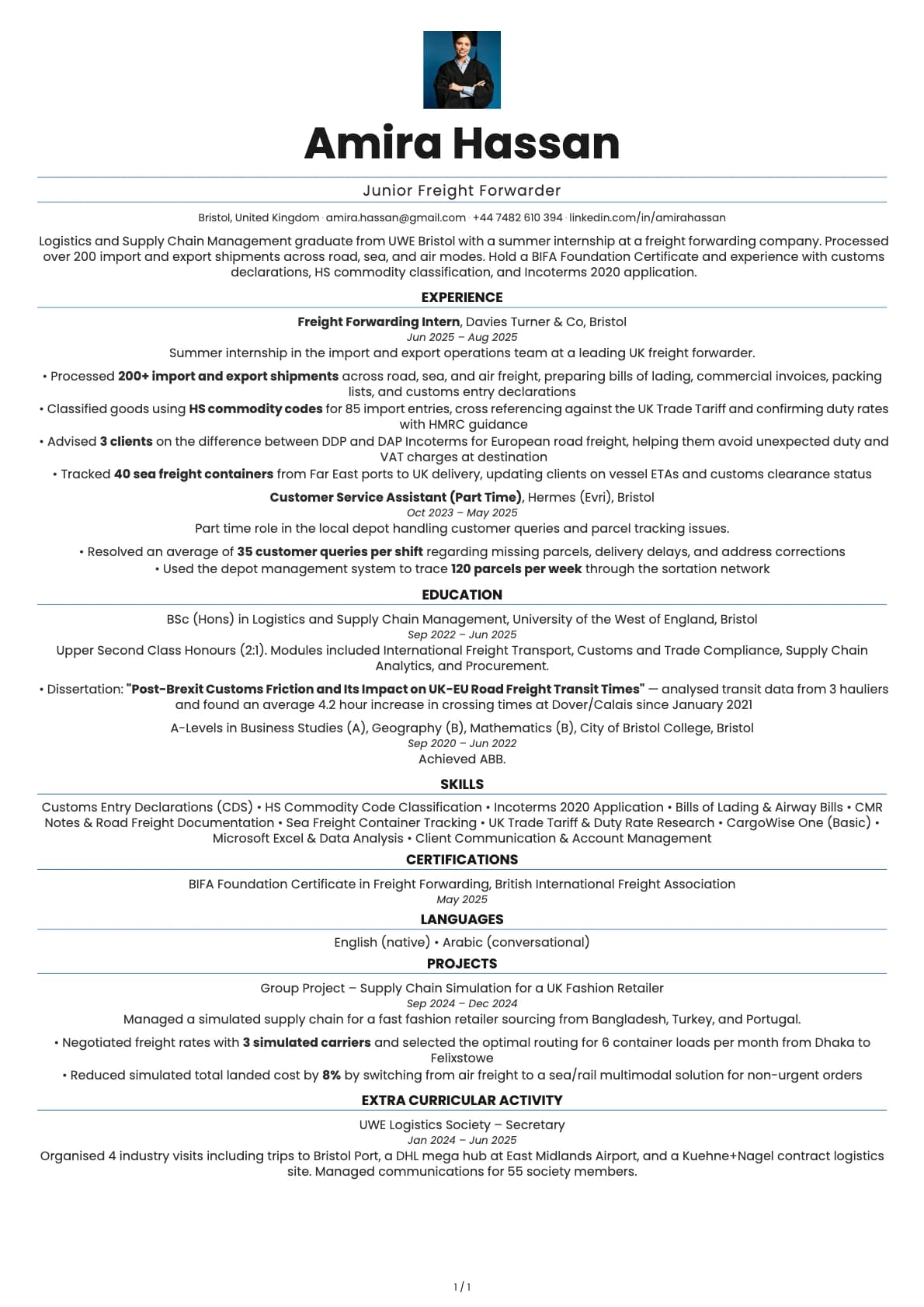
Junior Freight Forwarder
A junior freight forwarder resume example for logistics graduates entering international freight. See how to present your customs documentation, Incoterms knowledge, and freight operations experience.
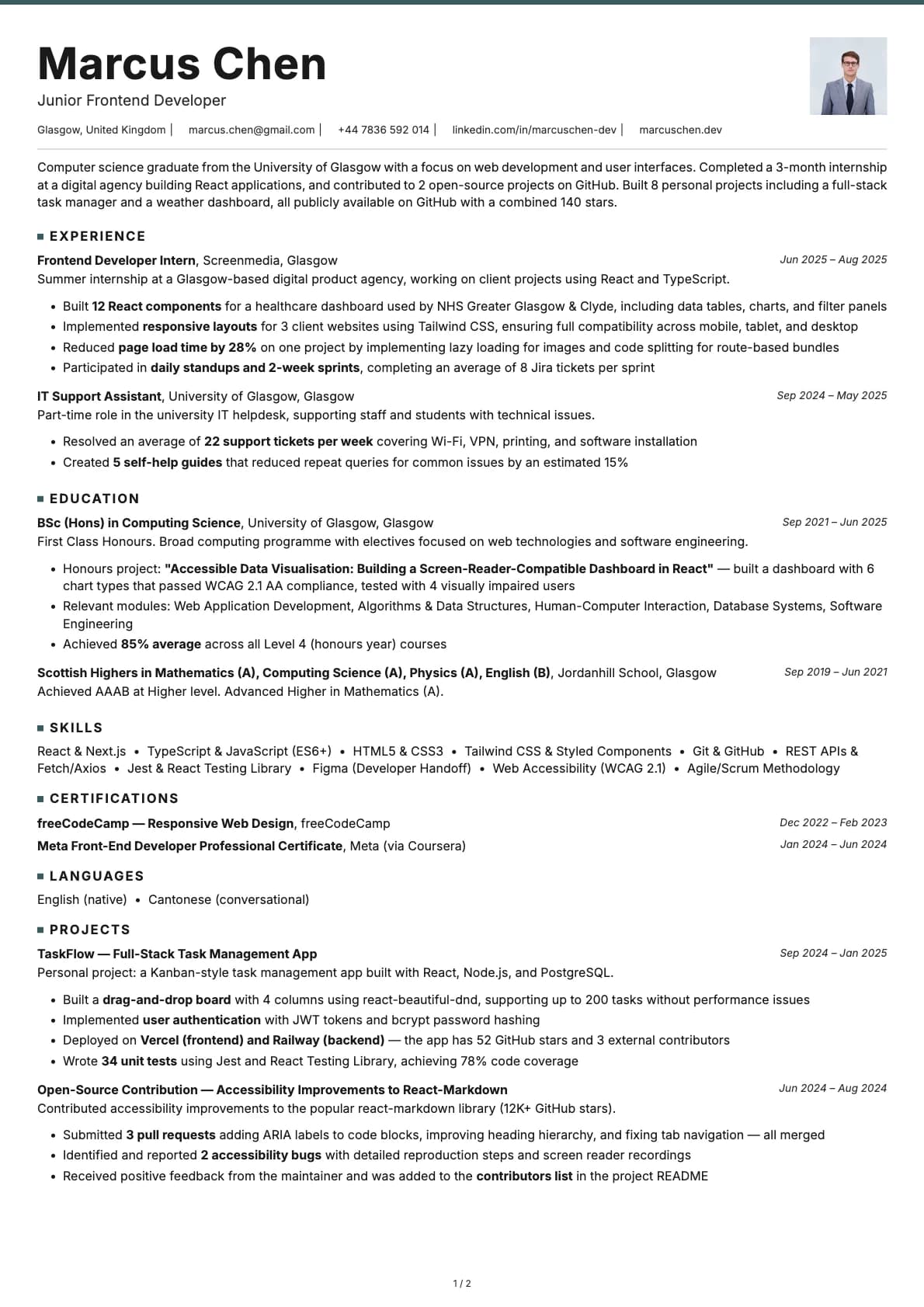
Junior Frontend Developer
A junior frontend developer resume example for recent graduates. Learn how to present your React projects, responsive design skills, and coding experience to get your first dev job.
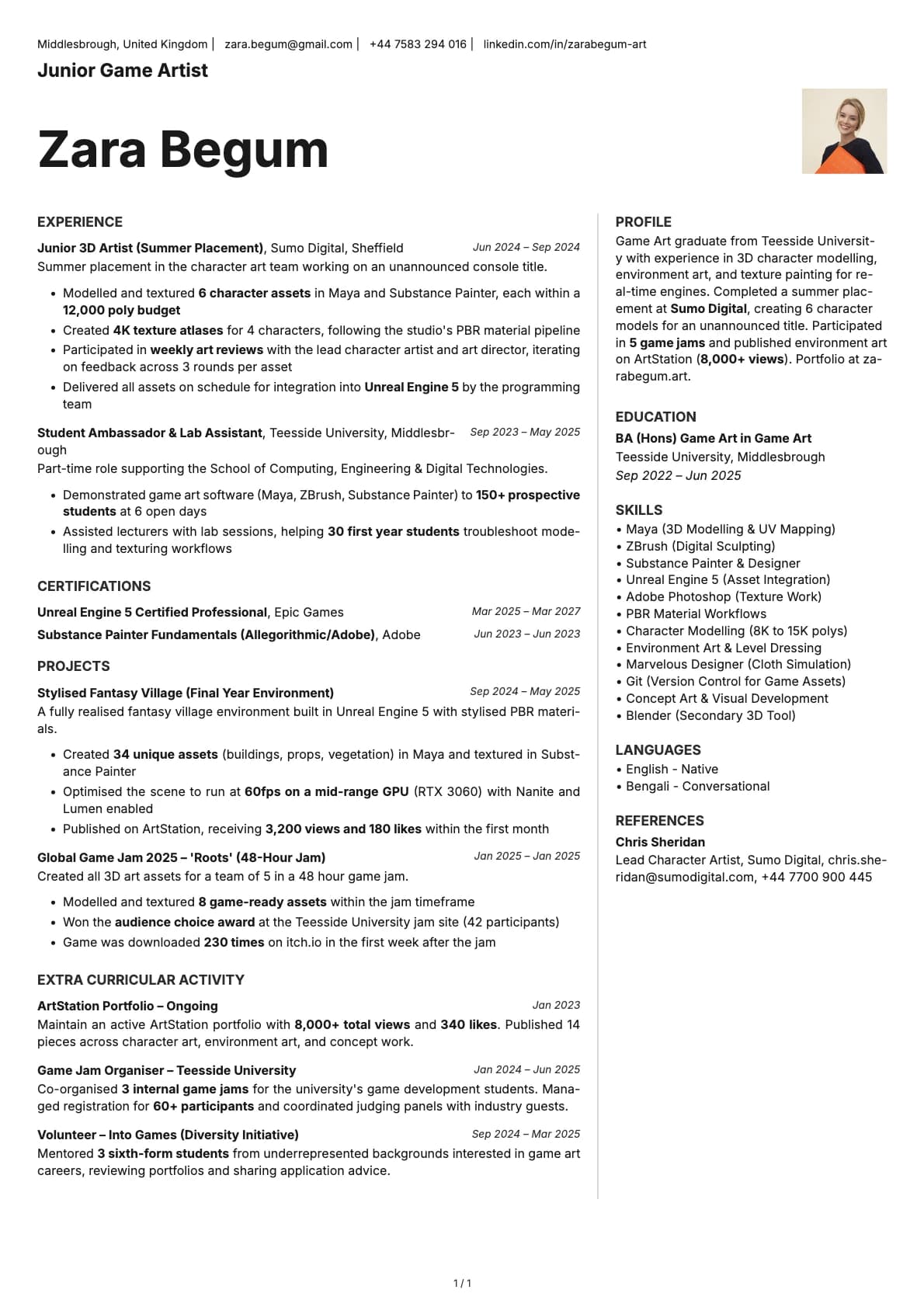
Junior Game Artist
A junior game artist resume example with 3D character models, game jam entries, and portfolio highlights from a Game Art BA graduate breaking into the industry.
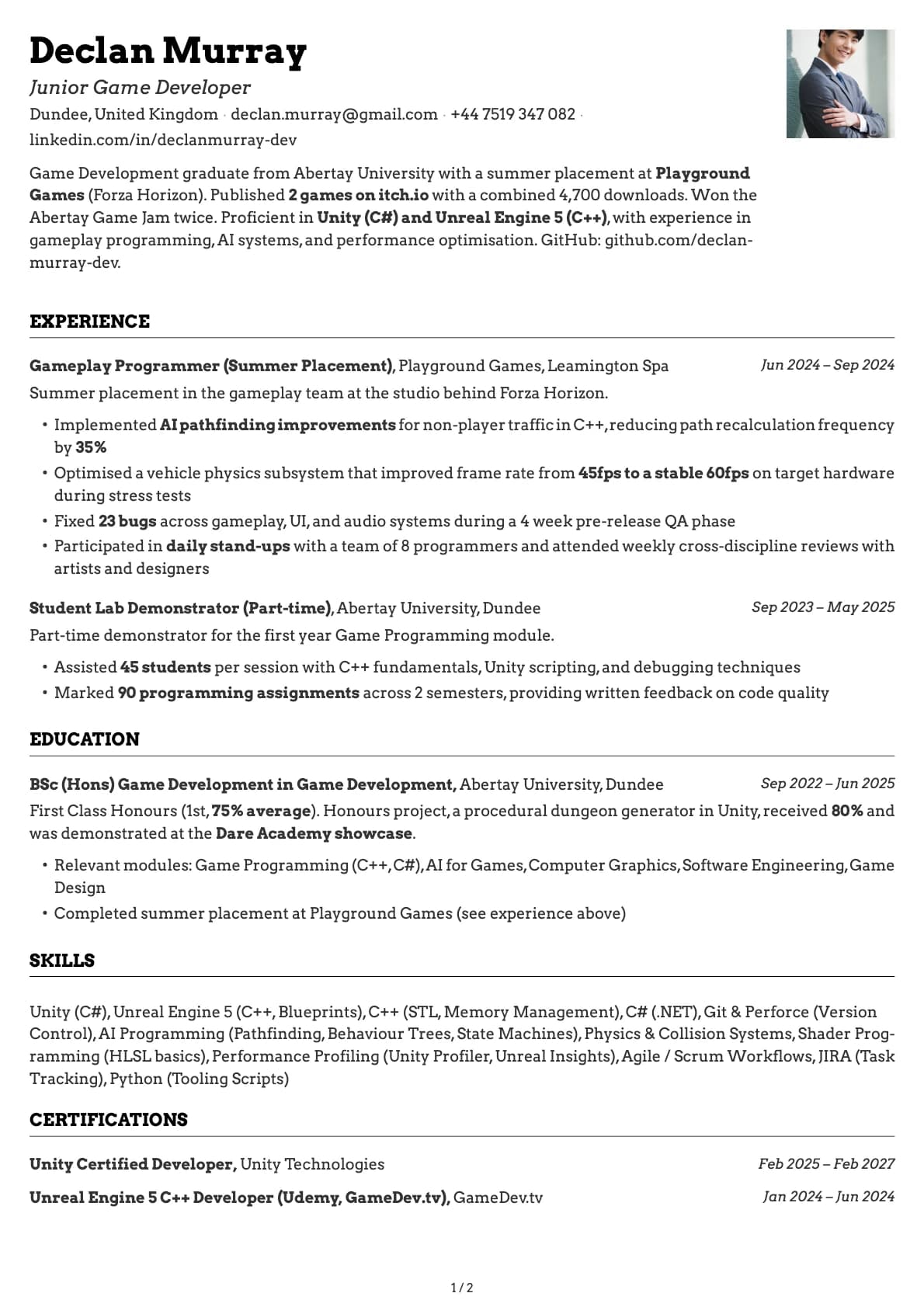
Junior Game Developer
A junior game developer resume example with Unity projects, published games, and game jam wins from a Game Development BSc graduate entering the games industry.
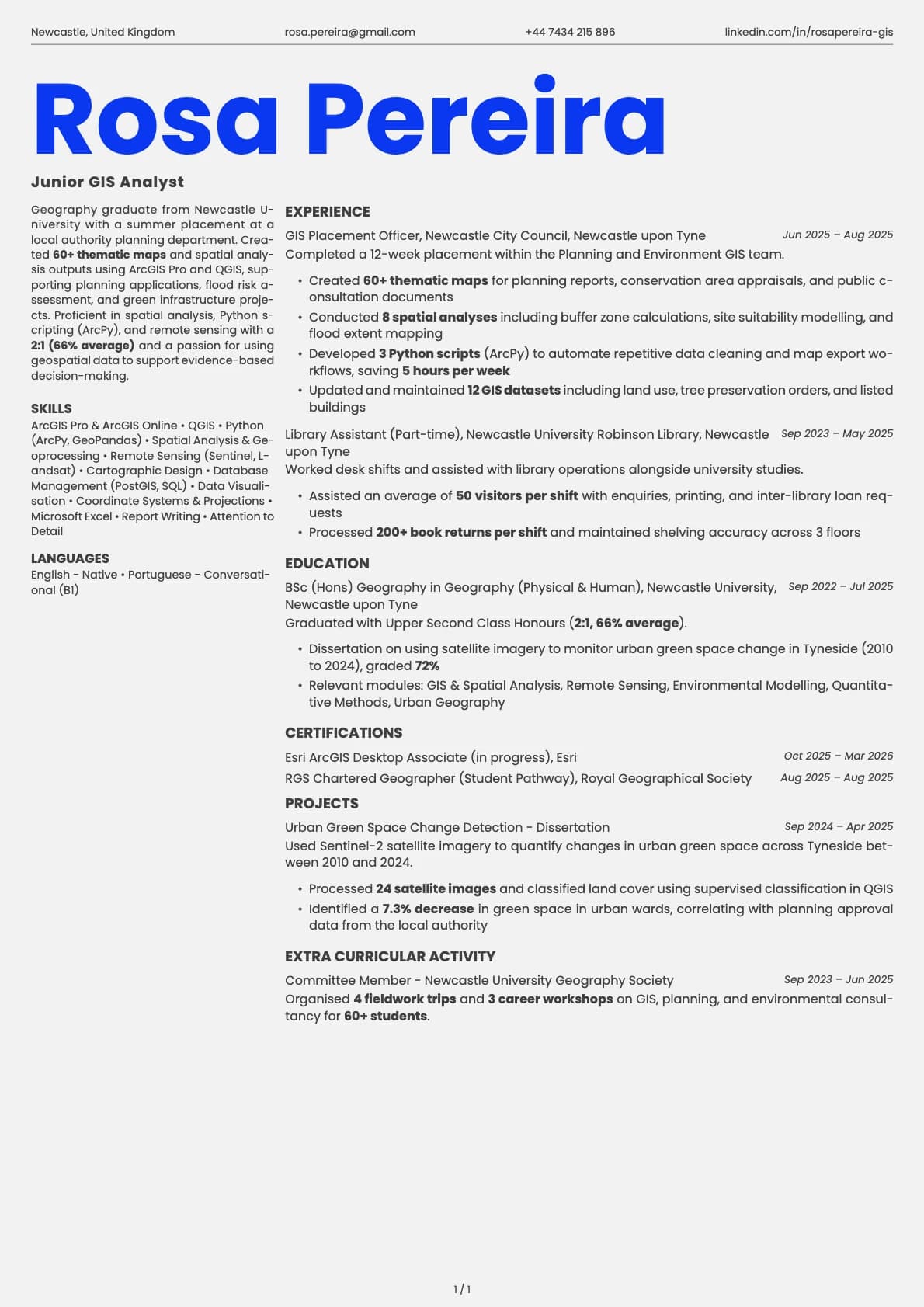
Junior GIS Analyst
A junior GIS analyst resume example with local authority placement experience, spatial analysis, and Python scripting skills for geography graduates.
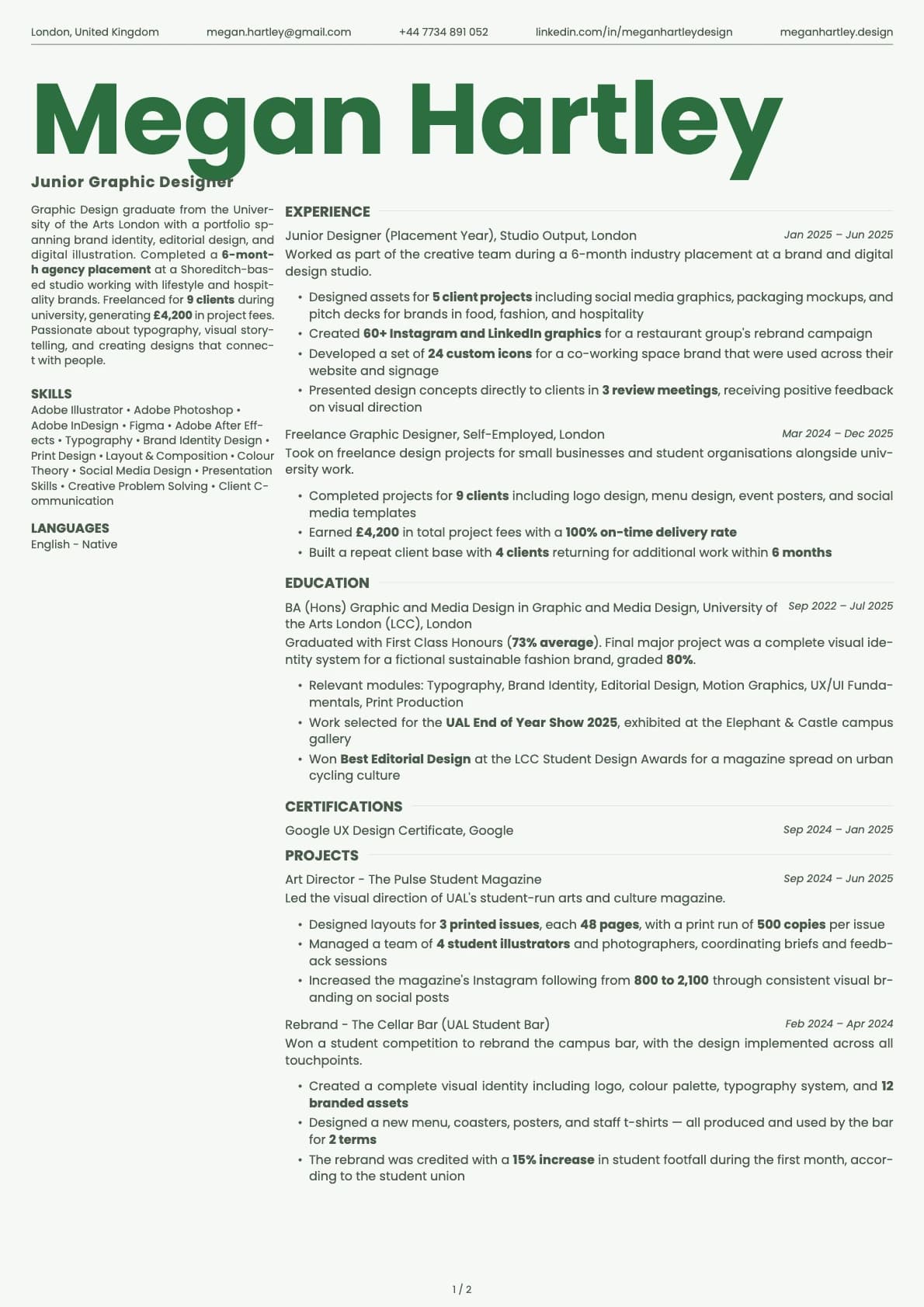
Junior Graphic Designer
A junior graphic designer resume example for recent graduates. Learn how to present your portfolio, design tools, and freelance work to land your first design role.
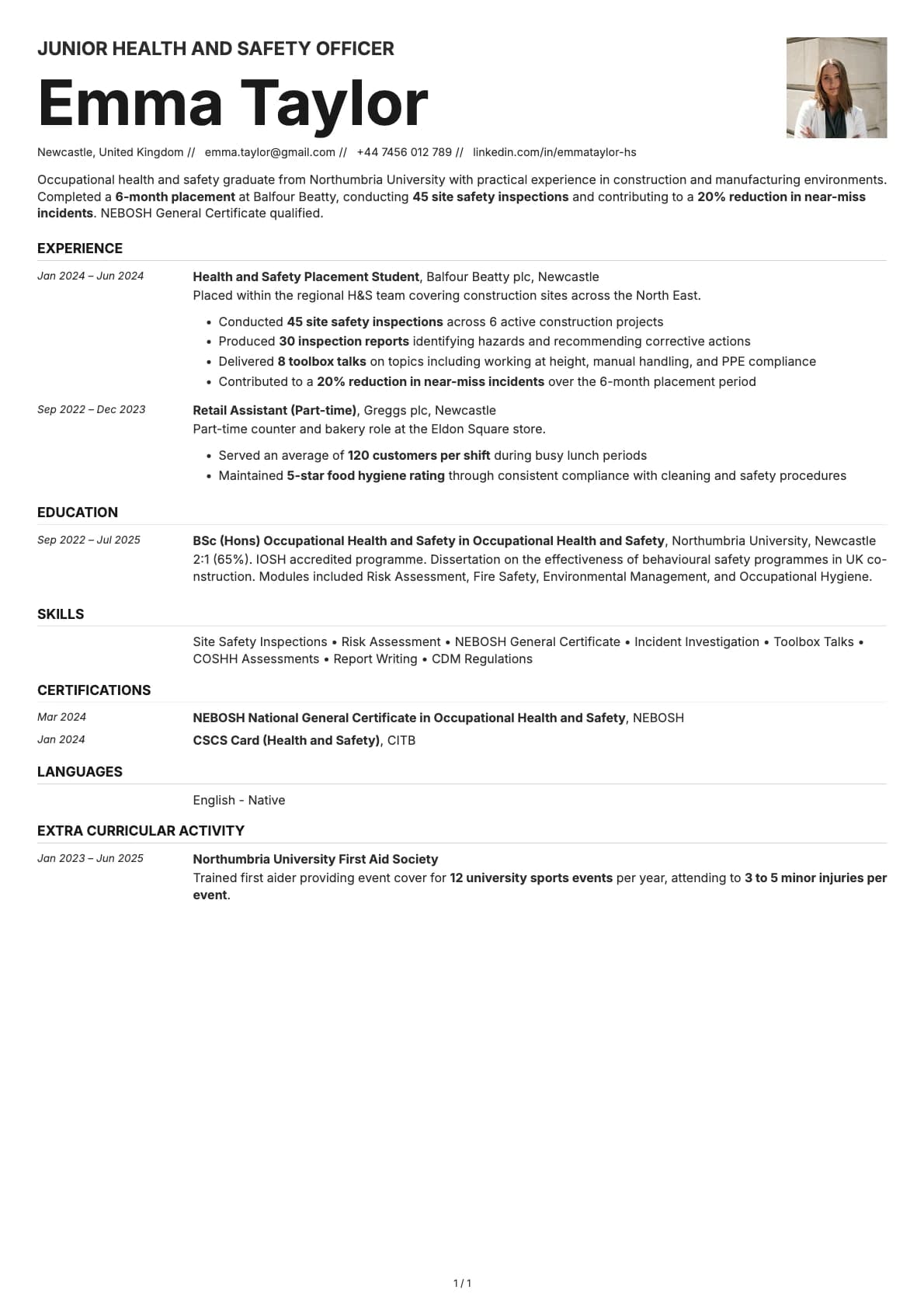
Junior Health and Safety Officer
A junior health and safety officer resume example with Balfour Beatty placement and NEBOSH qualification.