Graduate Geologist Resume Example
A graduate geologist resume example with geotechnical placement experience, borehole logging, and Geological Society membership.

Laddro Team
Free to use. No account needed to start.
Free to use. No account needed to start.
Overview
Graduate geologists can enter careers in geotechnical consultancy, environmental site assessment, mining, or oil and gas. The common thread across all these paths is strong fieldwork skills and the ability to describe, log, and interpret earth materials accurately. Placement experience is highly valued because it shows you can work on real sites under genuine project pressures.
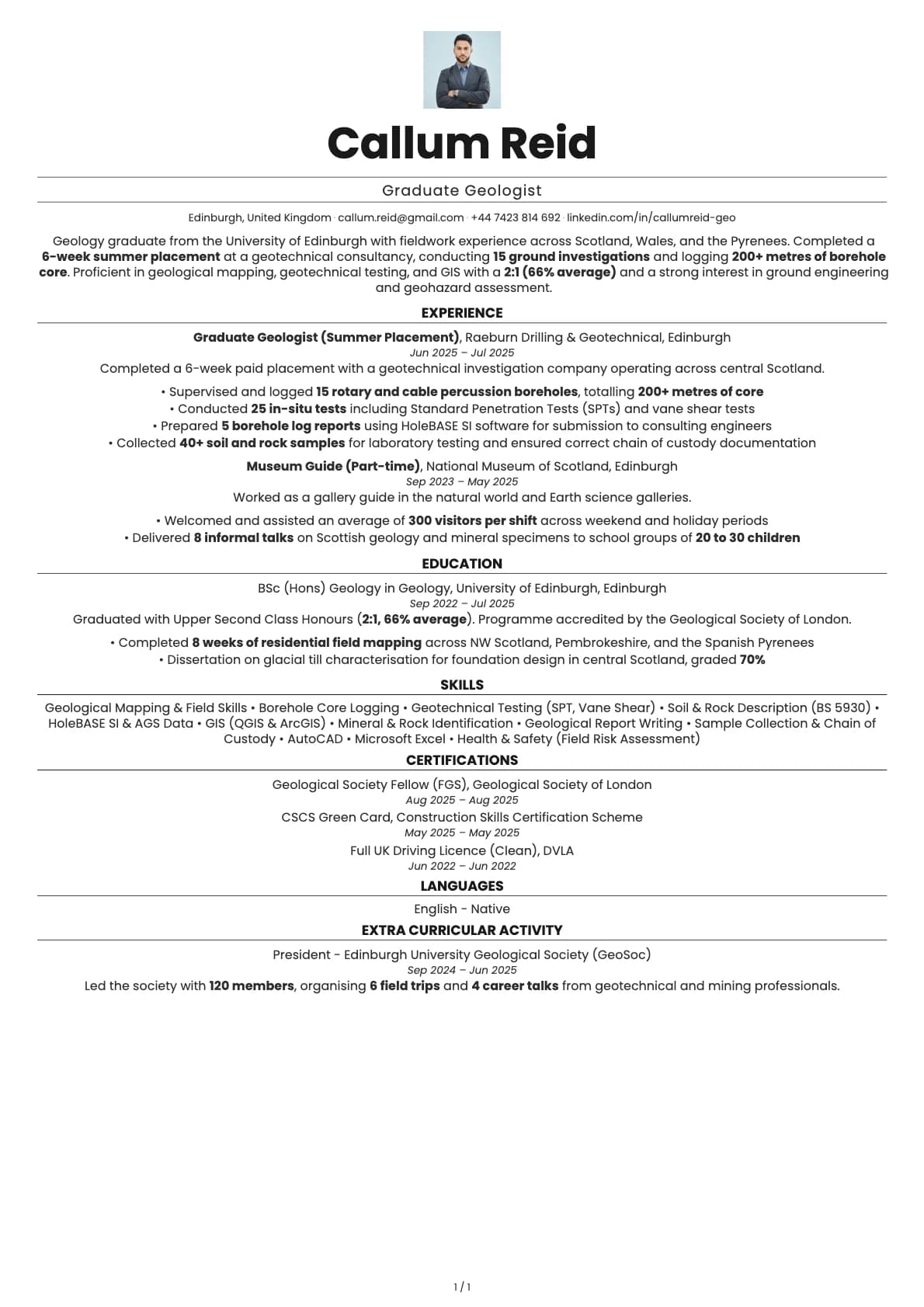
This resume belongs to Callum Reid, a geology graduate from the University of Edinburgh who completed a six-week placement at a geotechnical investigation company. He logged 200 metres of borehole core, conducted 25 in-situ tests, and prepared 5 borehole log reports. His extensive university fieldwork across Scotland, Wales, and the Pyrenees adds further evidence of his practical capabilities.
What Makes This Resume Work
Geotechnical placement experience is directly applicable. Logging boreholes, conducting SPTs, and preparing reports using HoleBASE SI are the core activities of a junior geologist in a geotechnical consultancy. Callum can demonstrate that he has already done these tasks on real projects, which significantly reduces the training burden for an employer.
Fieldwork volume is substantial. Eight weeks of residential geological mapping across three countries shows Callum has spent serious time in the field. This is the kind of evidence that employers trust because it proves physical stamina, self-reliance, and genuine competence in geological observation.
The museum guide role adds communication skills. Explaining geology to school children and museum visitors demonstrates that Callum can communicate complex ideas simply. This is directly relevant to client-facing consultancy work where non-technical stakeholders need clear explanations.
Key Takeaways
Graduate geologists should highlight borehole logging volumes, in-situ test counts, and any reports prepared using industry-standard software (HoleBASE, gINT). Include the total duration and locations of university fieldwork to demonstrate mapping experience. Geological Society fellowship, a CSCS card, and a clean driving licence are essential for geotechnical consultancy applications. GIS proficiency is increasingly expected, so describe what you have produced rather than just listing the software.
Build your own version
Open this layout in the builder and swap in your own details. It takes a few minutes.
Free to use. No account needed to start.
Was this resume example helpful?
Rate this example to help us create better content for you.
4.5 average from 81 ratingsRelated resume examples
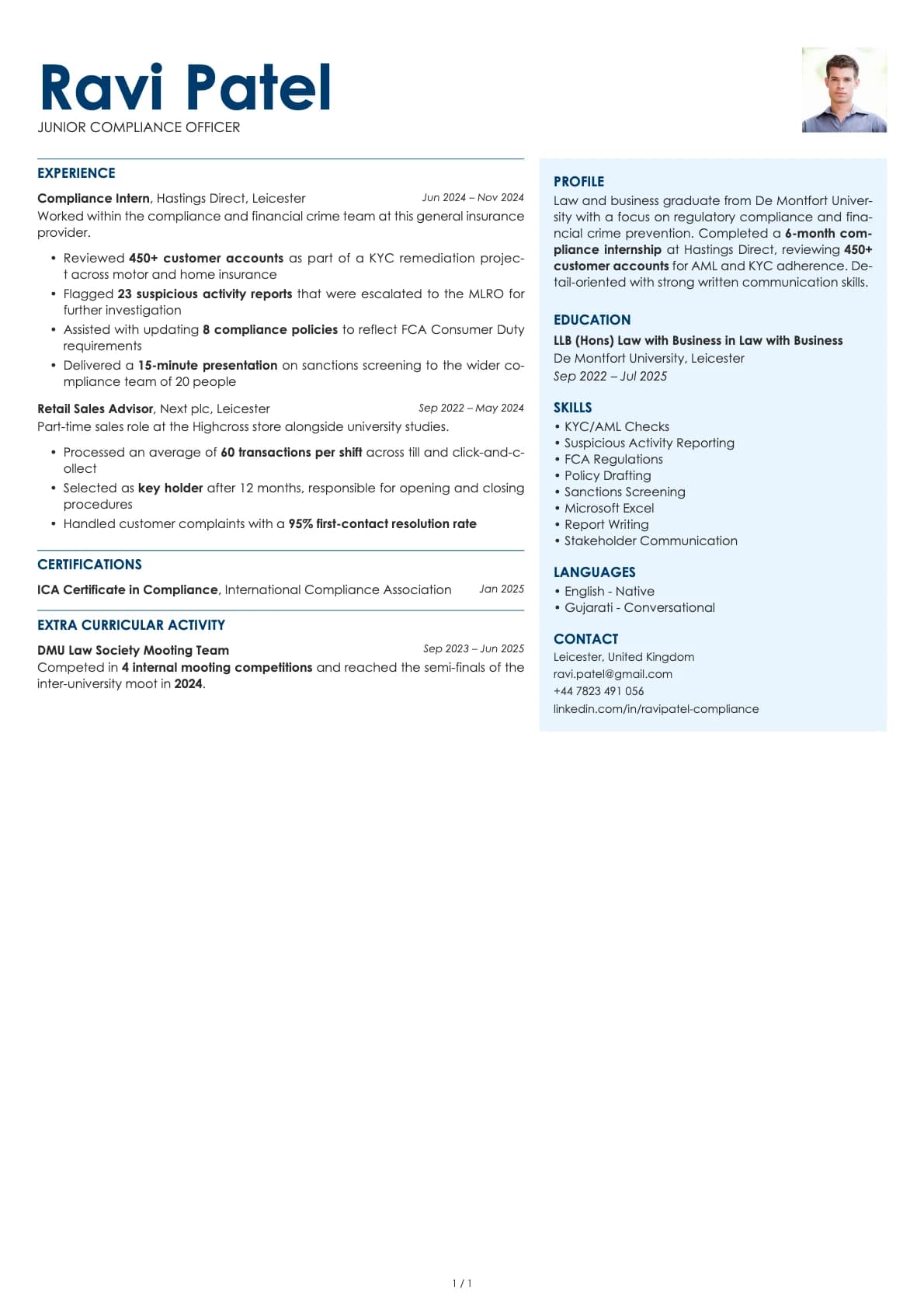
Junior Compliance Officer
A junior compliance officer resume example with insurance compliance internship experience and AML knowledge.
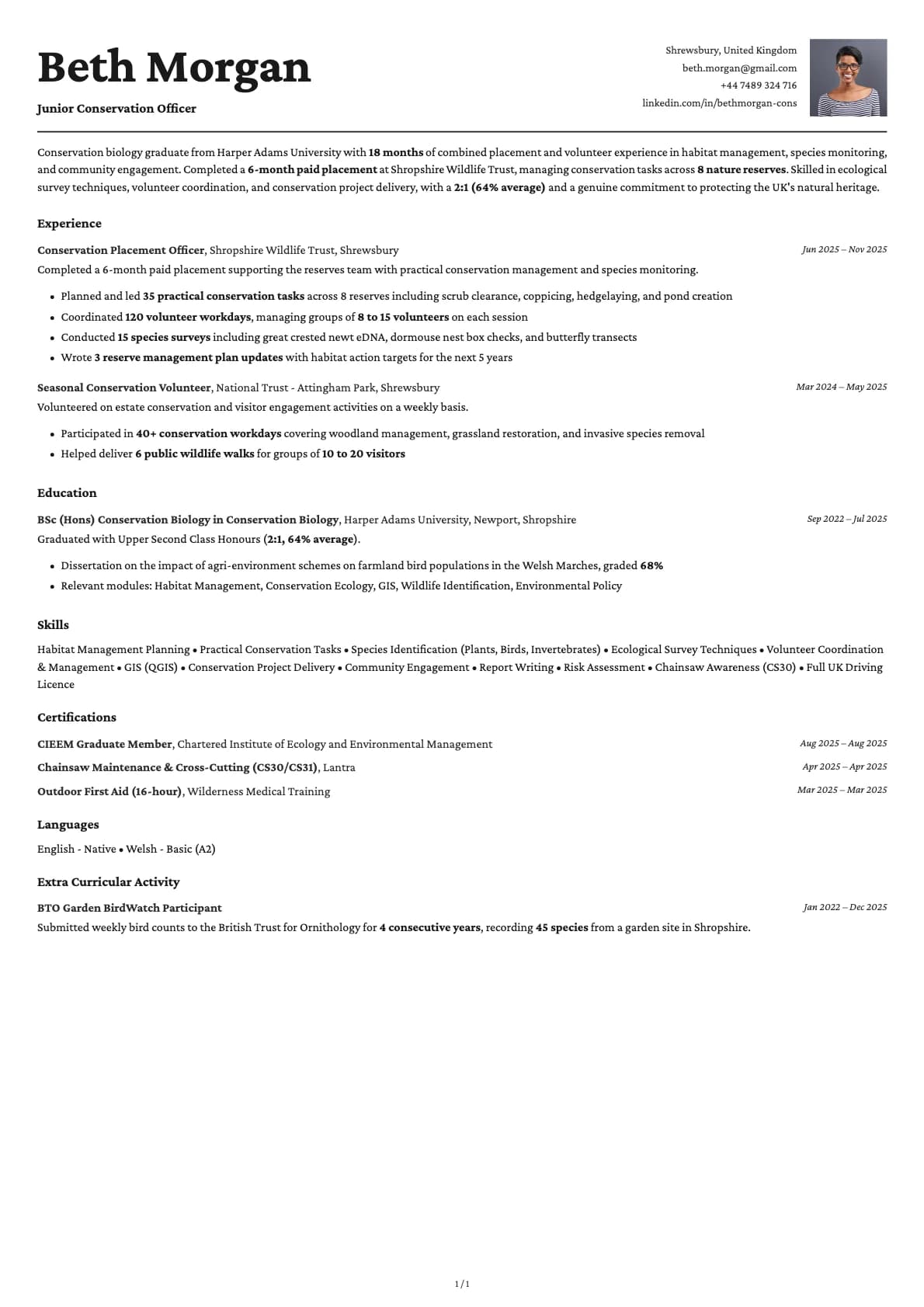
Junior Conservation Officer
A junior conservation officer resume example with wildlife trust placement experience, volunteer coordination, and habitat management skills.
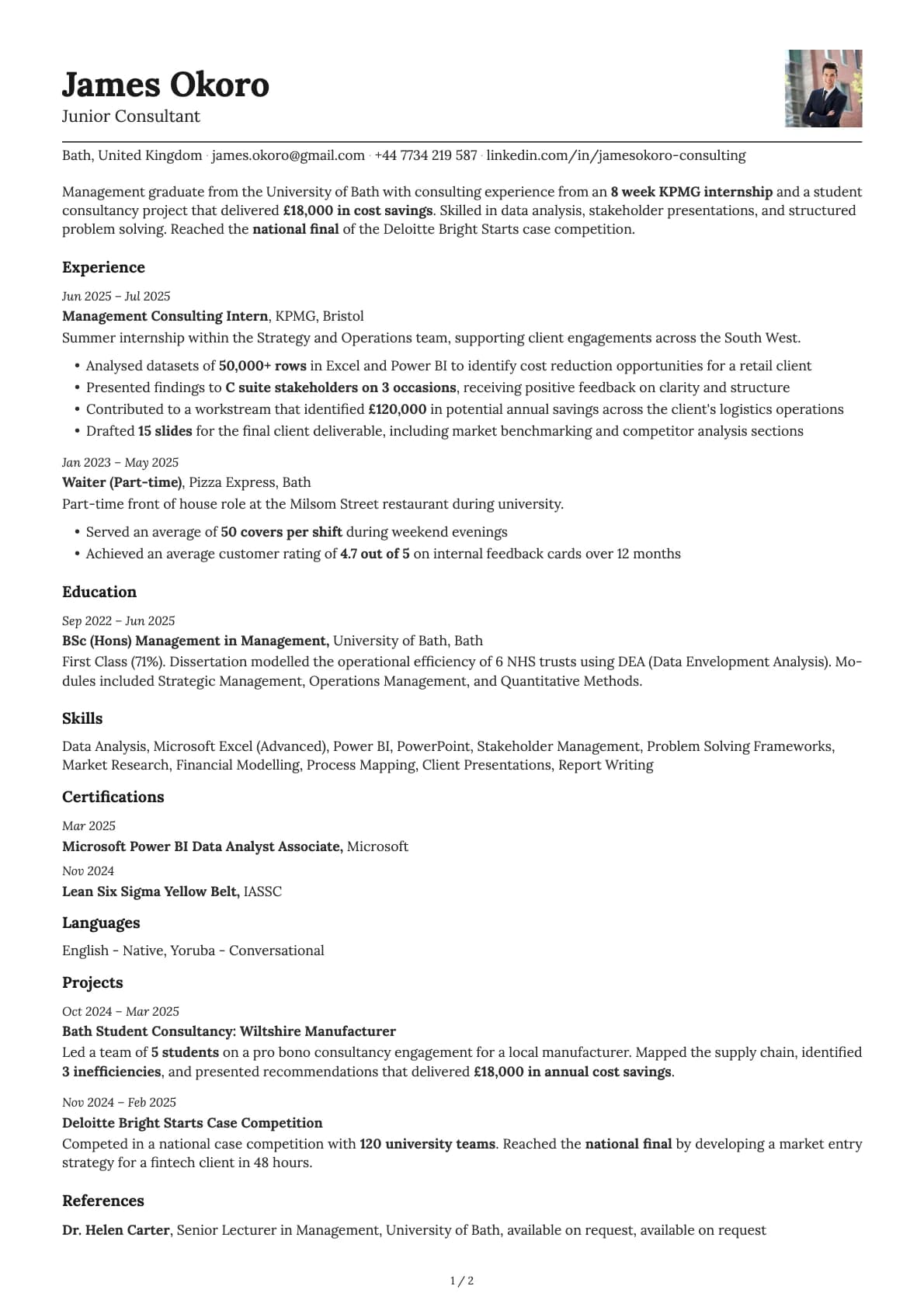
Junior Consultant
A junior consultant resume example with management degree, Big Four internship, and client facing project delivery experience.
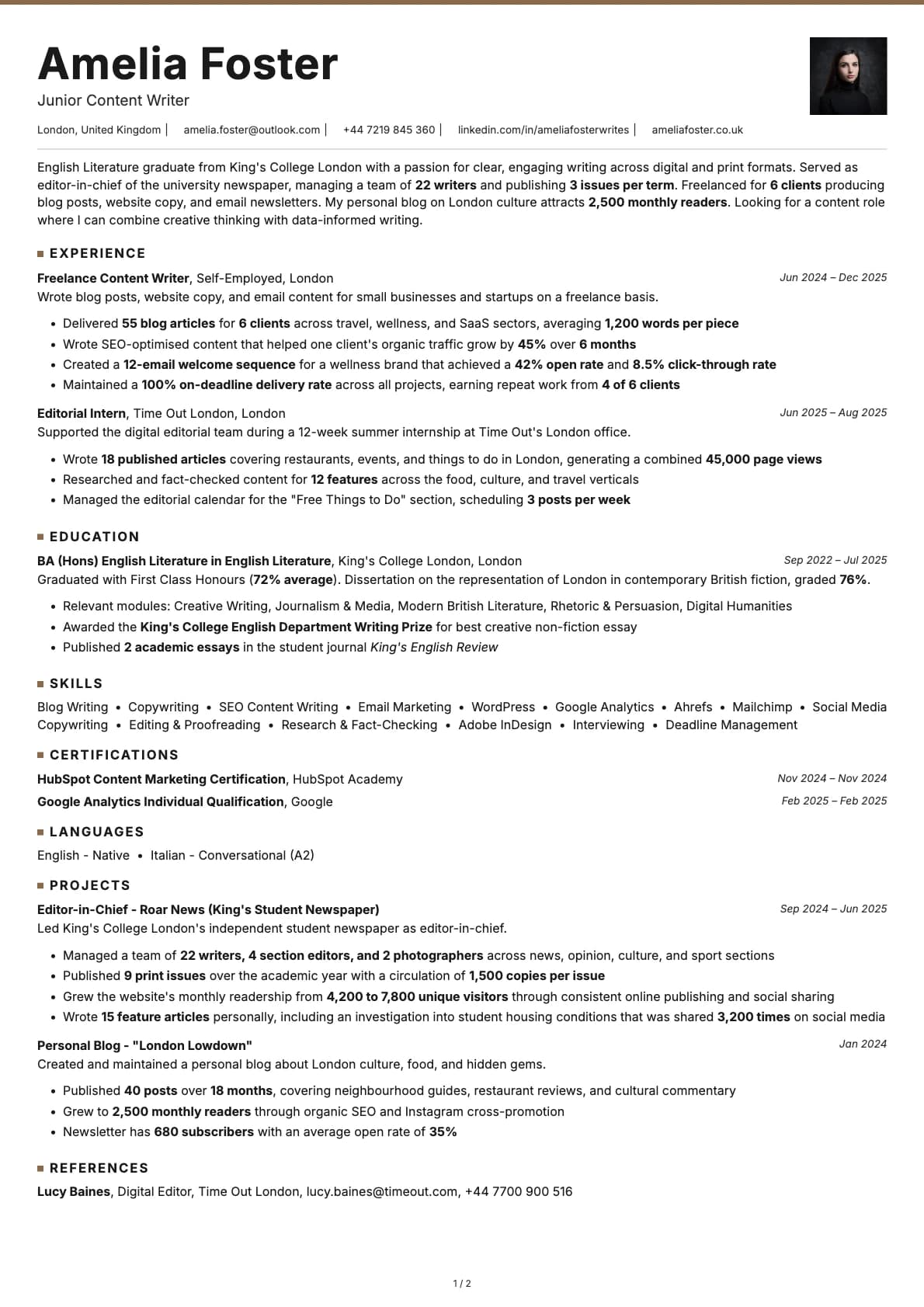
Junior Content Writer
A junior content writer resume example for recent graduates. See how to showcase your writing portfolio, SEO knowledge, and published work to land your first content role.

Junior Copywriter
A junior copywriter resume example for English graduates. See how to present freelance writing, student newspaper experience, and a portfolio to land your first agency or in-house role.
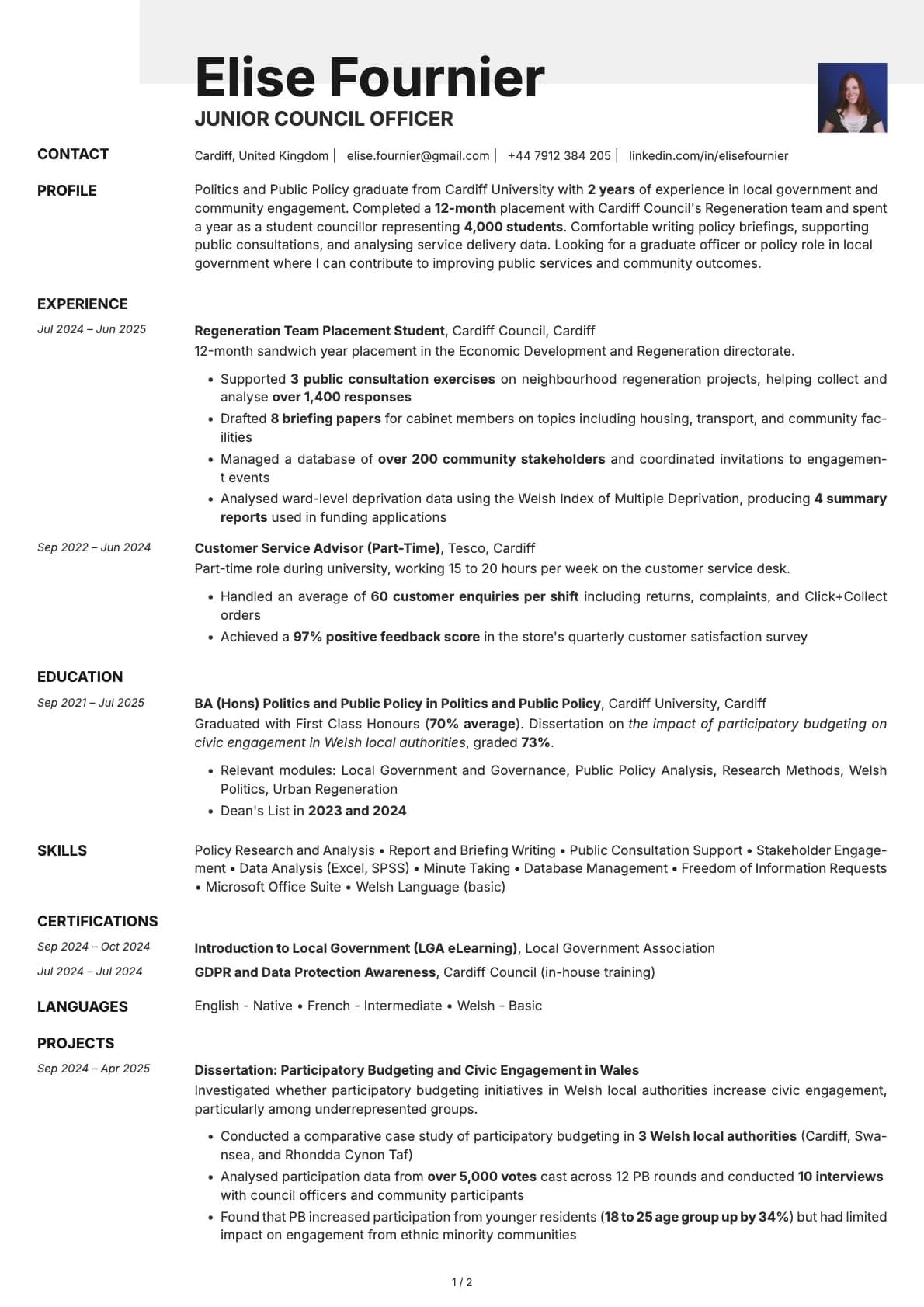
Junior Council Officer
A junior council officer resume example showing how to turn a council placement, student politics, and a public policy degree into a local government career.
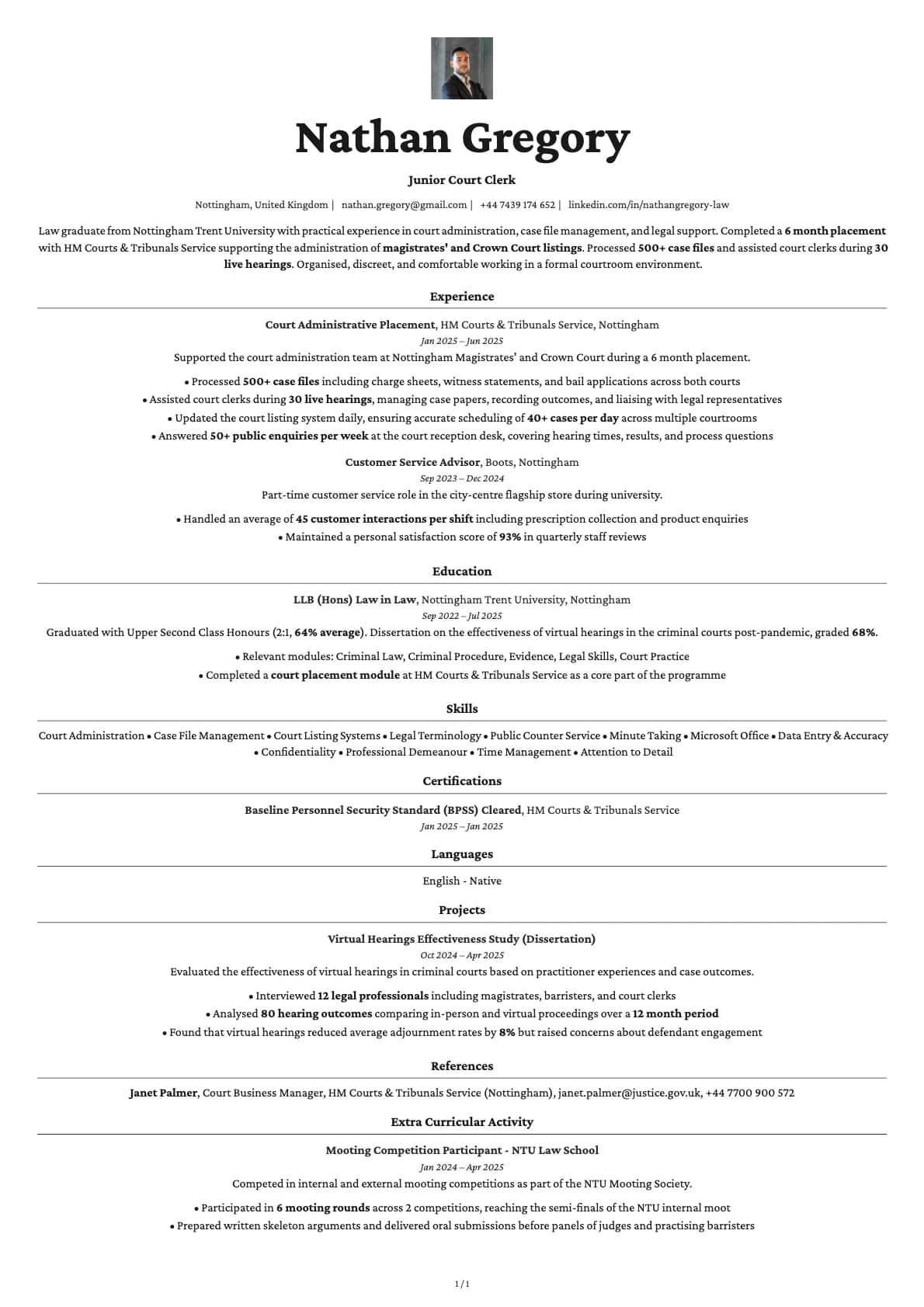
Junior Court Clerk
A junior court clerk resume example for law graduates. See how to present court administration experience, case file management, and HMCTS placement work to land your first court clerk role.
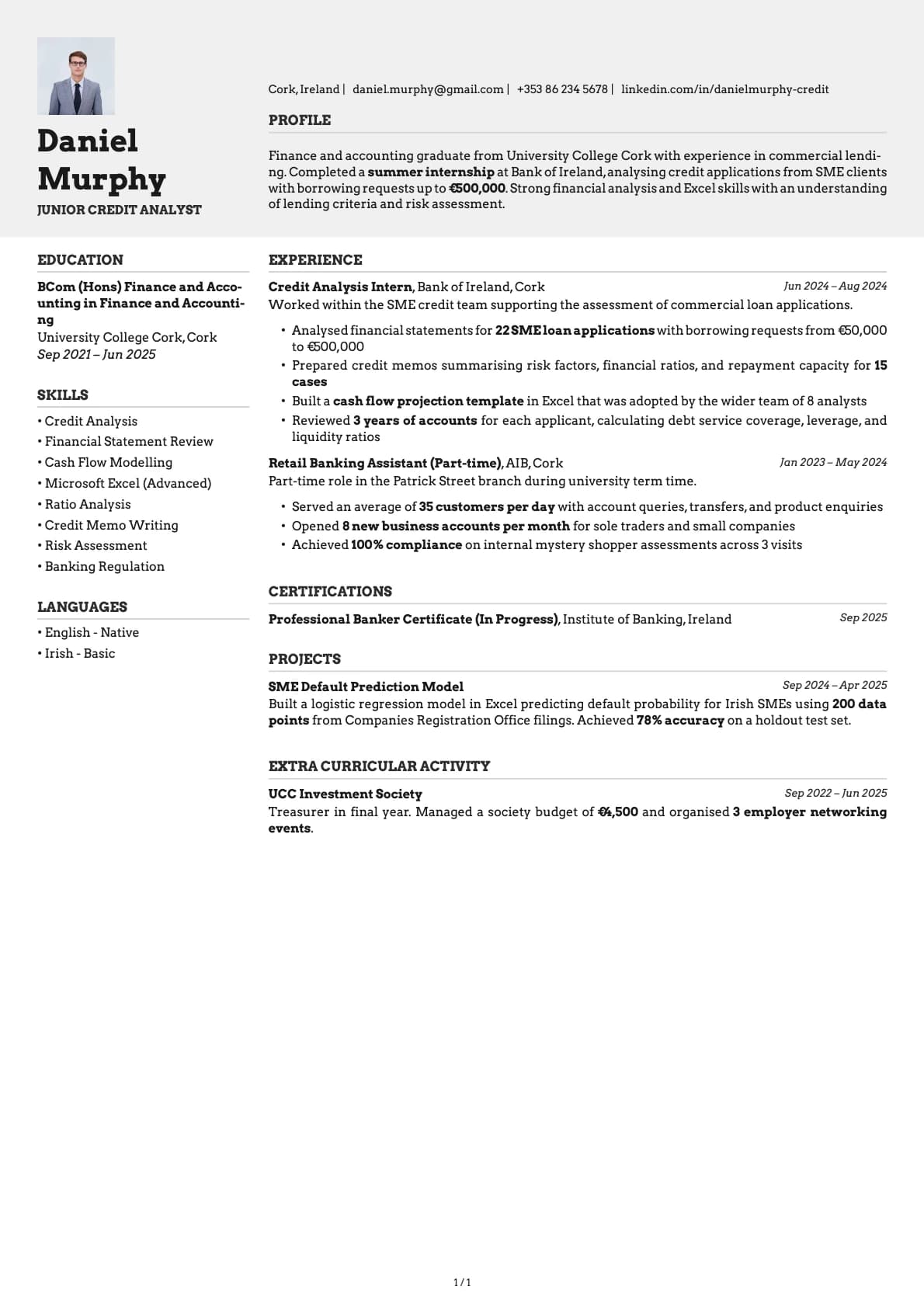
Junior Credit Analyst
A junior credit analyst resume example with Bank of Ireland internship experience and financial analysis skills.
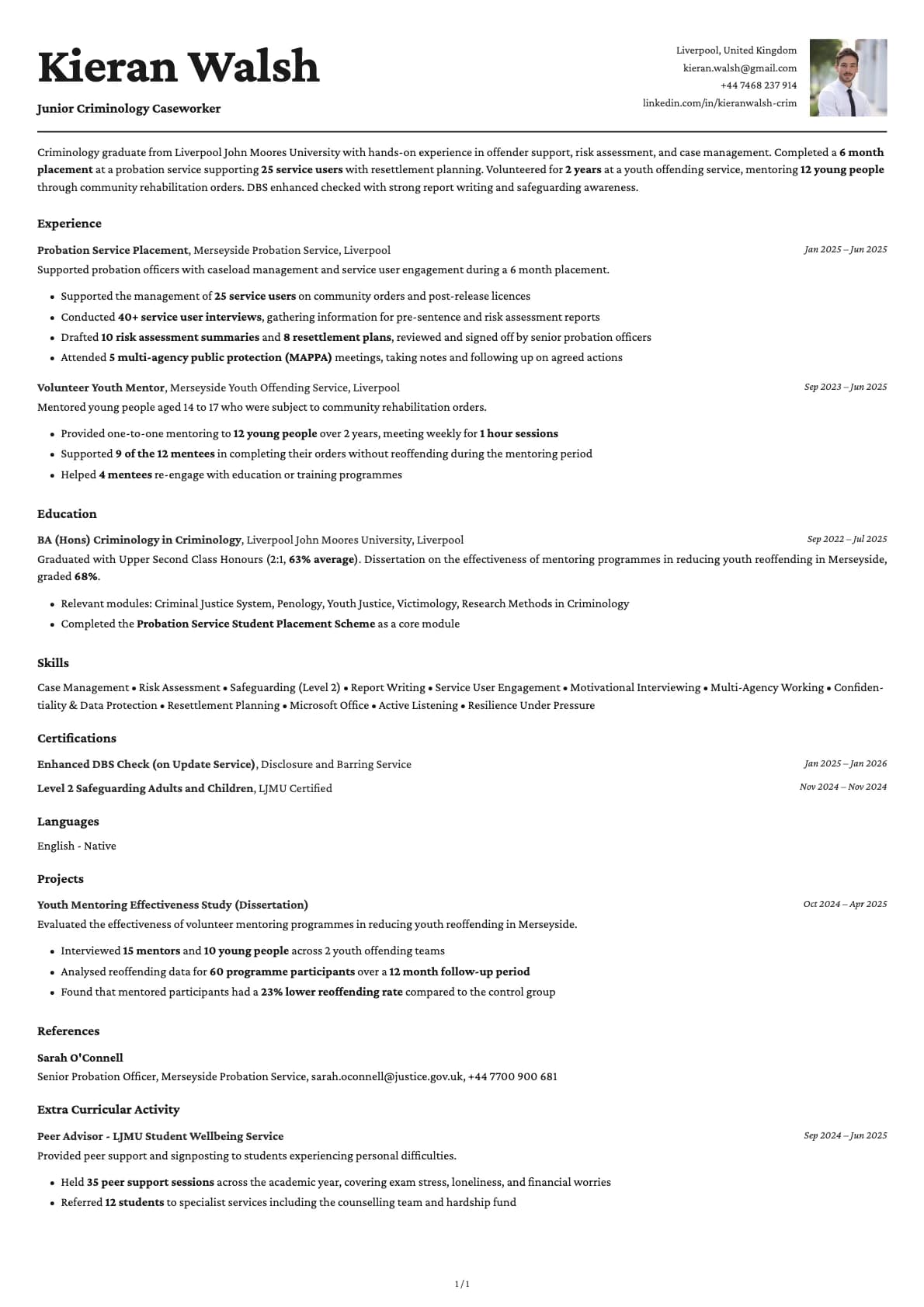
Junior Criminology Caseworker
A junior criminology caseworker resume example for graduates. See how to present probation experience, risk assessment skills, and mentoring work to land your first caseworker role.
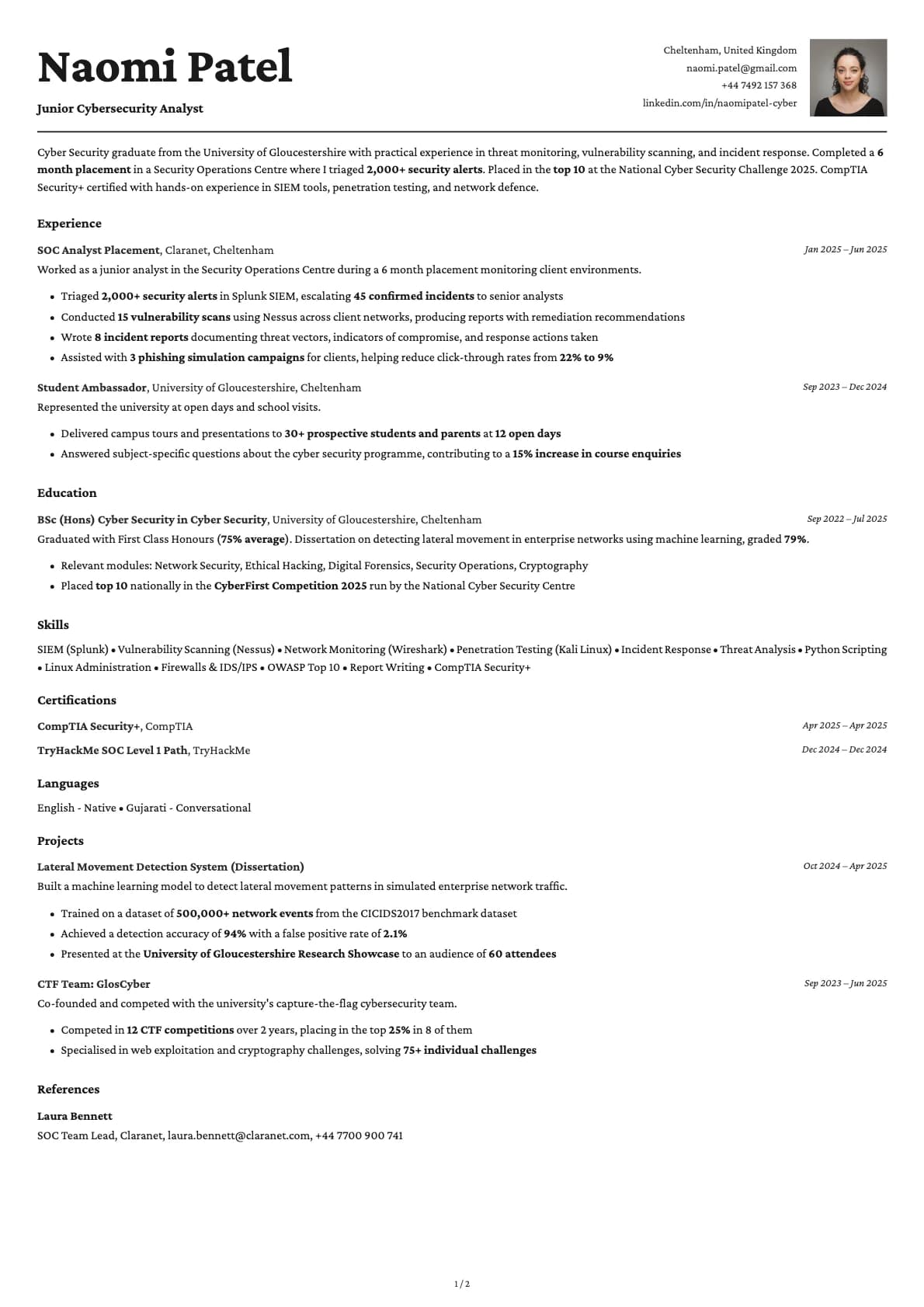
Junior Cybersecurity Analyst
A junior cybersecurity analyst resume example for graduates. See how to present SOC experience, CTF competitions, and Security+ certification to land your first cyber role.
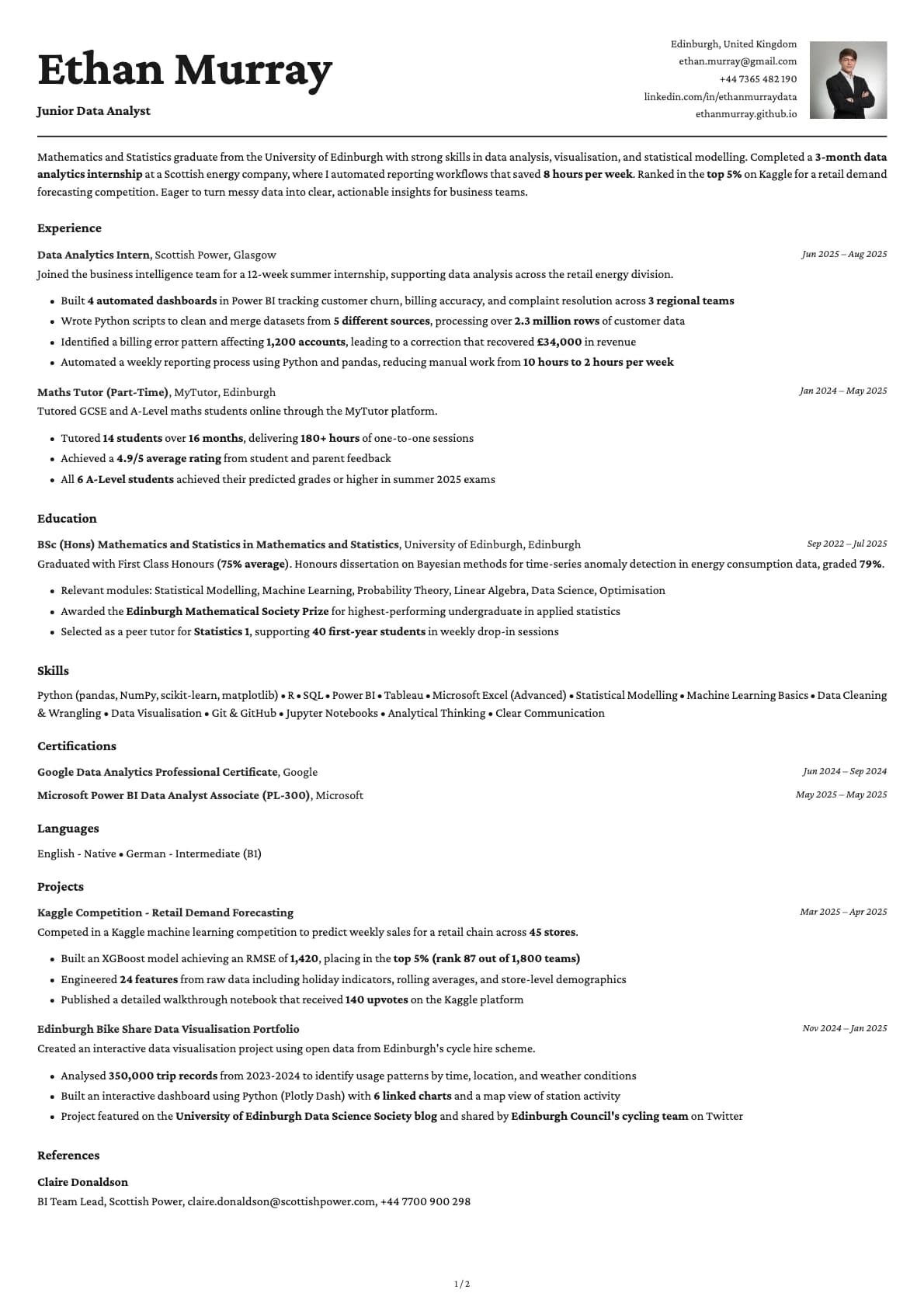
Junior Data Analyst
A junior data analyst resume example for recent graduates. See how to showcase your SQL skills, Python projects, and analytical experience to land your first analyst role.
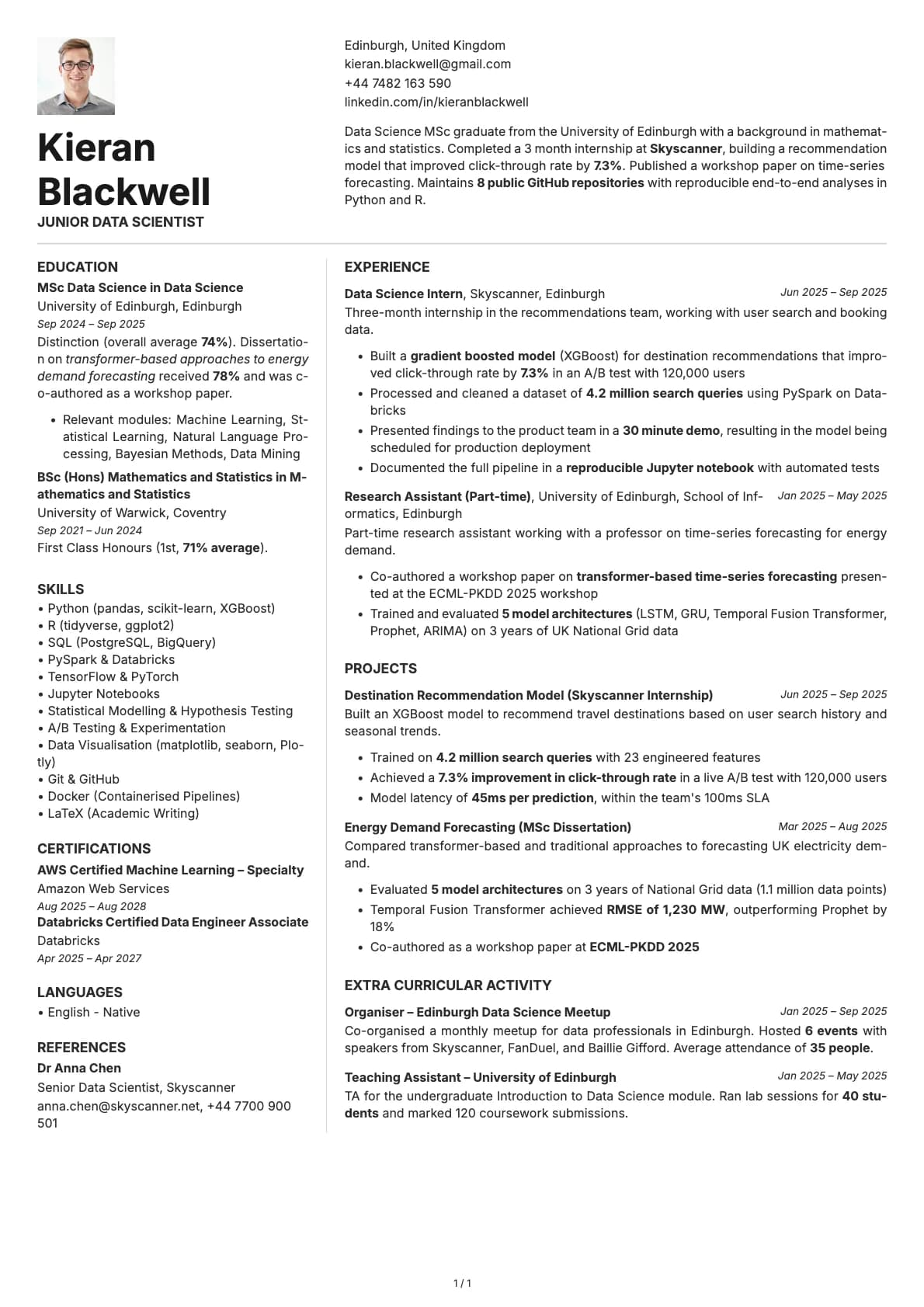
Junior Data Scientist
A junior data scientist resume example with Python projects, model accuracy metrics, and published research from a Data Science MSc graduate entering the field.