Junior Graphic Designer Resume Example
A junior graphic designer resume example for recent graduates. Learn how to present your portfolio, design tools, and freelance work to land your first design role.

Laddro Team
Free to use. No account needed to start.
Free to use. No account needed to start.
Overview
Design portfolios get you noticed, but your resume gets you through the applicant tracking system. A lot of junior designers put all their energy into their portfolio and send in a bare bones resume with "Creative thinker" and "Adobe Suite" as the highlights. That is not enough.
This resume belongs to Sophie Williams, a graphic design graduate from Nottingham Trent University. She has freelance experience, a university placement, and a strong project section. Her resume works because it treats design work like business work, with deliverables, deadlines, and client outcomes.
What Makes This Resume Work
Freelance work is presented professionally. Sophie completed logo and branding projects for three small businesses during her final year. Instead of listing "designed logos," she describes each project with the client type, deliverables, and timeline. One project involved creating a complete brand identity kit (logo, colour palette, business cards, social media templates) for a café in two weeks. That shows she can deliver under real deadlines.
The placement section shows volume. During her six month placement at a marketing agency, she produced over 120 social media graphics across four client accounts. She also designed two email newsletter templates that were adopted as the agency's standard for new clients. These numbers prove she can handle production pace work, which is exactly what junior roles demand.
Tools are listed with specificity. Adobe Photoshop, Illustrator, InDesign, Figma, and Canva Pro. She also mentions experience with After Effects for basic motion graphics. Hiring managers know exactly what she can use on day one without any additional training.
The portfolio link is prominent. Her portfolio URL sits right below her contact details. For design roles, this is essential. Recruiters will click it. Having it visible at the top means they do not need to hunt for it further down the page.
Key Takeaways
Treat freelance projects like professional jobs. Name the client type, describe the deliverables, and include the timeline. Even unpaid work for a friend's business counts if you frame it with enough detail.
Show volume and speed. Junior design roles involve producing a lot of work quickly. If you created 20 Instagram posts in a week or turned around a logo concept in three days, say so.
Always include your portfolio link at the top of your resume. A design resume without a portfolio link is like a developer resume without a GitHub profile. Make it easy to find.
Build your own version
Open this layout in the builder and swap in your own details. It takes a few minutes.
Free to use. No account needed to start.
Was this resume example helpful?
Rate this example to help us create better content for you.
4.8 average from 131 ratingsRelated resume examples
Junior Council Officer
A junior council officer resume example showing how to turn a council placement, student politics, and a public policy degree into a local government career.
Junior Court Clerk
A junior court clerk resume example for law graduates. See how to present court administration experience, case file management, and HMCTS placement work to land your first court clerk role.
Junior Credit Analyst
A junior credit analyst resume example with Bank of Ireland internship experience and financial analysis skills.
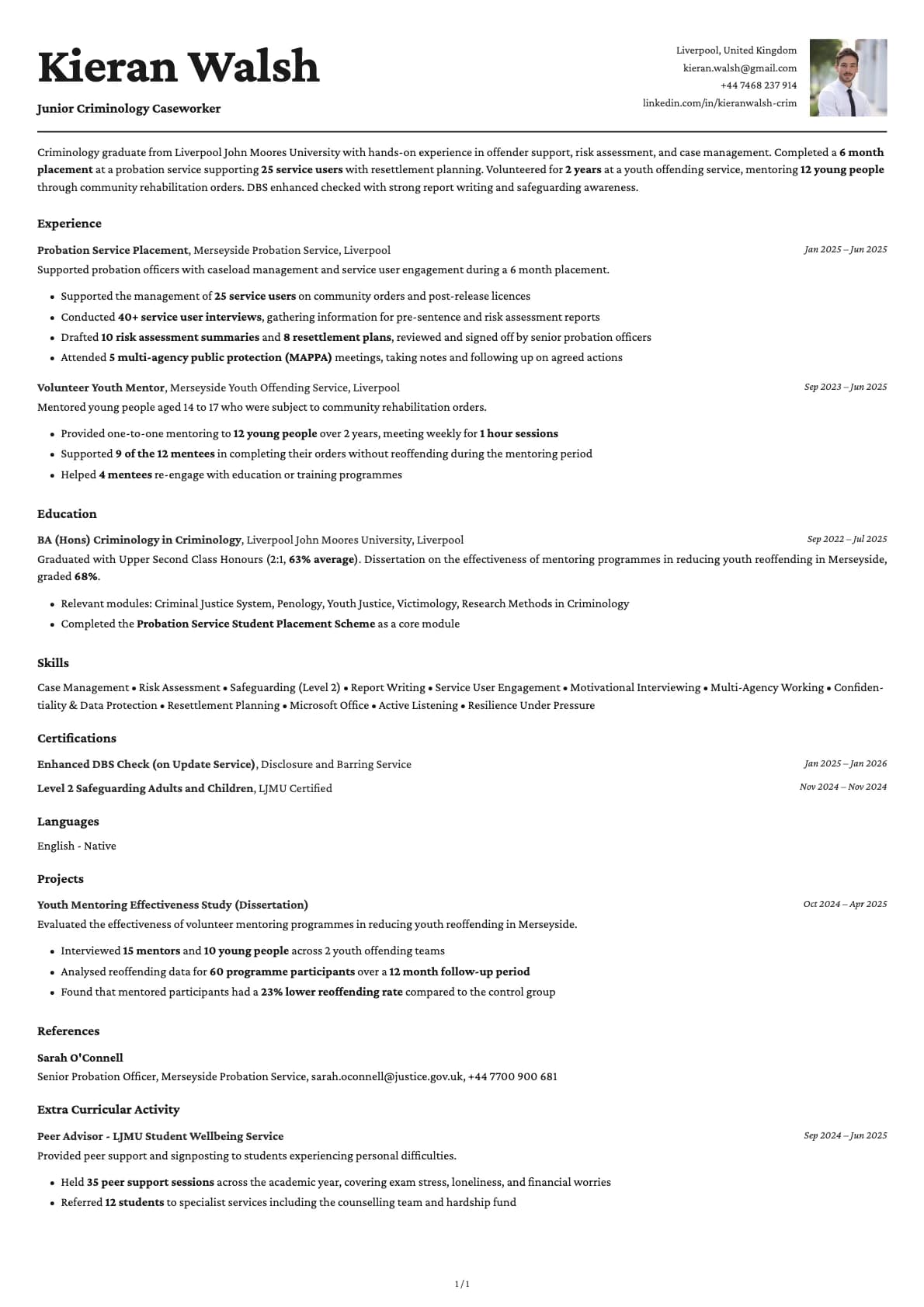
Junior Criminology Caseworker
A junior criminology caseworker resume example for graduates. See how to present probation experience, risk assessment skills, and mentoring work to land your first caseworker role.
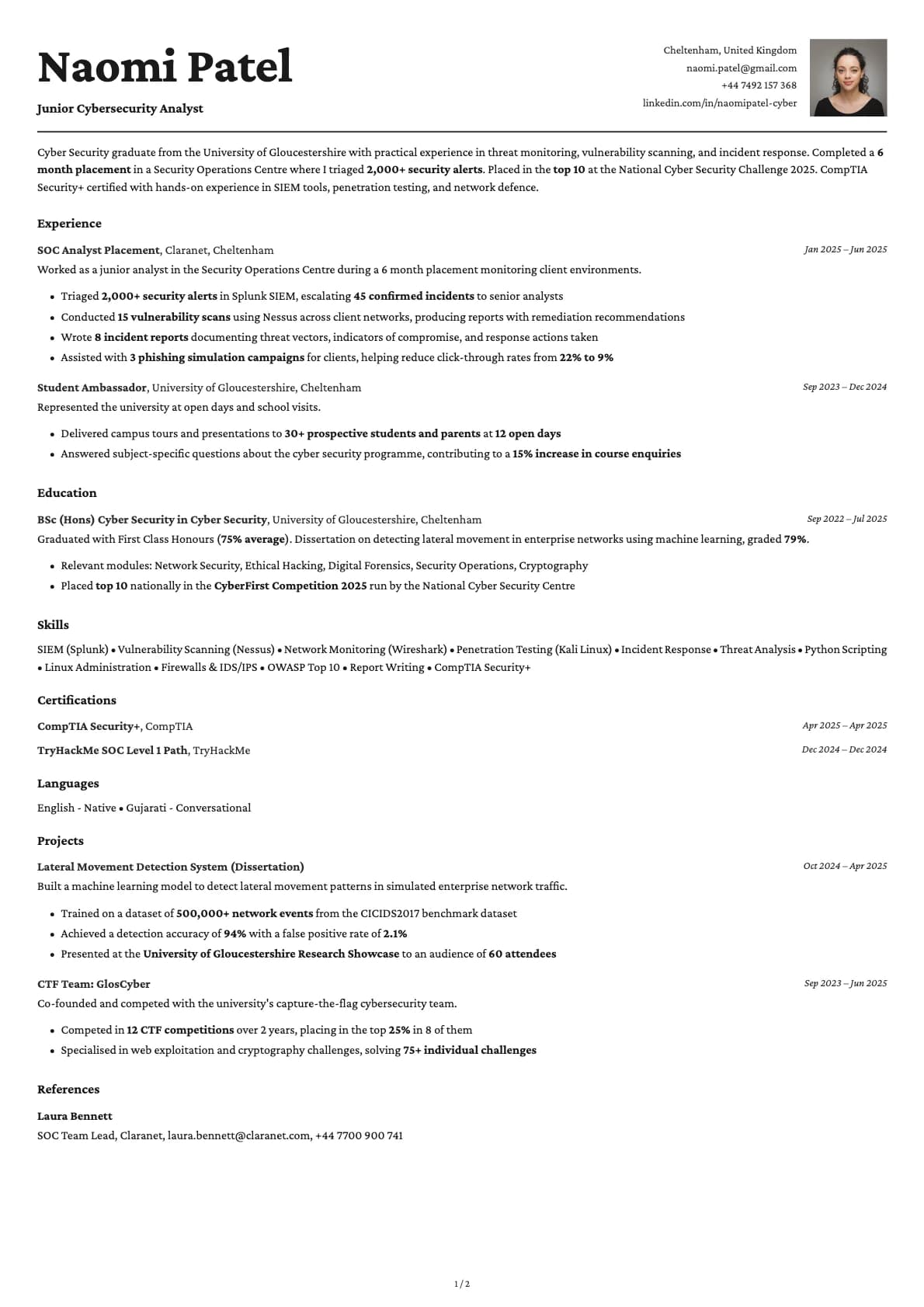
Junior Cybersecurity Analyst
A junior cybersecurity analyst resume example for graduates. See how to present SOC experience, CTF competitions, and Security+ certification to land your first cyber role.
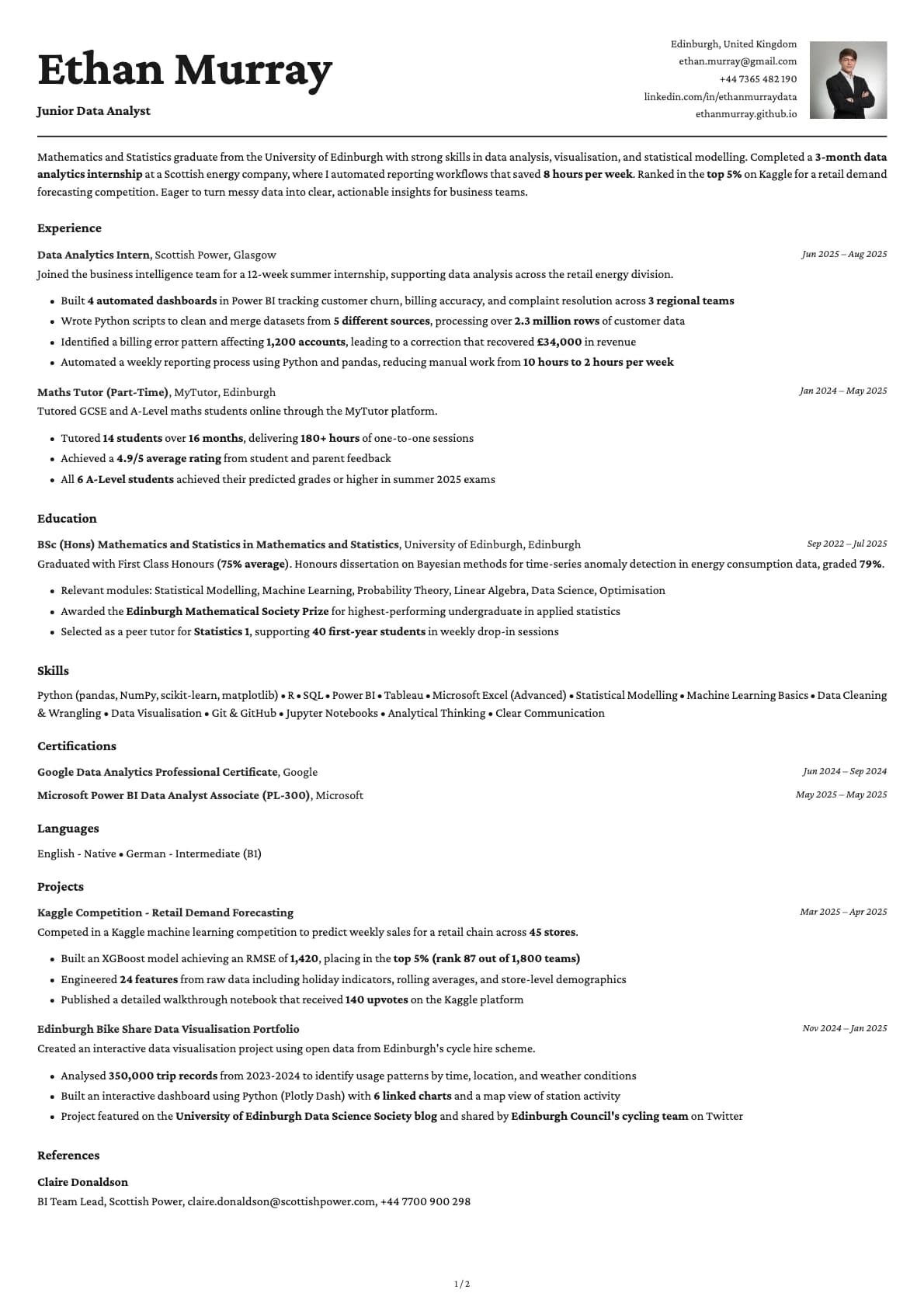
Junior Data Analyst
A junior data analyst resume example for recent graduates. See how to showcase your SQL skills, Python projects, and analytical experience to land your first analyst role.
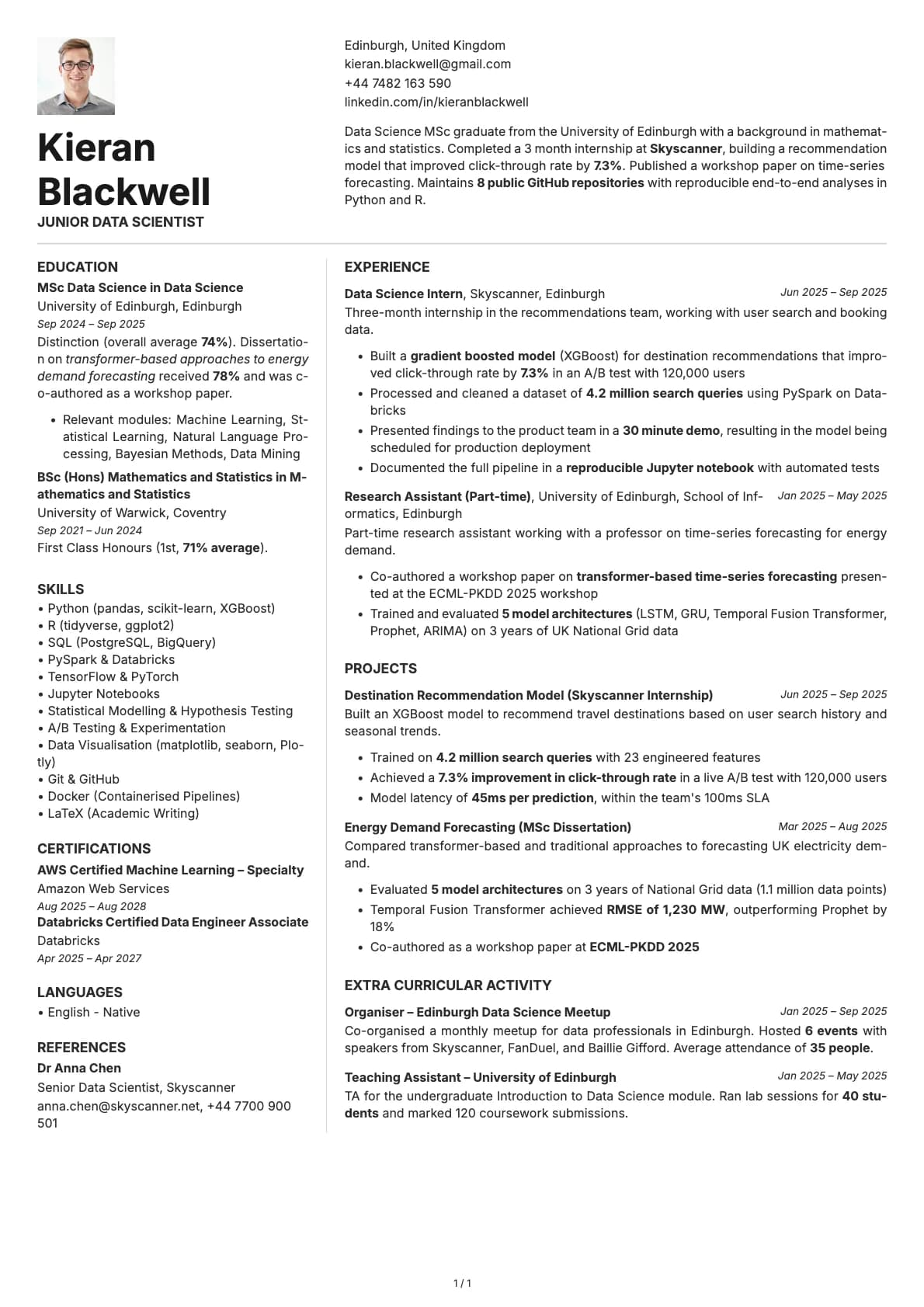
Junior Data Scientist
A junior data scientist resume example with Python projects, model accuracy metrics, and published research from a Data Science MSc graduate entering the field.
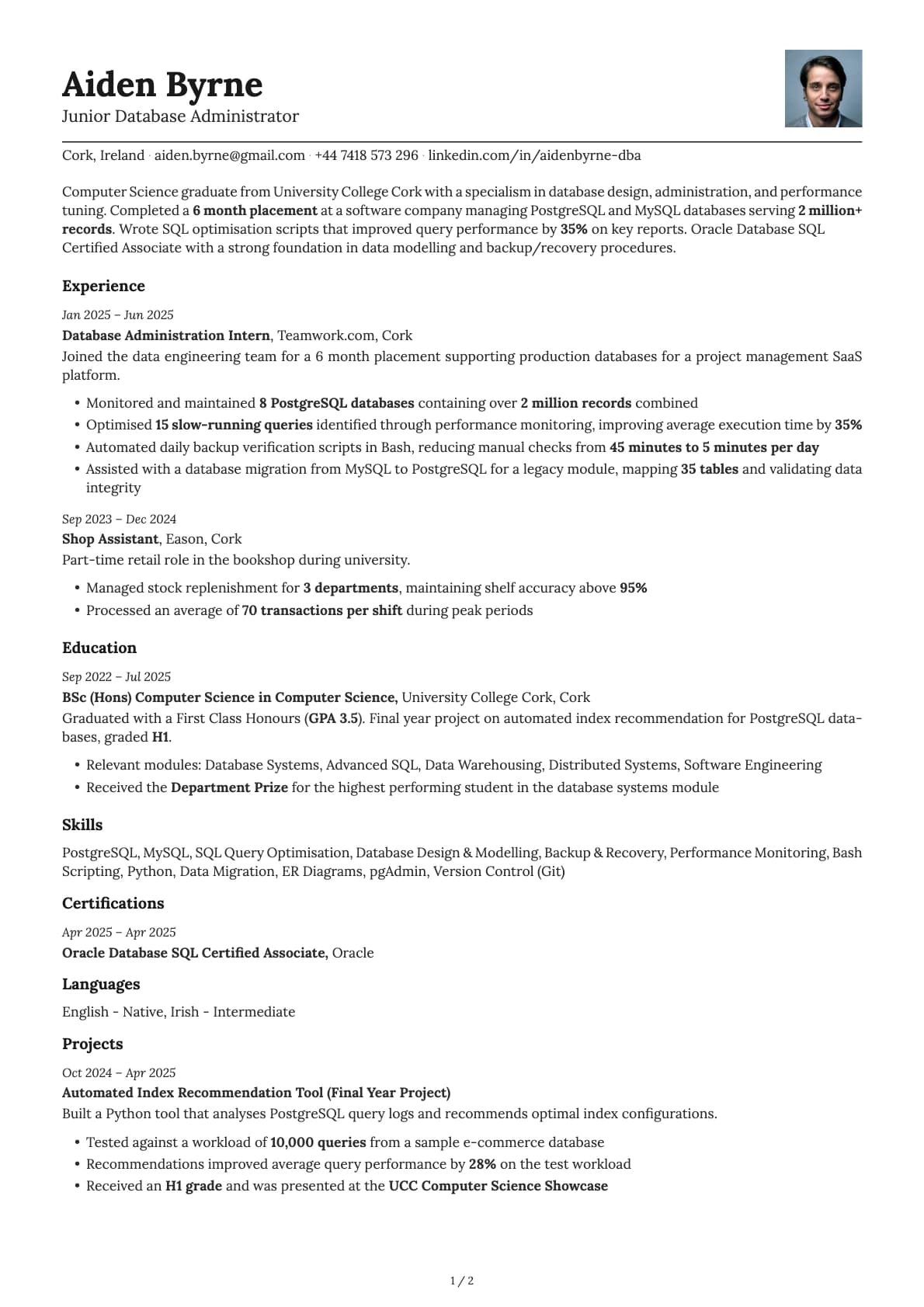
Junior Database Administrator
A junior database administrator resume example for graduates. See how to present SQL skills, performance tuning, and database management experience to land your first DBA role.
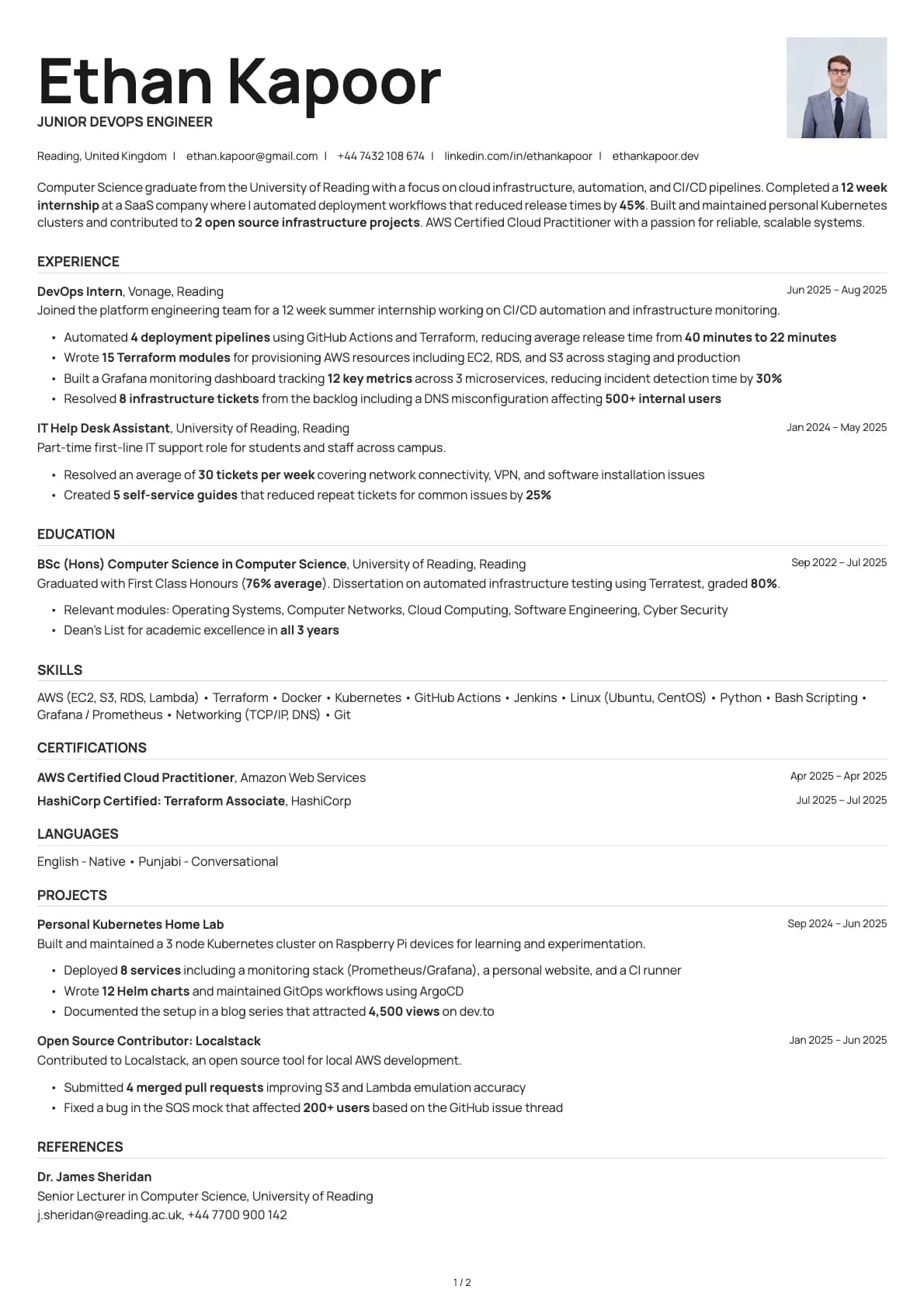
Junior DevOps Engineer
A junior DevOps engineer resume example for graduates. See how to present CI/CD experience, cloud certifications, and infrastructure projects to land your first DevOps role.
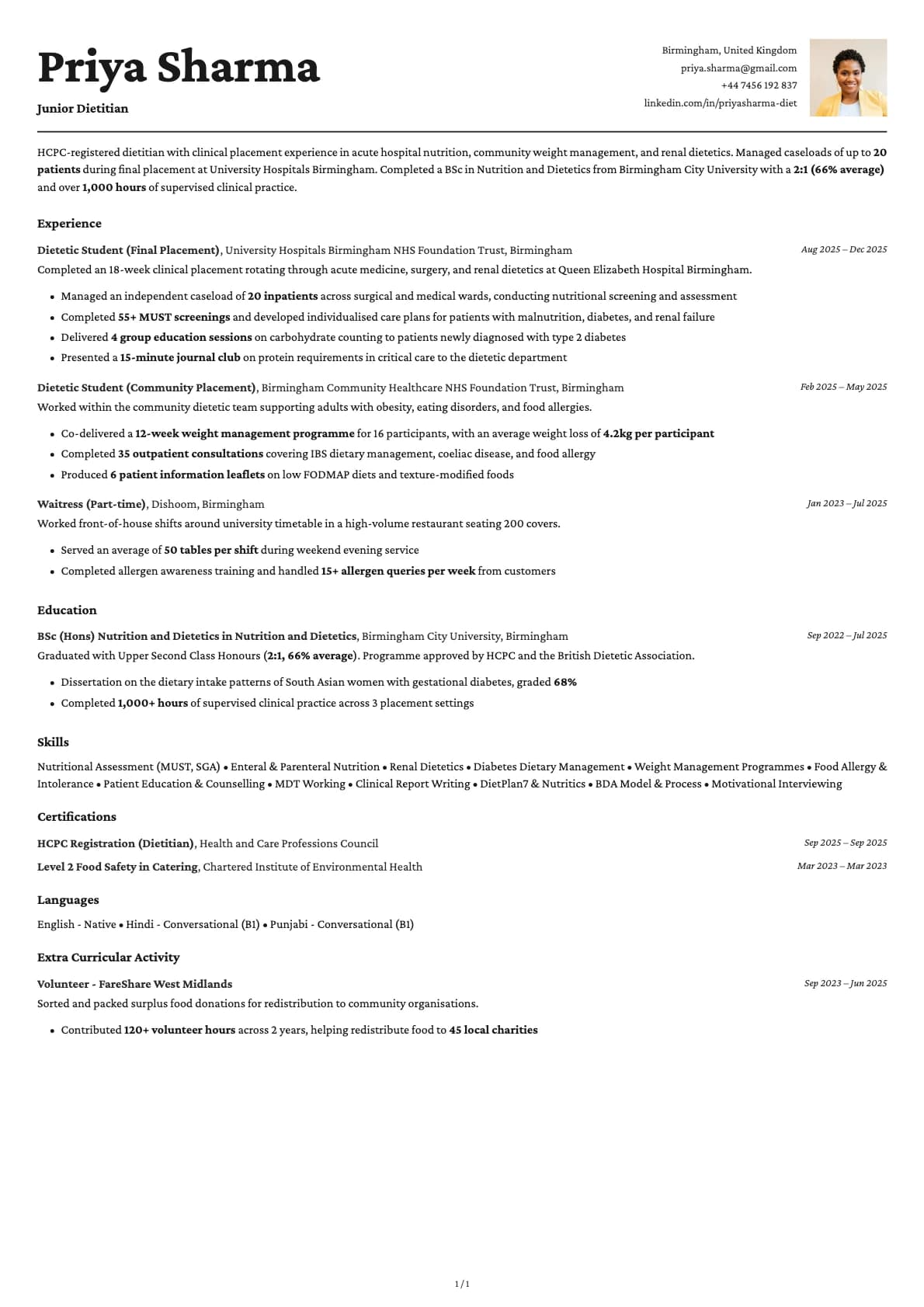
Junior Dietitian
A junior dietitian resume example with NHS clinical placement experience, HCPC registration, and patient caseload numbers for new graduates.
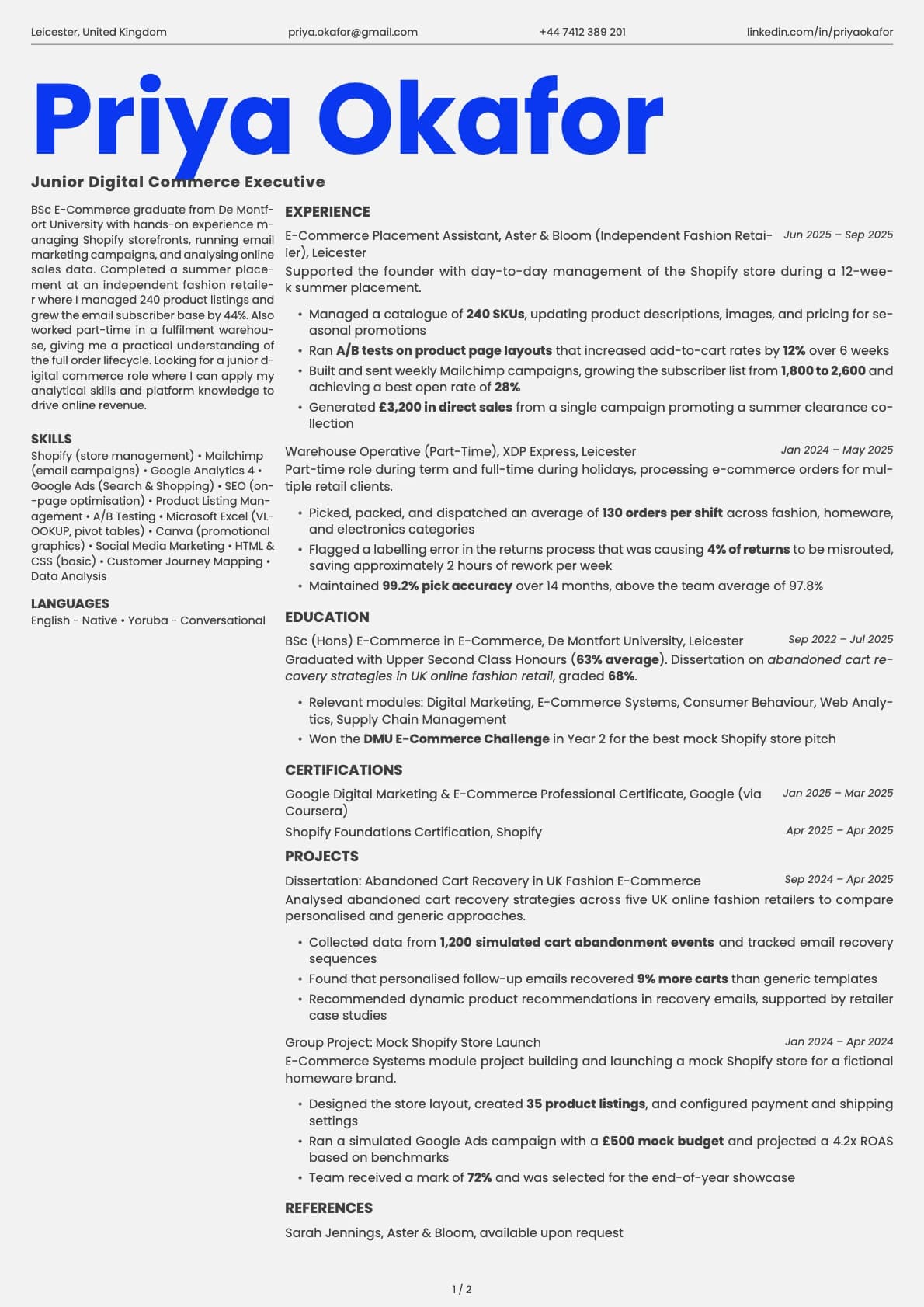
Junior Digital Commerce Executive
A junior digital commerce executive resume example showing how an e-commerce graduate used Shopify internships and campaign metrics to land a first role.
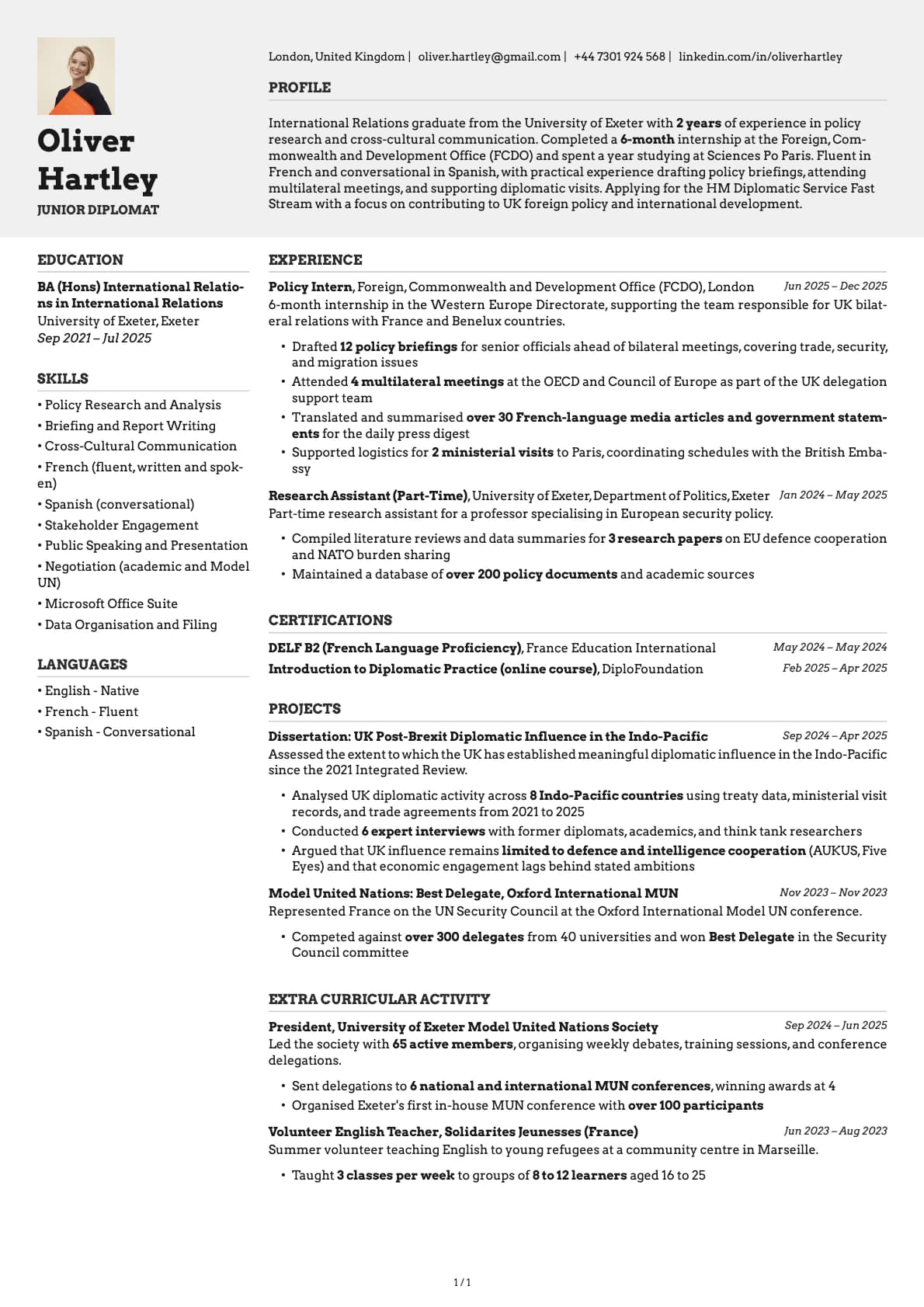
Junior Diplomat
A junior diplomat resume example showing how to combine an FCDO internship, a year at Sciences Po, and Model UN leadership into a Fast Stream application.