Graduate Midwife Resume Example
A graduate midwife resume example with birth attendance numbers, NMBI registration, and clinical placement hours for newly qualified midwives.

Laddro Team
Free to use. No account needed to start.
Free to use. No account needed to start.
Overview
Maternity services across the UK and Ireland are under pressure, and newly qualified midwives who can demonstrate clinical confidence and a breadth of placement experience are in demand. Your resume needs to show birth attendance numbers, the range of settings you have worked in, and evidence that you can handle emergencies as well as normal physiological birth.
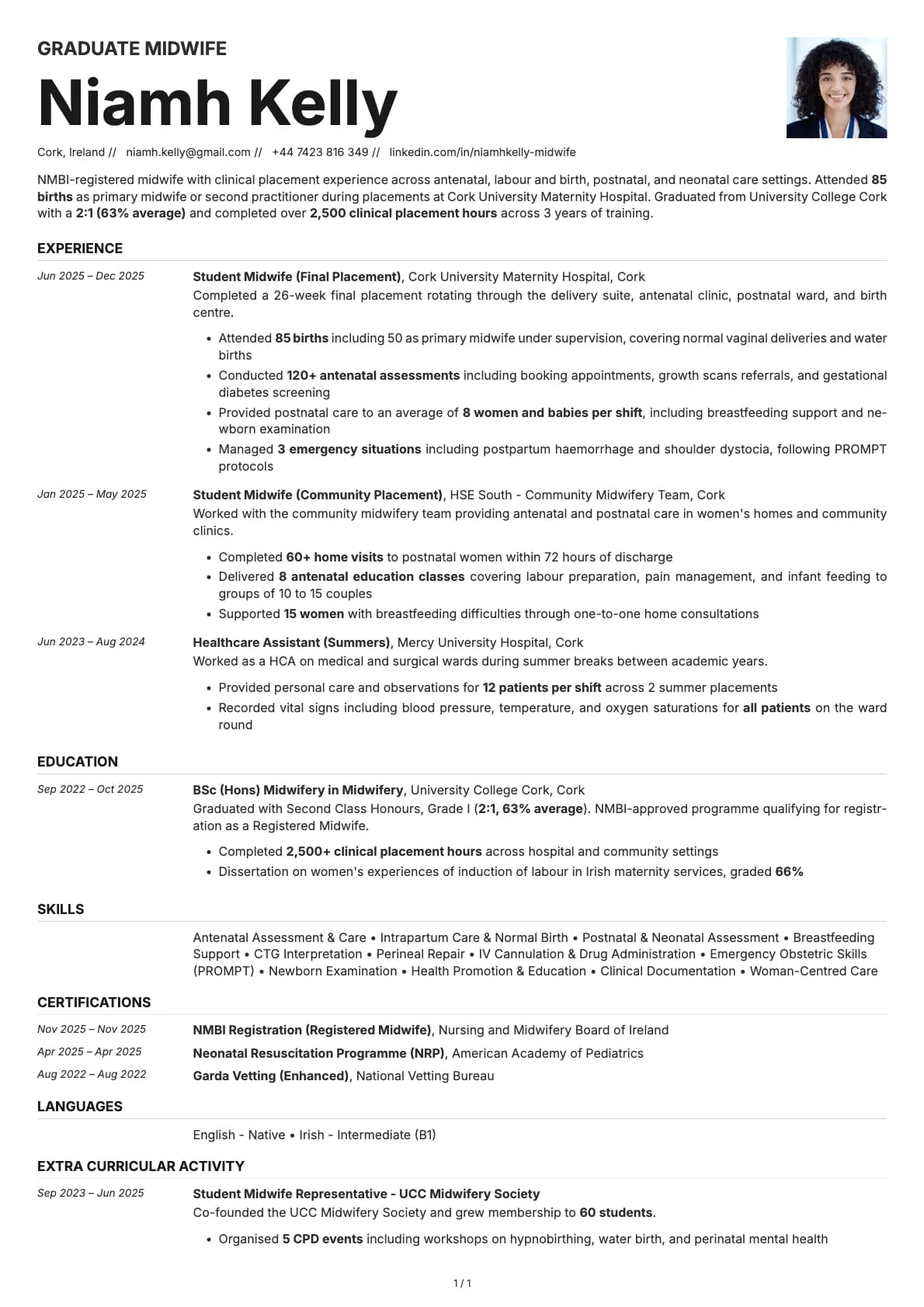
This resume belongs to Niamh Kelly, an NMBI-registered midwife who graduated from University College Cork. She attended 85 births during her placements, including 50 as primary midwife. She completed over 2,500 clinical hours across delivery suite, antenatal clinic, postnatal ward, birth centre, and community settings, and managed emergency situations including postpartum haemorrhage.
What Makes This Resume Work
Birth attendance numbers are the defining metric. Niamh lists 85 births attended and specifies that 50 were as primary midwife. This is the single most important number on a newly qualified midwife's resume because it directly demonstrates competence in intrapartum care.
Emergency experience shows clinical courage. Mentioning PROMPT-trained emergency response and specific situations she managed tells employers that Niamh will not freeze in a crisis. Maternity units need midwives who can act quickly and follow protocols under pressure.
Community placement experience adds a different dimension. Home visits, antenatal education classes, and breastfeeding support consultations show that Niamh can work autonomously in community settings, which is valuable for trusts operating alongside midwifery continuity of carer models.
Key Takeaways
Newly qualified midwives should quantify their birth attendance (total and as primary midwife), antenatal assessments completed, postnatal caseloads, and any emergency situations they managed. Registration with NMC or NMBI should be prominently displayed, and any additional certifications like NRP or breastfeeding support qualifications add weight. Both hospital and community experience should be clearly separated to show breadth of clinical training.
Build your own version
Open this layout in the builder and swap in your own details. It takes a few minutes.
Free to use. No account needed to start.
Was this resume example helpful?
Rate this example to help us create better content for you.
4.8 average from 132 ratingsRelated resume examples
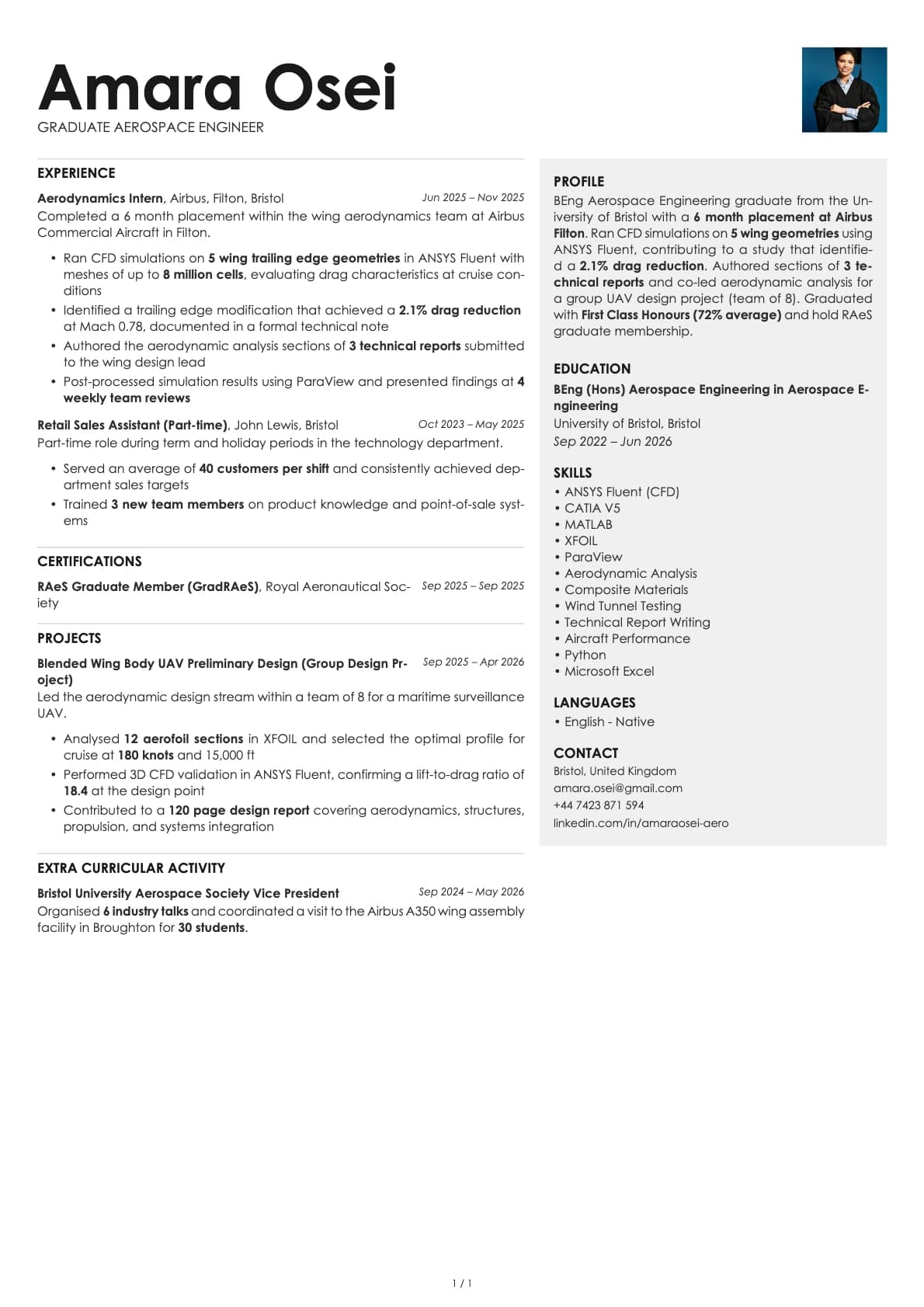
Graduate Aerospace Engineer
A graduate aerospace engineer resume example with CFD analysis skills, Airbus placement experience, and RAeS membership.
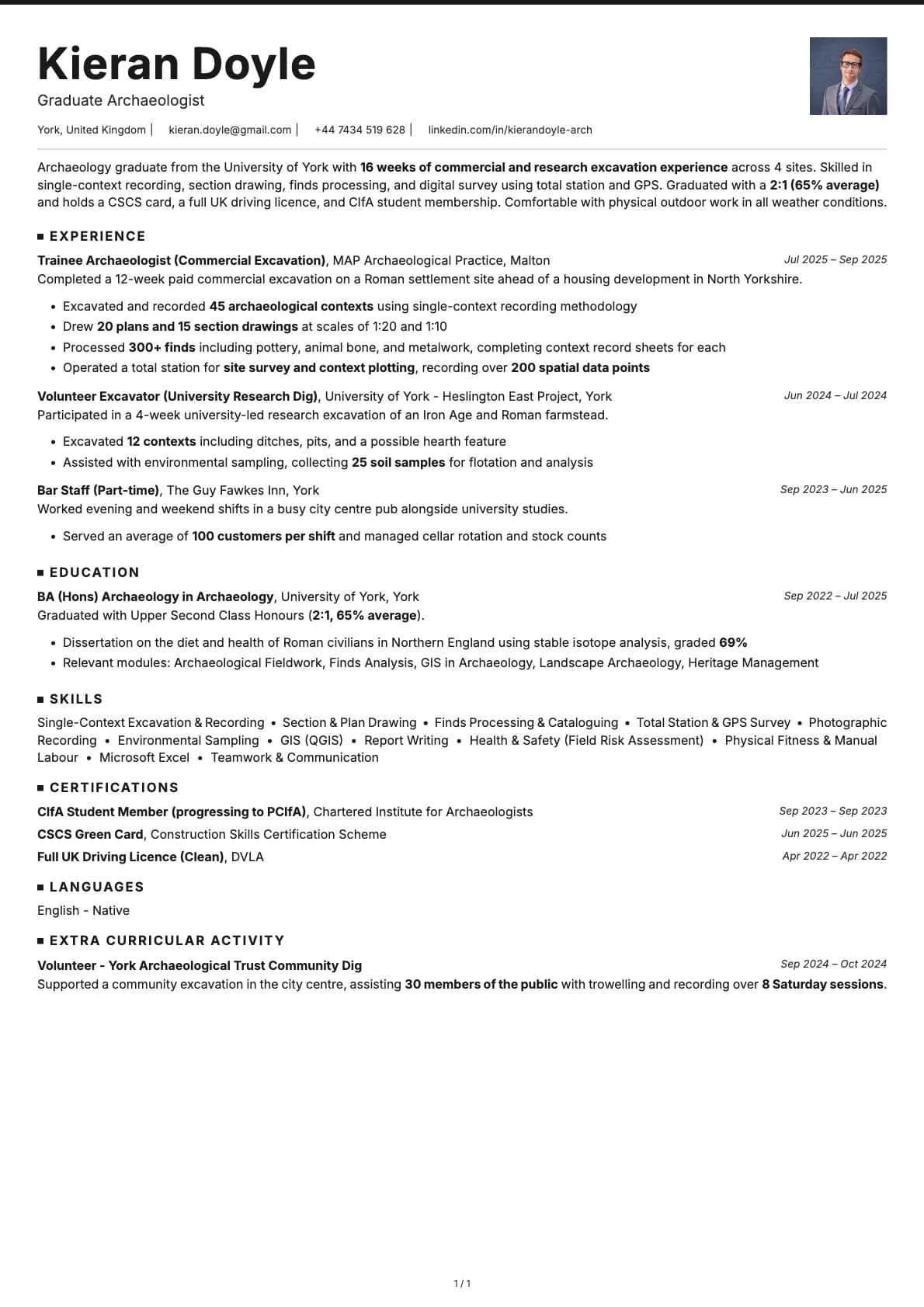
Graduate Archaeologist
A graduate archaeologist resume example with commercial excavation experience, single-context recording, and CIfA membership.
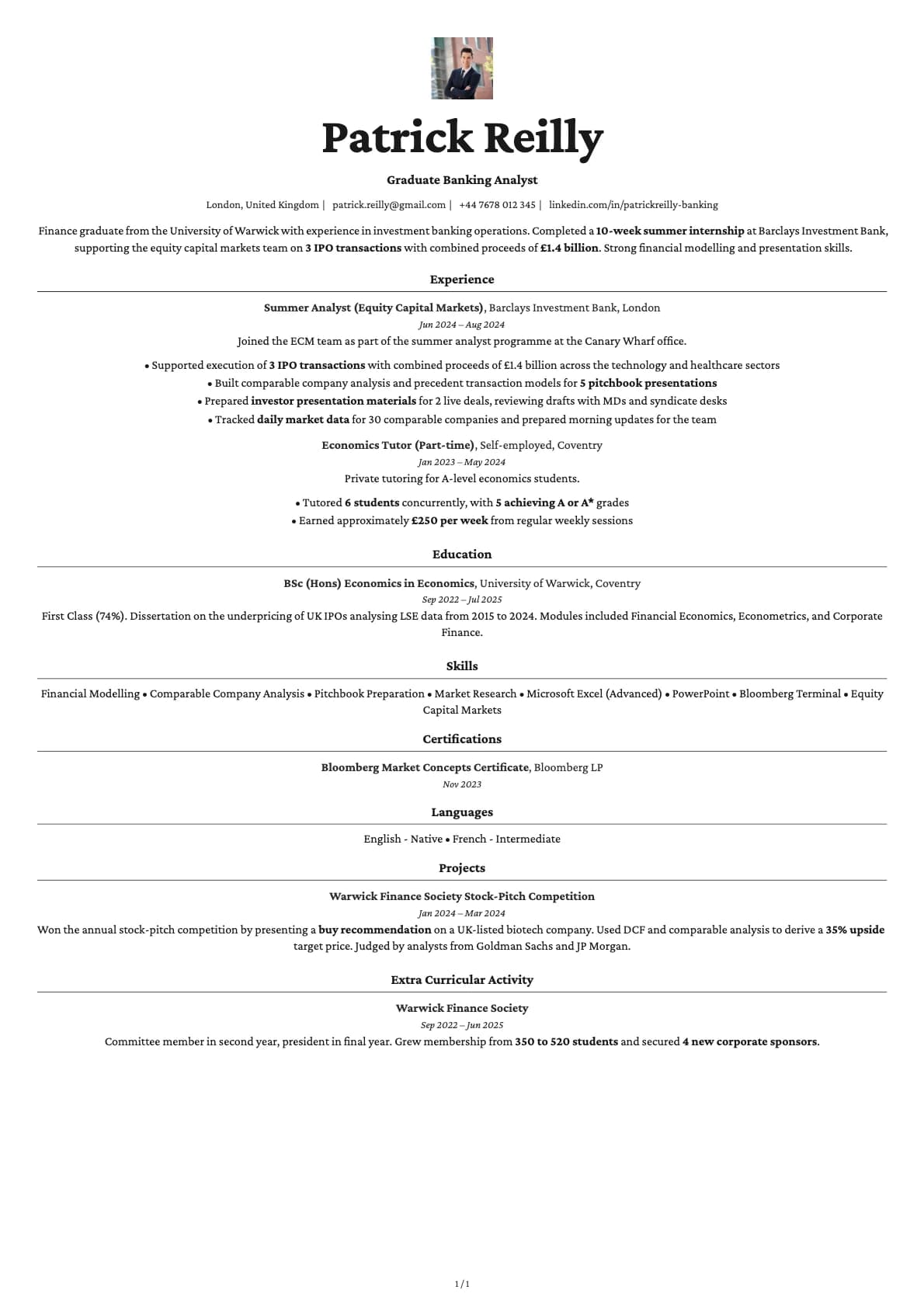
Graduate Banking Analyst
A graduate banking analyst resume example with Barclays ECM internship and financial modelling skills.
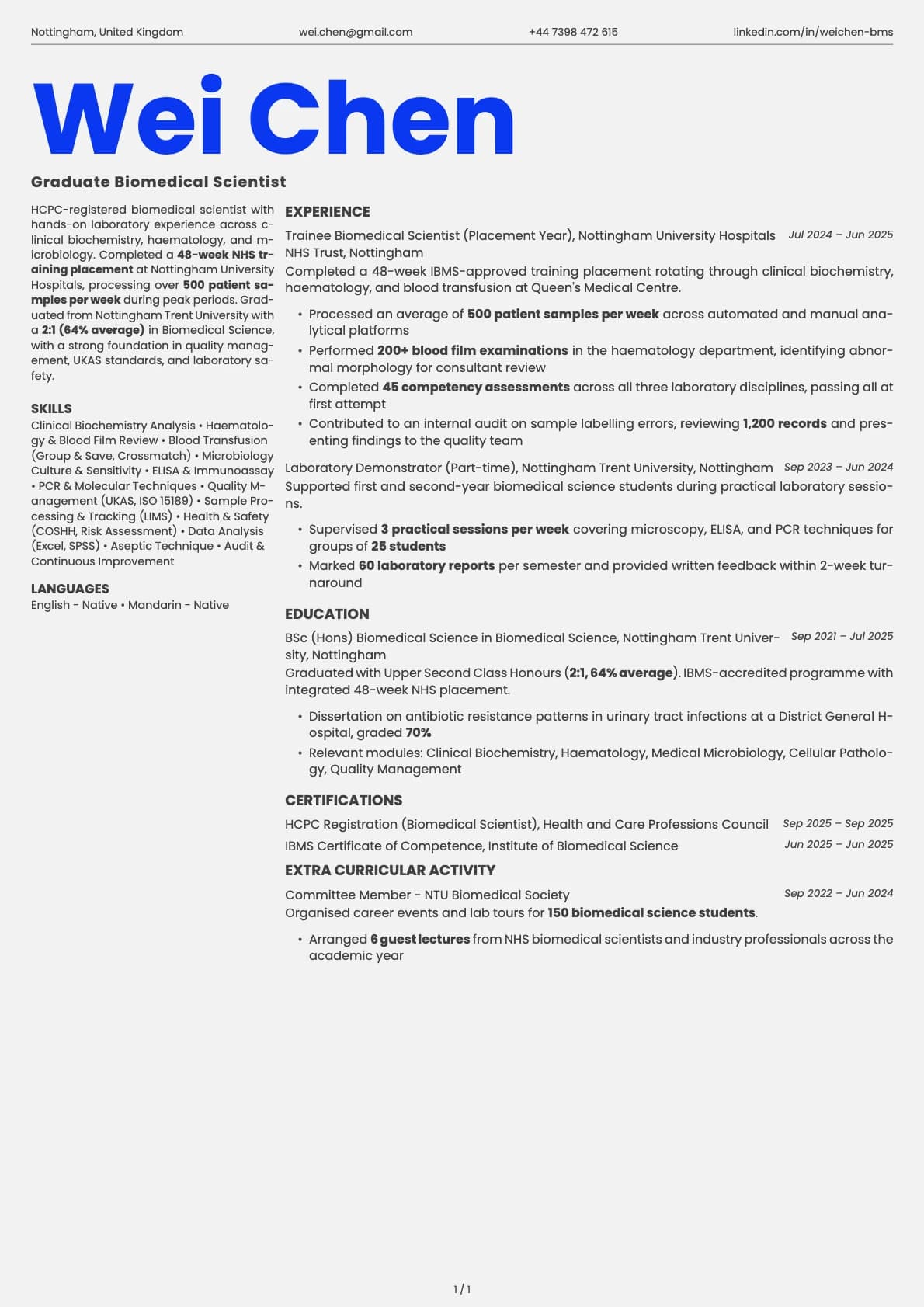
Graduate Biomedical Scientist
A graduate biomedical scientist resume example with NHS lab placement experience, HCPC registration, and sample processing numbers.
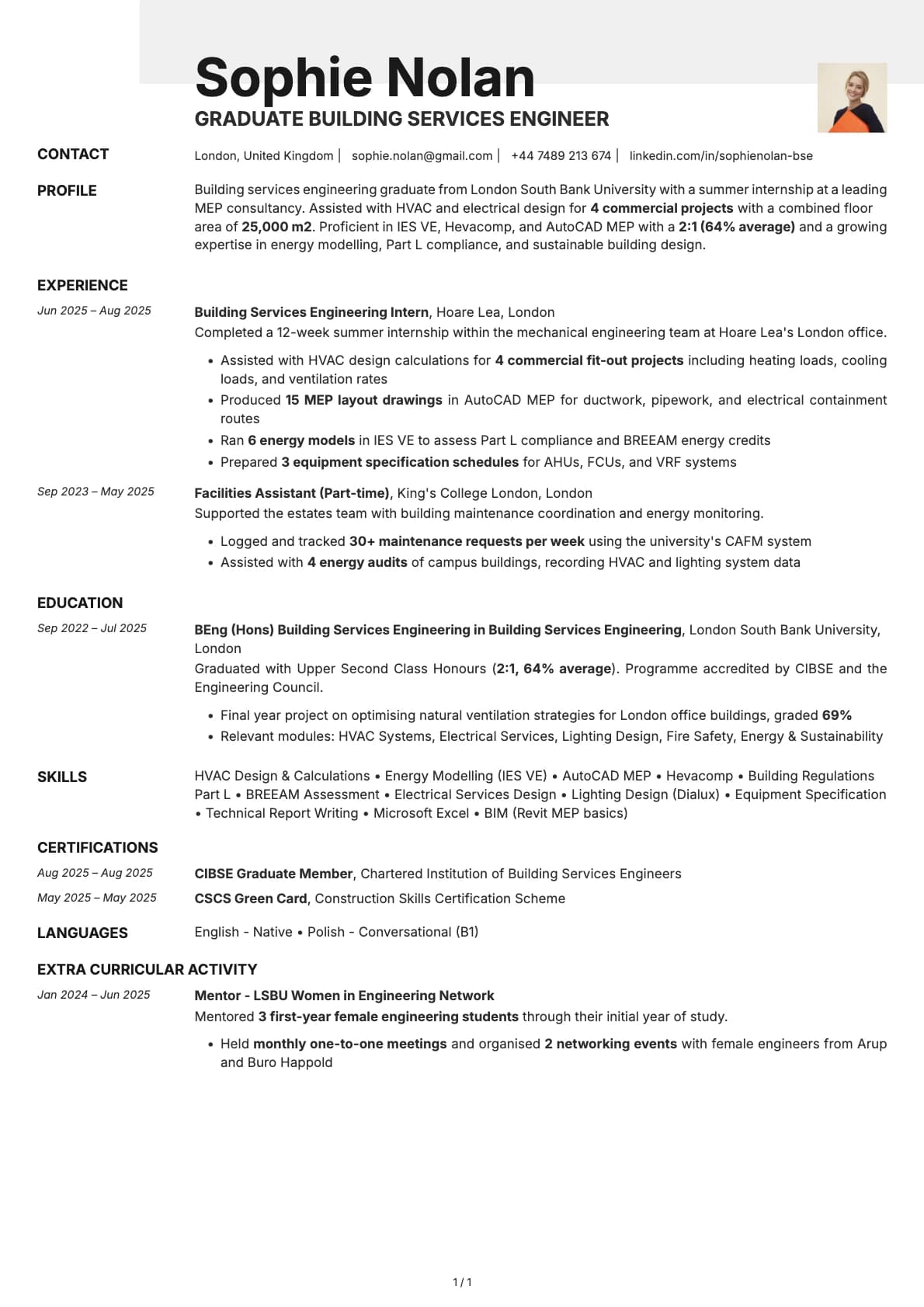
Graduate Building Services Engineer
A graduate building services engineer resume example with MEP consultancy experience, energy modelling skills, and CIBSE membership.
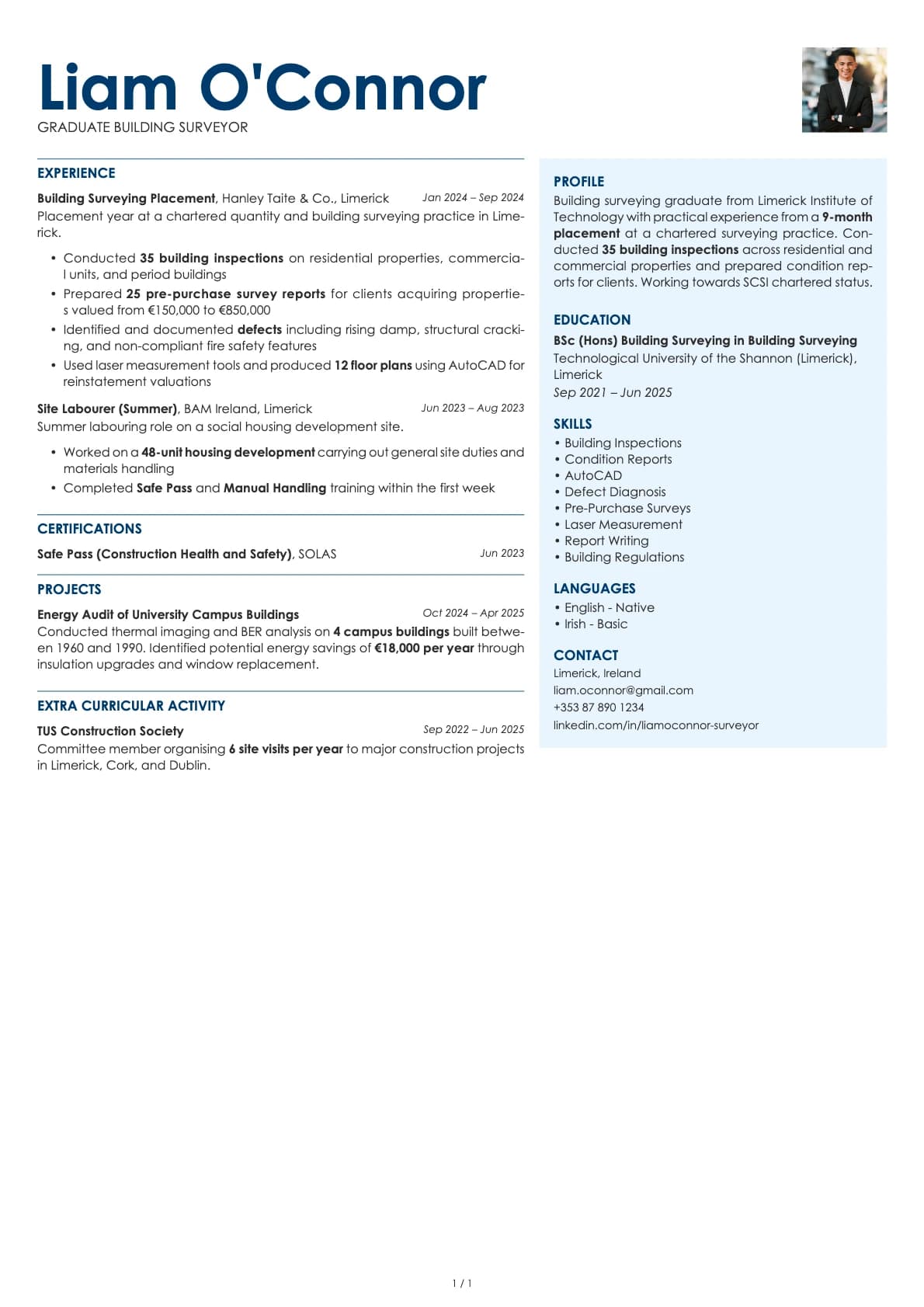
Graduate Building Surveyor
A graduate building surveyor resume example with chartered practice placement and building inspection experience.
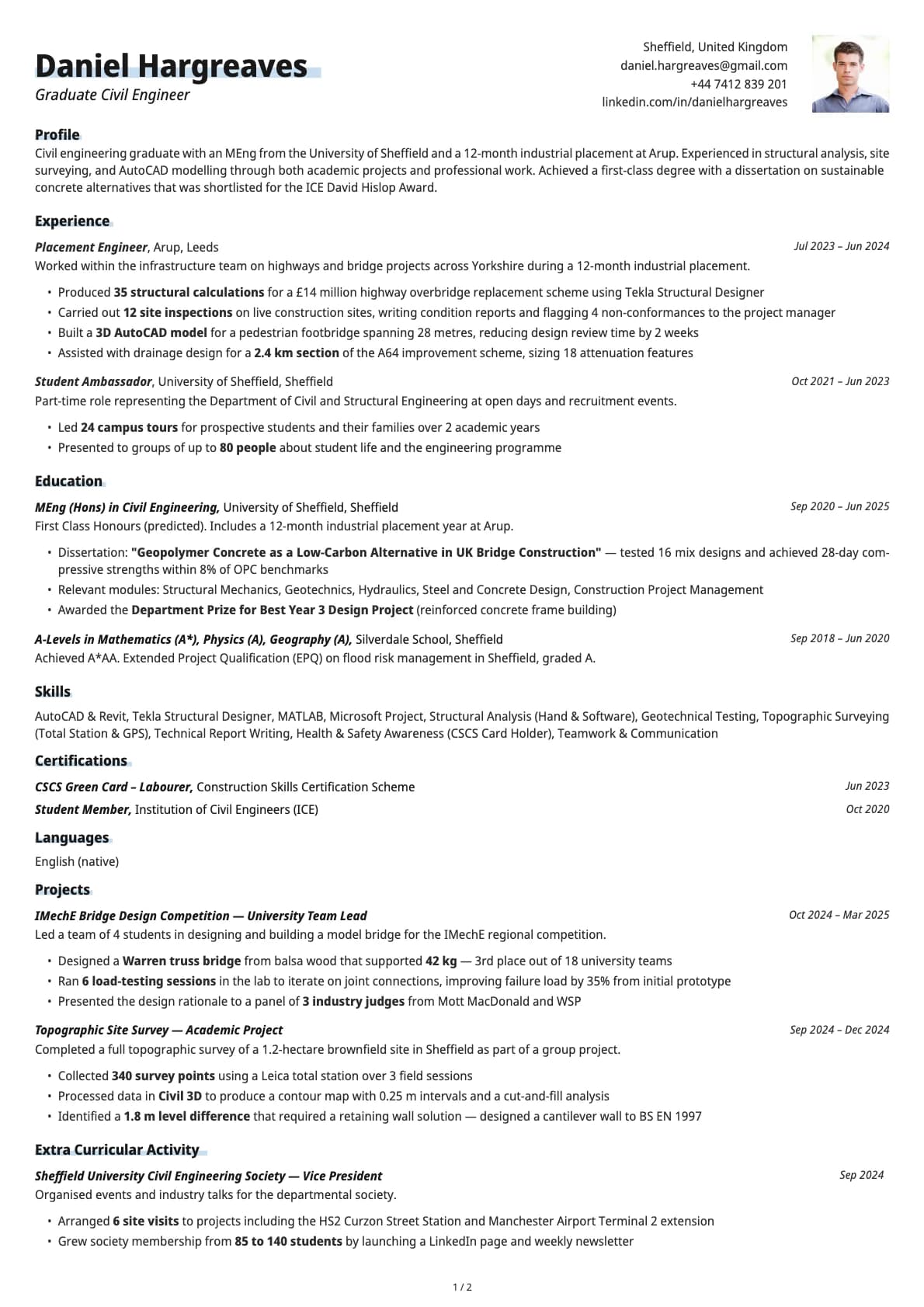
Graduate Civil Engineer
A graduate civil engineer resume example for recent graduates. See how to present your engineering degree, placement experience, and technical skills to land your first role.
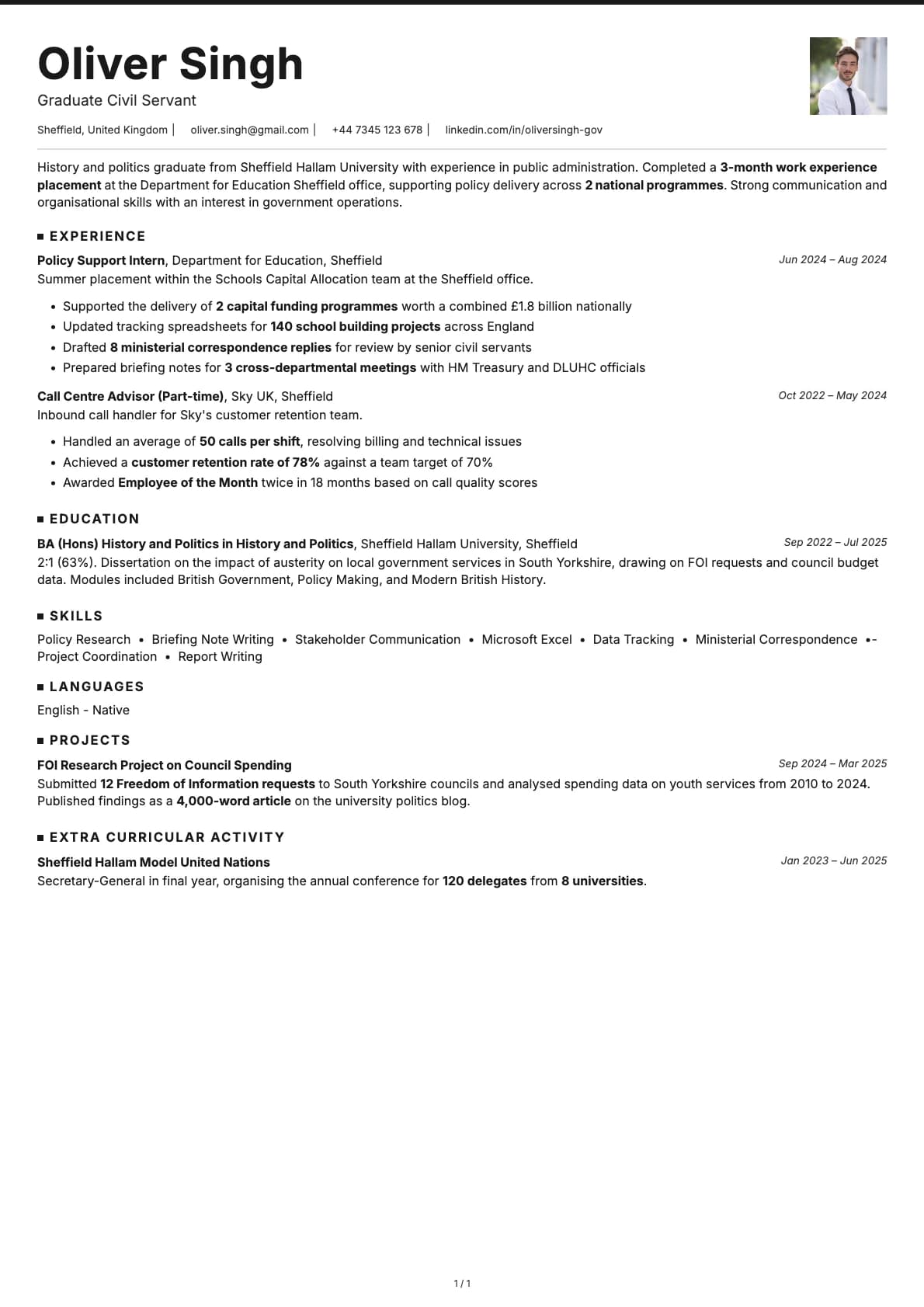
Graduate Civil Servant
A graduate civil servant resume example with Department for Education placement and policy support experience.
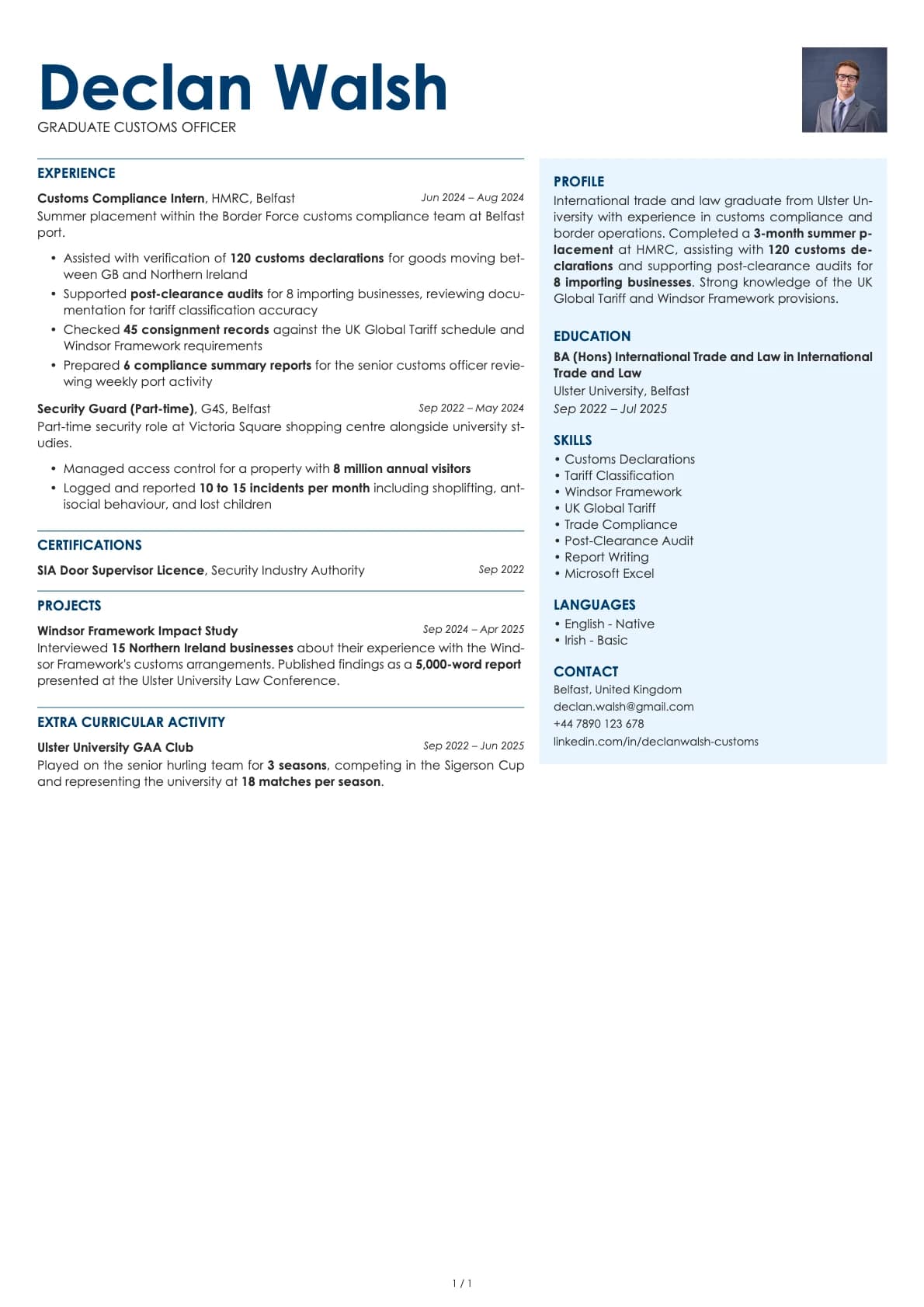
Graduate Customs Officer
A graduate customs officer resume example with HMRC placement and customs compliance experience.
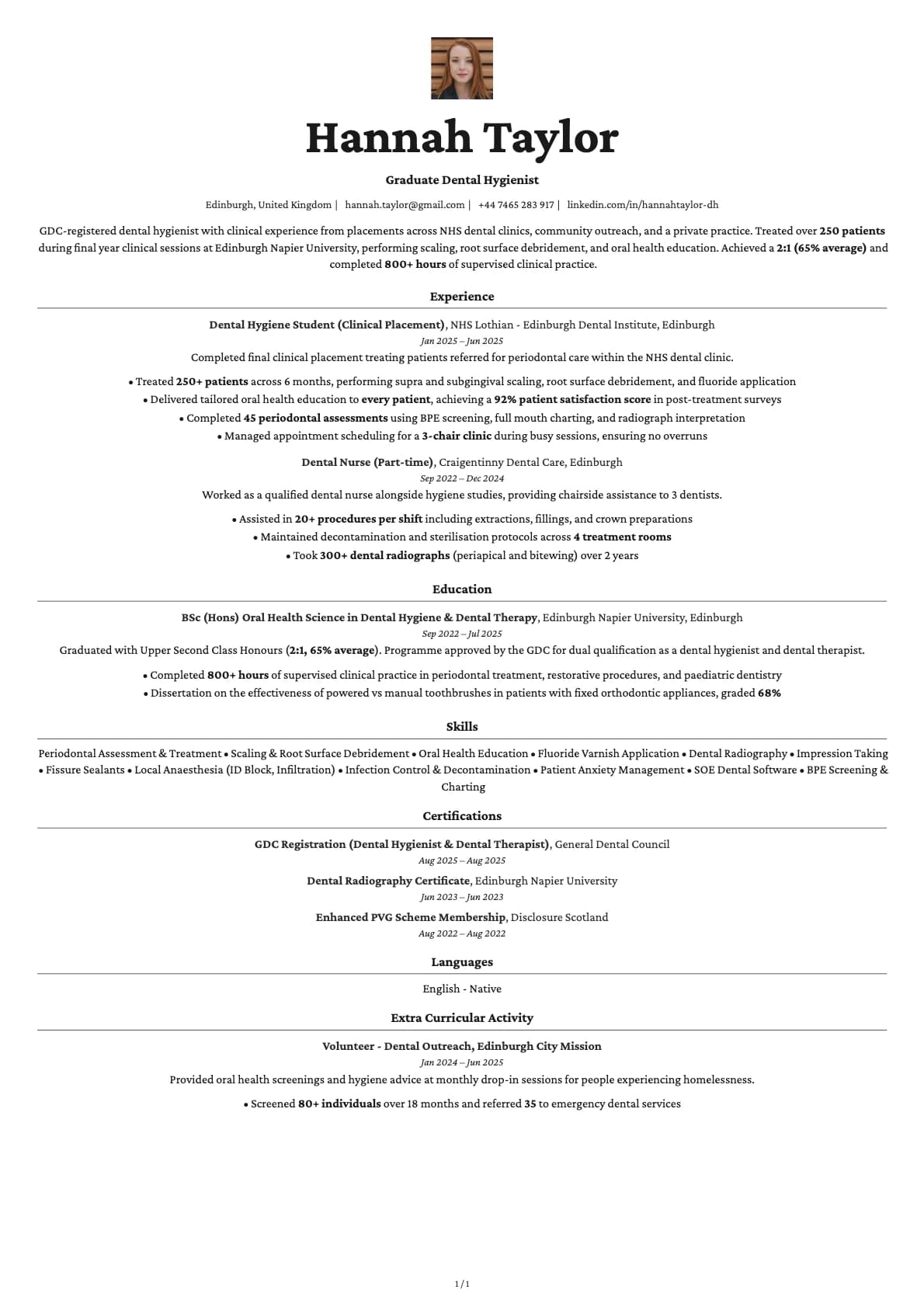
Graduate Dental Hygienist
A graduate dental hygienist resume example with GDC registration, clinical patient numbers, and periodontal treatment experience for new graduates.
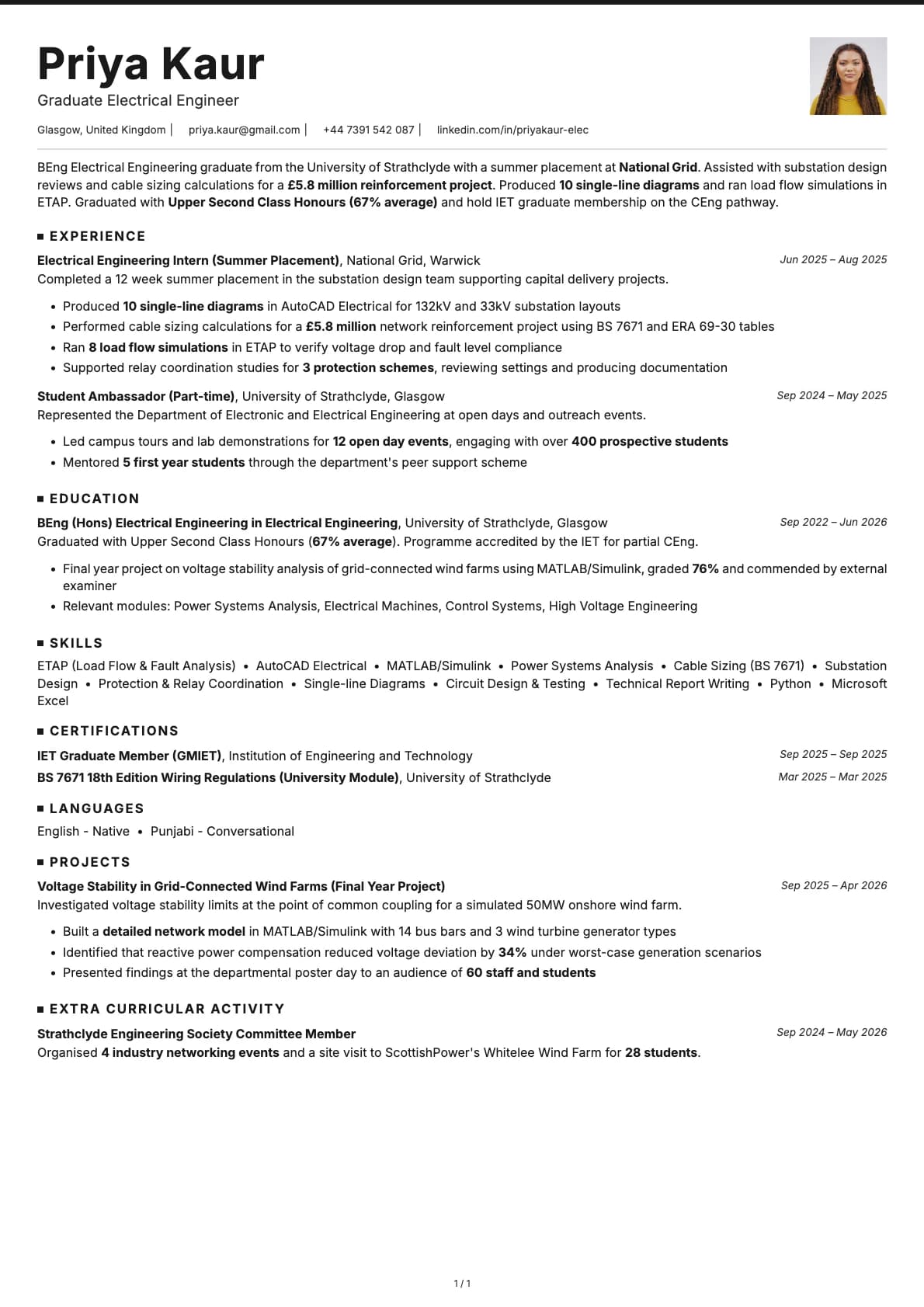
Graduate Electrical Engineer
A graduate electrical engineer resume example with power systems placement experience, IET membership, and MATLAB proficiency.
Graduate Film Production Assistant
A graduate film production assistant resume example. See how to present runner experience, production coordination, and on-set skills to break into the film industry.