Learning Mentor Resume Example
A graduate learning mentor resume example with pastoral support, attendance intervention, and pupil mentoring experience. See how to present your skills for learning mentor roles.

Laddro Team
Free to use. No account needed to start.
Free to use. No account needed to start.
Overview
Learning mentors sit at the intersection of pastoral care and academic support. They work with pupils who are struggling not because of ability but because of circumstances: poor attendance, family difficulties, low confidence, behavioural challenges, or transition anxiety. The role requires someone who can build relationships, set targets, and work alongside teachers, parents, and external agencies.
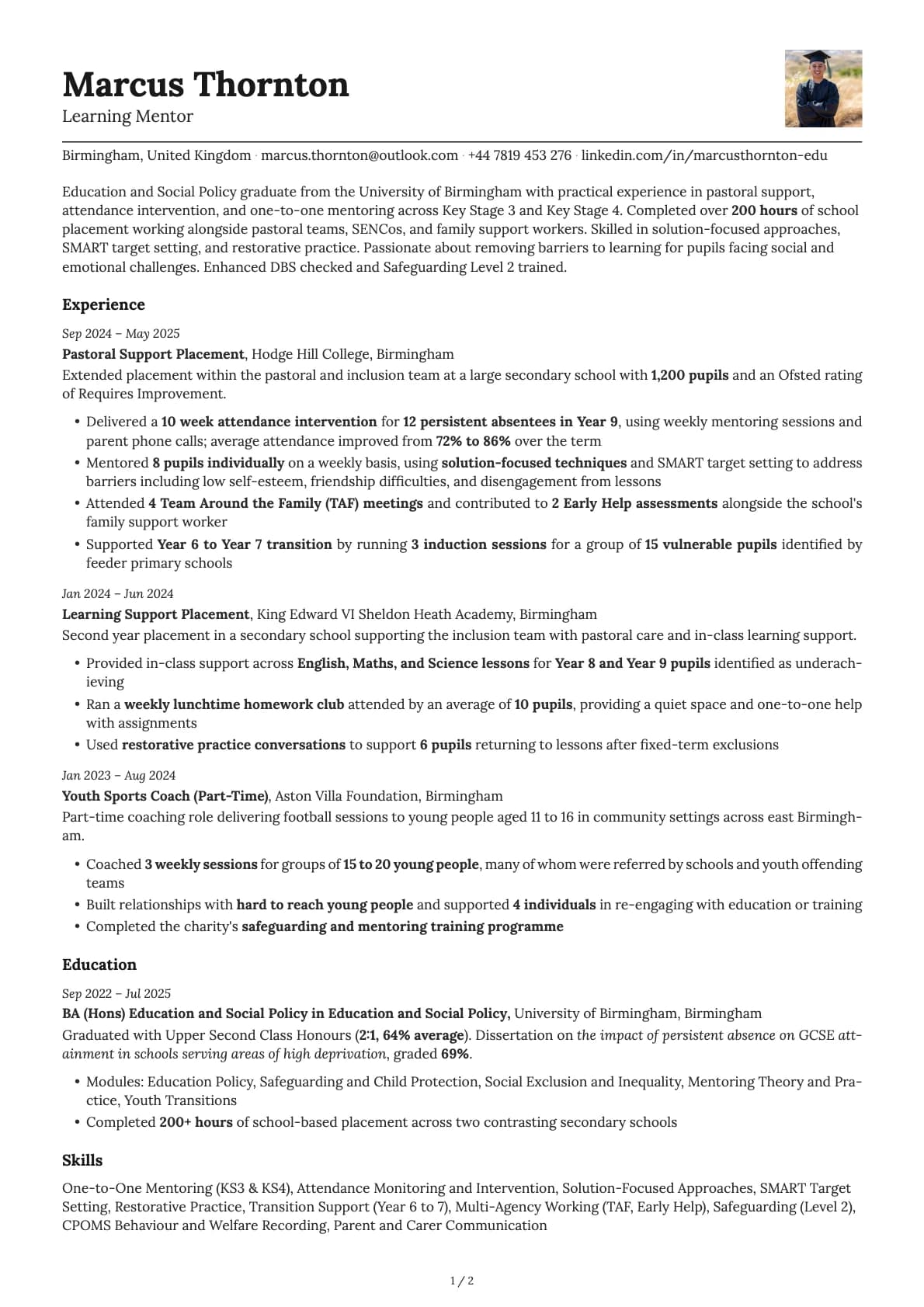
Marcus Thornton graduated with a degree in Education and Social Policy from the University of Birmingham. He completed placements in two secondary schools, worked part-time as a sports coach at a youth club, and volunteered as a peer mentor during his degree. His resume shows a candidate who understands that learning mentoring is about removing barriers to learning, not teaching content.
What Makes This Resume Work
Attendance data makes the impact concrete. Marcus describes running an attendance intervention for 12 persistent absentees in Year 9, and reports that average attendance across the group improved from 72% to 86% over one term. A headteacher can put a financial value on that improvement.
The mentoring approach is described, not assumed. He explains that he used solution-focused techniques, set SMART targets, and met with pupils weekly. This tells the reader that he has a structured approach, not just good intentions.
Multi-agency working is evident. Marcus mentions attending Team Around the Family (TAF) meetings, liaising with the school's family support worker, and contributing to Early Help assessments. These are real tasks that learning mentors do every week, and naming them shows he is ready for the role.
Key Takeaways
If you are applying for learning mentor positions, focus on the pupils you have supported and the outcomes you helped them achieve. Quantify improvements in attendance, behaviour incidents, or academic engagement. Describe your mentoring approach and any frameworks you have used. Mention any multi-agency work, pastoral care experience, or training in areas like restorative practice, trauma-informed approaches, or ELSA (Emotional Literacy Support Assistant).
Build your own version
Open this layout in the builder and swap in your own details. It takes a few minutes.
Free to use. No account needed to start.
Was this resume example helpful?
Rate this example to help us create better content for you.
4.6 average from 93 ratingsRelated resume examples
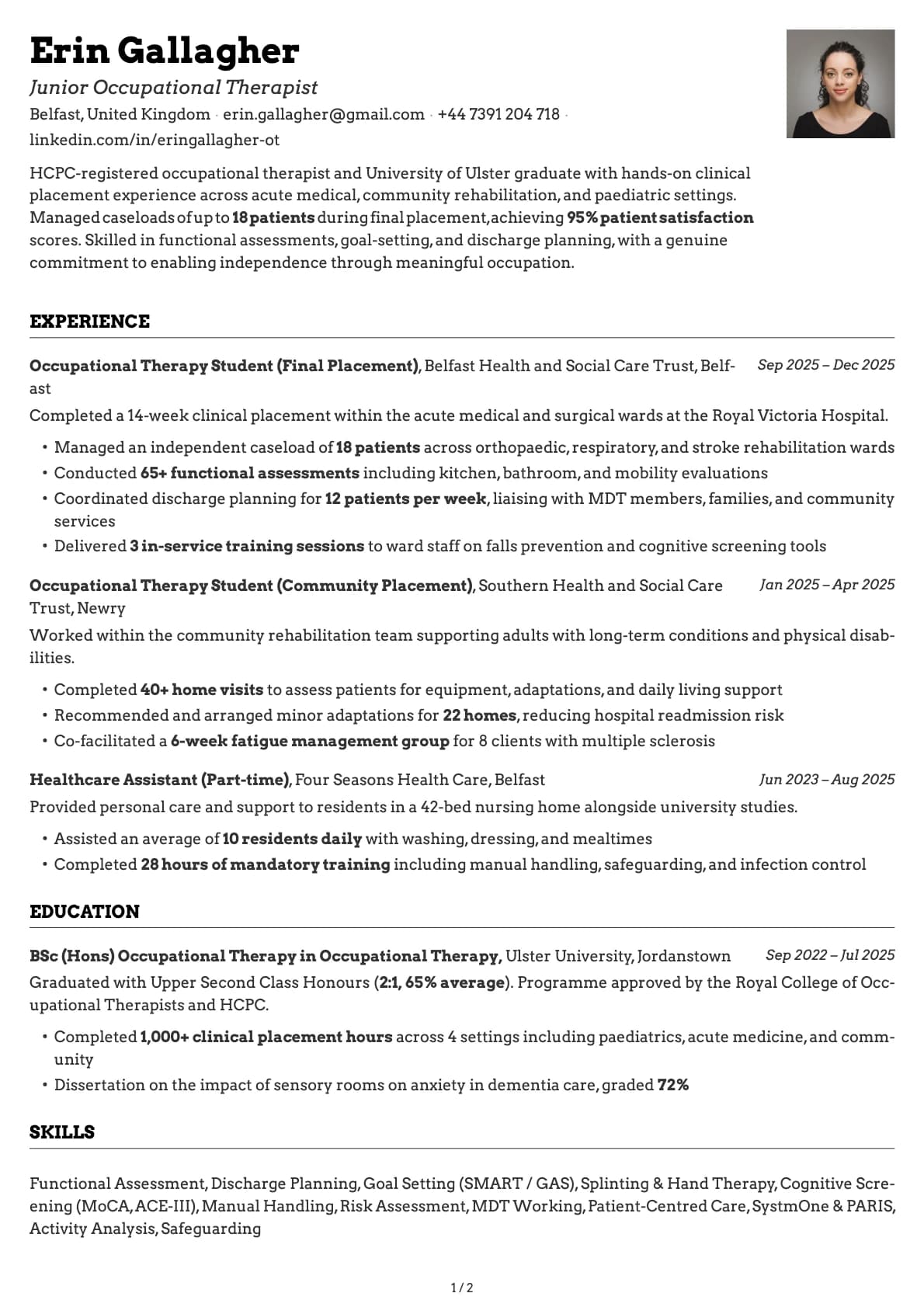
Junior Occupational Therapist
A junior occupational therapist resume example with clinical placement experience, HCPC registration, and real patient outcome numbers for new graduates.
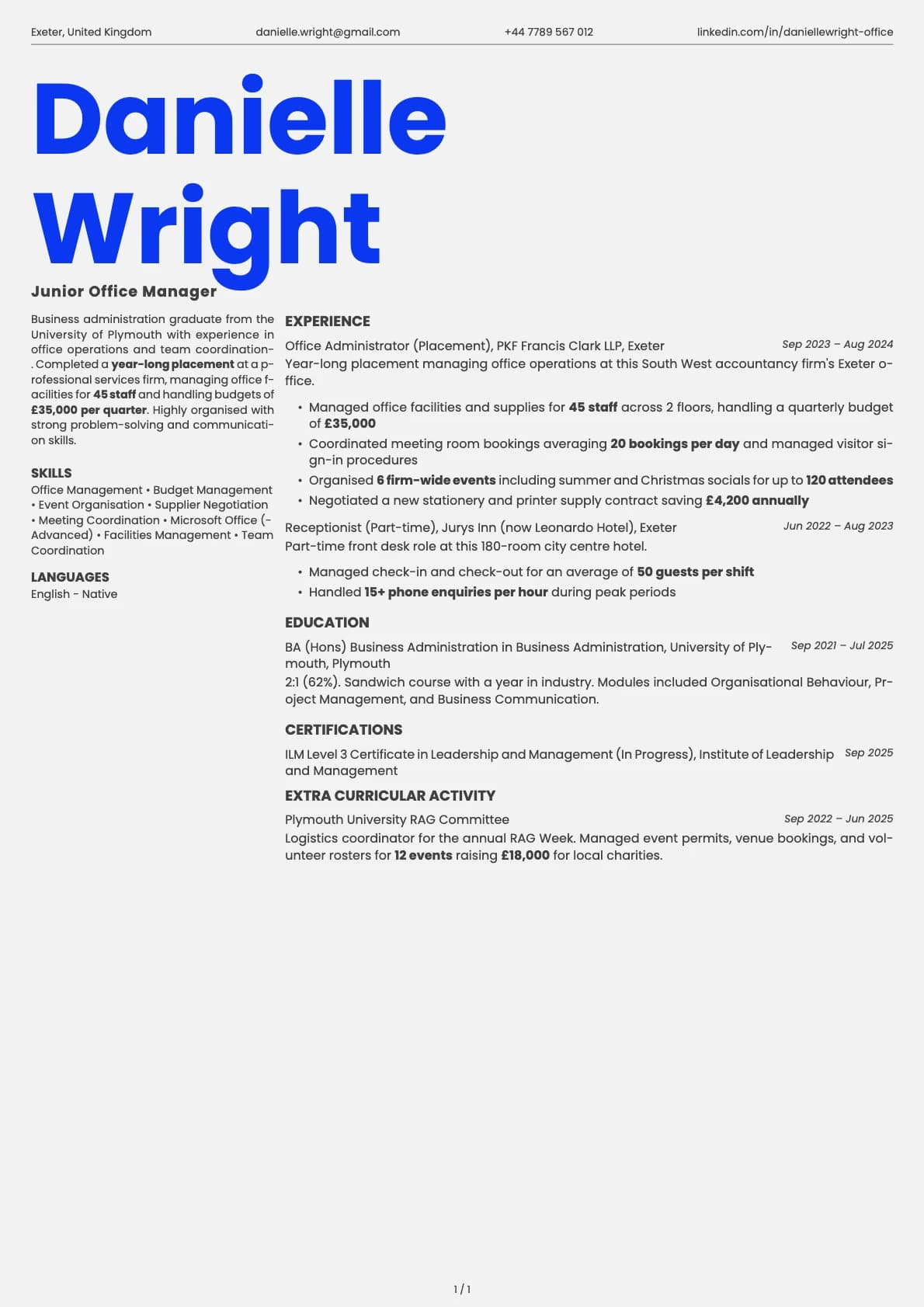
Junior Office Manager
A junior office manager resume example with professional services placement and facilities management experience.
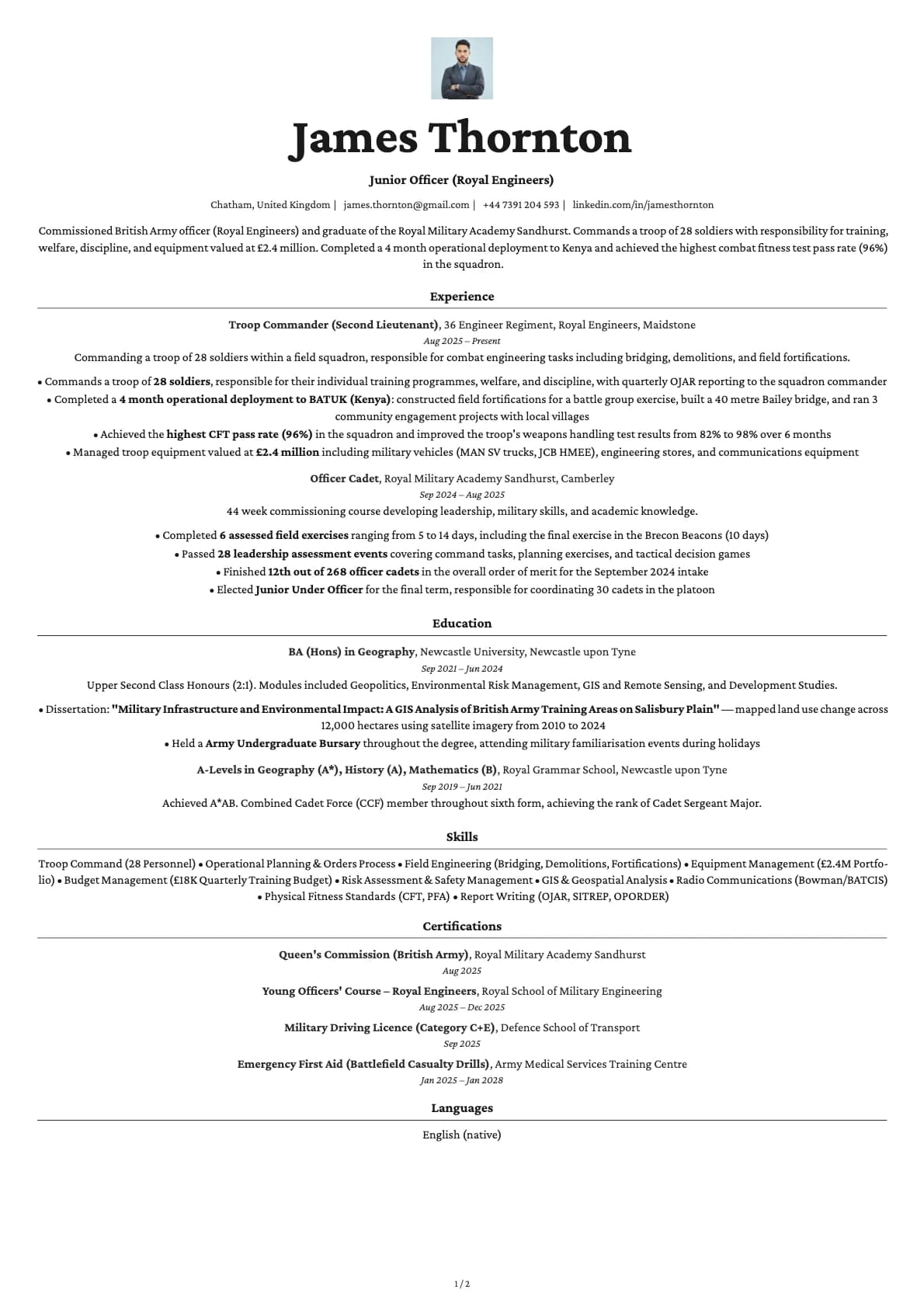
Junior Officer (Armed Forces)
A junior officer resume example for armed forces graduates transitioning from Sandhurst or the commissioning course. See how to present your military leadership, operational deployments, and command experience.
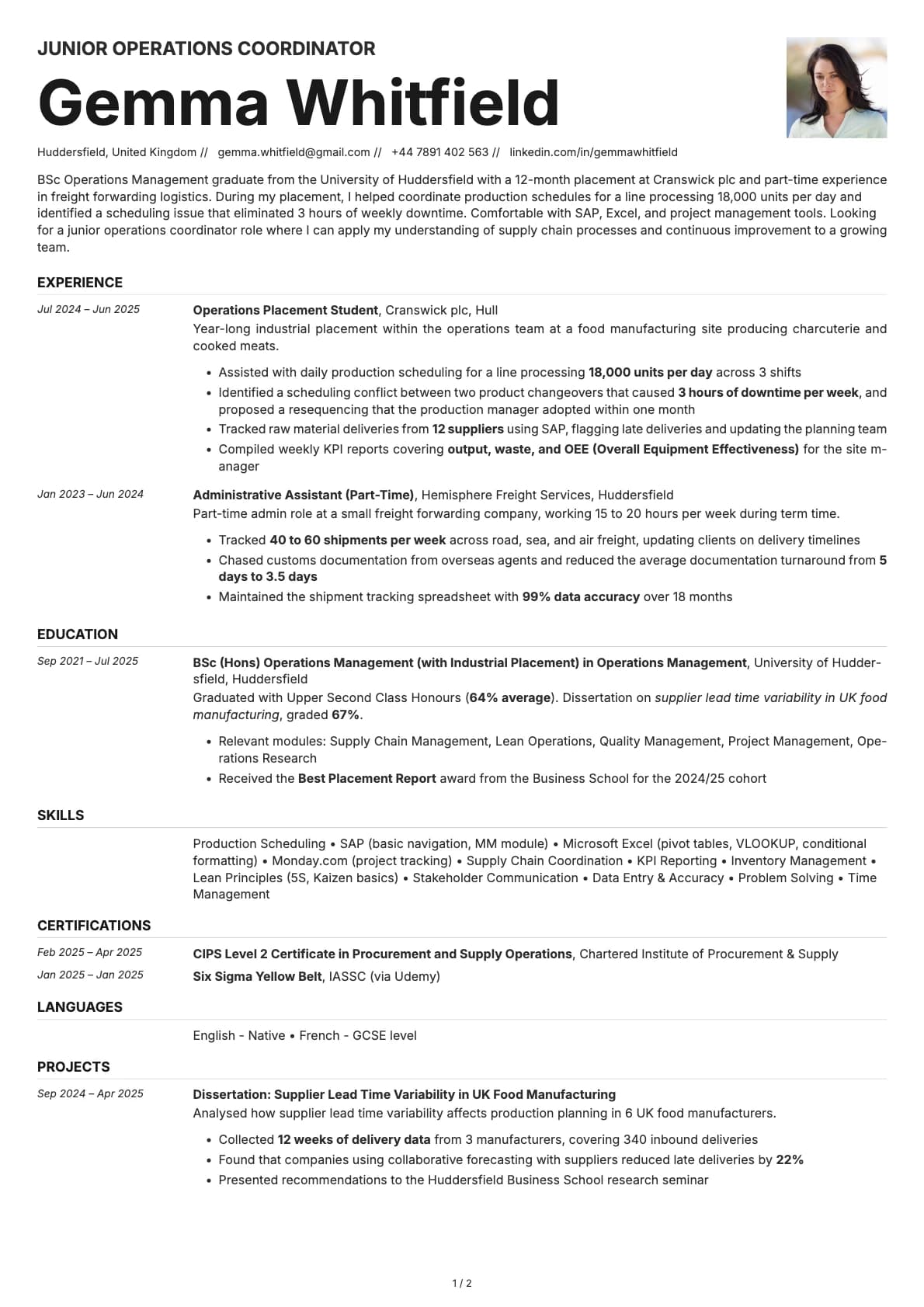
Junior Operations Coordinator
A junior operations coordinator resume example for operations management graduates. See how logistics experience and process improvements impress employers.
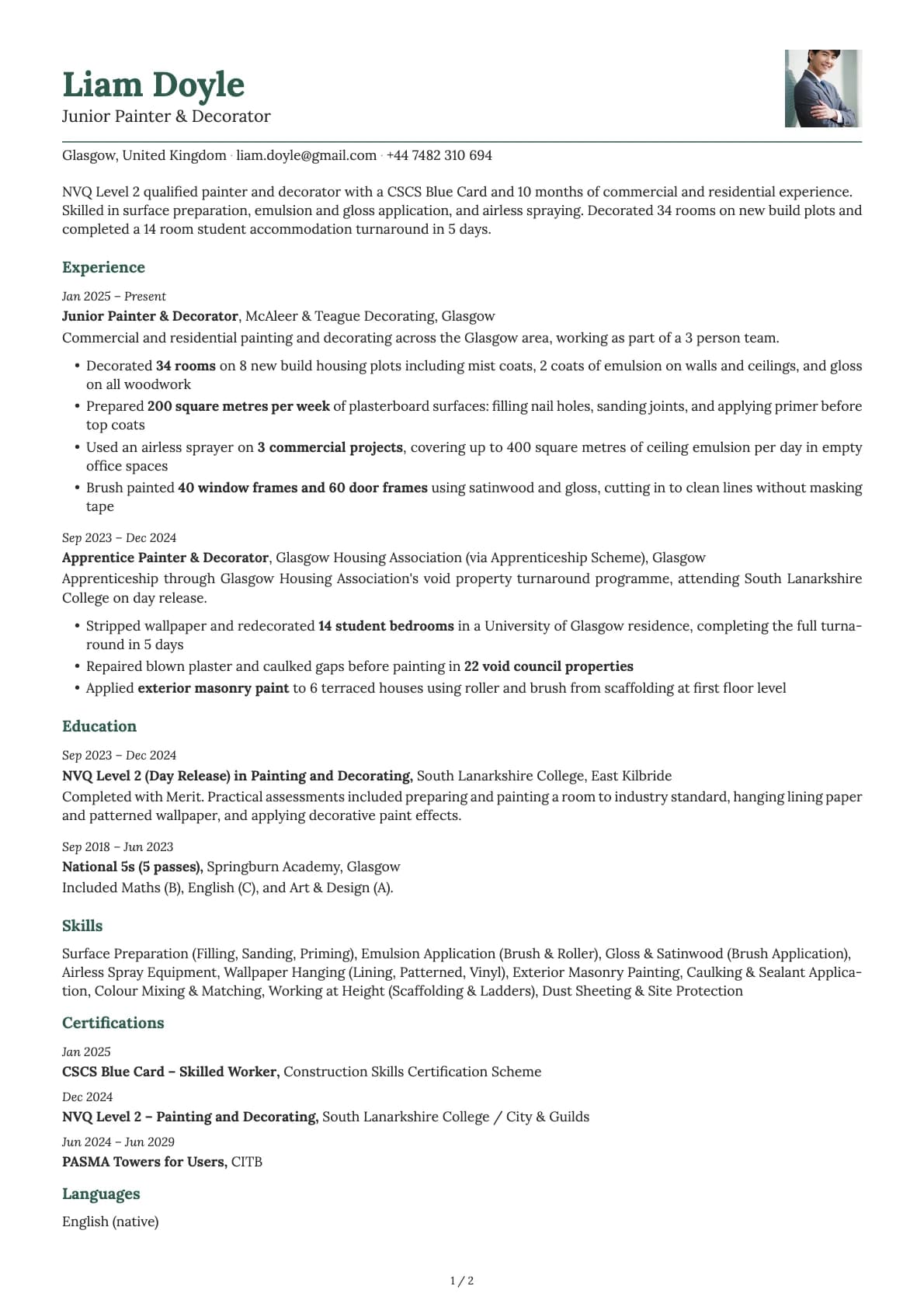
Junior Painter & Decorator
A junior painter and decorator resume example for NVQ qualified painters. See how to present your decorating skills, site experience, and CSCS card details.
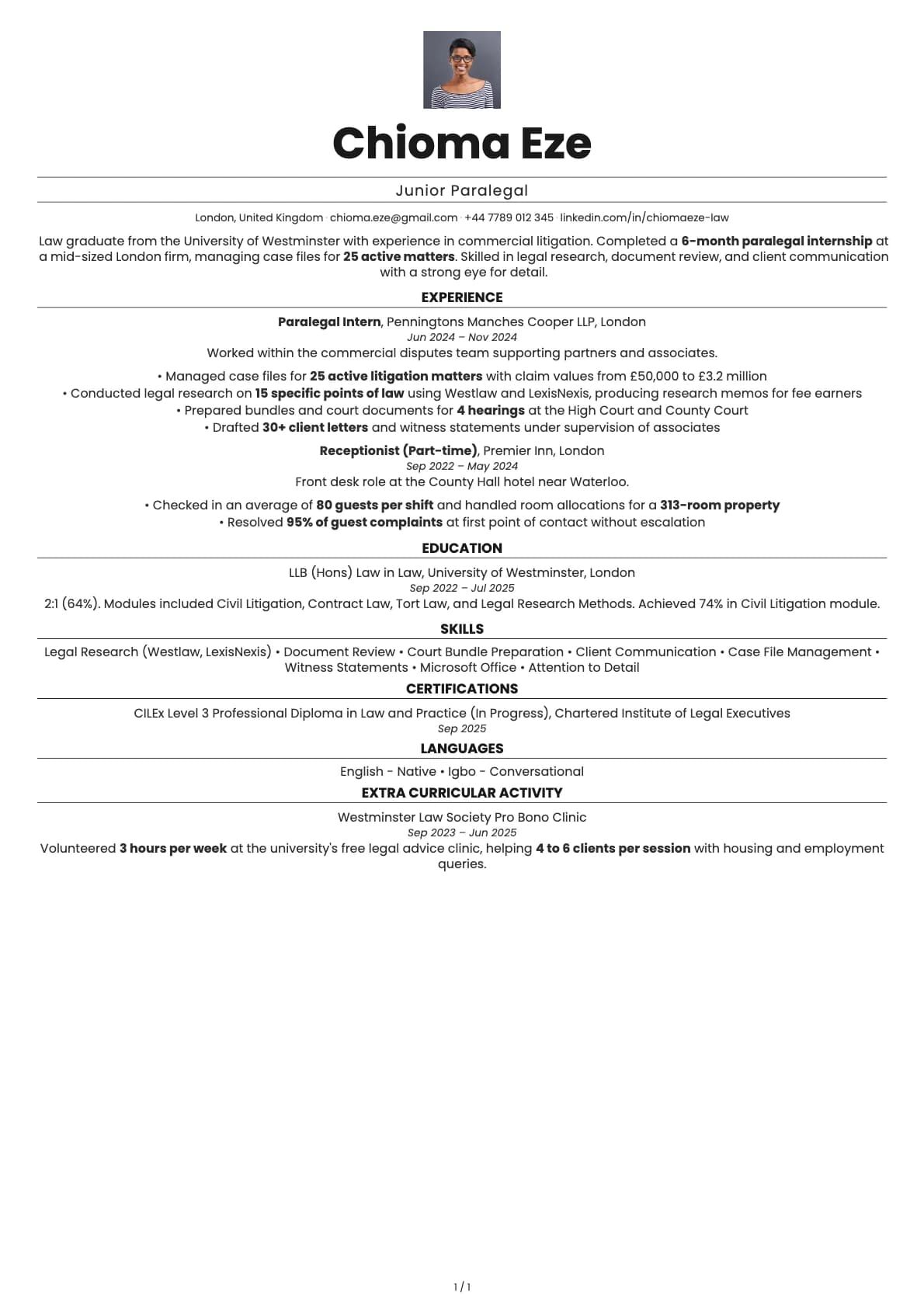
Junior Paralegal
A junior paralegal resume example with litigation internship experience and legal research skills.
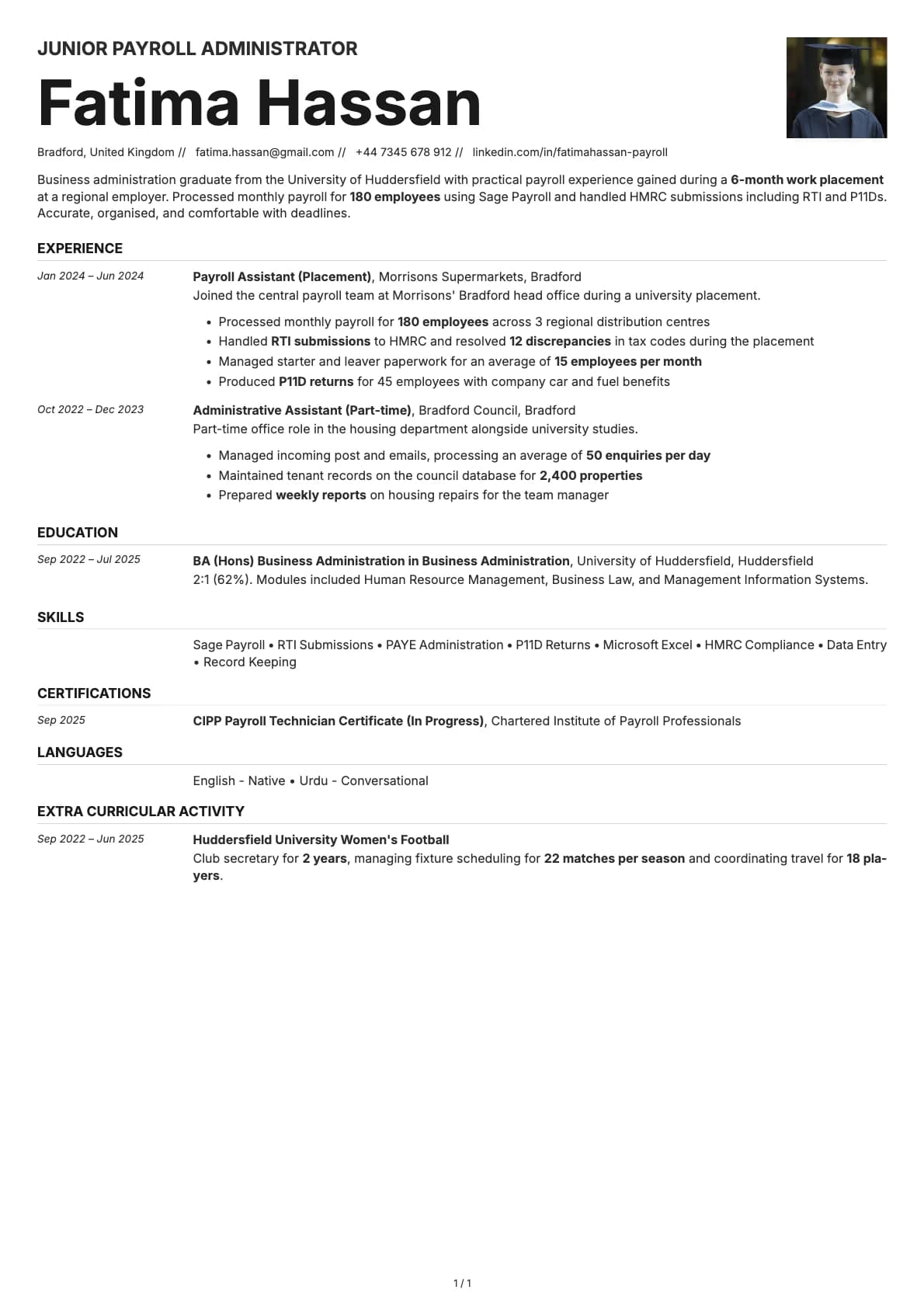
Junior Payroll Administrator
A junior payroll administrator resume example with Morrisons placement experience and Sage Payroll skills.
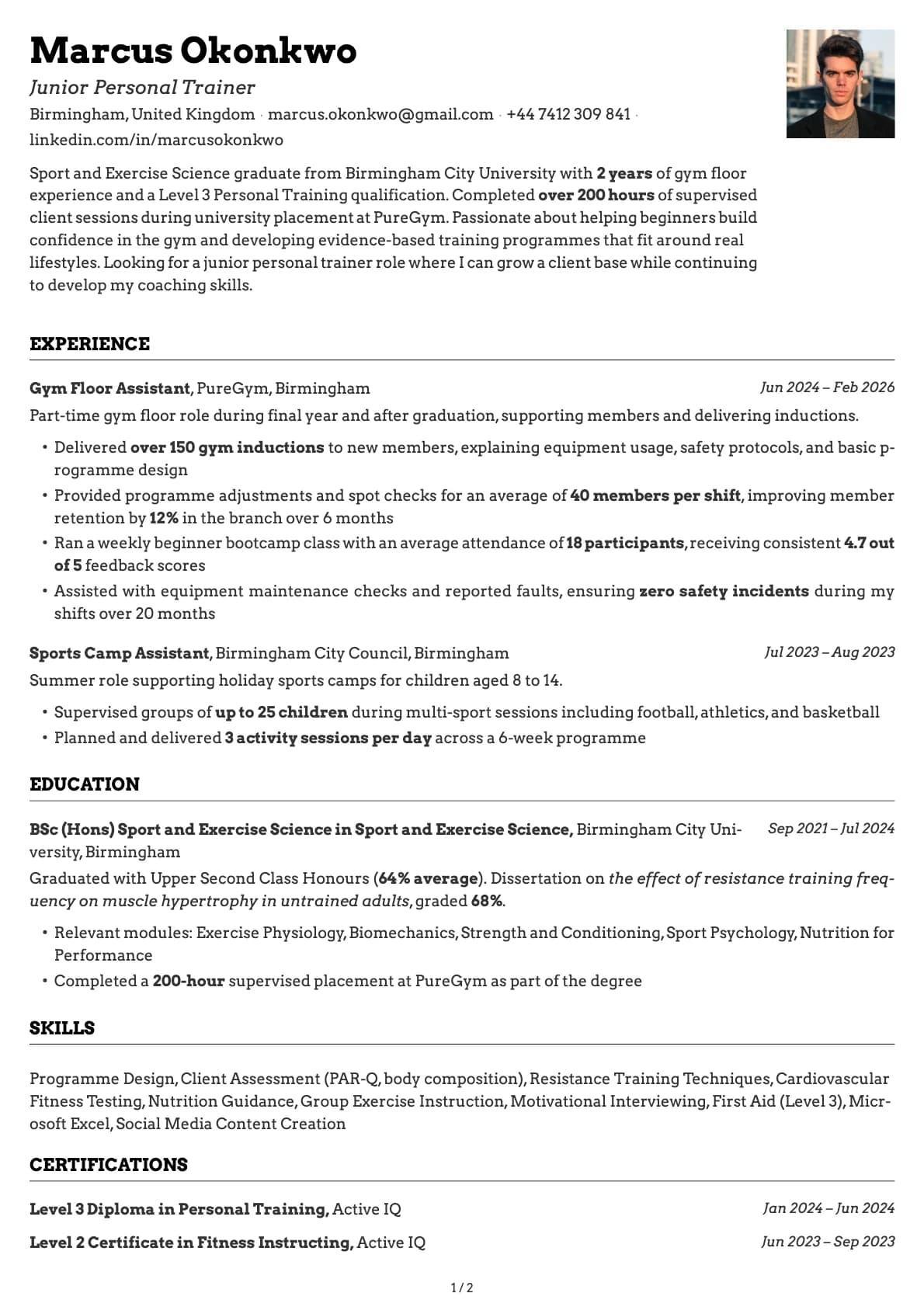
Junior Personal Trainer
A junior personal trainer resume example showing how to combine a sport science degree, Level 3 PT qualification, and gym floor experience at PureGym.
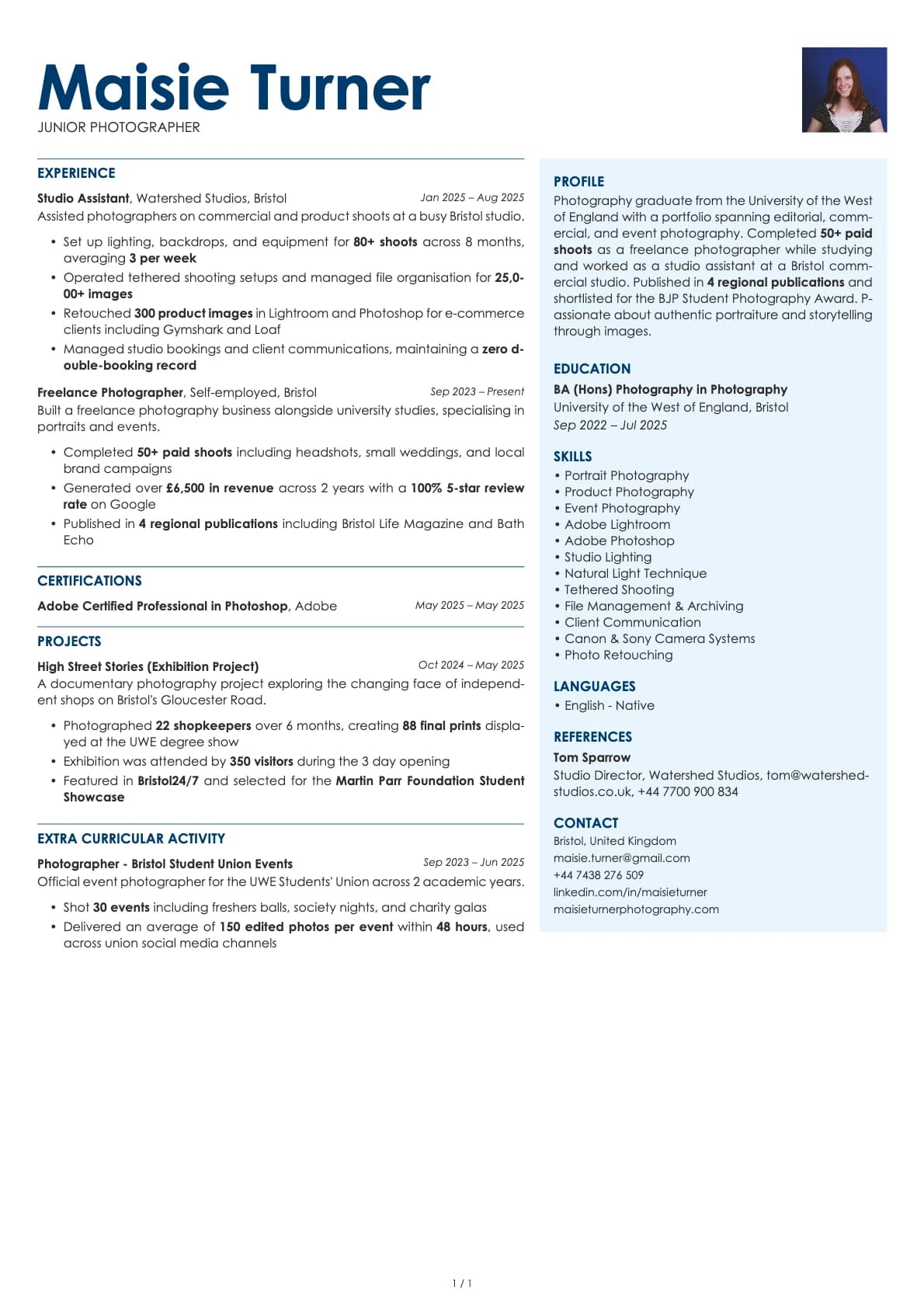
Junior Photographer
A junior photographer resume example for graduates. See how to present freelance work, studio experience, and published images to land your first photography role.
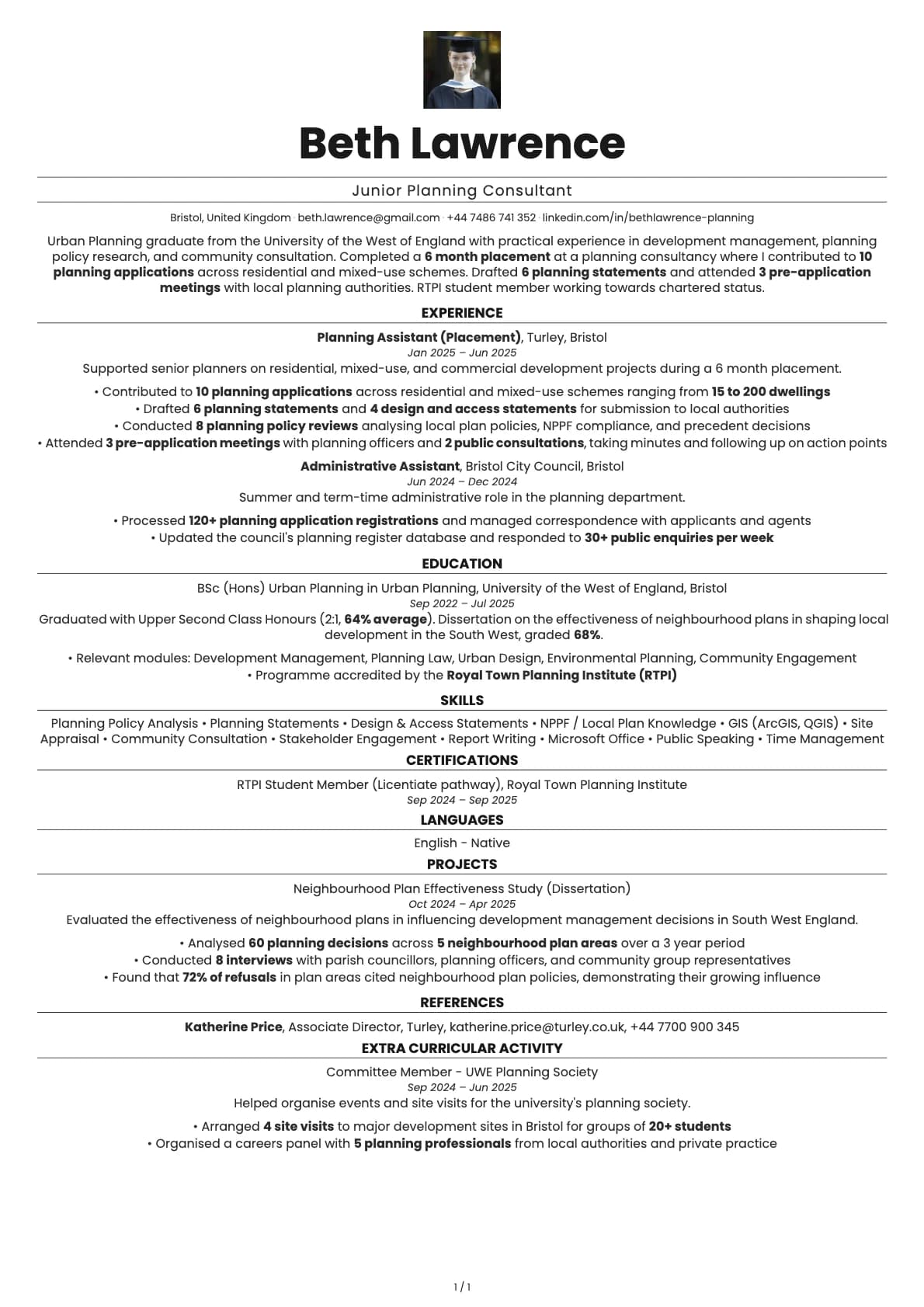
Junior Planning Consultant
A junior planning consultant resume example for graduates. See how to present planning application experience, policy analysis, and RTPI membership to land your first planning role.
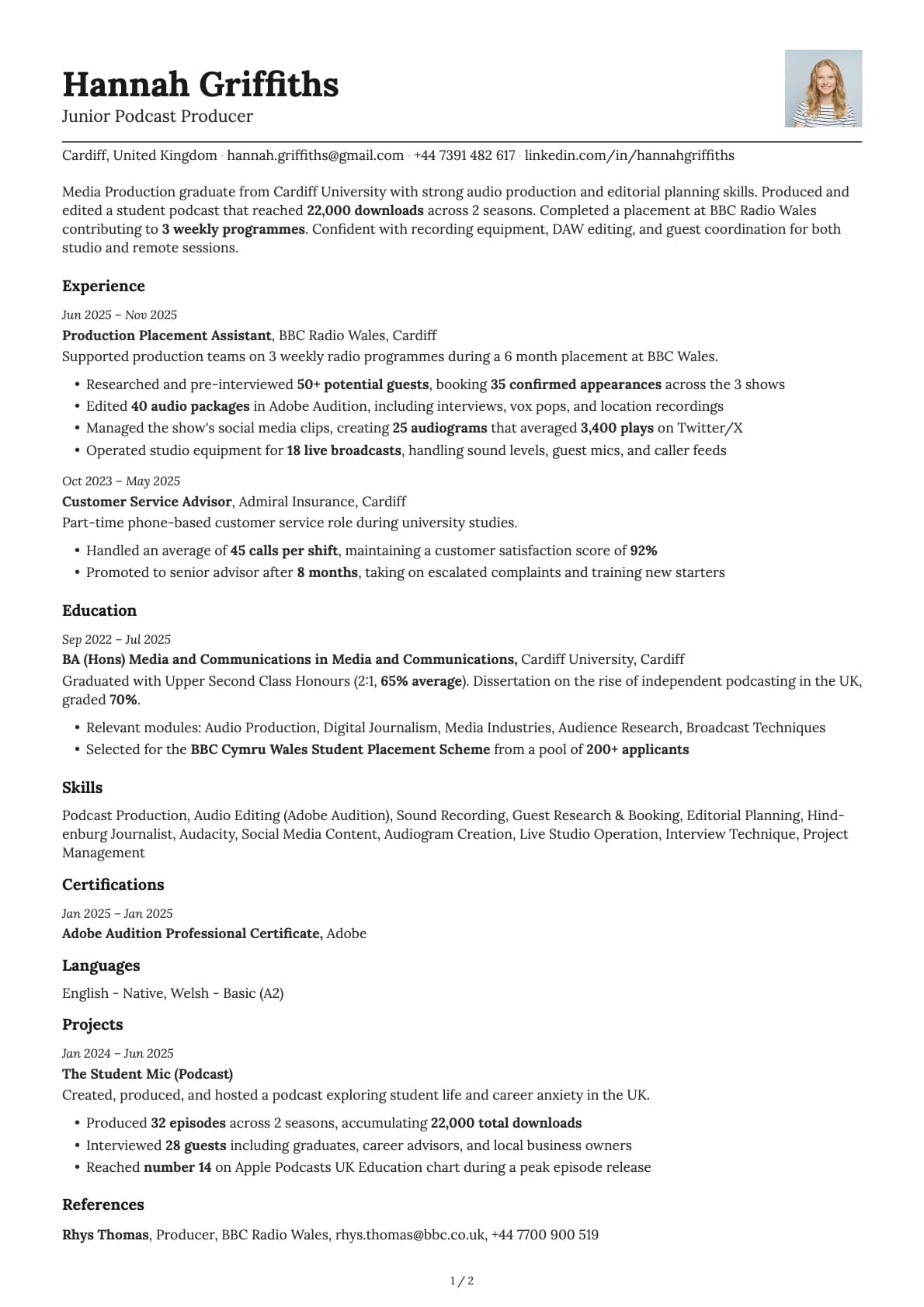
Junior Podcast Producer
A junior podcast producer resume example for graduates. See how to present audio production skills, download numbers, and broadcasting experience to land your first podcast role.
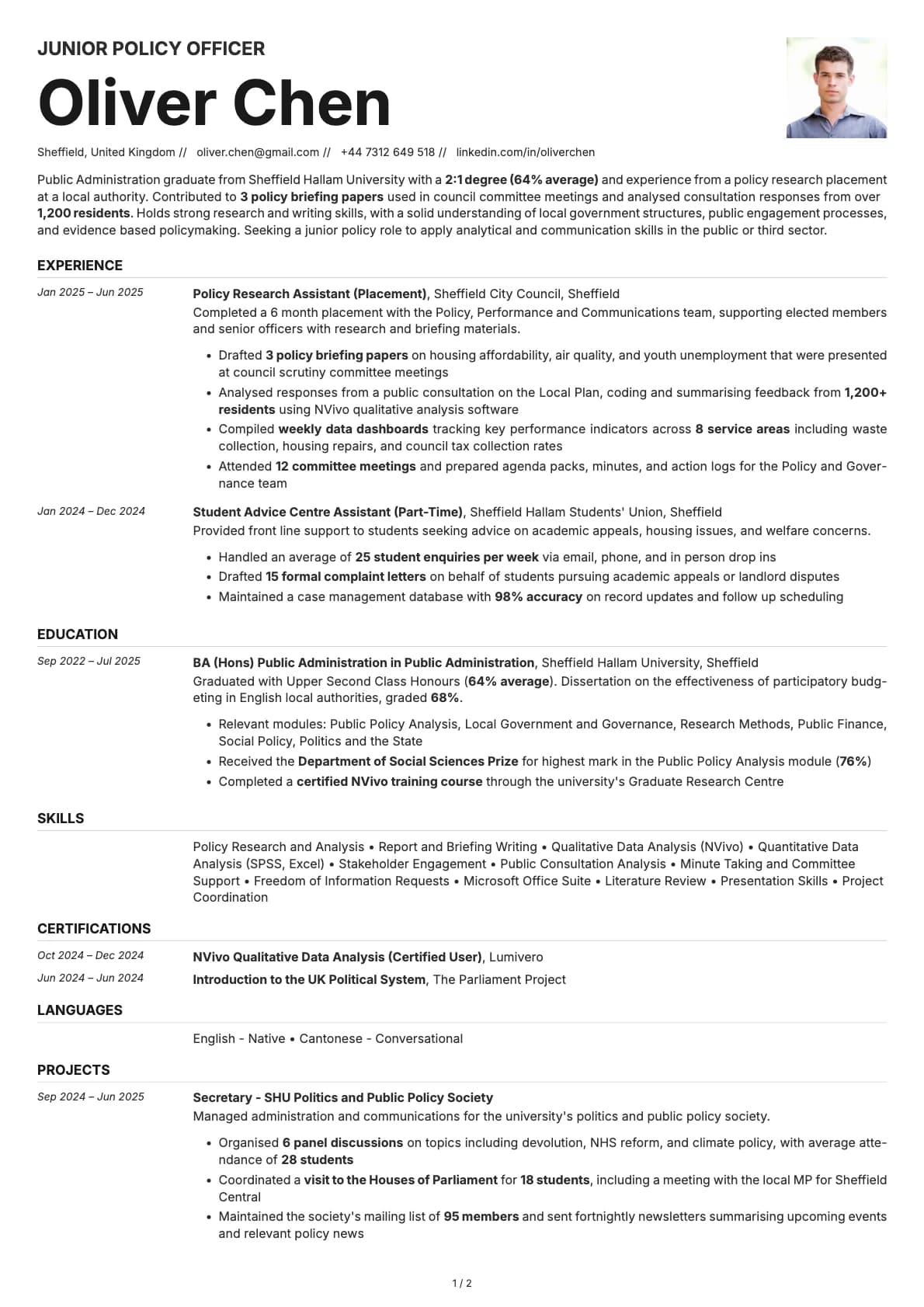
Junior Policy Officer
A junior policy officer resume example for public administration graduates. See how to present research skills, briefing writing, and council placement experience.