Junior Shipping Agent Resume Example
A junior shipping agent resume example for maritime studies graduates. See how to present your port operations knowledge, vessel documentation, and shipping line experience.

Laddro Team
Free to use. No account needed to start.
Free to use. No account needed to start.
Overview
Shipping agents are the link between the vessel, the port, and the cargo owner. They arrange berths, handle vessel documentation, coordinate stevedoring, and manage customs clearance for ships arriving at UK ports. It is a niche role that combines logistics, maritime law, and fast paced operations, and most people enter through a maritime studies or shipping degree. The resume challenge is showing you understand the operational reality of port work, not just the theory of maritime transport.
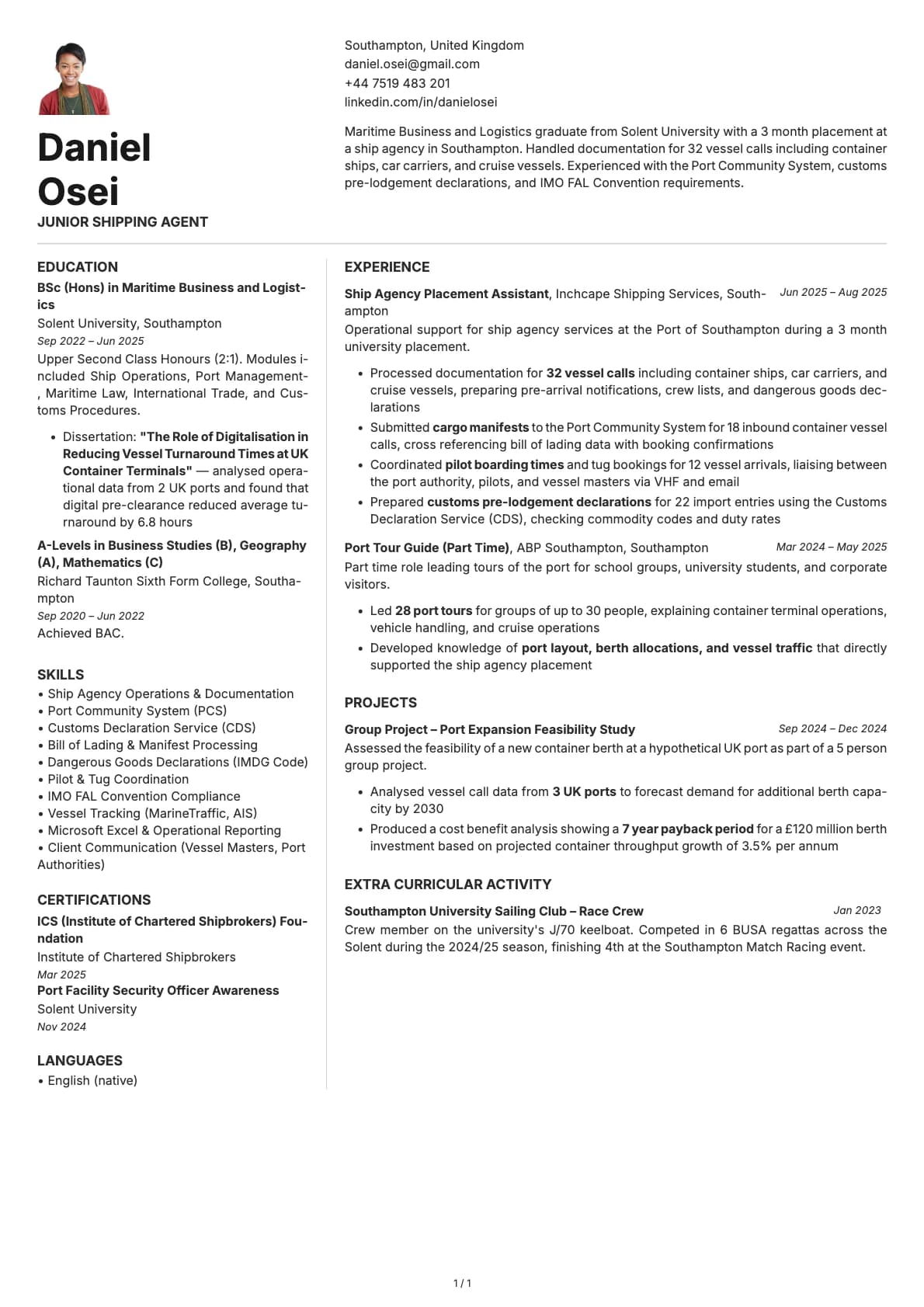
This resume belongs to Daniel Osei, a Maritime Business and Logistics graduate from Solent University (Southampton). He completed a 3 month placement at a ship agency in Southampton, handled documentation for 32 vessel calls, and gained experience with port community systems and customs procedures.
What Makes This Resume Work
Vessel call handling is quantified. Daniel processed documentation for 32 vessel calls during his placement, covering container ships, car carriers, and cruise vessels. For each call, he prepared the pre-arrival notification to the port authority, coordinated pilot boarding times, and arranged stevedore gangs for cargo operations. These are the core tasks of a shipping agent, described at the right level of detail.
Port systems are named. He used the Port Community System (PCS) to submit cargo manifests and customs pre-lodgement declarations. He also used the CERS (Customs Export Removal System) for export documentation. Naming these systems shows he has worked with the digital infrastructure that connects ports, customs, and shipping lines.
Maritime documentation types are listed. Ship's manifest, crew list, dangerous goods declaration, port state control paperwork, and notice of readiness. Each document serves a specific purpose in the port call cycle, and listing them shows Daniel understands the full documentation chain from pre-arrival to departure.
The IMO and MCA regulations are referenced. Daniel mentions familiarity with IMO FAL Convention requirements and MCA (Maritime and Coastguard Agency) port state control procedures. These regulatory frameworks govern every commercial vessel call in the UK, and knowing them is essential for a shipping agent.
Key Takeaways
Quantify the vessel calls you have handled and name the vessel types. Container ships, tankers, bulk carriers, car carriers, and cruise vessels all have different documentation requirements, and showing variety adds value.
Name the port systems and customs platforms you have used. PCS, CHIEF/CDS, CERS, and the port authority's own berthing system are all relevant to a shipping agent resume.
Reference the regulatory frameworks. IMO, MCA, and HMRC customs procedures are the foundations of ship agency work. Showing awareness of them sets you apart from candidates who only understand the logistics side.
Build your own version
Open this layout in the builder and swap in your own details. It takes a few minutes.
Free to use. No account needed to start.
Was this resume example helpful?
Rate this example to help us create better content for you.
4.6 average from 59 ratingsRelated resume examples
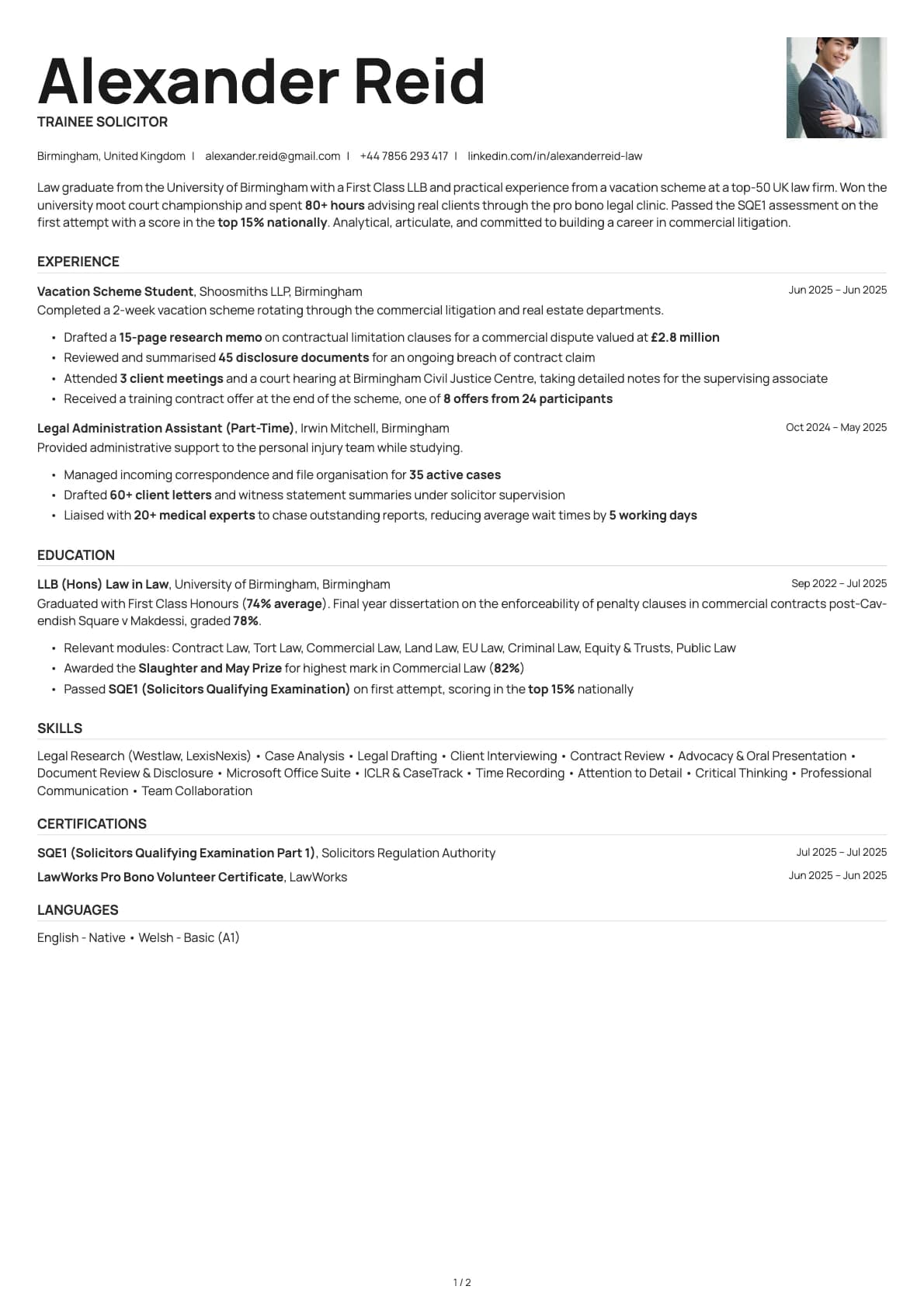
Trainee Solicitor
A trainee solicitor resume example for recent law graduates. Learn how to present your law degree, vacation schemes, and pro bono experience to secure a training contract.
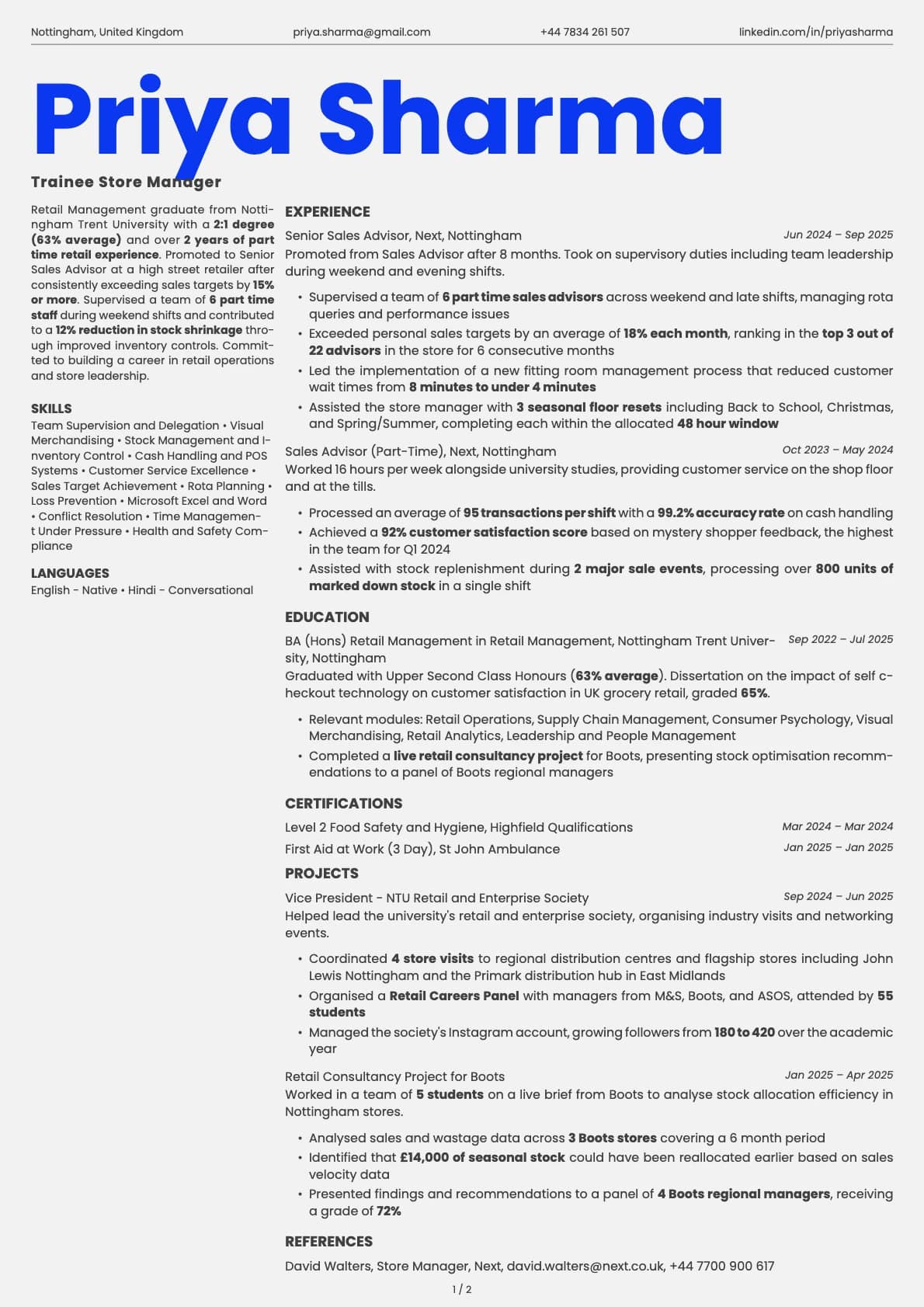
Trainee Store Manager
A trainee store manager resume example for retail graduates. See how to present team leadership, sales targets, and merchandising experience to land management schemes.
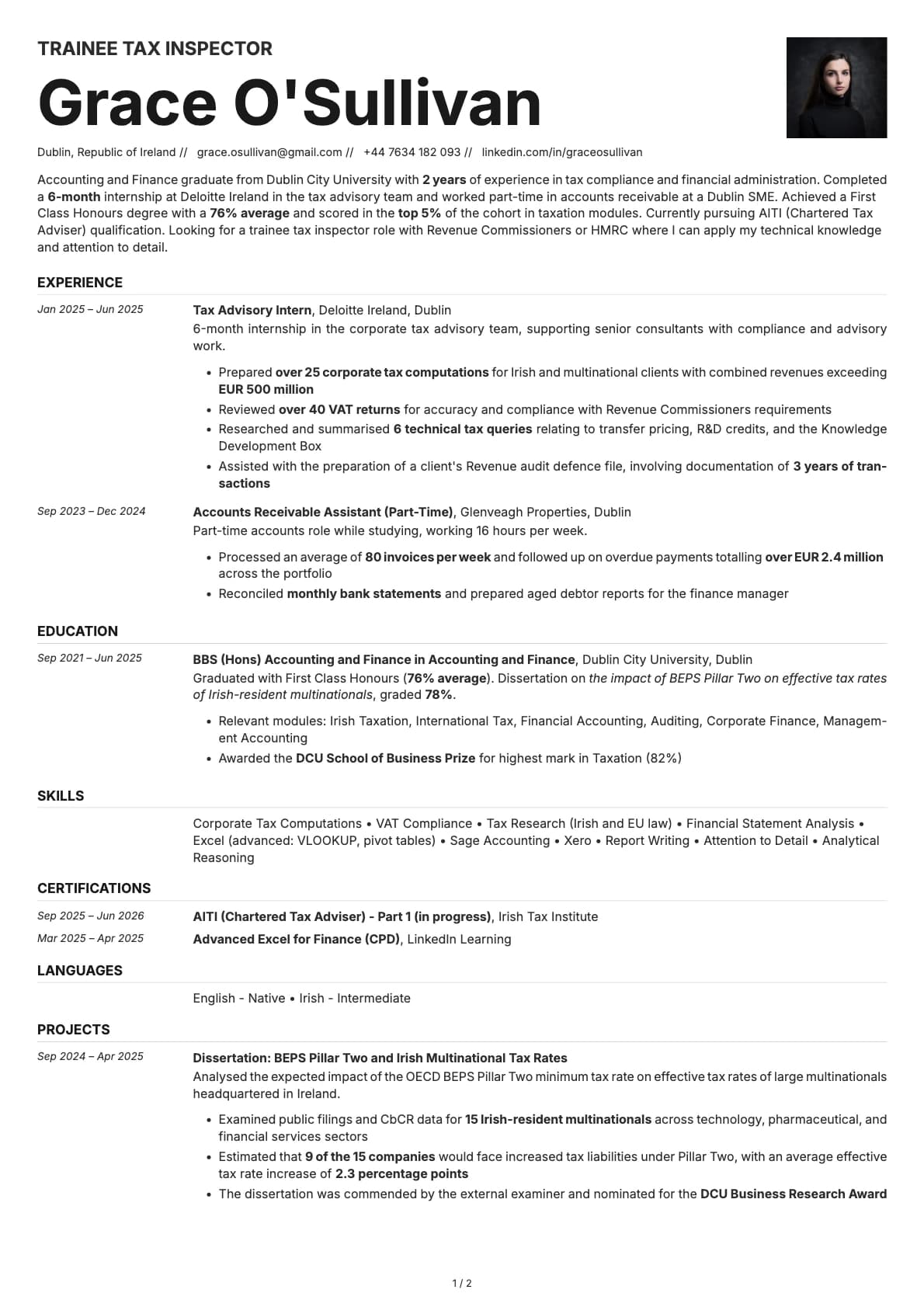
Trainee Tax Inspector
A trainee tax inspector resume example showing how to combine a Deloitte internship, top taxation grades, and an accounting degree into a Revenue Commissioners application.
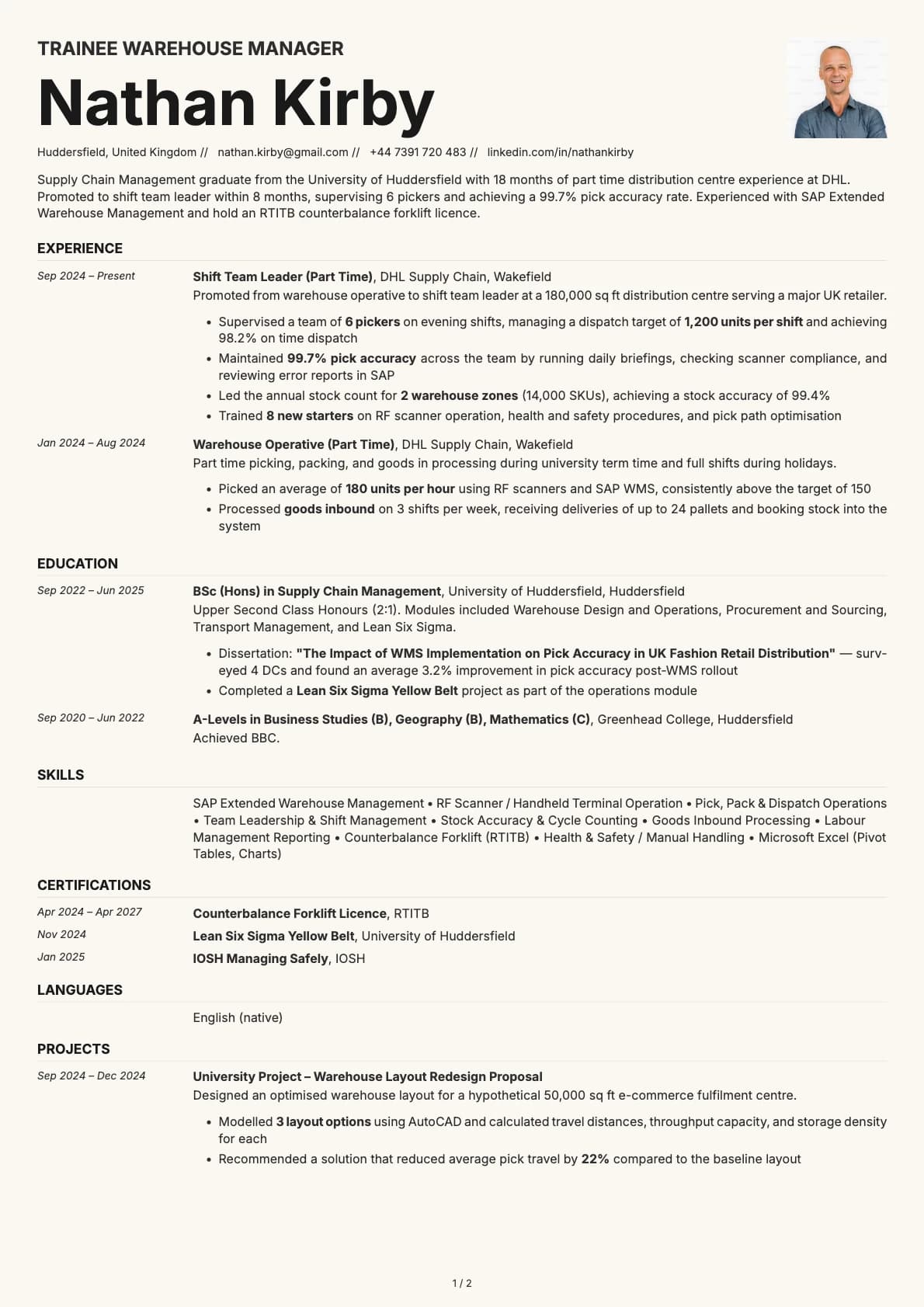
Trainee Warehouse Manager
A trainee warehouse manager resume example for logistics graduates. See how to present your warehouse management systems experience, forklift licences, and operational KPIs.
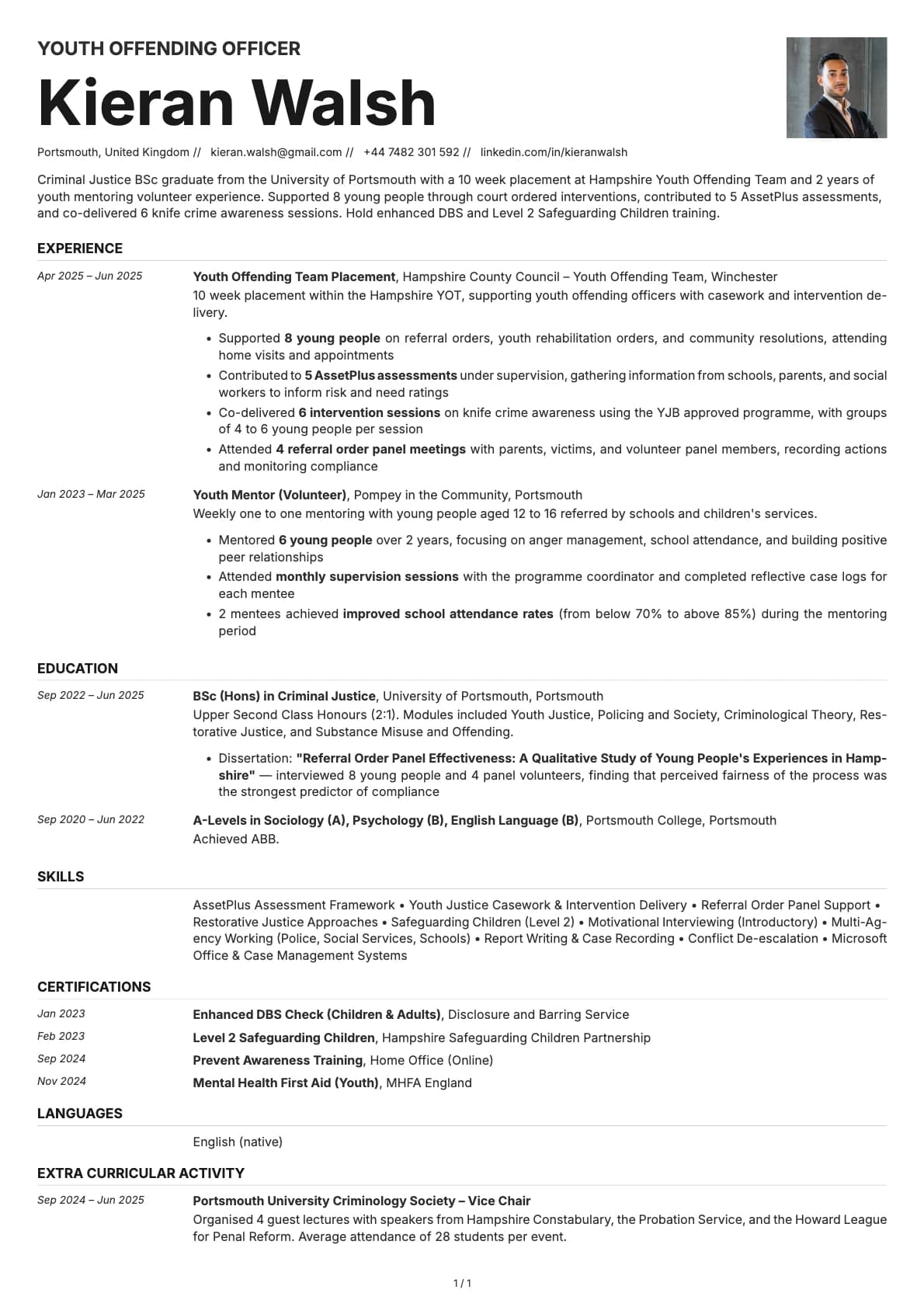
Youth Offending Officer
A youth offending officer resume example for criminal justice graduates. See how to present your placement experience, case management skills, and youth justice knowledge.
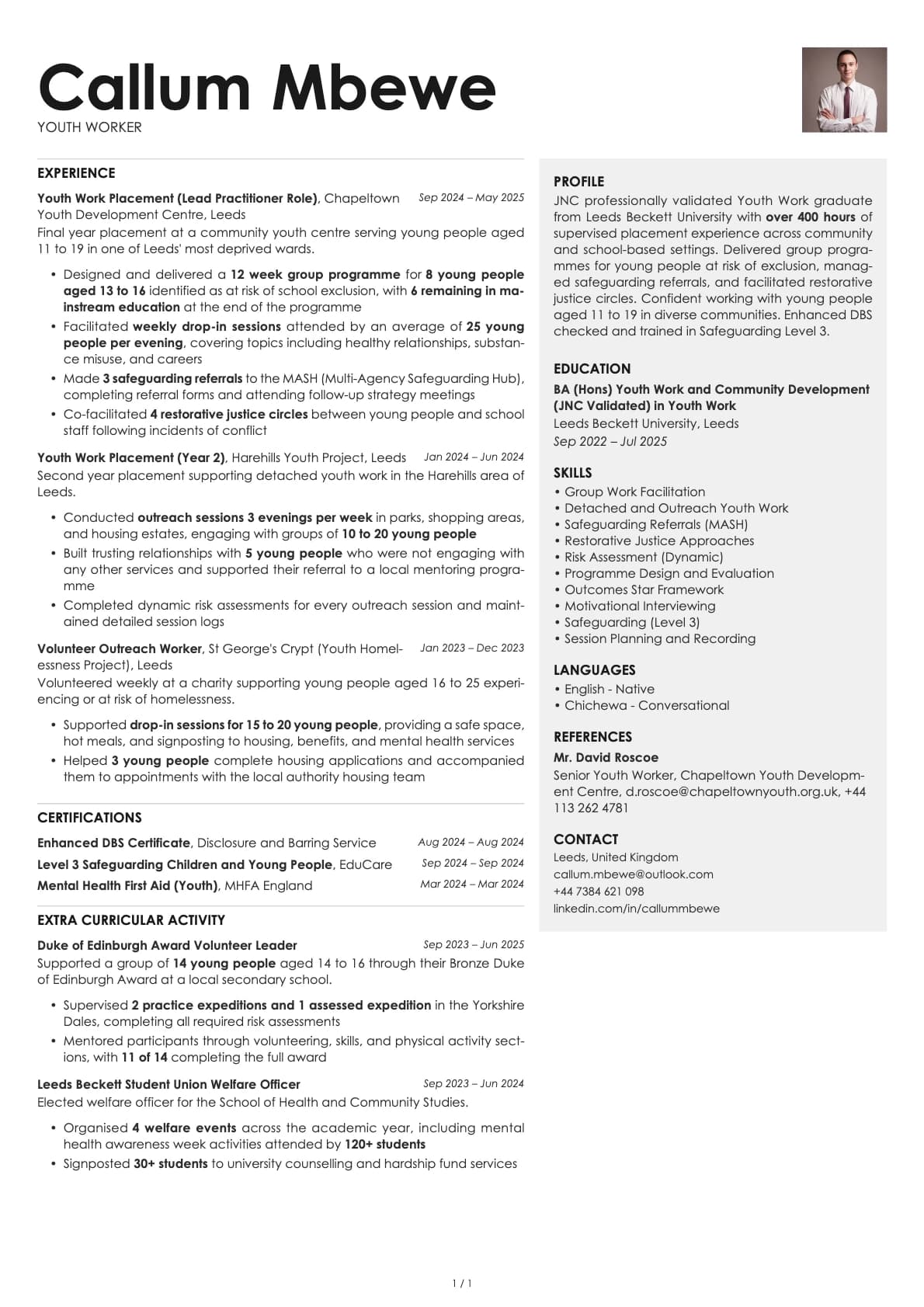
Youth Worker
A graduate youth worker resume example with community youth work placements, safeguarding, and programme delivery. See how to present your experience for youth work roles.
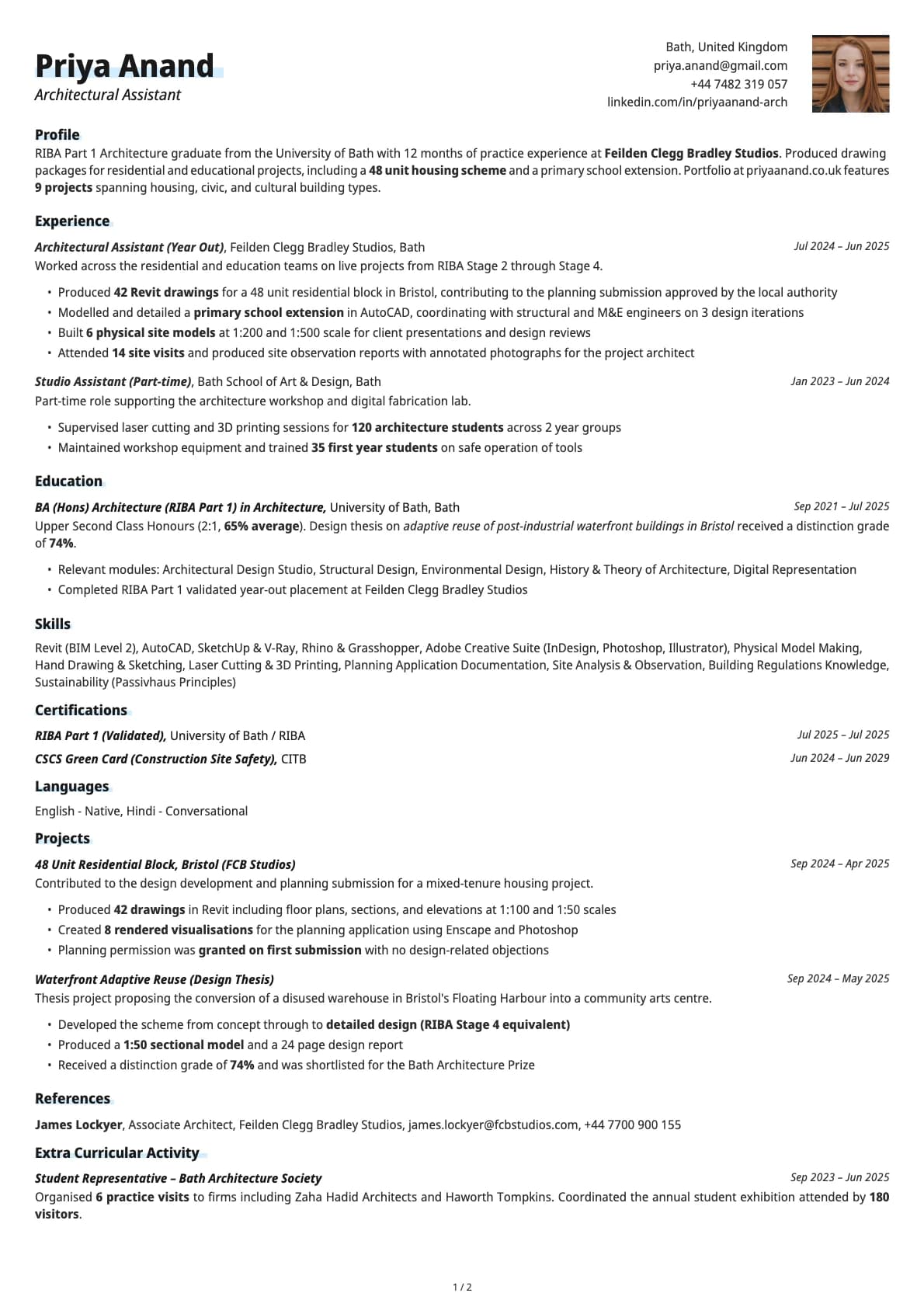
Architectural Assistant
An architectural assistant resume example with RIBA Part 1 qualification, AutoCAD drawings, and residential project experience from a Part 1 graduate.
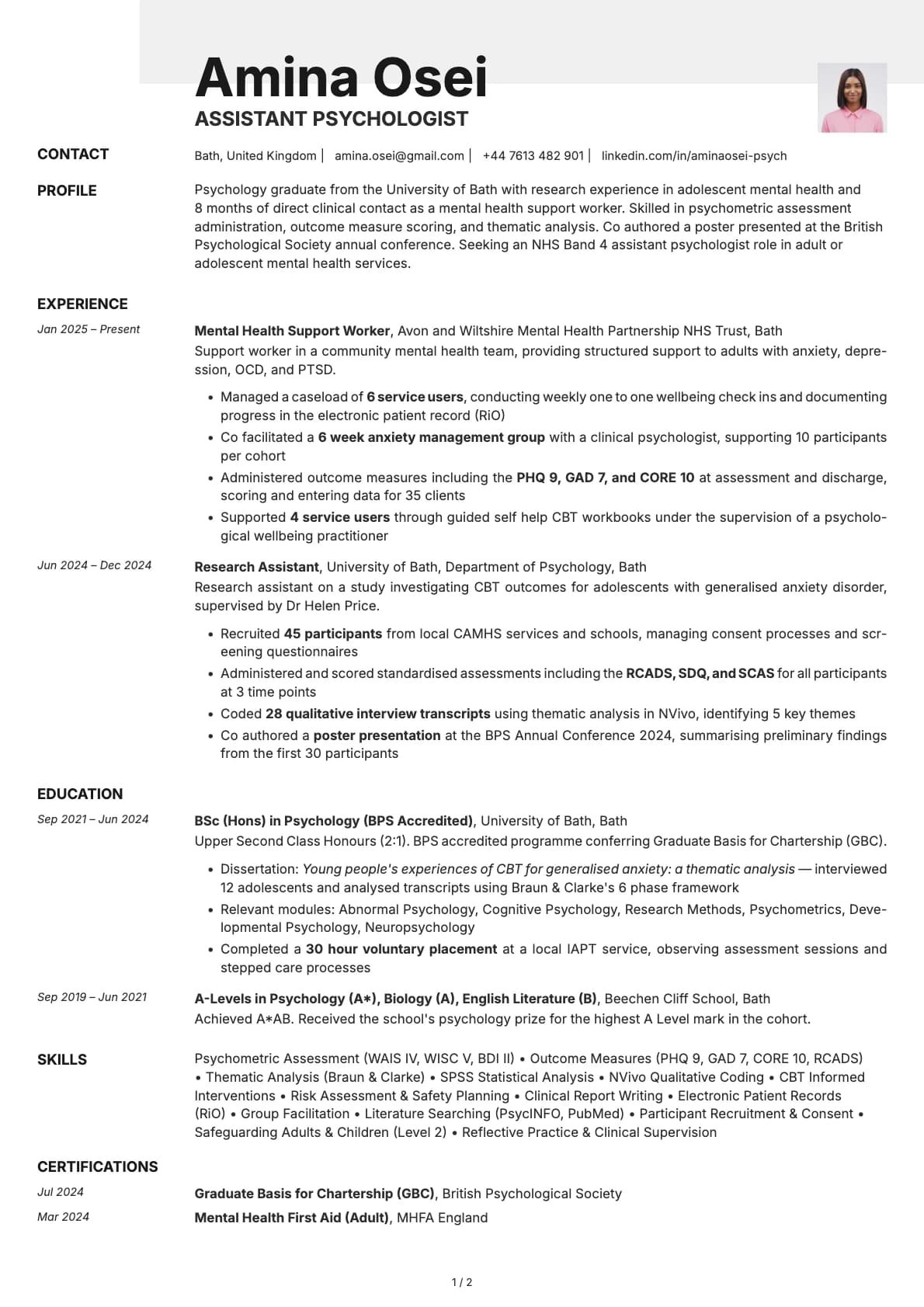
Assistant Psychologist
An assistant psychologist resume example for psychology graduates showing how to present research experience, clinical exposure, and therapy skills for NHS Band 4 roles.
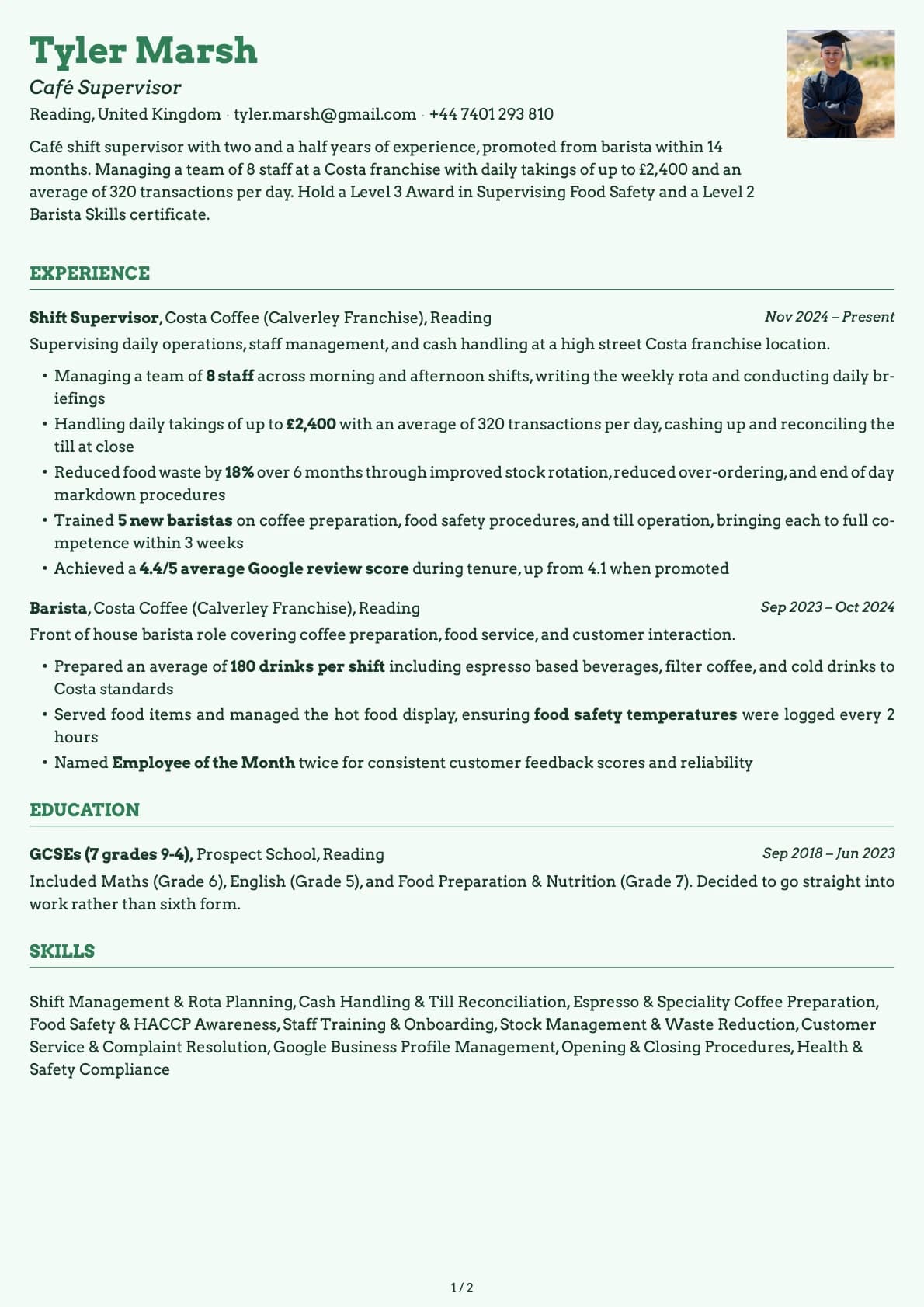
Café Supervisor
A café supervisor resume example for someone who worked up from barista without a degree. See how to present your customer service, team management, and food hygiene credentials.
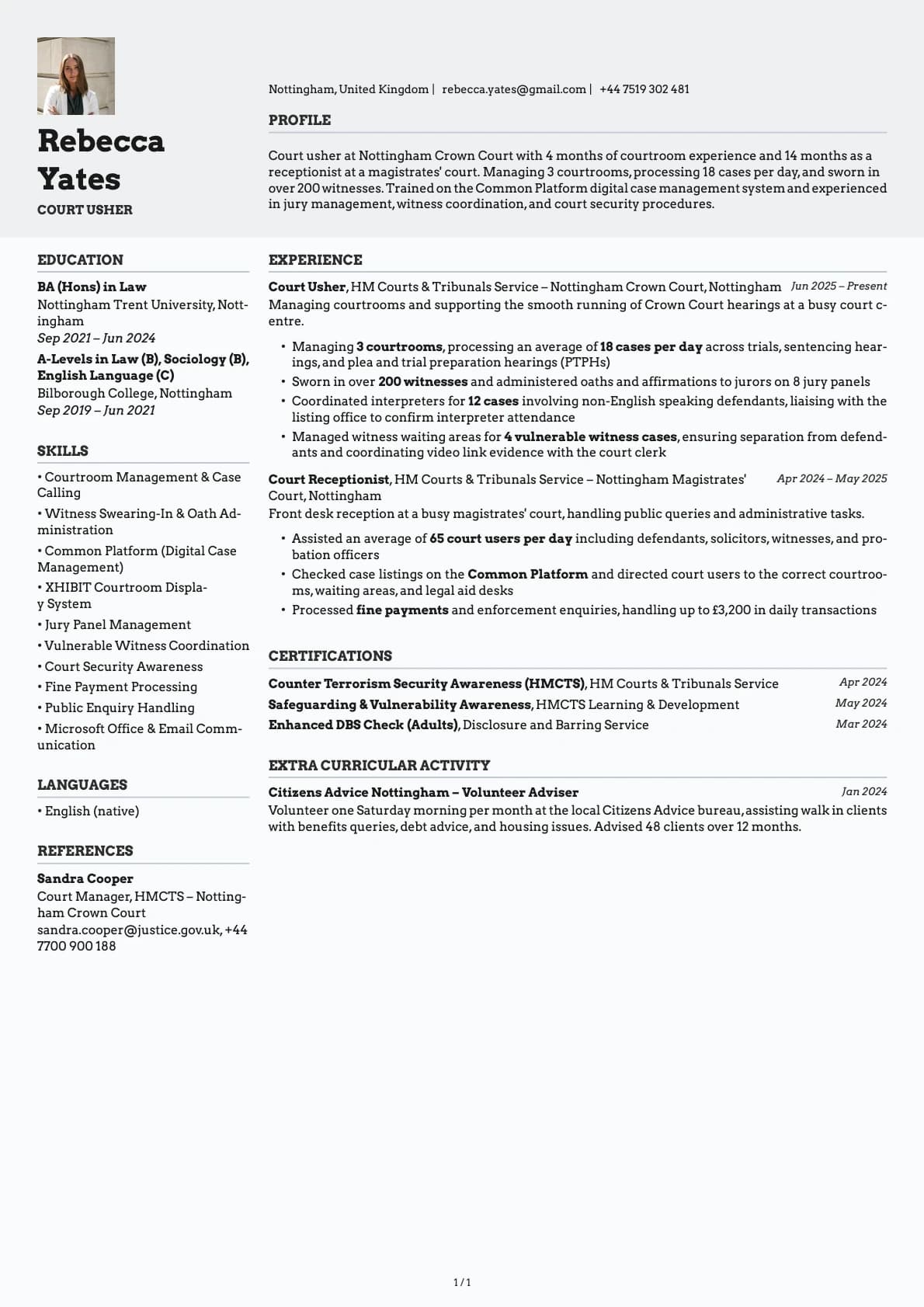
Court Usher
A court usher resume example for candidates entering the court service. See how to present your customer service skills, security awareness, and knowledge of court procedures.
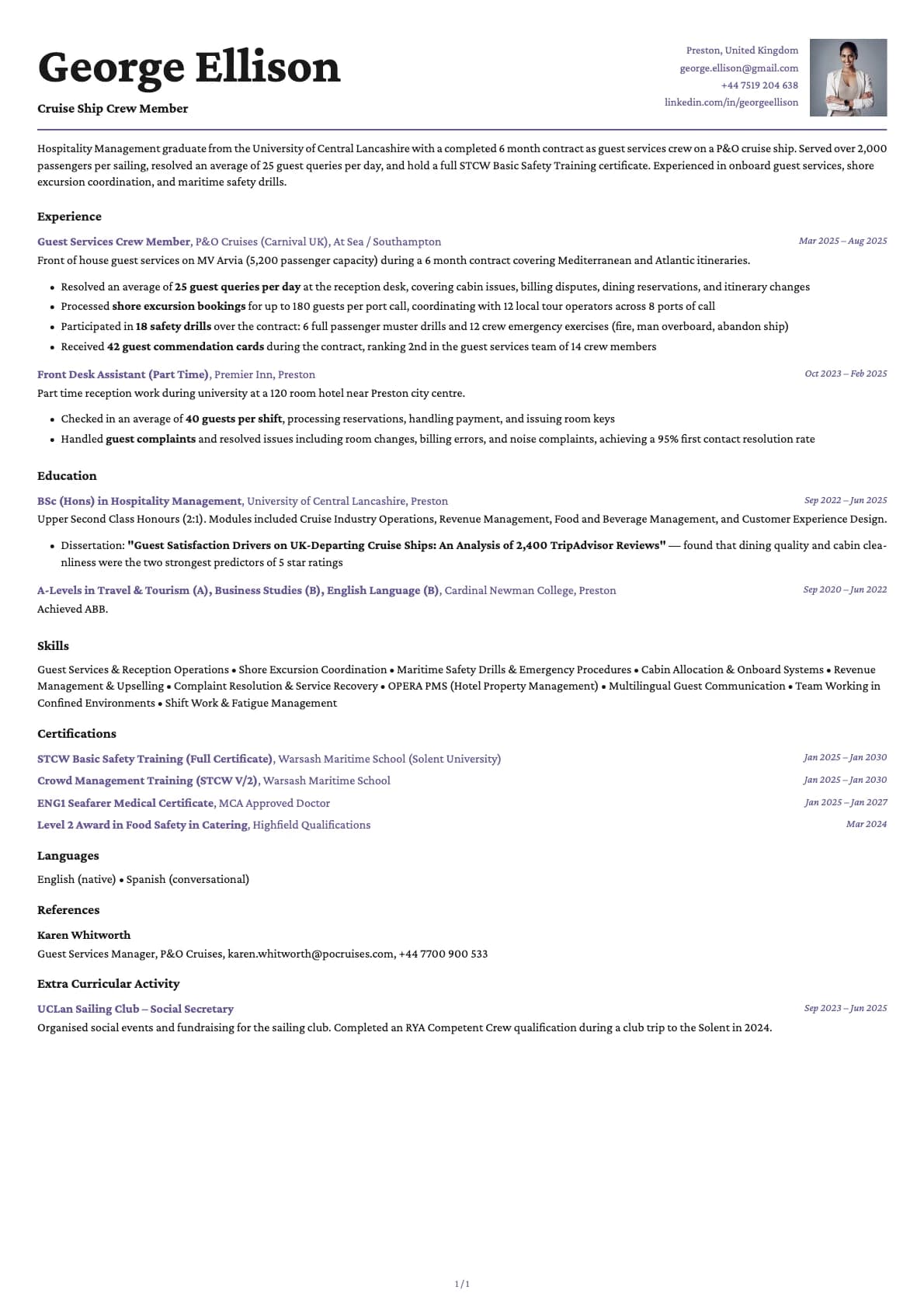
Cruise Ship Crew Member
A cruise ship crew resume example for hospitality graduates entering the cruise industry. See how to present your STCW certification, onboard experience, and customer service skills.
Customer Service Team Leader
A customer service team leader resume example with management degree, contact centre experience, and team performance metrics.