Junior Fashion Buyer Resume Example
A junior fashion buyer resume example for fashion business graduates. See how retail experience and trend forecasting skills help you land a buying role.

Laddro Team
Free to use. No account needed to start.
Free to use. No account needed to start.
Overview
Junior fashion buyers assist senior buyers with range planning, supplier negotiations, and sales analysis. They track what is selling, what is not, and why. It is one of the most competitive entry points in the fashion industry, and employers want graduates who understand both the creative and commercial sides of the business.
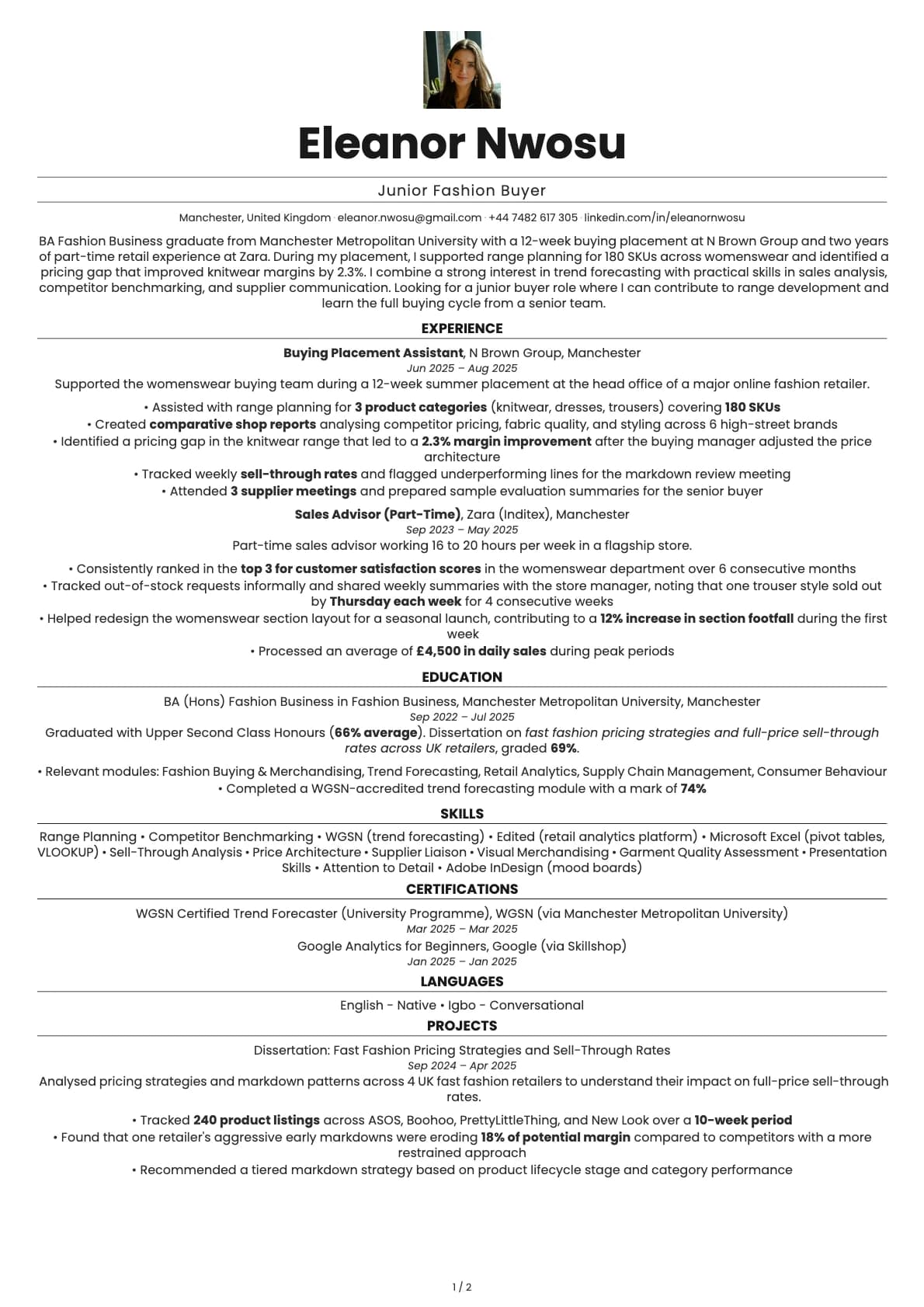
This resume belongs to Eleanor Nwosu, a recent BA Fashion Business graduate from Manchester Metropolitan University. She completed a 12-week buying placement at N Brown Group and worked part-time at Zara during her studies. Her resume works because she balances trend awareness with hard commercial metrics, showing she can think about margins and sell-through rates, not just aesthetics.
What Makes This Resume Work
The placement is packed with buying-specific tasks. Eleanor supported the womenswear buying team at N Brown Group, assisting with range plans for 3 product categories covering 180 SKUs. She created comparative shop reports analysing competitor pricing across 6 high-street brands and identified a pricing gap that led to a margin improvement of 2.3% on a knitwear range. These are genuine junior buyer tasks, and the specificity makes her experience credible.
Retail sales experience is reframed through a commercial lens. At Zara, she was not just folding clothes. She tracked which items customers asked for that were out of stock and compiled informal demand reports that she shared with the store manager. She also noticed that a particular trouser style was consistently selling out by Thursday each week and flagged it as a potential reorder opportunity. That kind of observation is exactly what buying teams value.
Her dissertation shows analytical depth. She researched fast fashion pricing strategies across 4 UK retailers, comparing price architecture, markdown frequency, and full-price sell-through rates. Finding that one retailer's aggressive early markdowns were eroding 18% of potential margin is the kind of insight that demonstrates she can think commercially about fashion.
Visual merchandising skills add breadth. She helped redesign the store layout for a seasonal launch at Zara, contributing to a 12% increase in footfall through the womenswear section during the first week. Junior buyers who also understand the shop floor have an advantage because they can see the full picture from supplier to customer.
Key Takeaways
Breaking into fashion buying is tough because the roles are limited and the competition is fierce. If you do not have a formal buying placement, use your retail experience to demonstrate commercial awareness. Track what sells, notice pricing patterns, and talk about margins. Supplement your resume with trend forecasting tools like WGSN or Edited if you have access through your university, and make sure your dissertation or coursework tackles a commercial problem rather than a purely creative one. Buying is a numbers job dressed in fashion, so prove you can do both.
Build your own version
Open this layout in the builder and swap in your own details. It takes a few minutes.
Free to use. No account needed to start.
Was this resume example helpful?
Rate this example to help us create better content for you.
4.8 average from 155 ratingsRelated resume examples
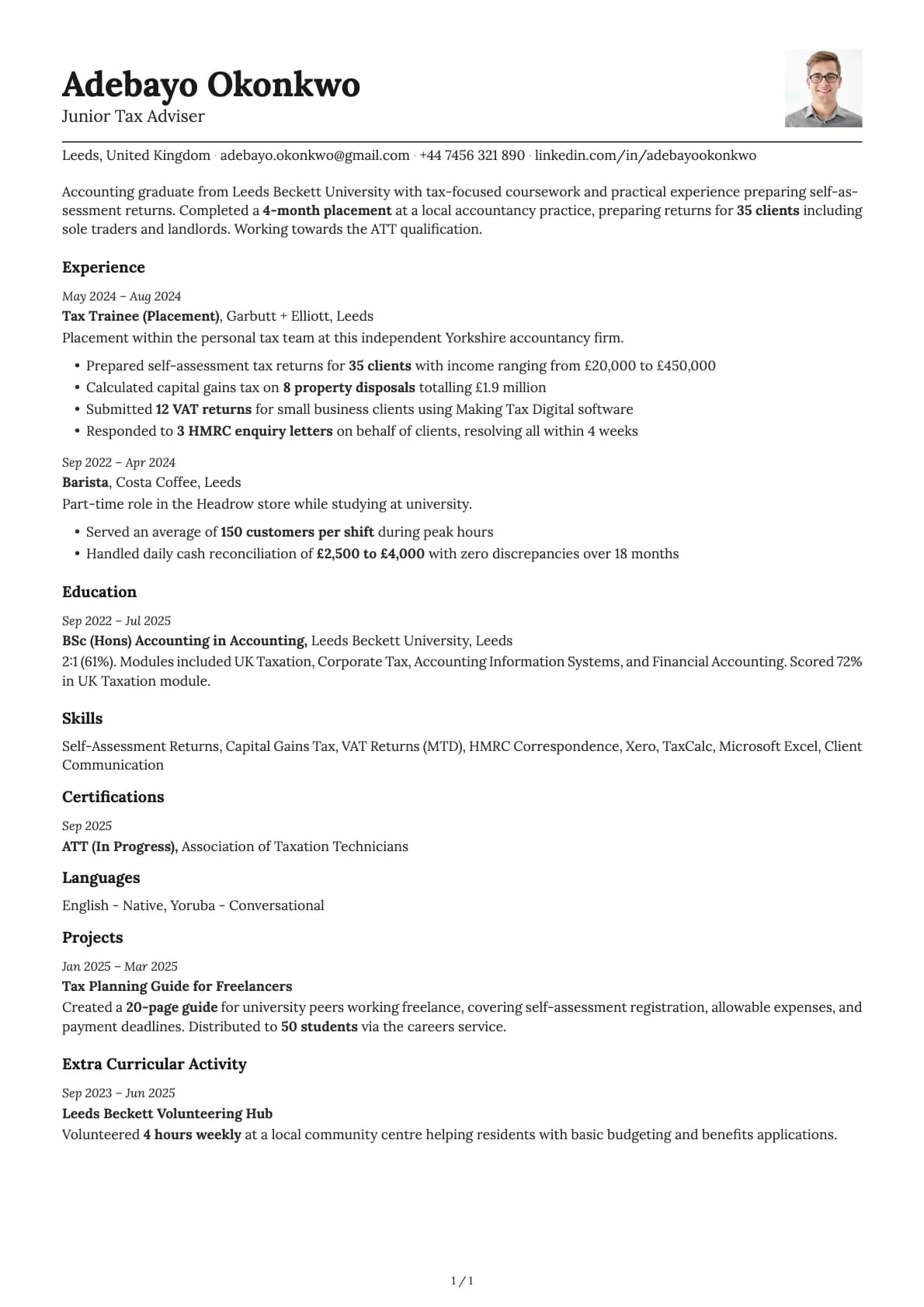
Junior Tax Adviser
A junior tax adviser resume example with placement experience at a regional accountancy firm and ATT study.
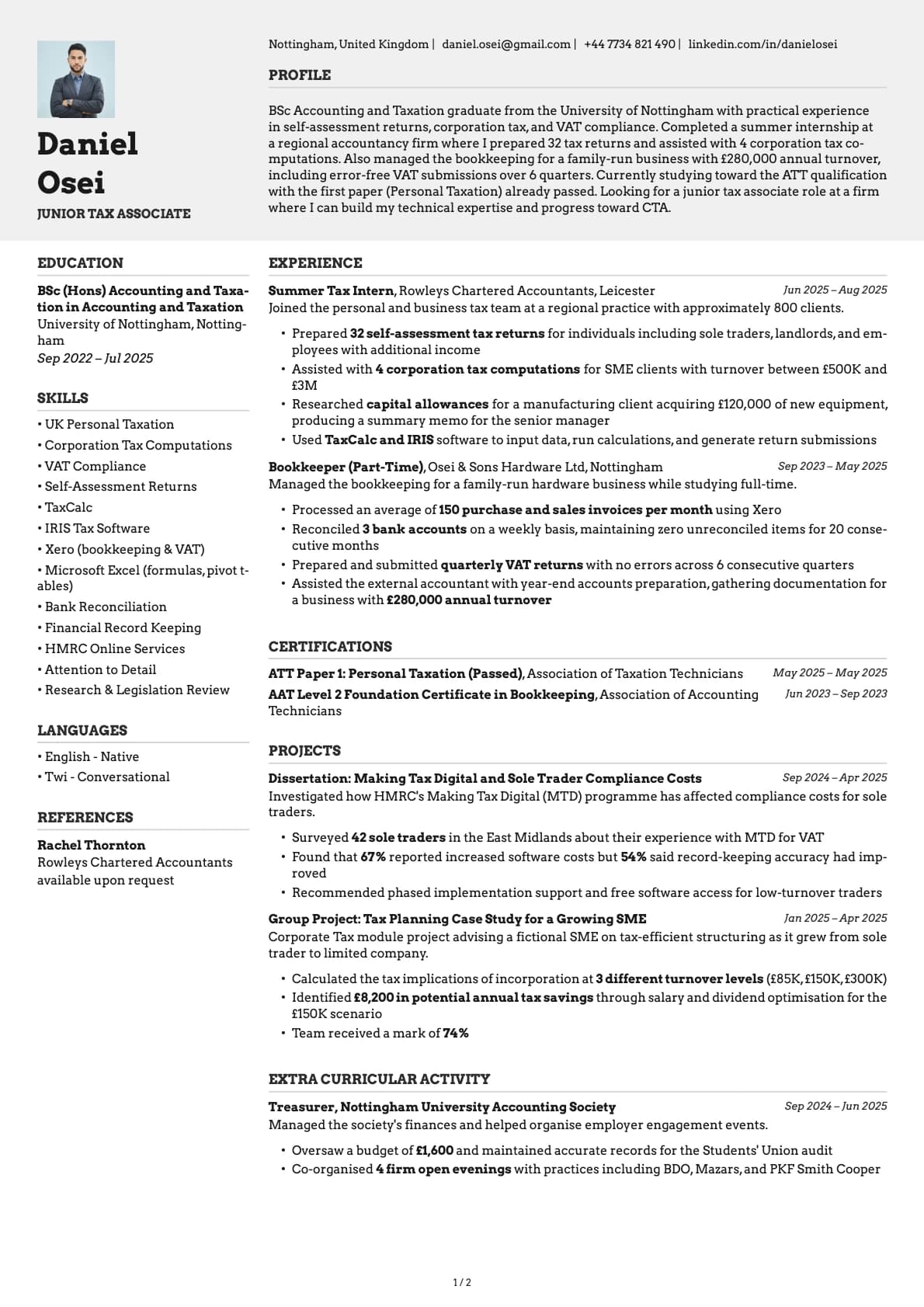
Junior Tax Associate
A junior tax associate resume example for tax and accounting graduates. See how HMRC work experience and ATT progress help you stand out to employers.
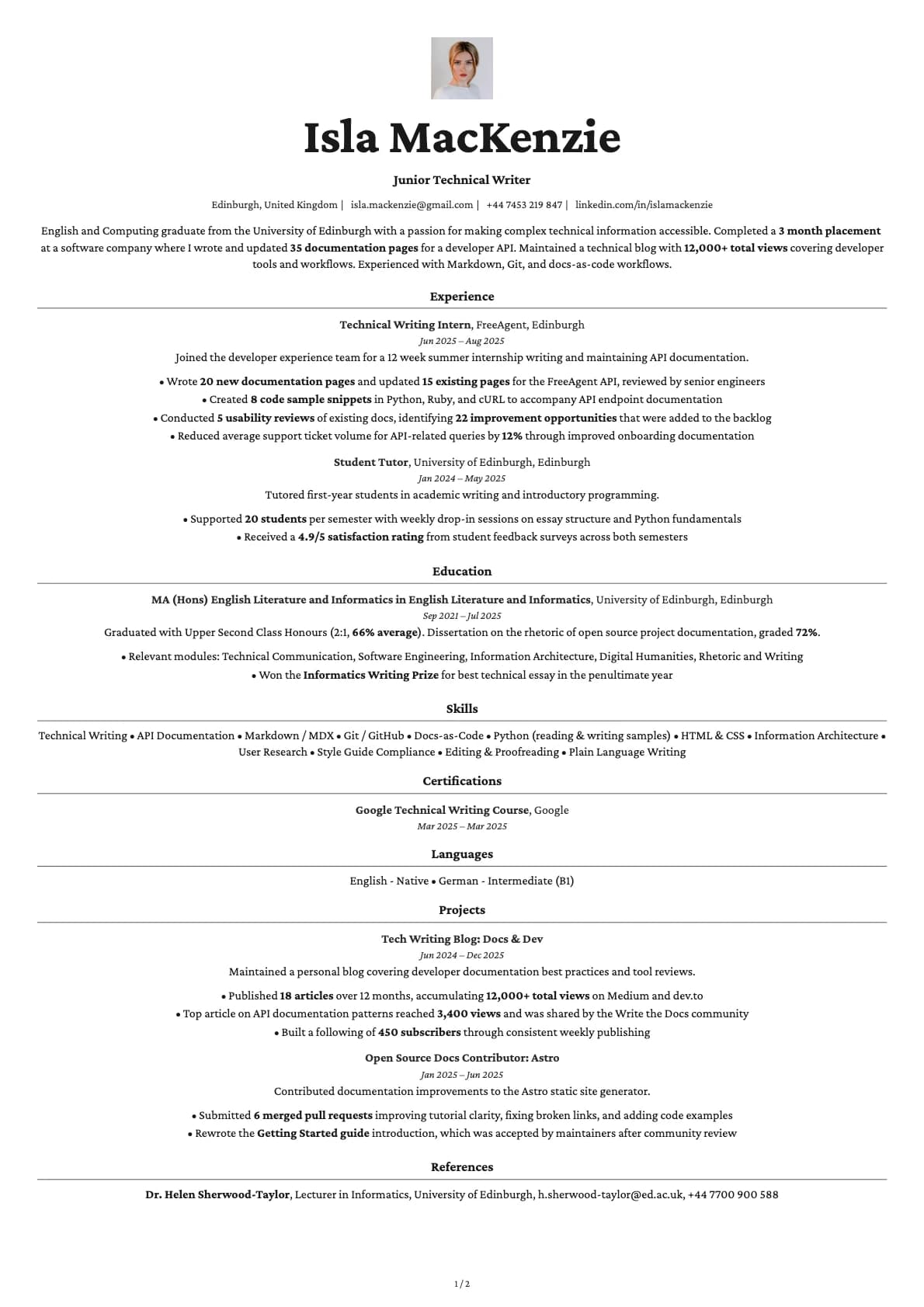
Junior Technical Writer
A junior technical writer resume example for graduates. See how to present documentation experience, API writing samples, and open source contributions to land your first tech writing role.
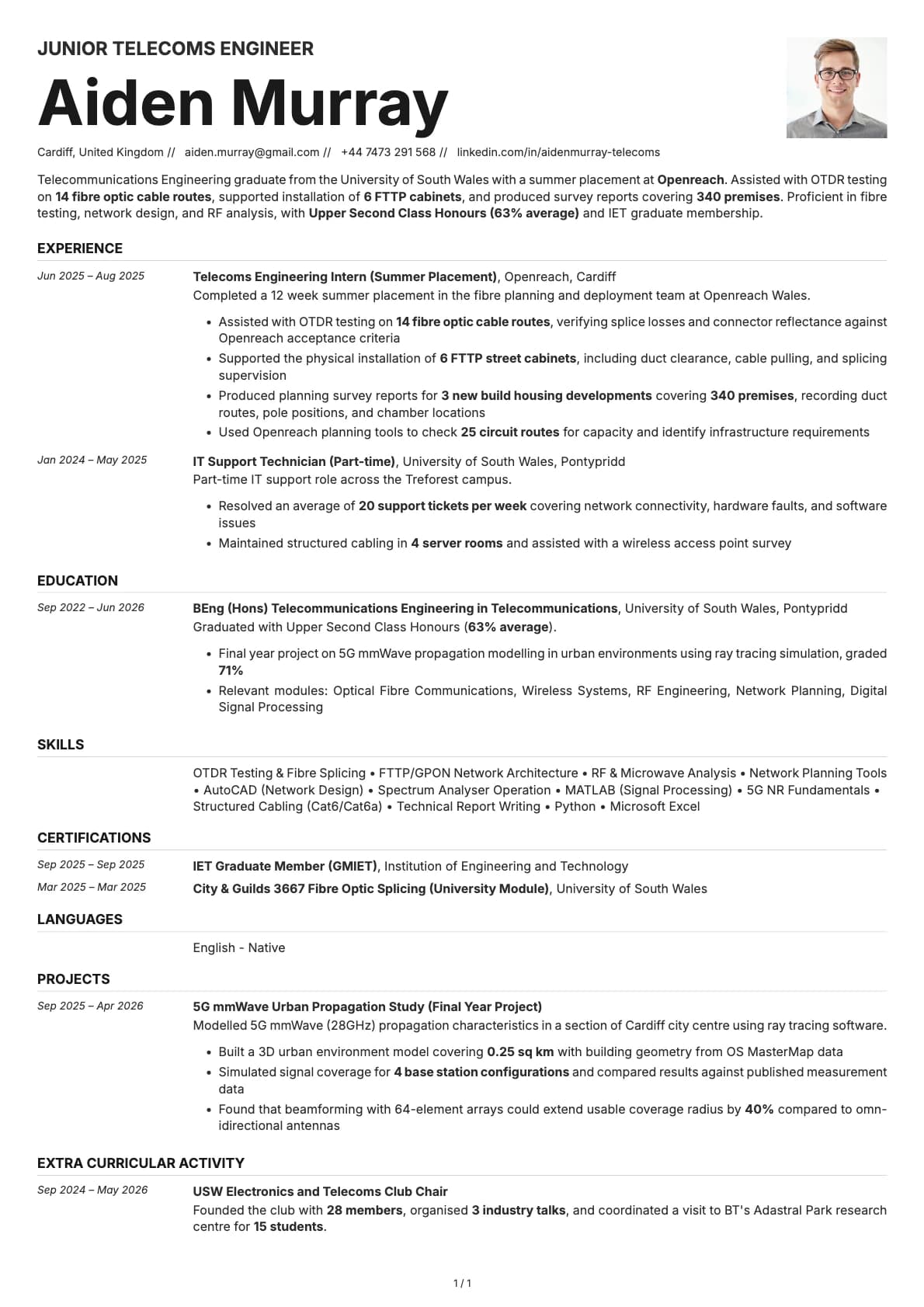
Junior Telecoms Engineer
A junior telecoms engineer resume example with fibre optic network experience, OTDR testing skills, and placement at Openreach.
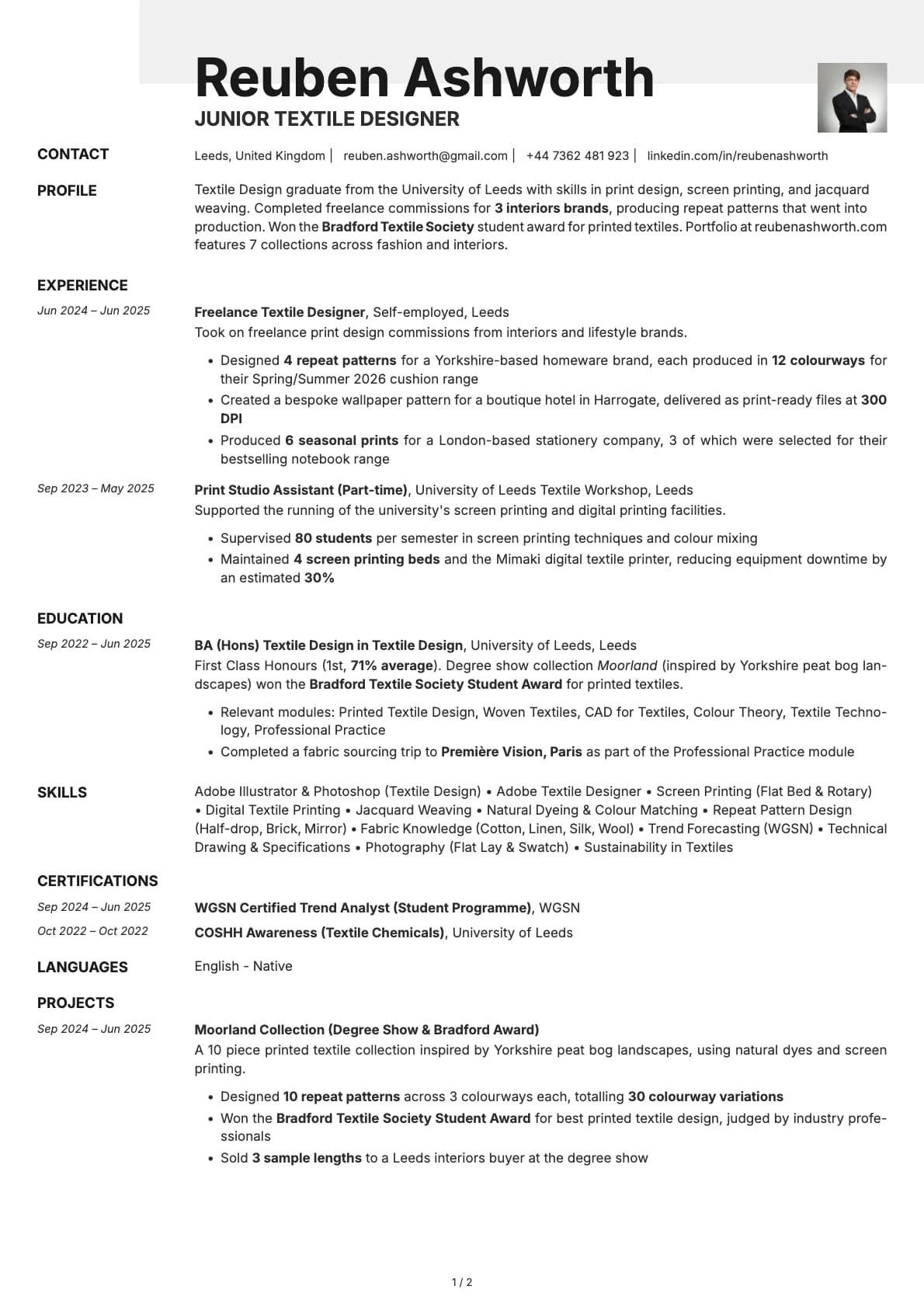
Junior Textile Designer
A junior textile designer resume example with print design projects, client commissions, and weaving skills from a Textile Design BA graduate entering the industry.
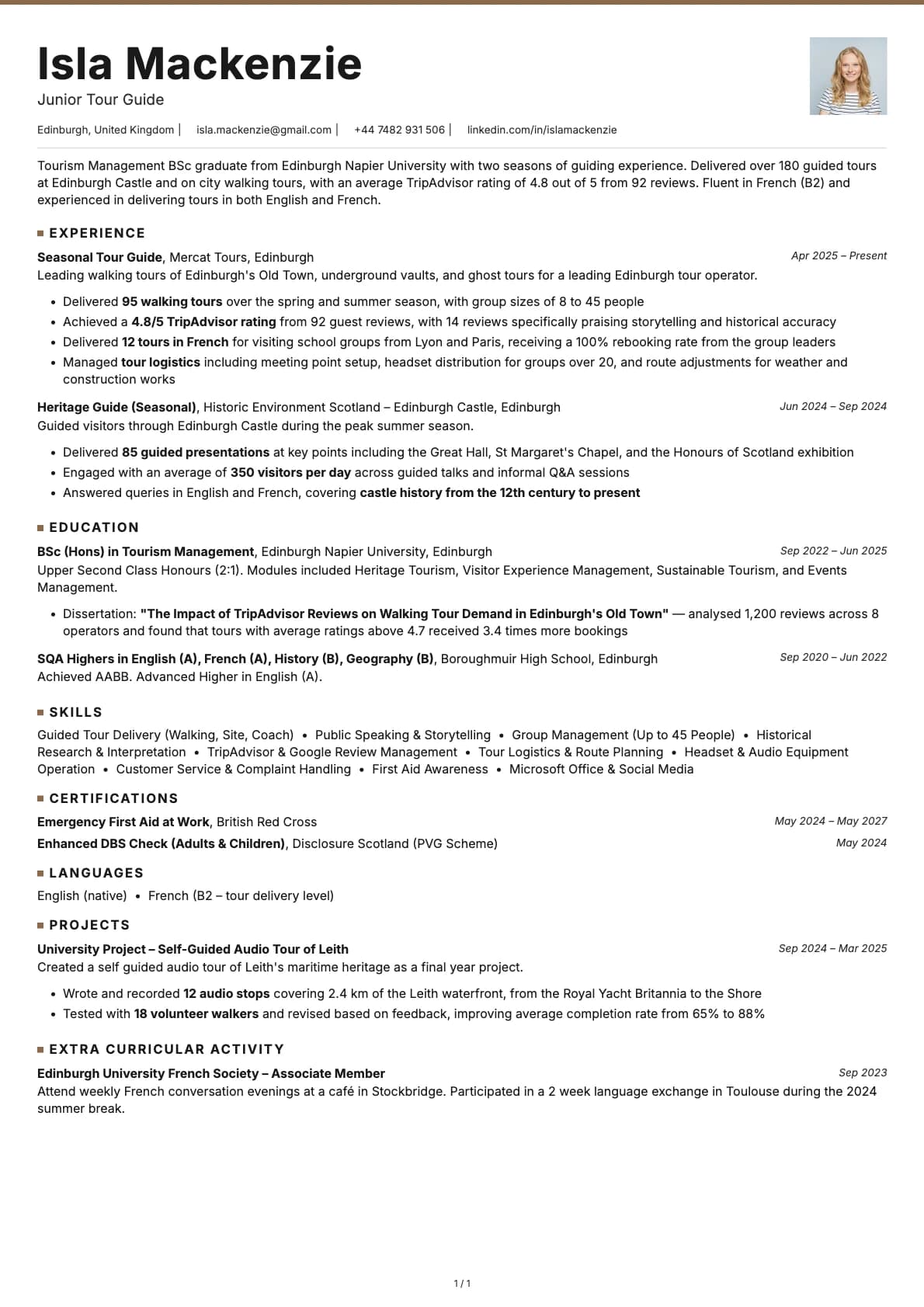
Junior Tour Guide
A junior tour guide resume example for tourism graduates. See how to present your guiding experience, customer satisfaction scores, and language skills for the UK tourism industry.
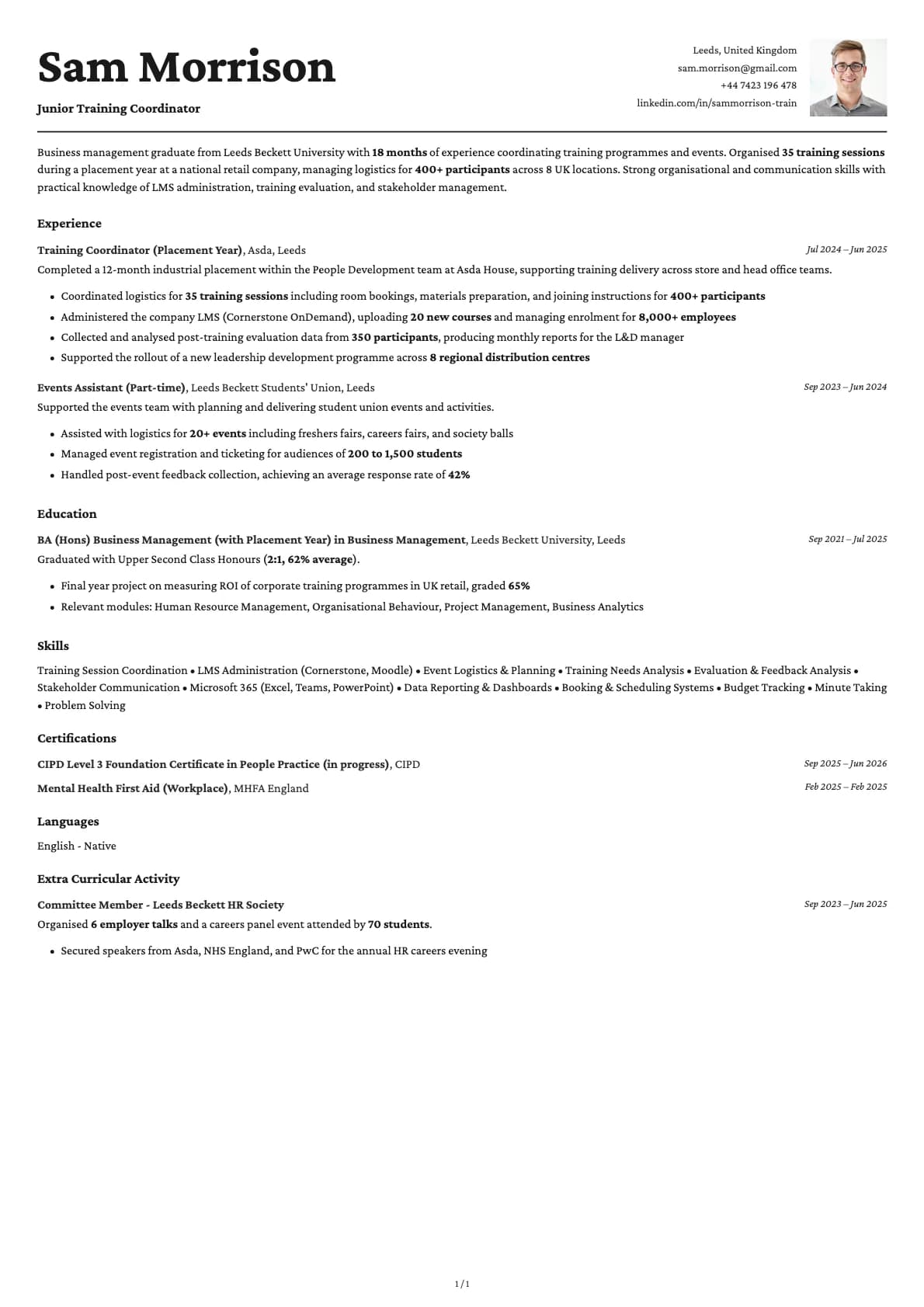
Junior Training Coordinator
A junior training coordinator resume example with LMS administration experience, session coordination numbers, and L&D placement experience.
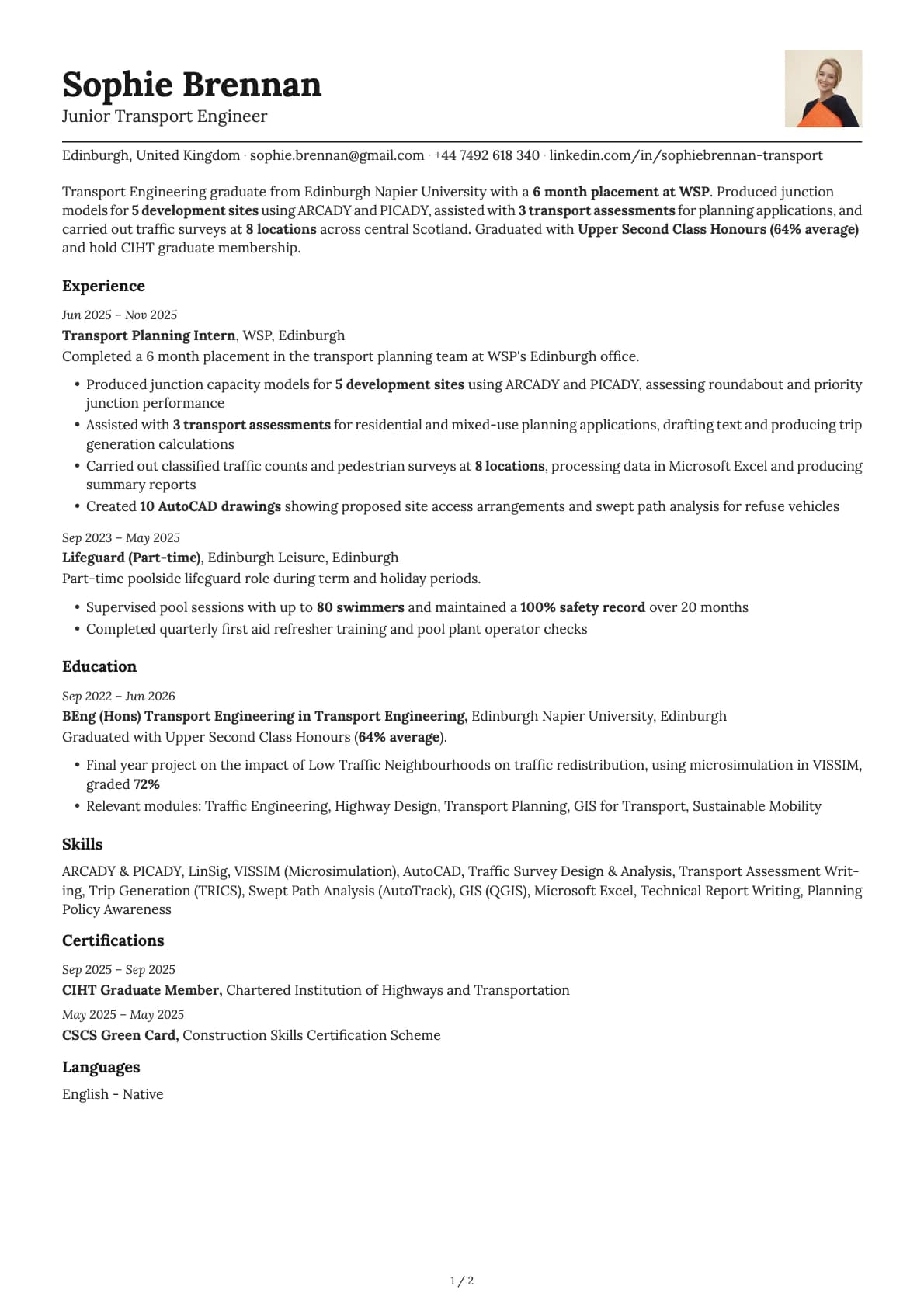
Junior Transport Engineer
A junior transport engineer resume example with traffic modelling experience, ARCADY proficiency, and CIHT membership.
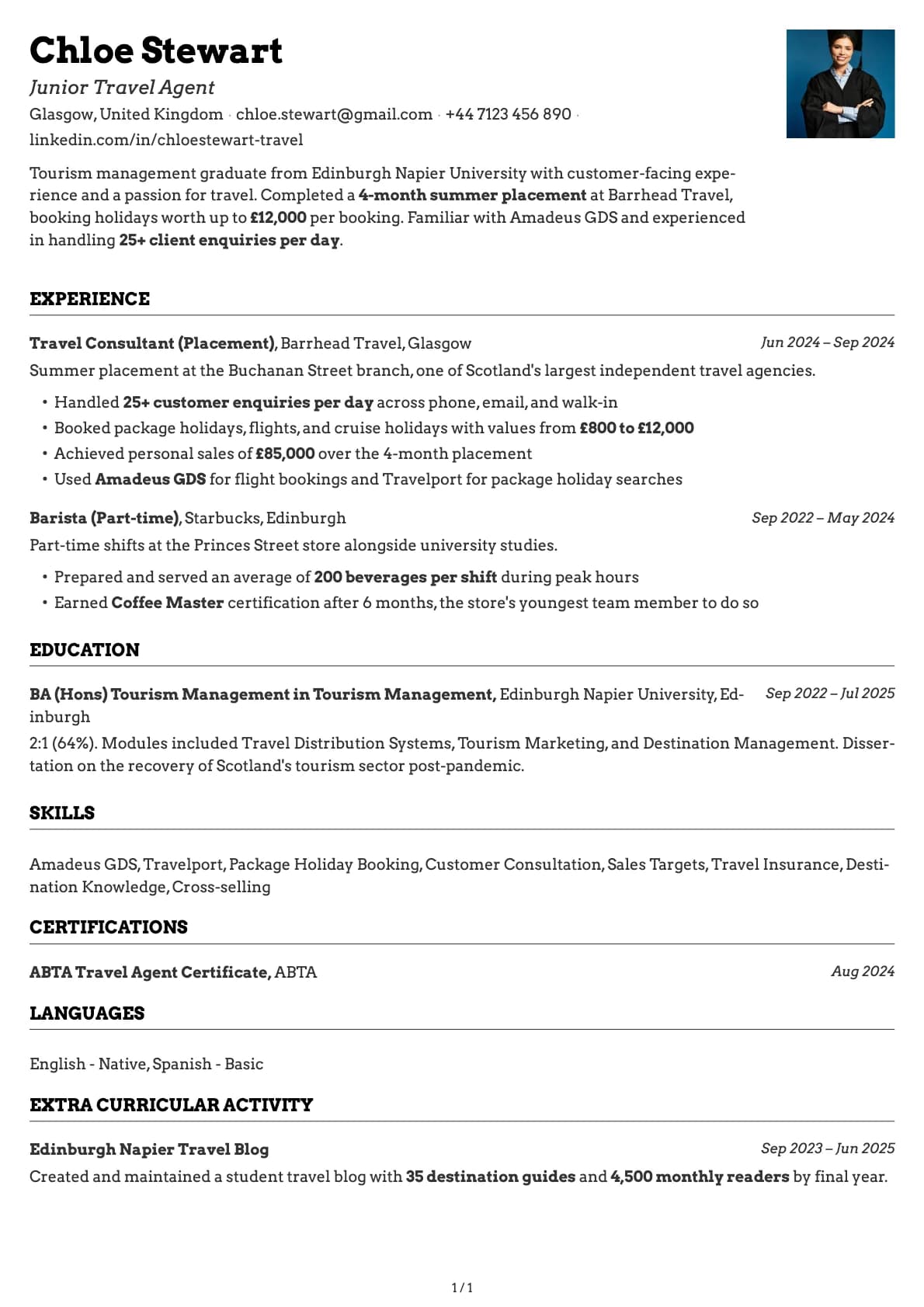
Junior Travel Agent
A junior travel agent resume example with Barrhead Travel placement and Amadeus GDS experience.
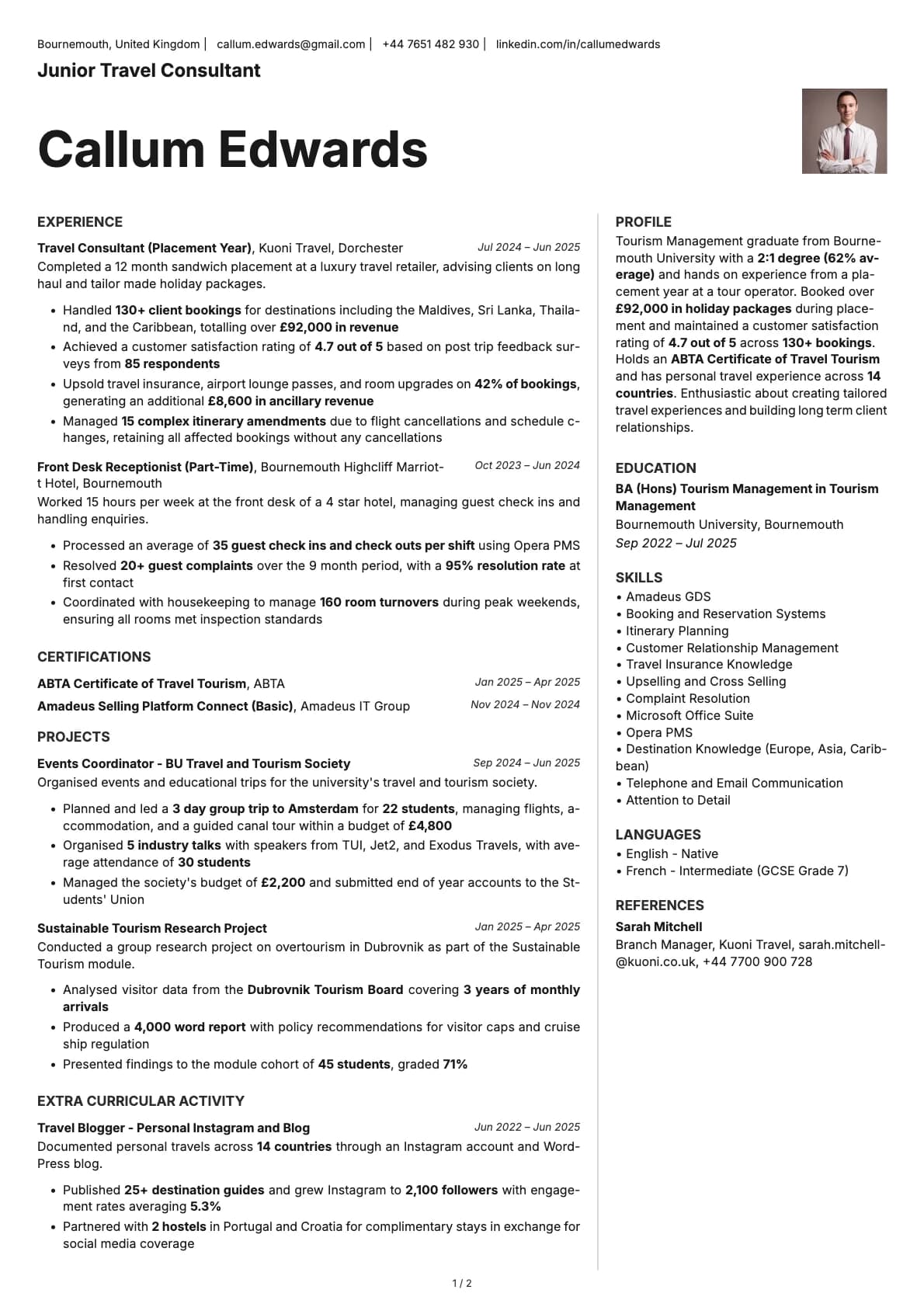
Junior Travel Consultant
A junior travel consultant resume example for tourism graduates. See how to present booking experience, GDS skills, and destination knowledge to impress employers.
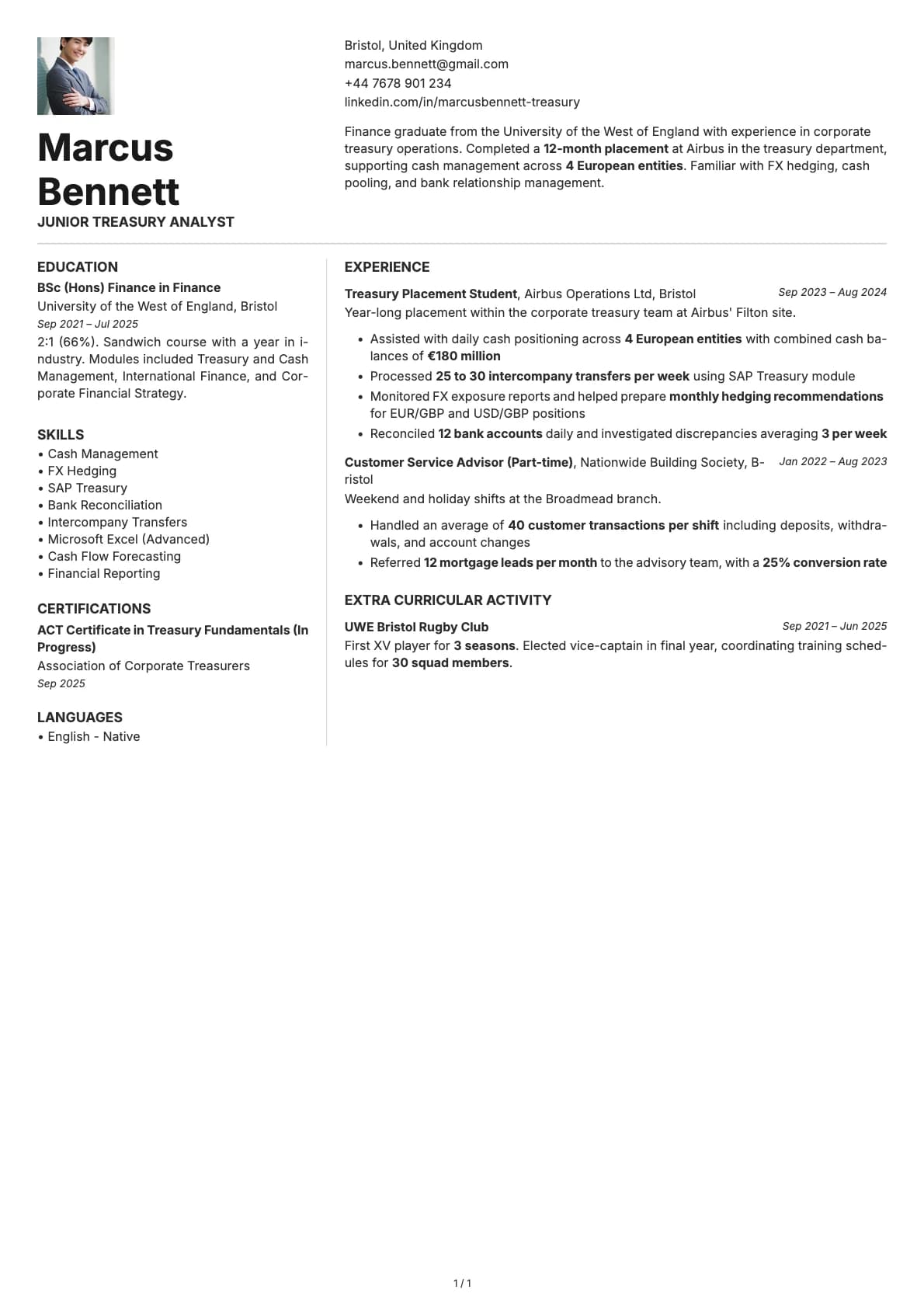
Junior Treasury Analyst
A junior treasury analyst resume example with Airbus placement experience and cash management skills.
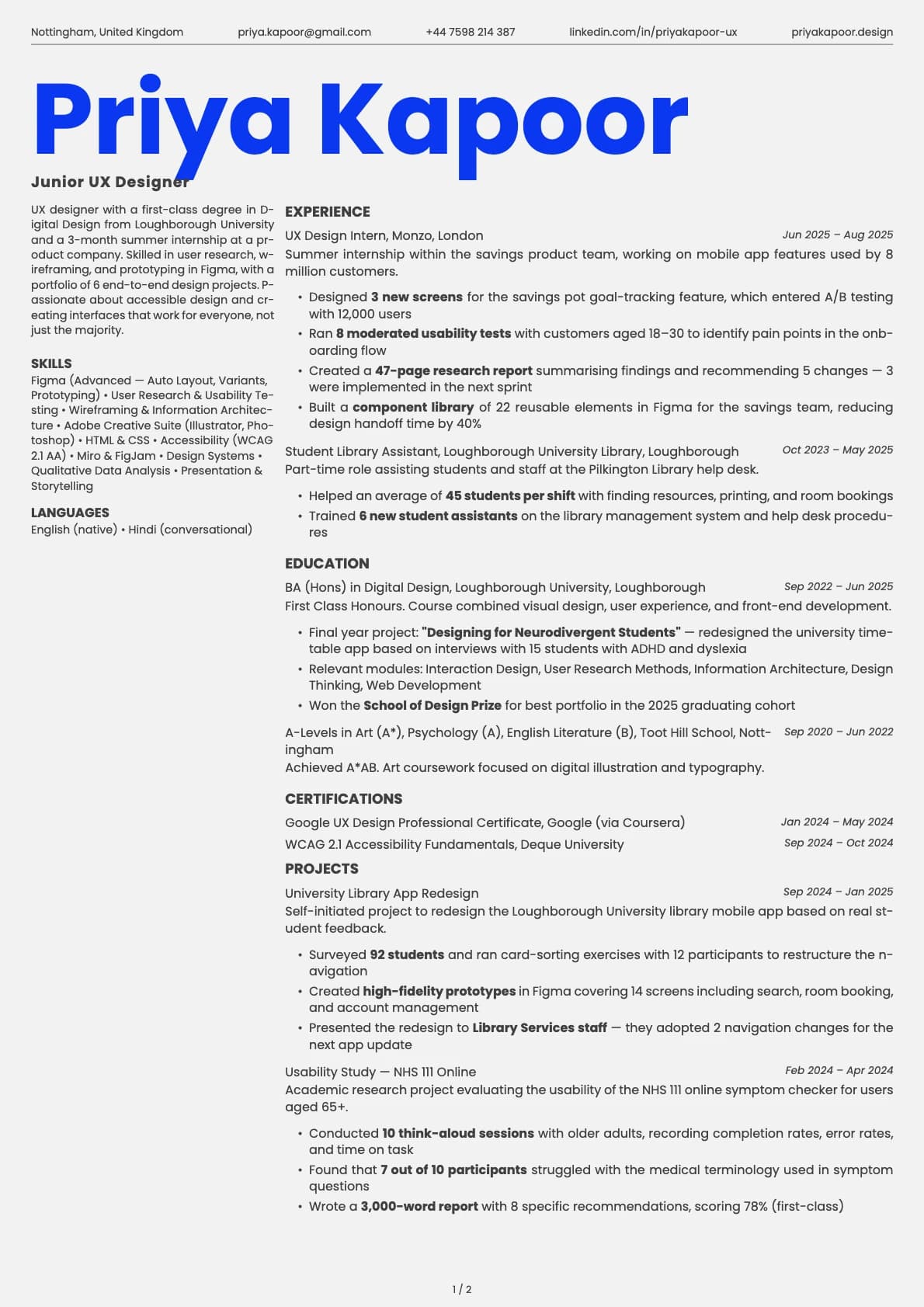
Junior UX Designer
A junior UX designer resume example for recent graduates. Learn how to present your user research, wireframes, and design projects to secure your first UX role.