Graduate Actuary Trainee Resume Example
A graduate actuary trainee resume example with Hymans Robertson internship and IFoA exam passes.

Laddro Team
Free to use. No account needed to start.
Free to use. No account needed to start.
Overview
Actuarial trainee positions are among the most selective graduate roles in the UK. Firms like Hymans Robertson, Aon, Mercer, and Willis Towers Watson typically require a strong mathematics degree, progress on IFoA exams, and evidence of programming ability. The qualification journey takes several years, so employers want to see that candidates are already committed to it.
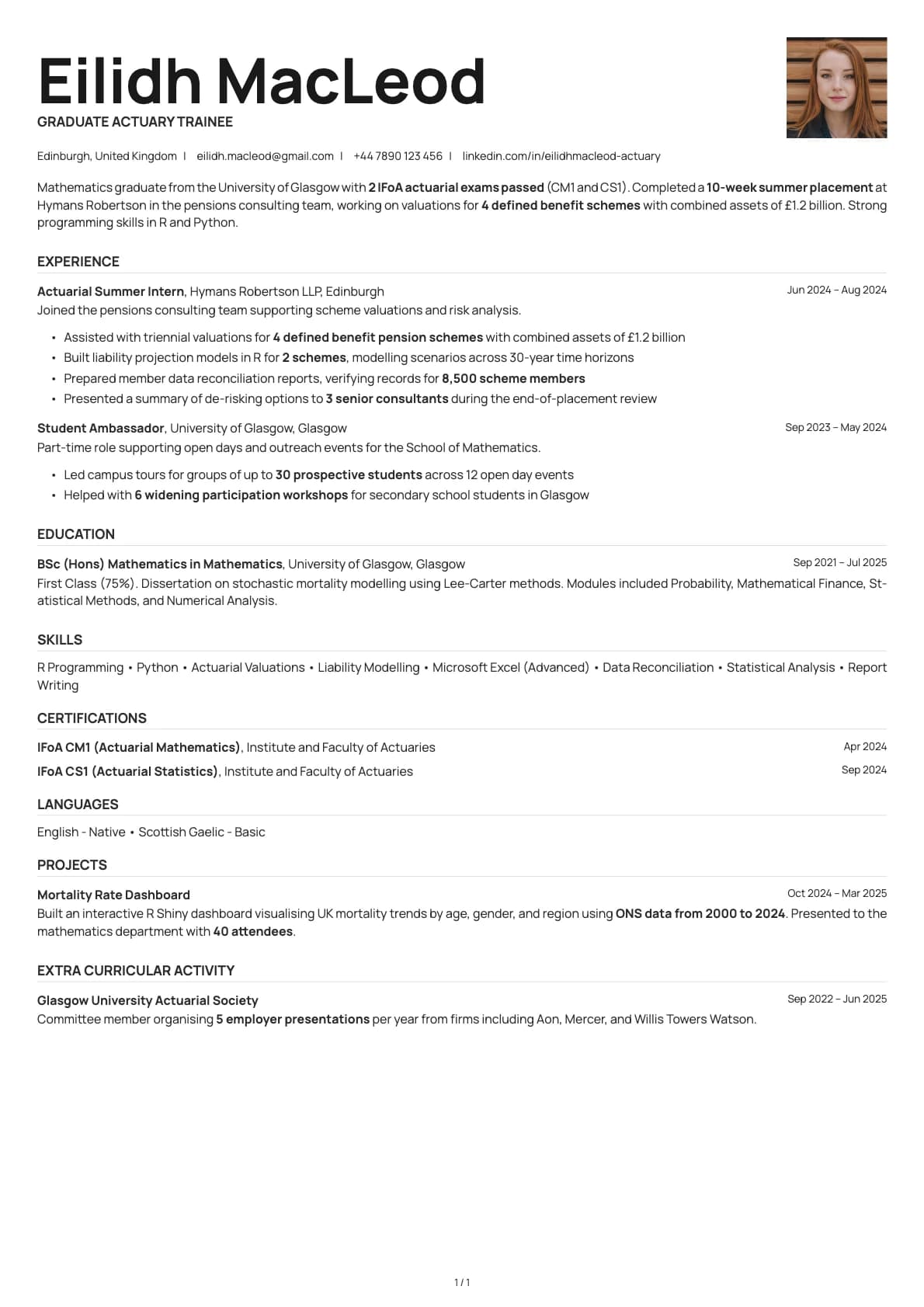
Eilidh MacLeod is a mathematics graduate from the University of Glasgow who completed a summer internship at Hymans Robertson and has already passed 2 IFoA exams. Her resume stands out because it combines academic excellence with real consulting experience and demonstrable technical skills.
What Makes This Resume Work
Two IFoA exams passed before starting work. This is the single most important differentiator for actuarial trainees. CM1 and CS1 are the foundational exams, and having them passed before graduation shows Eilidh is serious about the profession and can manage exam study alongside a full degree programme.
Pensions consulting experience with meaningful numbers. Working on valuations for schemes with £1.2 billion in combined assets and 8,500 members shows the scale of real actuarial work. These are not academic exercises; they are calculations that affect real people's retirement income.
Programming skills applied to actuarial problems. Building liability projection models in R and creating an interactive mortality dashboard shows Eilidh can code, not just use spreadsheets. As actuarial teams increasingly rely on R and Python, this technical ability is a genuine advantage.
A First Class degree with a relevant dissertation. Stochastic mortality modelling using Lee-Carter methods is directly applicable to pensions and life insurance. It shows the recruiter that Eilidh's academic interests align precisely with the work she will be doing.
Key Takeaways
For actuarial trainee roles, your IFoA exam progress is the most important item on your resume. List every exam you have passed with the date. Beyond that, demonstrate programming skills (R, Python, VBA), describe any actuarial work experience with scheme sizes and member numbers, and show a strong academic record in a quantitative discipline. If you have built any tools, models, or dashboards, describe them with specific details about the data and methodology used.
Build your own version
Open this layout in the builder and swap in your own details. It takes a few minutes.
Free to use. No account needed to start.
Was this resume example helpful?
Rate this example to help us create better content for you.
4.8 average from 118 ratingsRelated resume examples
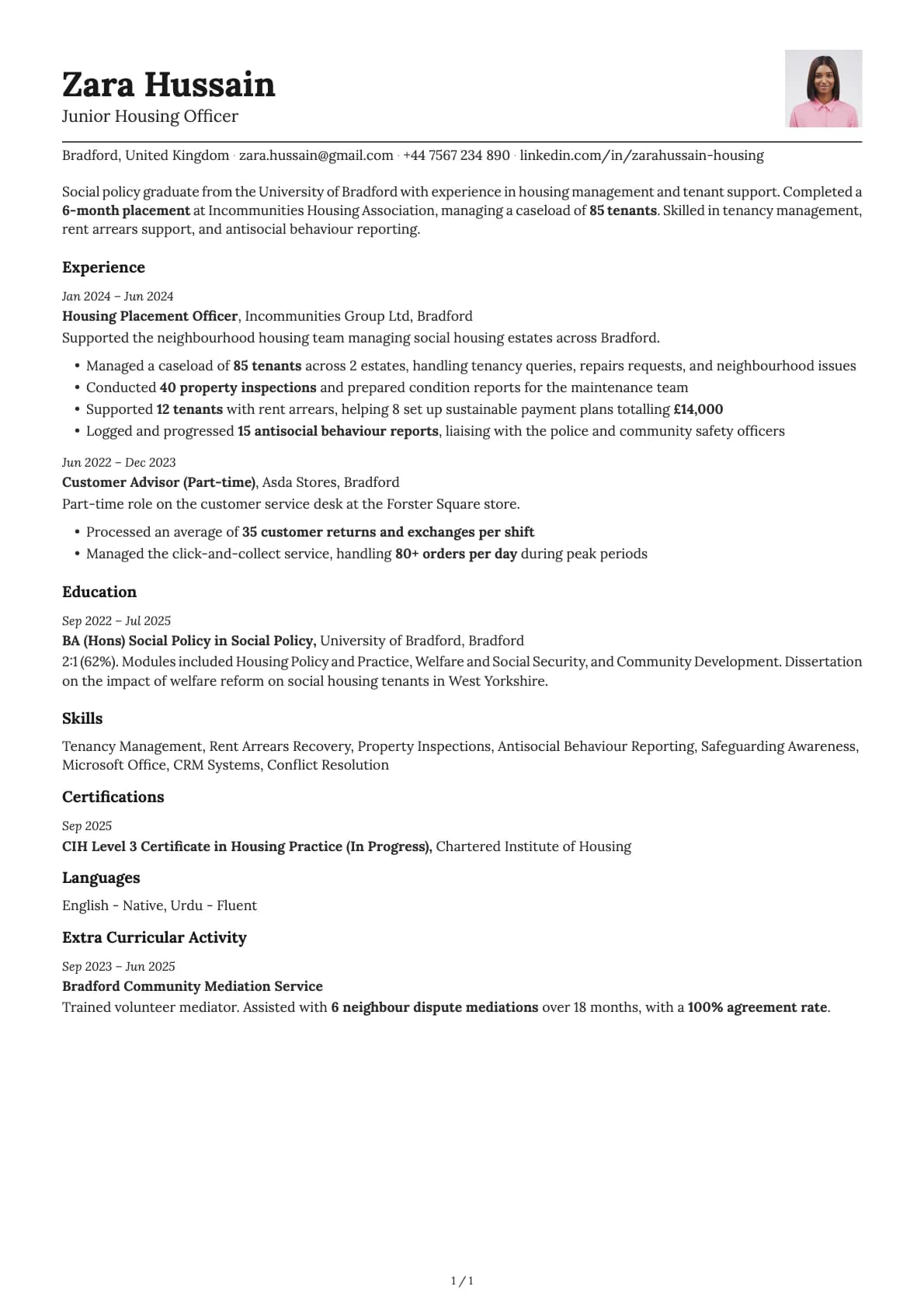
Junior Housing Officer
A junior housing officer resume example with housing association placement and tenant management experience.
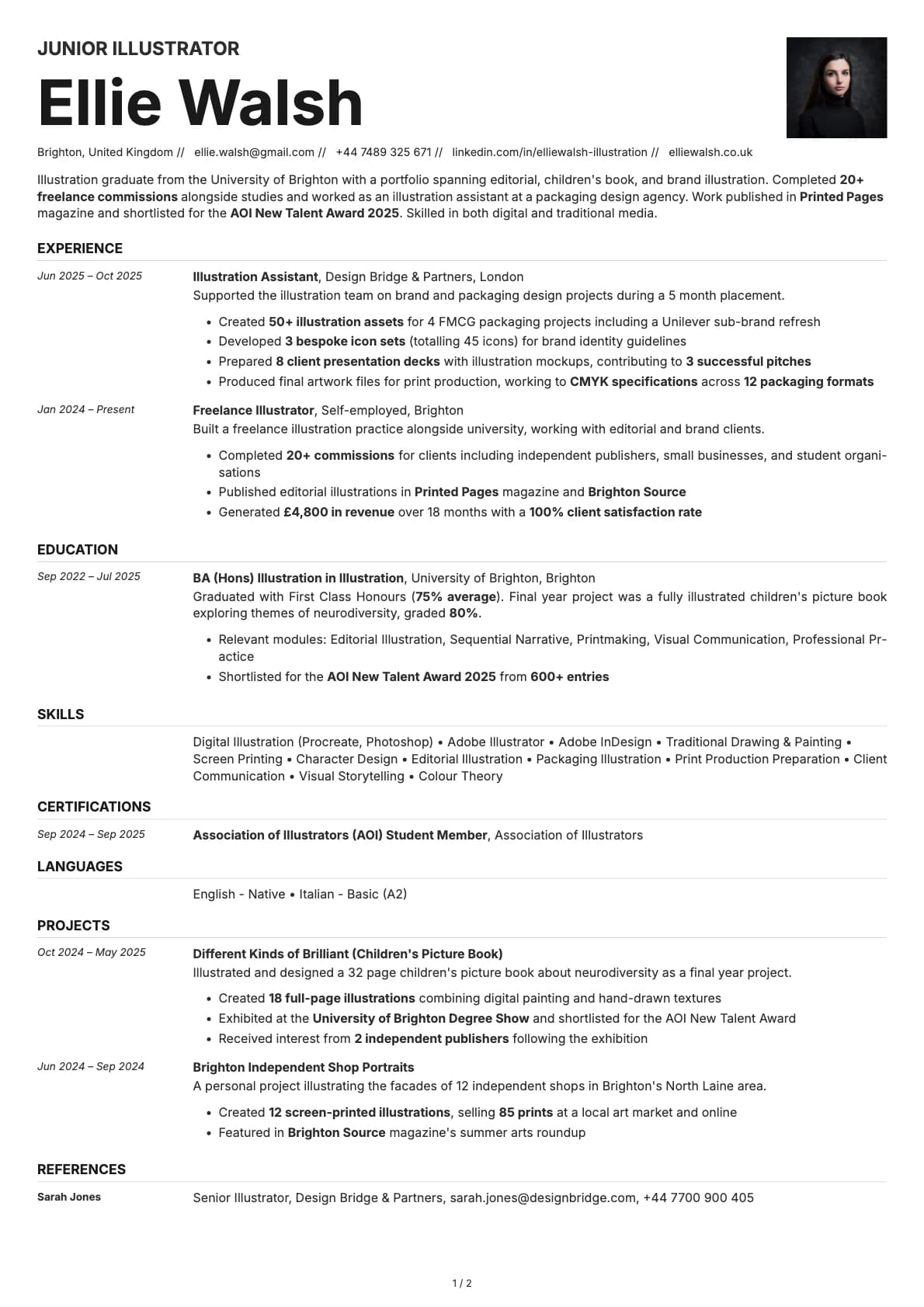
Junior Illustrator
A junior illustrator resume example for graduates. See how to present freelance commissions, agency experience, and published work to land your first illustration role.
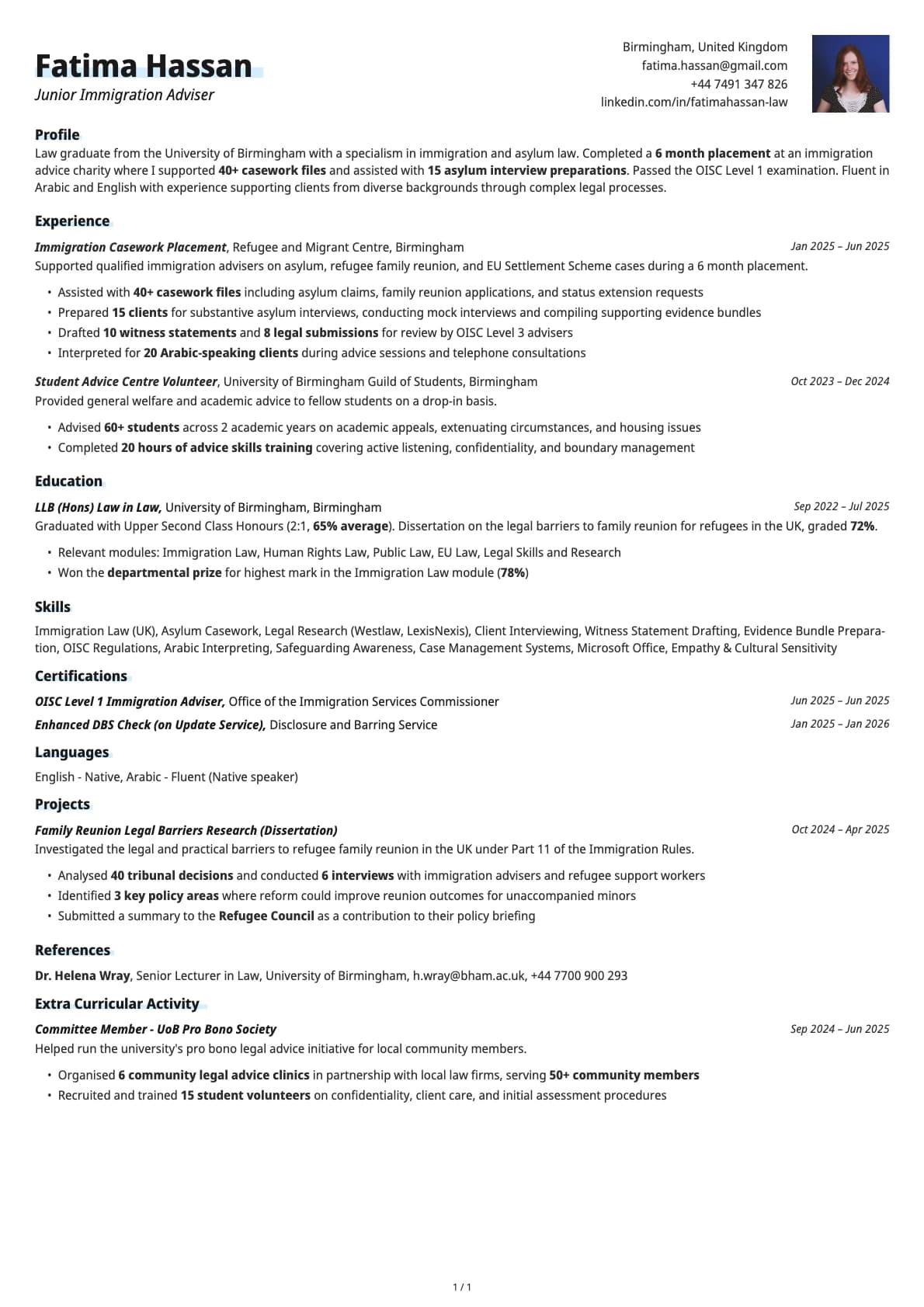
Junior Immigration Adviser
A junior immigration adviser resume example for law graduates. See how to present asylum casework, OISC qualification, and client support experience to land your first immigration advisory role.
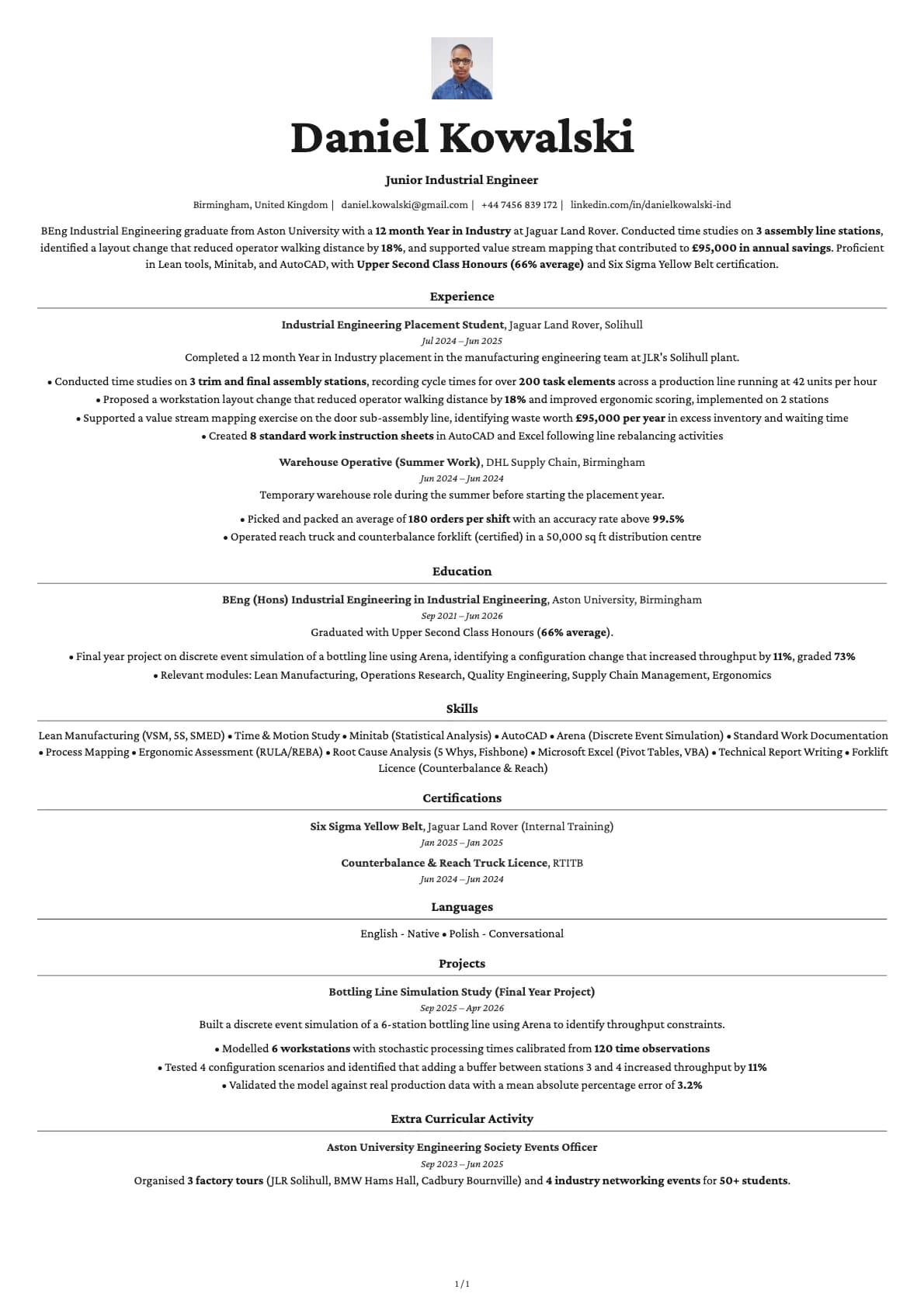
Junior Industrial Engineer
A junior industrial engineer resume example with lean manufacturing placement experience, time study skills, and Six Sigma Yellow Belt.
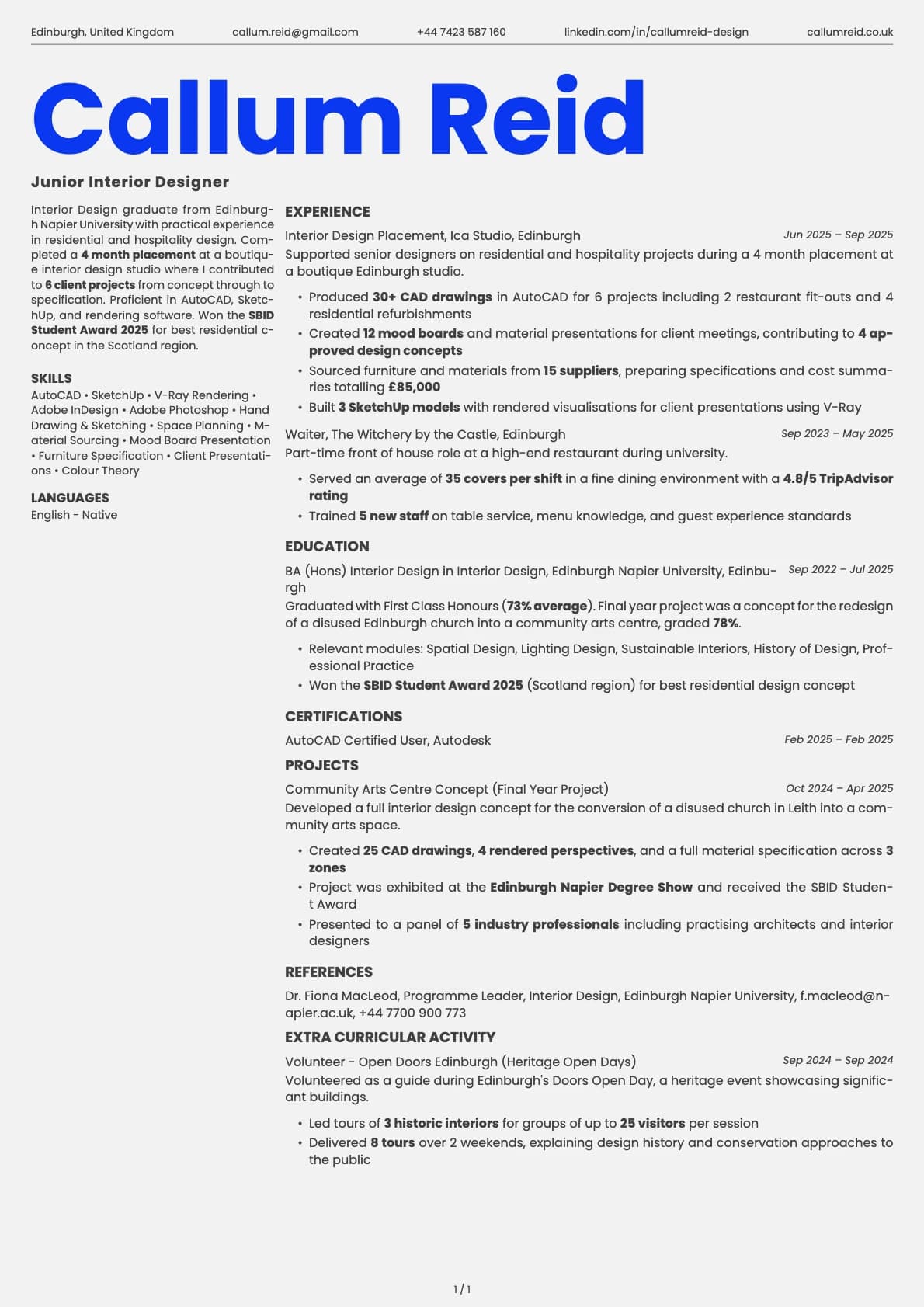
Junior Interior Designer
A junior interior designer resume example for graduates. Learn how to present studio placement experience, CAD skills, and design awards to land your first interior design role.
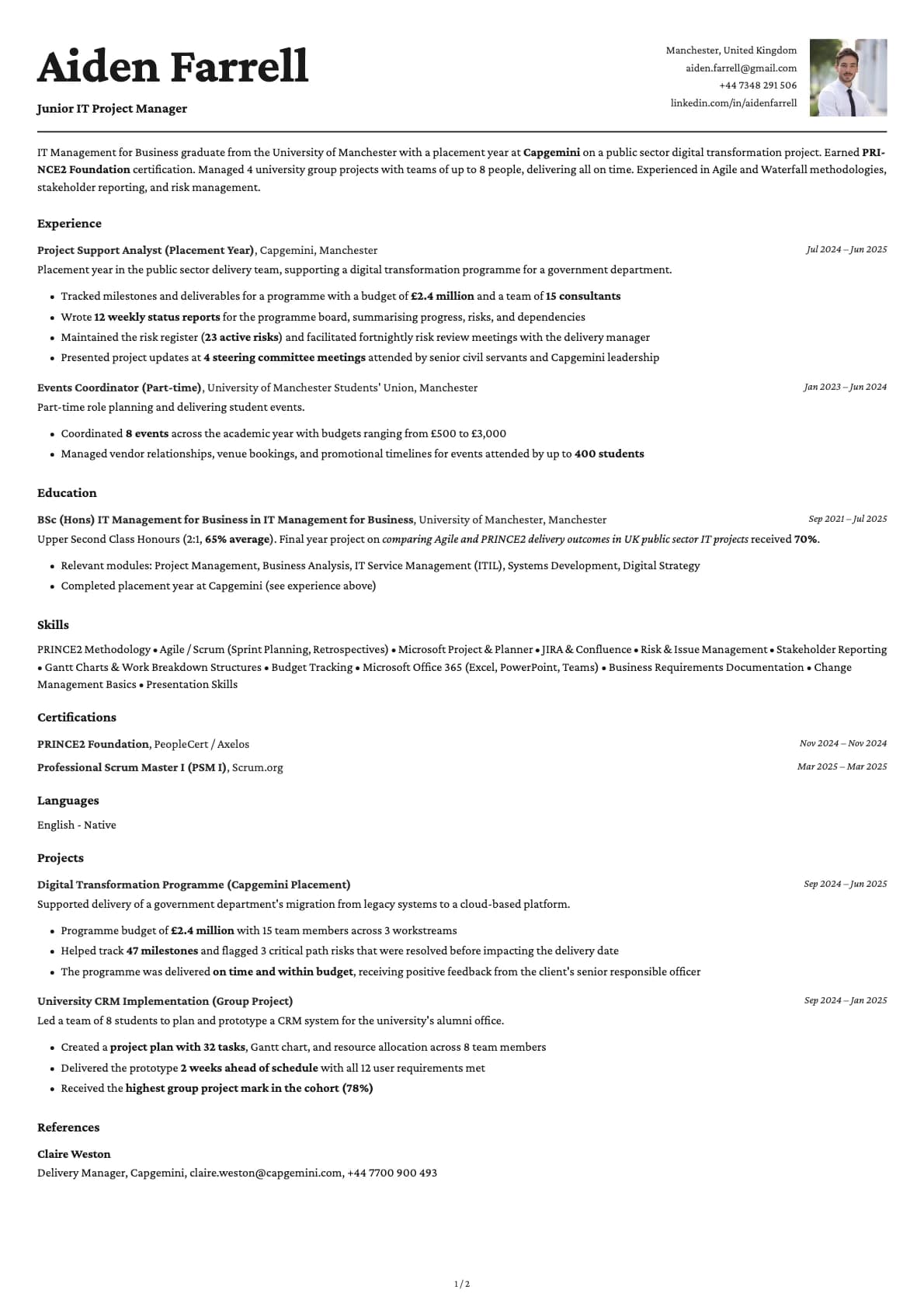
Junior IT Project Manager
A junior IT project manager resume example with agile delivery experience, stakeholder management, and PRINCE2 Foundation from an IT graduate entering project management.
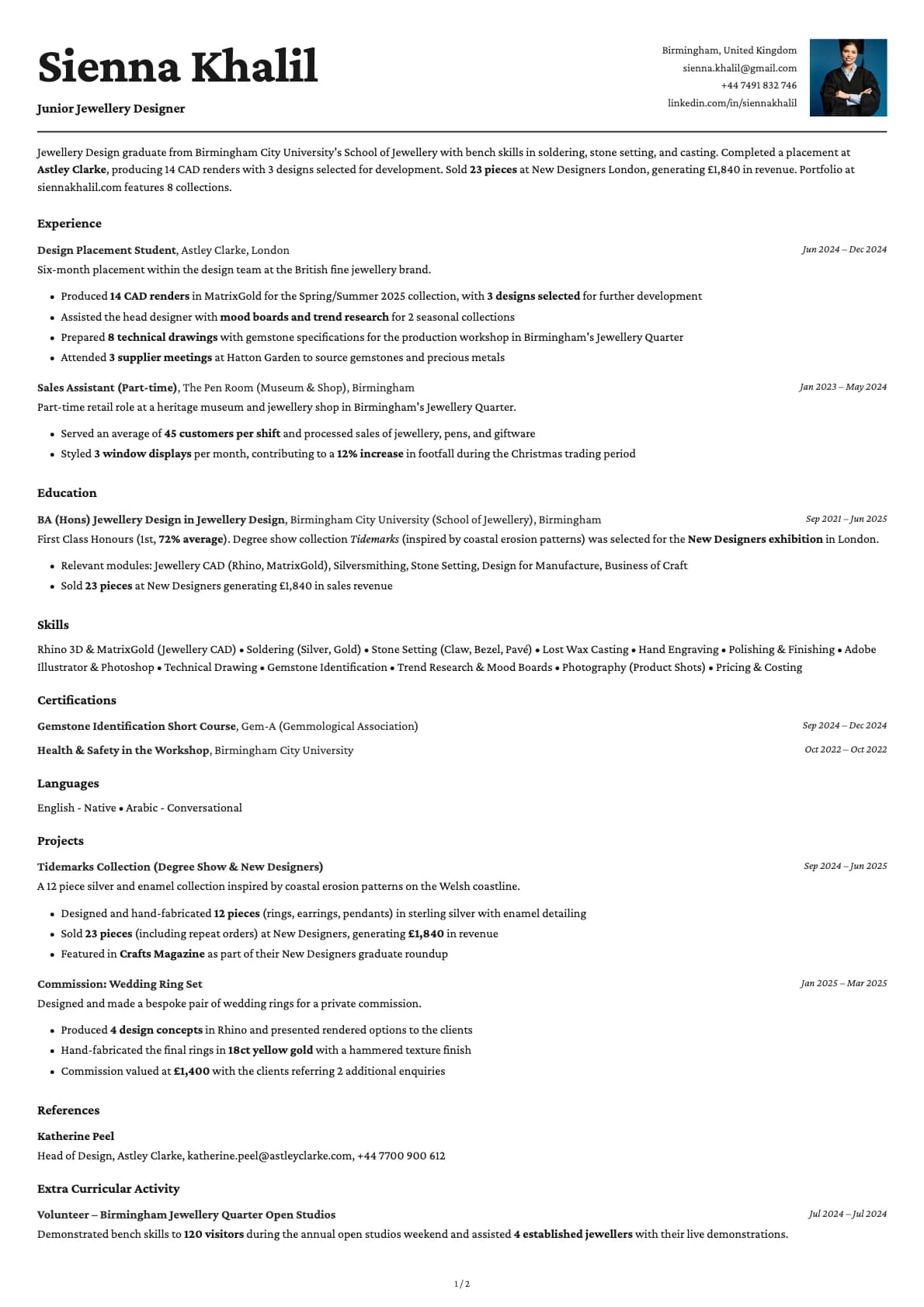
Junior Jewellery Designer
A junior jewellery designer resume example featuring CAD renders, bench skills, and collection launches from a Jewellery Design BA graduate entering the trade.
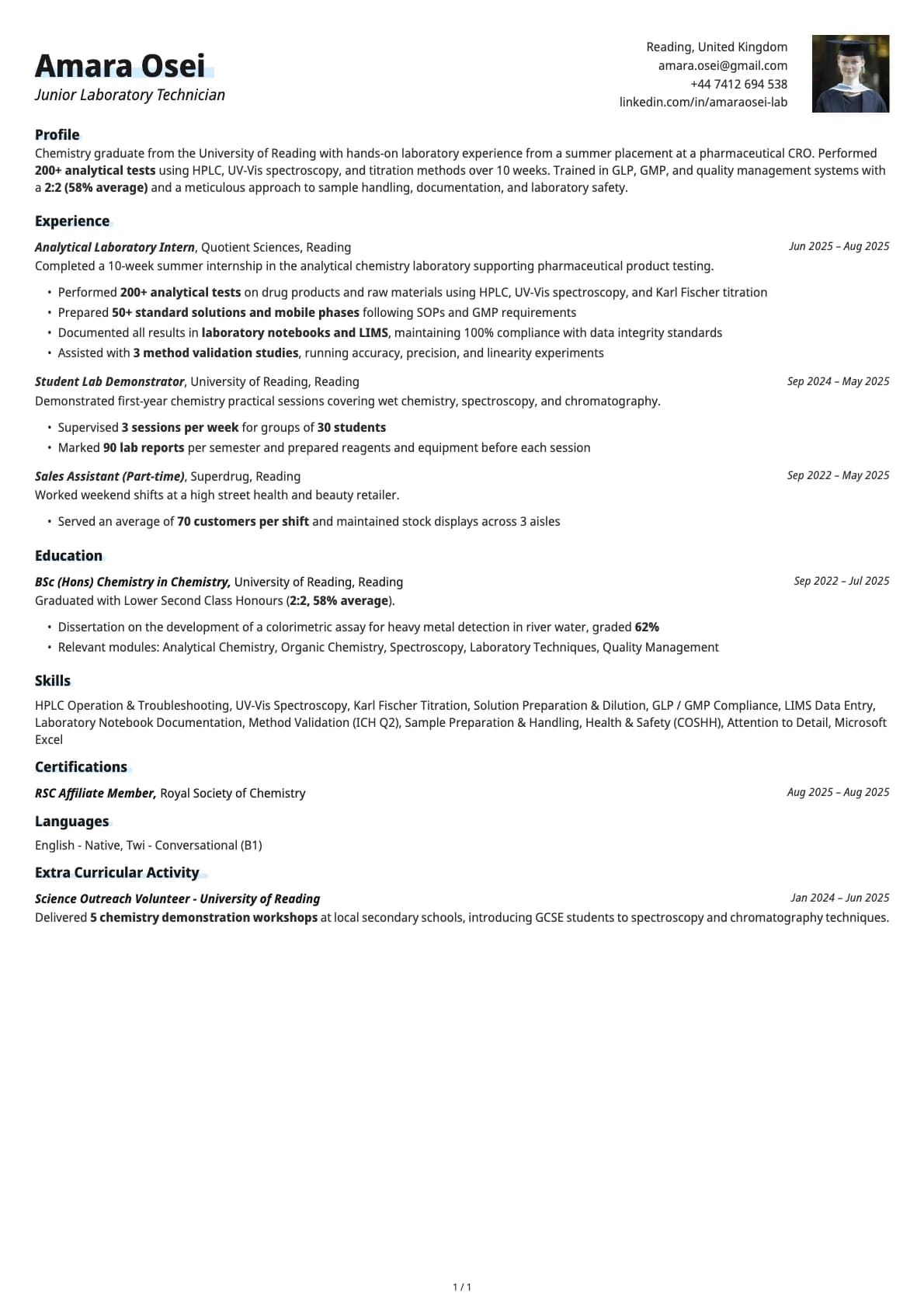
Junior Laboratory Technician
A junior lab technician resume example with pharmaceutical lab internship experience, HPLC skills, and GMP compliance for chemistry graduates.
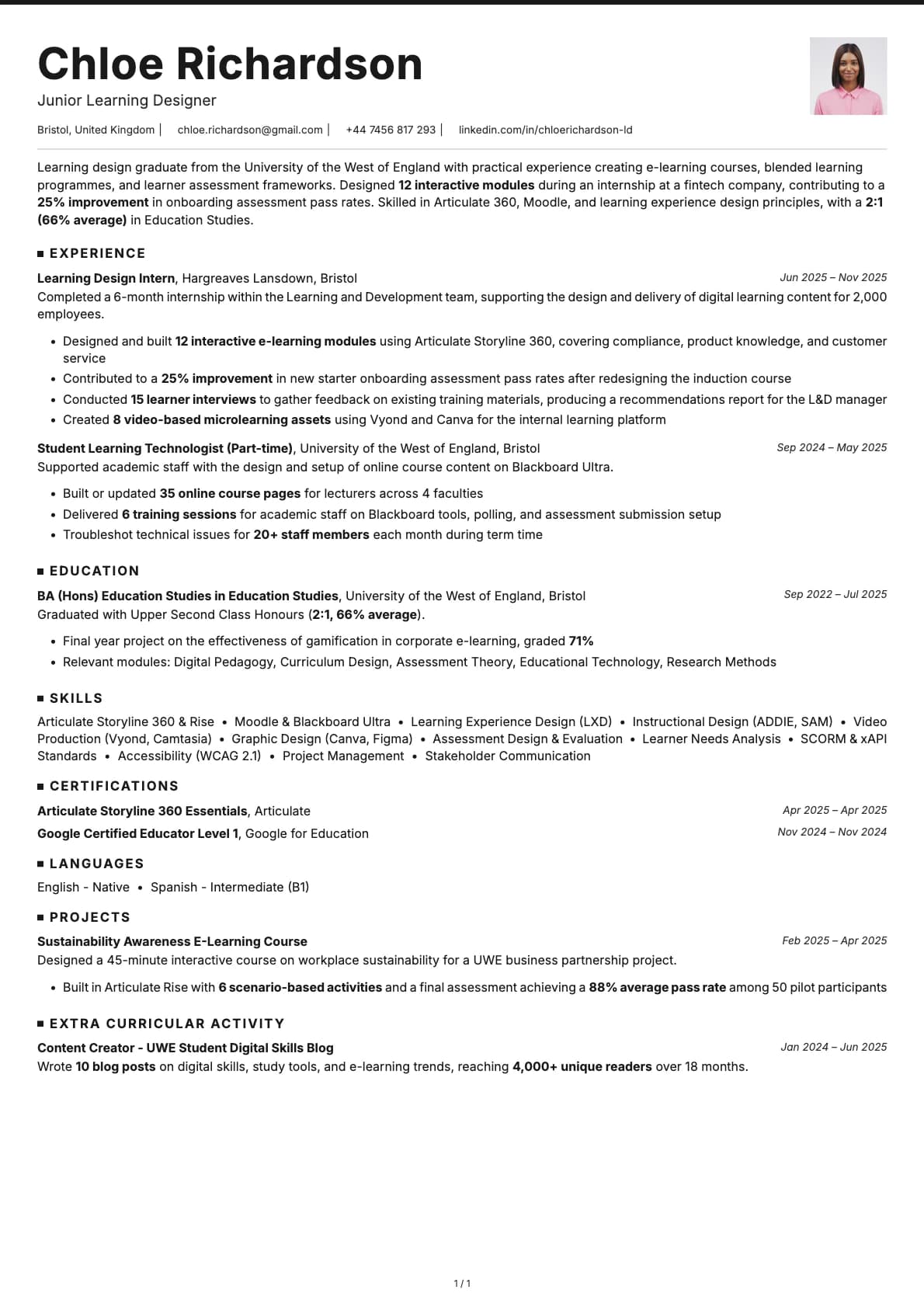
Junior Learning Designer
A junior learning designer resume example with e-learning module numbers, Articulate 360 skills, and corporate training experience for new graduates.
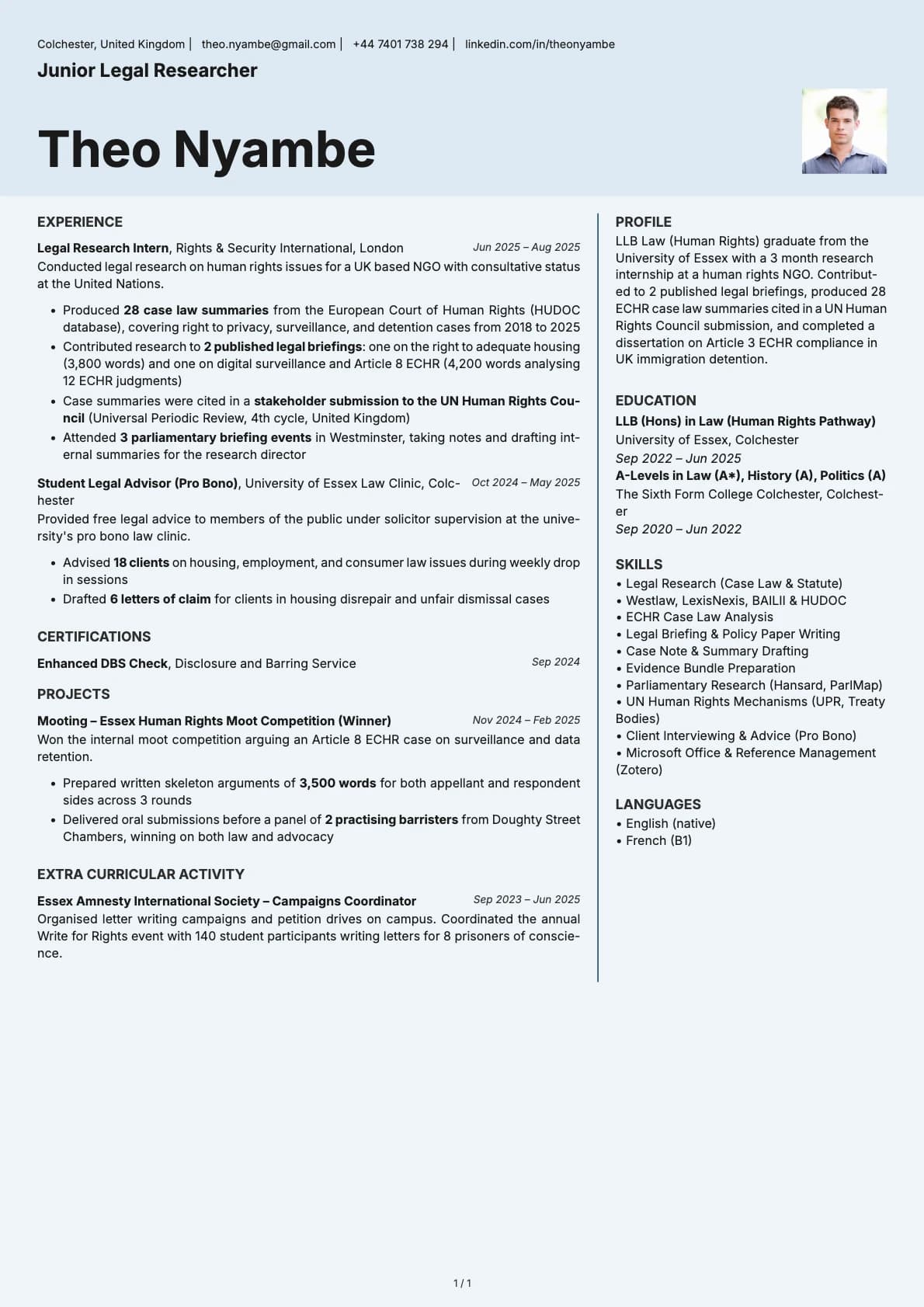
Junior Legal Researcher
A junior legal researcher resume example for human rights law LLB graduates. See how to present your legal research skills, case analysis experience, and advocacy work.
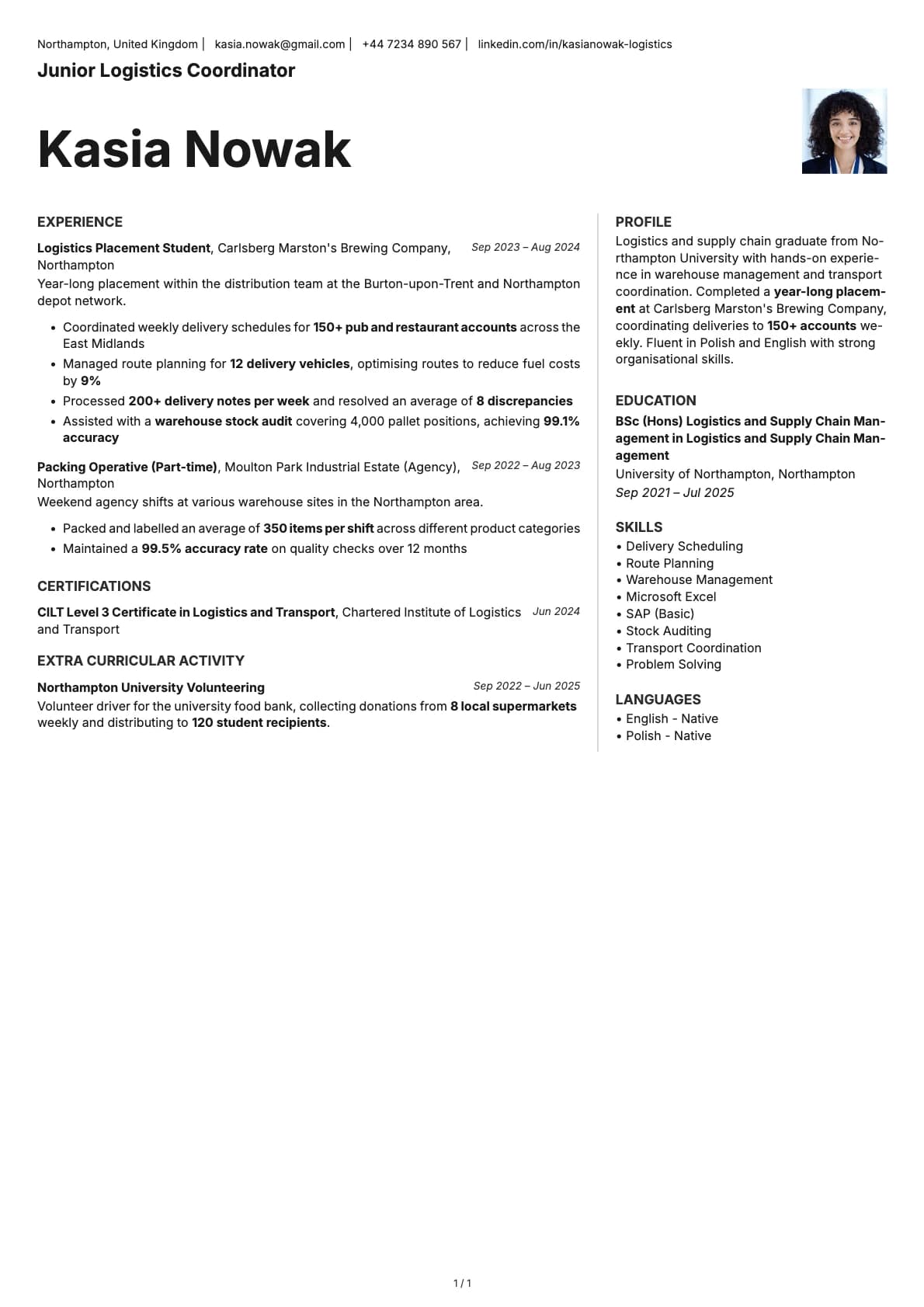
Junior Logistics Coordinator
A junior logistics coordinator resume example with brewery distribution placement and route planning experience.
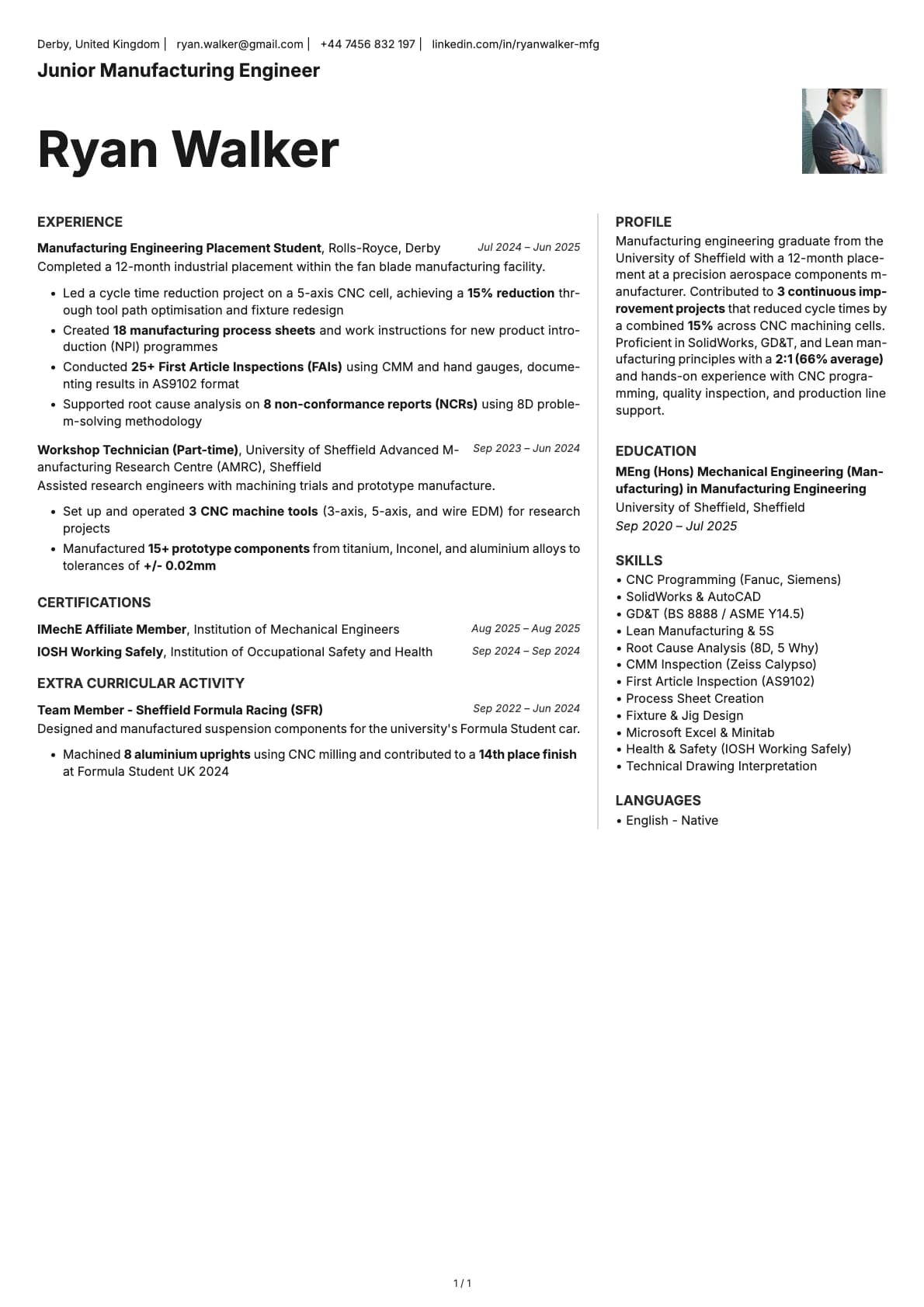
Junior Manufacturing Engineer
A junior manufacturing engineer resume example with aerospace placement experience, CNC skills, and cycle time reduction achievements.