Junior Carpenter Resume Example
A junior carpenter resume example for carpentry apprenticeship graduates. See how to present your City & Guilds, site joinery experience, and CSCS card details.

Laddro Team
Free to use. No account needed to start.
Free to use. No account needed to start.
Overview
Carpentry is one of the most in demand trades in UK construction, and junior carpenters with a City & Guilds or NVQ Level 2 can find work quickly. The problem is that most apprentice carpenters write resumes that say "completed apprenticeship" and leave it at that. Site managers want to know whether you can hang a door, fit a staircase, or set out stud partitions. They want numbers: how many doors, how many kitchens, how many metres of skirting. Your resume needs to read like a trade portfolio, not a school report.
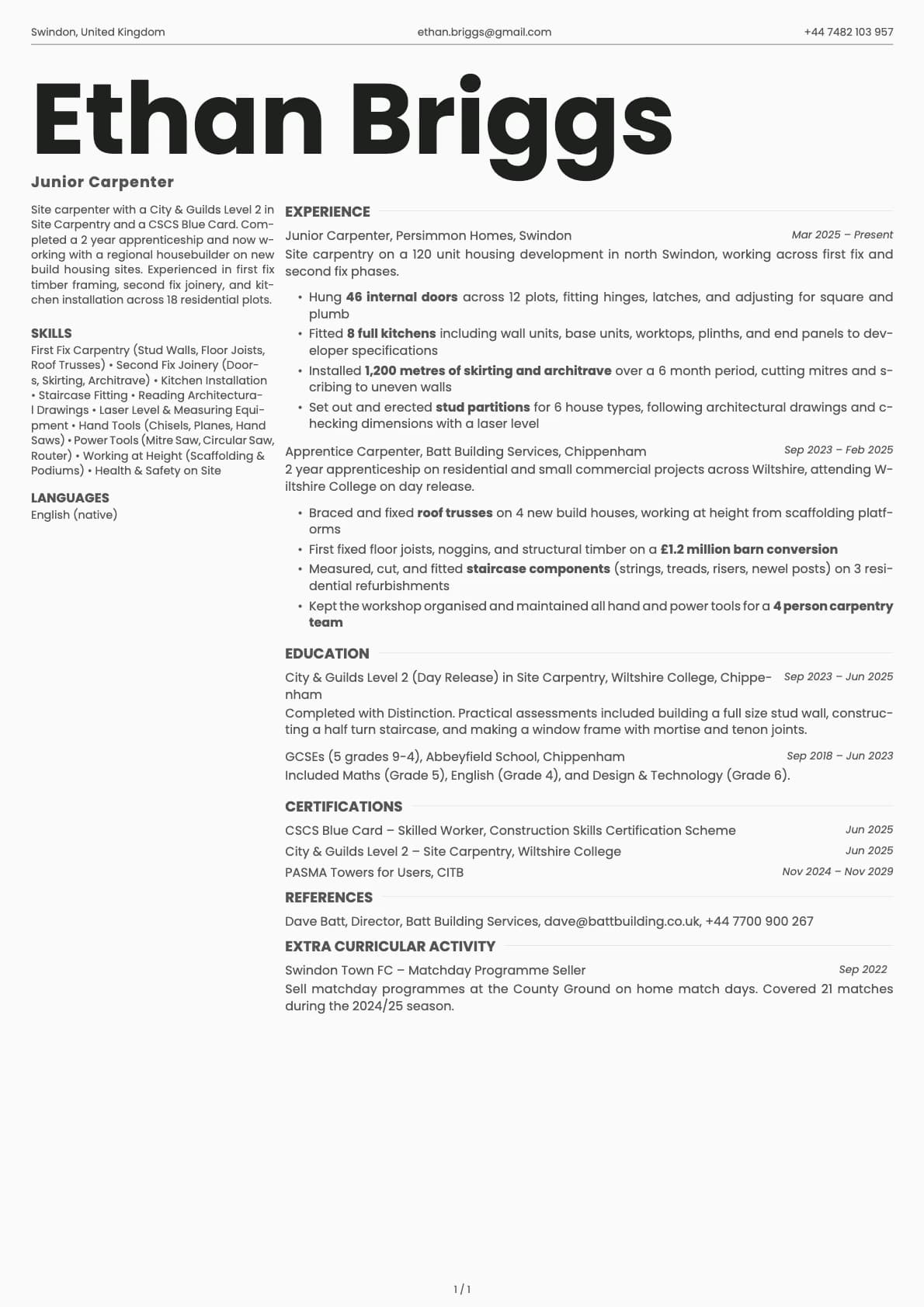
This resume belongs to Ethan Briggs, who completed a 2 year carpentry apprenticeship through Wiltshire College and is now working as a junior carpenter with a regional housebuilder. He holds a City & Guilds Level 2 in Site Carpentry, a CSCS Blue Card, and has worked on new build housing sites fitting first fix timber, second fix joinery, and kitchen installations.
What Makes This Resume Work
First fix and second fix are clearly separated. These are distinct skill sets in site carpentry. Ethan's resume describes his first fix work (stud partitions, floor joists, roof truss bracing) separately from his second fix work (door hanging, skirting, architrave, kitchen fitting). A site manager scanning this resume can immediately see which phase of the build Ethan can contribute to.
Installation counts are specific. 46 internal doors hung across 12 plots. 8 full kitchen installations including wall and base units, worktops, and end panels. 1,200 metres of skirting and architrave over a 6 month period. These numbers tell the employer both the volume and the pace of his work.
The CSCS Blue Card signals skilled worker status. A Blue Card requires an NVQ Level 2 and the CITB HS&E test. It tells employers that Ethan is a verified skilled worker, not a labourer helping out the chippies. This distinction matters for both site access and pay rates.
Workshop skills from college are included. His City & Guilds coursework included building a full size stud wall partition, constructing a half turn staircase, and making a window frame with mortise and tenon joints. These practical assessments show that his hand skills were tested in a controlled environment before he went on site.
Key Takeaways
Separate your first fix and second fix experience. They are different skill sets, and many site managers are looking specifically for one or the other depending on the phase of their project.
Count everything. Doors hung, kitchens fitted, metres of skirting, number of plots worked on. Carpentry is measured work, and your resume should reflect that.
Include your CSCS card colour and your City & Guilds level. These two details determine whether you are classified (and paid) as a labourer or a skilled tradesperson.
Build your own version
Open this layout in the builder and swap in your own details. It takes a few minutes.
Free to use. No account needed to start.
Was this resume example helpful?
Rate this example to help us create better content for you.
4.7 average from 103 ratingsRelated resume examples
Graduate Paramedic
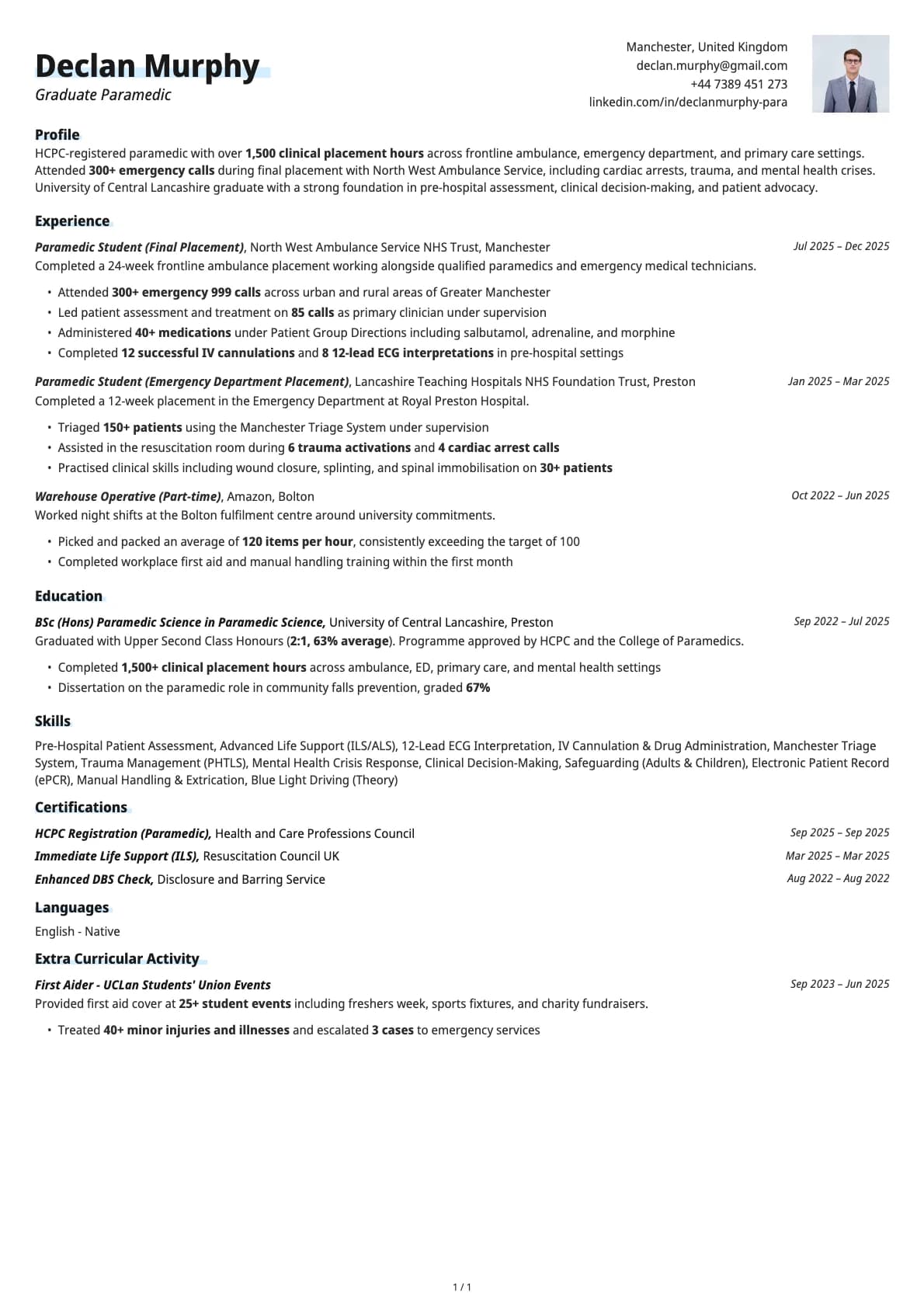
A graduate paramedic resume example with frontline placement hours, HCPC registration, and emergency call numbers for newly qualified paramedics.
Graduate Pension Administrator
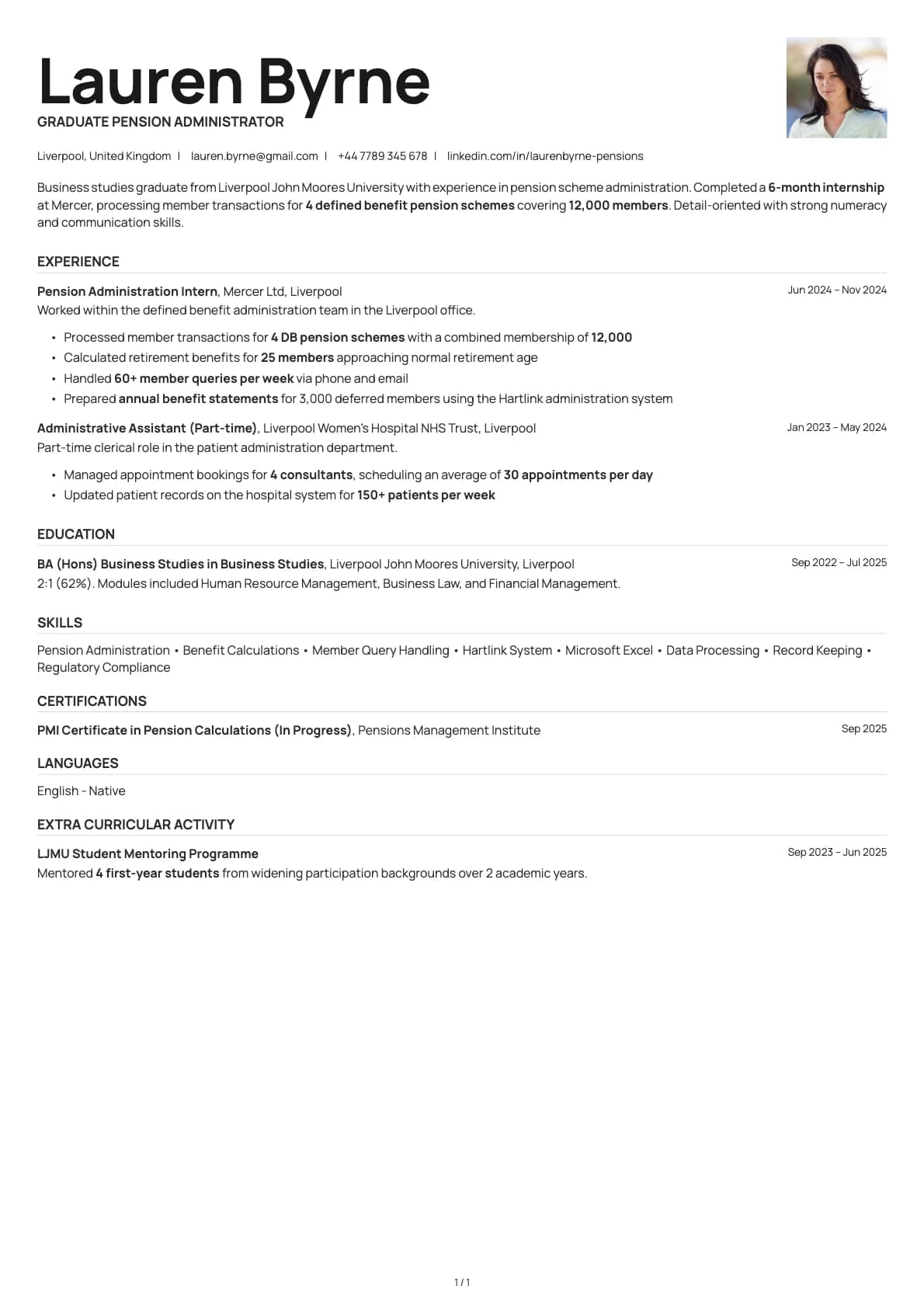
A graduate pension administrator resume example with Mercer internship and benefit calculation experience.
Graduate Planner
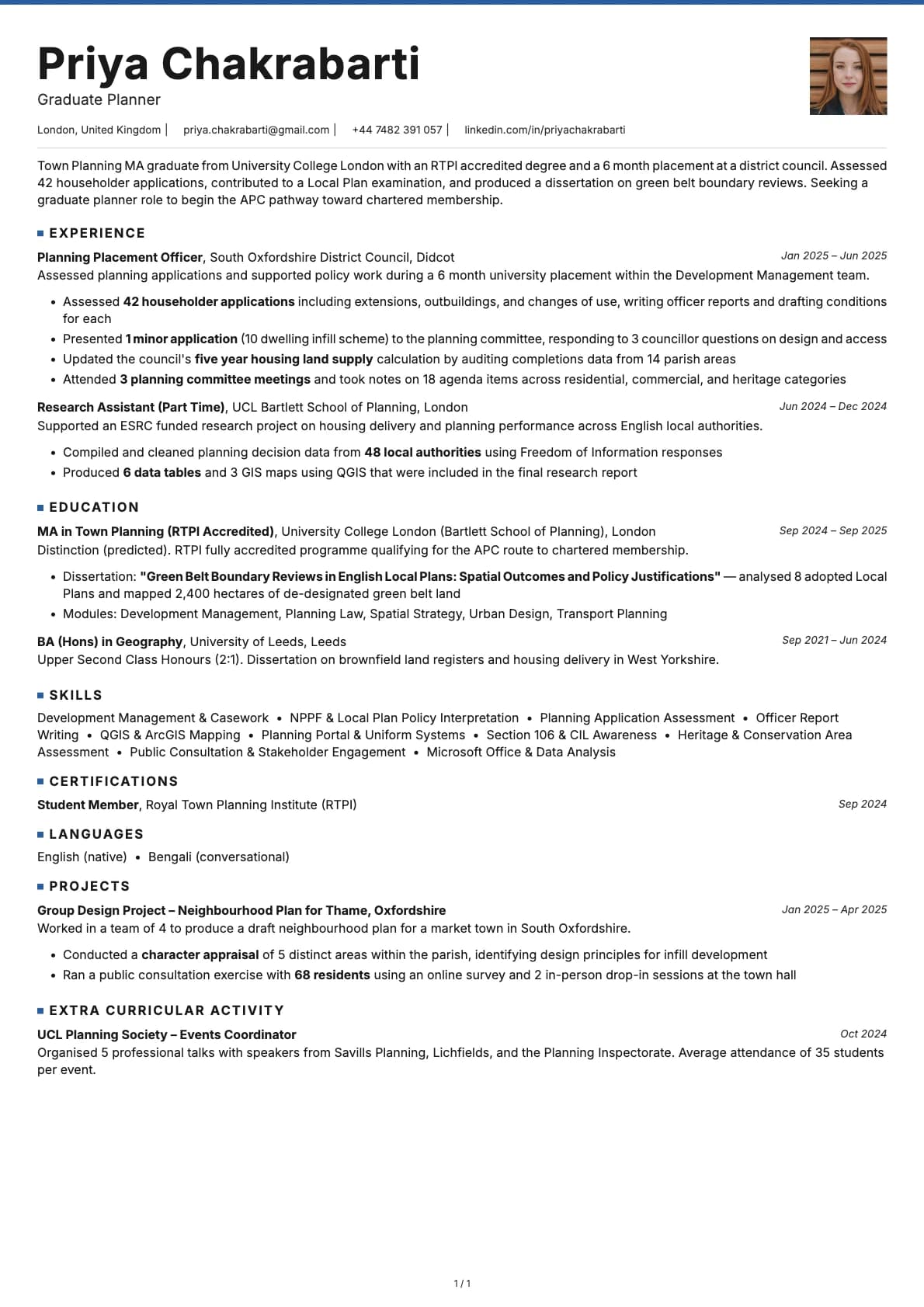
A graduate planner resume example for town planning MA graduates. See how to present your RTPI accredited degree, planning applications experience, and policy knowledge.
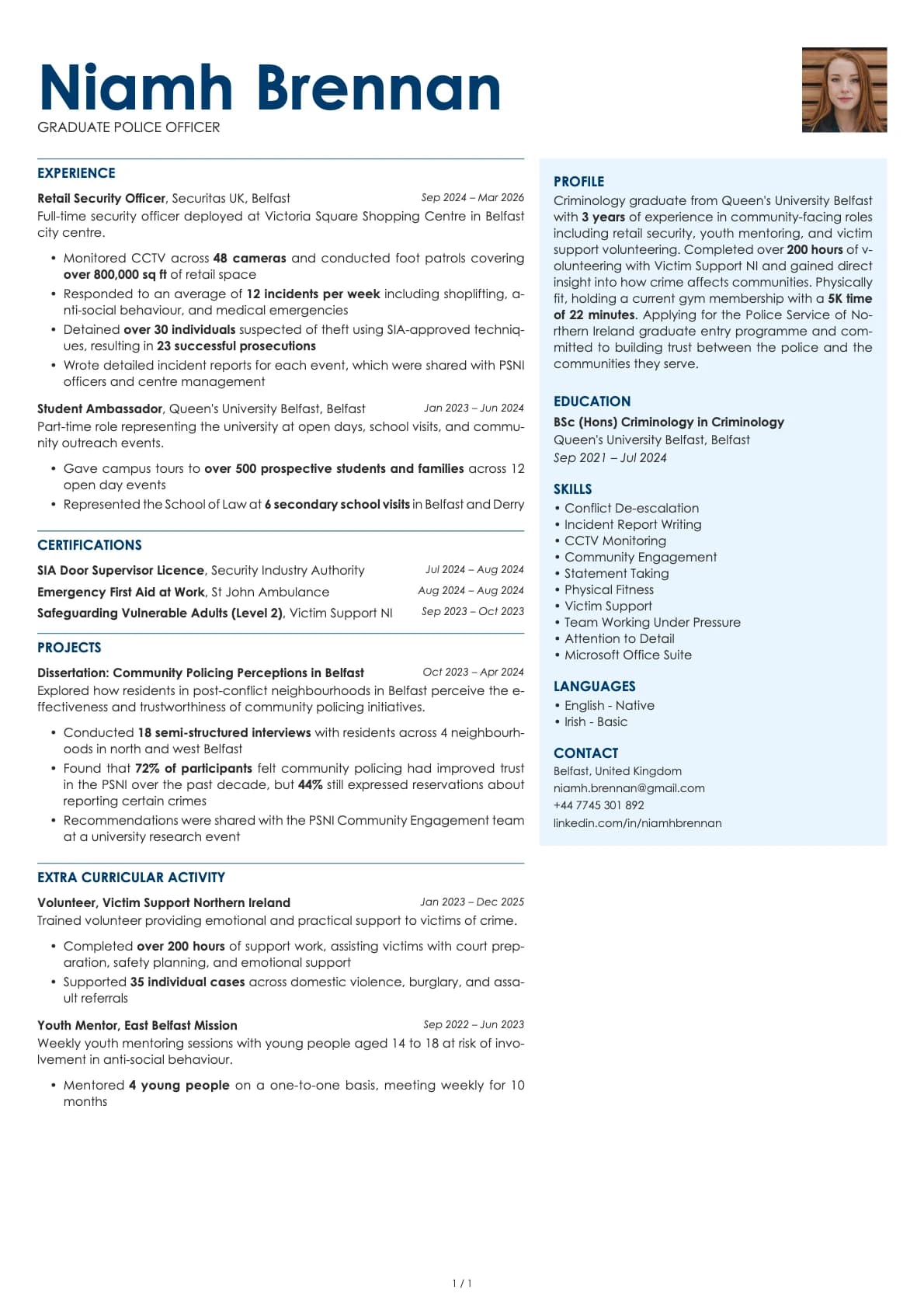
Graduate Police Officer
A graduate police officer resume example showing how to turn retail security, victim support volunteering, and a criminology degree into a strong PSNI application.
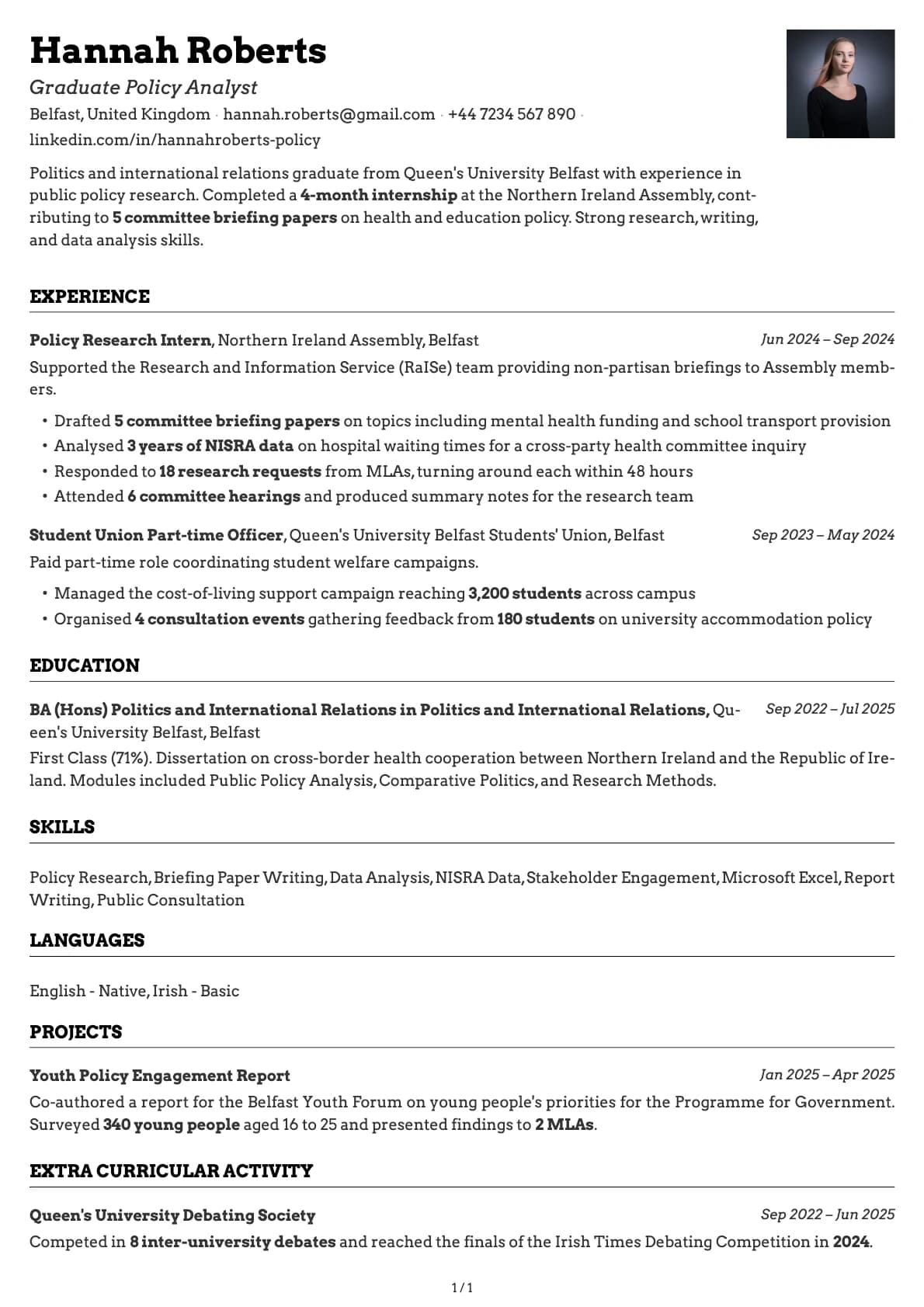
Graduate Policy Analyst
A graduate policy analyst resume example with Northern Ireland Assembly internship and public policy research experience.
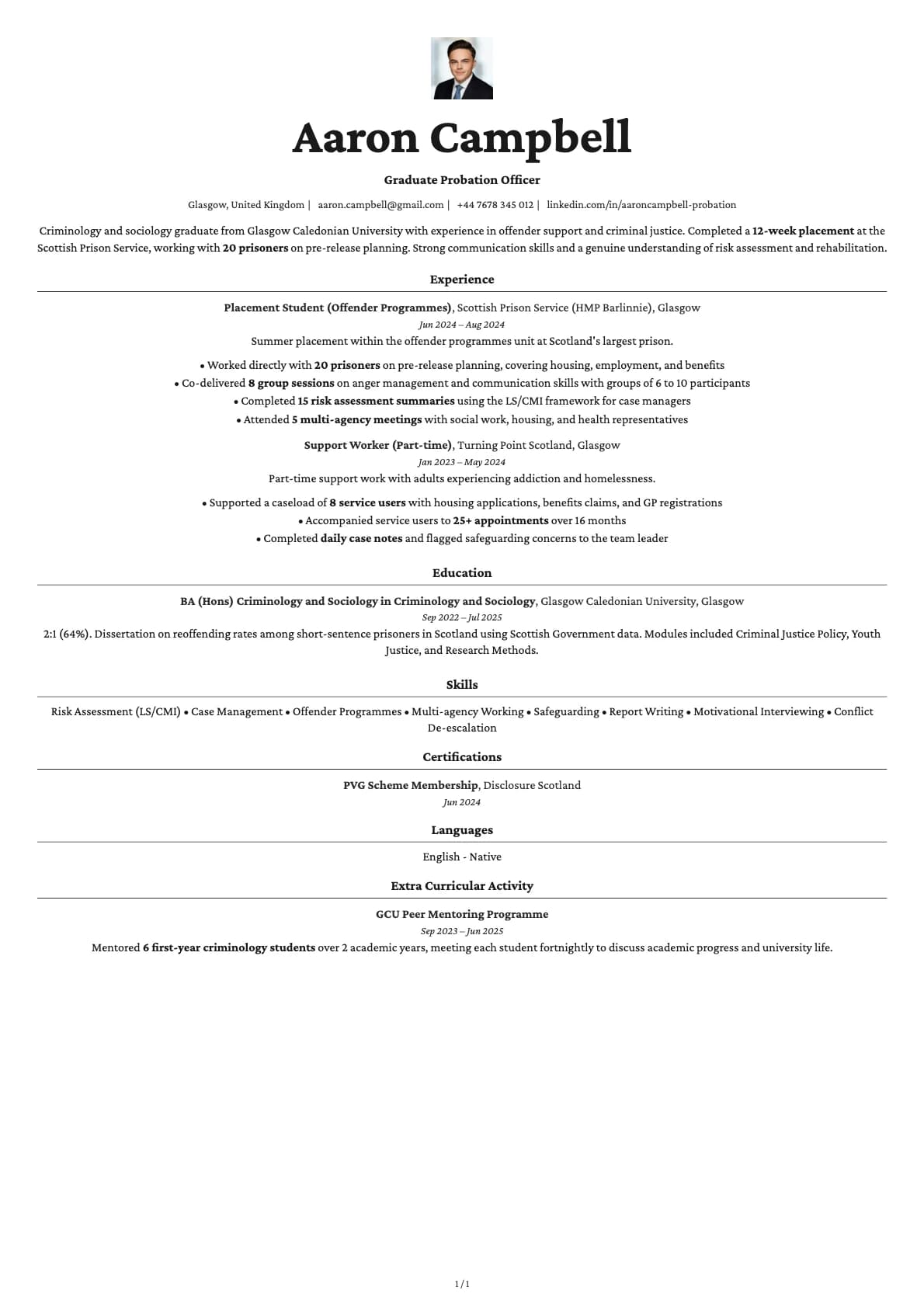
Graduate Probation Officer
A graduate probation officer resume example with prison placement experience and risk assessment skills.
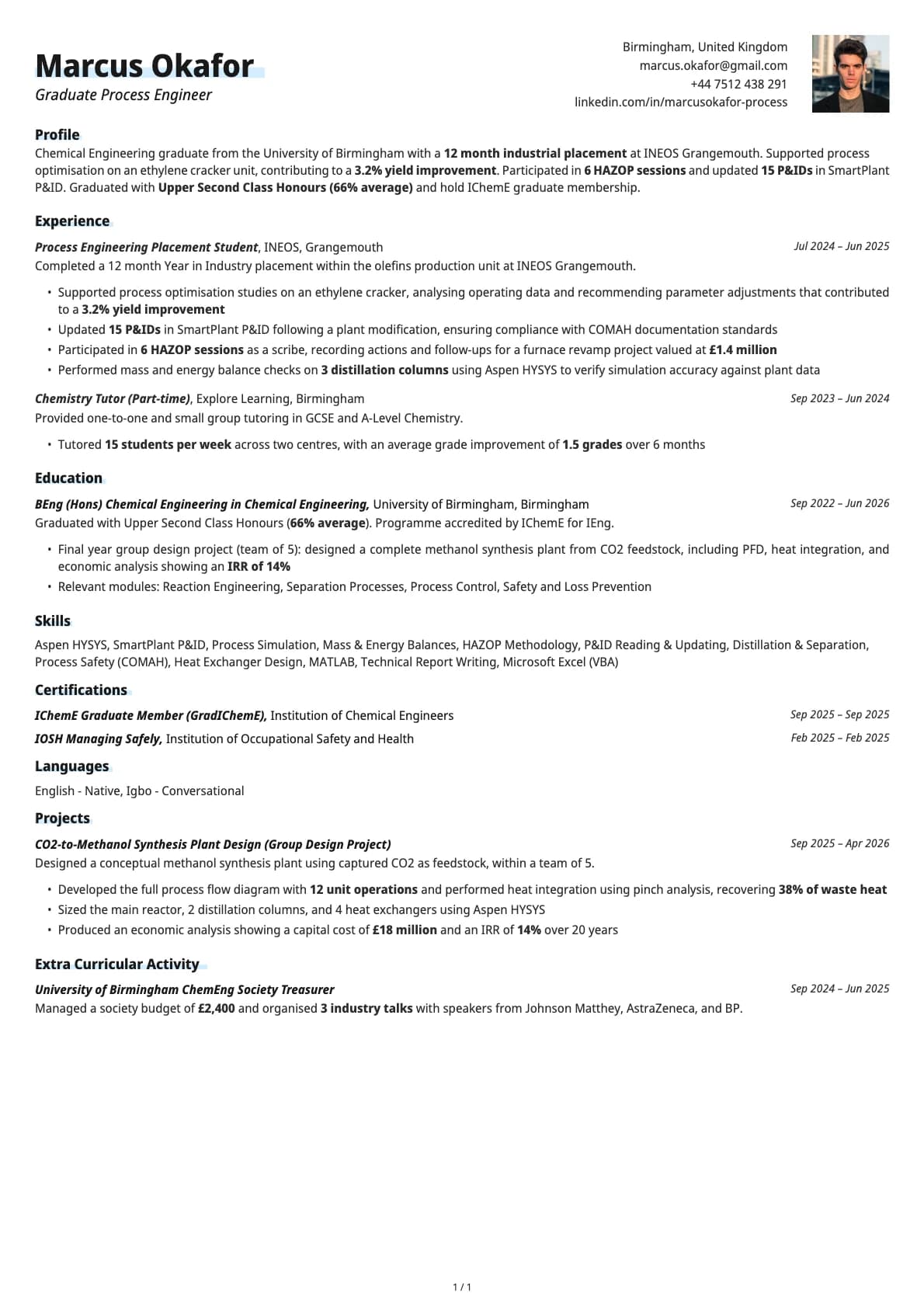
Graduate Process Engineer
A graduate process engineer resume example with chemical plant placement experience, HAZOP participation, and IChemE membership.
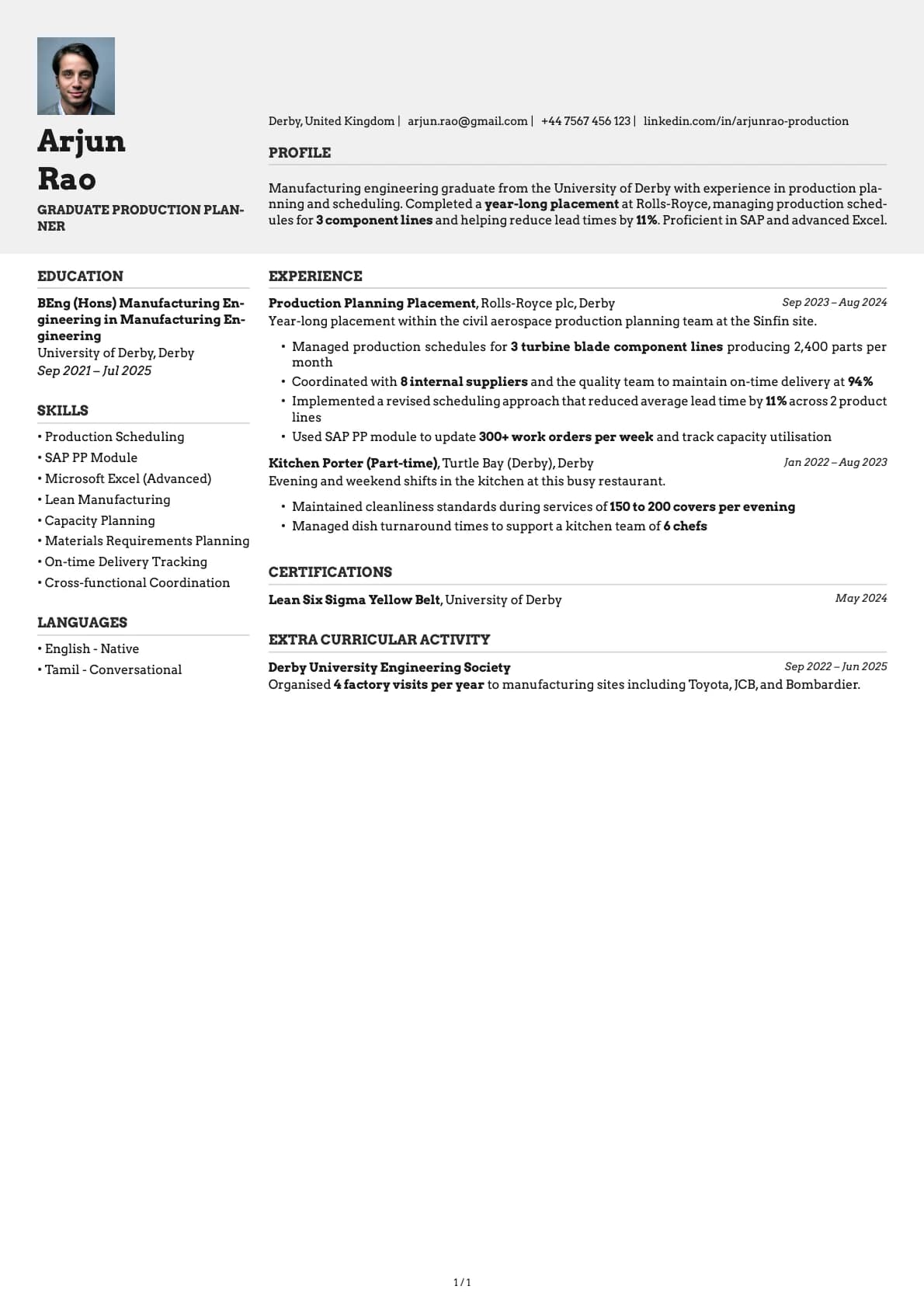
Graduate Production Planner
A graduate production planner resume example with Rolls-Royce placement and SAP scheduling experience.
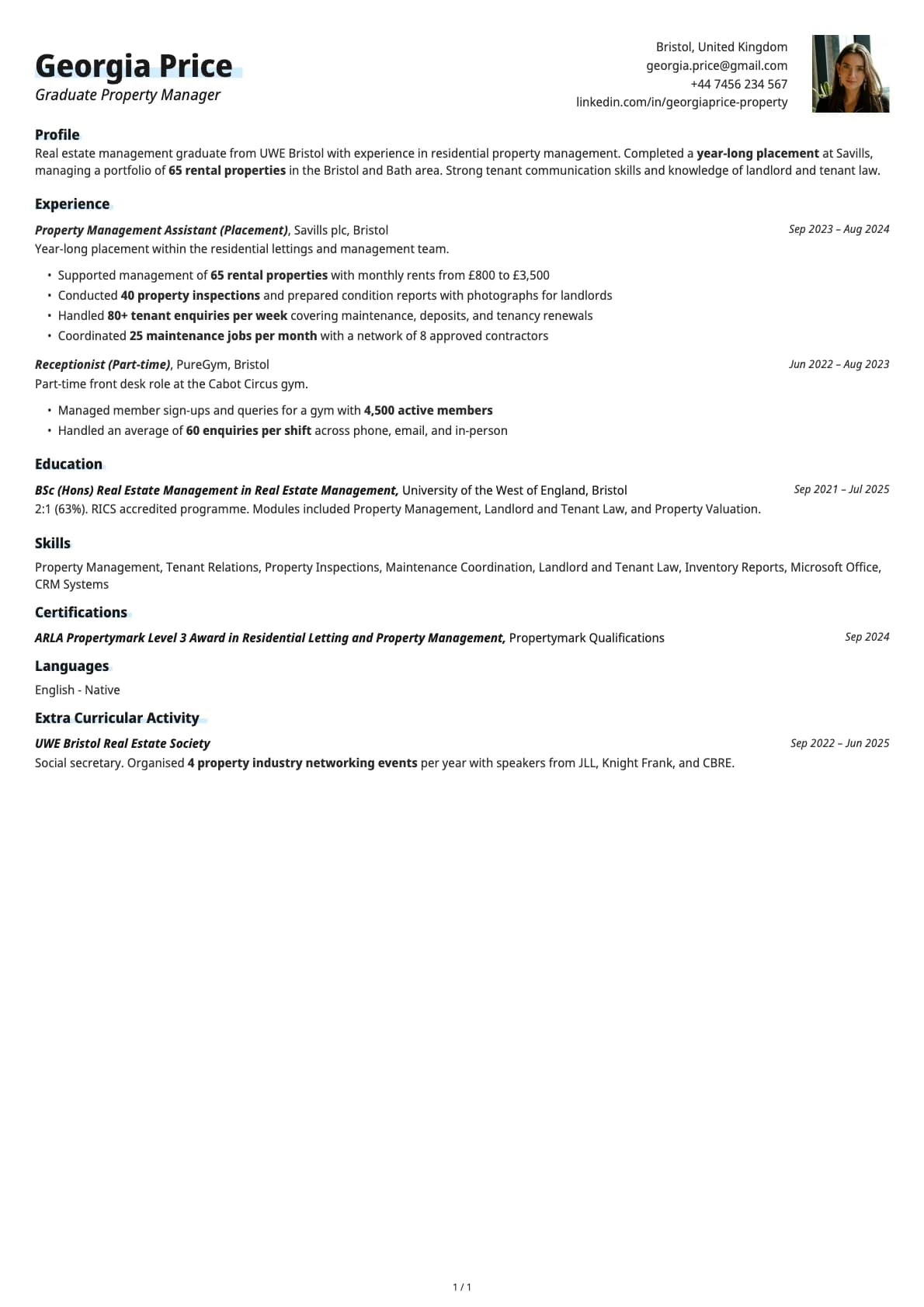
Graduate Property Manager
A graduate property manager resume example with Savills placement and residential lettings experience.

Graduate Quantity Surveyor
A graduate quantity surveyor resume example with a construction placement year. See how to present valuations, measurement skills, and NEC contract experience.
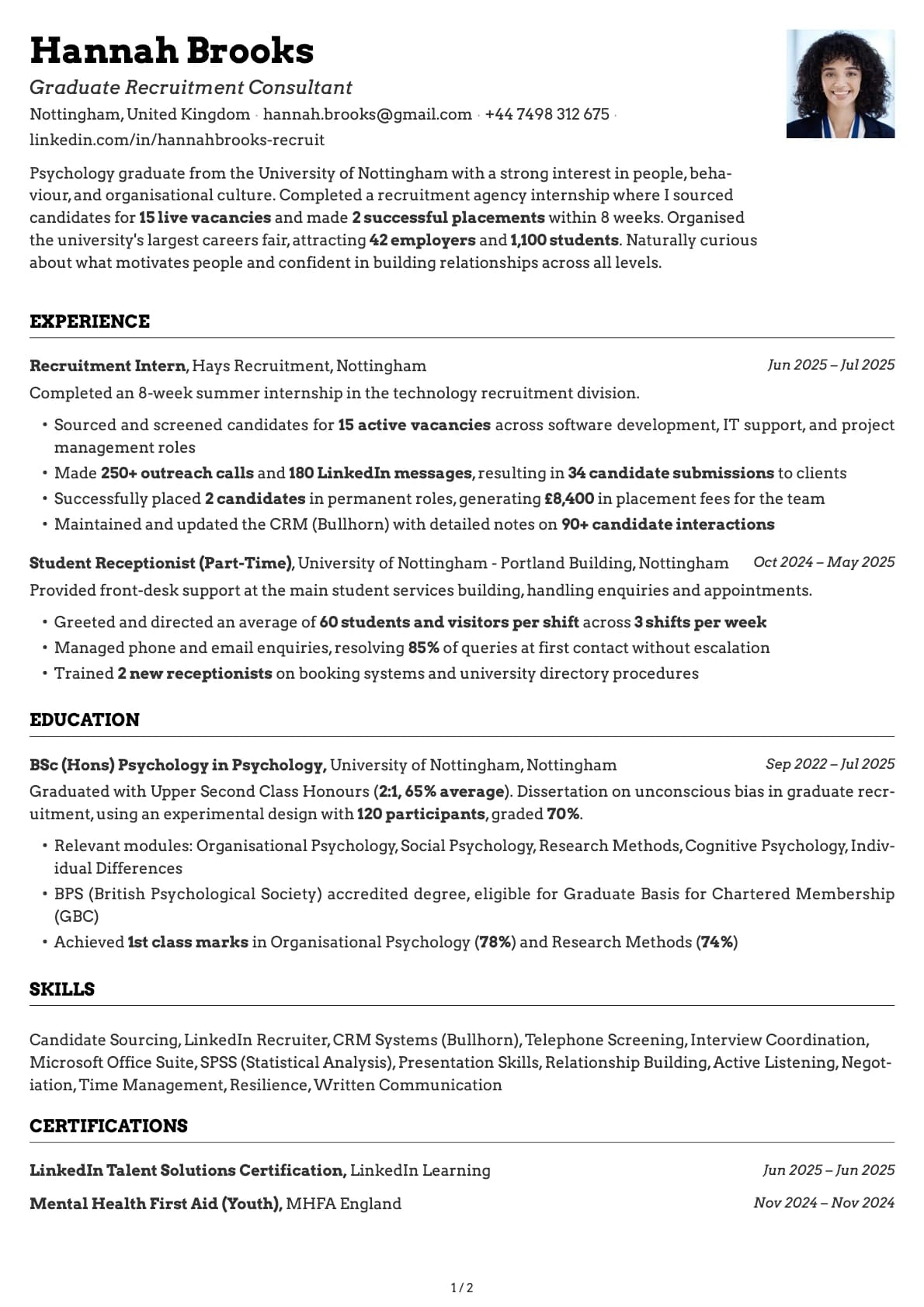
Graduate Recruitment Consultant
A graduate recruitment consultant resume example for recent graduates. Learn how to present your communication skills, sales experience, and people skills for recruitment roles.
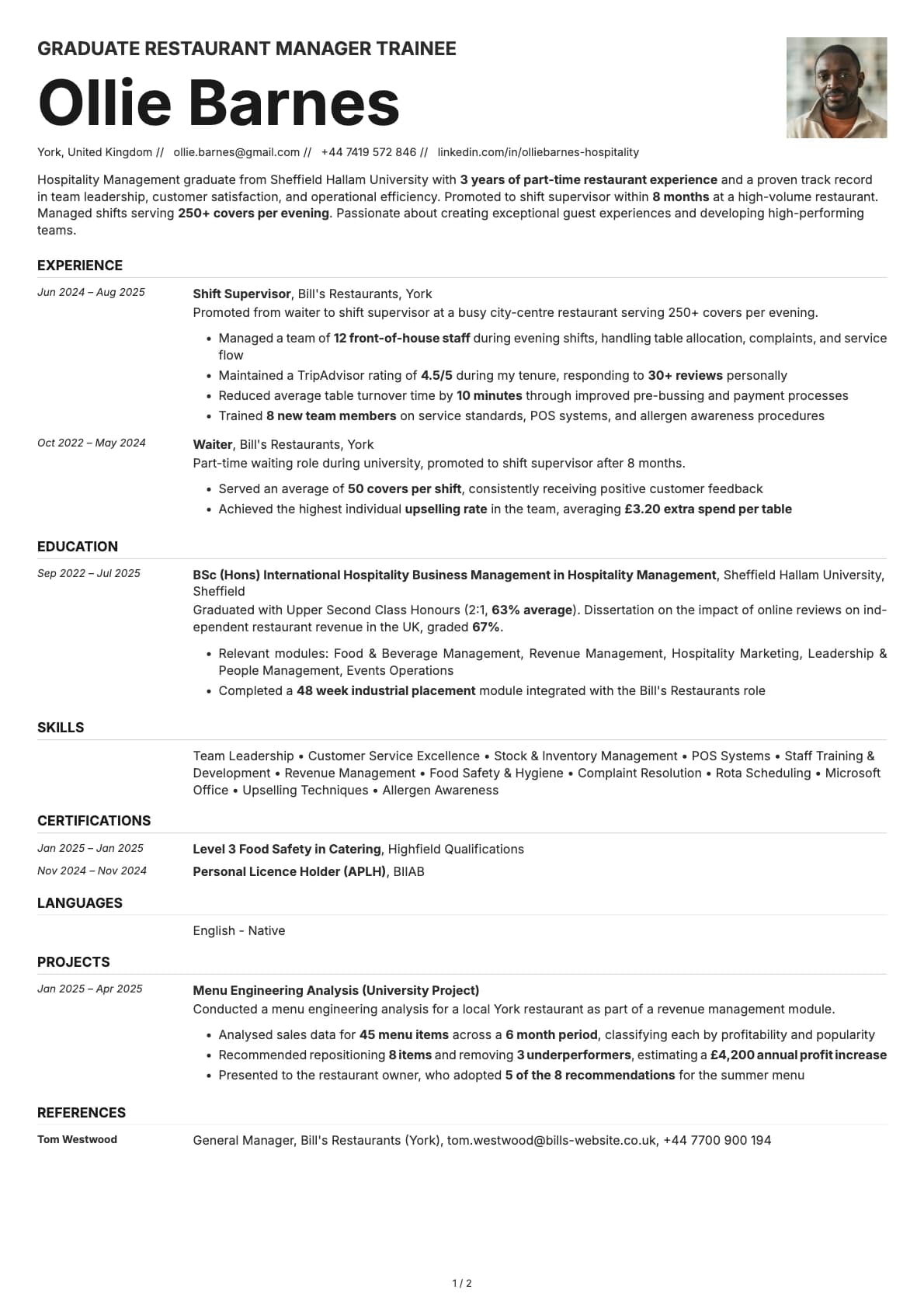
Graduate Restaurant Manager Trainee
A graduate restaurant manager trainee resume example. See how to present shift leadership, customer satisfaction, and hospitality qualifications to land your first management trainee role.