Junior Social Media Manager Resume Example
A junior social media manager resume example for recent graduates. Learn how to present your content creation skills, analytics knowledge, and platform growth to get hired.

Laddro Team
Free to use. No account needed to start.
Free to use. No account needed to start.
Overview
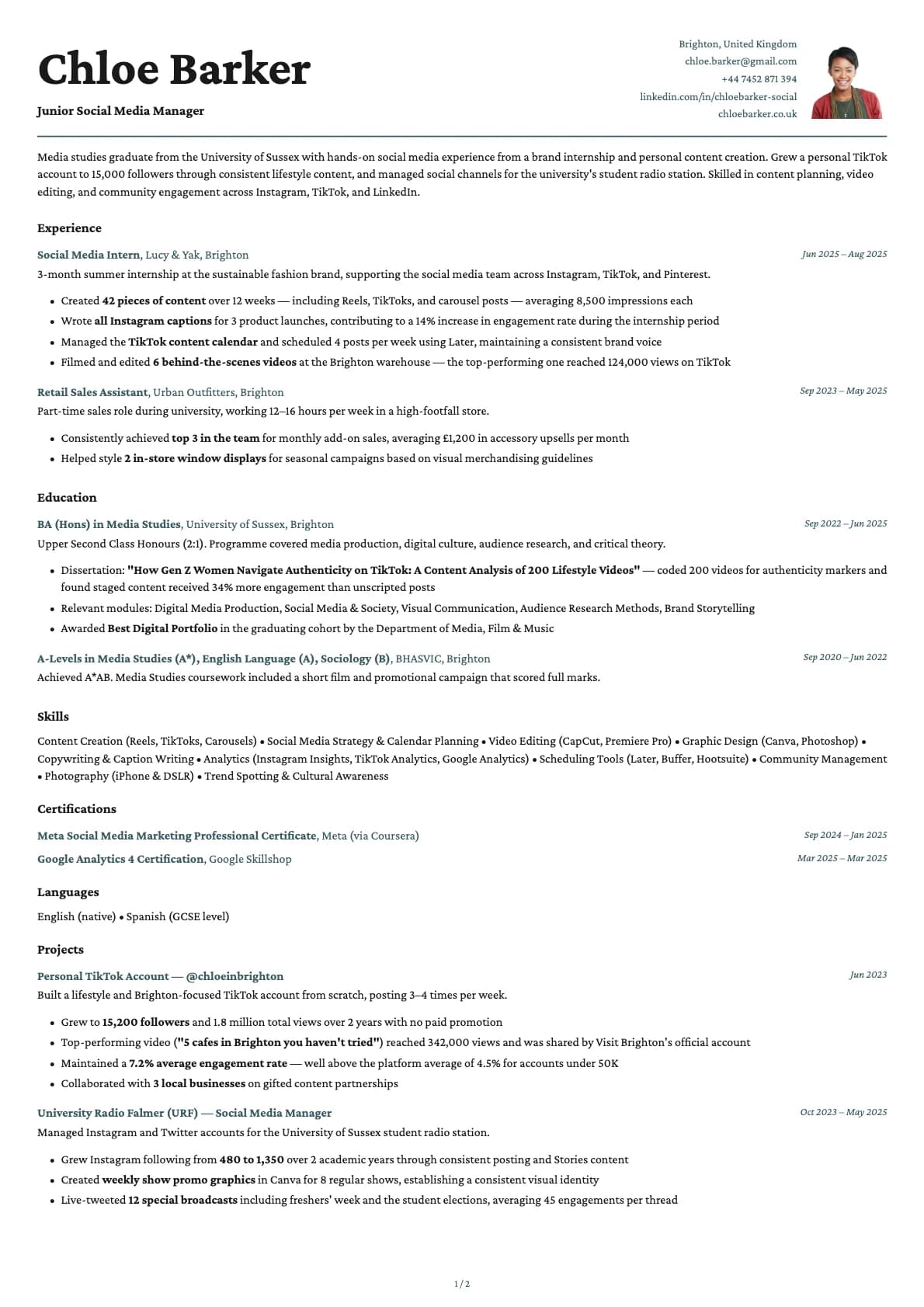
Everyone uses social media, but very few graduates can show they know how to use it professionally. Hiring managers for junior social media roles want to see platform growth, content performance metrics, and evidence that you understand the difference between posting for fun and posting for results. "Social media savvy" on a resume means nothing without the numbers to back it up.
This resume belongs to Zara Malik, a media and communications graduate from the University of Westminster. She managed social accounts for a student charity, completed an internship at a lifestyle brand, and grew a personal content account to over 5,000 followers. Her resume works because every claim is tied to a metric.
What Makes This Resume Work
Platform growth is documented clearly. Zara grew the student charity's Instagram following from 800 to 2,600 over one academic year, posting three to four times per week. She achieved an average engagement rate of 5.1%, which is well above the industry average for accounts of that size. She also launched a TikTok account for the charity that gained 1,200 followers in its first three months. Growth figures like these are exactly what employers want to see.
The internship shows professional content production. During her three month placement, she created 60+ pieces of content across Instagram, TikTok, and Pinterest. She scheduled posts using Later, tracked performance in Meta Business Suite, and prepared a monthly analytics report for the marketing director. One of her Reels reached 45,000 views, the brand's best performing piece that quarter. That is a tangible result any employer can appreciate.
A personal account demonstrates initiative. Zara runs a personal fashion and lifestyle account with 5,200 followers. She includes this on her resume because it shows she practices social media strategy on her own time, not just when someone pays her to. She mentions her average Reel views, her posting schedule, and her most successful content themes. Hiring managers respect candidates who treat the skill as a craft.
Tools and platforms are comprehensive. Meta Business Suite, Later, Canva, CapCut, Instagram, TikTok, Pinterest, LinkedIn, and Google Analytics. She also mentions experience with influencer outreach and basic paid social campaigns using Meta Ads Manager. This breadth of tool knowledge makes her immediately useful in a junior role.
Key Takeaways
Always include growth numbers. Follower counts, engagement rates, reach, and views. These are the metrics that prove you understand social media as a business tool. If you managed any account, even an unpaid one, track and report the numbers.
A personal social media account with genuine following counts as experience. Include it with the same detail and professionalism as paid work. It shows you are building the skill on your own initiative.
List every platform and tool you have used. Scheduling tools, analytics dashboards, content creation apps, and ad managers. Junior social media roles require you to wear many hats, and showing tool familiarity means less training time for the employer.
Build your own version
Open this layout in the builder and swap in your own details. It takes a few minutes.
Free to use. No account needed to start.
Was this resume example helpful?
Rate this example to help us create better content for you.
4.8 average from 159 ratingsRelated resume examples
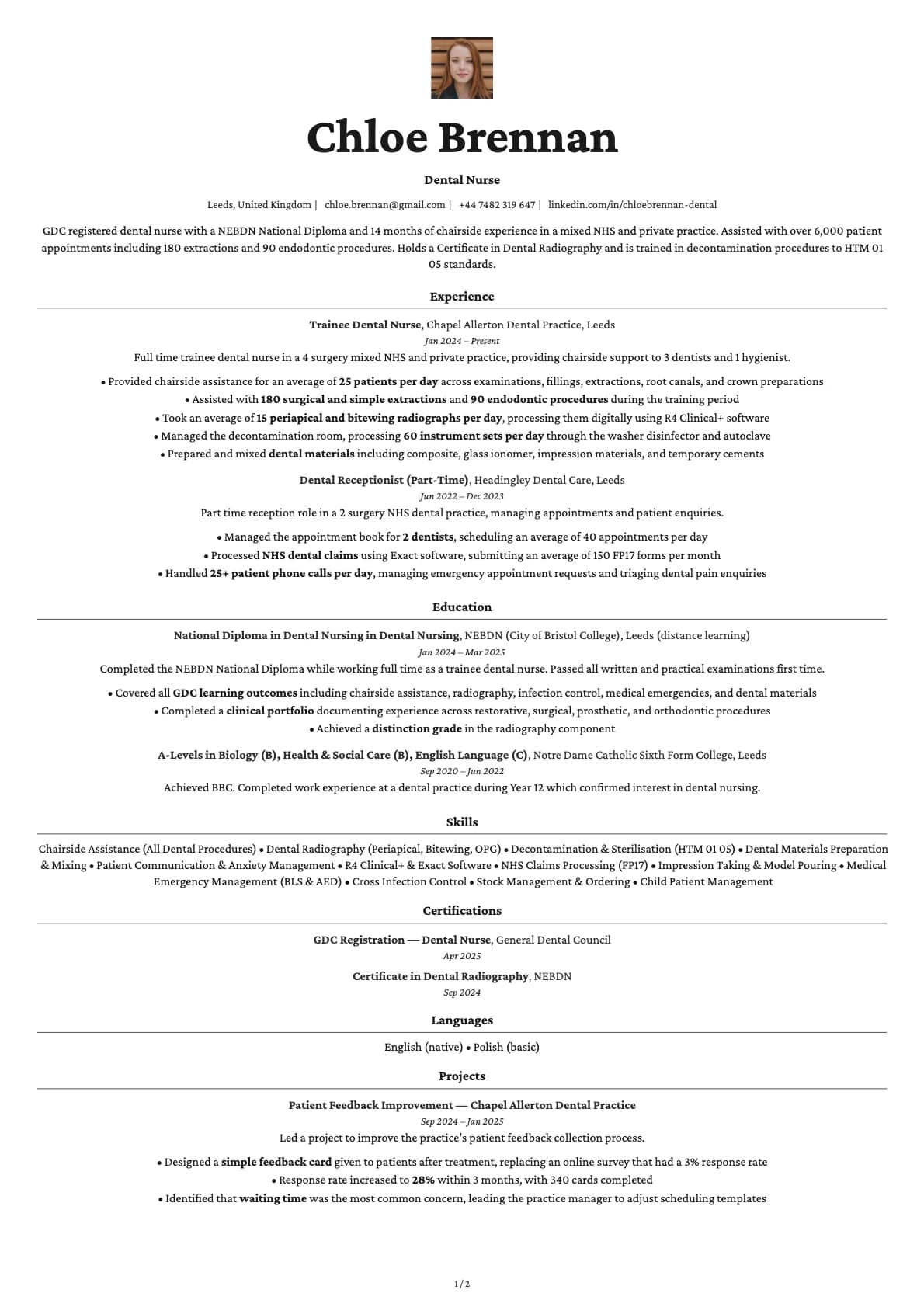
Dental Nurse
A dental nurse resume example for newly qualified candidates showing how to present GDC registration, clinical experience, and chairside skills for your first dental nursing role.
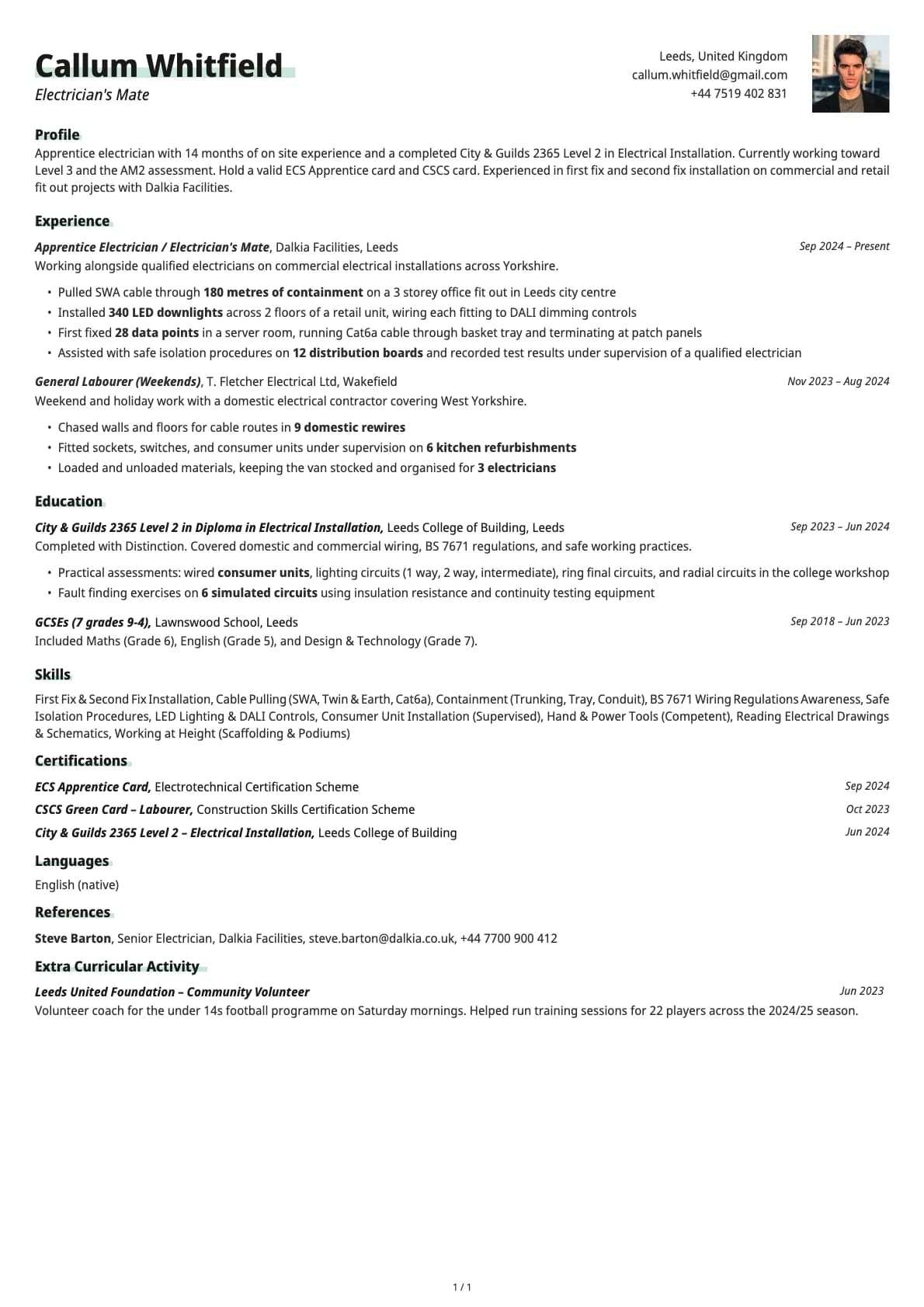
Electrician's Mate
An electrician's mate resume example for apprentice electricians entering the trade. See how to present your City & Guilds, ECS card, and practical wiring experience.
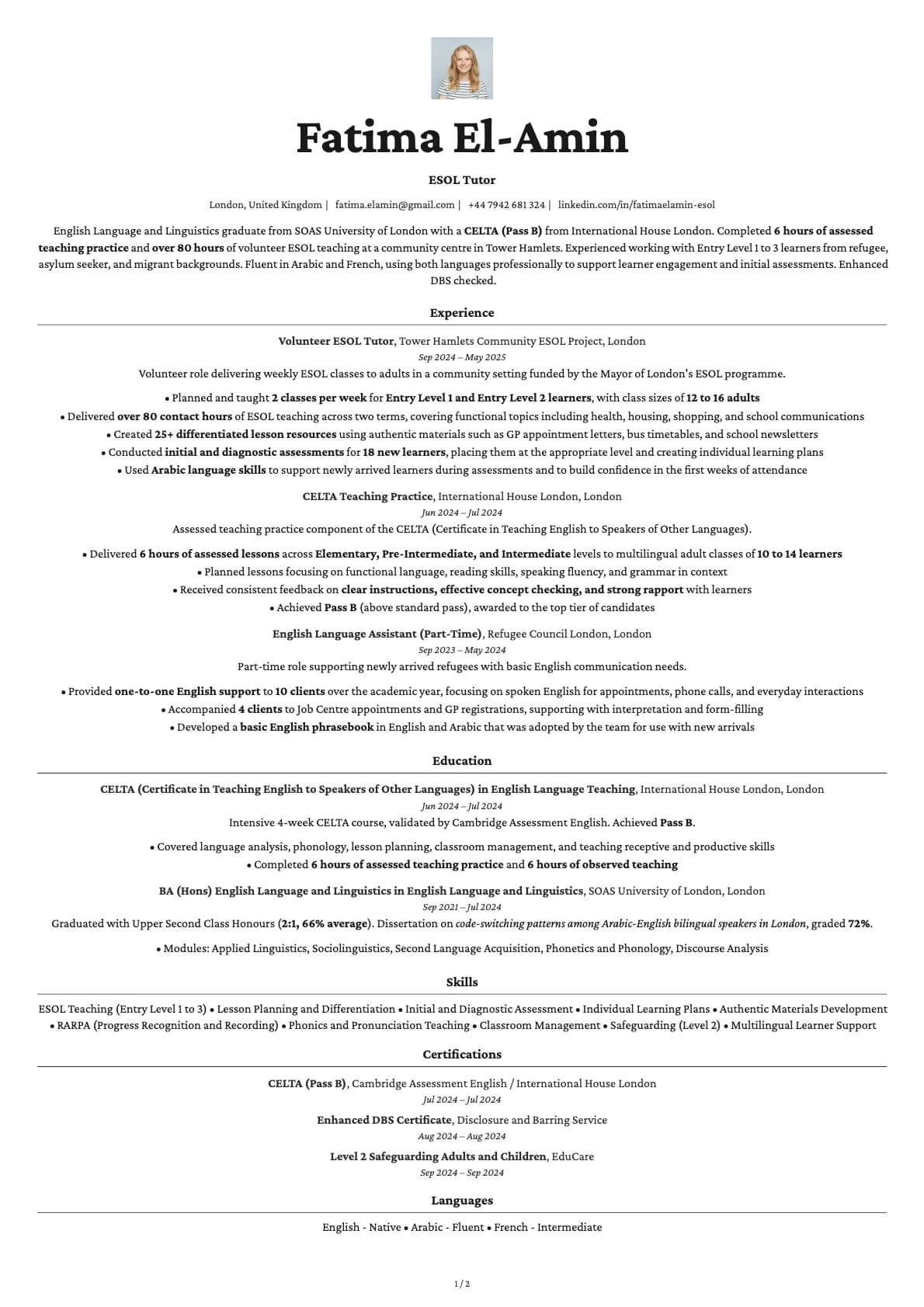
ESOL Tutor
A graduate ESOL tutor resume example with EFL teaching practice, CELTA, and multilingual classroom experience. See how to present your qualifications for ESOL teaching roles.
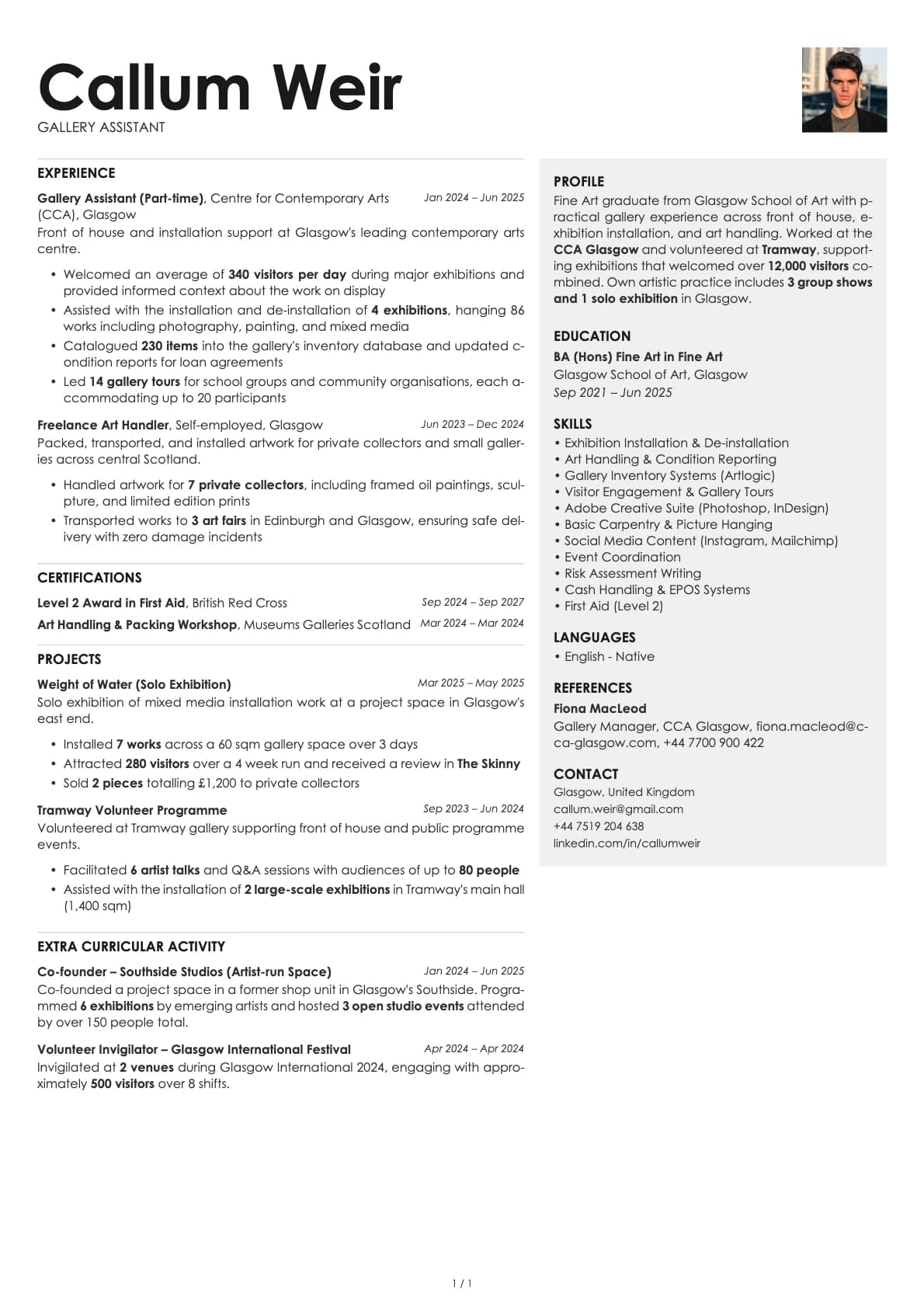
Gallery Assistant
A gallery assistant resume example with exhibition installation experience, visitor engagement numbers, and Fine Art credentials from a recent BA graduate.
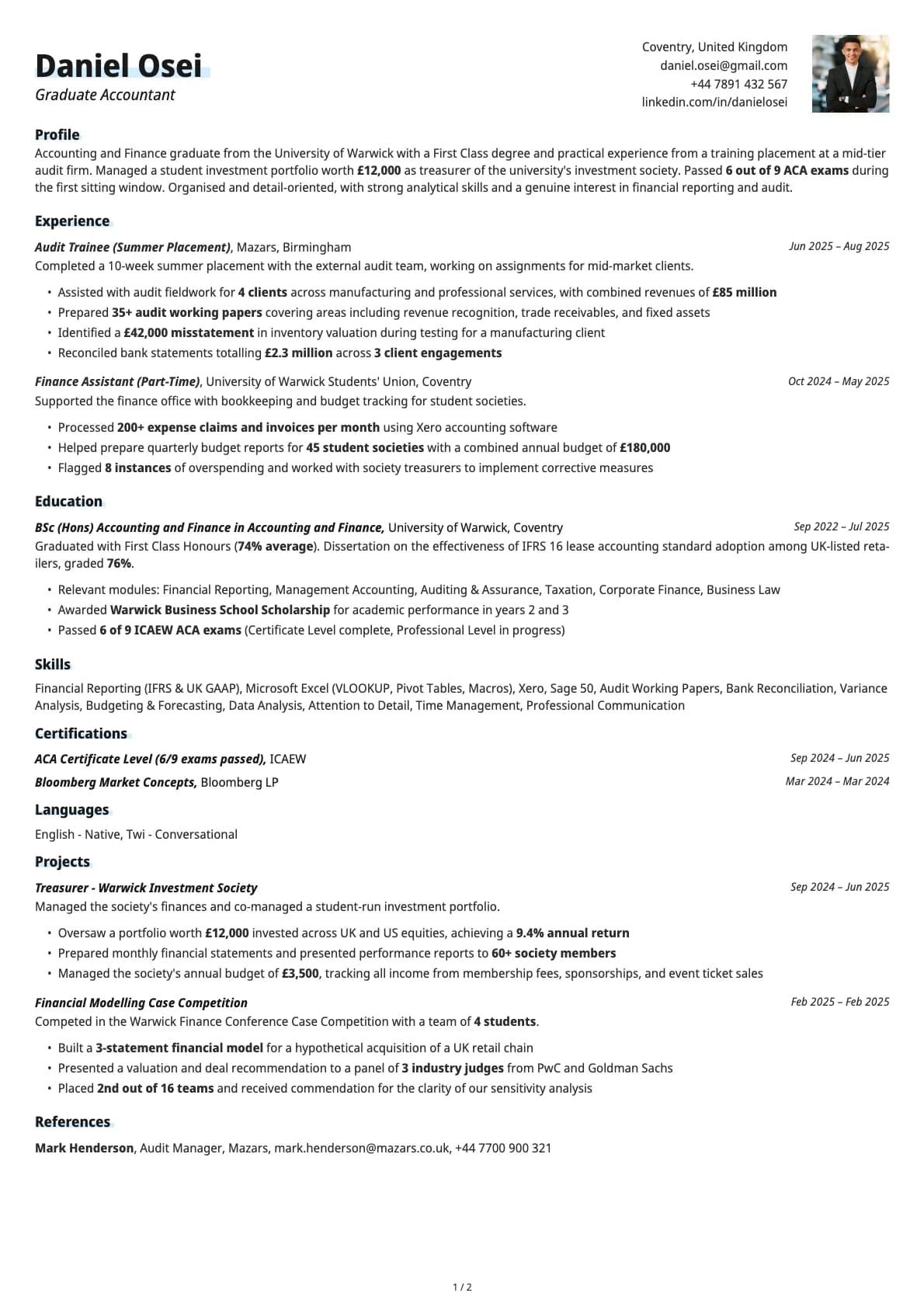
Graduate Accountant
A graduate accountant resume example for recent graduates. See how to present your accounting degree, Excel skills, and placement experience to secure your first role.
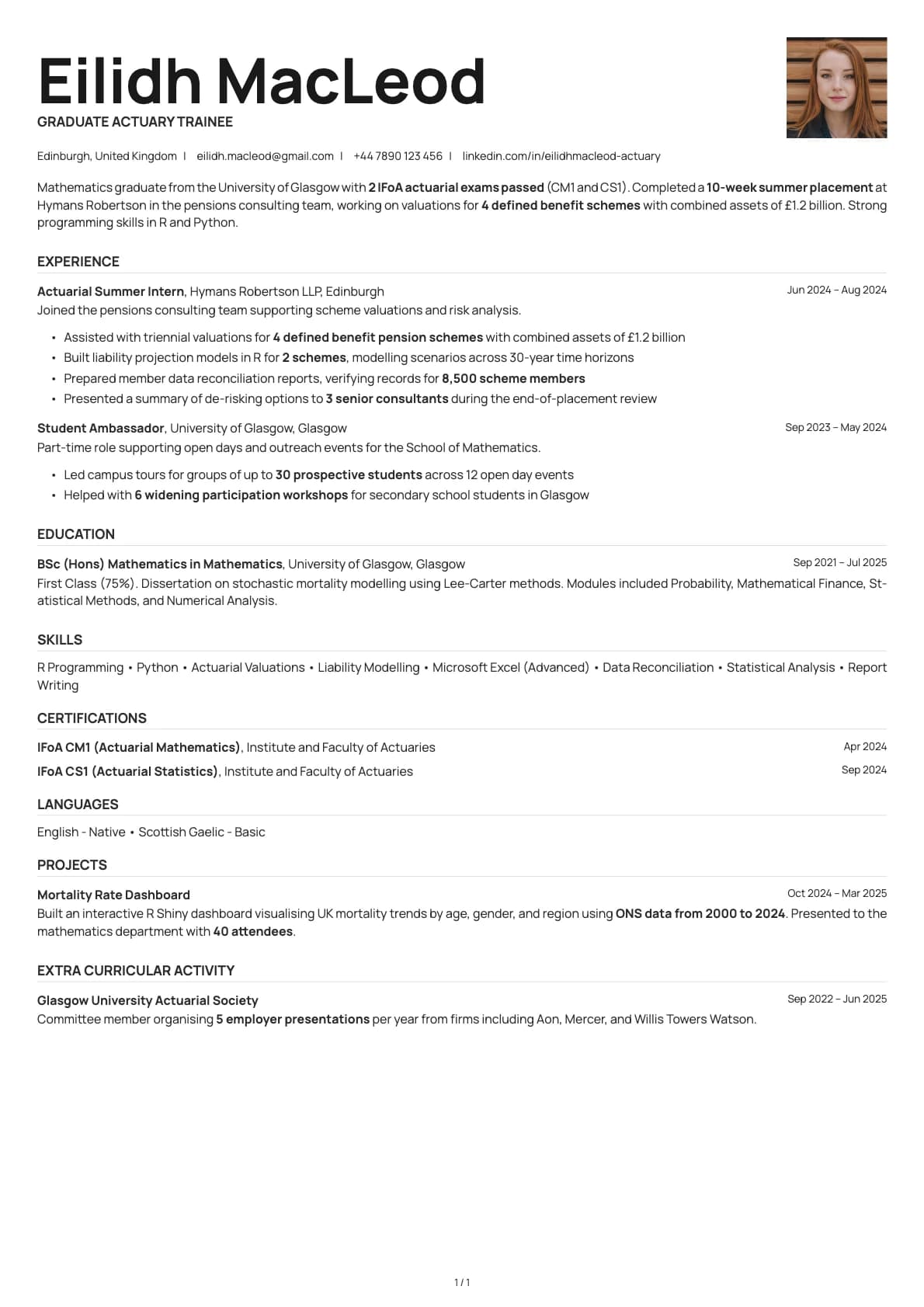
Graduate Actuary Trainee
A graduate actuary trainee resume example with Hymans Robertson internship and IFoA exam passes.
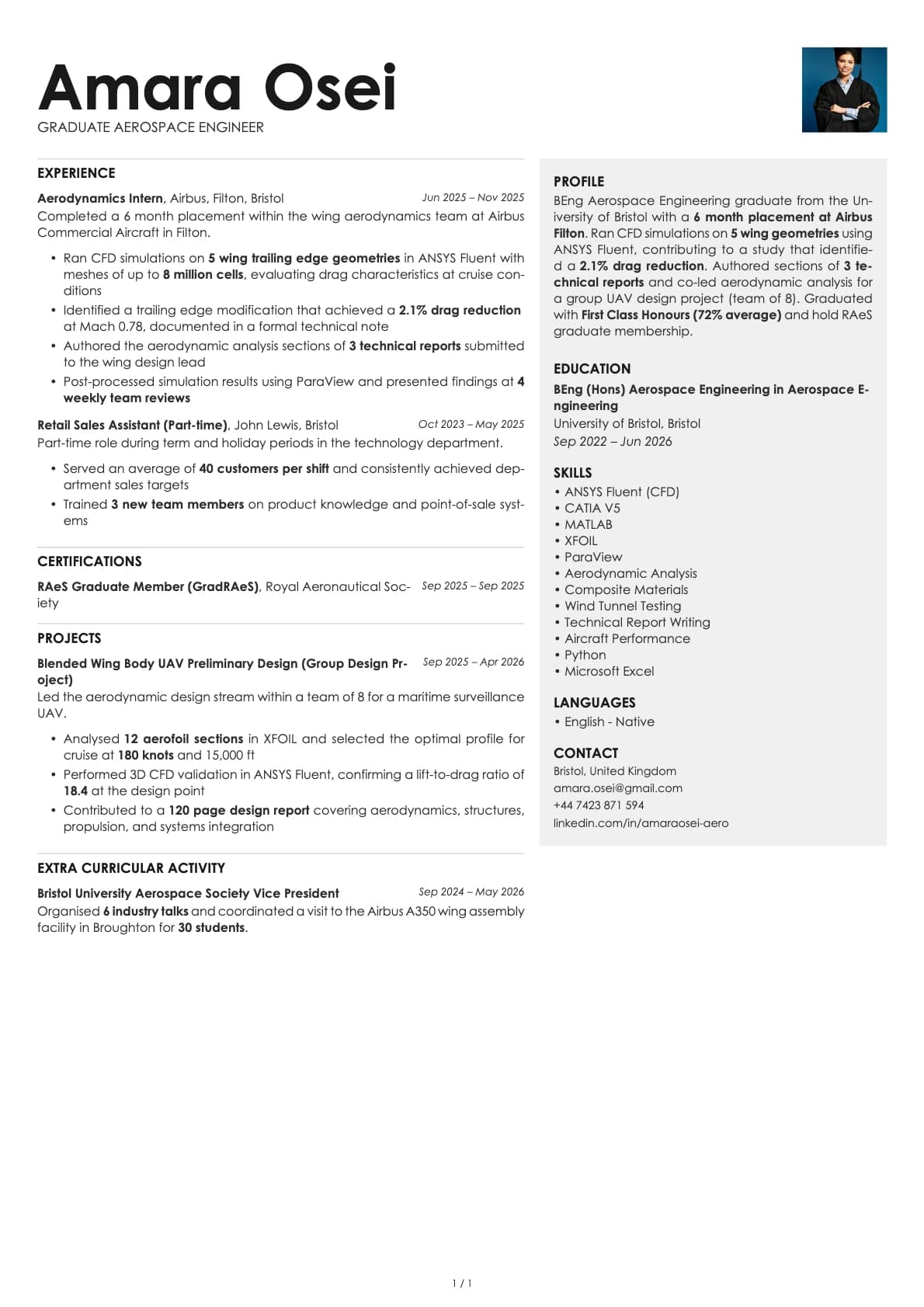
Graduate Aerospace Engineer
A graduate aerospace engineer resume example with CFD analysis skills, Airbus placement experience, and RAeS membership.
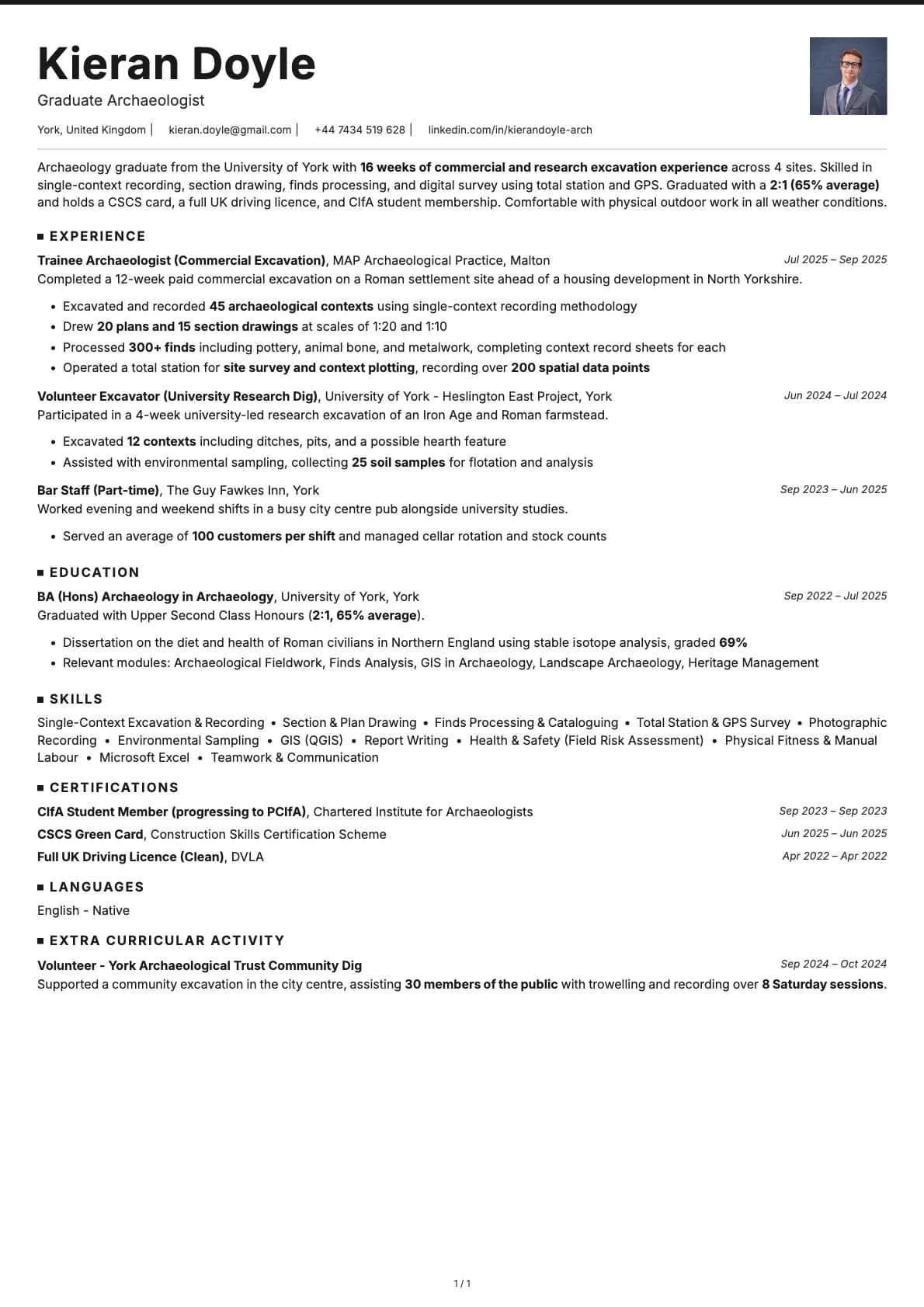
Graduate Archaeologist
A graduate archaeologist resume example with commercial excavation experience, single-context recording, and CIfA membership.
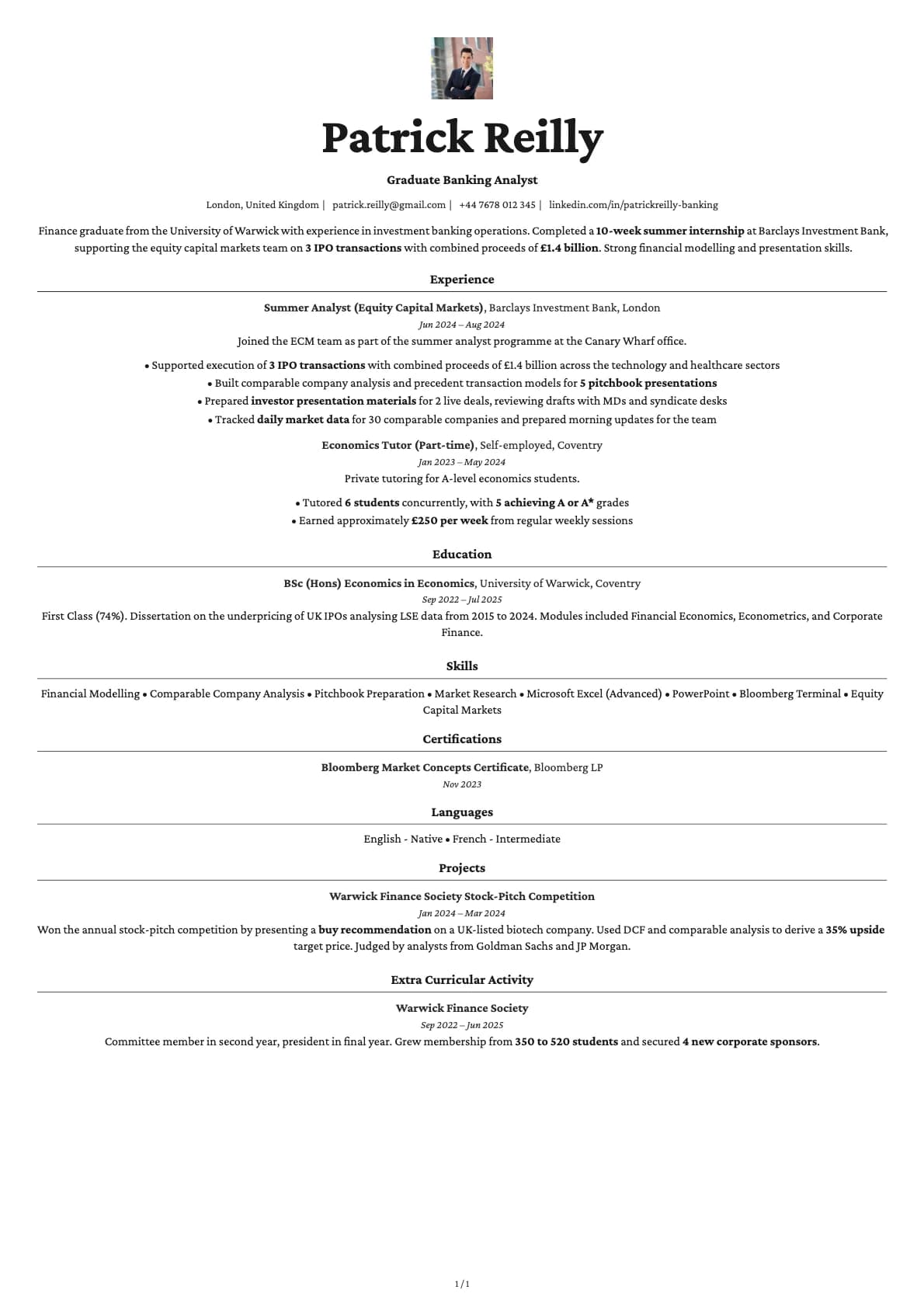
Graduate Banking Analyst
A graduate banking analyst resume example with Barclays ECM internship and financial modelling skills.
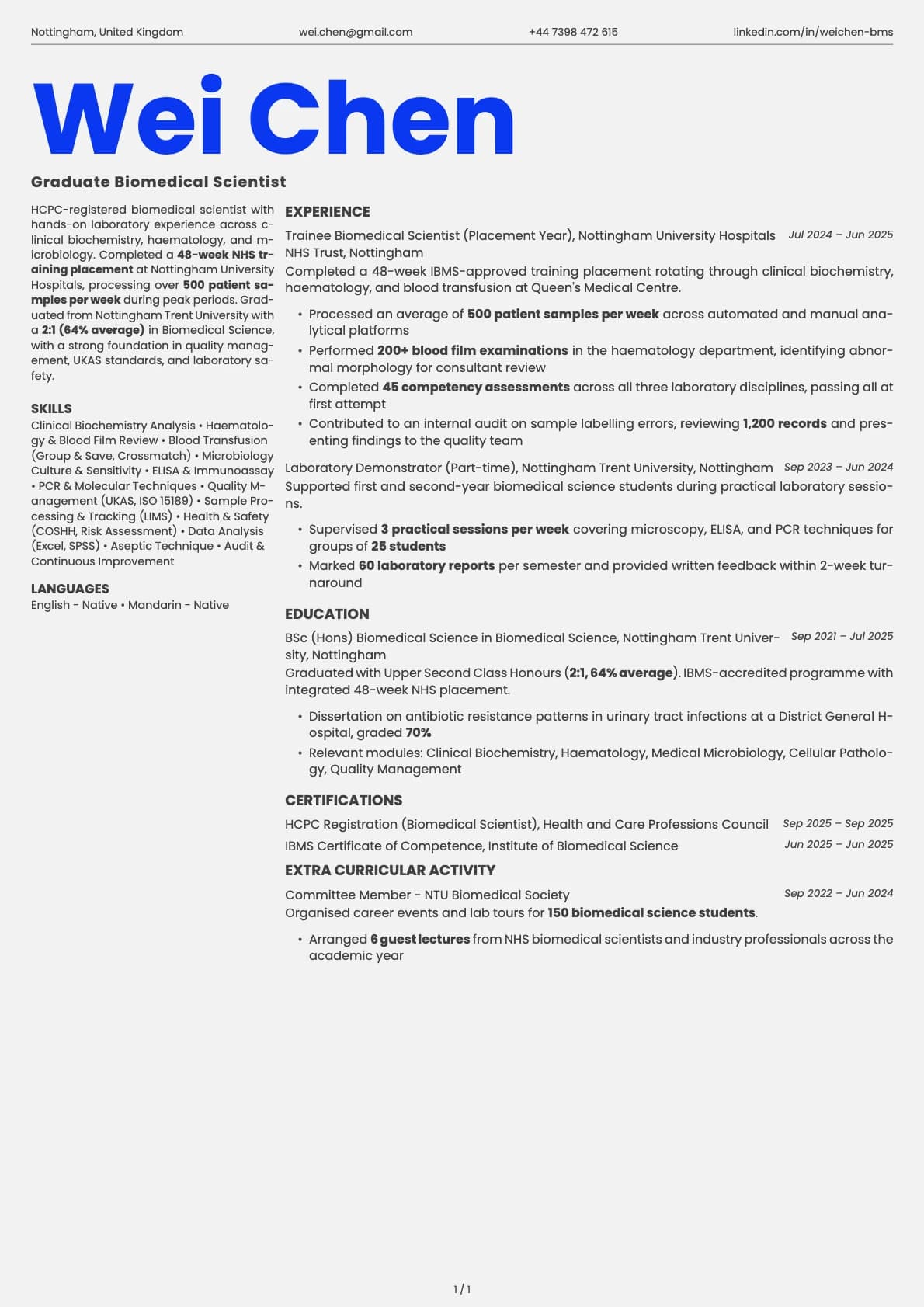
Graduate Biomedical Scientist
A graduate biomedical scientist resume example with NHS lab placement experience, HCPC registration, and sample processing numbers.
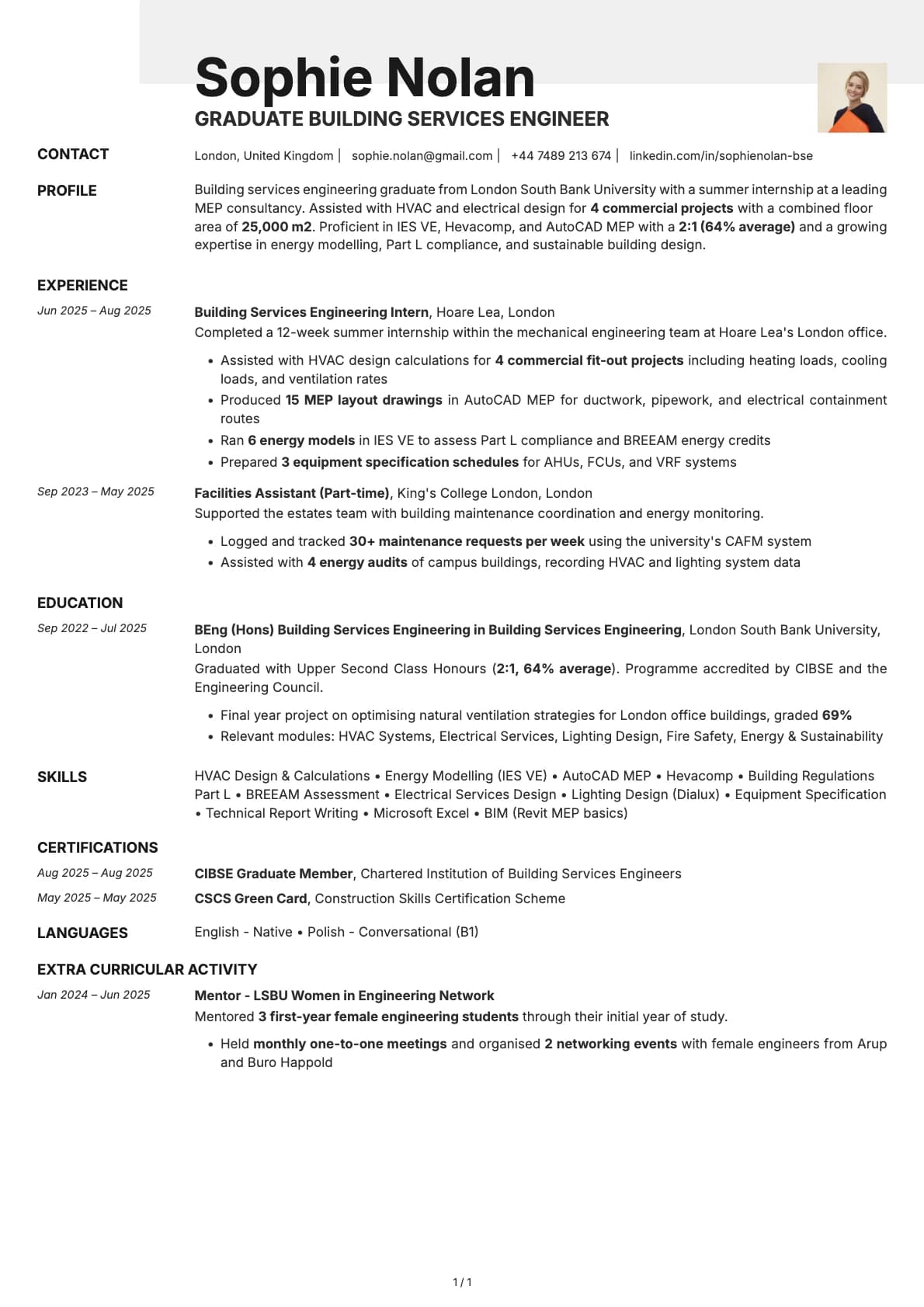
Graduate Building Services Engineer
A graduate building services engineer resume example with MEP consultancy experience, energy modelling skills, and CIBSE membership.
Graduate Building Surveyor
A graduate building surveyor resume example with chartered practice placement and building inspection experience.