Junior Food Inspector Resume Example
A junior food inspector resume example showing how to leverage QA experience in food manufacturing, HACCP training, and a food science degree.

Laddro Team
Free to use. No account needed to start.
Free to use. No account needed to start.
Overview
Food inspection and environmental health trainee roles require a specific blend of scientific knowledge, regulatory understanding, and practical auditing experience. Most graduates applying for these positions have a food science degree but limited time on factory floors. The candidates who get hired are the ones who have already conducted audits, reviewed HACCP plans, and understand how compliance works in practice.
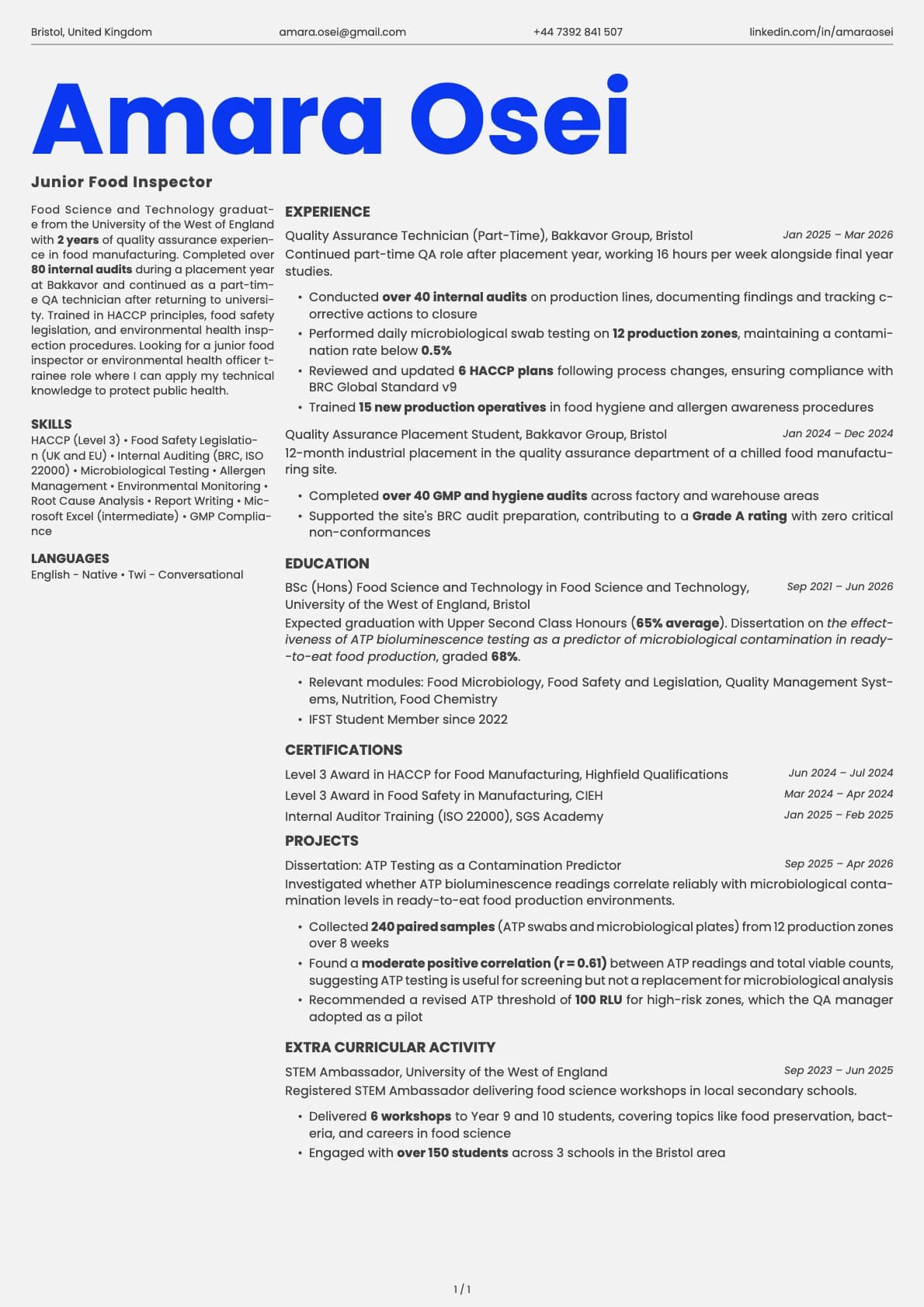
Amara Osei is completing her BSc in Food Science and Technology at the University of the West of England with an expected Upper Second. She spent a full year on placement in the quality assurance department at Bakkavor Group in Bristol and then continued part-time while finishing her degree. Across both stints, she has completed over 80 internal audits, trained production staff in food hygiene, and contributed to a BRC Grade A audit result with zero critical non-conformances.
What Makes This Resume Work
The audit experience is substantial and documented. Amara completed over 40 GMP and hygiene audits during her placement year and another 40+ internal audits in her part-time QA role. She documented findings and tracked corrective actions to closure. For food inspection roles, auditing is the core skill, and Amara has done it repeatedly across real production environments, not just in a university lab.
The technical depth goes beyond basic food safety. She performed daily microbiological swab testing on 12 production zones, maintaining a contamination rate below 0.5%. She reviewed and updated 6 HACCP plans following process changes, ensuring compliance with BRC Global Standard v9. She also trained 15 new production operatives in food hygiene and allergen awareness. This range of technical activity shows she can handle the variety of tasks a food inspector encounters on site visits.
The dissertation bridges science and operational practice. Amara collected 240 paired samples (ATP swabs and microbiological plates) from 12 production zones over 8 weeks. She found a moderate positive correlation (r = 0.61) between ATP readings and total viable counts and recommended a revised ATP threshold of 100 RLU for high-risk zones, which the QA manager adopted as a pilot. This is applied research that has direct relevance to how food businesses and inspectors assess hygiene standards.
Certifications are industry-standard and current. Level 3 HACCP for Food Manufacturing, Level 3 Food Safety in Manufacturing from CIEH, and Internal Auditor Training in ISO 22000 from SGS Academy cover the three pillars that food inspection roles require. Her STEM Ambassador work, delivering 6 food science workshops to over 150 secondary school students, adds a public engagement dimension.
Key Takeaways
If you are applying for junior food inspector or environmental health trainee roles, your resume needs to show hands-on auditing experience above everything else. A food science degree provides the foundation, but recruiters want to see that you have walked a factory floor with a clipboard and identified non-conformances. Get your Level 3 HACCP and food safety certifications before you apply, and make sure your audit numbers are clearly stated. Inspection is a numbers game: how many audits, how many zones, how many corrective actions tracked.
Build your own version
Open this layout in the builder and swap in your own details. It takes a few minutes.
Free to use. No account needed to start.
Was this resume example helpful?
Rate this example to help us create better content for you.
4.6 average from 83 ratingsRelated resume examples
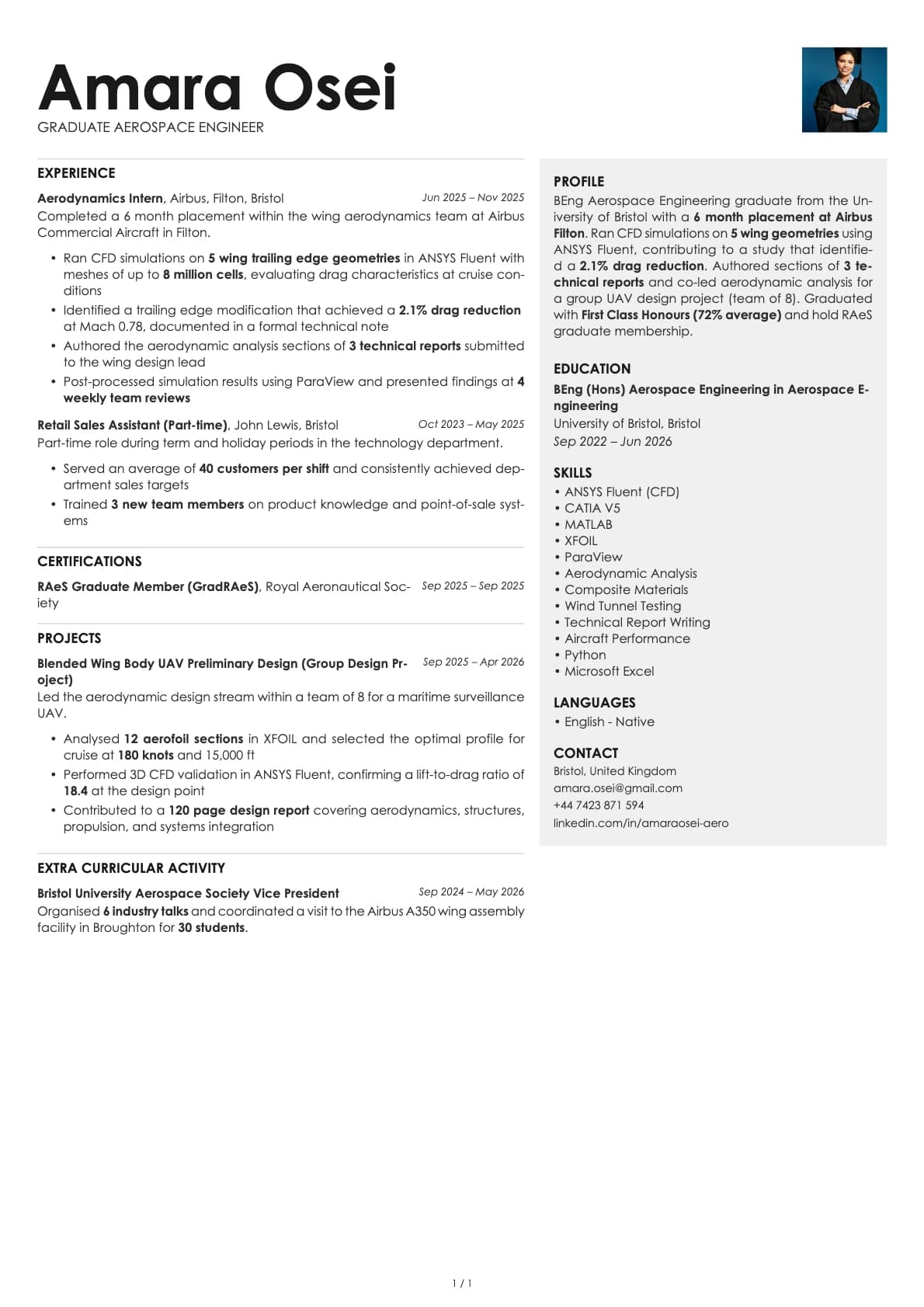
Graduate Aerospace Engineer
A graduate aerospace engineer resume example with CFD analysis skills, Airbus placement experience, and RAeS membership.
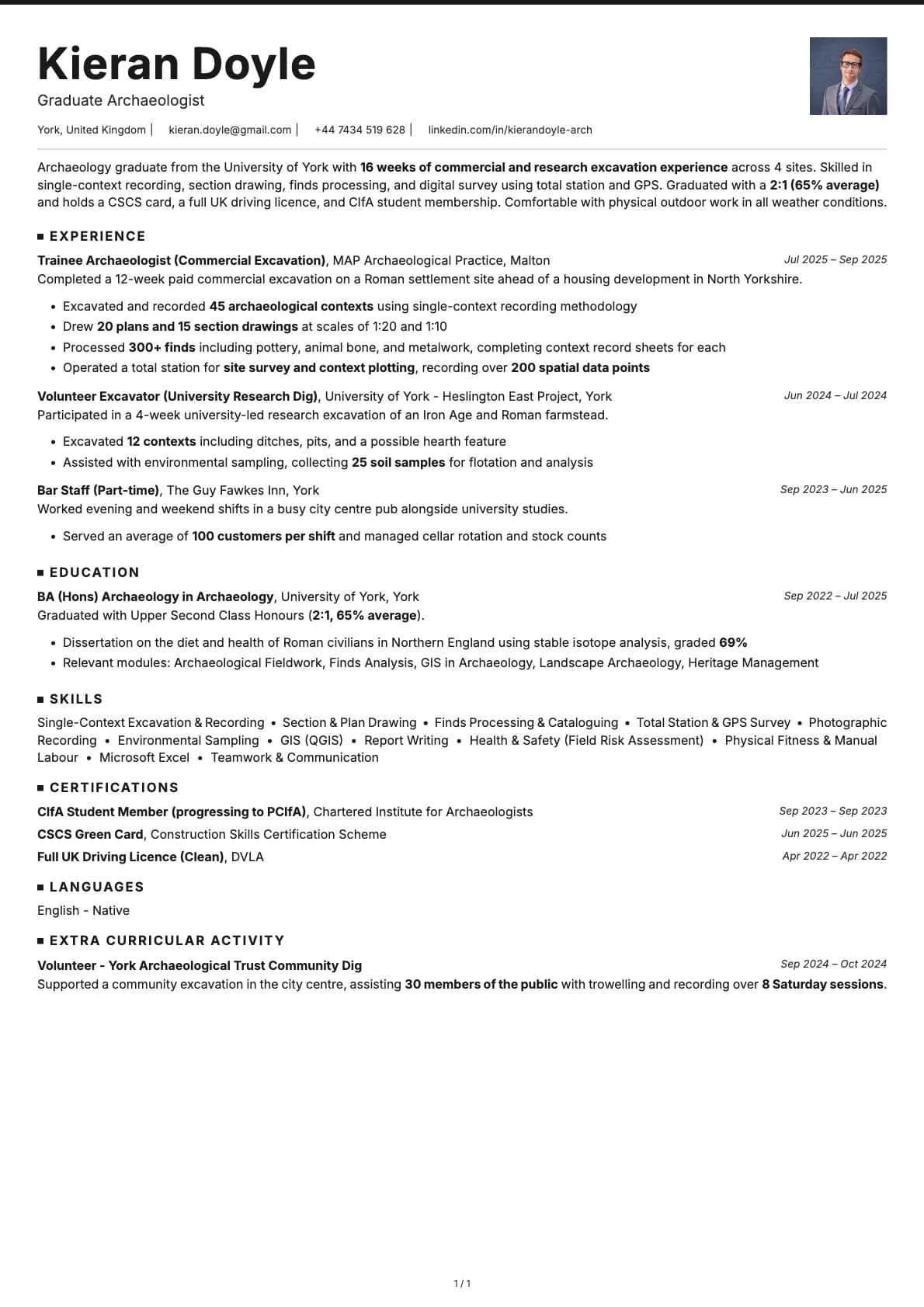
Graduate Archaeologist
A graduate archaeologist resume example with commercial excavation experience, single-context recording, and CIfA membership.
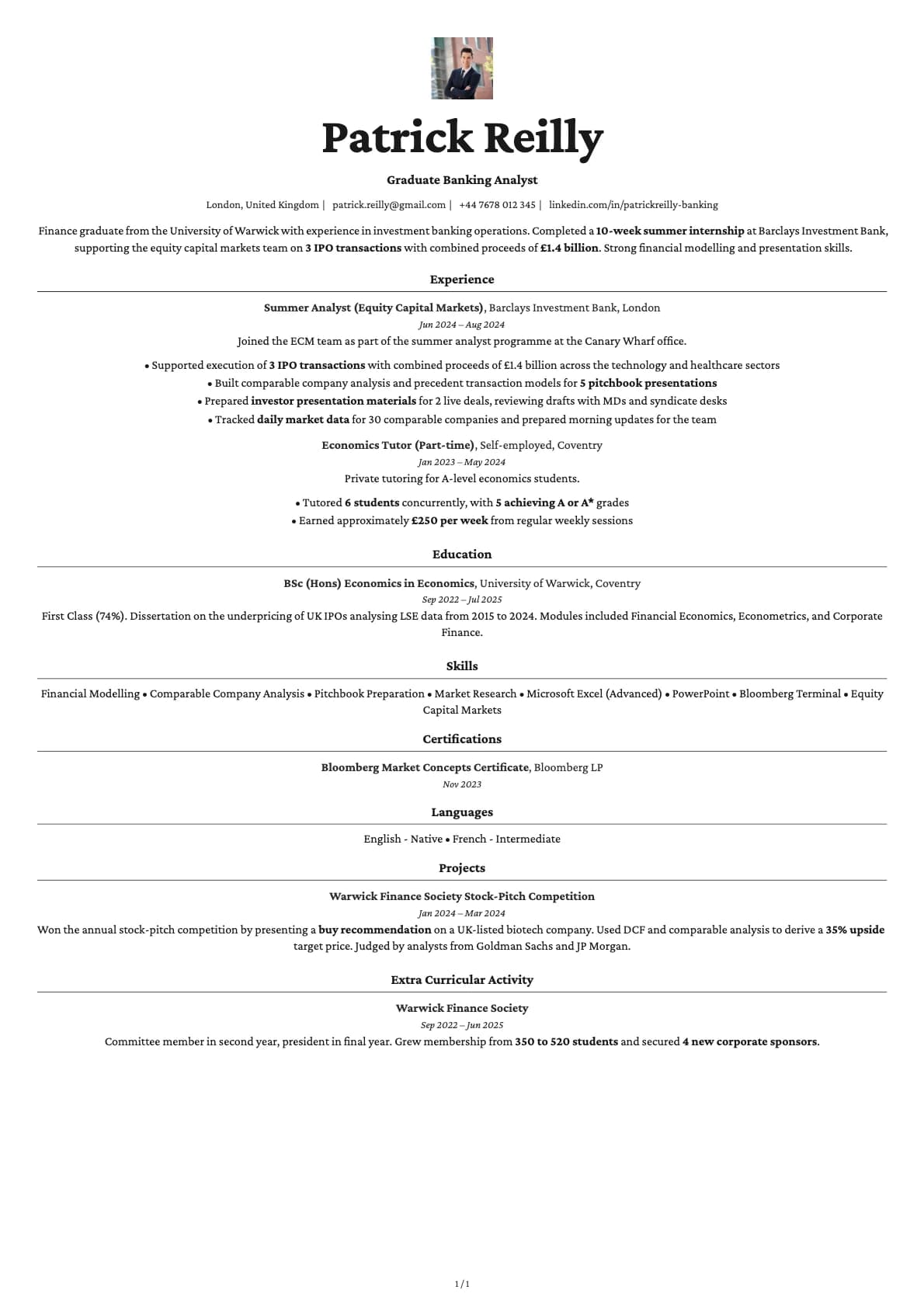
Graduate Banking Analyst
A graduate banking analyst resume example with Barclays ECM internship and financial modelling skills.
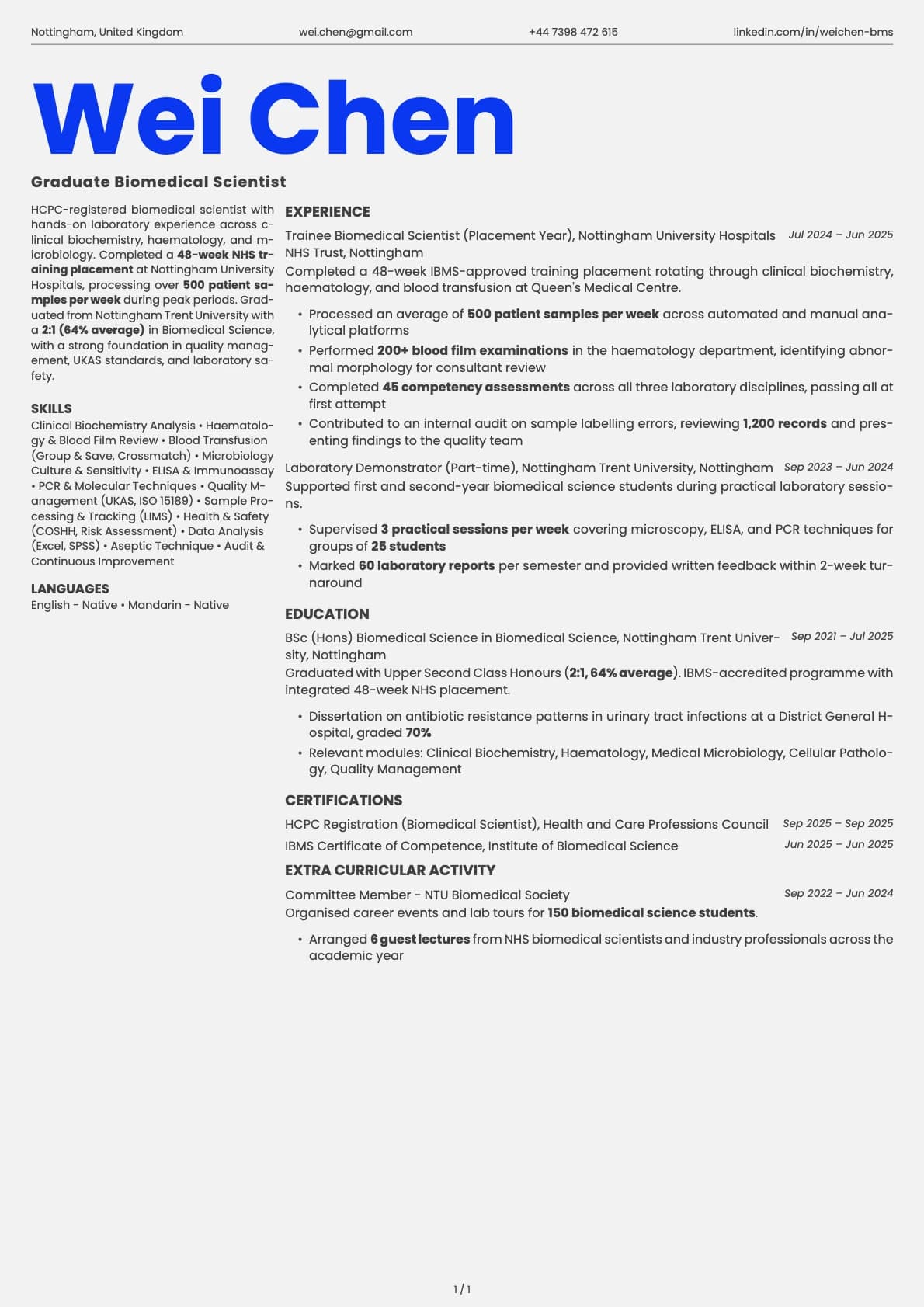
Graduate Biomedical Scientist
A graduate biomedical scientist resume example with NHS lab placement experience, HCPC registration, and sample processing numbers.
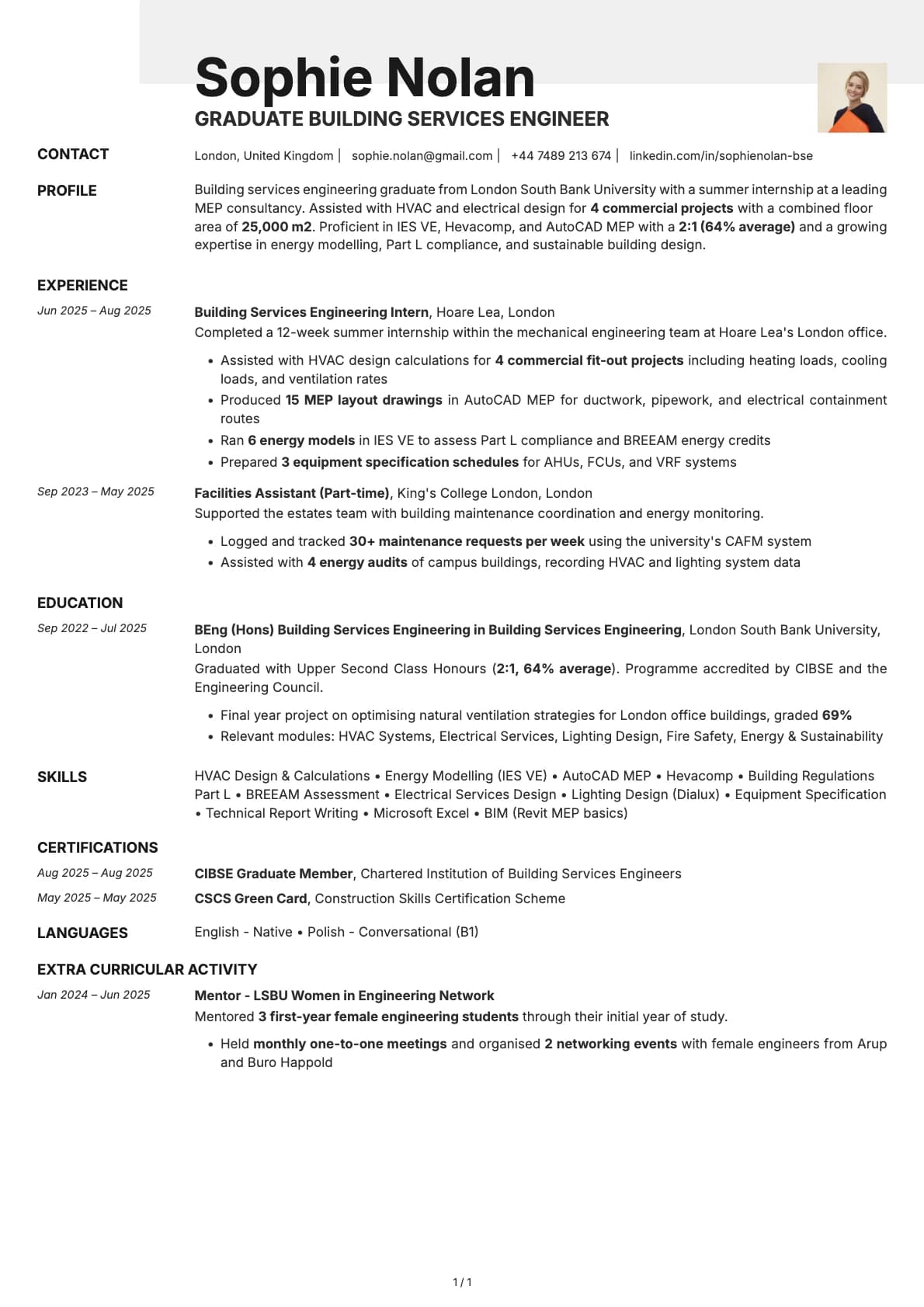
Graduate Building Services Engineer
A graduate building services engineer resume example with MEP consultancy experience, energy modelling skills, and CIBSE membership.
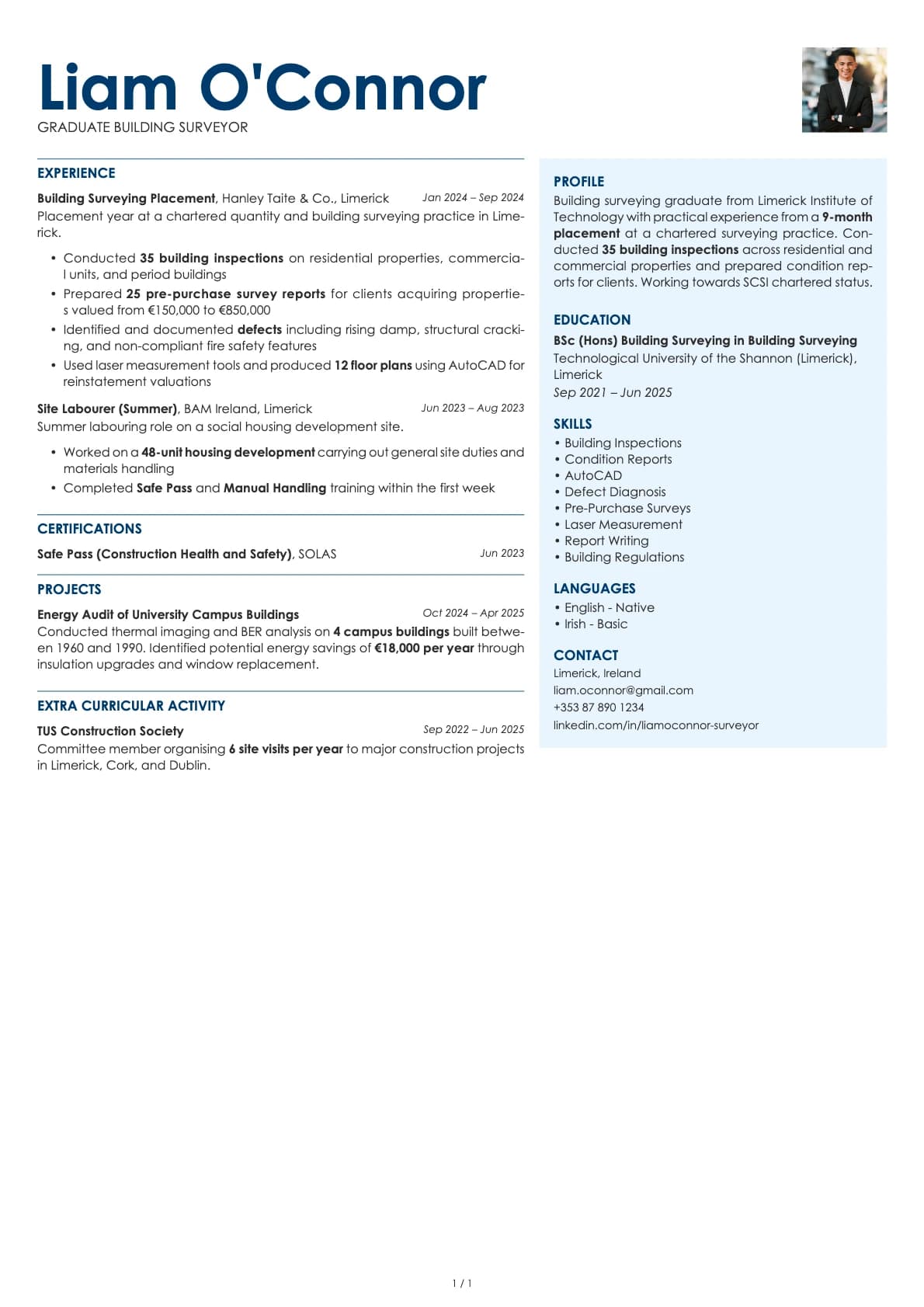
Graduate Building Surveyor
A graduate building surveyor resume example with chartered practice placement and building inspection experience.
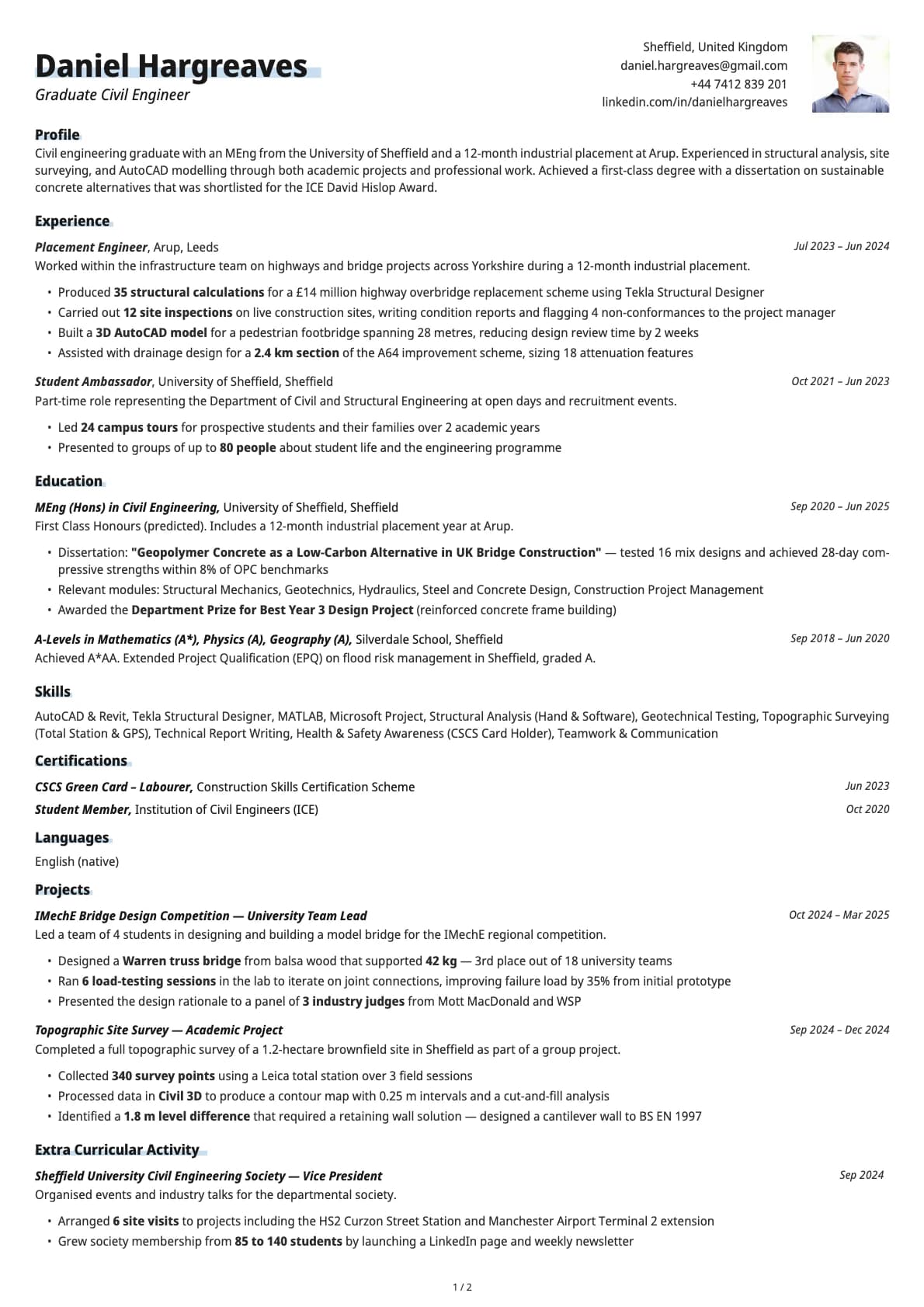
Graduate Civil Engineer
A graduate civil engineer resume example for recent graduates. See how to present your engineering degree, placement experience, and technical skills to land your first role.
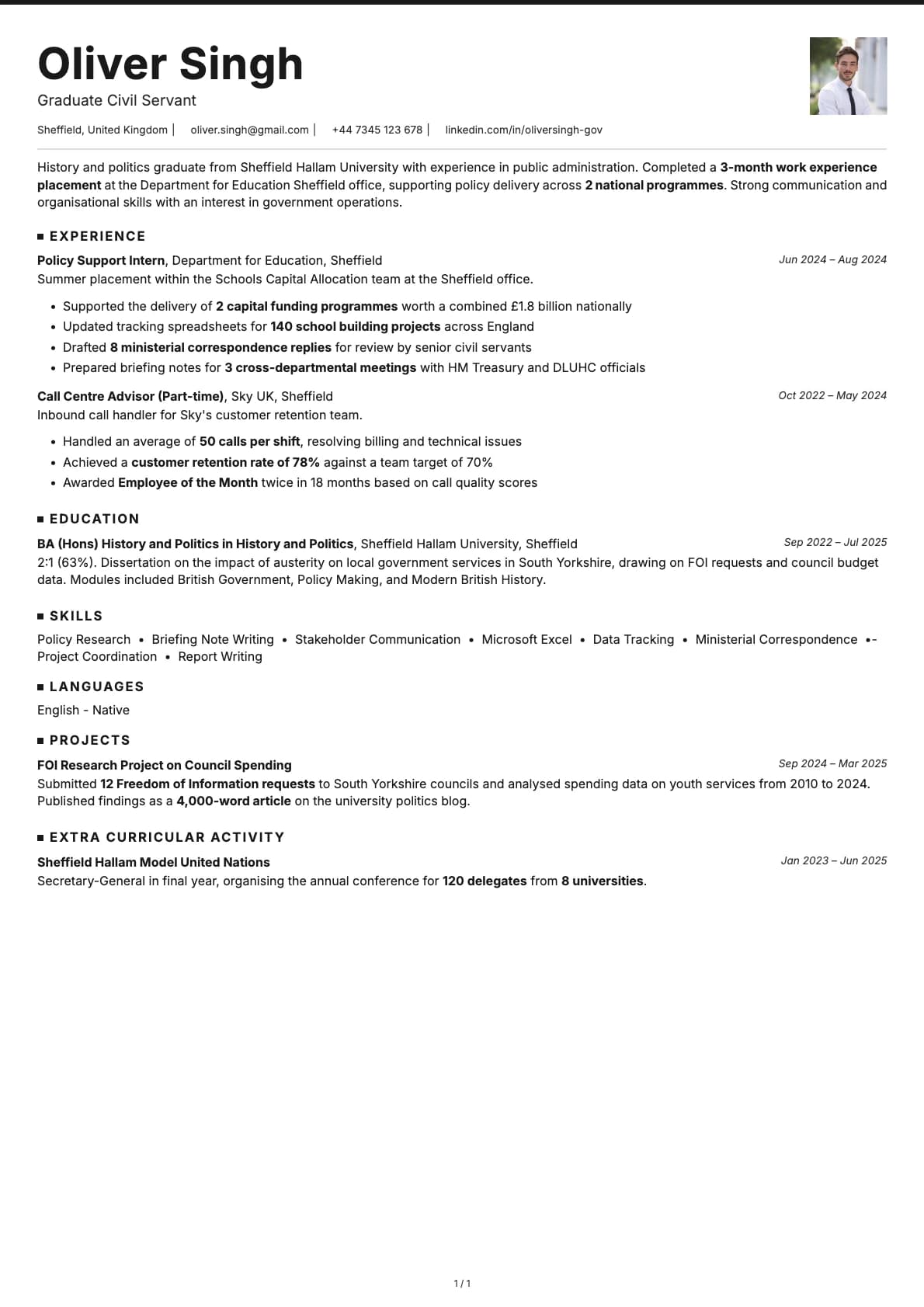
Graduate Civil Servant
A graduate civil servant resume example with Department for Education placement and policy support experience.
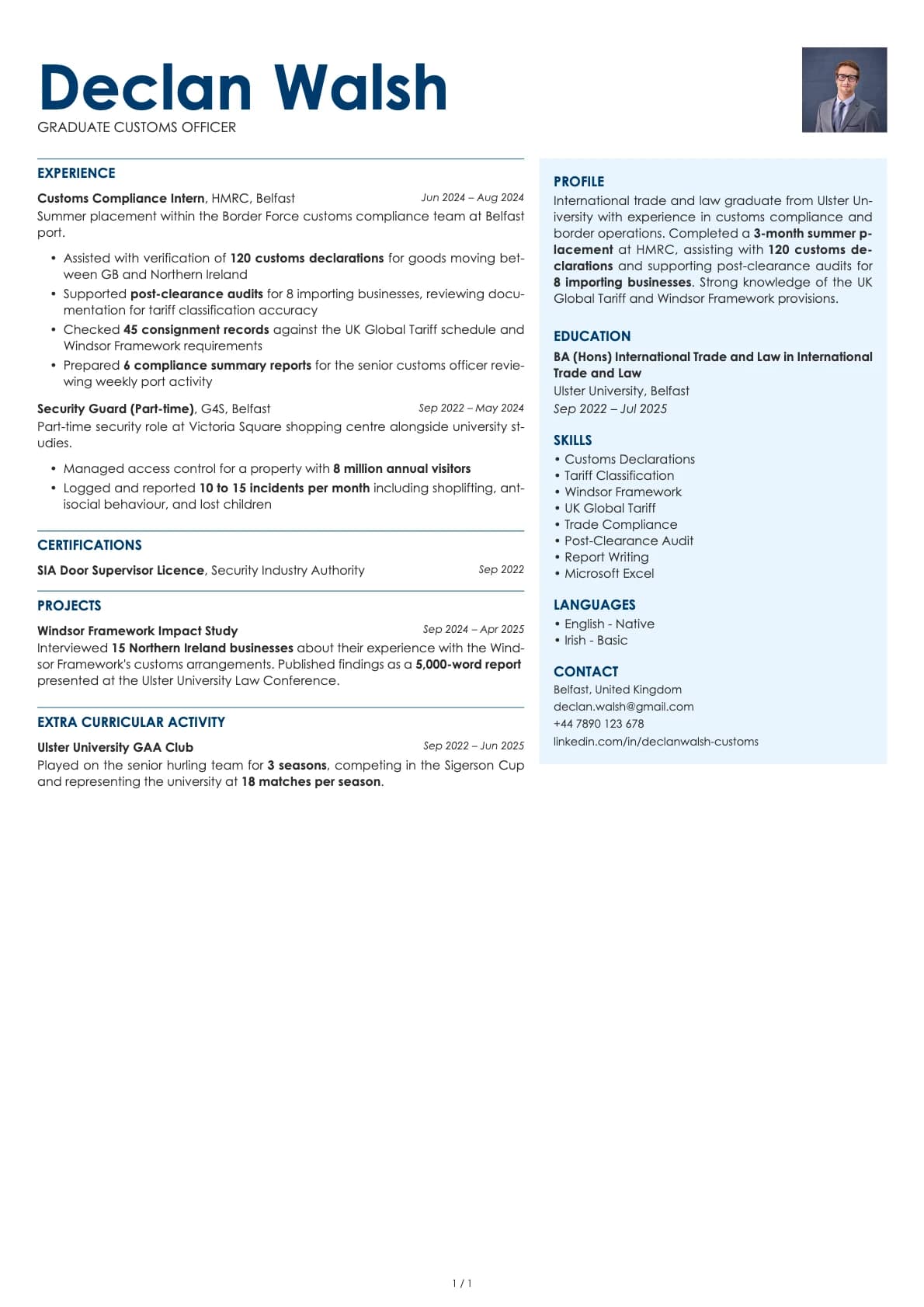
Graduate Customs Officer
A graduate customs officer resume example with HMRC placement and customs compliance experience.
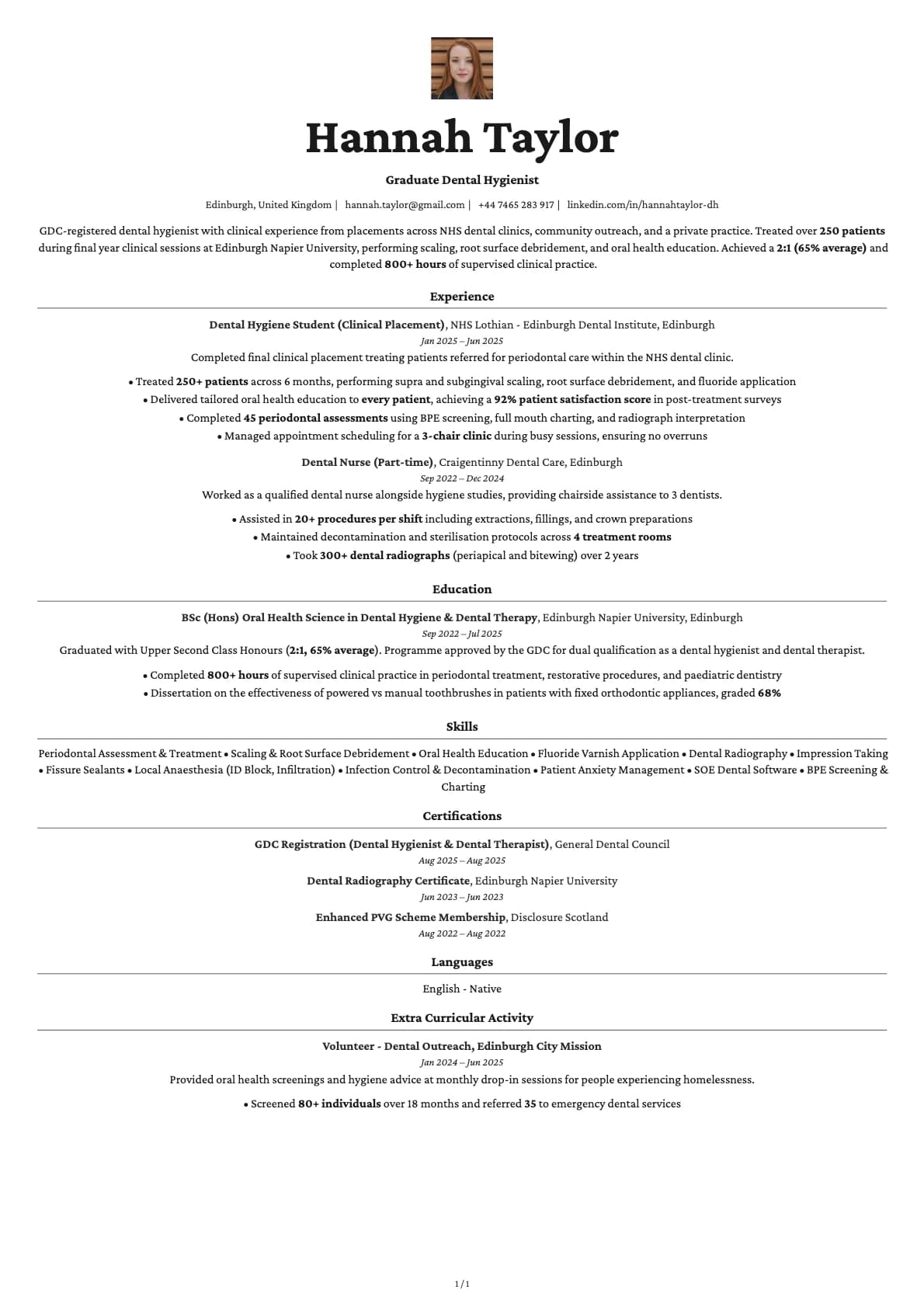
Graduate Dental Hygienist
A graduate dental hygienist resume example with GDC registration, clinical patient numbers, and periodontal treatment experience for new graduates.
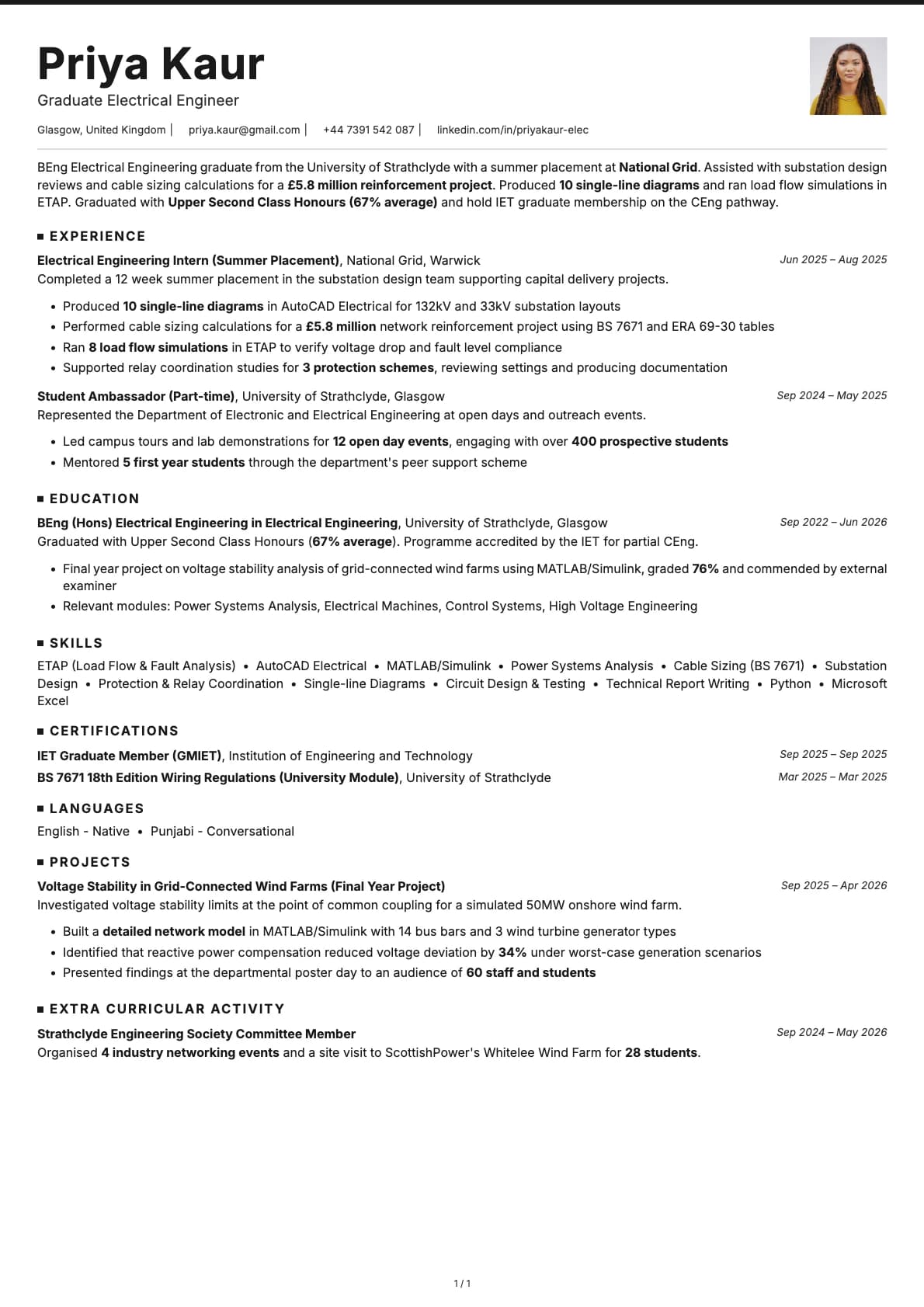
Graduate Electrical Engineer
A graduate electrical engineer resume example with power systems placement experience, IET membership, and MATLAB proficiency.
Graduate Film Production Assistant
A graduate film production assistant resume example. See how to present runner experience, production coordination, and on-set skills to break into the film industry.