Dental Nurse Resume Example
A dental nurse resume example for newly qualified candidates showing how to present GDC registration, clinical experience, and chairside skills for your first dental nursing role.

Laddro Team
Free to use. No account needed to start.
Free to use. No account needed to start.
Overview
Dental nursing is one of the few healthcare roles where you train primarily on the job rather than through a university degree. That means newly qualified dental nurses often have more practical experience than many other healthcare graduates, but they tend to undersell it on paper. The resume needs to show the volume of patients seen, the procedures assisted with, and the infection control and radiography skills that are essential for any dental practice.
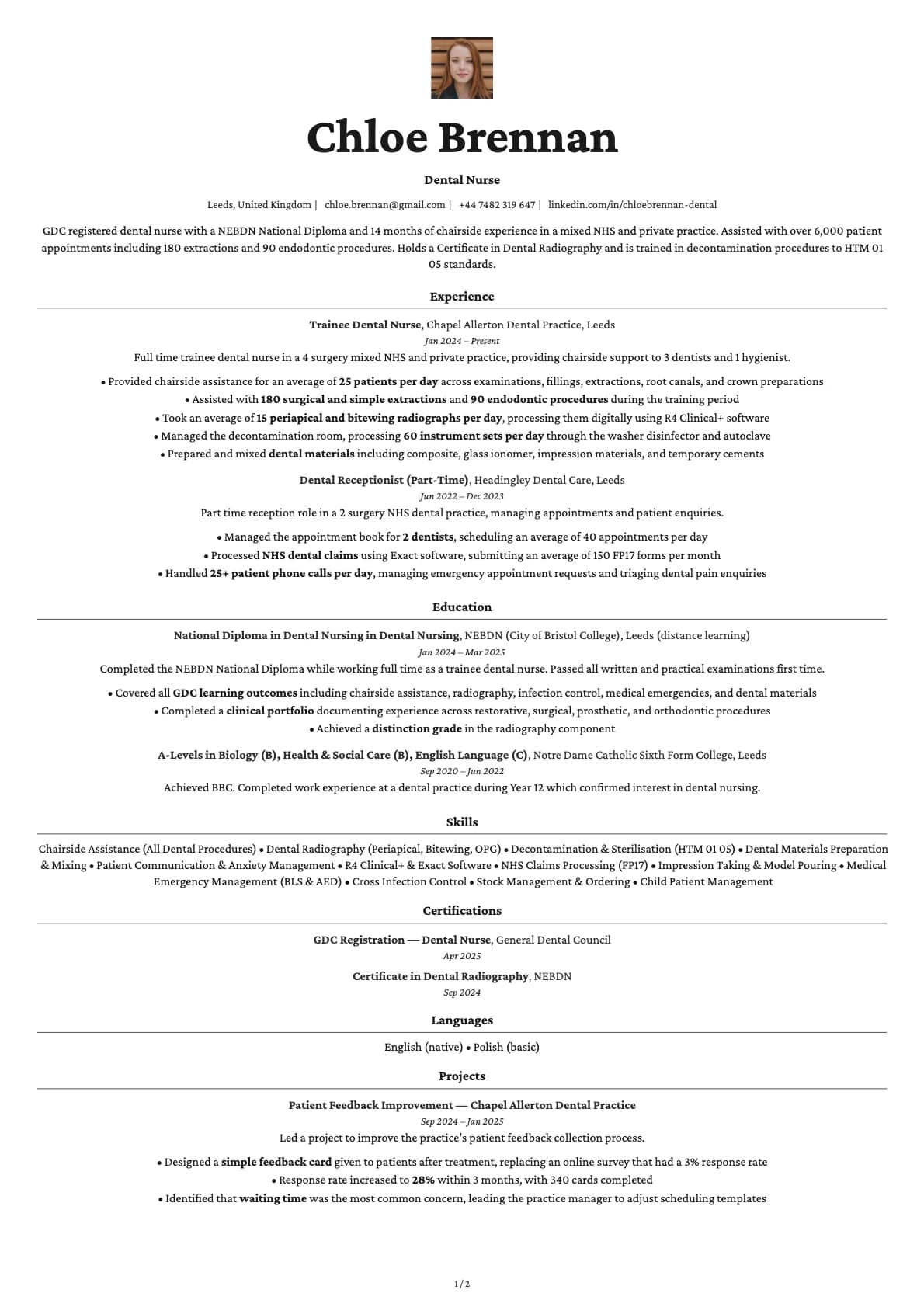
This resume belongs to Chloe Brennan, a newly qualified dental nurse who completed her NEBDN National Diploma in Dental Nursing while working full time as a trainee at a mixed NHS and private practice in Leeds. Her resume works because it treats her training year as genuine clinical experience, with specific procedure counts and patient numbers.
What Makes This Resume Work
Chairside experience is quantified by procedure type. Chloe does not simply say she "assisted the dentist." She states she provided chairside support for an average of 25 patients per day across routine examinations, fillings, extractions, root canal treatments, and crown preparations. She also breaks out her experience with specific procedures, noting she assisted with 180 extractions and 90 endodontic procedures during her training year. This is the kind of detail a practice manager needs to see.
Radiography skills are explicitly listed. She holds a Certificate in Dental Radiography and states she took an average of 15 periapical and bitewing radiographs per day, processing them digitally using the R4 software system. Radiography is a key skill that many practices require from day one, and showing she can work independently in this area is a significant advantage.
Infection control and decontamination are treated as core competencies. She describes managing the decontamination room, processing 60 instrument sets per day through the washer disinfector and autoclave, and maintaining the instrument tracking log. She also references completing HTM 01 05 compliance audits. These are not glamorous tasks, but they are fundamental to dental nursing and showing competence in them signals reliability.
Patient communication and anxiety management appear throughout. She describes reassuring anxious patients, explaining post operative care instructions for 20+ extraction patients per week, and supporting 3 paediatric patients per day through their first dental visits. Dental practices value nurses who can put patients at ease, and these examples demonstrate that skill clearly.
Key Takeaways
Count your procedures. How many patients per day? How many extractions, fillings, and root canals did you assist with? Practice managers hire based on volume and competence, and numbers make your experience tangible.
List radiography and decontamination skills prominently. These are the two areas where dental nurses work most independently, and many practices specifically ask about them in interviews. Make them easy to find on your resume.
Include patient communication examples, especially with anxious patients and children. Dental anxiety is extremely common, and a nurse who can calm nervous patients is worth more to a practice than one who can only pass instruments.
Build your own version
Open this layout in the builder and swap in your own details. It takes a few minutes.
Free to use. No account needed to start.
Was this resume example helpful?
Rate this example to help us create better content for you.
4.8 average from 113 ratingsRelated resume examples
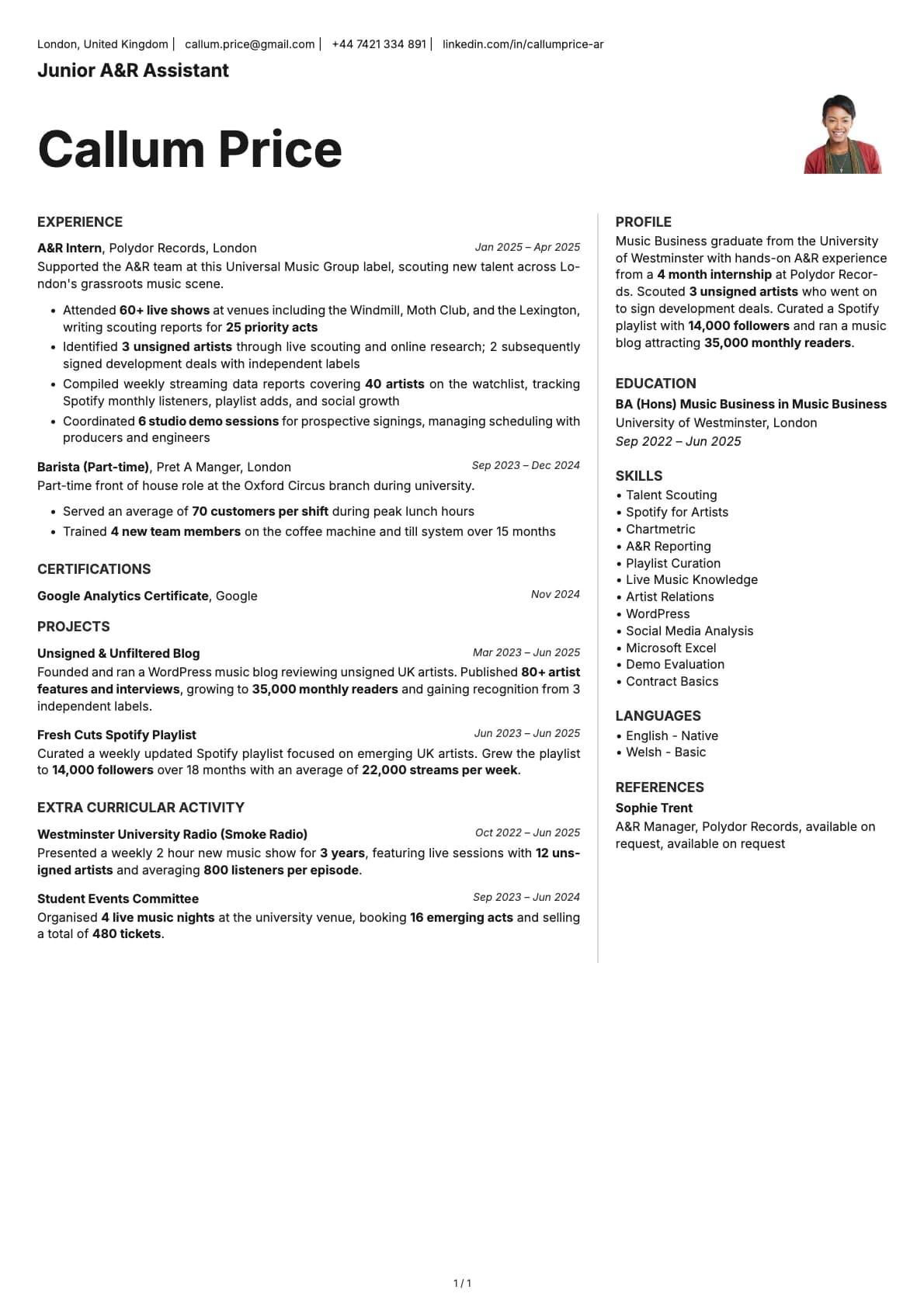
Junior A&R Assistant
A junior A&R assistant resume example with music business degree, label internship, and artist scouting experience for 2026.
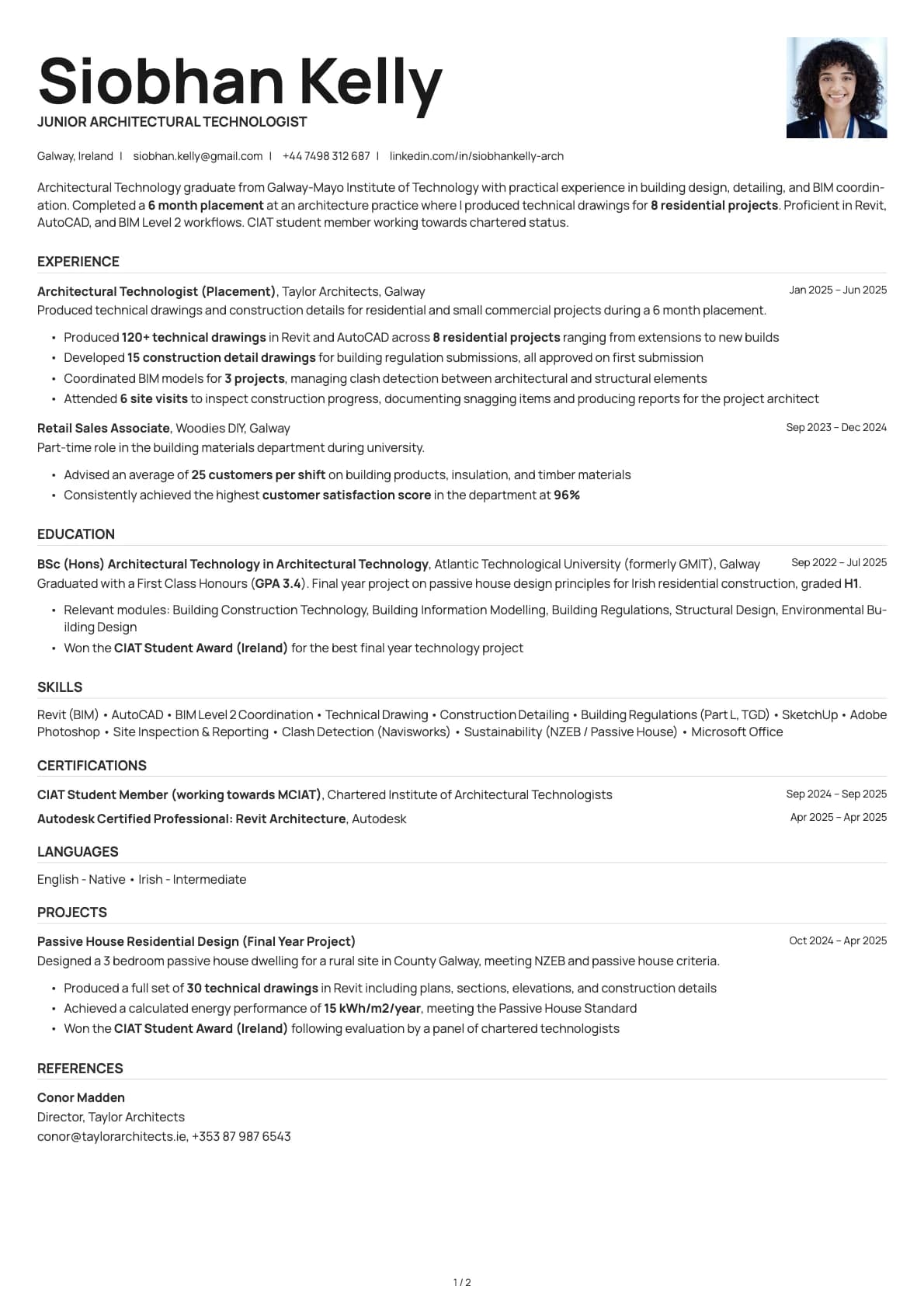
Junior Architectural Technologist
A junior architectural technologist resume example for graduates. See how to present Revit skills, BIM experience, and technical drawing output to land your first architectural technology role.
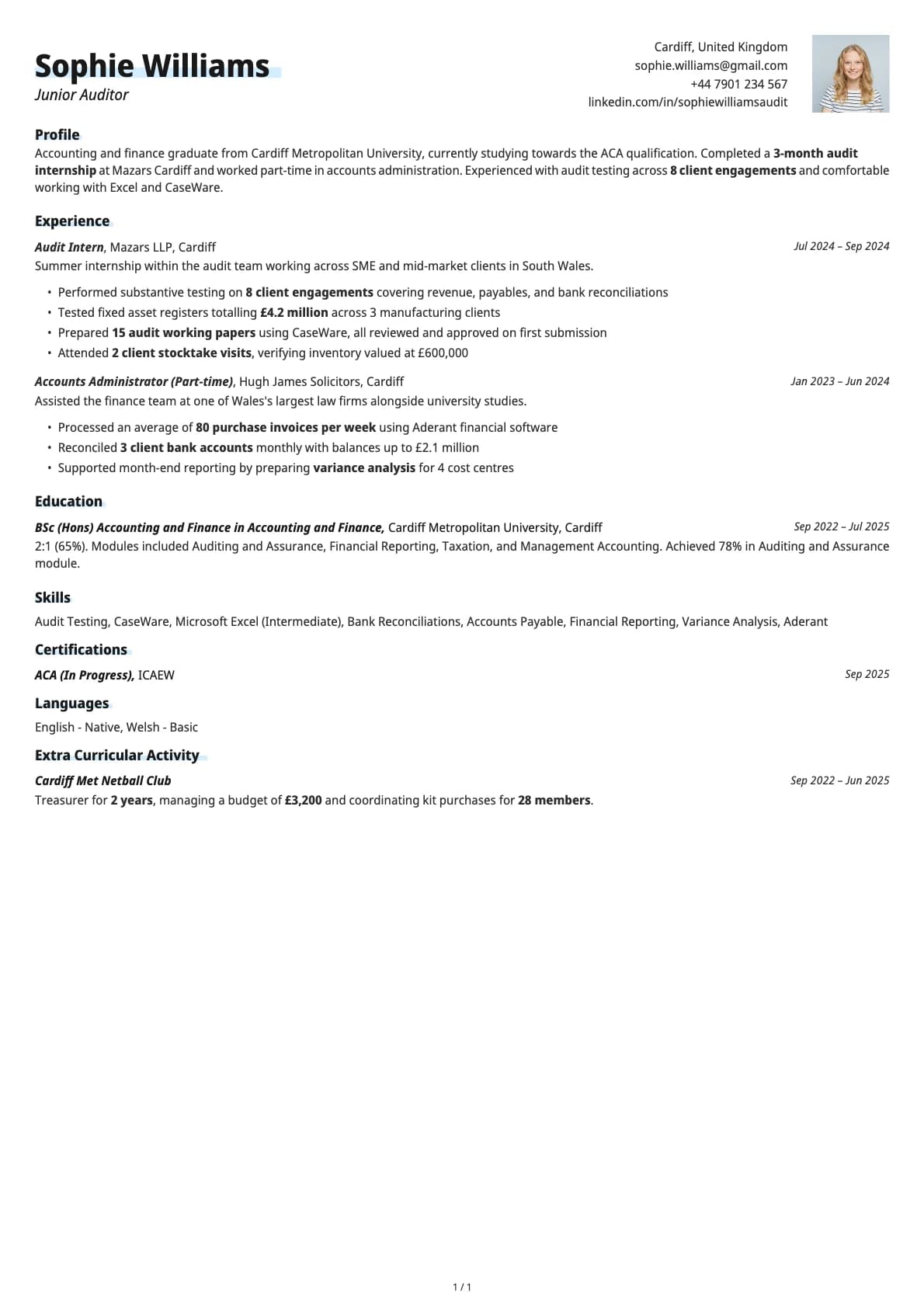
Junior Auditor
A junior auditor resume example with Mazars internship experience and accounts administration background.
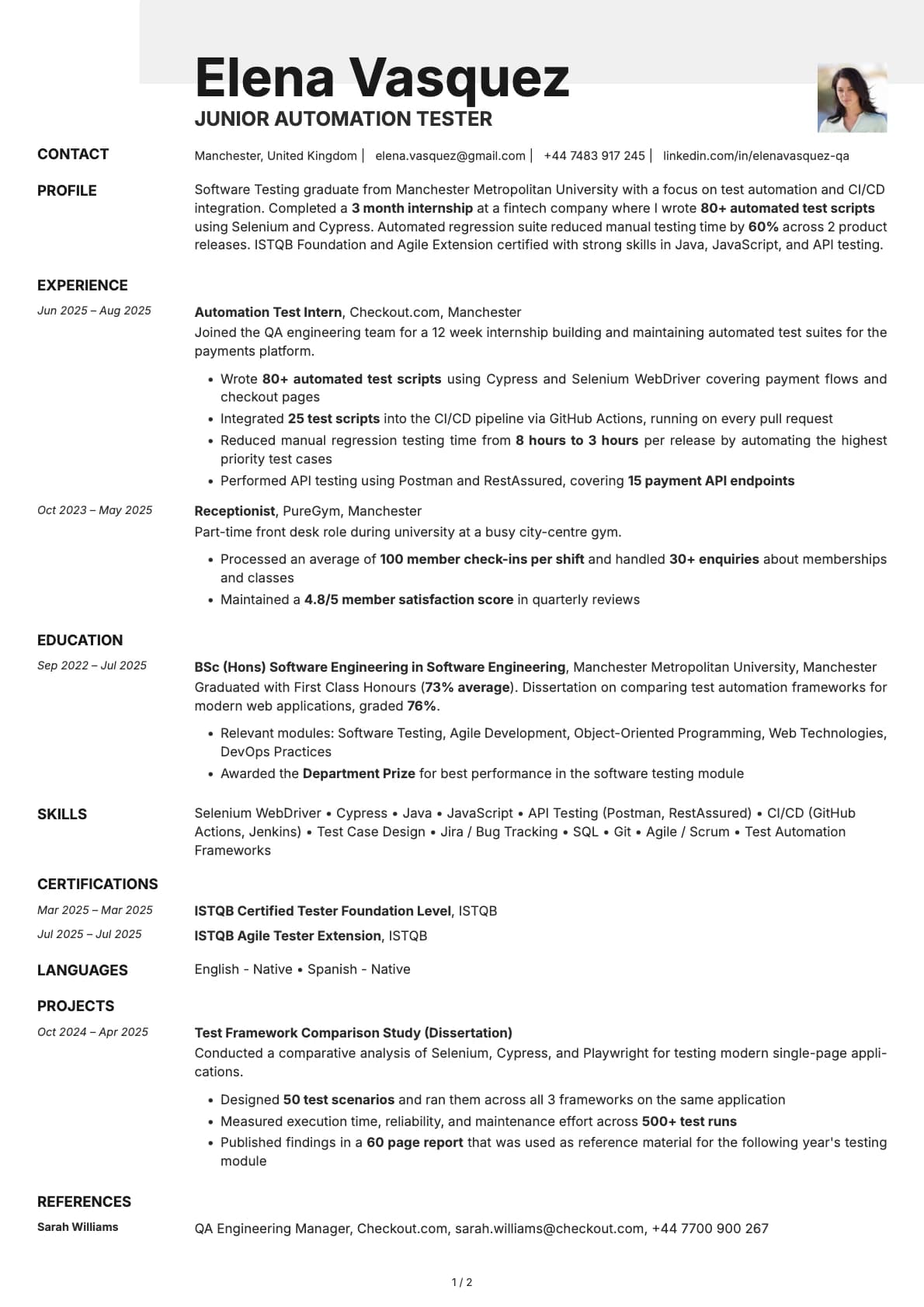
Junior Automation Tester
A junior automation tester resume example for graduates. See how to present test automation scripts, CI/CD integration, and ISTQB certification to land your first automation testing role.
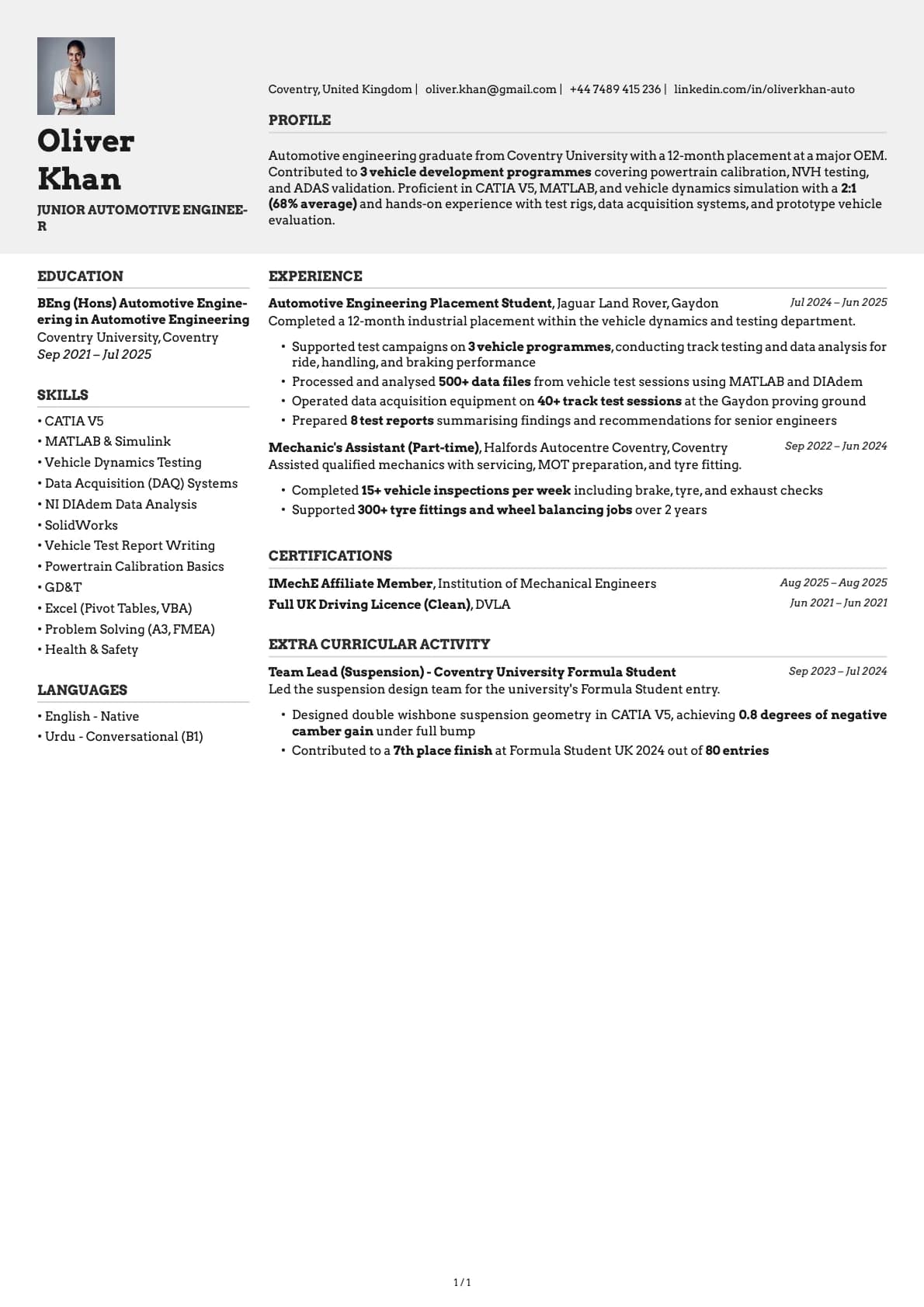
Junior Automotive Engineer
A junior automotive engineer resume example with OEM placement experience, vehicle testing data, and Formula Student achievements.
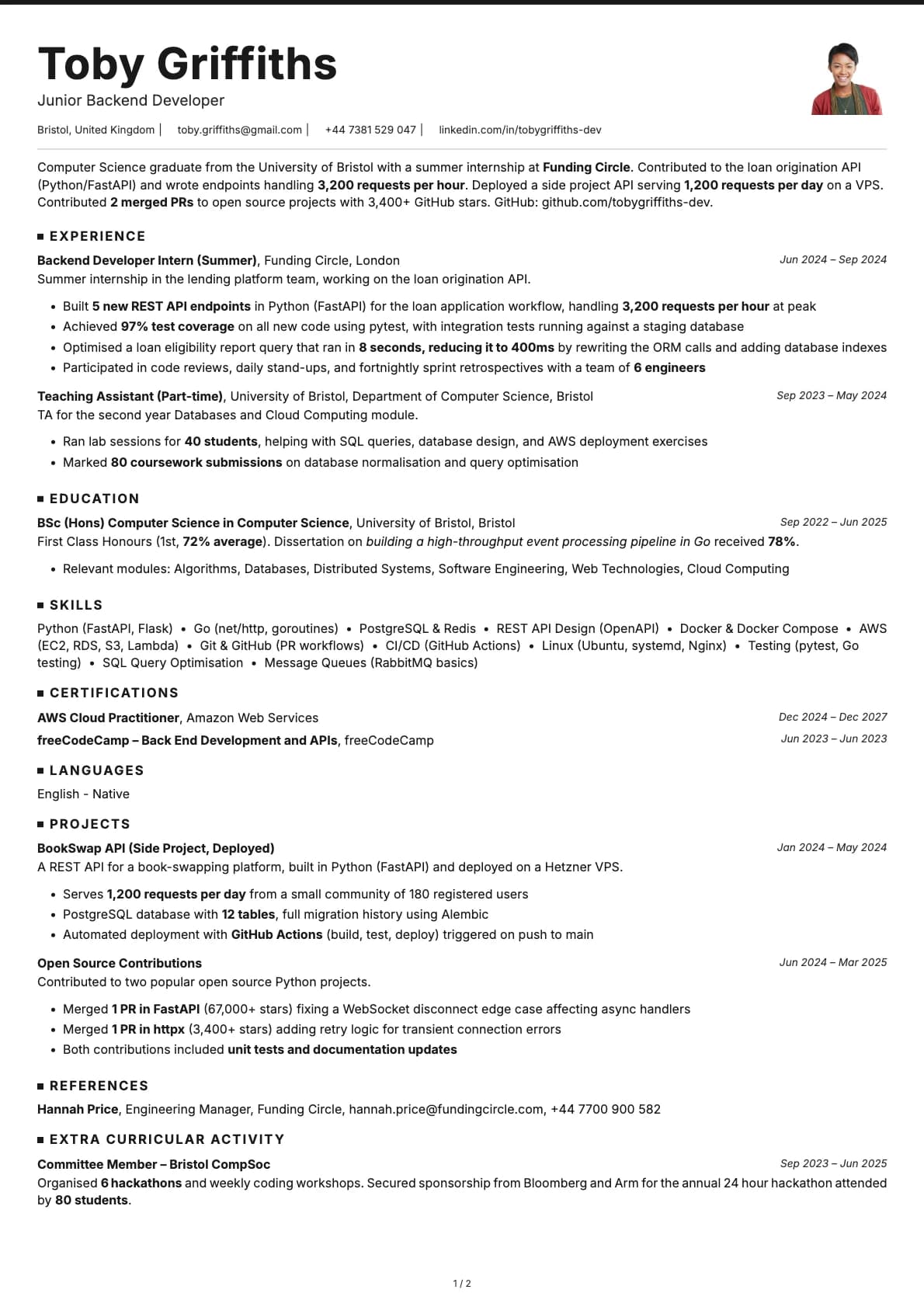
Junior Backend Developer
A junior backend developer resume example with REST API projects, PostgreSQL experience, and deployed services from a Computer Science BSc graduate entering development.
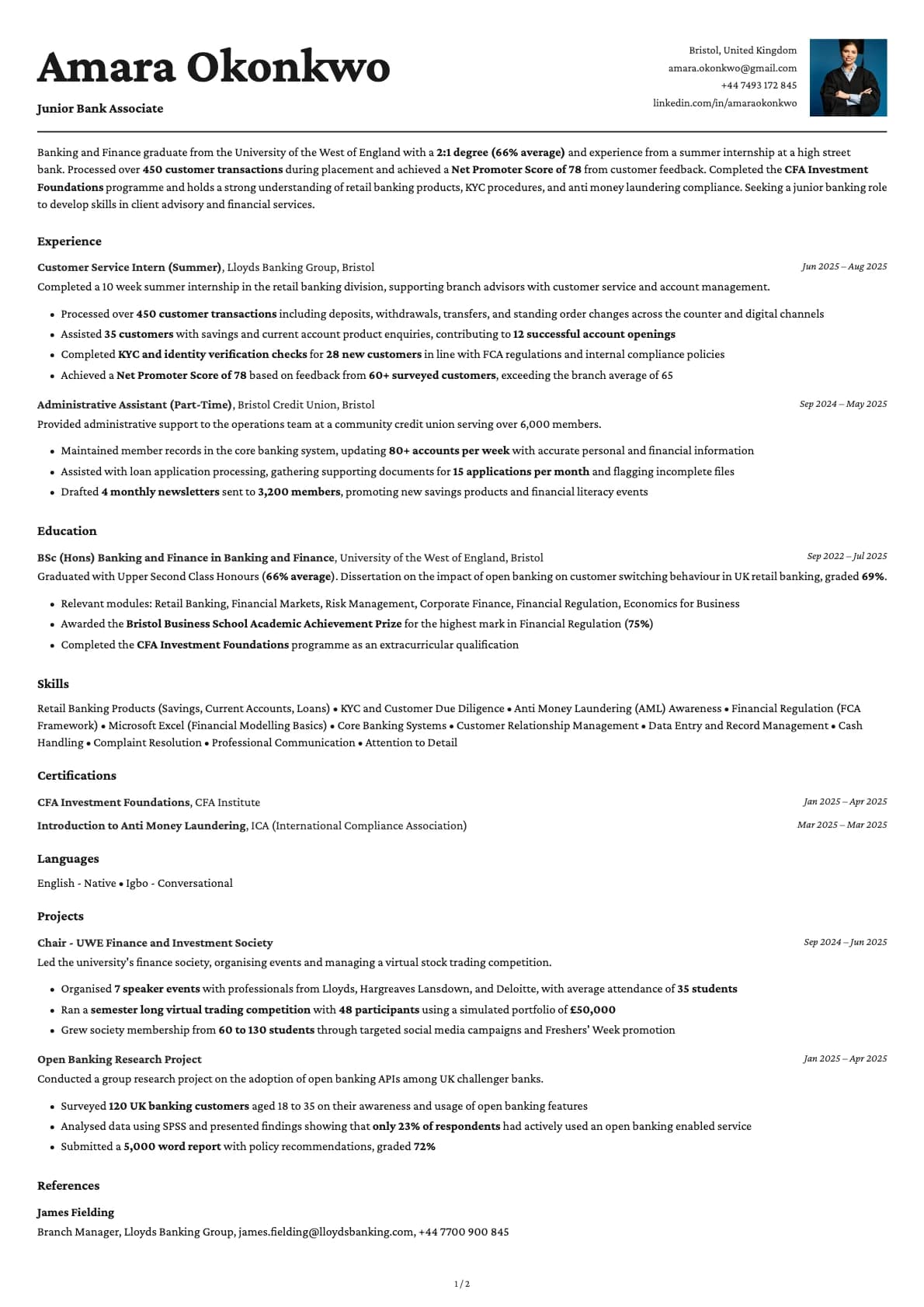
Junior Bank Associate
A junior bank associate resume example for banking graduates. See how to present your compliance knowledge, customer service skills, and internship experience.
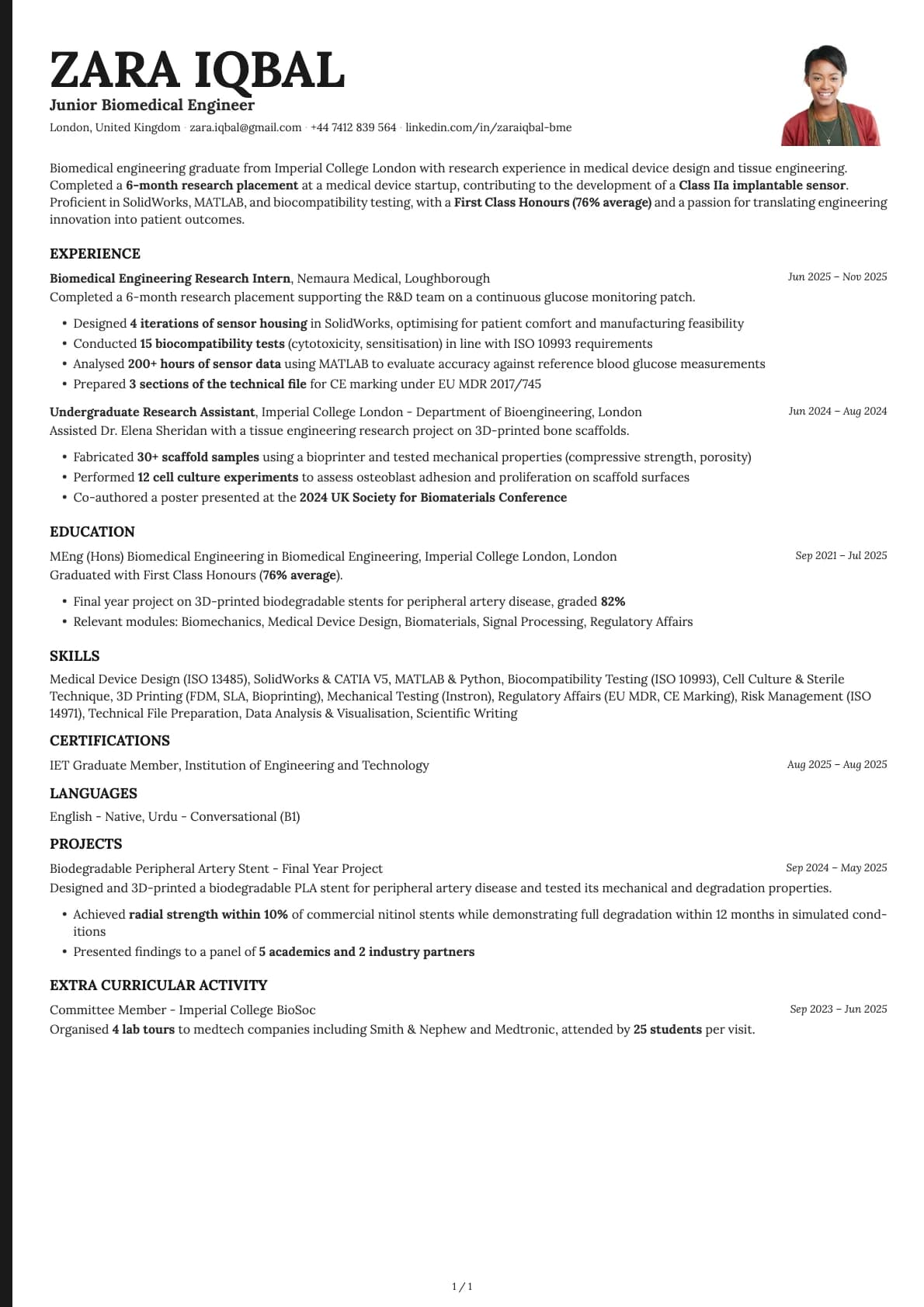
Junior Biomedical Engineer
A junior biomedical engineer resume example with medical device R&D experience, ISO standards knowledge, and research publications.
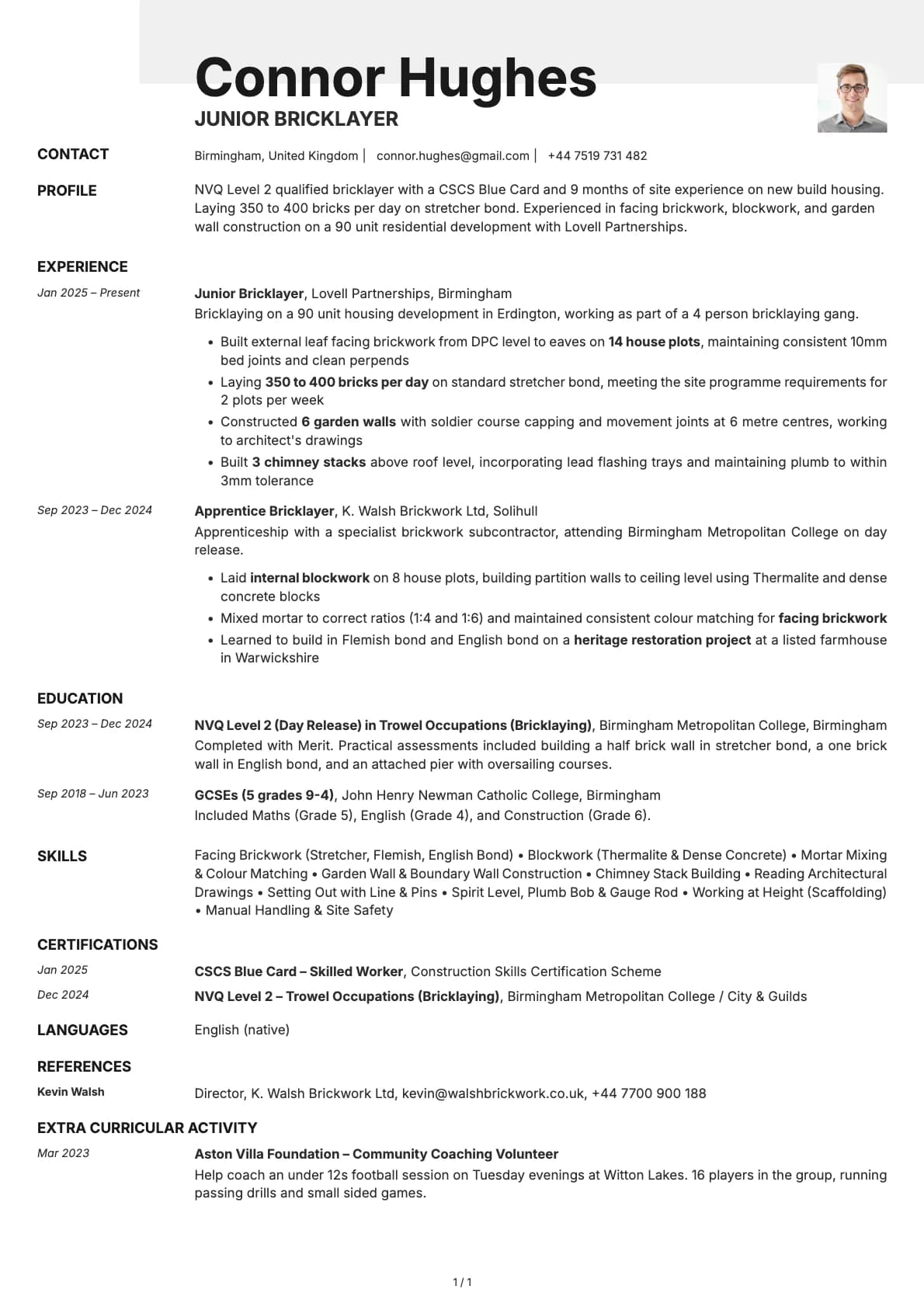
Junior Bricklayer
A junior bricklayer resume example for NVQ qualified bricklayers entering the trade. See how to present your bricklaying skills, CSCS card, and site experience.

Junior Business Analyst
A junior business analyst resume example for career changers. See how to use retail management and a business degree to break into business analysis.
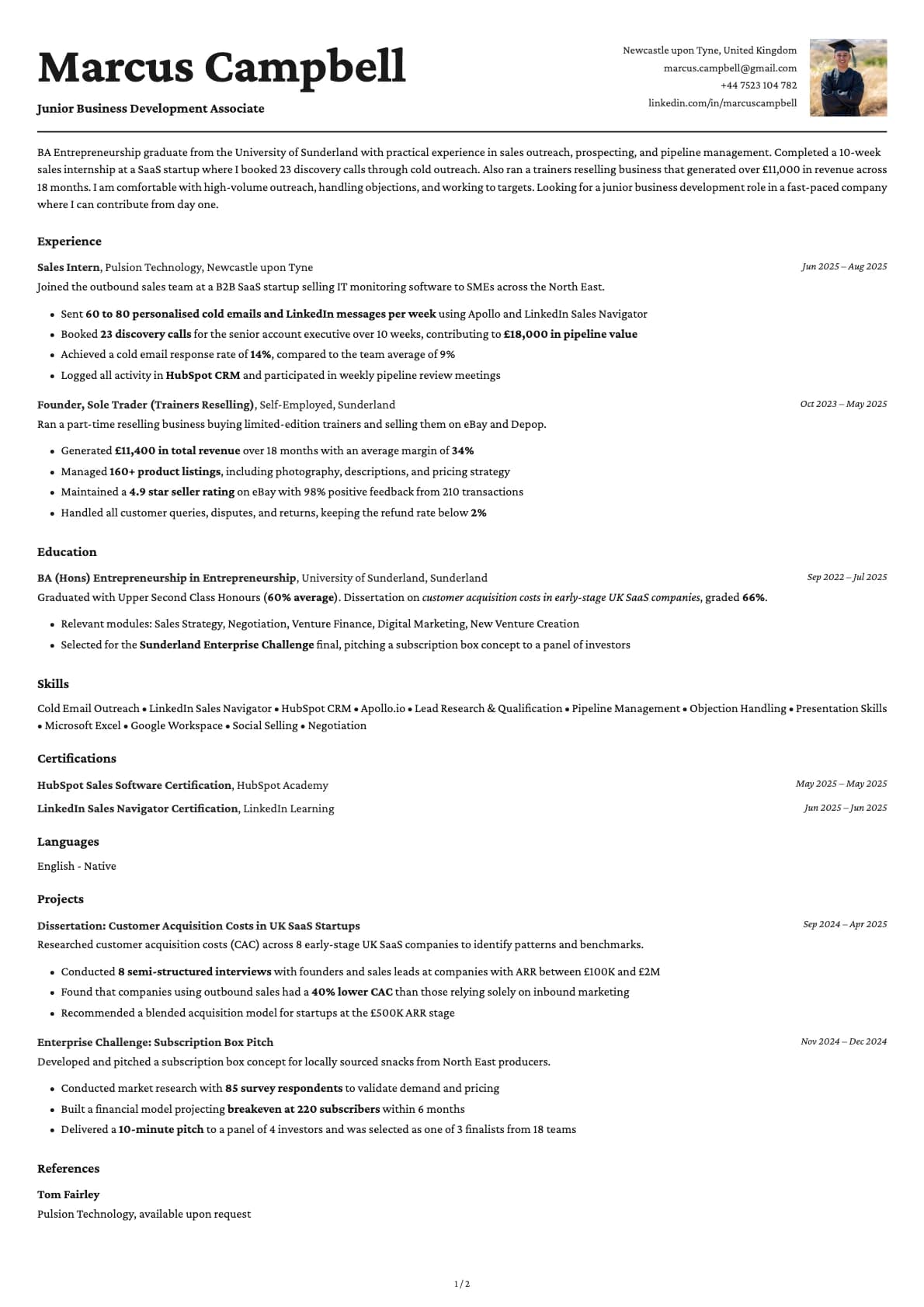
Junior Business Development Associate
A junior business development associate resume example for entrepreneurship graduates. See how cold outreach metrics and startup experience win interviews.
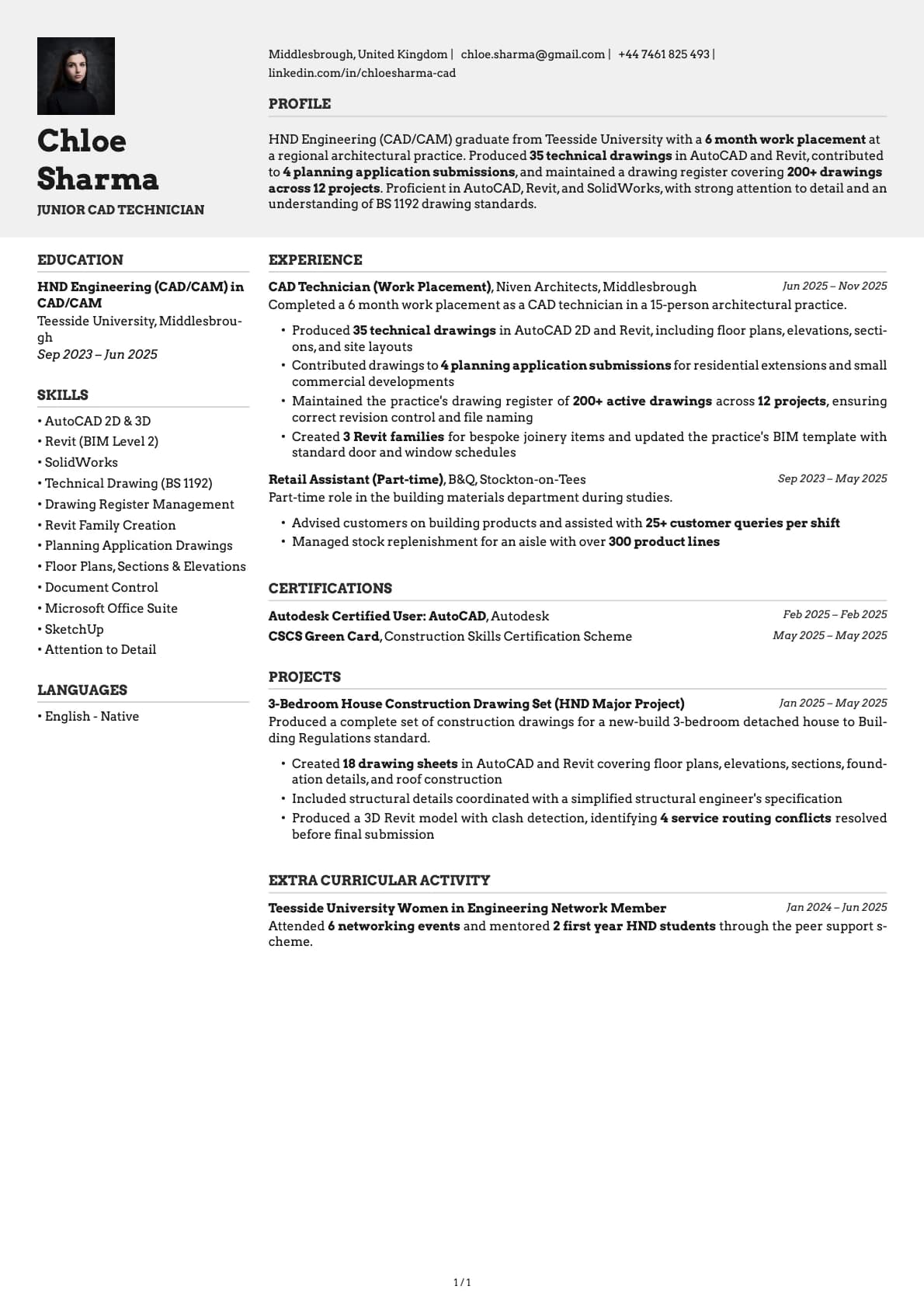
Junior CAD Technician
A junior CAD technician resume example with HND qualification, AutoCAD and Revit proficiency, and architectural practice experience.