Pharmacy Technician Resume Example
A pharmacy technician resume example for newly qualified candidates showing how to present GPhC registration, dispensing accuracy, and clinical skills for NHS and community pharmacy roles.

Laddro Team
Free to use. No account needed to start.
Free to use. No account needed to start.
Overview
Pharmacy technicians sit at the intersection of dispensing accuracy and patient safety. The role requires technical precision in the dispensary alongside the communication skills to counsel patients and support pharmacists. Newly qualified pharmacy technicians often have more practical dispensing experience than many pharmacy graduates, having trained on the job for two years. The challenge is presenting this experience in a way that highlights both the volume of work handled and the quality of care delivered.
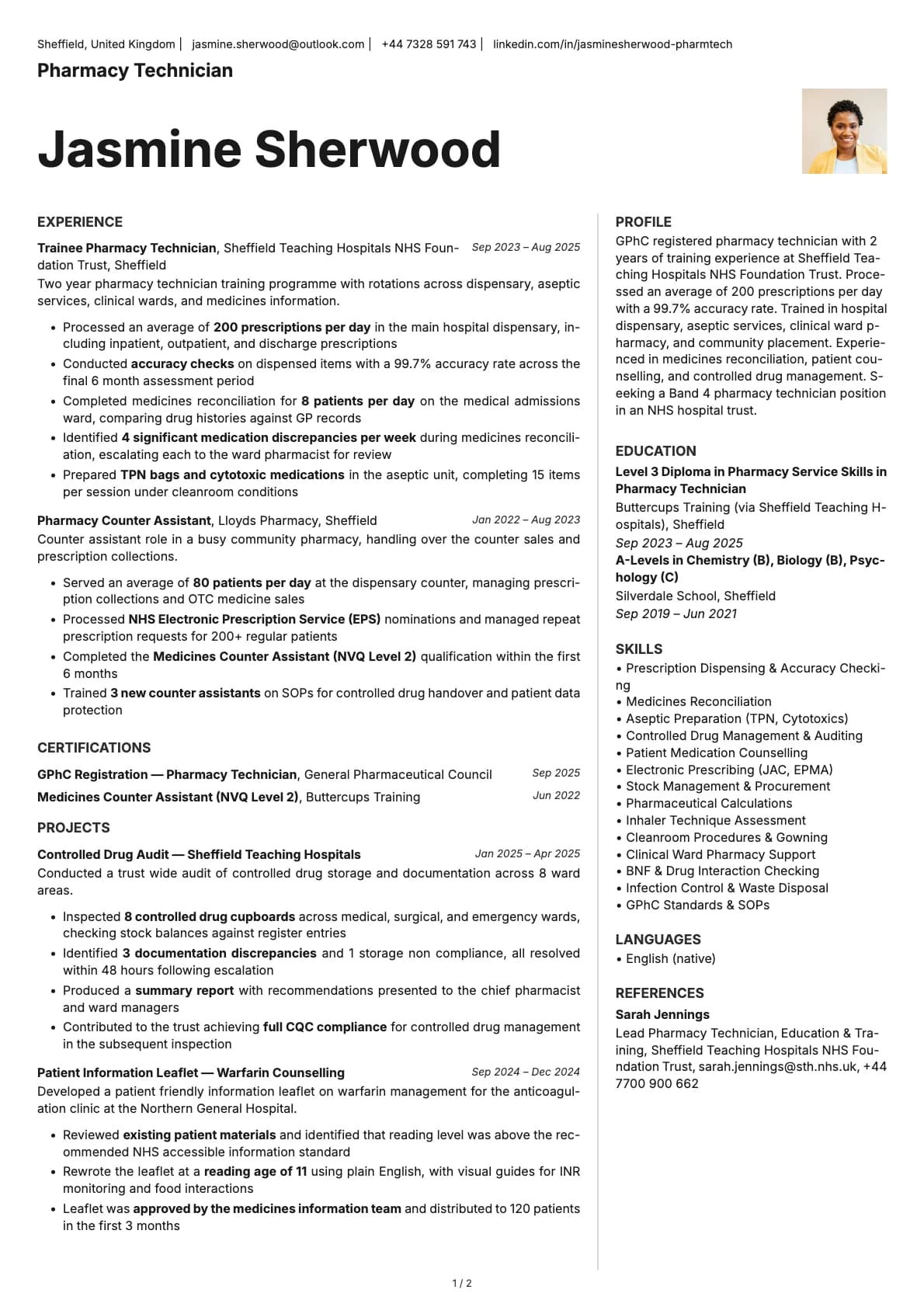
This resume belongs to Jasmine Sherwood, a newly qualified pharmacy technician who completed her Level 3 Diploma in Pharmacy Service Skills while working at Sheffield Teaching Hospitals NHS Foundation Trust. She trained in both hospital and community settings and is now GPhC registered. Her resume works because it presents her training as two years of professional practice, not a qualification she picked up in a classroom.
What Makes This Resume Work
Dispensing volume and accuracy are quantified. Jasmine states she processed an average of 200 prescriptions per day in a hospital dispensary, conducted accuracy checks on dispensed items, and maintained a 99.7% accuracy rate across her final assessment period. She also describes preparing TPN bags and cytotoxic medications in the aseptic unit. These numbers tell a pharmacy manager exactly what throughput and quality she can deliver.
Medicines reconciliation experience stands out. She describes completing medicines reconciliation for an average of 8 patients per day on a medical admissions ward, comparing drug histories against GP records and identifying 4 significant discrepancies per week that required pharmacist review. Medicines reconciliation is one of the most clinically important tasks a pharmacy technician performs, and showing she can do it accurately and at volume is a major selling point.
The training is presented as structured professional development. She describes rotations through dispensary, aseptic services, clinical wards, and medicines information during her two year training programme. She also mentions completing a competency portfolio with 18 assessed workplace activities signed off by her educational supervisor. This structured approach gives an employer confidence in the thoroughness of her training.
Patient facing skills complement the technical ones. She describes counselling patients on medication changes at discharge, explaining inhaler techniques to 10 patients per week in the respiratory outpatient clinic, and supporting the New Medicines Service in a community pharmacy placement. Pharmacy technicians increasingly have patient facing responsibilities, and showing she is comfortable in this role adds value.
Key Takeaways
State your dispensing accuracy rate and daily volume. Pharmacy is fundamentally about getting the right medicine to the right patient at the right dose. Numbers matter more than descriptions, and accuracy rates demonstrate your reliability.
Highlight medicines reconciliation experience specifically. It is one of the highest value clinical tasks a pharmacy technician can perform, and many employers will ask about it directly. Describe the ward setting, the volume, and any errors you identified.
Include aseptic services experience if you have it. TPN preparation, cytotoxic reconstitution, and cleanroom competence are specialist skills that not all pharmacy technicians possess. If you trained in aseptics, make it prominent on your resume.
Build your own version
Open this layout in the builder and swap in your own details. It takes a few minutes.
Free to use. No account needed to start.
Was this resume example helpful?
Rate this example to help us create better content for you.
4.8 average from 104 ratingsRelated resume examples
Graduate Midwife
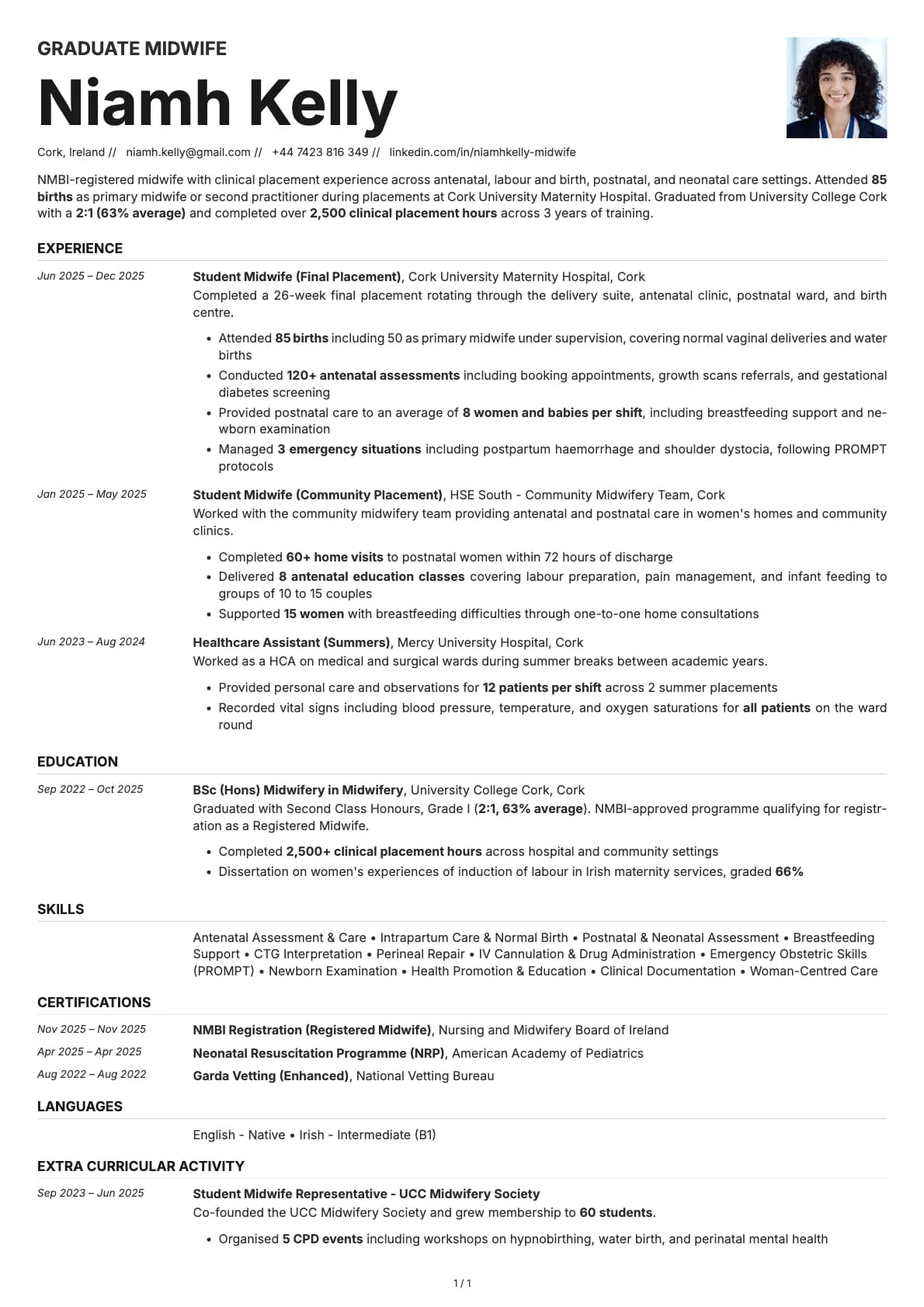
A graduate midwife resume example with birth attendance numbers, NMBI registration, and clinical placement hours for newly qualified midwives.
Graduate Museum Assistant
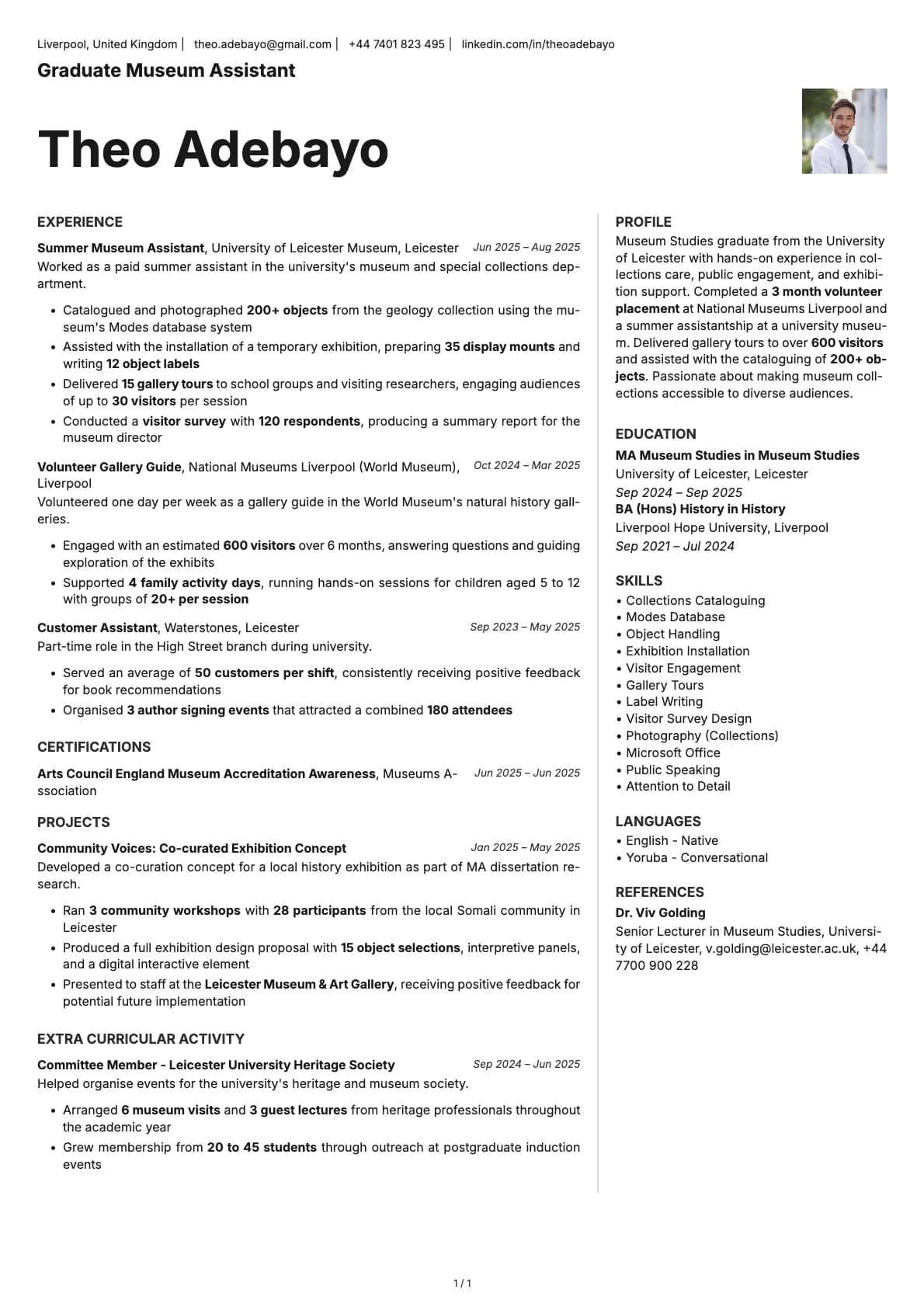
A graduate museum assistant resume example. See how to present collections experience, gallery tours, and museum studies qualifications to land your first museum role.
Graduate Nurse
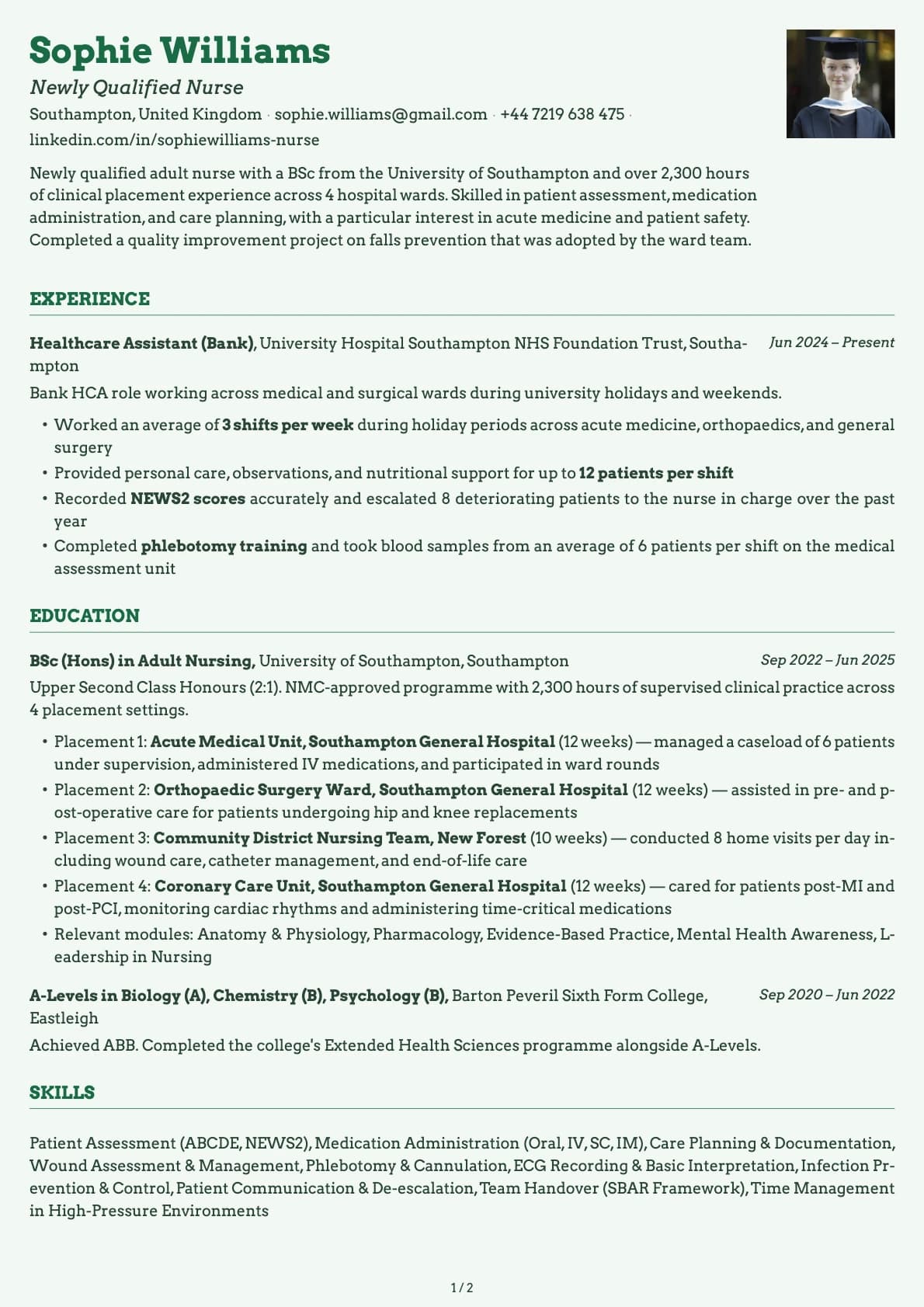
A graduate nurse resume example for recently qualified nurses. See how to present your clinical placements, patient care experience, and NMC registration to land your first nursing role.
Graduate Nursery Practitioner
A graduate nursery practitioner resume example with EYFS experience, key person responsibilities, and Level 3 Early Years Educator qualification.
Graduate Operations Analyst
A graduate operations analyst resume example with Jaguar Land Rover placement and data analysis skills.
Graduate Optometrist
A graduate optometrist resume example with pre-registration experience, GOC registration, and eye examination numbers for newly qualifying optometrists.
Graduate Paramedic
A graduate paramedic resume example with frontline placement hours, HCPC registration, and emergency call numbers for newly qualified paramedics.
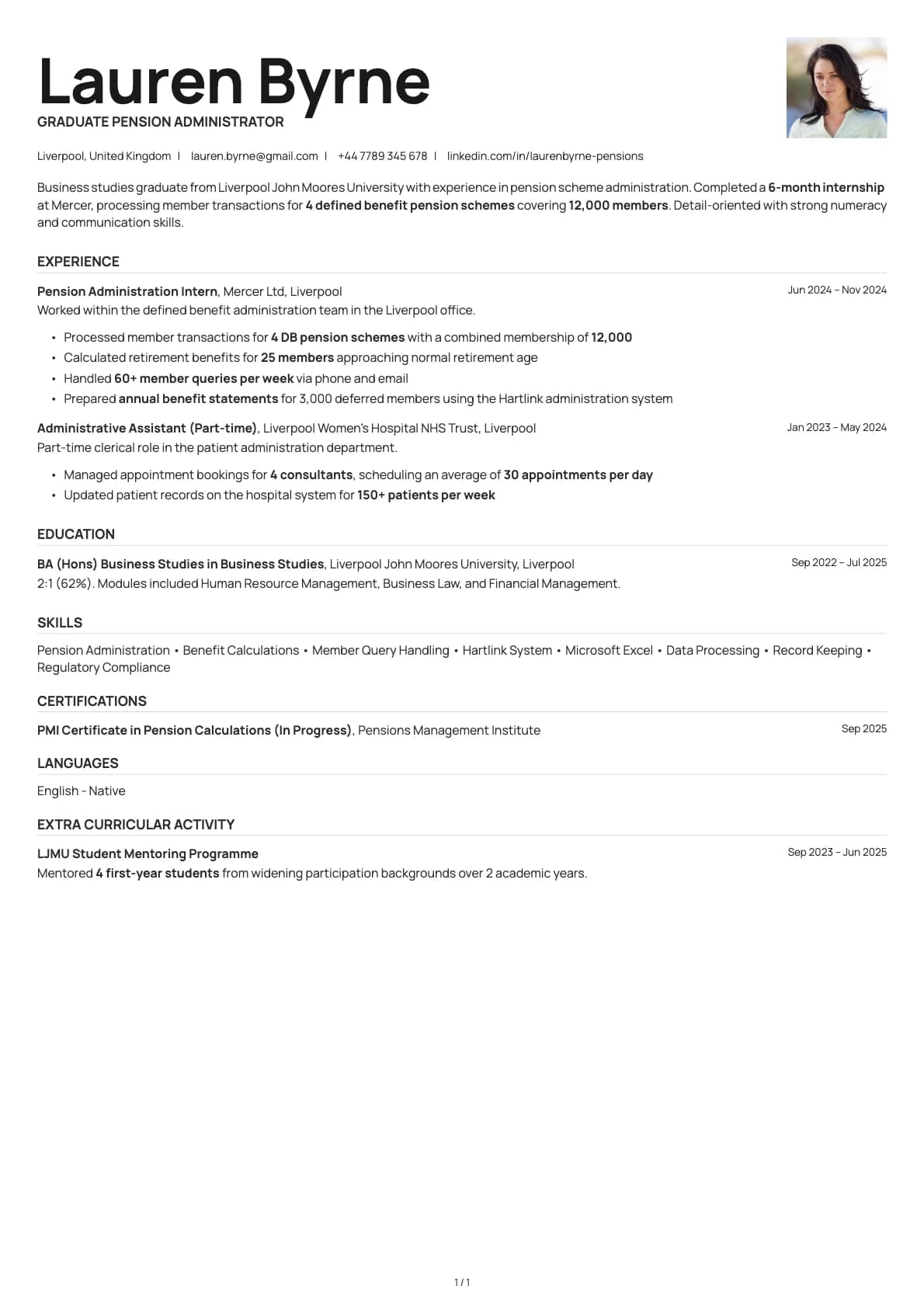
Graduate Pension Administrator
A graduate pension administrator resume example with Mercer internship and benefit calculation experience.
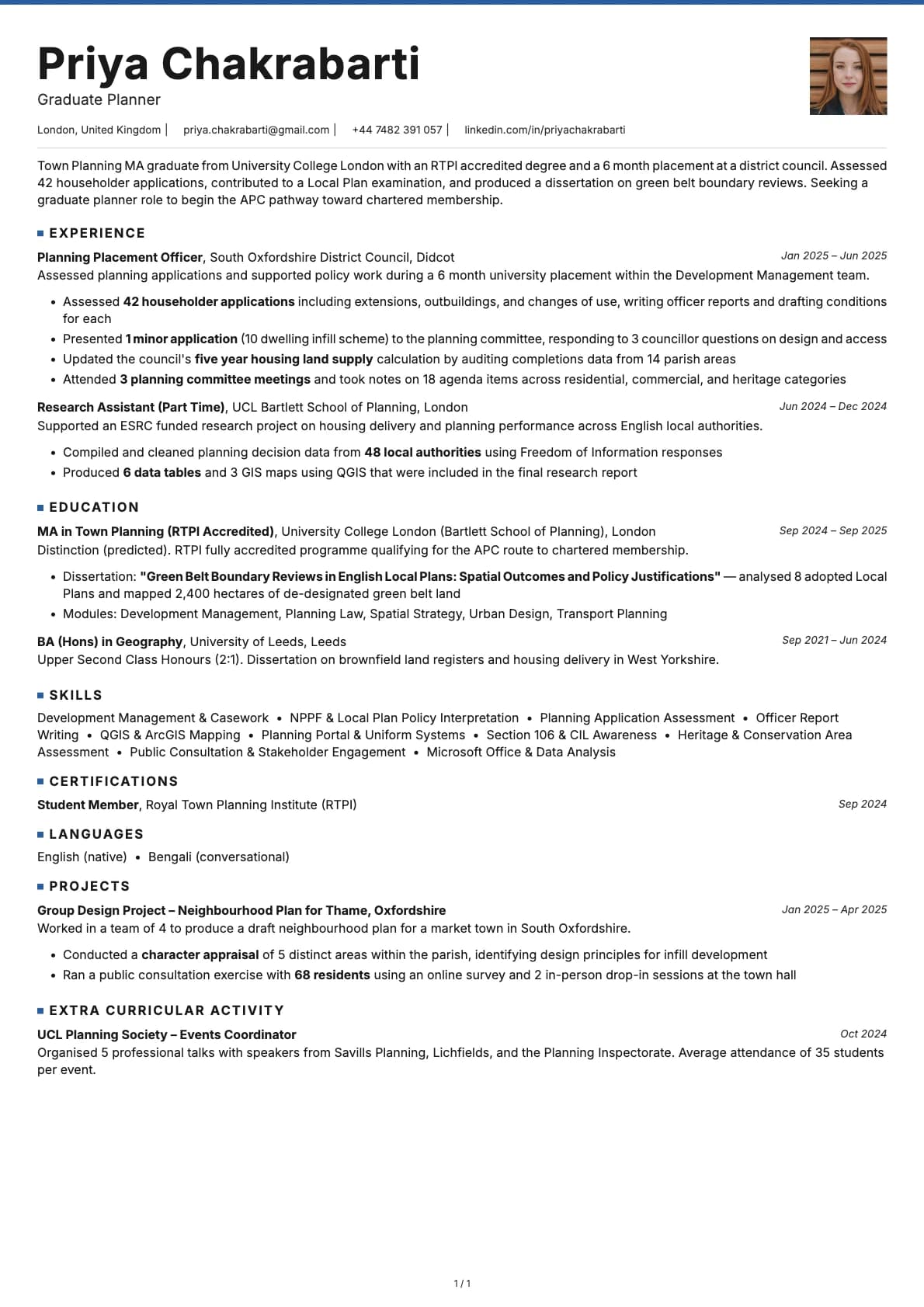
Graduate Planner
A graduate planner resume example for town planning MA graduates. See how to present your RTPI accredited degree, planning applications experience, and policy knowledge.
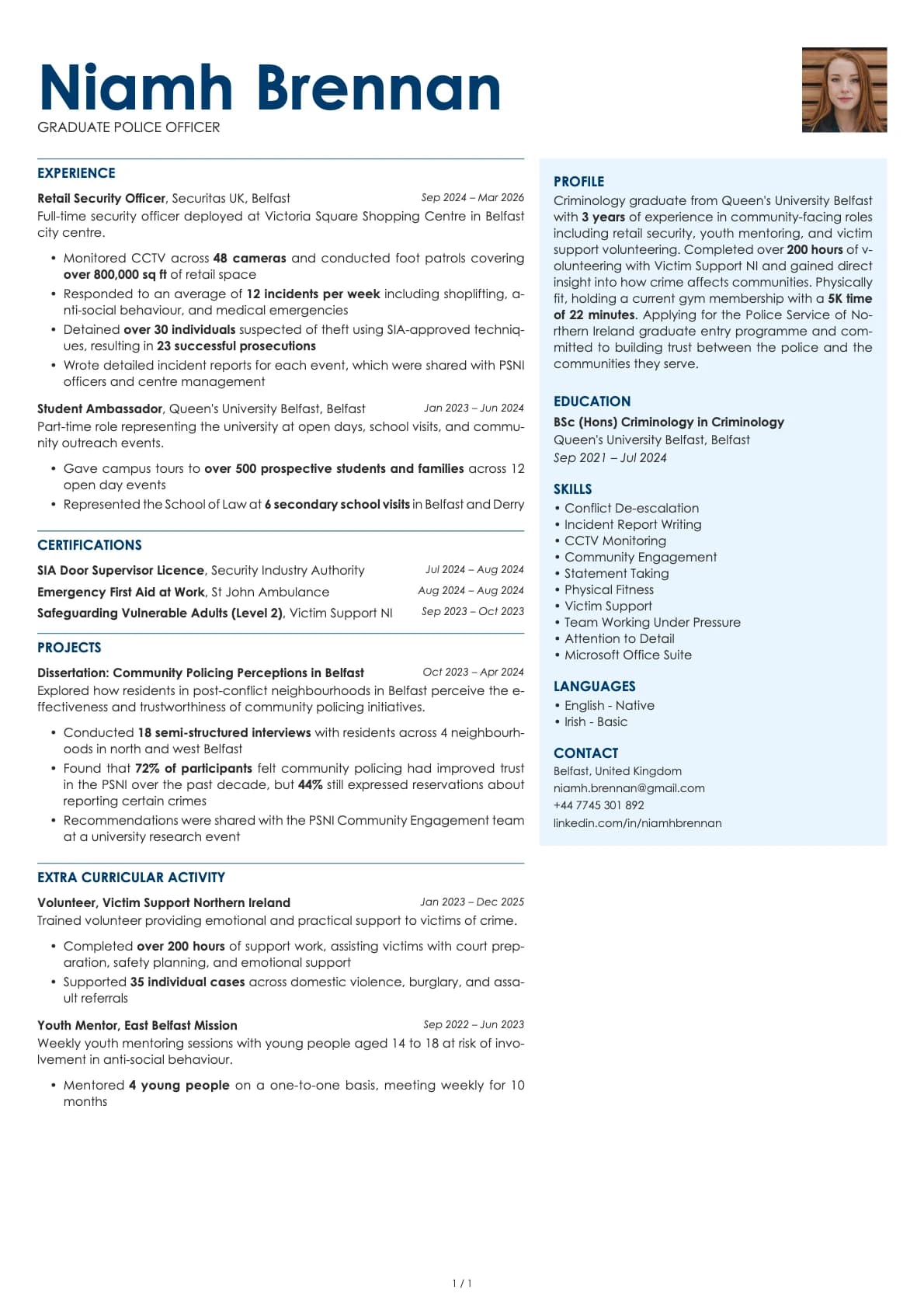
Graduate Police Officer
A graduate police officer resume example showing how to turn retail security, victim support volunteering, and a criminology degree into a strong PSNI application.
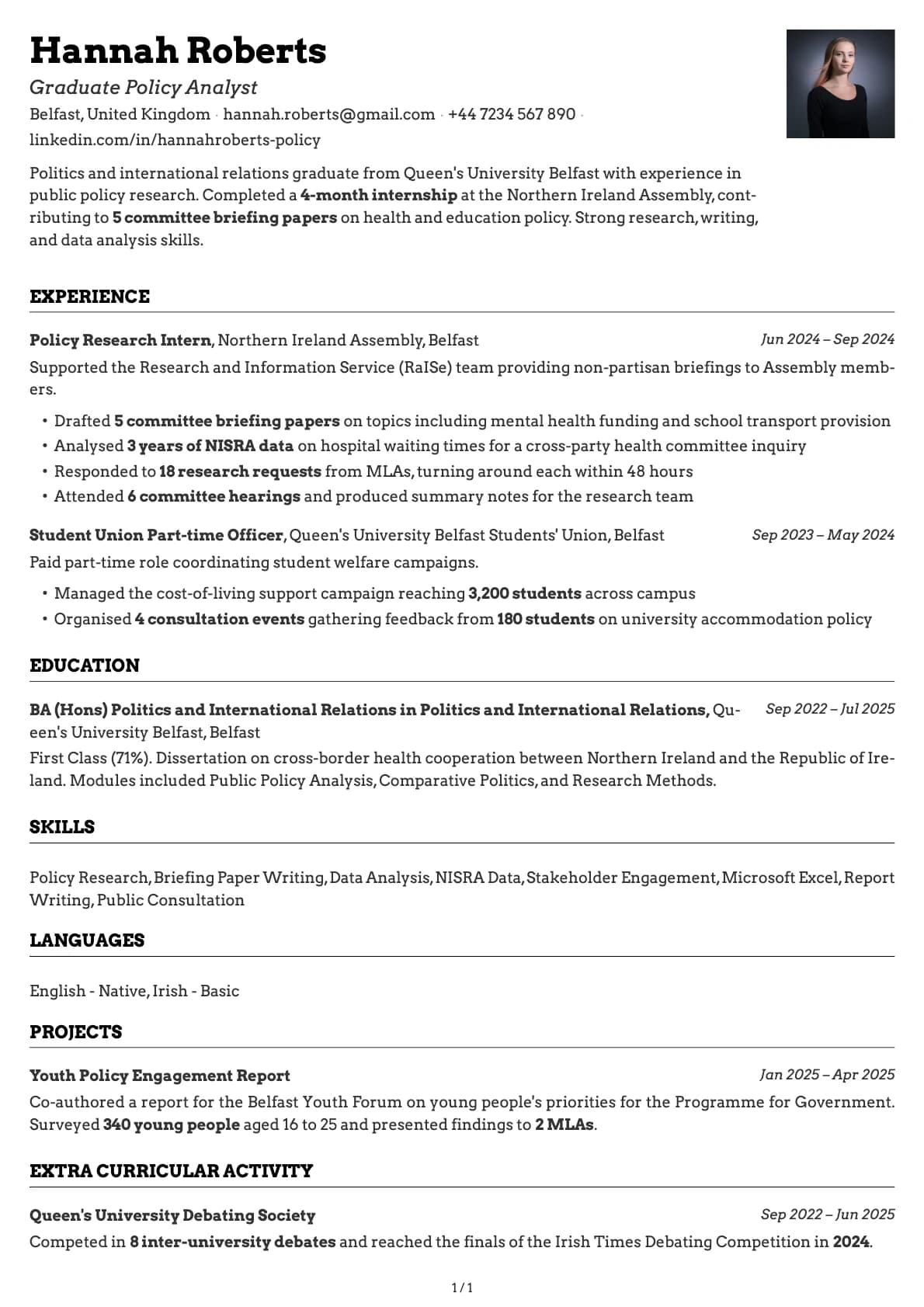
Graduate Policy Analyst
A graduate policy analyst resume example with Northern Ireland Assembly internship and public policy research experience.
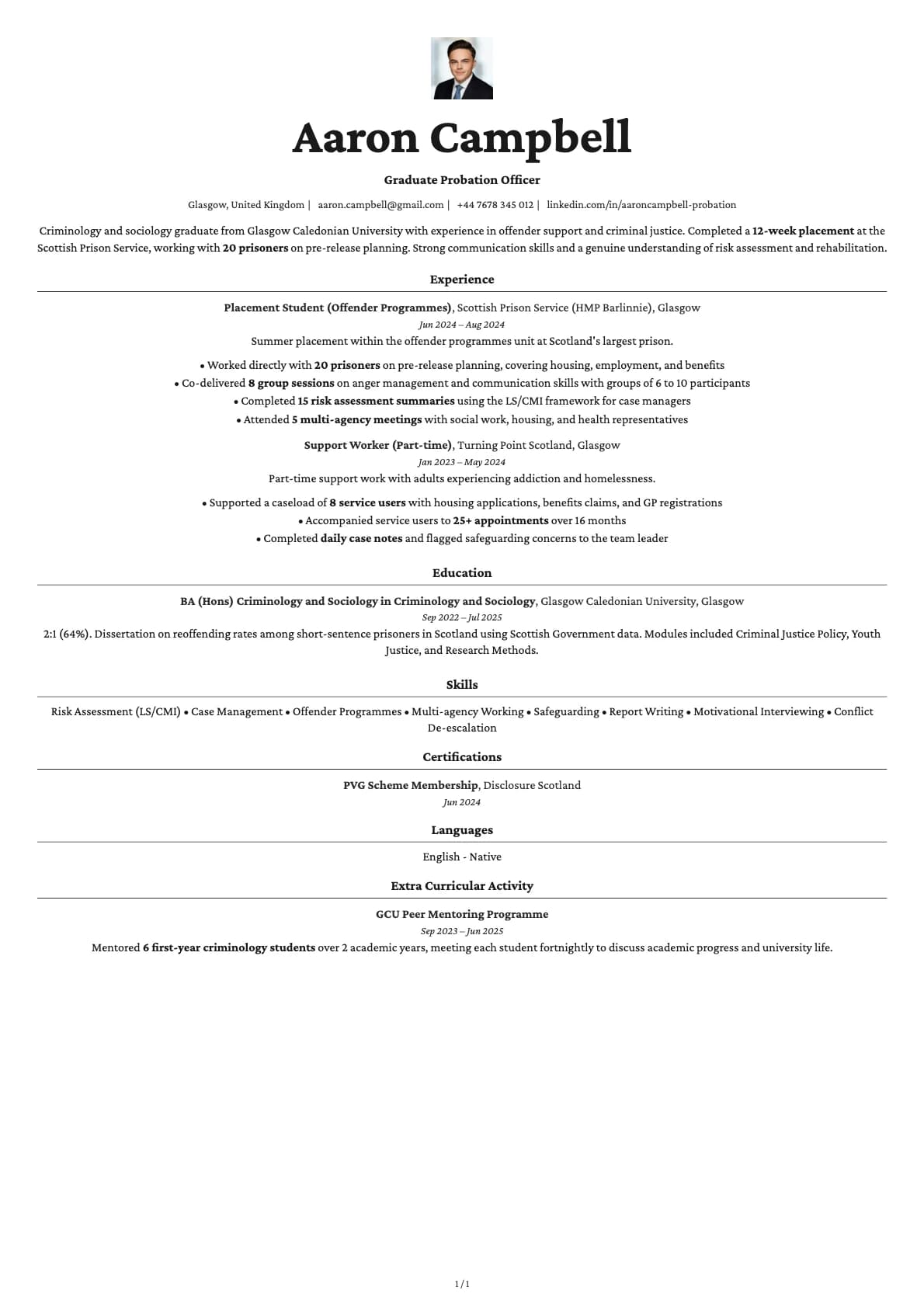
Graduate Probation Officer
A graduate probation officer resume example with prison placement experience and risk assessment skills.