Trainee Solicitor Resume Example
A trainee solicitor resume example for recent law graduates. Learn how to present your law degree, vacation schemes, and pro bono experience to secure a training contract.

Laddro Team
Free to use. No account needed to start.
Free to use. No account needed to start.
Overview
Training contract applications are among the most competitive in any profession. Law firms receive thousands of applications for a handful of places, and your resume needs to do more than list your LLB modules. Firms want evidence that you have engaged with real legal work, understand how a practice operates, and can communicate with precision.
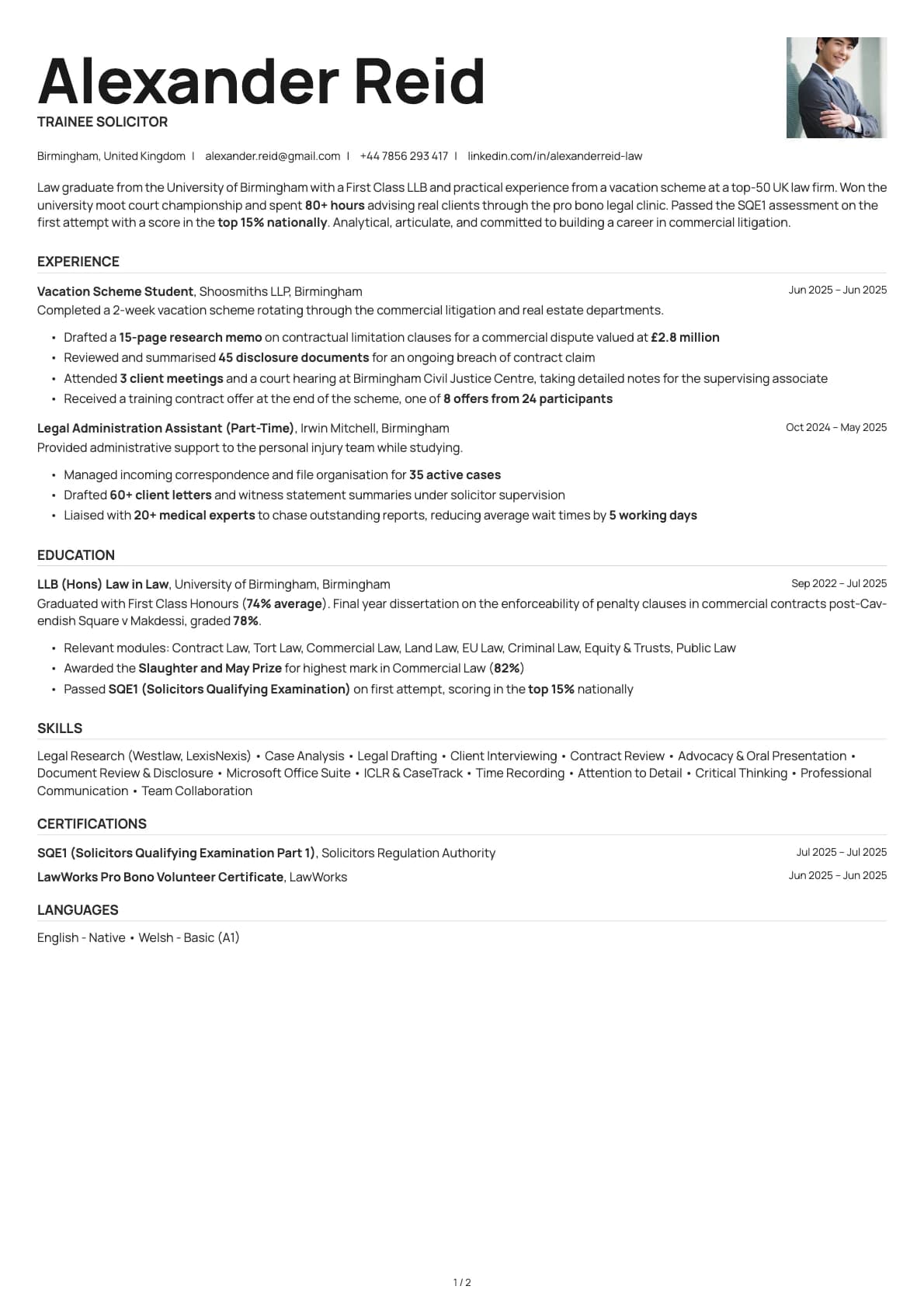
This resume belongs to Thomas Ashworth, a law graduate from the University of Bristol who completed the SQE route. He did a vacation scheme at a regional firm, volunteered at a legal advice clinic, and was an active member of the university mooting society. His resume works because it connects academic credentials to practical legal experience in a way that feels thorough and specific.
What Makes This Resume Work
The vacation scheme is described in operational detail. Thomas does not just say he spent two weeks at a law firm. He states that he drafted three client attendance notes, assisted with disclosure review on a commercial dispute involving over 2,000 documents, and sat in on four client meetings across the commercial property and employment teams. This tells a partner exactly what level of work he is comfortable with.
Pro bono work demonstrates client facing skills. He volunteered at the university's free legal advice clinic for two terms, advising members of the public on housing and employment issues during fortnightly sessions. He saw 30 clients over that period and prepared written summaries for each case. Pro bono work is taken seriously by law firms because it shows genuine commitment to the profession, not just a career choice.
Mooting achievements are included with specifics. He reached the semi finals of the university mooting competition and was named best speaker in two preliminary rounds. These details show advocacy skills, which are relevant even for solicitor roles where oral arguments arise during hearings.
SQE results and degree classification are clear. His 2:1 LLB and SQE1 pass are listed prominently. He also mentions key modules: Contract Law, Land Law, Equity and Trusts, and Commercial Law. Law firms will look for specific subject knowledge, and listing these modules saves the recruiter from guessing.
Key Takeaways
Describe your vacation scheme or work experience with the same precision you would use in a legal document. Name the practice areas, describe the tasks, and mention volumes where possible. "Reviewed documents" is vague. "Assisted with disclosure review on a dispute involving 2,000+ documents" is specific.
Pro bono and clinic work is genuinely valued. If you advised real clients, state how many, how often, and what areas of law you covered. This experience often matters more than academic prizes.
Include mooting, negotiation competitions, or law society roles. These demonstrate skills that cannot be tested on a written exam: confidence, structured thinking, and the ability to perform under pressure.
Build your own version
Open this layout in the builder and swap in your own details. It takes a few minutes.
Free to use. No account needed to start.
Was this resume example helpful?
Rate this example to help us create better content for you.
4.8 average from 108 ratingsRelated resume examples
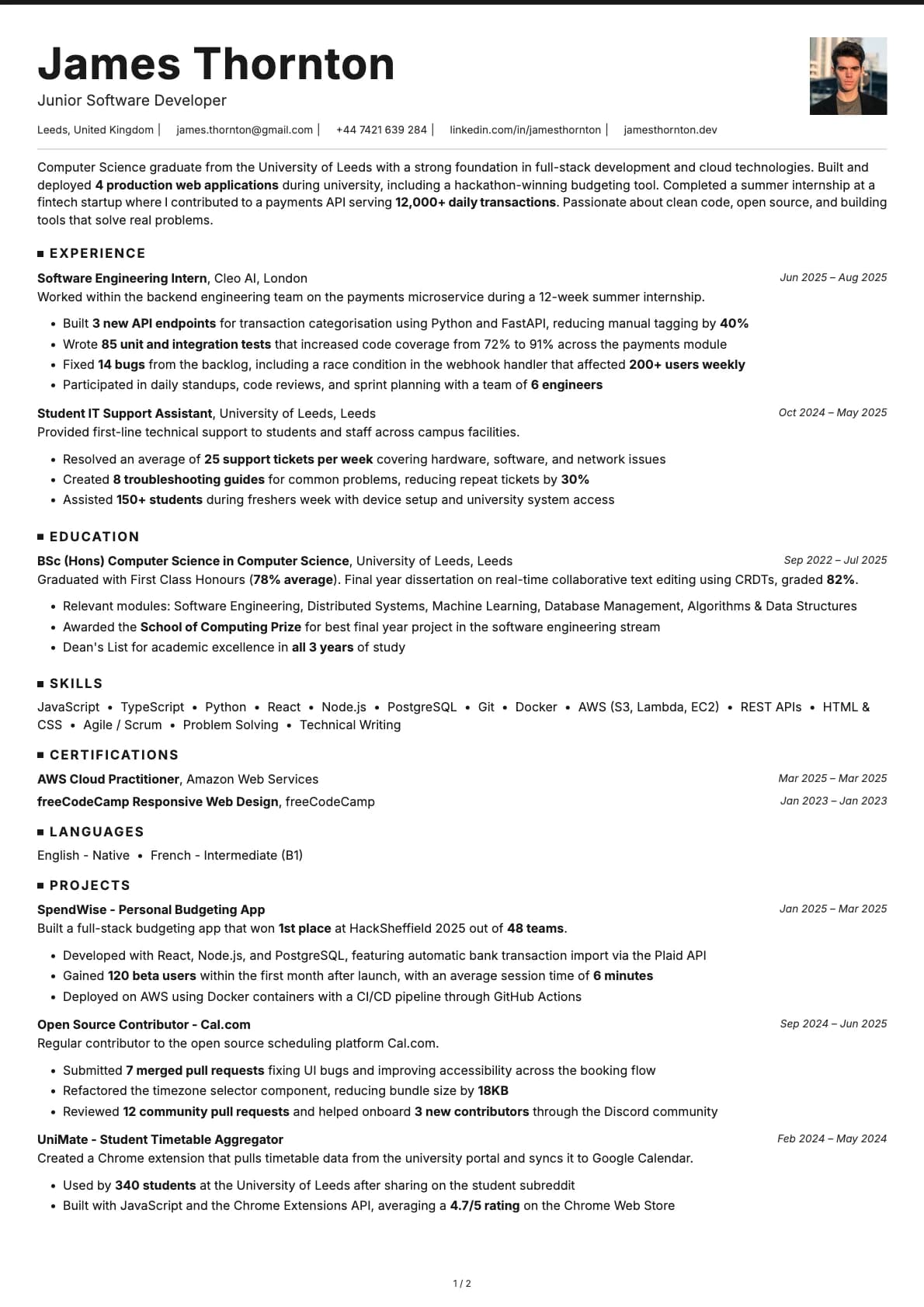
Junior Software Developer
A junior software developer resume example for recent graduates. See how to present personal projects, technical skills, and internship experience to land your first dev role.
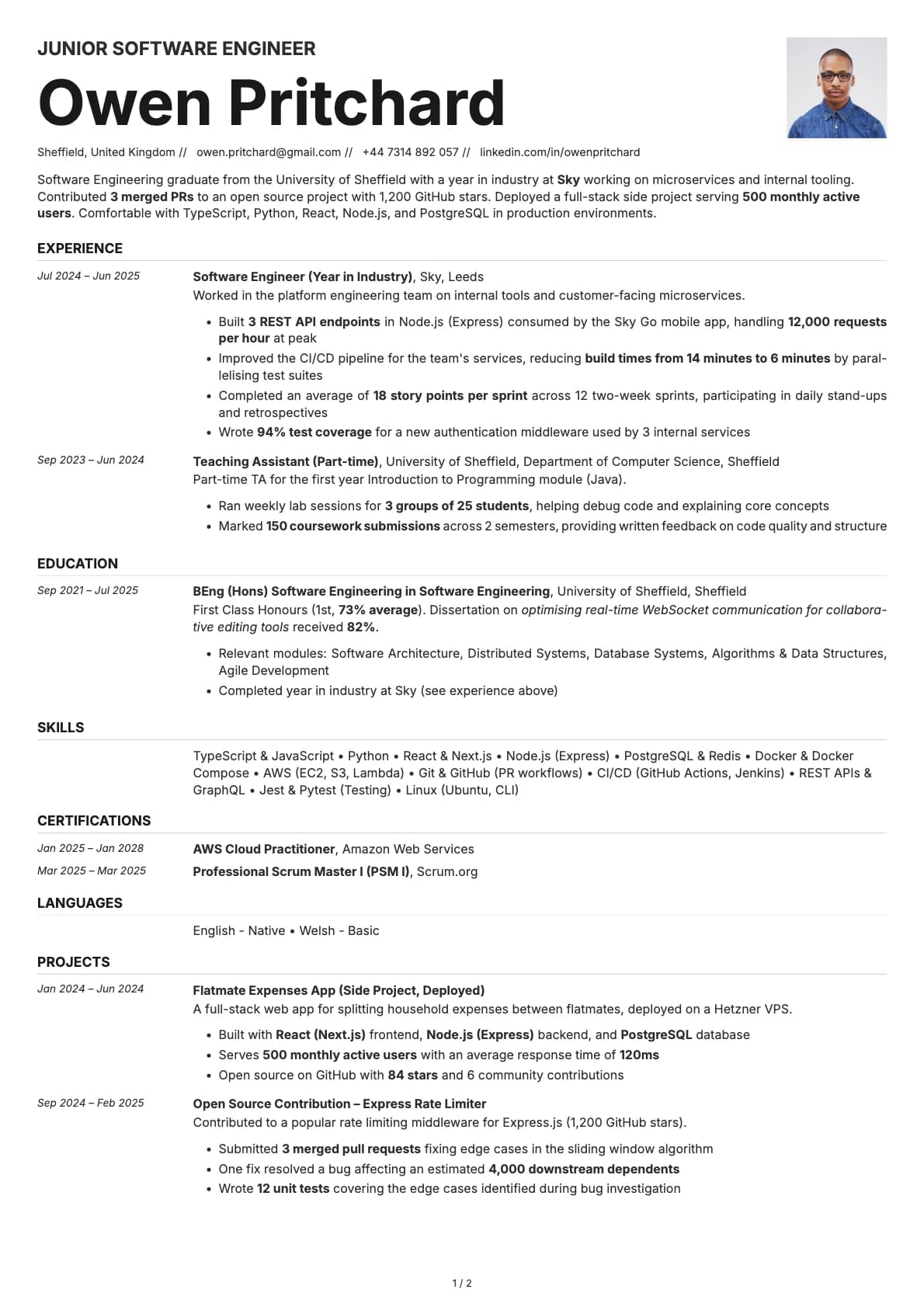
Junior Software Engineer
A junior software engineer resume example with deployed projects, GitHub contributions, and agile sprint experience from a Software Engineering BEng graduate.
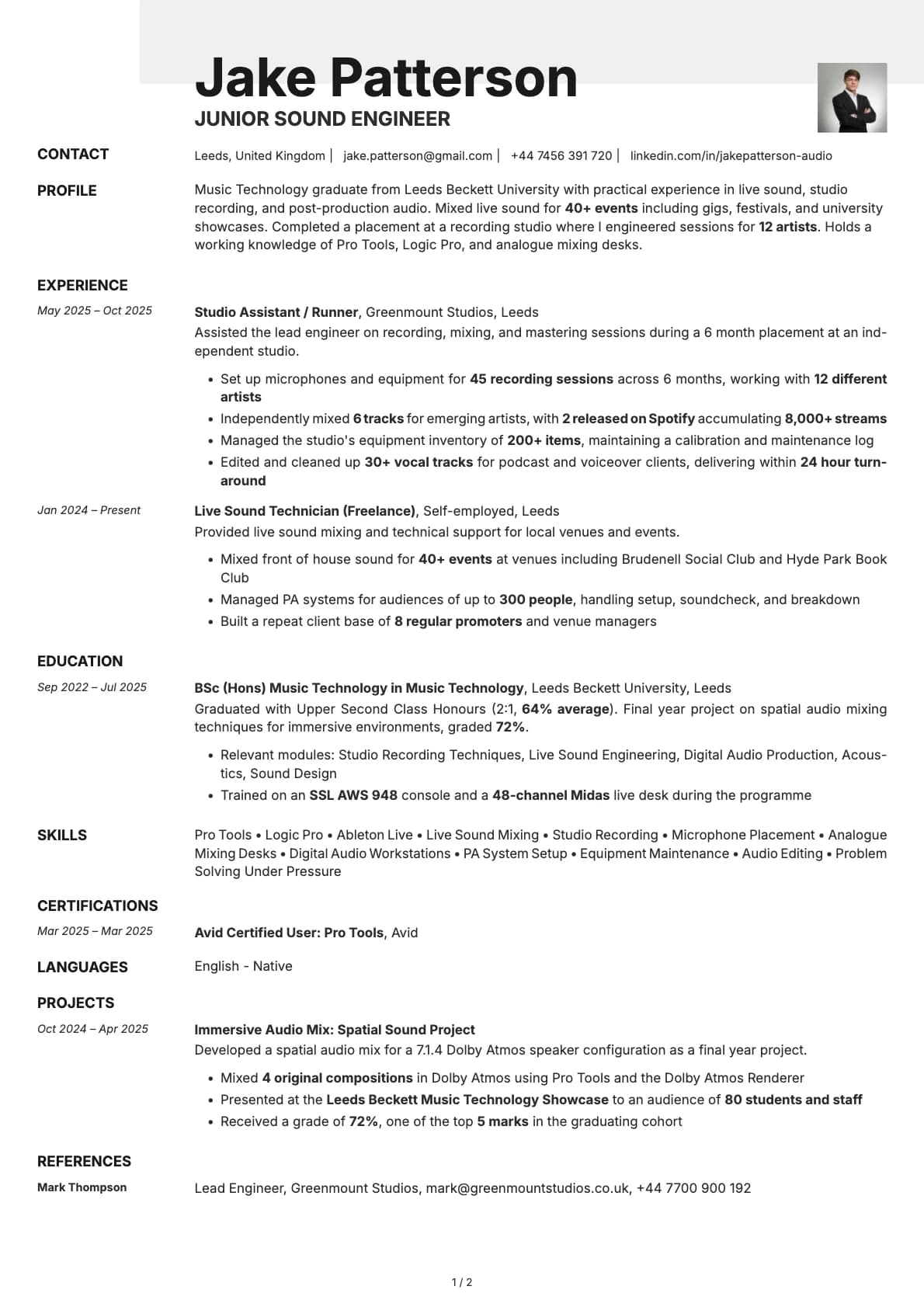
Junior Sound Engineer
A junior sound engineer resume example for graduates. Learn how to present live sound, studio recording, and audio production experience to land your first engineering role.
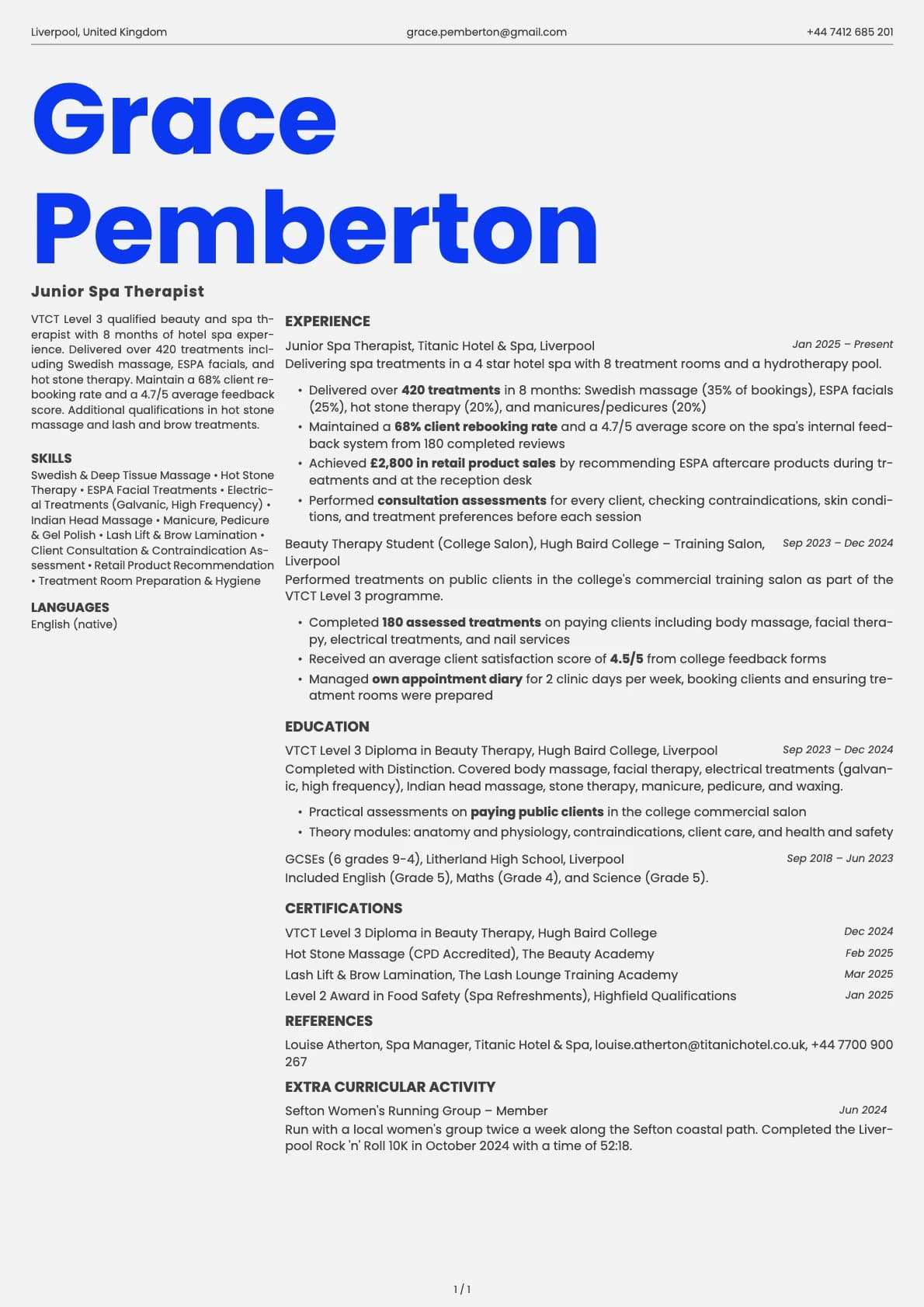
Junior Spa Therapist
A junior spa therapist resume example for VTCT Level 3 qualified therapists. See how to present your treatment skills, client feedback, and spa industry experience.
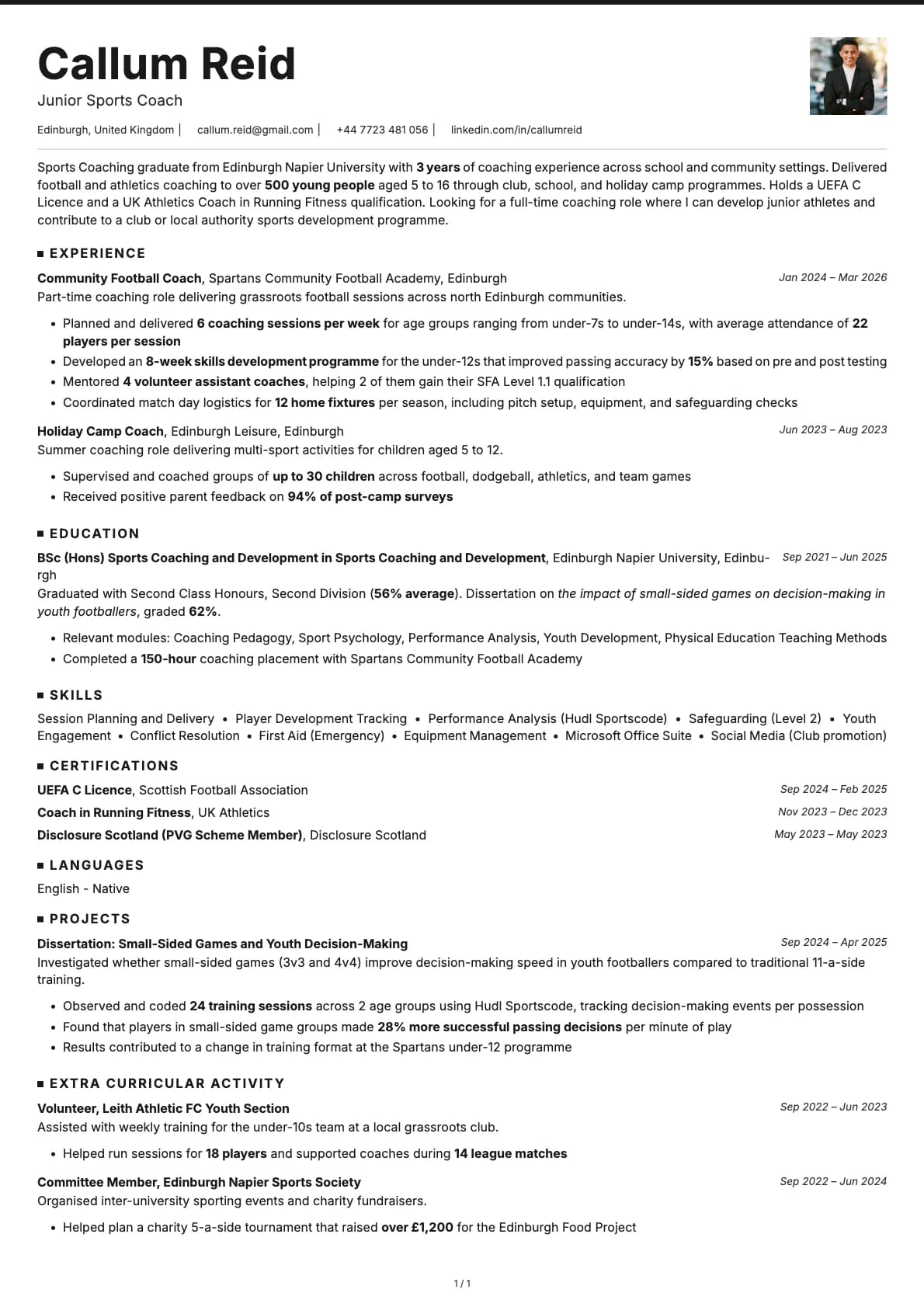
Junior Sports Coach
A junior sports coach resume example showing how to combine a coaching degree, UEFA C Licence, and grassroots football experience into a full-time coaching career.
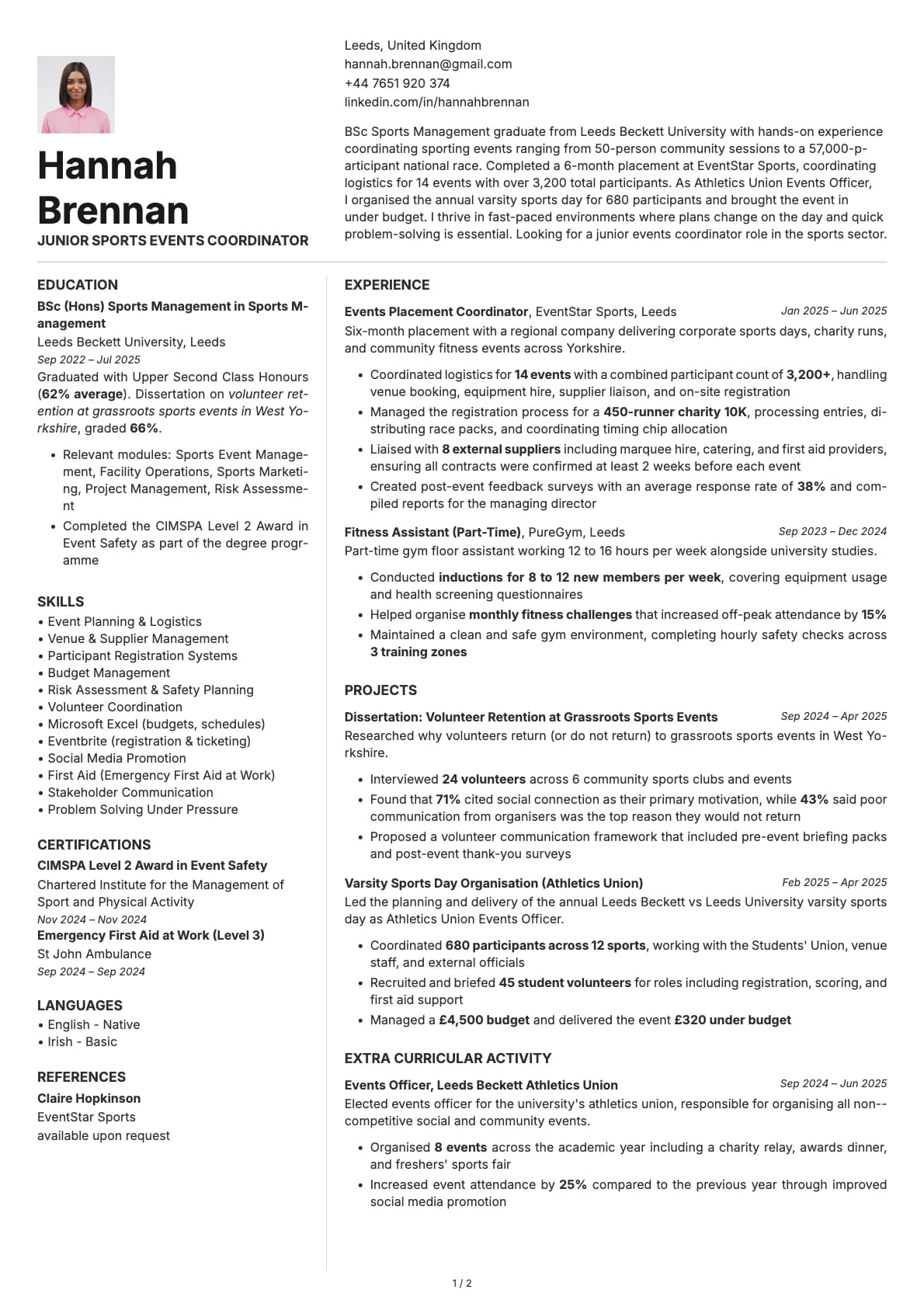
Junior Sports Events Coordinator
A junior sports events coordinator resume example for sports management graduates. See how event logistics and participant numbers make your resume stand out.
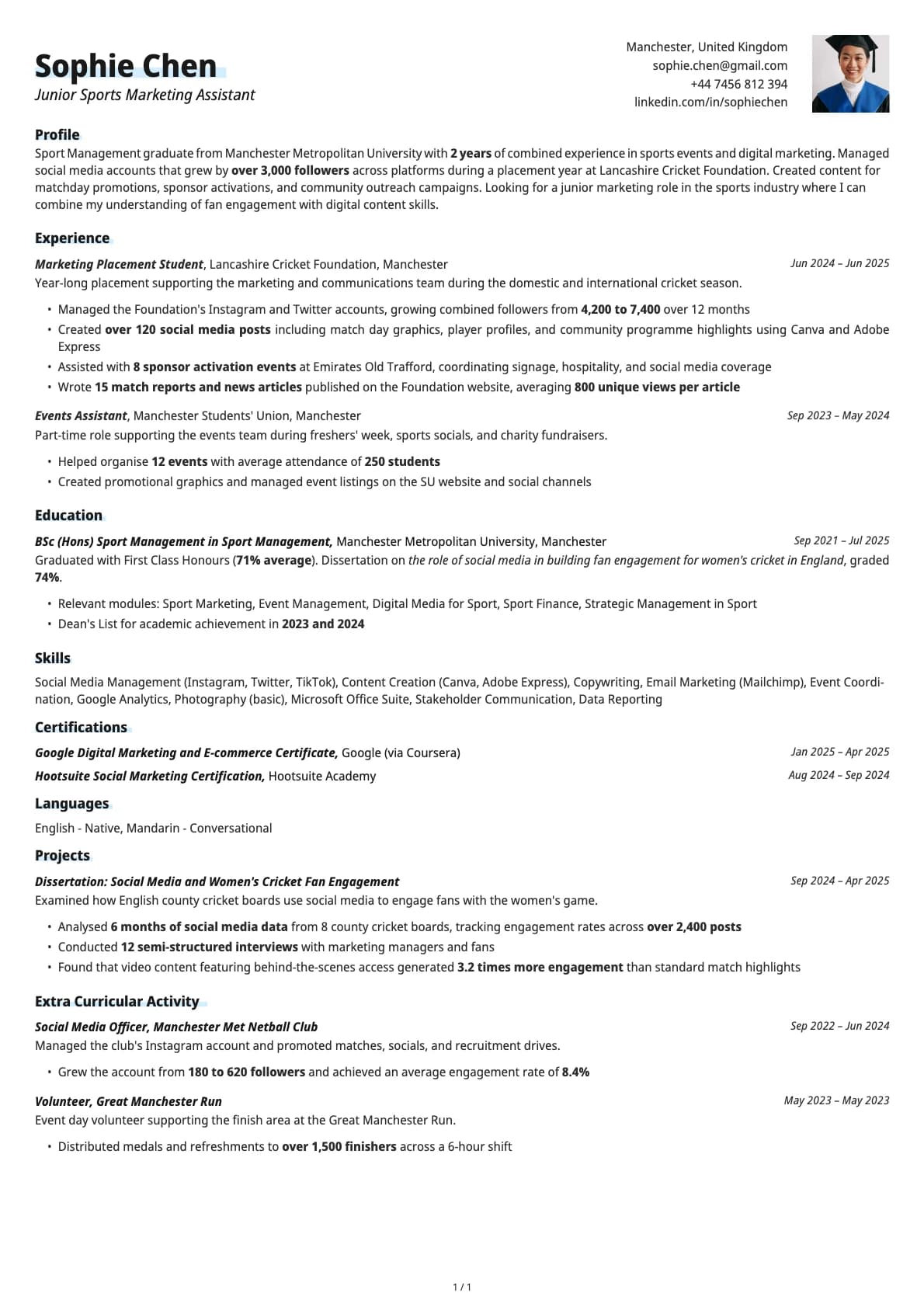
Junior Sports Marketing Assistant
A junior sports marketing assistant resume example showing how to combine a cricket foundation placement, social media growth, and a sport management degree.
Junior Sports Therapist
A junior sports therapist resume example with clinical treatment numbers, pitch-side experience, and SST membership for new graduates.
Junior Stage Manager
A junior stage manager resume example with prompt book experience, production counts, and cue calling from a Theatre Studies graduate entering professional stage management.
Junior Supply Chain Analyst
A junior supply chain analyst resume example with Honda UK placement and inventory optimisation experience.

Junior Sustainability Consultant
A junior sustainability consultant resume example for environmental science graduates. See how to present carbon auditing, consultancy internships, and environmental volunteering.
Junior Sysadmin
A junior sysadmin resume example with Linux server management, Active Directory experience, and CompTIA certifications from an IT graduate entering systems administration.