Junior Diagnostic Radiographer Resume Example
A junior radiographer resume example with HCPC registration, examination numbers, and CT experience for newly qualified diagnostic radiographers.

Laddro Team
Free to use. No account needed to start.
Free to use. No account needed to start.
Overview
Band 5 radiographer posts require clinical confidence from day one. NHS imaging departments are understaffed and busy, so hiring managers are looking for newly qualified radiographers who can work independently on general X-ray lists and are already familiar with CT, mobile, and theatre imaging. Your resume needs examination numbers, image quality metrics, and evidence of multi-modality experience.
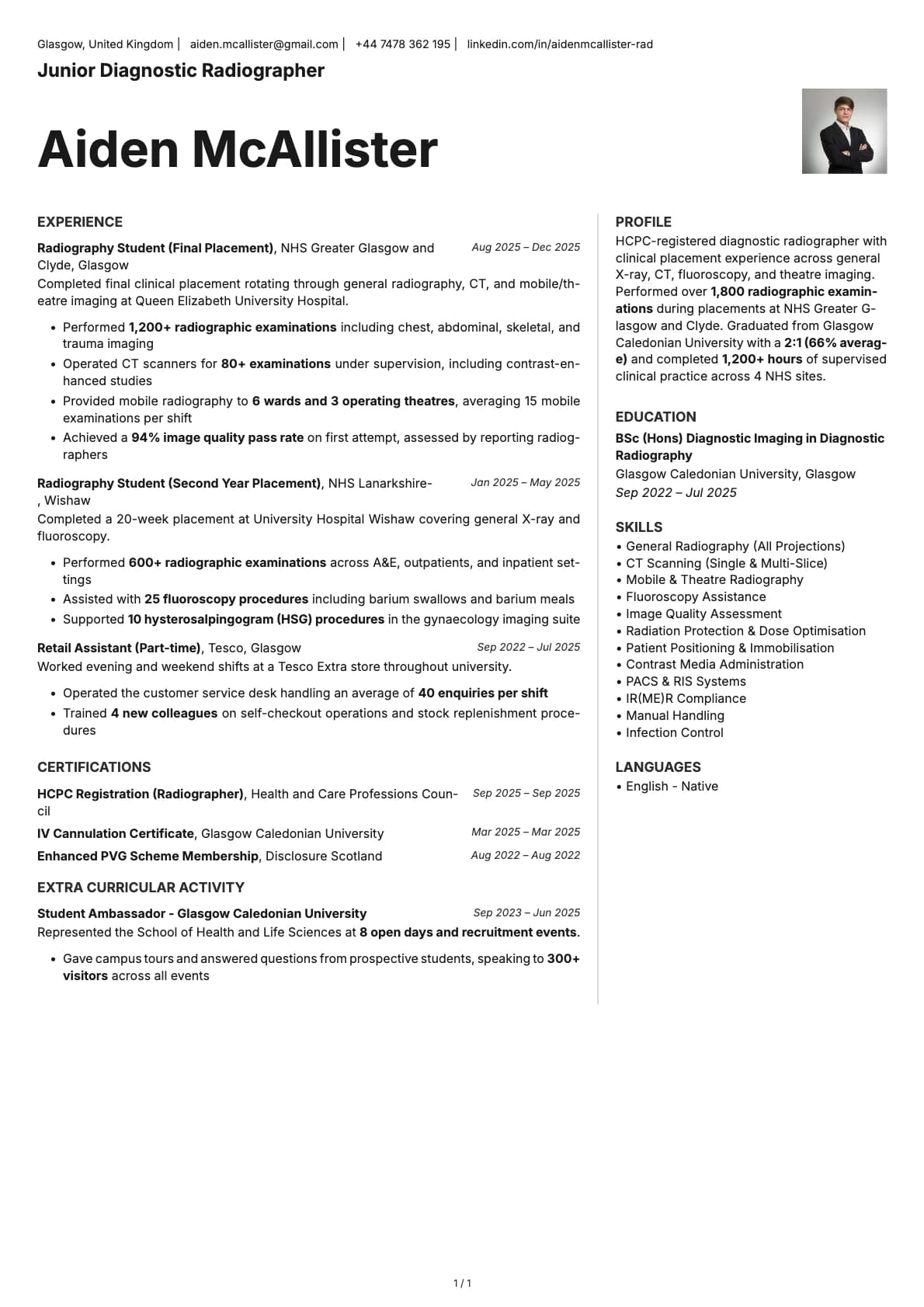
This resume belongs to Aiden McAllister, a newly HCPC-registered diagnostic radiographer from Glasgow Caledonian University. He performed over 1,800 radiographic examinations across four NHS sites, operated CT scanners for 80 examinations, and achieved a 94% image quality pass rate. His clinical breadth and volume make a compelling case for immediate Band 5 readiness.
What Makes This Resume Work
Examination volumes are the headline metric. Aiden states the total number of X-rays performed, CT scans completed, and mobile examinations delivered per shift. Radiology department managers can immediately assess whether he has enough experience to manage a typical NHS workload.
Image quality pass rates provide objective evidence. A 94% first-attempt pass rate tells the reader that Aiden produces diagnostic-quality images consistently. In a profession where repeat examinations mean unnecessary radiation dose to patients, this metric matters.
Multi-modality experience increases employability. Many new graduates only have general X-ray experience. Aiden also includes CT scanning, fluoroscopy assistance, and theatre work, which makes him a stronger candidate for rotational Band 5 posts and opens doors to departments that need flexibility.
Key Takeaways
Newly qualified radiographers should quantify their placement experience with examination counts broken down by modality, image quality pass rates, and the number of clinical sites they have worked across. HCPC registration, IV cannulation certification, and PVG/DBS clearance should all be clearly listed. If you have CT or fluoroscopy experience, highlight it because many departments struggle to fill cross-sectional imaging rotas.
Build your own version
Open this layout in the builder and swap in your own details. It takes a few minutes.
Free to use. No account needed to start.
Was this resume example helpful?
Rate this example to help us create better content for you.
4.6 average from 88 ratingsRelated resume examples
Junior Occupational Therapist
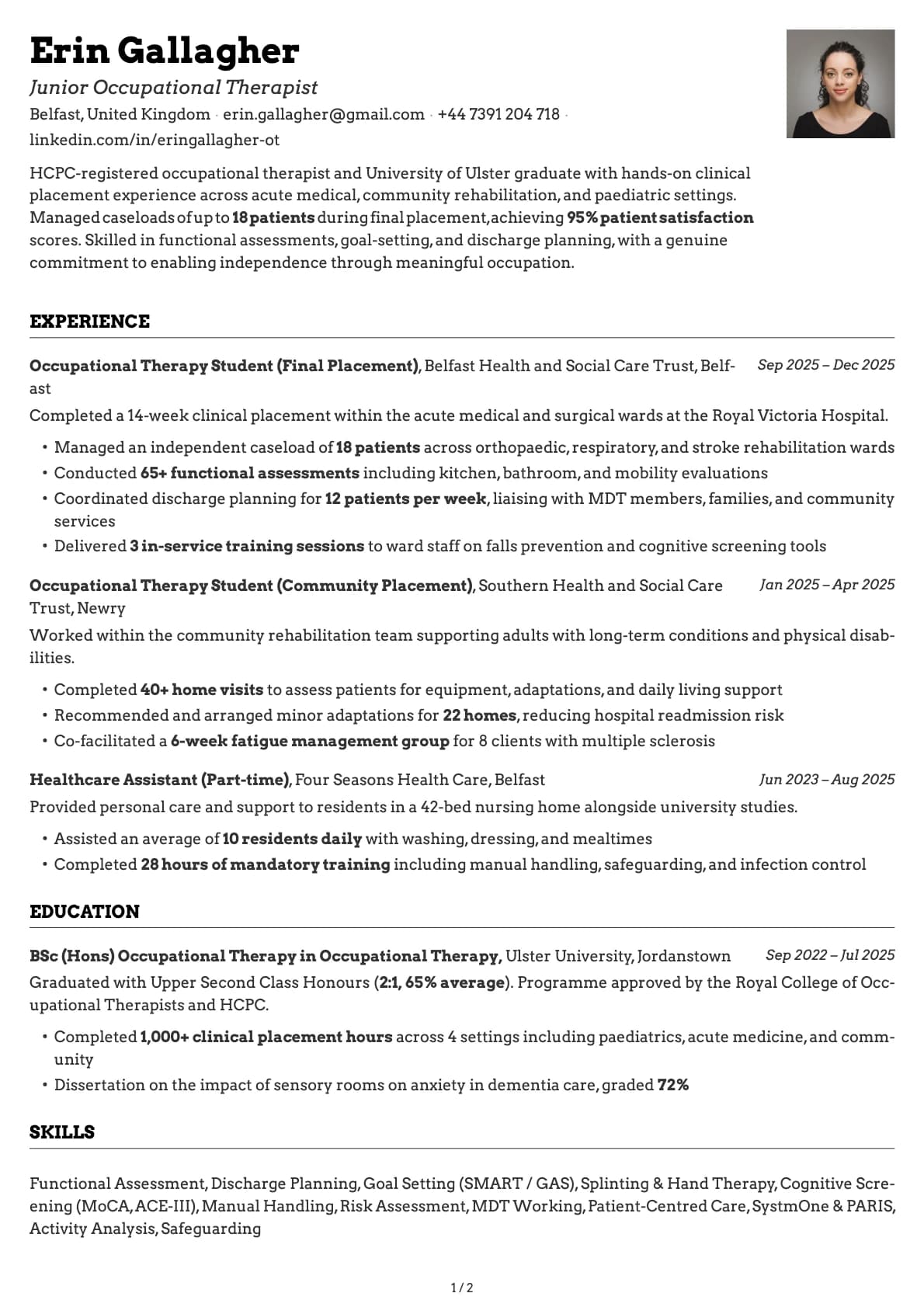
A junior occupational therapist resume example with clinical placement experience, HCPC registration, and real patient outcome numbers for new graduates.
Junior Office Manager
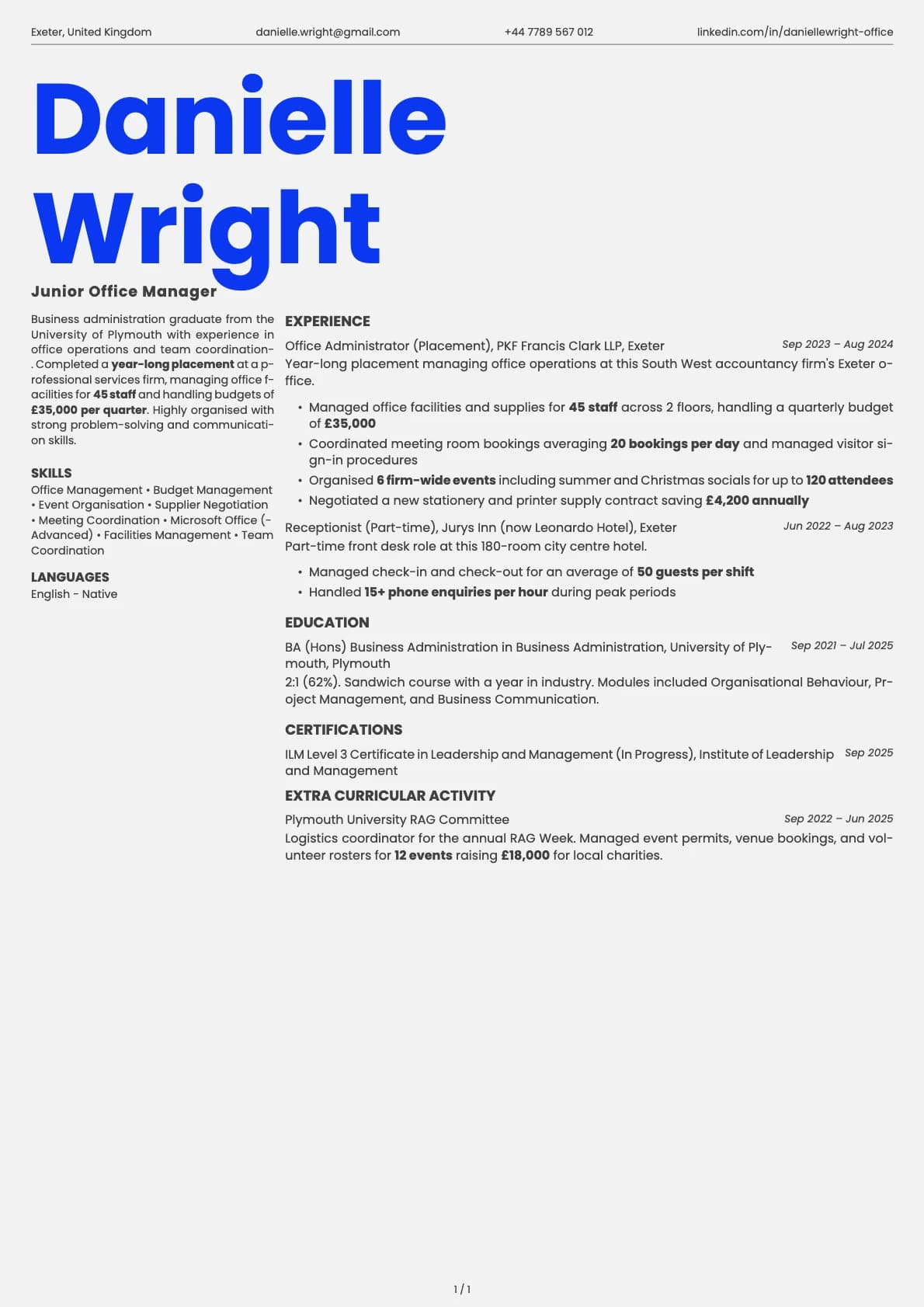
A junior office manager resume example with professional services placement and facilities management experience.
Junior Officer (Armed Forces)
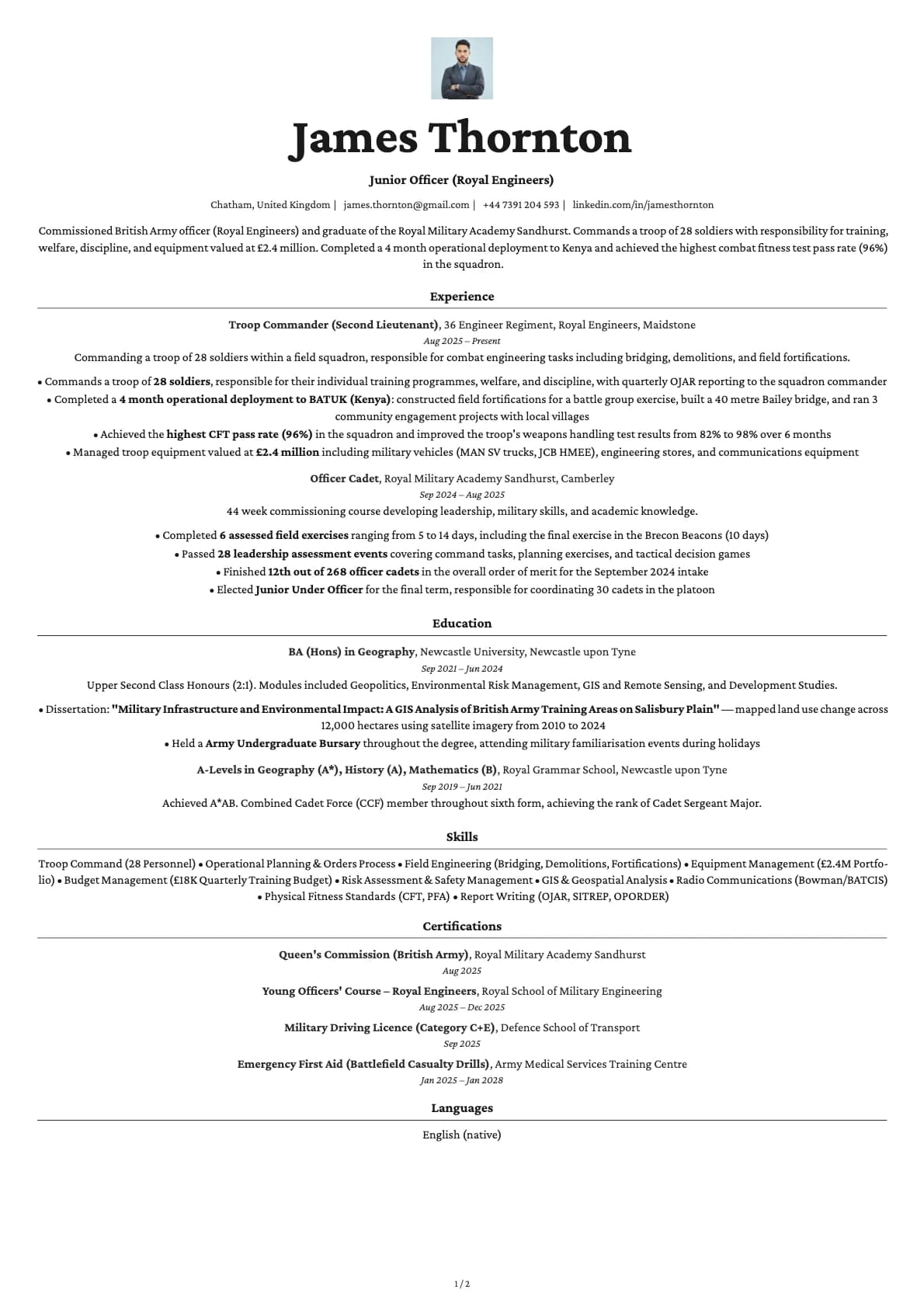
A junior officer resume example for armed forces graduates transitioning from Sandhurst or the commissioning course. See how to present your military leadership, operational deployments, and command experience.
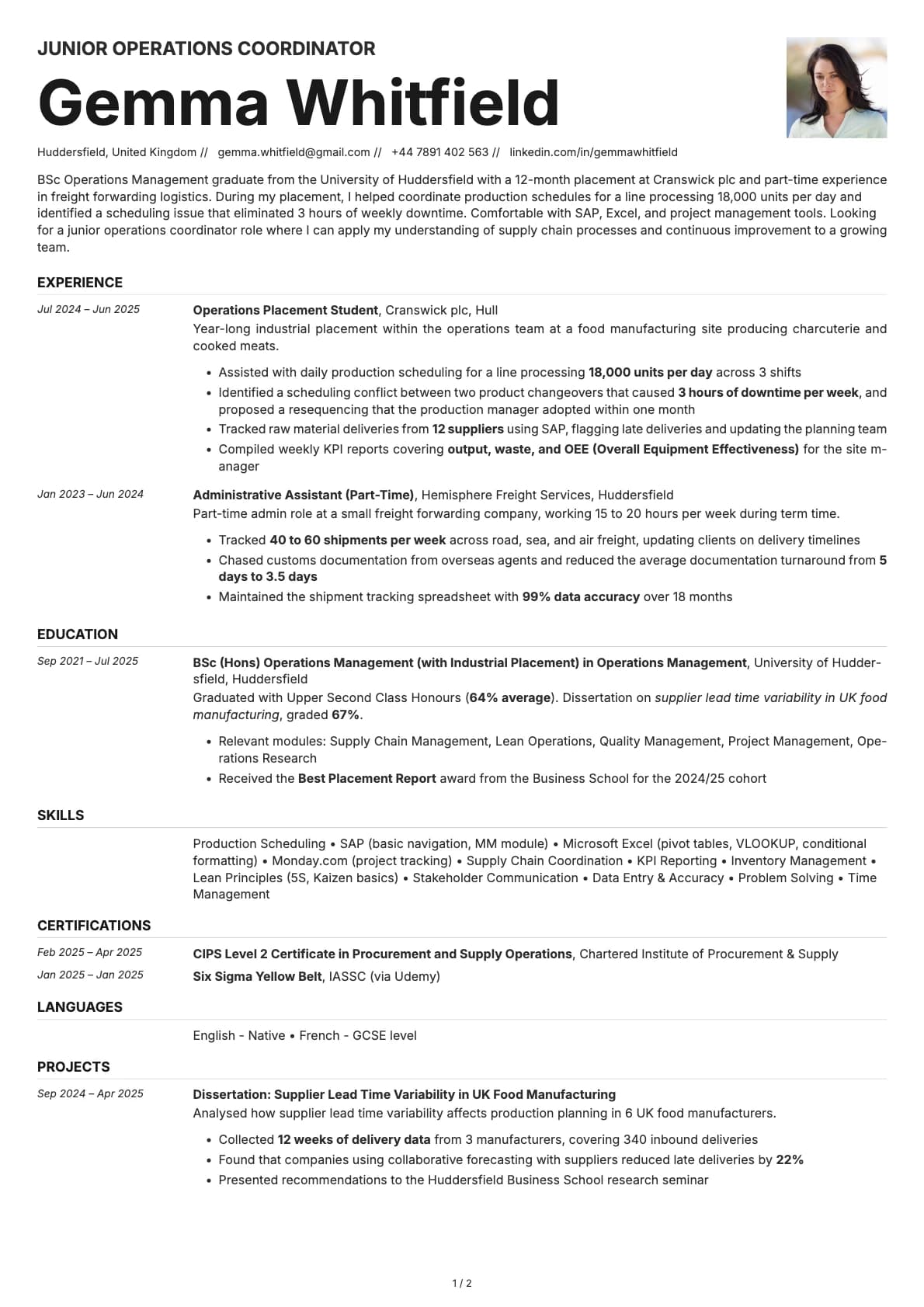
Junior Operations Coordinator
A junior operations coordinator resume example for operations management graduates. See how logistics experience and process improvements impress employers.
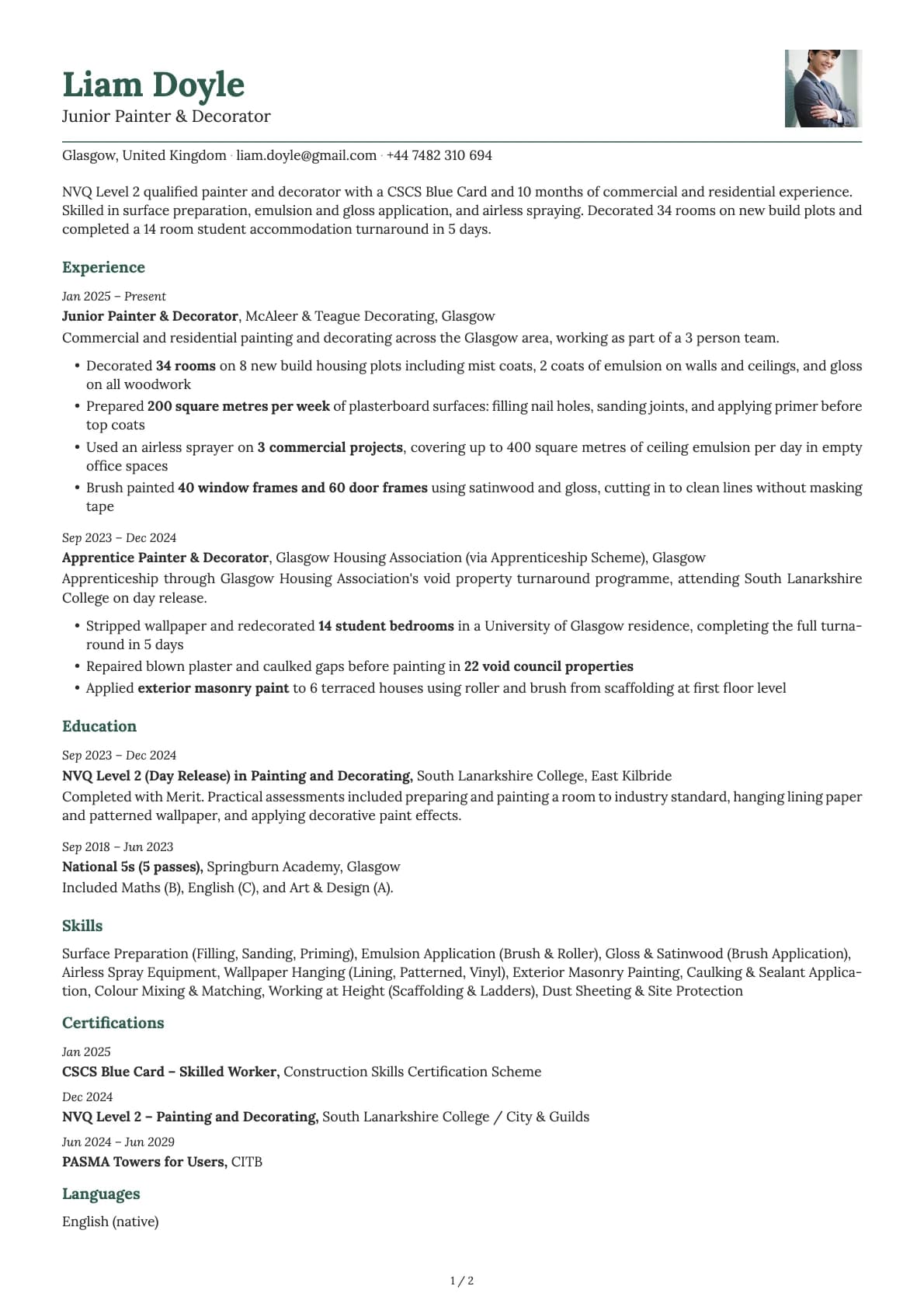
Junior Painter & Decorator
A junior painter and decorator resume example for NVQ qualified painters. See how to present your decorating skills, site experience, and CSCS card details.
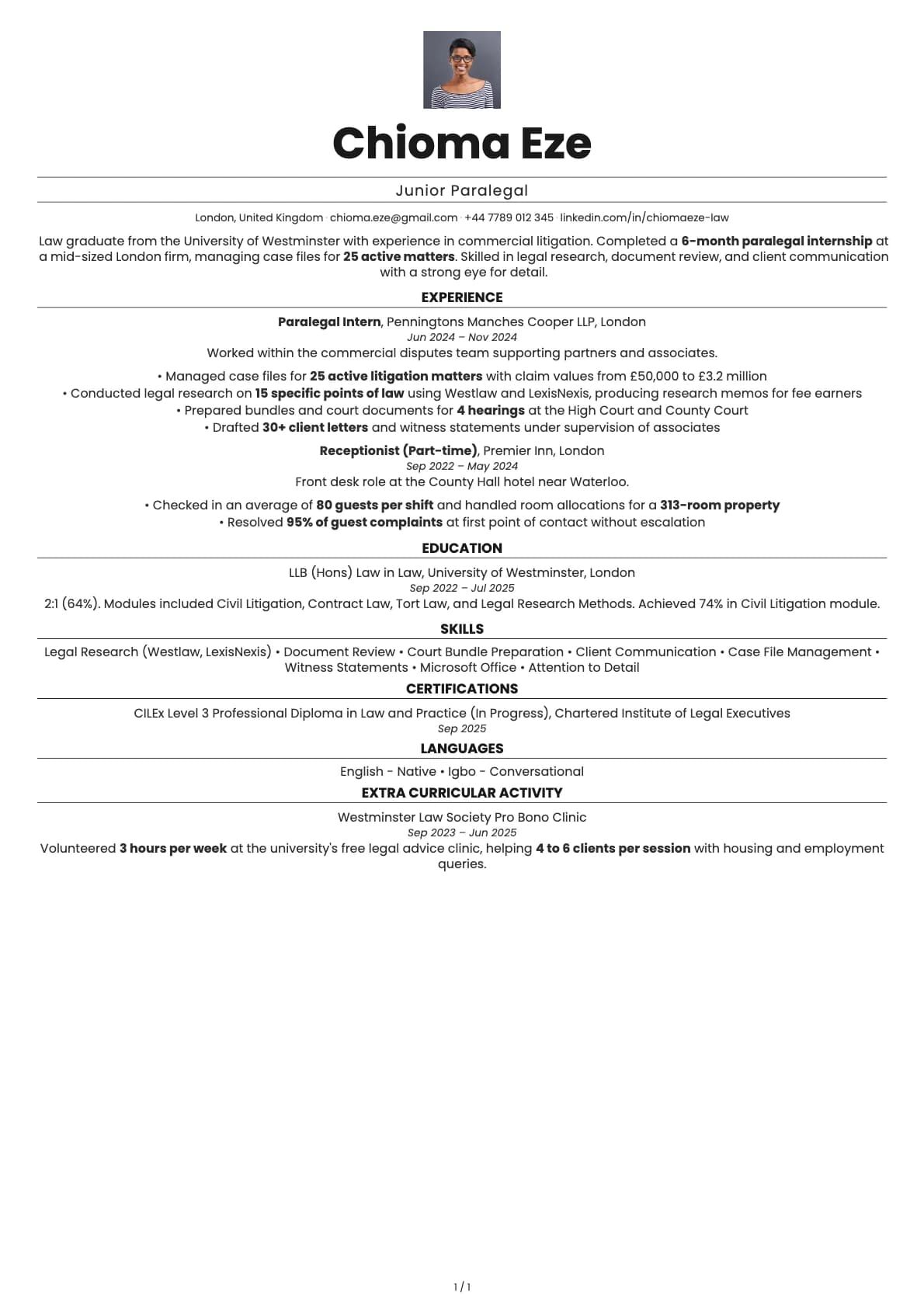
Junior Paralegal
A junior paralegal resume example with litigation internship experience and legal research skills.
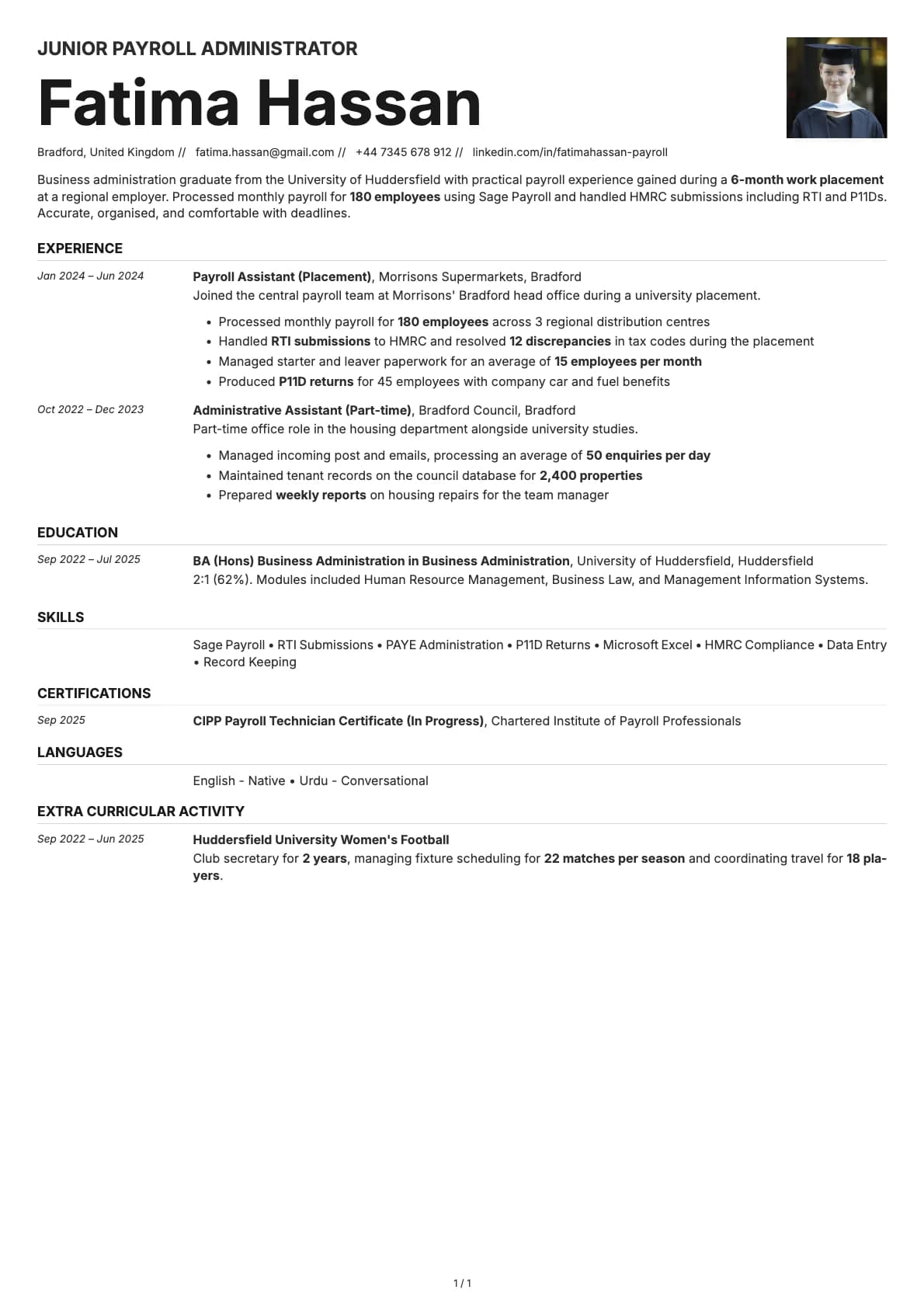
Junior Payroll Administrator
A junior payroll administrator resume example with Morrisons placement experience and Sage Payroll skills.
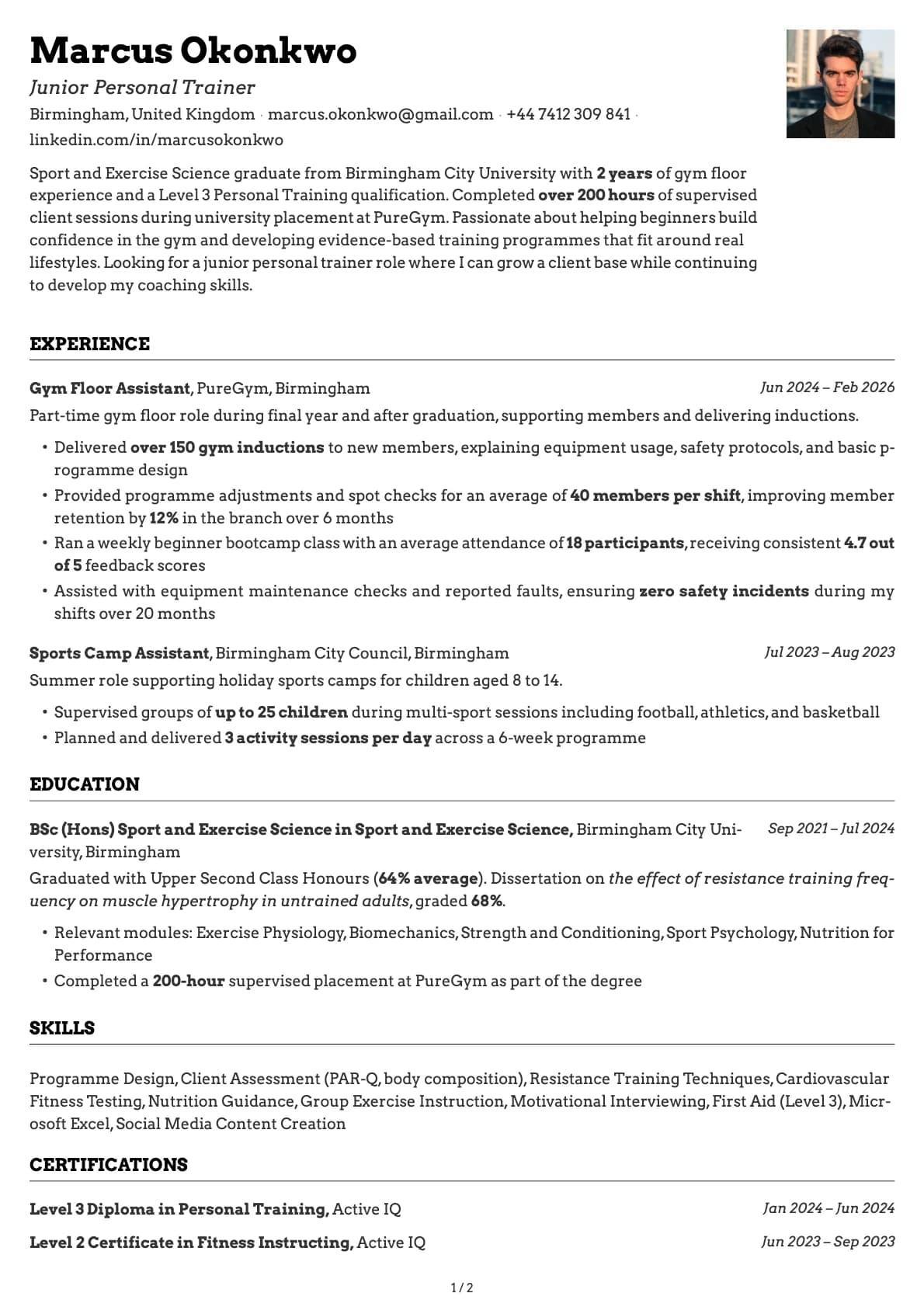
Junior Personal Trainer
A junior personal trainer resume example showing how to combine a sport science degree, Level 3 PT qualification, and gym floor experience at PureGym.
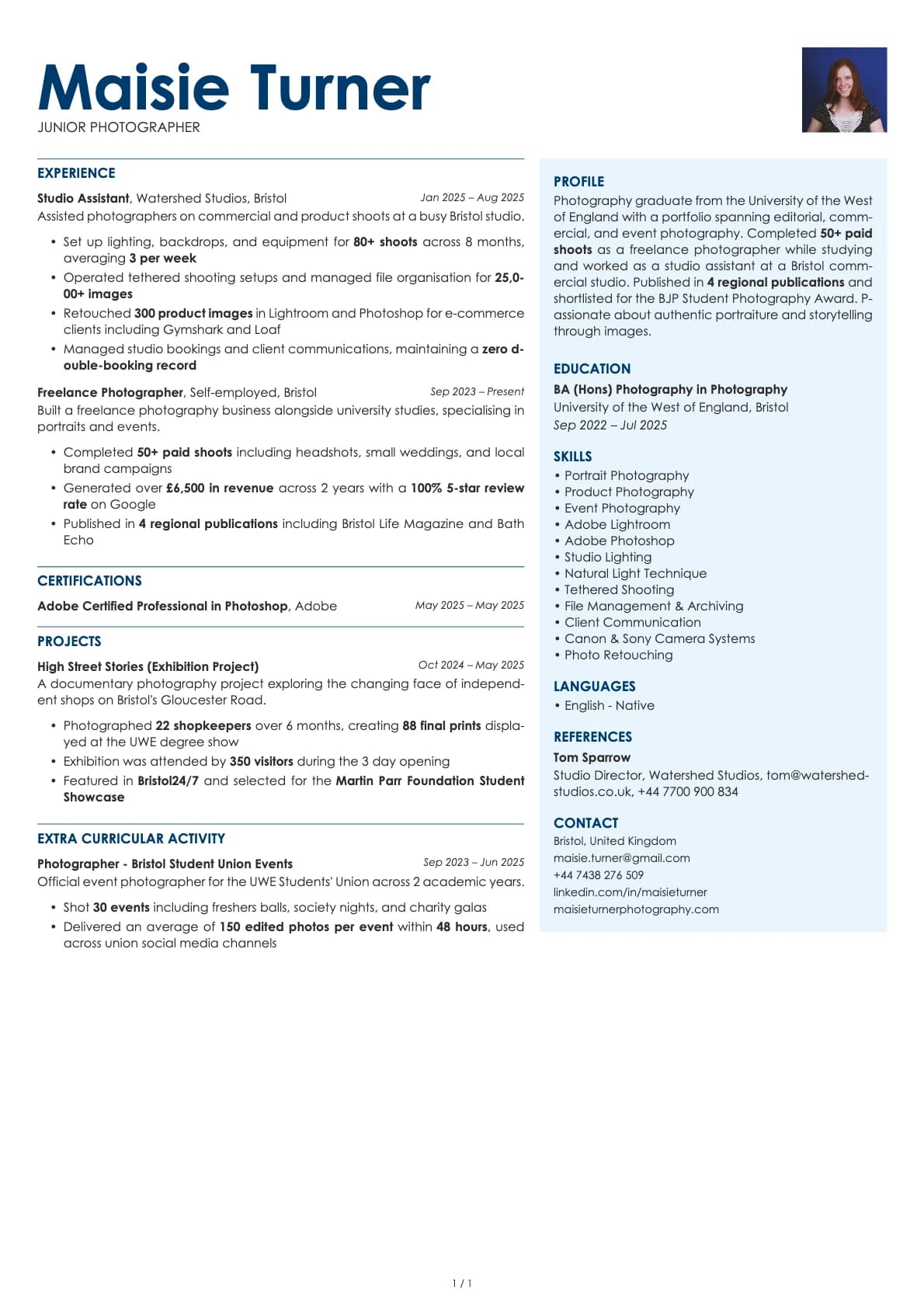
Junior Photographer
A junior photographer resume example for graduates. See how to present freelance work, studio experience, and published images to land your first photography role.
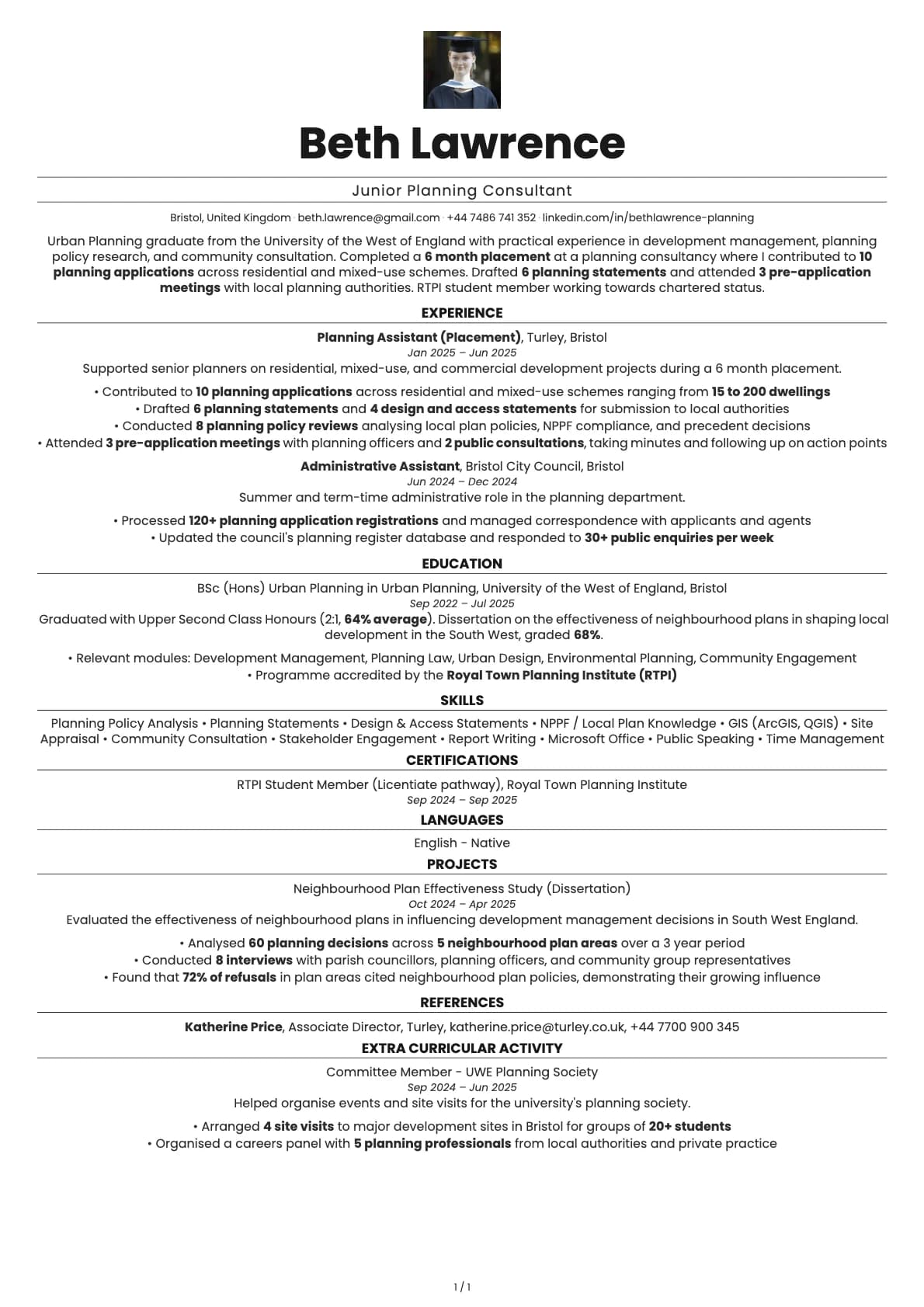
Junior Planning Consultant
A junior planning consultant resume example for graduates. See how to present planning application experience, policy analysis, and RTPI membership to land your first planning role.
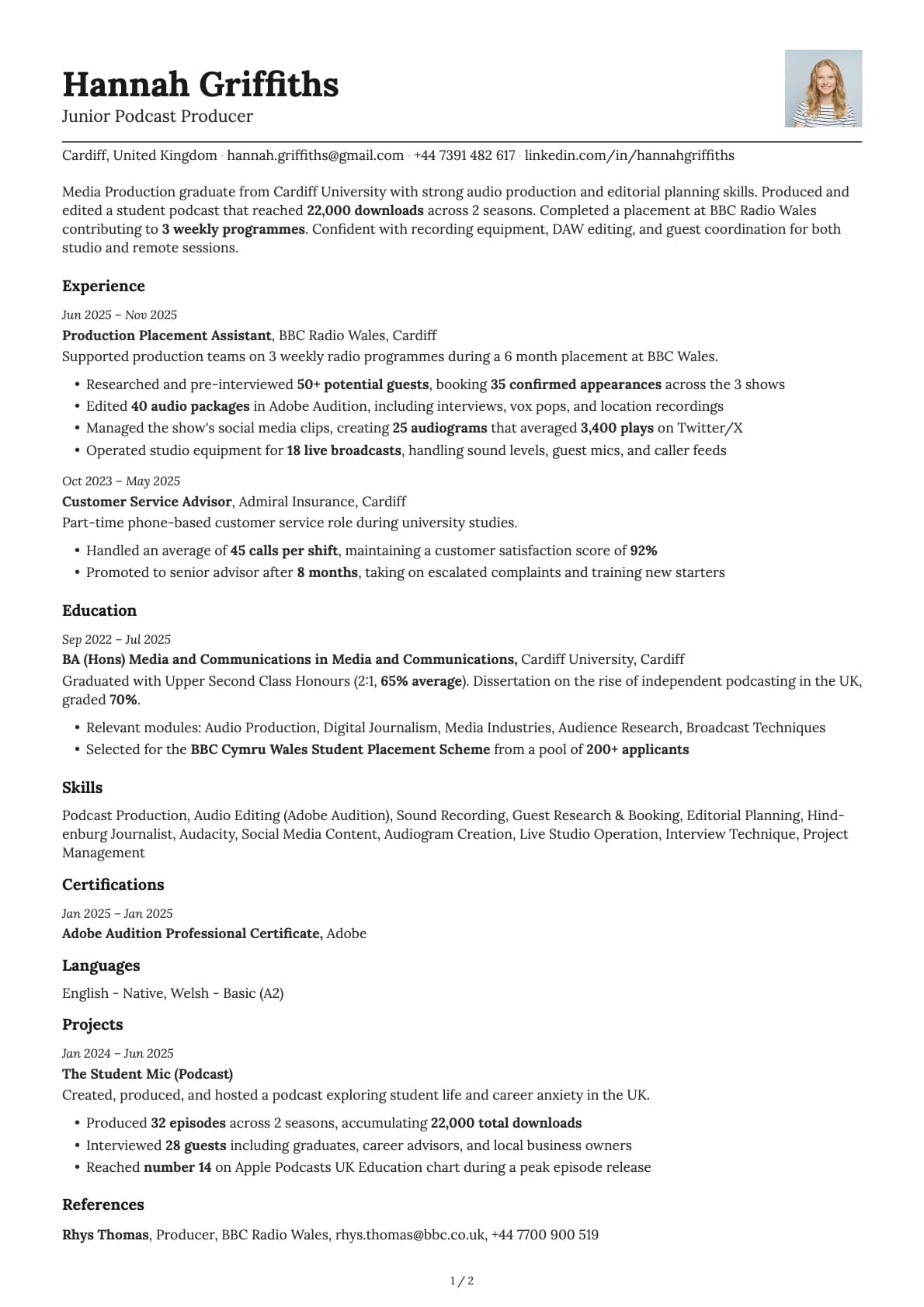
Junior Podcast Producer
A junior podcast producer resume example for graduates. See how to present audio production skills, download numbers, and broadcasting experience to land your first podcast role.
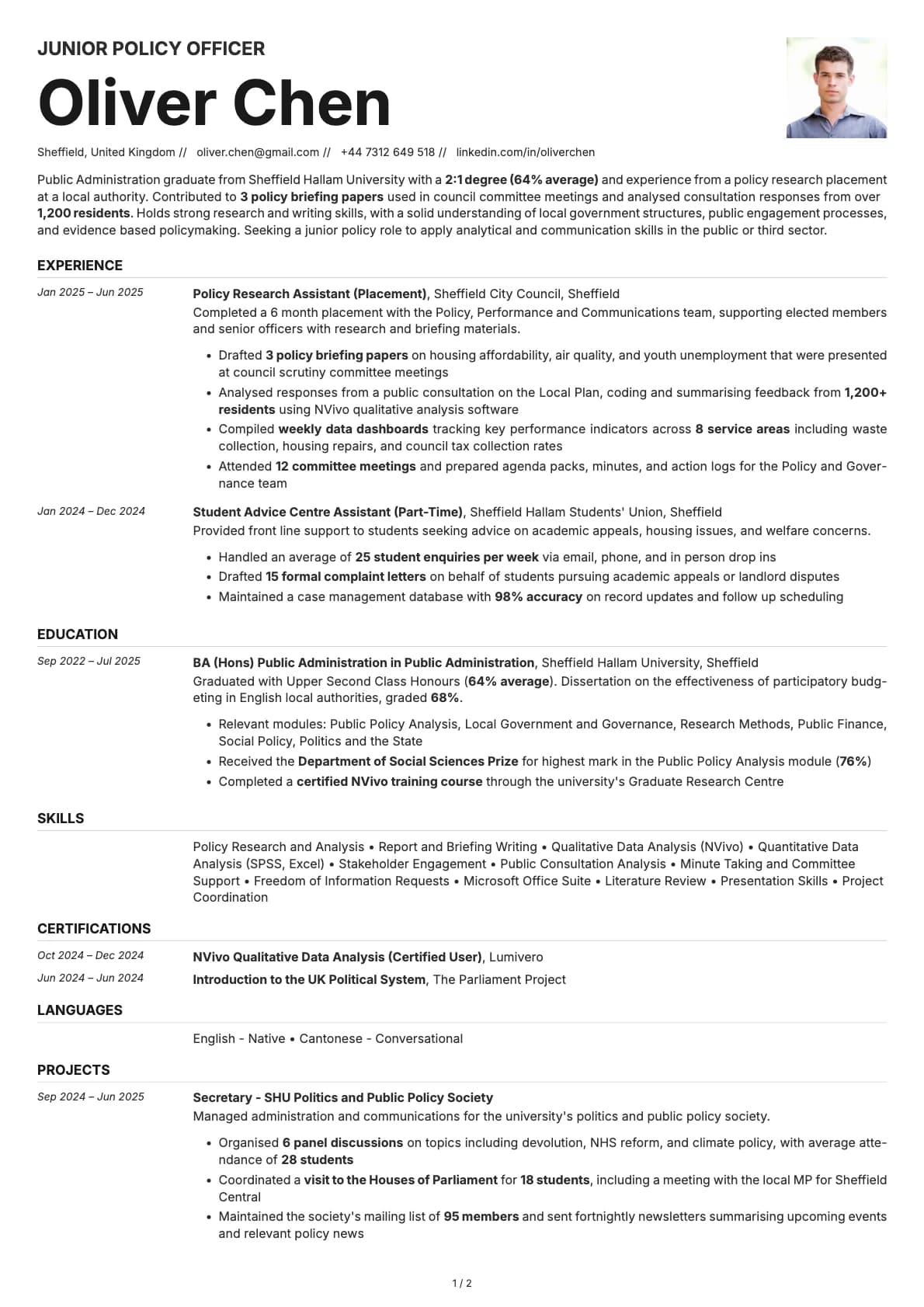
Junior Policy Officer
A junior policy officer resume example for public administration graduates. See how to present research skills, briefing writing, and council placement experience.