Junior Paralegal Resume Example
A junior paralegal resume example with litigation internship experience and legal research skills.

Laddro Team
Free to use. No account needed to start.
Free to use. No account needed to start.
Overview
Paralegal roles are an increasingly popular route into the legal profession, whether you plan to qualify as a solicitor through SQE or pursue the CILEx pathway. Law firms hiring junior paralegals want to see that you can handle case files, conduct research efficiently, and communicate with clients professionally. A law degree helps, but practical experience is what makes the difference.
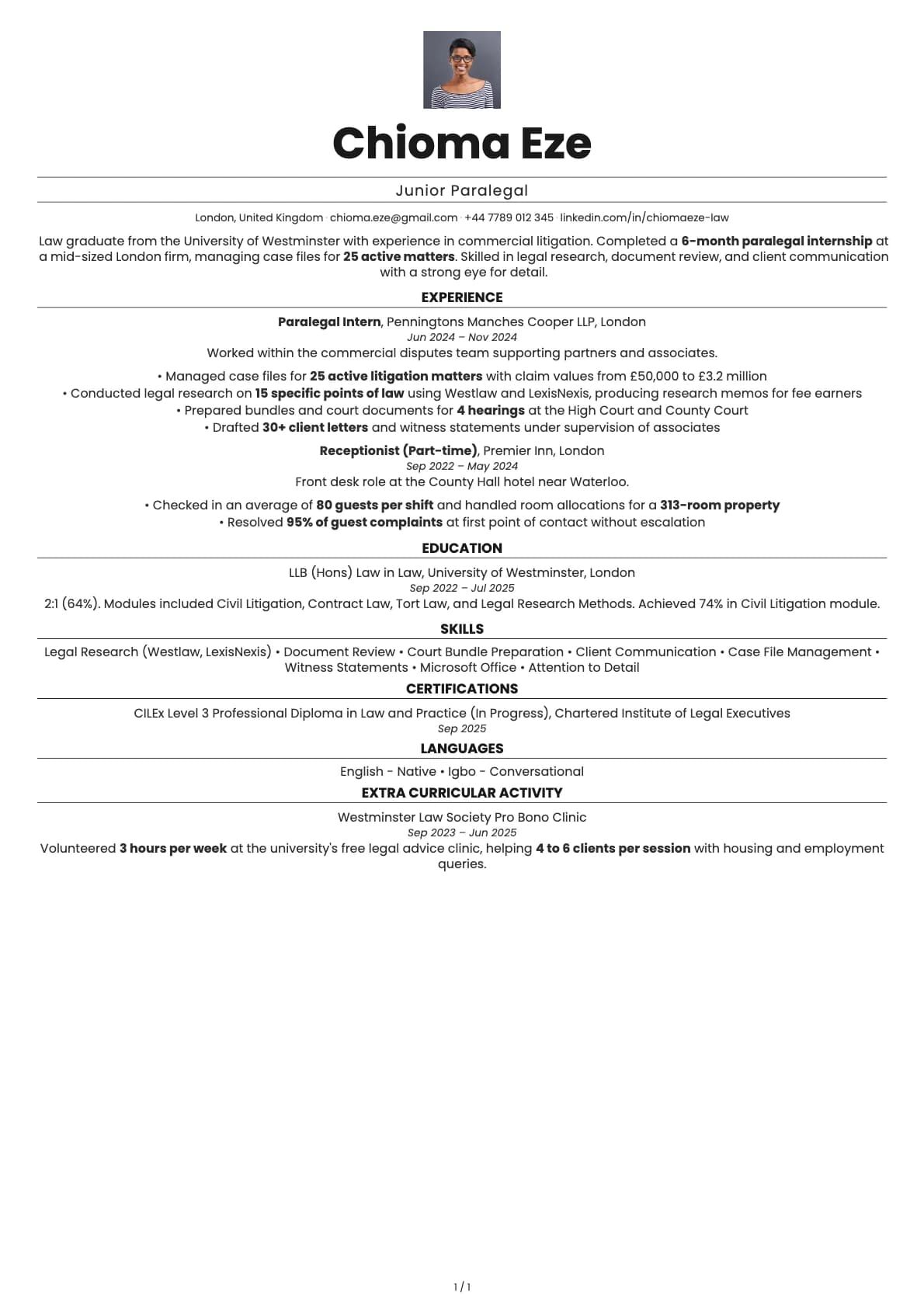
Chioma Eze is a law graduate from the University of Westminster who completed a 6-month paralegal internship at Penningtons Manches Cooper, a mid-sized firm in London. Her resume works because it shows real litigation support work with specific case volumes, claim values, and court preparation experience.
What Makes This Resume Work
Litigation experience with case values named. Managing 25 active matters with claims from £50,000 to £3.2 million shows Chioma has worked across a range of dispute sizes. This gives employers confidence that she can handle both routine and complex cases.
Legal research that produced deliverables. Researching 15 specific points of law and producing memos for fee earners is more compelling than simply saying "assisted with research." It shows the research had a purpose and an audience.
Court preparation experience. Preparing bundles for 4 hearings at the High Court and County Court is hands-on, practical work that many junior paralegals have not done. It demonstrates familiarity with court procedures and the ability to work to strict deadlines.
Pro bono experience that shows commitment. Volunteering at a free legal advice clinic for 2 years, helping 4 to 6 clients per session, demonstrates genuine interest in the law and strong client-facing skills. It also shows Chioma can explain legal concepts to people without legal backgrounds.
Key Takeaways
For junior paralegal roles, describe the number of cases you supported, the types of work you did (research, drafting, bundle preparation), and the claim values or areas of law involved. Name the legal databases you used (Westlaw, LexisNexis, Practical Law). If you have pro bono or clinic experience, include it because it demonstrates both client skills and commitment to the profession. A CILEx or SQE qualification in progress adds credibility to your application.
Build your own version
Open this layout in the builder and swap in your own details. It takes a few minutes.
Free to use. No account needed to start.
Was this resume example helpful?
Rate this example to help us create better content for you.
4.7 average from 121 ratingsRelated resume examples
Junior Video Editor
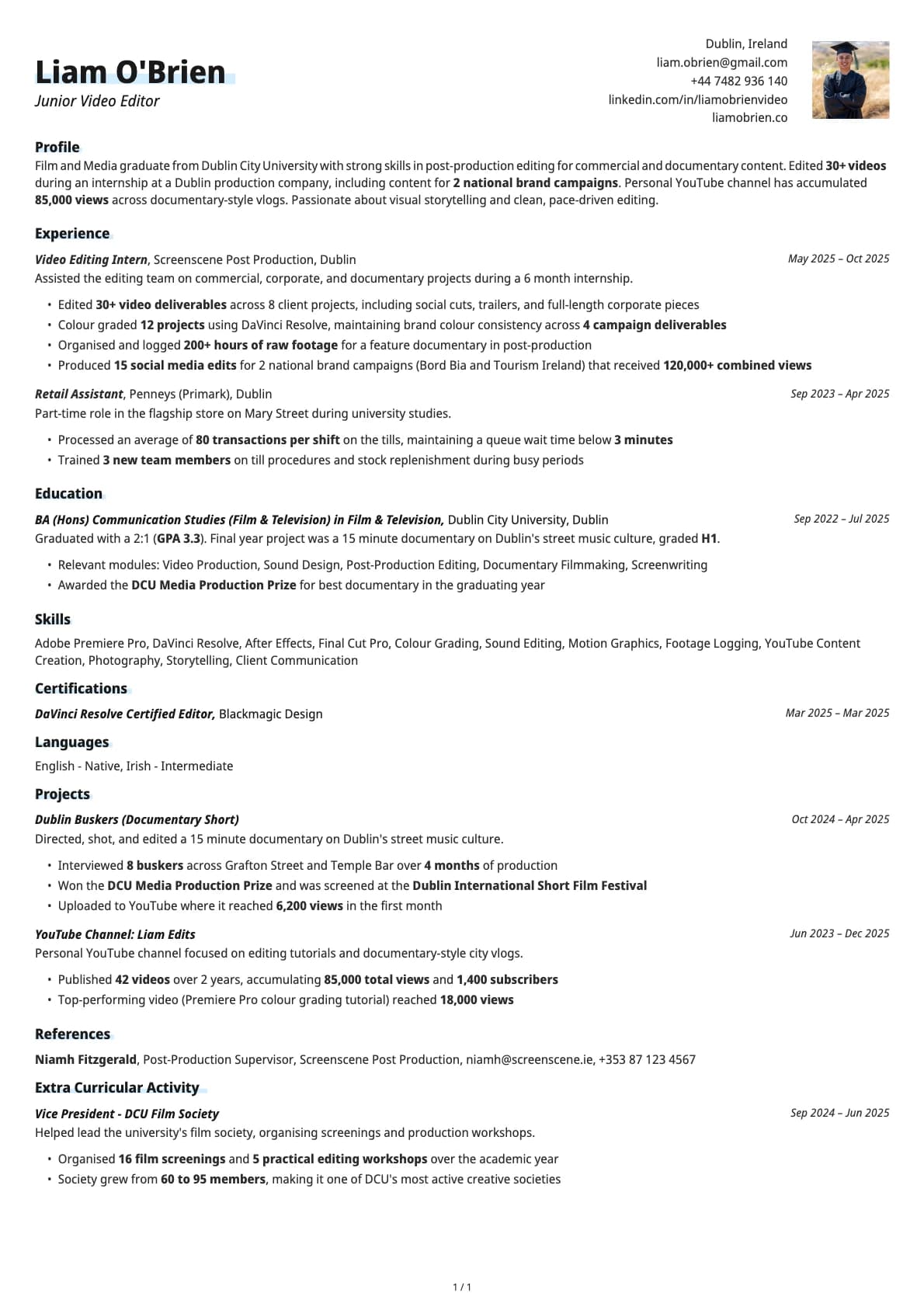
A junior video editor resume example for recent graduates. Learn how to present post-production experience, personal projects, and editing skills to land your first editing role.
Junior Visual Merchandiser
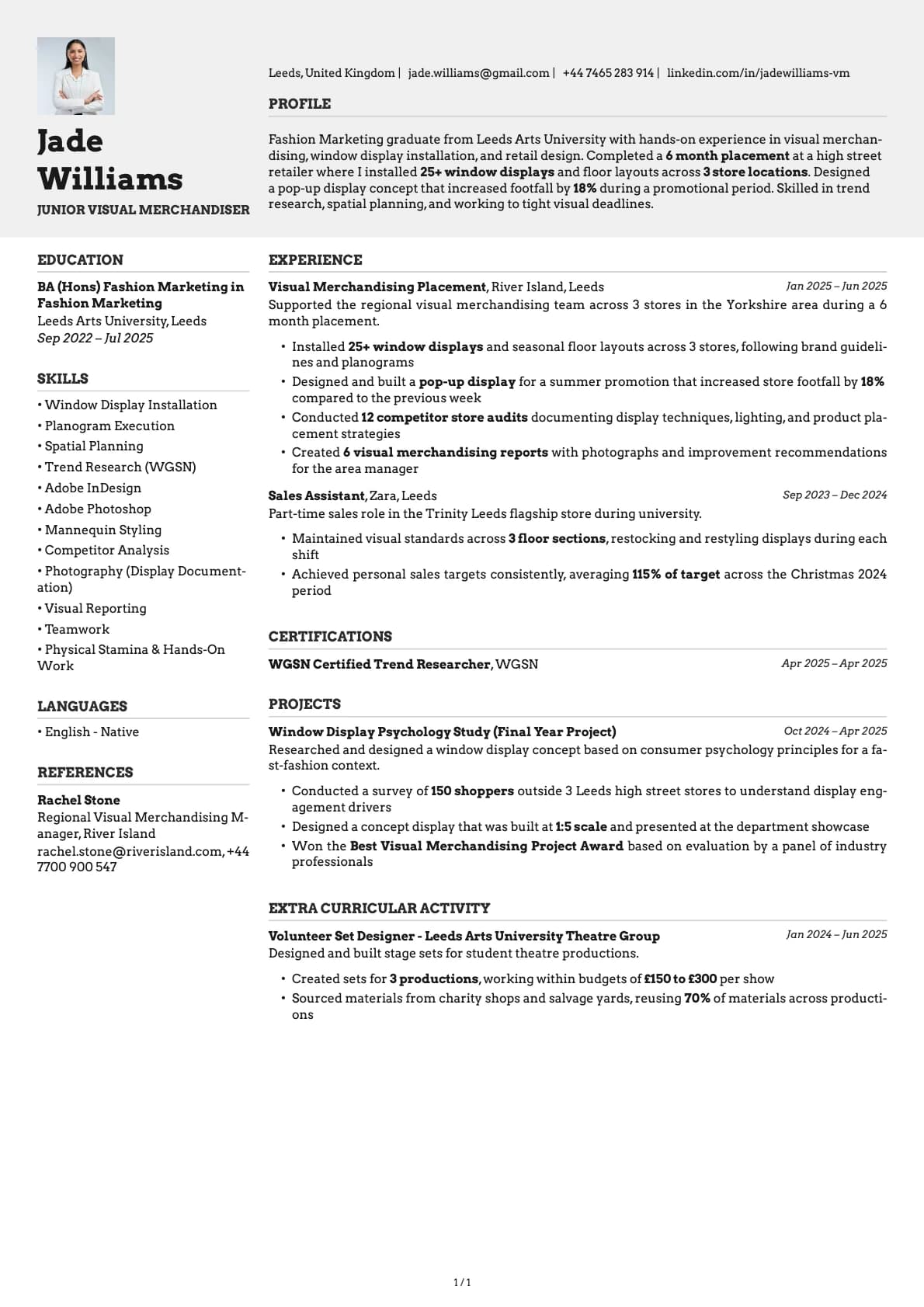
A junior visual merchandiser resume example for graduates. See how to present display installation experience, retail knowledge, and trend research skills to land your first VM role.
Junior Warehouse Supervisor
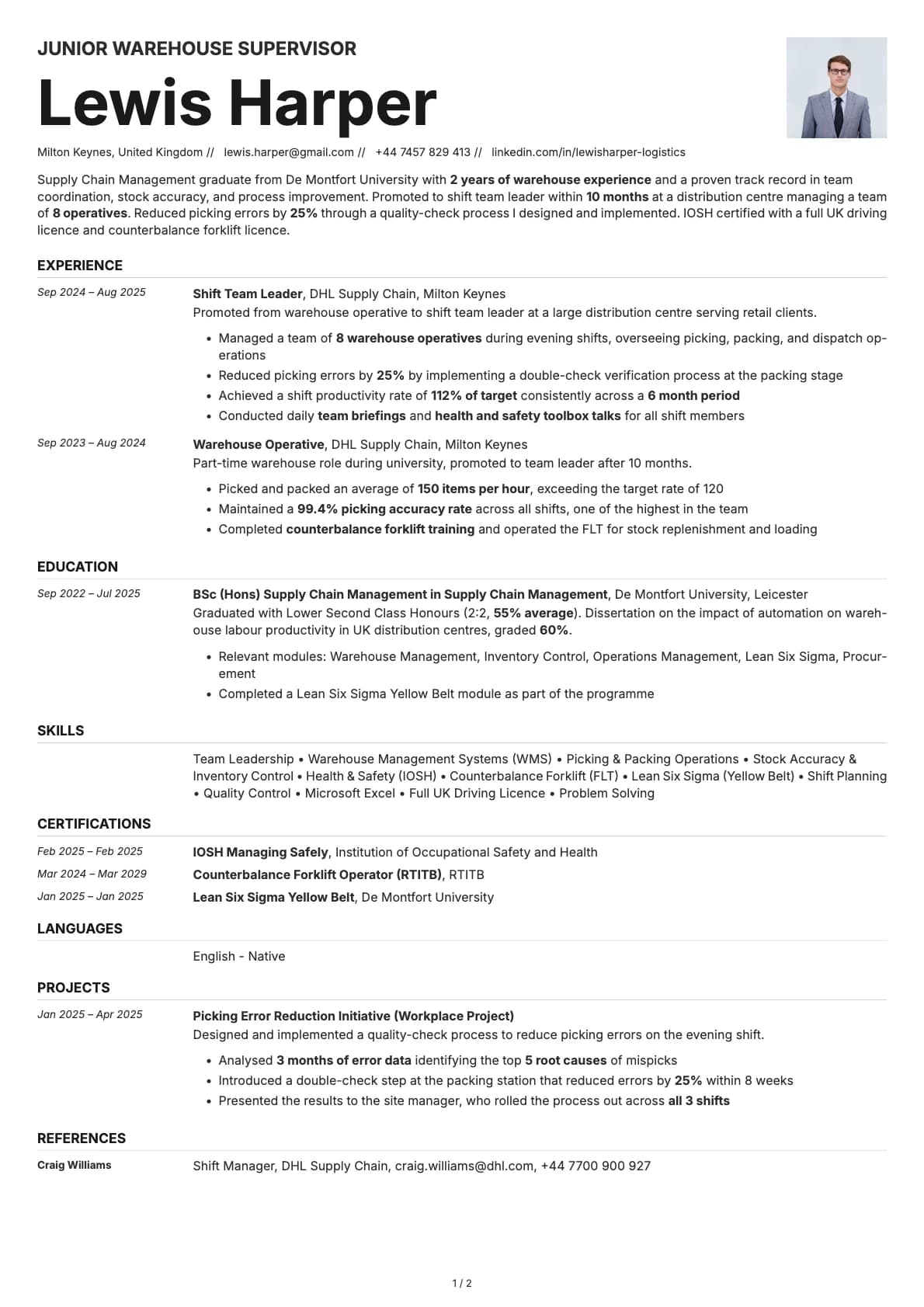
A junior warehouse supervisor resume example for graduates. See how to present team leadership, process improvement, and logistics experience to land your first warehouse supervision role.
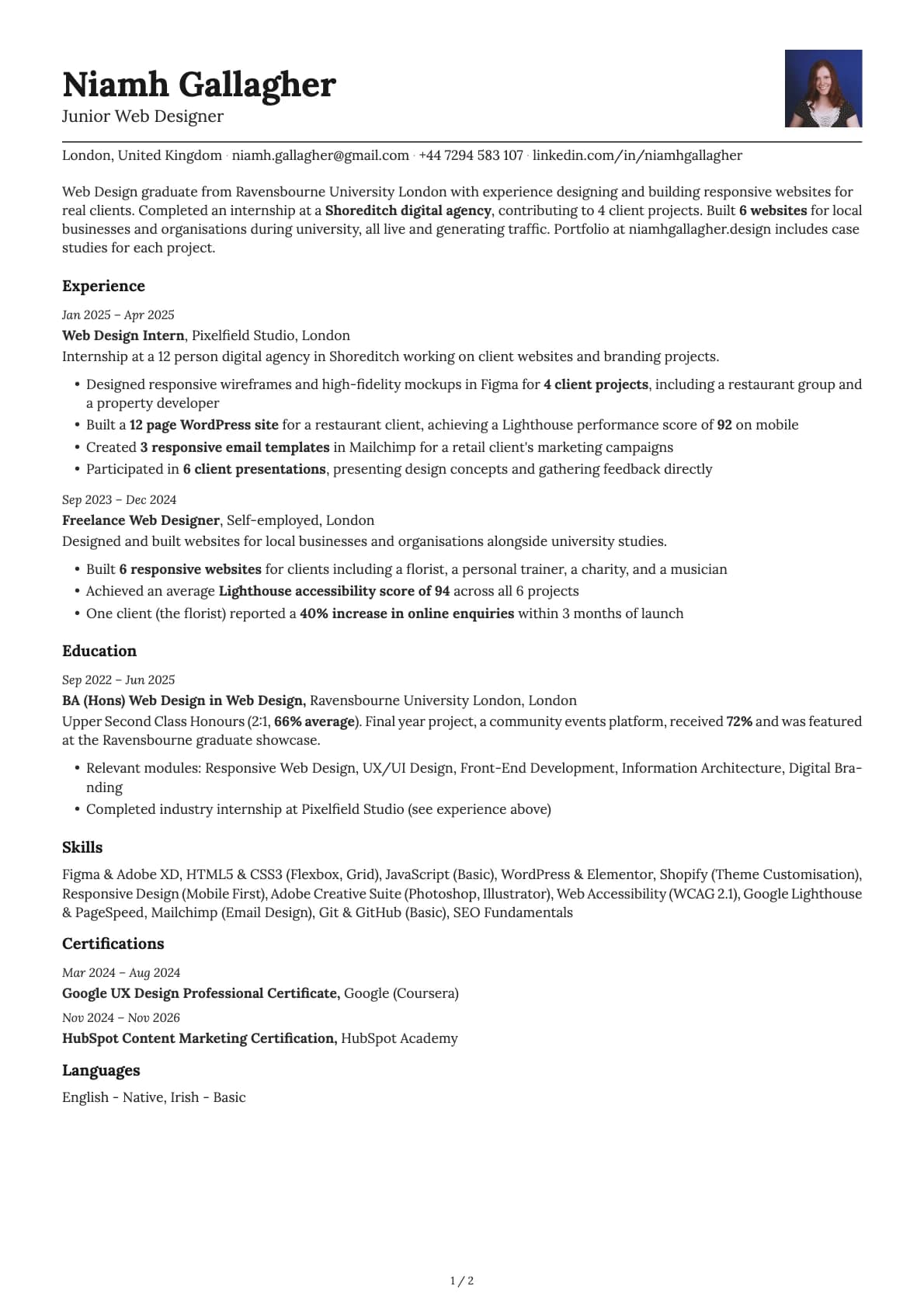
Junior Web Designer
A junior web designer resume example with responsive site builds, client projects, and Figma prototypes from a Web Design graduate starting their career.
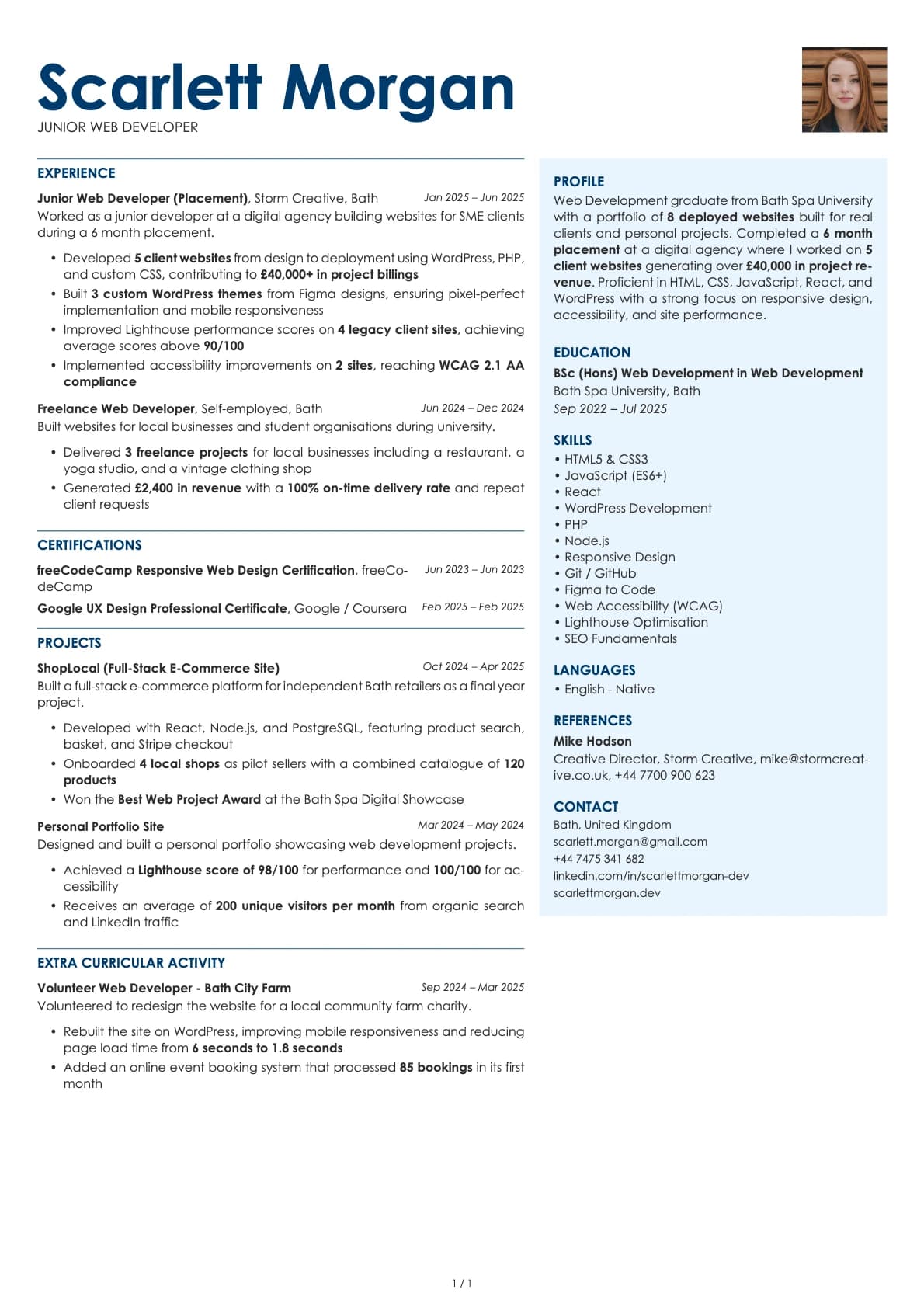
Junior Web Developer
A junior web developer resume example for graduates. See how to present client work, freelance projects, and performance optimisation to land your first web development role.
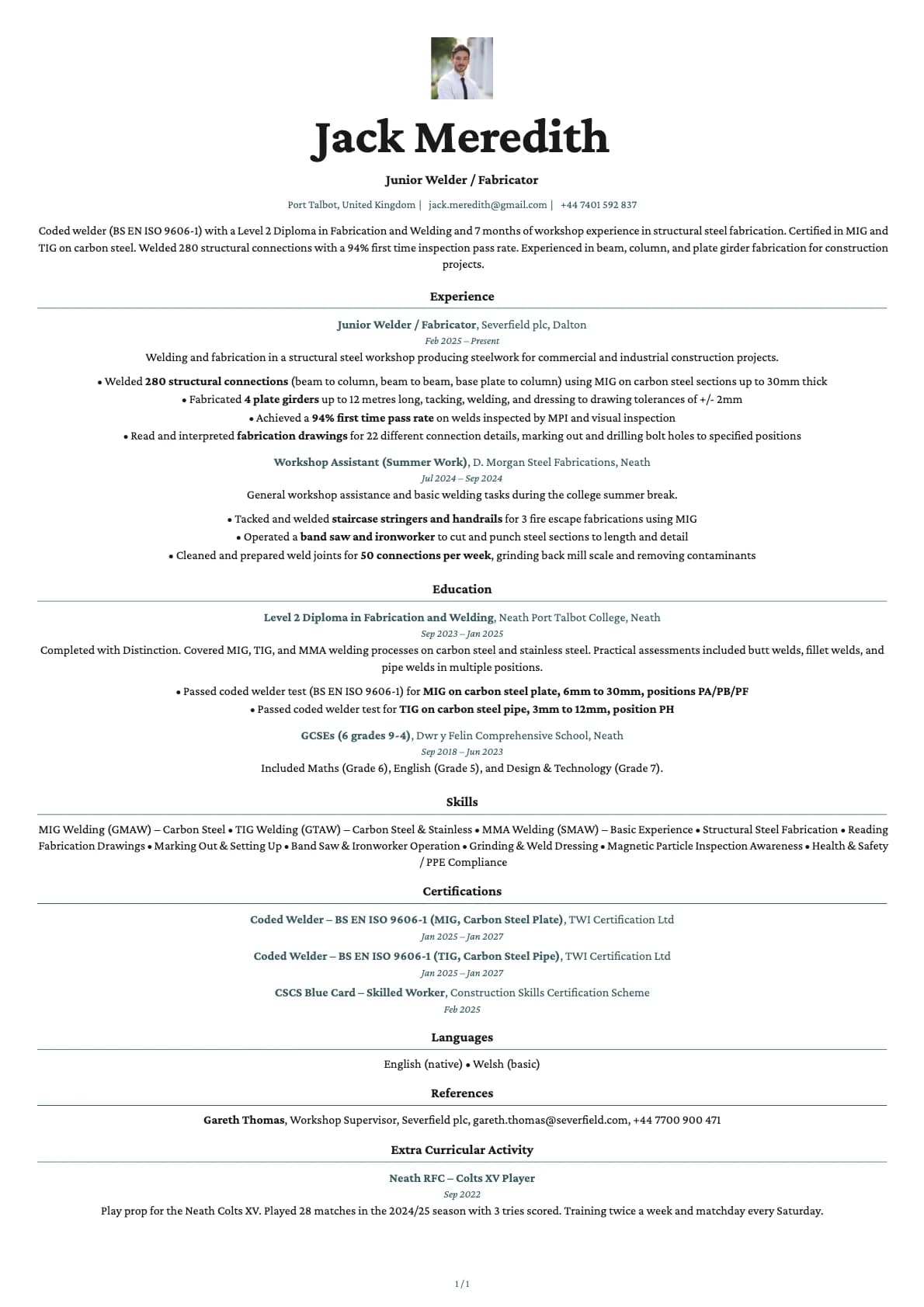
Junior Welder
A junior welder resume example for welding course graduates with coded welder certification. See how to present your welding processes, materials experience, and test certifications.

Lab Research Assistant
A lab research assistant resume example for science graduates. See how to present laboratory skills, research placements, and academic projects to land your first research role.
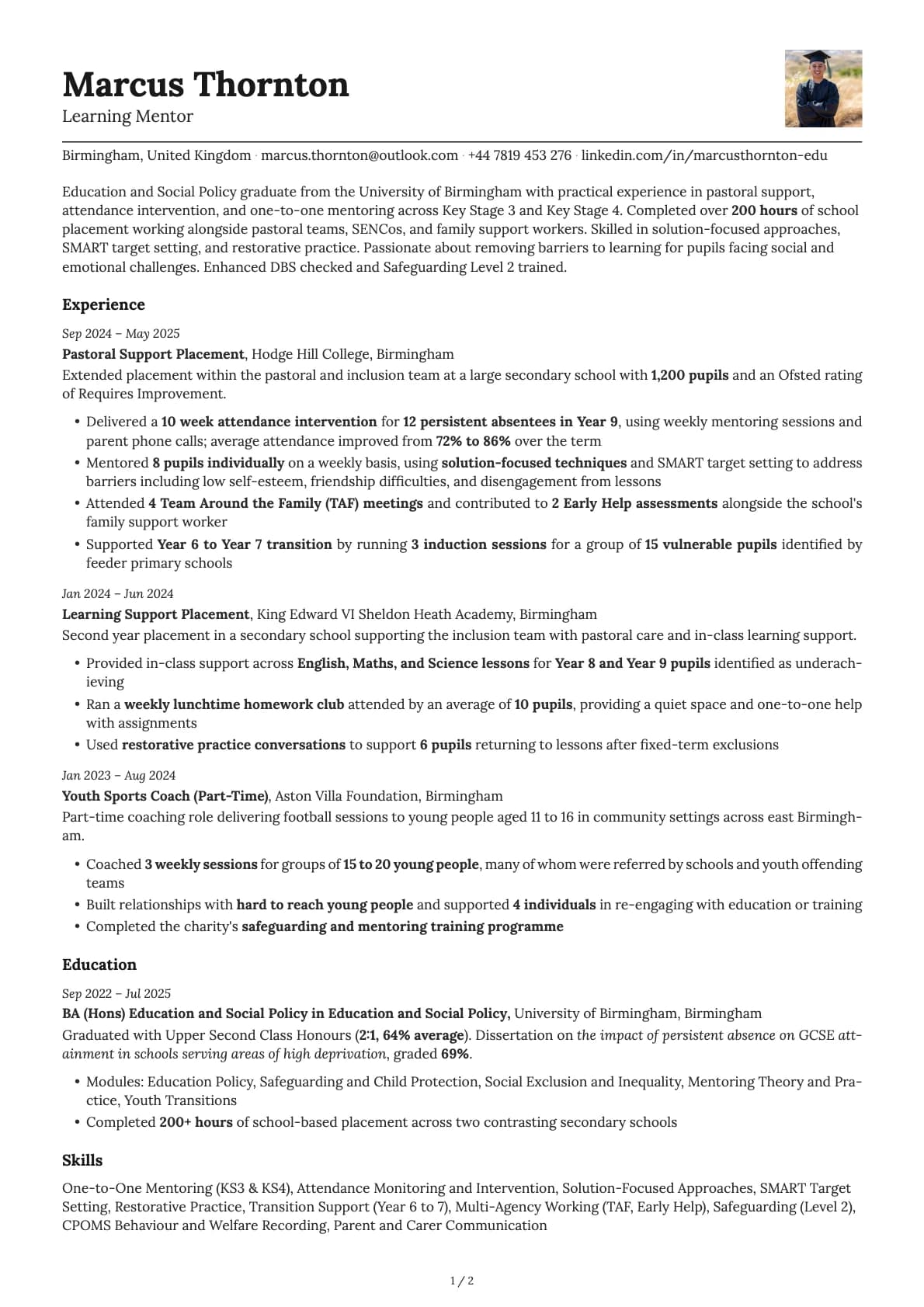
Learning Mentor
A graduate learning mentor resume example with pastoral support, attendance intervention, and pupil mentoring experience. See how to present your skills for learning mentor roles.
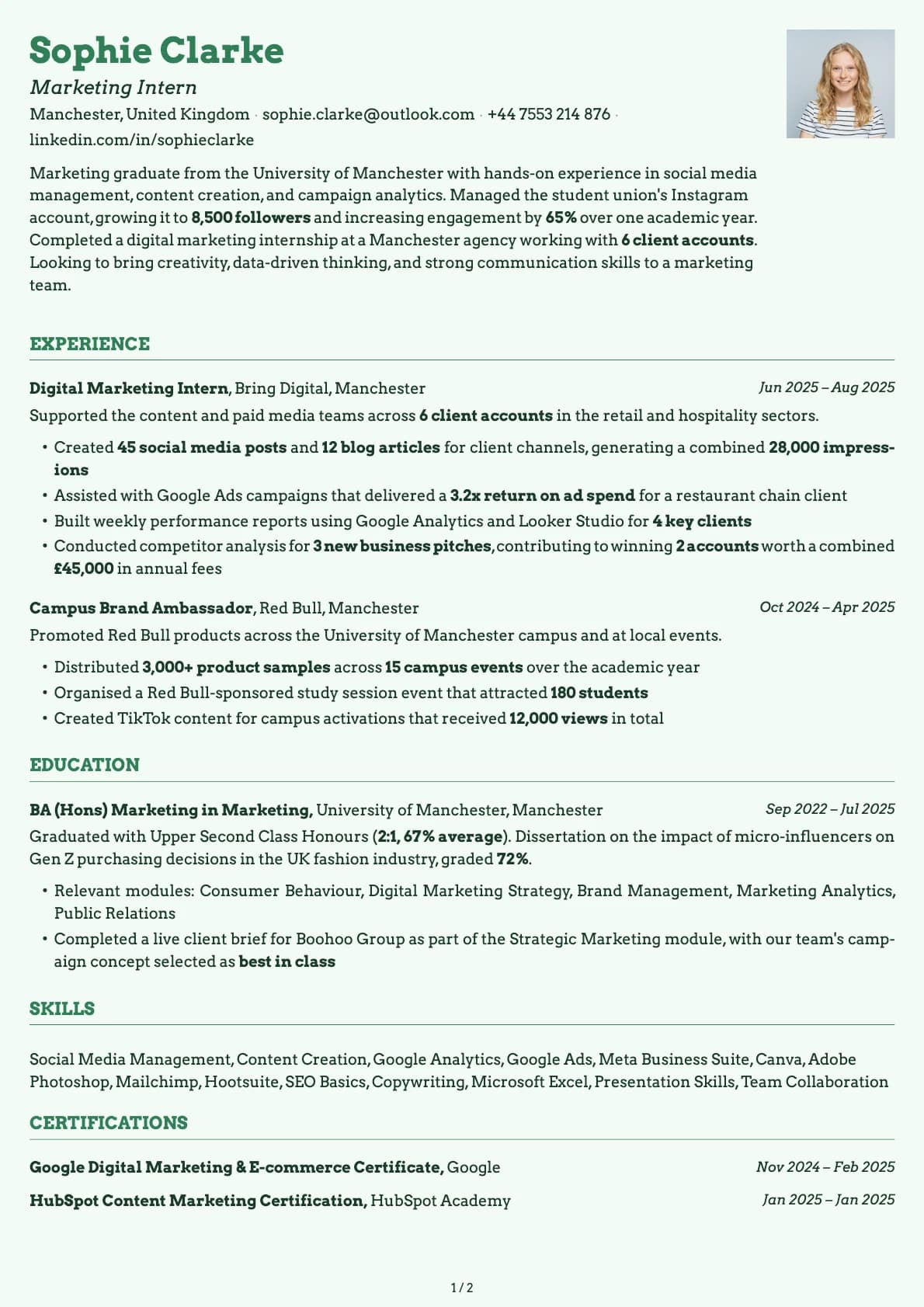
Marketing Intern
A marketing intern resume example for recent graduates. Learn how to showcase campaign results, social media metrics, and university marketing projects on your resume.
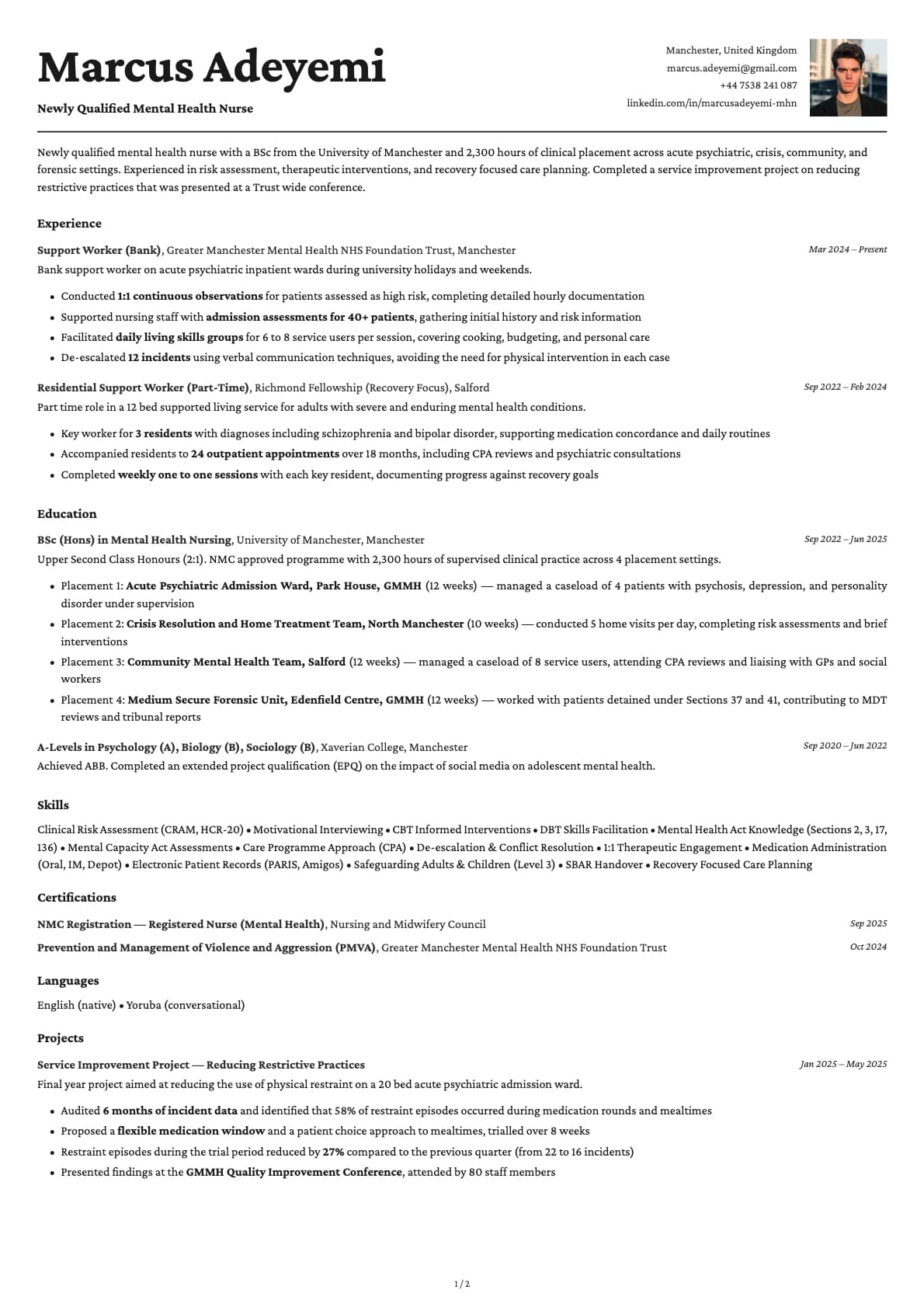
Mental Health Nurse
A newly qualified mental health nurse resume example showing how to present psychiatric placements, therapeutic skills, and NMC registration for your first Band 5 role.
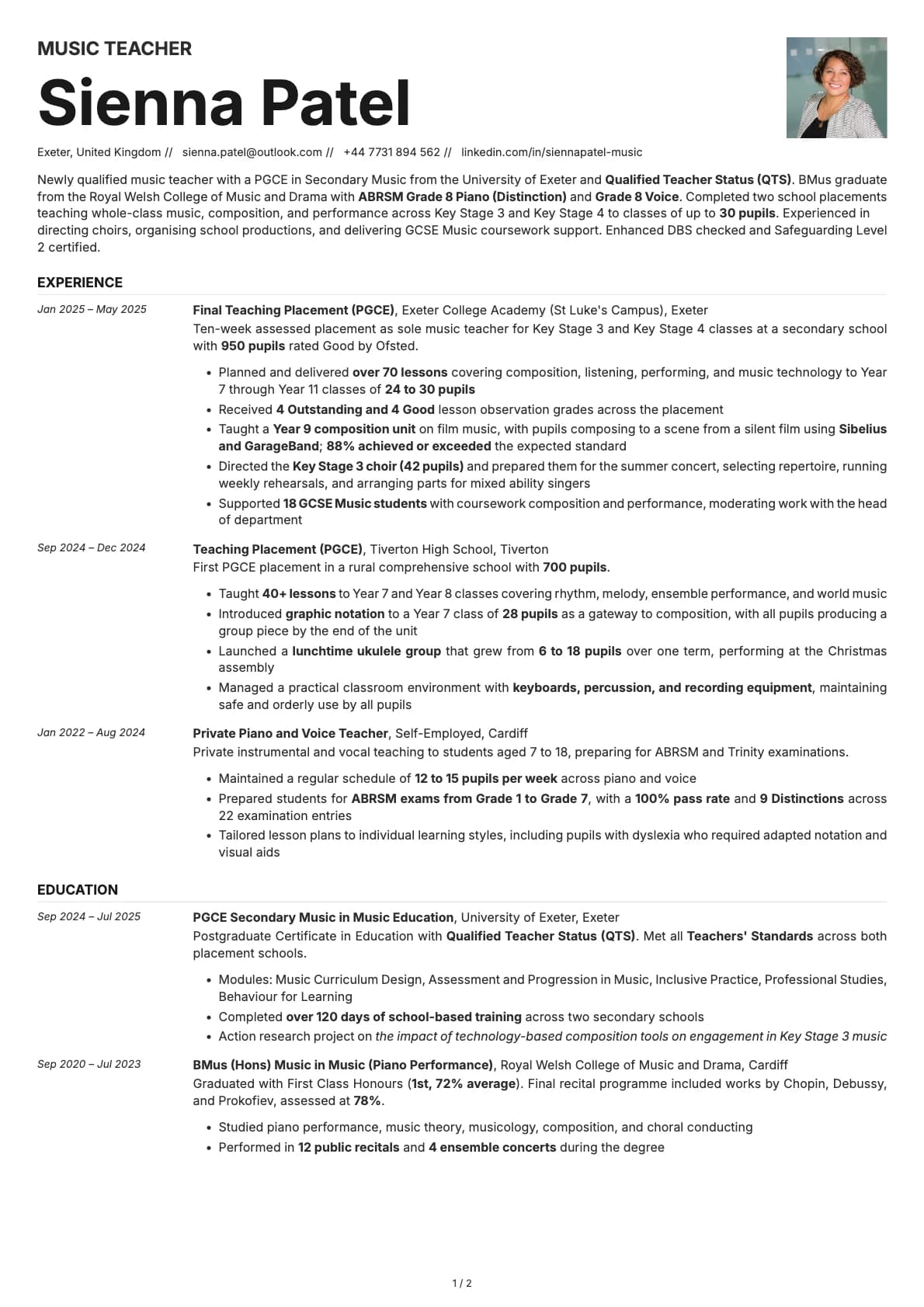
Music Teacher
A graduate music teacher resume example with PGCE, QTS, and classroom music teaching placements. See how to present your performance and teaching skills for music teacher roles.
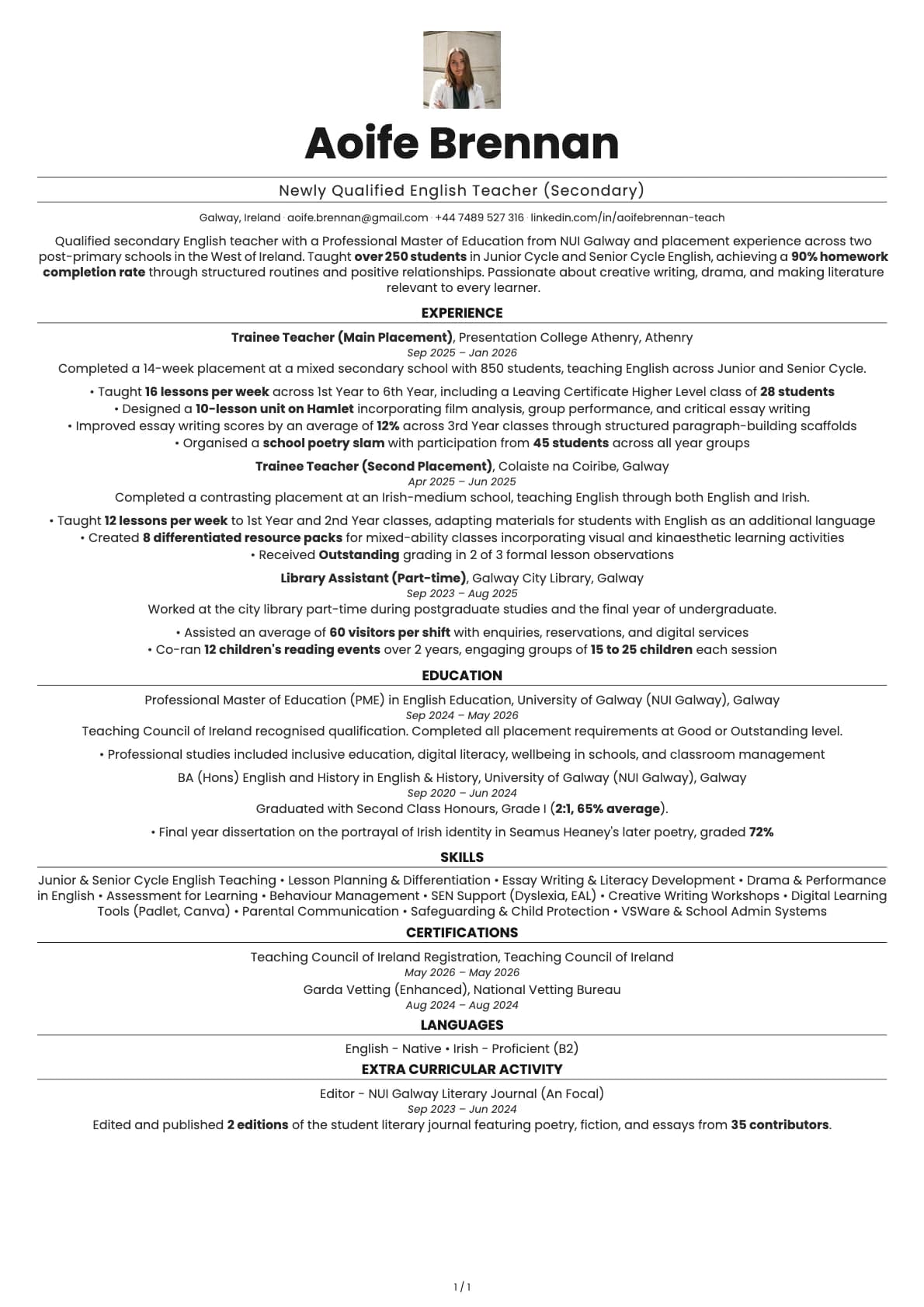
Newly Qualified Secondary English Teacher
A newly qualified secondary English teacher resume example with placement experience, student outcome data, and Teaching Council registration.