Junior School Counsellor Resume Example
A graduate school counsellor resume example with therapeutic placement hours, safeguarding, and pupil wellbeing experience. See how to present your training for school counselling roles.

Laddro Team
Free to use. No account needed to start.
Free to use. No account needed to start.
Overview
School counselling roles require a specific blend of therapeutic training, safeguarding knowledge, and the ability to work within a school environment. Most graduates applying for these positions have completed a counselling qualification alongside their degree, but many fail to communicate the depth of their practical experience. Schools want to know how many hours you have spent in a therapeutic setting, what modalities you work with, and how you handle safeguarding disclosures.
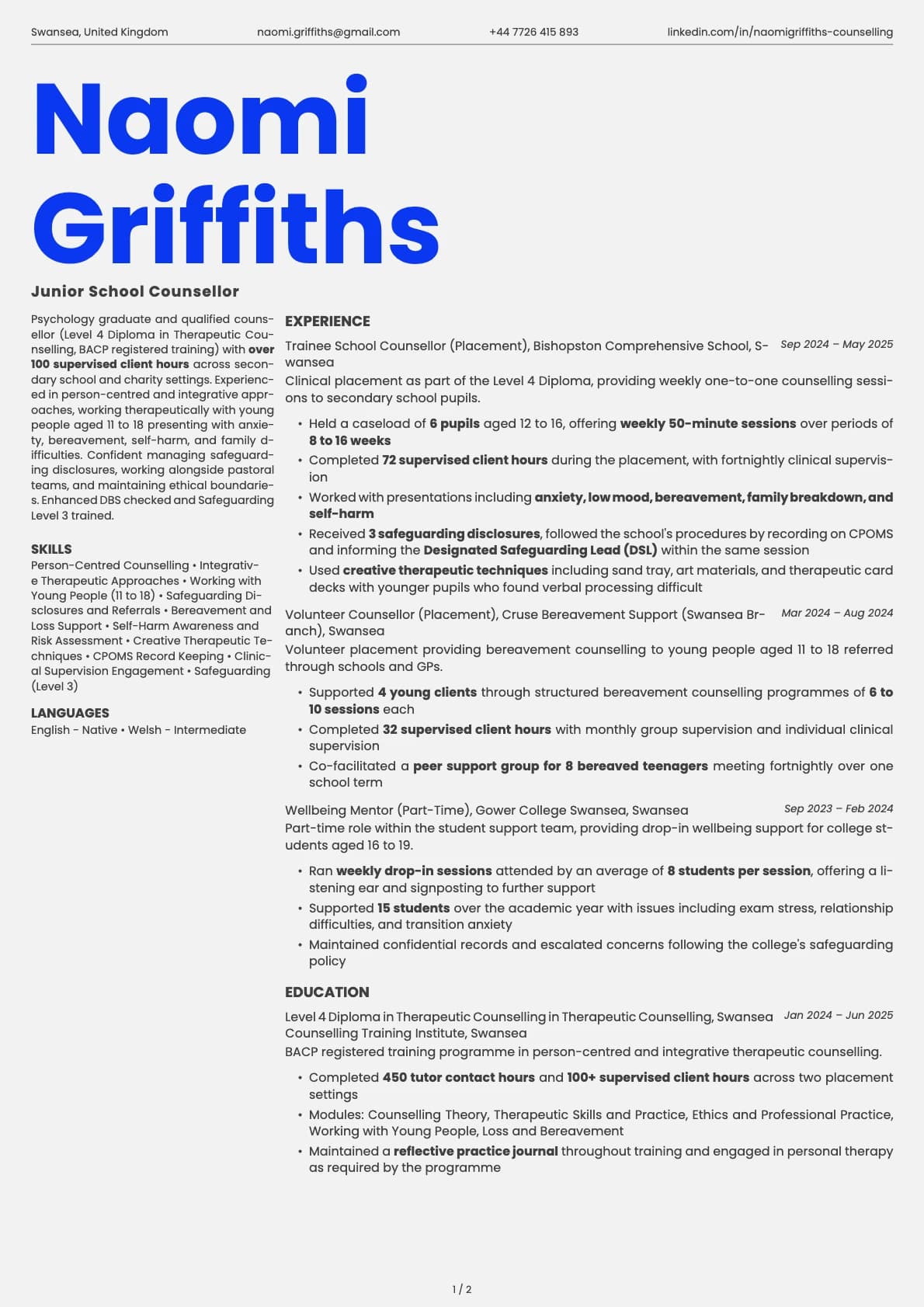
Naomi Griffiths completed a BSc in Psychology at Swansea University, followed by a Level 4 Diploma in Therapeutic Counselling at a BACP accredited training provider. She accumulated over 100 supervised clinical hours during her placement at a secondary school and a children's bereavement charity. Her resume demonstrates that she is not just academically prepared but clinically experienced and ready to support pupils.
What Makes This Resume Work
Clinical hours are clearly stated. Naomi specifies that she completed 100+ supervised client hours, broken down by setting. A school hiring a counsellor needs to know this number because it determines whether a candidate has enough practice experience to work safely.
Safeguarding disclosures are handled with care. She describes receiving disclosures from pupils and following the school's safeguarding procedures, including completing CPOMS records and informing the DSL. She does not share details of cases, which shows professional boundaries.
The therapeutic approach is named. Person-centred and integrative are not just buzzwords here. Naomi explains how she used creative therapeutic techniques with younger pupils and adapted her approach based on individual needs. This tells a school that she can work flexibly across year groups.
Key Takeaways
For school counselling applications, lead with your clinical hours and the settings where you completed them. Name your therapeutic modality, your supervisor, and any specialist training such as bereavement, self-harm awareness, or anxiety management. Mention your BACP membership status (even if student membership) and your commitment to ongoing supervision. Schools need to trust that you will work ethically and safely with vulnerable pupils.
Build your own version
Open this layout in the builder and swap in your own details. It takes a few minutes.
Free to use. No account needed to start.
Was this resume example helpful?
Rate this example to help us create better content for you.
4.7 average from 87 ratingsRelated resume examples

Lab Research Assistant
A lab research assistant resume example for science graduates. See how to present laboratory skills, research placements, and academic projects to land your first research role.
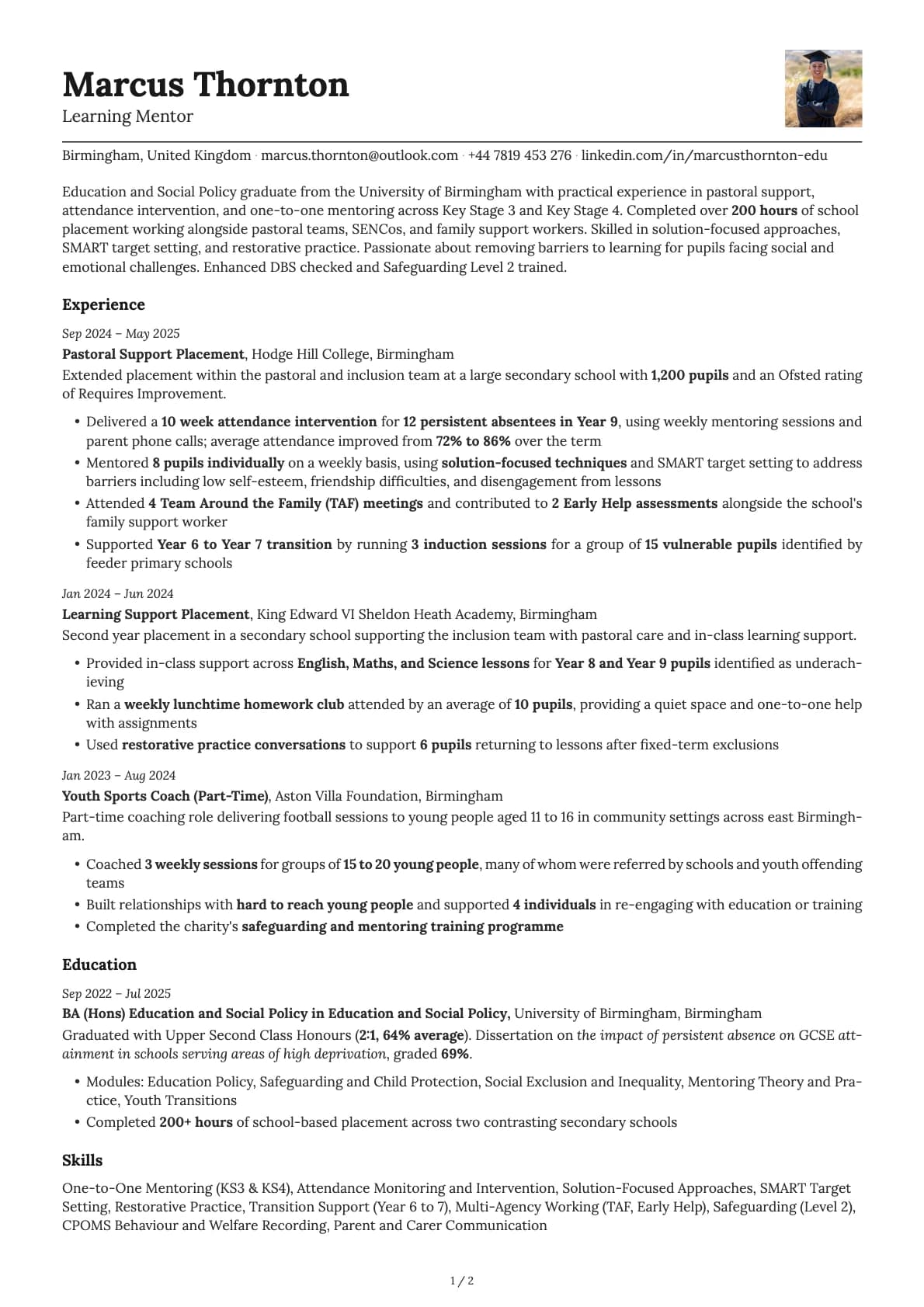
Learning Mentor
A graduate learning mentor resume example with pastoral support, attendance intervention, and pupil mentoring experience. See how to present your skills for learning mentor roles.
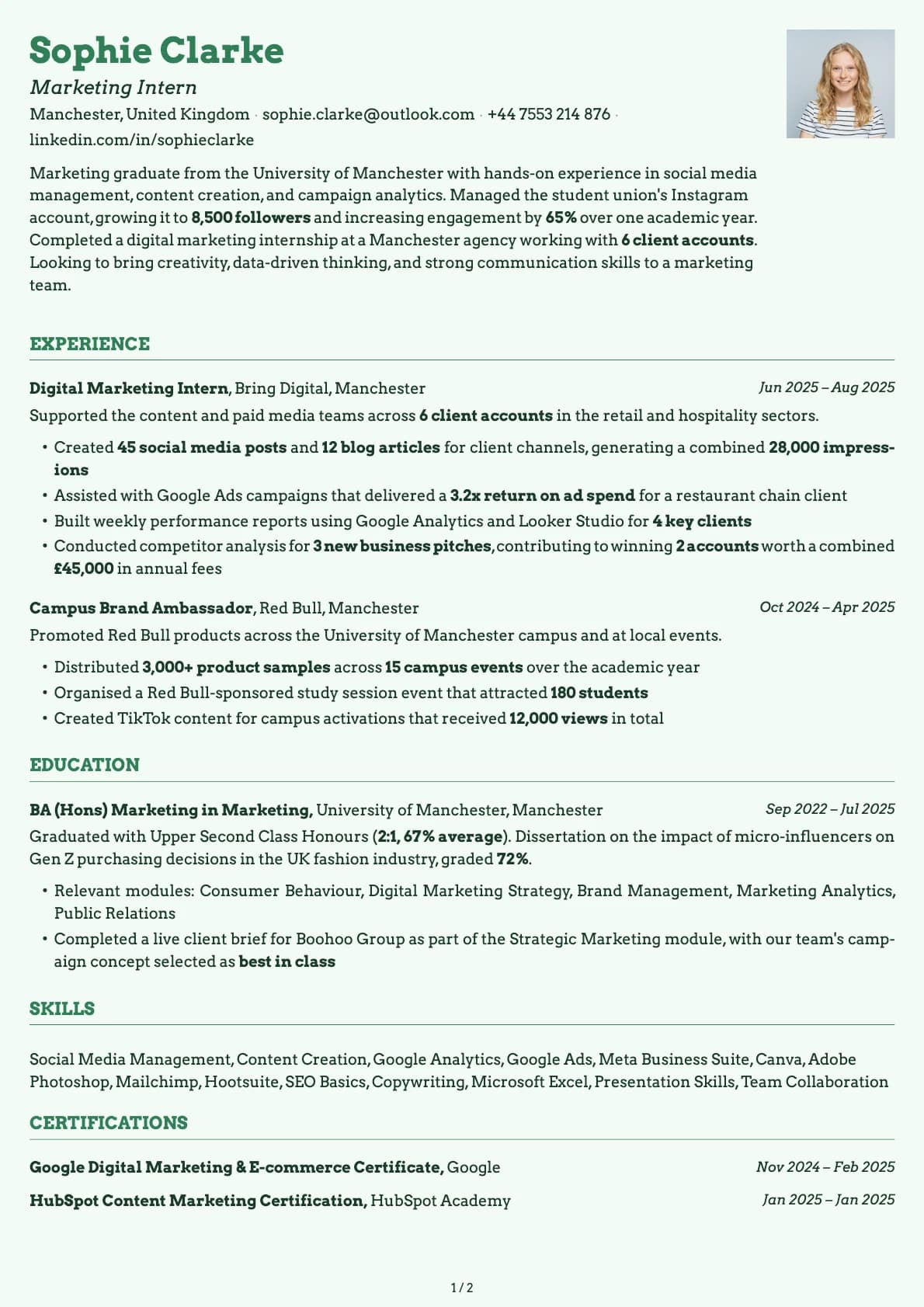
Marketing Intern
A marketing intern resume example for recent graduates. Learn how to showcase campaign results, social media metrics, and university marketing projects on your resume.
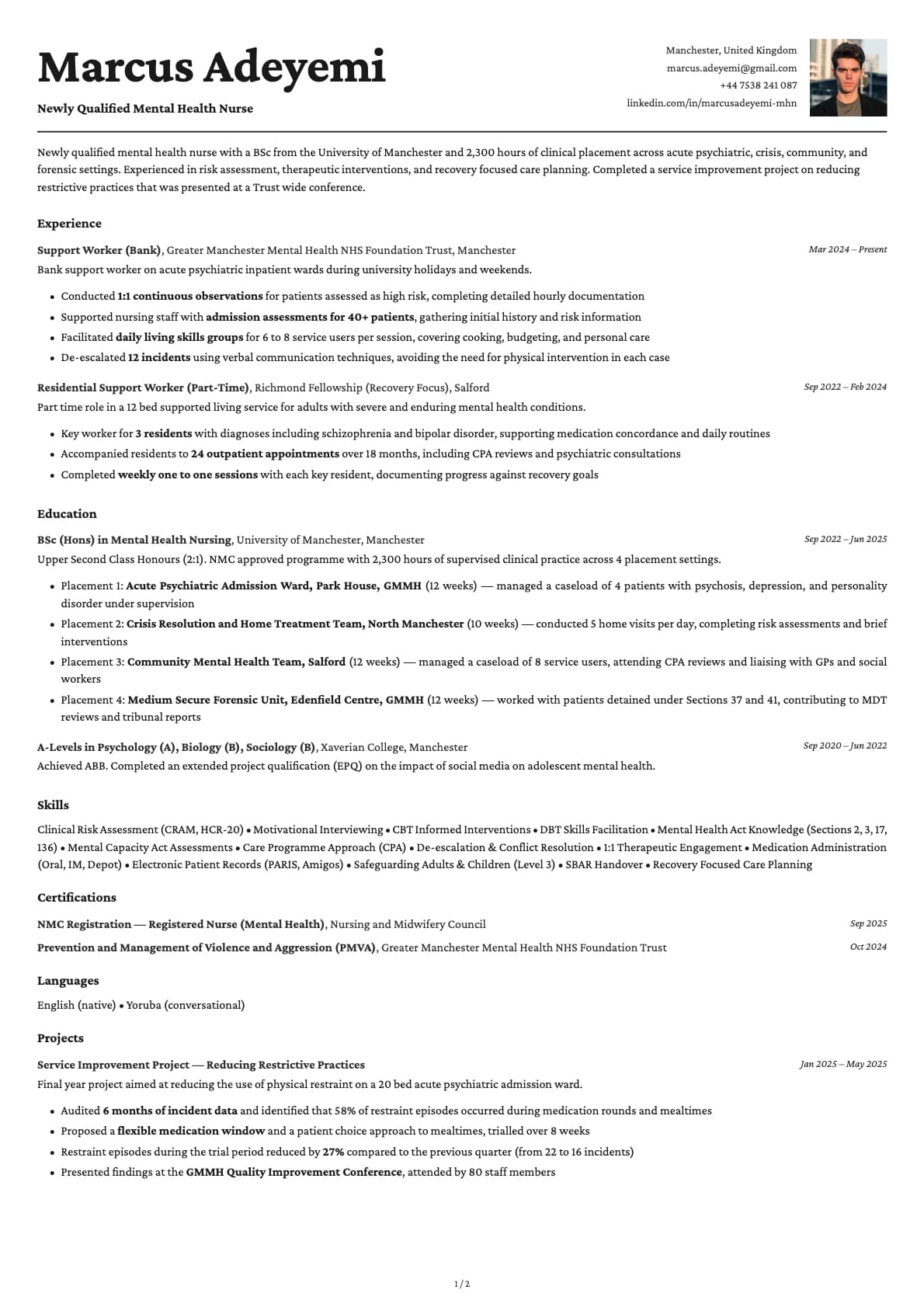
Mental Health Nurse
A newly qualified mental health nurse resume example showing how to present psychiatric placements, therapeutic skills, and NMC registration for your first Band 5 role.
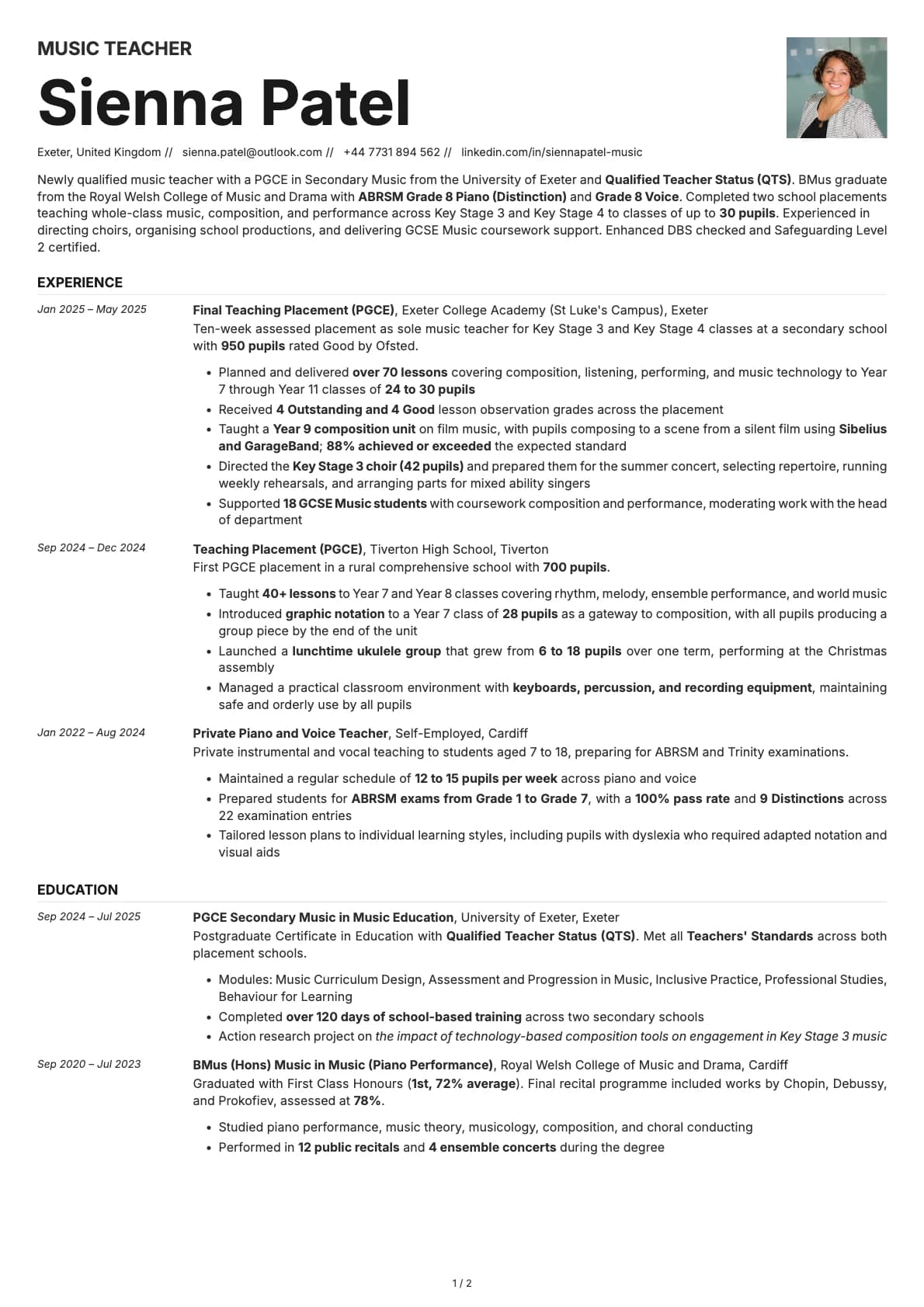
Music Teacher
A graduate music teacher resume example with PGCE, QTS, and classroom music teaching placements. See how to present your performance and teaching skills for music teacher roles.
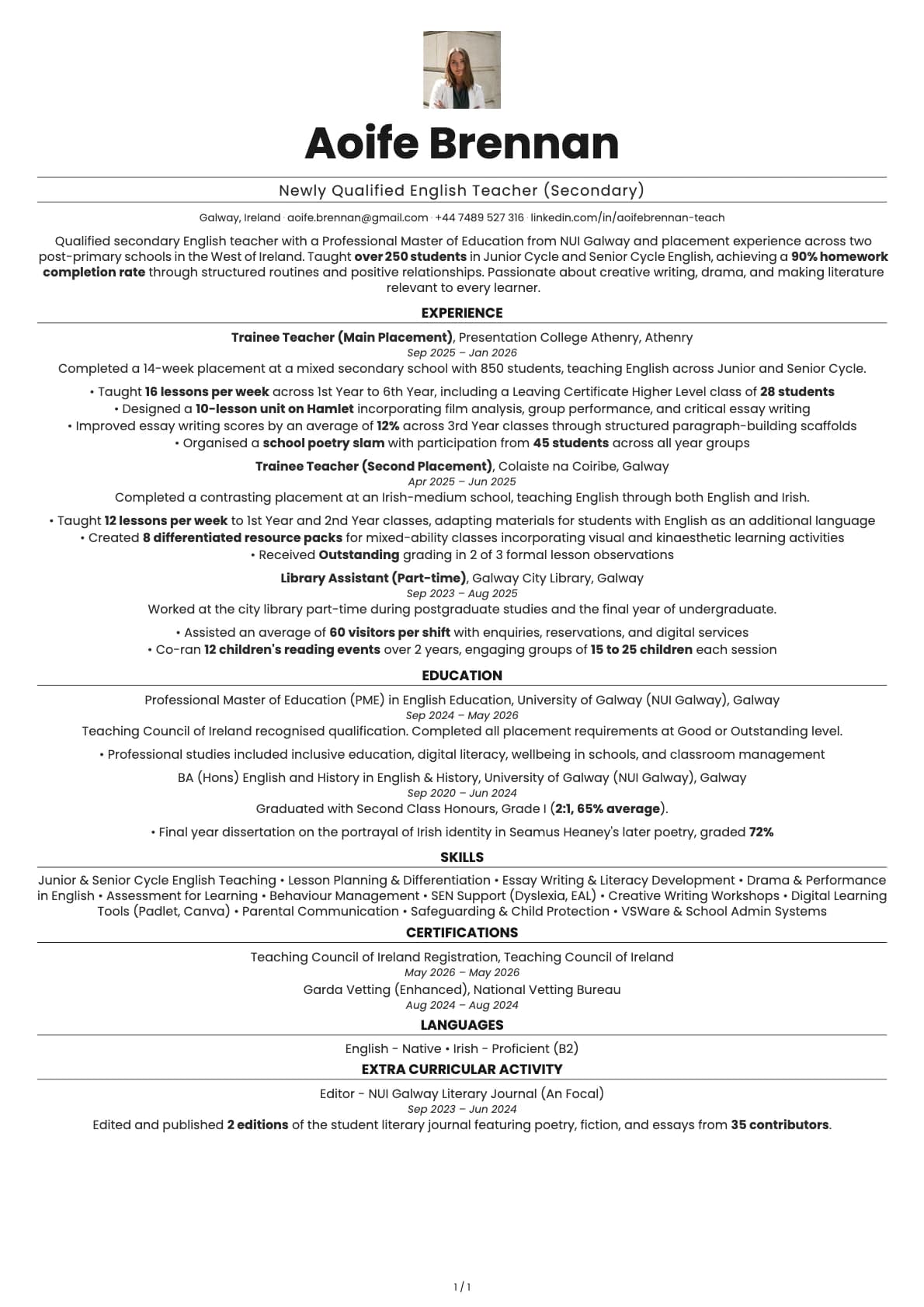
Newly Qualified Secondary English Teacher
A newly qualified secondary English teacher resume example with placement experience, student outcome data, and Teaching Council registration.
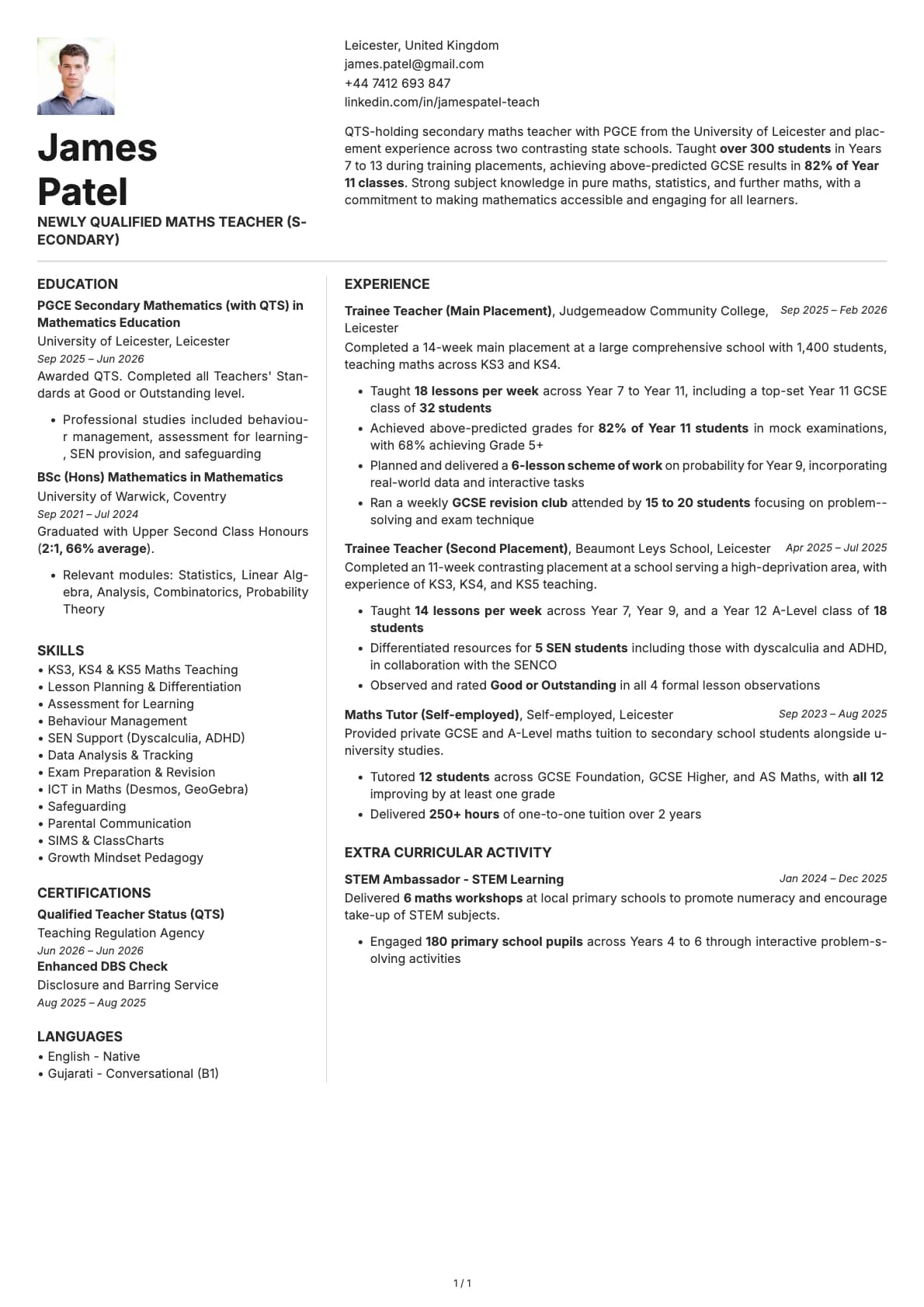
Newly Qualified Secondary Maths Teacher
A newly qualified secondary maths teacher resume example with PGCE placement experience, student outcome data, and QTS for ECTs.
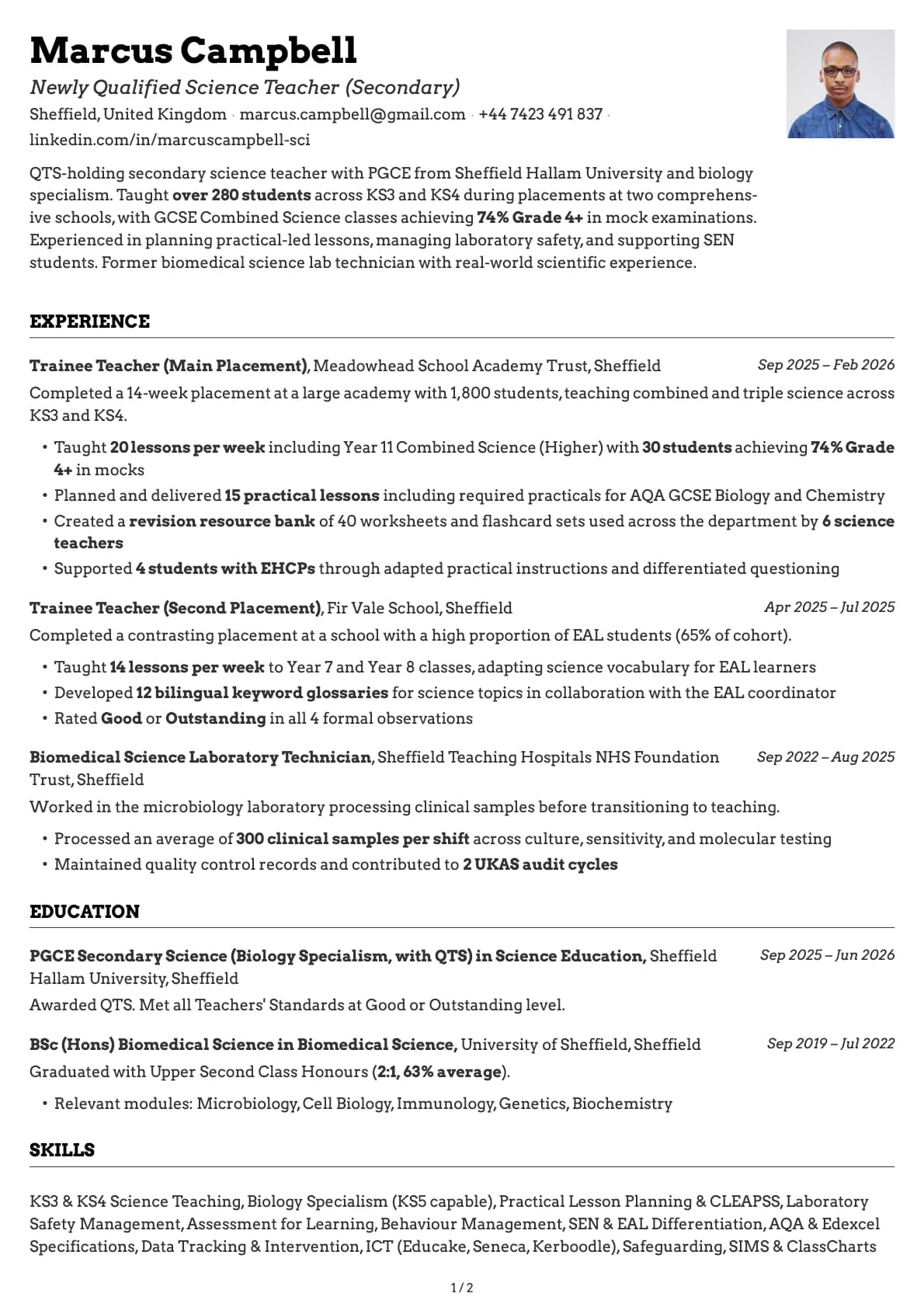
Newly Qualified Secondary Science Teacher
A newly qualified secondary science teacher resume example with PGCE placement data, GCSE results, and practical lesson experience for ECTs.

Newly Qualified Teacher
A newly qualified teacher resume example with school placements, QTS, and classroom experience. See how to present your training to stand out in NQT applications.
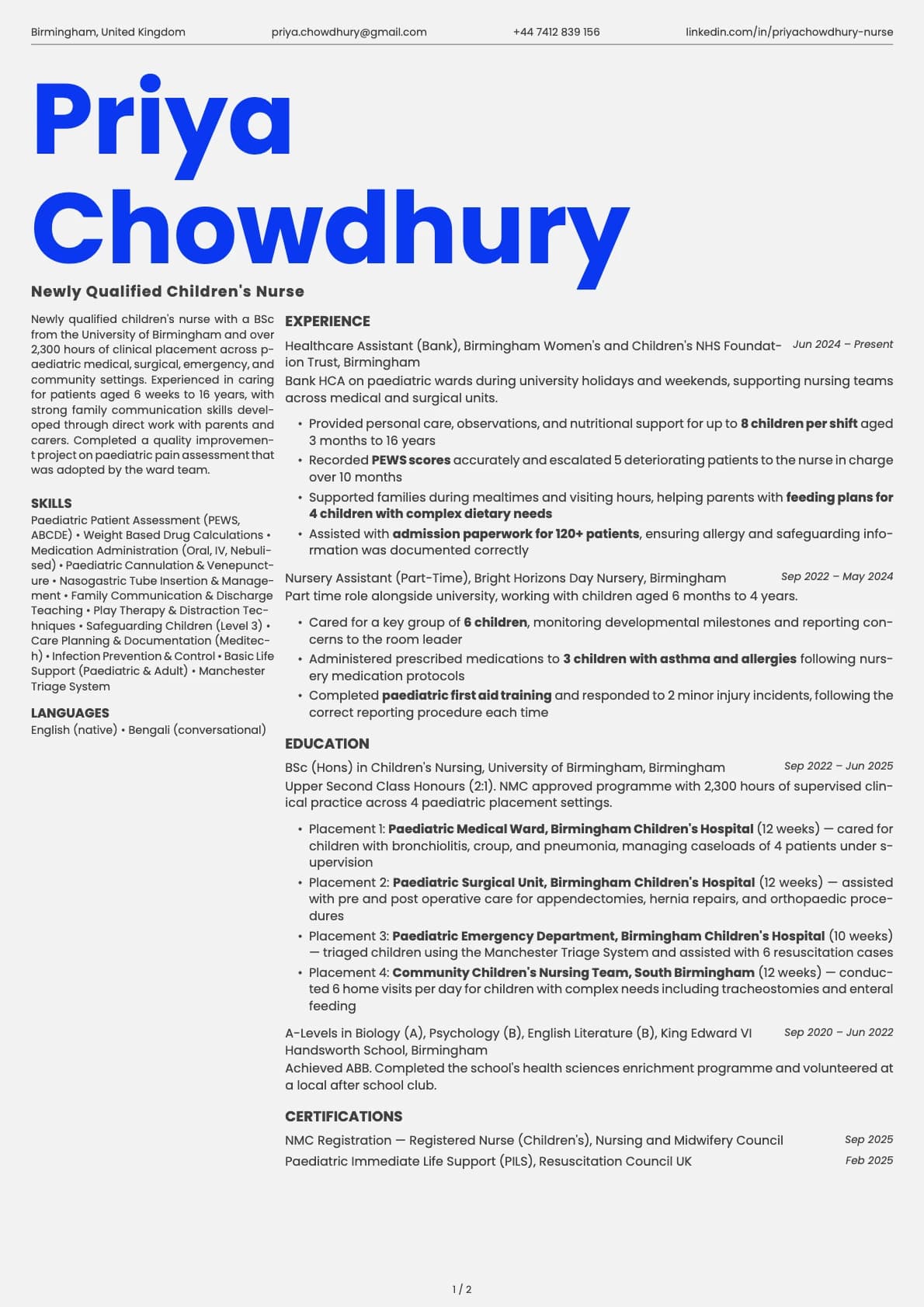
Paediatric Nurse
A newly qualified paediatric nurse resume example showing how to present children's nursing placements, family communication skills, and NMC registration for your first Band 5 role.
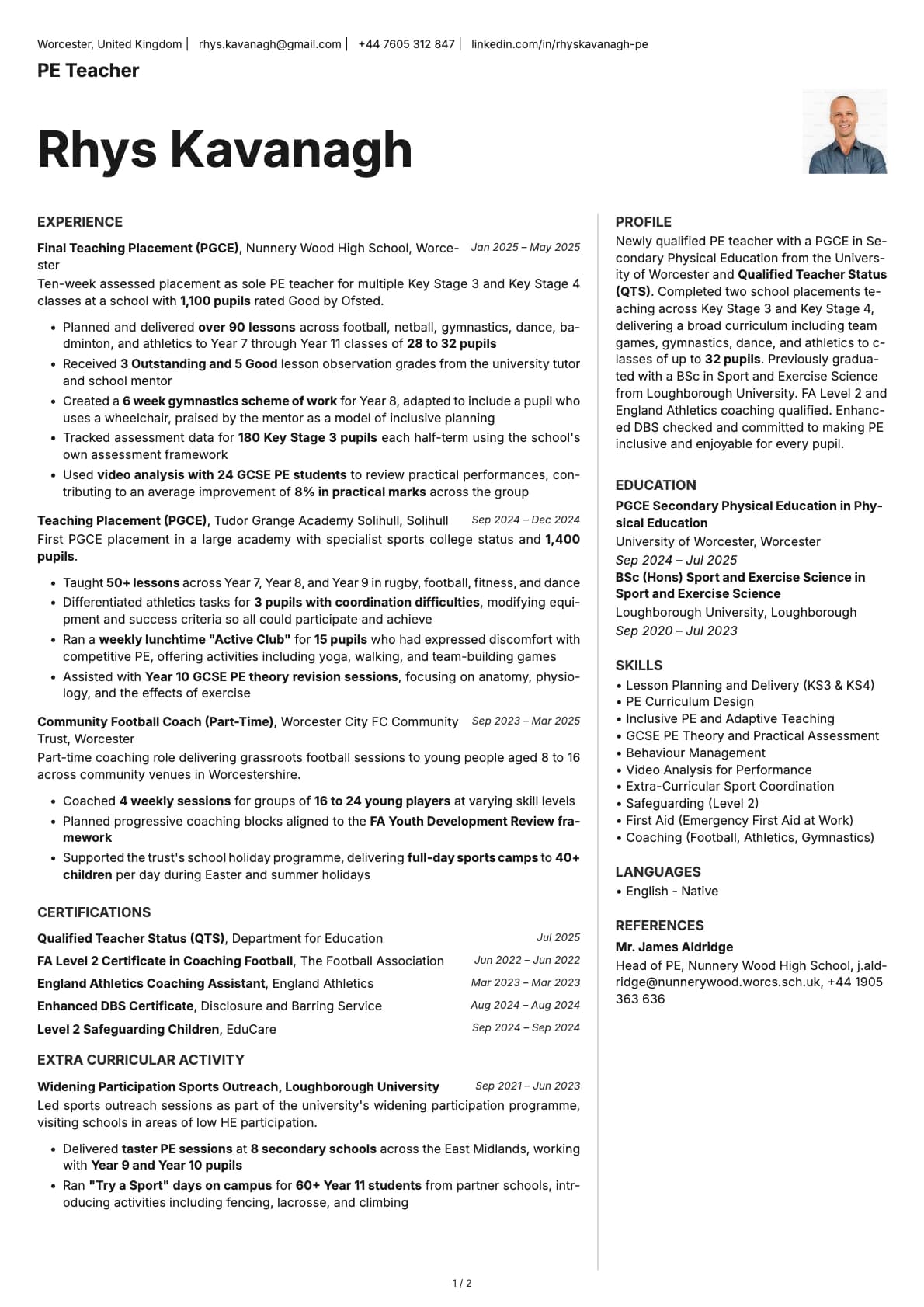
PE Teacher
A graduate PE teacher resume example with PGCE, QTS, and Key Stage 3/4 teaching placements. See how to present your coaching and teaching experience for PE teacher roles.
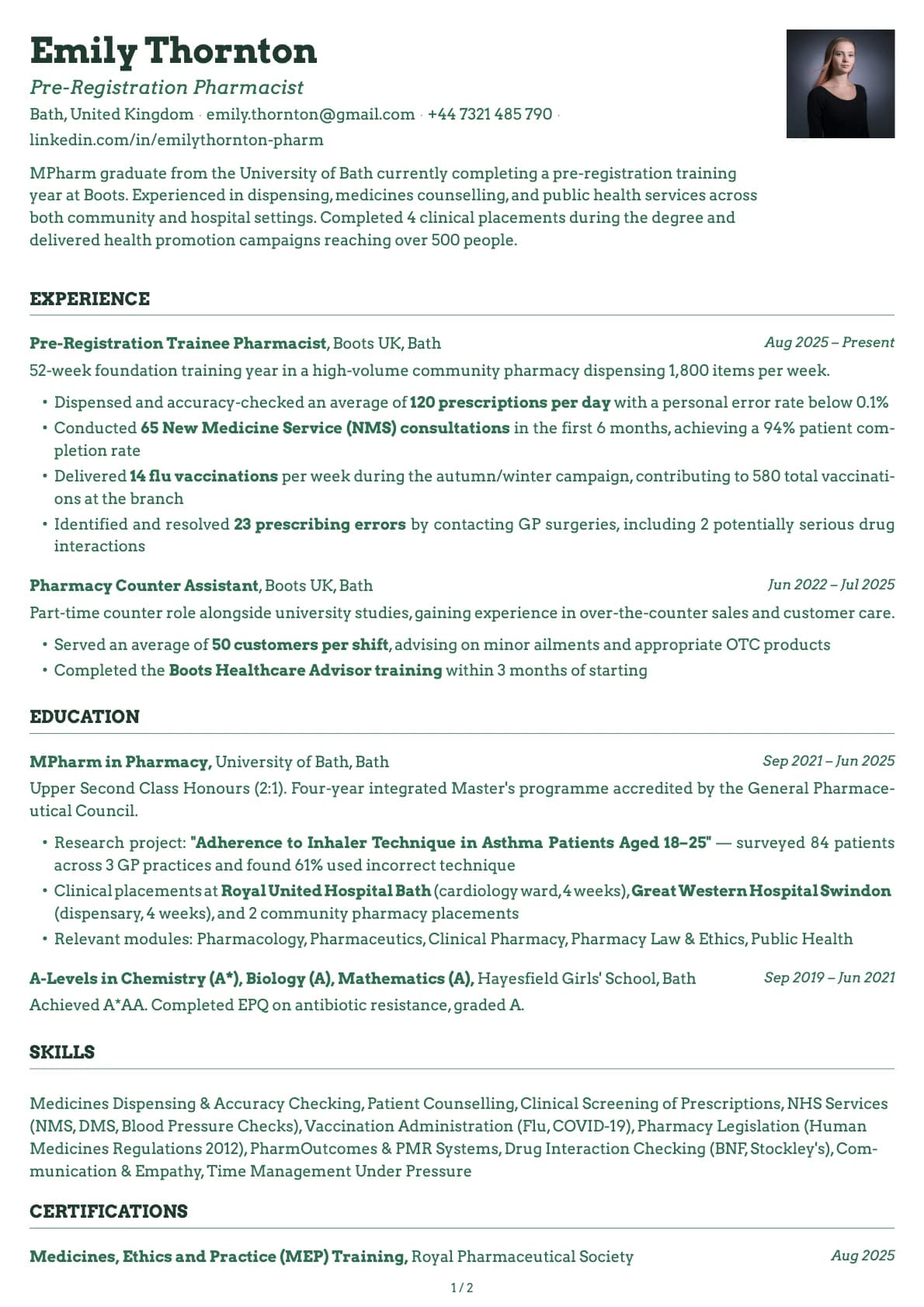
Pharmacy Intern
A pharmacy intern resume example for recent graduates. See how to present your dispensing experience, clinical placements, and patient interaction skills to land your first pharmacy role.