Junior Game Artist Resume Example
A junior game artist resume example with 3D character models, game jam entries, and portfolio highlights from a Game Art BA graduate breaking into the industry.

Laddro Team
Free to use. No account needed to start.
Free to use. No account needed to start.
Overview
Game art roles are fiercely competitive. Studios receive hundreds of applications for each junior position, and the portfolio does most of the heavy lifting. But the resume still matters. It needs to demonstrate that you understand production pipelines, can work within technical constraints (poly budgets, texture sizes), and have contributed to team projects, not just solo work.
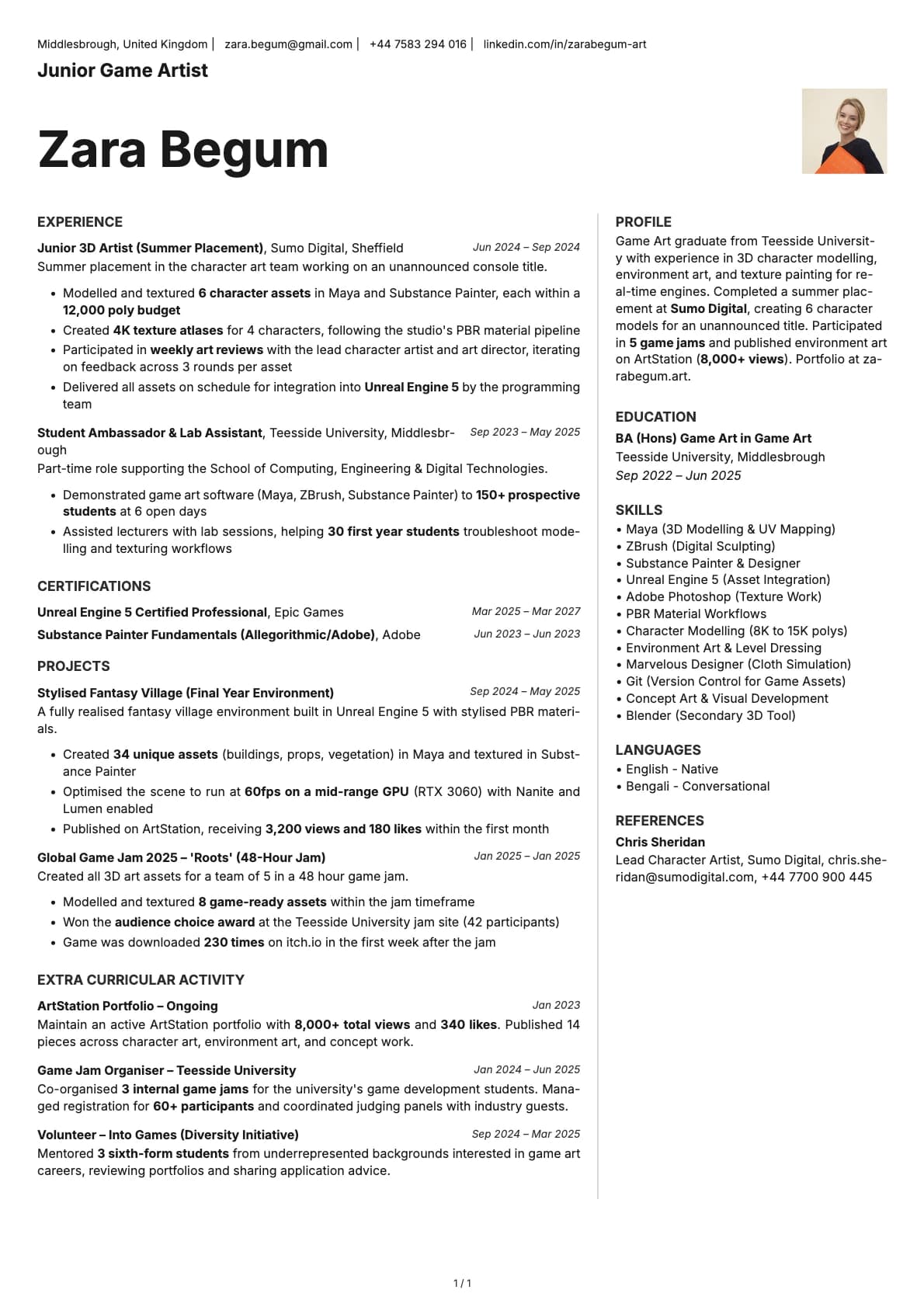
This resume belongs to Zara Begum, a Game Art graduate from Teesside University. She completed a summer placement at Sumo Digital, participated in 5 game jams, and published environment art on ArtStation that received over 8,000 views. Her resume works because it treats every project as a production deliverable with technical specifications.
What Makes This Resume Work
The Sumo Digital placement is a standout credential. A recognised UK studio name immediately tells hiring managers that Zara has been through a professional pipeline. She describes her contribution in specific terms: 6 character models, poly counts, and texture atlas specifications.
Game jam entries demonstrate collaborative working. Five game jams with different teams show Zara can adapt to new collaborators, work under time pressure (48 to 72 hours), and deliver assets on deadline. One of her jam entries won the audience choice award, adding competitive credibility.
Technical specifications appear throughout. Poly counts (8,000 to 15,000 per character), texture sizes (2K and 4K), and engine compatibility (Unreal Engine 5) are mentioned naturally alongside creative descriptions. This speaks directly to technical art directors reviewing applications.
ArtStation metrics prove community engagement. Citing 8,000 views and 340 likes on her environment art series shows Zara is actively sharing work and building a professional presence in the game art community.
Key Takeaways
Junior game artist resumes must include technical specifications alongside creative descriptions. Name the engines you work with, the poly budgets you design within, and the texture pipelines you follow. Game jam participation, studio placements, and ArtStation presence all strengthen your application. Studios want artists who understand production constraints, not just artists who can make pretty pictures in isolation.
Build your own version
Open this layout in the builder and swap in your own details. It takes a few minutes.
Free to use. No account needed to start.
Was this resume example helpful?
Rate this example to help us create better content for you.
4.8 average from 142 ratingsRelated resume examples
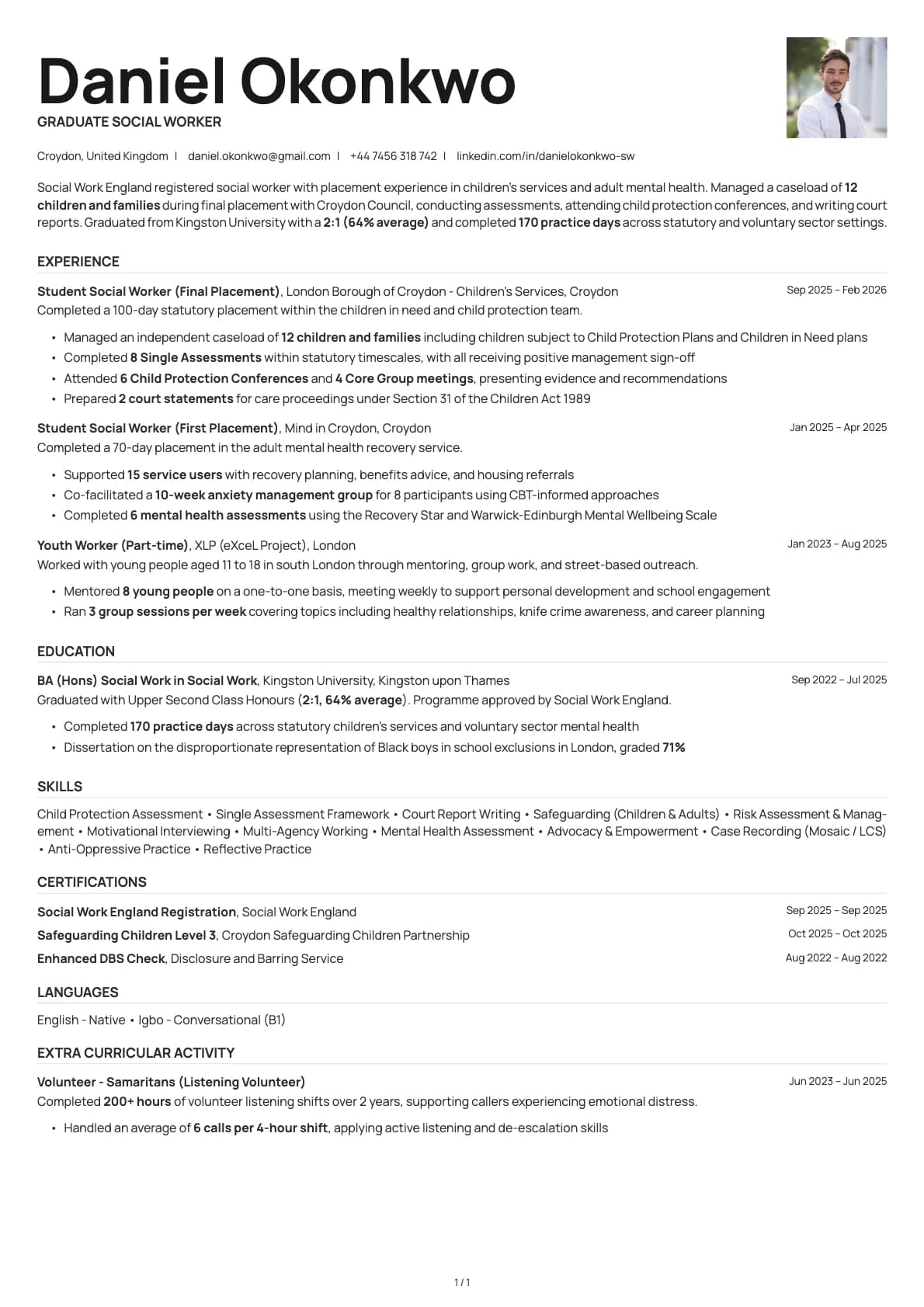
Graduate Social Worker
A graduate social worker resume example with statutory placement experience, caseload numbers, and Social Work England registration for NQSWs.
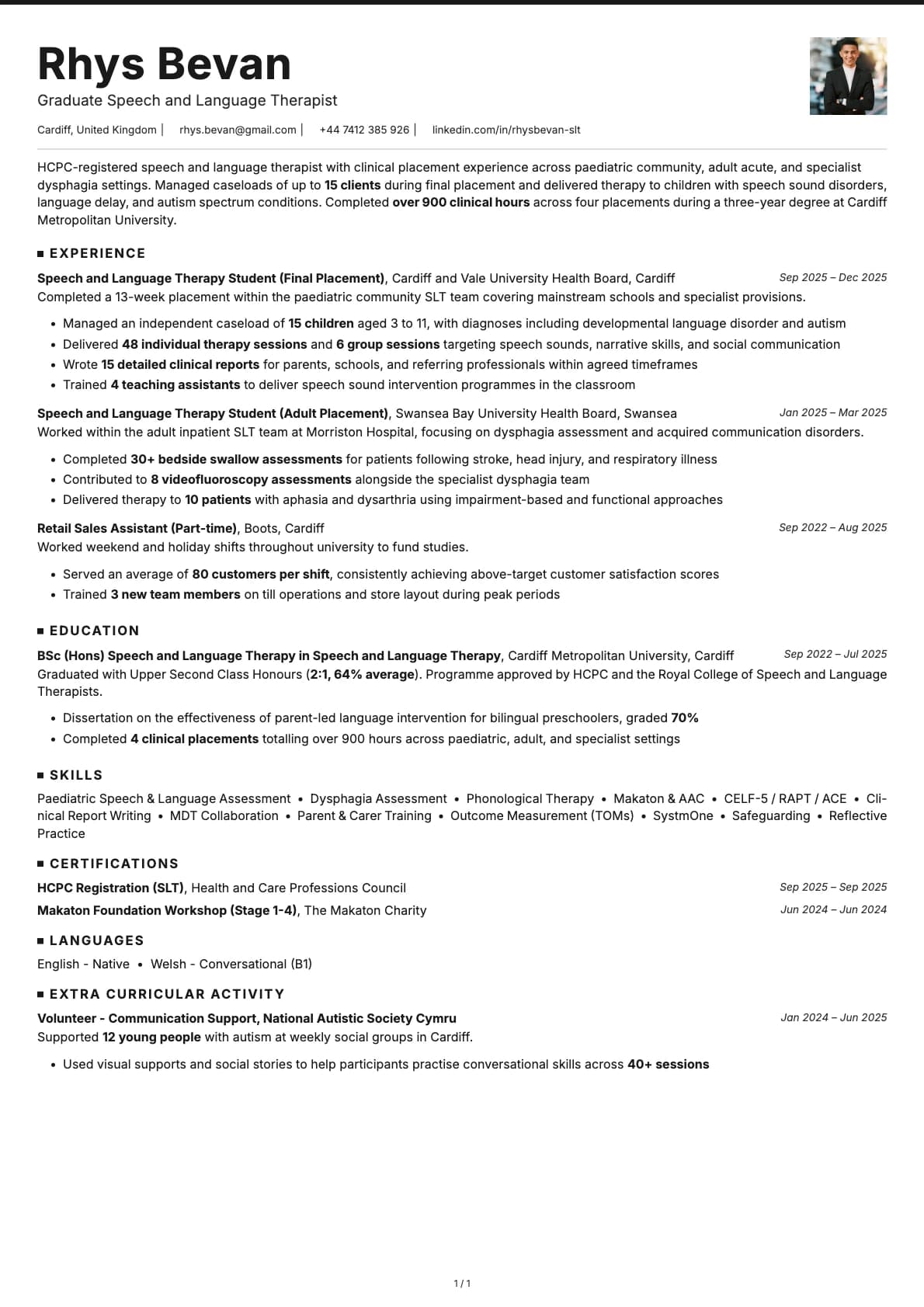
Graduate Speech and Language Therapist
A graduate speech and language therapist resume example with clinical placement hours, HCPC registration, and paediatric caseload numbers.
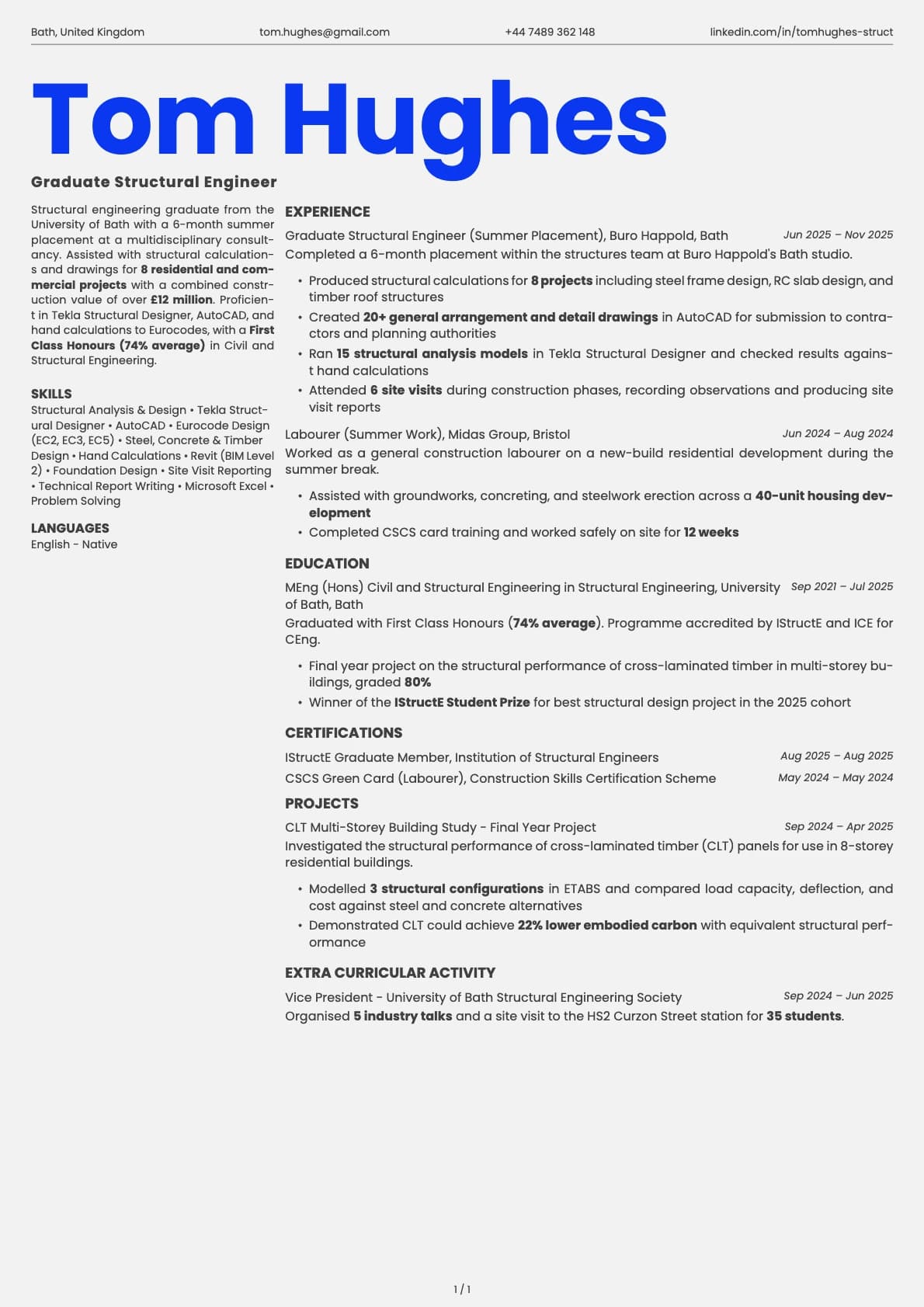
Graduate Structural Engineer
A graduate structural engineer resume example with consultancy placement experience, Eurocode design skills, and IStructE membership.
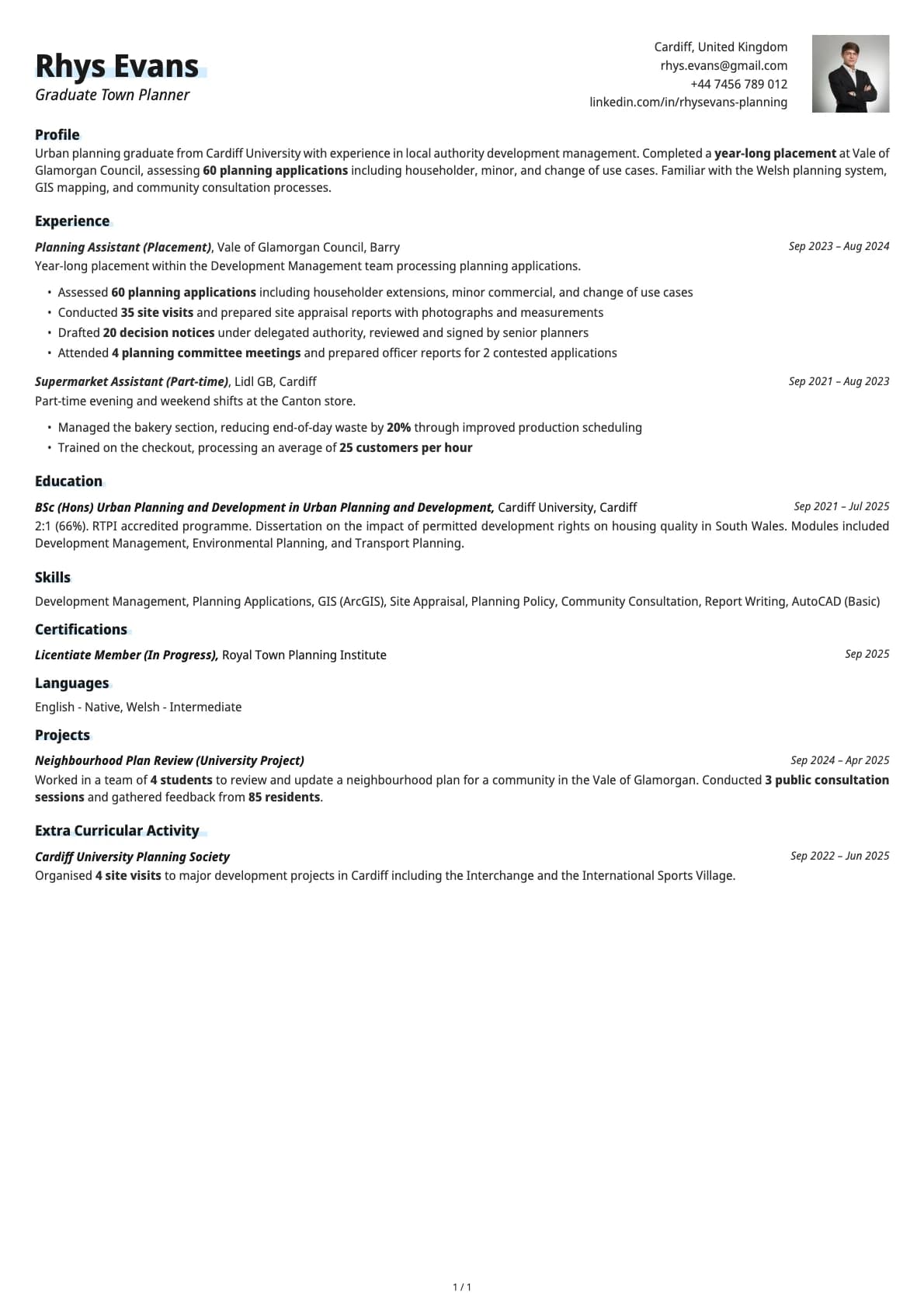
Graduate Town Planner
A graduate town planner resume example with local authority placement experience and RTPI accredited degree.
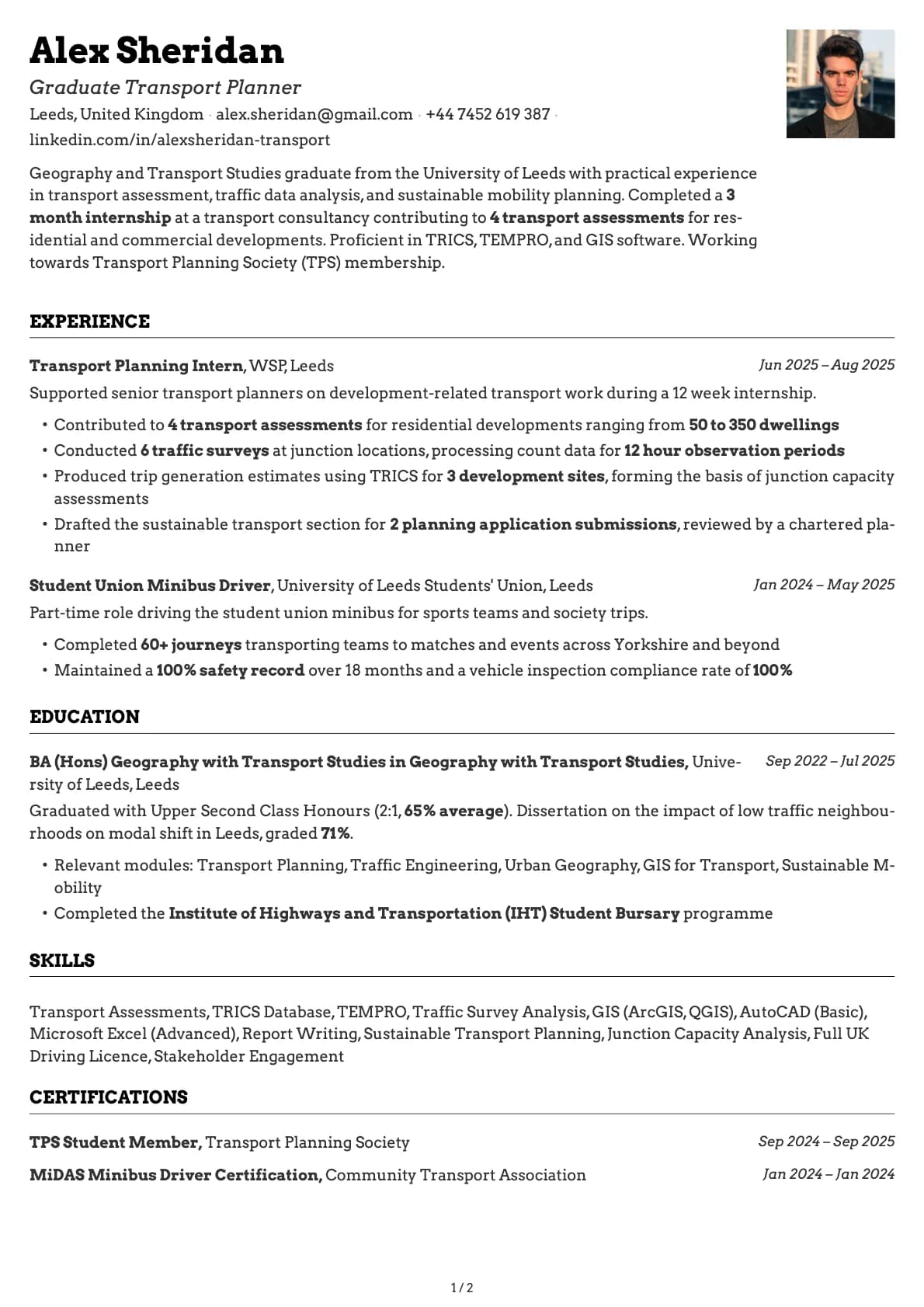
Graduate Transport Planner
A graduate transport planner resume example. See how to present transport assessment experience, traffic survey data, and TPS membership to land your first transport planning role.
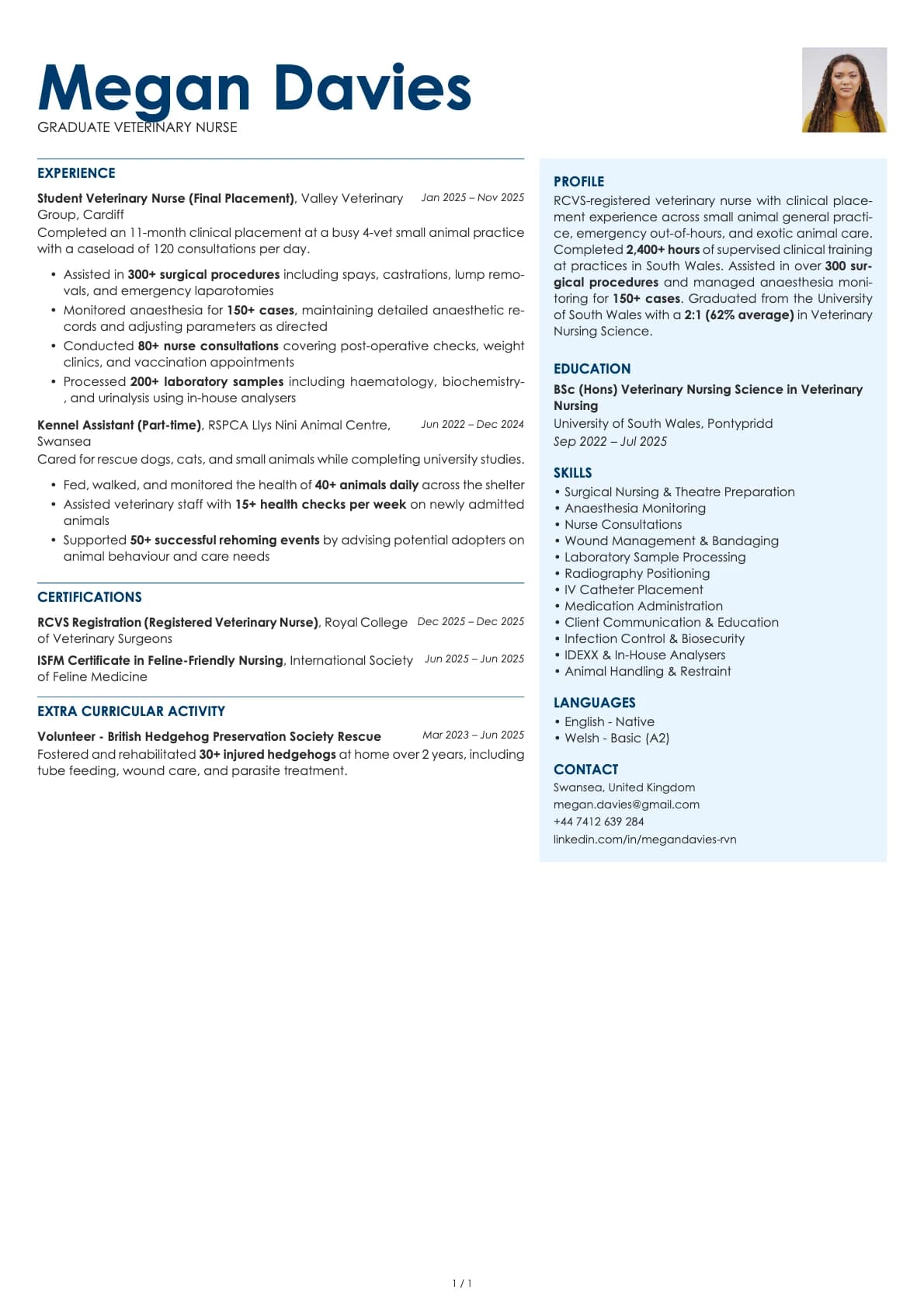
Graduate Veterinary Nurse
A graduate veterinary nurse resume example with RCVS registration, surgical assist numbers, and clinical placement hours for newly qualified RVNs.
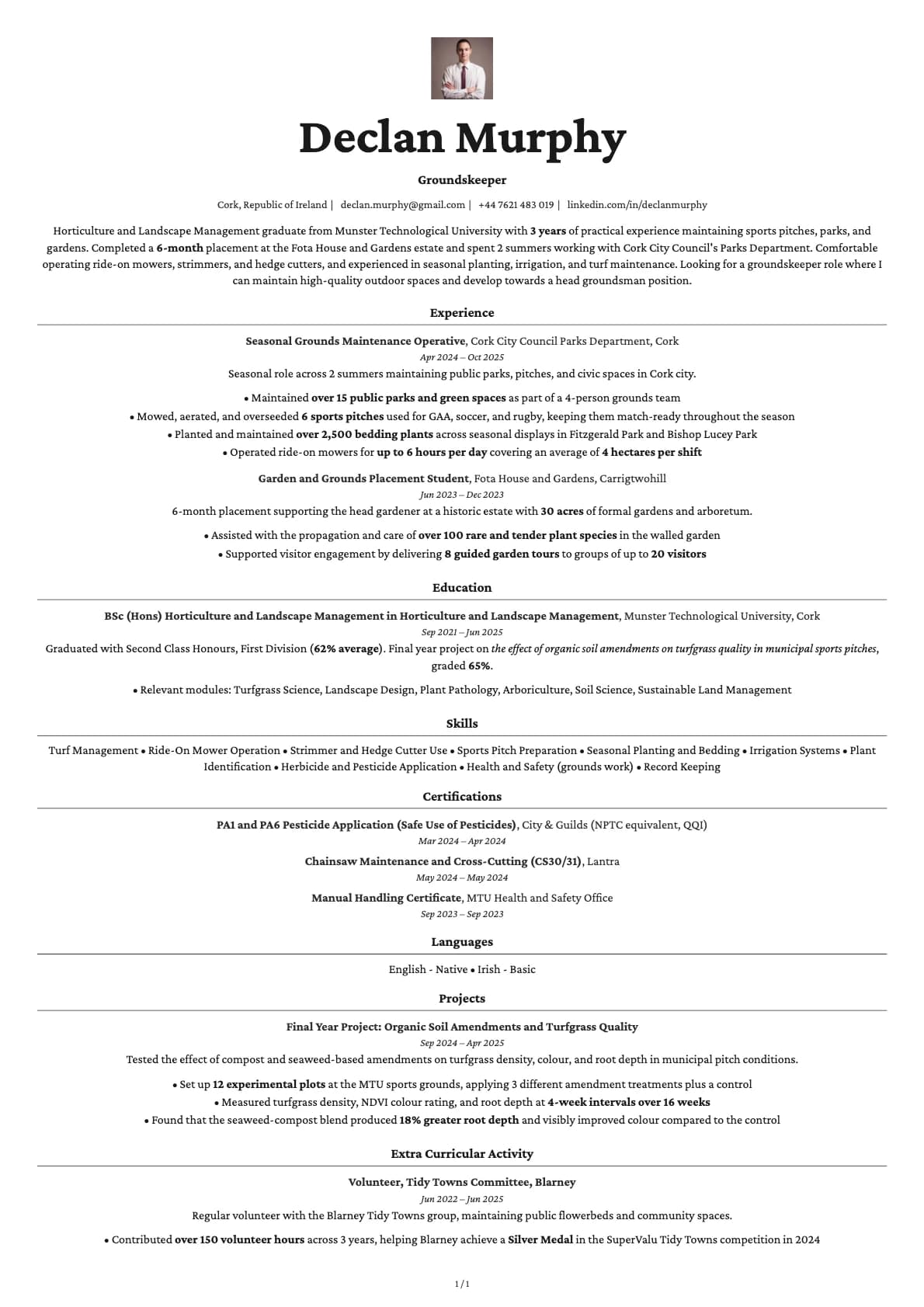
Groundskeeper
A groundskeeper resume example showing how to combine a horticulture degree with council grounds work and a historic garden placement.
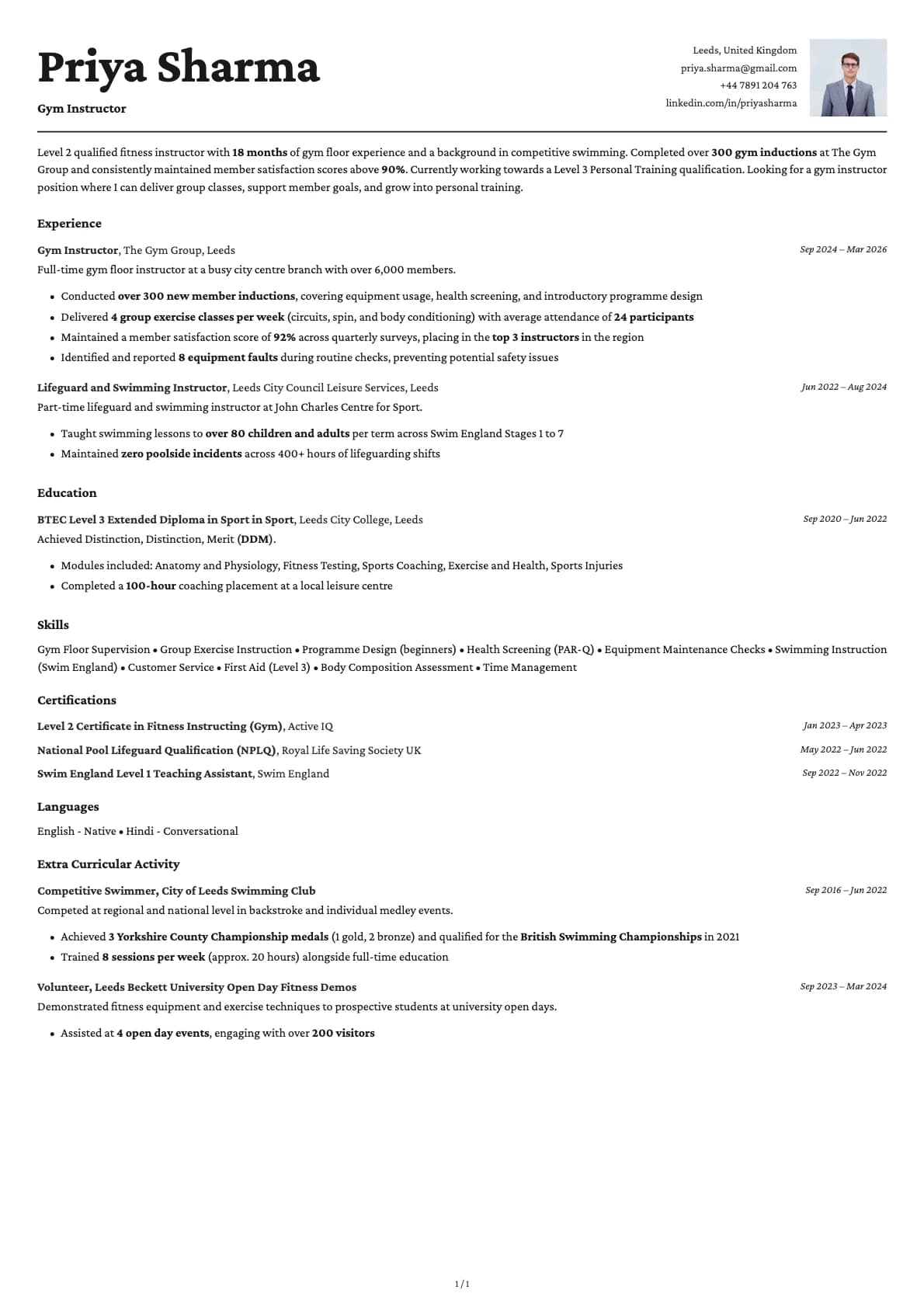
Gym Instructor
A gym instructor resume example showing how to combine a Level 2 fitness qualification with competitive swimming and strong member satisfaction scores.
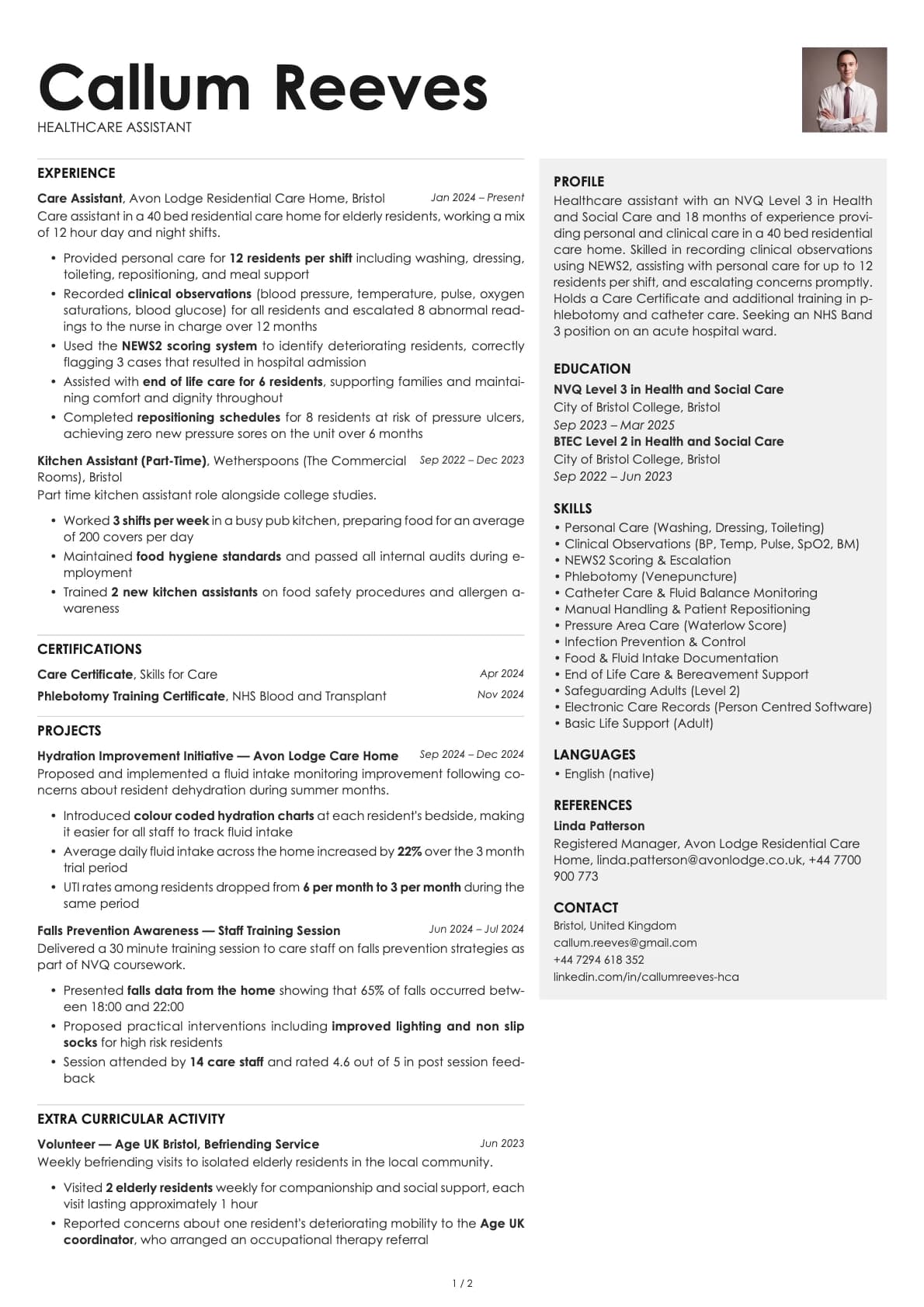
Healthcare Assistant
A healthcare assistant resume example for candidates with NVQ Level 3 in Health and Social Care, showing how to present ward experience and patient care skills for NHS Band 3/4 roles.
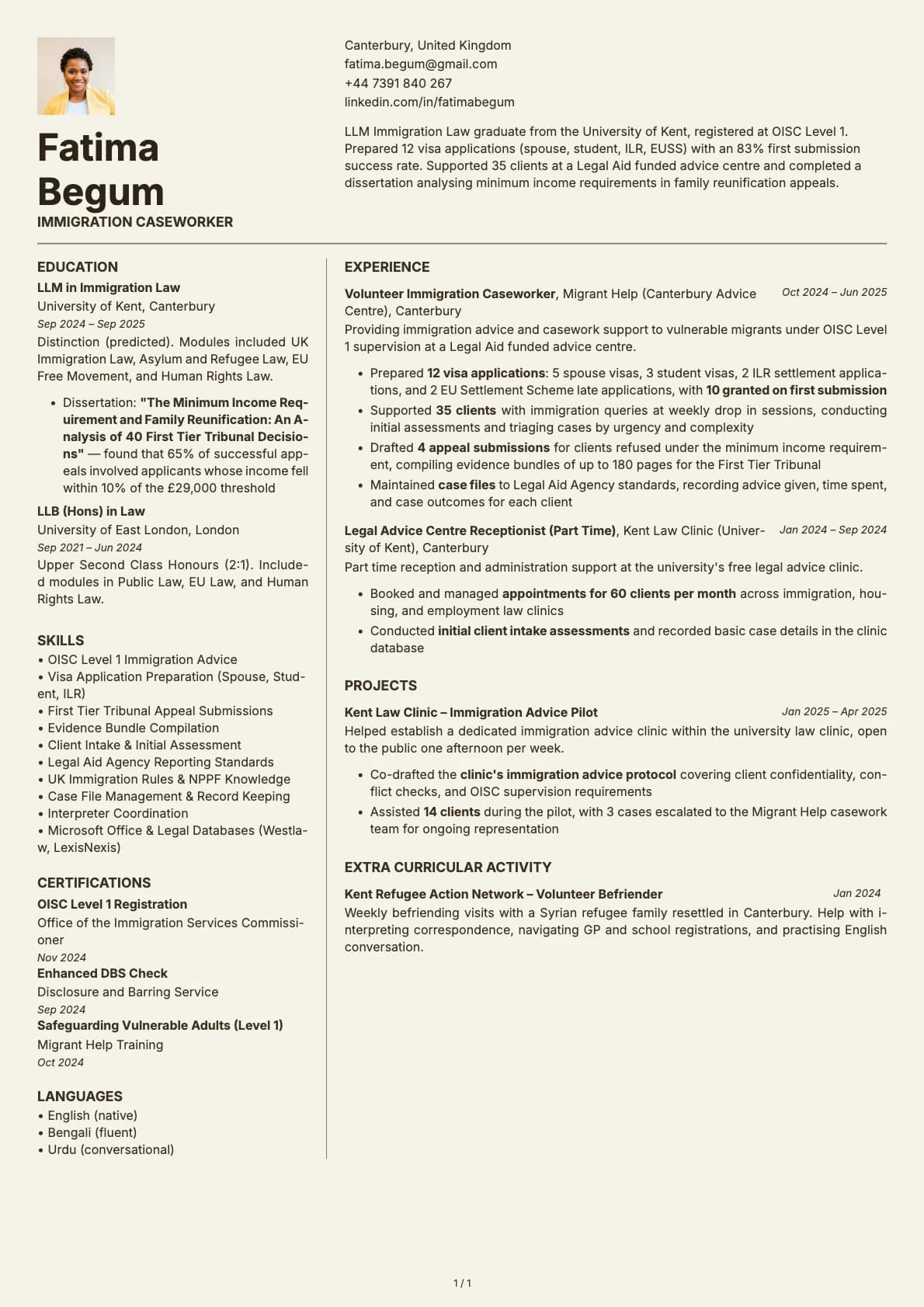
Immigration Caseworker
An immigration caseworker resume example for immigration law graduates. See how to present your OISC registration, casework experience, and visa application knowledge.
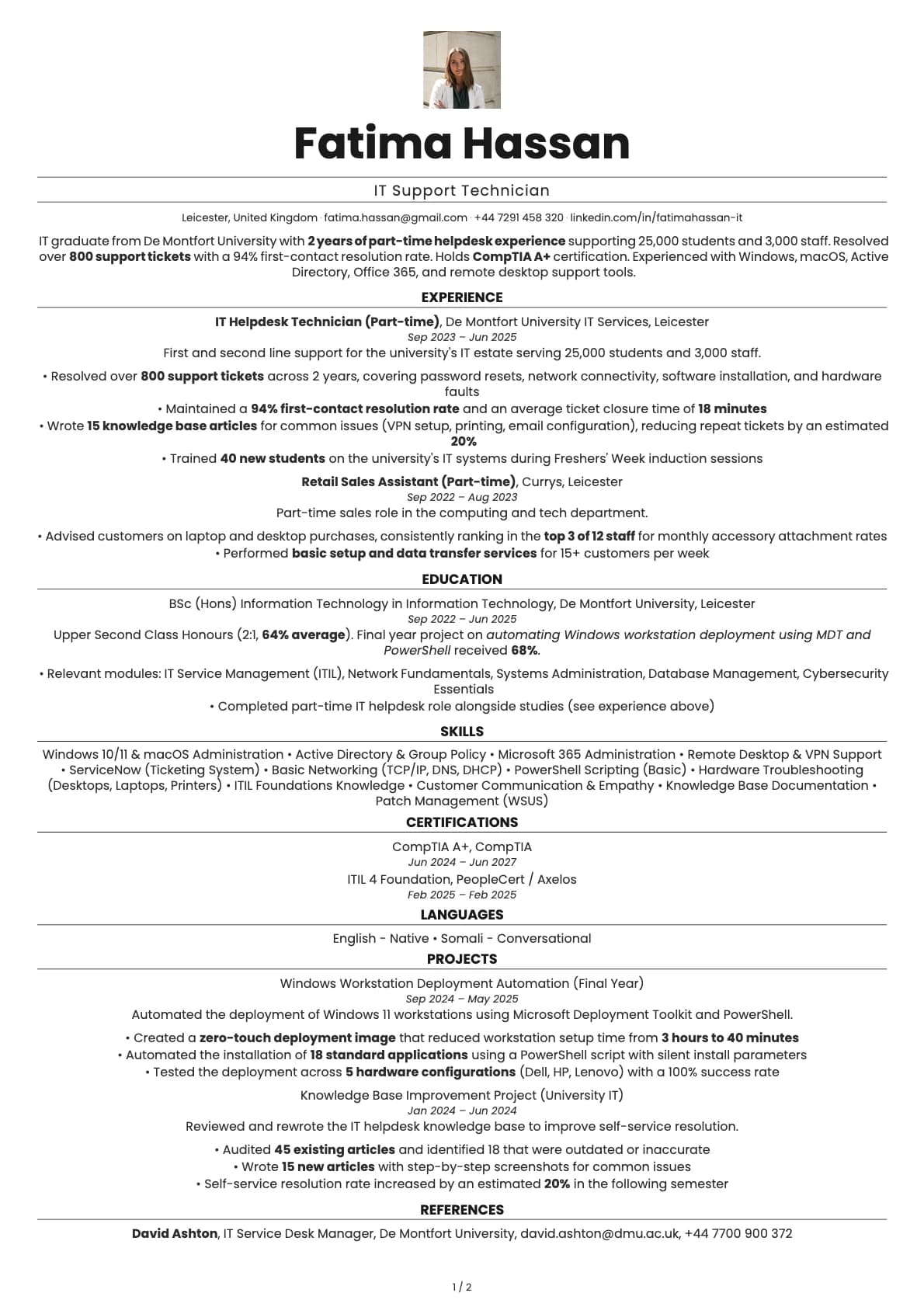
IT Support Technician
An IT support technician resume example with ticket resolution stats, CompTIA certification, and helpdesk experience from an IT graduate starting their career.
Junior Accounts Assistant
A junior accounts assistant resume example with accountancy firm placement and AAT Level 3 qualification.