Junior Backend Developer Resume Example
A junior backend developer resume example with REST API projects, PostgreSQL experience, and deployed services from a Computer Science BSc graduate entering development.

Laddro Team
Free to use. No account needed to start.
Free to use. No account needed to start.
Overview
Backend developer roles at the junior level require evidence that you can build APIs, work with databases, and deploy services to production. The competition is stiff, and many applicants have similar degrees. What sets candidates apart is showing systems that are actually running, not just code that compiles locally.
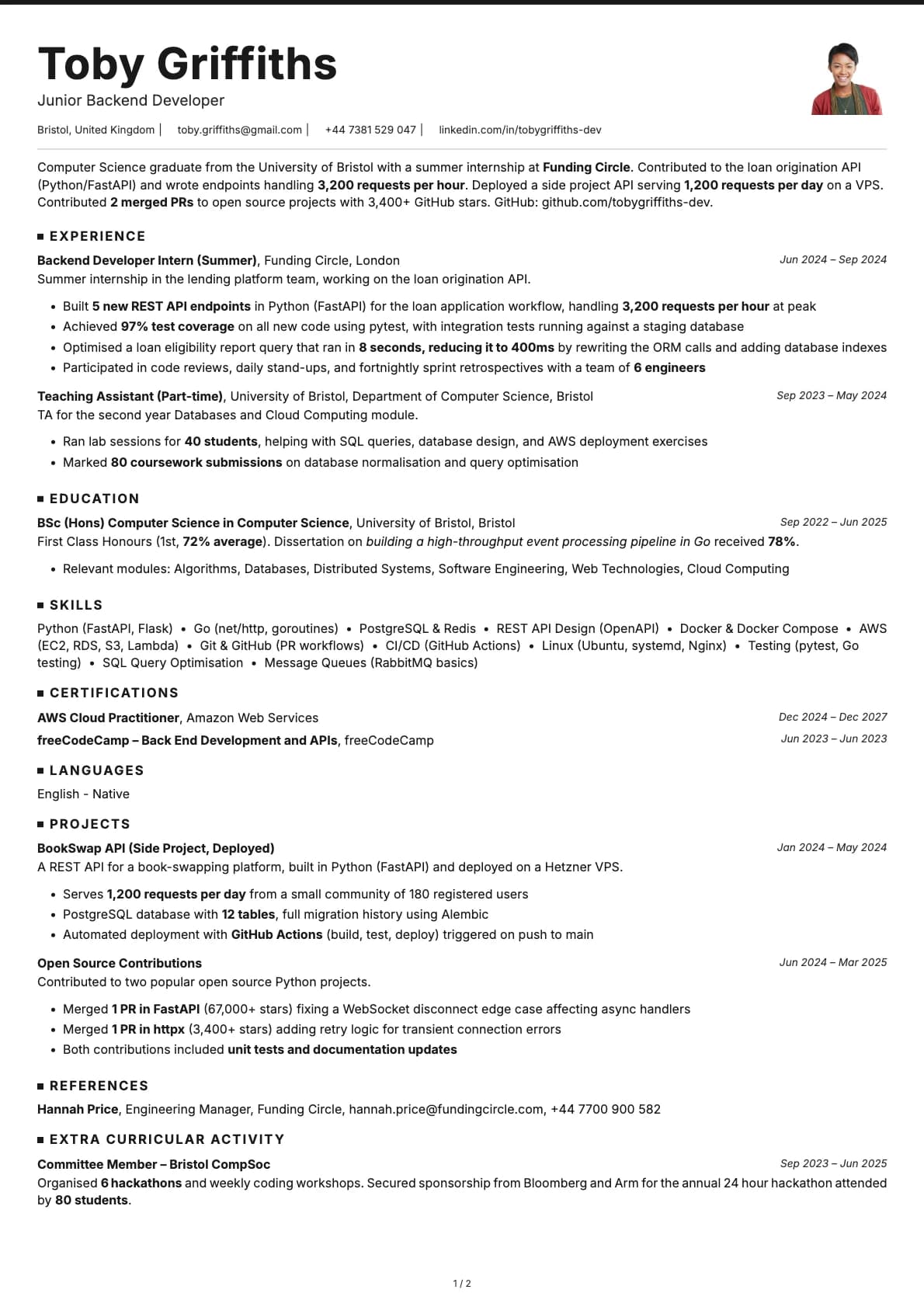
This resume belongs to Toby Griffiths, a Computer Science graduate from the University of Bristol. He completed a summer internship at Funding Circle, contributed to 2 open source projects, and deployed a side project API that serves 1,200 requests per day. His resume works because every technical claim is supported by a deployment, a metric, or a contribution link.
What Makes This Resume Work
The Funding Circle internship demonstrates fintech experience. Working at a public fintech company and contributing to their loan origination API gives Toby industry-specific experience that many graduates lack. He names the endpoints he built, the testing coverage he achieved, and the code review process he followed.
Deployed projects replace theoretical claims. A side project API serving 1,200 requests per day on a Hetzner VPS proves Toby can set up servers, configure databases, and keep a service running. This is vastly more convincing than listing "Python" as a skill.
Open source contributions are verifiable. Two merged PRs in well-known projects (one with 3,400 stars) give hiring managers something they can check. The contributions are described in terms of what they fixed and how many users were affected.
Database skills go beyond "I know SQL." Toby describes schema design decisions, migration strategies, and query optimisation results. Reducing a report query from 8 seconds to 400ms tells a much better story than "Proficient in PostgreSQL."
Key Takeaways
Junior backend developer resumes should lead with deployed services and their metrics (requests per day, response times, uptime). Name the frameworks, databases, and cloud providers you use. Open source contributions with merged PRs are powerful evidence of code quality. An internship or placement at a tech company is the single best credential at this level. Describe your API work in terms of endpoints, consumers, and performance, not just "built APIs."
Build your own version
Open this layout in the builder and swap in your own details. It takes a few minutes.
Free to use. No account needed to start.
Was this resume example helpful?
Rate this example to help us create better content for you.
4.8 average from 176 ratingsRelated resume examples
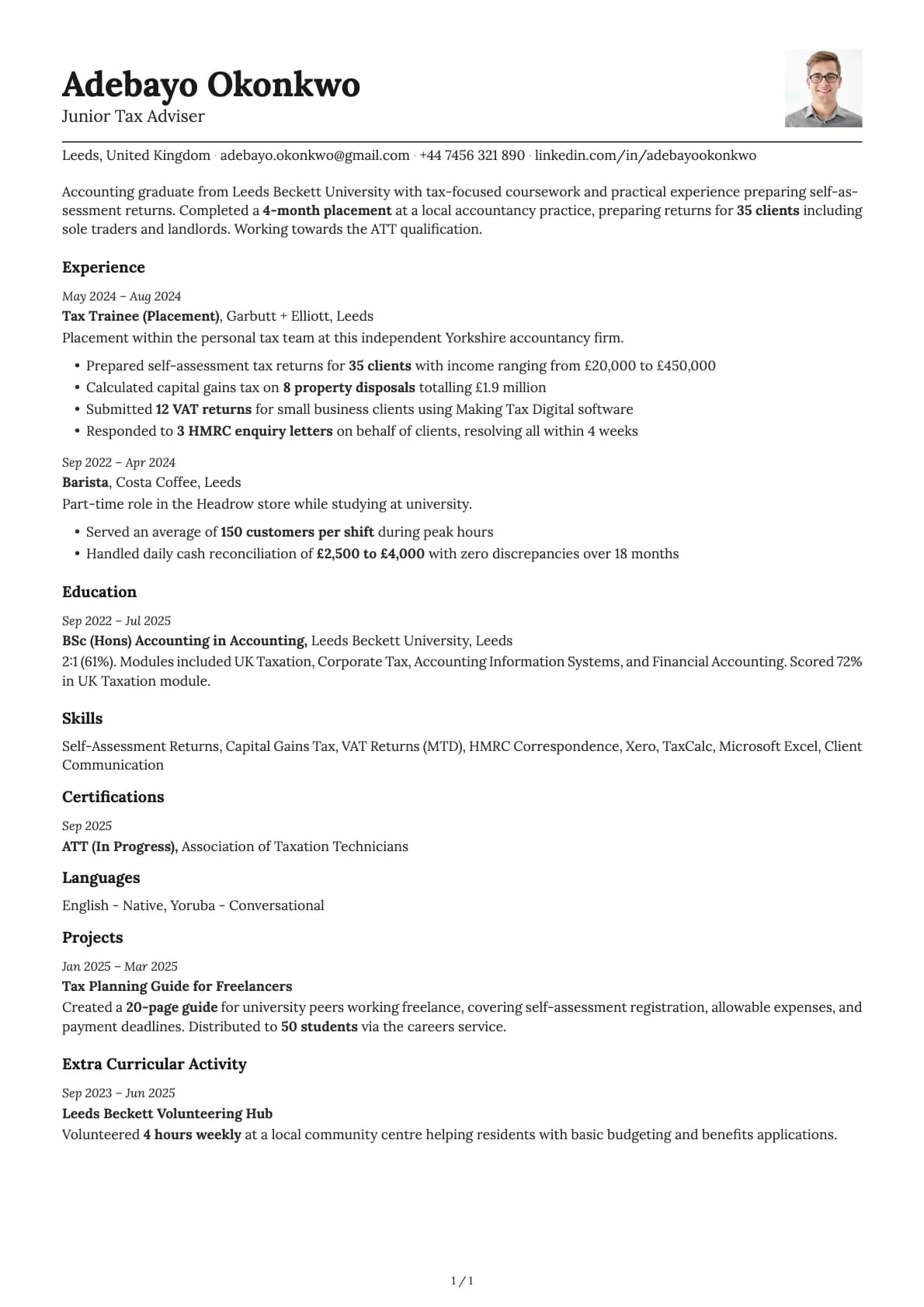
Junior Tax Adviser
A junior tax adviser resume example with placement experience at a regional accountancy firm and ATT study.
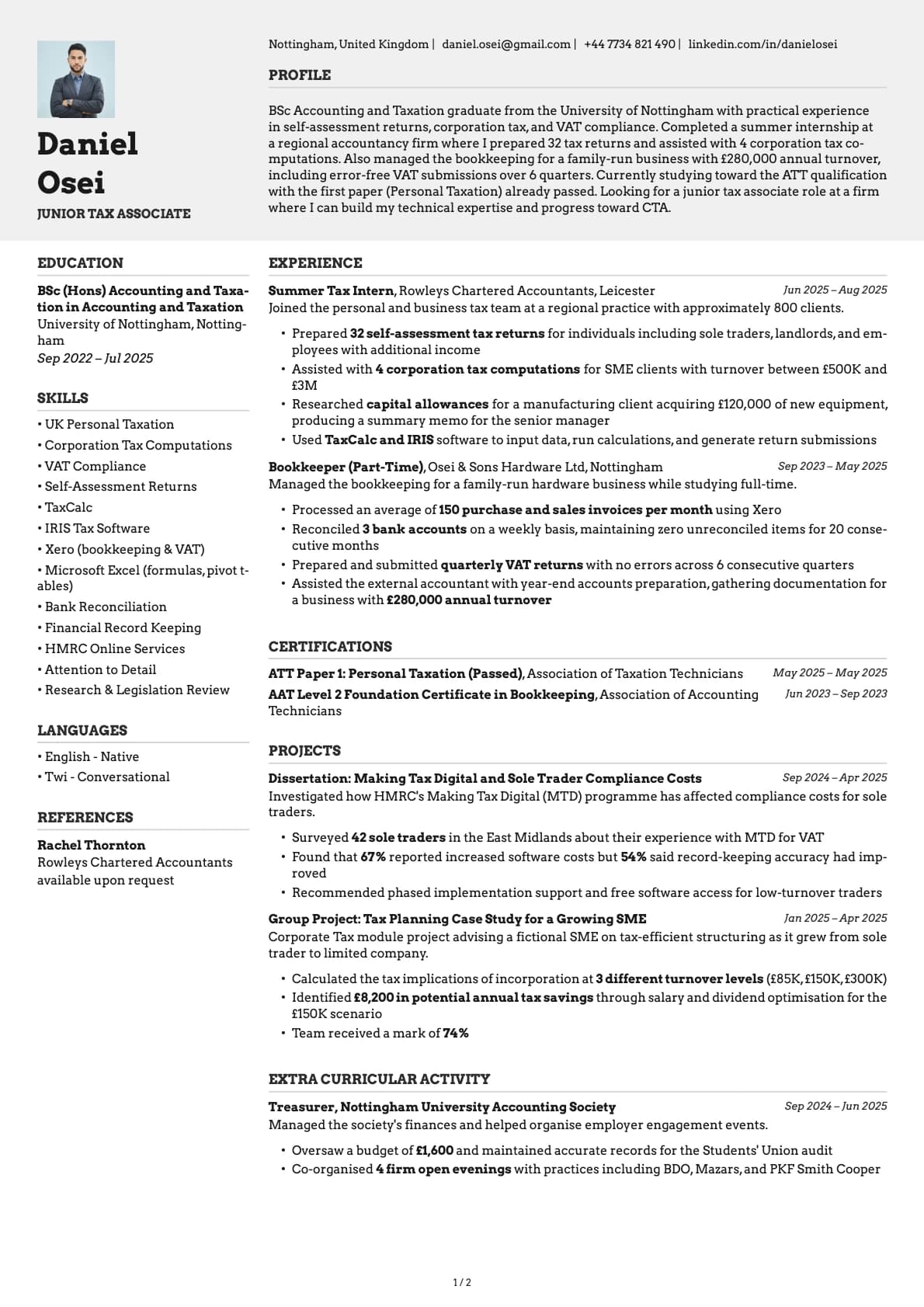
Junior Tax Associate
A junior tax associate resume example for tax and accounting graduates. See how HMRC work experience and ATT progress help you stand out to employers.
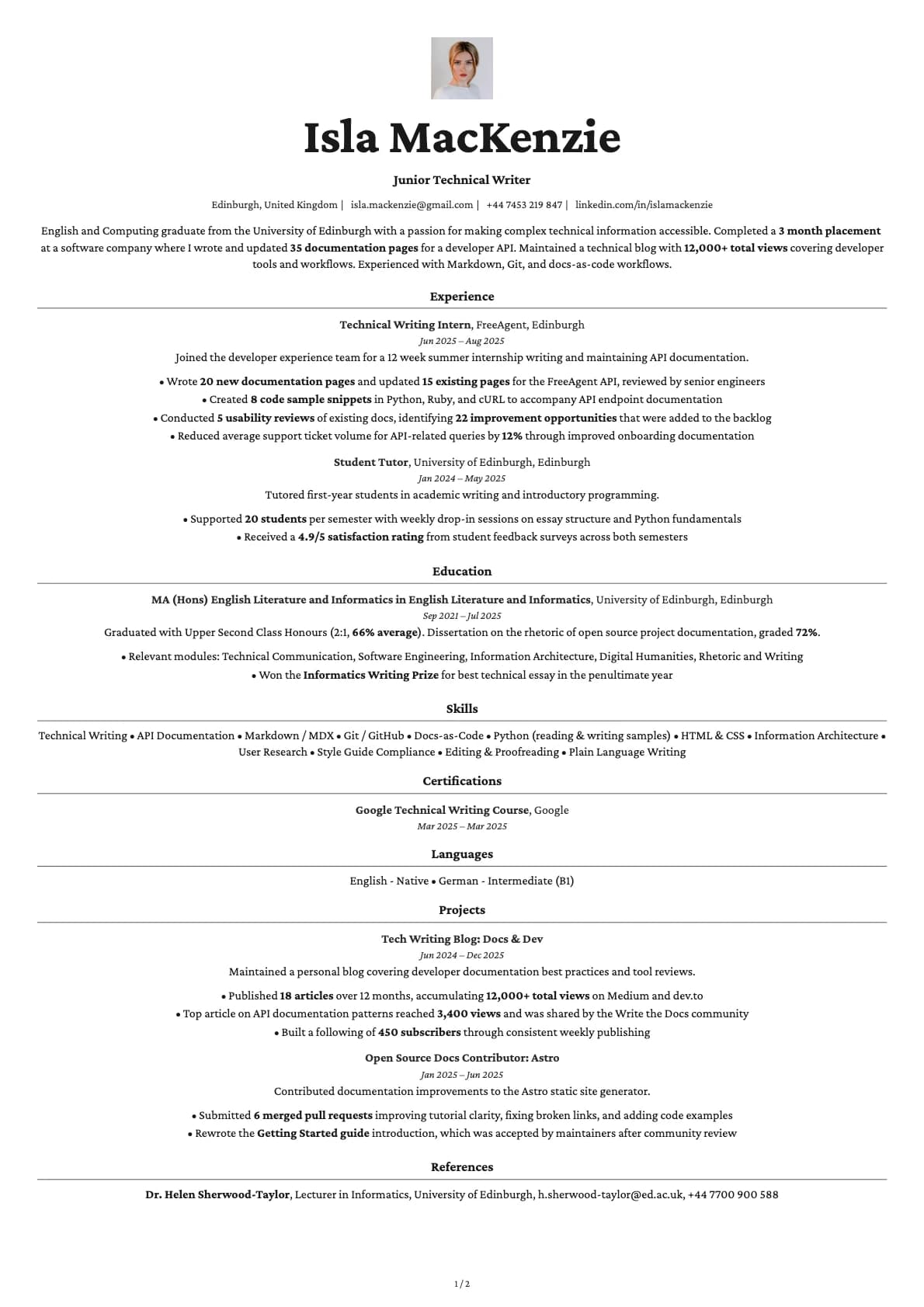
Junior Technical Writer
A junior technical writer resume example for graduates. See how to present documentation experience, API writing samples, and open source contributions to land your first tech writing role.
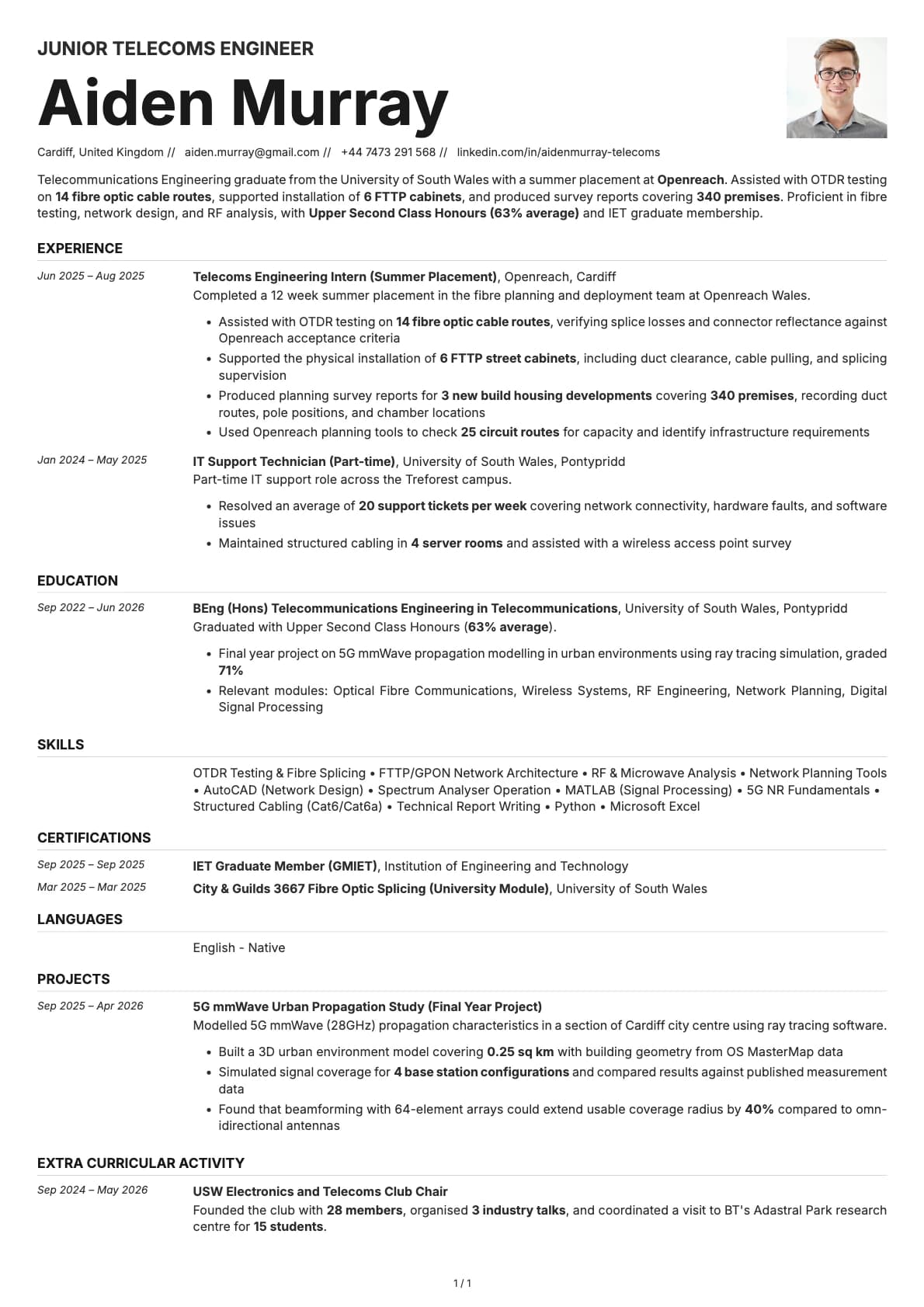
Junior Telecoms Engineer
A junior telecoms engineer resume example with fibre optic network experience, OTDR testing skills, and placement at Openreach.
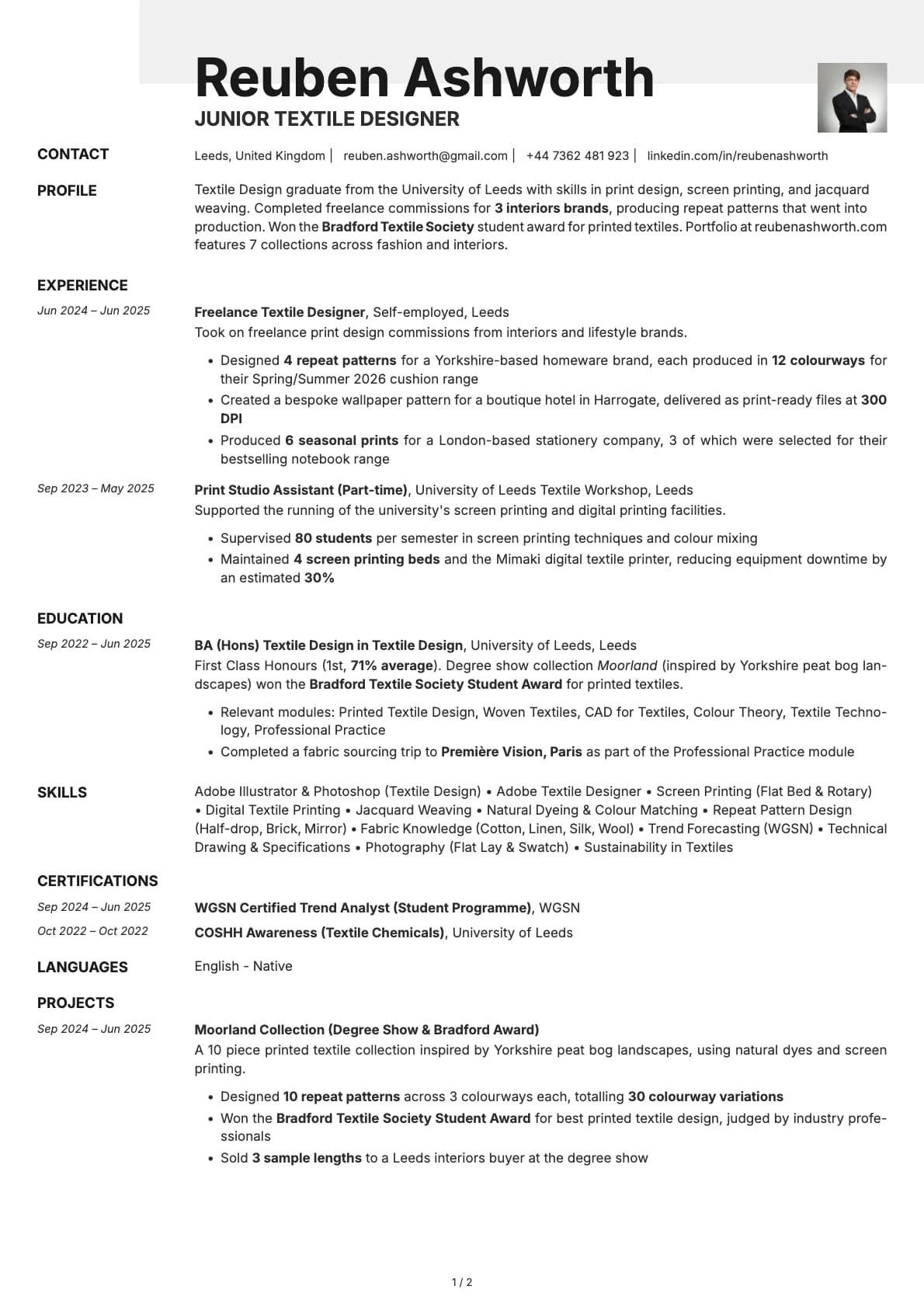
Junior Textile Designer
A junior textile designer resume example with print design projects, client commissions, and weaving skills from a Textile Design BA graduate entering the industry.
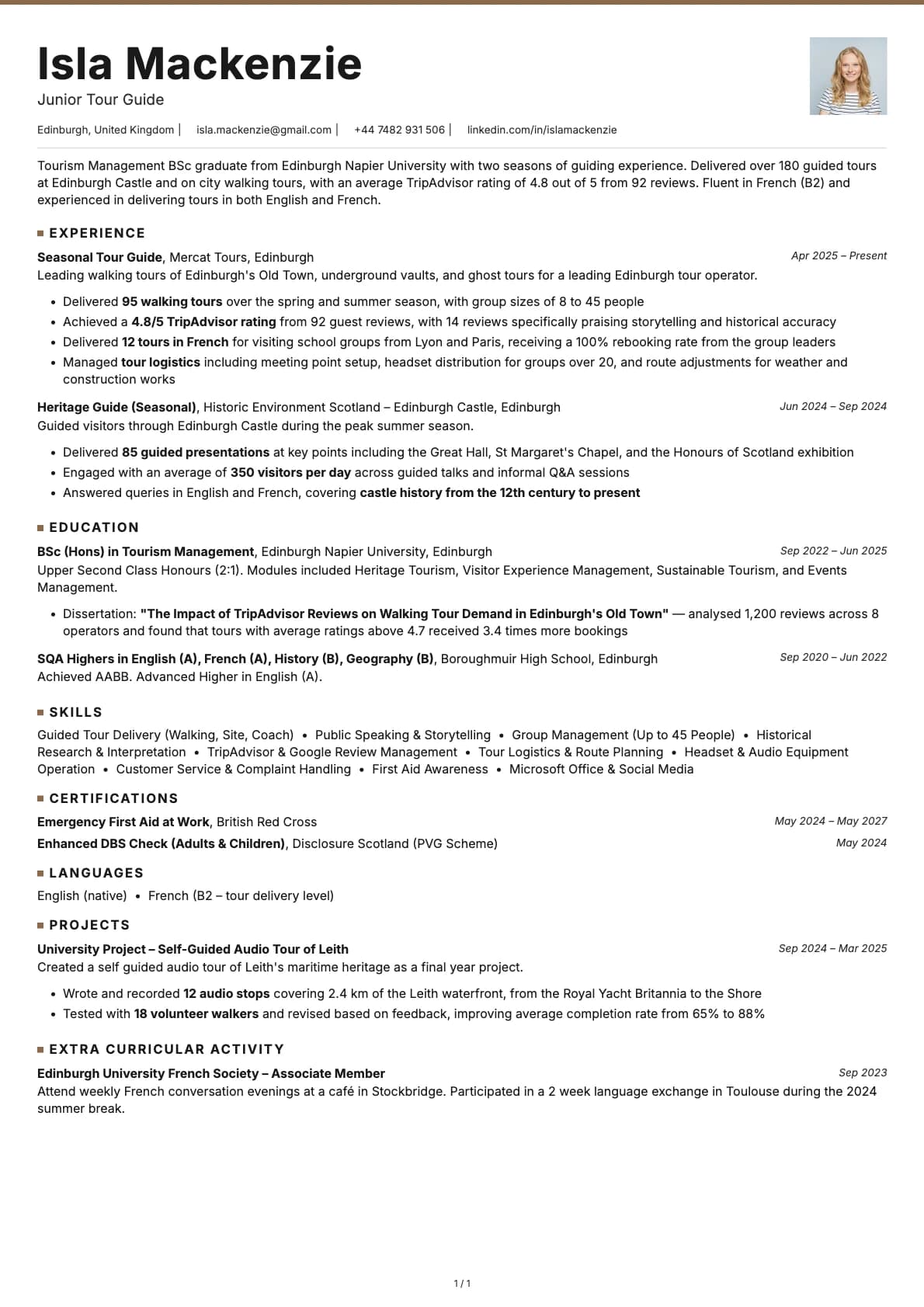
Junior Tour Guide
A junior tour guide resume example for tourism graduates. See how to present your guiding experience, customer satisfaction scores, and language skills for the UK tourism industry.
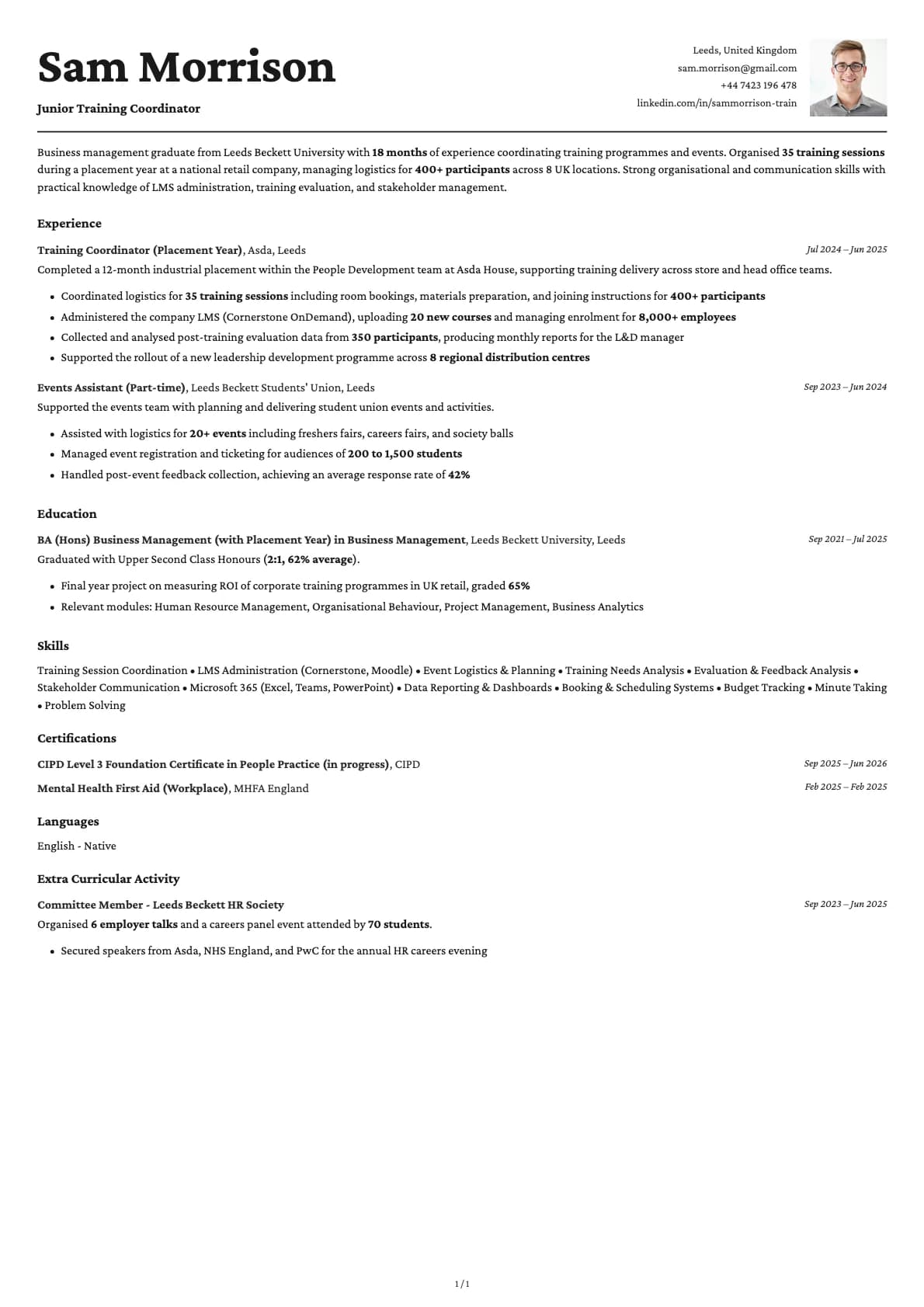
Junior Training Coordinator
A junior training coordinator resume example with LMS administration experience, session coordination numbers, and L&D placement experience.
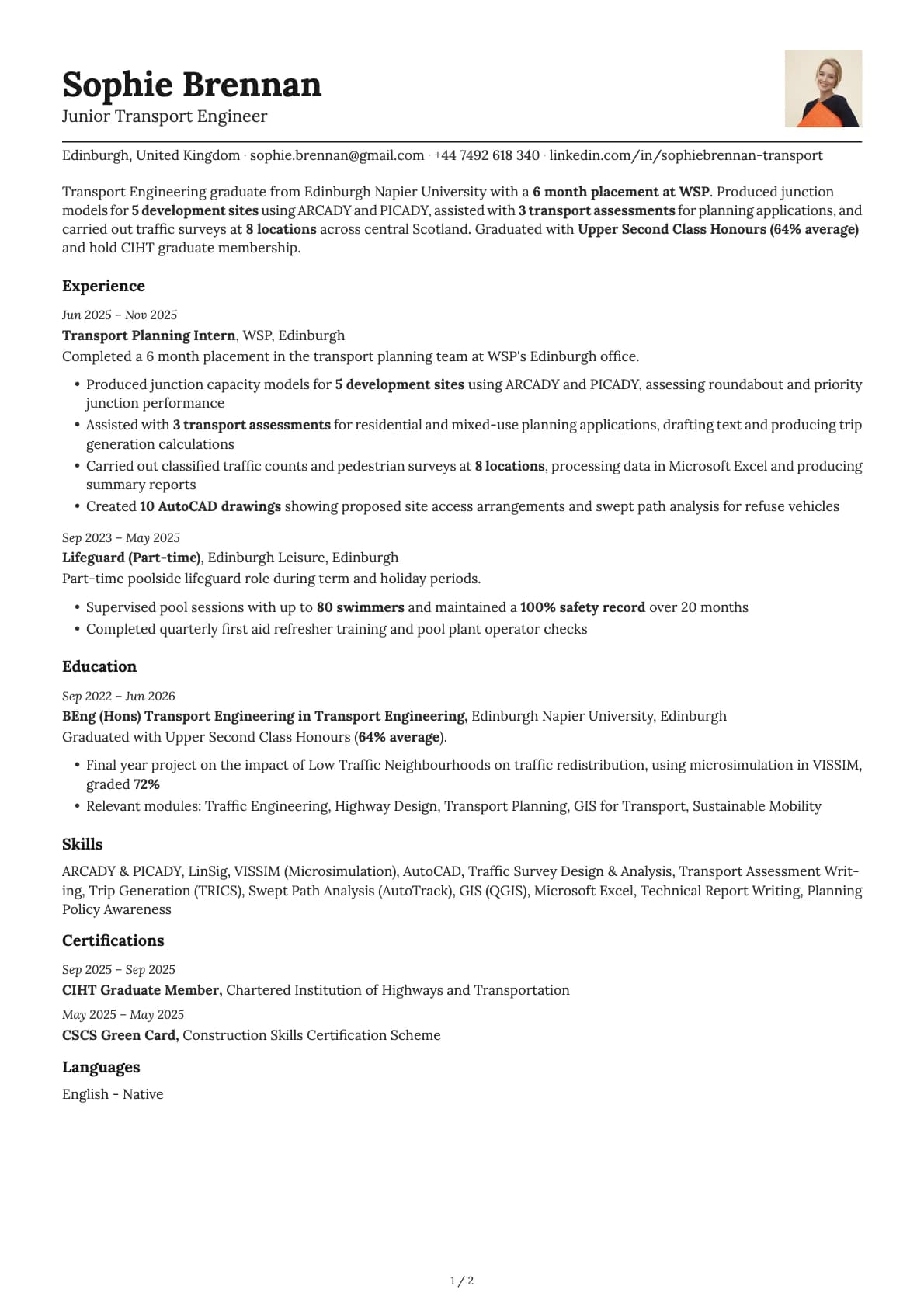
Junior Transport Engineer
A junior transport engineer resume example with traffic modelling experience, ARCADY proficiency, and CIHT membership.
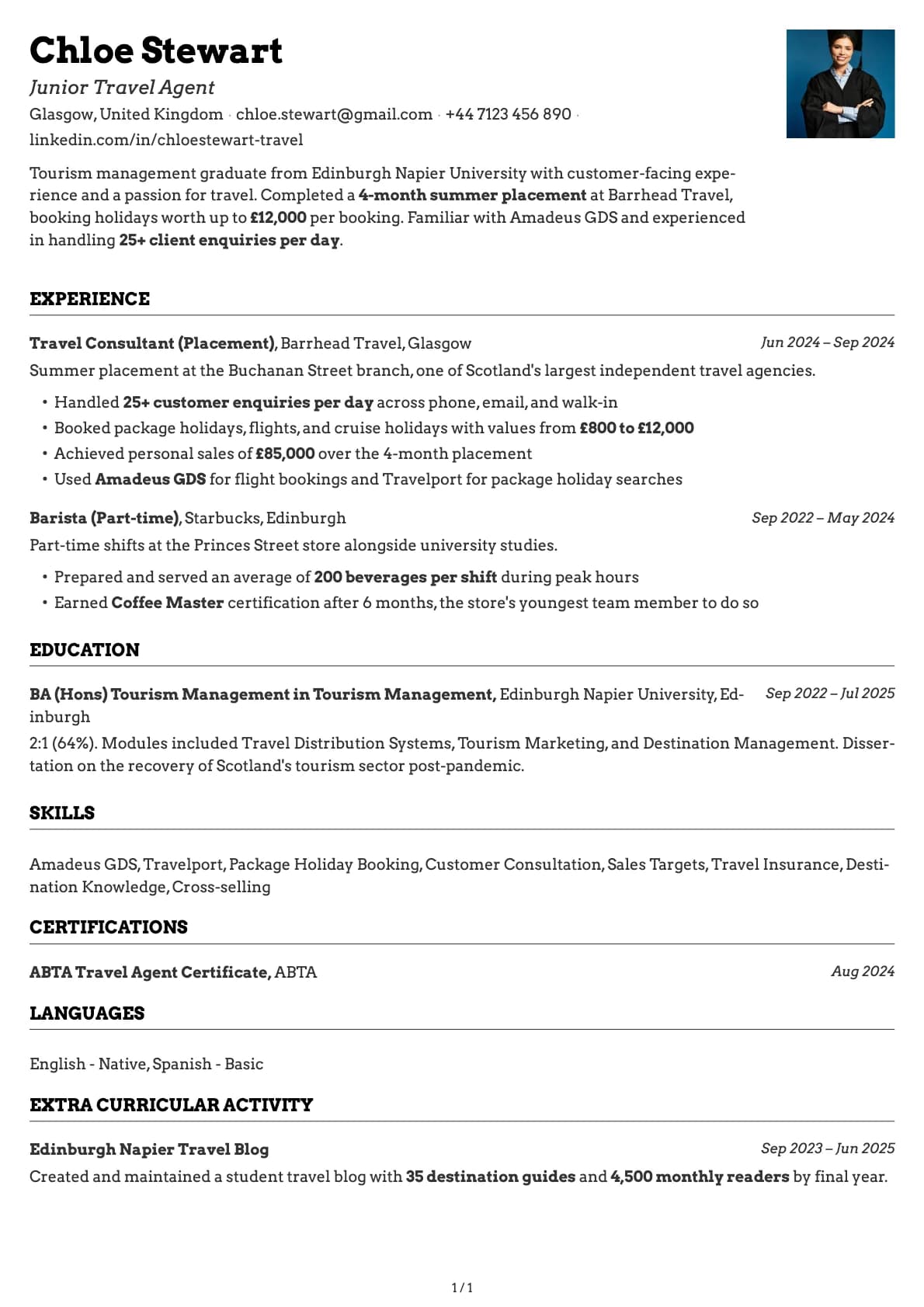
Junior Travel Agent
A junior travel agent resume example with Barrhead Travel placement and Amadeus GDS experience.
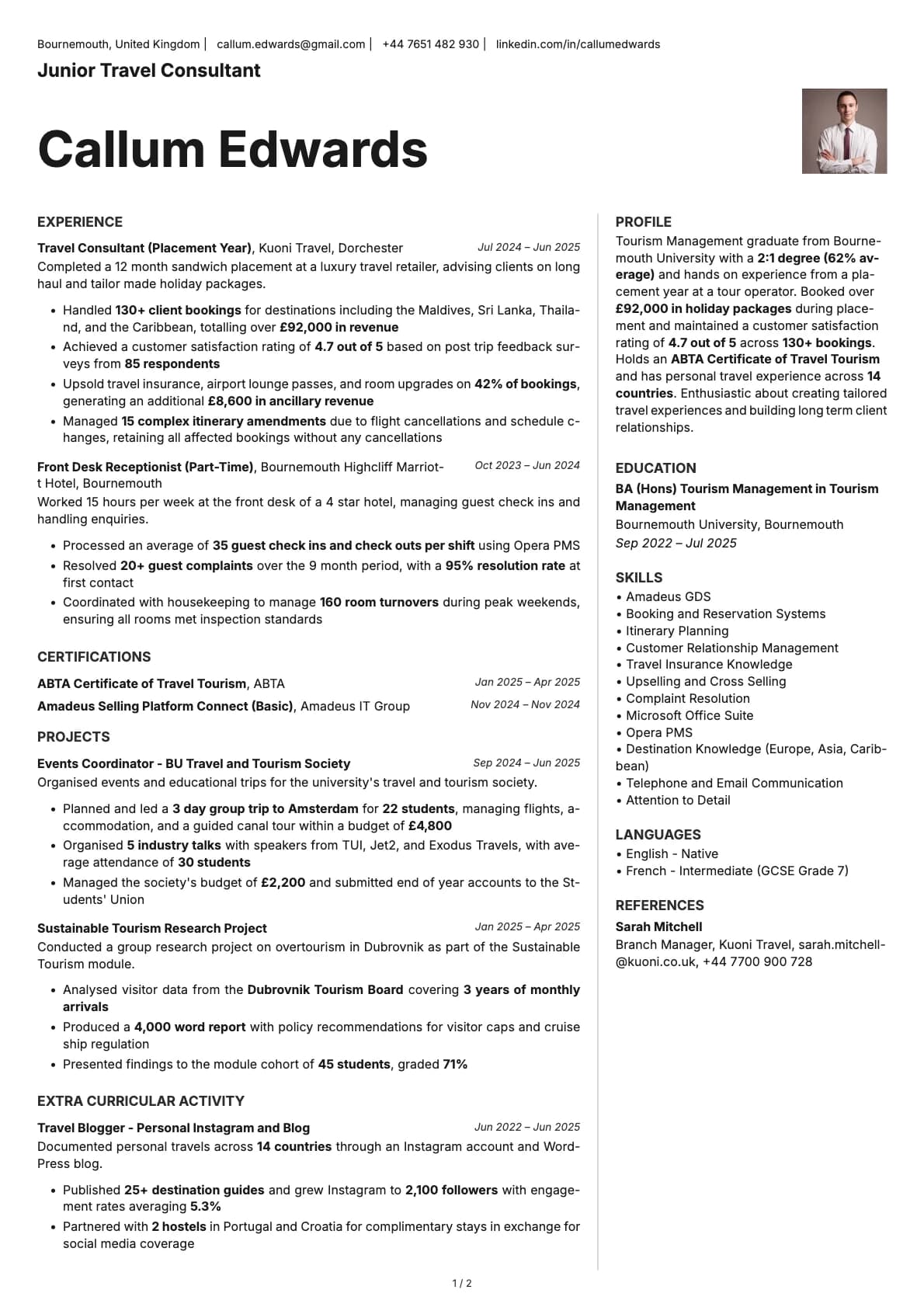
Junior Travel Consultant
A junior travel consultant resume example for tourism graduates. See how to present booking experience, GDS skills, and destination knowledge to impress employers.
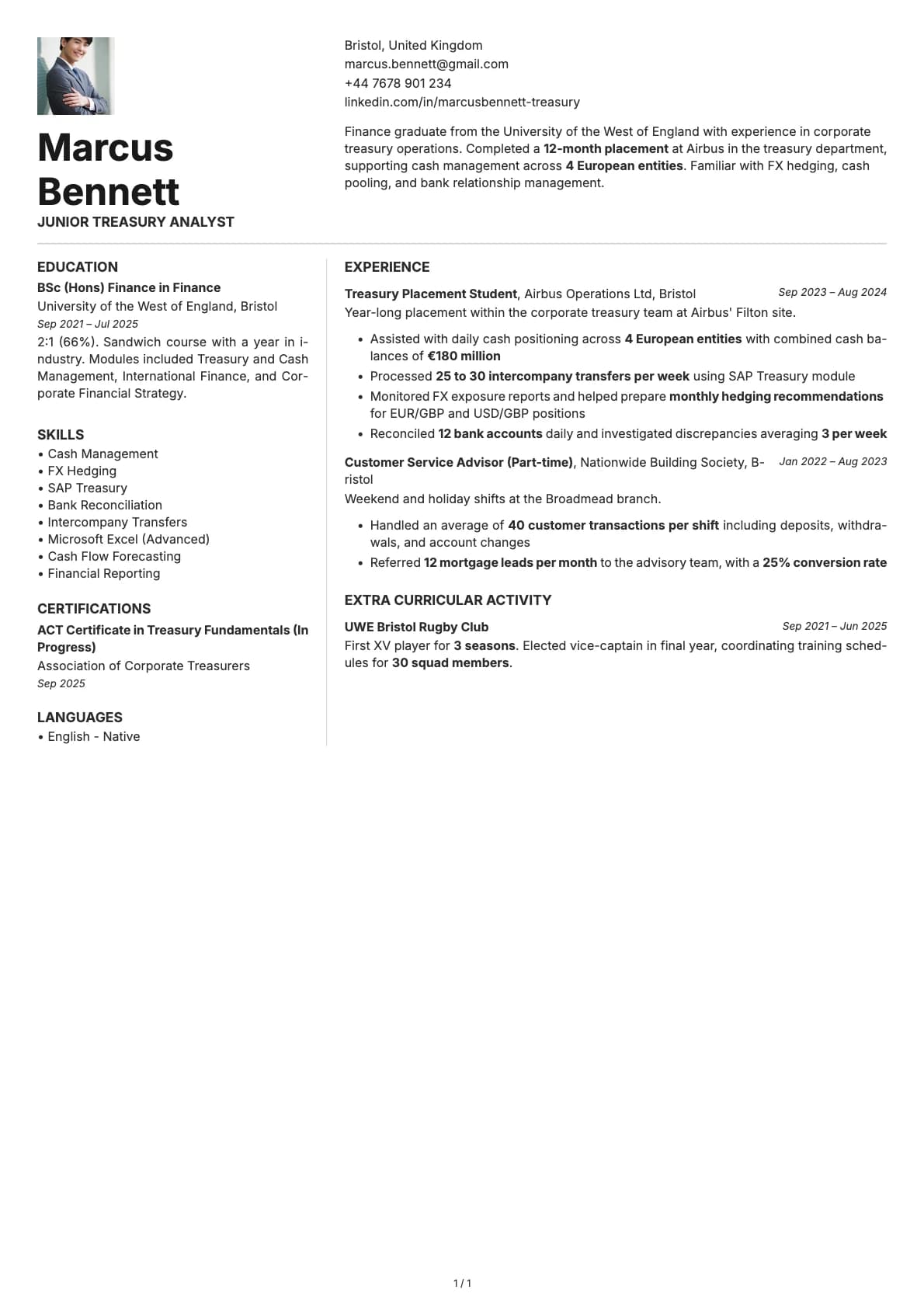
Junior Treasury Analyst
A junior treasury analyst resume example with Airbus placement experience and cash management skills.
Junior UX Designer
A junior UX designer resume example for recent graduates. Learn how to present your user research, wireframes, and design projects to secure your first UX role.