Junior Events Planner Resume Example
A junior events planner resume example for events management graduates. See how to present your event coordination experience, guest counts, budgets, and vendor management skills.

Laddro Team
Free to use. No account needed to start.
Free to use. No account needed to start.
Overview
Events planning is a role where your portfolio matters as much as your degree. Companies hiring junior planners want to see that you have coordinated real events with real budgets, real guest counts, and real vendor relationships. University events, charity fundraisers, and student union activities all count, provided you describe them with the numbers and logistics that a hiring manager would expect from a professional event.
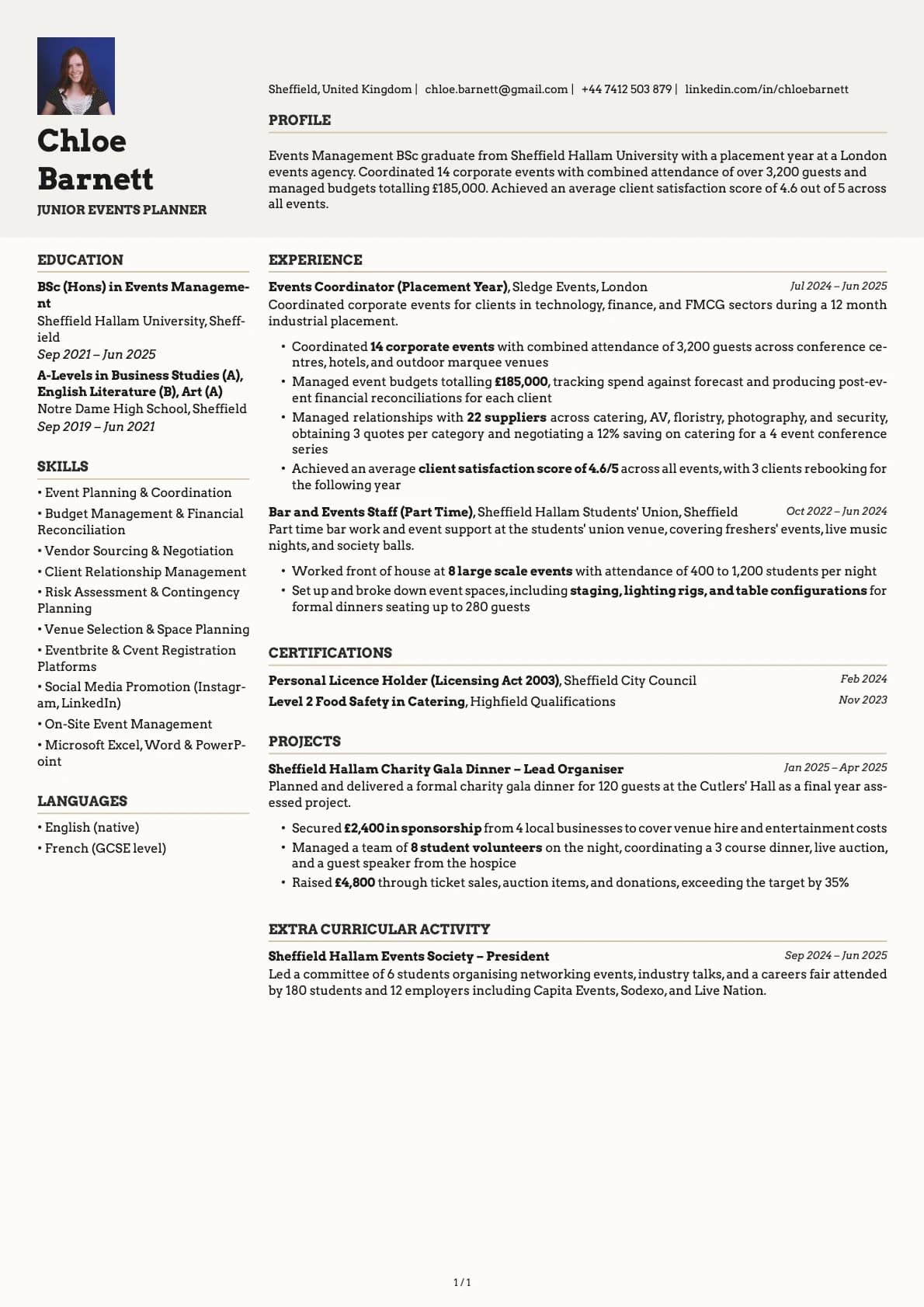
This resume belongs to Chloe Barnett, an Events Management BSc graduate from Sheffield Hallam University. She completed a placement year at an events agency in London, coordinated 14 corporate events with combined attendance of over 3,200 guests, and managed event budgets totalling £185,000. Her resume reads like an event brief because that is the language of the profession.
What Makes This Resume Work
Event scale is described with specific numbers. Guest counts (3,200 across 14 events), budgets (£185,000 total), and venue types (conference centres, hotels, outdoor marquees) are all stated. The largest single event was a product launch for 480 guests at a London hotel with a budget of £42,000. These figures give an employer a clear sense of the scale Chloe can handle.
Vendor coordination is detailed. Chloe managed relationships with 22 suppliers across catering, AV, floristry, photography, and security. She obtained 3 quotes for each supplier category and negotiated a 12% saving on catering costs for a conference series by committing to a 4 event contract. This shows commercial awareness alongside organisational skills.
Client satisfaction is quantified. Post event surveys returned an average satisfaction score of 4.6 out of 5 across all 14 events, with 3 clients rebooking for the following year. Satisfaction scores are the currency of events management, and quoting them gives an employer confidence in the quality of her work.
Risk assessment and contingency planning are mentioned. Chloe prepared risk assessments for 6 outdoor events, including a 300 person summer garden party where she arranged a backup marquee, wet weather plan, and on site first aid provision. Events planning is as much about what could go wrong as what should go right, and showing this awareness is valuable.
Key Takeaways
Quantify every event. Guest count, budget, venue type, number of suppliers, and client satisfaction score. An event without numbers on your resume is just a description; an event with numbers is evidence.
Show vendor management and negotiation. Events planners who can save money without reducing quality are valuable. If you negotiated rates, consolidated suppliers, or found cost savings, include the figures.
Include risk assessment and contingency planning. Outdoor events, large capacity venues, and events with VIP guests all require formal risk management. Showing you can plan for problems as well as success sets you apart from candidates who only focus on the creative side.
Build your own version
Open this layout in the builder and swap in your own details. It takes a few minutes.
Free to use. No account needed to start.
Was this resume example helpful?
Rate this example to help us create better content for you.
4.8 average from 95 ratingsRelated resume examples
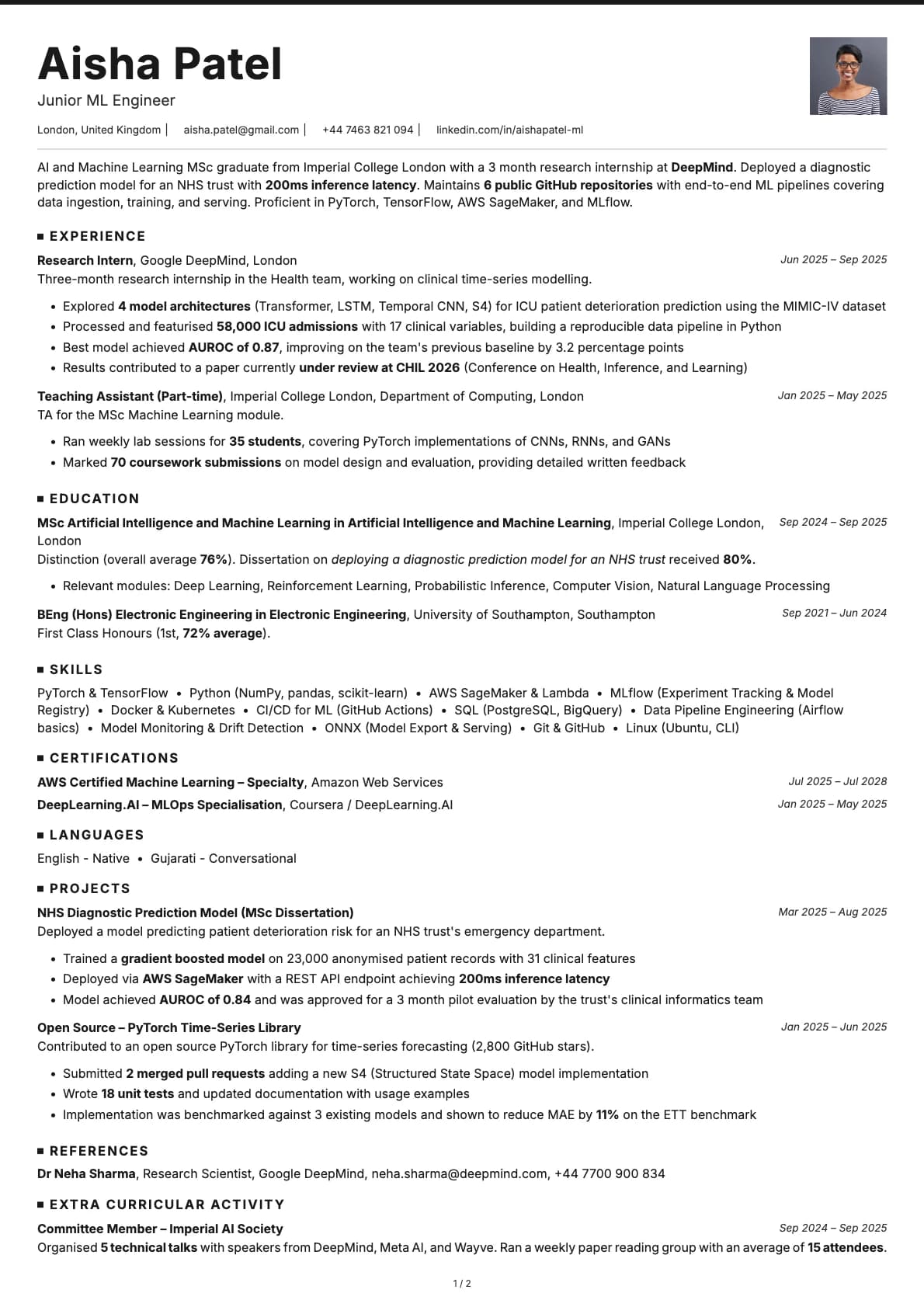
Junior ML Engineer
A junior ML engineer resume example with deployed models, TensorFlow projects, and AWS SageMaker experience from an AI and ML MSc graduate starting their career.
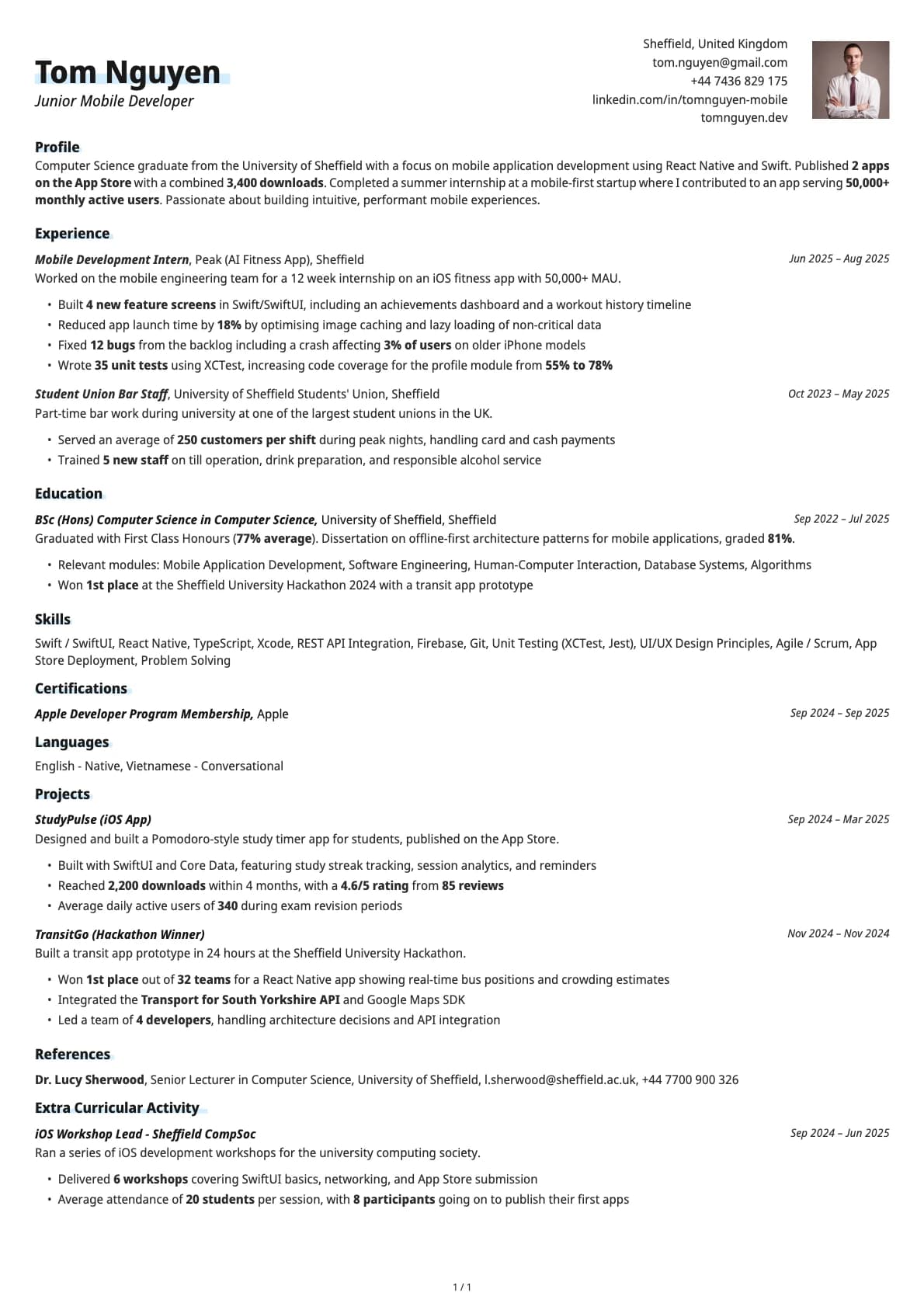
Junior Mobile Developer
A junior mobile developer resume example for graduates. See how to present published apps, App Store downloads, and mobile internship experience to land your first mobile dev role.
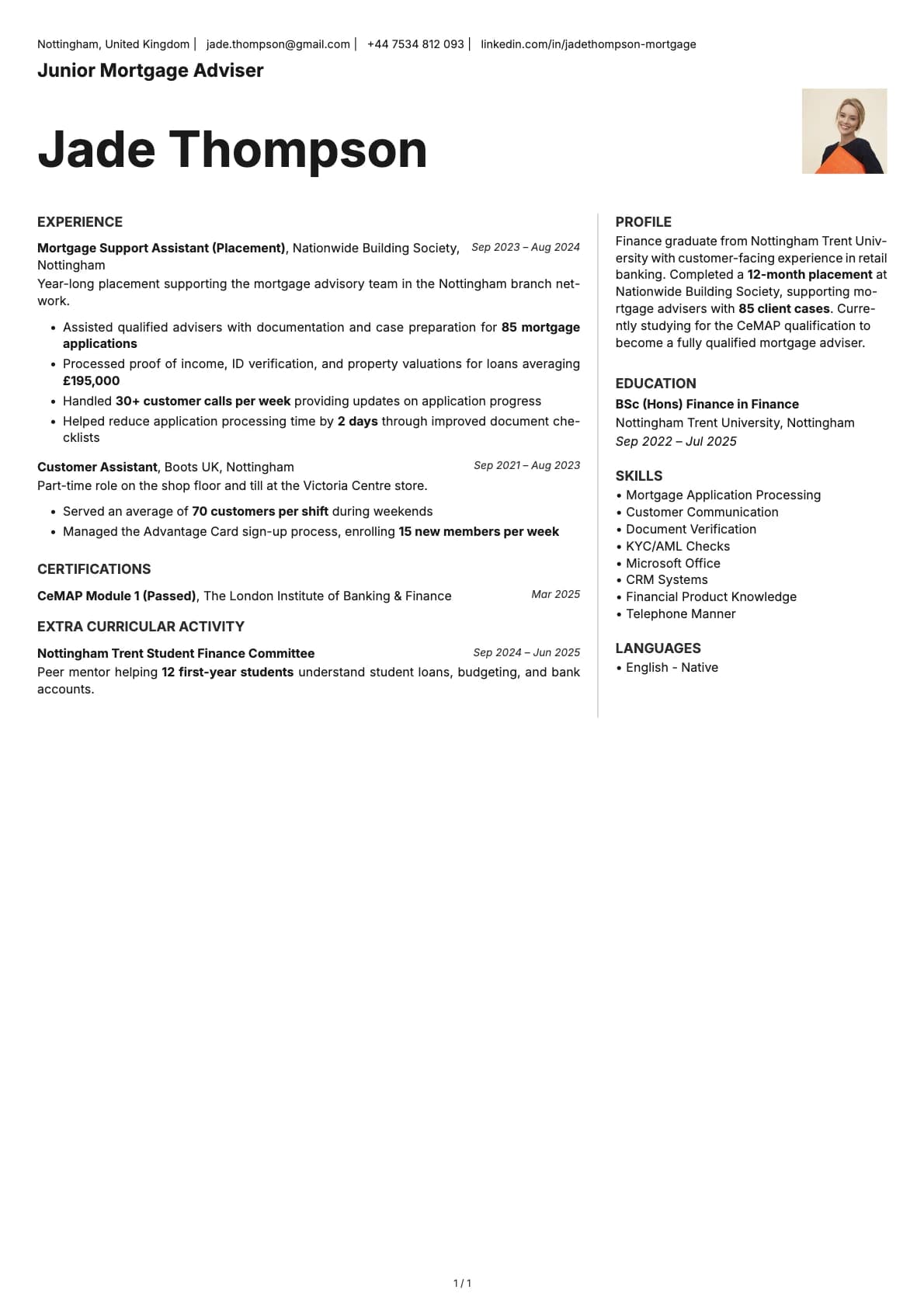
Junior Mortgage Adviser
A junior mortgage adviser resume example with Nationwide placement experience and CeMAP qualification in progress.
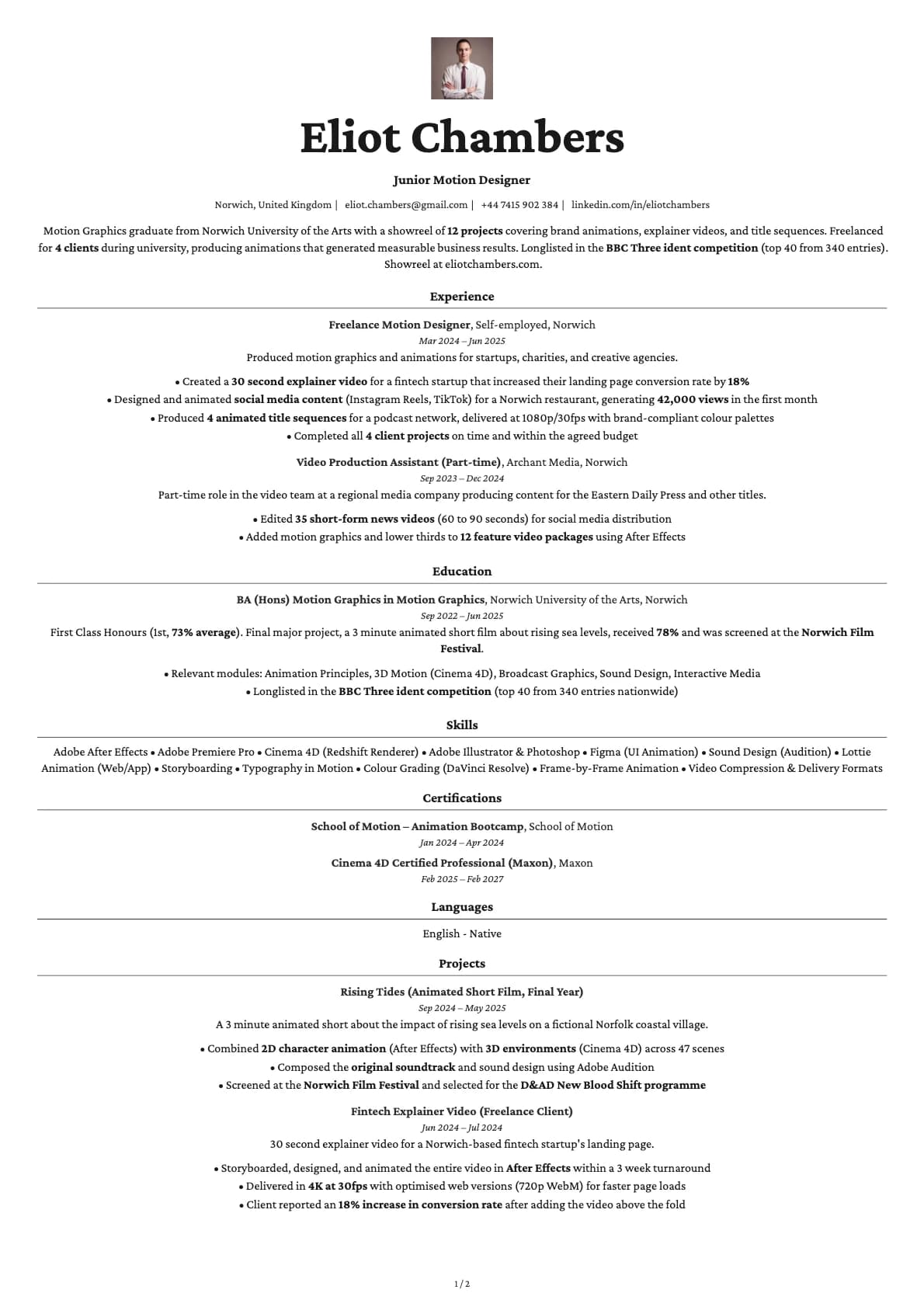
Junior Motion Designer
A junior motion designer resume example with After Effects projects, client animations, and showreel details from a Motion Graphics BA graduate entering the field.

Junior Network Engineer
A junior network engineer resume example with CCNA, an MSP apprenticeship, and a home lab. See how to present networking skills and certifications for your first engineering role.
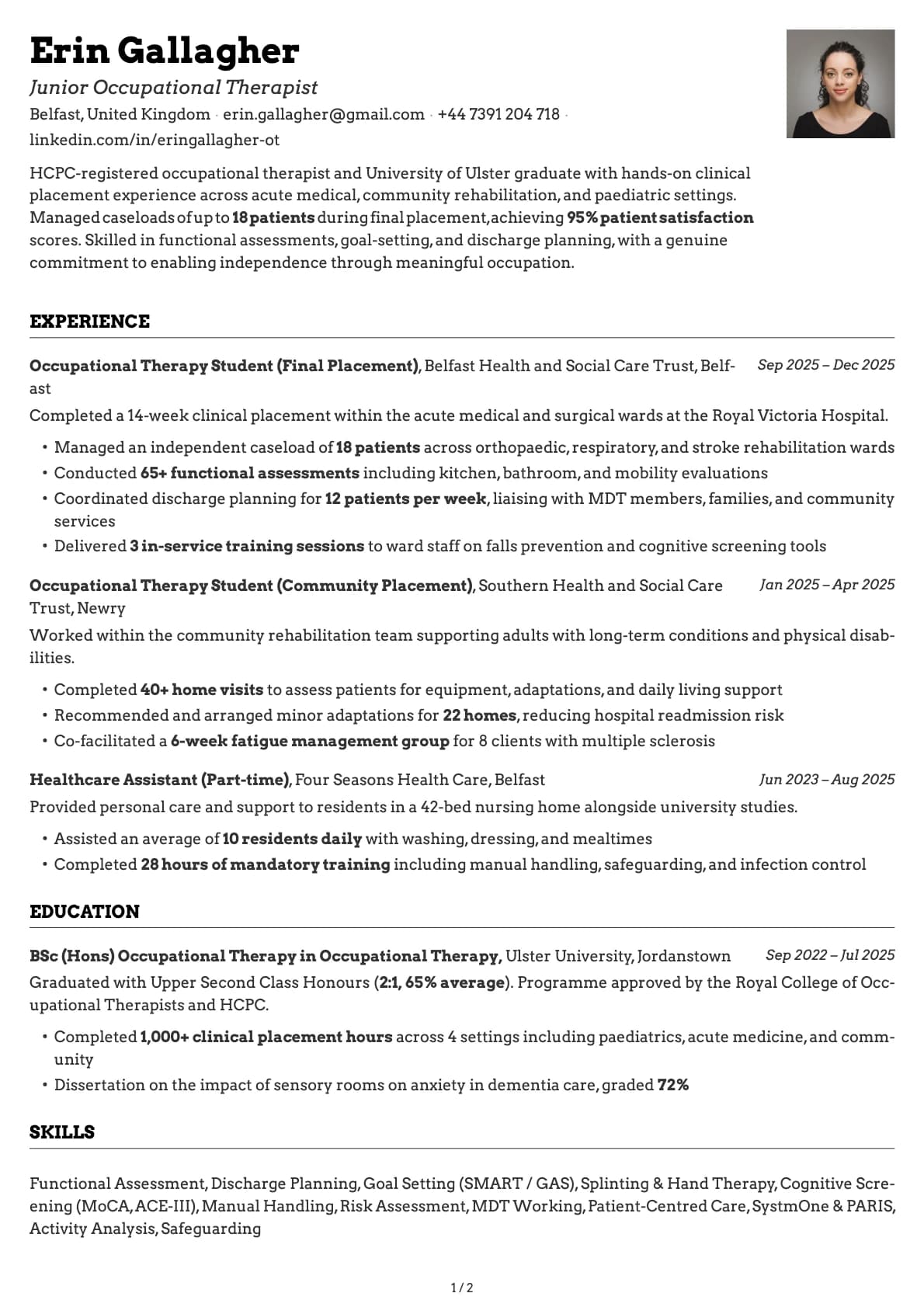
Junior Occupational Therapist
A junior occupational therapist resume example with clinical placement experience, HCPC registration, and real patient outcome numbers for new graduates.
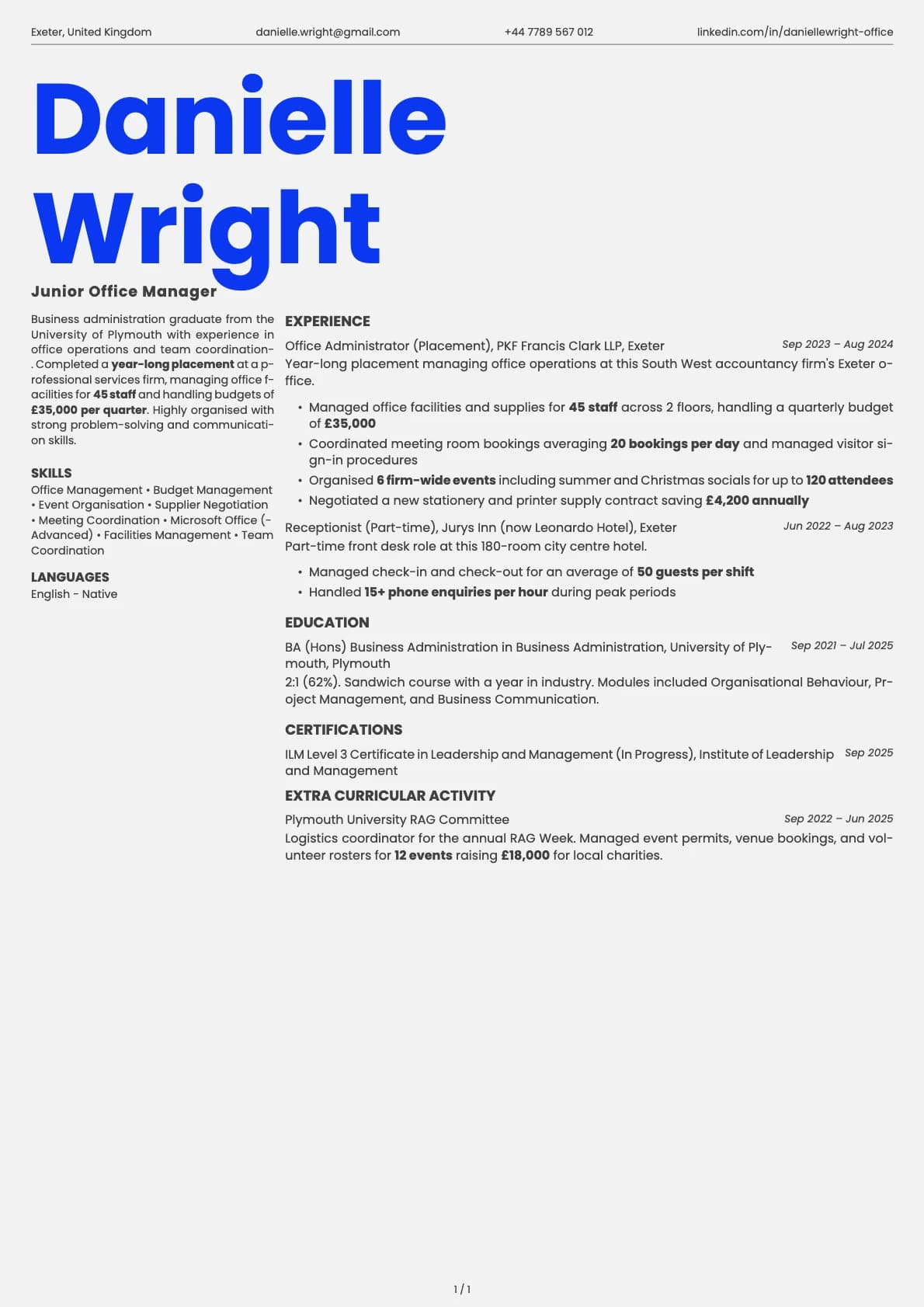
Junior Office Manager
A junior office manager resume example with professional services placement and facilities management experience.
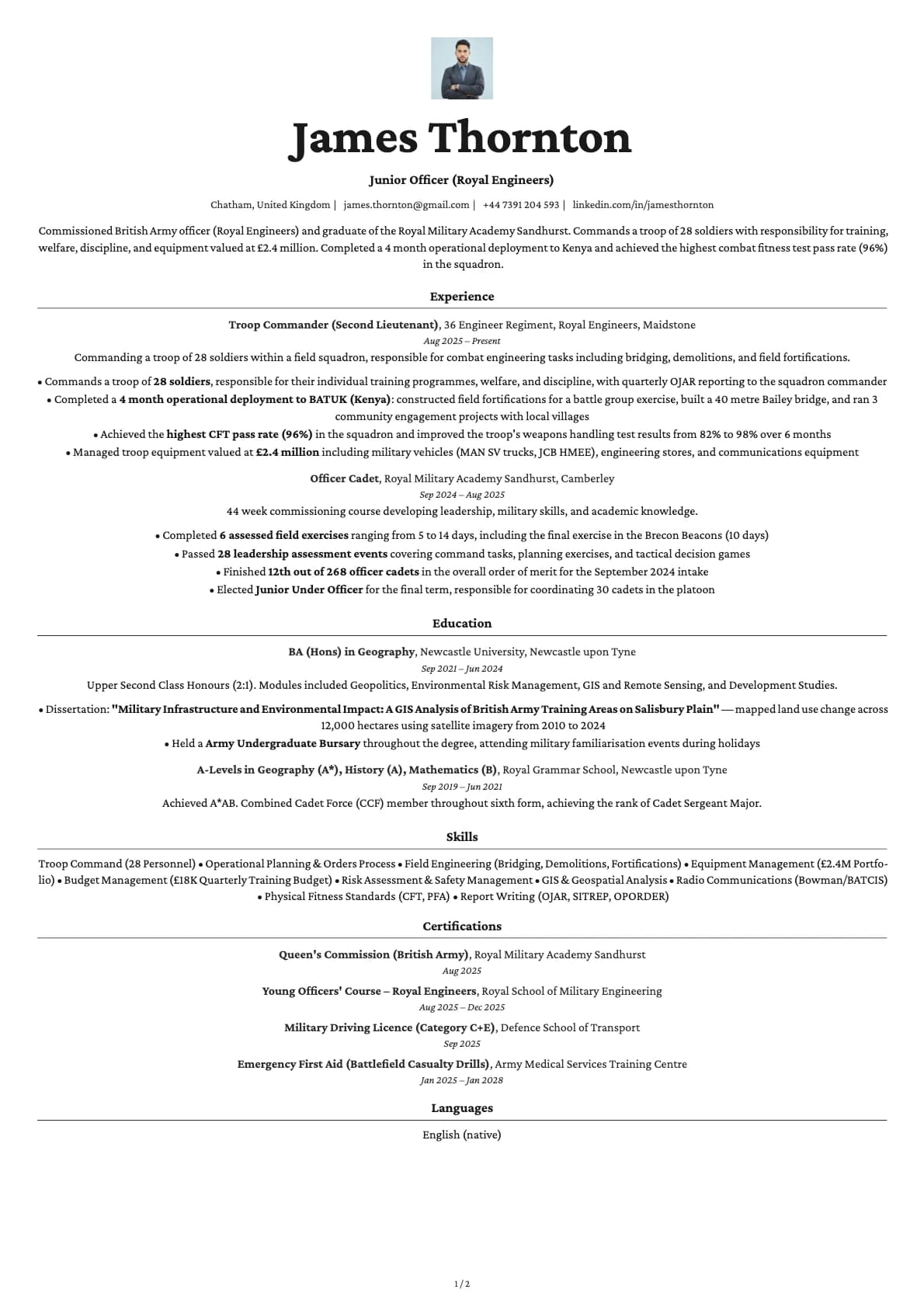
Junior Officer (Armed Forces)
A junior officer resume example for armed forces graduates transitioning from Sandhurst or the commissioning course. See how to present your military leadership, operational deployments, and command experience.
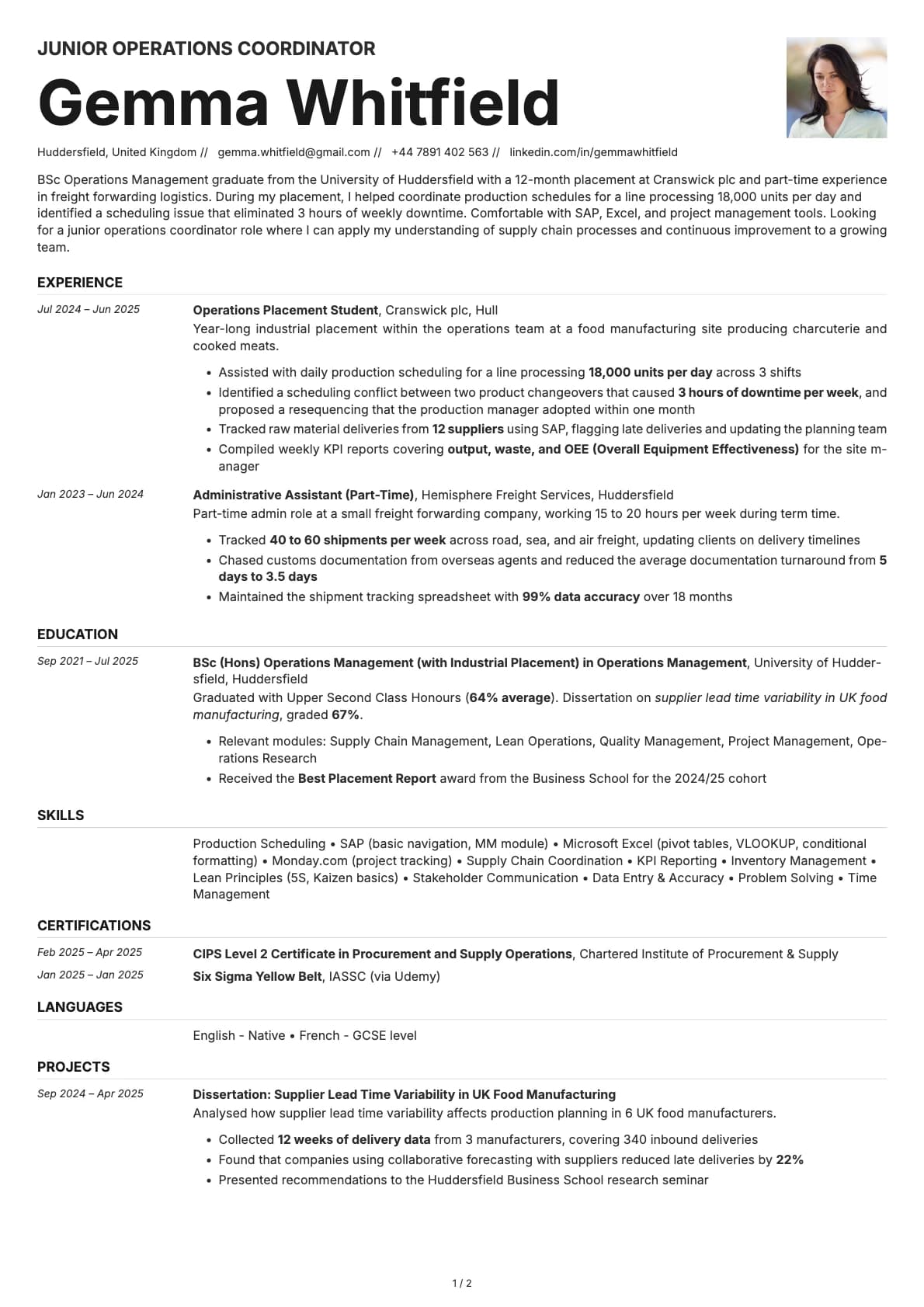
Junior Operations Coordinator
A junior operations coordinator resume example for operations management graduates. See how logistics experience and process improvements impress employers.
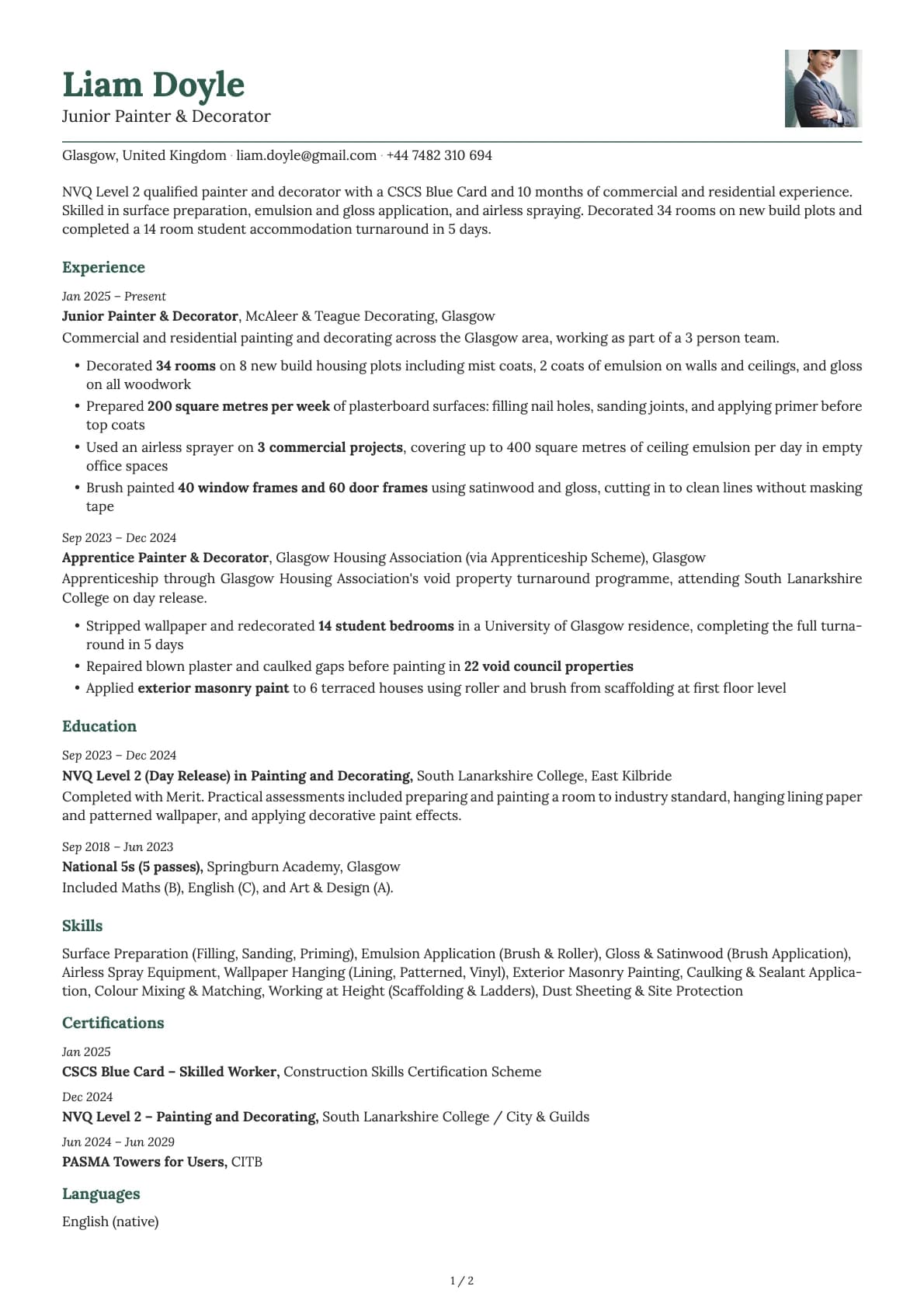
Junior Painter & Decorator
A junior painter and decorator resume example for NVQ qualified painters. See how to present your decorating skills, site experience, and CSCS card details.
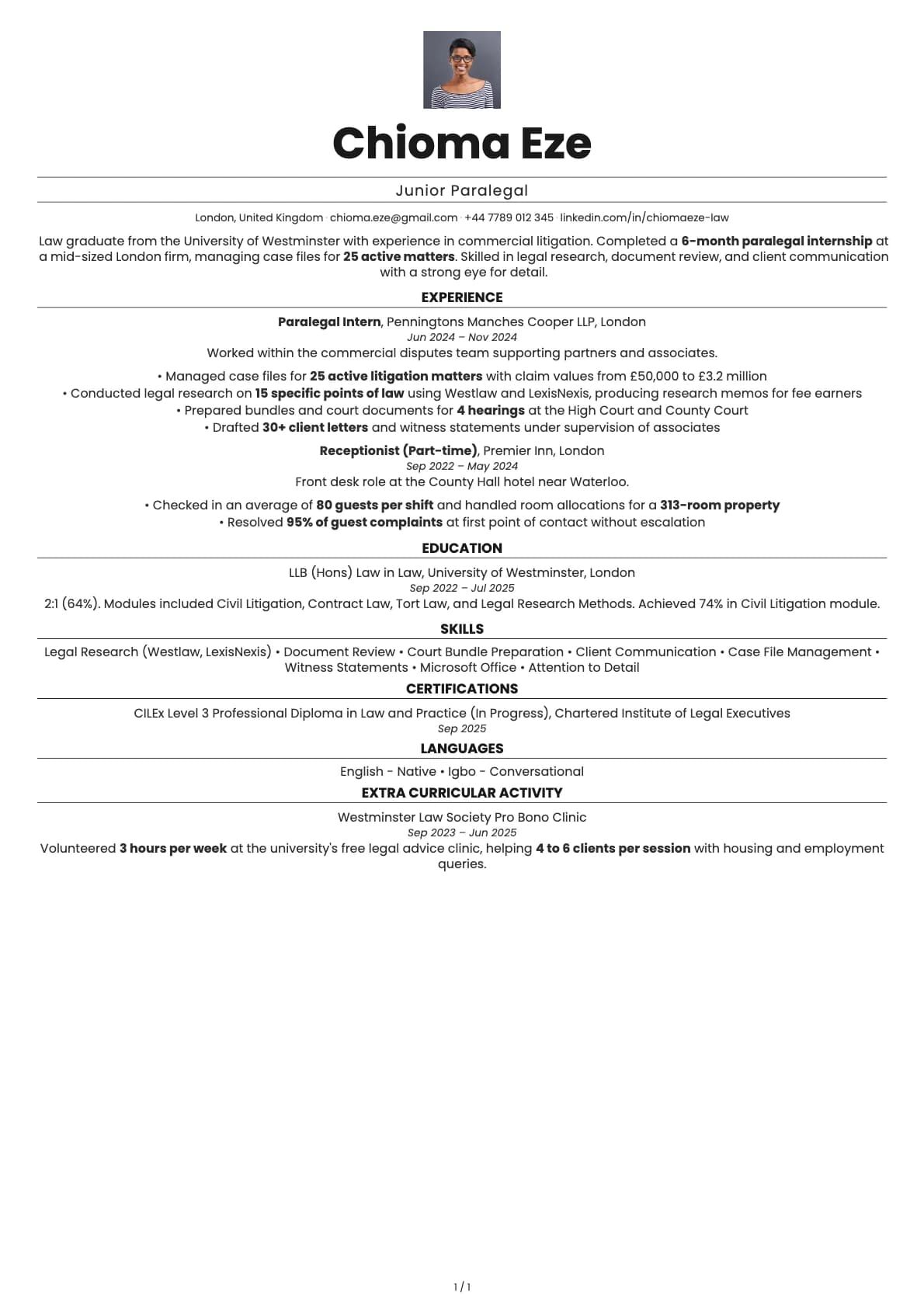
Junior Paralegal
A junior paralegal resume example with litigation internship experience and legal research skills.
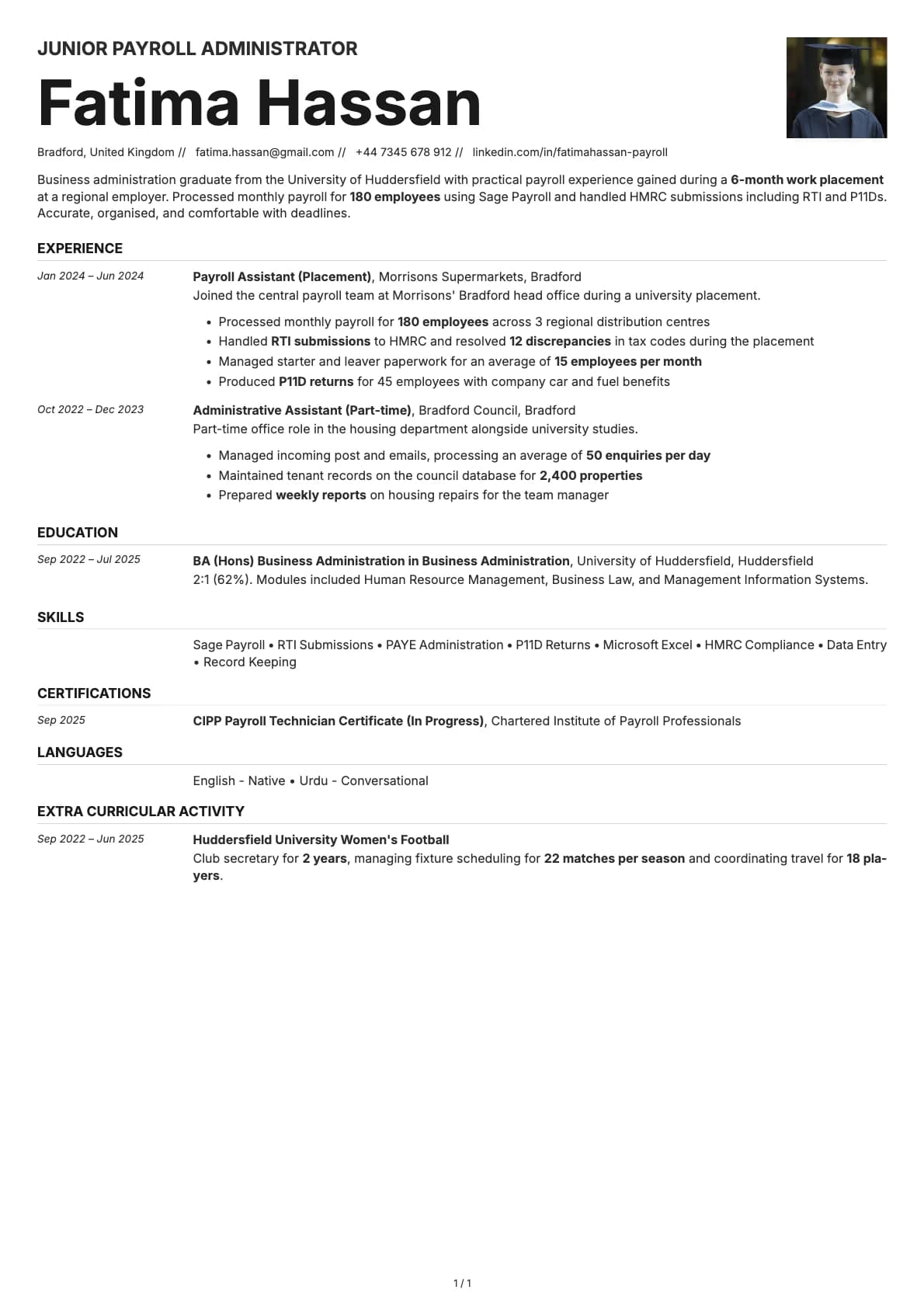
Junior Payroll Administrator
A junior payroll administrator resume example with Morrisons placement experience and Sage Payroll skills.