Graduate Marine Biologist Resume Example
A graduate marine biologist resume example with research placement experience, dive survey qualifications, and intertidal survey numbers.

Laddro Team
Free to use. No account needed to start.
Free to use. No account needed to start.
Overview
Marine biology is one of the most competitive graduate fields, with limited paid positions at research institutions, consultancies, and conservation organisations. What separates successful candidates is a combination of strong fieldwork skills, species identification ability, practical qualifications like dive certifications, and evidence of genuine commitment through volunteering and independent survey work.
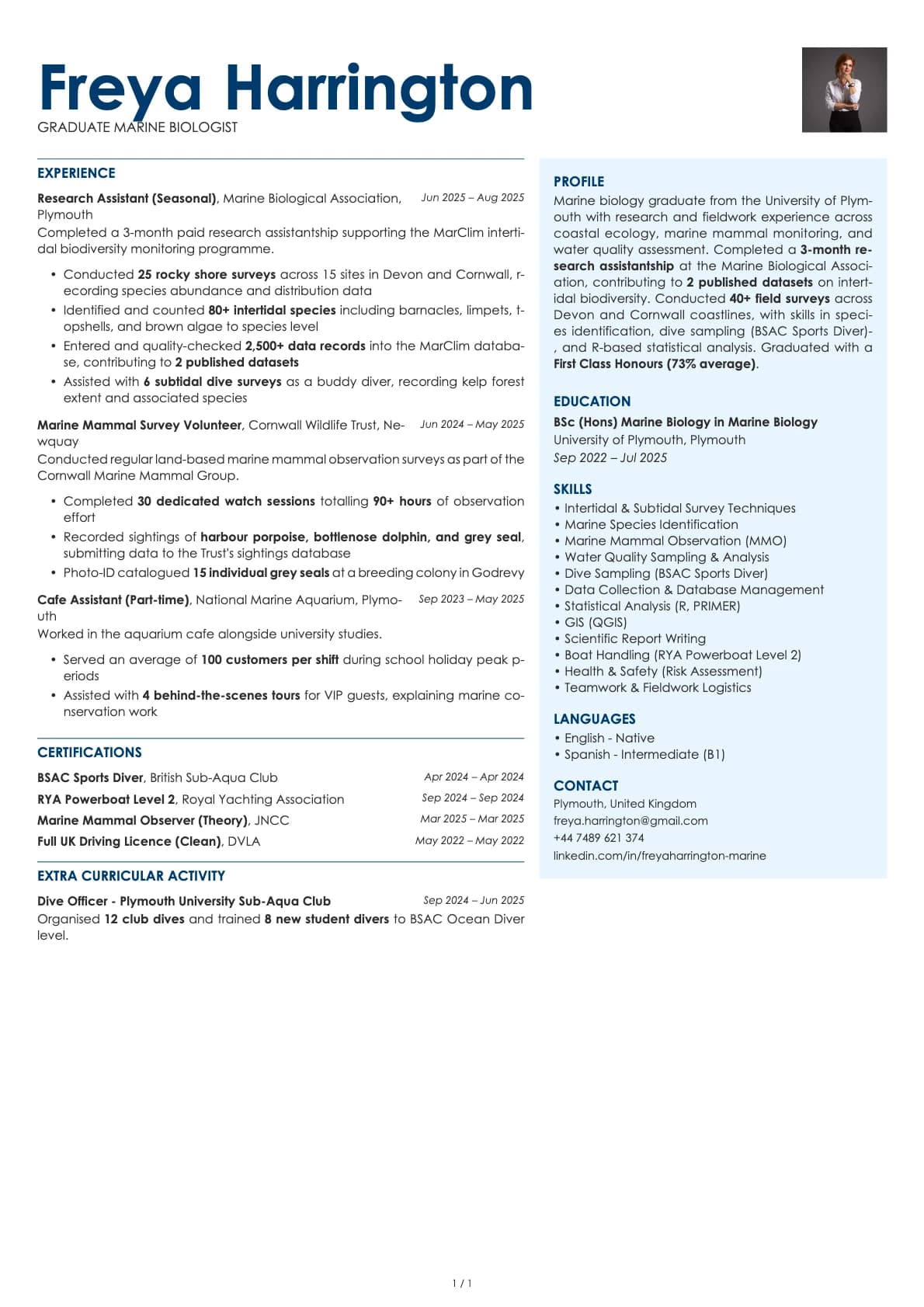
This resume belongs to Freya Harrington, a marine biology graduate from the University of Plymouth who completed a three-month research assistantship at the Marine Biological Association. She conducted 25 rocky shore surveys, contributed to 2 published datasets, and identified over 80 intertidal species to species level. Her marine mammal monitoring experience, BSAC Sports Diver qualification, and RYA Powerboat certificate make her well-equipped for marine fieldwork roles.
What Makes This Resume Work
Research institution experience with published outputs. Contributing to 2 published datasets at the MBA gives Freya credibility that volunteer-only experience cannot match. Published data contributions show she can work to the standard required by professional marine science research.
Species identification skills are explicitly demonstrated. Counting and identifying 80 intertidal species to species level is the kind of detail that marine ecology employers want to see. Taxonomic competence is a core skill that takes years to develop, and providing a number demonstrates Freya's current level.
Practical qualifications open doors. A BSAC Sports Diver certification, RYA Powerboat Level 2, and MMO training give Freya access to roles that require these qualifications as mandatory prerequisites. Many marine biology positions involve boat work or dive surveys, and having these already in place removes a significant barrier.
Key Takeaways
Graduate marine biologists should quantify their fieldwork experience with survey counts, species numbers identified, and data records contributed. Include any published outputs, even dataset contributions. Practical qualifications (dive certs, powerboat, MMO, first aid) are essential to list because they directly determine which roles you are eligible for. Volunteer survey work through wildlife trusts or recording schemes demonstrates commitment and builds the species identification skills that employers value most.
Build your own version
Open this layout in the builder and swap in your own details. It takes a few minutes.
Free to use. No account needed to start.
Was this resume example helpful?
Rate this example to help us create better content for you.
4.7 average from 114 ratingsRelated resume examples
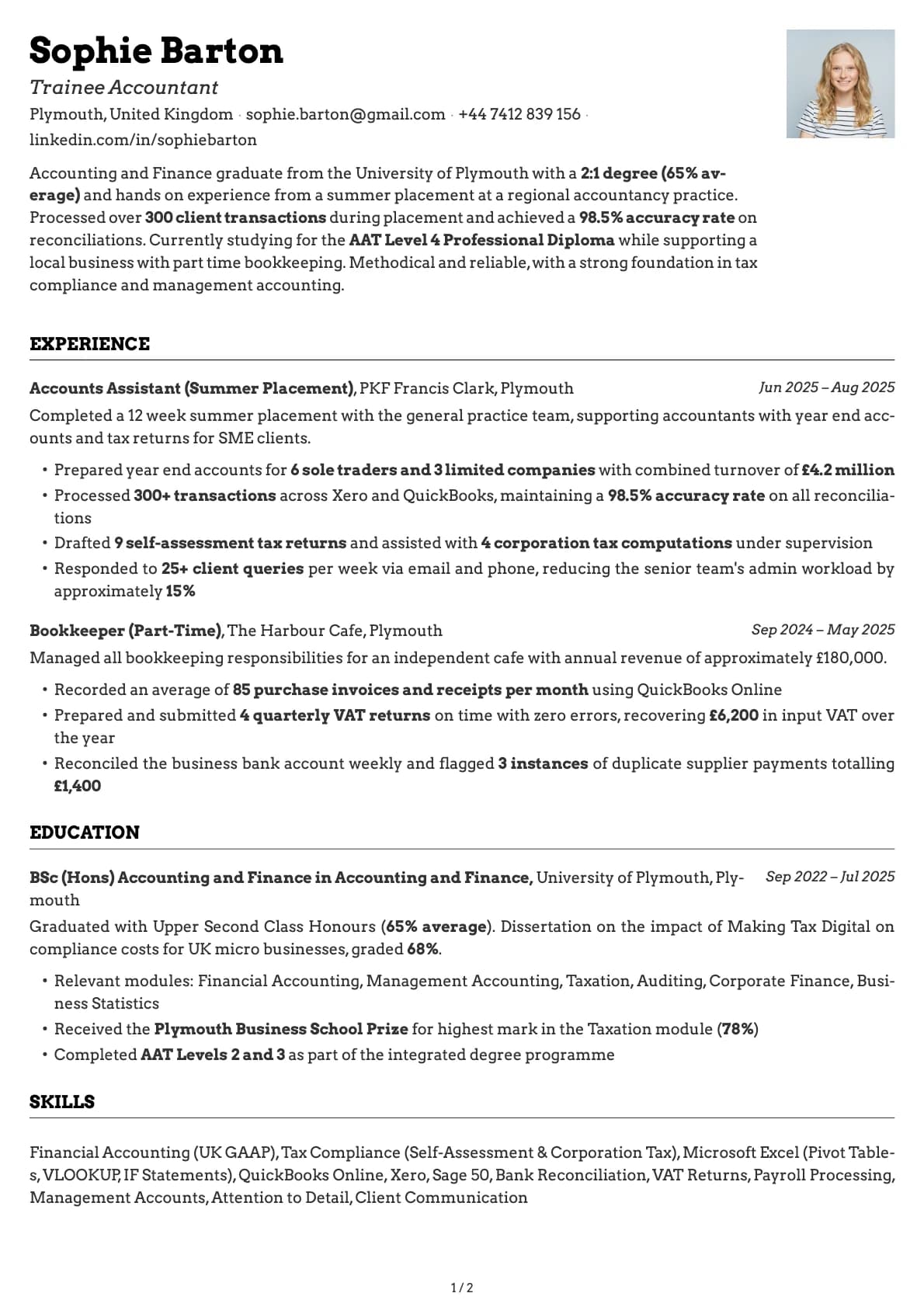
Trainee Accountant
A trainee accountant resume example for recent graduates. See how to present your AAT progress, placement experience, and bookkeeping skills to land your first role.
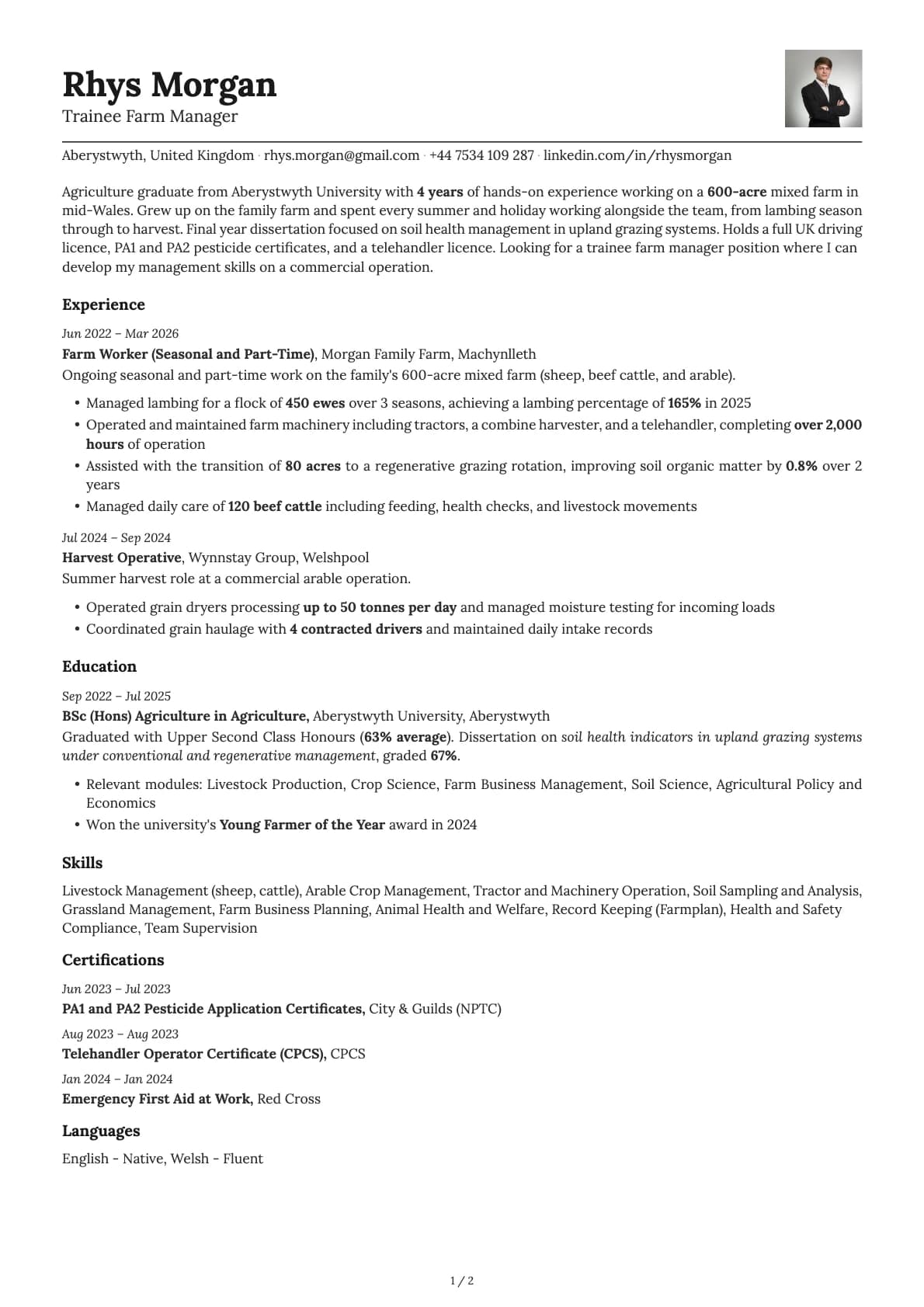
Trainee Farm Manager
A trainee farm manager resume example showing how to combine an agriculture degree with hands-on mixed farming experience on a 600-acre family operation.
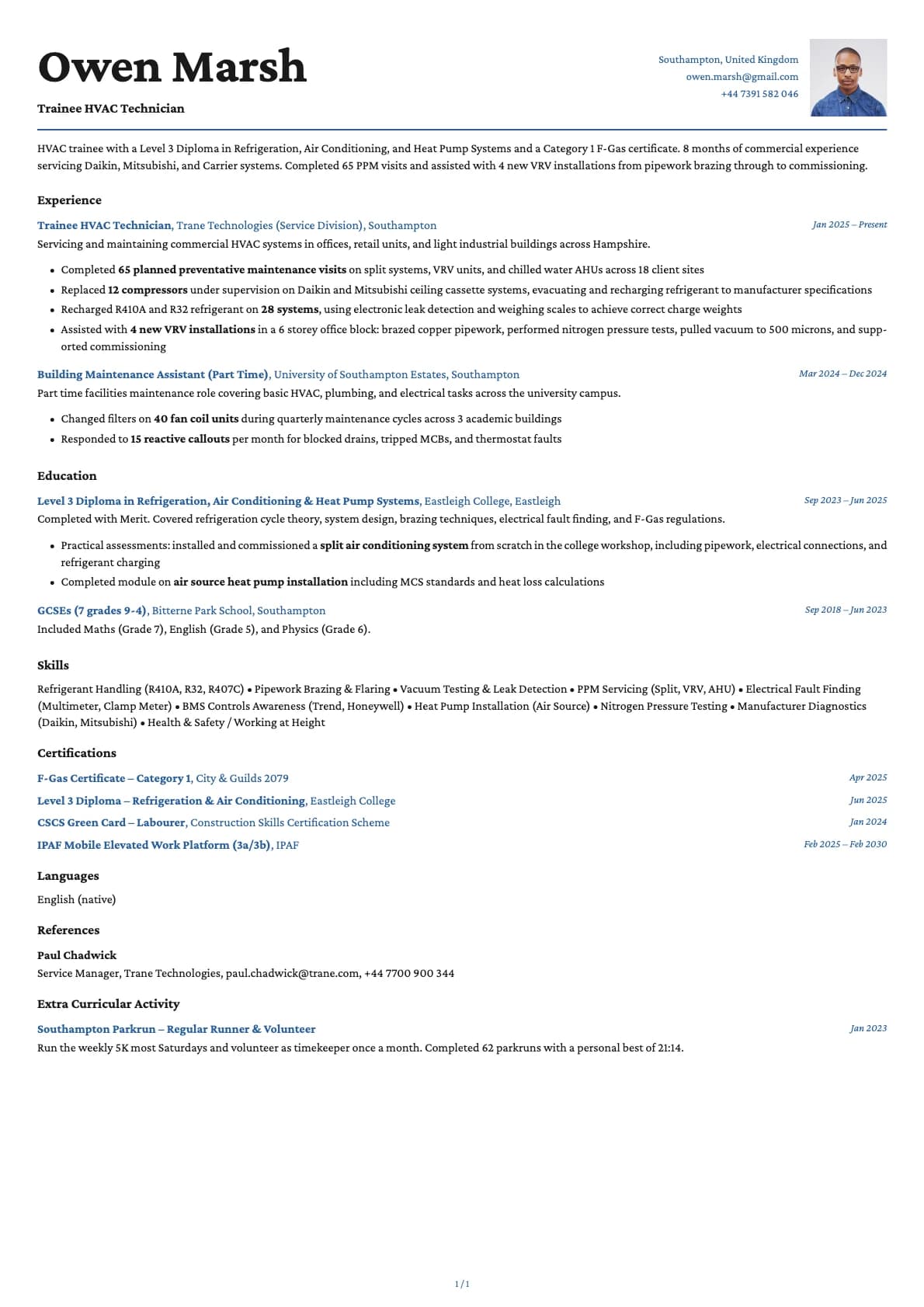
Trainee HVAC Technician
A trainee HVAC technician resume example for graduates entering the heating, ventilation, and air conditioning trade. See how to present your F-Gas certification and refrigeration skills.
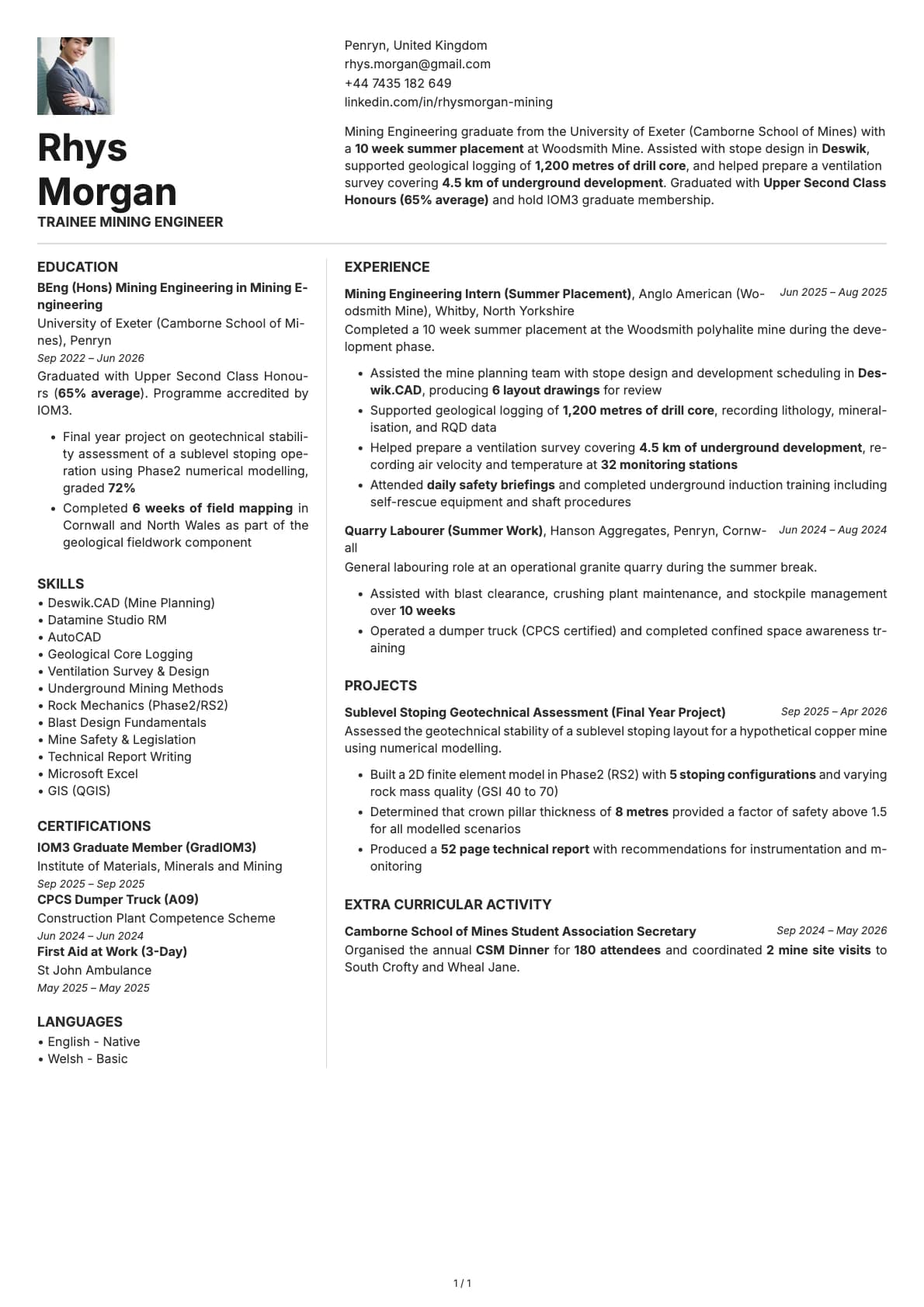
Trainee Mining Engineer
A trainee mining engineer resume example with underground mine placement experience, Deswik proficiency, and IOM3 membership.
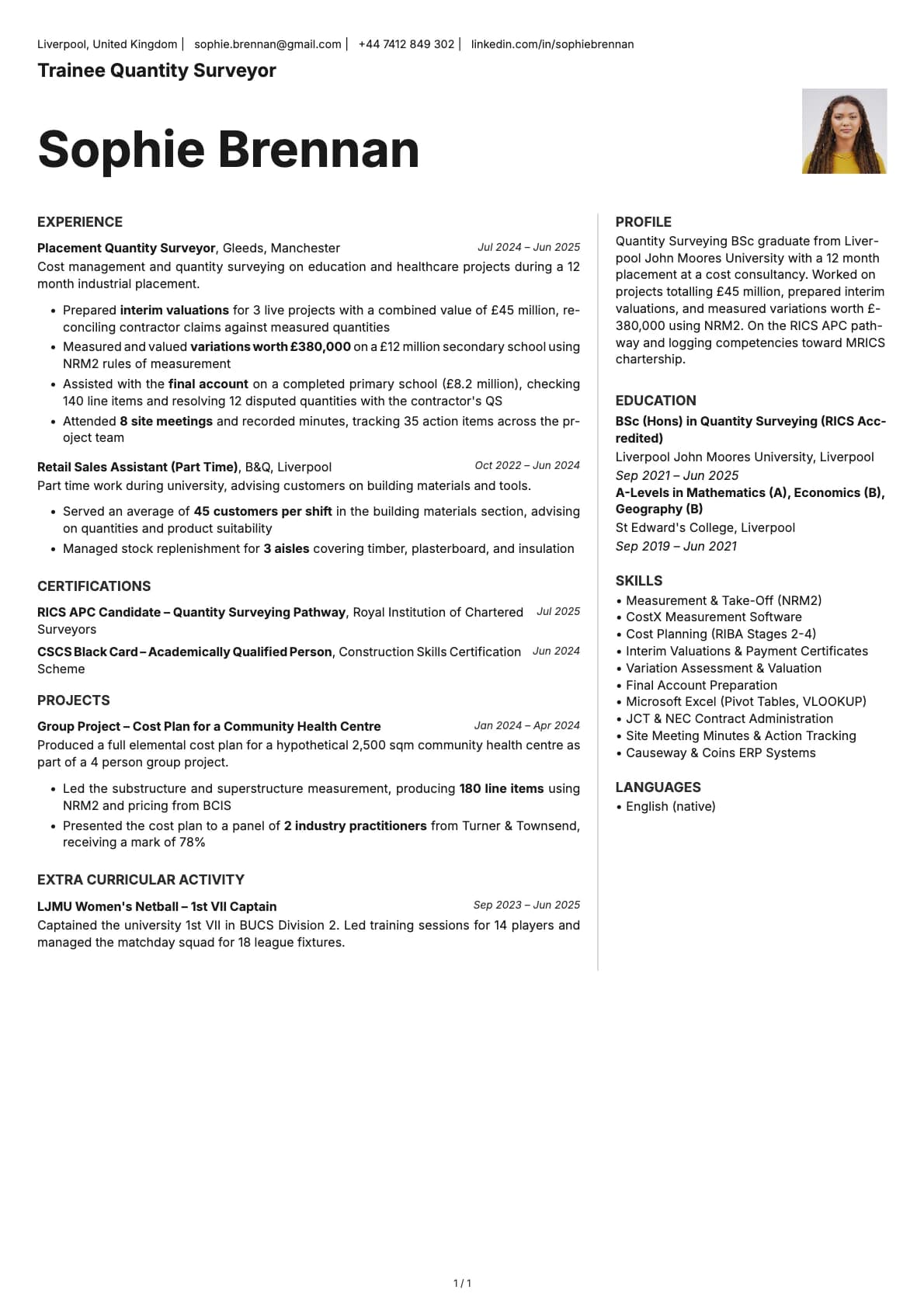
Trainee Quantity Surveyor
A trainee quantity surveyor resume example for QS graduates on the RICS APC pathway. See how to present your measurement skills, cost management experience, and professional development.
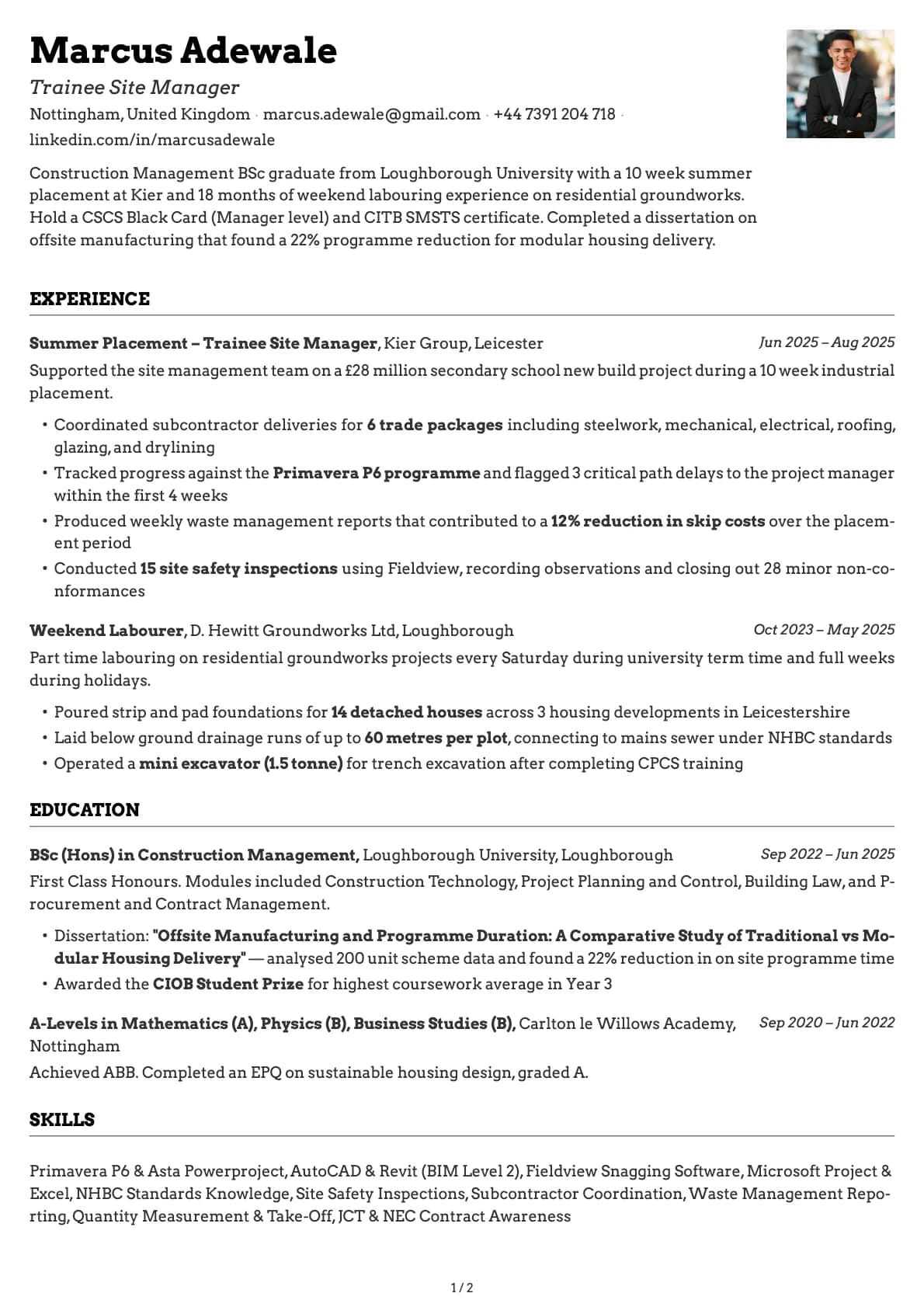
Trainee Site Manager
A trainee site manager resume example for construction management graduates. See how to present your BSc, CITB qualifications, and placement experience to land your first site role.
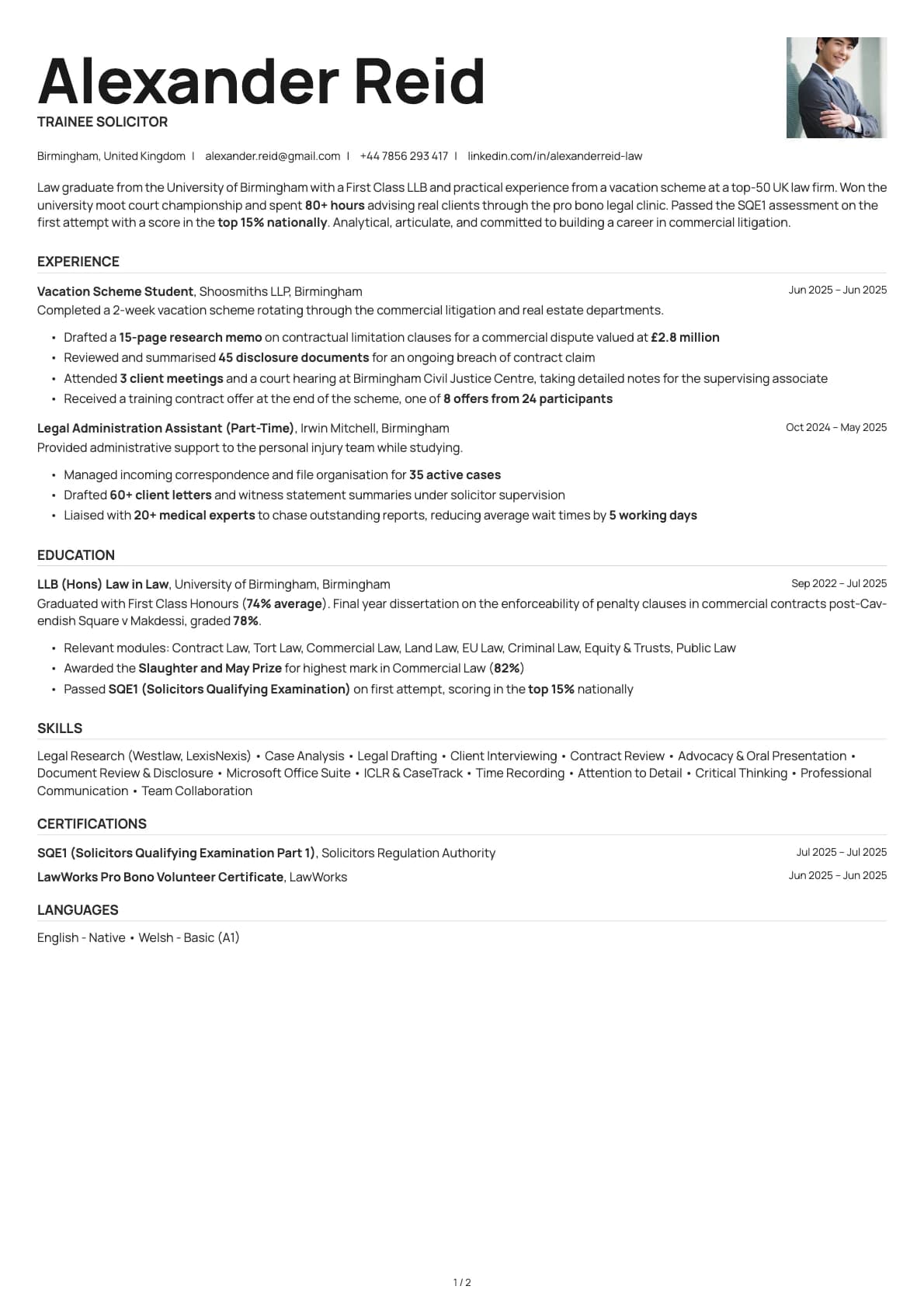
Trainee Solicitor
A trainee solicitor resume example for recent law graduates. Learn how to present your law degree, vacation schemes, and pro bono experience to secure a training contract.
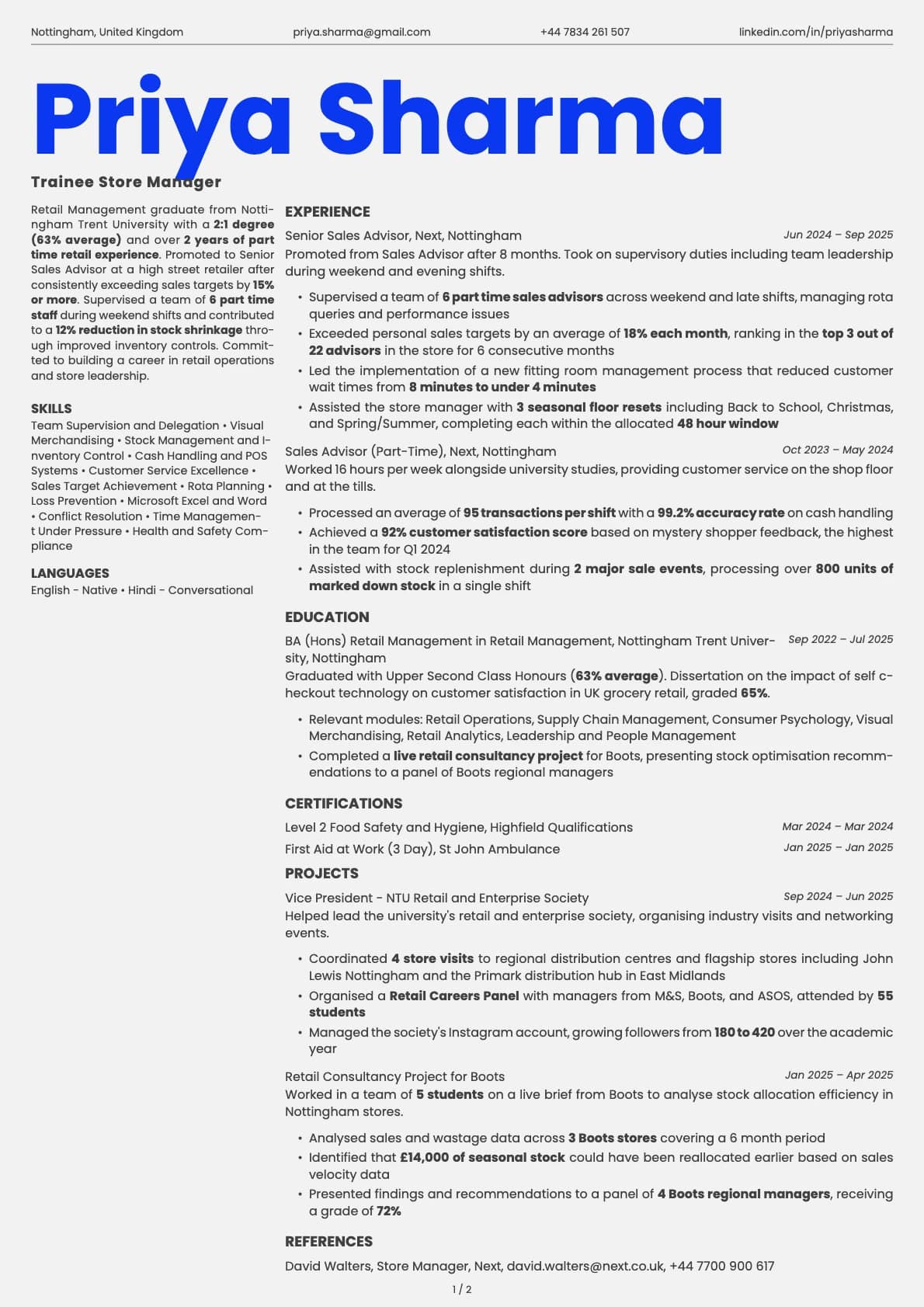
Trainee Store Manager
A trainee store manager resume example for retail graduates. See how to present team leadership, sales targets, and merchandising experience to land management schemes.
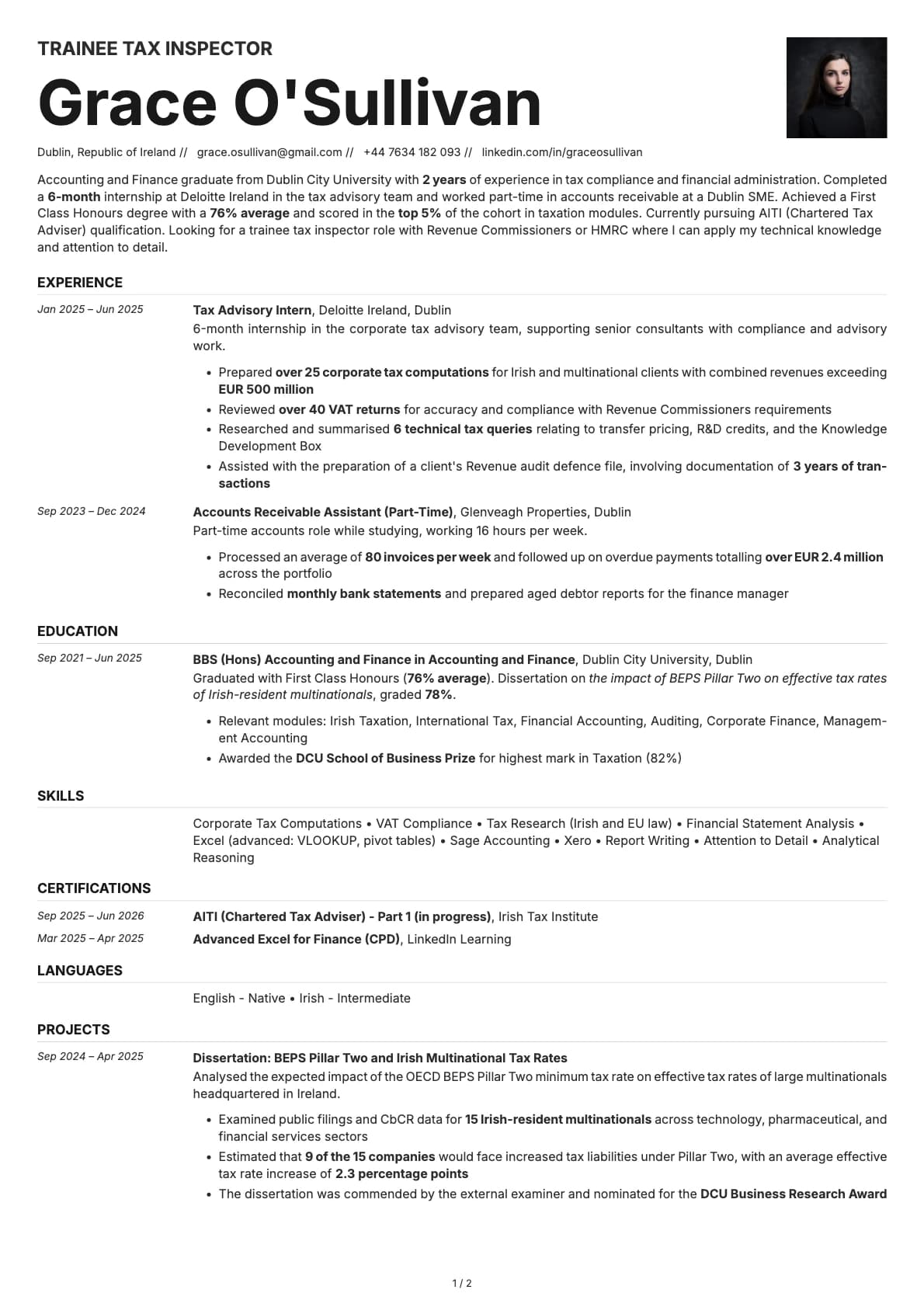
Trainee Tax Inspector
A trainee tax inspector resume example showing how to combine a Deloitte internship, top taxation grades, and an accounting degree into a Revenue Commissioners application.
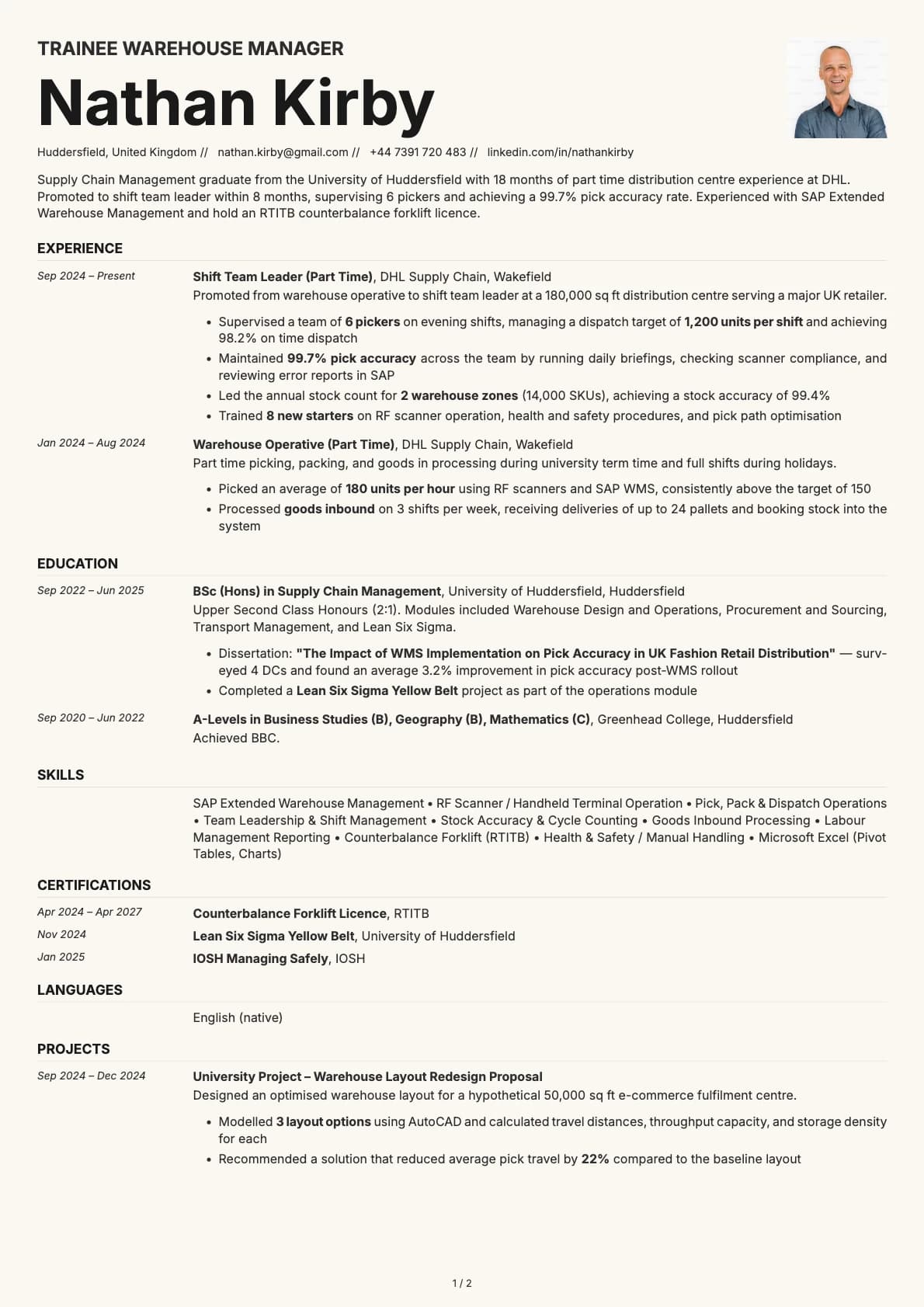
Trainee Warehouse Manager
A trainee warehouse manager resume example for logistics graduates. See how to present your warehouse management systems experience, forklift licences, and operational KPIs.
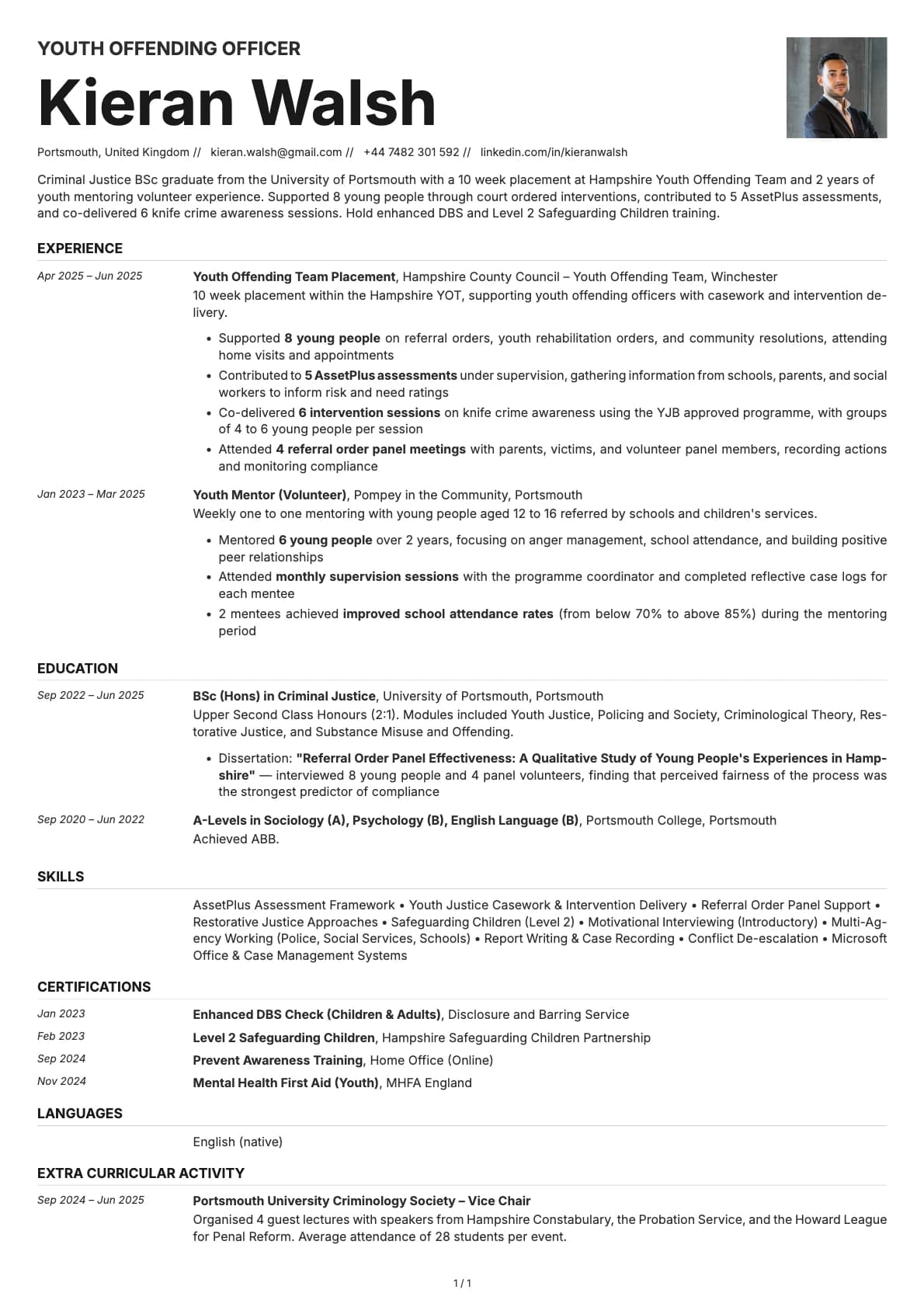
Youth Offending Officer
A youth offending officer resume example for criminal justice graduates. See how to present your placement experience, case management skills, and youth justice knowledge.
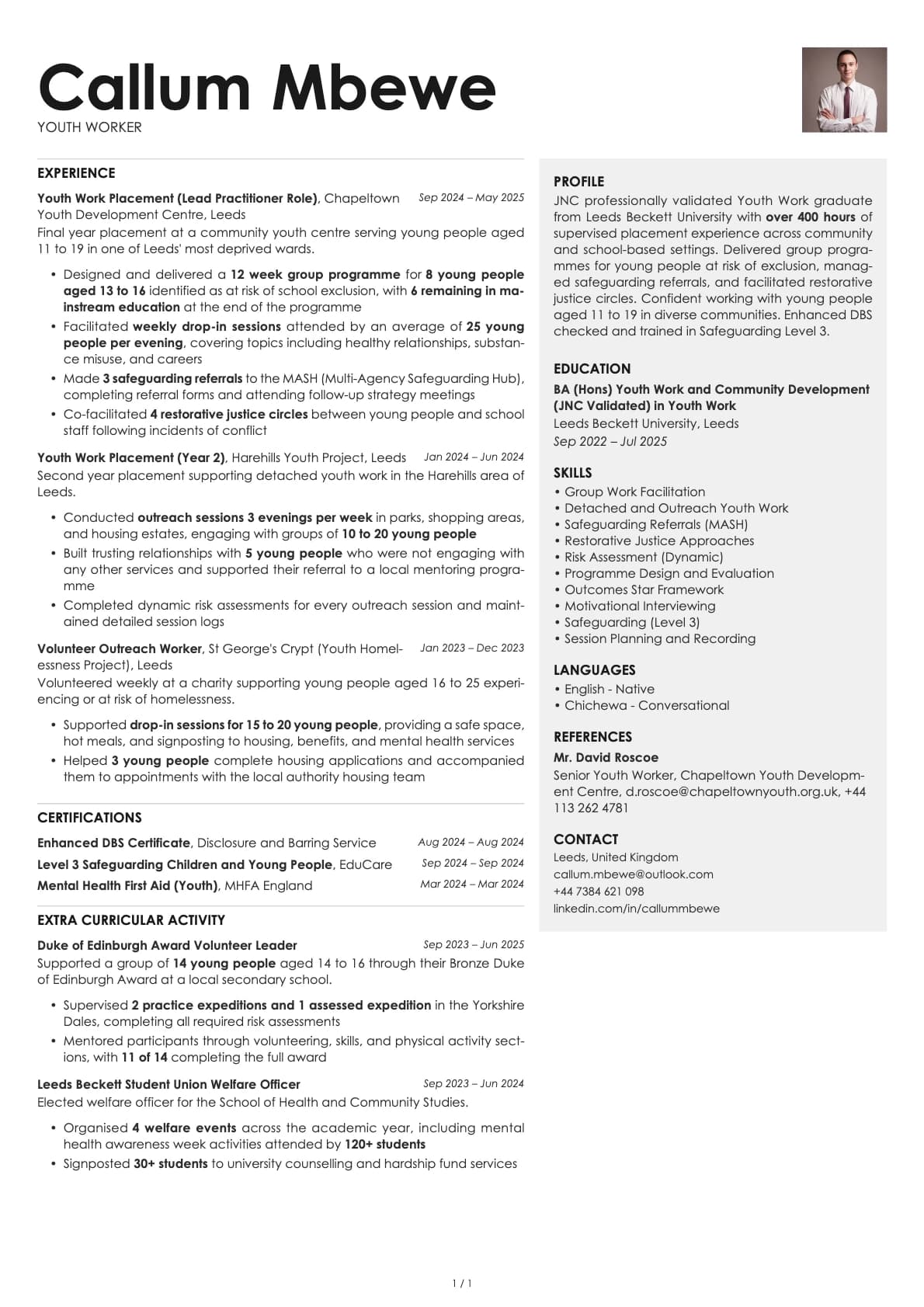
Youth Worker
A graduate youth worker resume example with community youth work placements, safeguarding, and programme delivery. See how to present your experience for youth work roles.