Junior Industrial Engineer Resume Example
A junior industrial engineer resume example with lean manufacturing placement experience, time study skills, and Six Sigma Yellow Belt.

Laddro Team
Free to use. No account needed to start.
Free to use. No account needed to start.
Overview
Industrial engineering focuses on making processes more efficient, whether in manufacturing, logistics, or service operations. Employers in this space want graduates who can collect data, analyse workflows, and propose changes that deliver measurable improvements. Lean manufacturing principles, time studies, and process mapping are the foundations. What makes a strong candidate is the ability to show that their analysis led to a tangible result: faster cycle times, fewer defects, or lower costs.
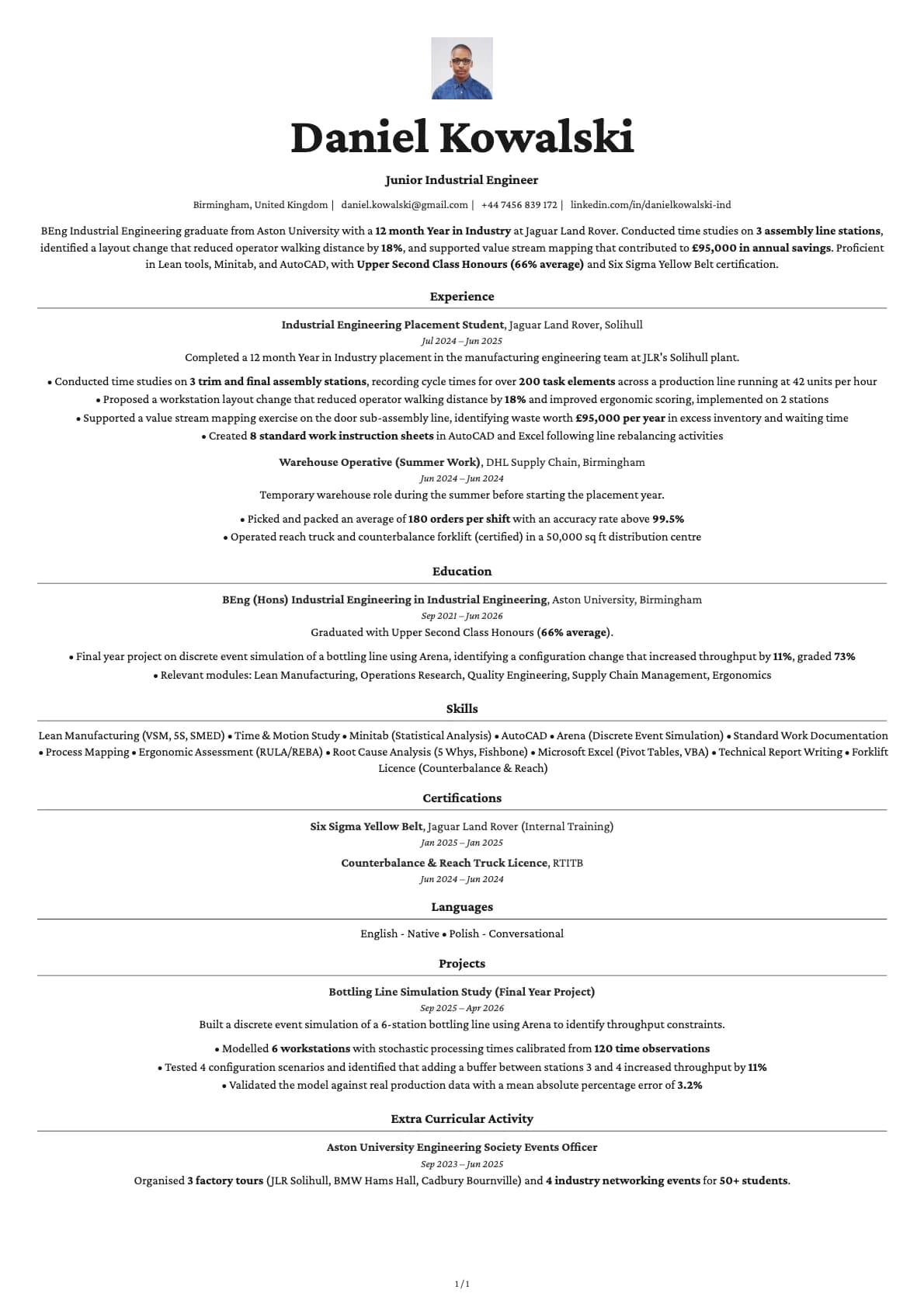
This resume belongs to Daniel Kowalski, a BEng Industrial Engineering graduate from Aston University who completed a Year in Industry placement at Jaguar Land Rover in Solihull. He conducted time studies on 3 assembly line stations, identified a layout change that reduced operator walking distance by 18%, and supported a value stream mapping exercise that contributed to an annual saving of £95,000.
What Makes This Resume Work
Time study results are specific and actionable. Conducting time studies on 3 assembly line stations and identifying an 18% reduction in walking distance is a clear, measurable output. This shows Daniel can move from data collection to practical recommendations.
Value stream mapping is linked to financial savings. The £95,000 annual saving gives commercial context to the lean analysis work. Industrial engineering improvements only matter if they translate into cost or quality benefits, and this figure proves the point.
Automotive OEM experience is highly regarded. A Year in Industry at Jaguar Land Rover gives Daniel exposure to high-volume, high-precision manufacturing. This is a strong differentiator for any junior industrial engineering role, whether in automotive or another sector.
Key Takeaways
Junior industrial engineers should describe the specific lean tools they have applied (time studies, value stream mapping, 5S, SMED) and quantify the improvements achieved. Reference the industry and production environment you worked in, including volumes and cycle times where relevant. Six Sigma certification at any level demonstrates structured problem-solving capability, and a final year project involving real factory data or simulation modelling adds further credibility.
Build your own version
Open this layout in the builder and swap in your own details. It takes a few minutes.
Free to use. No account needed to start.
Was this resume example helpful?
Rate this example to help us create better content for you.
4.5 average from 74 ratingsRelated resume examples
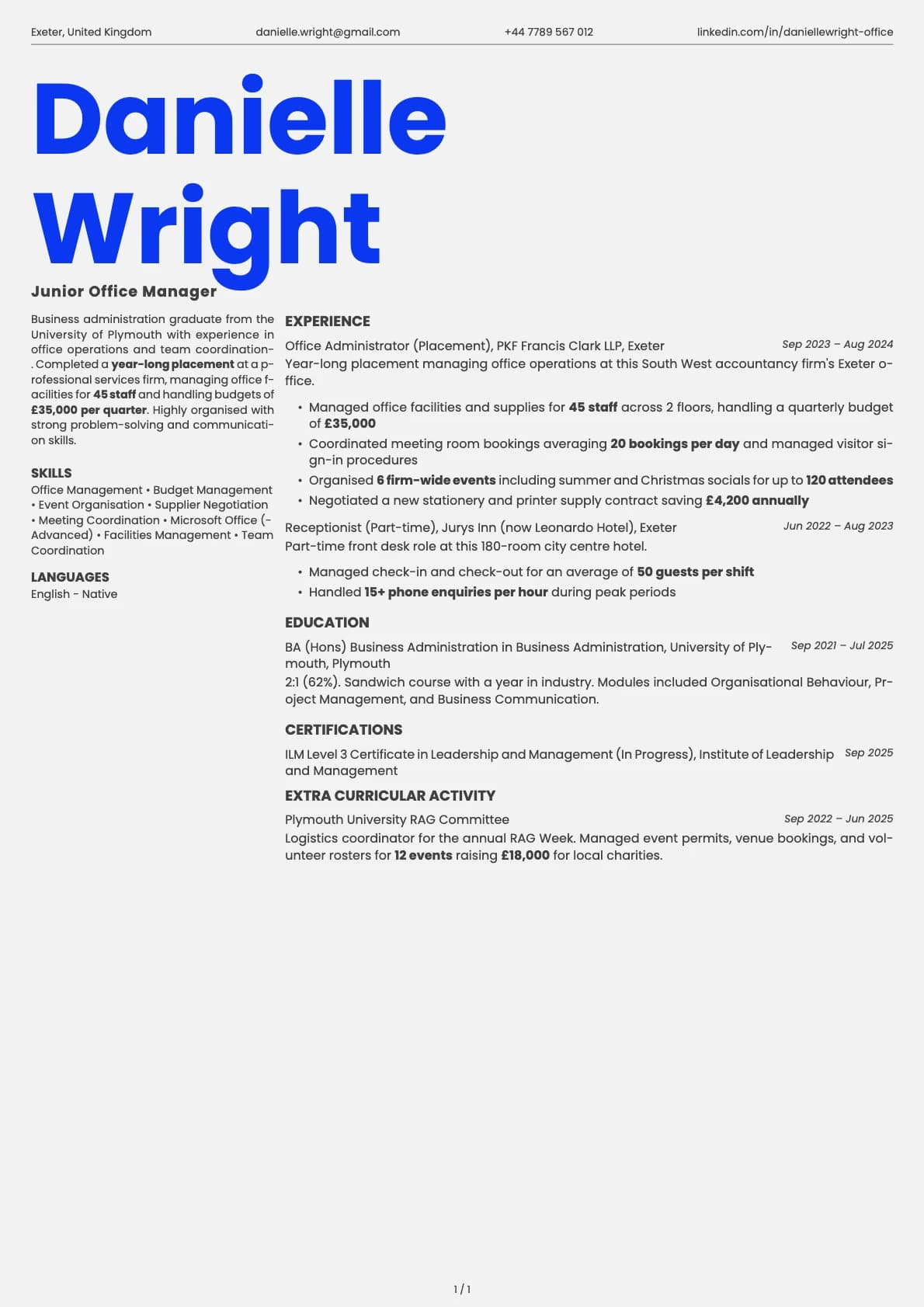
Junior Office Manager
A junior office manager resume example with professional services placement and facilities management experience.
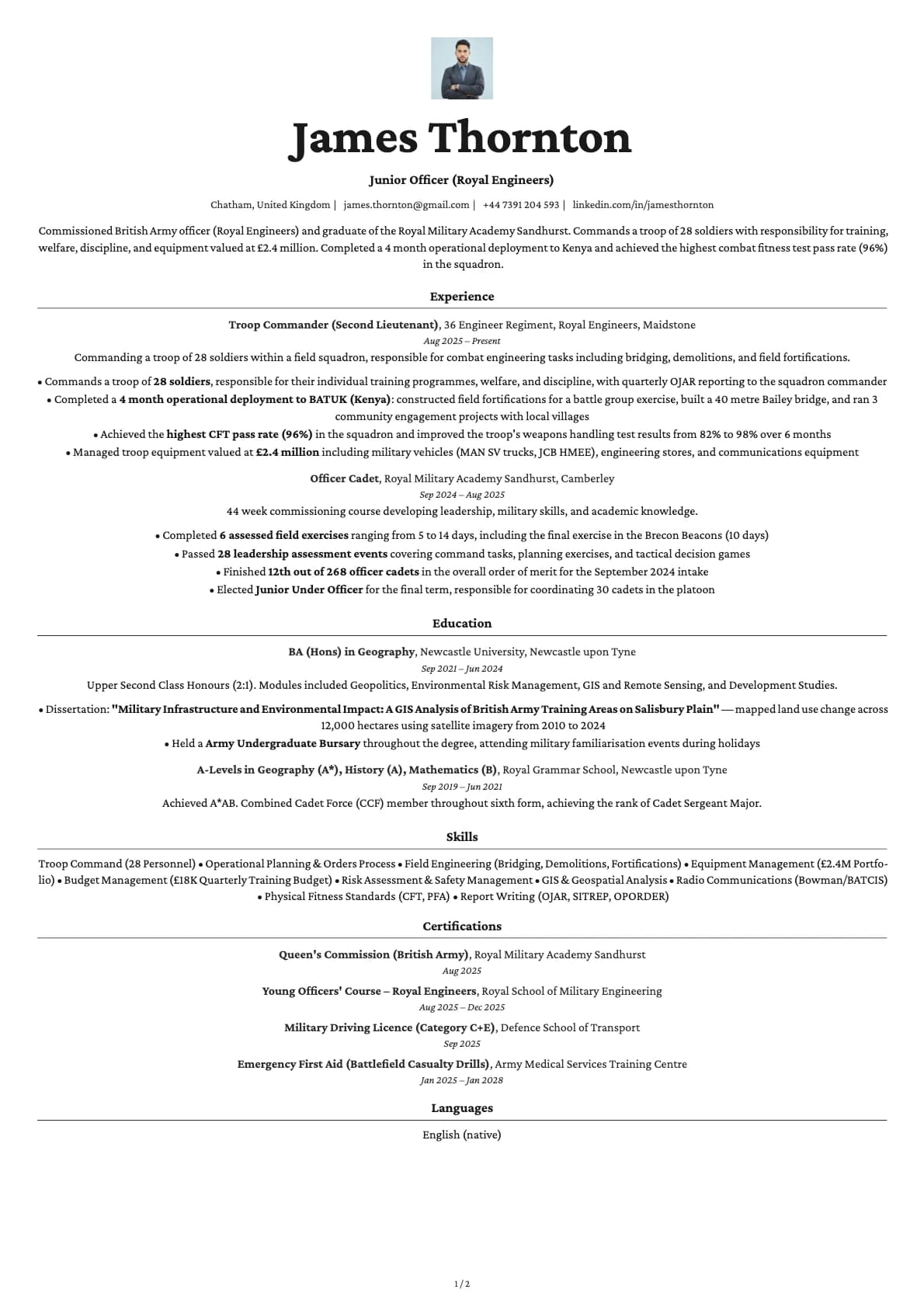
Junior Officer (Armed Forces)
A junior officer resume example for armed forces graduates transitioning from Sandhurst or the commissioning course. See how to present your military leadership, operational deployments, and command experience.
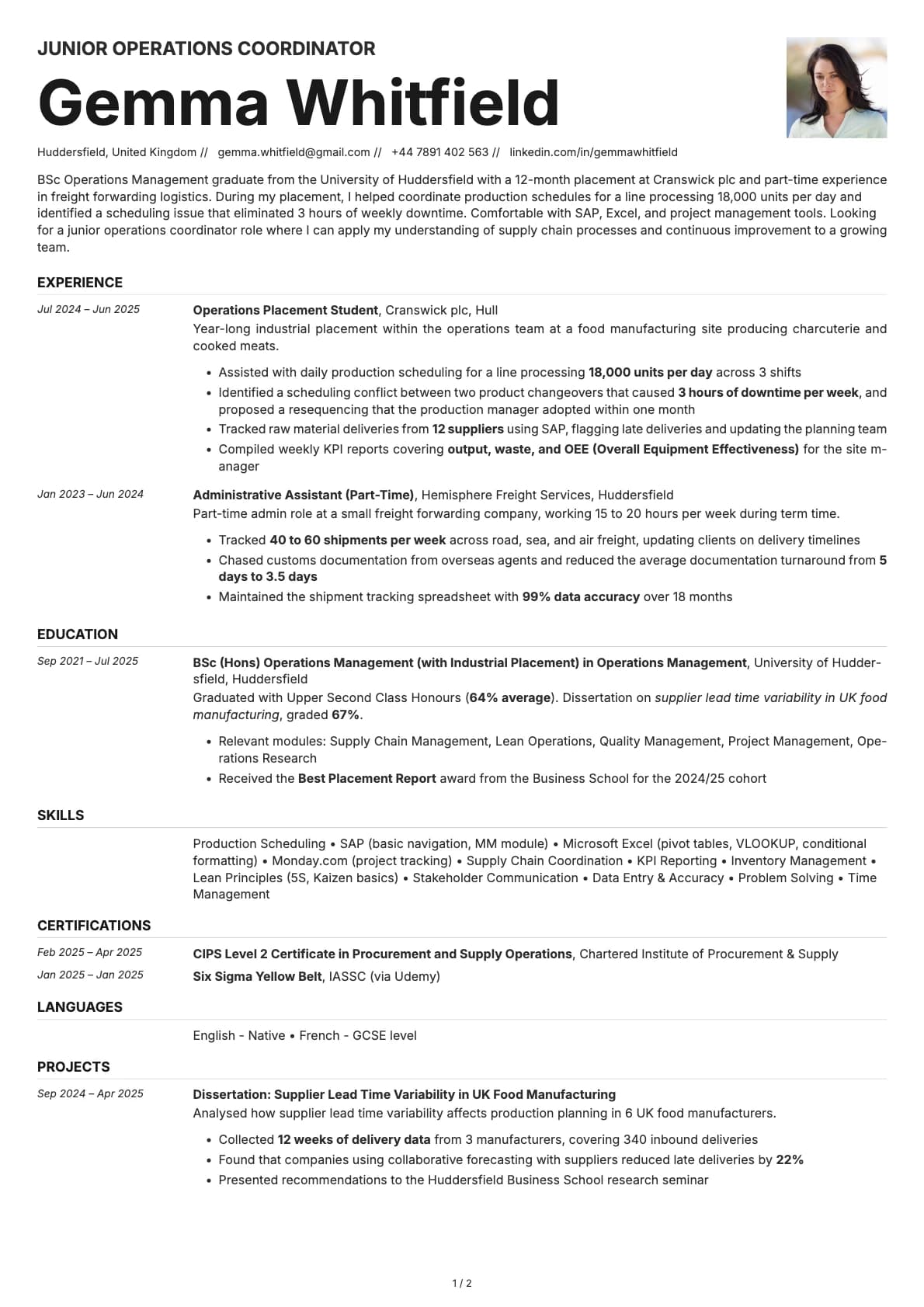
Junior Operations Coordinator
A junior operations coordinator resume example for operations management graduates. See how logistics experience and process improvements impress employers.
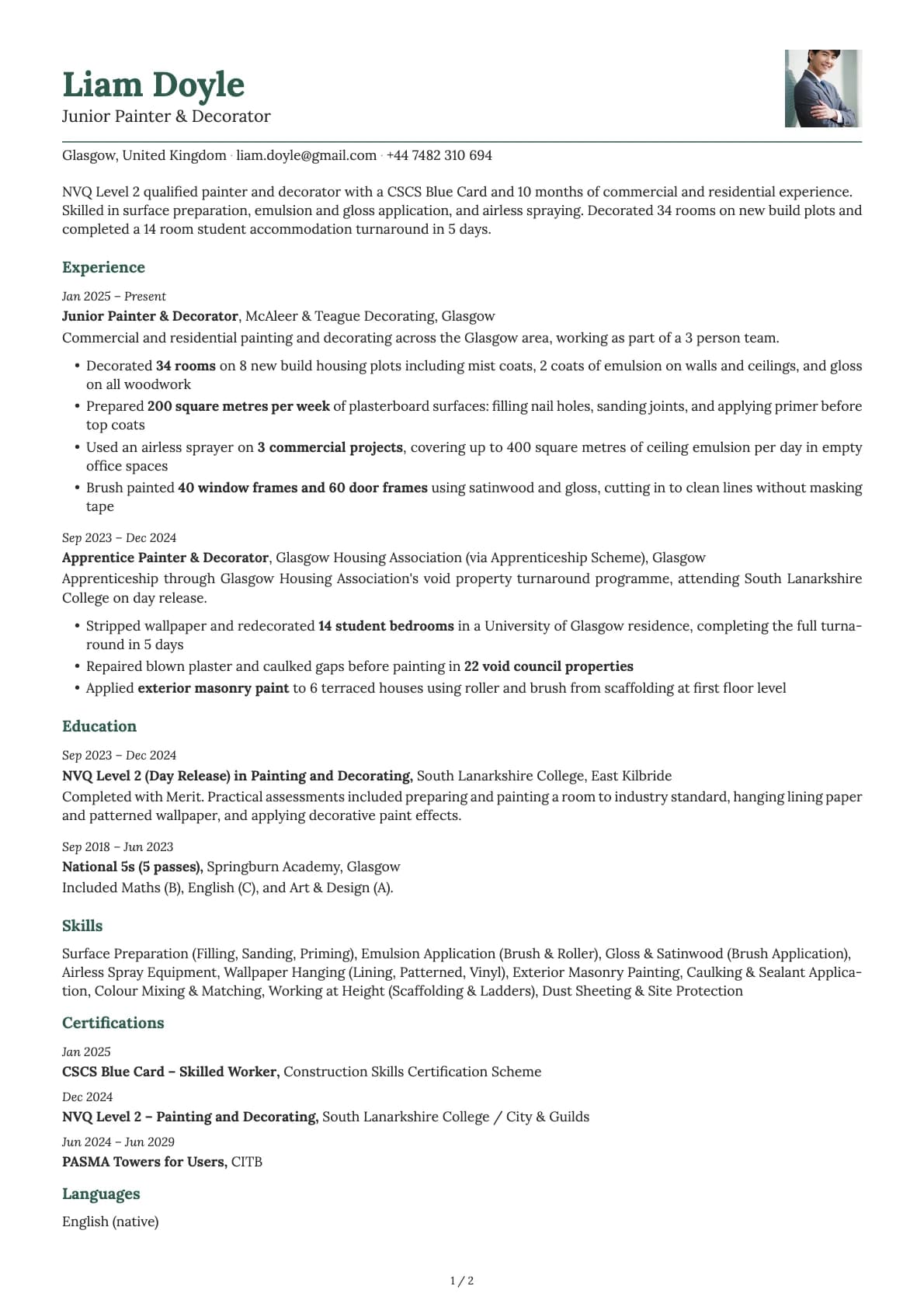
Junior Painter & Decorator
A junior painter and decorator resume example for NVQ qualified painters. See how to present your decorating skills, site experience, and CSCS card details.
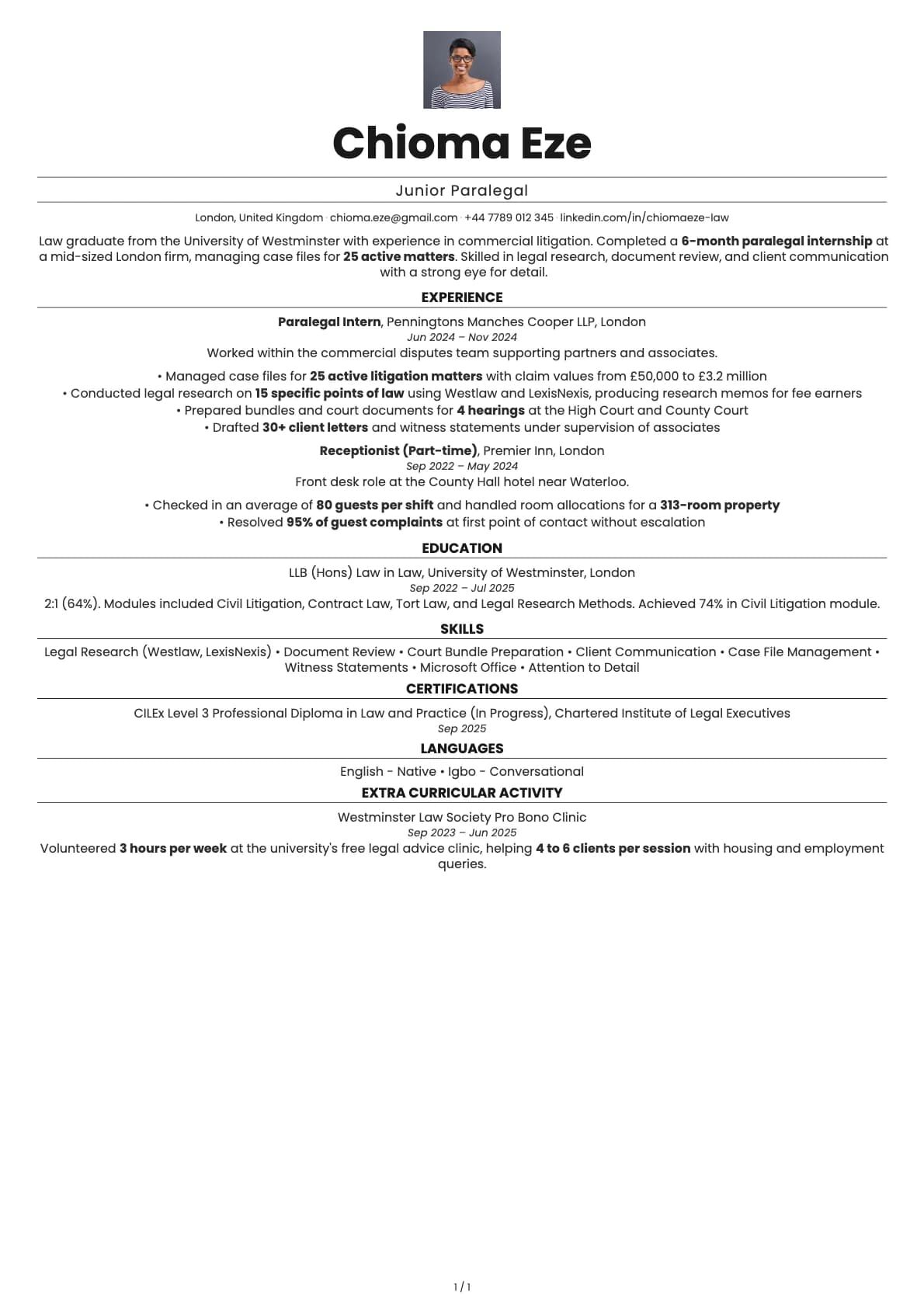
Junior Paralegal
A junior paralegal resume example with litigation internship experience and legal research skills.
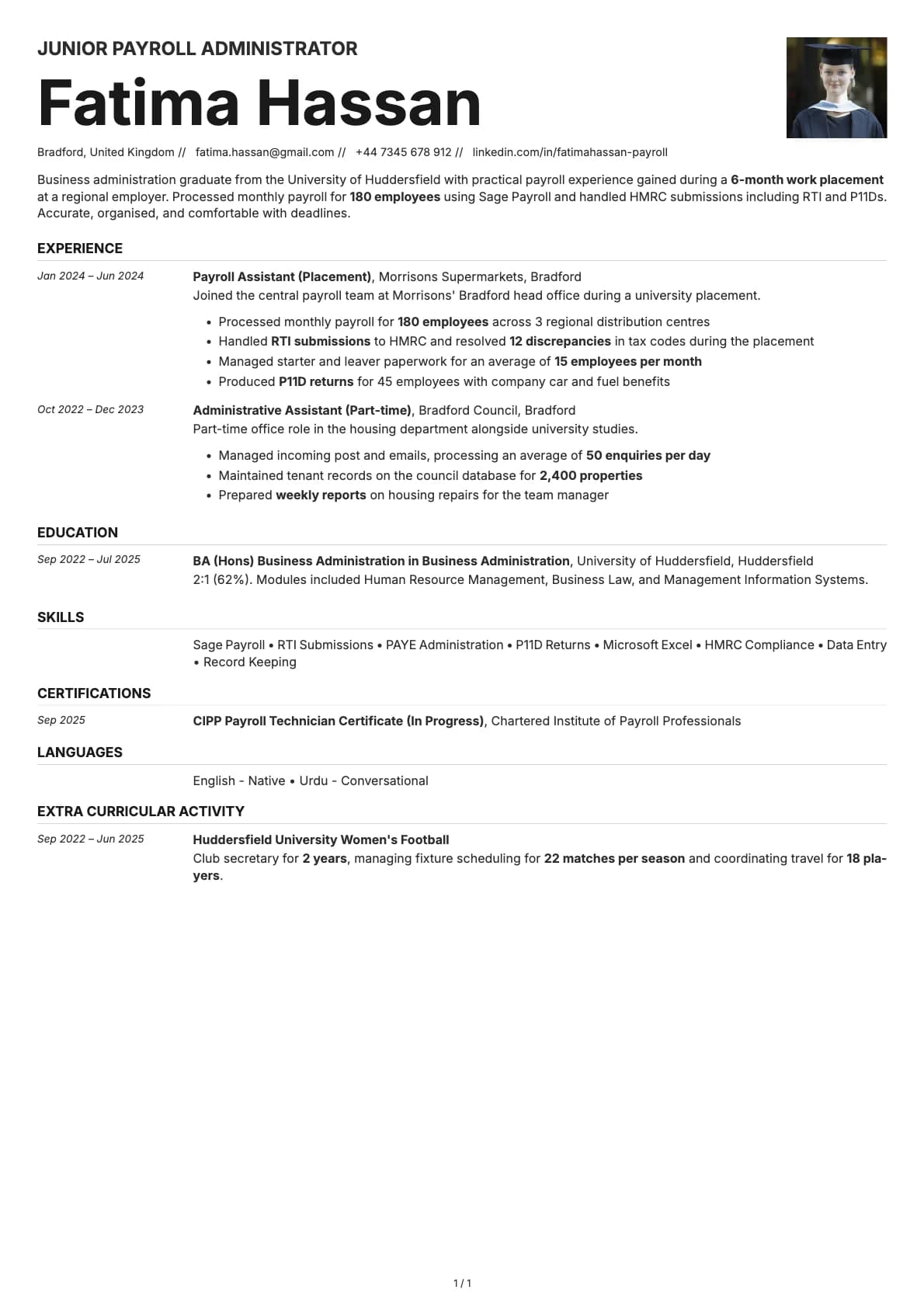
Junior Payroll Administrator
A junior payroll administrator resume example with Morrisons placement experience and Sage Payroll skills.
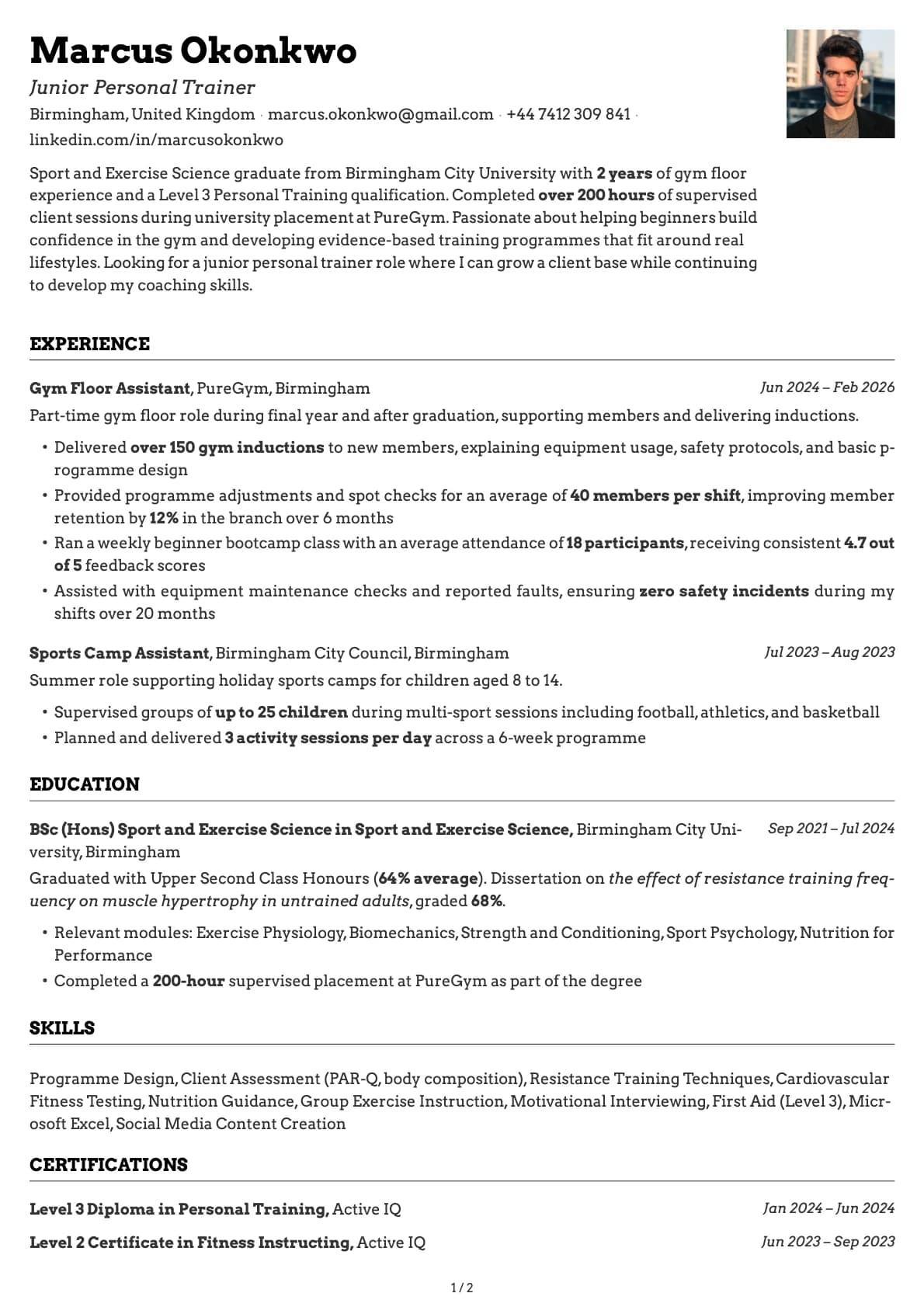
Junior Personal Trainer
A junior personal trainer resume example showing how to combine a sport science degree, Level 3 PT qualification, and gym floor experience at PureGym.
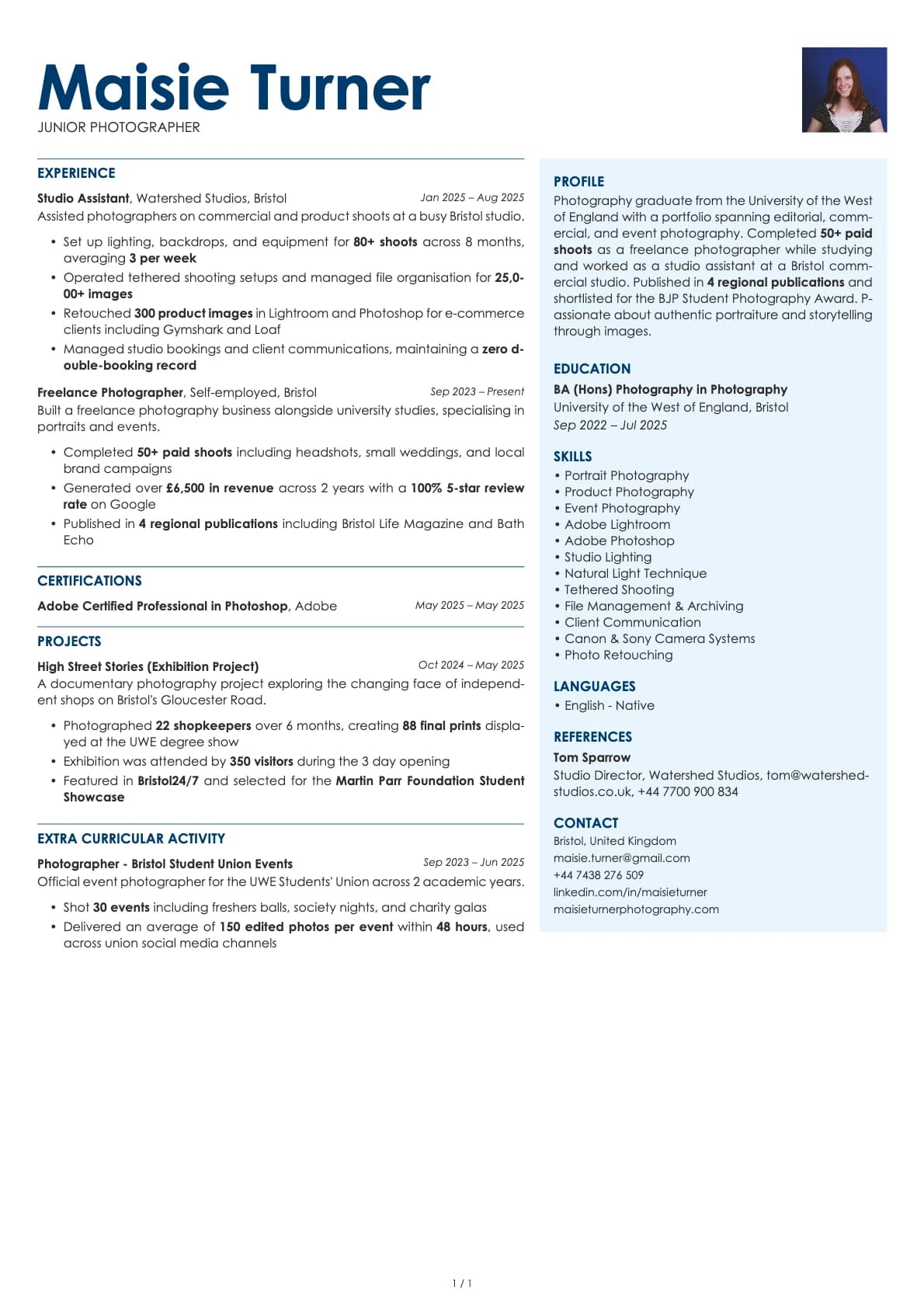
Junior Photographer
A junior photographer resume example for graduates. See how to present freelance work, studio experience, and published images to land your first photography role.
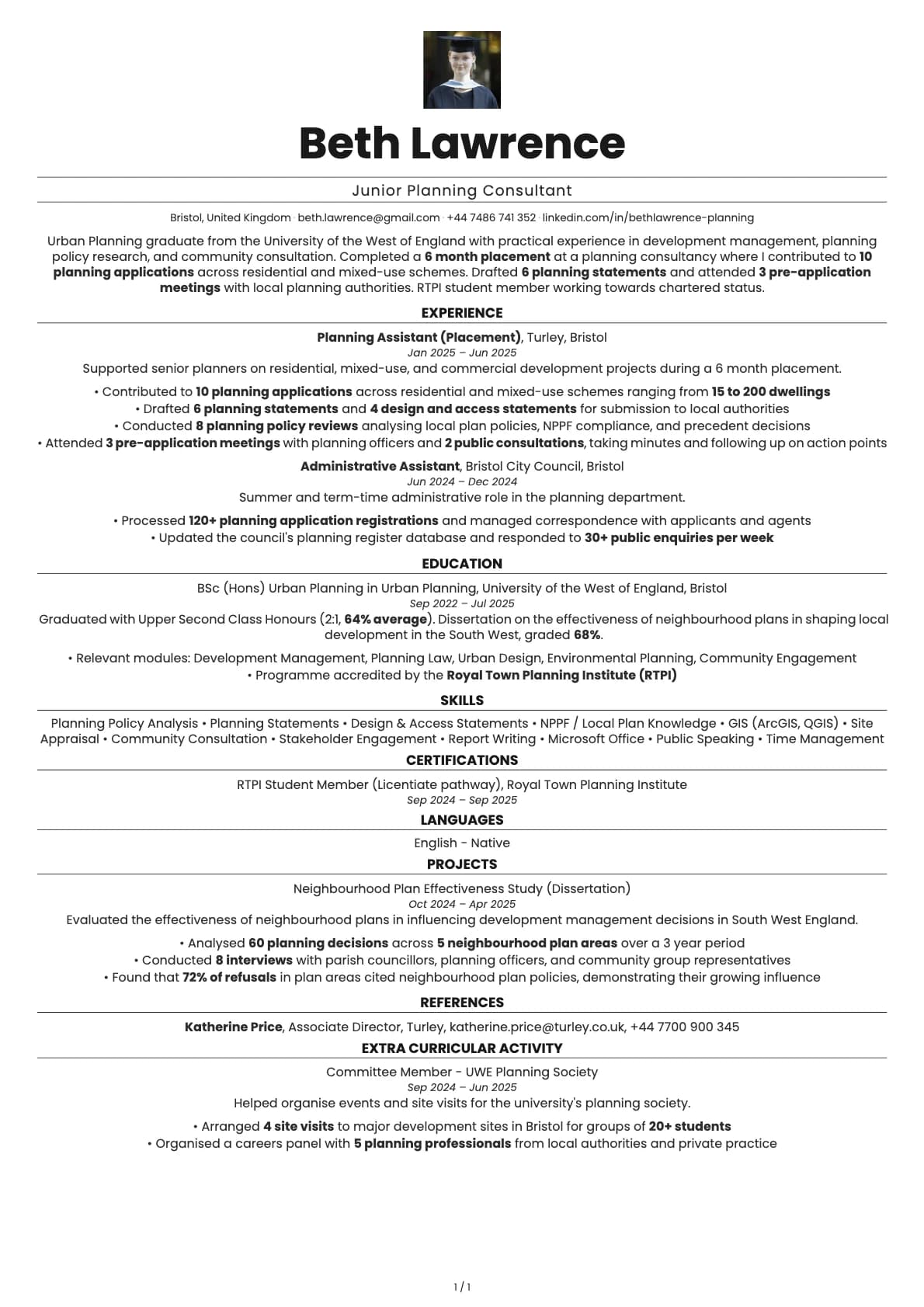
Junior Planning Consultant
A junior planning consultant resume example for graduates. See how to present planning application experience, policy analysis, and RTPI membership to land your first planning role.
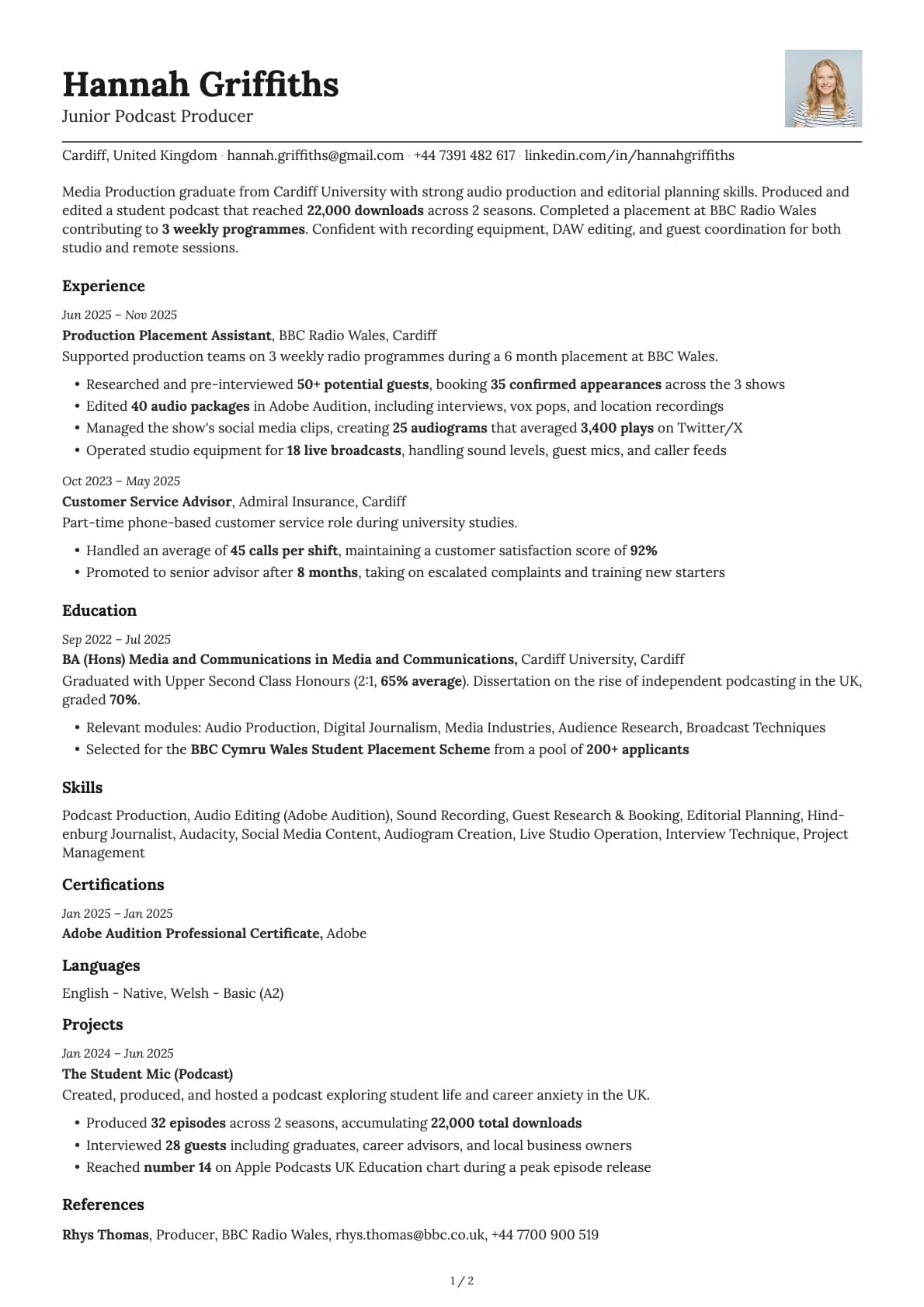
Junior Podcast Producer
A junior podcast producer resume example for graduates. See how to present audio production skills, download numbers, and broadcasting experience to land your first podcast role.
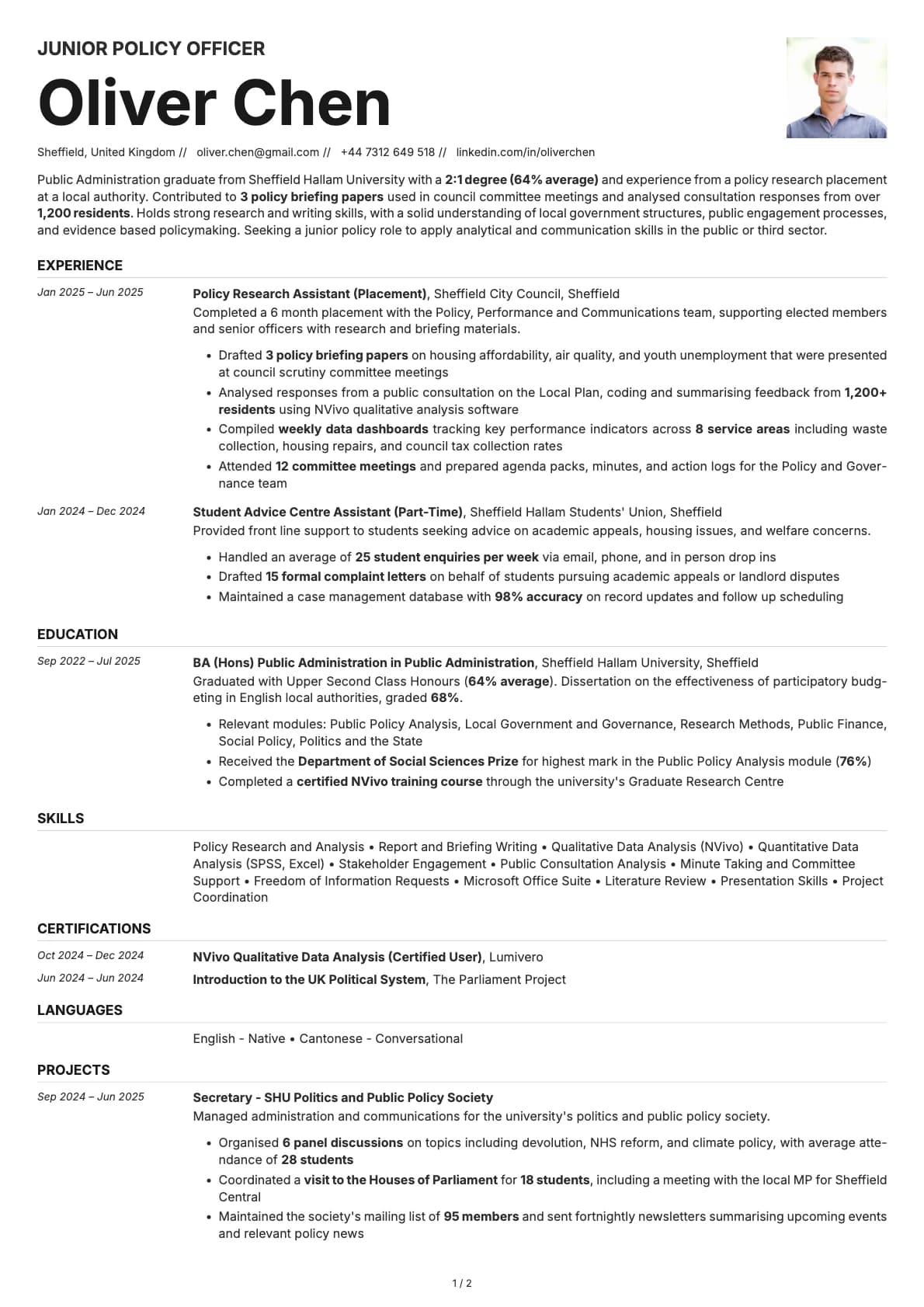
Junior Policy Officer
A junior policy officer resume example for public administration graduates. See how to present research skills, briefing writing, and council placement experience.
Junior PR Executive
A junior PR executive resume example for recent graduates. See how to showcase media placements, event coordination, and communication skills to land your first PR role.