Graduate Planner Resume Example
A graduate planner resume example for town planning MA graduates. See how to present your RTPI accredited degree, planning applications experience, and policy knowledge.

Laddro Team
Free to use. No account needed to start.
Free to use. No account needed to start.
Overview
Graduate planner roles sit at the intersection of policy, design, and politics. Local planning authorities and private consultancies both recruit graduates from RTPI accredited programmes, but they look for different things. Councils want people who can process applications, interpret the NPPF, and write committee reports. Consultancies want people who can prepare planning statements, manage client relationships, and argue a case at appeal. Either way, your resume needs to prove you understand how planning works in practice, not just in theory.
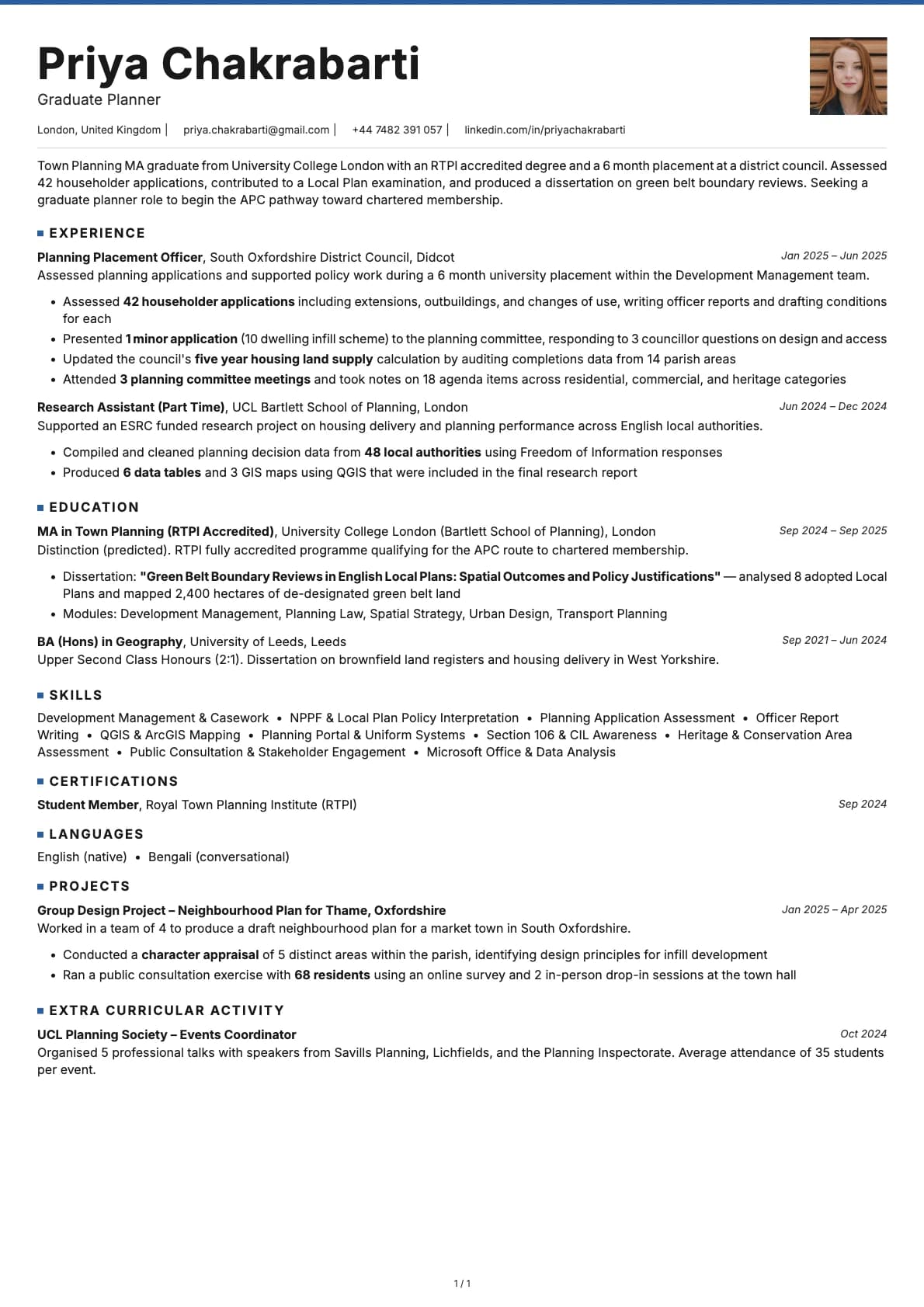
This resume belongs to Priya Chakrabarti, a Town Planning MA graduate from University College London. She completed a 6 month work placement at a district council, contributed to the examination of a Local Plan, and produced a dissertation on green belt boundary reviews. Her resume works because every bullet connects academic knowledge to a real planning process.
What Makes This Resume Work
The placement describes actual planning casework. Priya assessed 42 householder applications during her placement, writing officer reports and drafting conditions. She also attended 3 planning committee meetings and presented one minor application to the committee. These are measurable outputs that tell a hiring manager she has done the job already at a basic level.
RTPI accreditation is clearly stated. Her MA is from an RTPI accredited programme, which means she can enter the Assessment of Professional Competence (APC) route toward chartered membership. Employers know this pathway well, and seeing it on a resume confirms that the candidate is on track for MRTPI status.
Policy knowledge is demonstrated through application. Rather than listing "knowledge of the NPPF" as a skill, Priya describes how she applied paragraph 11 (the presumption in favour of sustainable development) when assessing a speculative housing application on a site not allocated in the Local Plan. She also references the council's five year housing land supply calculation, which she helped update as part of her placement duties.
The dissertation tackles a politically sensitive topic. Green belt reviews are contentious and widely debated in English planning. Her research analysed 8 Local Plans that had undergone green belt boundary amendments and assessed the spatial outcomes. This shows she can engage with difficult policy questions rather than avoiding them.
Key Takeaways
Name specific planning policies and frameworks. NPPF paragraph references, Local Plan policies, and SPD guidance all show that you speak the language of planning rather than just studying it.
Quantify your casework. Number of applications assessed, reports written, committee presentations given. Planning is a volume profession, and employers want to see that you can handle a caseload.
Show the RTPI pathway clearly. If your degree is accredited, say so. If you have started logging APC competencies during your placement, mention that too.
Build your own version
Open this layout in the builder and swap in your own details. It takes a few minutes.
Free to use. No account needed to start.
Was this resume example helpful?
Rate this example to help us create better content for you.
4.8 average from 82 ratingsRelated resume examples
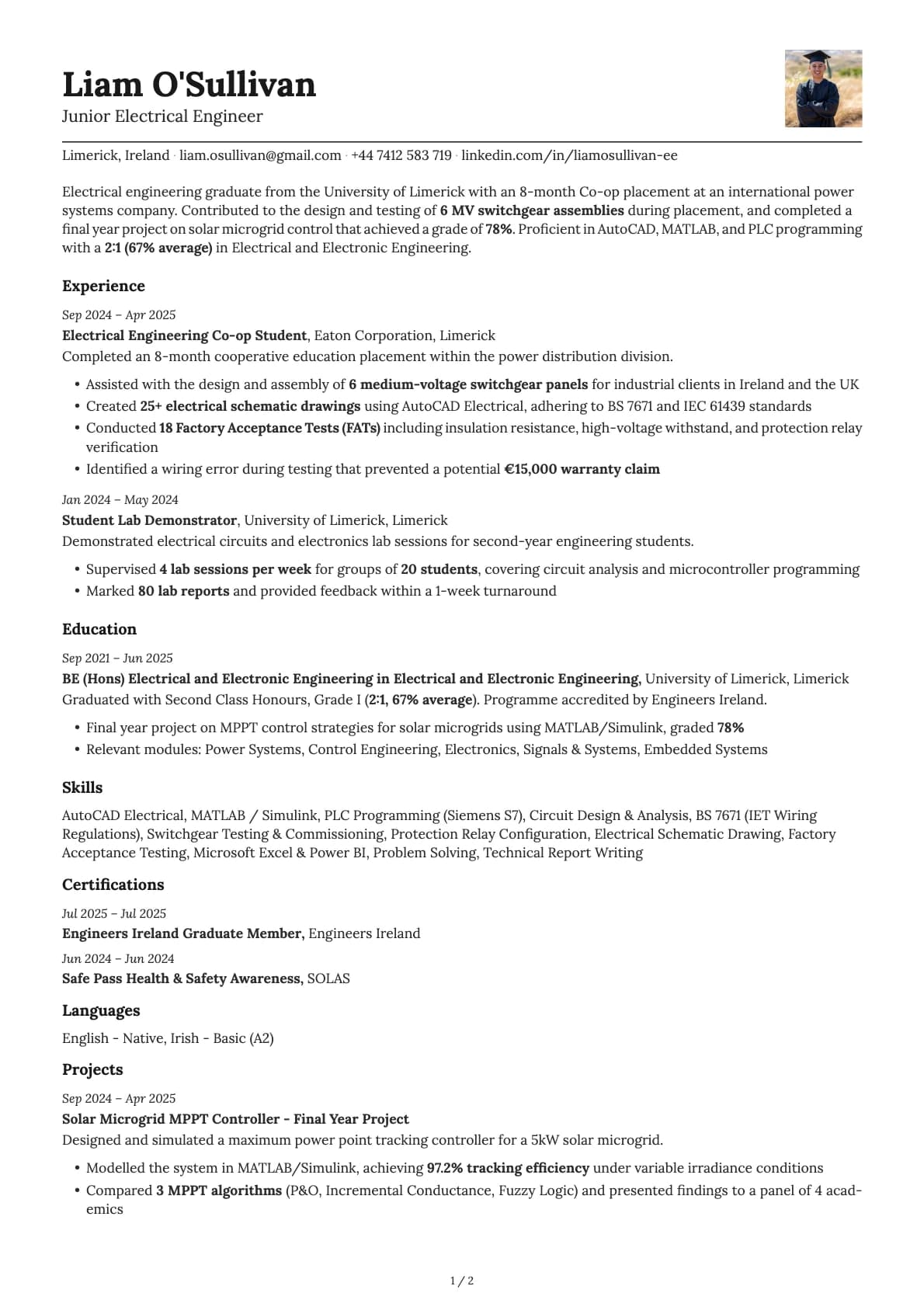
Junior Electrical Engineer
A junior electrical engineer resume example with power systems placement experience, AutoCAD skills, and Engineers Ireland membership.
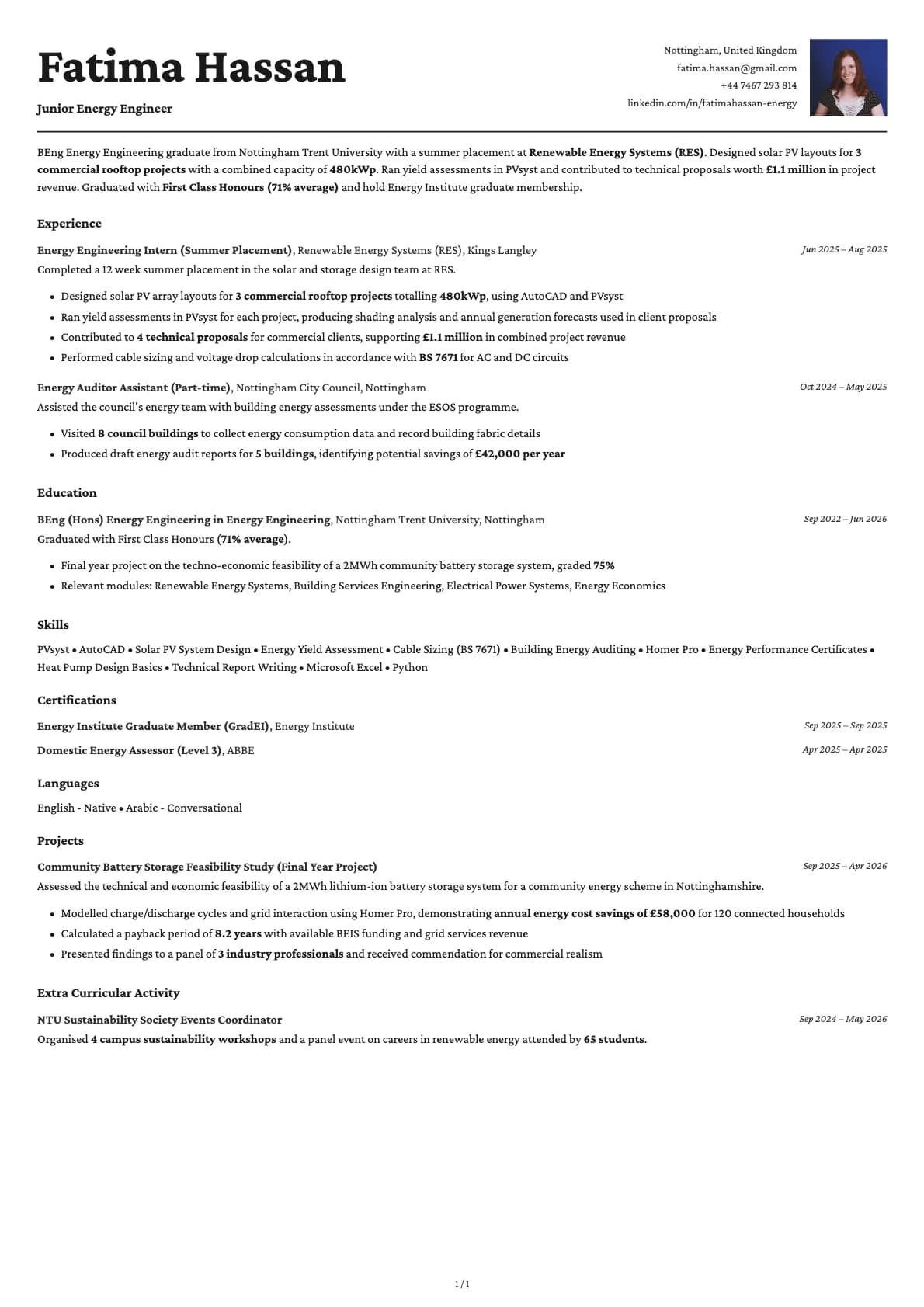
Junior Energy Engineer
A junior energy engineer resume example with renewable energy placement experience, solar PV design skills, and Energy Institute membership.
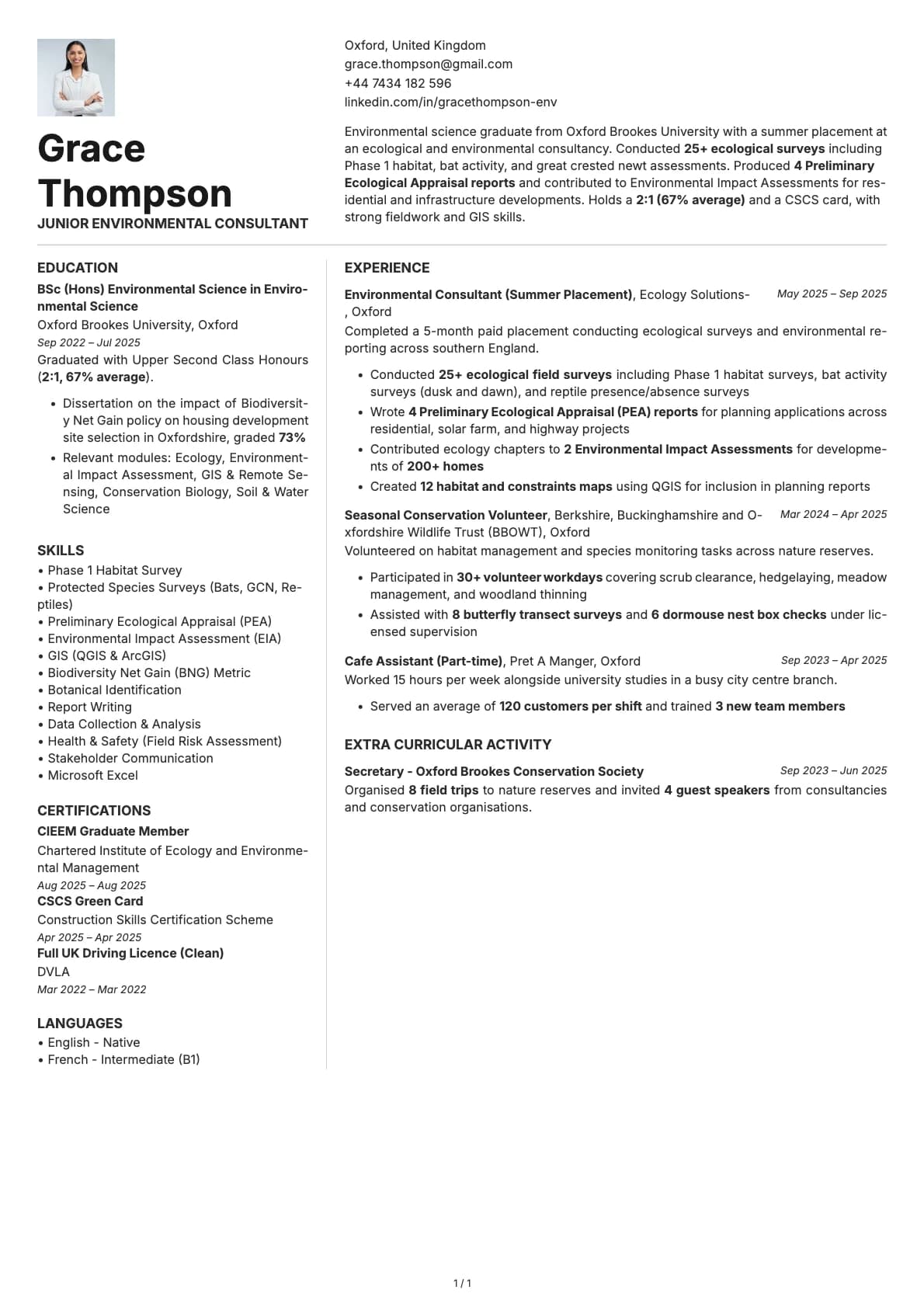
Junior Environmental Consultant
A junior environmental consultant resume example with ecological survey experience, PEA report writing, and GIS mapping skills for graduates.
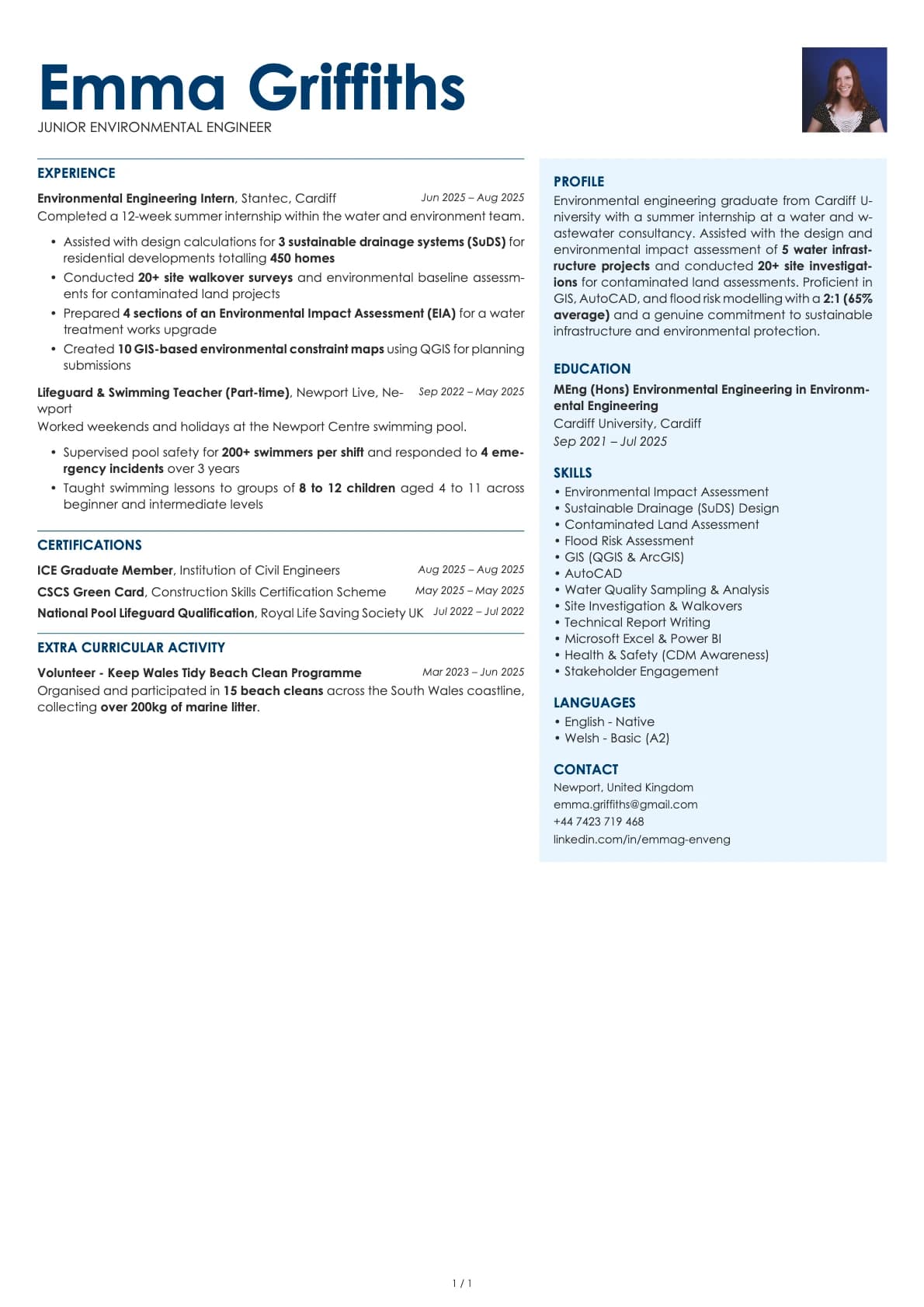
Junior Environmental Engineer
A junior environmental engineer resume example with EIA experience, SuDS design, and contaminated land site investigation numbers.
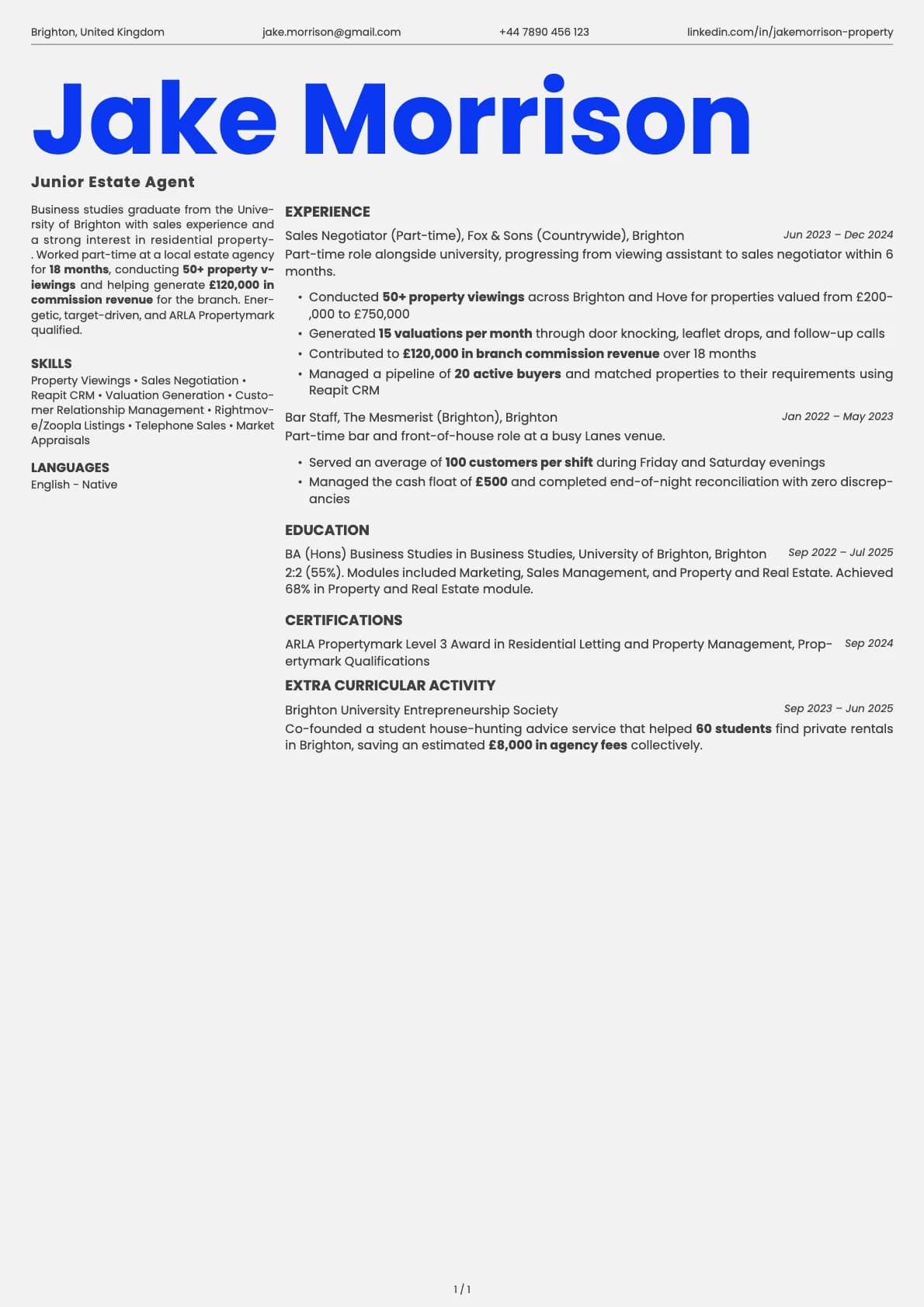
Junior Estate Agent
A junior estate agent resume example with sales negotiator experience and ARLA Propertymark qualification.
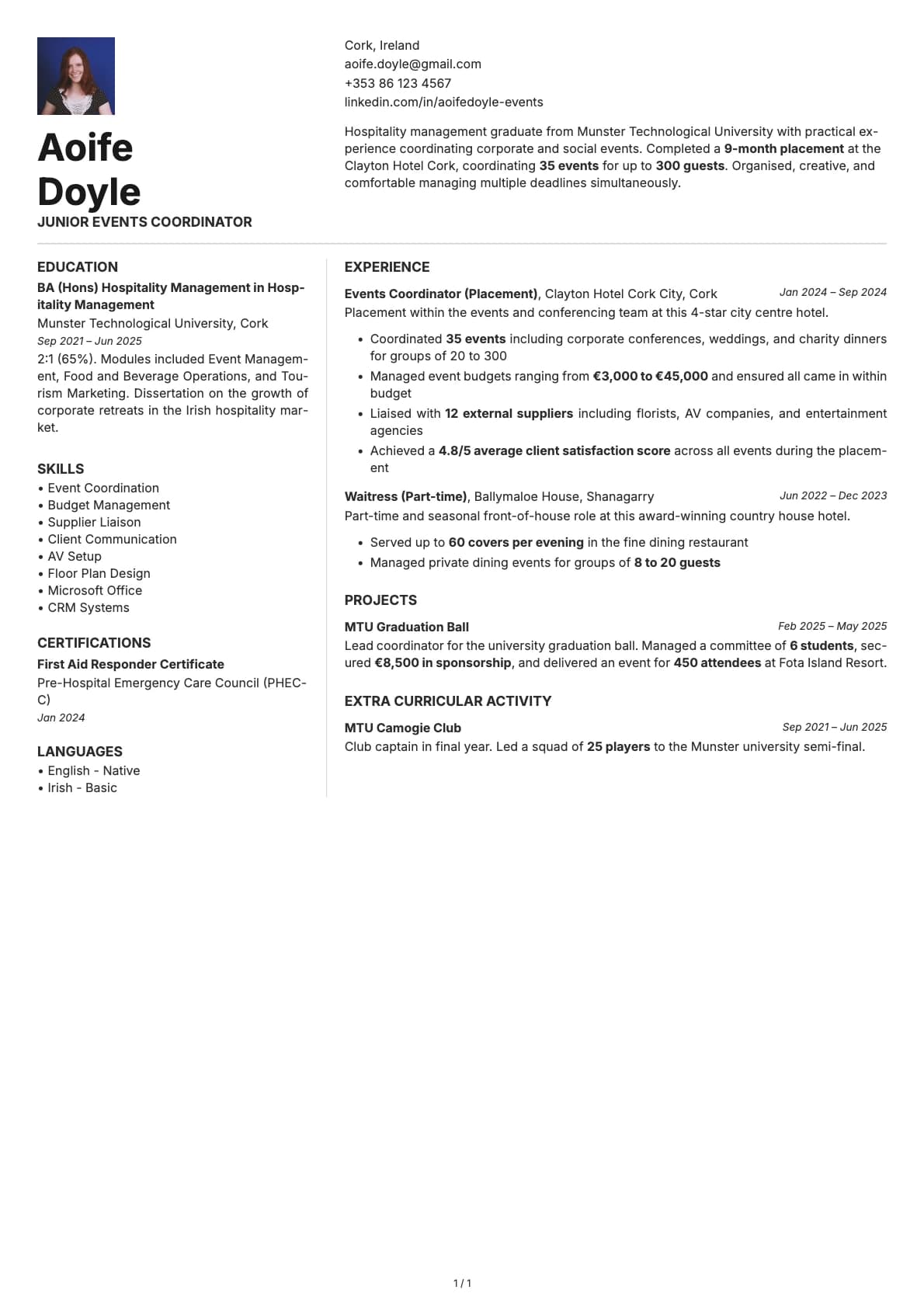
Junior Events Coordinator
A junior events coordinator resume example with hotel placement experience and corporate event management skills.
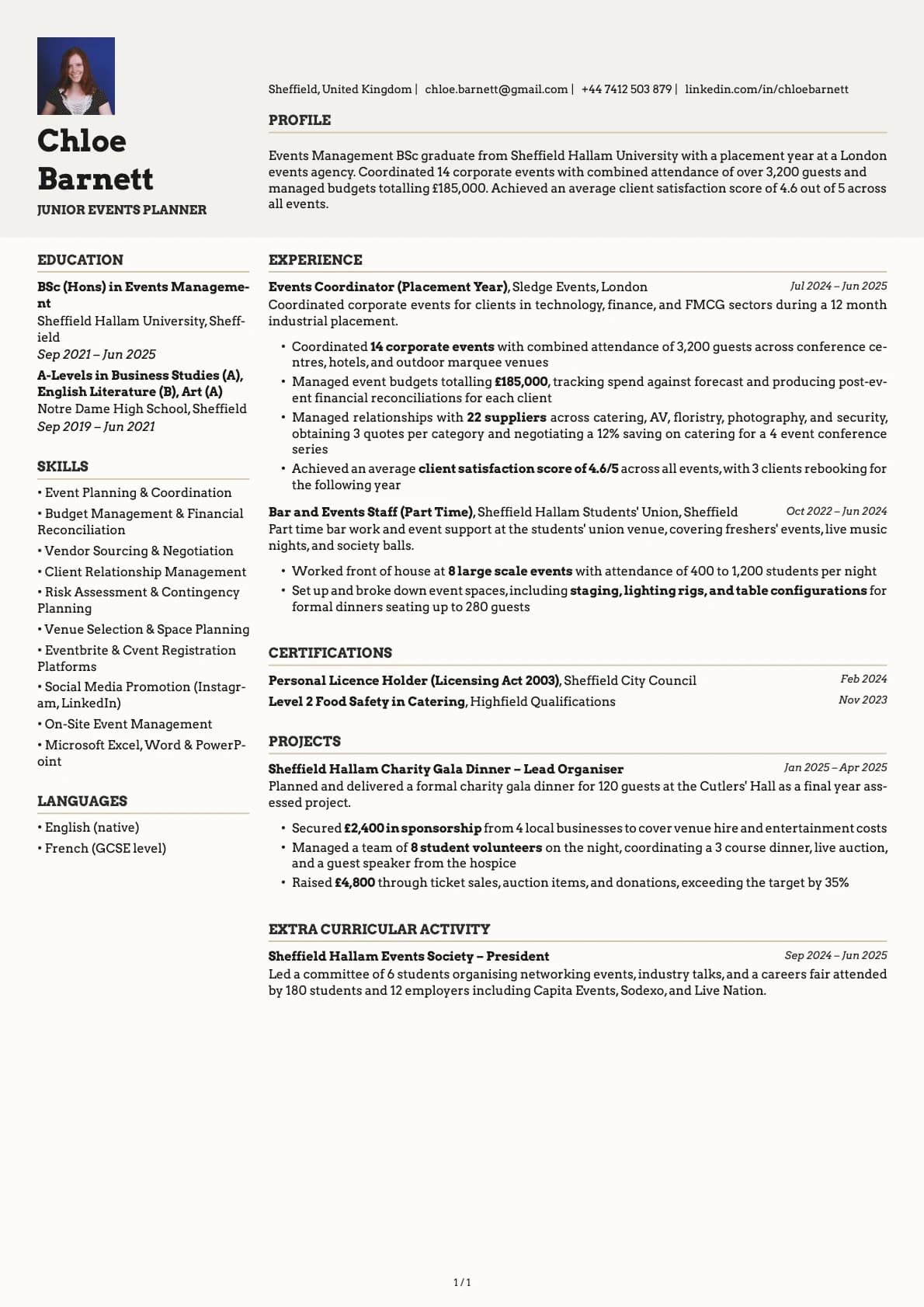
Junior Events Planner
A junior events planner resume example for events management graduates. See how to present your event coordination experience, guest counts, budgets, and vendor management skills.
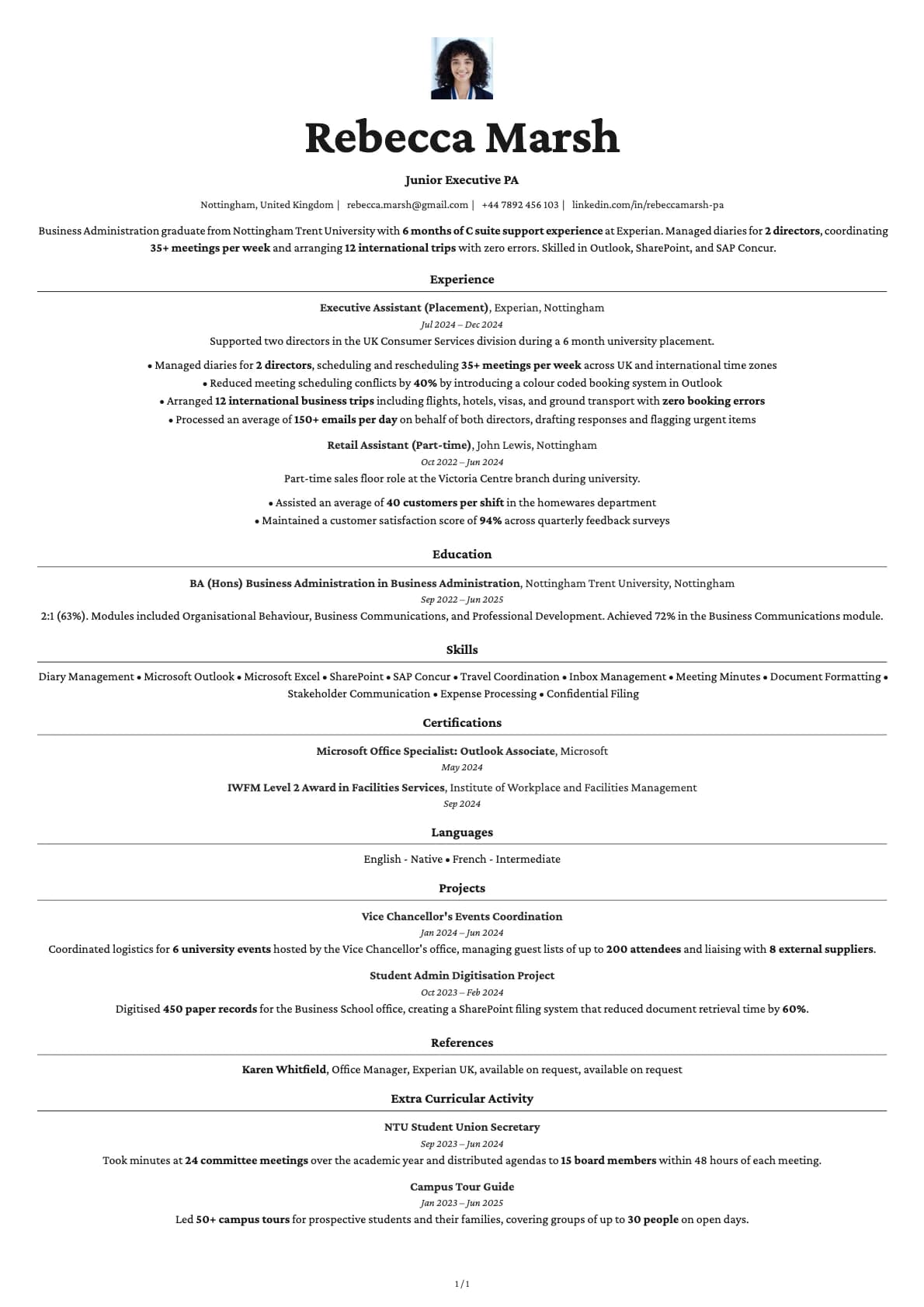
Junior Executive PA
A junior executive PA resume example with business administration degree, C-suite support experience, and diary management skills.
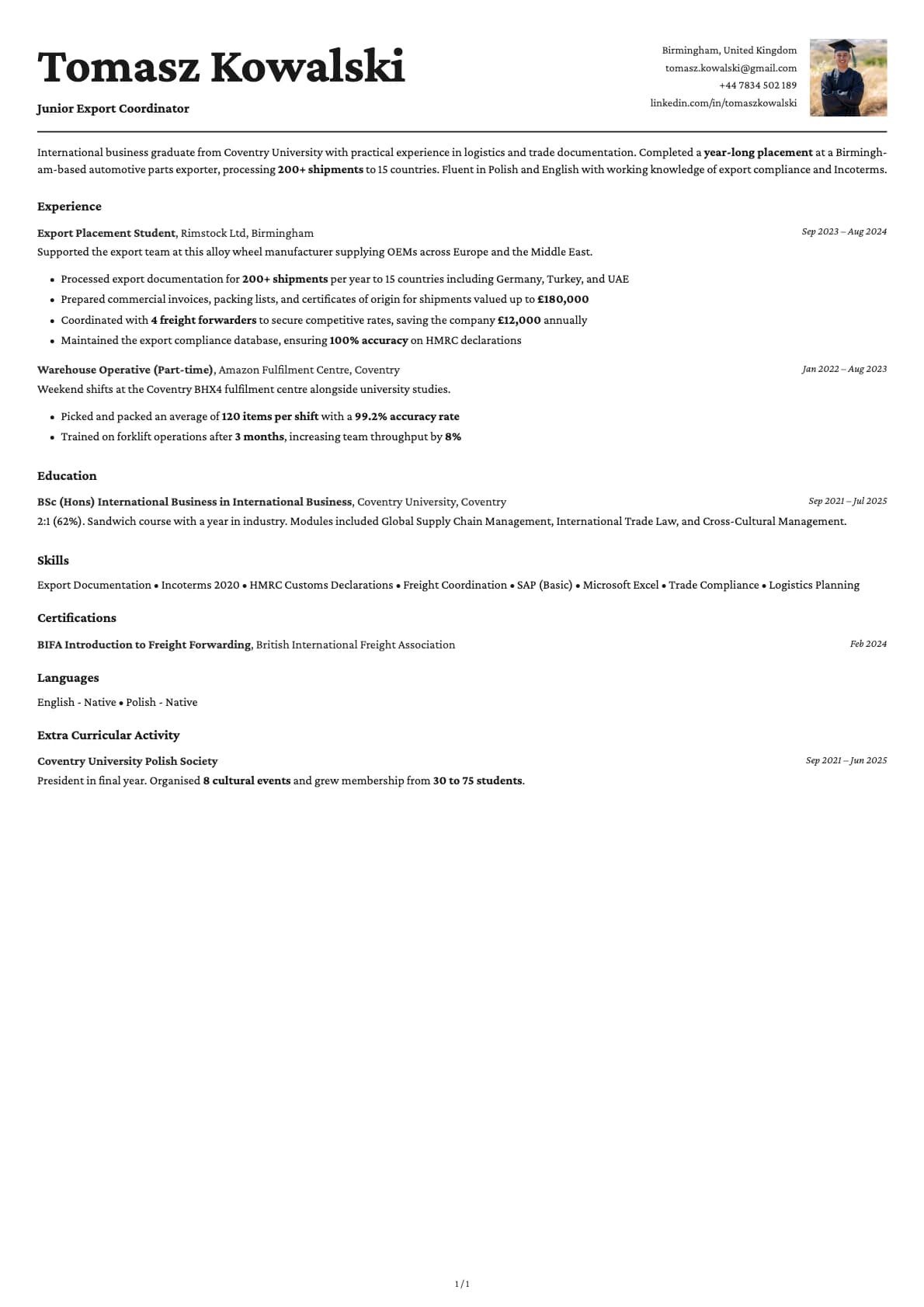
Junior Export Coordinator
A junior export coordinator resume example with placement experience in automotive exports and bilingual skills.
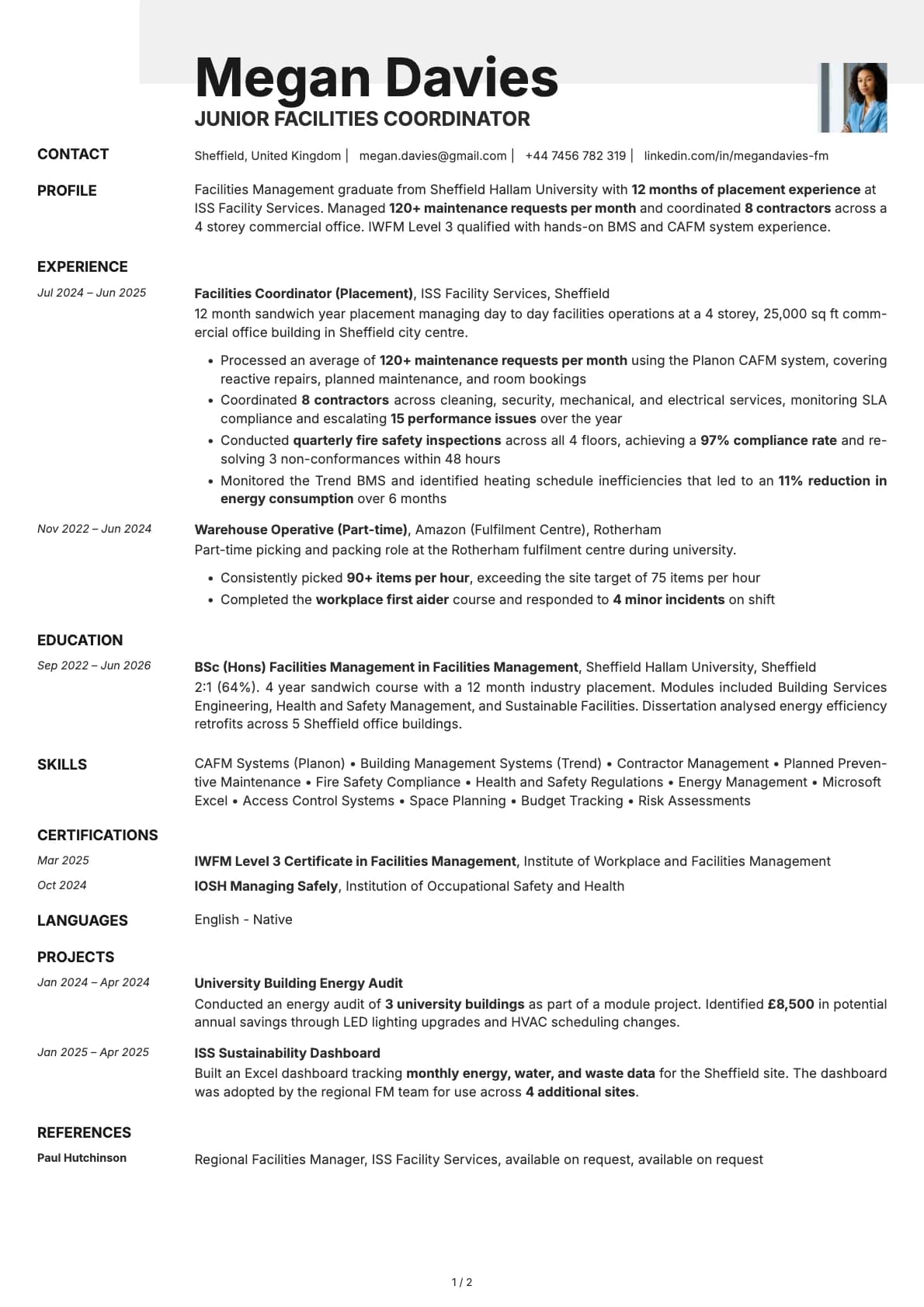
Junior Facilities Coordinator
A junior facilities coordinator resume example with facilities management degree, building services experience, and IWFM qualification.
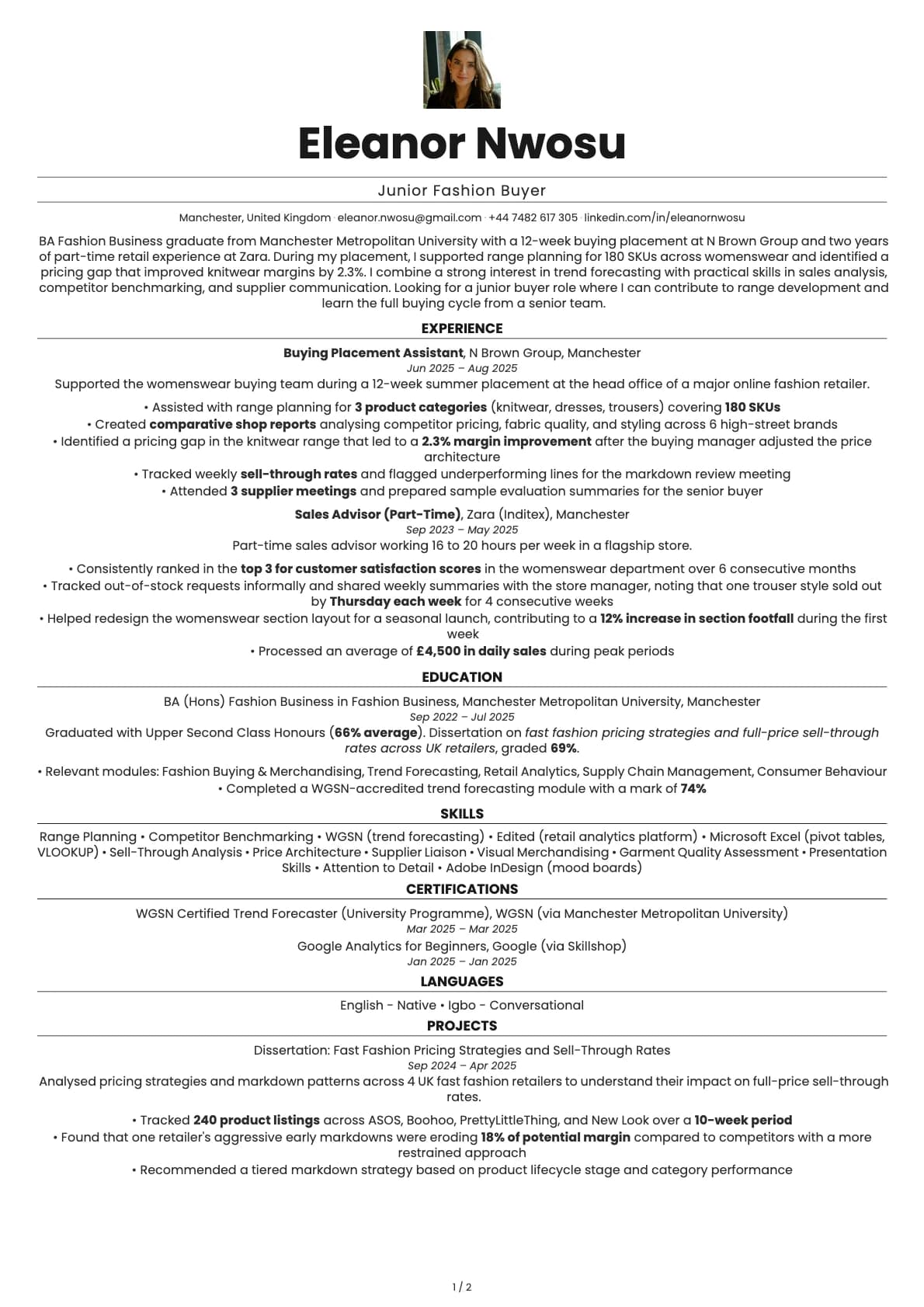
Junior Fashion Buyer
A junior fashion buyer resume example for fashion business graduates. See how retail experience and trend forecasting skills help you land a buying role.
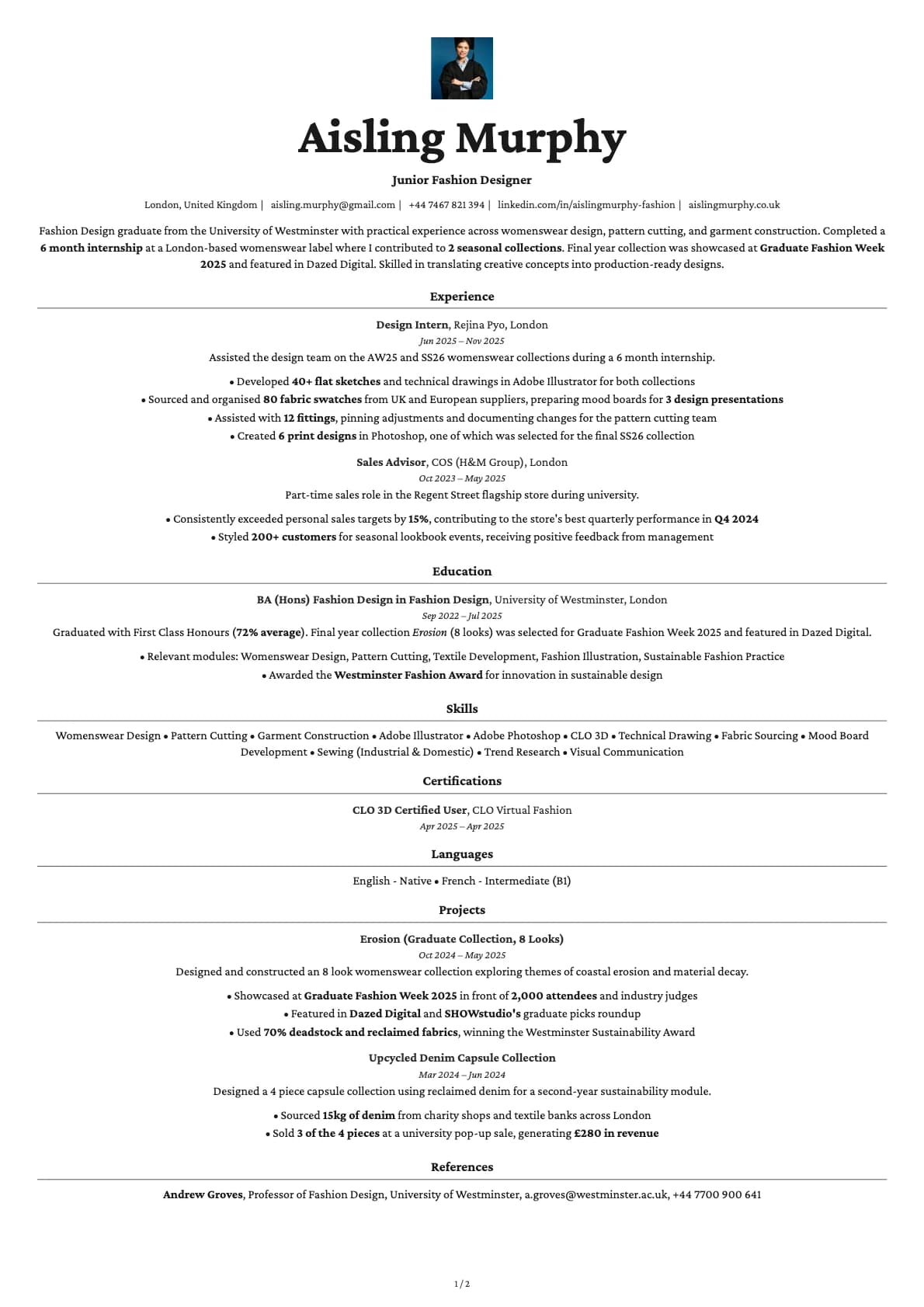
Junior Fashion Designer
A junior fashion designer resume example for recent graduates. See how to present collections, internship experience, and technical skills to land your first design role.