Junior Freight Forwarder Resume Example
A junior freight forwarder resume example for logistics graduates entering international freight. See how to present your customs documentation, Incoterms knowledge, and freight operations experience.

Laddro Team
Free to use. No account needed to start.
Free to use. No account needed to start.
Overview
Freight forwarding is the business of moving goods across borders. It combines logistics, customs compliance, documentation, and client management into a role that is part problem solving and part administration. Since Brexit, the demand for people who understand customs declarations, commodity codes, and Incoterms has grown significantly, and freight companies are actively recruiting graduates who can handle the paperwork that keeps goods moving through ports and airports.
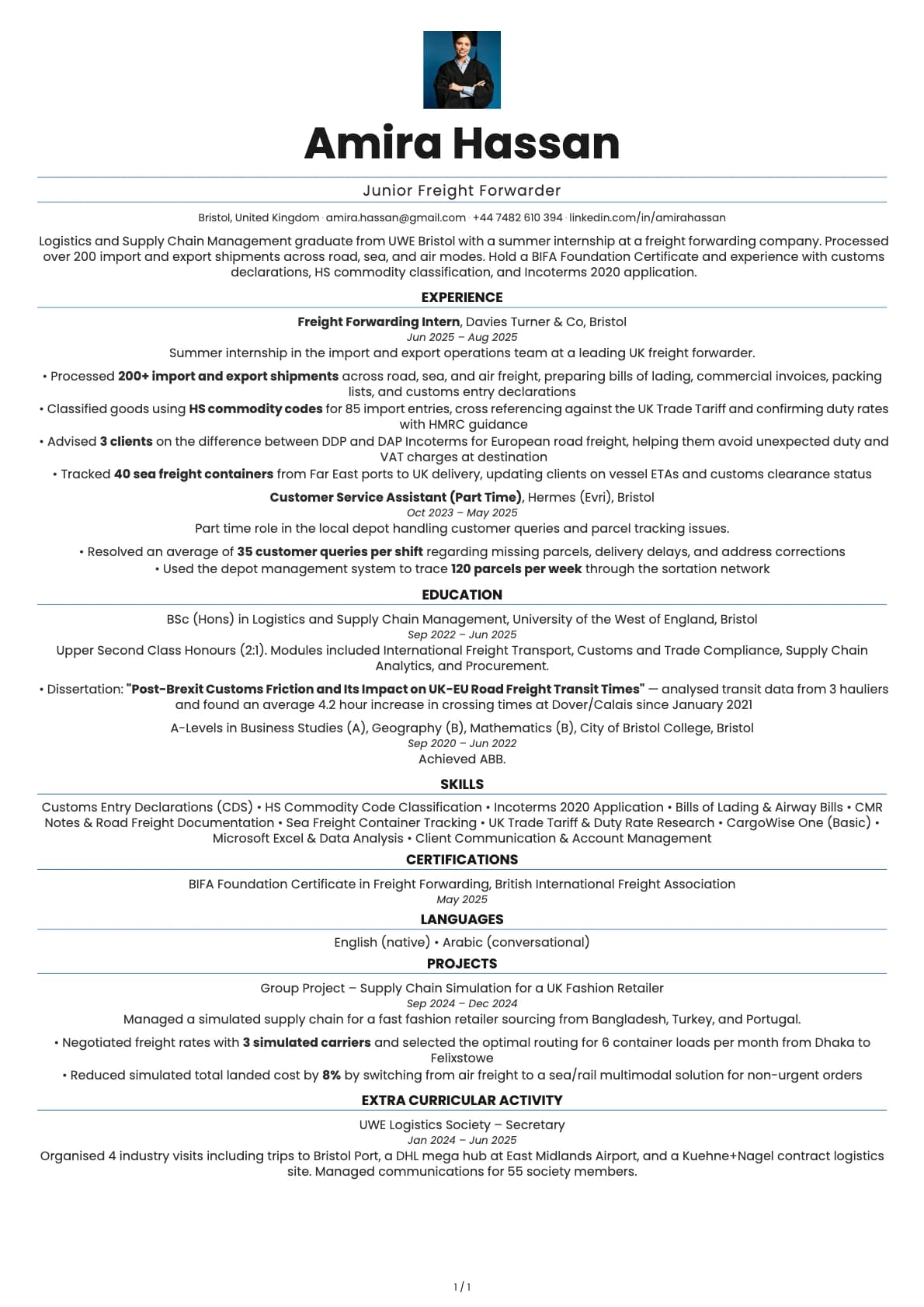
This resume belongs to Amira Hassan, a Logistics and Supply Chain Management graduate from the University of the West of England (UWE Bristol). She completed a summer internship at a freight forwarding company in Bristol, processed over 200 import and export shipments, and holds a BIFA (British International Freight Association) Foundation Certificate. Her resume works because it combines academic knowledge with real documentation experience.
What Makes This Resume Work
Customs documentation experience is detailed and quantified. Amira processed 200+ shipments during her internship, preparing bills of lading, commercial invoices, packing lists, and customs entry declarations. She also classified goods using HS commodity codes for 85 import entries, which is the specific skill that customs compliance teams need. Naming each document type shows she knows the full paperwork chain.
The BIFA Foundation Certificate adds industry credibility. BIFA is the UK trade association for freight forwarders, and their Foundation Certificate covers customs procedures, transport modes, documentation, and Incoterms 2020. For a graduate with limited experience, this certificate tells employers she has invested in industry specific training beyond her degree.
Incoterms knowledge is demonstrated through application. Rather than listing "knowledge of Incoterms" as a skill, Amira describes how she advised clients on the difference between DDP and DAP terms for European road freight shipments, helping 3 clients avoid unexpected duty charges. This shows she can apply the theory in a client facing context.
Transport modes are covered. Her internship involved road freight across Europe, sea freight from the Far East, and air freight for urgent shipments. Each mode has different documentation requirements, and showing experience across all three makes her a more versatile hire.
Key Takeaways
Name every document type you have prepared or processed. Bills of lading, airway bills, CMR notes, customs entries, certificates of origin. Each one represents a specific competence in freight forwarding.
Show your understanding of HS commodity codes and customs declarations. Post Brexit, this is the highest demand skill in UK freight forwarding. If you have classified goods or prepared customs entries, quantify how many.
Get the BIFA Foundation Certificate if you can. It is relatively inexpensive, widely recognised, and demonstrates commitment to freight forwarding as a career rather than just a first job.
Build your own version
Open this layout in the builder and swap in your own details. It takes a few minutes.
Free to use. No account needed to start.
Was this resume example helpful?
Rate this example to help us create better content for you.
4.7 average from 68 ratingsRelated resume examples
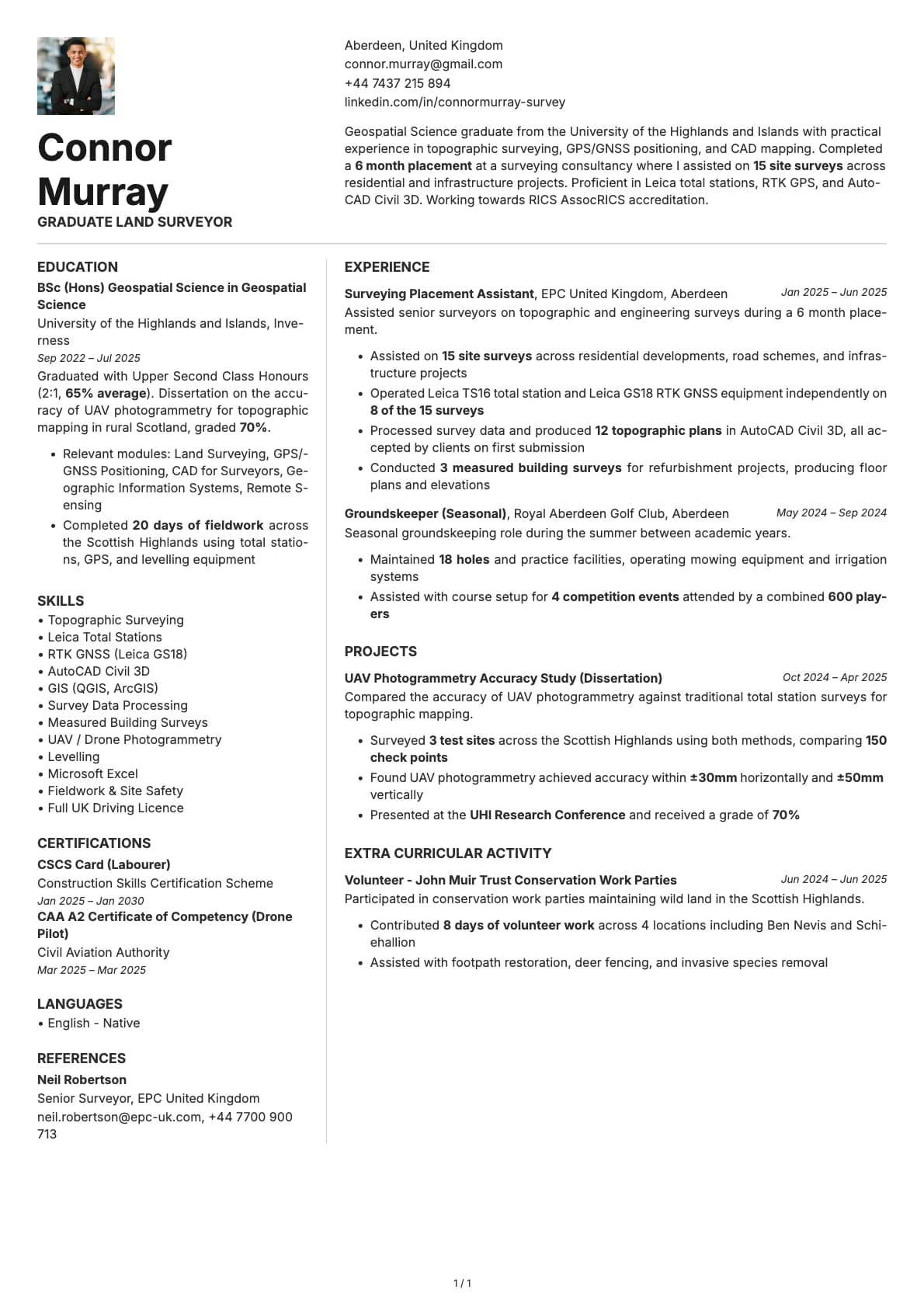
Graduate Land Surveyor
A graduate land surveyor resume example. See how to present site survey experience, GPS/GNSS skills, and CAD output to land your first surveying role.
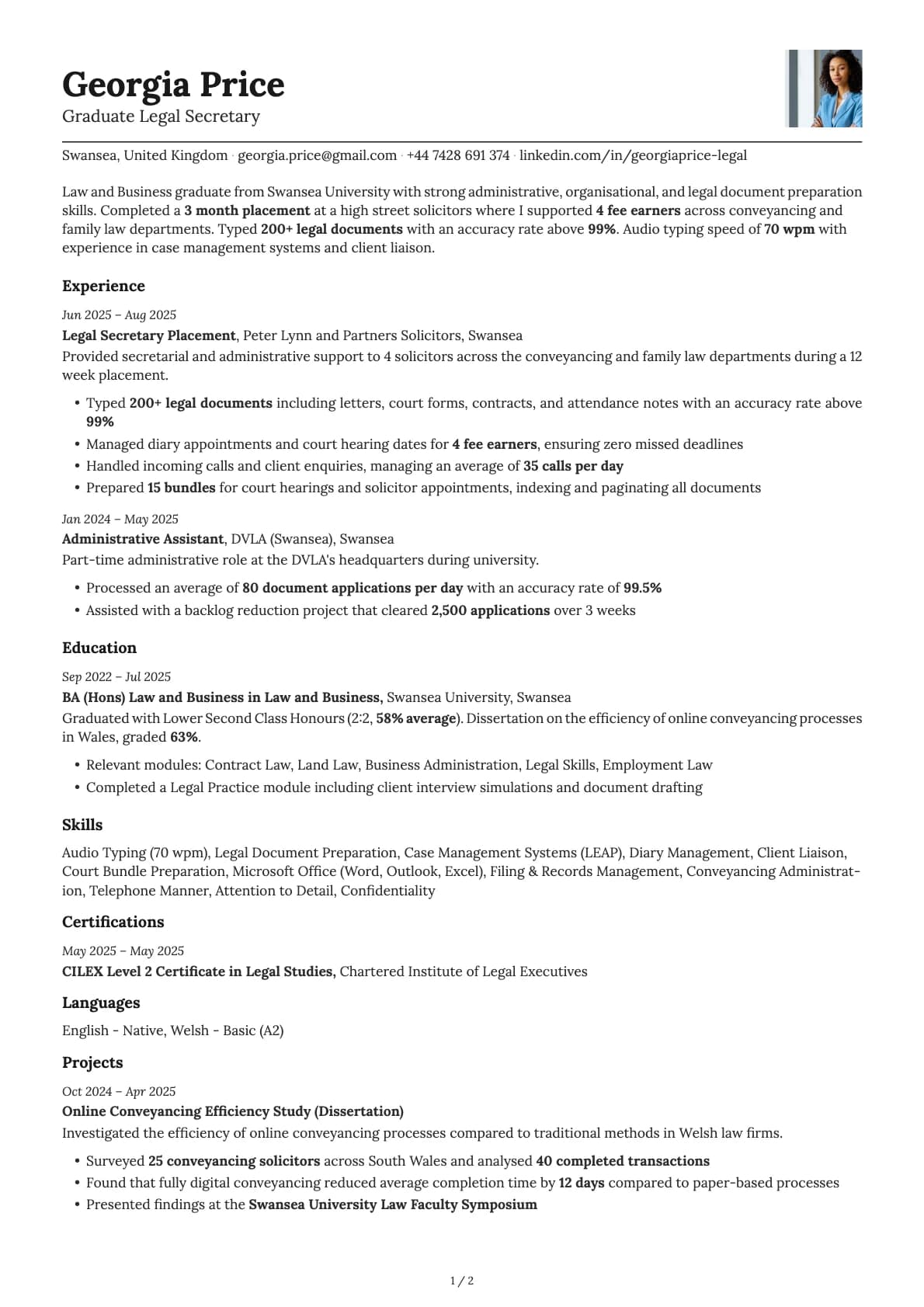
Graduate Legal Secretary
A graduate legal secretary resume example. See how to present typing speed, legal document preparation, and solicitor support experience to land your first legal secretary role.
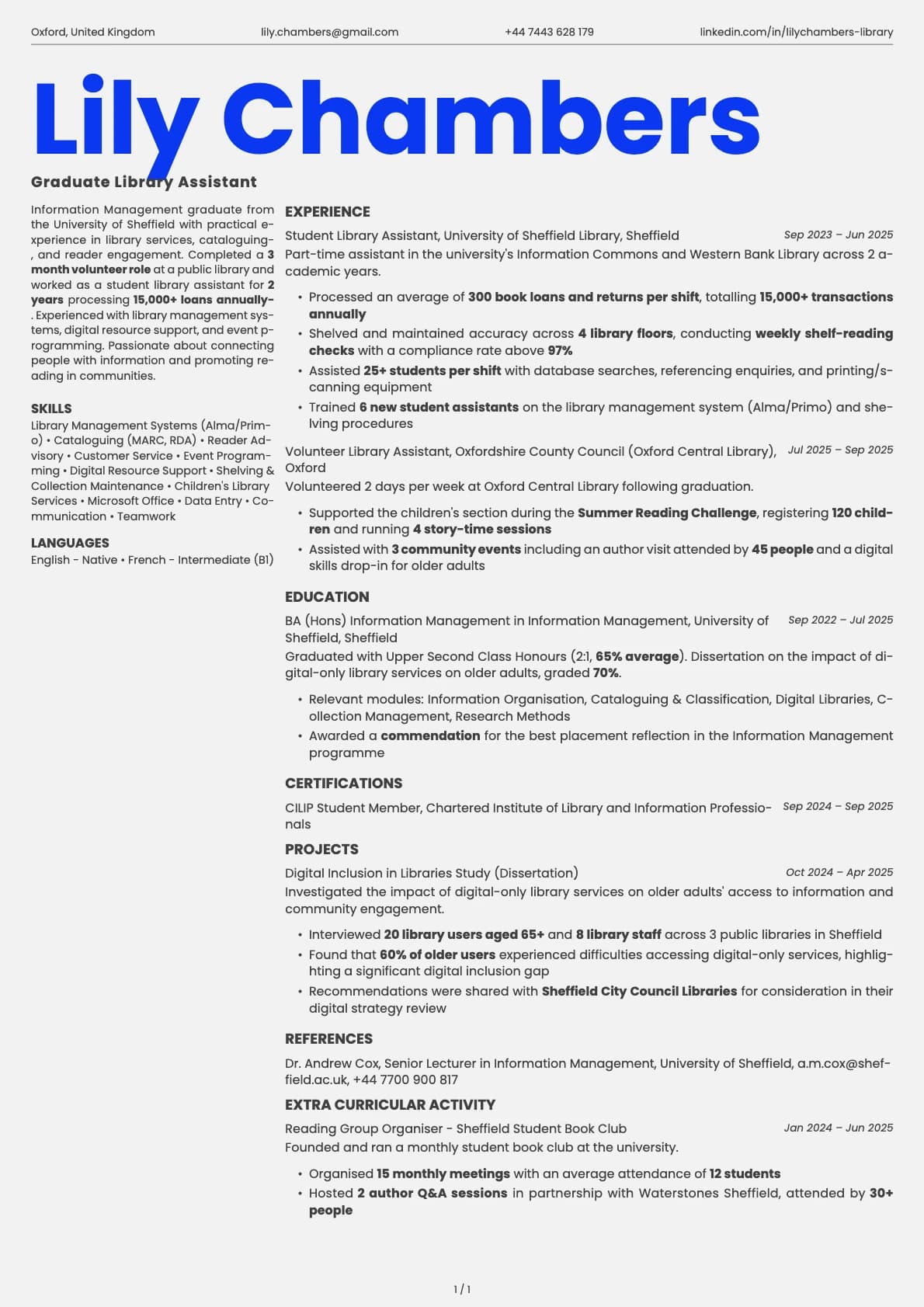
Graduate Library Assistant
A graduate library assistant resume example. See how to present library experience, cataloguing skills, and event programming to land your first library role.
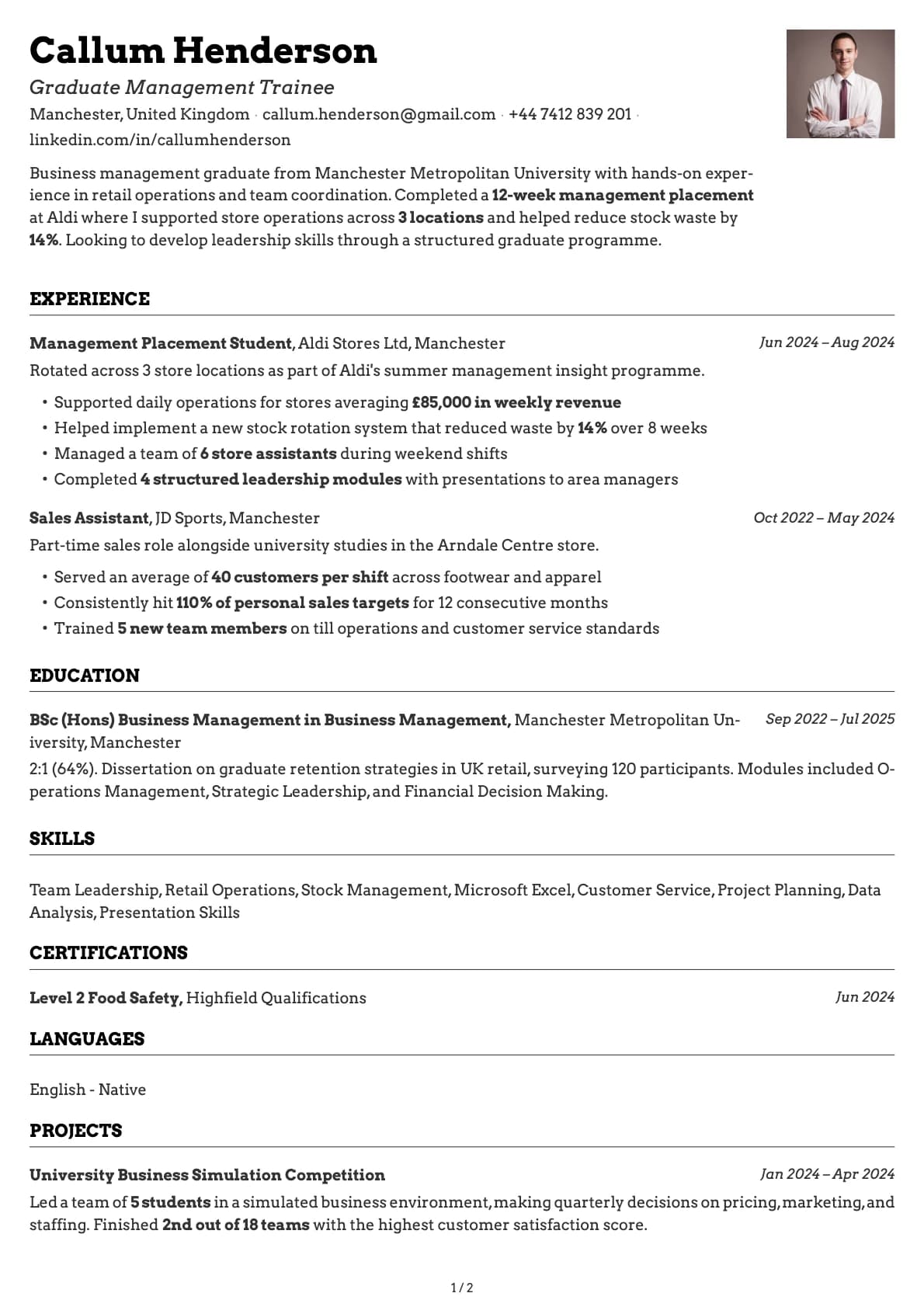
Graduate Management Trainee
A graduate management trainee resume example with retail placement experience and team leadership skills.
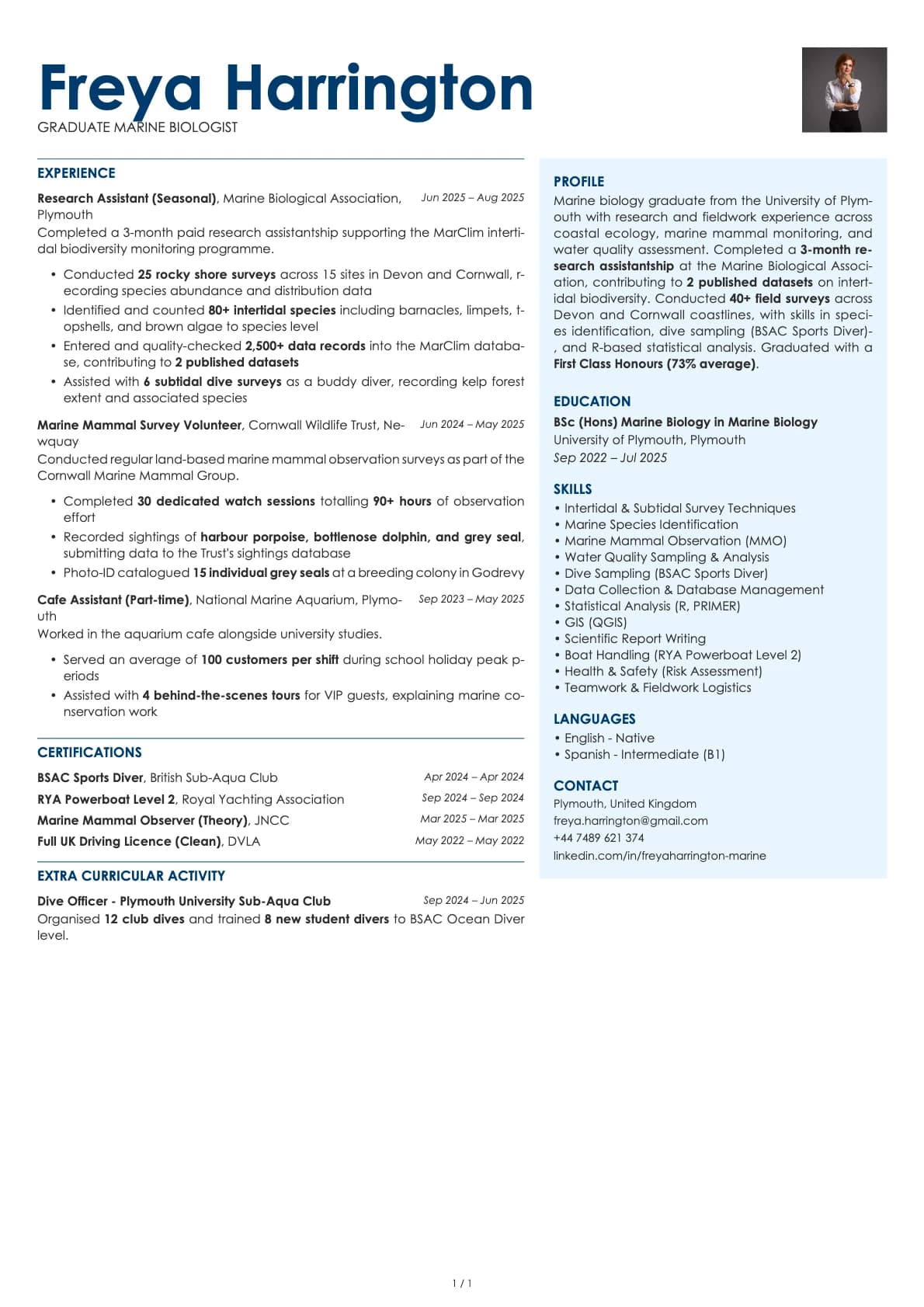
Graduate Marine Biologist
A graduate marine biologist resume example with research placement experience, dive survey qualifications, and intertidal survey numbers.
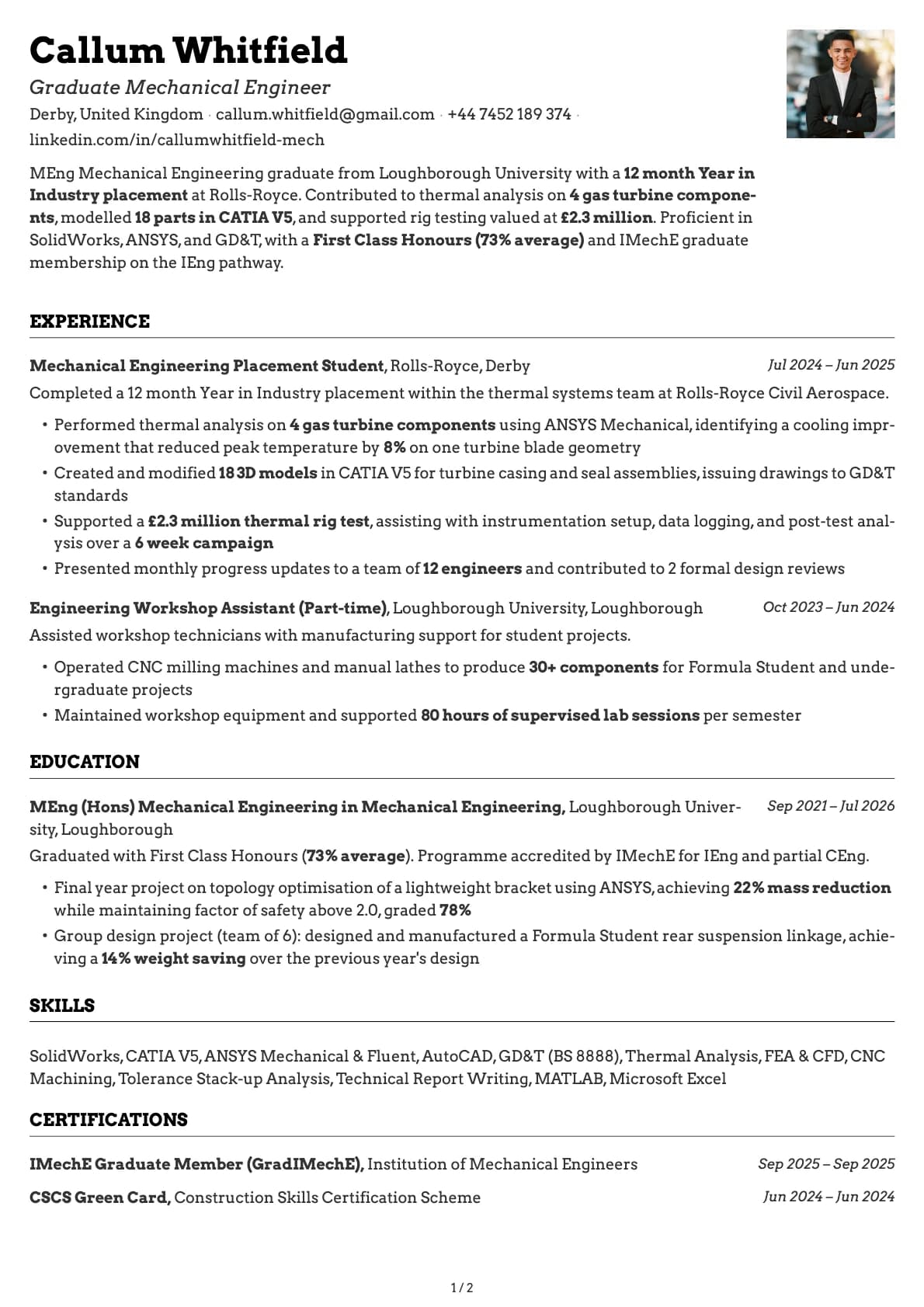
Graduate Mechanical Engineer
A graduate mechanical engineer resume example with Year in Industry placement, SolidWorks proficiency, and IMechE membership on the IEng pathway.
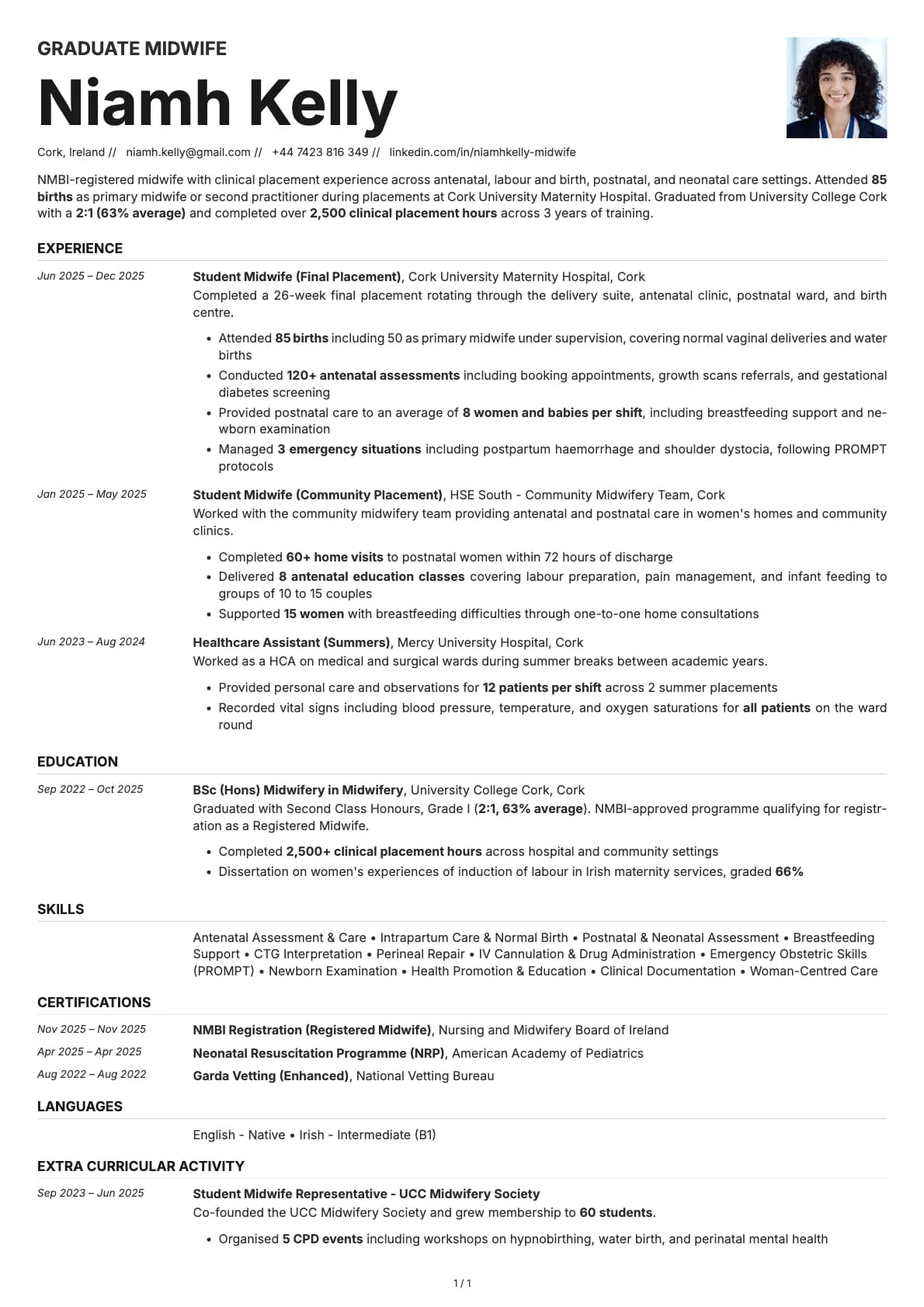
Graduate Midwife
A graduate midwife resume example with birth attendance numbers, NMBI registration, and clinical placement hours for newly qualified midwives.
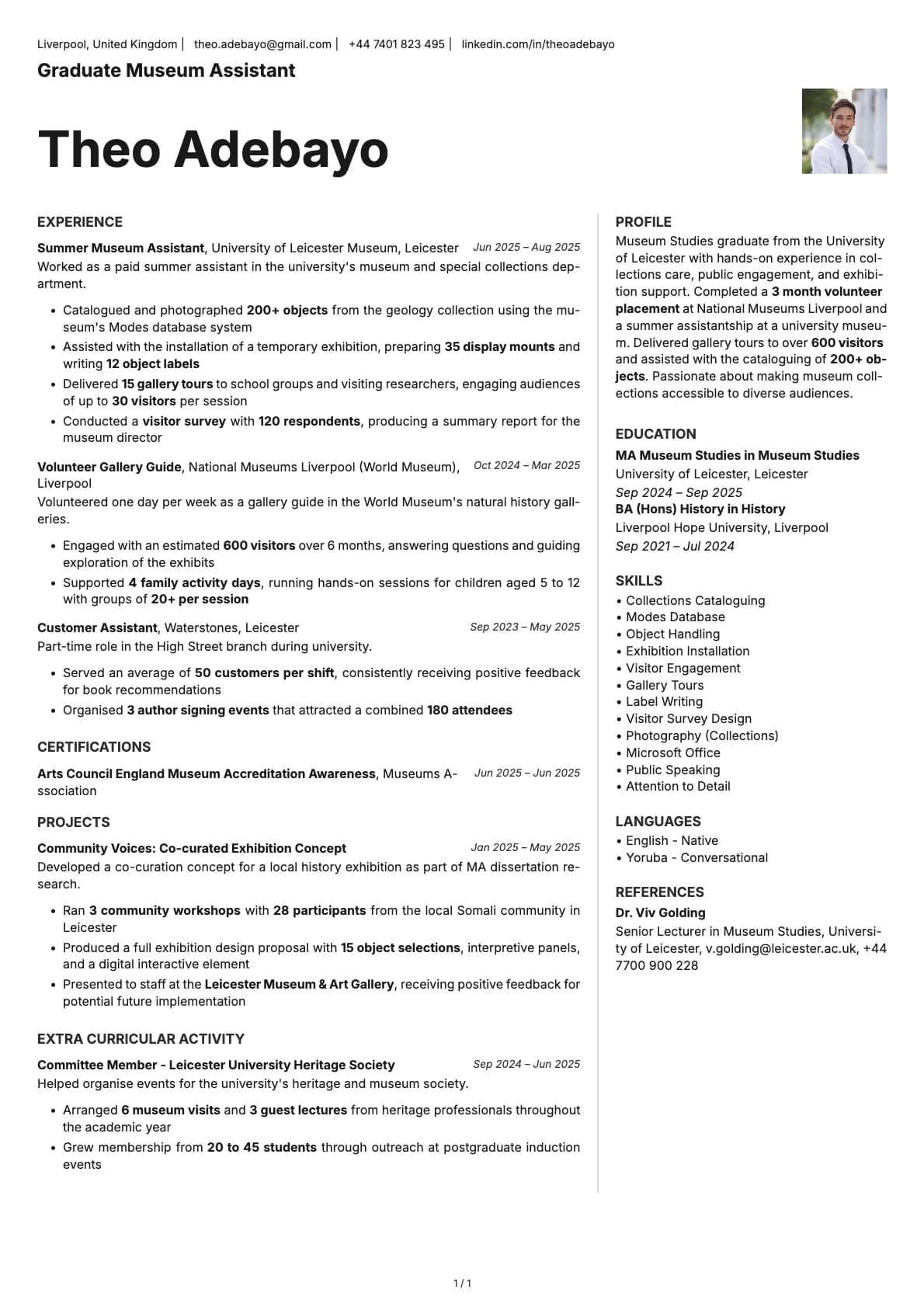
Graduate Museum Assistant
A graduate museum assistant resume example. See how to present collections experience, gallery tours, and museum studies qualifications to land your first museum role.
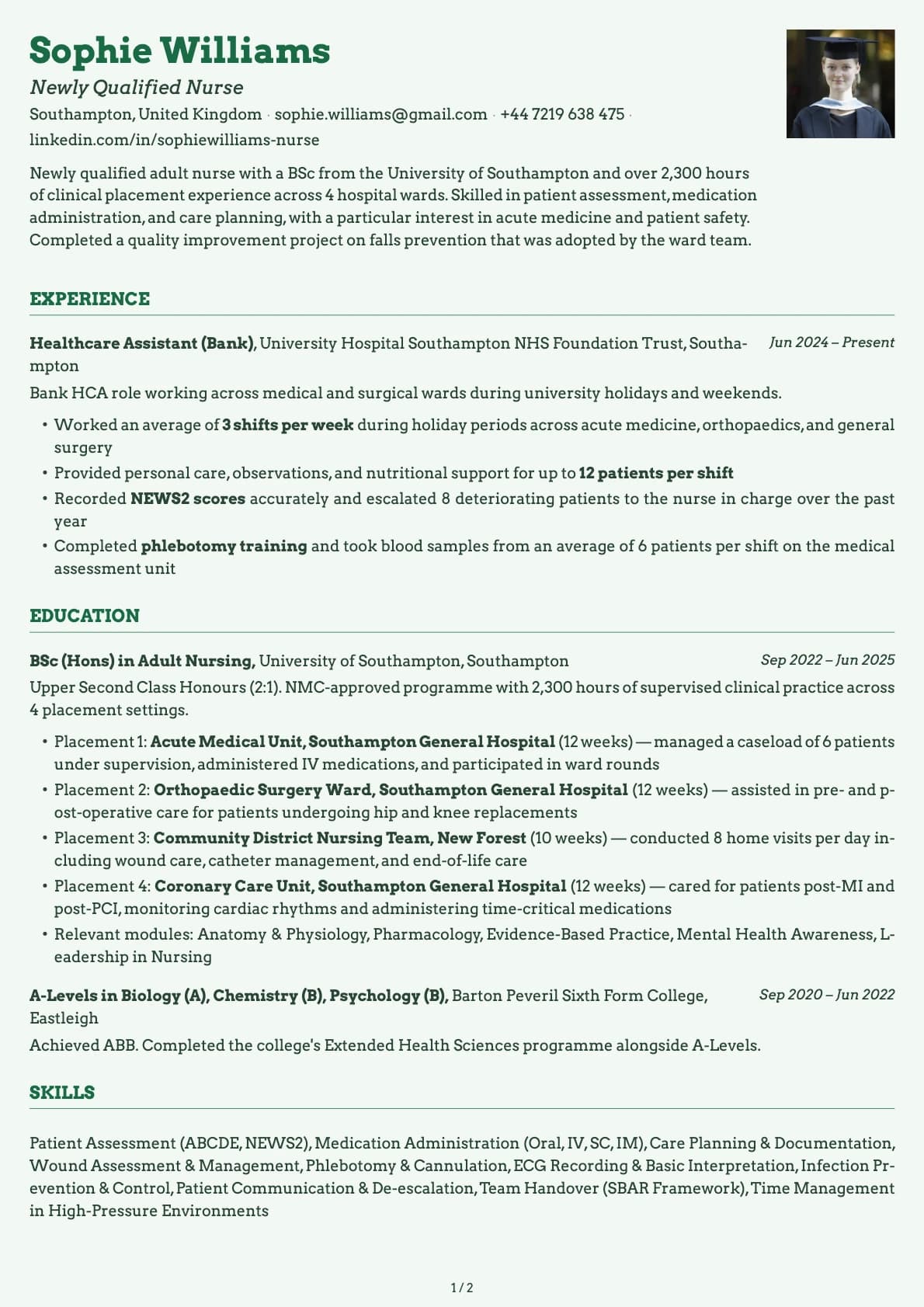
Graduate Nurse
A graduate nurse resume example for recently qualified nurses. See how to present your clinical placements, patient care experience, and NMC registration to land your first nursing role.
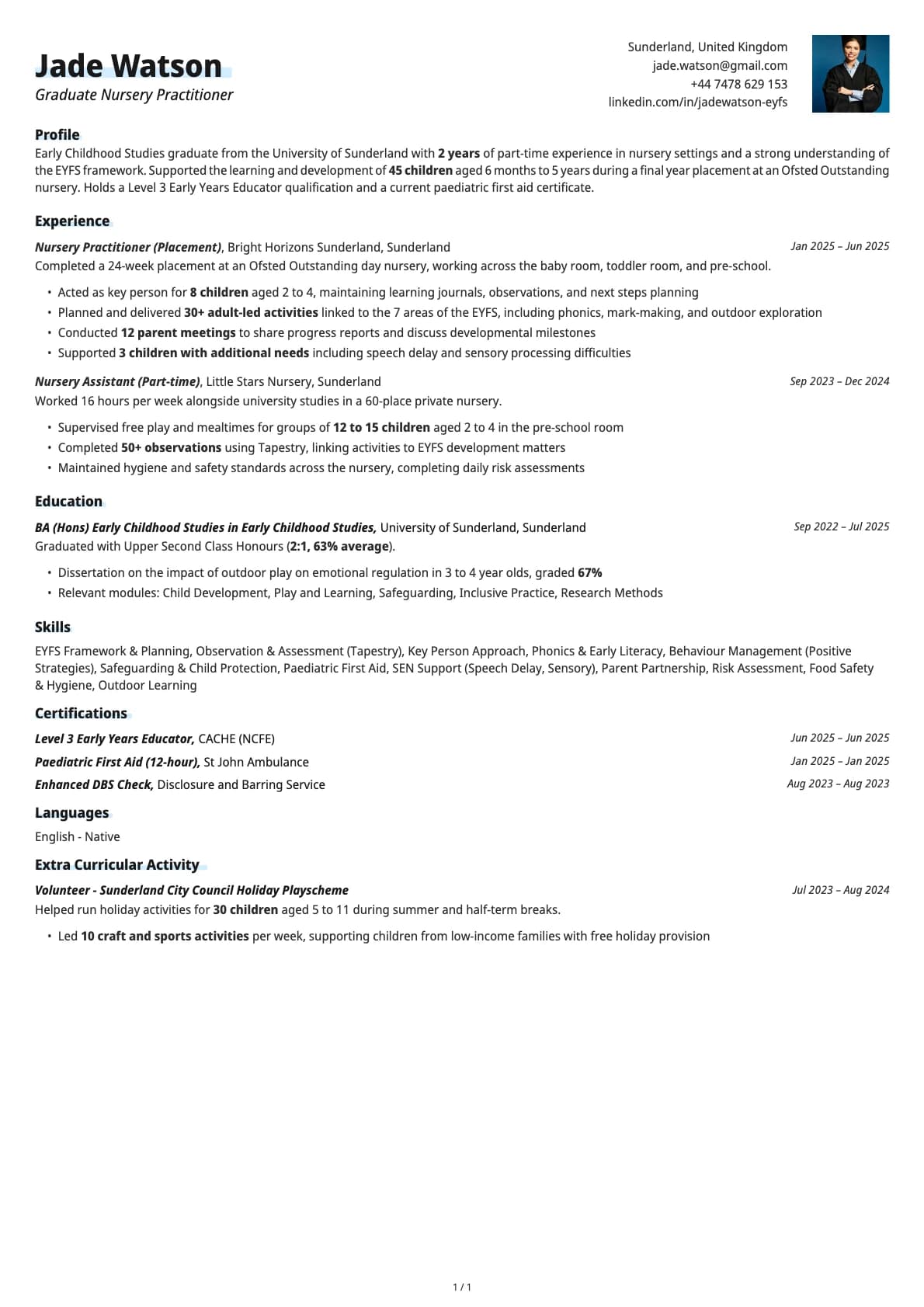
Graduate Nursery Practitioner
A graduate nursery practitioner resume example with EYFS experience, key person responsibilities, and Level 3 Early Years Educator qualification.
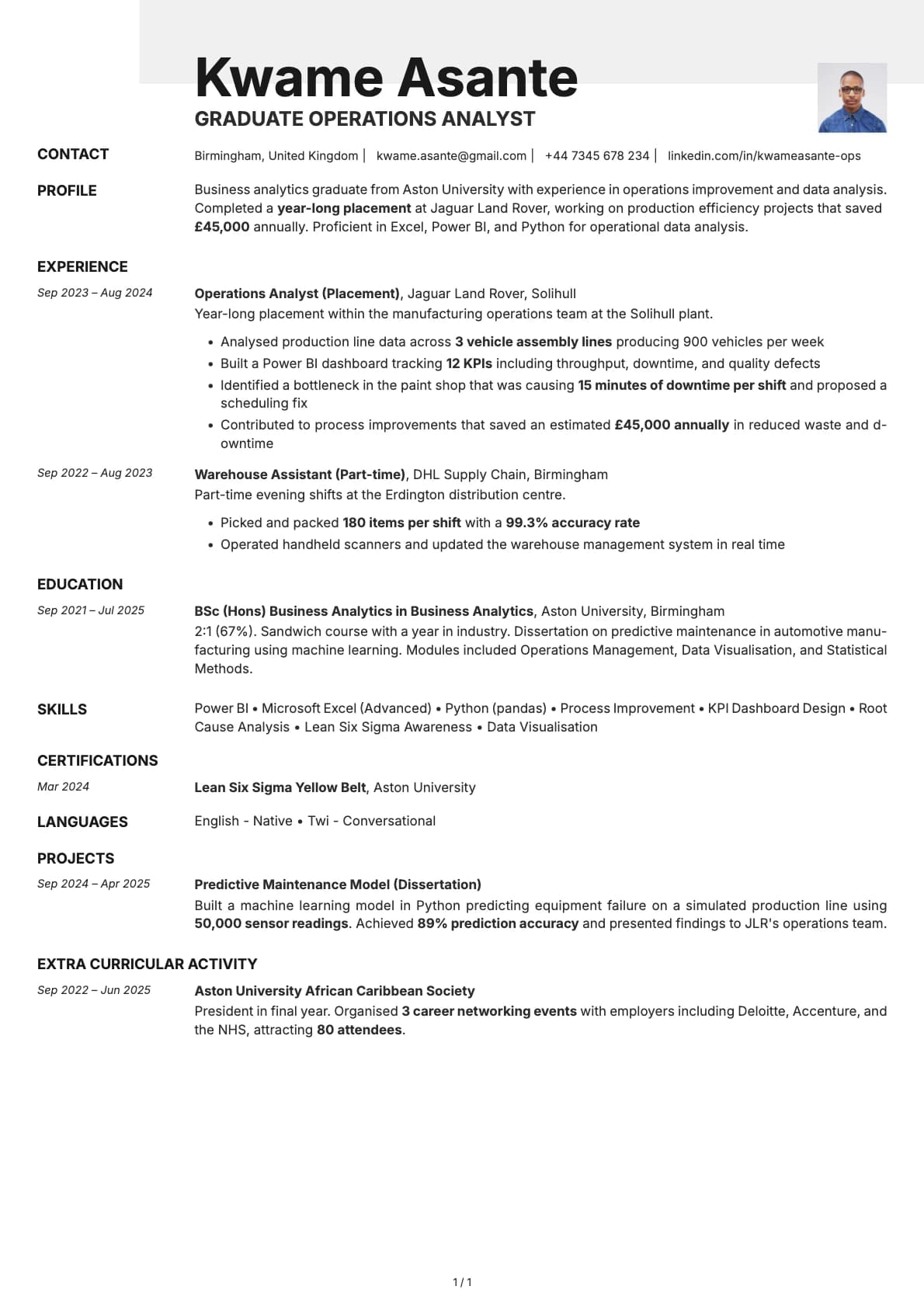
Graduate Operations Analyst
A graduate operations analyst resume example with Jaguar Land Rover placement and data analysis skills.
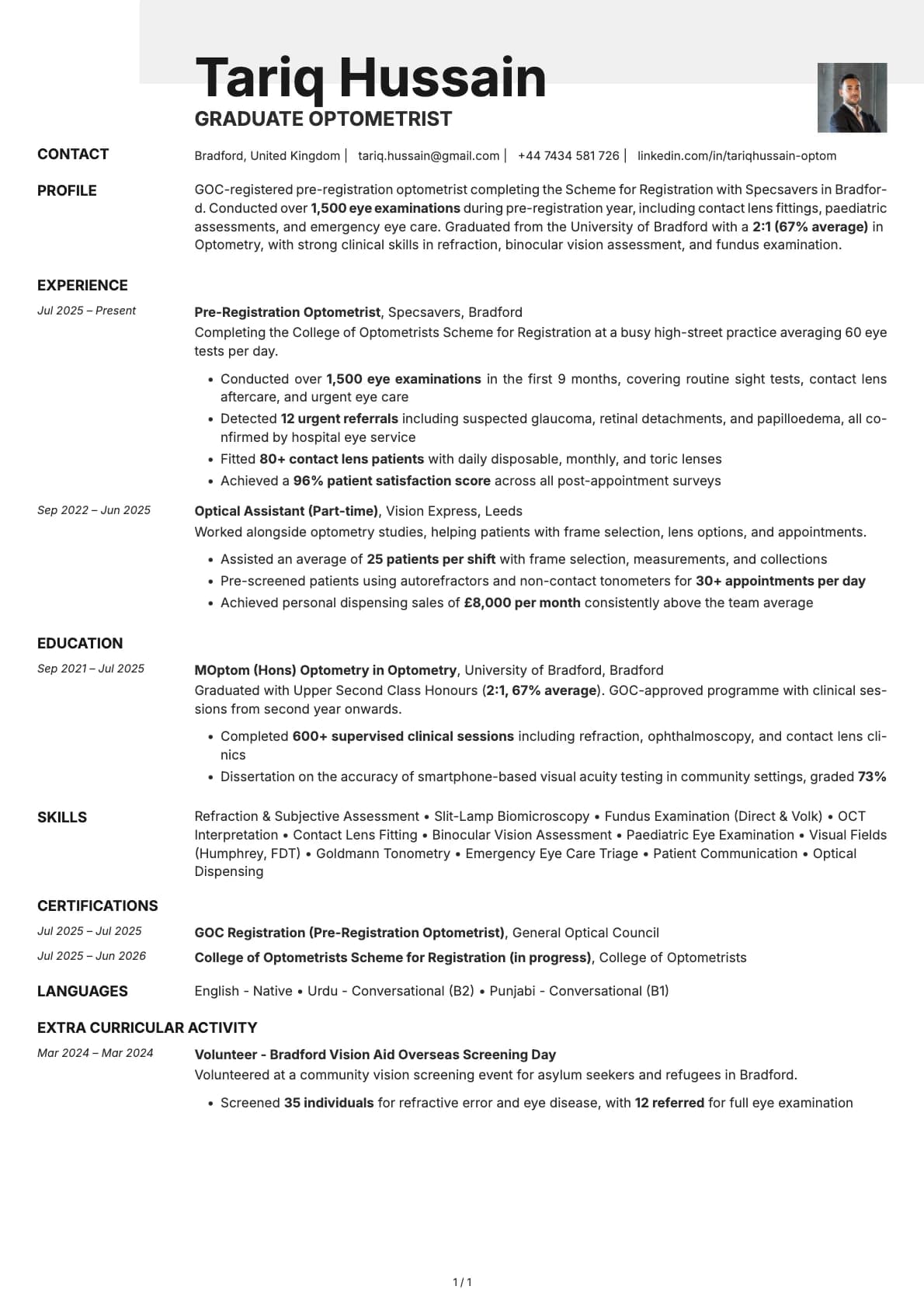
Graduate Optometrist
A graduate optometrist resume example with pre-registration experience, GOC registration, and eye examination numbers for newly qualifying optometrists.