Junior Bricklayer Resume Example
A junior bricklayer resume example for NVQ qualified bricklayers entering the trade. See how to present your bricklaying skills, CSCS card, and site experience.

Laddro Team
Free to use. No account needed to start.
Free to use. No account needed to start.
Overview
Bricklaying is measured in bricks per day. That is the reality of the trade, and your resume needs to reflect it. Site managers hiring junior bricklayers want to know your speed, your bond types, your ability to work to line and level, and whether you can handle facing brickwork that the public will see. Vague statements about "bricklaying experience" are useless. Numbers and specifics are everything.
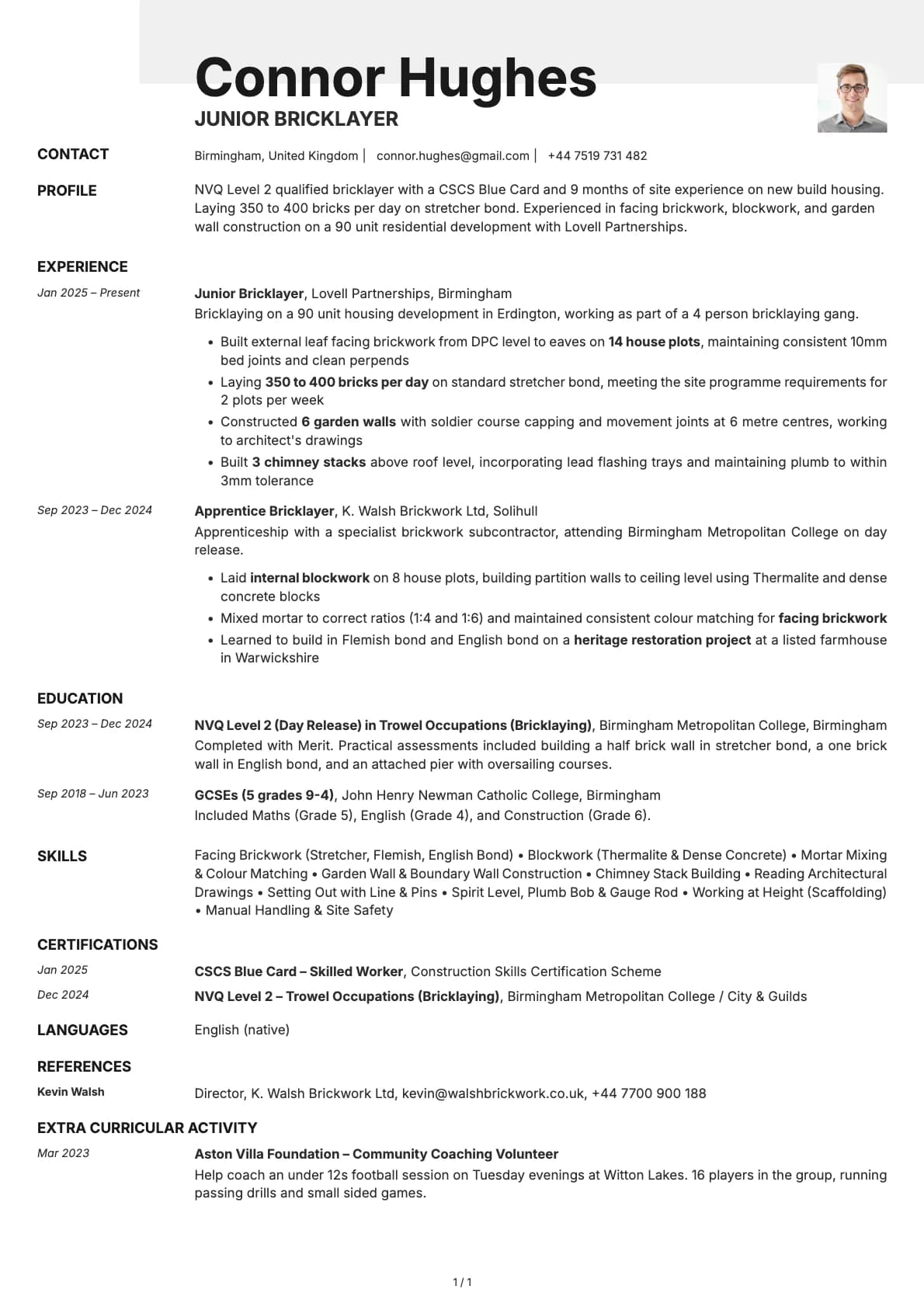
This resume belongs to Connor Hughes, who completed an NVQ Level 2 in Bricklaying at Birmingham Metropolitan College and has been working on new build housing sites for 9 months. He holds a CSCS Blue Card and can lay 350 to 400 bricks per day on standard stretcher bond. His resume reads like a trade card because that is what bricklaying employers want.
What Makes This Resume Work
Brick count per day is stated clearly. Connor writes that he lays 350 to 400 bricks per day on stretcher bond. The industry benchmark for a qualified bricklayer is around 400 to 500, so 350 to 400 for a junior with 9 months of experience is honest and credible. An employer can immediately assess his productivity.
Bond types and brick types are named. Stretcher bond, Flemish bond, and English bond are all mentioned. He also distinguishes between facing brickwork (the visible external skin) and common brickwork (internal or below ground). This tells an employer whether Connor can be trusted on the front elevation or should work on internal blockwork.
Project scale gives context. Connor has worked on a 90 unit housing development, building external leaf brickwork from DPC level to eaves on 14 house plots. He has also built 6 garden walls with soldier course capping and 3 chimney stacks. Each of these is a distinct bricklaying task that requires different skills.
The NVQ and CSCS card are properly linked. His NVQ Level 2 in Trowel Occupations (Bricklaying) qualifies him for the CSCS Blue Card. He lists both, and the employer can see that his card level matches his qualification. This is important because some bricklayers work on Green Cards (labourer level) even after completing their NVQ, simply because they forgot to upgrade.
Key Takeaways
State your brick count per day for standard stretcher bond. It is the single most important metric in bricklaying recruitment. Be honest. Inflating your count will become obvious on your first day.
Name the bond types, brick types, and project types you have worked on. Facing brickwork, blockwork, garden walls, chimneys, and retaining walls are all distinct skills.
Upgrade your CSCS card to match your NVQ level. A Blue Card (skilled worker) gets you higher day rates than a Green Card (labourer), and it shows employers you take your trade seriously.
Build your own version
Open this layout in the builder and swap in your own details. It takes a few minutes.
Free to use. No account needed to start.
Was this resume example helpful?
Rate this example to help us create better content for you.
4.6 average from 88 ratingsRelated resume examples
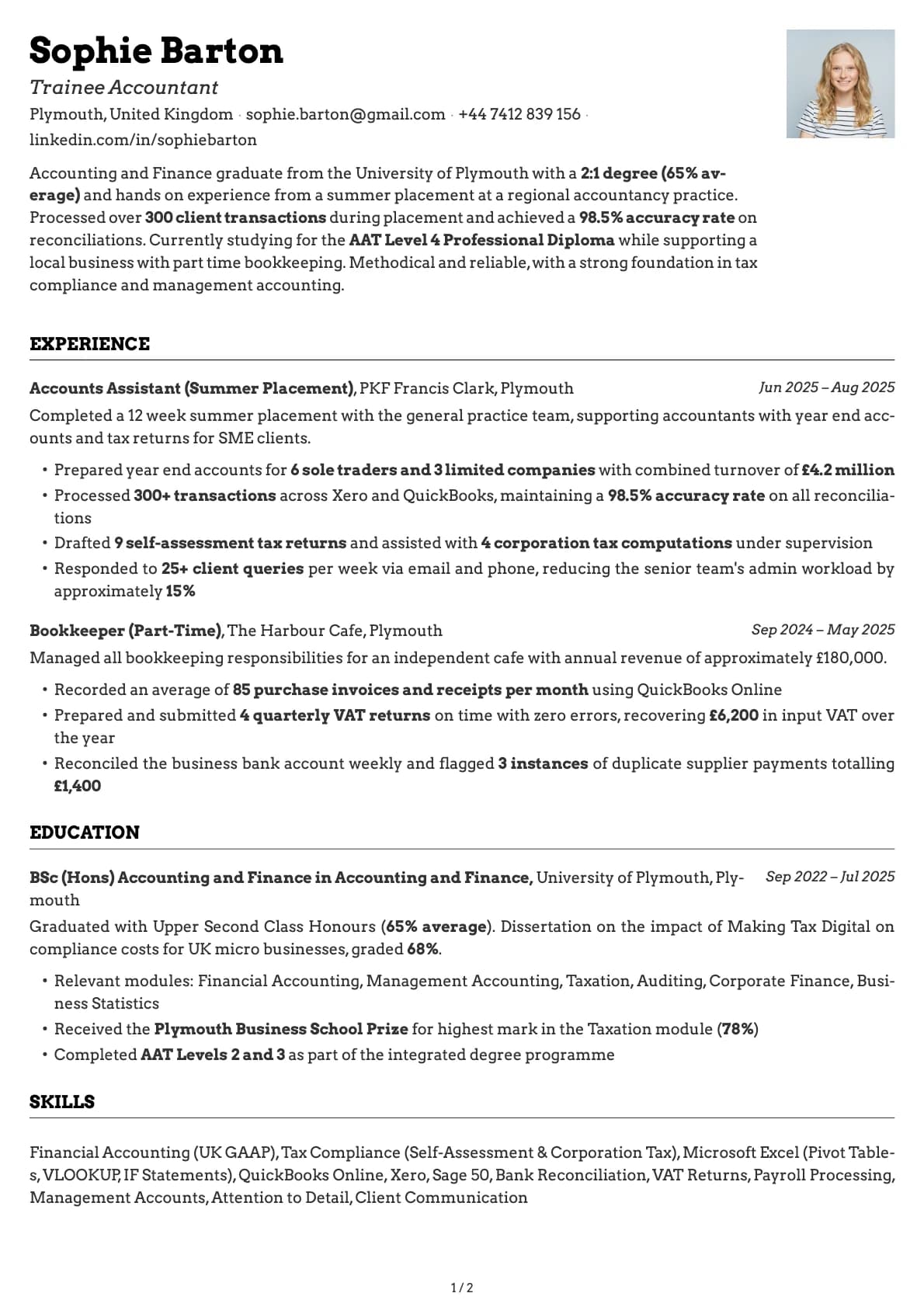
Trainee Accountant
A trainee accountant resume example for recent graduates. See how to present your AAT progress, placement experience, and bookkeeping skills to land your first role.
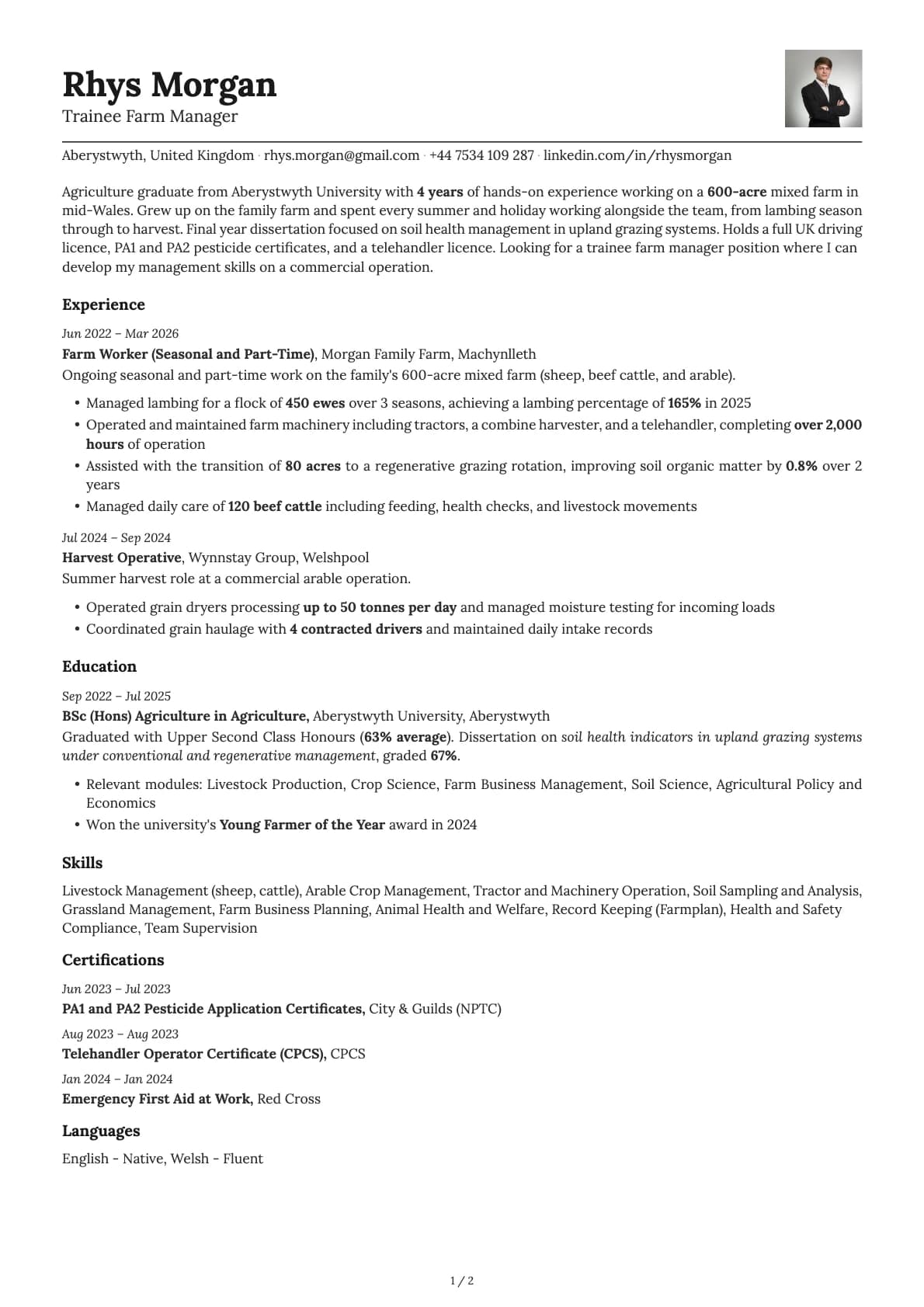
Trainee Farm Manager
A trainee farm manager resume example showing how to combine an agriculture degree with hands-on mixed farming experience on a 600-acre family operation.
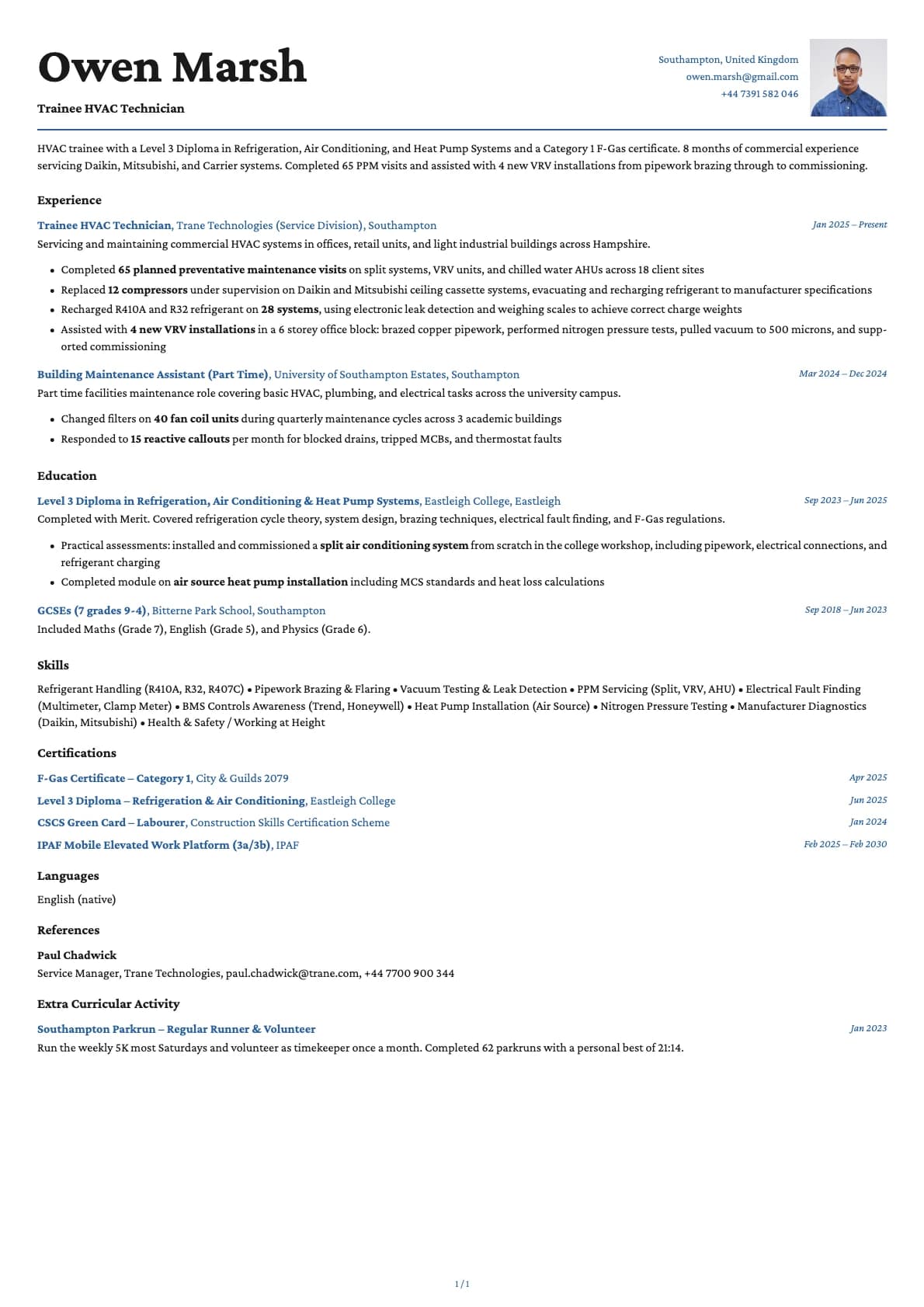
Trainee HVAC Technician
A trainee HVAC technician resume example for graduates entering the heating, ventilation, and air conditioning trade. See how to present your F-Gas certification and refrigeration skills.
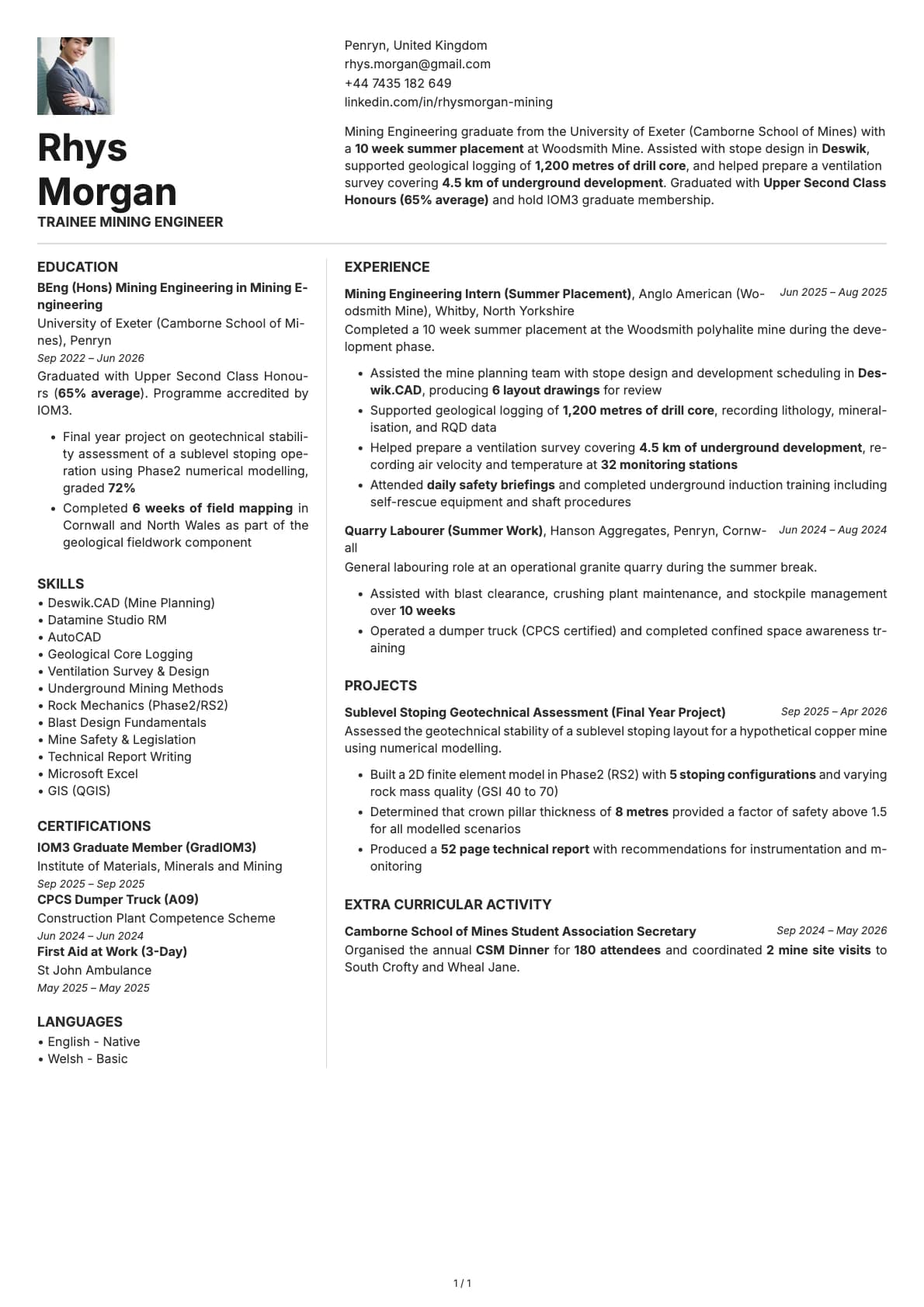
Trainee Mining Engineer
A trainee mining engineer resume example with underground mine placement experience, Deswik proficiency, and IOM3 membership.
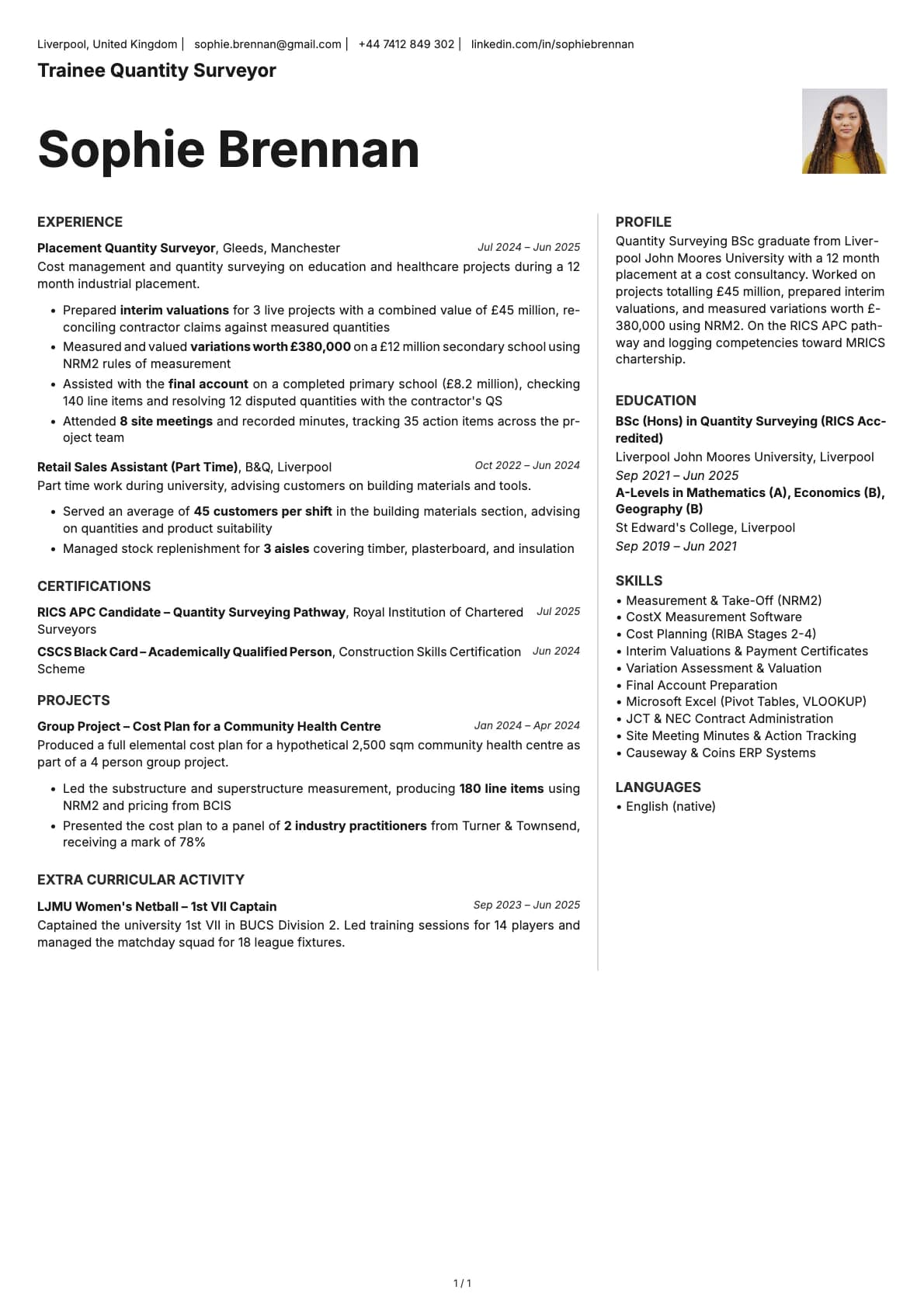
Trainee Quantity Surveyor
A trainee quantity surveyor resume example for QS graduates on the RICS APC pathway. See how to present your measurement skills, cost management experience, and professional development.
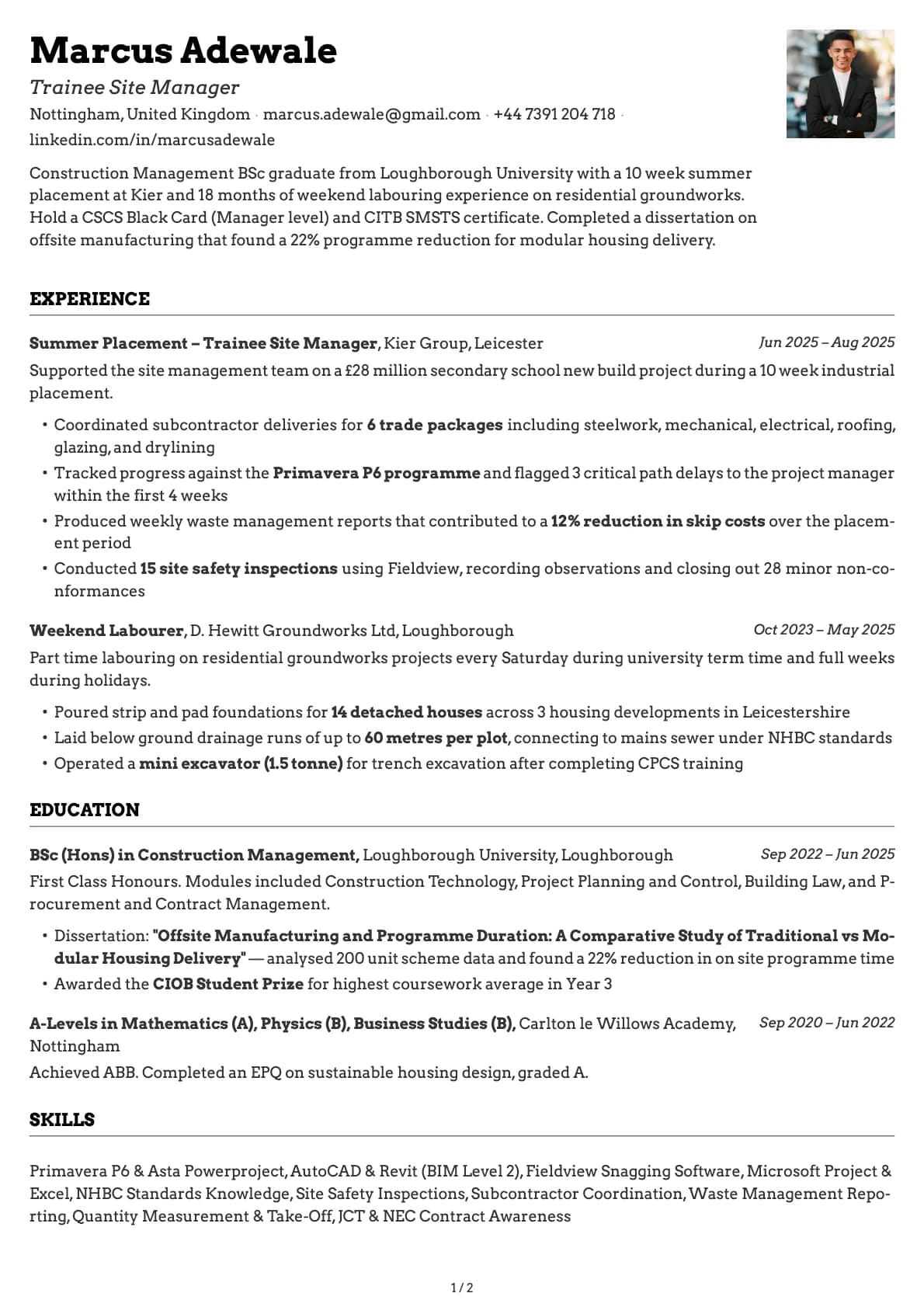
Trainee Site Manager
A trainee site manager resume example for construction management graduates. See how to present your BSc, CITB qualifications, and placement experience to land your first site role.
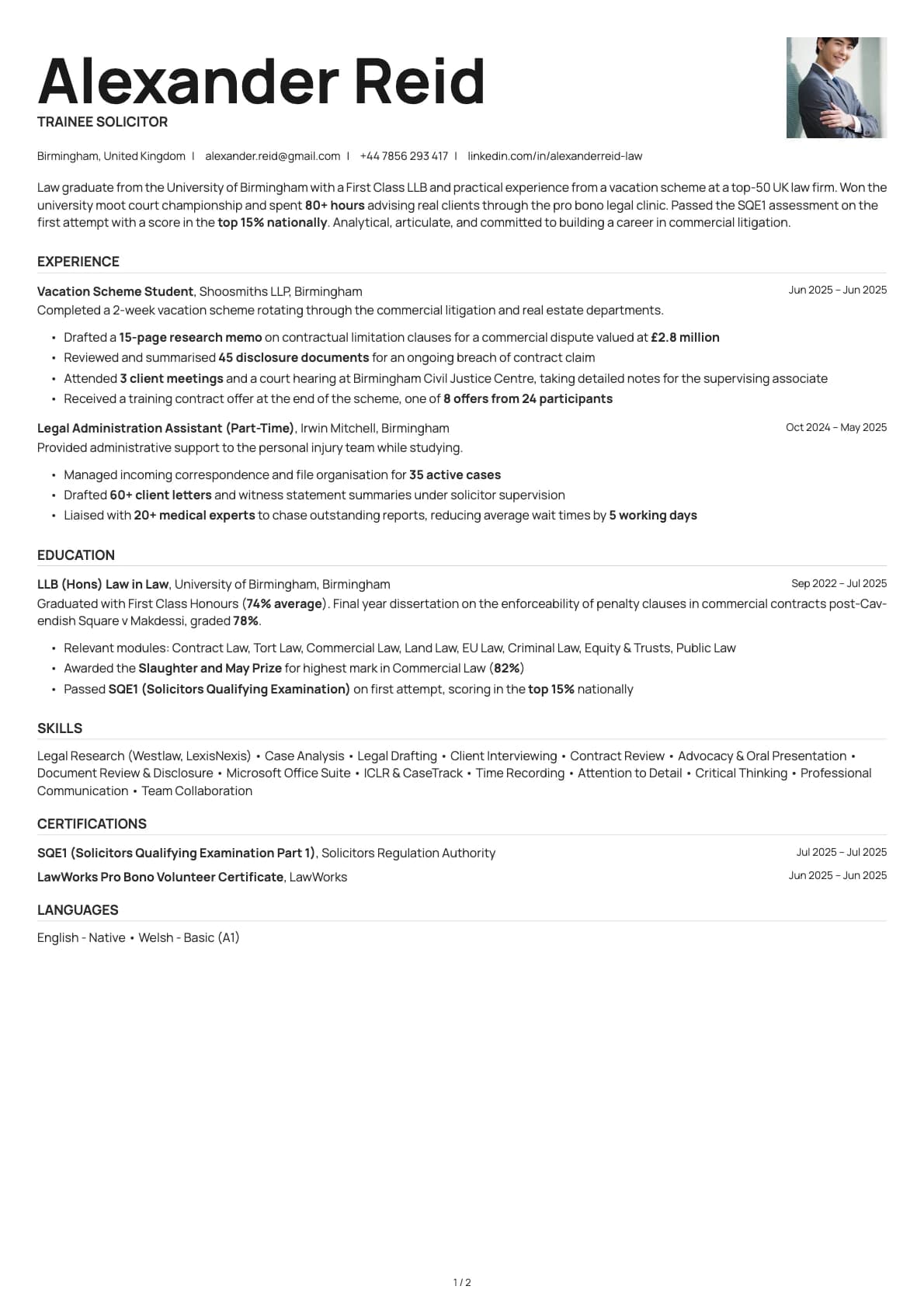
Trainee Solicitor
A trainee solicitor resume example for recent law graduates. Learn how to present your law degree, vacation schemes, and pro bono experience to secure a training contract.
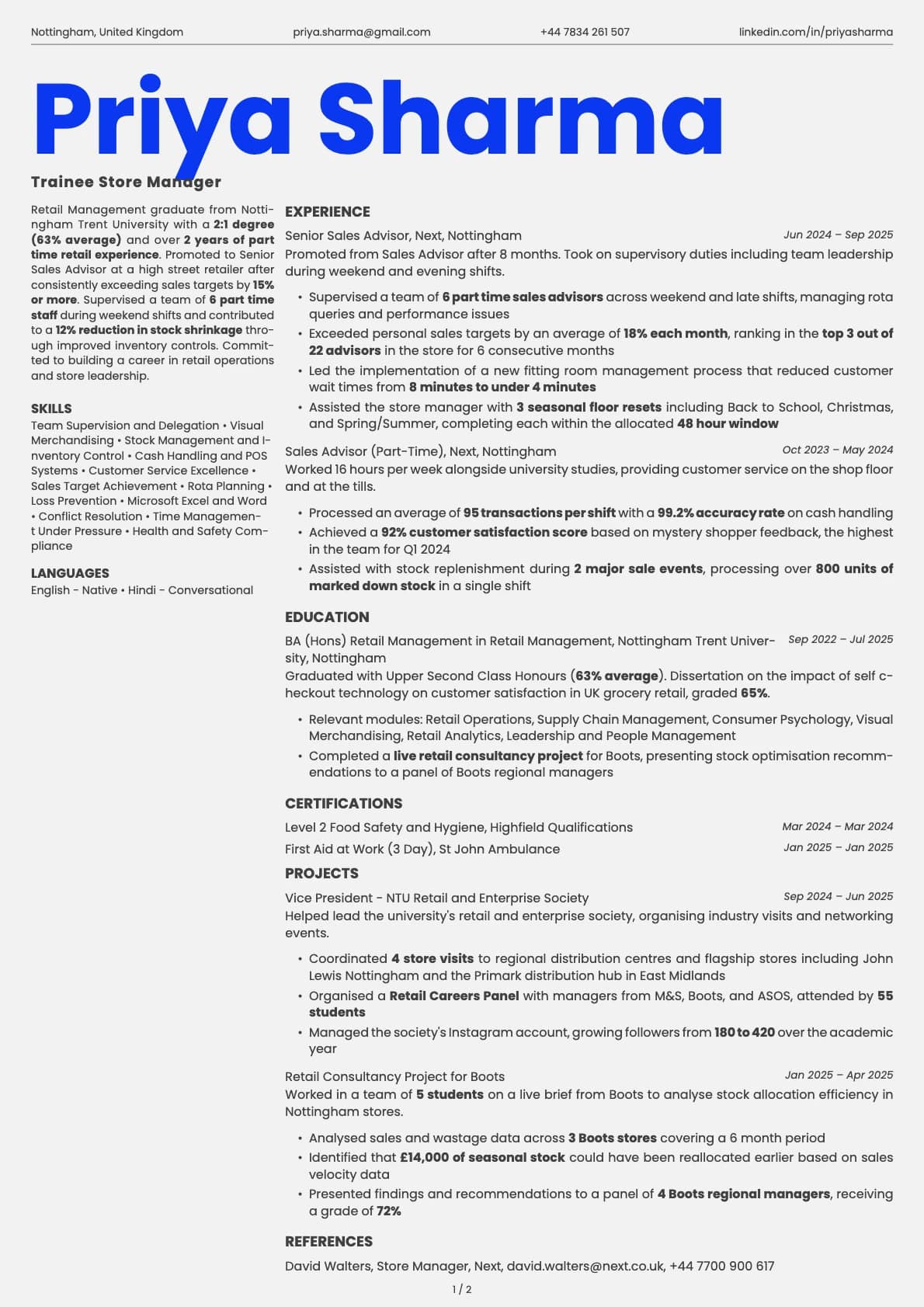
Trainee Store Manager
A trainee store manager resume example for retail graduates. See how to present team leadership, sales targets, and merchandising experience to land management schemes.
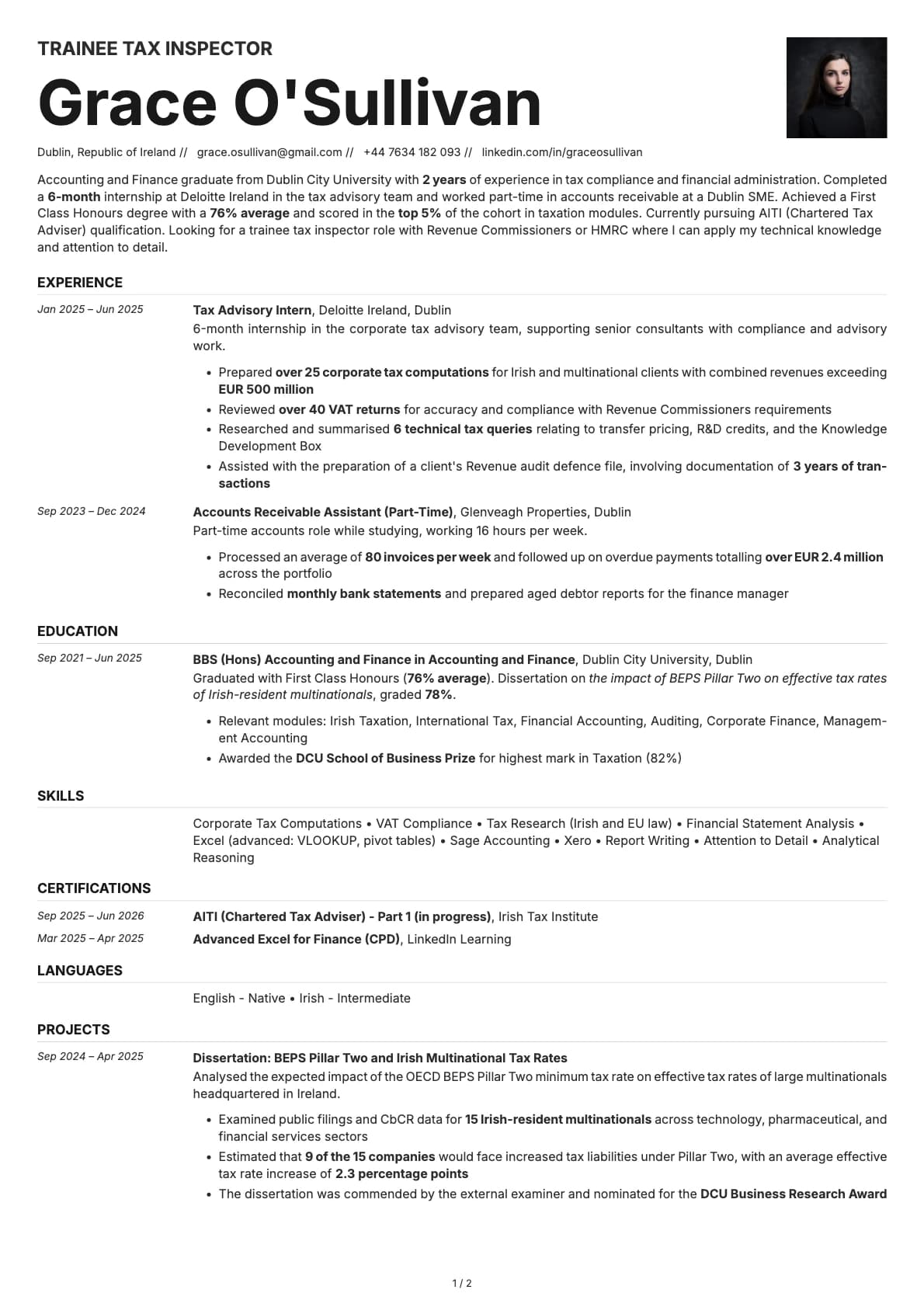
Trainee Tax Inspector
A trainee tax inspector resume example showing how to combine a Deloitte internship, top taxation grades, and an accounting degree into a Revenue Commissioners application.
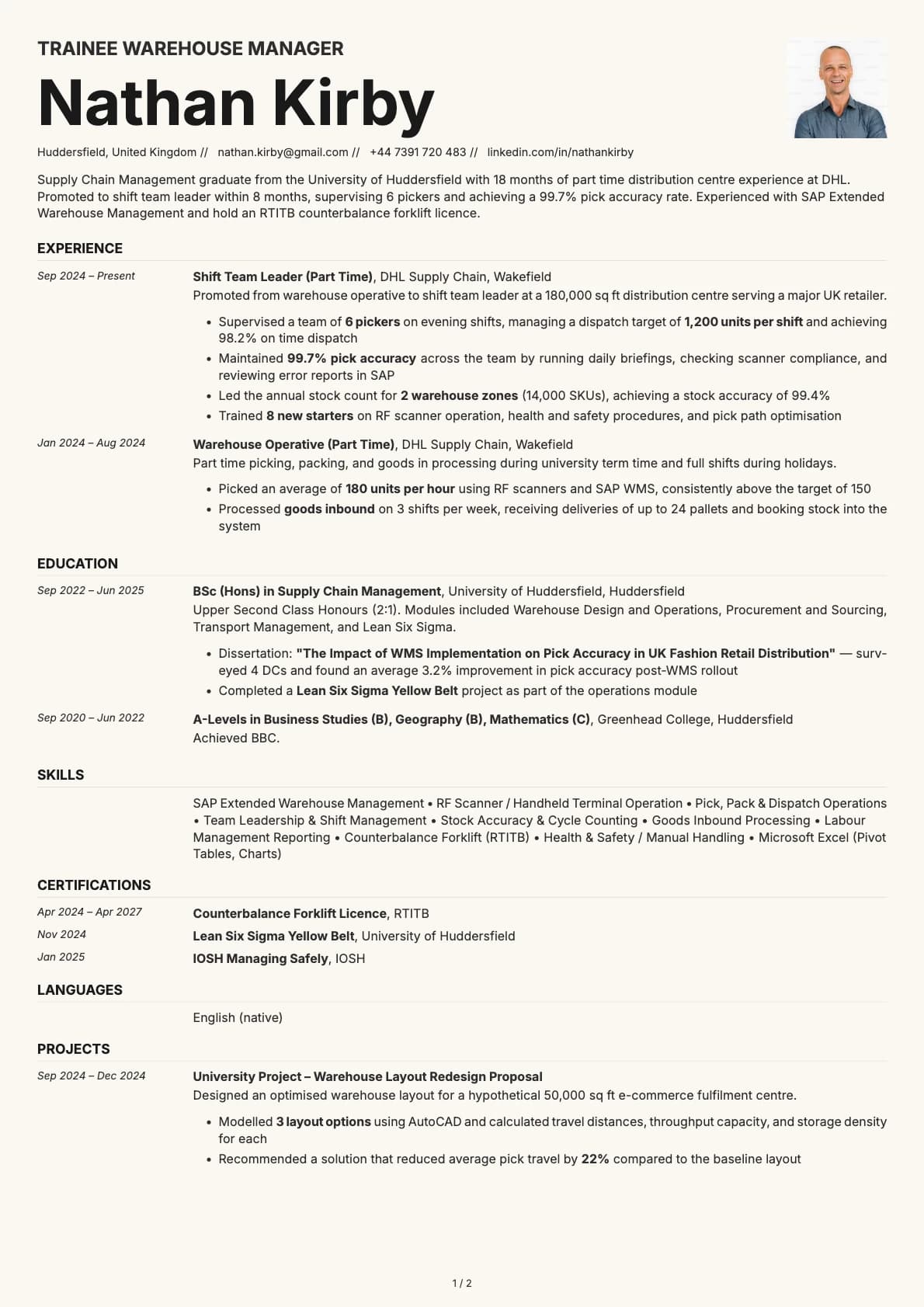
Trainee Warehouse Manager
A trainee warehouse manager resume example for logistics graduates. See how to present your warehouse management systems experience, forklift licences, and operational KPIs.
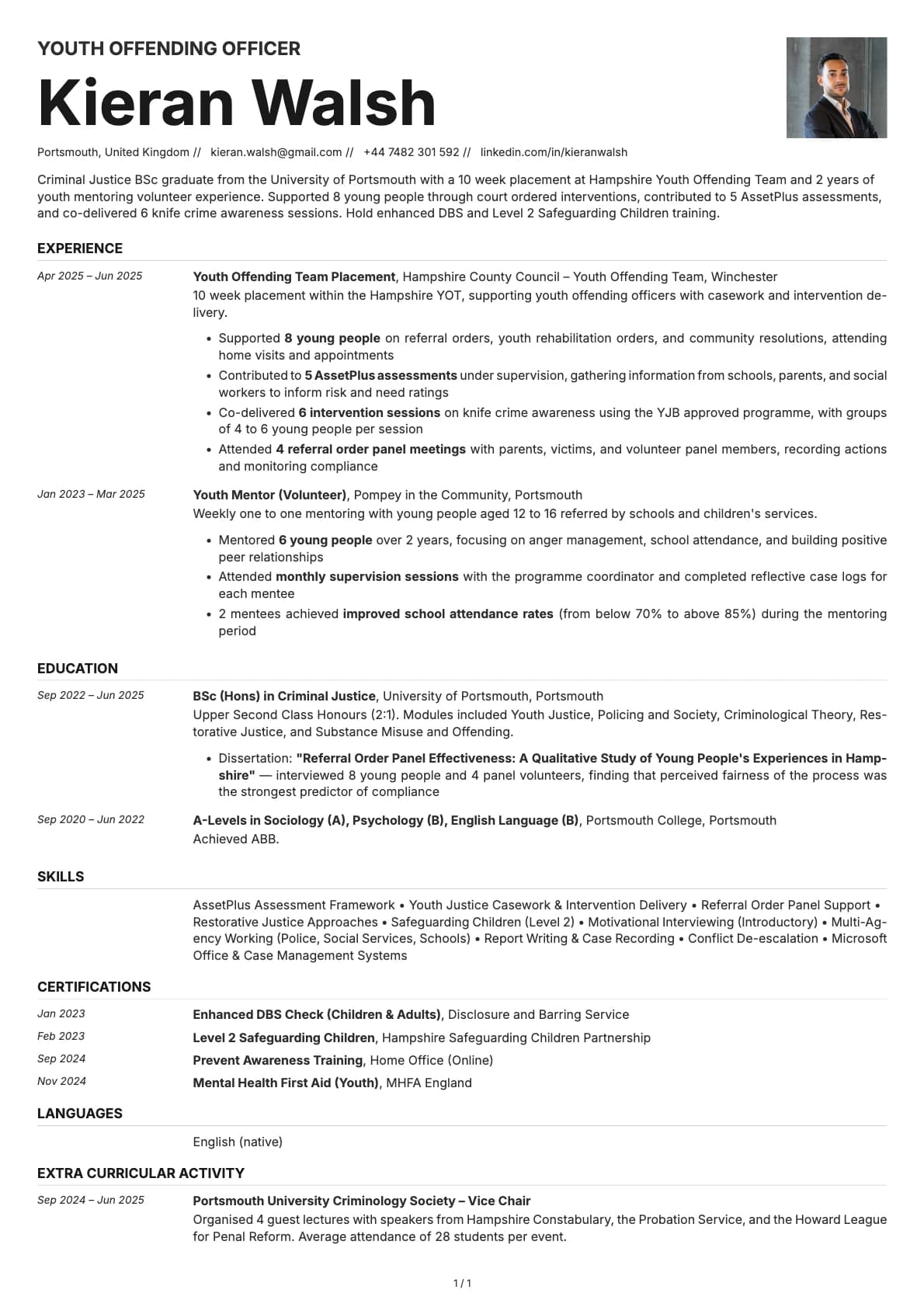
Youth Offending Officer
A youth offending officer resume example for criminal justice graduates. See how to present your placement experience, case management skills, and youth justice knowledge.
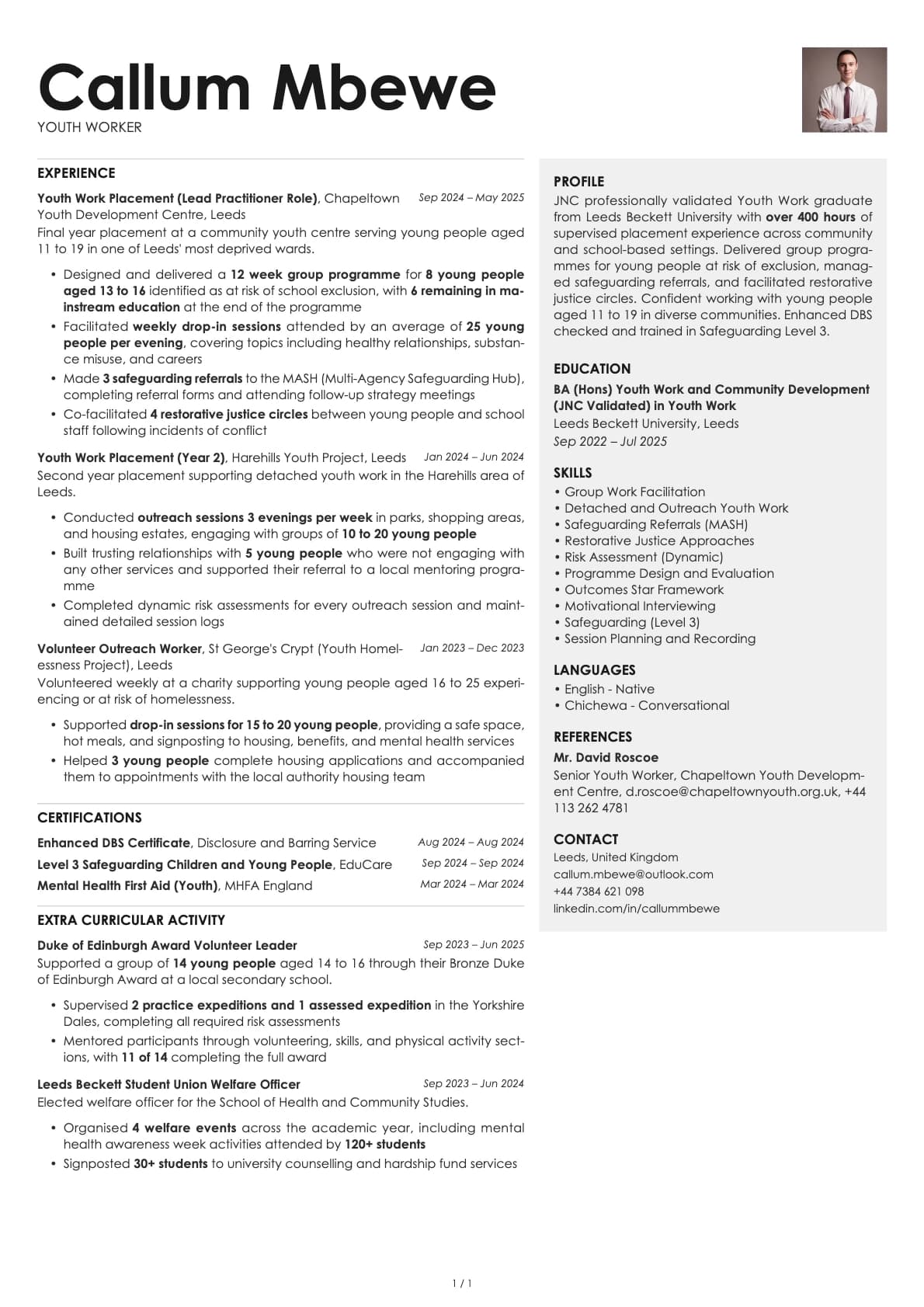
Youth Worker
A graduate youth worker resume example with community youth work placements, safeguarding, and programme delivery. See how to present your experience for youth work roles.