Junior Personal Trainer Resume Example
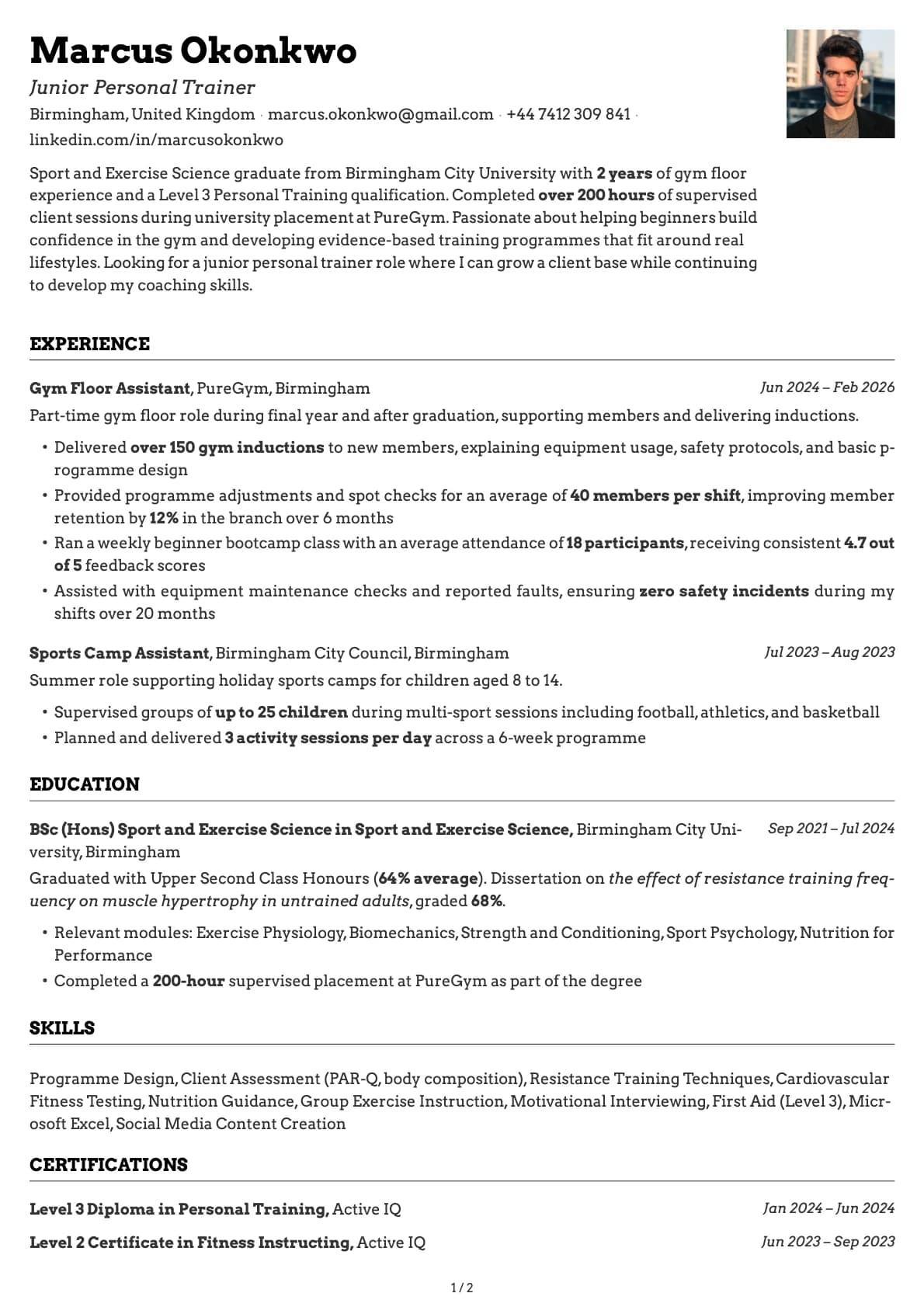
A junior personal trainer resume example showing how to combine a sport science degree, Level 3 PT qualification, and gym floor experience at PureGym.

Laddro Team
Free to use. No account needed to start.
Free to use. No account needed to start.
Overview
Personal training is one of the few careers where you can hold the exact qualification required and still struggle to find work. The industry is saturated with Level 3 holders, and gyms receive dozens of applications for every PT position. The candidates who get hired are the ones who can show that they have already built a rapport with members, filled classes, and contributed to retention, not just completed a course.
Marcus Okonkwo graduated from Birmingham City University with an Upper Second in Sport and Exercise Science and holds a Level 3 Diploma in Personal Training from Active IQ. He has spent 20 months on the gym floor at PureGym in Birmingham, delivering over 150 inductions, running a weekly beginner bootcamp with consistent 4.7 out of 5 feedback scores, and contributing to a 12% improvement in member retention at his branch. His resume shows someone who has already proven he can do the job.
What Makes This Resume Work
Retention impact is the standout metric. Marcus provided programme adjustments and spot checks for an average of 40 members per shift, and his branch saw a 12% improvement in member retention over 6 months. For a gym operator, retention is the number that matters most. A junior PT who can demonstrate they contributed to that metric is far more valuable than one who simply lists their qualification.
The bootcamp class shows he can attract and keep participants. Running a weekly beginner bootcamp with an average attendance of 18 participants and a consistent 4.7 out of 5 feedback score demonstrates both teaching ability and the kind of personality that makes members come back. Beginner-focused classes are particularly valuable because they serve the demographic most likely to cancel their membership.
The academic research adds scientific credibility. Marcus's dissertation recruited and supervised 16 participants through structured 12-week training programmes, tracking body composition using skinfold callipers and circumference measurements. He found that training each muscle group 3 times per week produced a statistically significant increase in lean mass compared to twice per week (p = 0.03). He presented these findings at the university research symposium and received a commendation from the external examiner. This signals to employers that his programming decisions are evidence-based.
Sport and leadership experience round out the profile. As captain of Birmingham City University's rugby first XV, Marcus organised 3 training sessions per week and coordinated match day logistics for a 30-player squad, helping the team finish 2nd in the BUCS Midlands 3A league. Regular volunteering at Cannon Hill Parkrun, supporting events with an average of 350 runners per week, adds community fitness involvement beyond the gym walls.
Key Takeaways
If you are applying for junior PT roles, stop leading with your Level 3 qualification. Every other applicant has one. Instead, lead with your impact on the gym floor: how many members you worked with per shift, what your feedback scores looked like, and whether you can point to any retention or attendance data. If you have a sport science degree, use your dissertation to show you understand the research behind programming. Gyms want trainers who keep members, not just trainers who know exercises.
Build your own version
Open this layout in the builder and swap in your own details. It takes a few minutes.
Free to use. No account needed to start.
Was this resume example helpful?
Rate this example to help us create better content for you.
4.7 average from 119 ratingsRelated resume examples
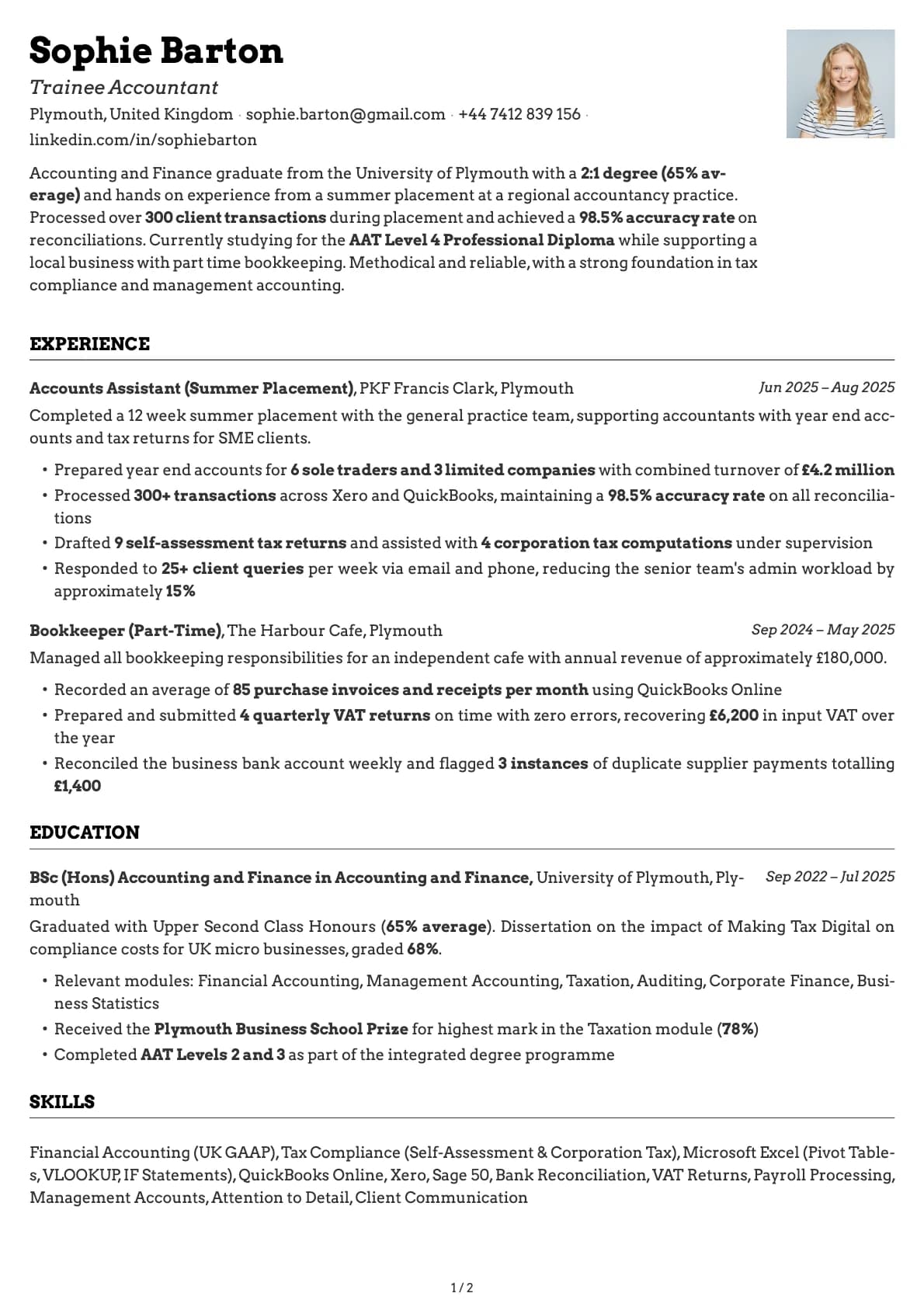
Trainee Accountant
A trainee accountant resume example for recent graduates. See how to present your AAT progress, placement experience, and bookkeeping skills to land your first role.
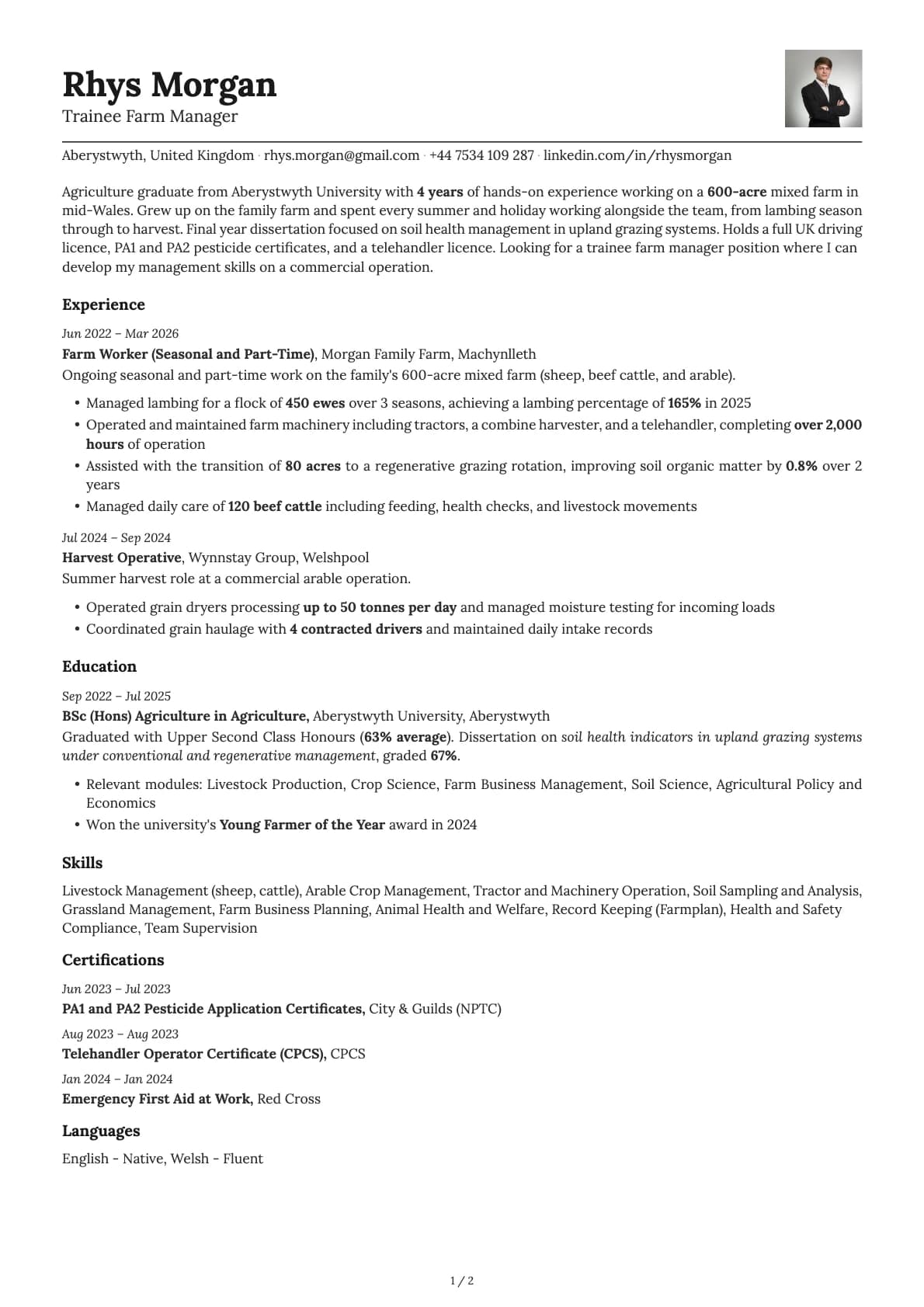
Trainee Farm Manager
A trainee farm manager resume example showing how to combine an agriculture degree with hands-on mixed farming experience on a 600-acre family operation.
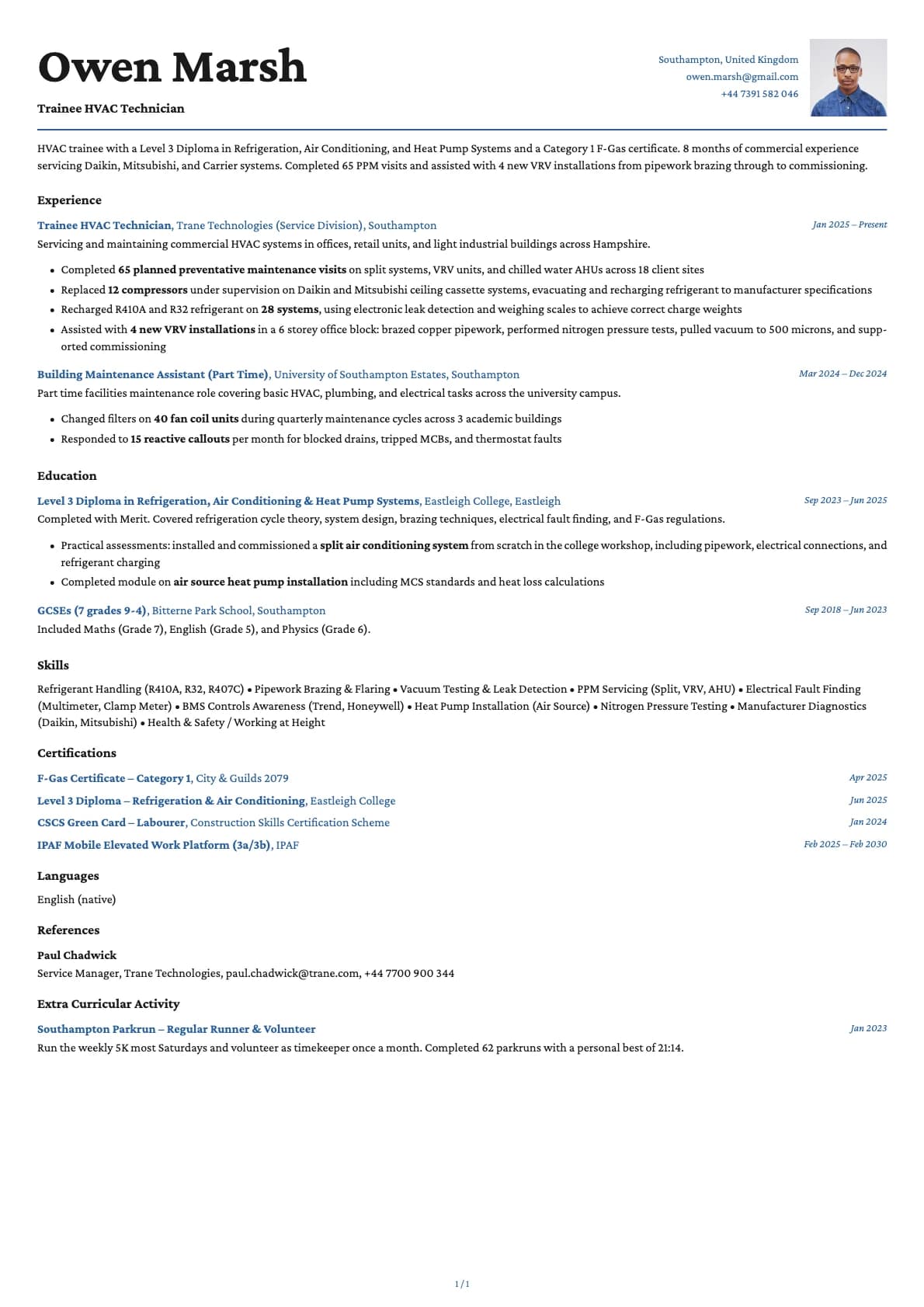
Trainee HVAC Technician
A trainee HVAC technician resume example for graduates entering the heating, ventilation, and air conditioning trade. See how to present your F-Gas certification and refrigeration skills.
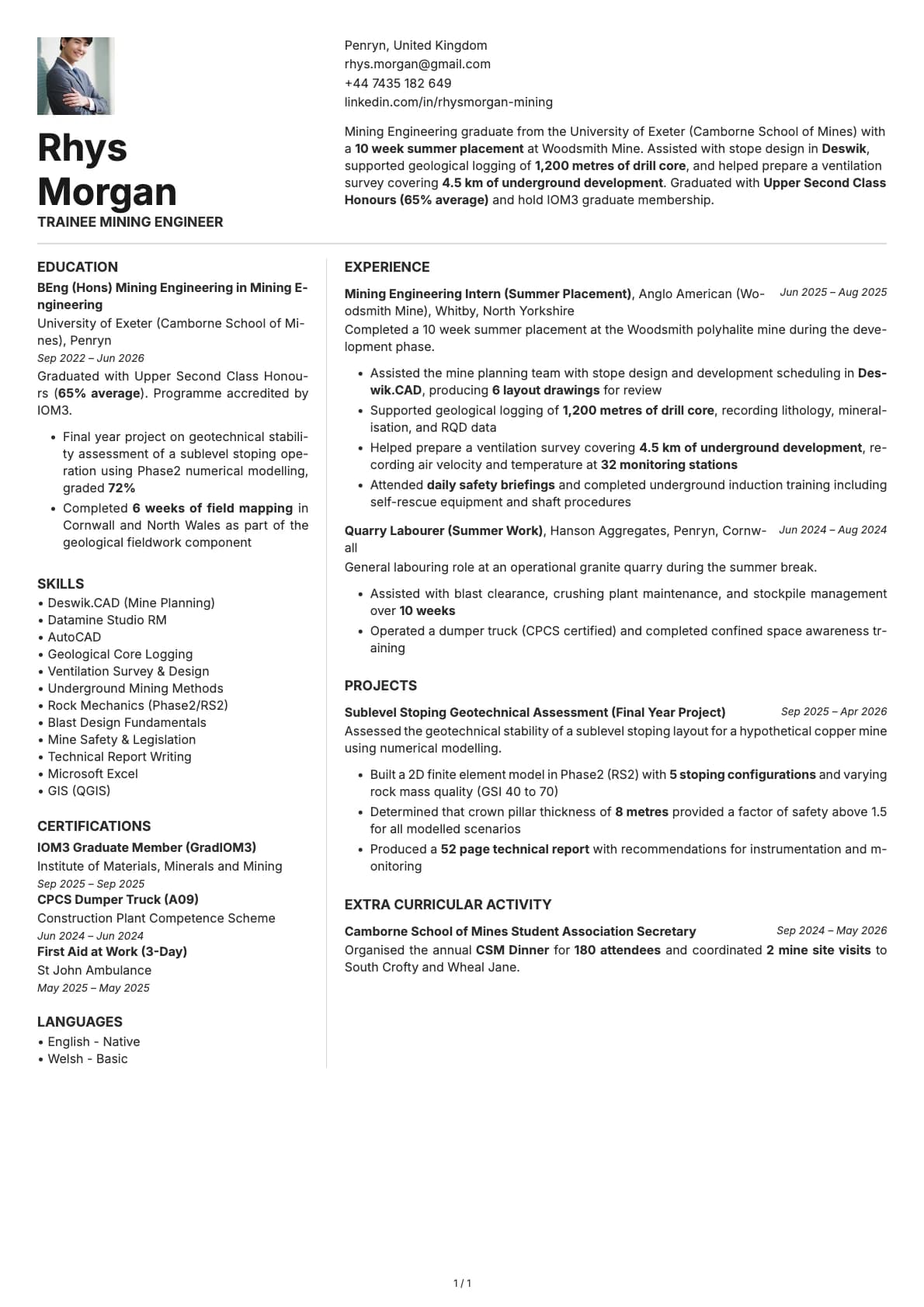
Trainee Mining Engineer
A trainee mining engineer resume example with underground mine placement experience, Deswik proficiency, and IOM3 membership.
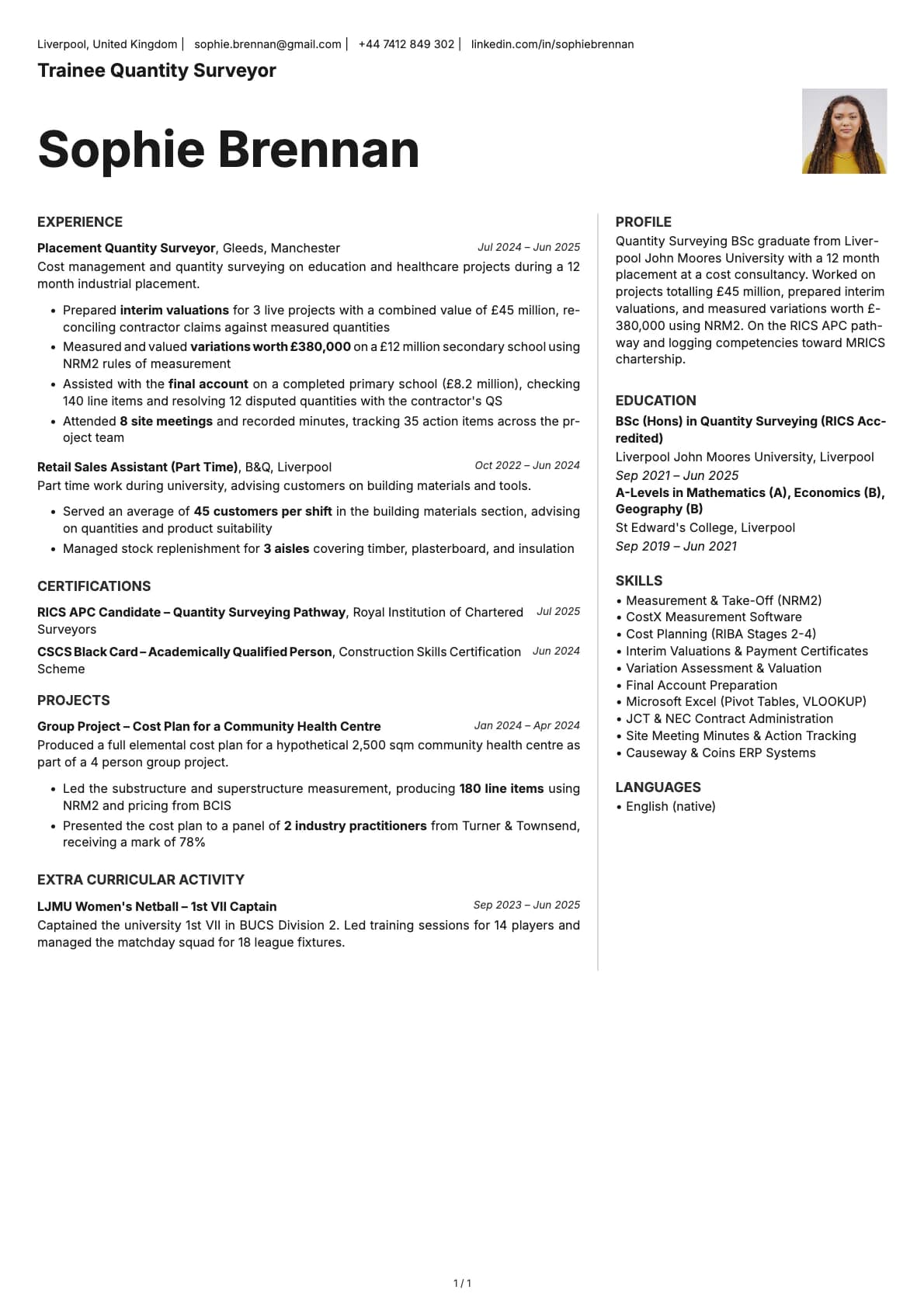
Trainee Quantity Surveyor
A trainee quantity surveyor resume example for QS graduates on the RICS APC pathway. See how to present your measurement skills, cost management experience, and professional development.
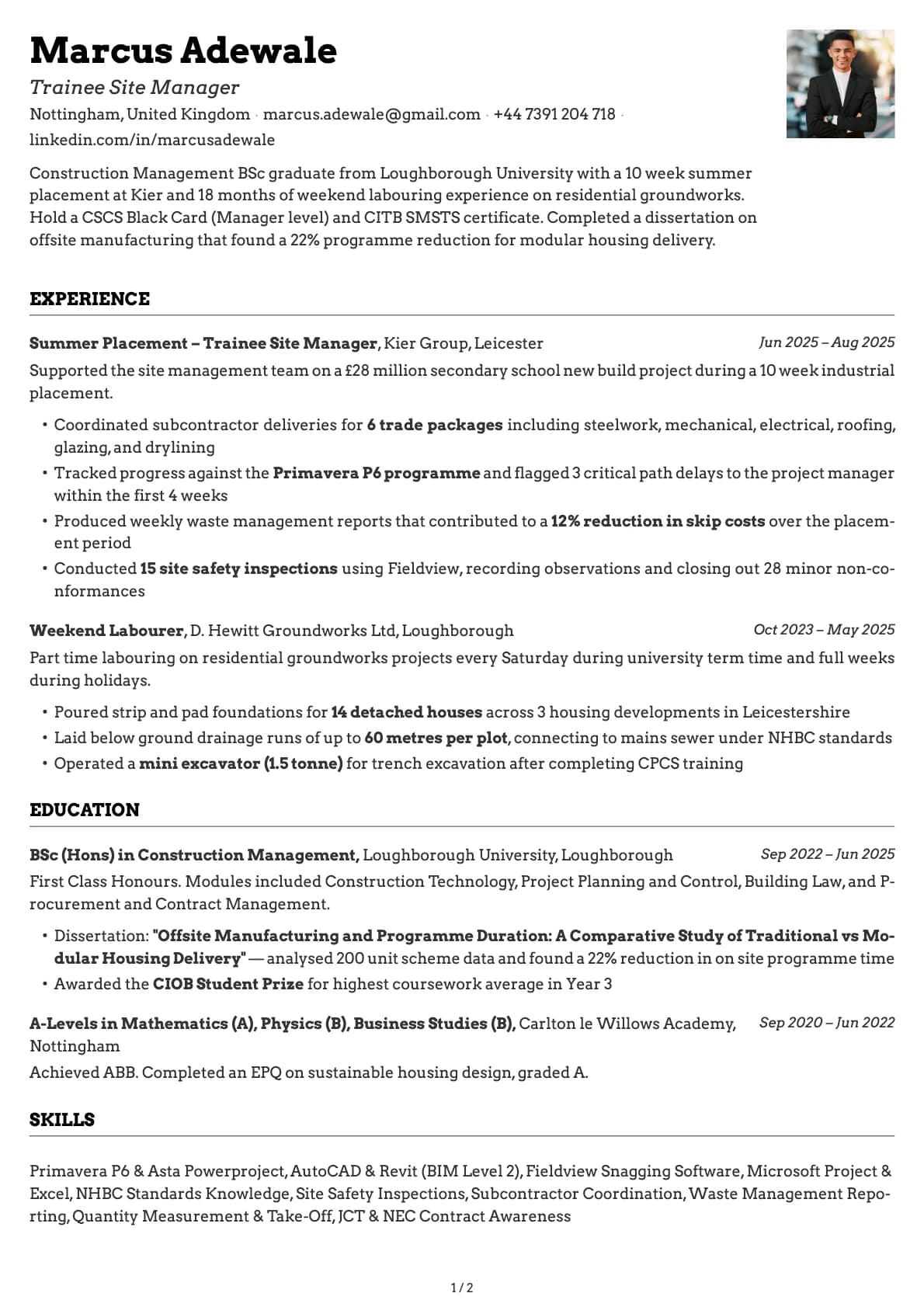
Trainee Site Manager
A trainee site manager resume example for construction management graduates. See how to present your BSc, CITB qualifications, and placement experience to land your first site role.
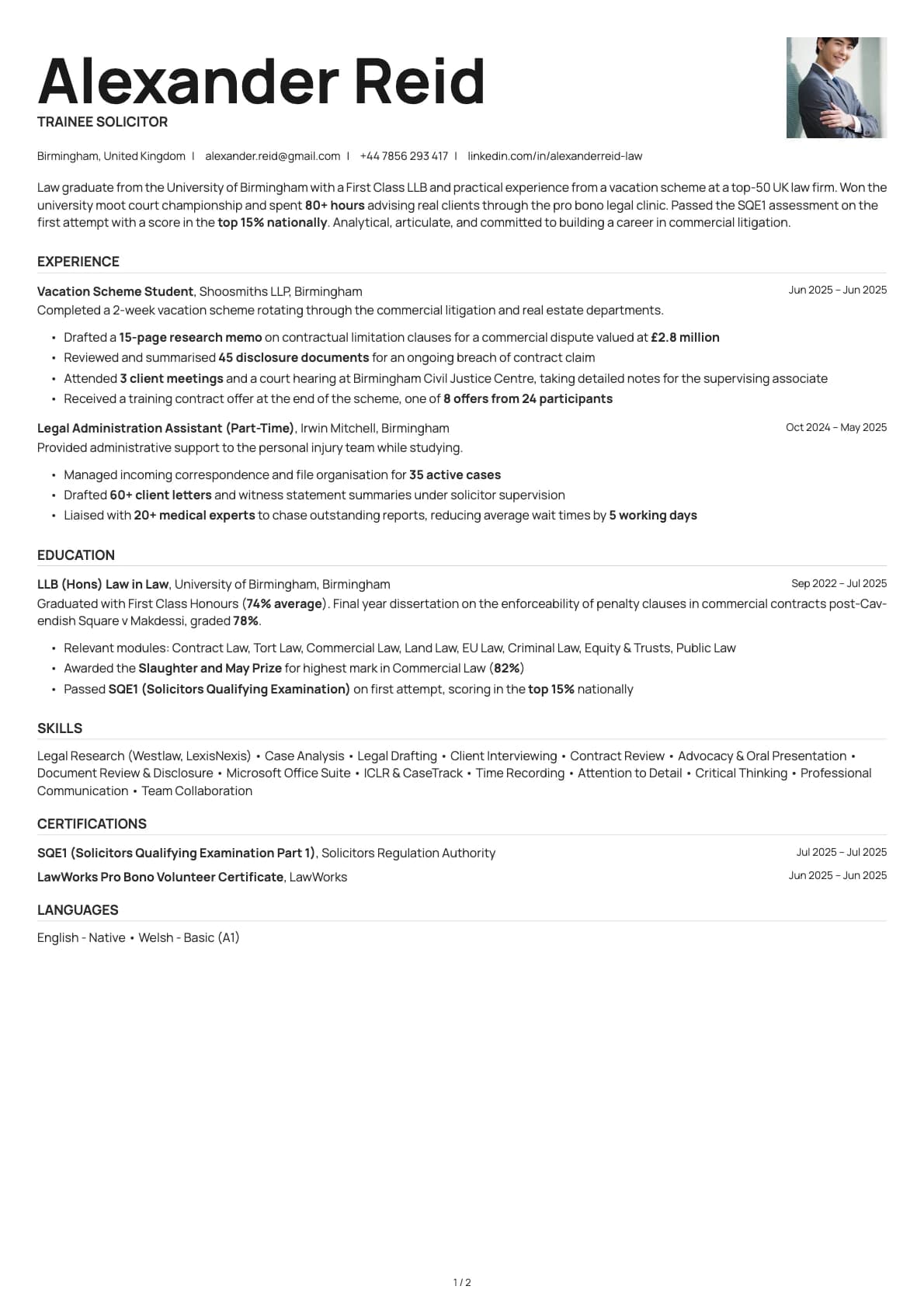
Trainee Solicitor
A trainee solicitor resume example for recent law graduates. Learn how to present your law degree, vacation schemes, and pro bono experience to secure a training contract.
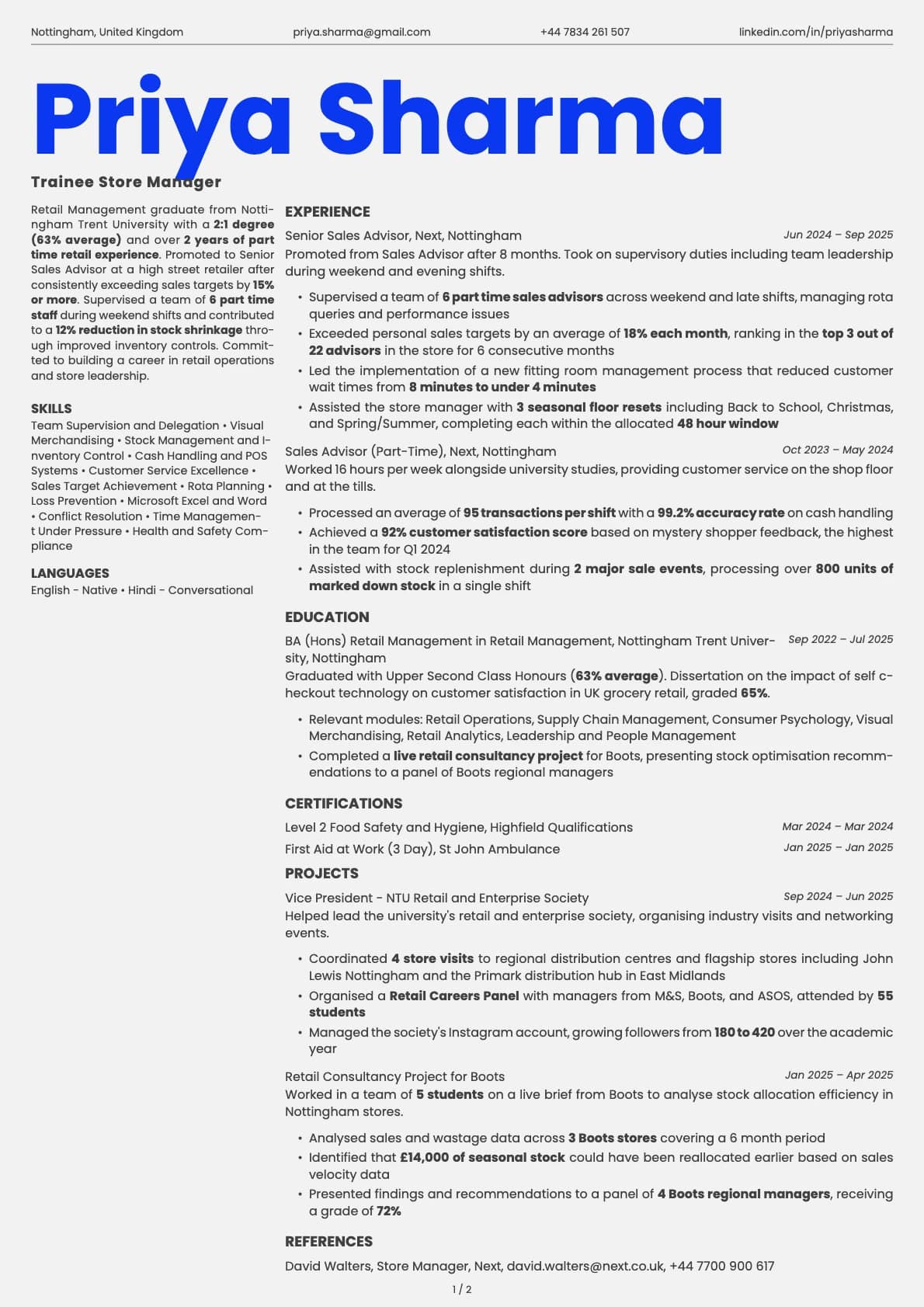
Trainee Store Manager
A trainee store manager resume example for retail graduates. See how to present team leadership, sales targets, and merchandising experience to land management schemes.
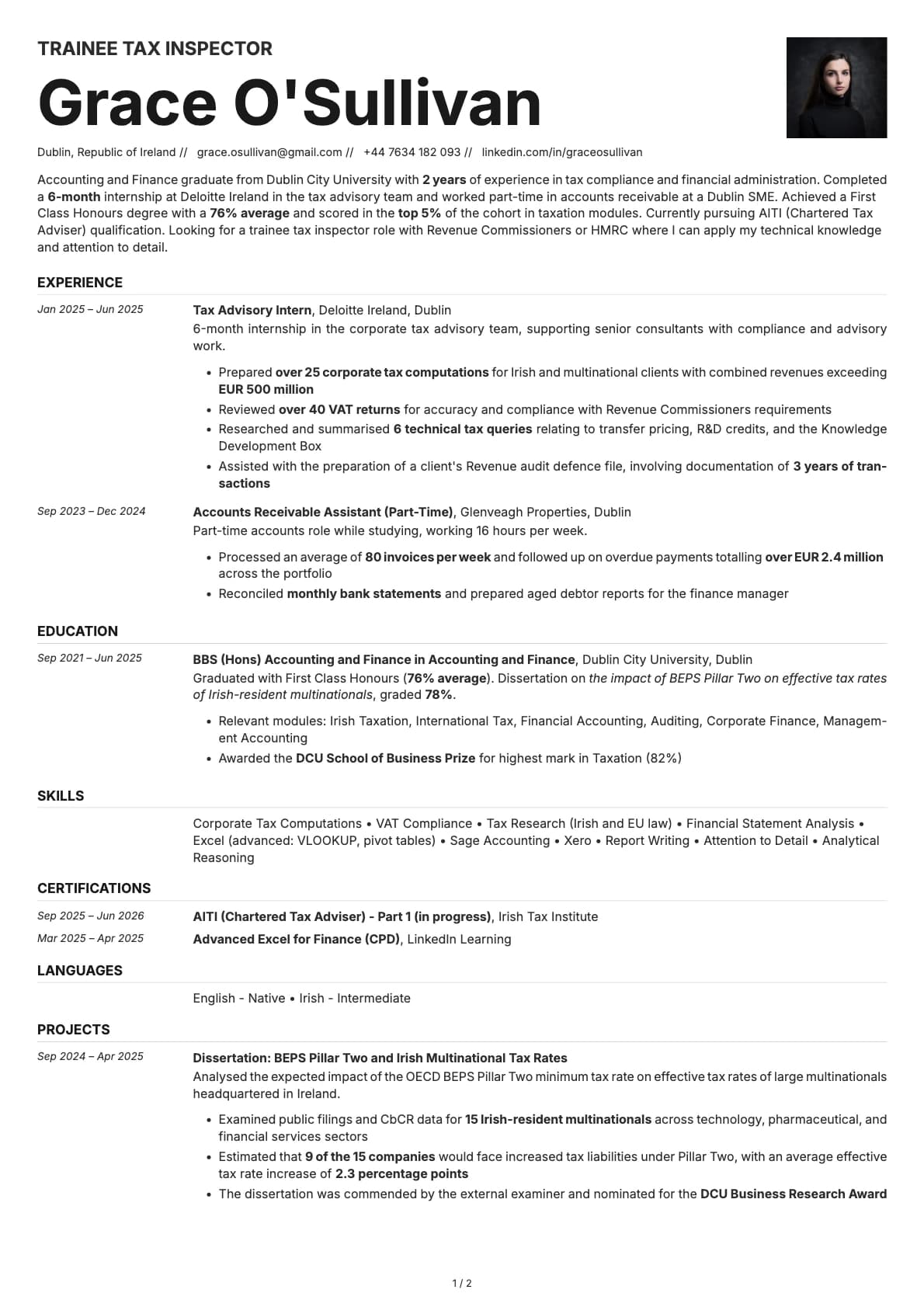
Trainee Tax Inspector
A trainee tax inspector resume example showing how to combine a Deloitte internship, top taxation grades, and an accounting degree into a Revenue Commissioners application.
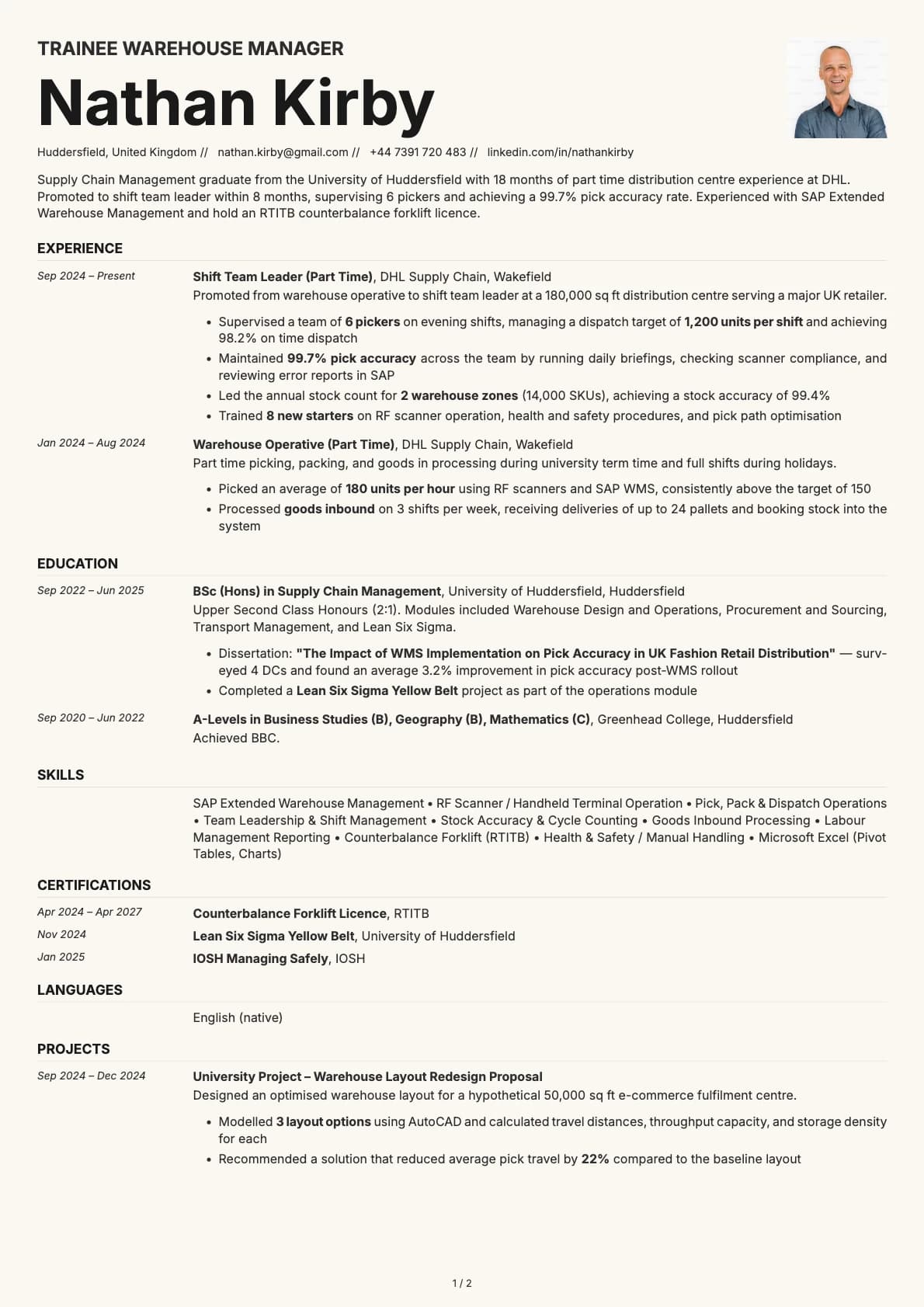
Trainee Warehouse Manager
A trainee warehouse manager resume example for logistics graduates. See how to present your warehouse management systems experience, forklift licences, and operational KPIs.
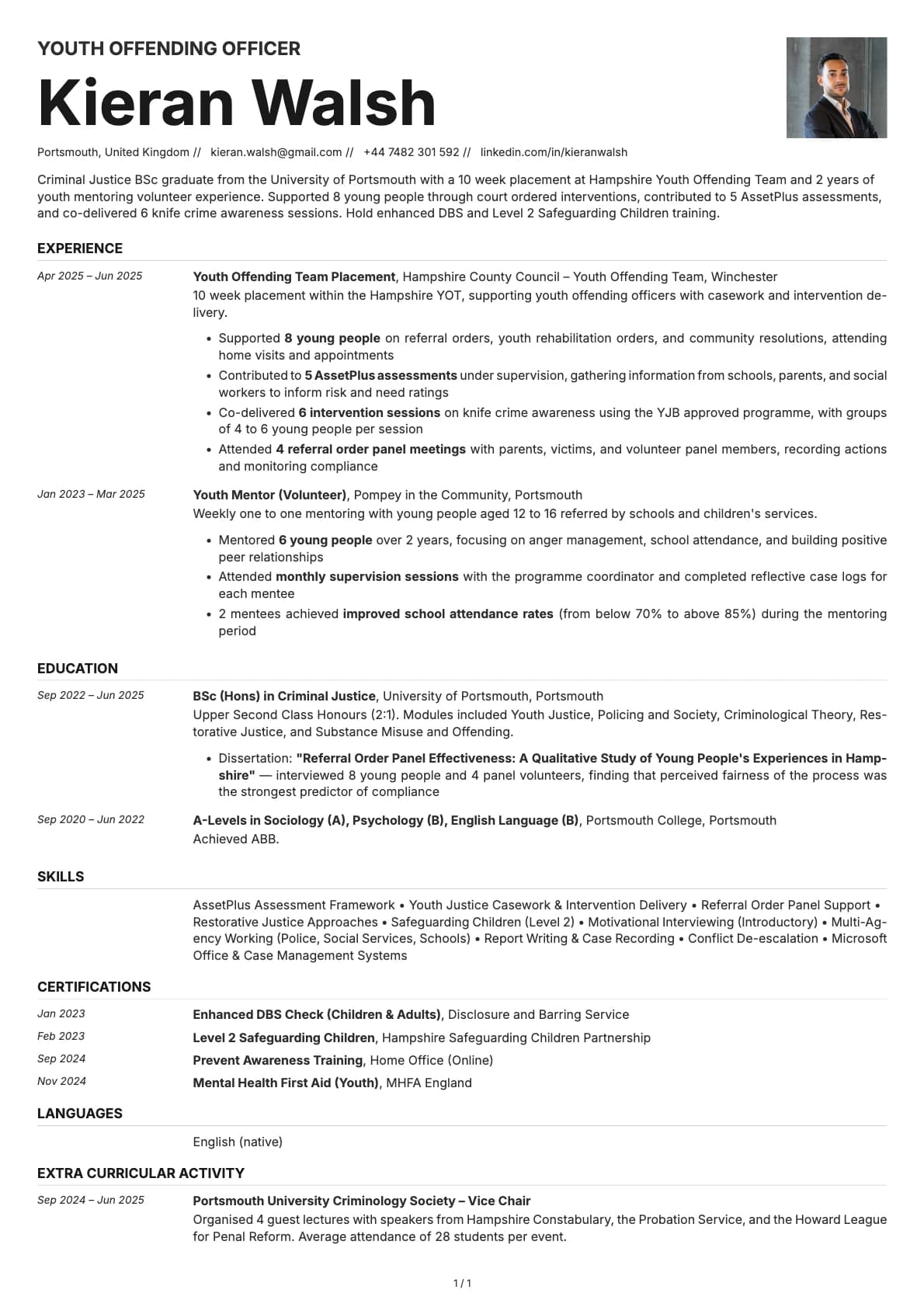
Youth Offending Officer
A youth offending officer resume example for criminal justice graduates. See how to present your placement experience, case management skills, and youth justice knowledge.
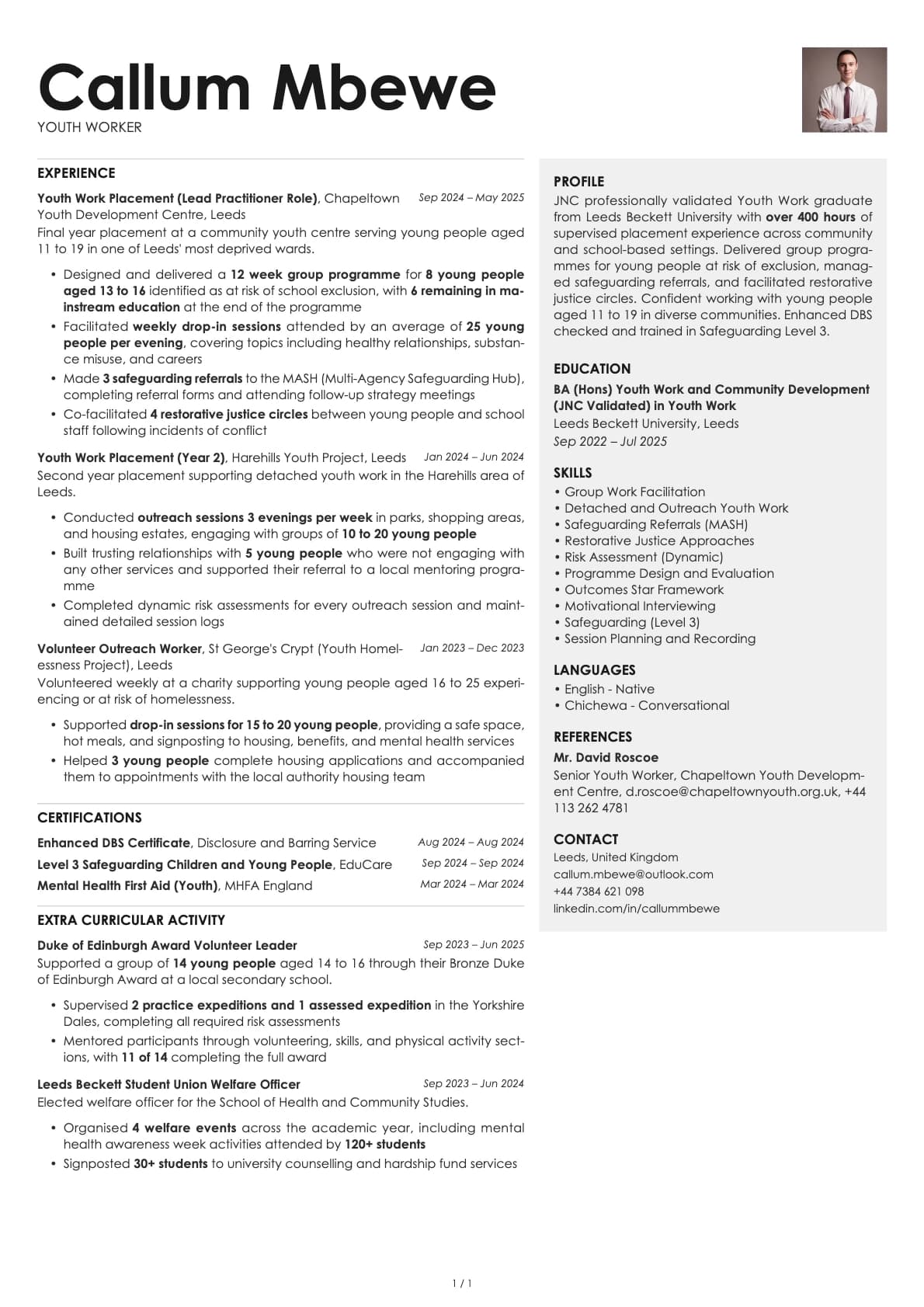
Youth Worker
A graduate youth worker resume example with community youth work placements, safeguarding, and programme delivery. See how to present your experience for youth work roles.