Junior Software Developer Resume Example
A junior software developer resume example for recent graduates. See how to present personal projects, technical skills, and internship experience to land your first dev role.

Laddro Team
Free to use. No account needed to start.
Free to use. No account needed to start.
Overview
Getting your first software developer job is tough. Every posting seems to want two years of experience, and you are sitting there with a degree, some coursework, and a handful of personal projects wondering if any of it counts. It does. You just need to present it the right way.
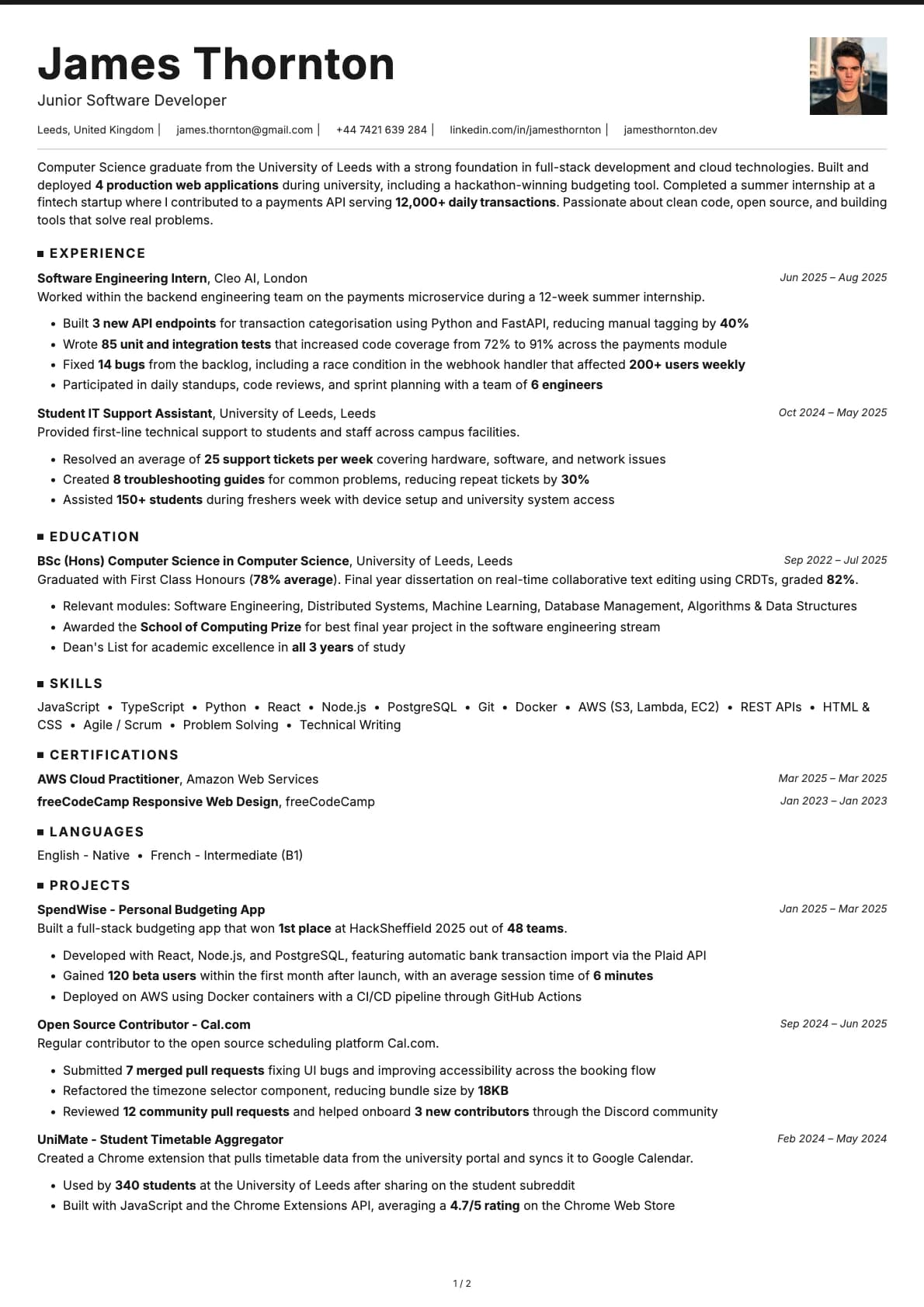
This resume belongs to Alex Chen, a recent computer science graduate from the University of Leeds. He completed a summer internship at a fintech startup and built several projects during university. His resume works because it treats those projects like real work, with measurable outcomes and specific technologies.
What Makes This Resume Work
Projects are front and centre. Alex does not just list his projects with a title and a GitHub link. Each one has a clear description of what it does, the tech stack used, and a result you can measure. His final year project, a budget tracking app built with React and Node.js, had 45 active users among his coursemates within three weeks of launch. That is a real metric that shows the project was not just an academic exercise.
The internship section is specific. Instead of writing "assisted the development team," Alex describes exactly what he built. He wrote API endpoints that reduced data retrieval time by 30%. He fixed 12 bugs during a two week sprint. These numbers give the hiring manager something concrete to evaluate.
Technical skills are organised clearly. Languages, frameworks, tools, and databases each get their own line. Recruiters scanning for specific keywords can find them immediately. He does not pad the list with technologies he only used once in a tutorial. Everything listed is something he can discuss confidently in an interview.
Education comes first. As a recent graduate, his BSc in Computer Science with a 2:1 classification is his strongest credential. He lists relevant modules like Software Engineering, Database Systems, and Algorithms. This tells the employer he has formal training in the fundamentals, not just self taught snippets.
Key Takeaways
Put your projects on your resume and treat them like jobs. Include the problem you solved, the tools you used, and any numbers that show impact. If your project had users, mention how many. If it improved something, say by how much.
Keep your skills section honest and well organised. Hiring managers would rather see five technologies you genuinely know than fifteen you barely touched.
If you did an internship, dig into the specifics. Count the pull requests you merged, the bugs you closed, the features you shipped. Every number makes your resume harder to ignore.
Build your own version
Open this layout in the builder and swap in your own details. It takes a few minutes.
Free to use. No account needed to start.
Was this resume example helpful?
Rate this example to help us create better content for you.
4.8 average from 156 ratingsRelated resume examples
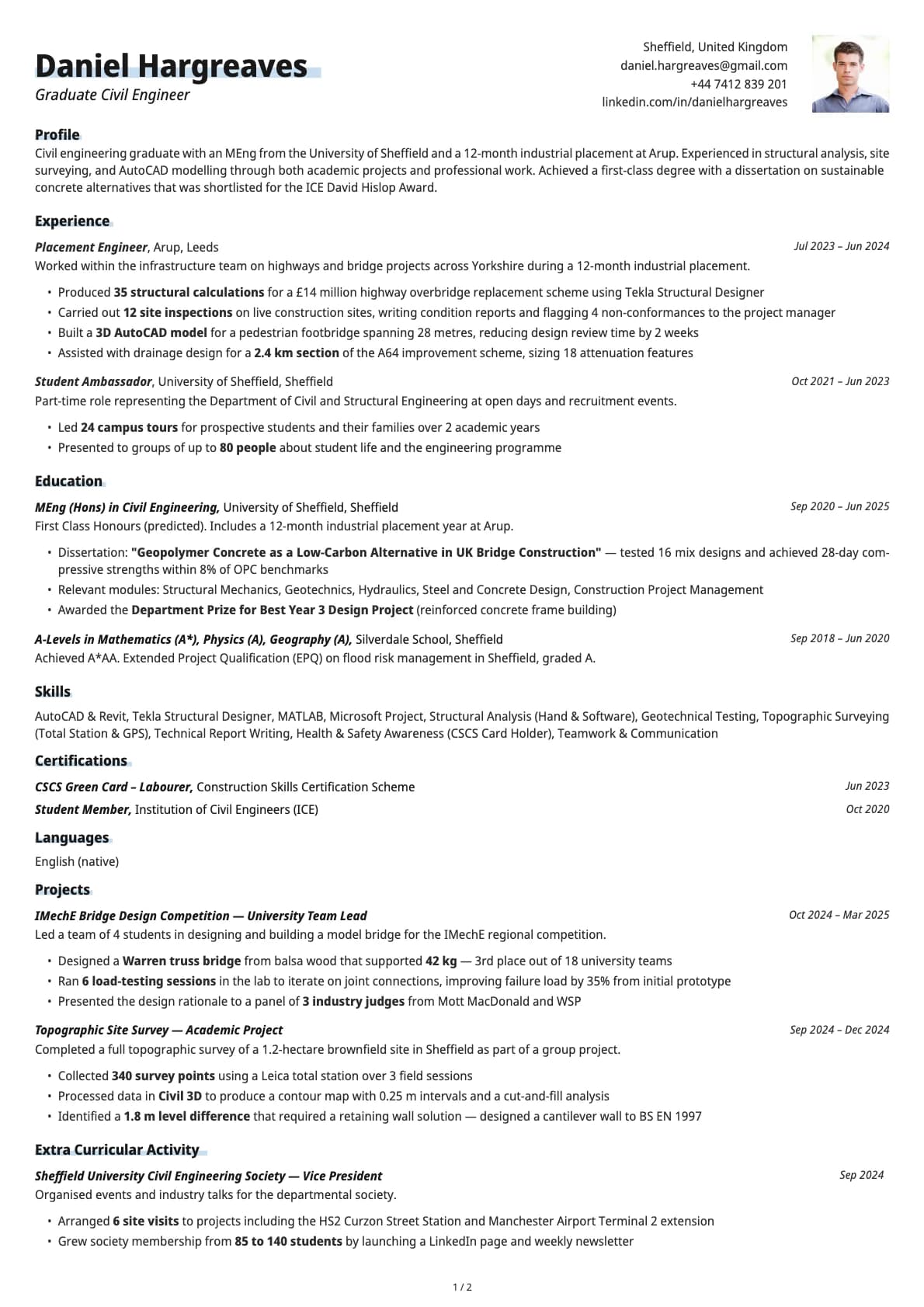
Graduate Civil Engineer
A graduate civil engineer resume example for recent graduates. See how to present your engineering degree, placement experience, and technical skills to land your first role.
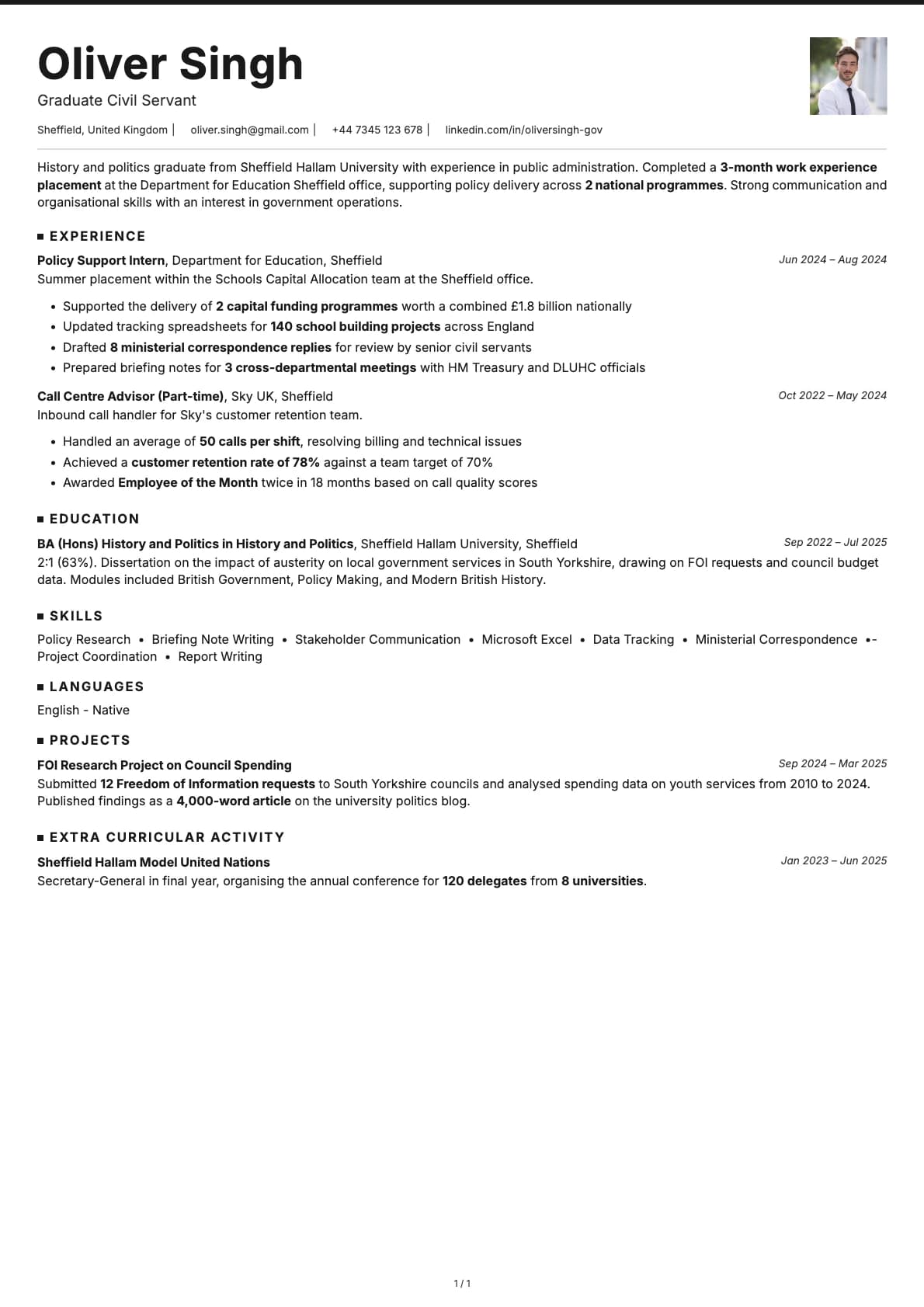
Graduate Civil Servant
A graduate civil servant resume example with Department for Education placement and policy support experience.
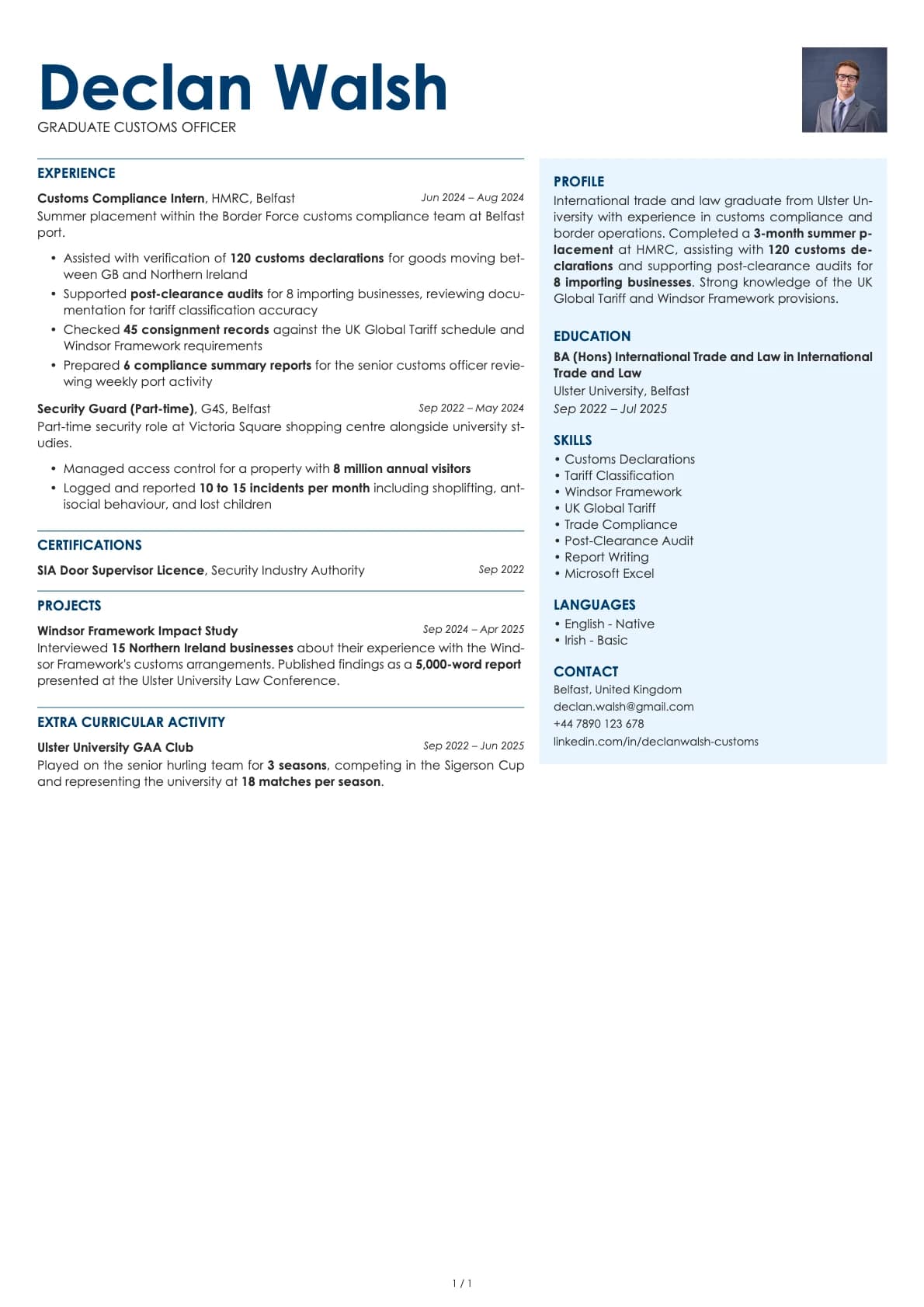
Graduate Customs Officer
A graduate customs officer resume example with HMRC placement and customs compliance experience.
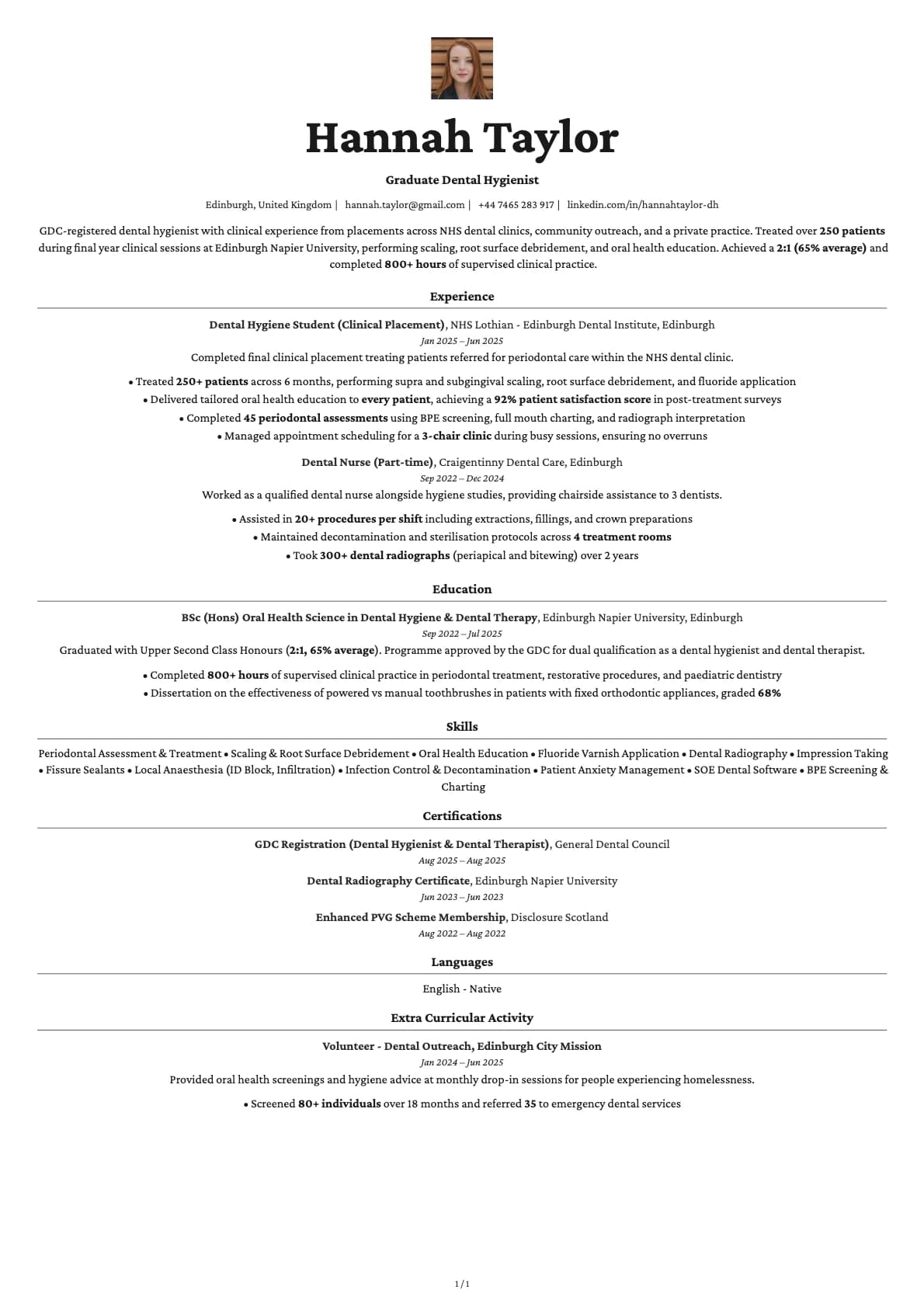
Graduate Dental Hygienist
A graduate dental hygienist resume example with GDC registration, clinical patient numbers, and periodontal treatment experience for new graduates.
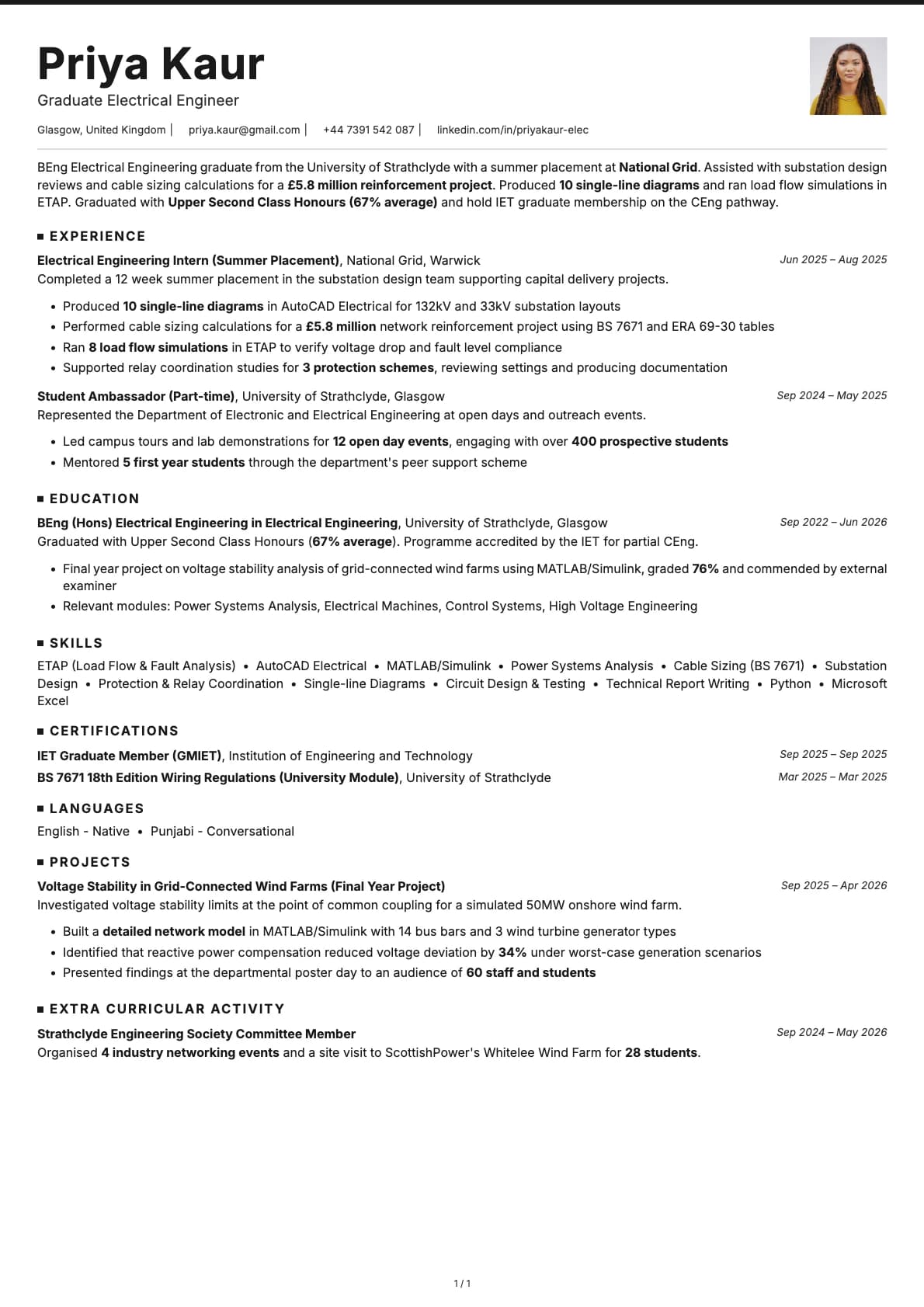
Graduate Electrical Engineer
A graduate electrical engineer resume example with power systems placement experience, IET membership, and MATLAB proficiency.
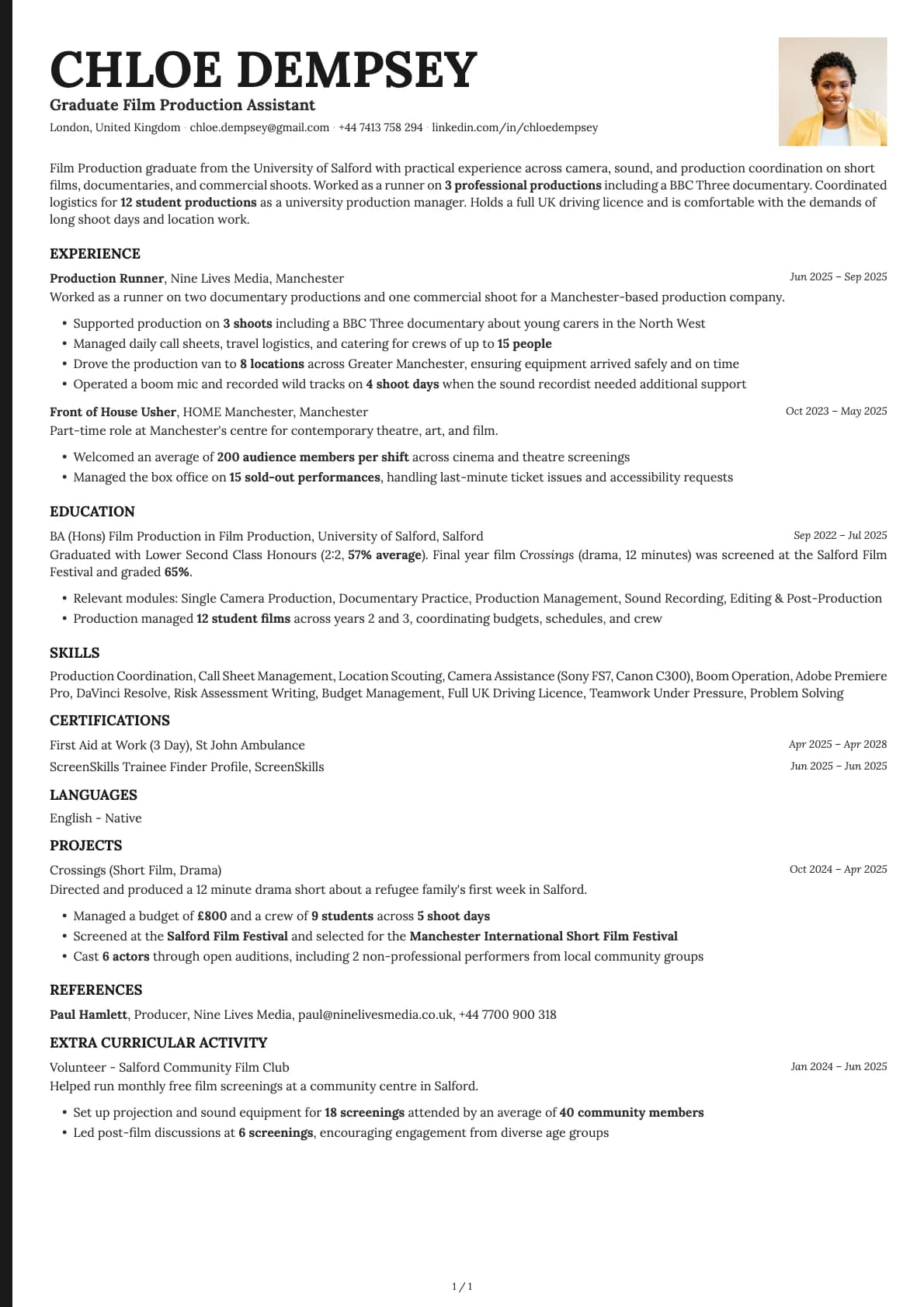
Graduate Film Production Assistant
A graduate film production assistant resume example. See how to present runner experience, production coordination, and on-set skills to break into the film industry.
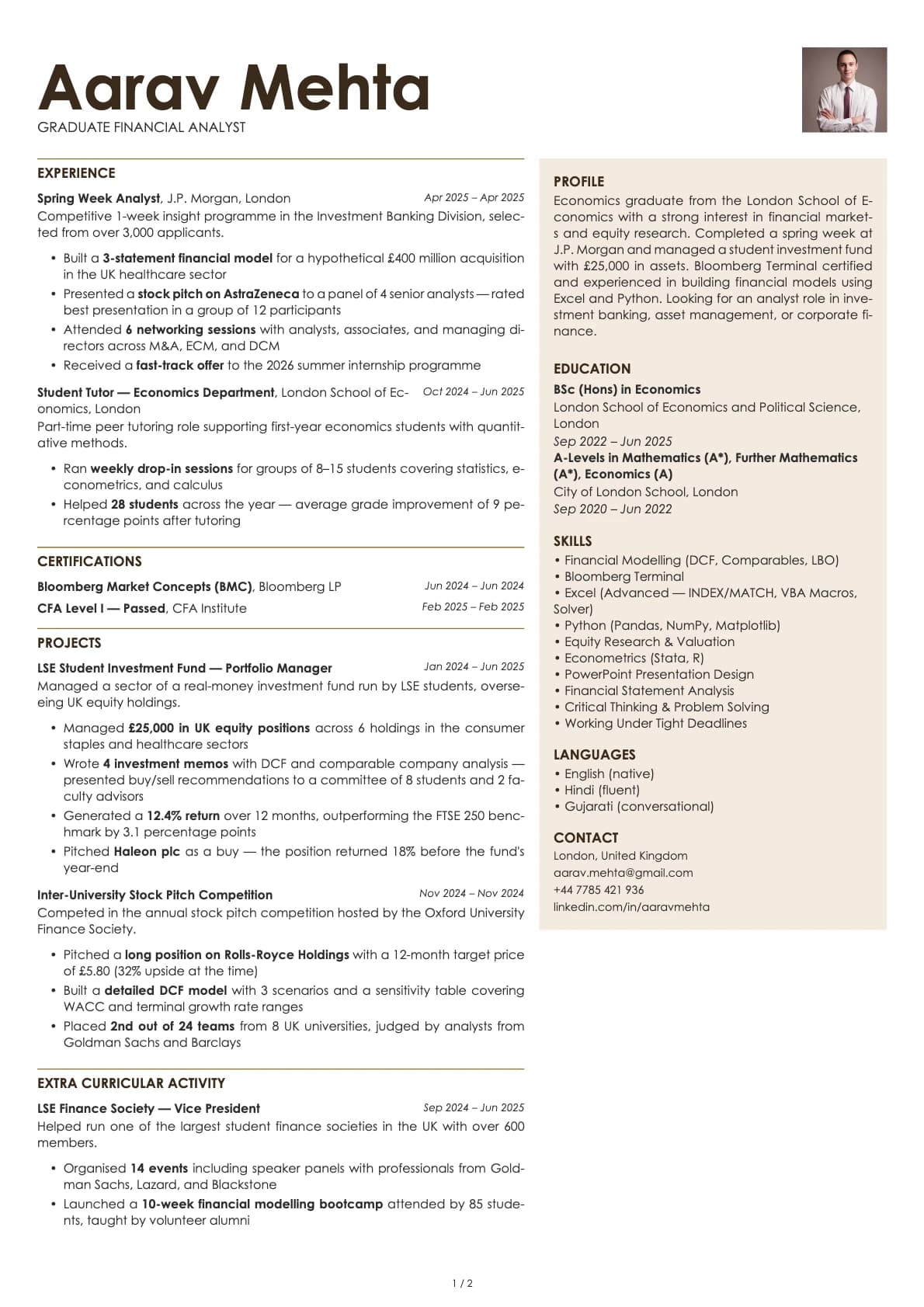
Graduate Financial Analyst
A graduate financial analyst resume example for recent graduates. See how to present your financial modelling skills, Excel expertise, and internship experience to land an analyst role.
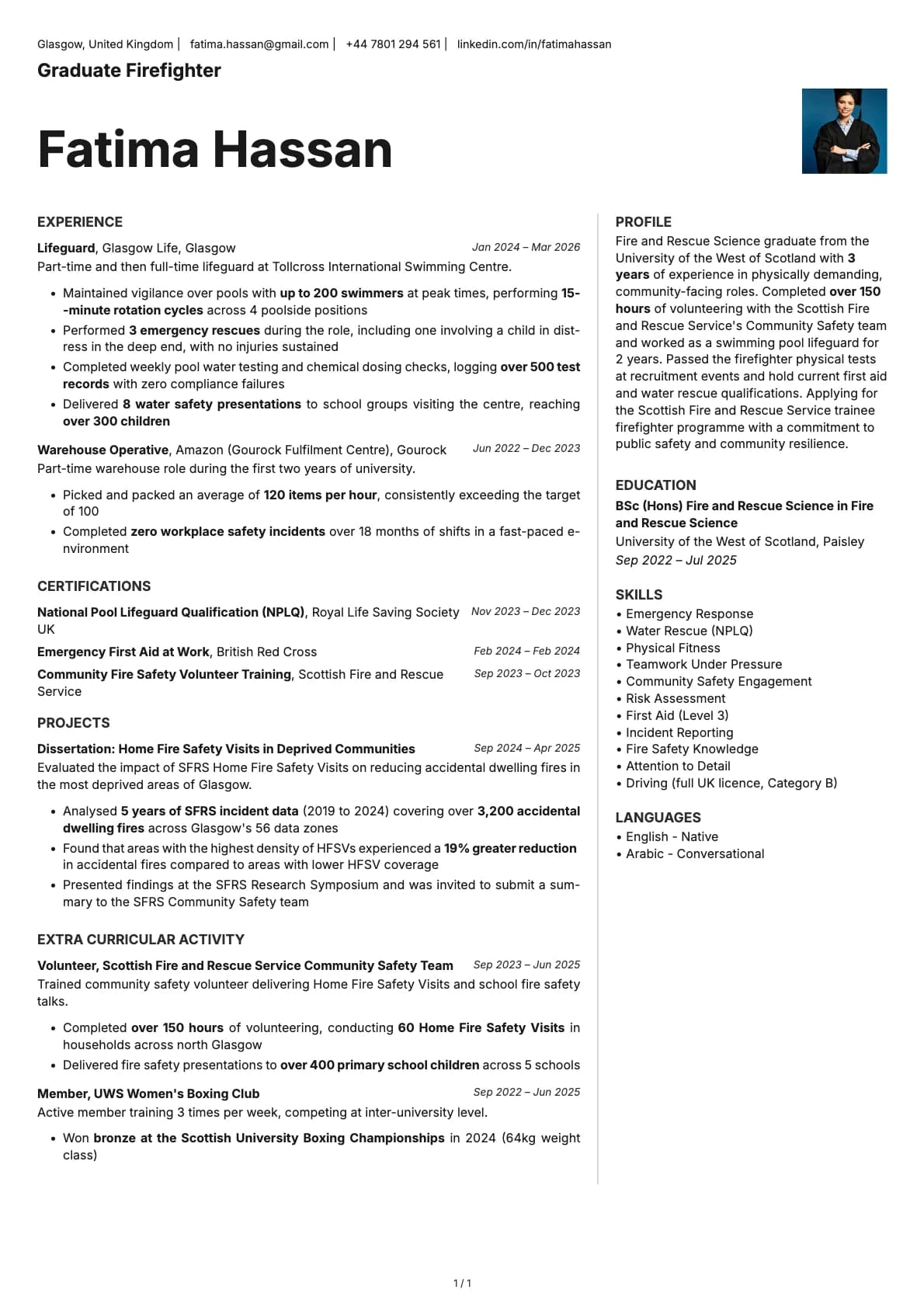
Graduate Firefighter
A graduate firefighter resume example showing how to combine a Fire and Rescue Science degree with lifeguarding and community safety volunteering.
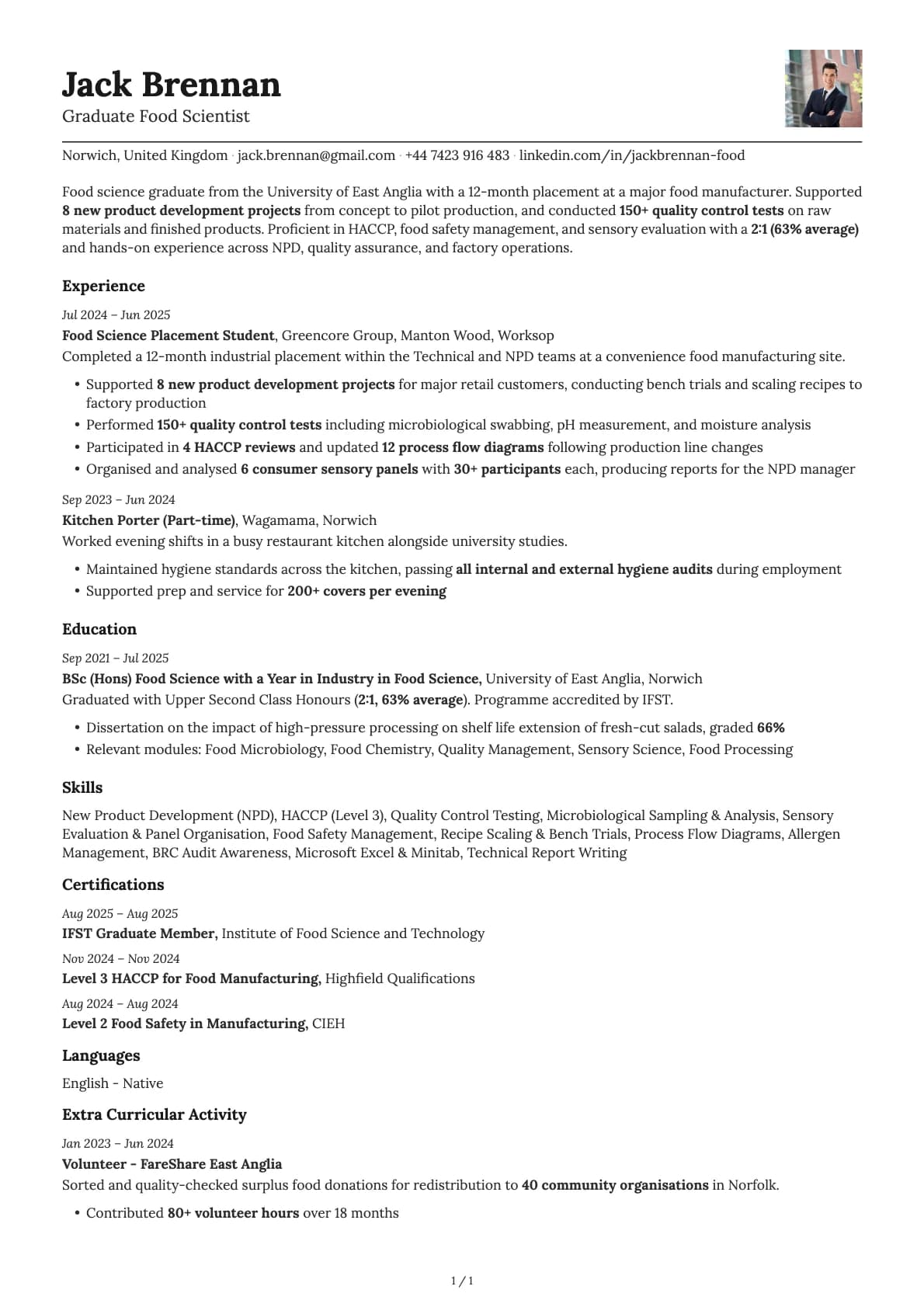
Graduate Food Scientist
A graduate food scientist resume example with NPD placement experience, HACCP knowledge, and quality control test numbers for food science graduates.
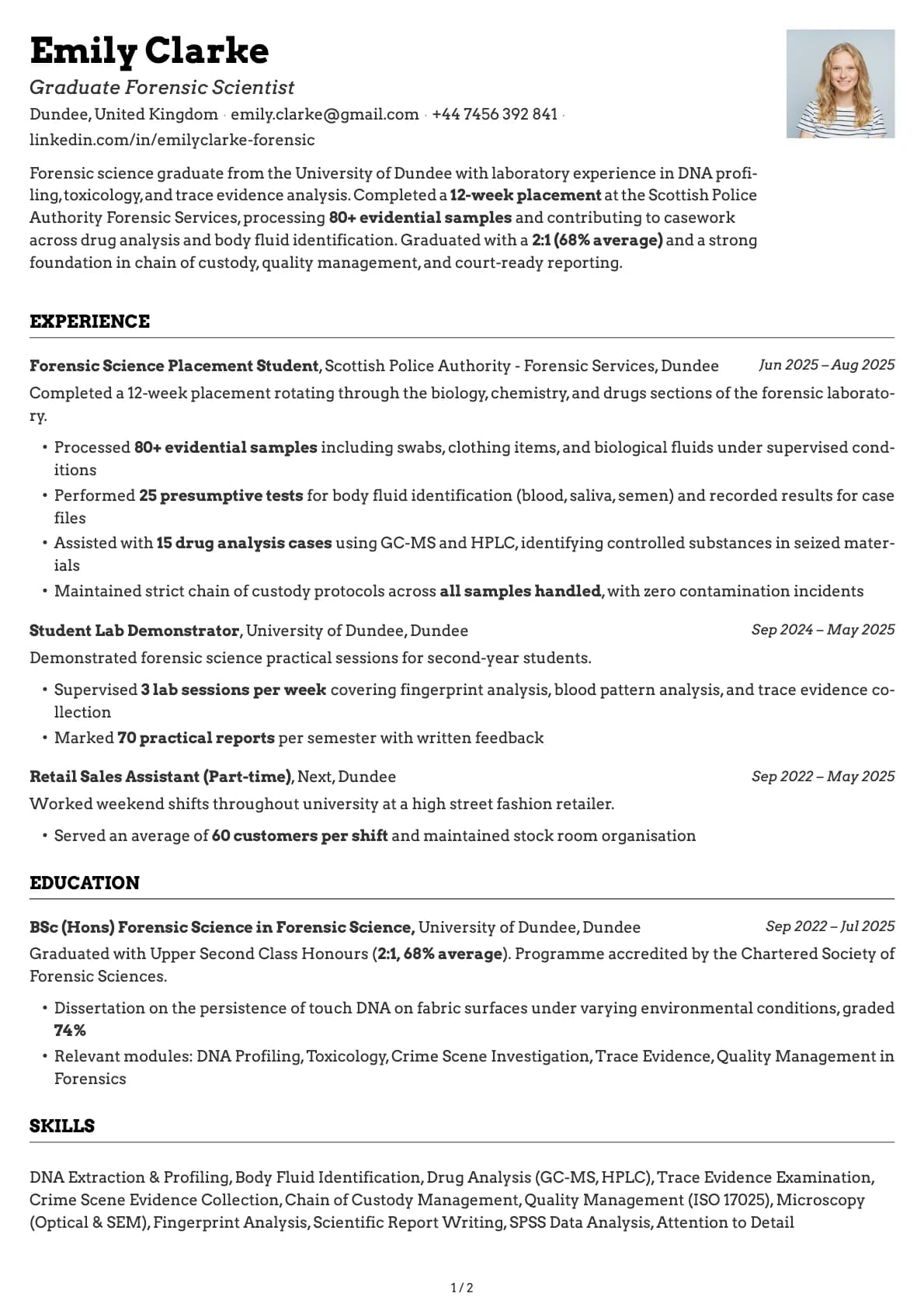
Graduate Forensic Scientist
A graduate forensic scientist resume example with police lab placement experience, DNA profiling skills, and chain of custody knowledge.
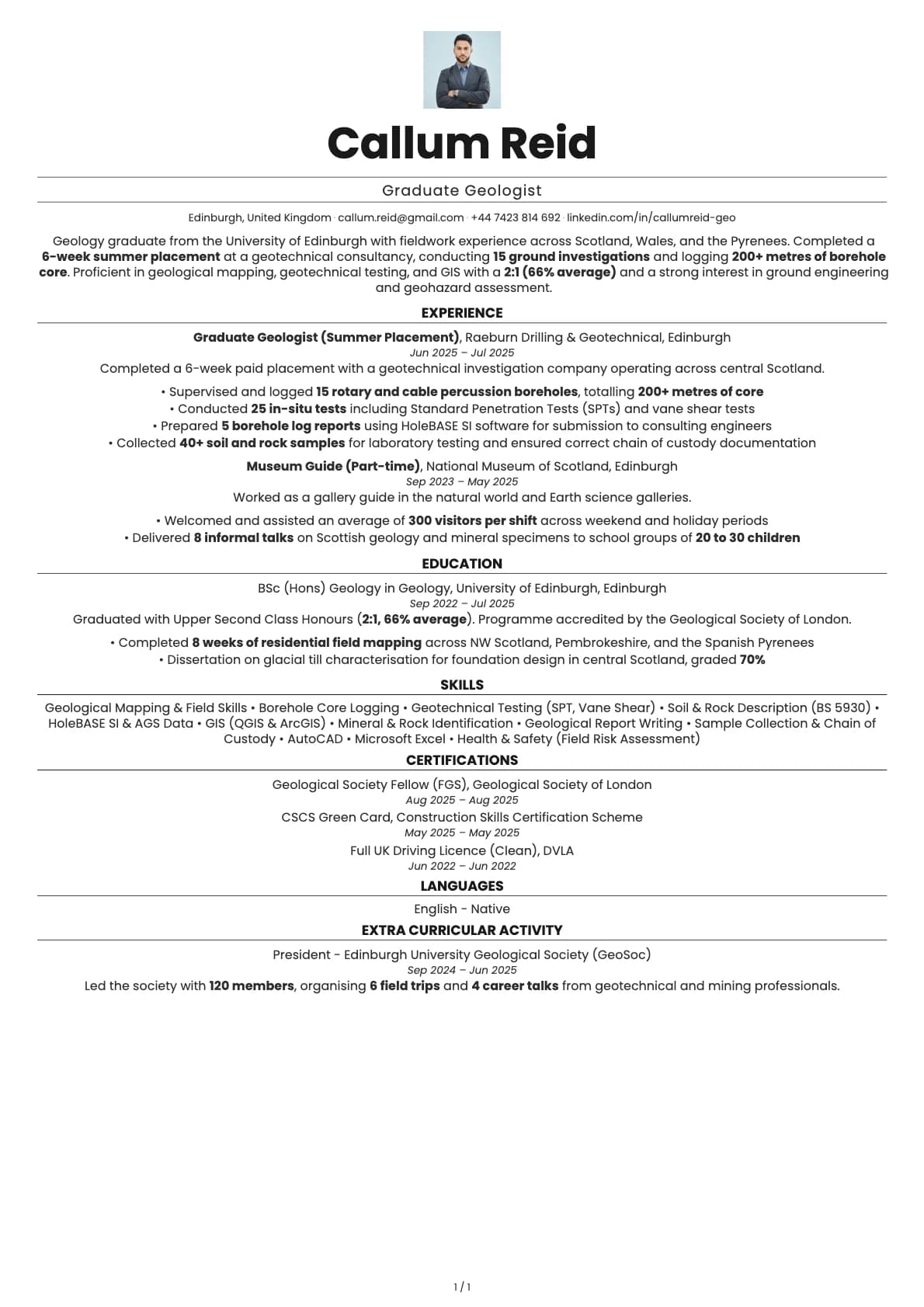
Graduate Geologist
A graduate geologist resume example with geotechnical placement experience, borehole logging, and Geological Society membership.
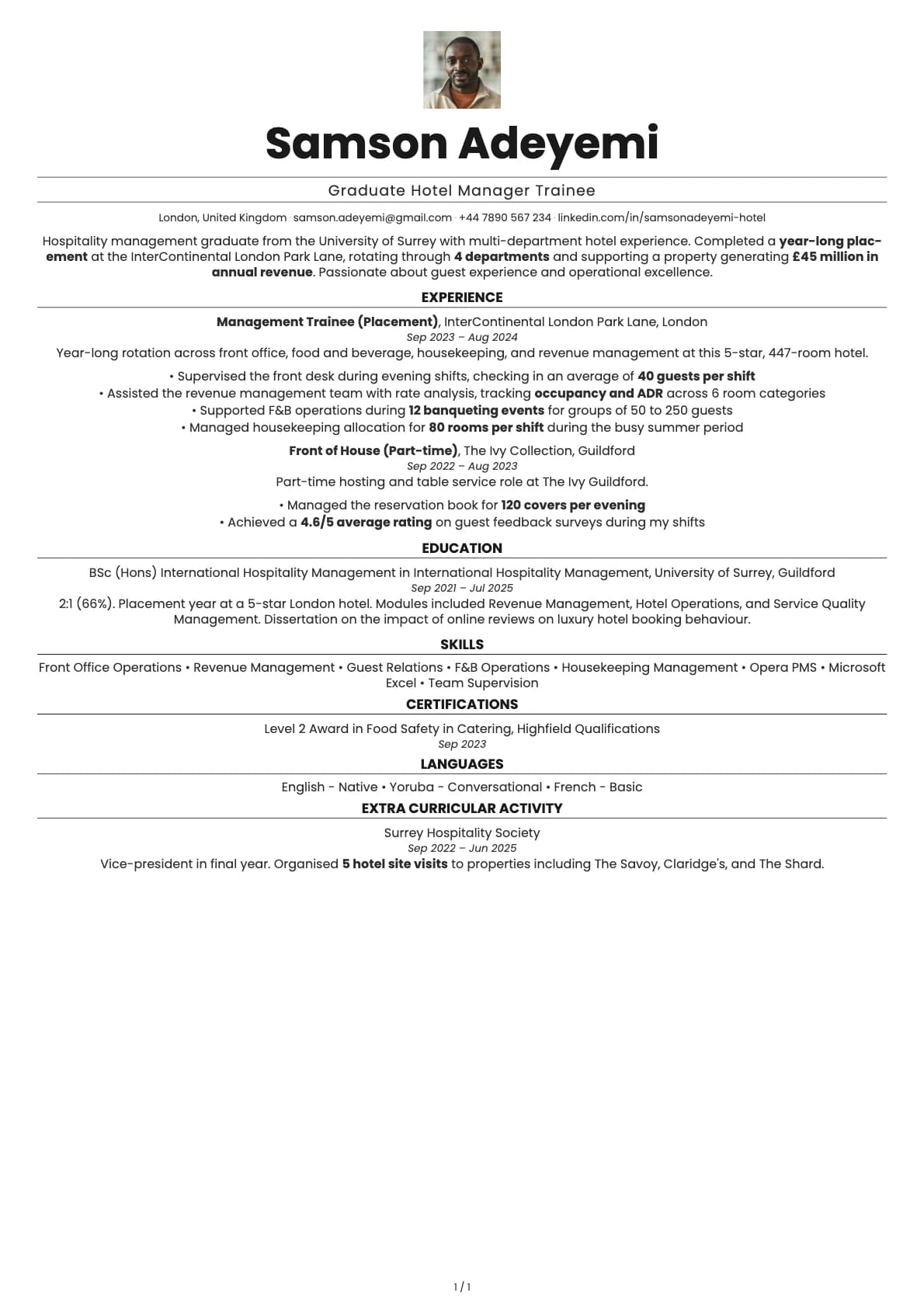
Graduate Hotel Manager Trainee
A graduate hotel manager trainee resume example with InterContinental placement and multi-department experience.