Junior Bank Associate Resume Example
A junior bank associate resume example for banking graduates. See how to present your compliance knowledge, customer service skills, and internship experience.

Laddro Team
Free to use. No account needed to start.
Free to use. No account needed to start.
Overview
Junior bank associate roles are the gateway into retail and commercial banking for most graduates. Banks want candidates who understand their products, can follow compliance procedures without mistakes, and can build rapport with customers. The hiring bar is not as high as investment banking, but it is more practical. You need to show you have handled real customer interactions and understand the regulatory environment.
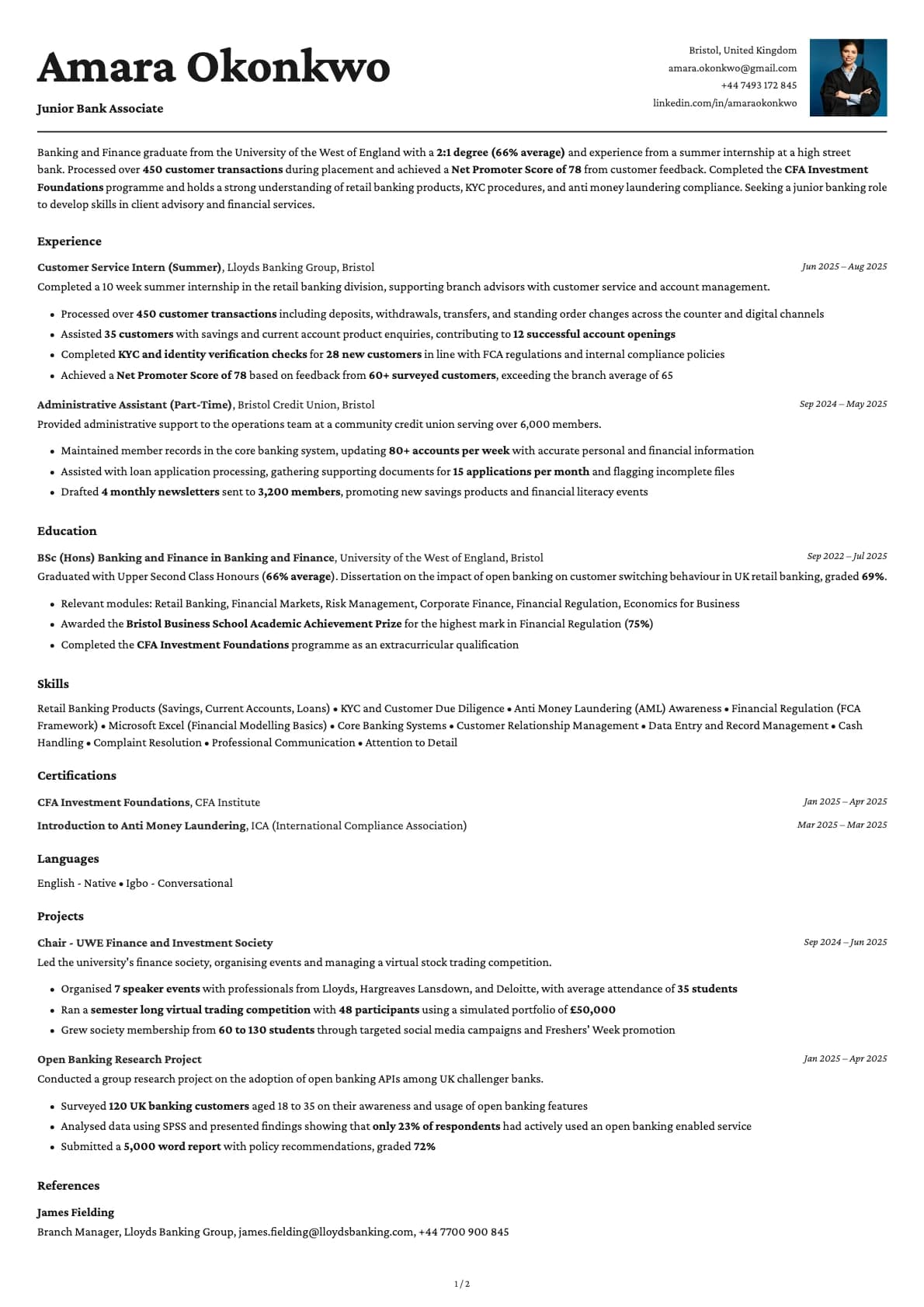
This resume belongs to Amara Okonkwo, a recent Banking and Finance graduate from the University of the West of England. She completed a summer internship at Lloyds and worked part time at a community credit union. Her resume works because it demonstrates both customer facing ability and compliance awareness, which are the two things banks care about most at the junior level.
What Makes This Resume Work
The internship shows she can handle the core duties. Amara processed over 450 customer transactions, assisted with 12 account openings, and completed KYC verification checks for 28 new customers. Her Net Promoter Score of 78 exceeded the branch average of 65, which tells a recruiter that customers genuinely responded well to her service. These are not abstract achievements. They are the exact tasks she would be doing in a junior role.
Compliance knowledge is highlighted properly. She lists KYC, AML awareness, and FCA regulatory knowledge in her skills section, and backs it up with a certification from the International Compliance Association. For banking roles, compliance is not optional. A candidate who already understands customer due diligence and can reference it with specific examples will always be preferred over one who has never encountered these concepts outside a textbook.
The credit union role adds operational depth. Updating 80+ member accounts per week, processing loan application documents, and drafting newsletters for 3,200 members shows she understands the operational side of financial services. This is especially valuable because it demonstrates experience in a different type of institution from a high street bank, giving her a broader perspective on how financial services work.
Professional certifications signal long term commitment. The CFA Investment Foundations programme and ICA anti money laundering course are not required for junior banking roles, but having them shows Amara is investing in her professional development before she has even started her career. This kind of proactive approach is exactly what banking graduate recruiters look for.
Key Takeaways
Banking resumes need to balance customer service evidence with regulatory awareness. State how many customers you served, the products you sold, and any satisfaction metrics you can reference. Mention KYC, AML, and FCA compliance if you have any exposure to them, because compliance is woven into every banking role from day one. Professional certifications like CFA Investment Foundations or ICA courses are free or inexpensive and genuinely impress recruiters. If you have worked at a building society, credit union, or fintech alongside your degree, make sure that experience features prominently, as it shows you understand financial services beyond the textbook.
Build your own version
Open this layout in the builder and swap in your own details. It takes a few minutes.
Free to use. No account needed to start.
Was this resume example helpful?
Rate this example to help us create better content for you.
4.8 average from 142 ratingsRelated resume examples
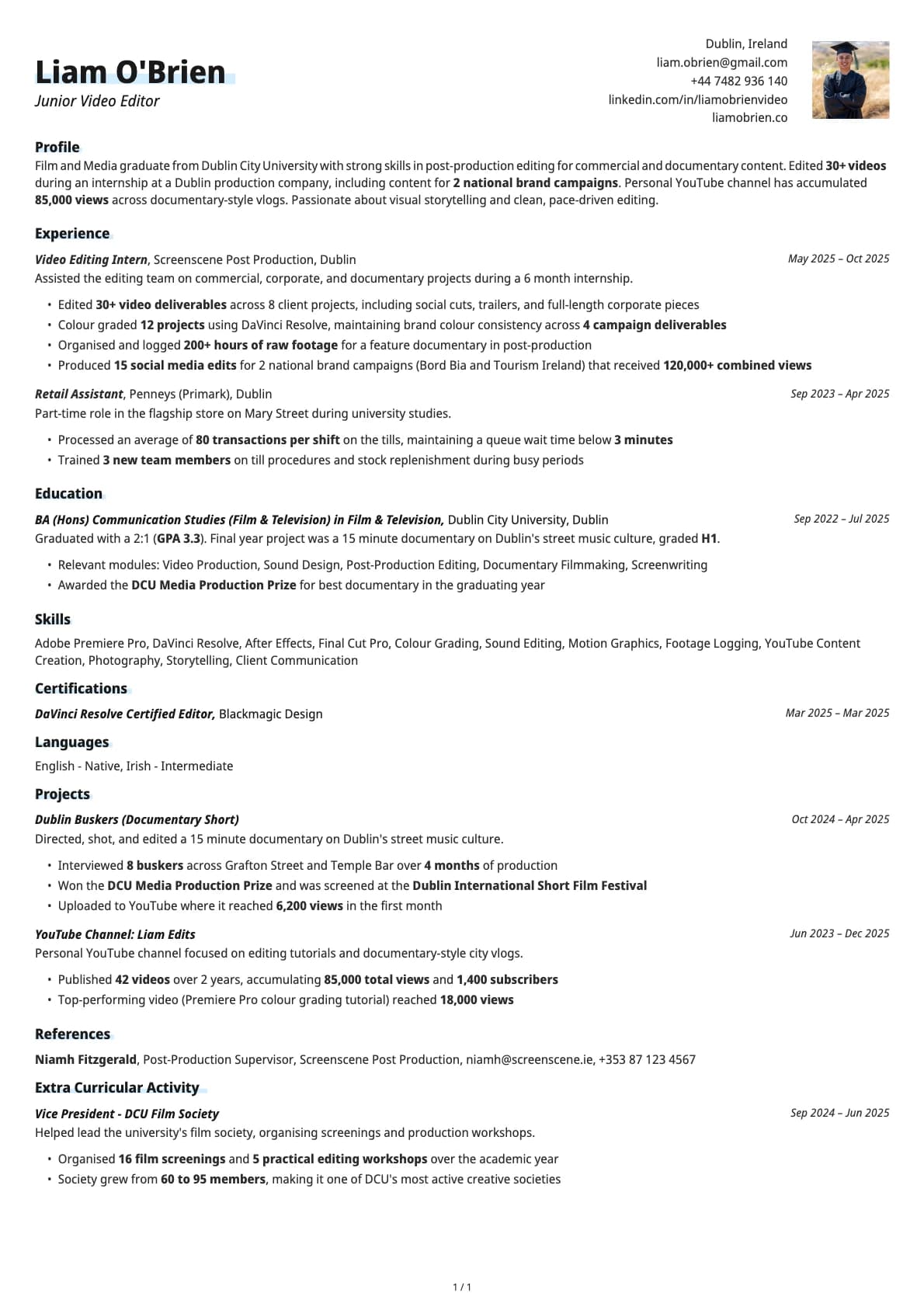
Junior Video Editor
A junior video editor resume example for recent graduates. Learn how to present post-production experience, personal projects, and editing skills to land your first editing role.
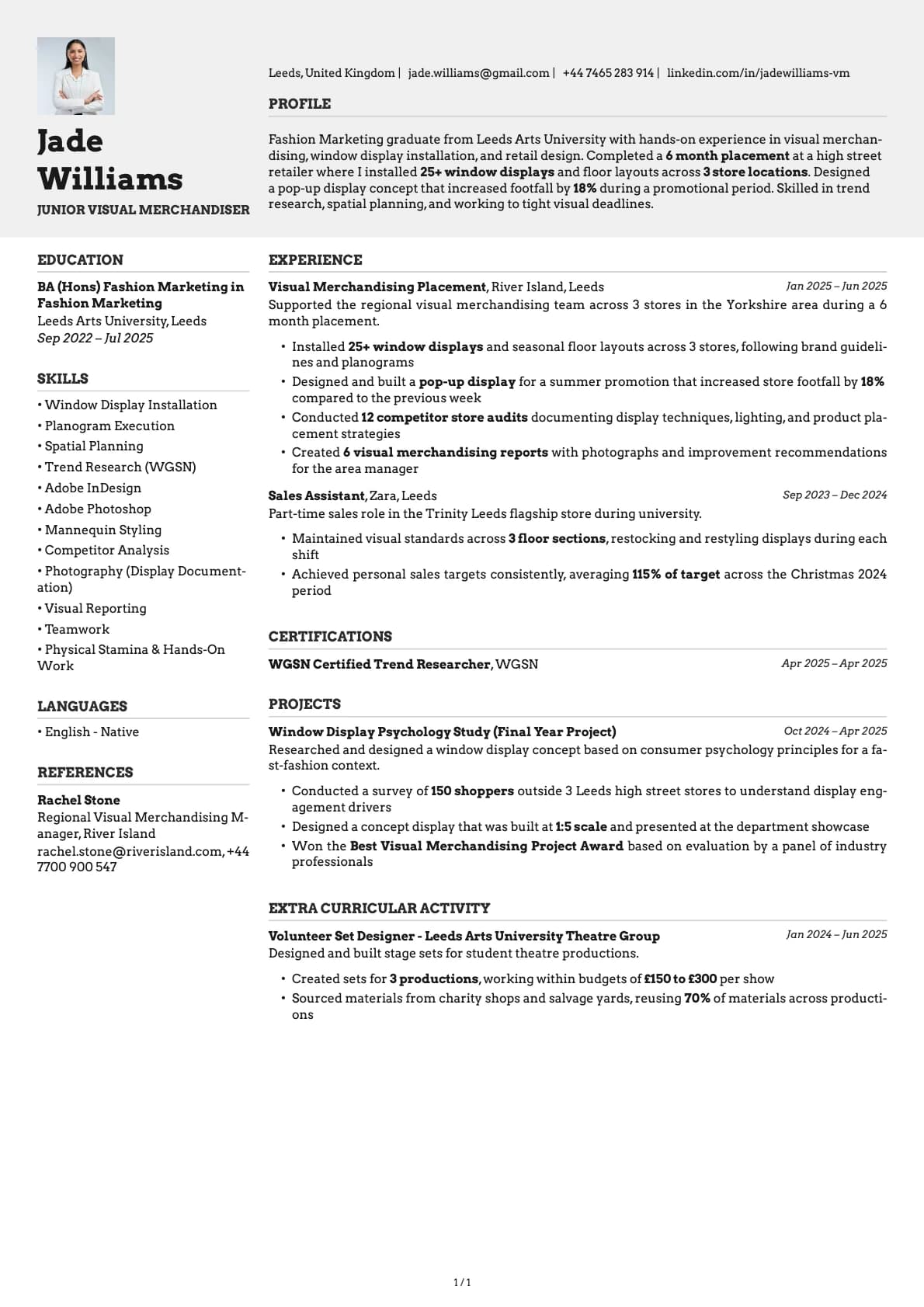
Junior Visual Merchandiser
A junior visual merchandiser resume example for graduates. See how to present display installation experience, retail knowledge, and trend research skills to land your first VM role.
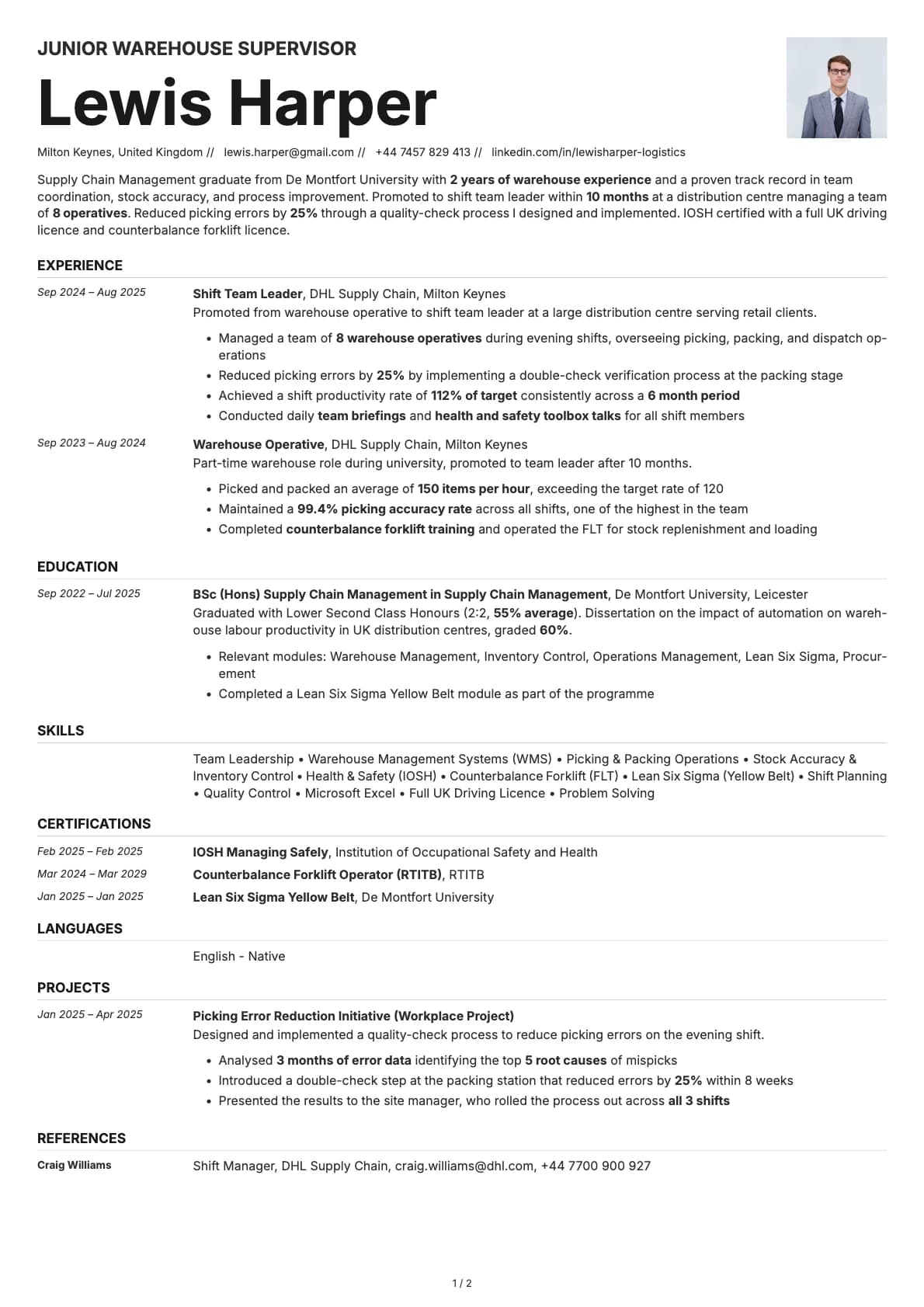
Junior Warehouse Supervisor
A junior warehouse supervisor resume example for graduates. See how to present team leadership, process improvement, and logistics experience to land your first warehouse supervision role.
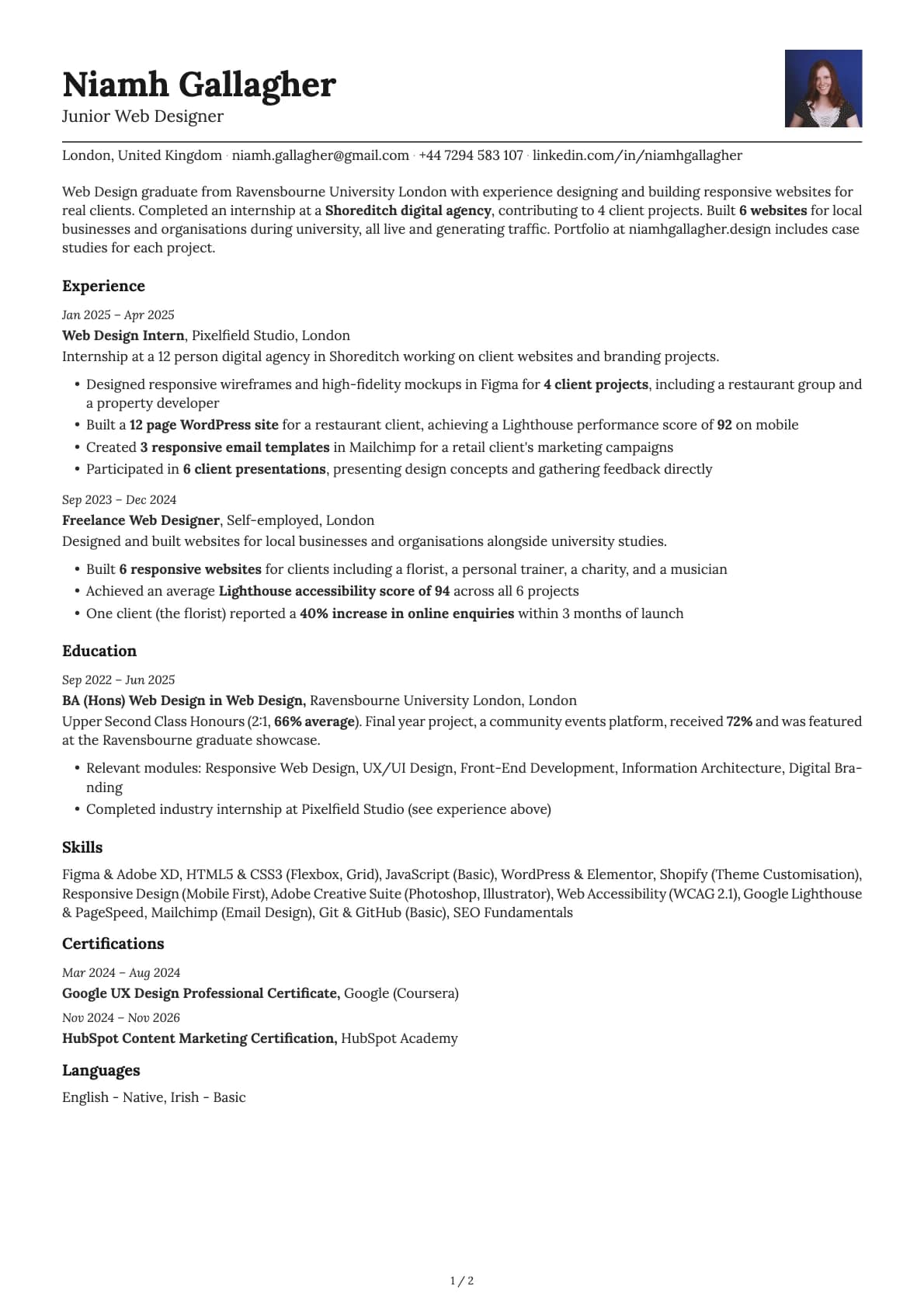
Junior Web Designer
A junior web designer resume example with responsive site builds, client projects, and Figma prototypes from a Web Design graduate starting their career.
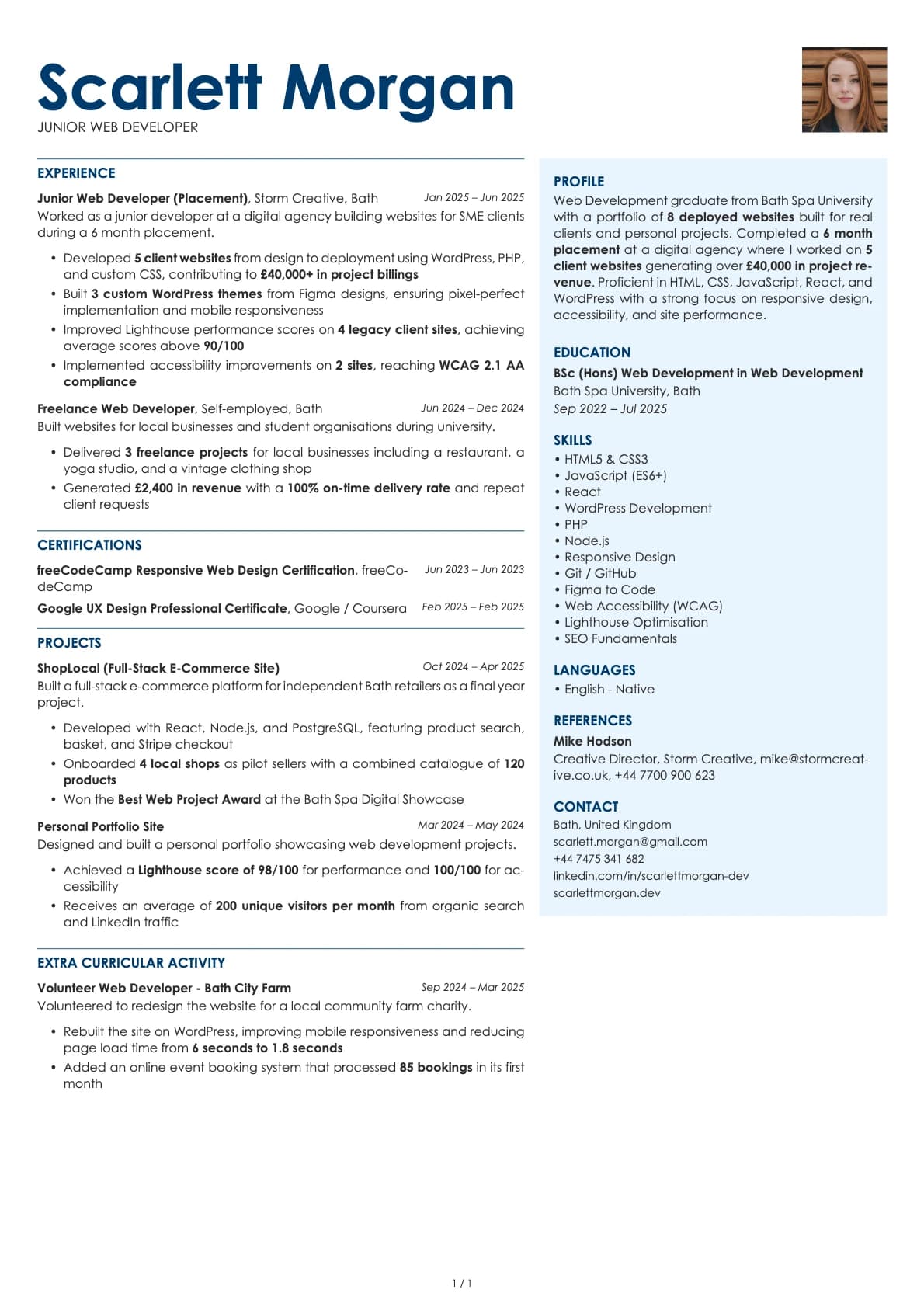
Junior Web Developer
A junior web developer resume example for graduates. See how to present client work, freelance projects, and performance optimisation to land your first web development role.
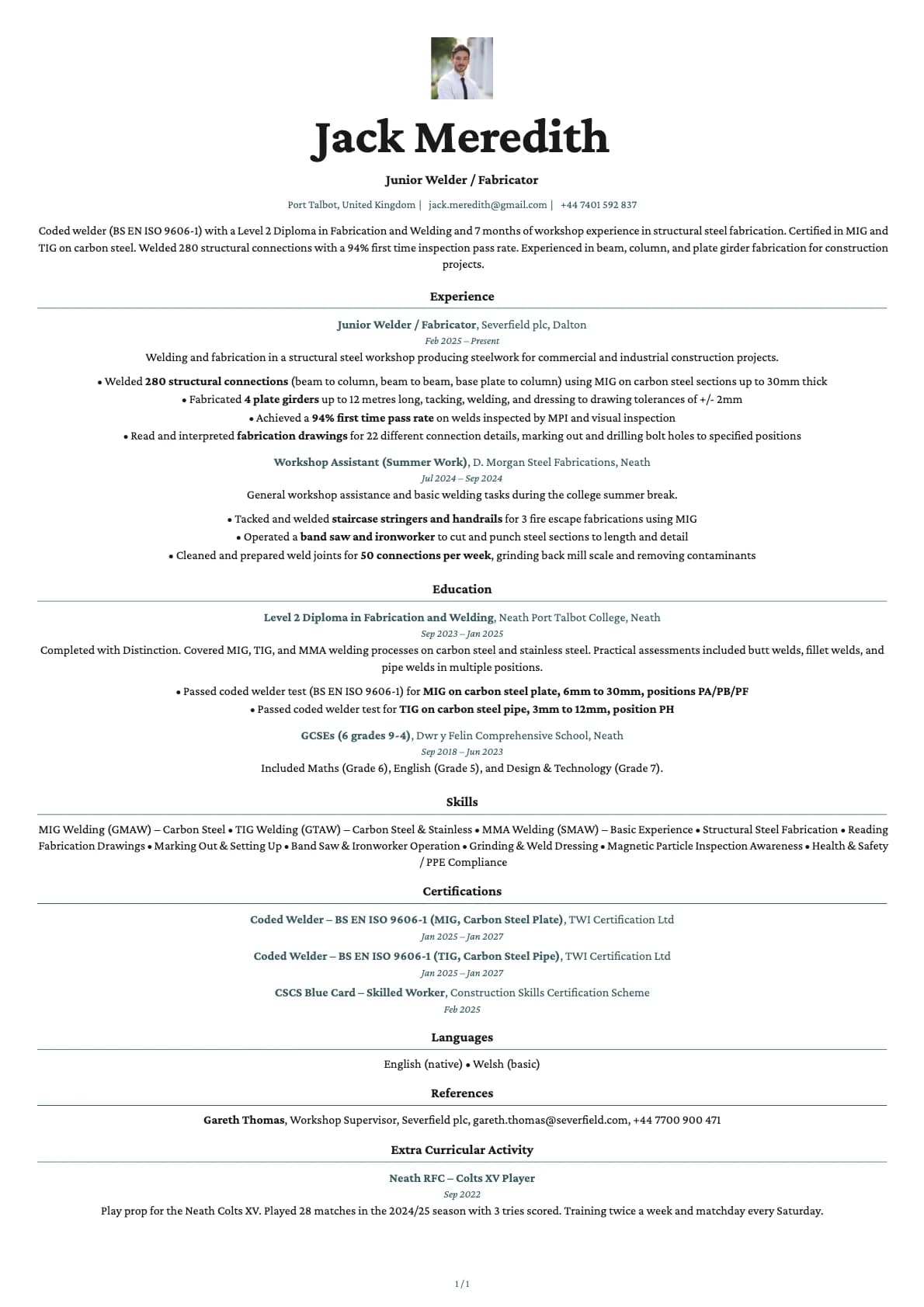
Junior Welder
A junior welder resume example for welding course graduates with coded welder certification. See how to present your welding processes, materials experience, and test certifications.

Lab Research Assistant
A lab research assistant resume example for science graduates. See how to present laboratory skills, research placements, and academic projects to land your first research role.
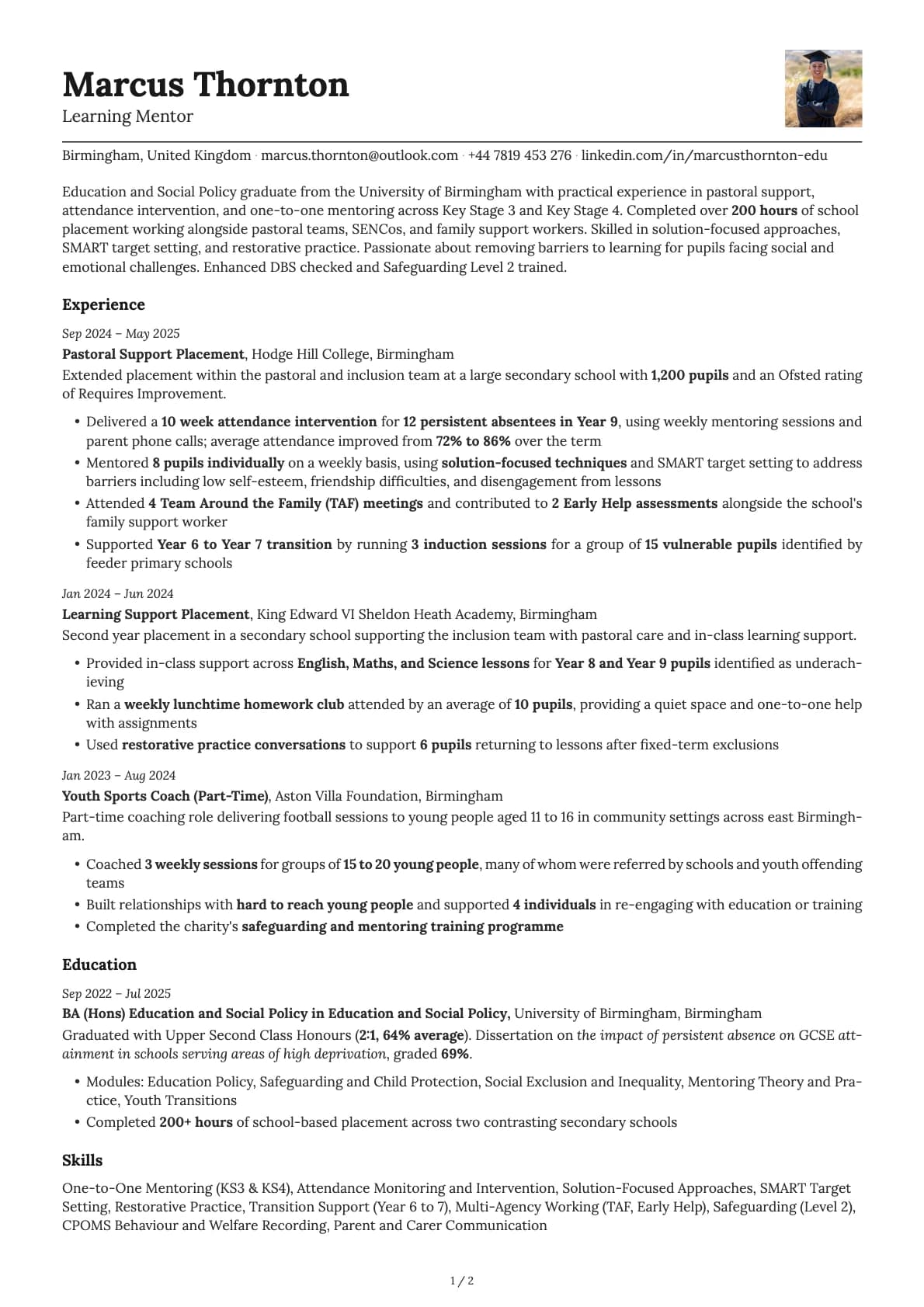
Learning Mentor
A graduate learning mentor resume example with pastoral support, attendance intervention, and pupil mentoring experience. See how to present your skills for learning mentor roles.
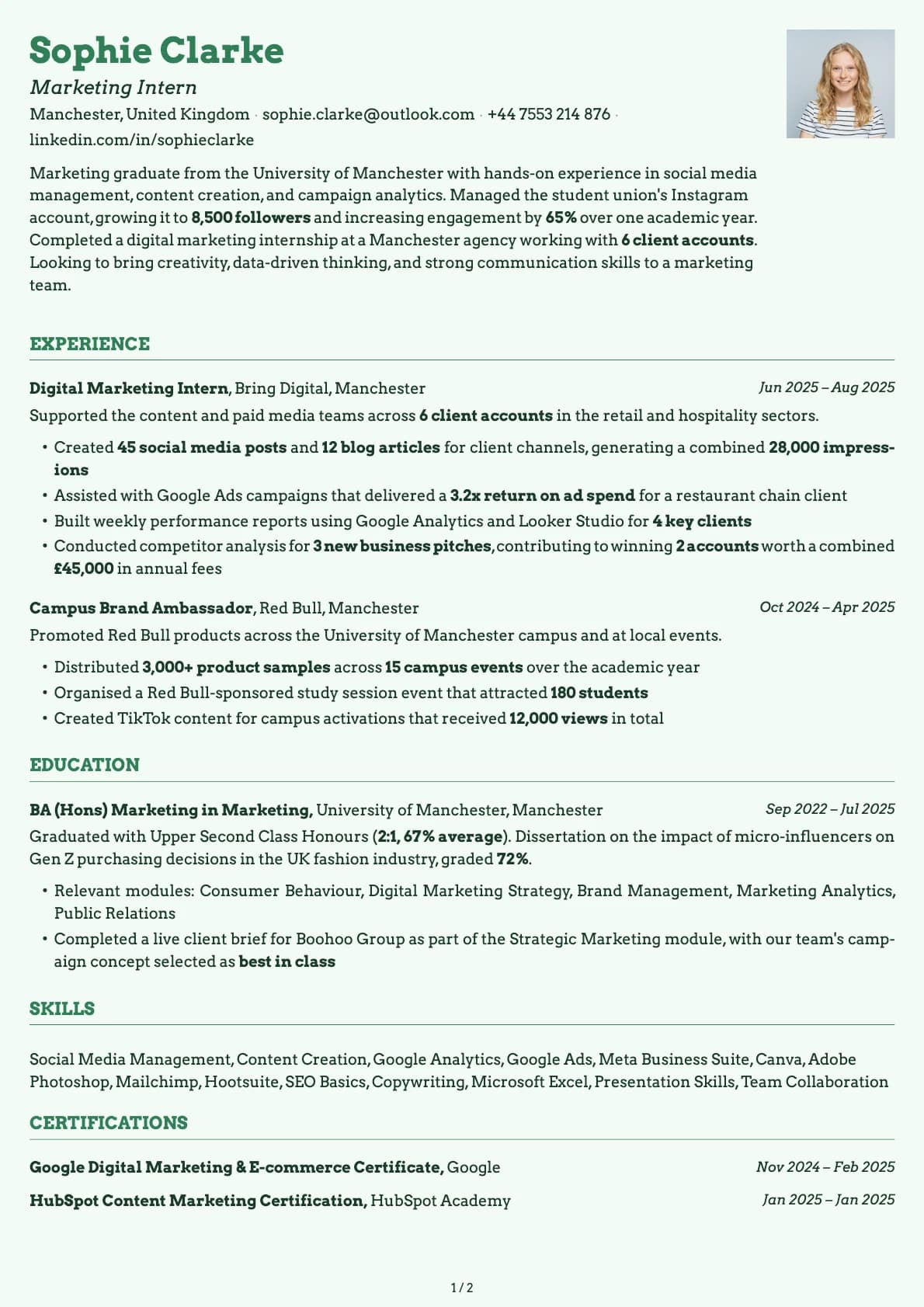
Marketing Intern
A marketing intern resume example for recent graduates. Learn how to showcase campaign results, social media metrics, and university marketing projects on your resume.
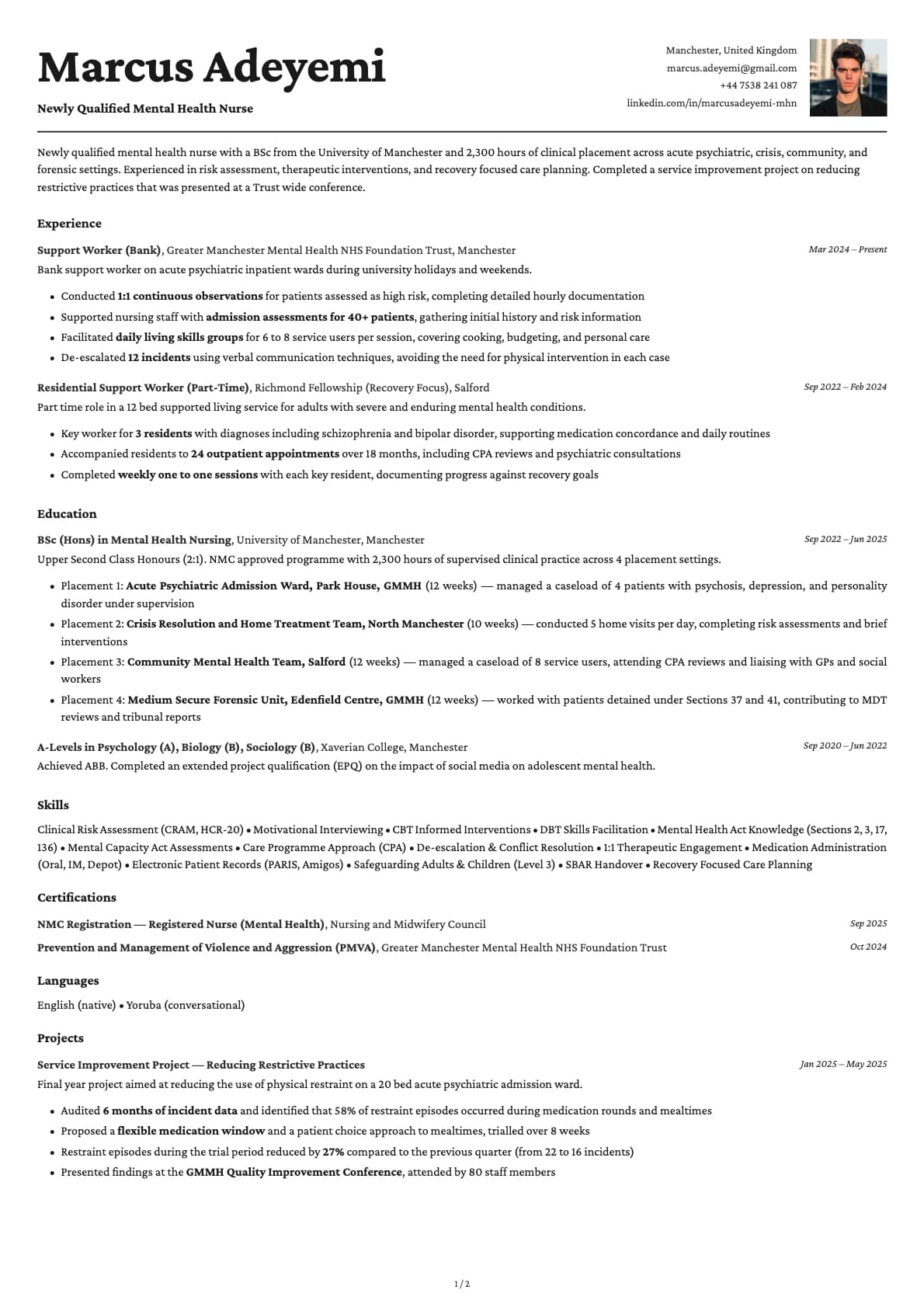
Mental Health Nurse
A newly qualified mental health nurse resume example showing how to present psychiatric placements, therapeutic skills, and NMC registration for your first Band 5 role.
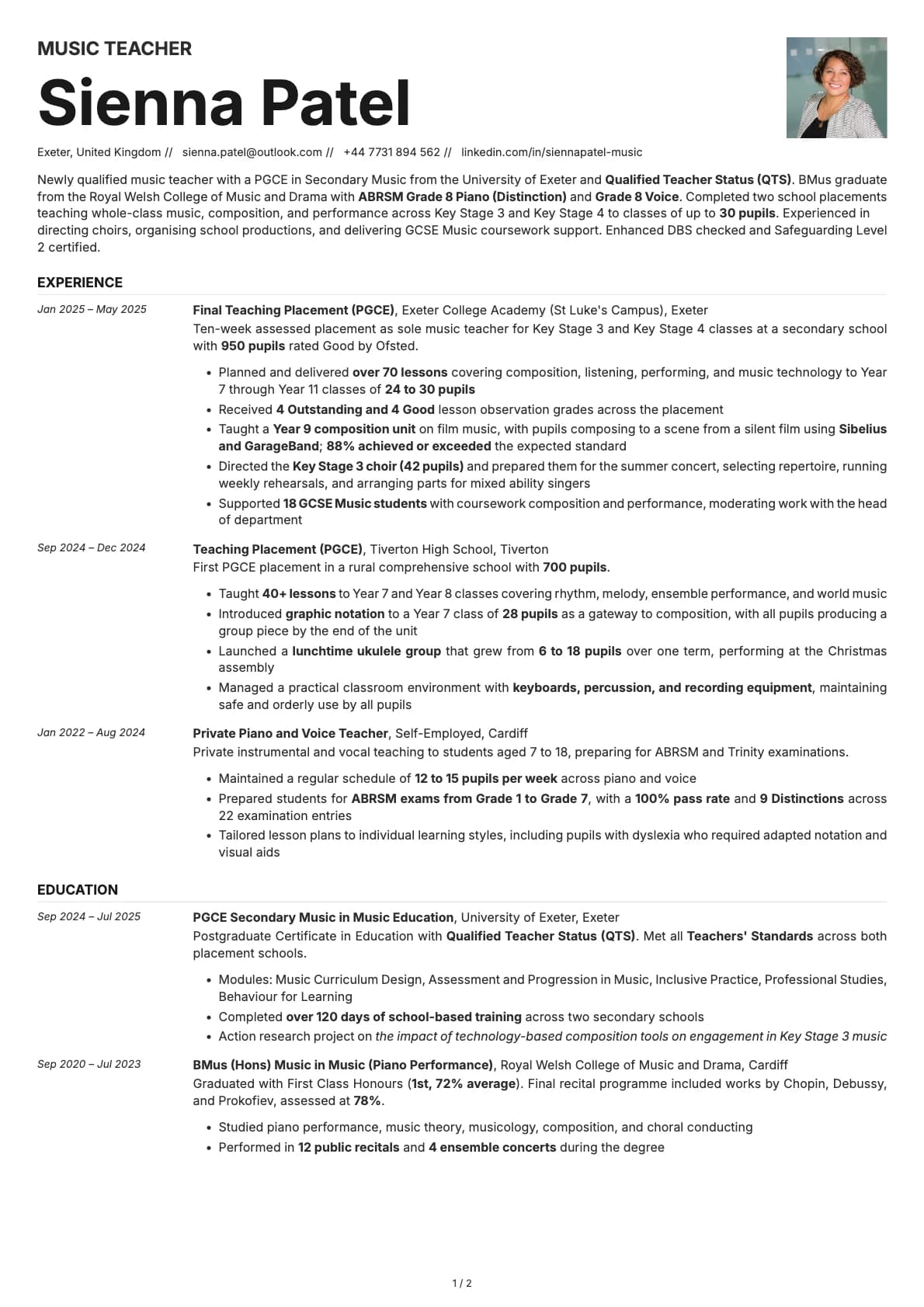
Music Teacher
A graduate music teacher resume example with PGCE, QTS, and classroom music teaching placements. See how to present your performance and teaching skills for music teacher roles.
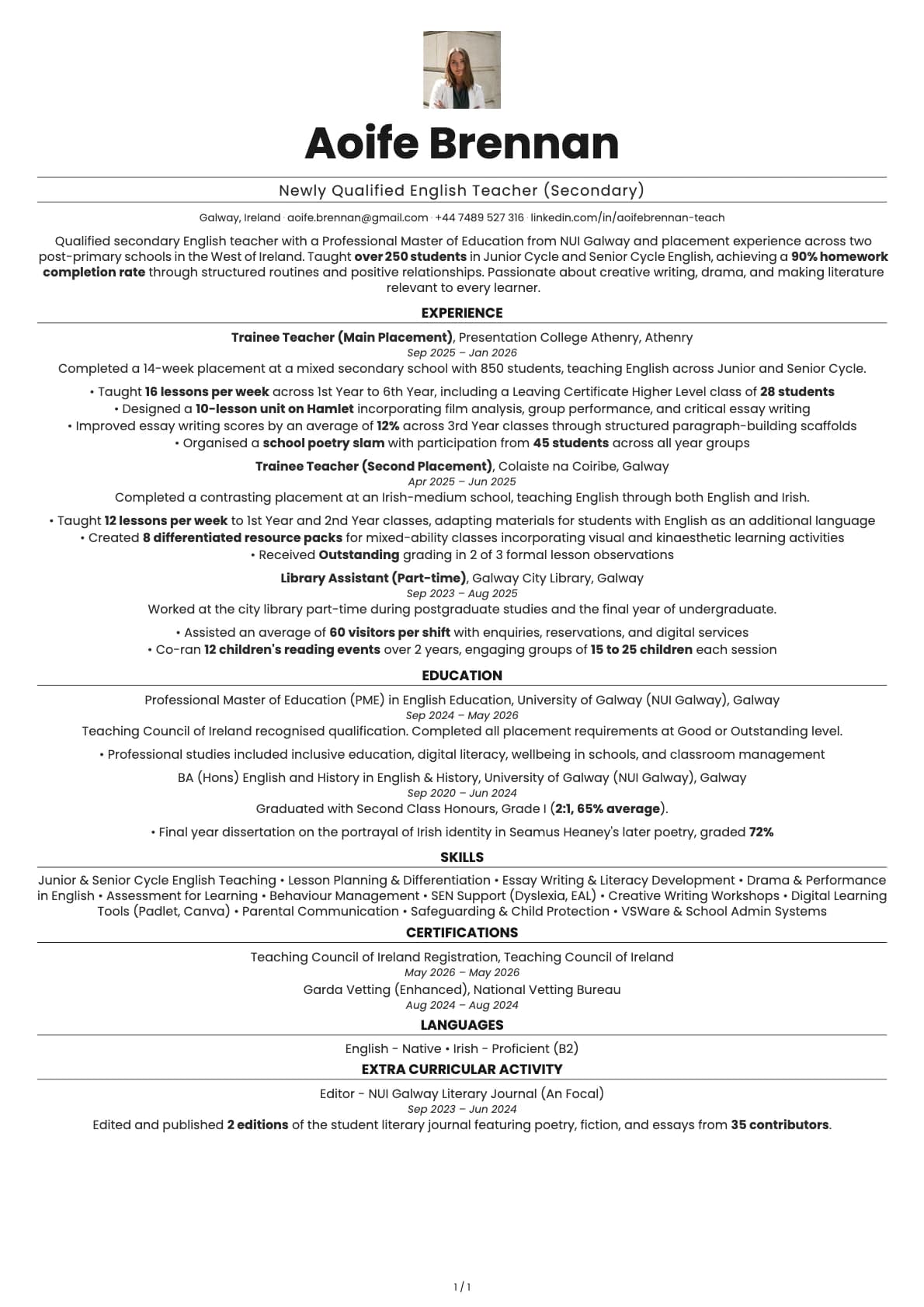
Newly Qualified Secondary English Teacher
A newly qualified secondary English teacher resume example with placement experience, student outcome data, and Teaching Council registration.