Junior Data Analyst Resume Example
A junior data analyst resume example for recent graduates. See how to showcase your SQL skills, Python projects, and analytical experience to land your first analyst role.

Laddro Team
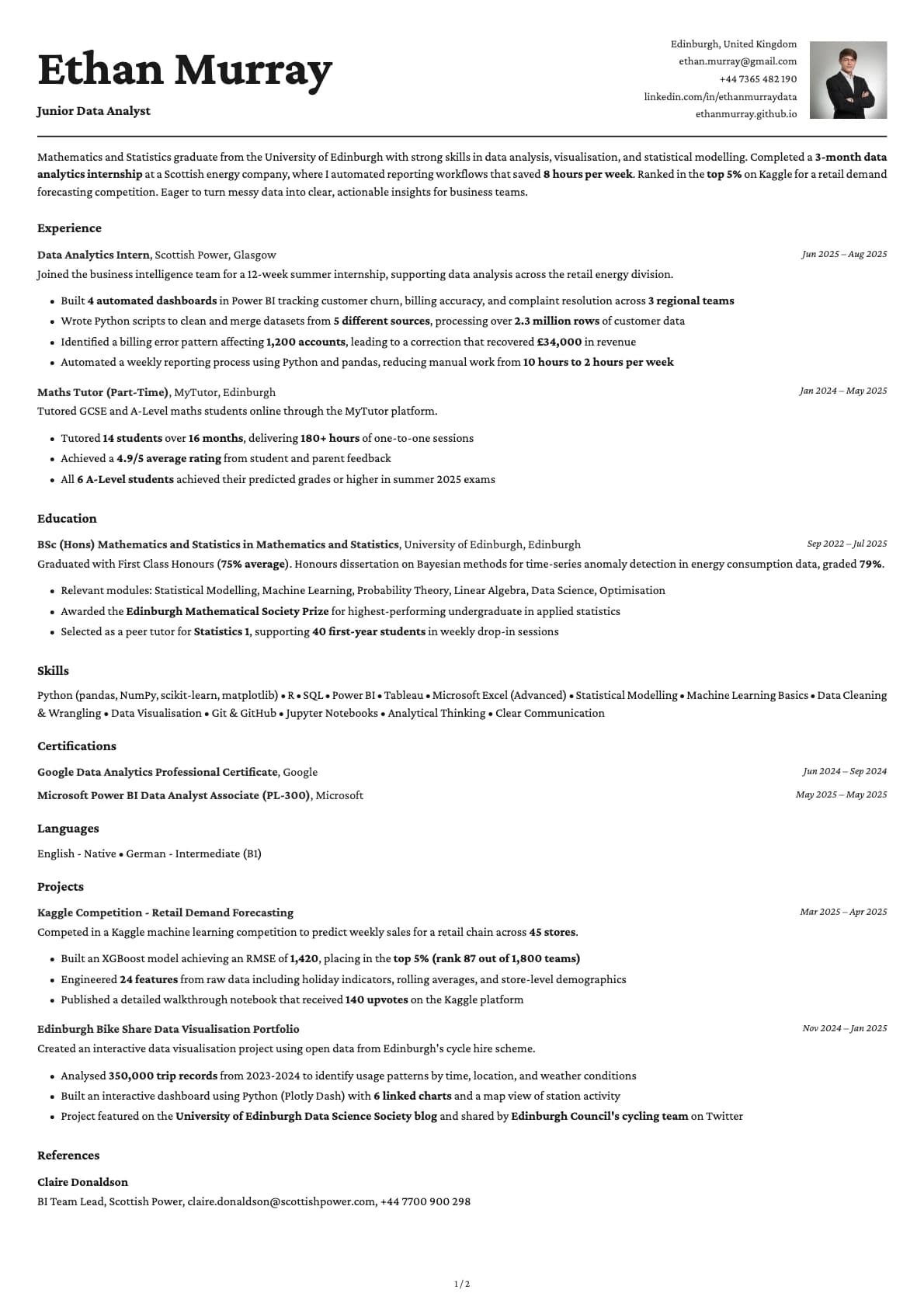
Free to use. No account needed to start.
Free to use. No account needed to start.
Overview
Junior data analyst roles get hundreds of applications. Most resumes look identical: "proficient in Excel," "knowledge of SQL," "strong analytical skills." None of that tells a hiring manager what you can actually do with data. The resumes that stand out are the ones that show a finished analysis with a clear result.
This resume belongs to Ravi Patel, a mathematics and statistics graduate from the University of Warwick. He completed a data analytics internship at a retail company and built several personal projects using publicly available datasets. His resume works because every item shows an input, a method, and an output.
What Makes This Resume Work
Projects demonstrate end to end analysis. Ravi built a dashboard in Tableau that visualised UK housing price trends across 10 regions using Land Registry data. He also wrote a Python script that cleaned and analysed 50,000 rows of NHS waiting time data, identifying three trusts with statistically significant increases. These are complete projects with real datasets, not toy examples from a course.
The internship is results focused. During his three month placement, he wrote SQL queries to extract sales data for weekly reports used by four department managers. He automated a manual Excel reporting process using Python, reducing the time from three hours to twenty minutes. That automation metric alone is worth more than a paragraph of generic duties.
Technical skills are tiered. He separates his skills into categories: languages (Python, SQL, R), visualisation tools (Tableau, Power BI), databases (PostgreSQL, MySQL), and libraries (pandas, matplotlib, scikit learn). This structure helps recruiters quickly assess his technical fit without reading through every bullet point.
The education section includes relevant coursework. Statistical Methods, Data Mining, Linear Algebra, and Probability Theory are all listed. For a data analyst role, these modules signal that Ravi has the mathematical foundation to do more than just run queries. He understands what the numbers mean.
Key Takeaways
Build at least two data projects using real, publicly available datasets and put them on your resume. Describe the dataset size, the tools you used, and the insight you found. A finished analysis is the single best thing a graduate data analyst can show.
If you automated something during an internship or even during a university assignment, quantify the time saved. Employers hire analysts to make things faster and clearer. Show that you already know how to do both.
Organise your technical skills into clear categories. A recruiter scanning your resume for "SQL" or "Tableau" should find it in under three seconds.
Build your own version
Open this layout in the builder and swap in your own details. It takes a few minutes.
Free to use. No account needed to start.
Was this resume example helpful?
Rate this example to help us create better content for you.
4.8 average from 167 ratingsRelated resume examples
Pharmacy Technician
A pharmacy technician resume example for newly qualified candidates showing how to present GPhC registration, dispensing accuracy, and clinical skills for NHS and community pharmacy roles.
Physiotherapist
A physiotherapist resume example with NHS placement experience. See how to present clinical placements, patient outcomes, and HCPC registration on your first CV.
Plumber's Mate
A plumber's mate resume example for apprentice plumbers with NVQ Level 2 qualifications. See how to present your practical plumbing experience for your first employed role.
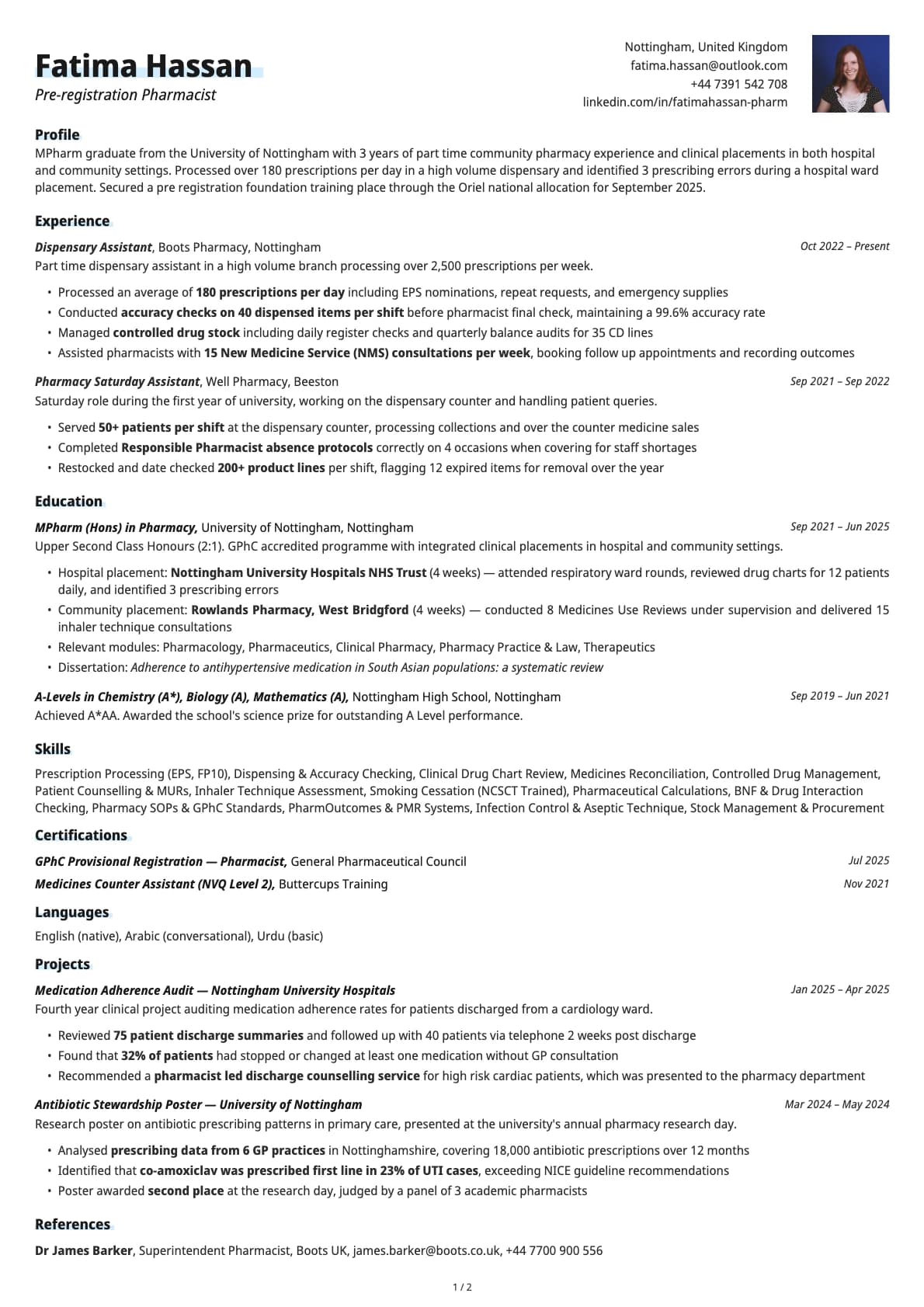
Pre-registration Pharmacist
A pre-registration pharmacist resume example showing how to present your MPharm degree, clinical placements, and GPhC registration progress for your foundation year role.
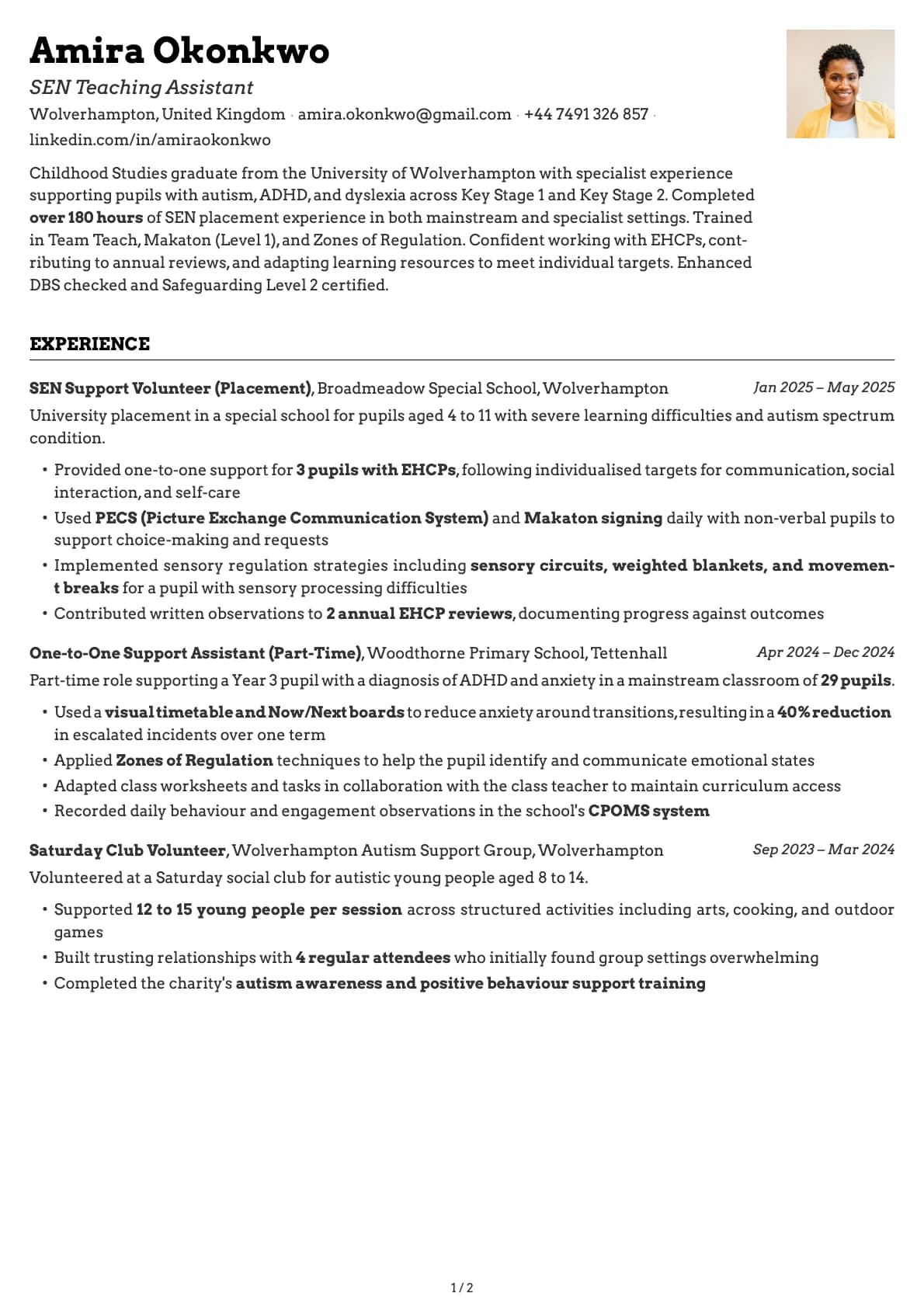
SEN Teaching Assistant
A graduate SEN teaching assistant resume example with SEND placement experience, EHCPs, and autism support. See how to present your specialist skills for SEN TA roles.
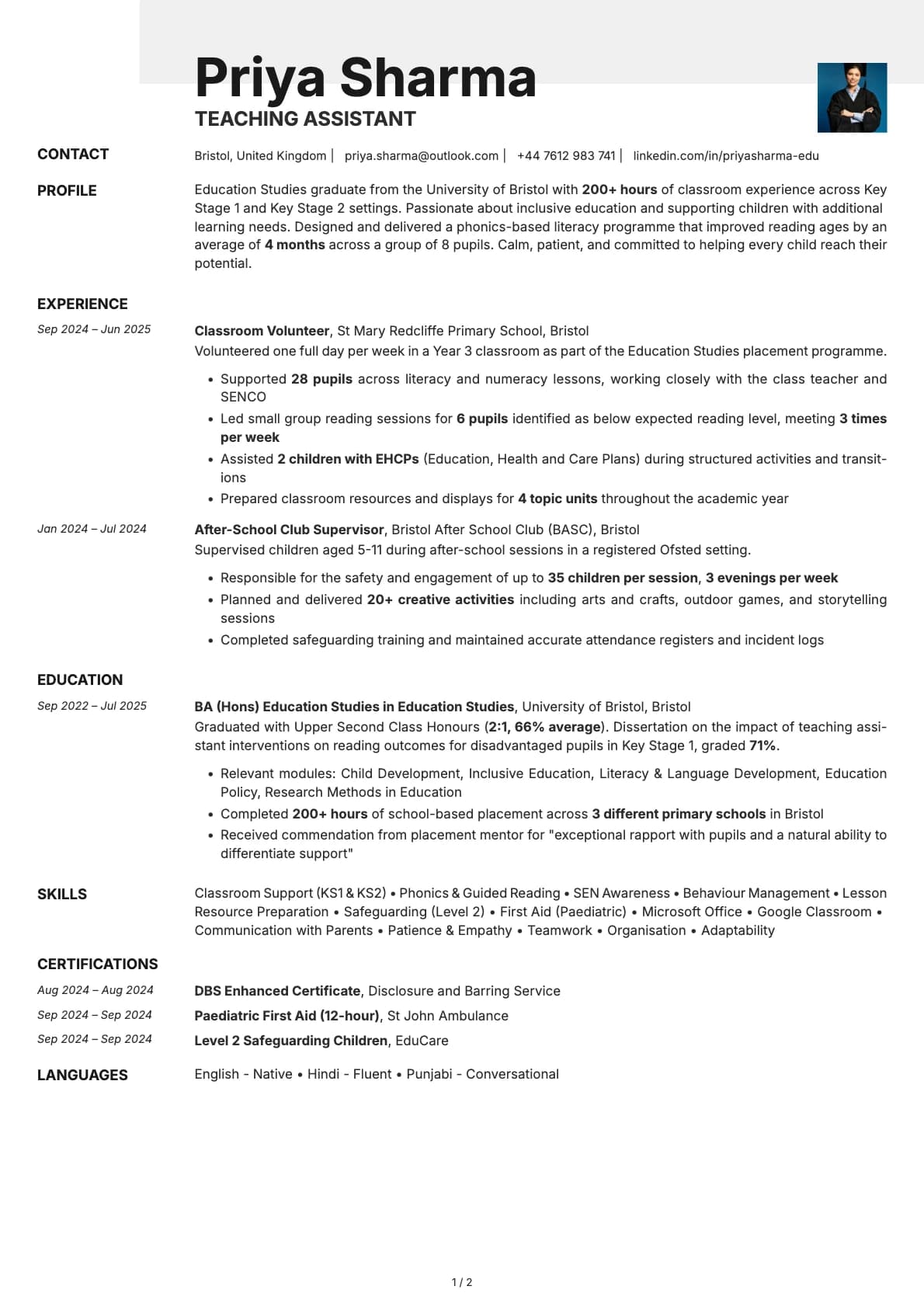
Teaching Assistant
A teaching assistant resume example for recent graduates. See how to present your classroom experience, volunteer work, and education degree to get hired as a TA.
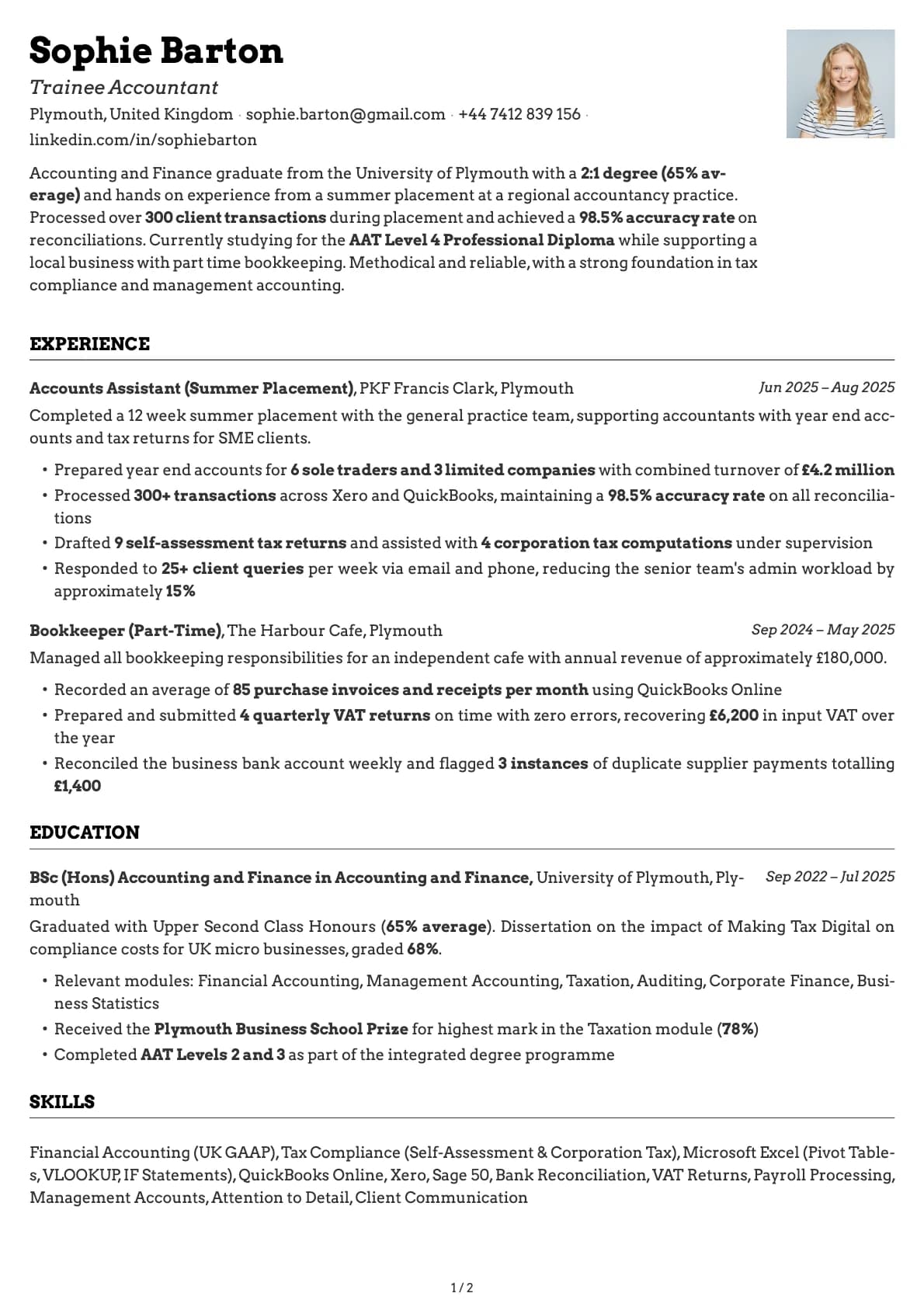
Trainee Accountant
A trainee accountant resume example for recent graduates. See how to present your AAT progress, placement experience, and bookkeeping skills to land your first role.
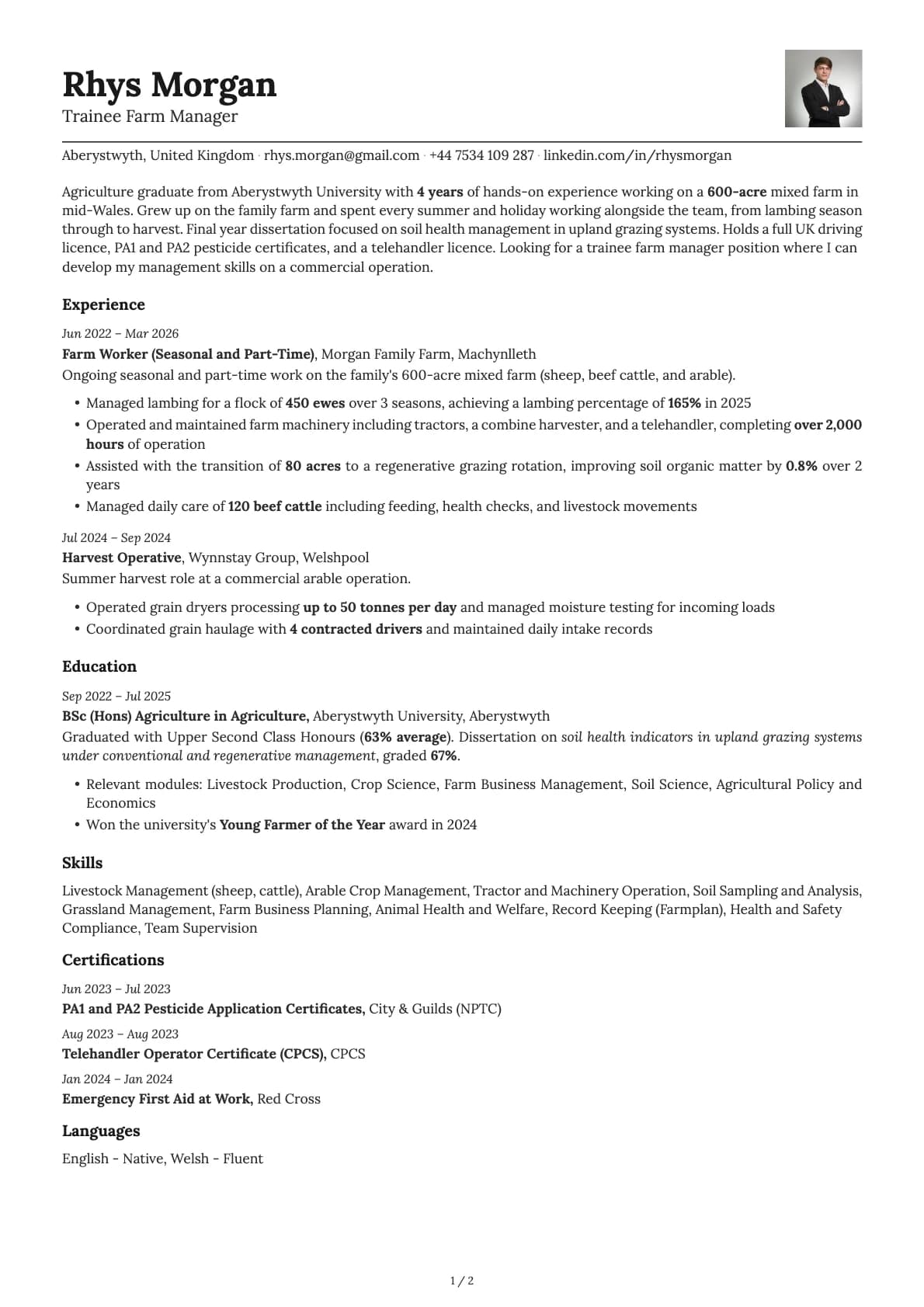
Trainee Farm Manager
A trainee farm manager resume example showing how to combine an agriculture degree with hands-on mixed farming experience on a 600-acre family operation.
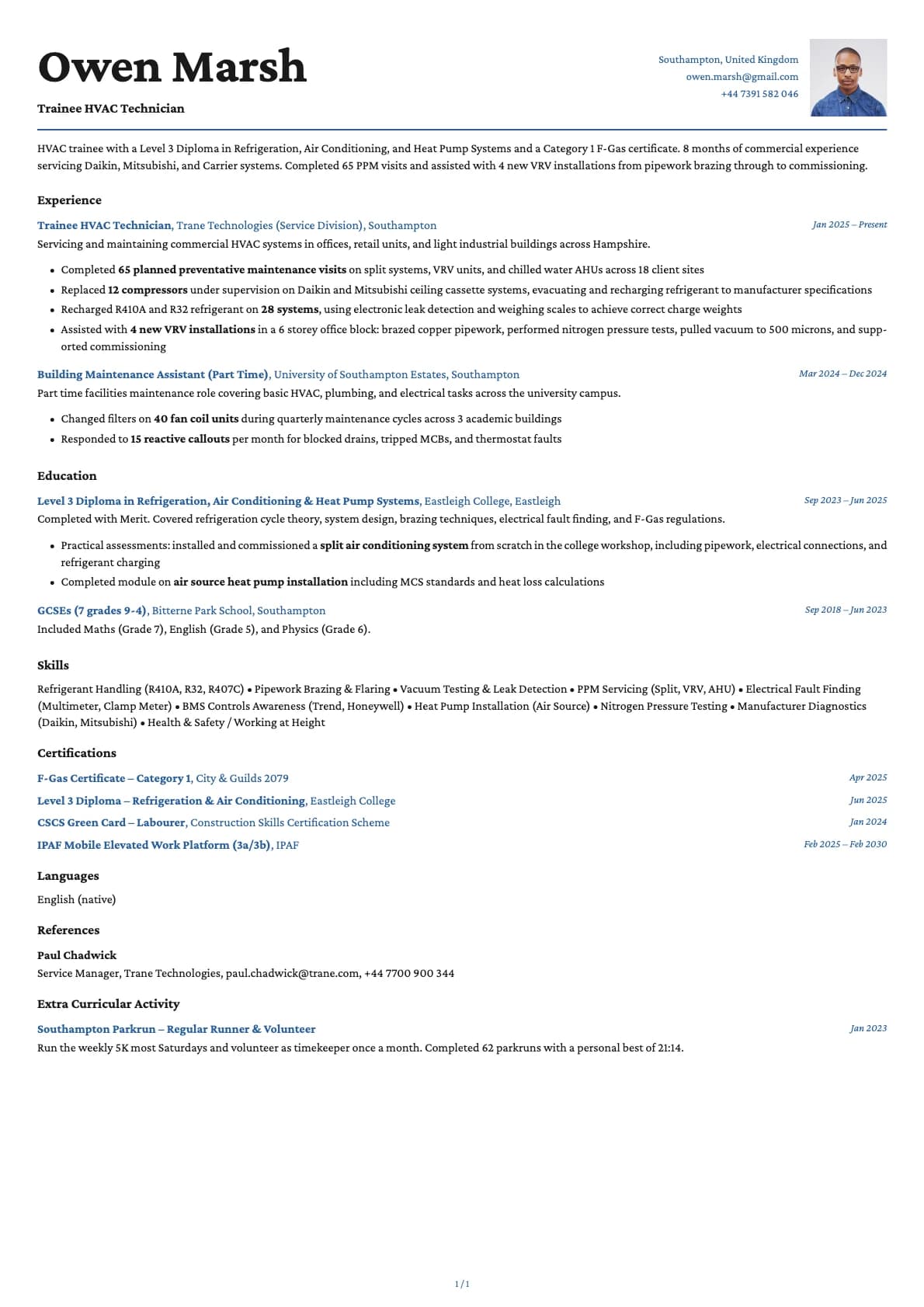
Trainee HVAC Technician
A trainee HVAC technician resume example for graduates entering the heating, ventilation, and air conditioning trade. See how to present your F-Gas certification and refrigeration skills.
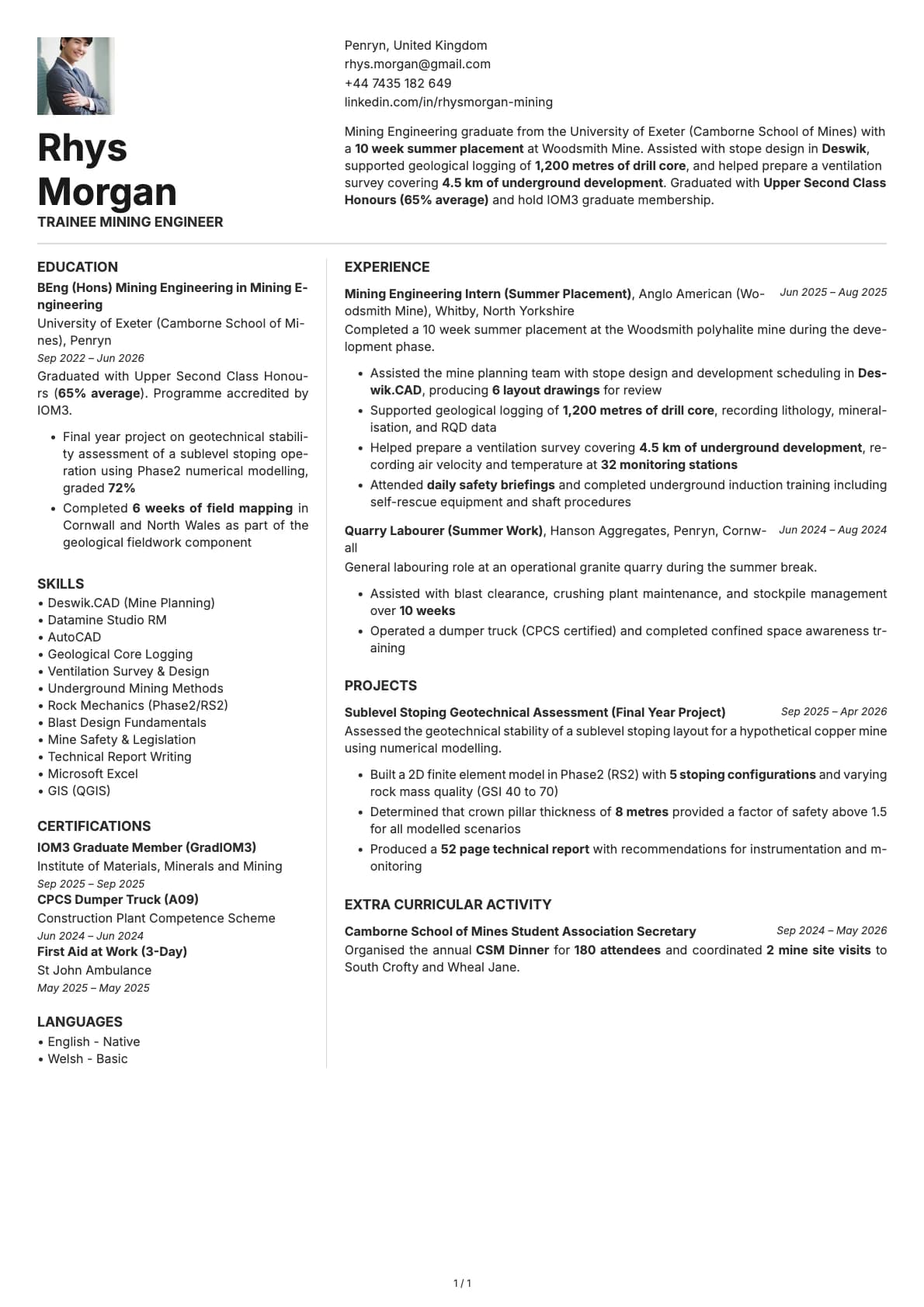
Trainee Mining Engineer
A trainee mining engineer resume example with underground mine placement experience, Deswik proficiency, and IOM3 membership.
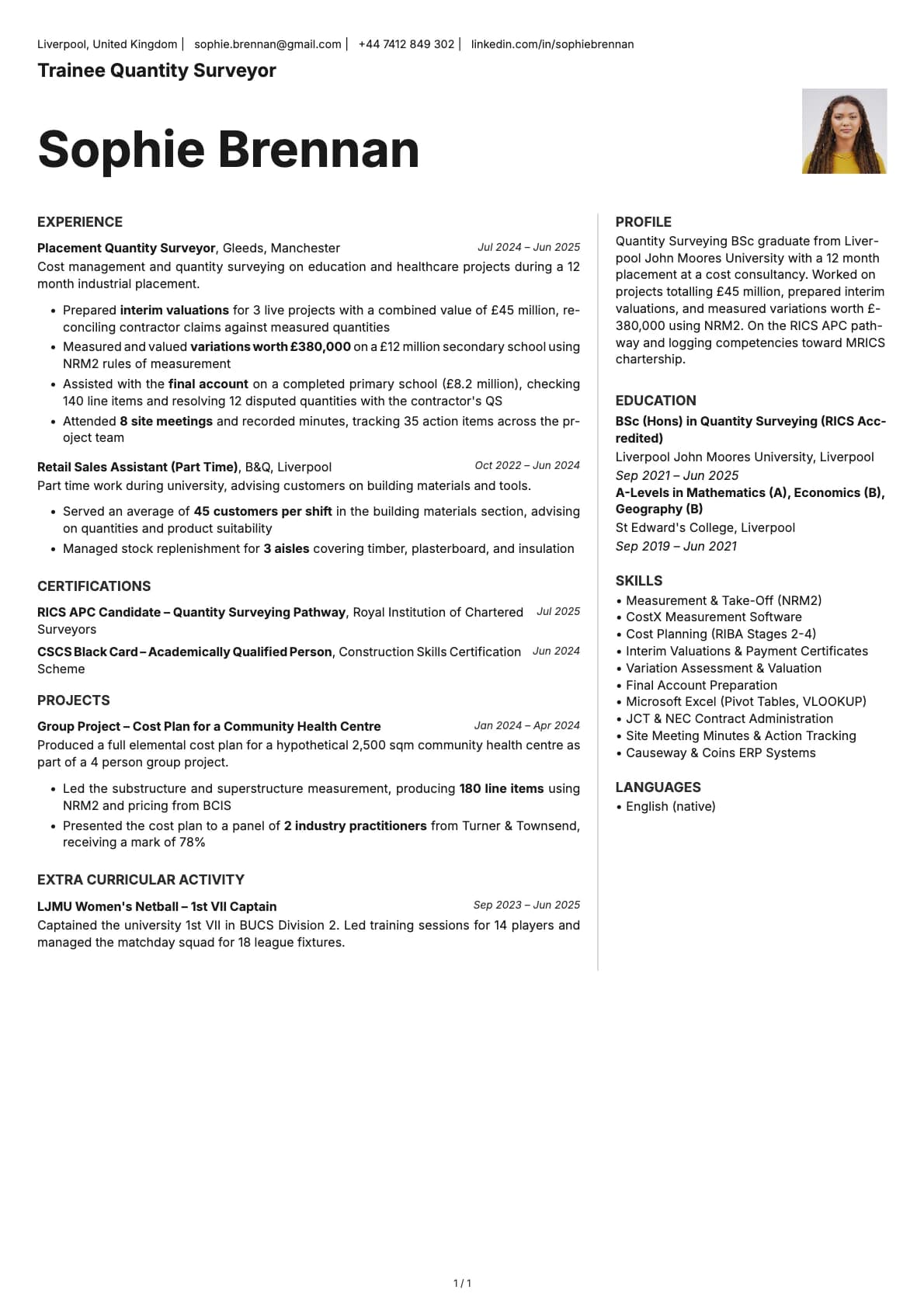
Trainee Quantity Surveyor
A trainee quantity surveyor resume example for QS graduates on the RICS APC pathway. See how to present your measurement skills, cost management experience, and professional development.
Trainee Site Manager
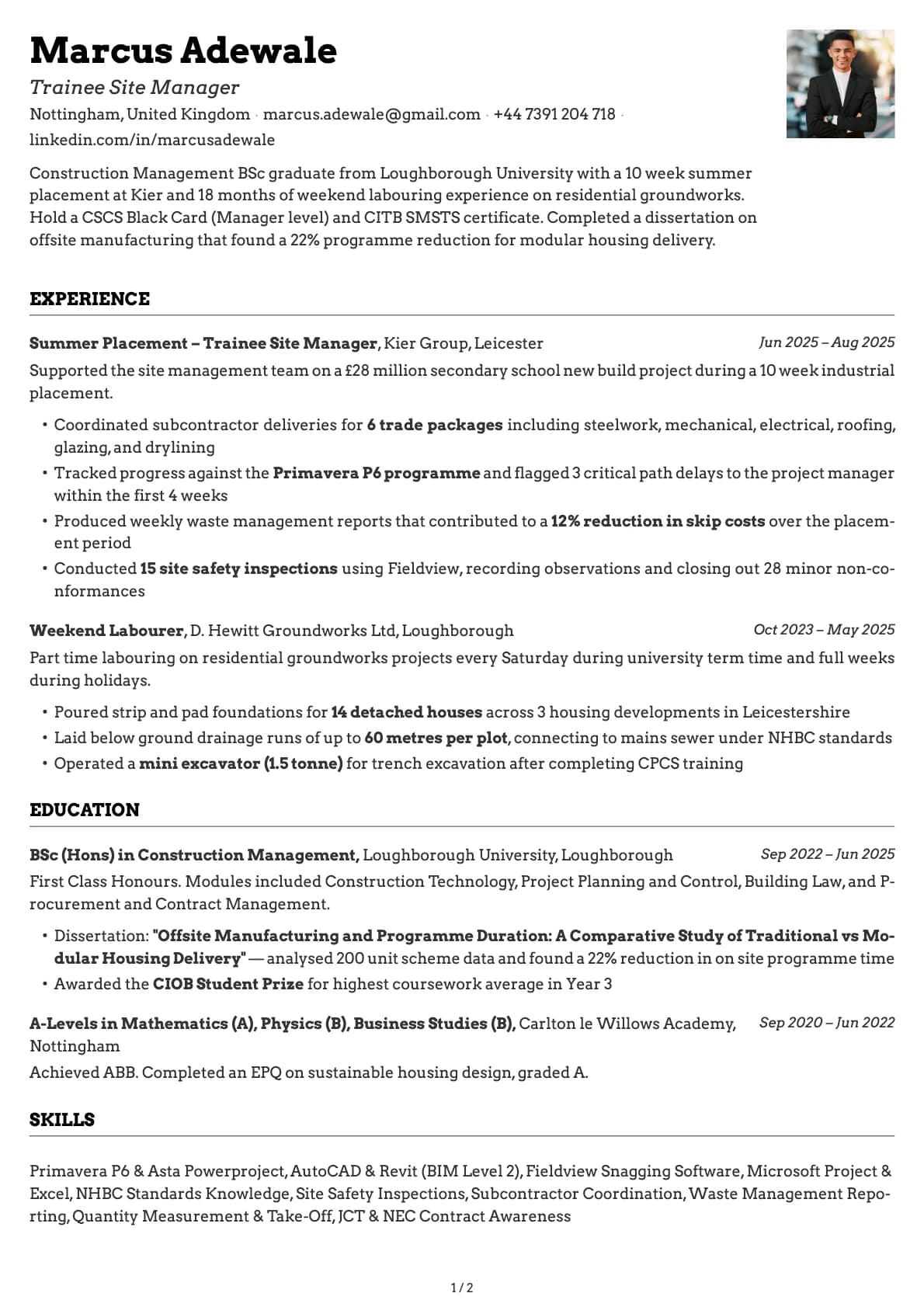
A trainee site manager resume example for construction management graduates. See how to present your BSc, CITB qualifications, and placement experience to land your first site role.