Junior UX Designer Resume Example
A junior UX designer resume example for recent graduates. Learn how to present your user research, wireframes, and design projects to secure your first UX role.

Laddro Team
Free to use. No account needed to start.
Free to use. No account needed to start.
Overview
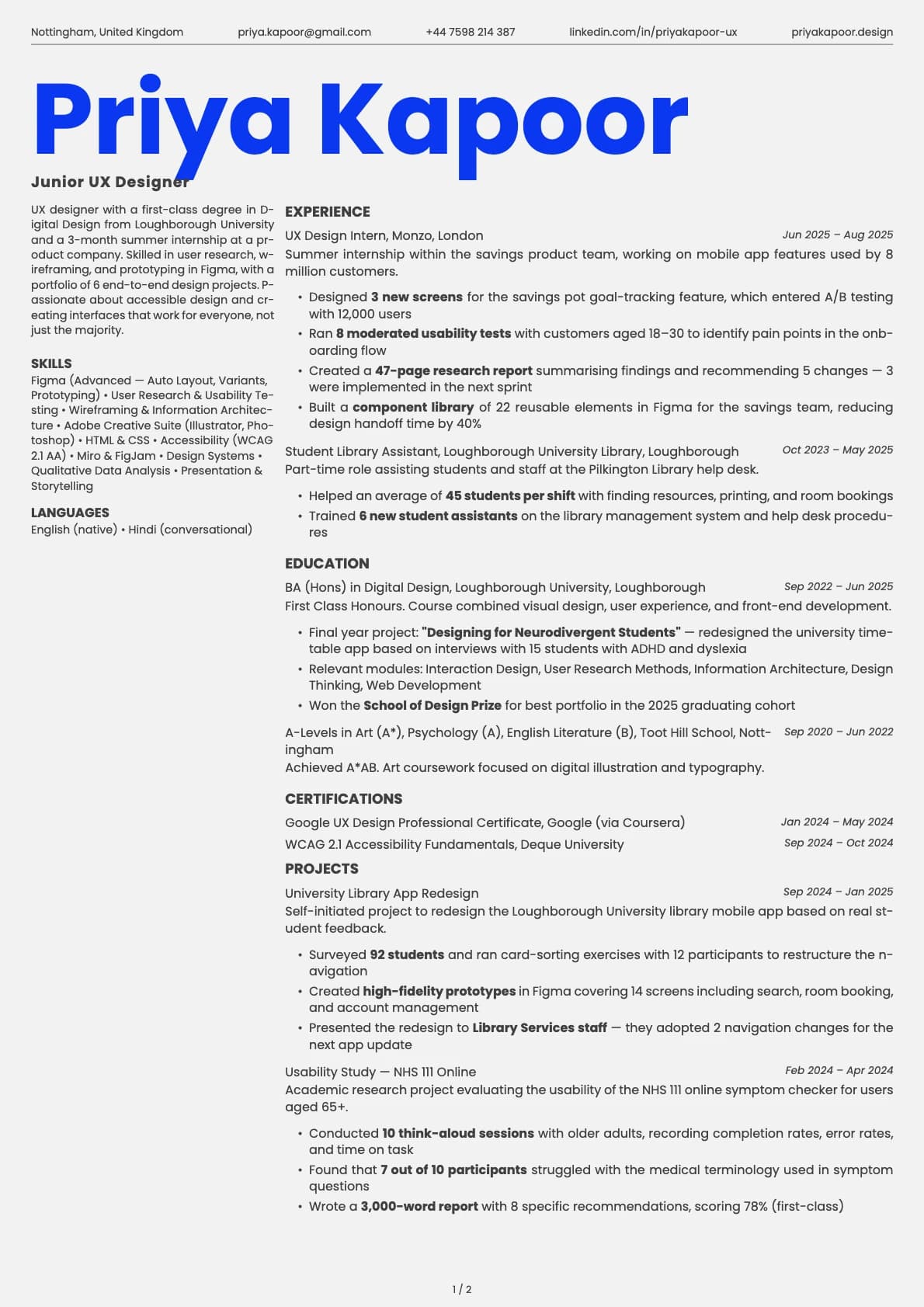
UX design is one of the most popular career paths for graduates right now, which means competition for junior roles is intense. Hiring managers see dozens of resumes that mention "user centred design" and "empathy mapping" without any evidence of actually doing those things. The candidates who stand out are the ones who show a complete design process with research, iteration, and results.
This resume belongs to Kai Nakamura, a digital media graduate from Goldsmiths, University of London. He completed a UX internship at a health tech startup and ran two independent design projects using real users. His resume works because it walks the reader through his design thinking with specifics at every stage.
What Makes This Resume Work
Projects follow a clear design process. Kai redesigned the onboarding flow for a student budgeting app as his final year project. He conducted user interviews with 12 students, created journey maps, built wireframes in Figma, tested a prototype with 8 participants, and iterated based on feedback. The final design reduced the average onboarding time from four minutes to under two. That is a complete UX case study summarised in a few bullet points.
The internship shows real product work. During his four month placement, he ran usability tests on the company's patient appointment booking flow. He identified three major pain points through testing with 15 users and proposed redesigns that the product team implemented. Post launch data showed a 20% reduction in booking abandonment. These numbers prove his work had a measurable effect on the product.
Research methods are named explicitly. User interviews, usability testing, card sorting, journey mapping, and A/B testing. Listing research methods separately from design tools helps recruiters understand his full skill set. Many junior UX applicants only mention Figma and call it a day. Kai shows he understands the research side just as well.
Tools are comprehensive and current. Figma, FigJam, Miro, Maze for unmoderated testing, and basic HTML/CSS for prototyping. He also mentions experience with Hotjar for heatmap analysis. This range tells an employer he can contribute across discovery, design, and validation phases.
Key Takeaways
Structure your project descriptions around the design process: research, synthesis, design, test, iterate. Show each stage briefly and include at least one measurable outcome. A task completion time improvement or a drop in user errors is worth more than a paragraph about your design philosophy.
Name your research methods. Employers want to know whether you have actually spoken to users, run tests, and synthesised findings. Research experience is what separates a UX designer from someone who just makes things look nice.
Include a portfolio link at the top of your resume. For UX roles, your case studies will be reviewed in detail. Make them easy to find and make sure each one follows the same process driven structure as your resume bullets.
Build your own version
Open this layout in the builder and swap in your own details. It takes a few minutes.
Free to use. No account needed to start.
Was this resume example helpful?
Rate this example to help us create better content for you.
4.8 average from 138 ratingsRelated resume examples
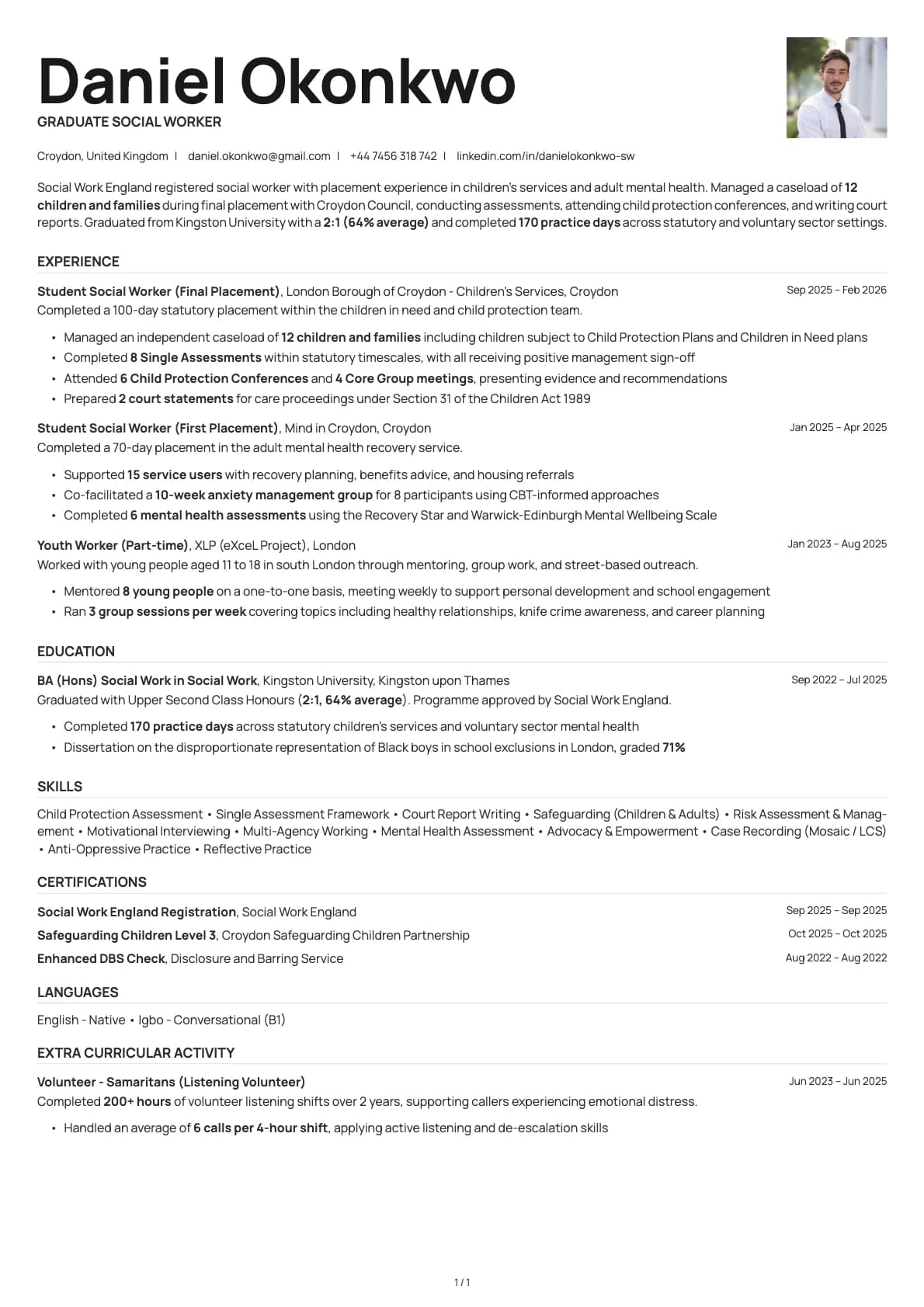
Graduate Social Worker
A graduate social worker resume example with statutory placement experience, caseload numbers, and Social Work England registration for NQSWs.
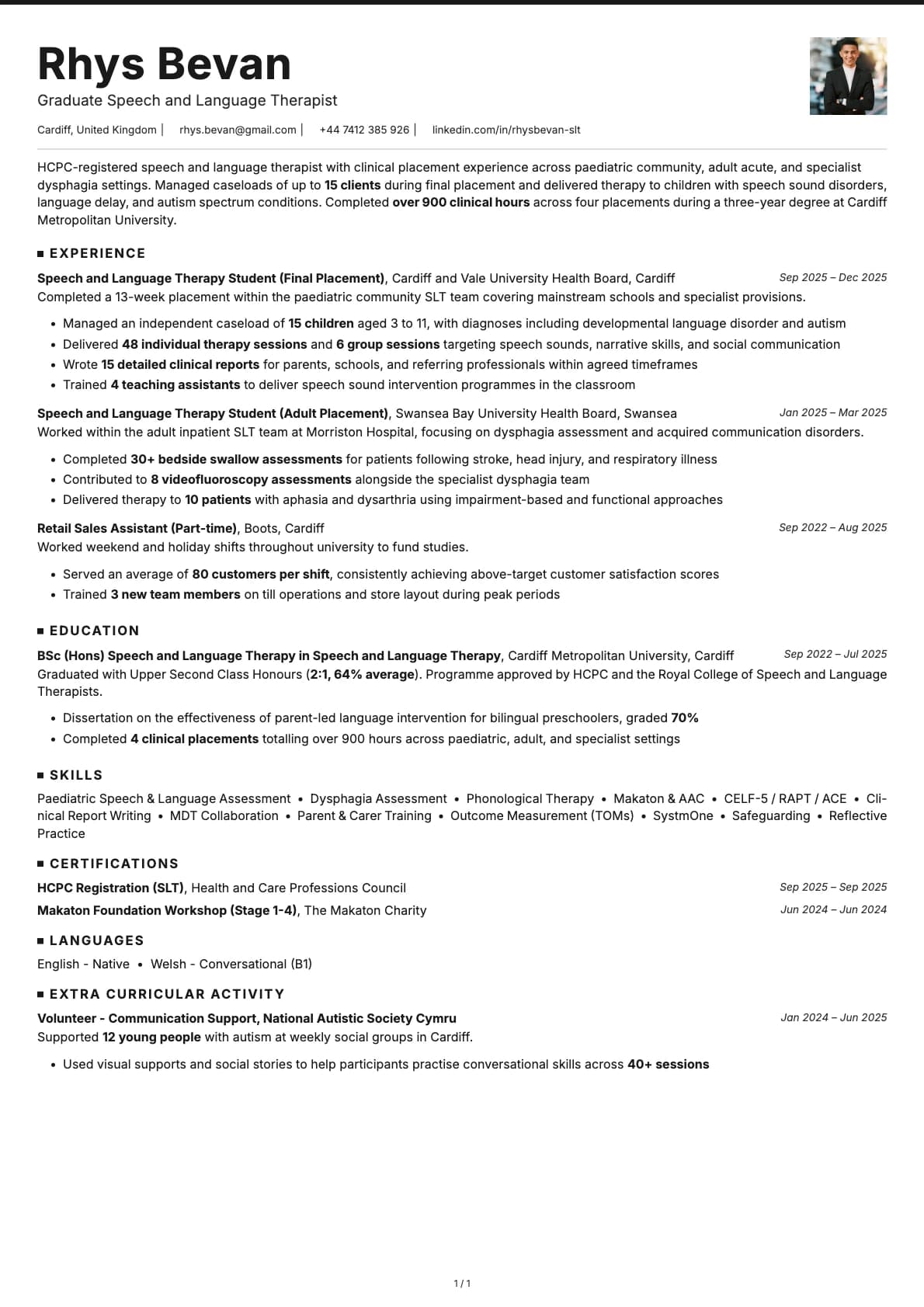
Graduate Speech and Language Therapist
A graduate speech and language therapist resume example with clinical placement hours, HCPC registration, and paediatric caseload numbers.
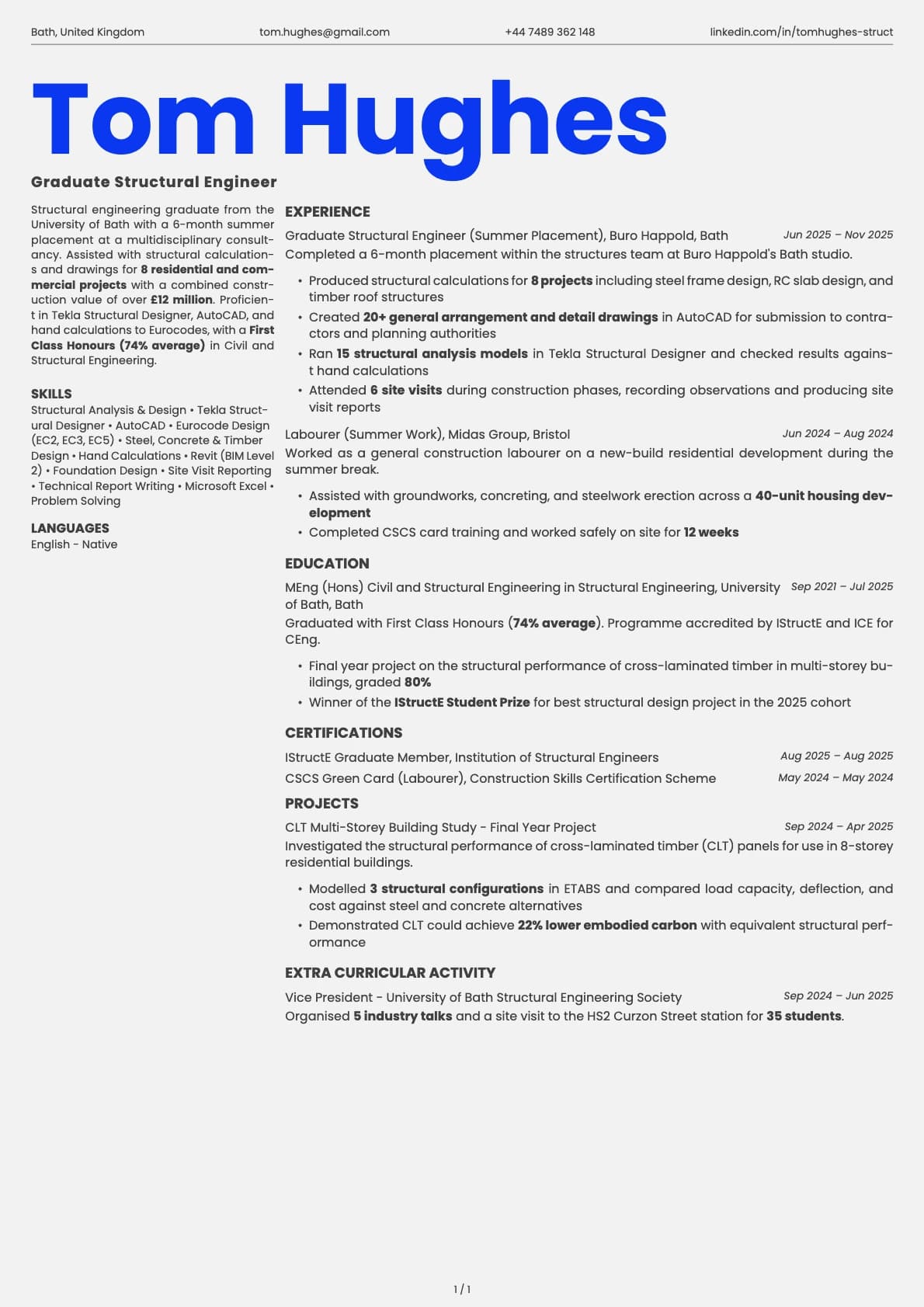
Graduate Structural Engineer
A graduate structural engineer resume example with consultancy placement experience, Eurocode design skills, and IStructE membership.
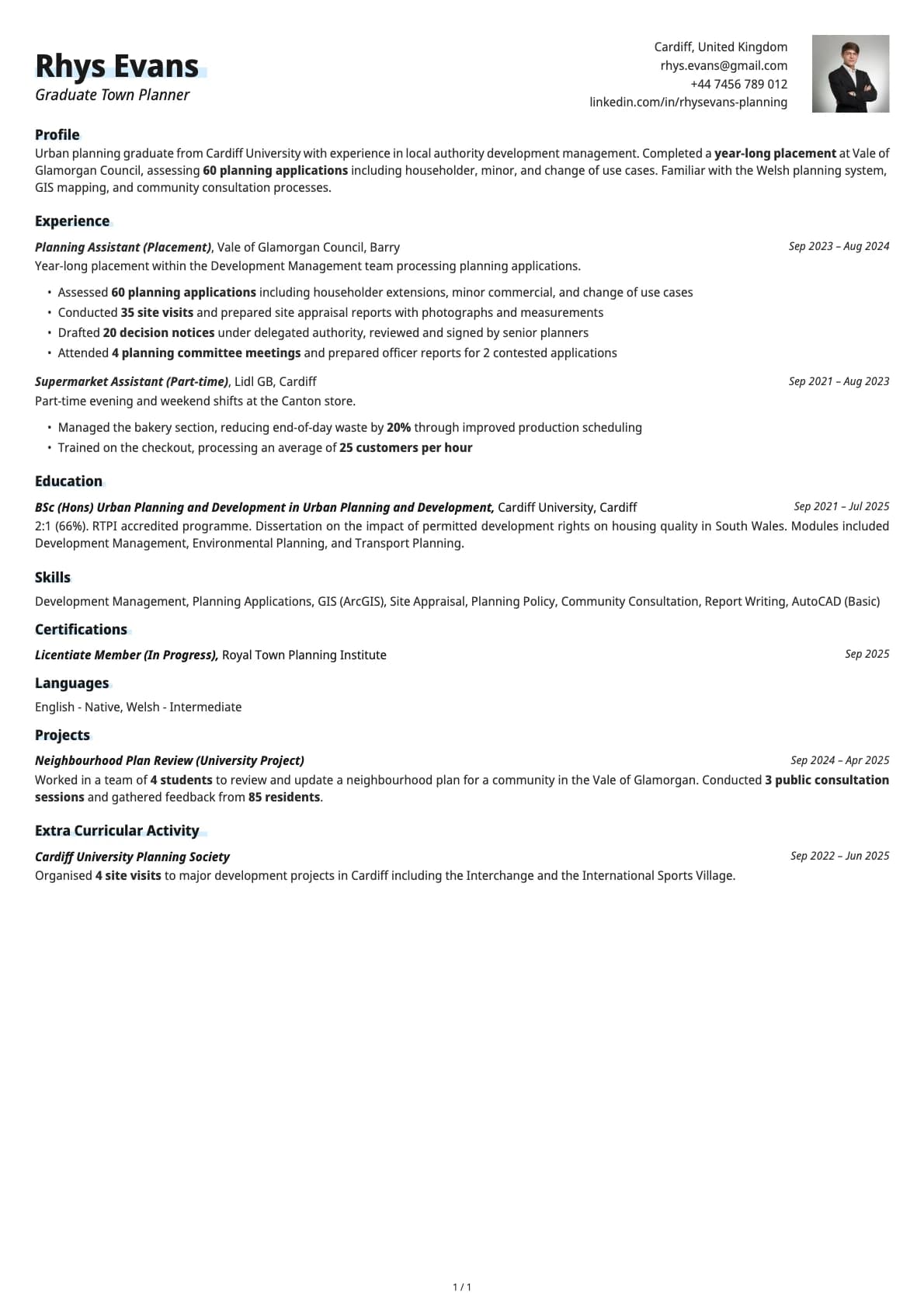
Graduate Town Planner
A graduate town planner resume example with local authority placement experience and RTPI accredited degree.
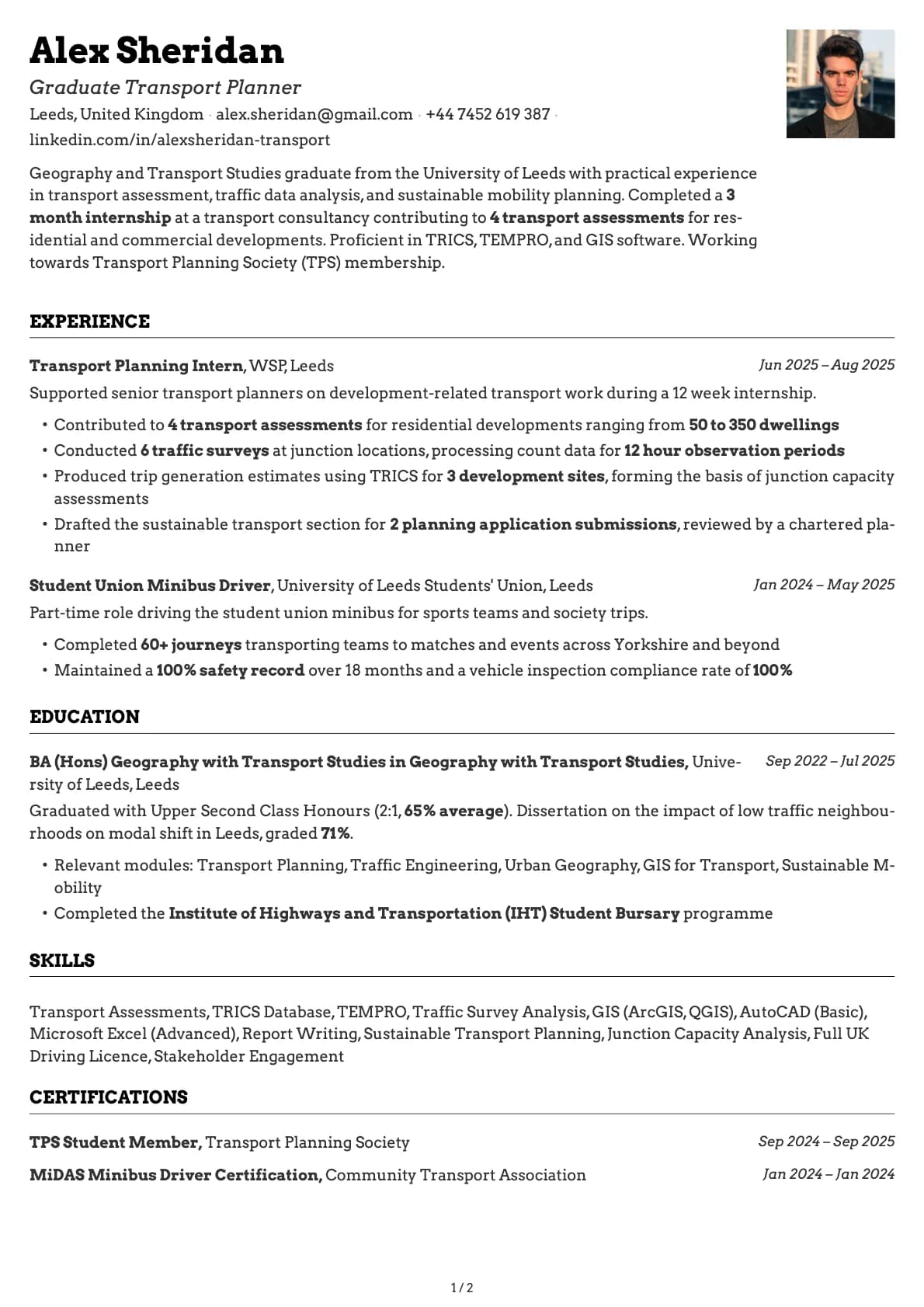
Graduate Transport Planner
A graduate transport planner resume example. See how to present transport assessment experience, traffic survey data, and TPS membership to land your first transport planning role.
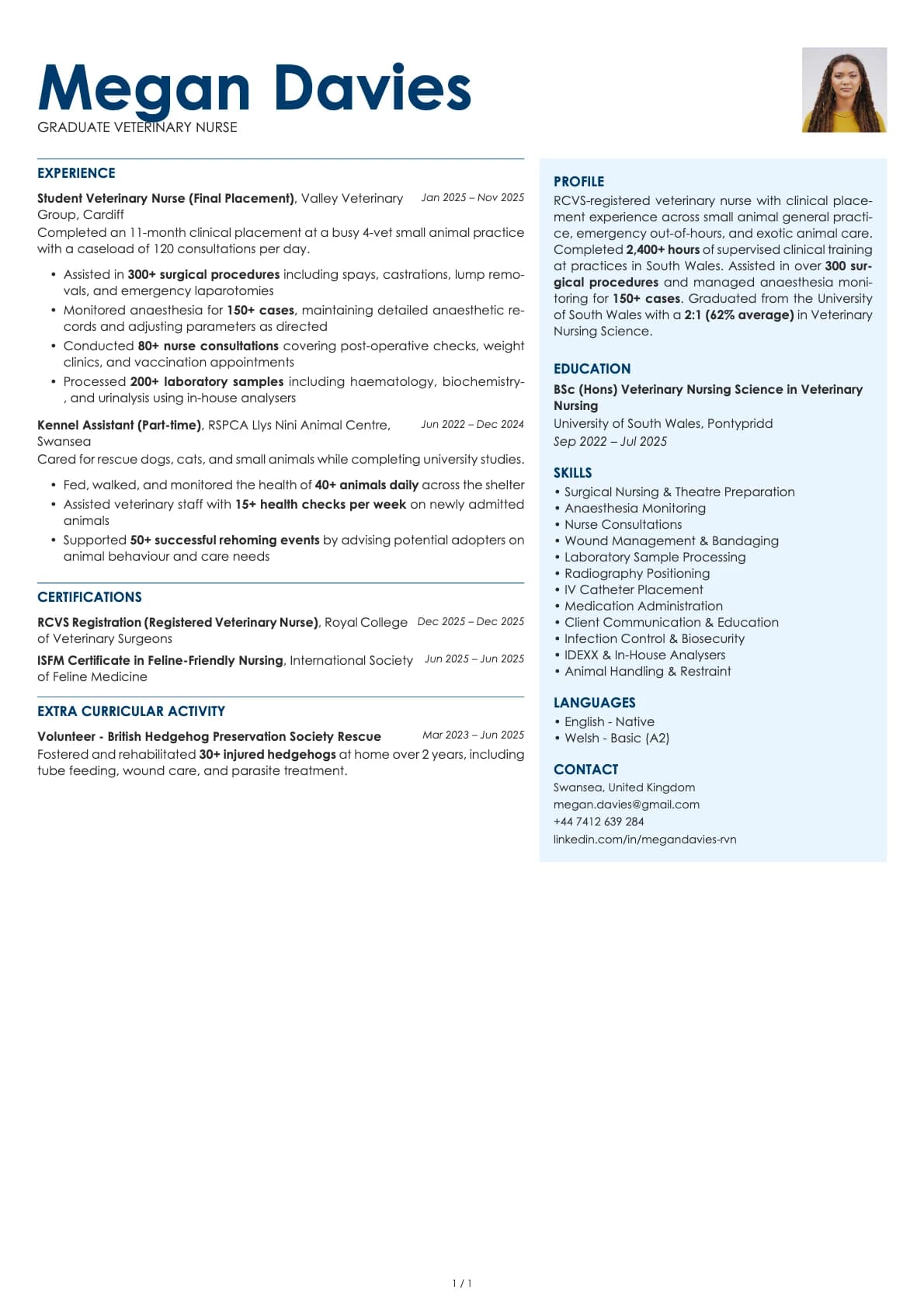
Graduate Veterinary Nurse
A graduate veterinary nurse resume example with RCVS registration, surgical assist numbers, and clinical placement hours for newly qualified RVNs.
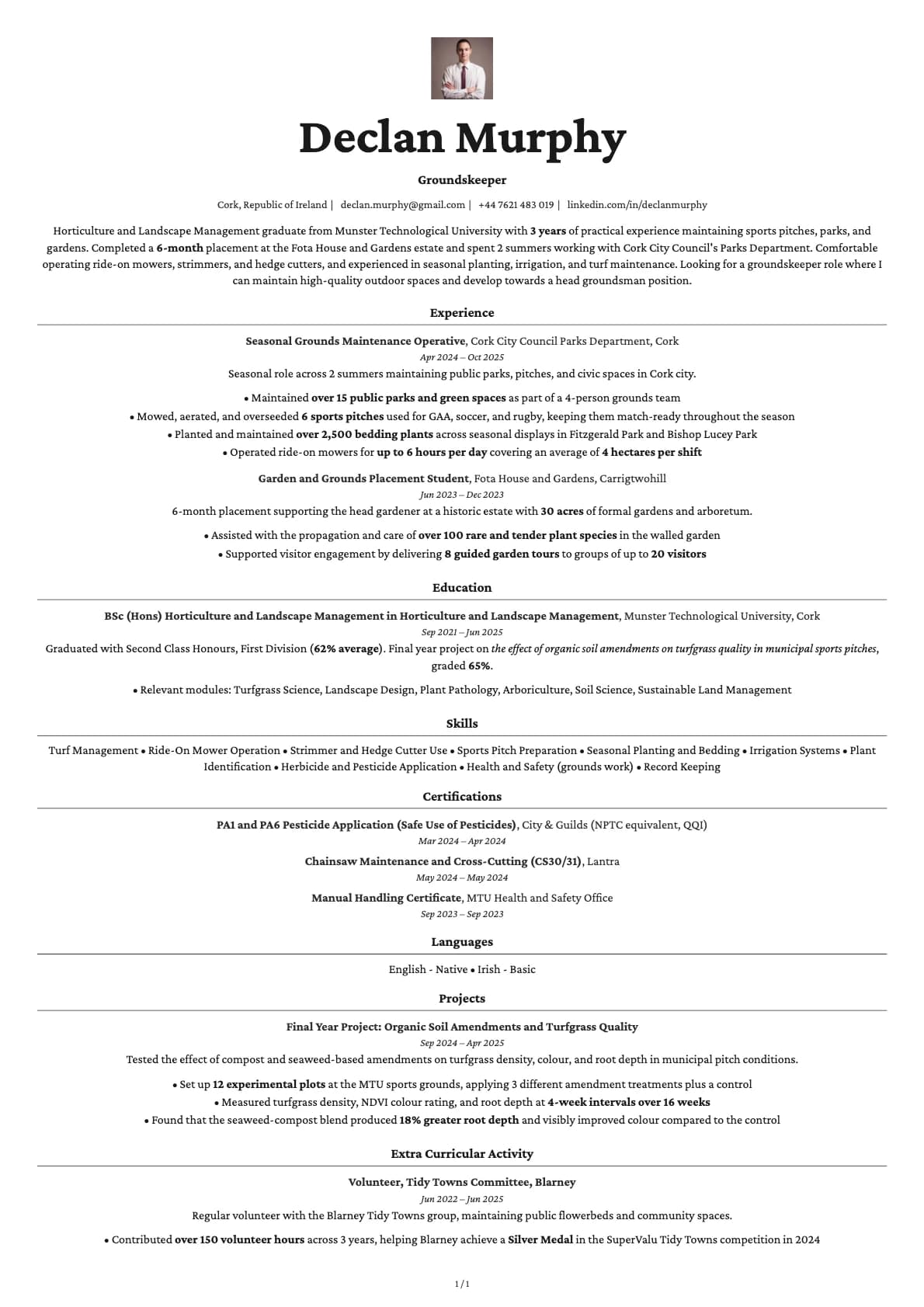
Groundskeeper
A groundskeeper resume example showing how to combine a horticulture degree with council grounds work and a historic garden placement.
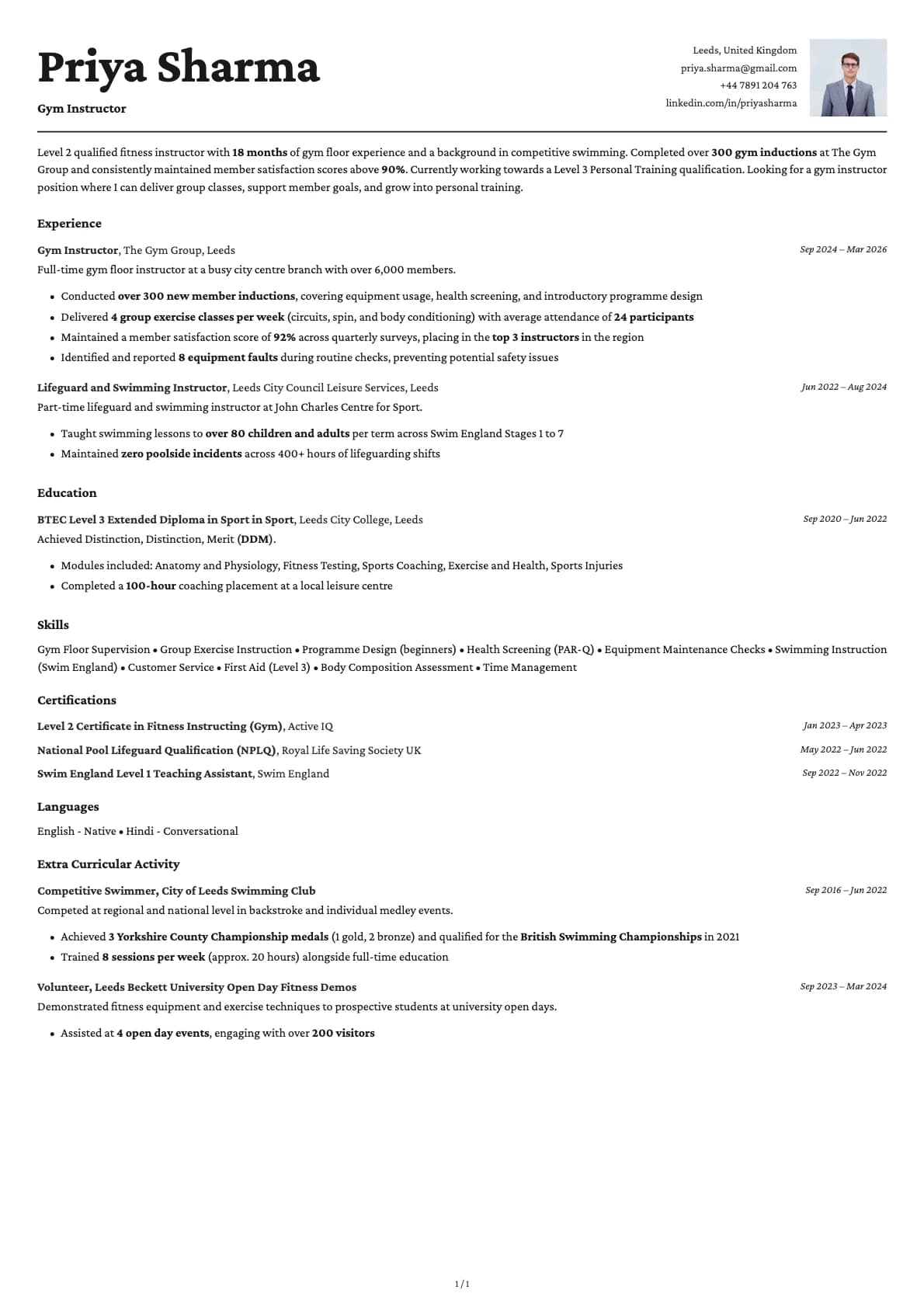
Gym Instructor
A gym instructor resume example showing how to combine a Level 2 fitness qualification with competitive swimming and strong member satisfaction scores.
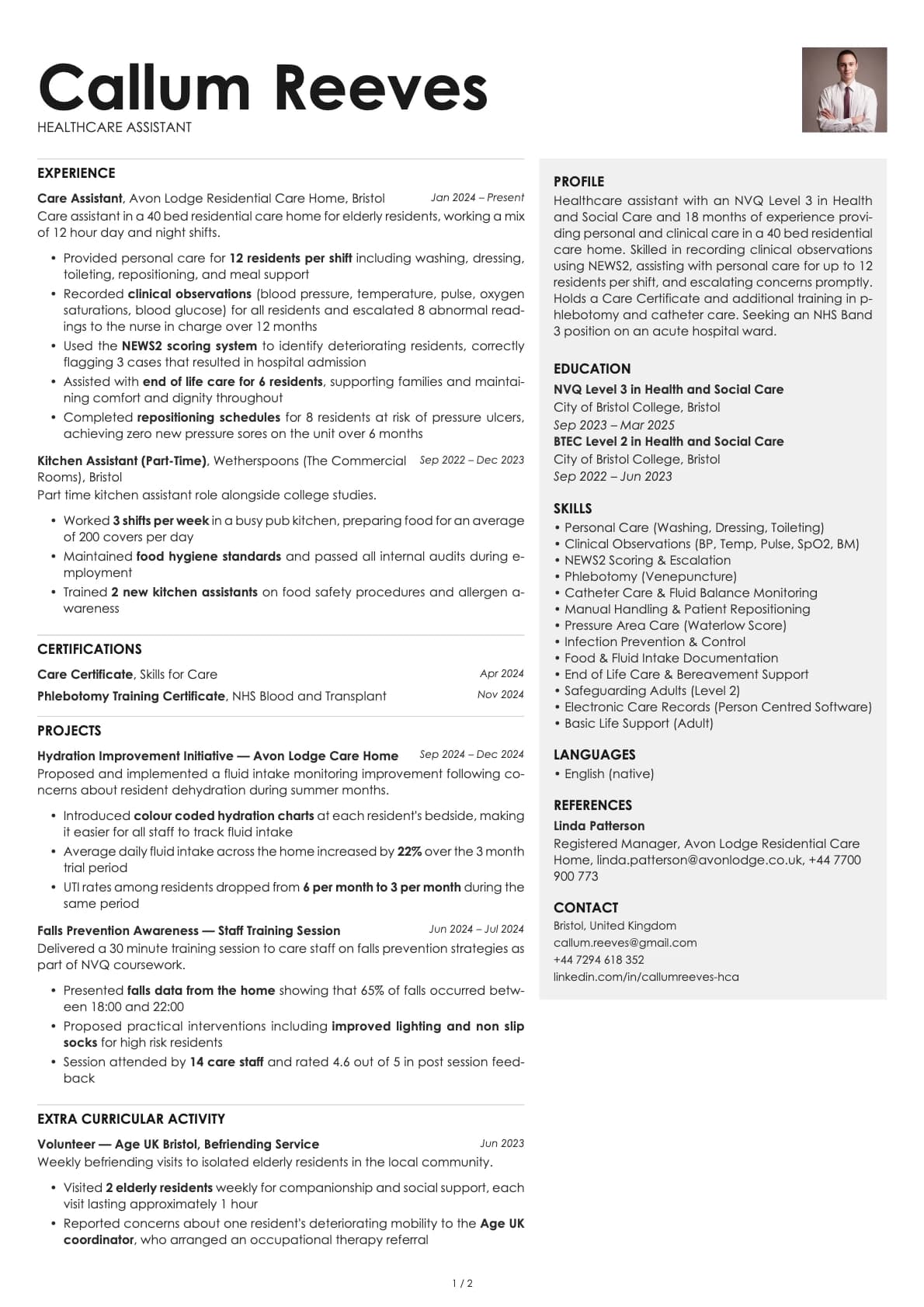
Healthcare Assistant
A healthcare assistant resume example for candidates with NVQ Level 3 in Health and Social Care, showing how to present ward experience and patient care skills for NHS Band 3/4 roles.
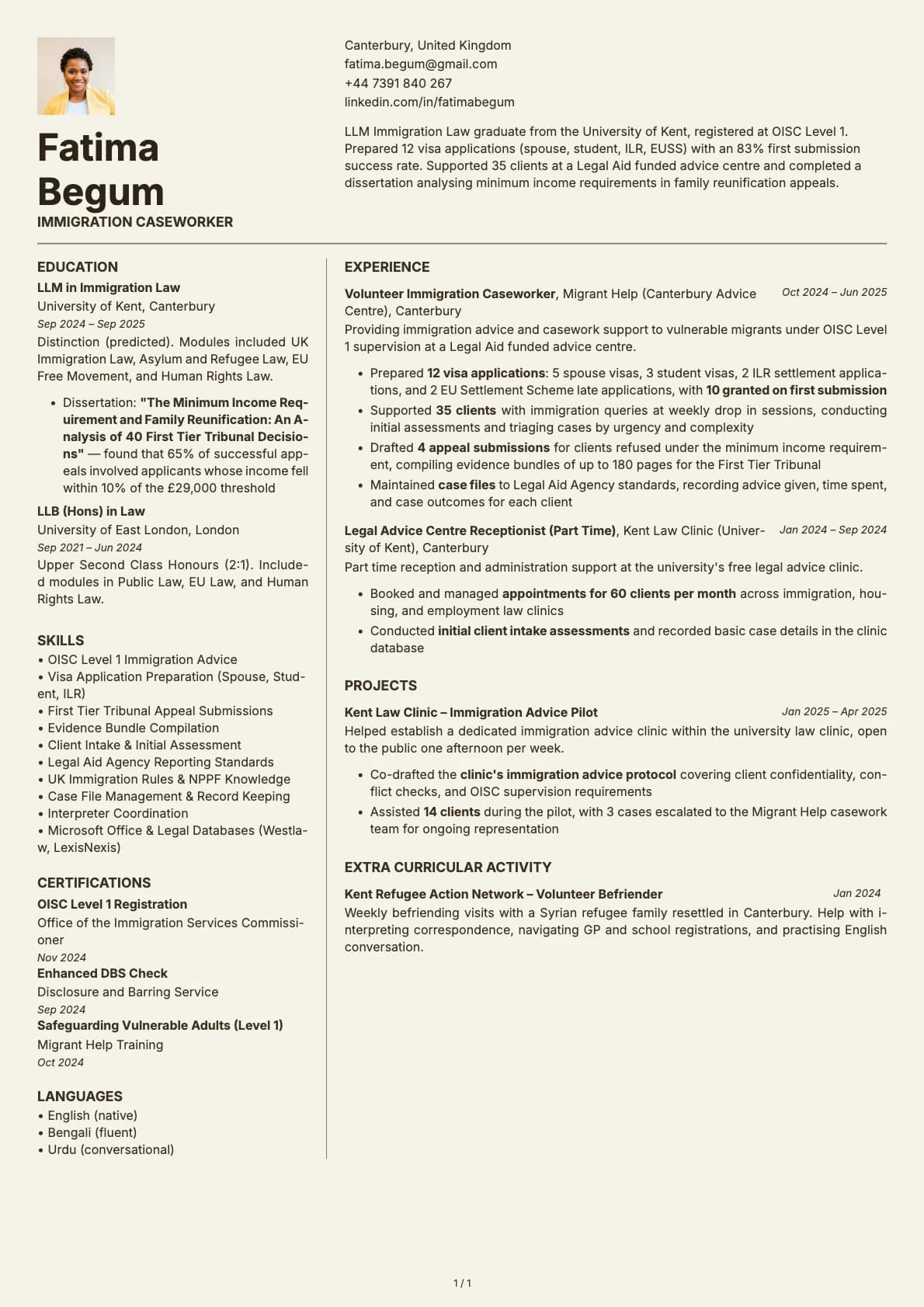
Immigration Caseworker
An immigration caseworker resume example for immigration law graduates. See how to present your OISC registration, casework experience, and visa application knowledge.
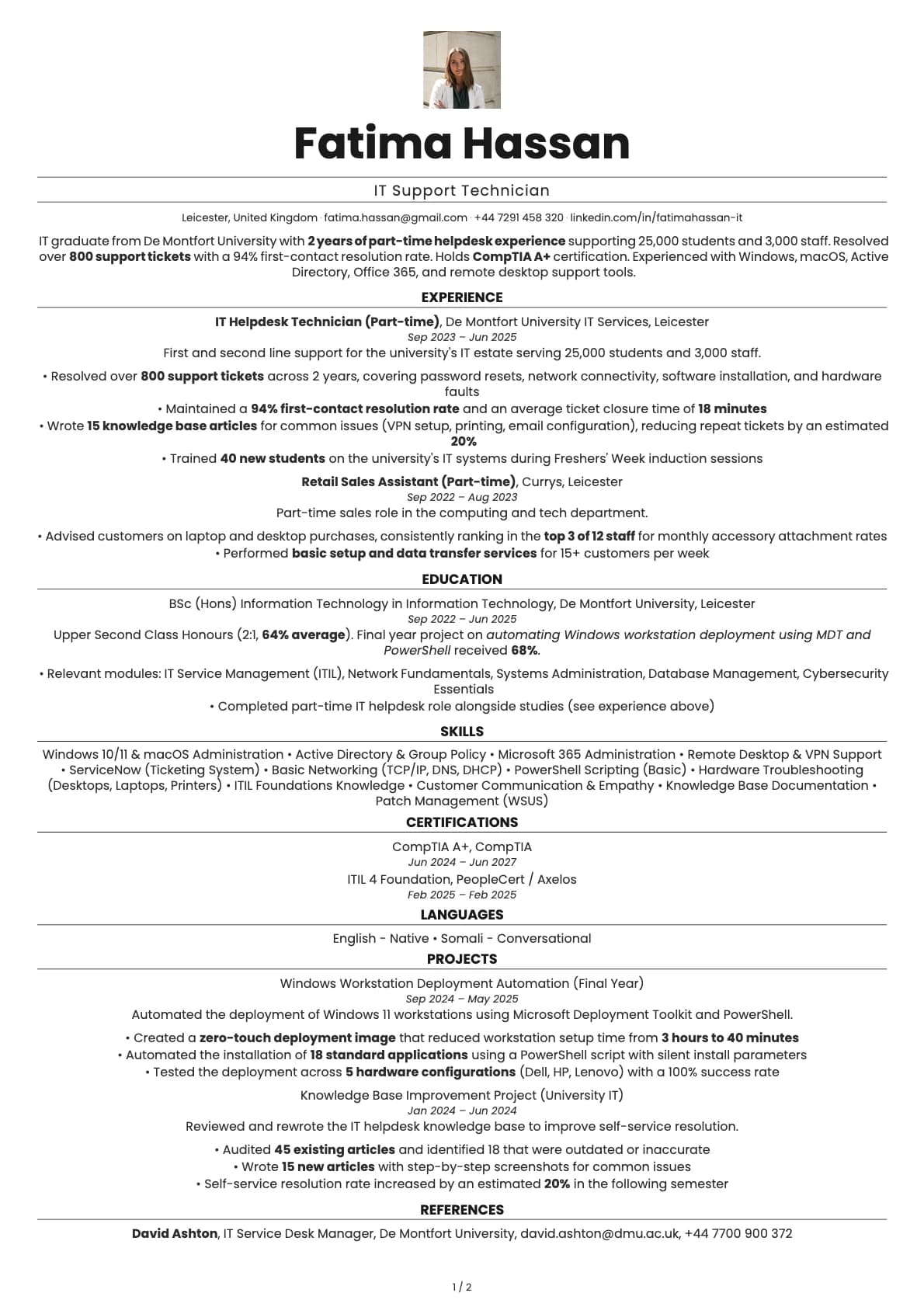
IT Support Technician
An IT support technician resume example with ticket resolution stats, CompTIA certification, and helpdesk experience from an IT graduate starting their career.
Junior Accounts Assistant
A junior accounts assistant resume example with accountancy firm placement and AAT Level 3 qualification.