Junior Welder Resume Example
A junior welder resume example for welding course graduates with coded welder certification. See how to present your welding processes, materials experience, and test certifications.

Laddro Team
Free to use. No account needed to start.
Free to use. No account needed to start.
Overview
Welding is one of the few trades where your work is literally tested to destruction. Coded welder certifications prove that your welds meet specific standards under radiographic or ultrasonic examination. Employers in fabrication, structural steel, petrochemical, and nuclear sectors will not consider you without a current coding, and the specific processes and positions on your certificate determine which jobs you qualify for. Your resume needs to list your codings precisely, name the welding processes you are certified in, and describe the materials and thicknesses you have worked with.
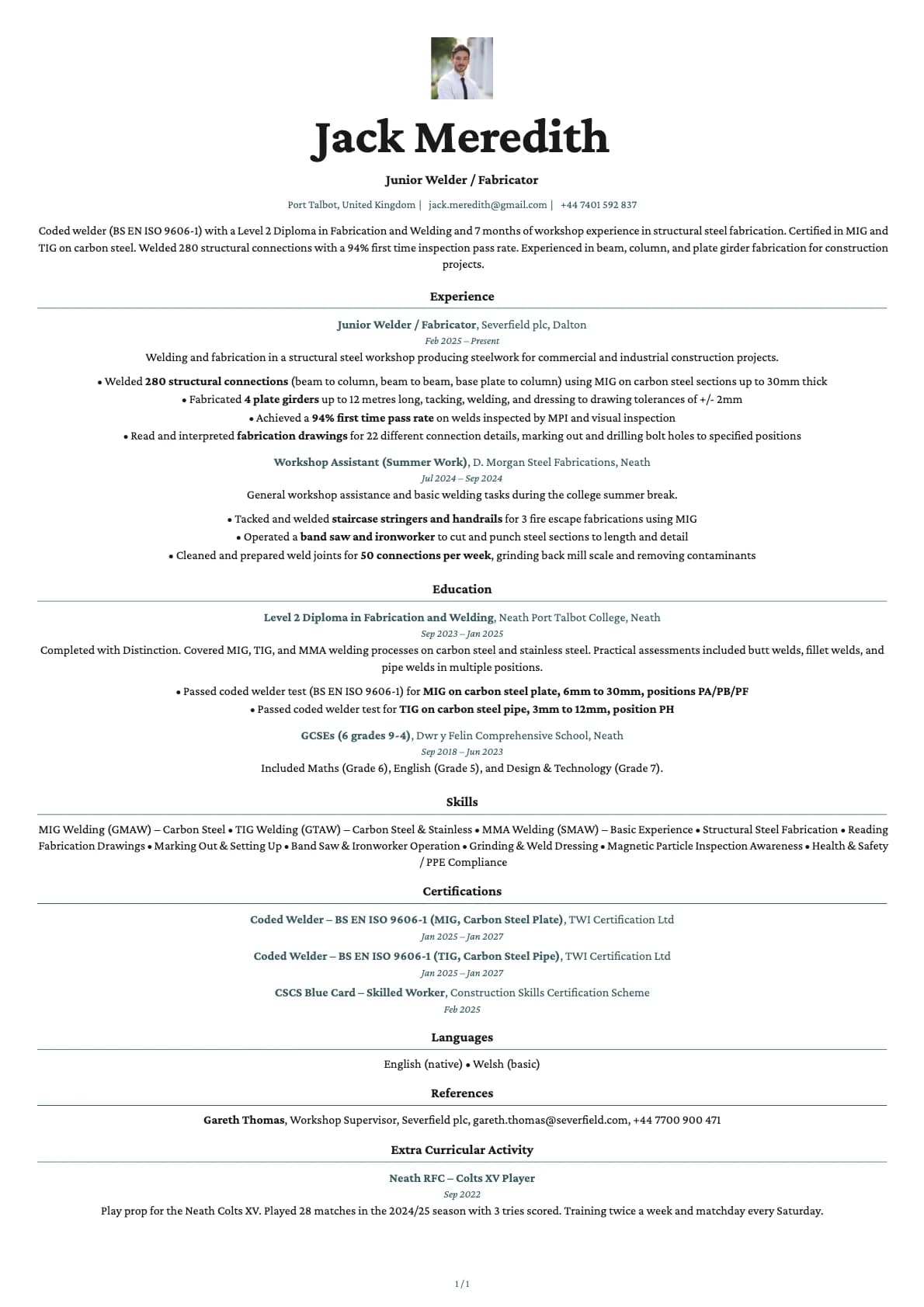
This resume belongs to Jack Meredith, who completed a Level 2 Diploma in Fabrication and Welding at Neath Port Talbot College and holds a coded welder certification to BS EN ISO 9606-1 for MIG and TIG on carbon steel. He has 7 months of experience in a structural steel fabrication workshop and has welded beams, columns, and plate girders for construction projects.
What Makes This Resume Work
The coded welder certificate is described with full detail. Jack lists his BS EN ISO 9606-1 certification with the specific approval range: MIG (GMAW) on carbon steel, plate, thickness 6mm to 30mm, positions PA, PB, and PF. This tells an employer exactly which welding situations he is certified for. An incomplete coding description is as unhelpful as no coding at all.
Welding processes are named correctly. MIG (GMAW), TIG (GTAW), and MMA (SMAW) are all mentioned. Jack is coded for MIG and TIG, and he has experience with MMA from his college training. Using the correct ISO process designations alongside the common names shows professional awareness.
Fabrication output is quantified. Jack welded 280 structural connections (beam to column, beam to beam, and base plate) over a 7 month period. He also fabricated 4 plate girders up to 12 metres long, tacking, welding, and dressing each one to specified tolerances. These numbers prove he has moved beyond practice pieces to production work.
Quality and inspection are mentioned. His welds underwent magnetic particle inspection (MPI) and visual inspection by the workshop's welding inspector. He achieved a first time pass rate of 94% on inspected welds. This metric matters because rework is expensive, and a high first time pass rate signals consistent quality.
Key Takeaways
List your coded welder certificate with the full approval range: standard number, welding process, material type, thickness range, and welding positions. This is the single most important item on a welder's resume.
Name every welding process you can perform, even if you are only coded in one or two. MIG, TIG, MMA, flux cored. Each one opens up different types of work.
Quantify your output and your quality. Number of connections welded, metres of weld deposited, and your inspection pass rate all give an employer a clear picture of your capability.
Build your own version
Open this layout in the builder and swap in your own details. It takes a few minutes.
Free to use. No account needed to start.
Was this resume example helpful?
Rate this example to help us create better content for you.
4.7 average from 84 ratingsRelated resume examples
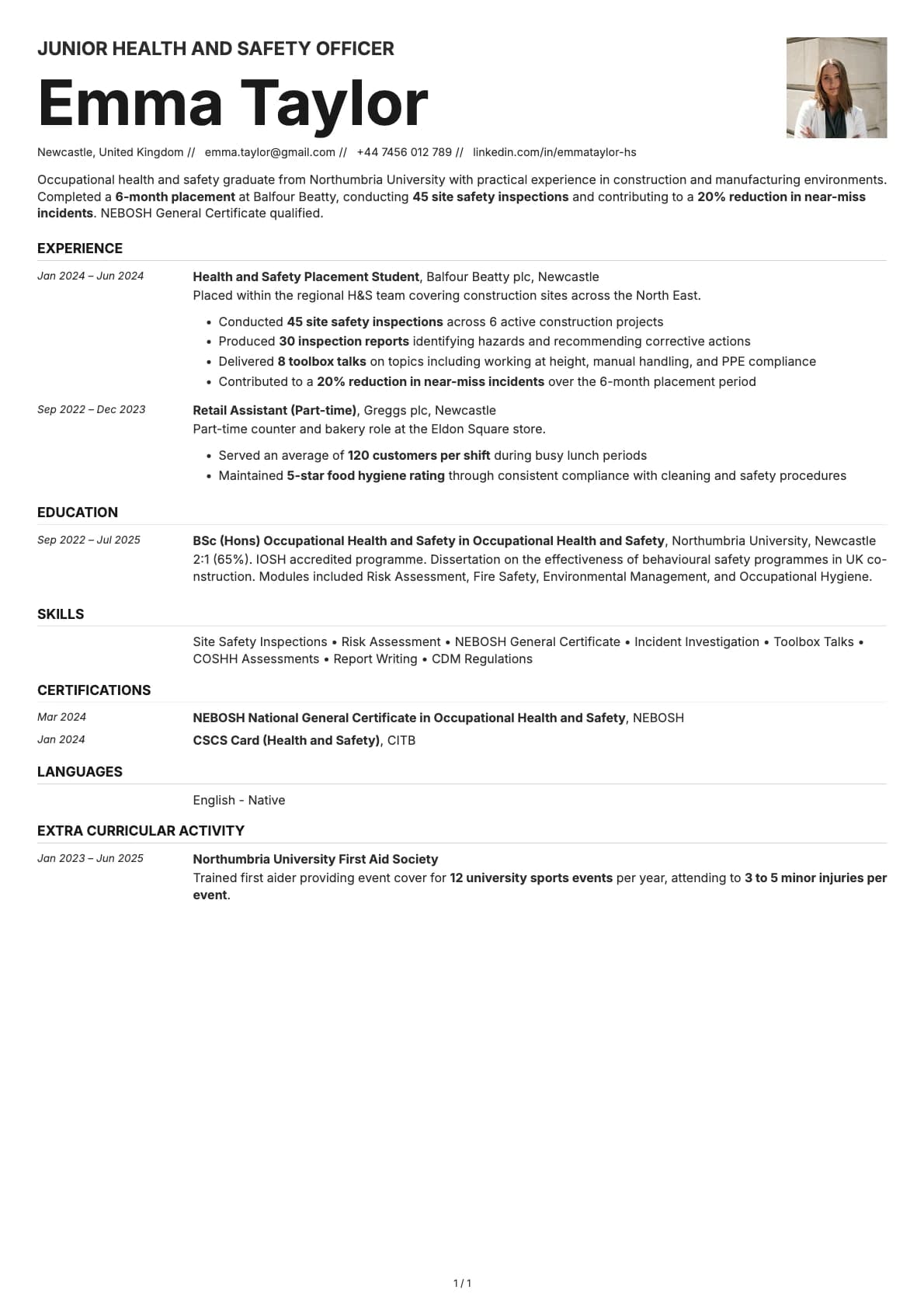
Junior Health and Safety Officer
A junior health and safety officer resume example with Balfour Beatty placement and NEBOSH qualification.
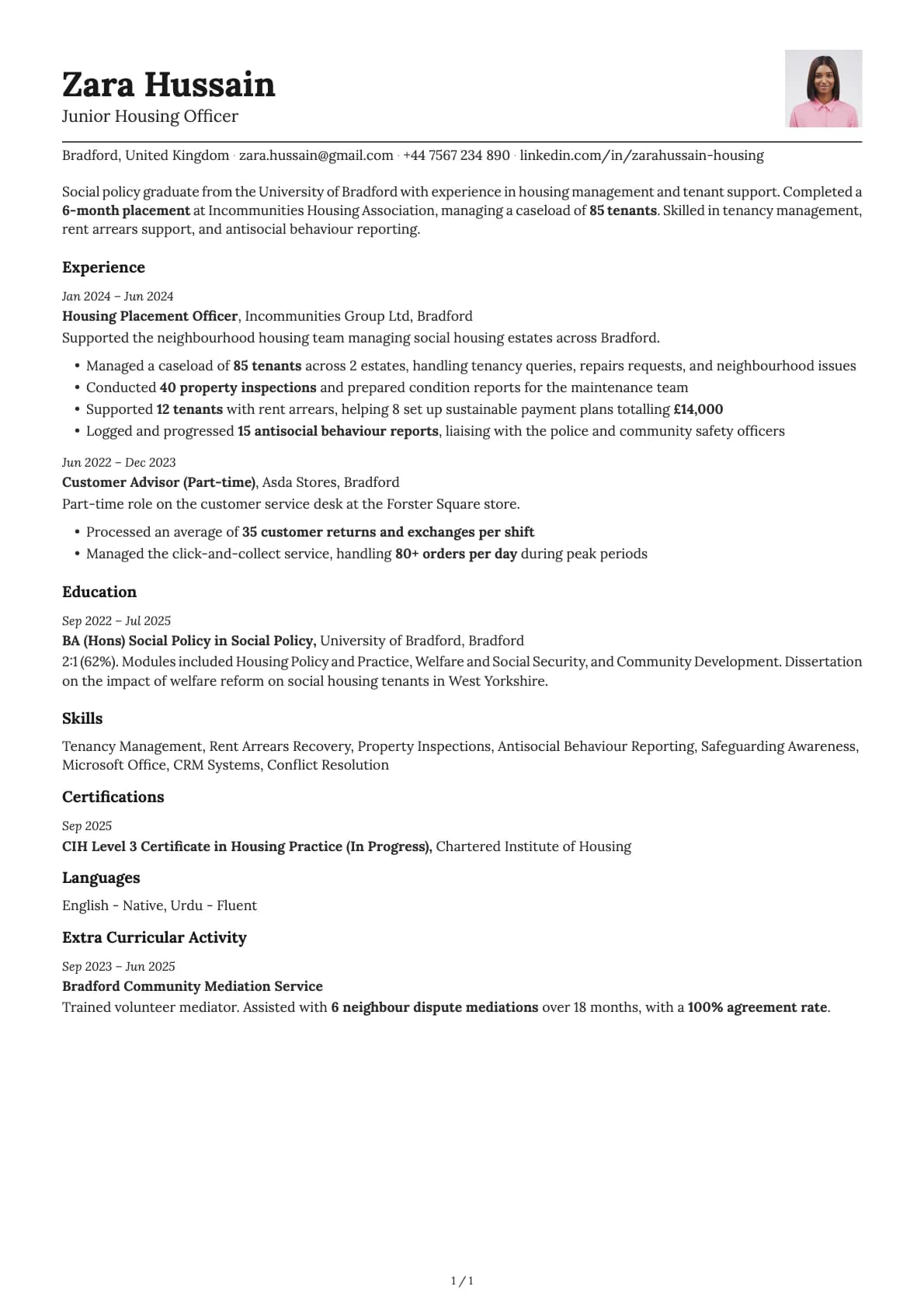
Junior Housing Officer
A junior housing officer resume example with housing association placement and tenant management experience.
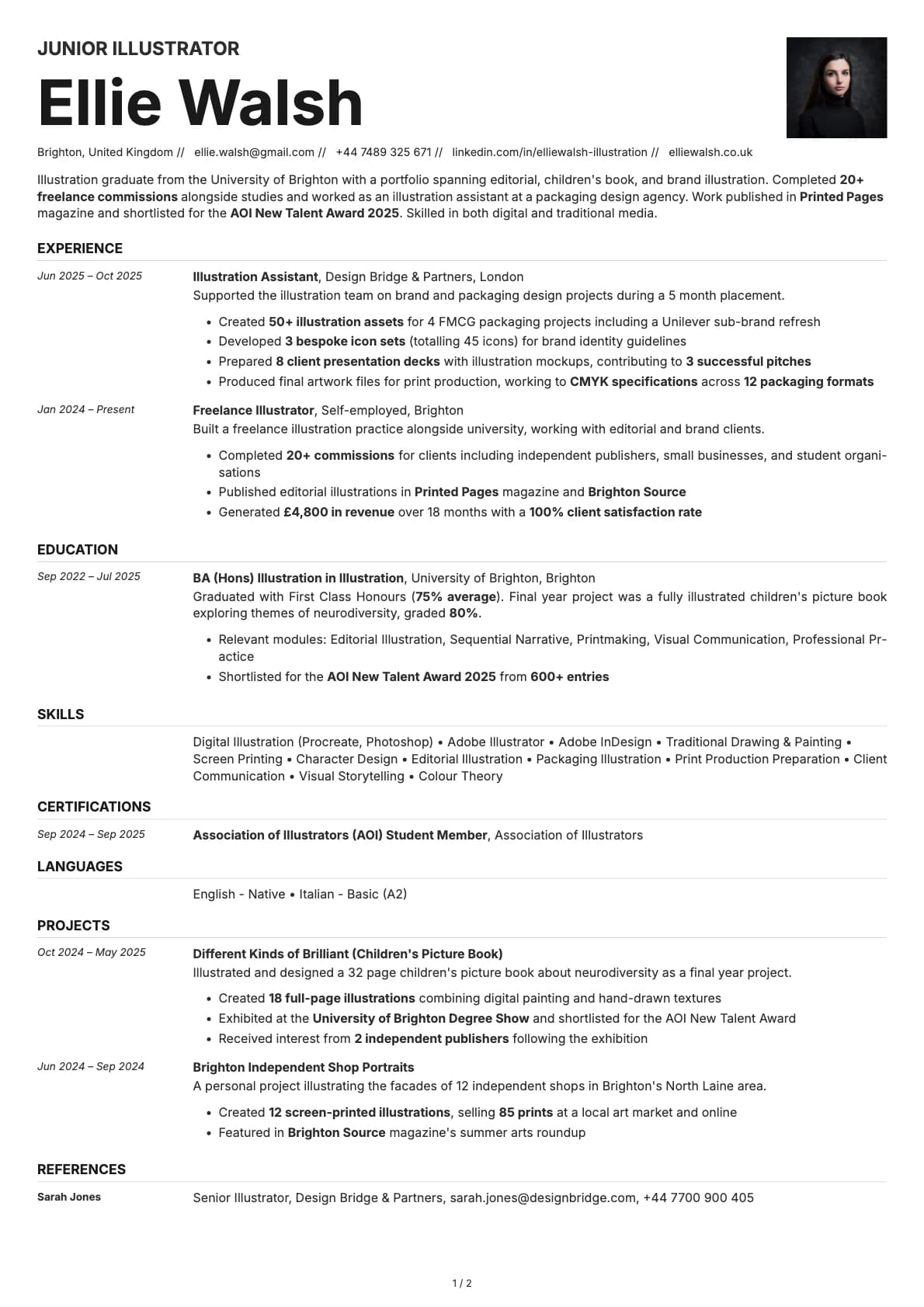
Junior Illustrator
A junior illustrator resume example for graduates. See how to present freelance commissions, agency experience, and published work to land your first illustration role.
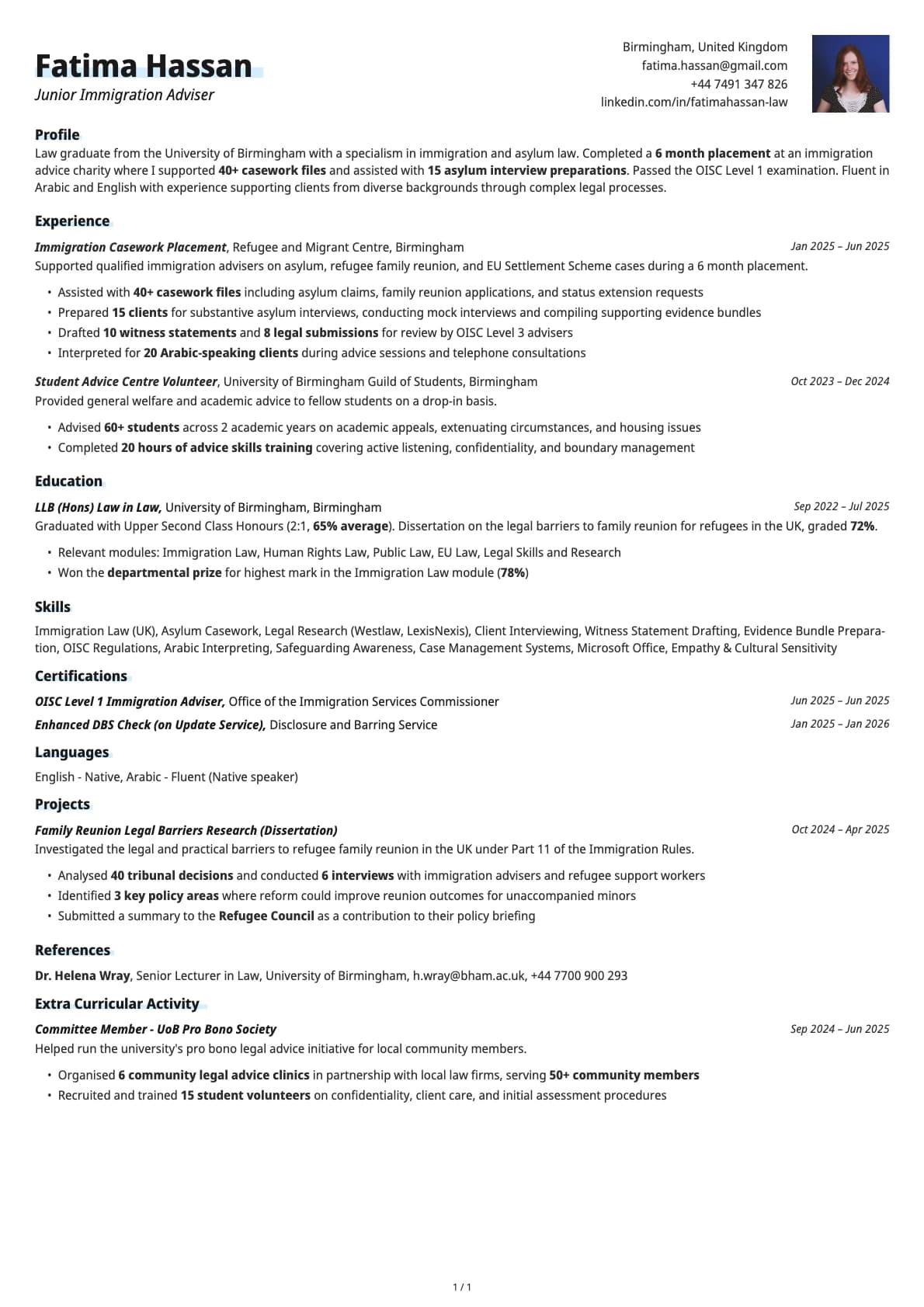
Junior Immigration Adviser
A junior immigration adviser resume example for law graduates. See how to present asylum casework, OISC qualification, and client support experience to land your first immigration advisory role.
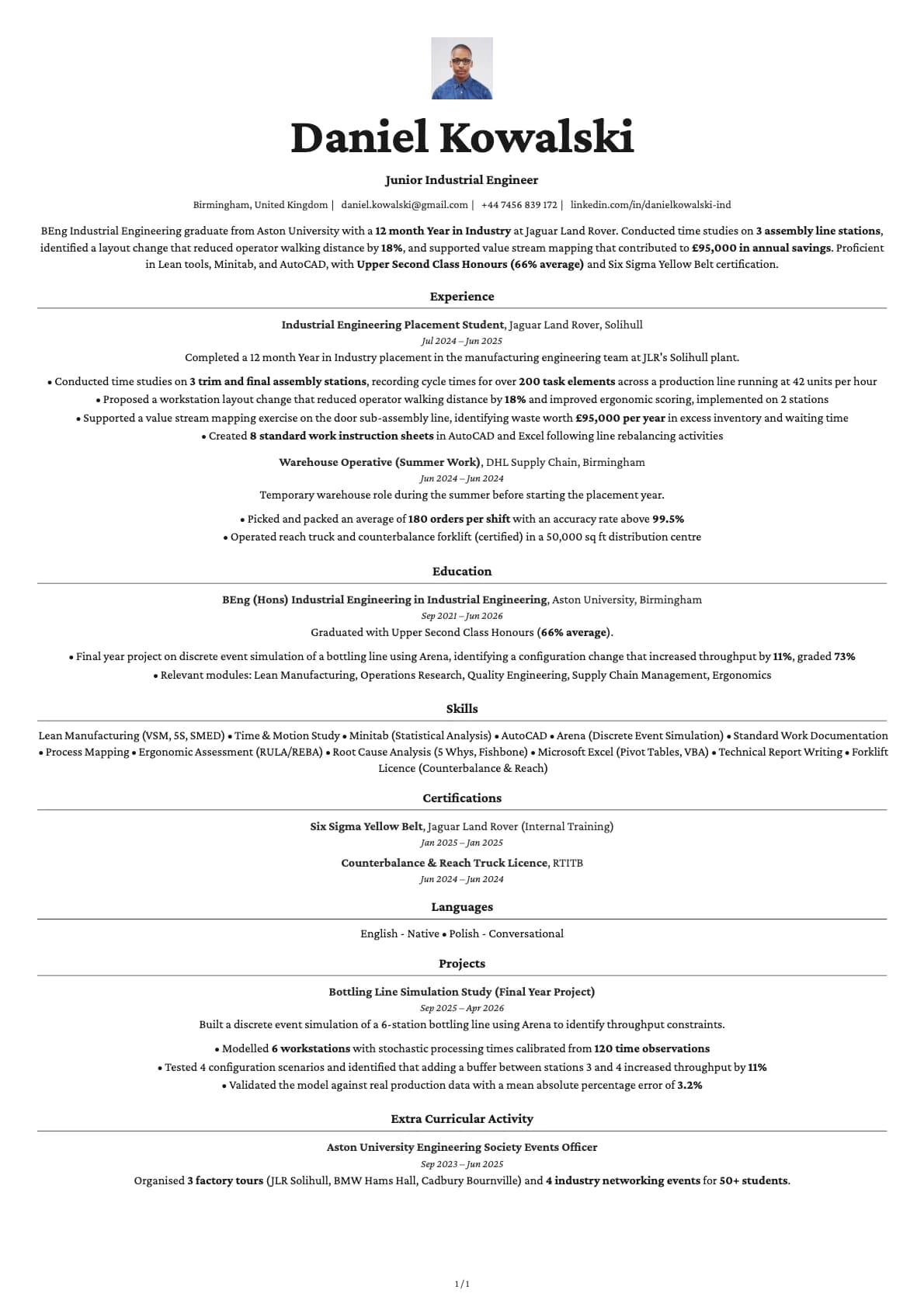
Junior Industrial Engineer
A junior industrial engineer resume example with lean manufacturing placement experience, time study skills, and Six Sigma Yellow Belt.
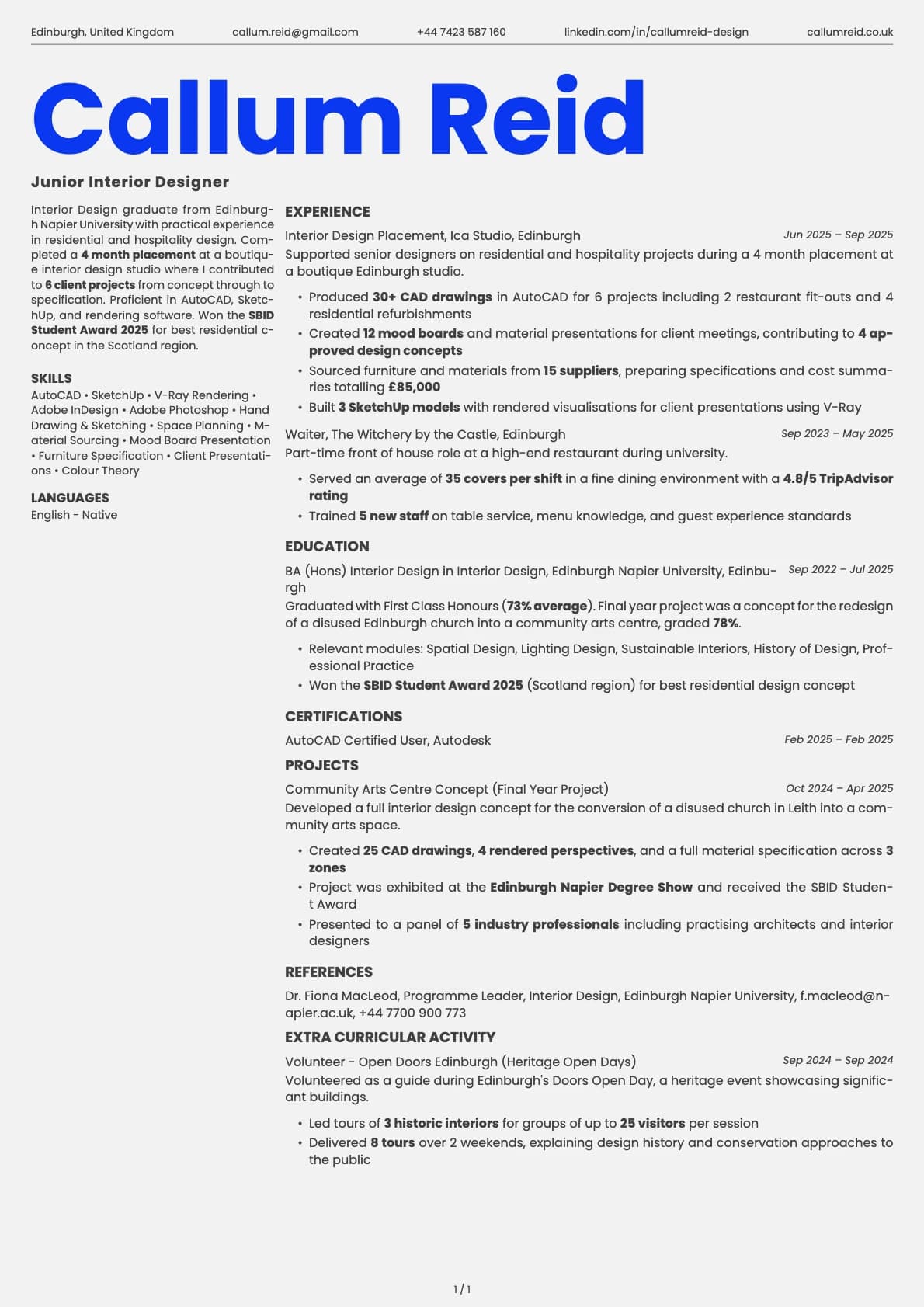
Junior Interior Designer
A junior interior designer resume example for graduates. Learn how to present studio placement experience, CAD skills, and design awards to land your first interior design role.
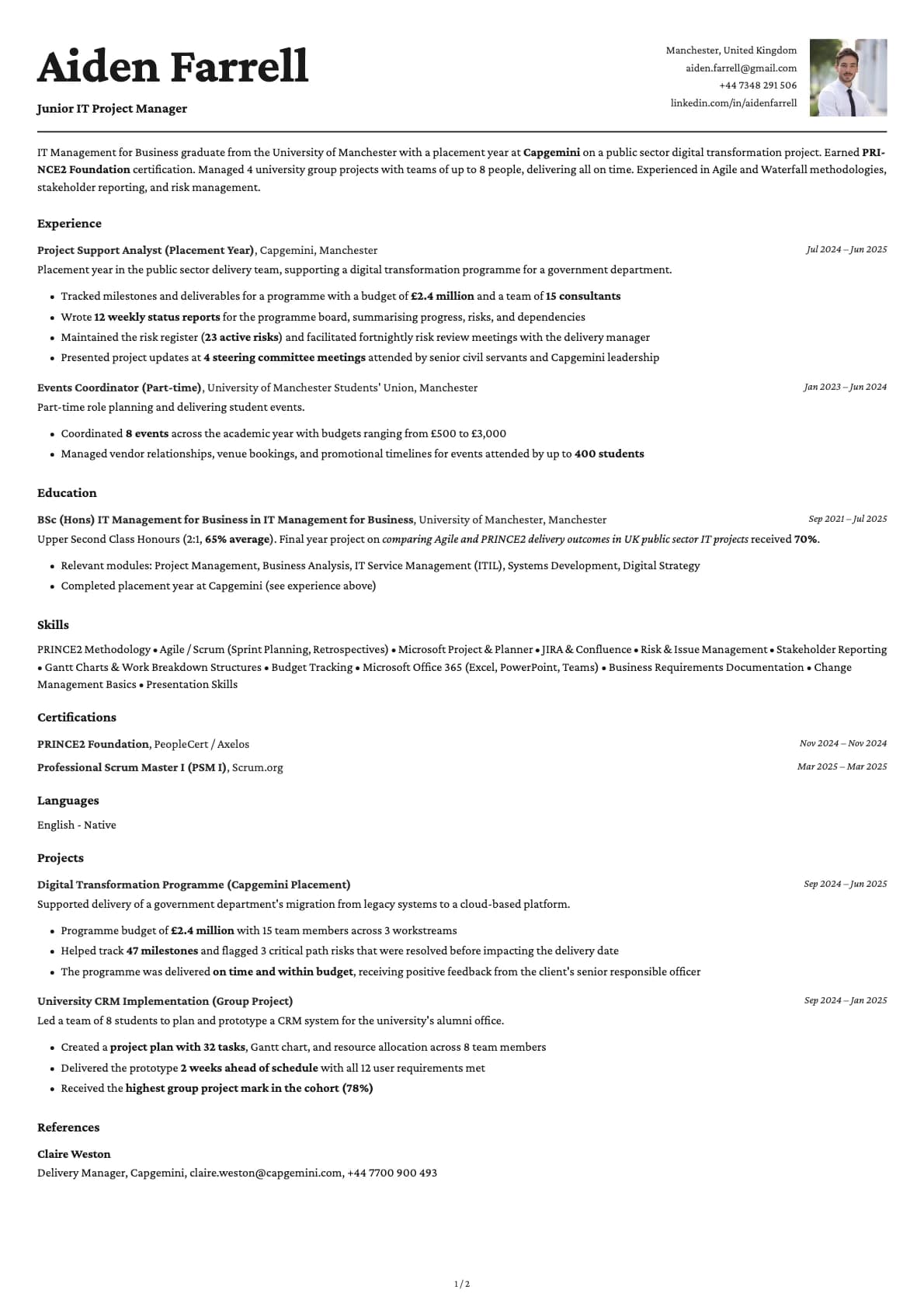
Junior IT Project Manager
A junior IT project manager resume example with agile delivery experience, stakeholder management, and PRINCE2 Foundation from an IT graduate entering project management.
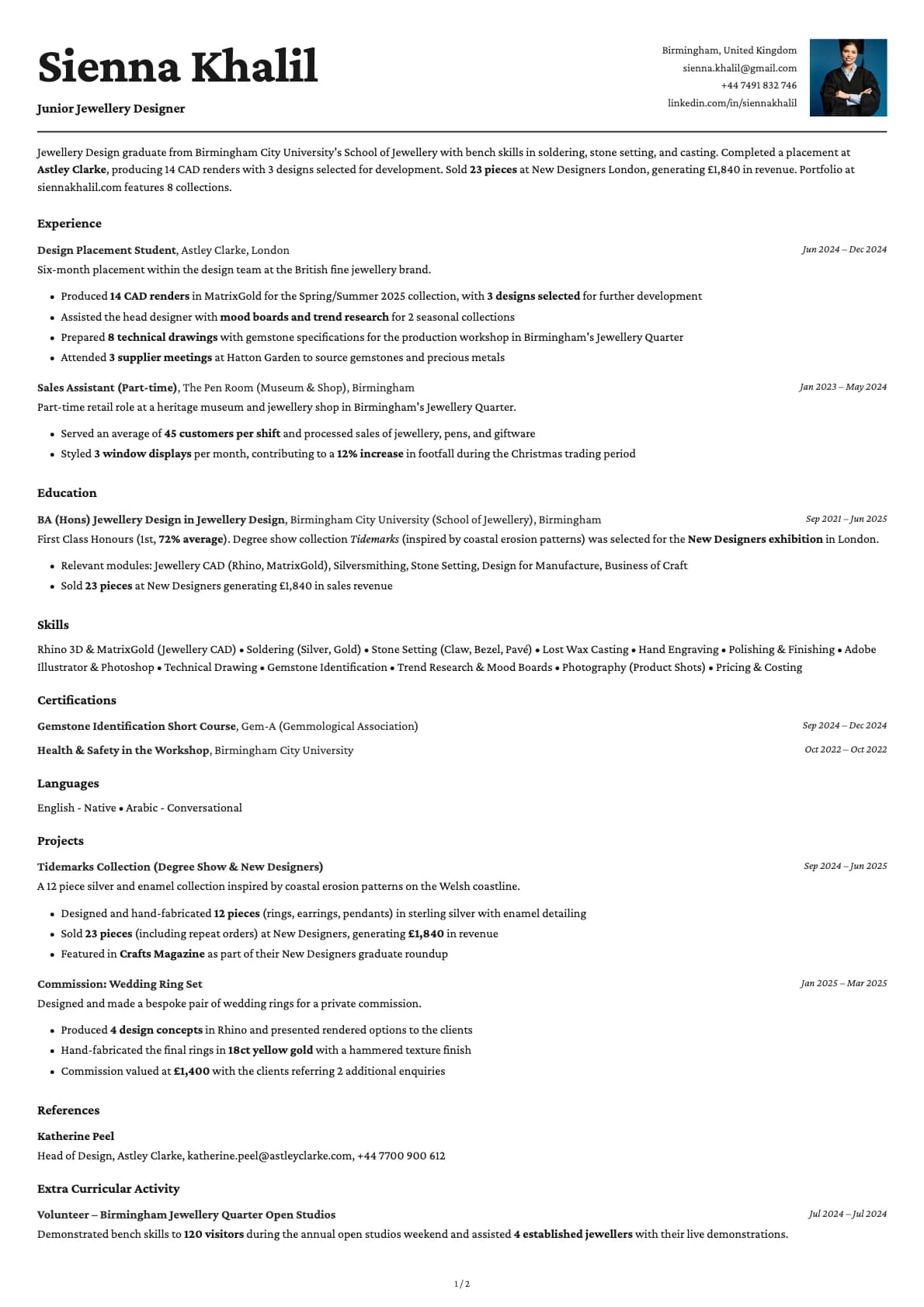
Junior Jewellery Designer
A junior jewellery designer resume example featuring CAD renders, bench skills, and collection launches from a Jewellery Design BA graduate entering the trade.
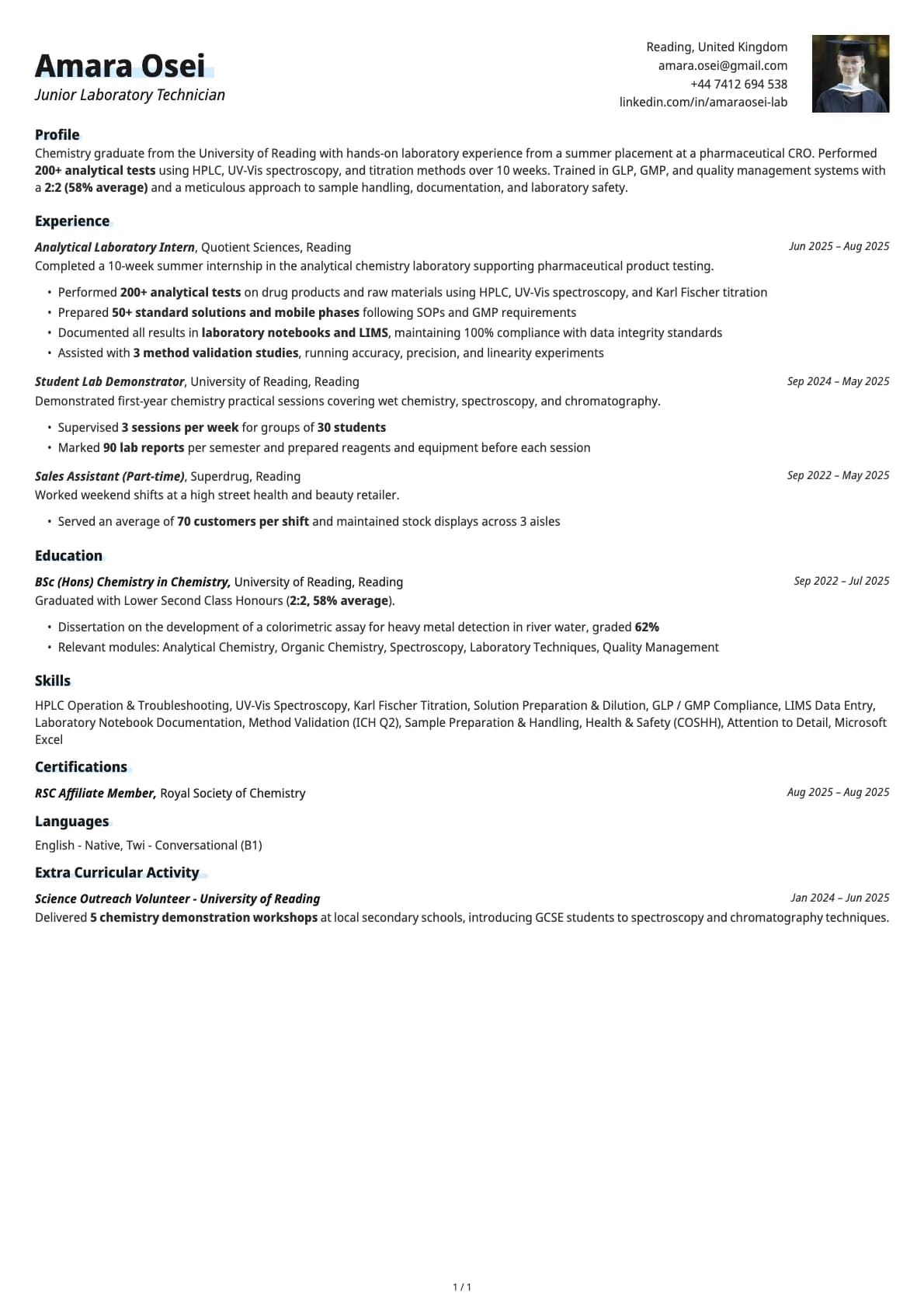
Junior Laboratory Technician
A junior lab technician resume example with pharmaceutical lab internship experience, HPLC skills, and GMP compliance for chemistry graduates.
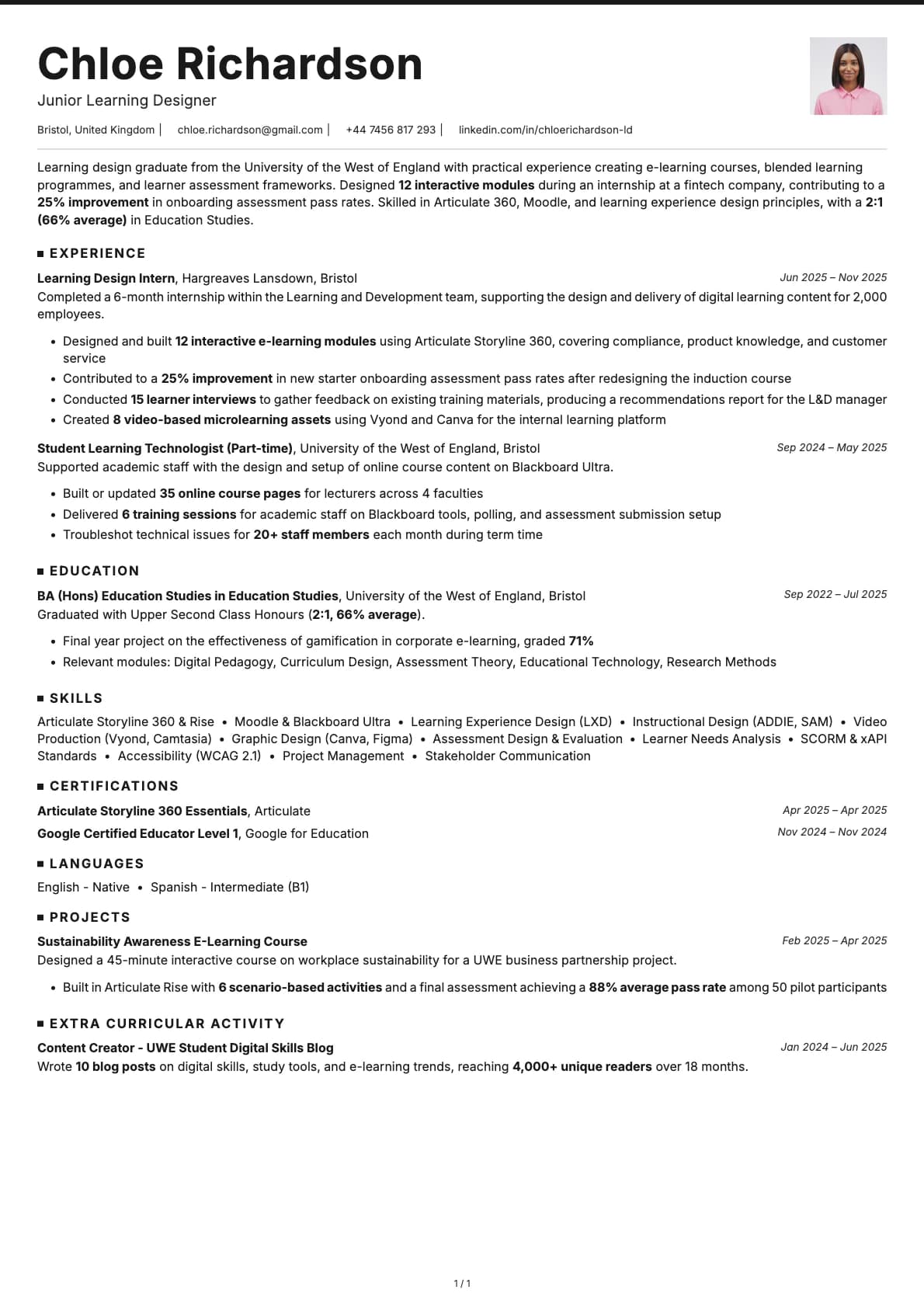
Junior Learning Designer
A junior learning designer resume example with e-learning module numbers, Articulate 360 skills, and corporate training experience for new graduates.
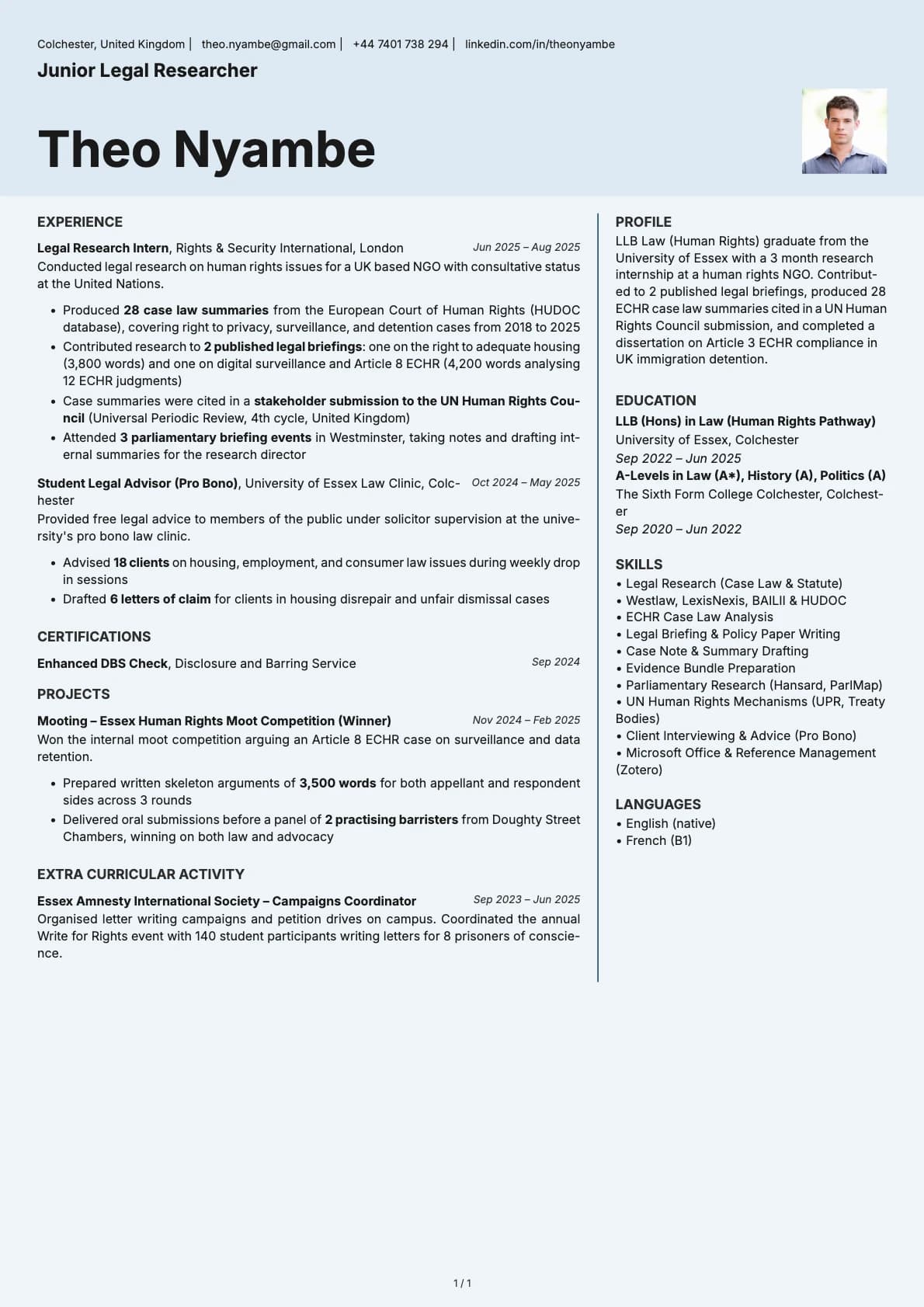
Junior Legal Researcher
A junior legal researcher resume example for human rights law LLB graduates. See how to present your legal research skills, case analysis experience, and advocacy work.
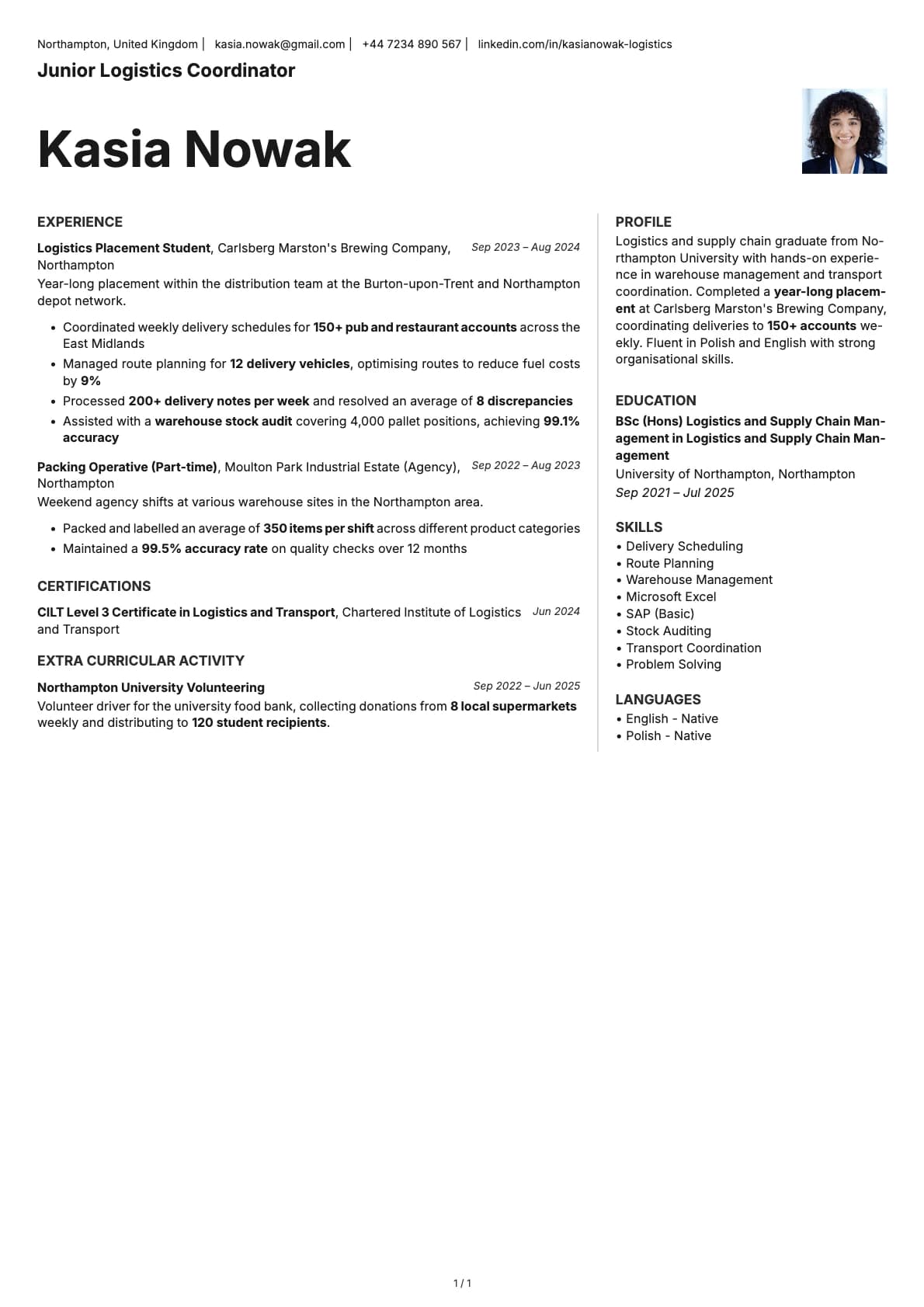
Junior Logistics Coordinator
A junior logistics coordinator resume example with brewery distribution placement and route planning experience.