Junior Product Designer Resume Example
A junior product designer resume example with UX research projects, Figma prototypes, and usability test results from a Product Design BSc at Loughborough.

Laddro Team
Free to use. No account needed to start.
Free to use. No account needed to start.
Overview
Product design sits at the intersection of user research, visual design, and prototyping. Hiring managers for junior roles want to see that you can run a design process from research to finished prototype, not just make things look pretty in Figma. A portfolio link matters, but the resume still needs to prove you understand users and can measure outcomes.
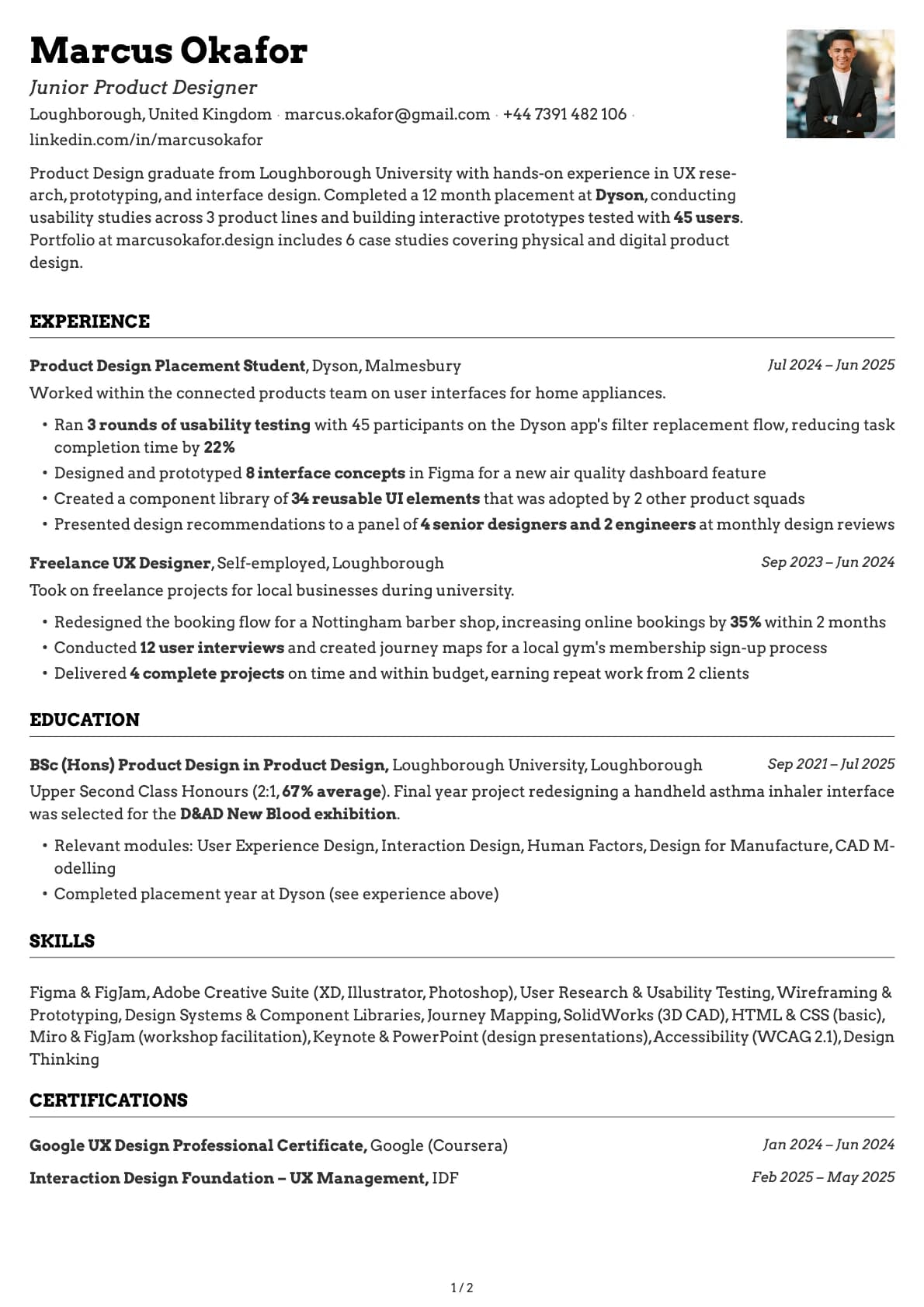
This resume belongs to Marcus Okafor, a Product Design graduate from Loughborough University. He completed a placement year at Dyson, ran usability studies on real products, and shipped interface improvements that were measured against real metrics. His resume works because every bullet connects a design decision to a user outcome.
What Makes This Resume Work
The Dyson placement anchors the entire resume. A recognised brand name with specific deliverables (usability studies on 3 product lines, prototypes tested with 45 users) immediately tells hiring managers that Marcus has worked in a professional product design environment. He does not just say he "assisted the team." He names what he built and how it was tested.
Portfolio is mentioned in context, not just as a link. Marcus references his portfolio in his summary and ties specific case studies to his work experience. This gives recruiters a reason to click through, because they already know what they will find there.
Usability metrics appear throughout. Numbers like "reduced task completion time by 22%" and "tested with 45 users across 3 rounds" show that Marcus understands design is measurable. This separates him from candidates who only talk about aesthetics.
University projects are treated as professional work. His final year project redesigning a medical device interface includes user counts, iteration rounds, and a real outcome (selected for the D&AD New Blood exhibition). Student work presented with this level of rigour reads like professional experience.
Key Takeaways
Junior product designer resumes need three things: evidence of user research, prototyping skills with named tools, and measurable outcomes. Always link your portfolio, but make sure the resume itself tells the story of your design process. Placement experience at a recognised company is worth more than listing every Adobe tool you have ever opened. Show that you test with real users and measure results.
Build your own version
Open this layout in the builder and swap in your own details. It takes a few minutes.
Free to use. No account needed to start.
Was this resume example helpful?
Rate this example to help us create better content for you.
4.8 average from 127 ratingsRelated resume examples
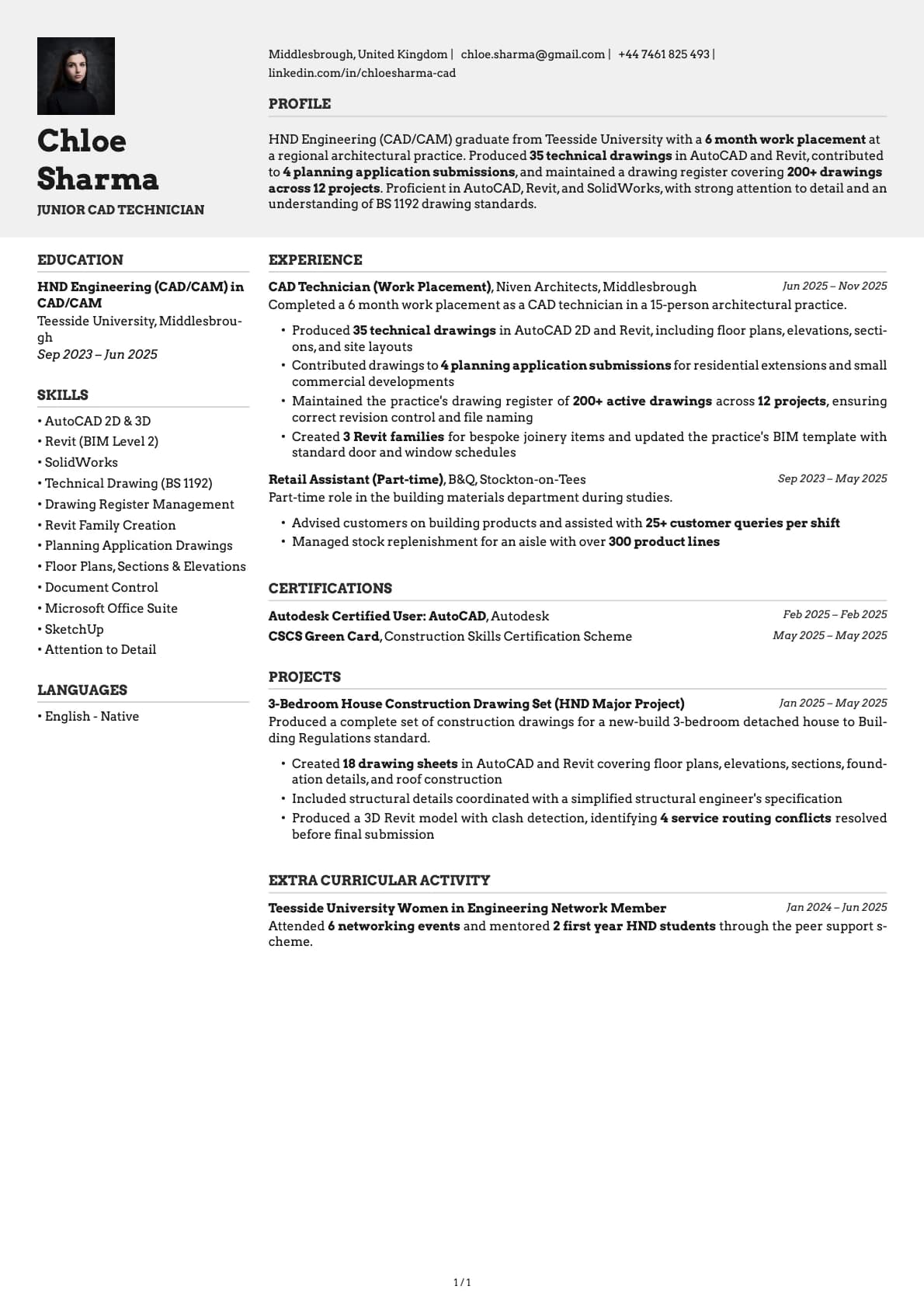
Junior CAD Technician
A junior CAD technician resume example with HND qualification, AutoCAD and Revit proficiency, and architectural practice experience.
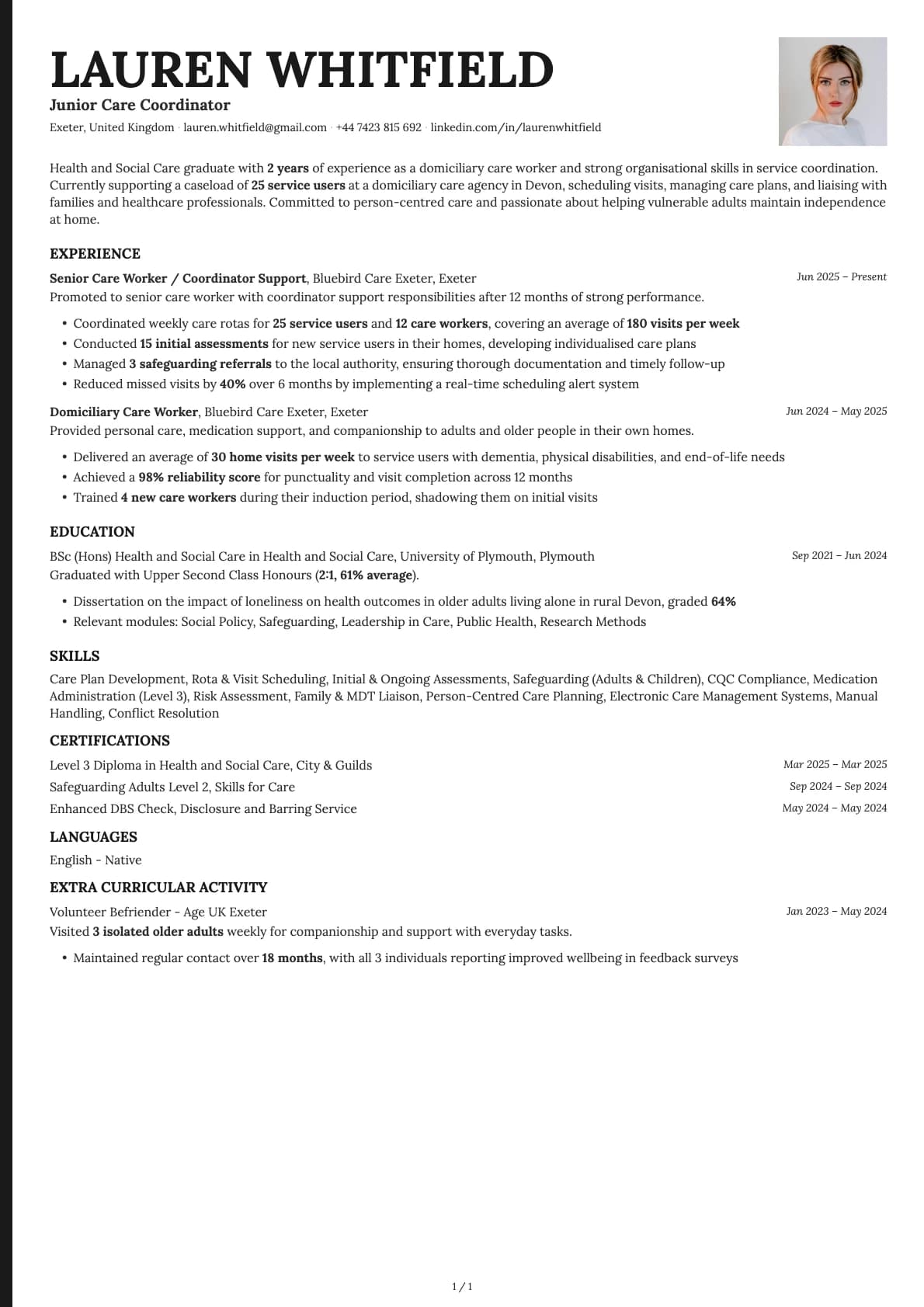
Junior Care Coordinator
A junior care coordinator resume example with domiciliary care experience, rota management numbers, and CQC compliance for new coordinators.
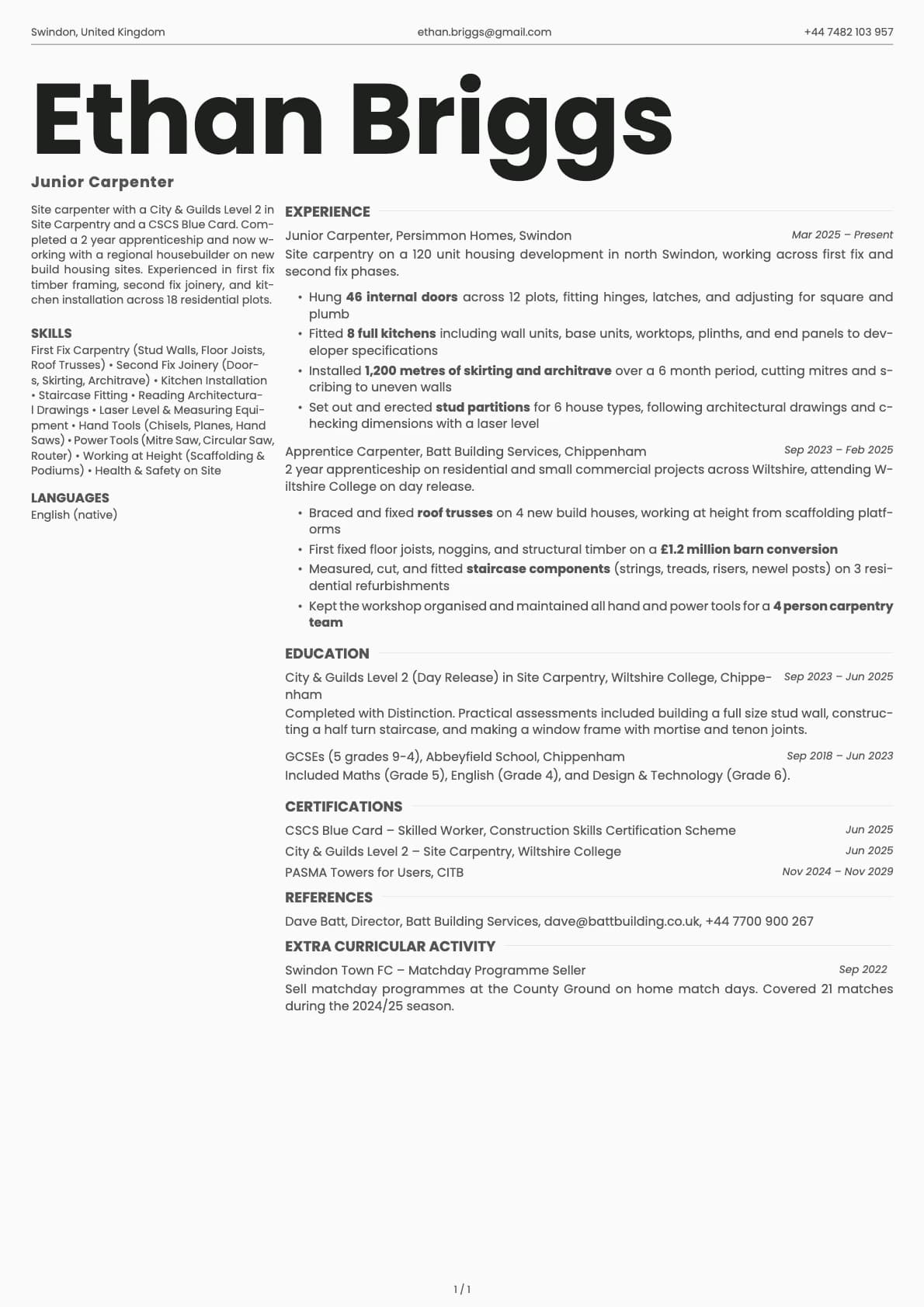
Junior Carpenter
A junior carpenter resume example for carpentry apprenticeship graduates. See how to present your City & Guilds, site joinery experience, and CSCS card details.
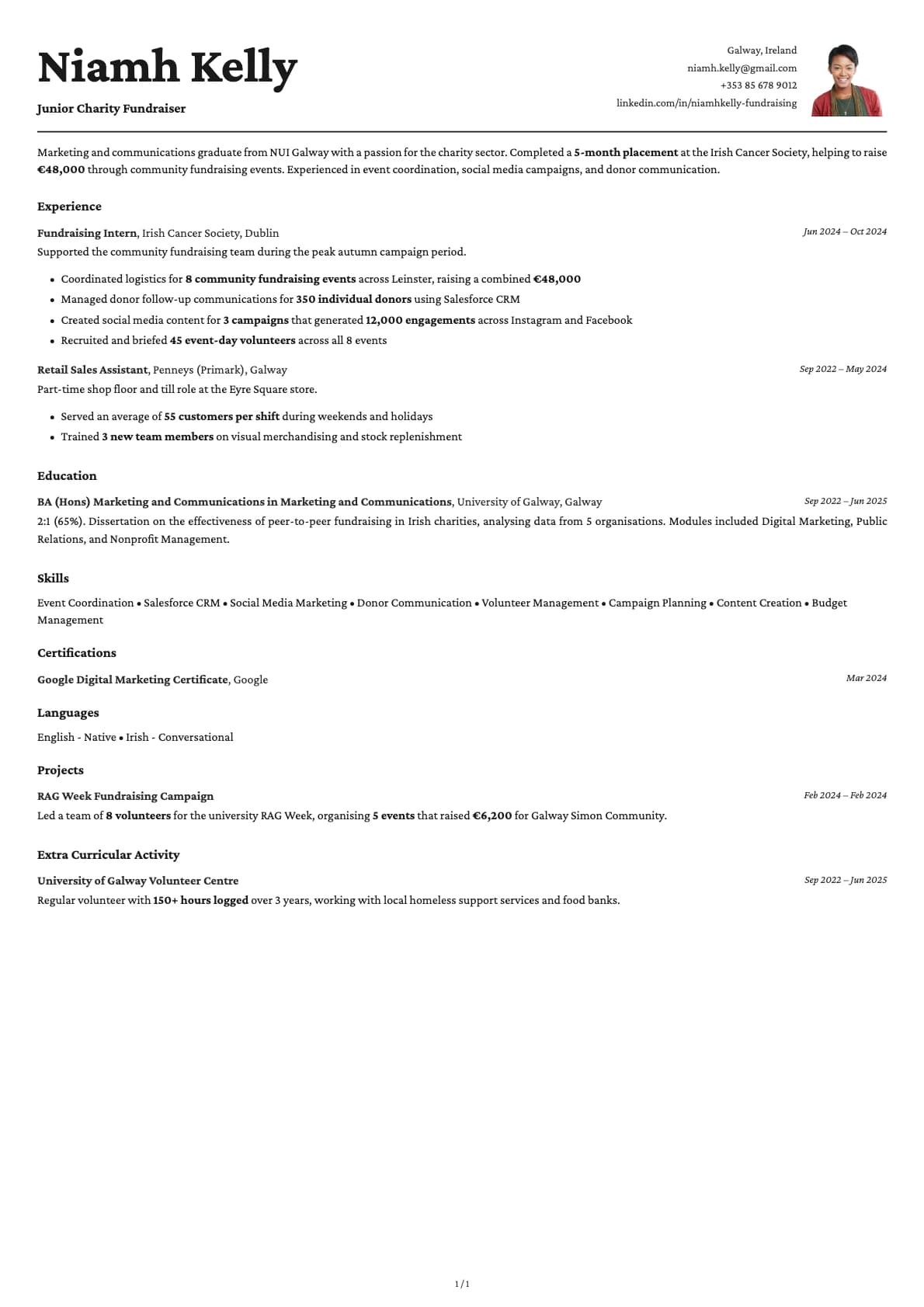
Junior Charity Fundraiser
A junior charity fundraiser resume example with Irish Cancer Society internship and event coordination experience.
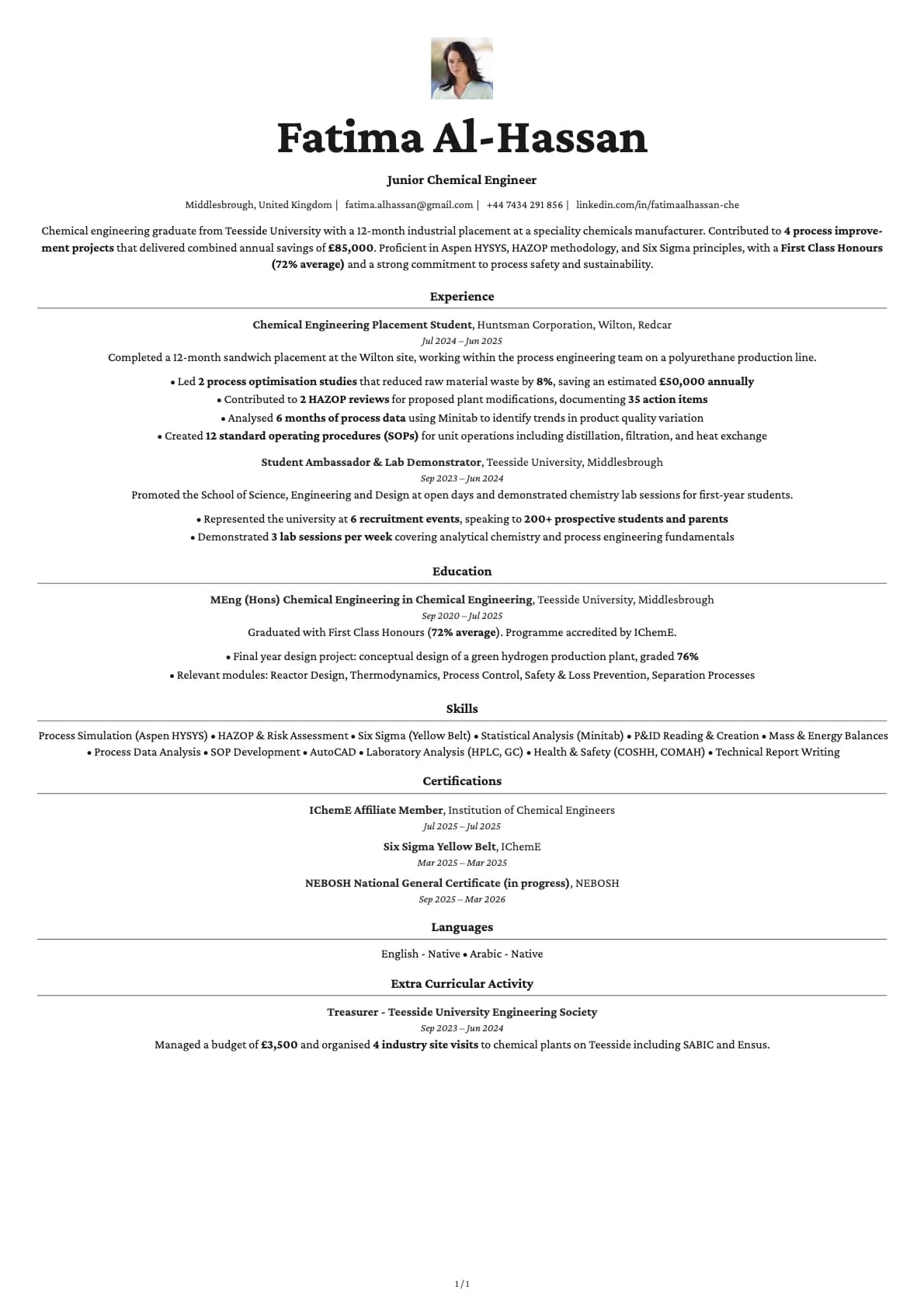
Junior Chemical Engineer
A junior chemical engineer resume example with industrial placement experience, process improvement savings, and IChemE membership for graduates.
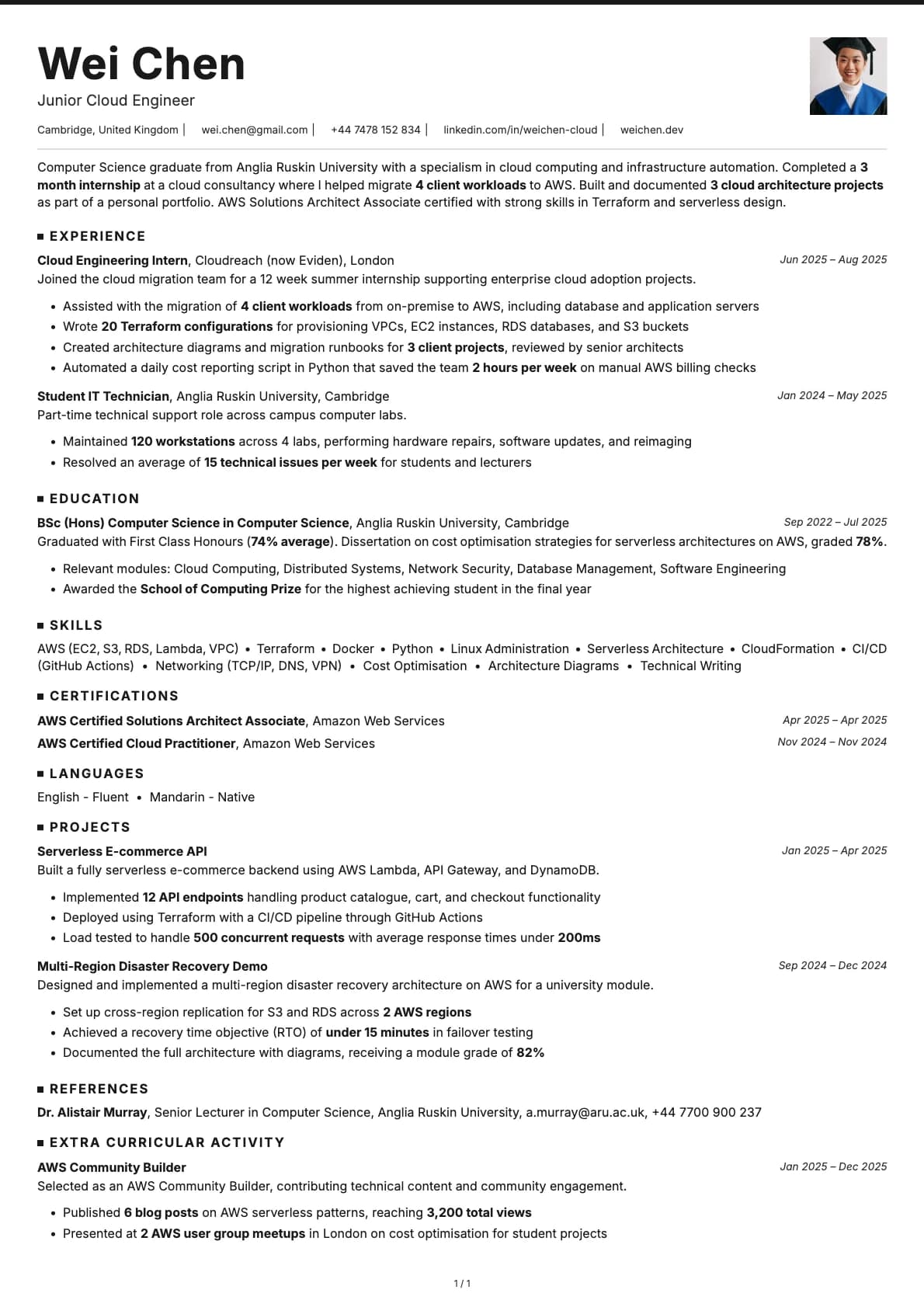
Junior Cloud Engineer
A junior cloud engineer resume example for graduates. Learn how to present AWS experience, Terraform skills, and cloud certifications to land your first cloud engineering role.
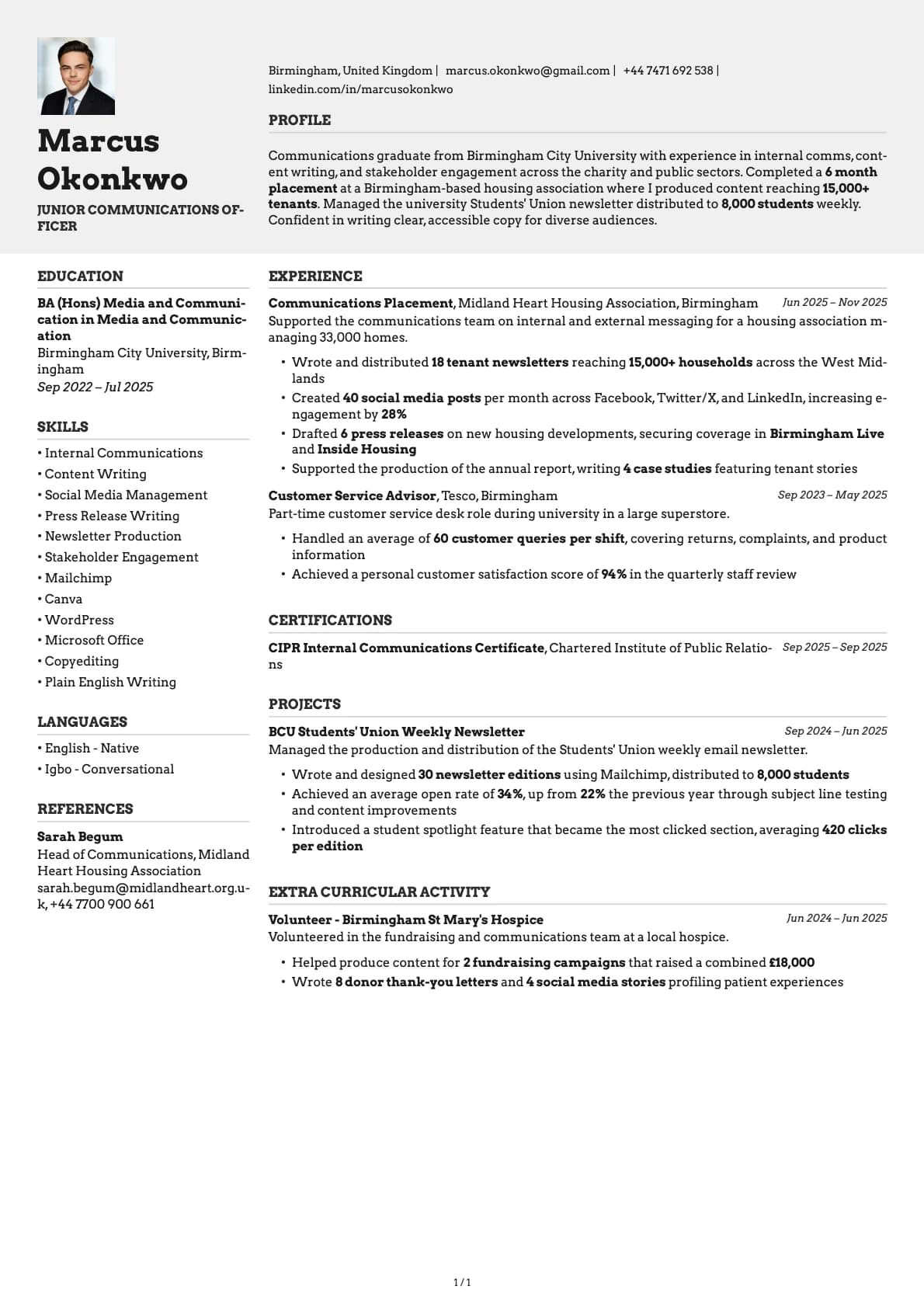
Junior Communications Officer
A junior communications officer resume example for graduates. See how to present internal comms, content writing, and stakeholder engagement experience to land your first comms role.
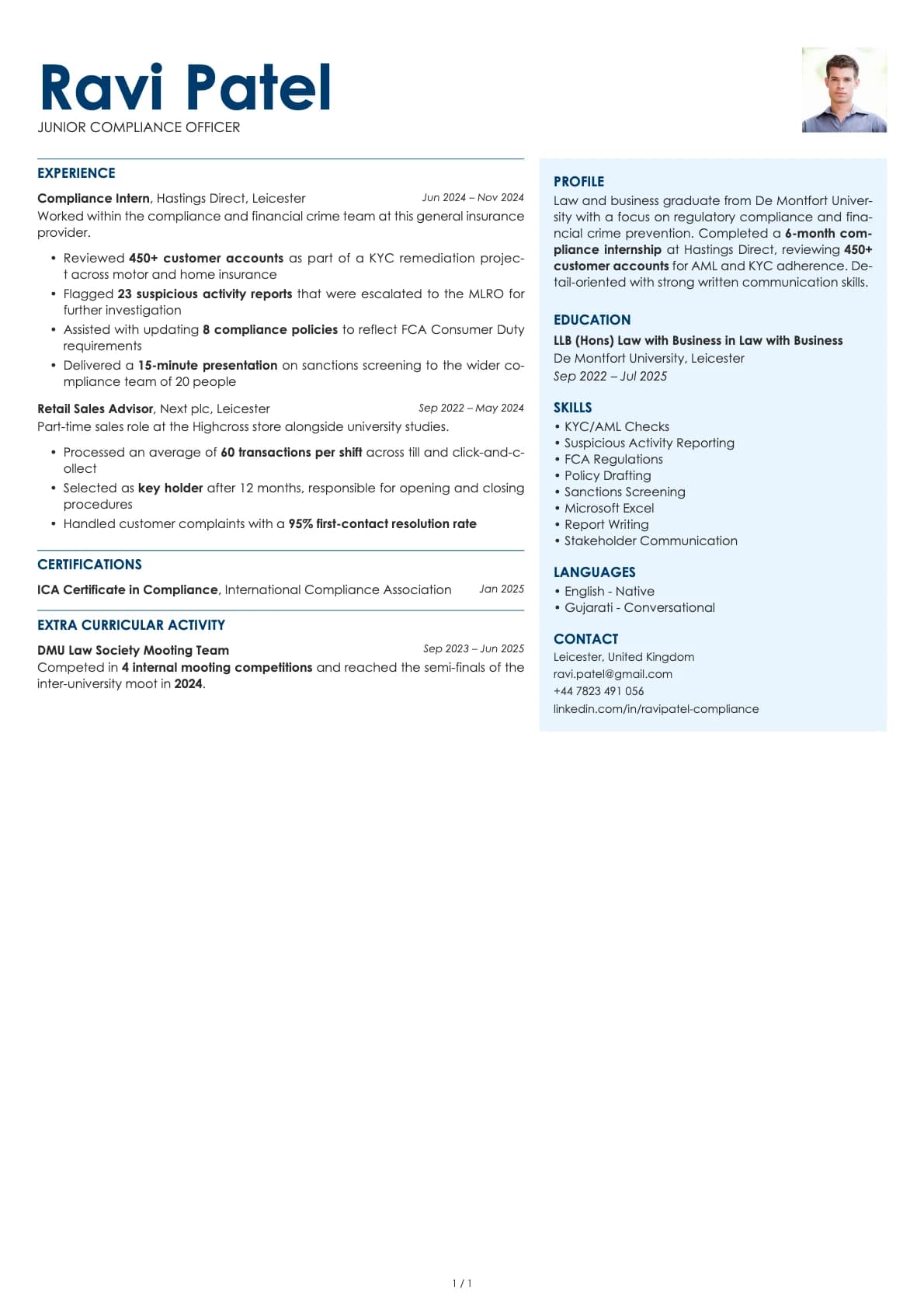
Junior Compliance Officer
A junior compliance officer resume example with insurance compliance internship experience and AML knowledge.
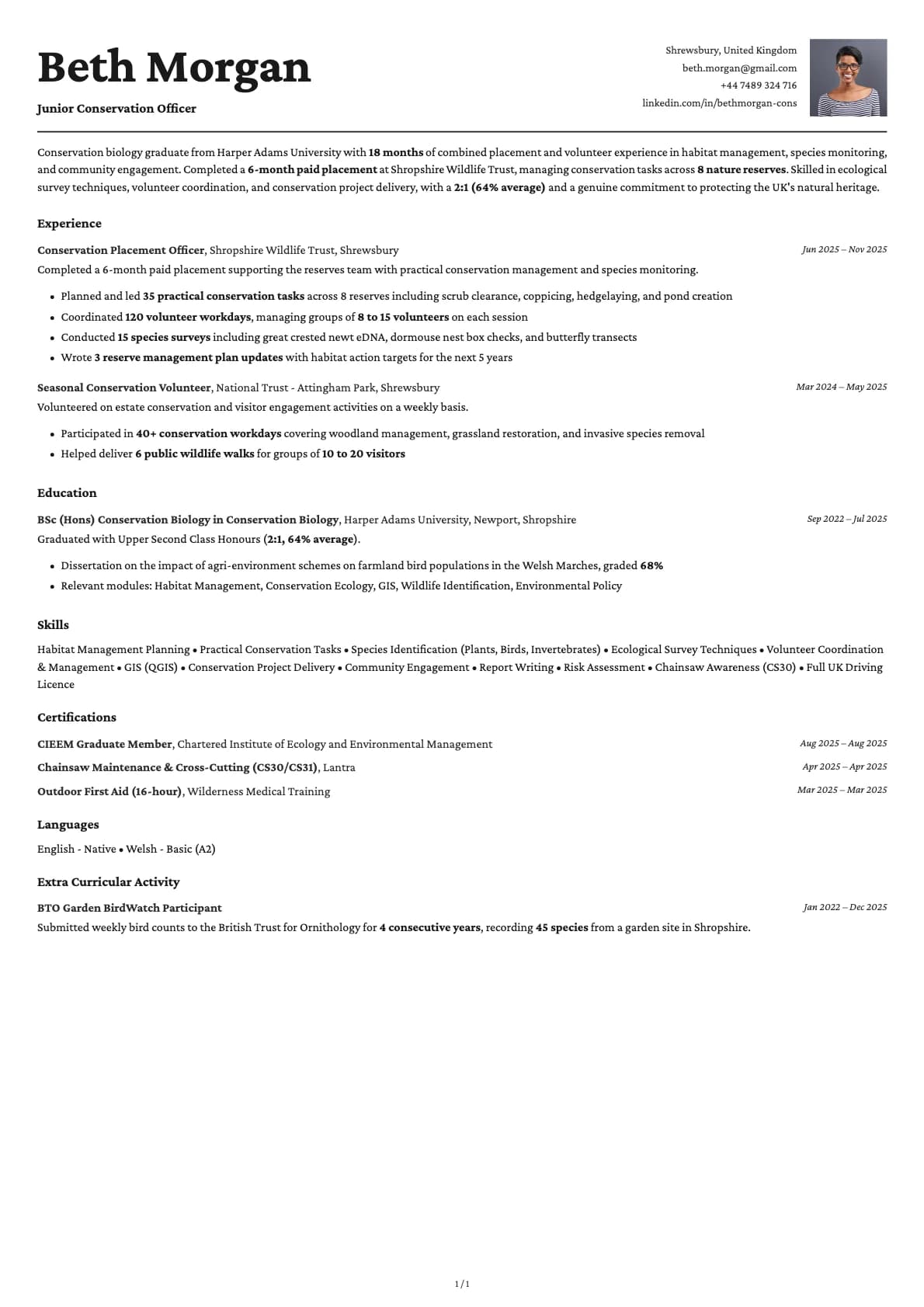
Junior Conservation Officer
A junior conservation officer resume example with wildlife trust placement experience, volunteer coordination, and habitat management skills.
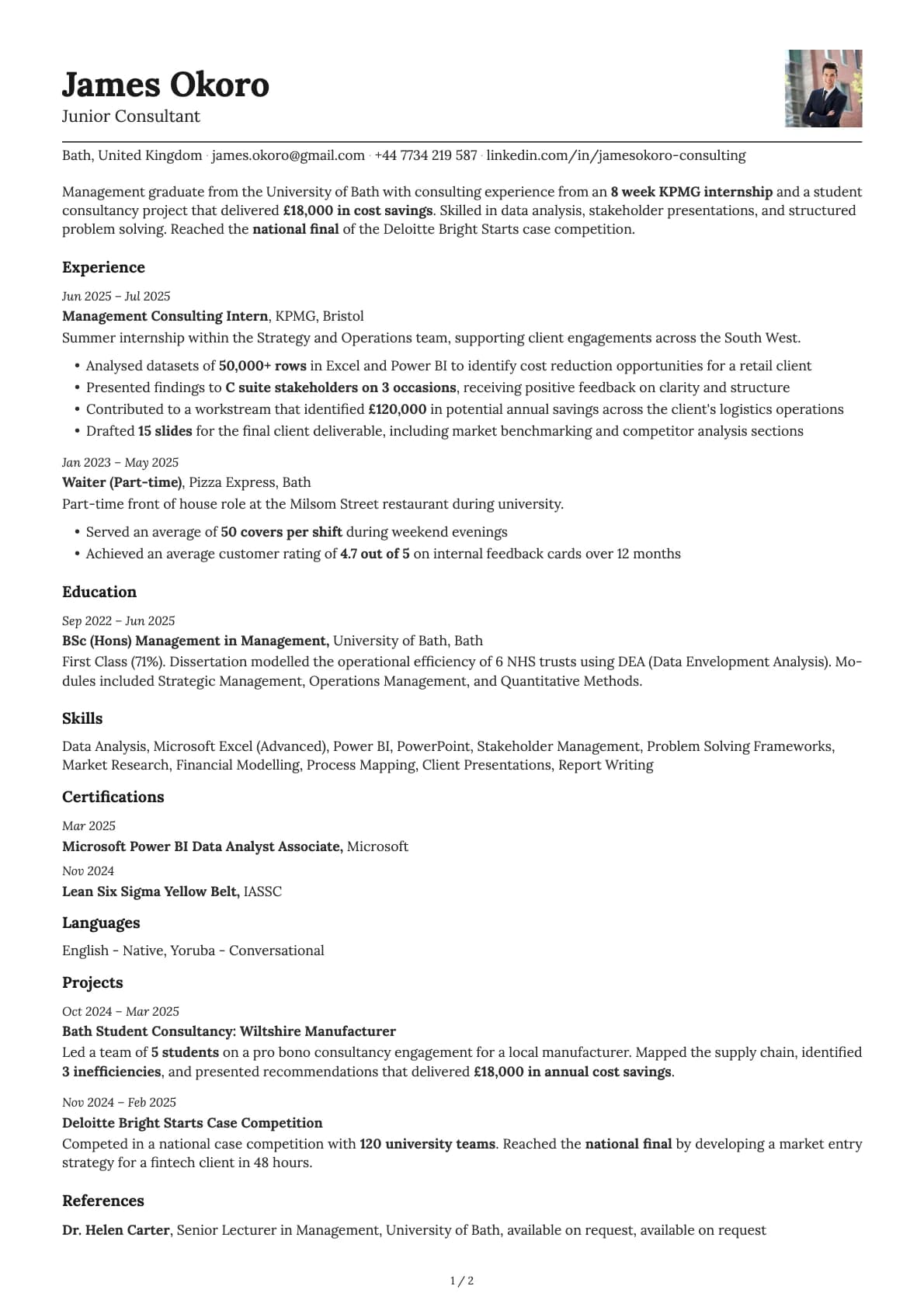
Junior Consultant
A junior consultant resume example with management degree, Big Four internship, and client facing project delivery experience.
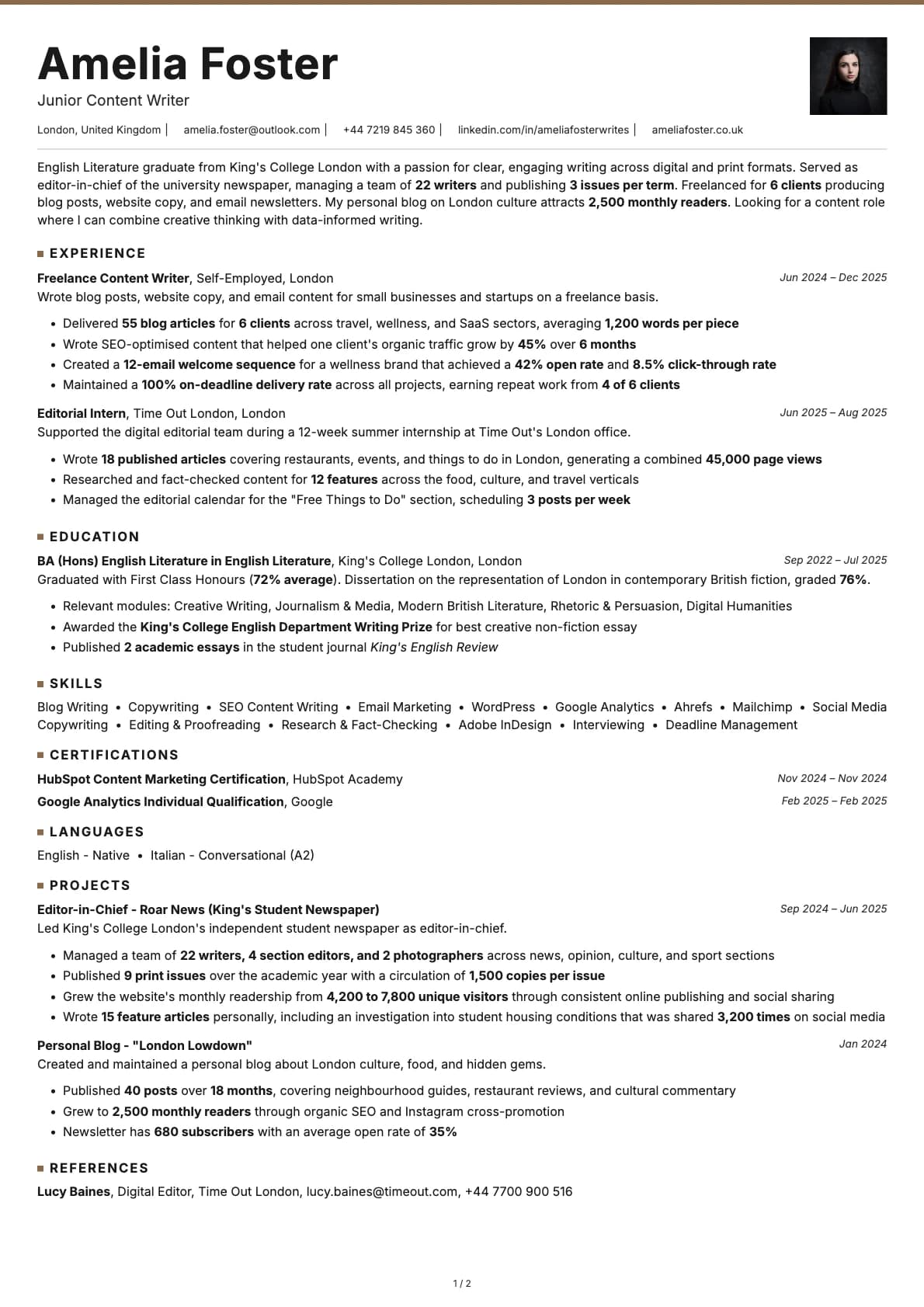
Junior Content Writer
A junior content writer resume example for recent graduates. See how to showcase your writing portfolio, SEO knowledge, and published work to land your first content role.

Junior Copywriter
A junior copywriter resume example for English graduates. See how to present freelance writing, student newspaper experience, and a portfolio to land your first agency or in-house role.